"What a thousand acres of Silphiums looked like when they tickled the bellies of the buffalo is a question never again to be answered, and perhaps not even asked." -Aldo Leopold
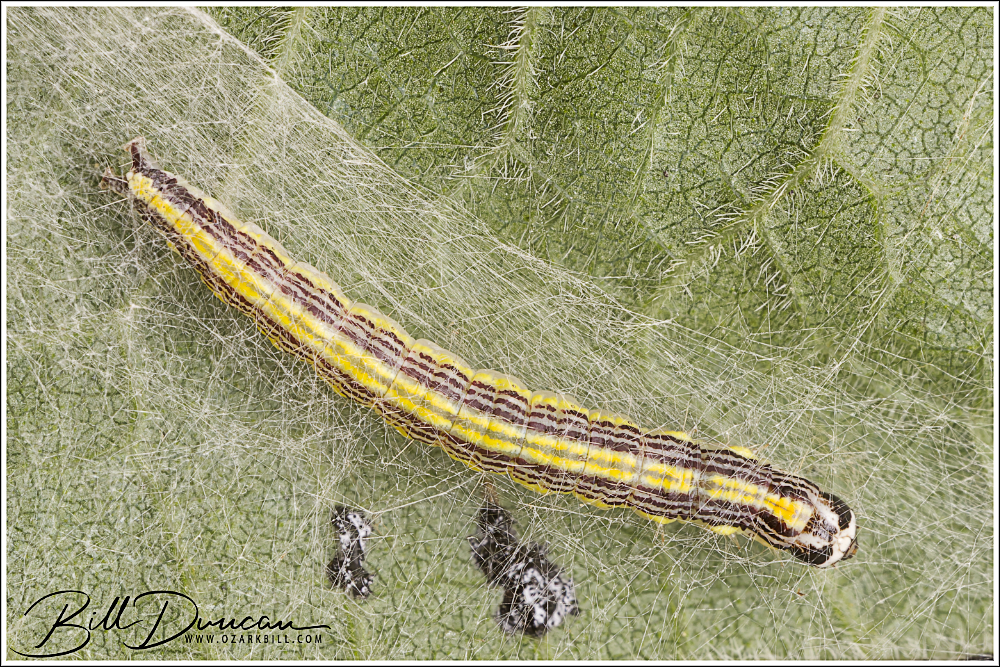
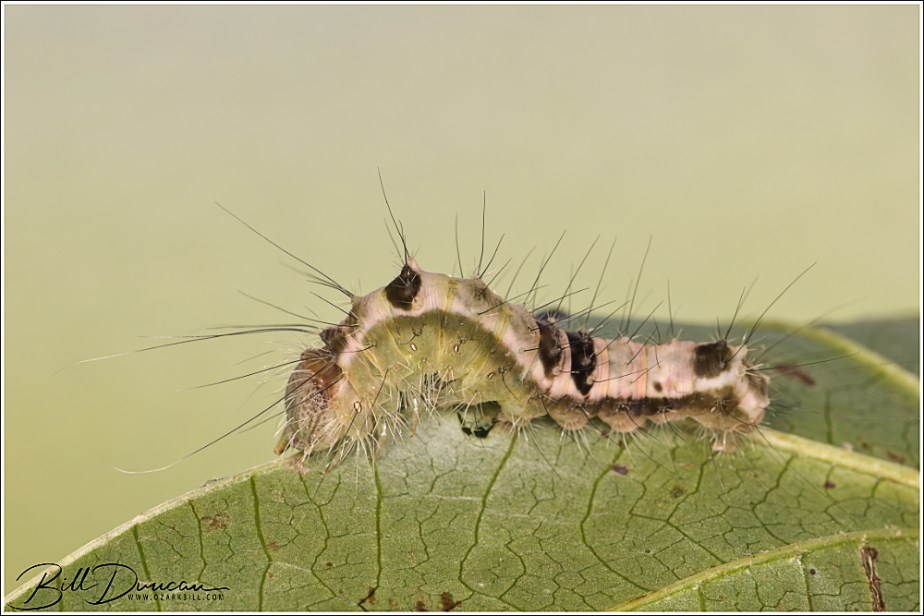
Dimorphic Macalla Epipaschia superatalis (Clemens, 1860), fam. Pyralidae, P-no. 80a0619 Host plants: In Missouri, this species’ sole host is poison ivy (Toxicodendron radicans). It has also been recorded hosting on poison sumac (T. vernix) and may likely utilize other Toxicodendron species. Date found(s): June 28, 2026 Location(s) found: Pinewoods Lake Recreation Area, Carter County, MO Notes: This distinctive caterpillar is most often found in leaf folds of its creation among poison ivy leaves. The “dimorphic” in its common name refers to the two distinct color morphs of the adult moths. The green form has gorgeous mint-green forewings contrasted by a deep chocolate brown, while the tan form has straw-colored forewings but keep the same chocolate-brown lower half.
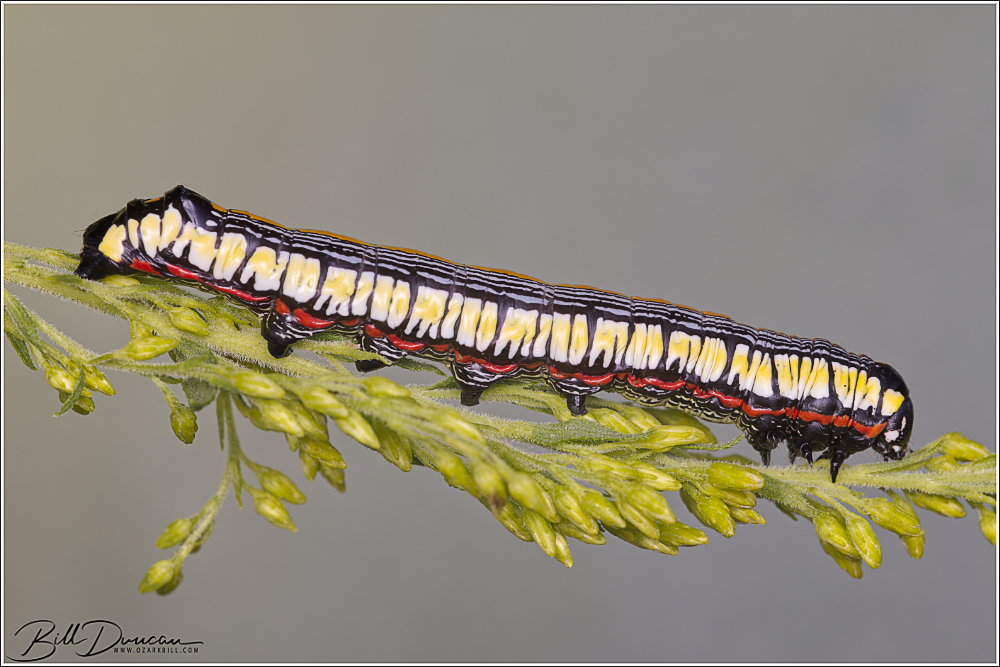
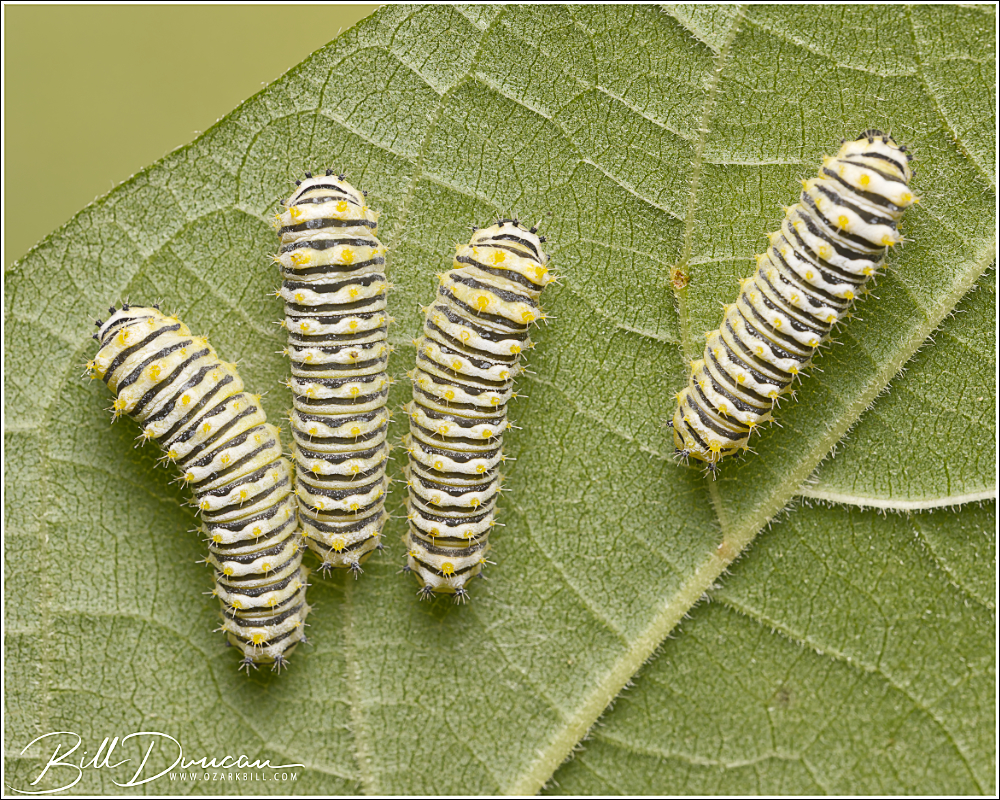
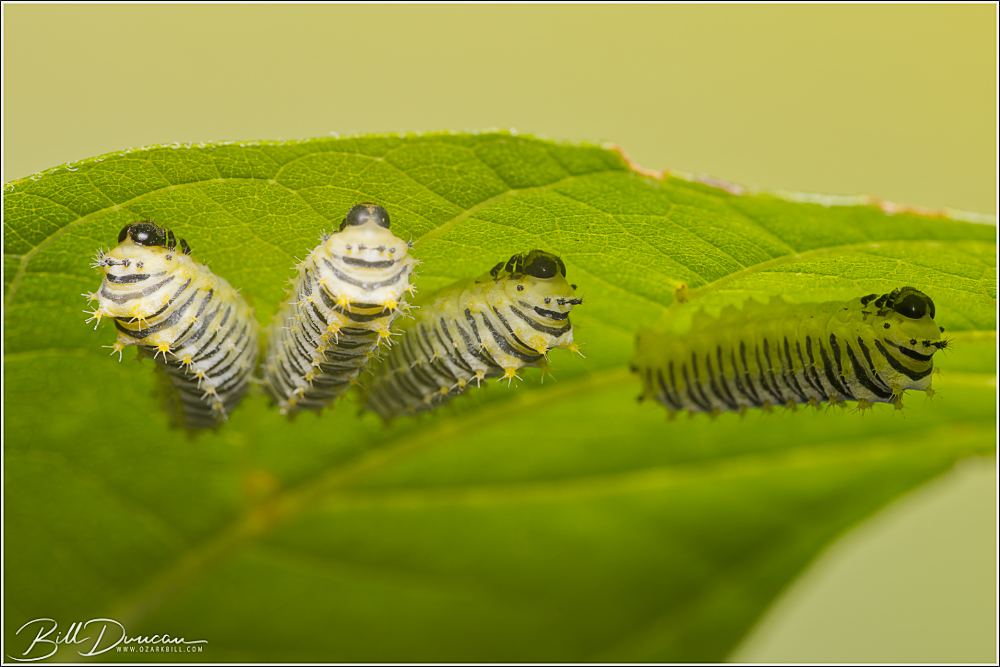
Brown-hooded Owlet Cucullia convexipennis (Grote & Robinson, 1868), fam. Noctuidae, P-no. 931513 Host plants: Specialist hosting on goldenrod (Solidago spp.) and other Asteraceae family members. Date found(s): September 12, 2026 Location(s) found: Don Robinson State Park, Jefferson County, MO Notes: Due to the apparent lack of high concentrations of toxins in their hostplants that are sequestered by many lepidopterans for defense, the aposematic coloration exhibited by the brown-hooded owlet is potentially a case of Batesian mimicry. Although the specific model species has not been identified, caterpillars and other insects use yellow, black, red, and white color combinations to advertise their toxicity.
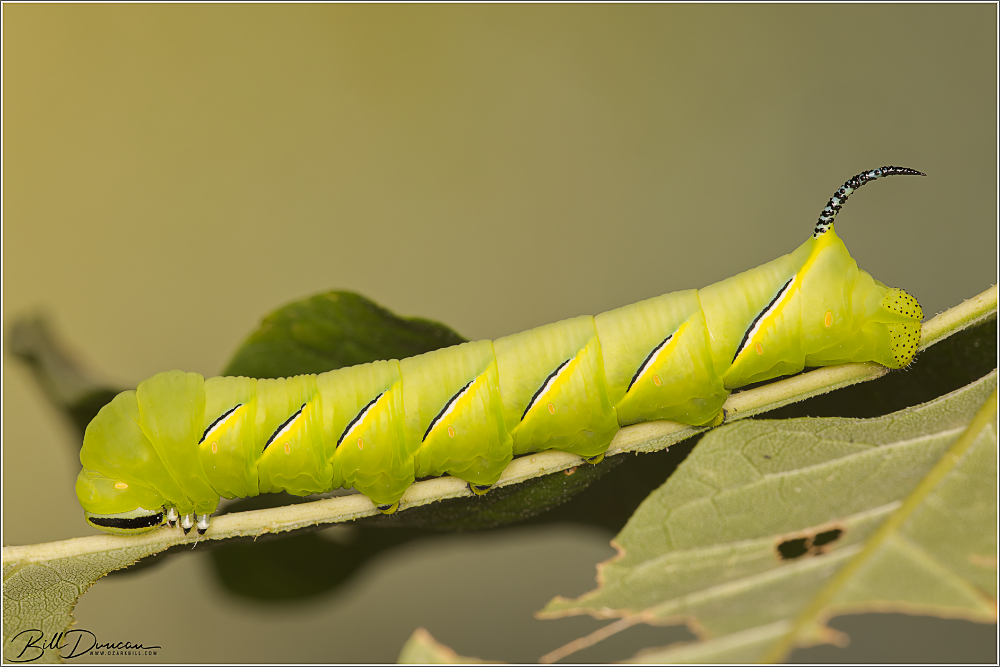
Fawn Sphinx Sphinx kalmiae (J.E.Smith, 1797), fam. Sphingidae, P-no. 890118 Host plants: Specializes in woody members of the olive family (Oleaceae), such as ash (Fraxinus spp.), and fringe-tree (Chionanthus virginicus). Date found(s): August 16, 2026 Location(s) found: Loggers Lake Recreation Area, Shannon County, MO Notes: The species epithet, kalmiae, is a misnomer that, unfortunately, has created a misunderstanding about the natural history of this species that continues to this day. Because of the name kalmiae, early entomologists assumed the moth’s main host was mountin-laurel (Kalmia), which are not even true laurels. In reality, field data has shown that the caterpillars heavily favor plants in the olive family (Oleaceae). The kalmiae name was given to honor Pehr (Peter) Kalm, an 18th-century Swedish botanist and apostle of Carl Linnaeus, and not in reference to laurels. The name Fawn Sphinx has been suggested and is now becoming more widely accepted.
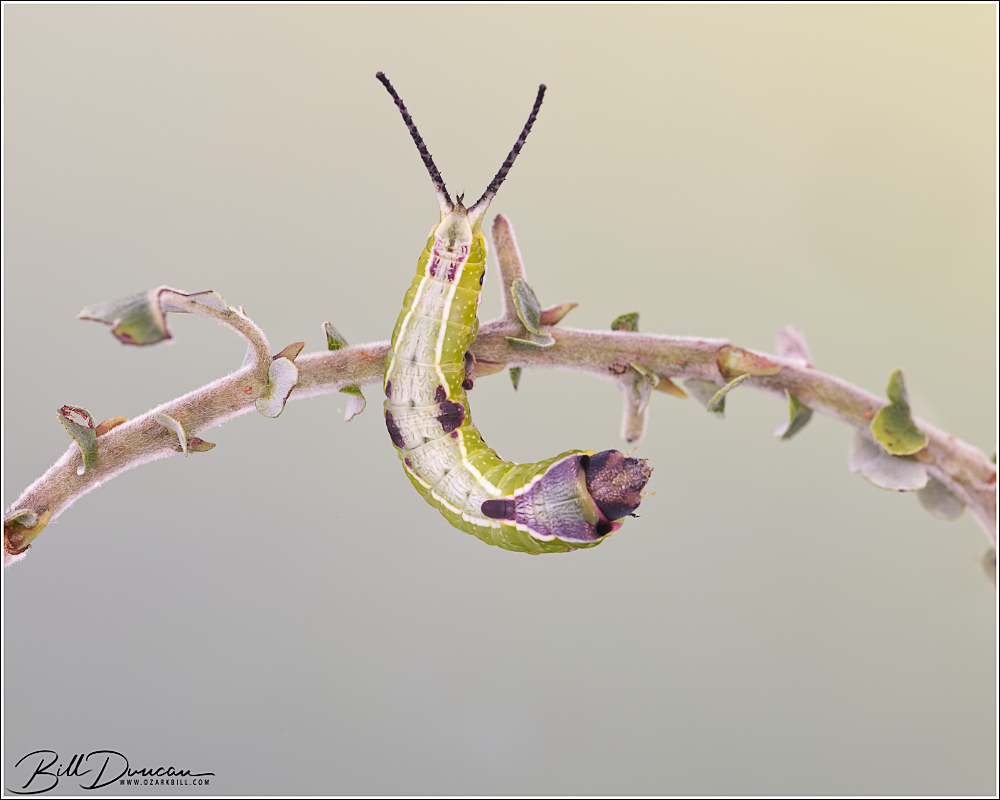
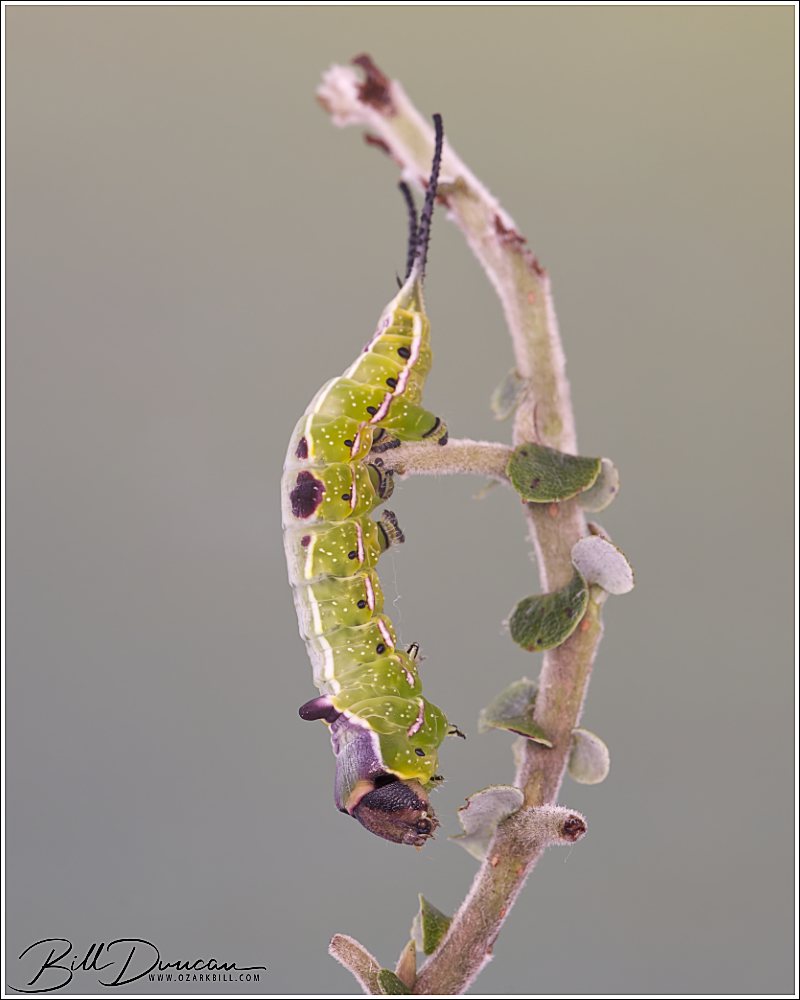
Black-etched Prominent Americerura scitiscripta (Walker, 1865), fam. Notodontidae, P-no. 930030 Host plants: Feeds on members of the Salicaceae Family, including poplars (Populus spp.) and willows (Salix spp.). Date found(s): 26 August, 2026 Location(s) found: Logger’s Lake, Shannon County, MO Notes: The WGNSS group came upon the individual pictured here in Shannon County in August of 2026. When it realized we discovered it, we were in for a short but thrilling experience. The caterpillar arched its long anal prolegs over its back, extruded the yellow and red portions thereby doubling their length, and then thrashed them about wildly in an obvious attempt to threaten and dissuade us. Unfortunately, this act lasted merely seconds, and it could not be coaxed into a repeat performance after we had set it up for photographs. If this method of dissuasion does not do the trick, the caterpillar can spray acid from a gland in its thorax.
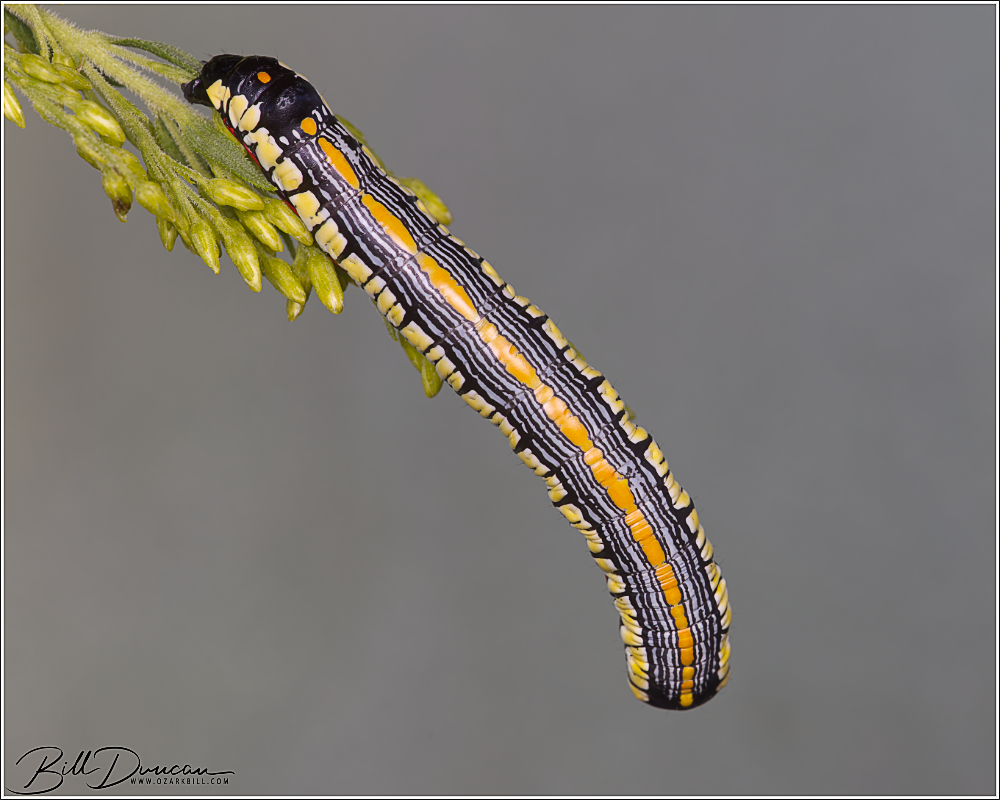
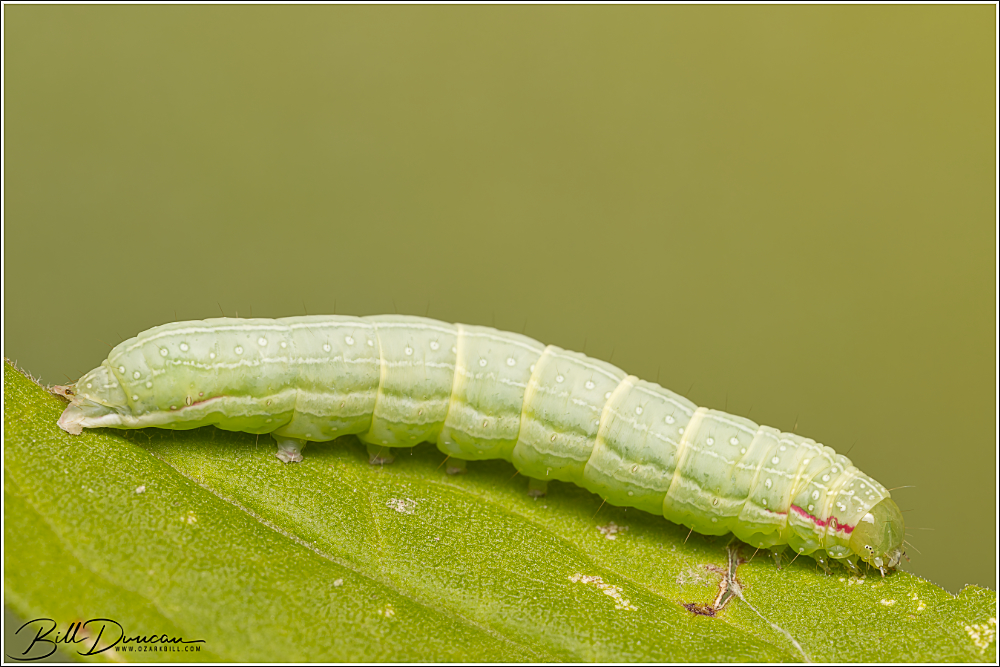
Green Leuconycta Leuconycta diphteroides (Guenée, 1852), fam. Noctuidae, P-no. 932026 Host plant (s): Hosts on a variety of Asteraceae family members including fleabane (Erigeron spp) and goldenrod (Solidago spp). Date found(s): 28 June, 2026 Location(s) found: Pinewoods Lake Recreation Area, Carter County, MO Notes: Due to its host plant preferences, look for this moth in meadows, fields and prairies. If you plant native composite wildflowers, you may even have luck in finding them in your own backyard. The adult moth is a stunner and is often a popular subject when arriving at blacklights. It has received a common nickname in mothing circles—the “mint chocolate chip moth.”
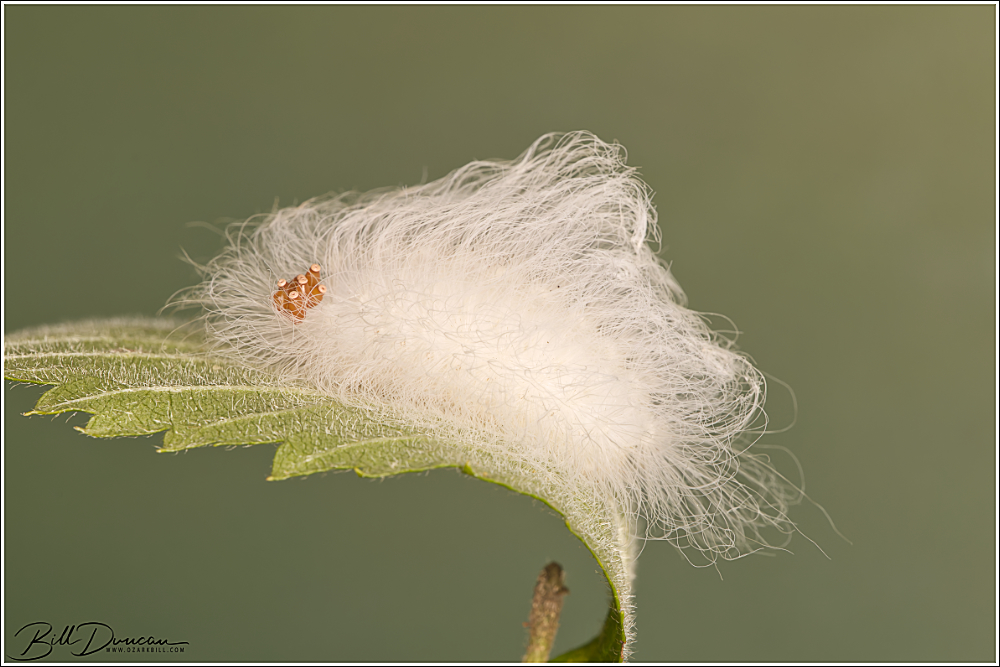
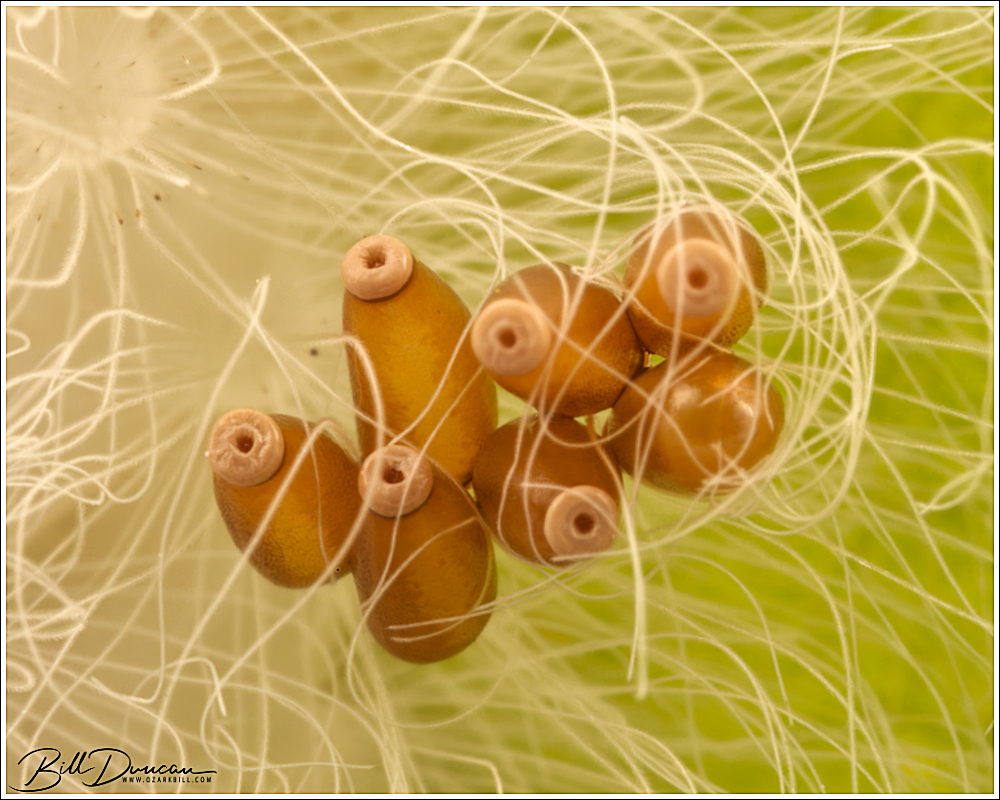
Black-waved Flannel Moth Megalopyge crispata (Packard, 1864) P-no. 57a0038 Host plant: Not recorded Date found(s): 16 August, 2026 Location(s) found: Loggers Lake, Shannon County, MO Notes: In early to mid-August we found an abundance of these mid-instar black-waved flannel moth larva, literally dozens in this timespan. I got used to pretty much ignoring them, but recording them and the variety of hosta plants these generalists use. During a WGNSS trip, it was discovered that one of these was a bit more interesting than the others. In its downy white fluff, it held some sort of eggs. We pulled out the high magnification lenses to make sure we had a good chance at identifying these back home. Eggs of some parasitoid first came to mind, but these did not match anything obvious with those groups. After a Google session, we found these are most likely eggs of an assassin bug (fam. Reduviidae). It is unknown how or why the eggs found their way onto the caterpillar as assassin bugs typically oviposit on the surfaces of plants. Either the assassin bug chose a weird location to oviposit or perhaps the caterpillar collected these when moving about.
Mid-instar Megalopyge crispata larvae with Reduviidae eggs
Witch Hazel Dagger Moth Acronicta hamamelis (Guenée, 1852) P-no. 931434.5 Host plant: Found on Ozark witch hazel (Hamamelis vernalis) Date found: 15–16 August, 2026 Location found: Logger’s Lake Recreation Area, Shannon County, MO Notes: The WGNSS Entomology and Nature Photography groups had a great joint overnight trip to Logger’s Lake this past weekend. Obviously, among the several entomofauna groups we focused on, caterpillars were high on our list. The species pictured here was one of our most exciting finds. During my studies of field guides and online sources to determine new caterpillar species to look for, the witch hazel dagger moth caught my attention. Southeastern Missouri has plenty of its obligate host plant afterall. However, after looking on iNaturalist a couple of years ago, I discovered there were no documentations of this species in our state. Checking with the Heitzman catalogue, I found that there was only one recorded observation in Missouri—from 1889! I still kept this species in mind; there were a few documentations in Arkansas and eastern Kentucky and Tennessee, and as I mentioned, the host is abundant in Missouri.
During our caterpillar hikes this past weekend, we were delighted to find seven Acronicta hamamelis larvae at various stages. I collected a couple to take home and hopefully rear to adults. The more advanced individual spent the next day feeding on my ozark witch hazel and then changed to its warm pre-pupal coloration. It has since made a cocoon and I hope to see an adult eventually.
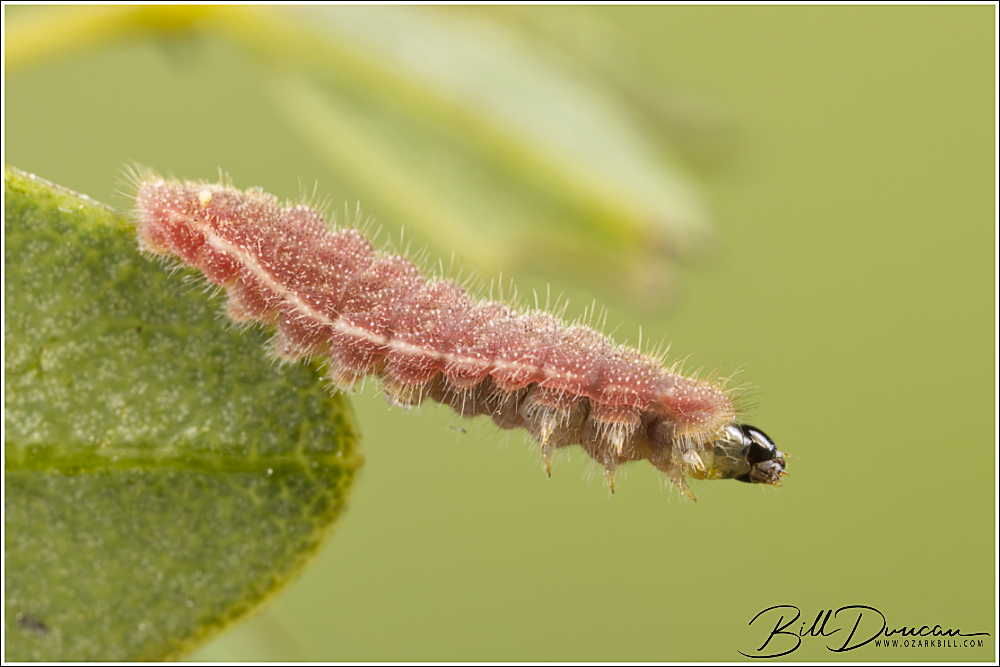
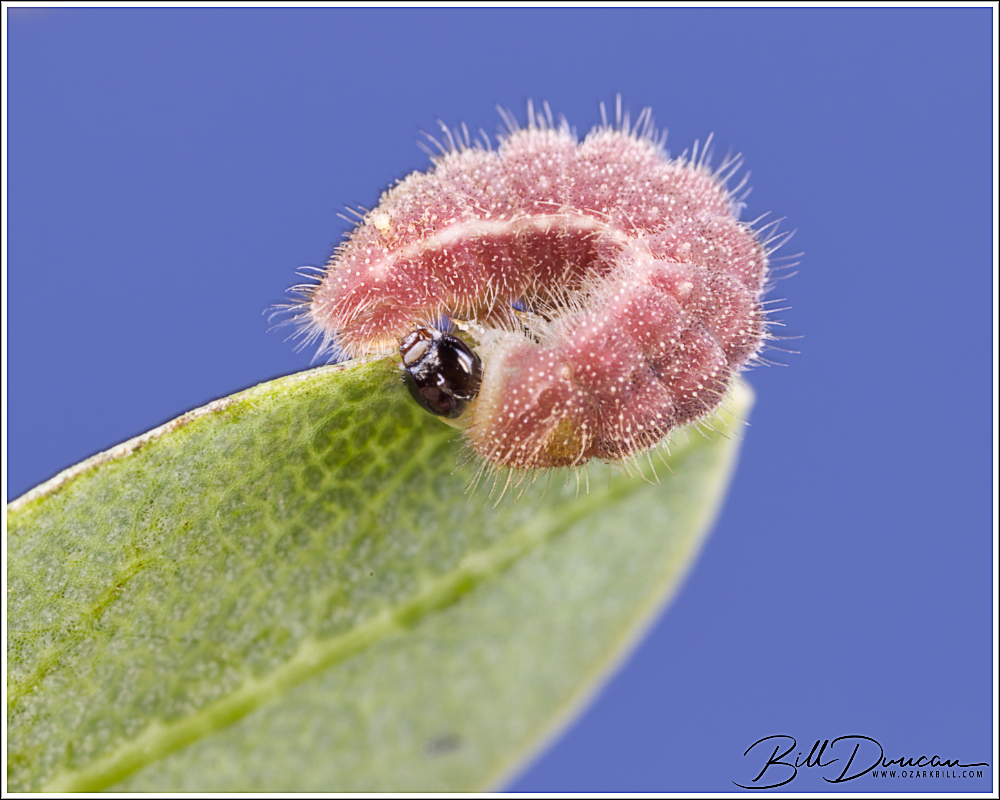
Promethea Silkmoth Callosamia promethea (Drury, 1773) P-no. 890079 Host plant: Found on buttonbush (Cephalanthus occidentalis) Date found: 28 June, 2026 Location found: Pinewoods Lake Recreation Area, Carter County, MO Notes: I shared this species in an exciting finding and rearing experience last season here and here. To my delightful surprise, the WGNSS Entomology Group found four early instar (L1/L2) caterpillars during a trip to Pinewoods Lake in late June of this year. Since I have a buttonbush in the yard, I decided to bring them home to rear.
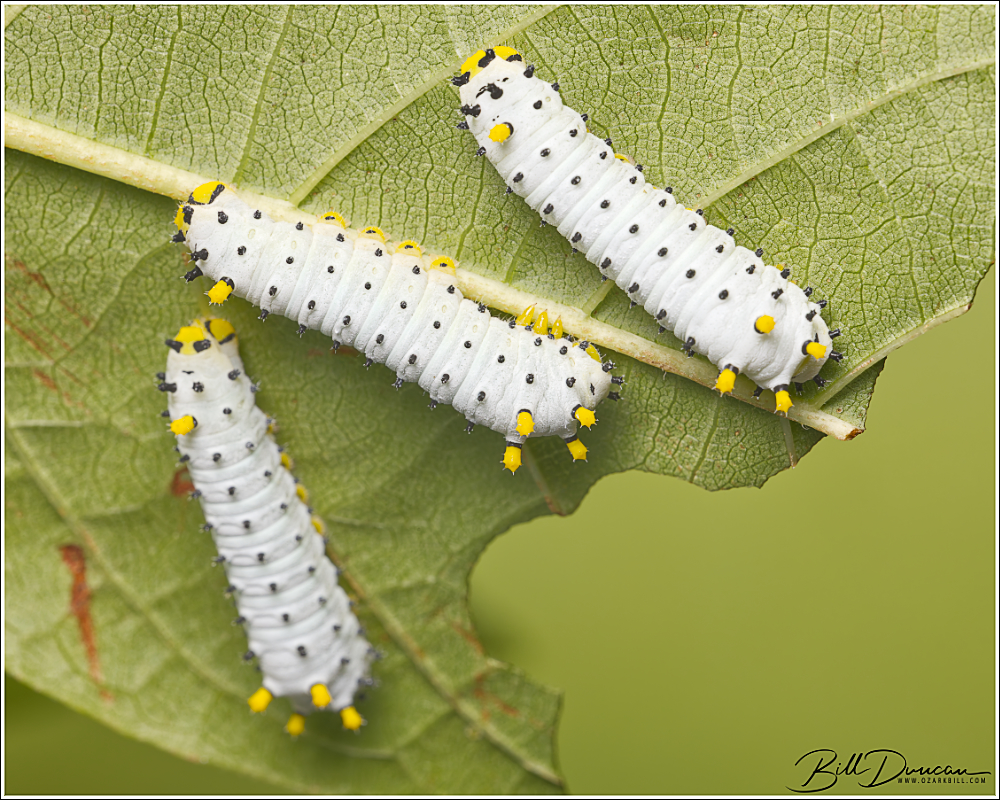
Early instar (L1/L2) Callosamia promethea larvae on buttonbush host.
I was getting a bit worried about my buttonbush by the amount of material these four guys were putting away. Nevertheless, I continued to supply them with fresh branches and photographed them during their development.
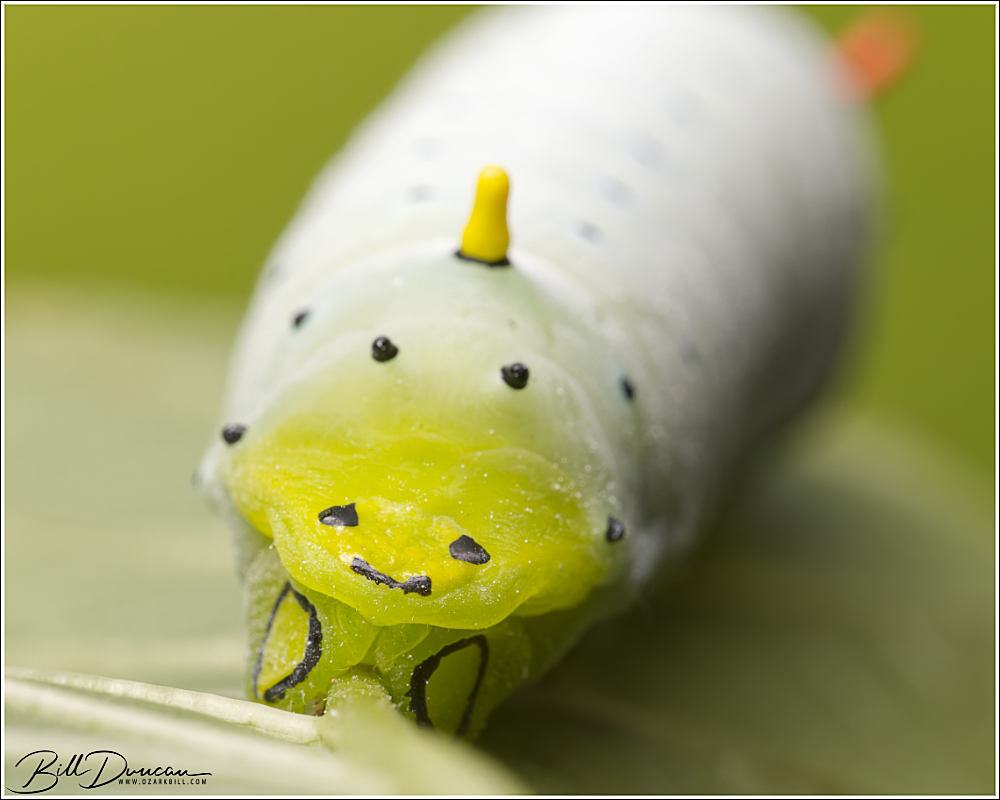
Mid instar (L3) Callosamia promethea larvae on buttonbush host.
Late instar (L4/L5) Callosamia promethea larvae on buttonbush host.
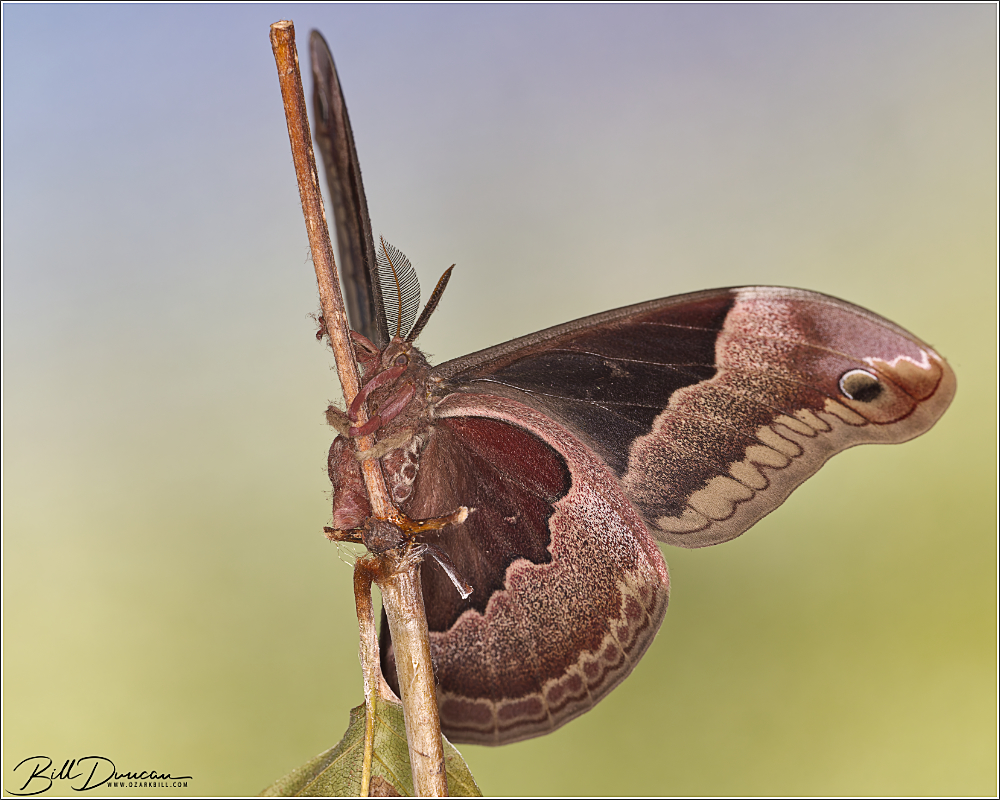
By mid-July, the caterpillars were fully developed and all four went into cocoons with 2-3 days of each other. From what I could find in literature, it seems that this species is bivoltine (having two broods per season) in our region. However, I was not sure if these guys would eclose this season, or if I would have to wait until the spring to see the moths. If you paid attention to the featured image at the top of this post, I assume you have guessed already.
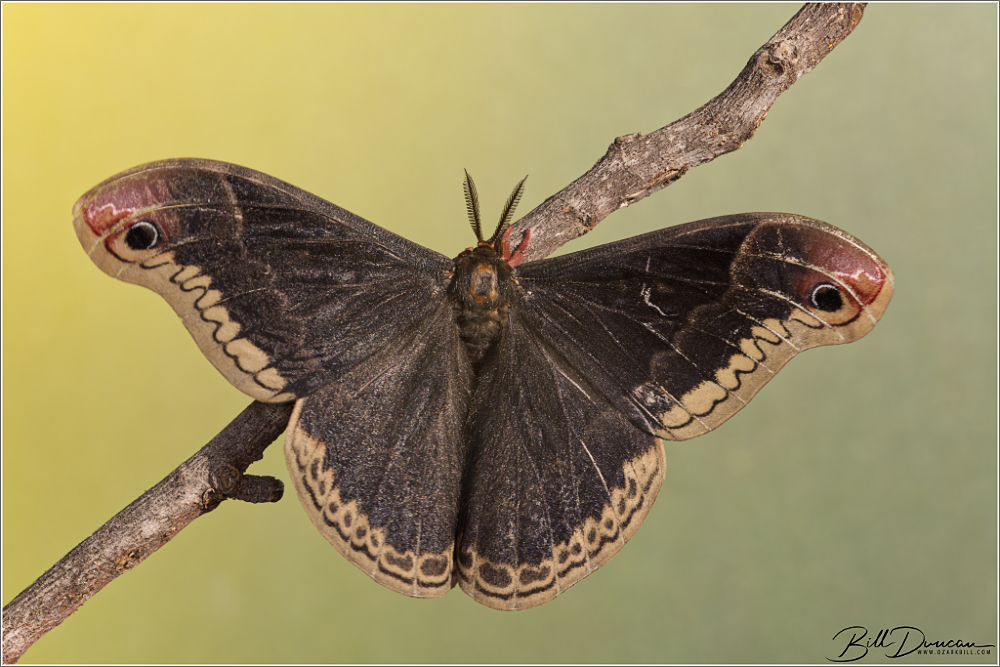
Adult male Callosamia promethea. Notice the dorsal coloration and patterning that is reminiscent of a dark swallowtail.
The individual that Chris reared last season turned out to be female. After reading about the interesting sexual dimorphism in the adults of this species, I was eager to see and photograph a male. As you would expect, female Promethea moths are nocturnal, do not feed, and are eager to mate and lay eggs. The adult males are just as eager, but are diurnal and with different color and pattern. They typically fly in the afternoons, searching for females with which to mate. Their patterning suggest that they may be Batesian mimics of distasteful day-flying swallowtails, e.g. pipevine swallowtails.
The fourth and final adult Callosamia promethea to eclose turned out to be this gorgeous male.
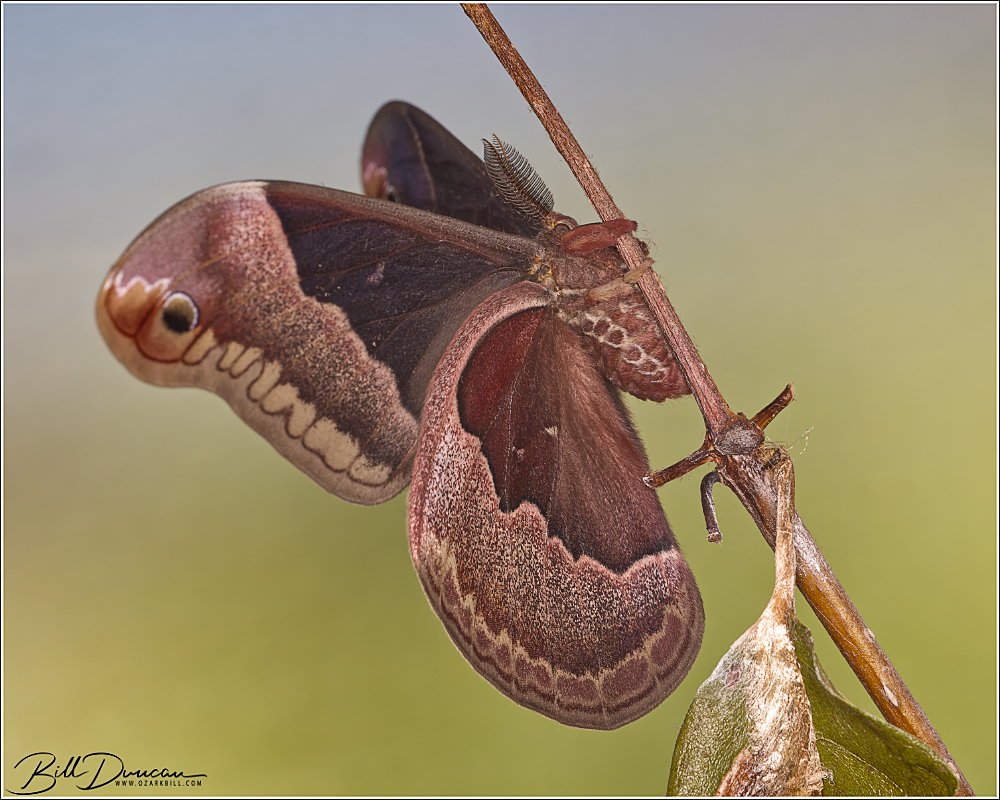
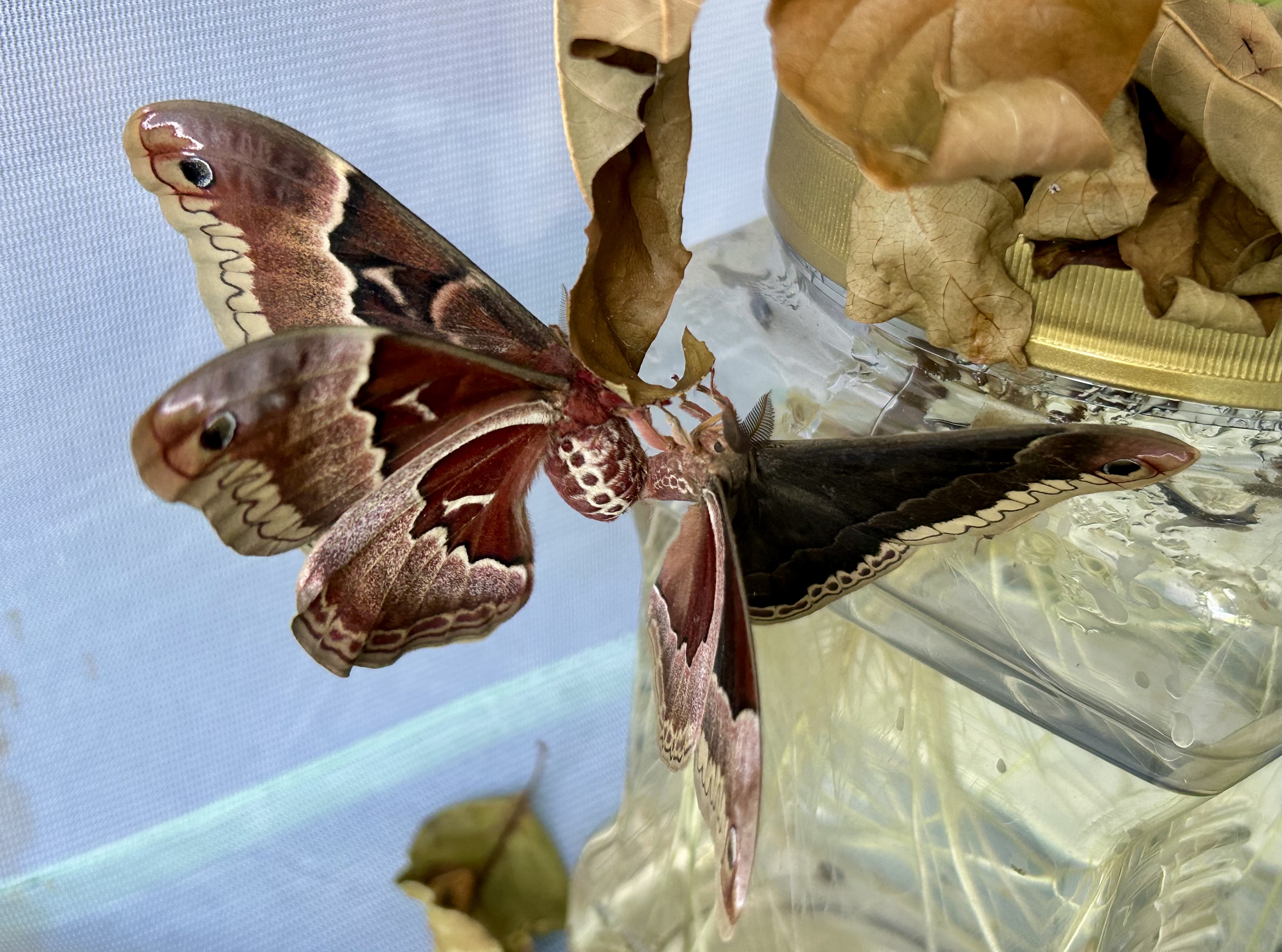
This season’s cats turned out to be three males and a female, and there is an interesting story to be told here. All four eclosed within seven days. The first two were male. I photographed these and released them in my neighborhood. Early in the morning, a couple of days following the release of the second male, I found a gorgeous female had eclosed and was letting her wings expand in their flight cage. In mid afternoon of that same day, we noticed a male Promethea moth trying to get into the screen porch! I assume, but do not know for certain, that this was one of the males I released previously. I opened the door to the screen porch and he eventually found his way in and headed directly to the cage holding the female. I opened the cage door and he shortly made his way to her.
Mating Callosamia promethea. A sibling love affair?
I am always shocked by how quickly moths want to deposit their eggs following mating. I was busy with something else for a few hours and when I returned, the female was busy depositing eggs on her flight cage. I quickly released her to the neighborhood so hopefully she could deposit her remaining eggs at a more suitable location. We are monitoring the eggs now stuck to the top of the flight cage and will be prepared to move the young cats to the backyard buttonbush when they arrive.
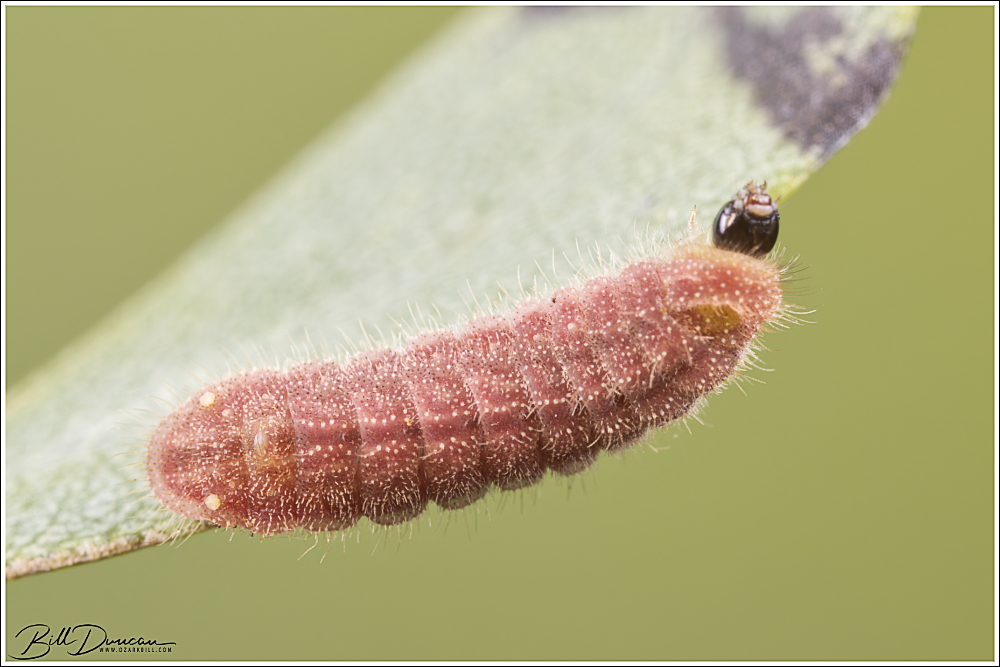
Eastern tailed-blue Cupido comyntas (Godart, 1824) P-no. 77a0638, fam. Lycaenidae Host plant: Found on wild indigo (Baptisia sp.) Dates found: 20 June, 2026 Locations found: Victoria Glade Conservation Area, Jefferson County, MO Notes: A tiny, beautiful, and common butterfly that is often seen in suburban backyards, the eastern tailed-blue (ETB for short) is not a caterpillar that I have had luck in finding. Finally, on an outing with the WGNSS’ Nature Photography Group in June, I found one of these on a wild indigo plant within the glade. I never expected a lycaenid caterpillar to be such a challenging photo subject. This guy was healthy and mobile, rarely settling down to get the desired photo.
I’ve gotten to a point in a personal project that I can now spend some time posting more frequently here and processing some photos that have been backing up. Not that I have had a ton of success in getting significant photo opportunities the last several months.
The following are some photos of interesting insects that the WGNSS Entomology Group found on a couple trips to Missouri glades last year.
First up are a couple of moths found at a light trap we set up during a camp out at Caney Mountain Conservation Area in late September. The cool conditions were not conducive to attracting many moths, so the pickings were slim.
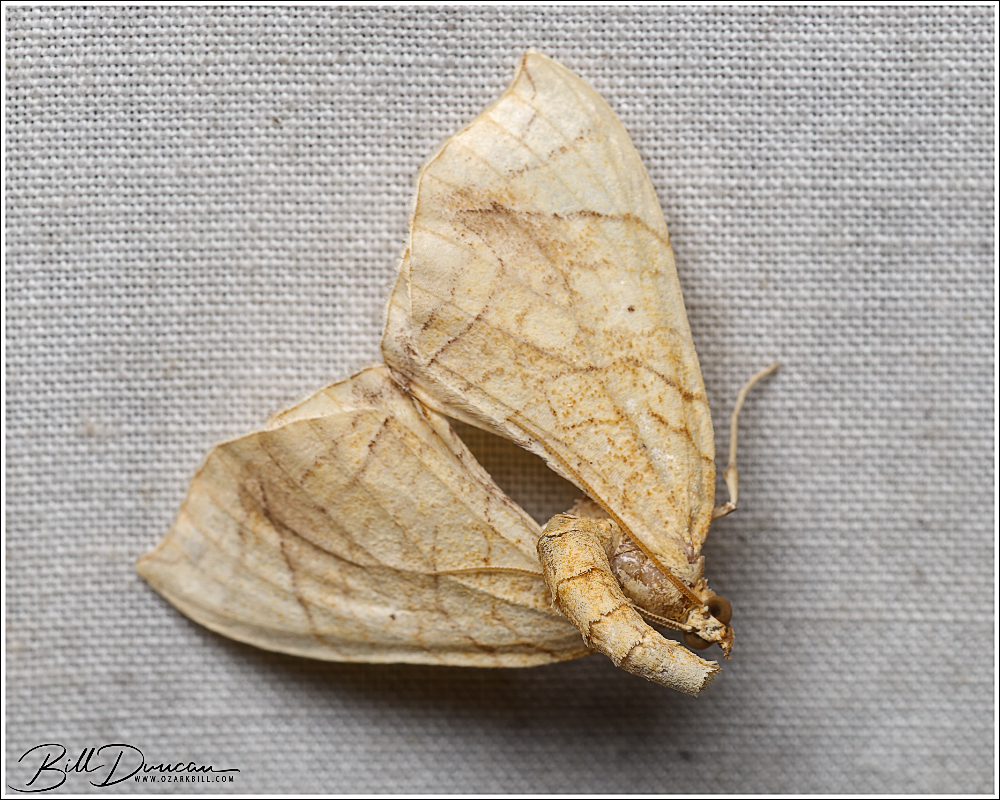
Eulithis sp. Fam. Geometridae
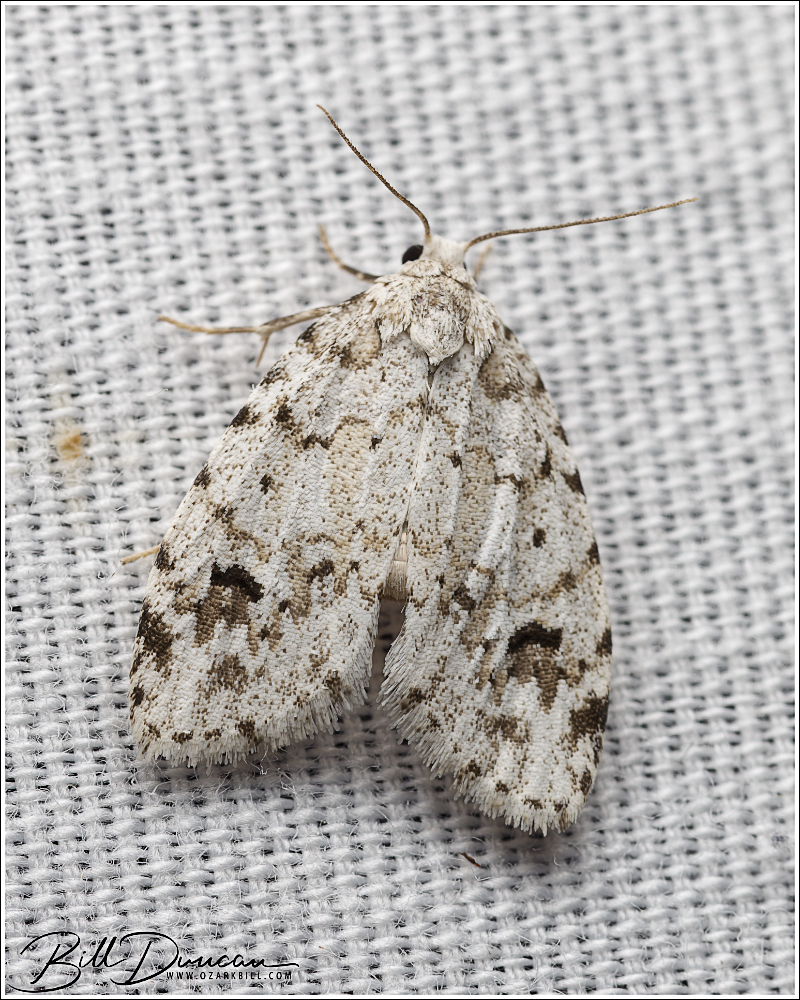
Clemensia albata (little white lichen moth) Fam. Erebidae
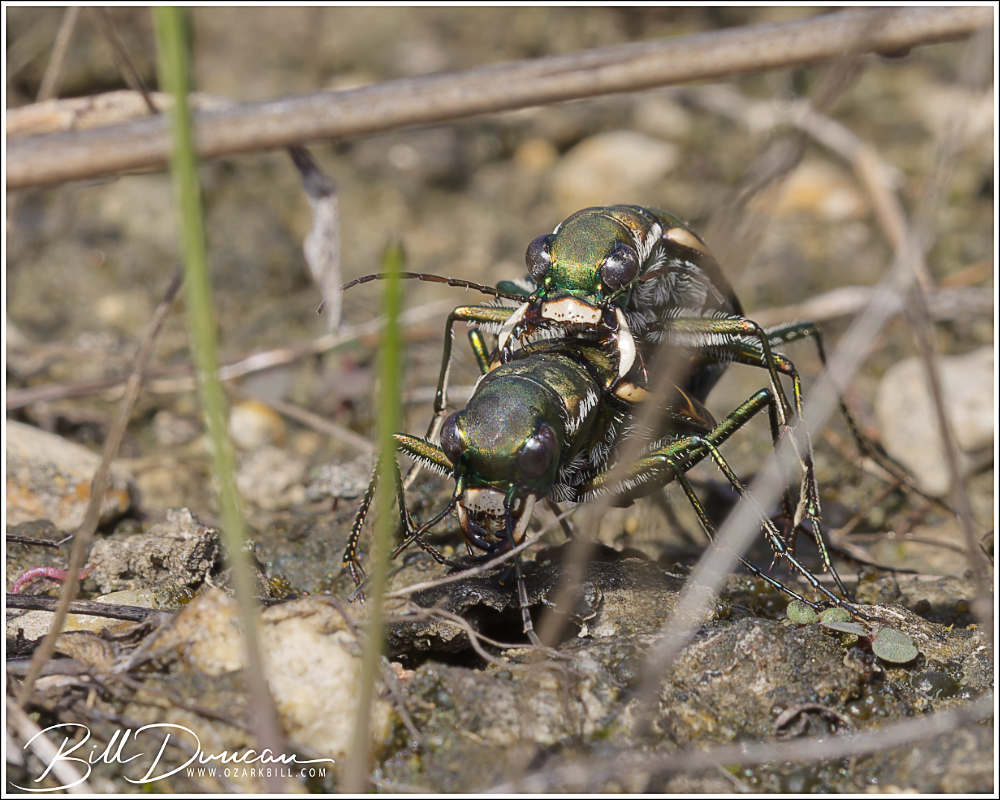
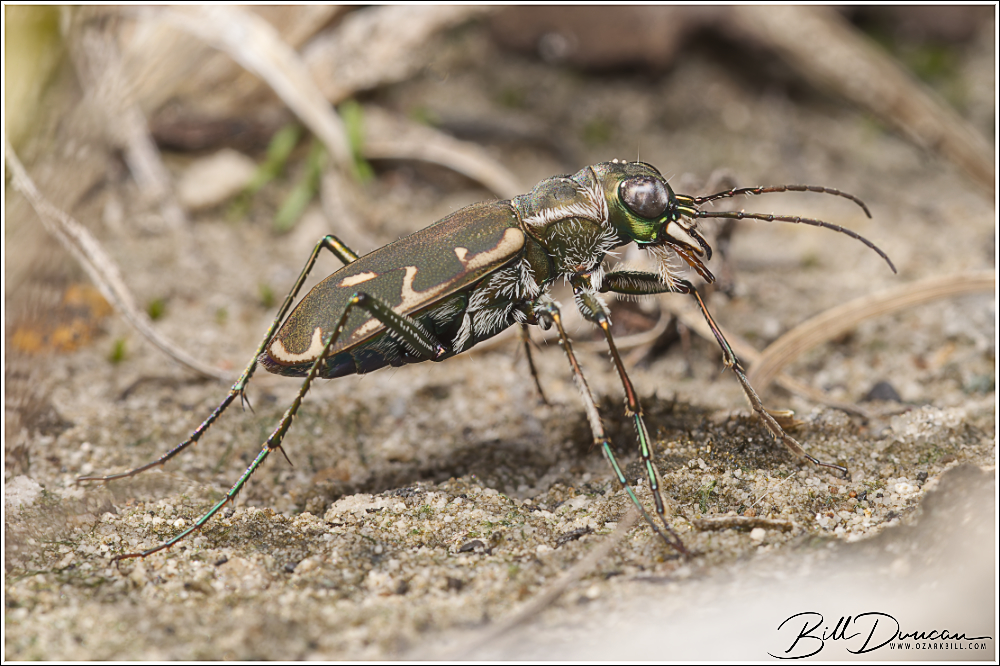
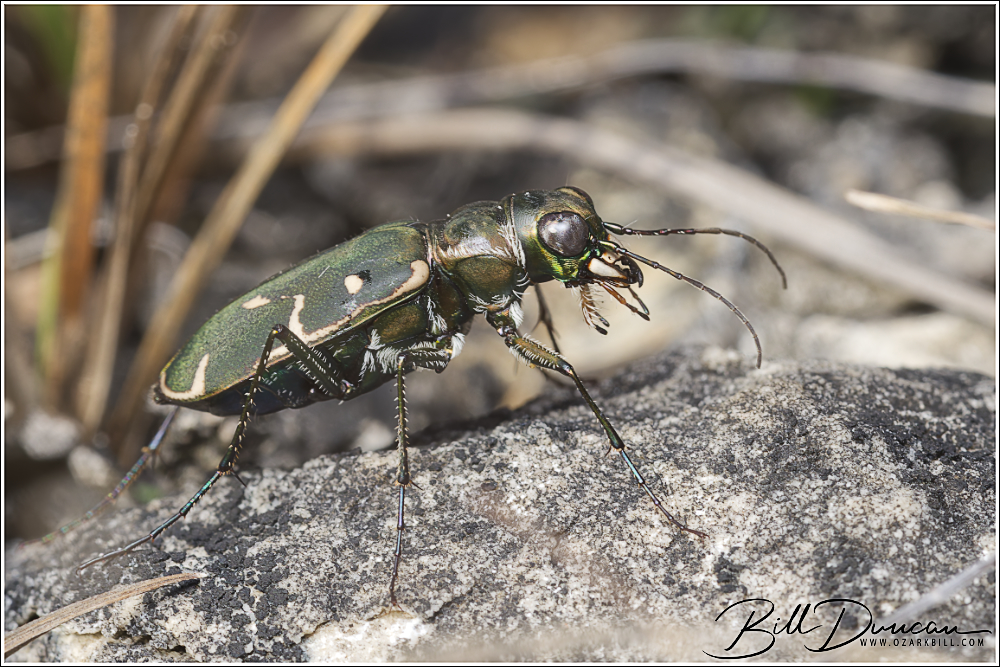
Next up is the fantastic Cicindelidia obsoleta vulturina (prairie tiger beetle). This species is primarily found in Texas, but there are scattered populations in Missouri, Arkansas, and Oklahoma.
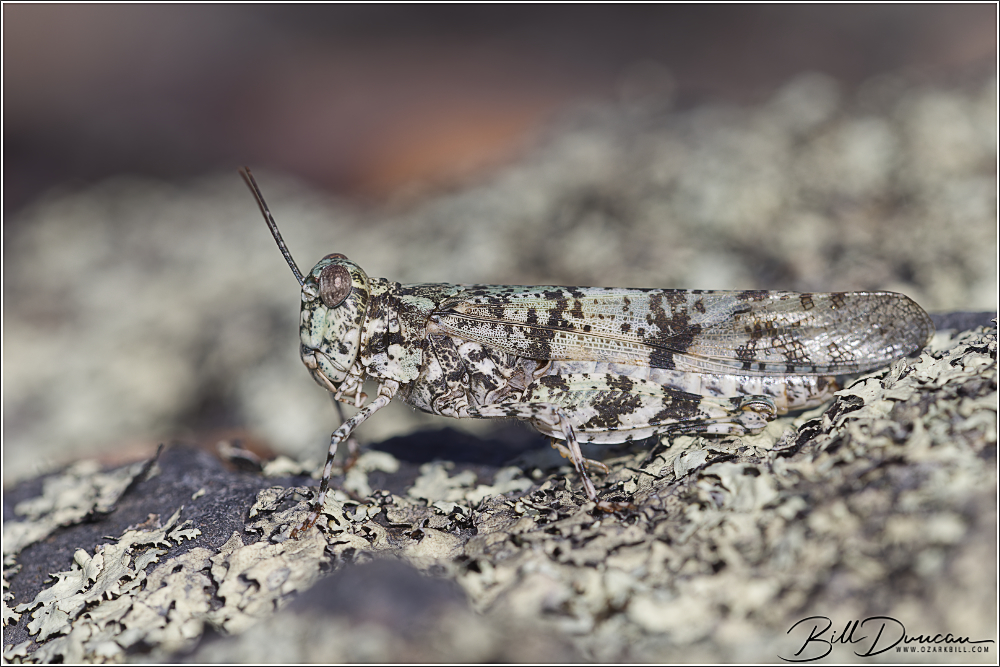
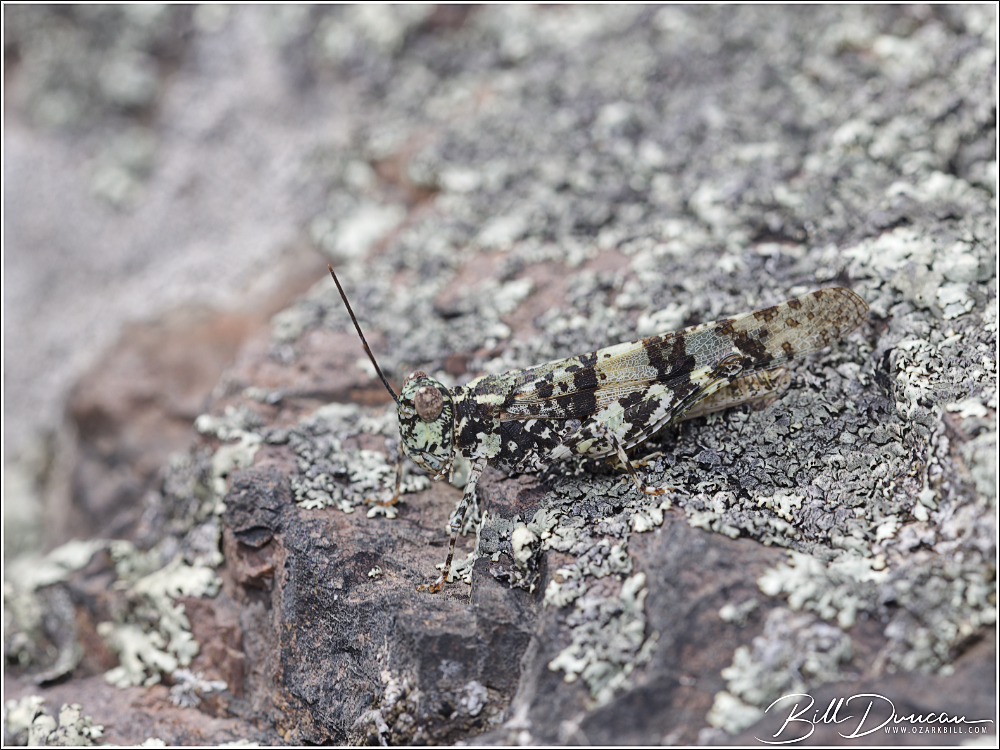
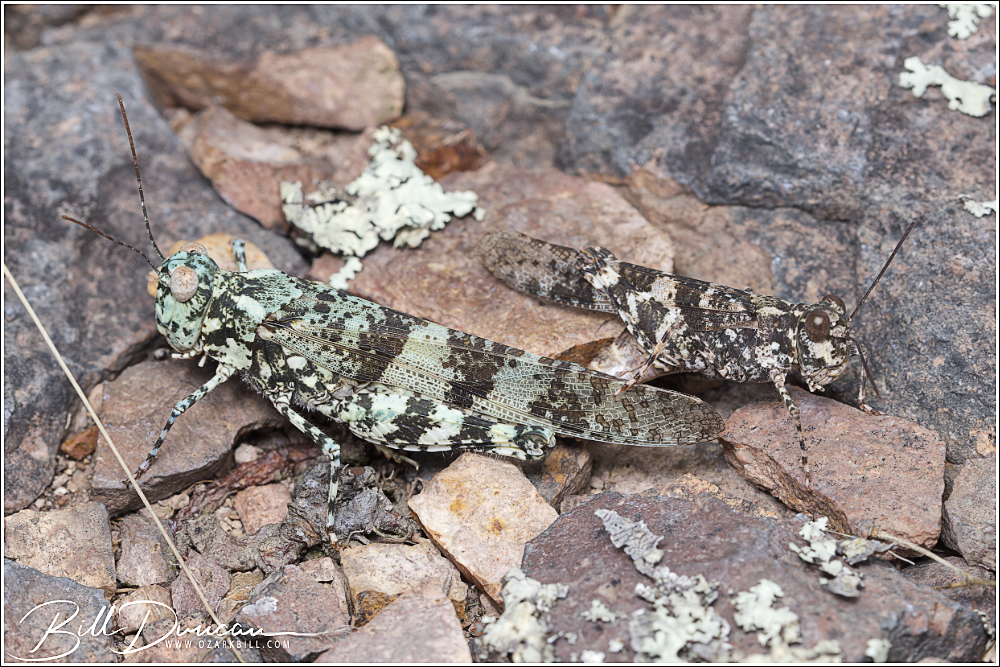
Finally, from a trip to Hughes Mountain Natural Area, we found a good number of Trimerotropis saxatilis (lichen grasshopper) Fam. Acrididae. These masters of camouflage utilize open, rocky areas like Missouri’s glade habitats.