2026 Caterpillar Season – Witch Hazel Dagger Moth

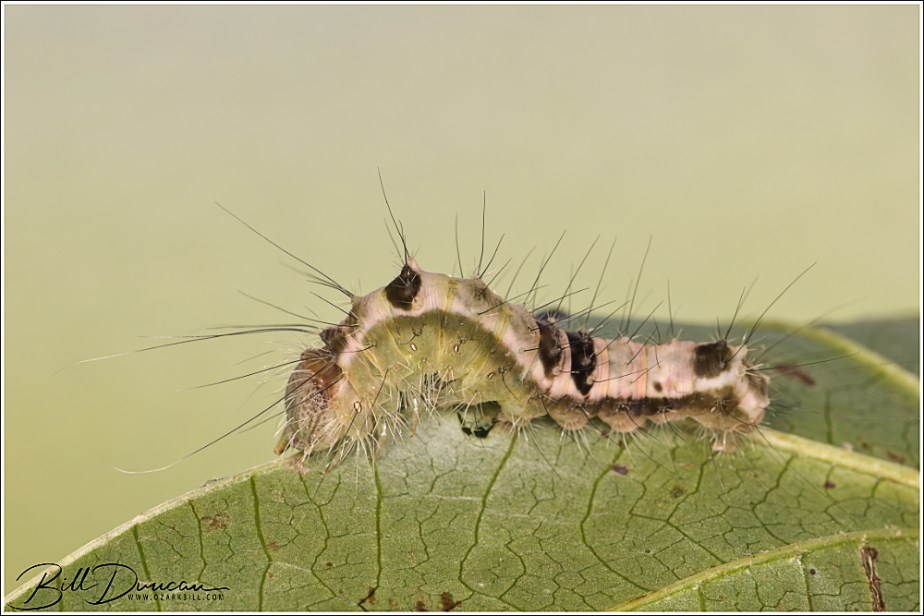
Witch Hazel Dagger Moth
Acronicta hamamelis (Guenée, 1852) P-no. 931434.5
Host plant: Found on Ozark witch hazel (Hamamelis vernalis)
Date found: 15–16 August, 2026
Location found: Logger’s Lake Recreation Area, Shannon County, MO
Notes: The WGNSS Entomology and Nature Photography groups had a great joint overnight trip to Logger’s Lake this past weekend. Obviously, among the several entomofauna groups we focused on, caterpillars were high on our list. The species pictured here was one of our most exciting finds. During my studies of field guides and online sources to determine new caterpillar species to look for, the witch hazel dagger moth caught my attention. Southeastern Missouri has plenty of its obligate host plant afterall. However, after looking on iNaturalist a couple of years ago, I discovered there were no documentations of this species in our state. Checking with the Heitzman catalogue, I found that there was only one recorded observation in Missouri—from 1889! I still kept this species in mind; there were a few documentations in Arkansas and eastern Kentucky and Tennessee, and as I mentioned, the host is abundant in Missouri.

During our caterpillar hikes this past weekend, we were delighted to find seven Acronicta hamamelis larvae at various stages. I collected a couple to take home and hopefully rear to adults. The more advanced individual spent the next day feeding on my ozark witch hazel and then changed to its warm pre-pupal coloration. It has since made a cocoon and I hope to see an adult eventually.

Acronicta hamamelis larva in pre-pupal coloration

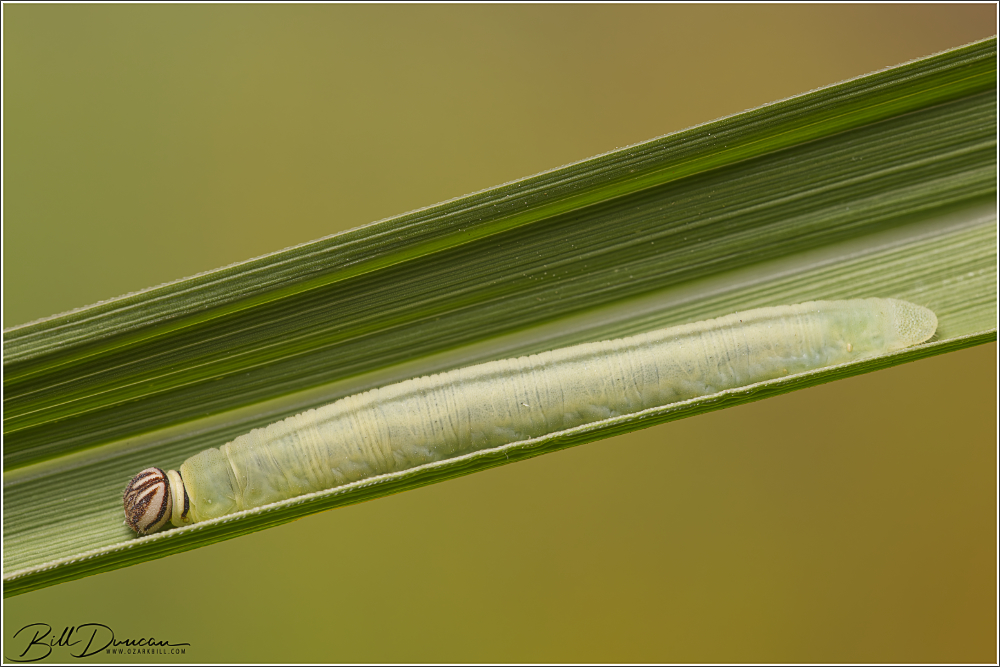
2026 Caterpillar Season – Byssus Skipper

Byssus Skipper
Problema byssus (Edwards, 1880) P-no. 77a0186, fam. Hesperiidae
Host plant(s): Found on eastern gamagrass (Tripsacum dactyloides)
Date(s) found: 18 July, 2026
Locations found: Powder Valley Conservation Area, St. Louis County, MO
Notes: My first grass skipper cat! Byssus skipper caterpillars spend their time in cylindrical shelters typically made from one grass stem. Look for these in higher quality prairie habitats where their host plants are abundant. Due to loss and degradation of grassland habitat, the byssus skipper and most of the grass skippers are at risk. Although the byssus skipper has a wide range, it is not considered common in any state.

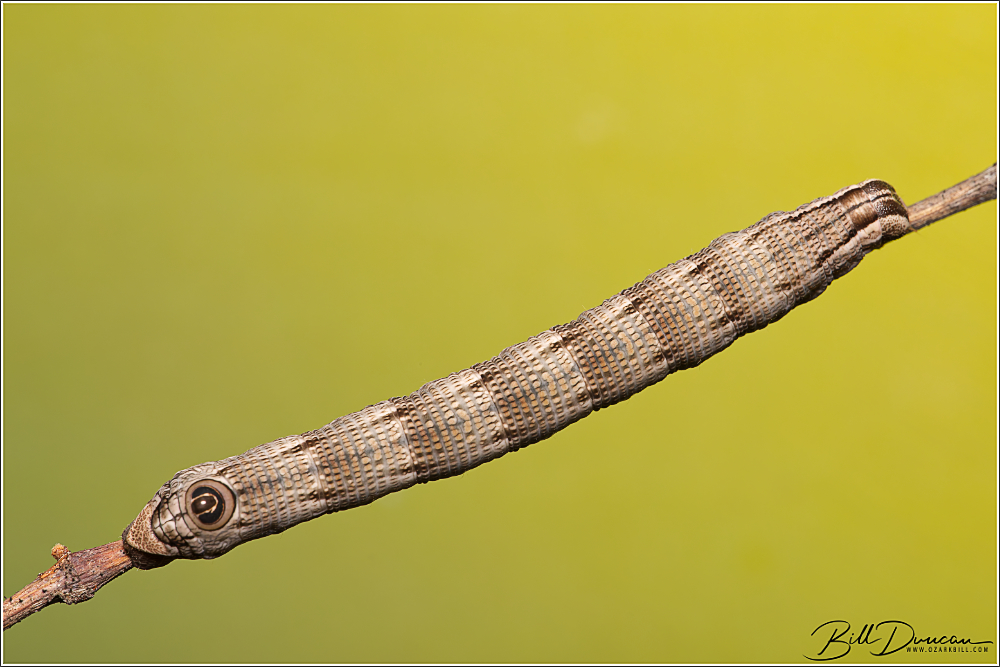
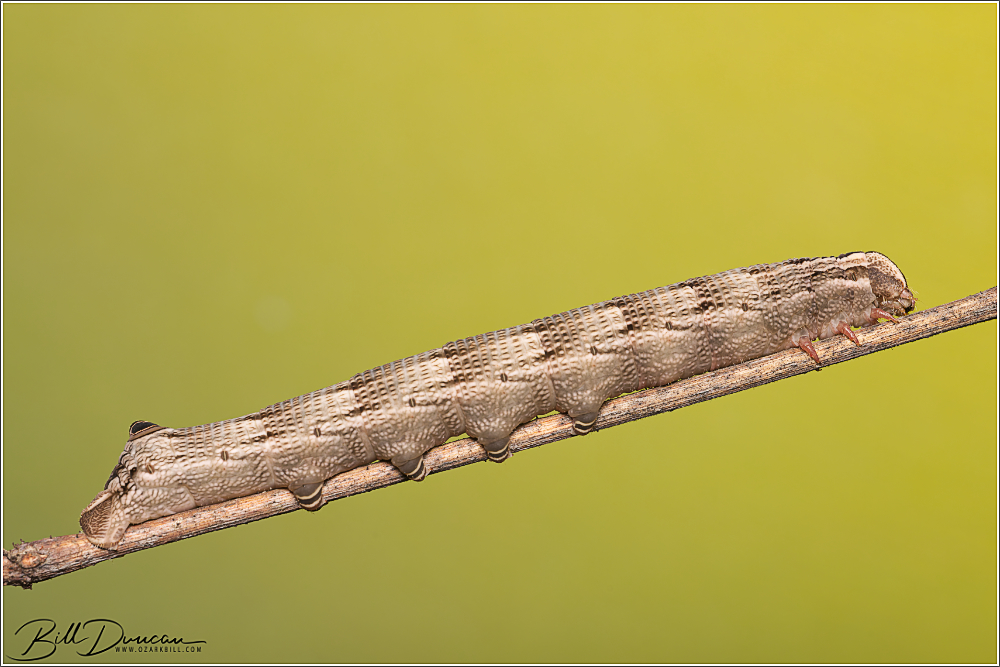
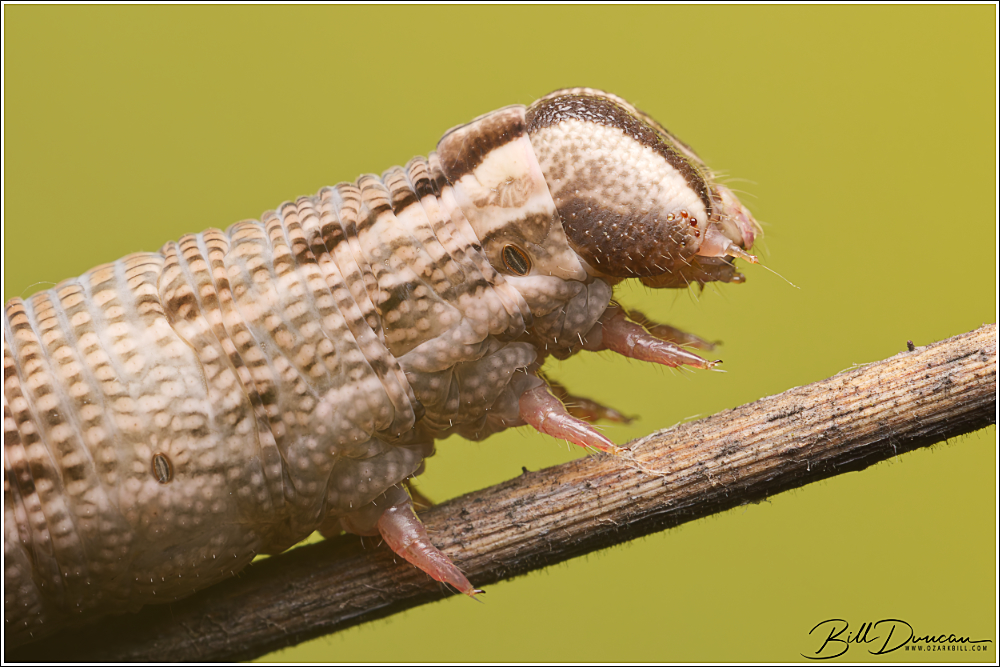
2026 Caterpillar Season – Abbott’s Sphinx

Abbott’s Sphinx
Sphecodina abbottii (Swainson, 1821)P-no. 890192, fam. Sphingidae
Host plant: Found on wild grape (Vitus sp.)
Dates found: 27 June, 2026
Locations found: Pinewoods Lake Recreation Area, Carter County, MO
Notes: The ultimate instar presents an eerie, hyper-realistic “eyespot” complete with an iris, pupil, and even a white catchlight reflection. Along with the scale-like pattern, it becomes an apt snake mimic. If a predator comes too close, the caterpillar will lash, squeak, and try to bite its attacker. While this larval form makes a great interpretation of a snake, the diurnal adult phase makes a great bee mimic, including yellow patches on its hind wings. When at rest, the moth folds in its hind wings, leaving it perfectly camouflaged against the bark of a tree.

WGNSS Entomology Field Trips – September/October 2025

I’ve gotten to a point in a personal project that I can now spend some time posting more frequently here and processing some photos that have been backing up. Not that I have had a ton of success in getting significant photo opportunities the last several months.

The following are some photos of interesting insects that the WGNSS Entomology Group found on a couple trips to Missouri glades last year.

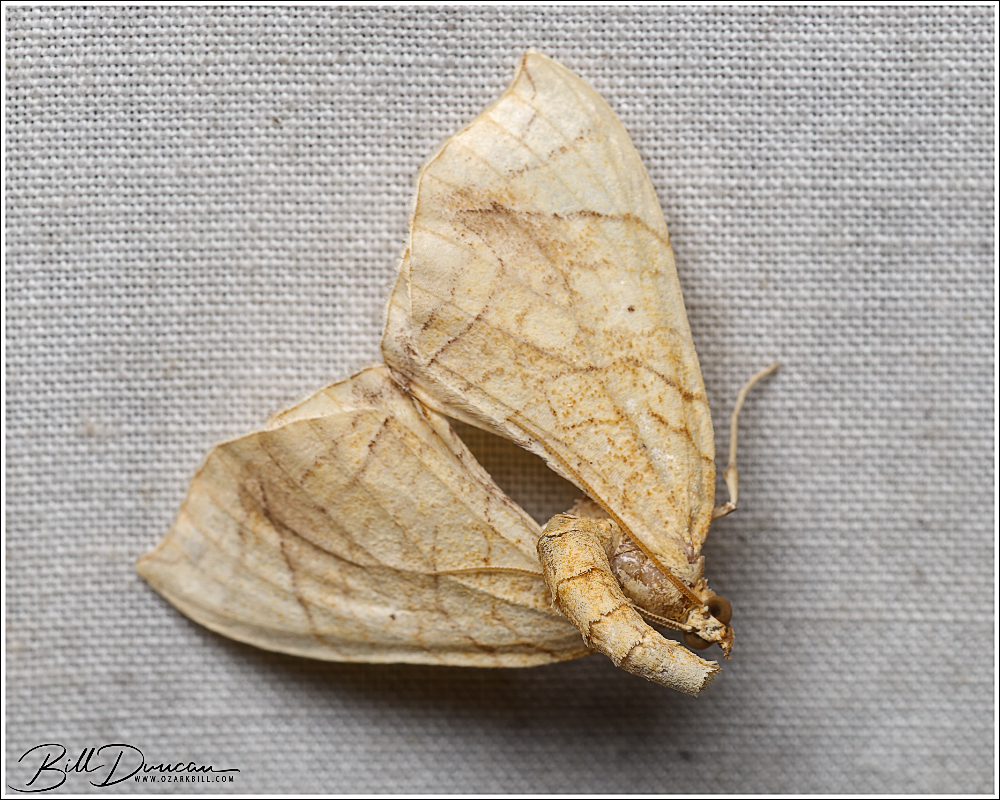
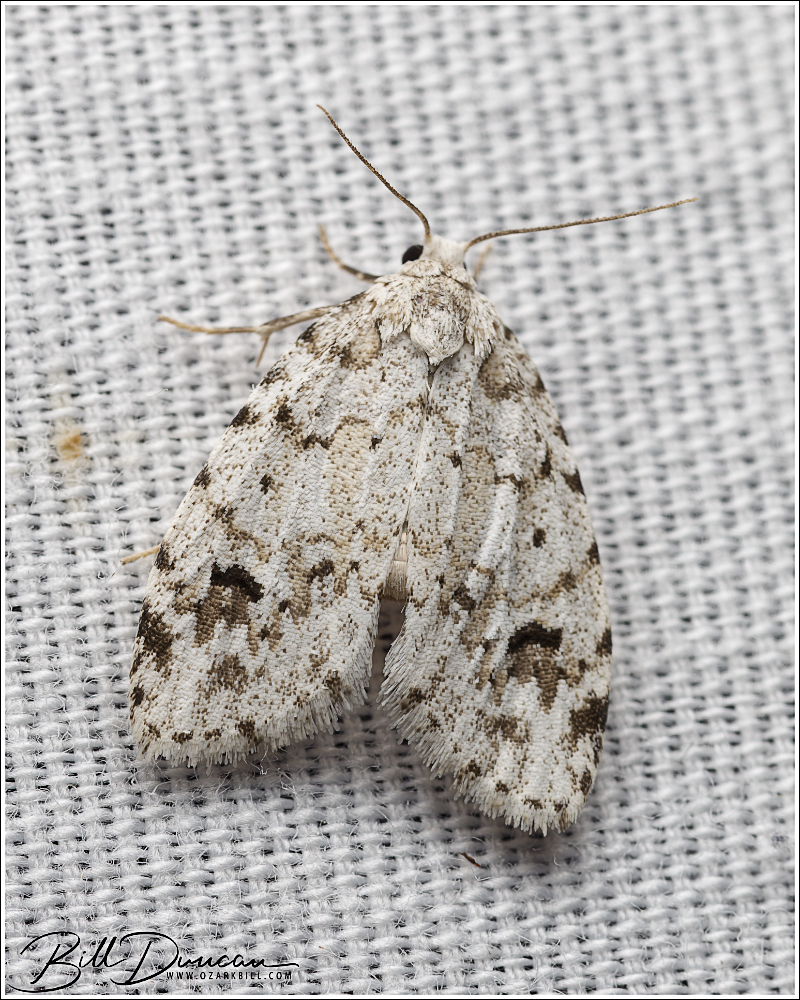
First up are a couple of moths found at a light trap we set up during a camp out at Caney Mountain Conservation Area in late September. The cool conditions were not conducive to attracting many moths, so the pickings were slim.

Eulithis sp. Fam. Geometridae
Clemensia albata (little white lichen moth) Fam. Erebidae

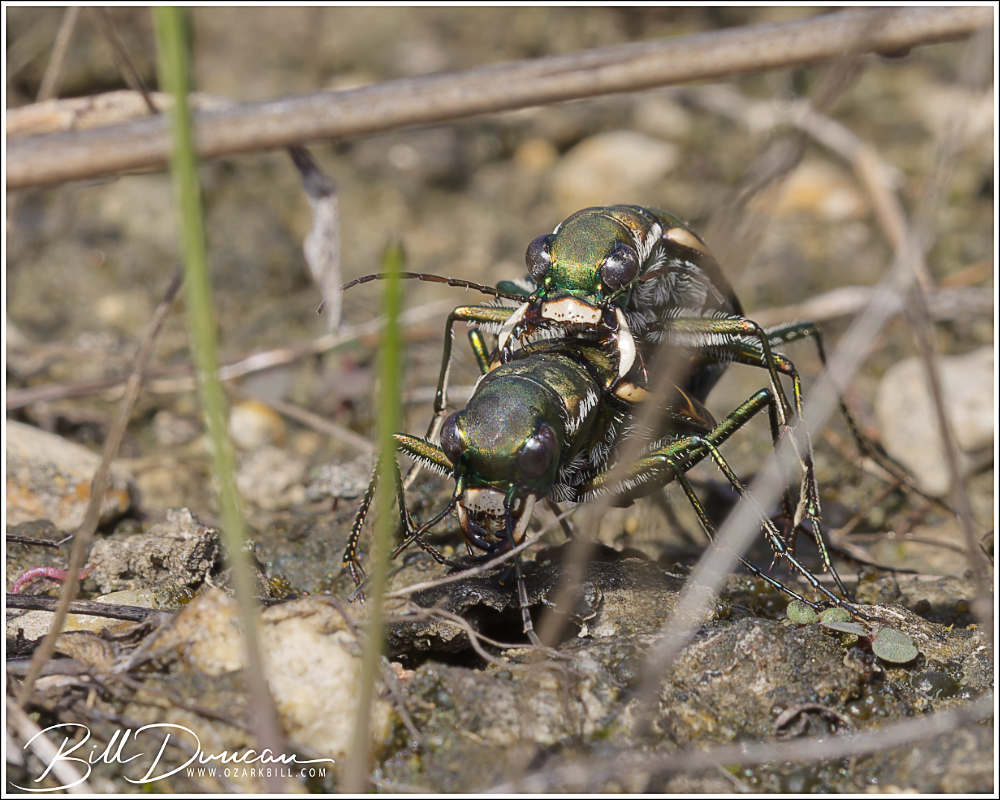
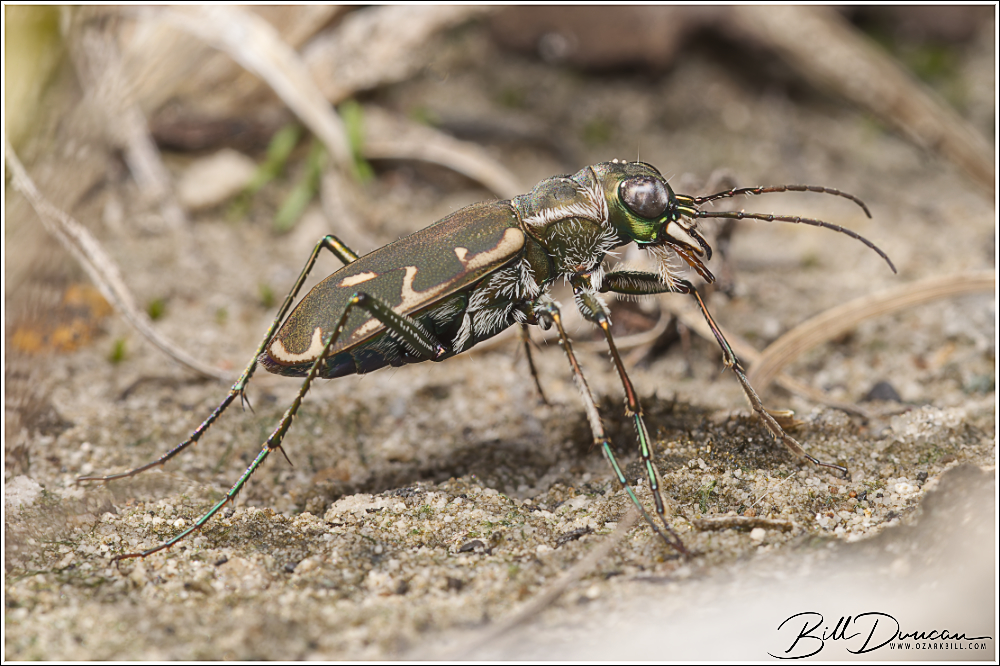
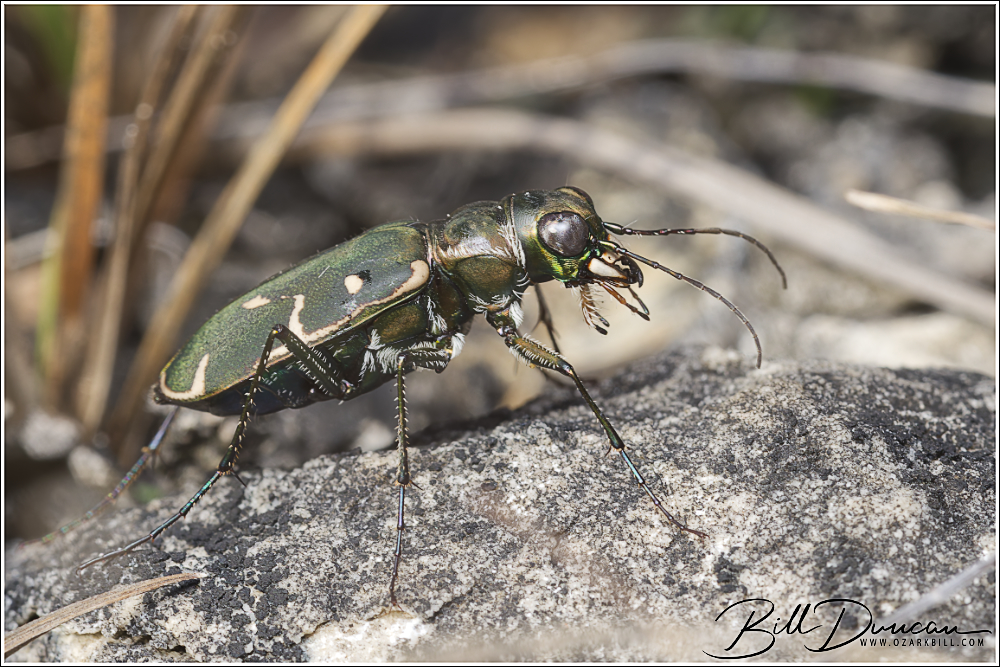
Next up is the fantastic Cicindelidia obsoleta vulturina (prairie tiger beetle). This species is primarily found in Texas, but there are scattered populations in Missouri, Arkansas, and Oklahoma.

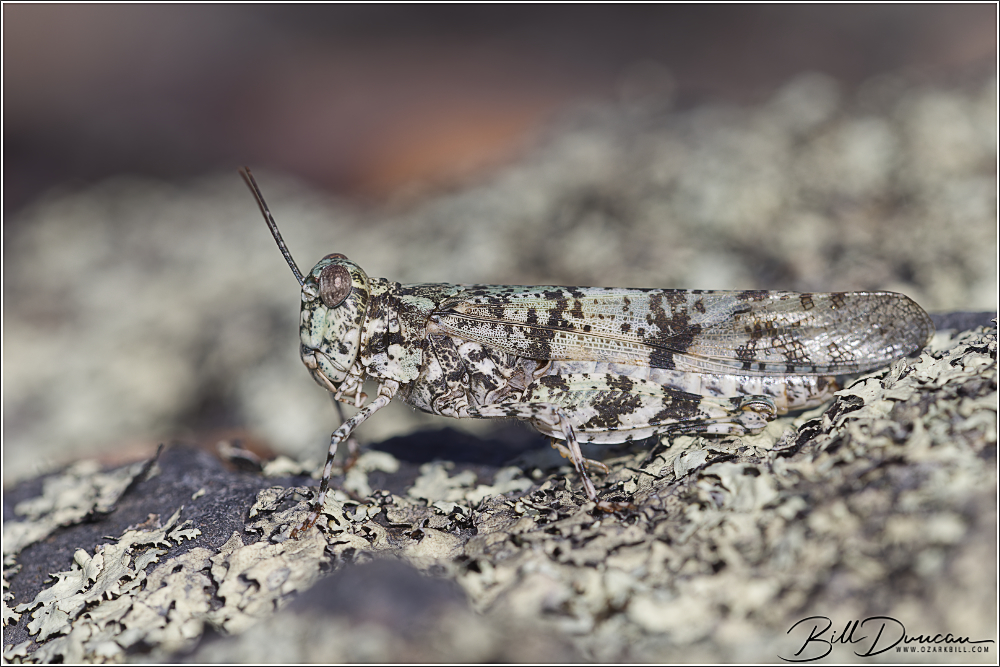
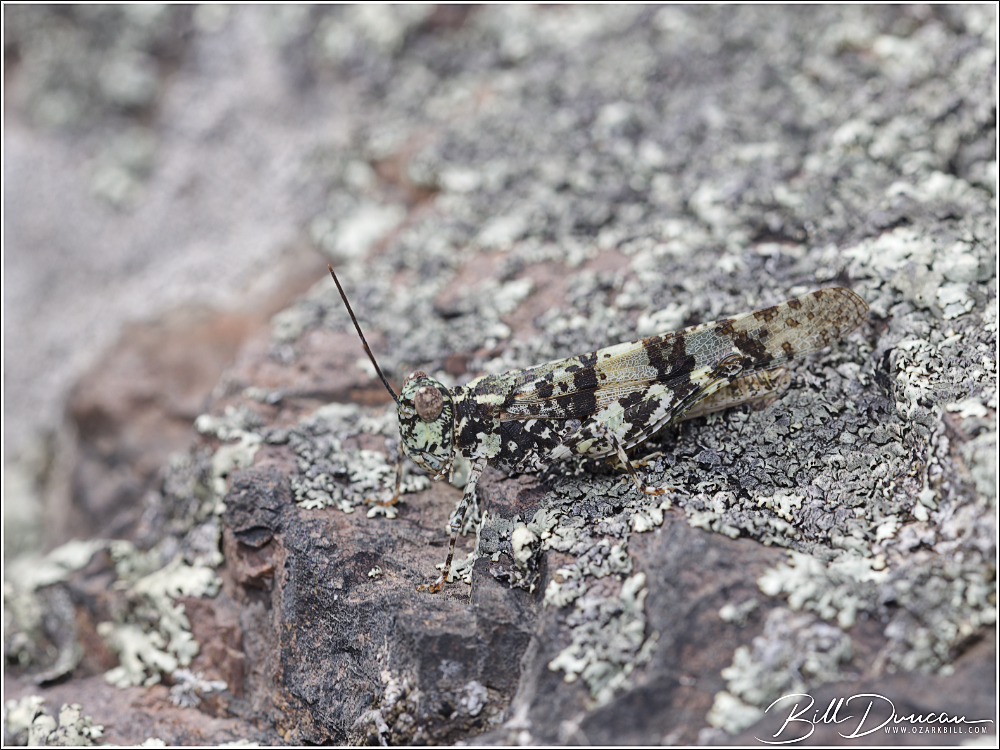
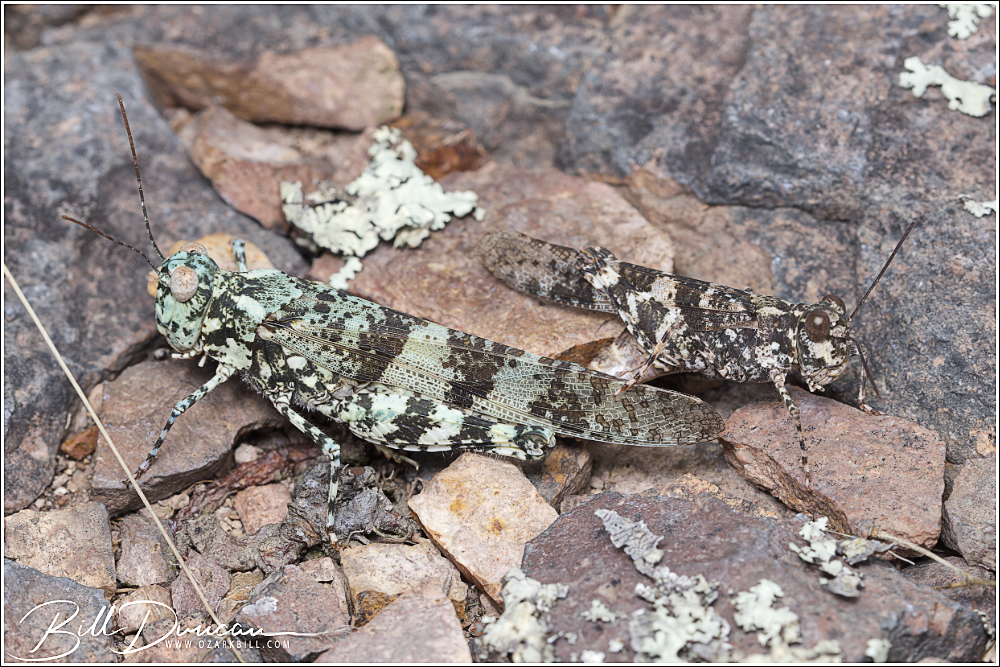
Finally, from a trip to Hughes Mountain Natural Area, we found a good number of Trimerotropis saxatilis (lichen grasshopper) Fam. Acrididae. These masters of camouflage utilize open, rocky areas like Missouri’s glade habitats.

Mating pair of Trimerotropis saxatilis

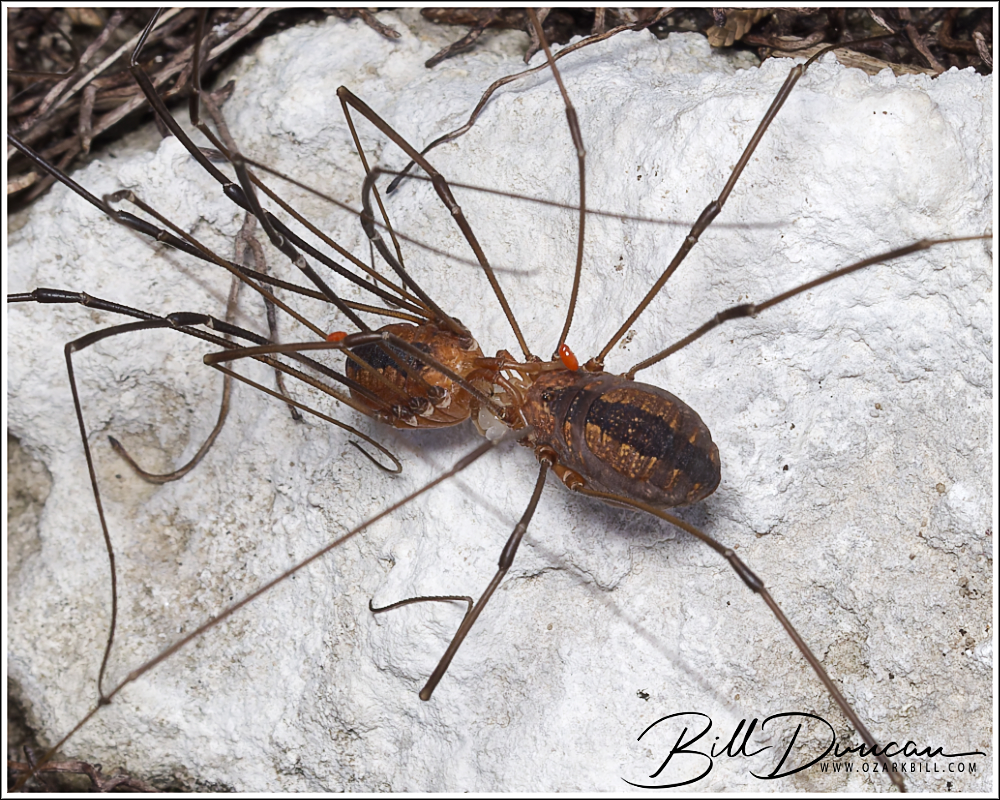
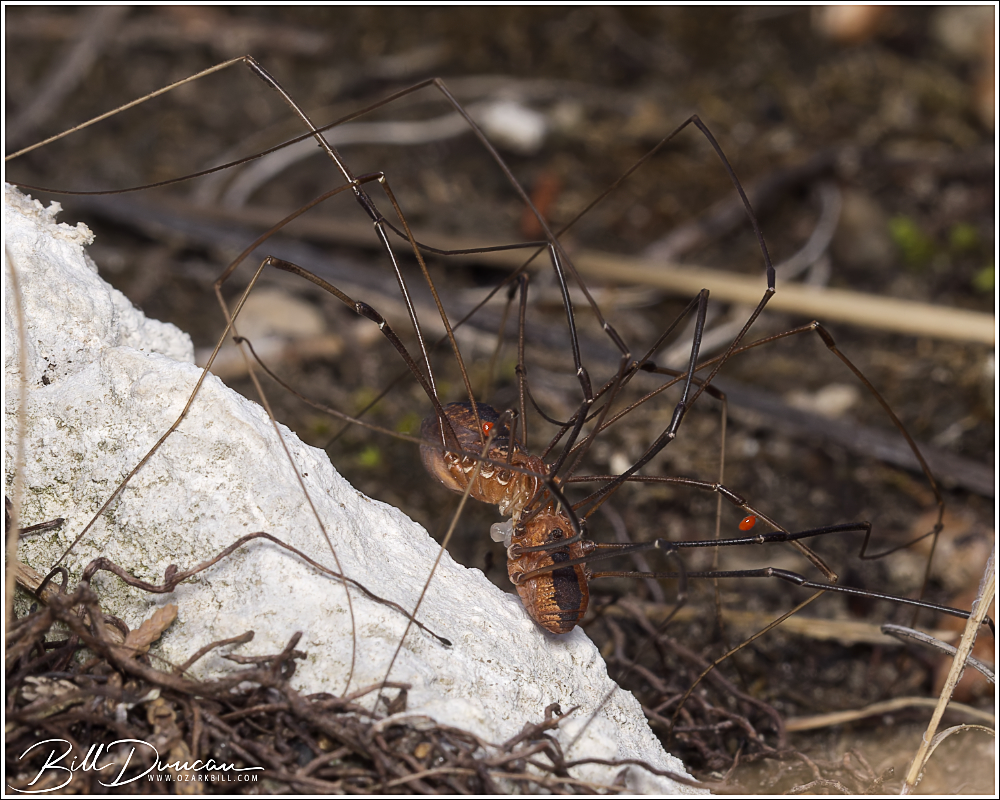
Mating Harvestmen

During a WGNSS Entomology Group trip in September of last year, we were thrilled to come across a mating pair of Leiobunum vittatum (eastern harvestmen) at Caney Mountain Conservation Area. In some of the photos below, you can see the male handing off his prenuptial gift to the female. Prenuptial gifts are produced by the males and consist of a mix of essential amino acids. Mating behaviors in harvestmen are complex and vary wildly between taxa. Unfortunately, these guys were among thick scrub that made for difficult photography. I tried my best to capture some of this behavior.

First look at mating eastern harvestmen. Smaller male at back/left.
A closer look shows what I presume to be a prenuptial gift being handed off to the female at front/right.
Another look at mating embrace of Leiobunum vittatum (eastern harvestmen).

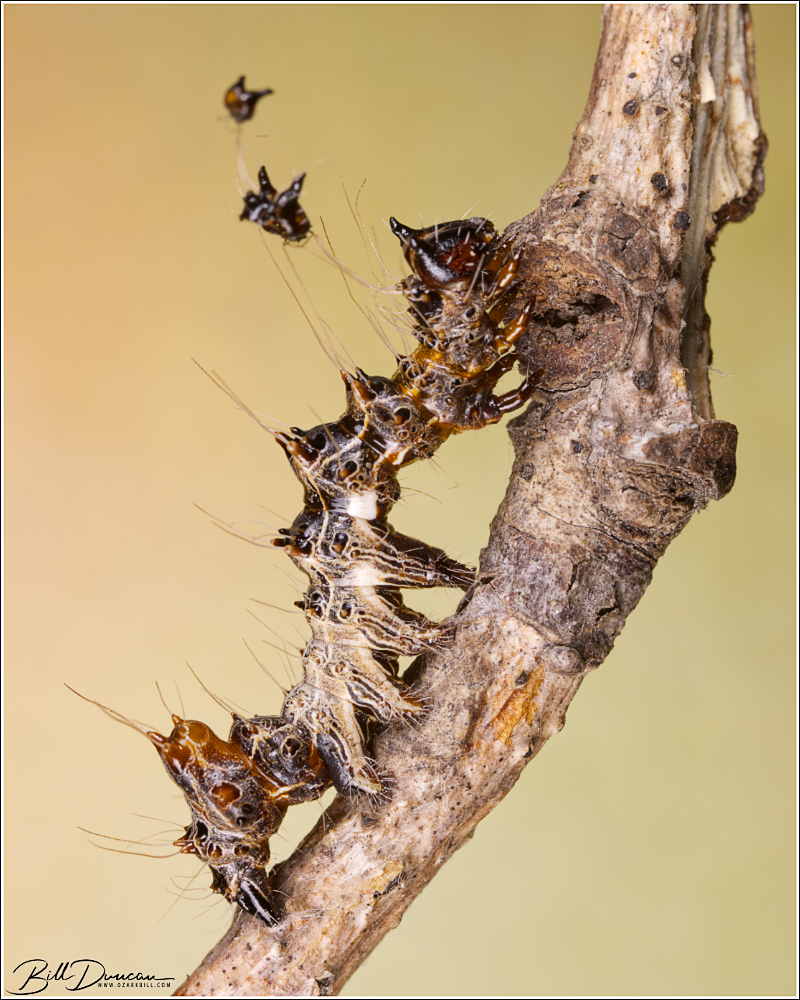
2025 Caterpillar Season – Harris’s Three-spot

Harris’s Three-spot
Harrisimemna trisignata fam. Noctuidae (Hodges#9286)
Host plant: buttonbush (Cephalanthus occidentalis)
Date found: ~16, Aug, 2025
Location found: Franklin County, MO
Click here to see the adult moth
Notes: Part spider and part bird dropping, this caterpillar is absolutely astounding. Note the empty head capsules that the caterpillar retains with each successive molt. It has been shown that these caterpillars use these to thrash at potential parasitoid wasps and flies that approach while attempting to deposit eggs on their would-be hosts.

Special thanks to Eva Wiedeman who found this individual in her neighborhood and brought it to our WGNSS fieldtrip at Council Bluff Lake. Photographing this caterpillar was a prime objective for me this season. Now I just need to find one on my own and hopefully a larger 4th instar!