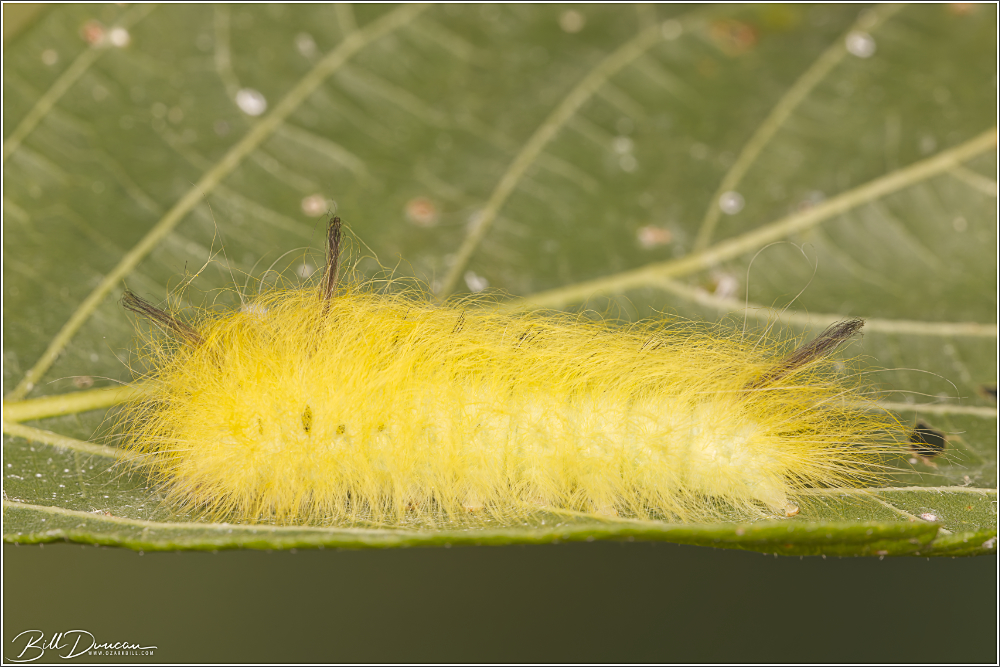
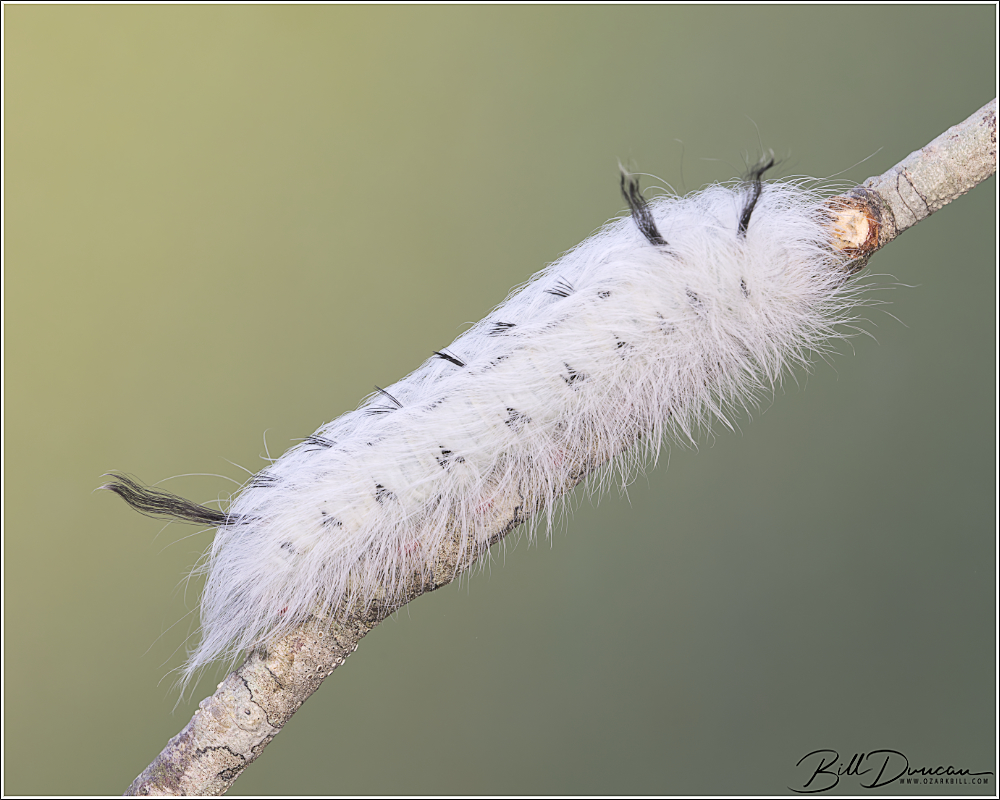
2026 Caterpillar Season – Distinct Quaker

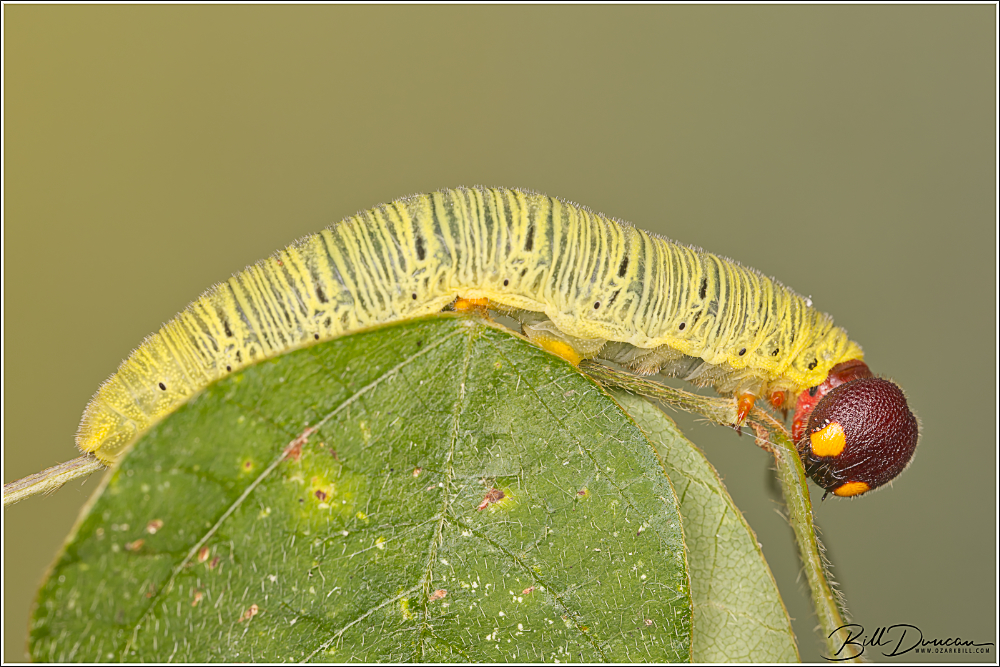
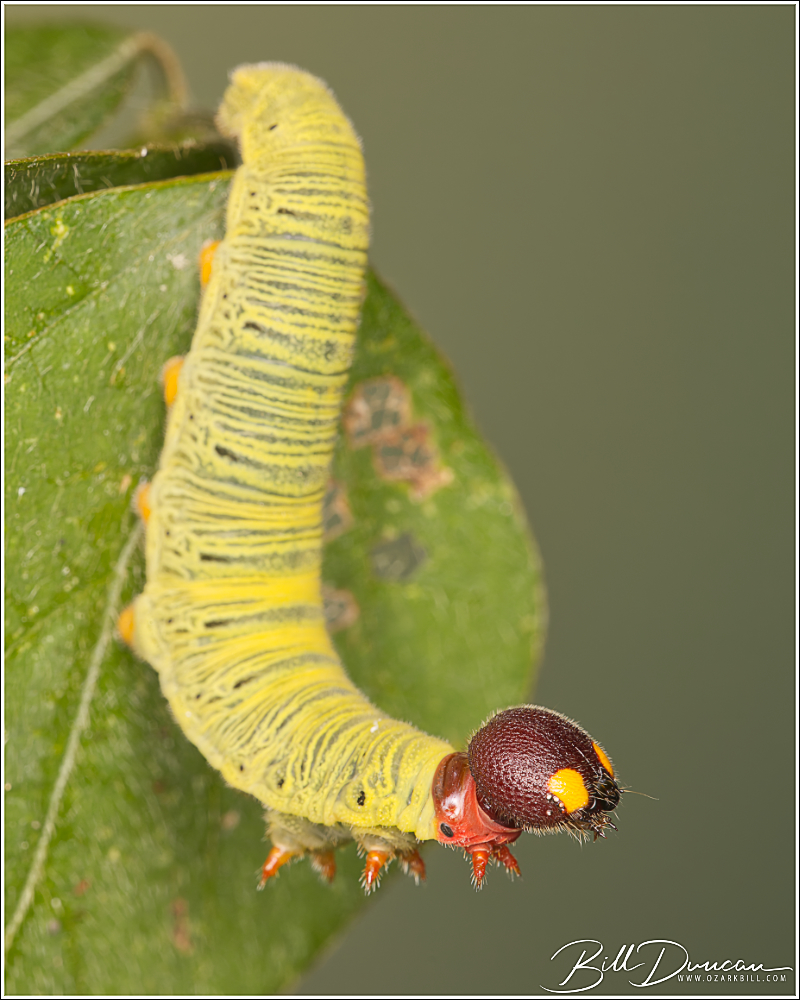
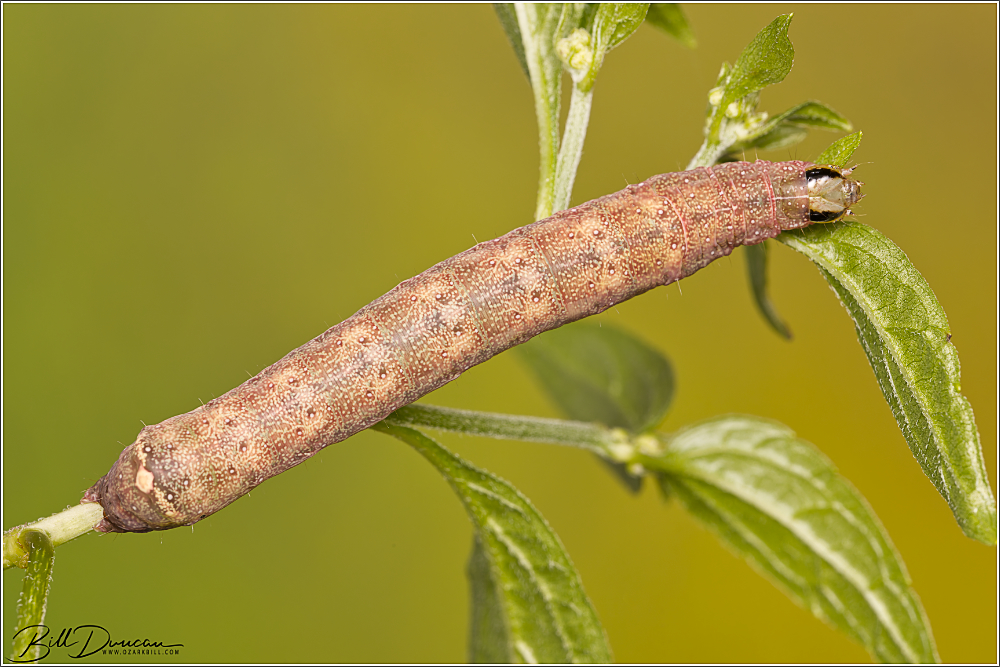
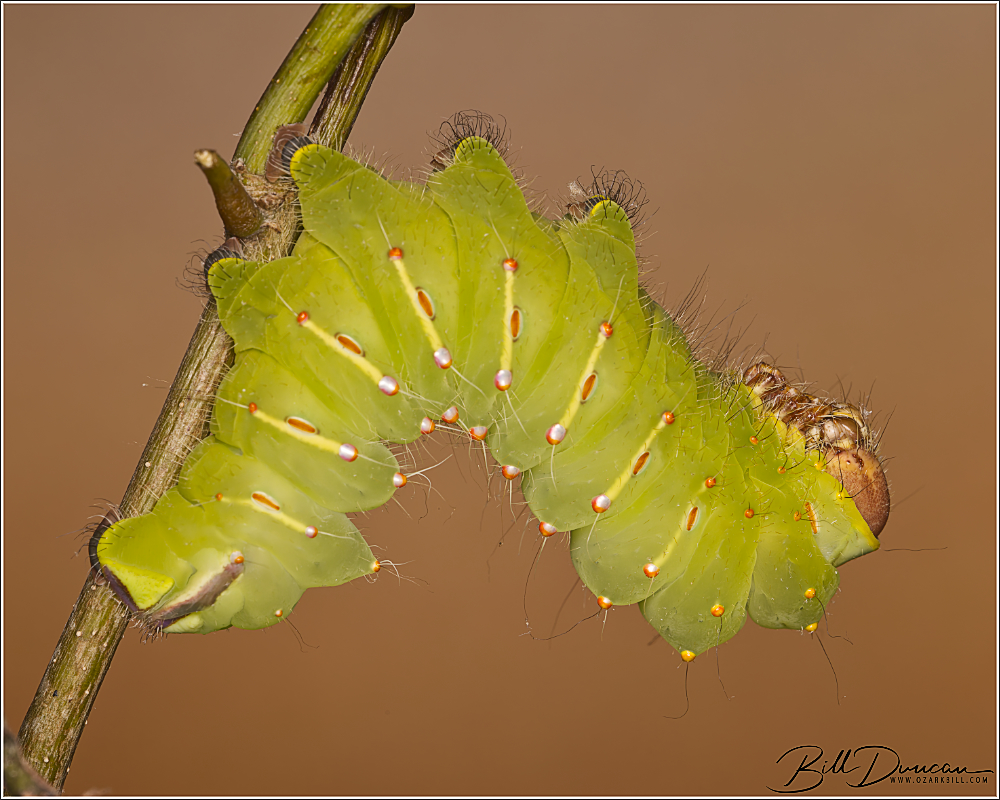
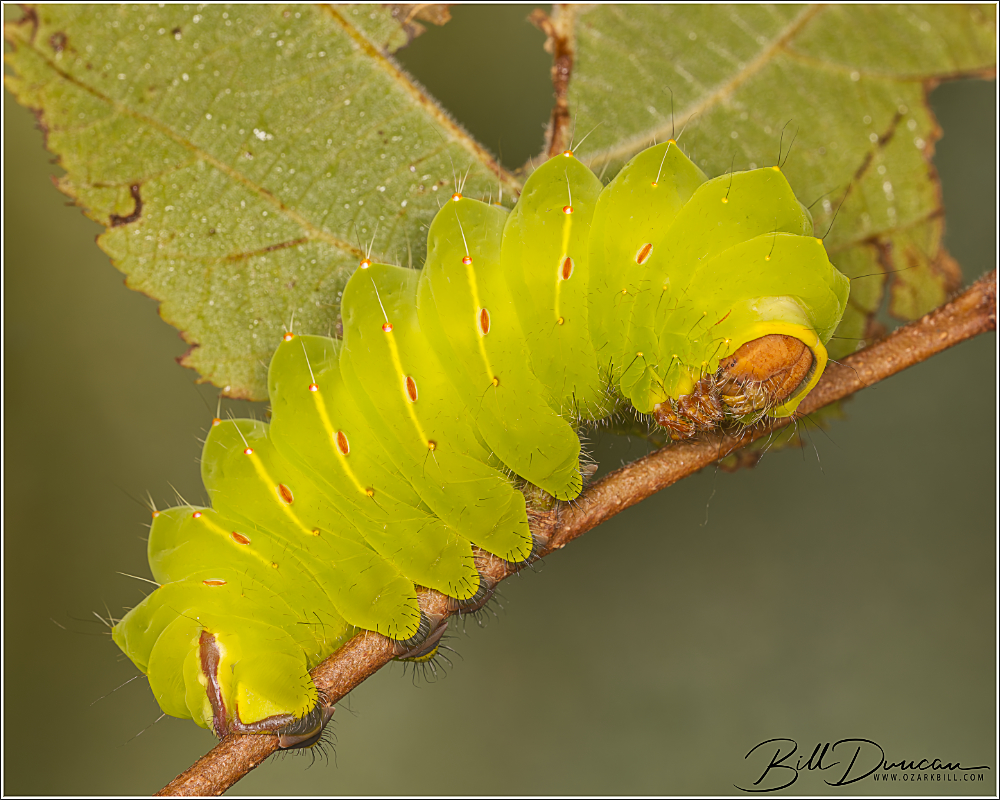
Distinct Quaker
Achatia distincta (Hübner, 1813) P-no. 932800, fam. Noctuidae
Host plant: Found on Carolina buckthorn (Frangula caroliniana)
Dates found: 24 May, 2026
Locations found: Tyson Research Center, St. Louis County, MO
Notes: This common noctuid larvae can be found in April and May. This is a univoltine species, and the adults are early fliers. This species spends most of its life cycle in the cocoon.

2026 Caterpillar Season – The Betrothed

The Betrothed
Catocala innubens (Guenée, 1852) P-no. 930761, fam. Erebidae
Host plant: honey locust (Gleditsia triacanthos)
Dates found: 6 June, 2026
Locations found: Tyson Research Center, St. Louis County, MO
Notes: With more than 60 species documented in Missouri, the Catocala are common moths in our state. Despite this fact, this was my first time finding a caterpillar in this genus. Special efforts are needed to find them. They are strictly nocturnal feeders, spending the daylight hours hidden in bark crevices or even climbing all the way down their host tree’s trunk to spend the day in the leaf litter or in nearby herbaceous vegetation. Early instars can be found by beating tree limbs. Later instars can be found by searching at night. A more advanced technique involves using burlap “traps” wrapped around tree trunks. When the caterpillars move up or down, they may stay in the burlap flaps allowing you to check for them during the day. C. innubens is a specialist on honey locust.

2026 Caterpillar Season – Grote’s Sallow

Grote’s Sallow
Copivaleria grotei (Morrison, 1874) P-no. 931557, fam. Noctuidae
Host plant: green ash (Fraxinus pennsylvanica)
Dates found: 2 May, 2026
Locations found: Tyson Research Center, St. Louis County, MO
Notes: Copivaleria grotei is classified within a monotypic genus, meaning it is the sole member found in the genus Copivaleria. But it is not alone among many lepidopterans that specialize on ash trees or use ash trees as one of their preferred hosts. These species are at risk in Missouri due to the destruction of millions of ash trees by the invasive emerald ash borer (Agrilus planipennis).

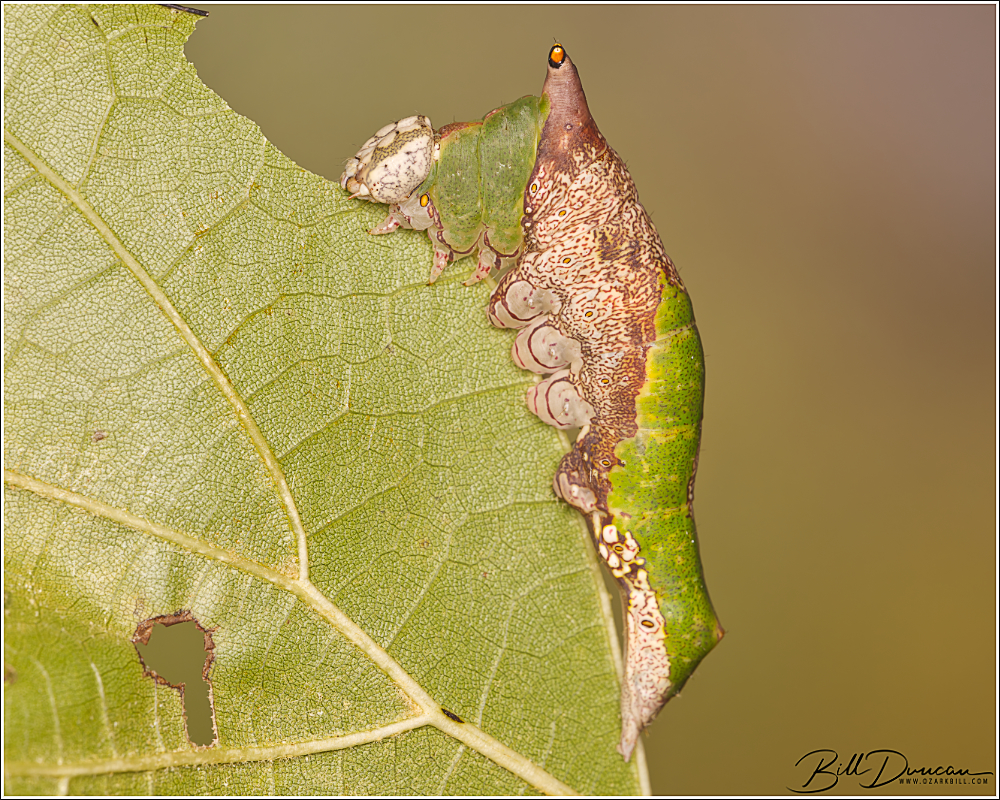
2026 Caterpillar Season – Double-toothed Prominent

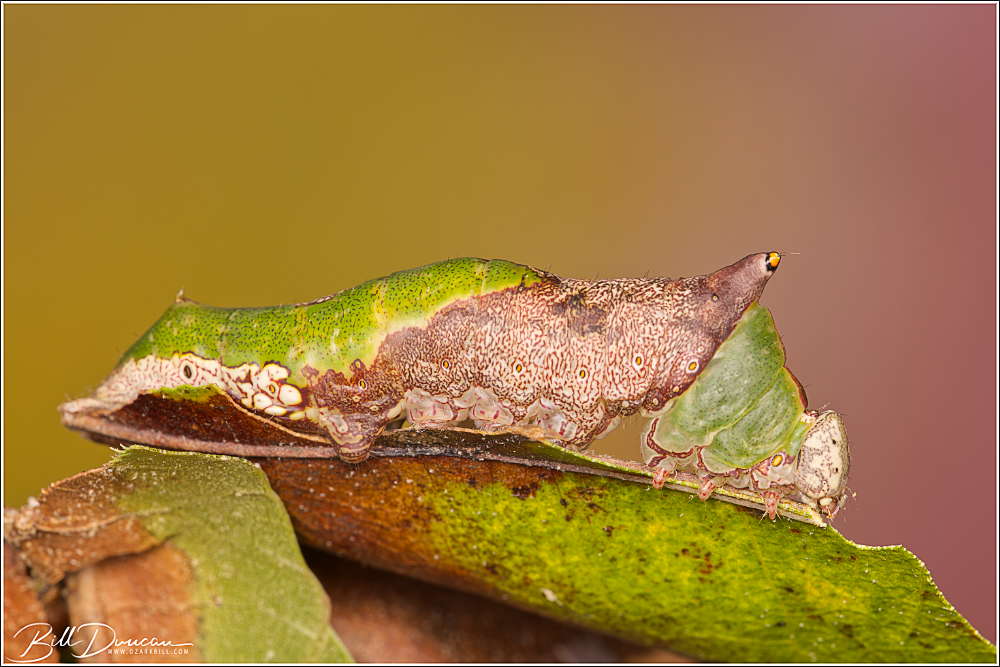
Double-toothed Prominent
Nerice bidentata (Walker, 1855) P-no. 930018, fam. Notodontidae
Host plant: Found on white oak (Quercus alba)
Dates found: 24 May, 2026
Locations found: Tyson Research Center, St. Louis County, MO
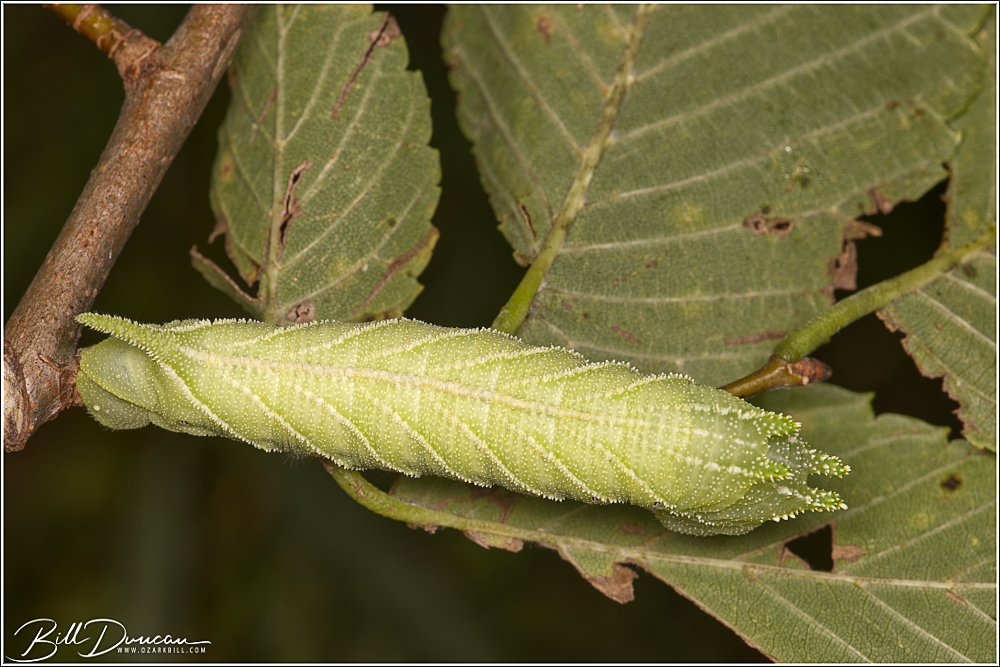
Notes: A master of camouflage. The double-toothed dorsal keel and the oblique subdorsal lines matching the leaf veins do a great job in blending into the leaf on which they feed and breaking up the form of a caterpillar.

2026 Caterpillar Season – Ashen Pinion

Ashen Pinion
Lithophane antennata (Walker, 1858) P-no. 932577, fam. Noctuidae
Host plant: Found on white oak (Quercus alba)
Dates found: 2 May, 2026
Locations found: Tyson Research Center, St. Louis County, MO
Notes: This species is noteworthy for a couple of interesting natural history stories. First, this is a rare case of a lepidopteran that overwinters as an adult. Larvae of this species are also known to be cannibalistic, feeding on other caterpillars in addition to the leaves of their host plant. Check out this amazing video showing the predatory behavior of one of these caterpillars: https://www.facebook.com/watch/?v=941240722582546

2026 Caterpillar Season – Juniper Hairstreak

Juniper Hairstreak
Callophrys gryneus (Hübner, 1809) P-no. 77a0507, fam. Lycaenidae
Host plant: eastern red cedar (Juniperus virginiana)
Dates found: 9, 24 May, 2026
Locations found: Tyson Research Center, St. Louis County, MO
Notes: A master of camouflage. As the photos show, it would be a waste of time hunting for this species by eye amongst the countless branches of an eastern red cedar. Instead, using beating techniques or UV light at night are the best methods for finding these guys.

2026 Caterpillar Season – Banded Hairstreak

Banded Hairstreak
Satyrium calanus fam. Lycaenidae
Host plant: hickory (Carya sp.)
Dates found: 2 May, 2026
Locations found: Tyson Research Center, St. Louis County, MO
Notes: This was an interesting find. I looked through a number of fresh leaf-roll shelters, finding all of them occupied by a to be identified noctuid caterpillar. In one of these I also found this banded hairstreak caterpillar that was being attended by ants.

2026 Caterpillar Season – Lettered Sphinx

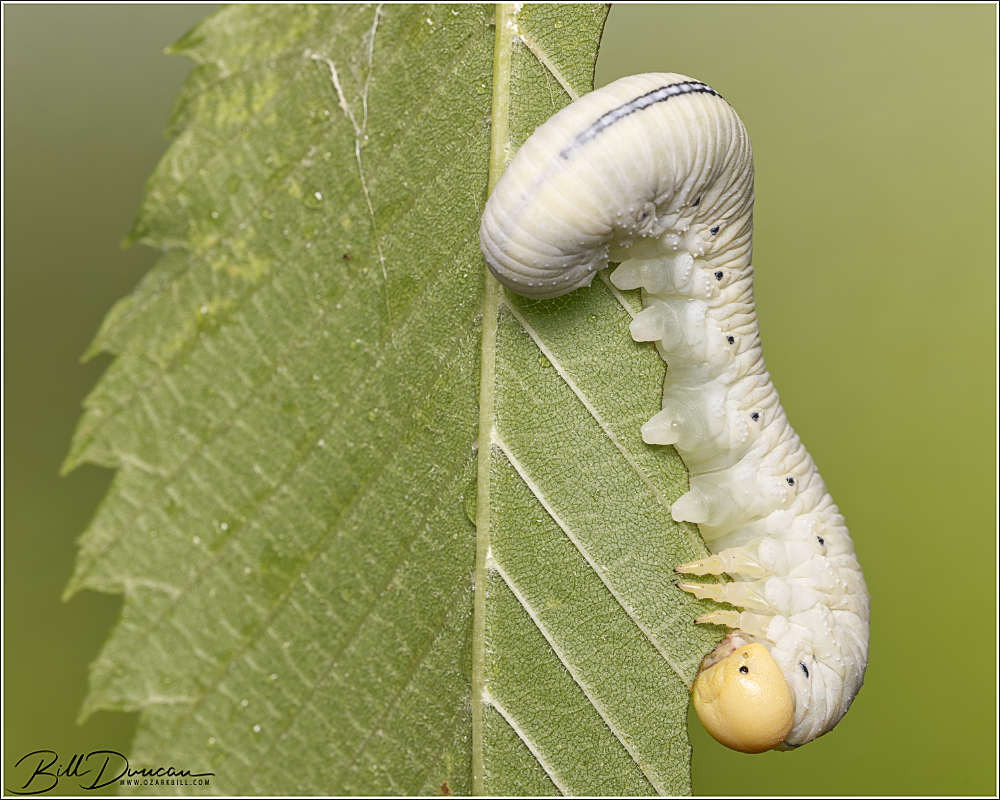
Lettered Sphinx
Deidamia inscriptum fam. Sphingidae
Host plant: wild grape (Vitis sp.)
Dates found: 30 May, 2026
Locations found: Tyson Research Center, St. Louis County, MO
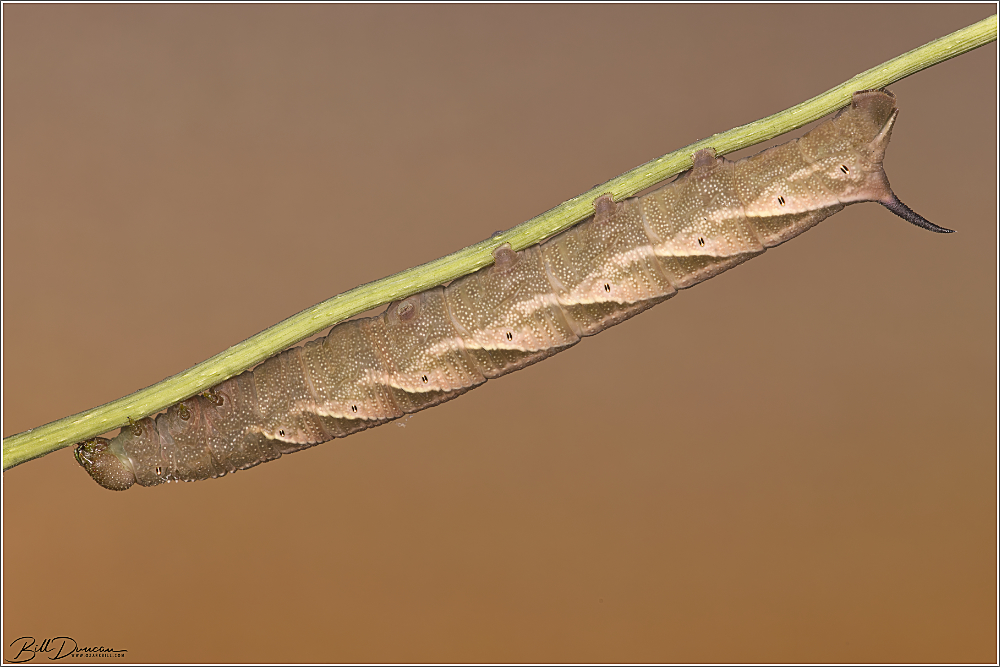
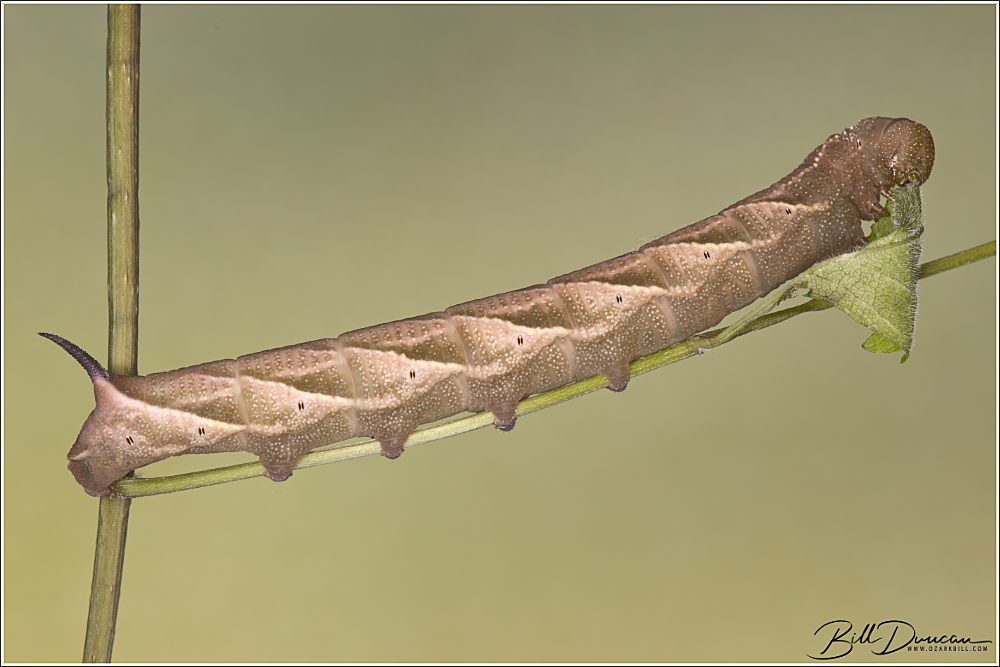
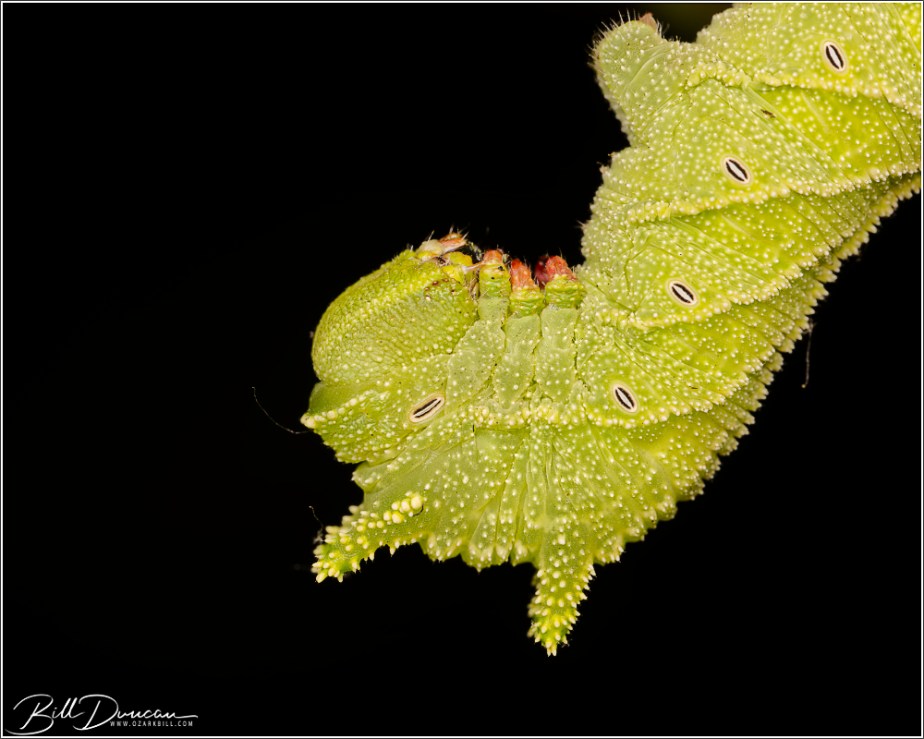
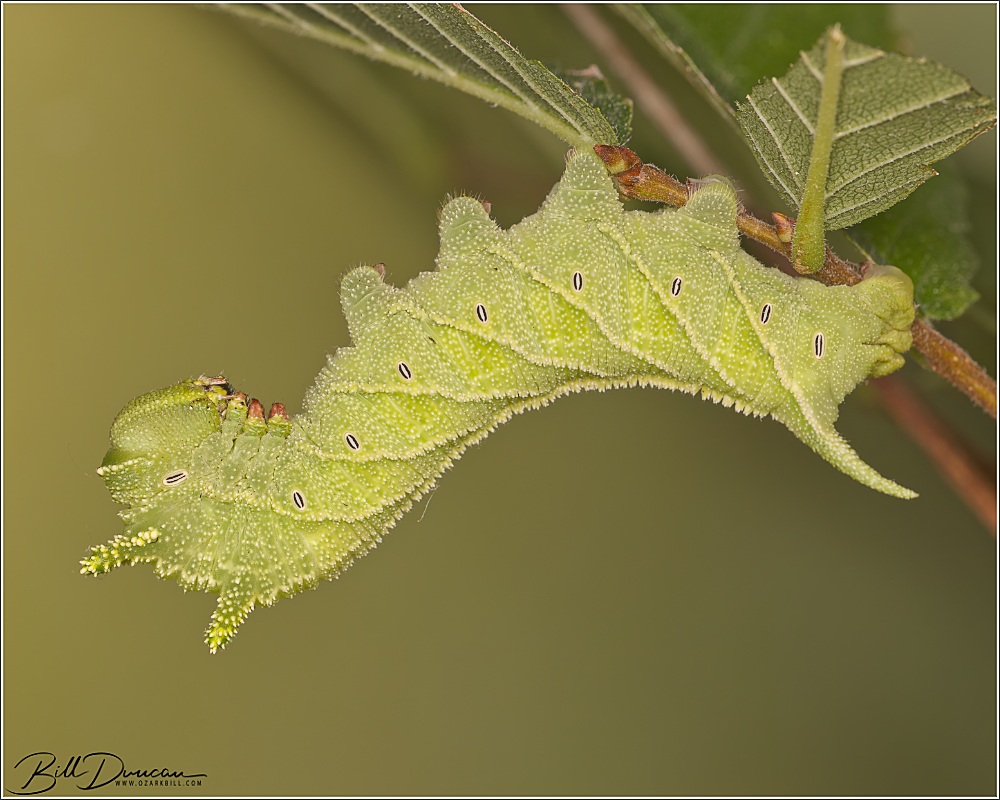
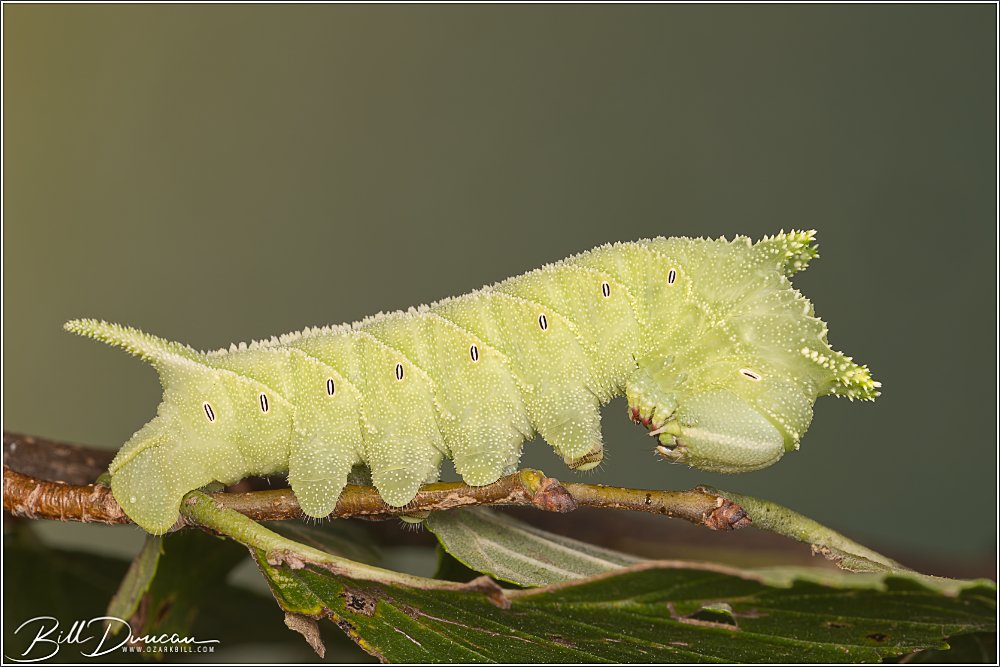
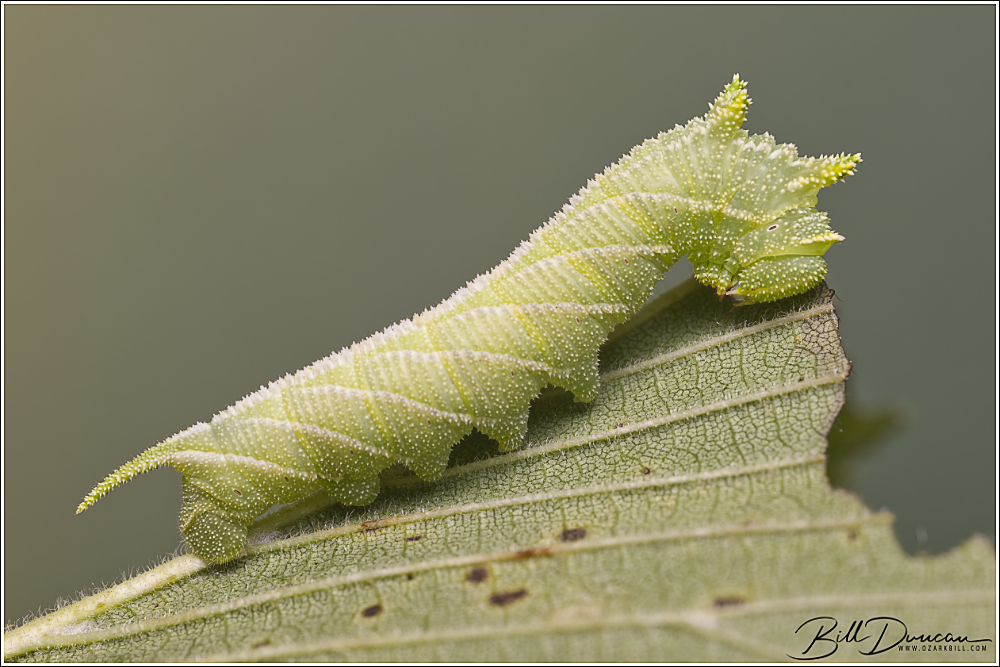
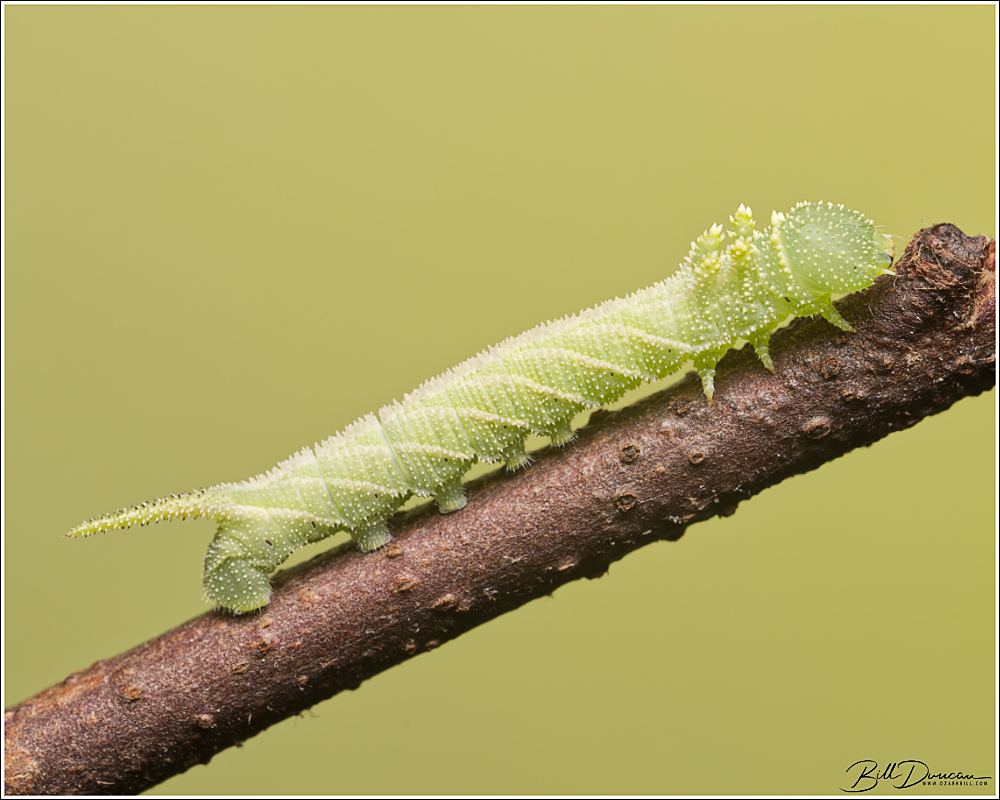
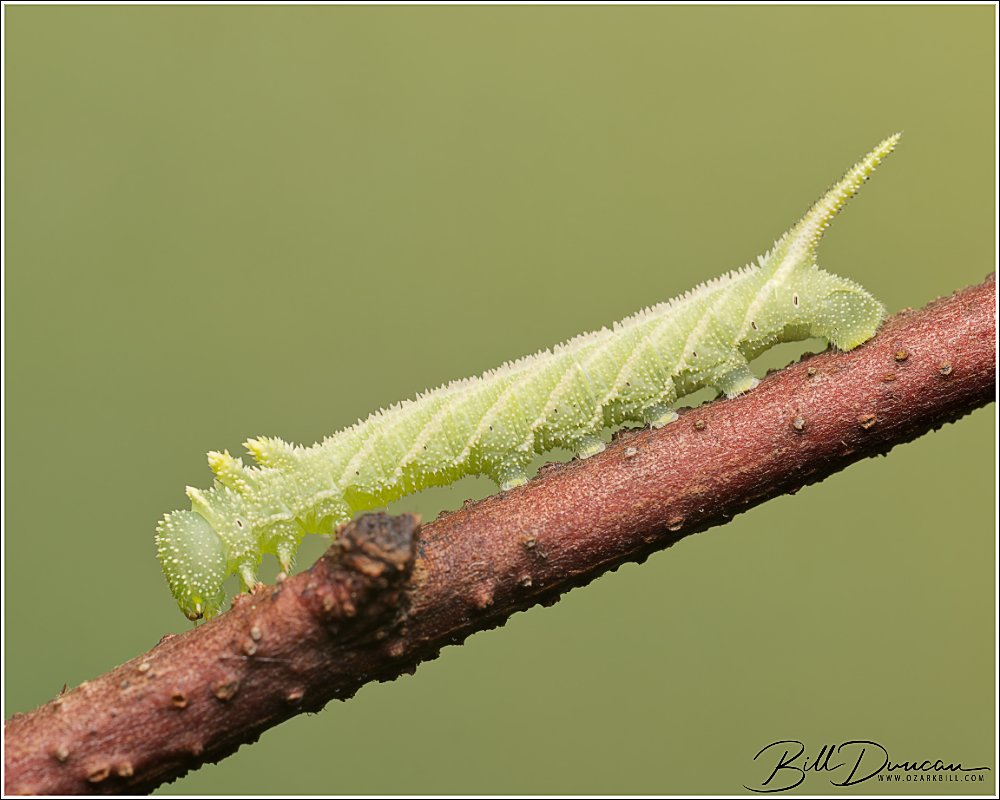
Notes: The caterpillar season started much earlier than typical for me. This year, I am making a point to start hunting in spring and early summer, enabling me to pick up new species that are not found later in the season. Additionally, I am finding some of the same species that I find during late season; thus, I am learning which species have multiple broods in our area. I have not been having a lot of success in finding cats in my early season hunting, but I have been having enough success with interesting species to keep me trying.

The lettered sphinx is an early season species that I found for the first time this year. My unfamiliarity with many of the sphinx moth caterpillars caused me some frustration. I found two of these on some grapevine. Due to their small size and lack of strong pattern contrast, I assumed these were early-mid instars of a typically larger species and one that I would most likely not be able to identify with certainty. Because of this, I did not take the time and efforts in getting as good of photographs of it that I would have liked. This species is one of the smallest and earliest of all the sphingids found in Missouri, with caterpillars being found from April through July.

The behavior shown in these photos is a trait unique with this species. Upon disturbance, they throw their heads back over their bodies, exposing their mouthparts and legs to the air.

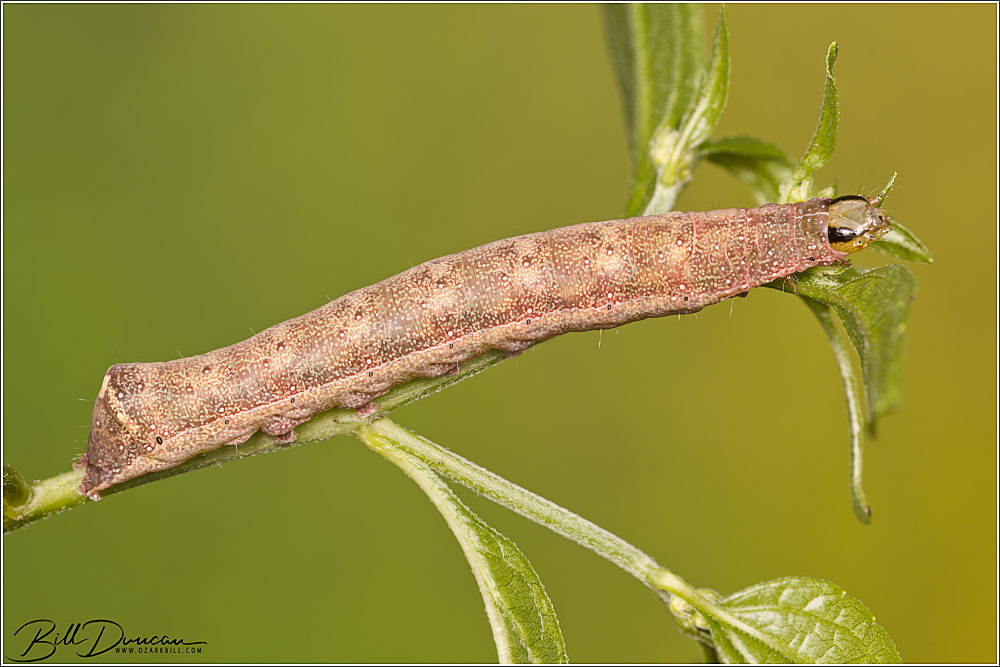
2025 Caterpillar Season – Small Engrailed

Small Engrailed
Ectropis crepuscularia. fam. Geometridaae
Host plant: Not recorded
Dates found: 23 August, 2025
Locations found: Tyson Research Center, St. Louis County, MO
Notes: This is the sole member of its genus found north of Mexico. It’s range covers the U.S. coast to coast, including parts of Alaska and much of Canada.

2025 Caterpillar Season – Baileya Moth

Baileya Caterpillar
Baileya sp. fam. Nolidae
Host plant: Not recorded
Dates found: 30 August, 2025
Locations found: Tyson Research Center, St. Louis County, MO
Notes: There are four to six Baileya species found in Missouri. Although host plant preference may help to distinguish species, physical characteristics are of little help.