2026 Caterpillar Season – Wrap Up

It’s with mixed emotions when the green season comes to an end for me. This year was great for finding new and long-sought caterpillar species. I seemed to find a good flow of getting enough time in the field and being able to stay on top of record keeping and photo processing. I would always like to find more time for field hunting, but being a healthcare slave like the rest of us, necessitates having a job and paying the bills. I suppose the winter season will be a nice break and allow time for catching up on other projects, like building my list of species I want to find next year!

This post contains a miscellany of caterpillars found during the 2026 season that I have shared in their own posts either this year or in recent years. Thanks to those who have expressed their interests and compliments this year. Many reading this will know already, but I will tease that I have been working on a special project with caterpillars for the past year and I hope to be able to share more about this in the coming months.

Wishing you all a great winter season and I look forward to getting back to the hunt next season!

Gelechiidae
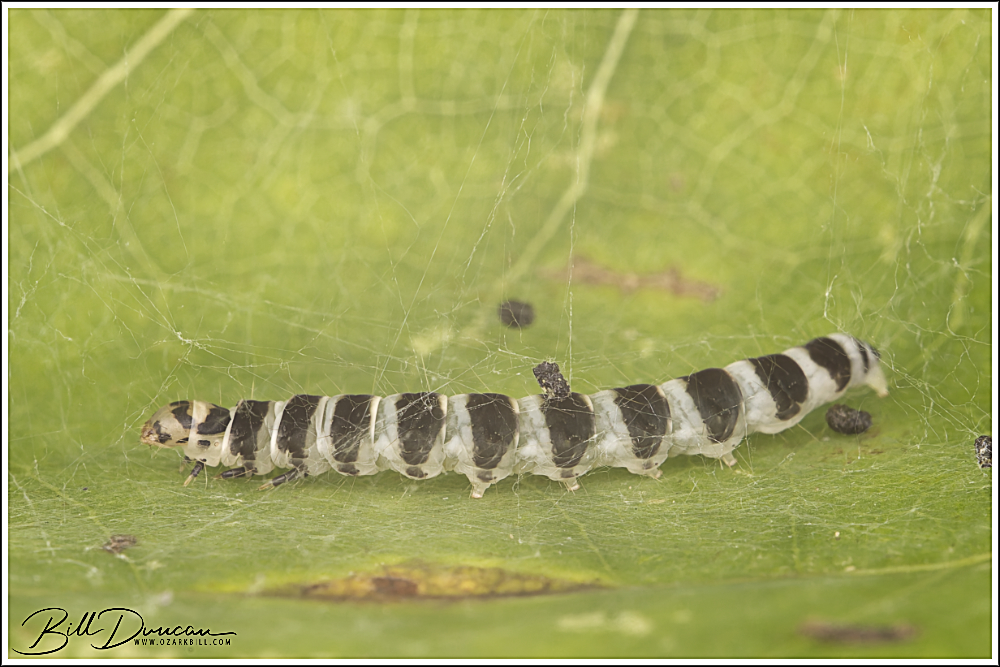
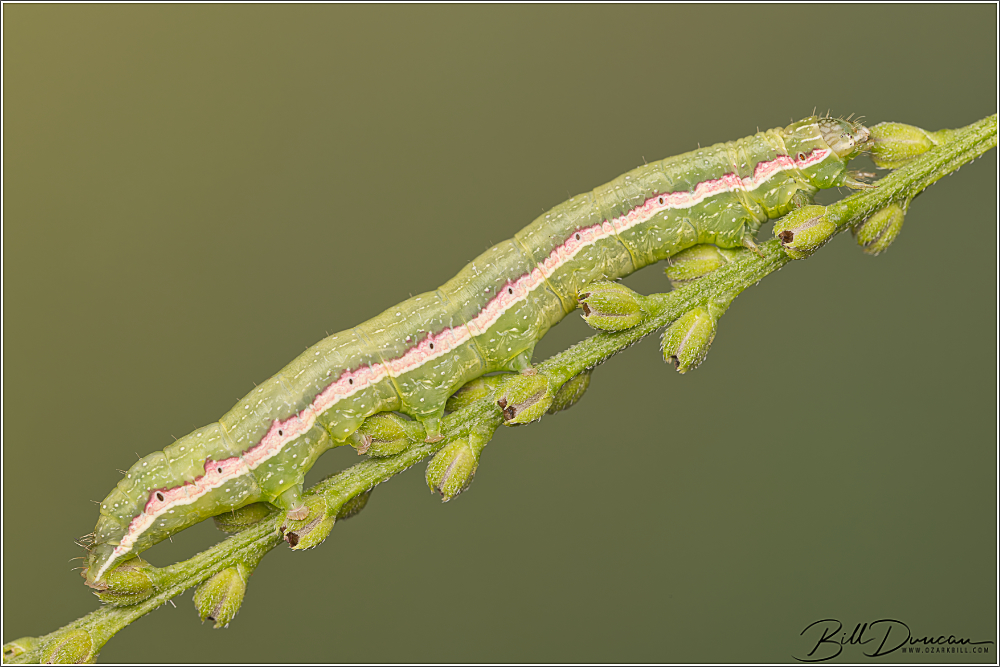
The redbud leafroller moth is quite common, but likely never seen by most unless you have taken the time to unfold one of its leaf shelters, constructed from the leaves of eastern redbud in Missouri. I still need better photos, but this will do for now.

Pyralidae

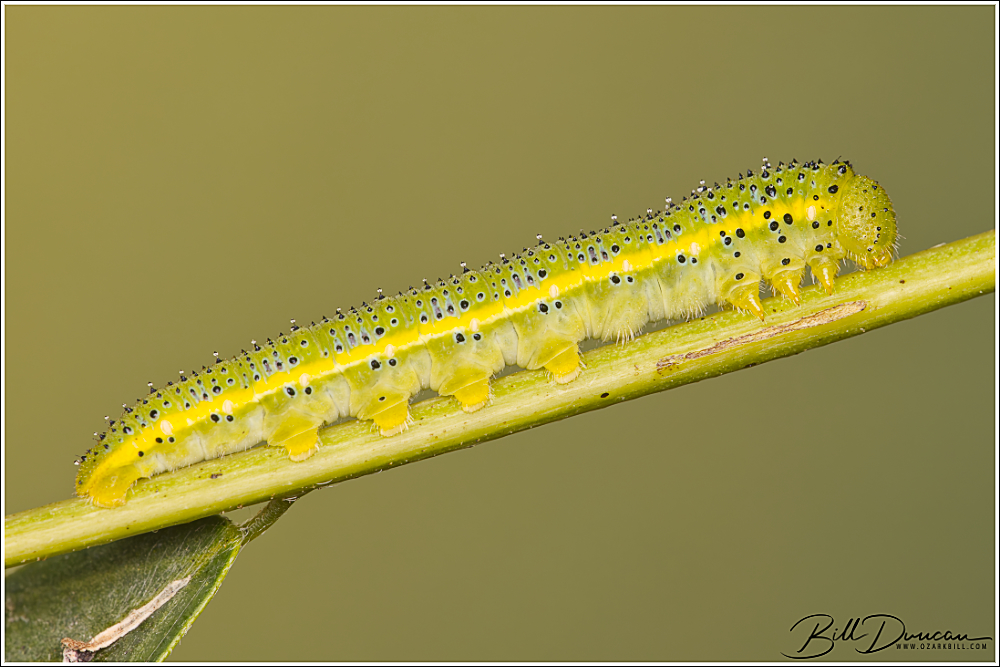
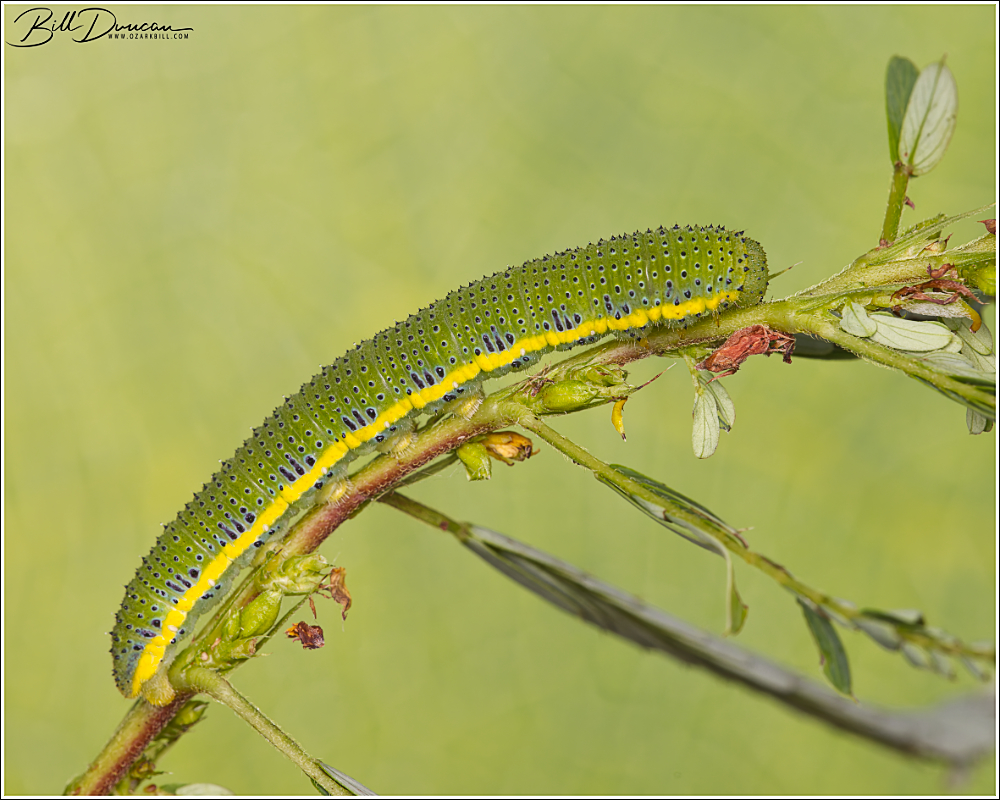
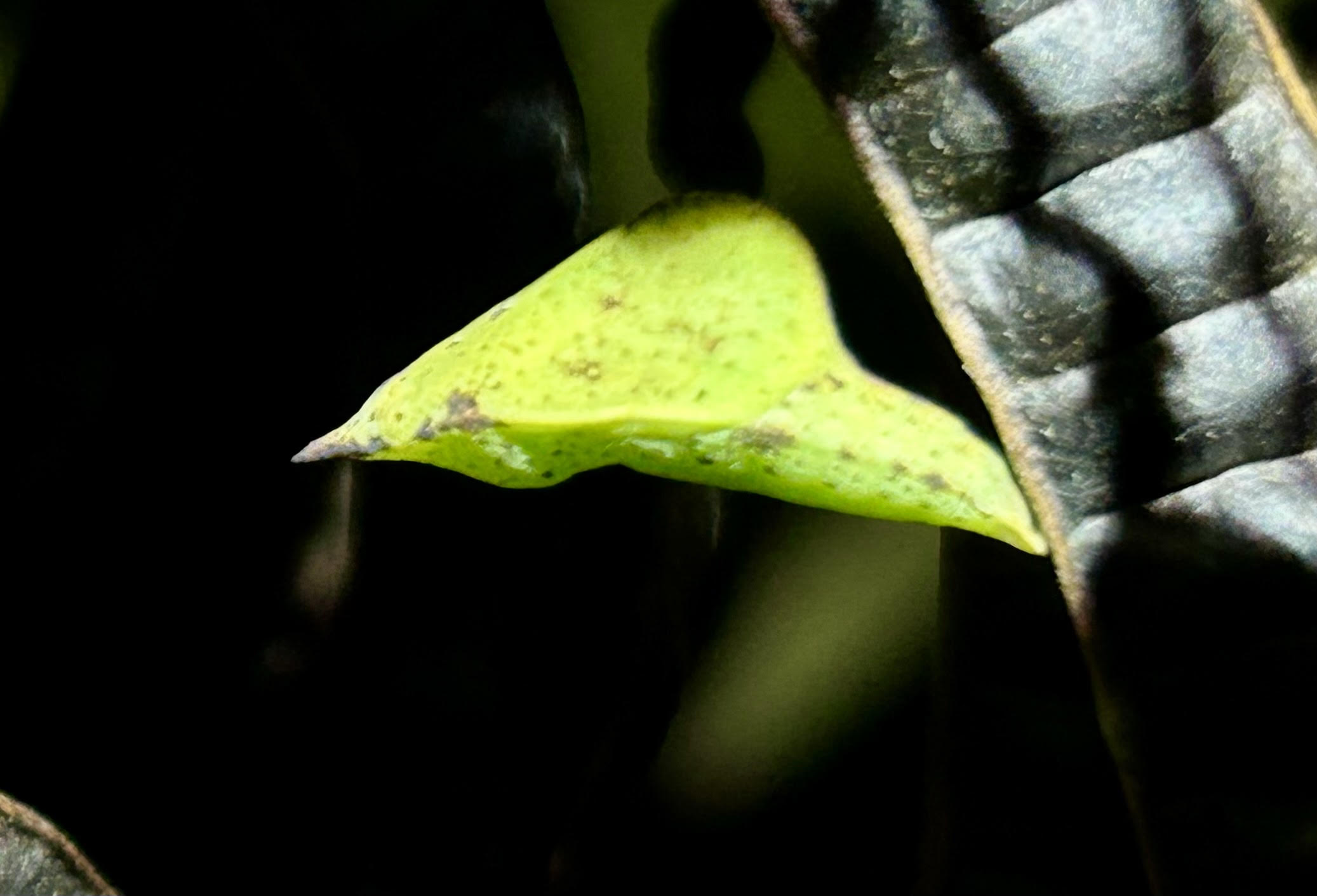
The clouded sulphur (Phoebis sennae) is very easy to find. Simply find its obligate host plants (Senna marilandica, Chamaecrista fasciculata) and have a look at night when they are more likely to be openly feeding. This species has a very cool chrysalis as well. Sorry for the crappy phone pic.
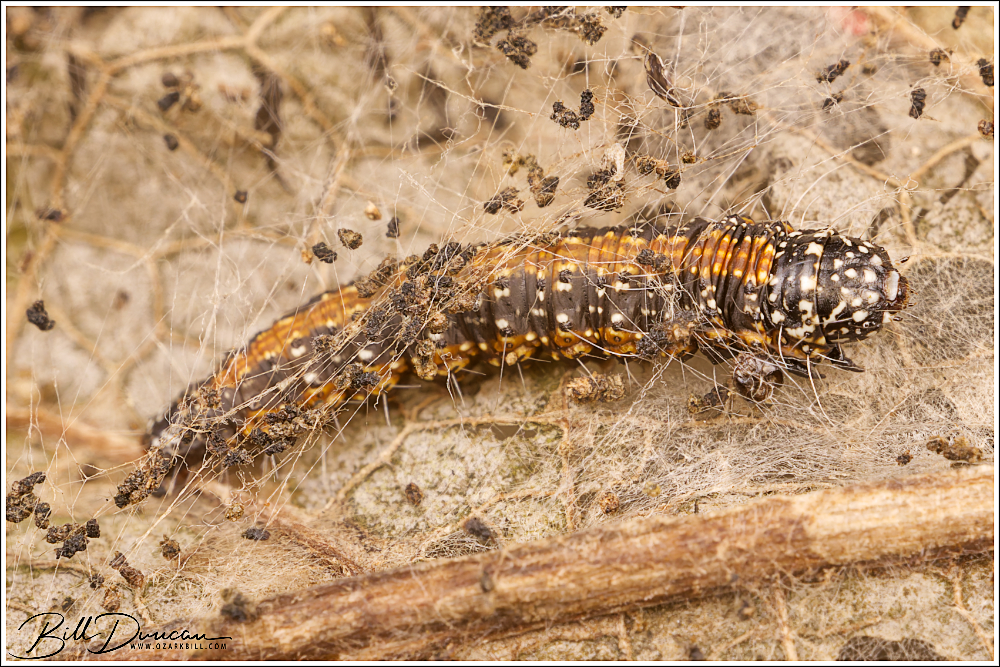
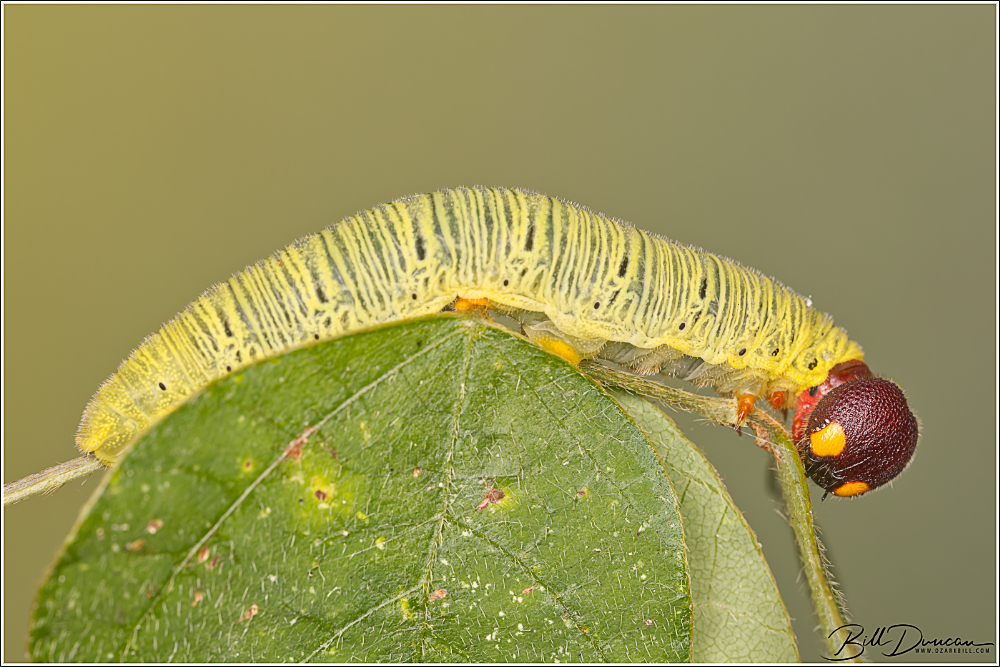
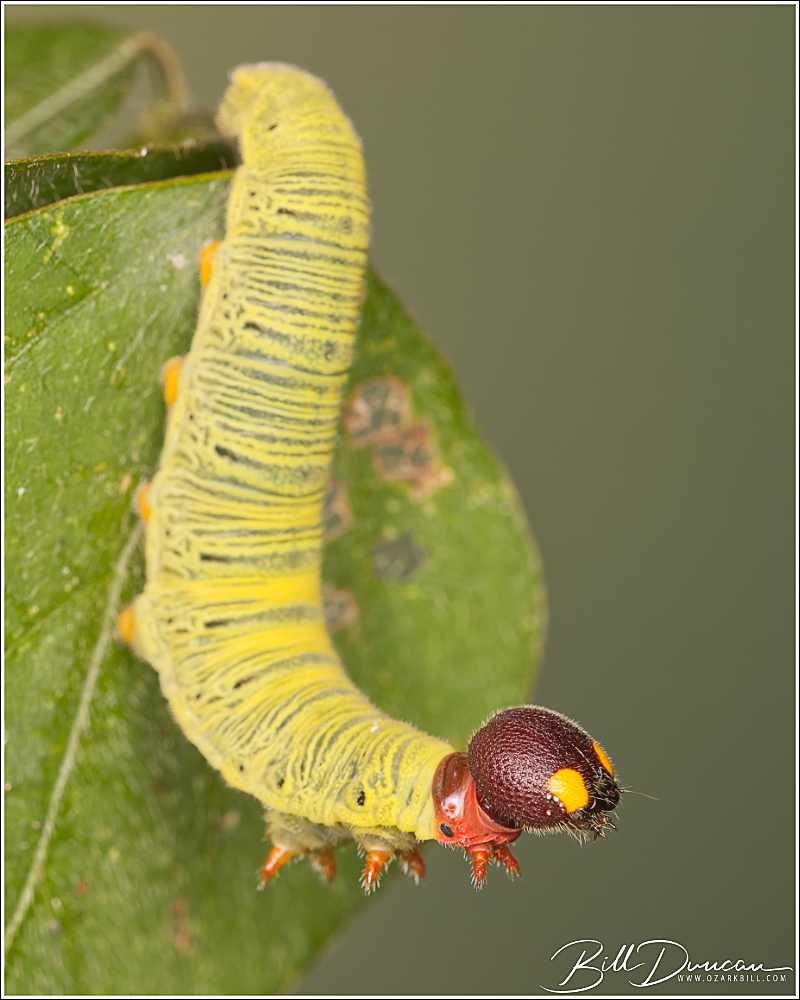
I’ve shared photos of the asimina webworm moth (Omphalocera munroei) caterpillar here on several occasions. There are a number of generalists who will feed on pawpaw (Asimina triloba), but specialists like this one are likely to exhibit their aposematic coloration, advertising to would-be predators that they will not be happy with their taste.

Nymphalidae

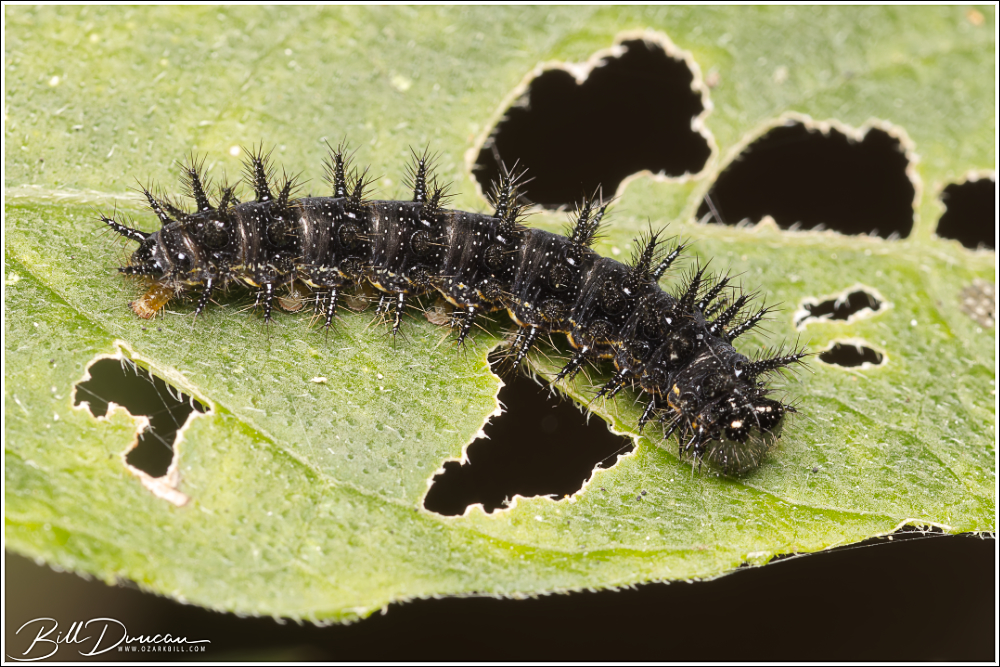
This handsome late instar silvery checkerspot (Chlosyne nycteis) was photographed at Tyson Research Center.

Papilionidae

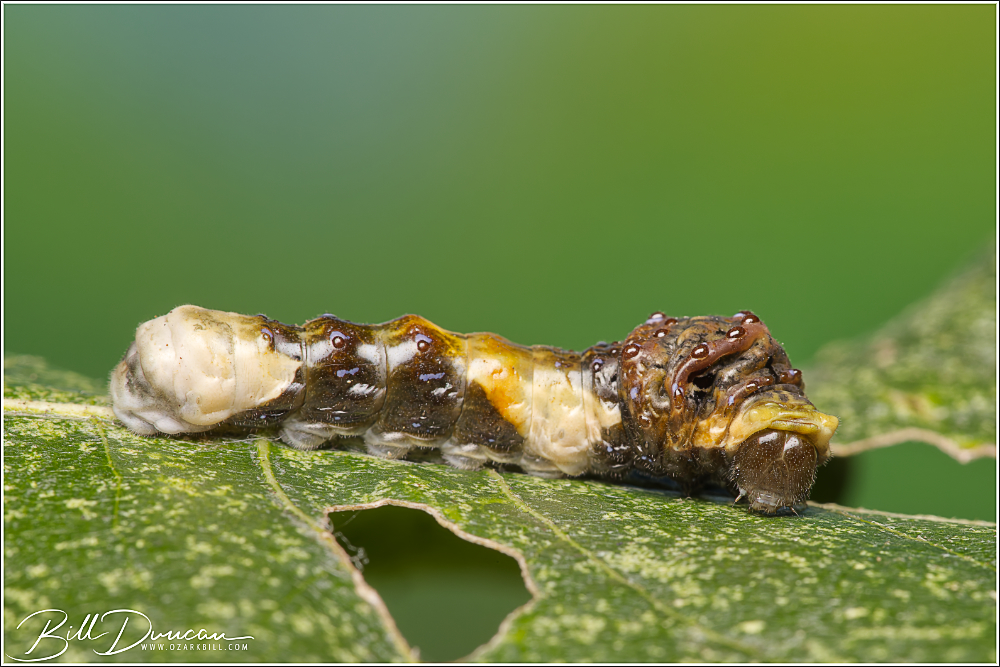
It’s always a thrill to find the bird dropping mimicking cats of the giant swallowtail (Papilio cresphontes).

Erebidae

This early to mid-instar curved-line owlet (Phyprosopus callitrichoides) was found be Eva Wiedeman in Franklin County, MO in early September.

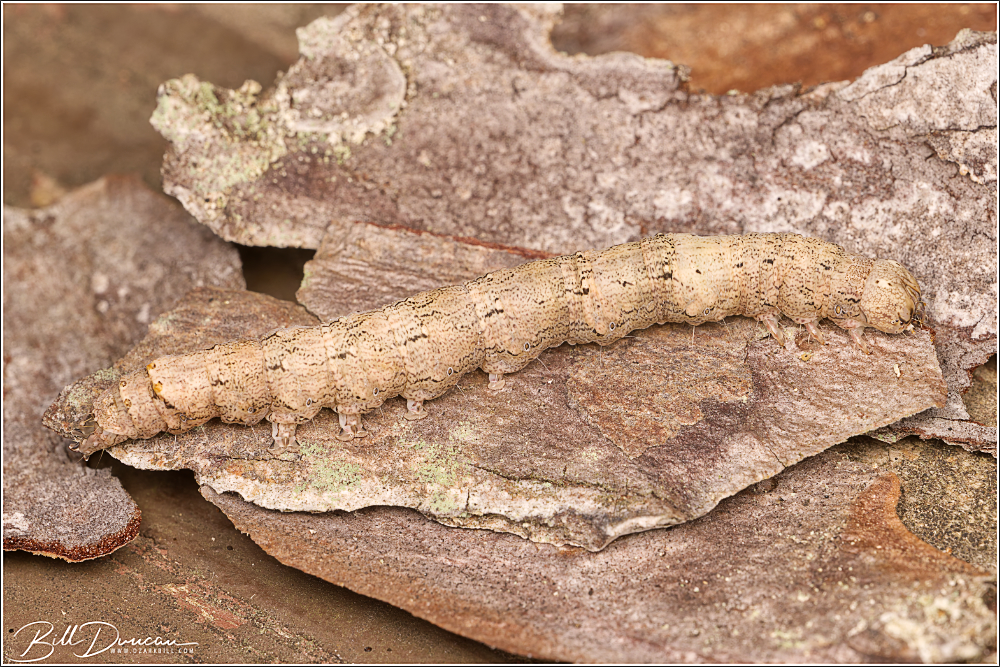
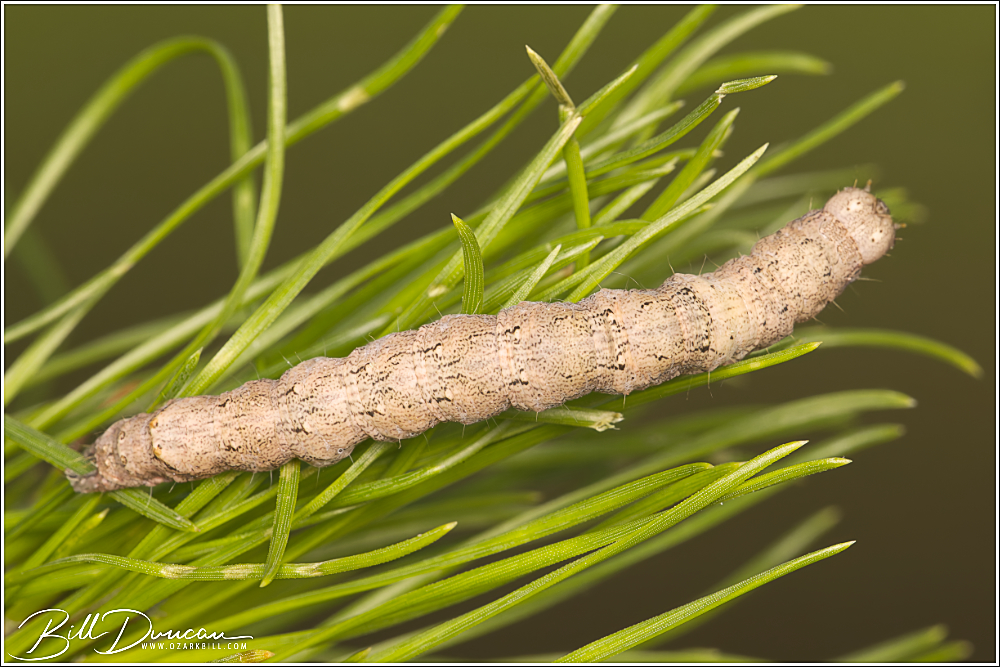
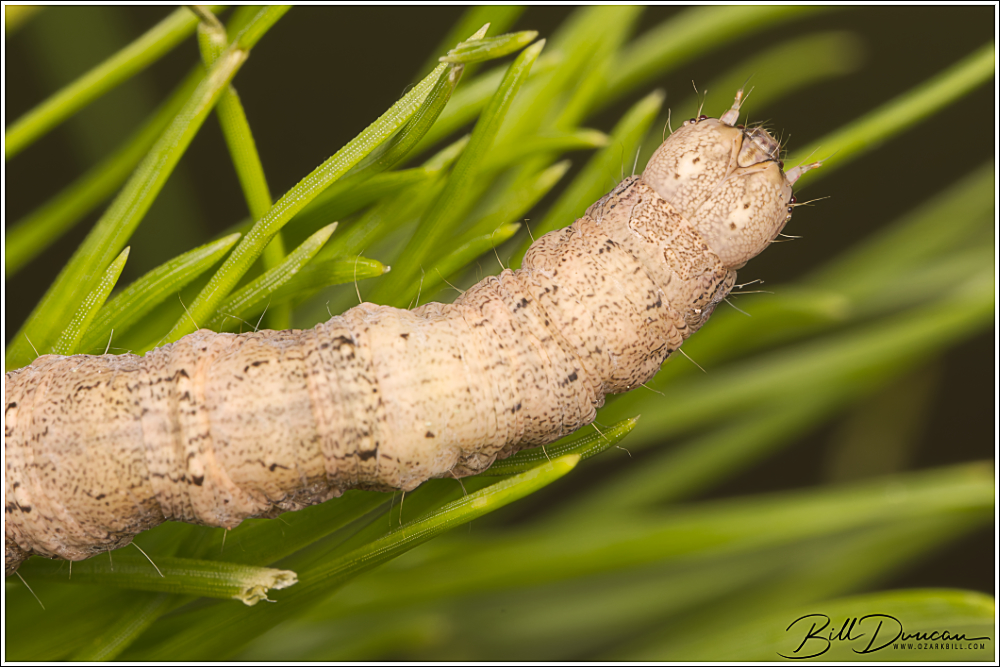
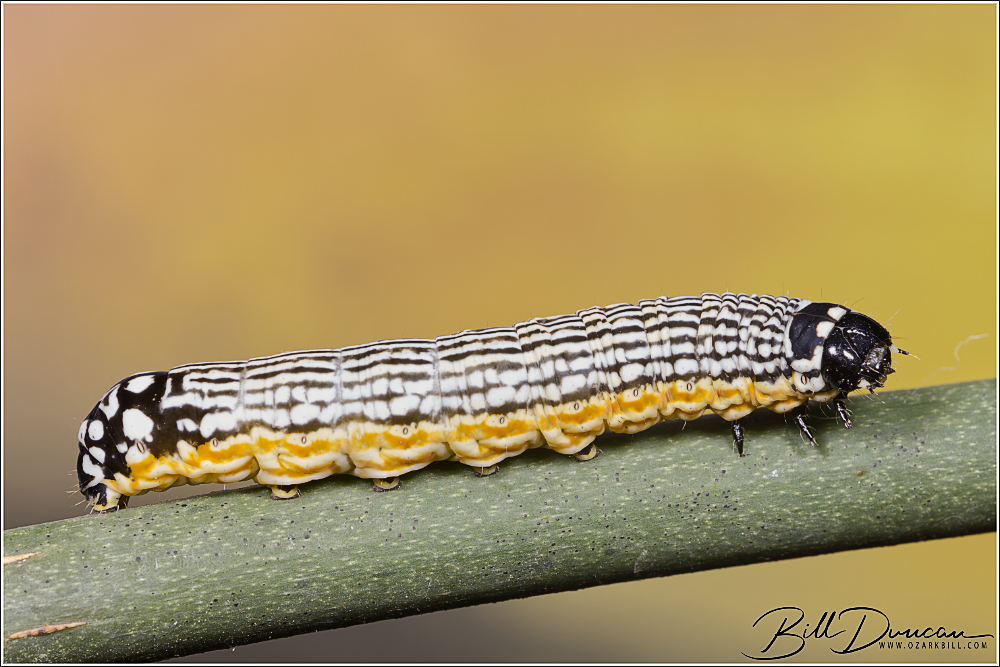
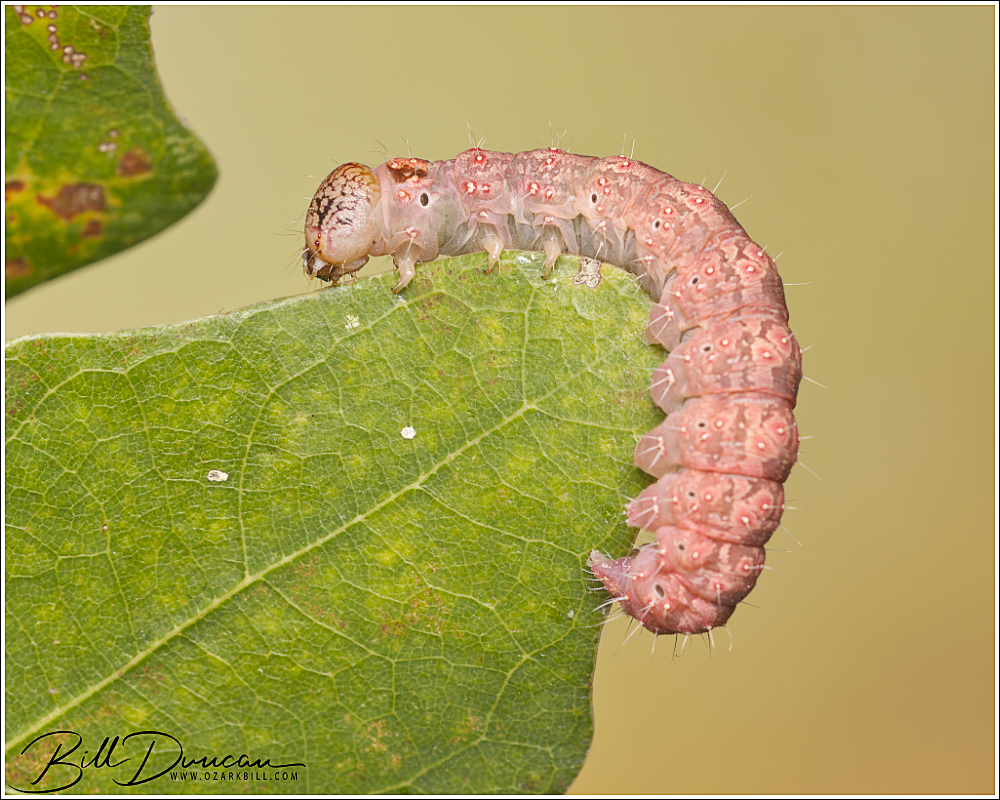
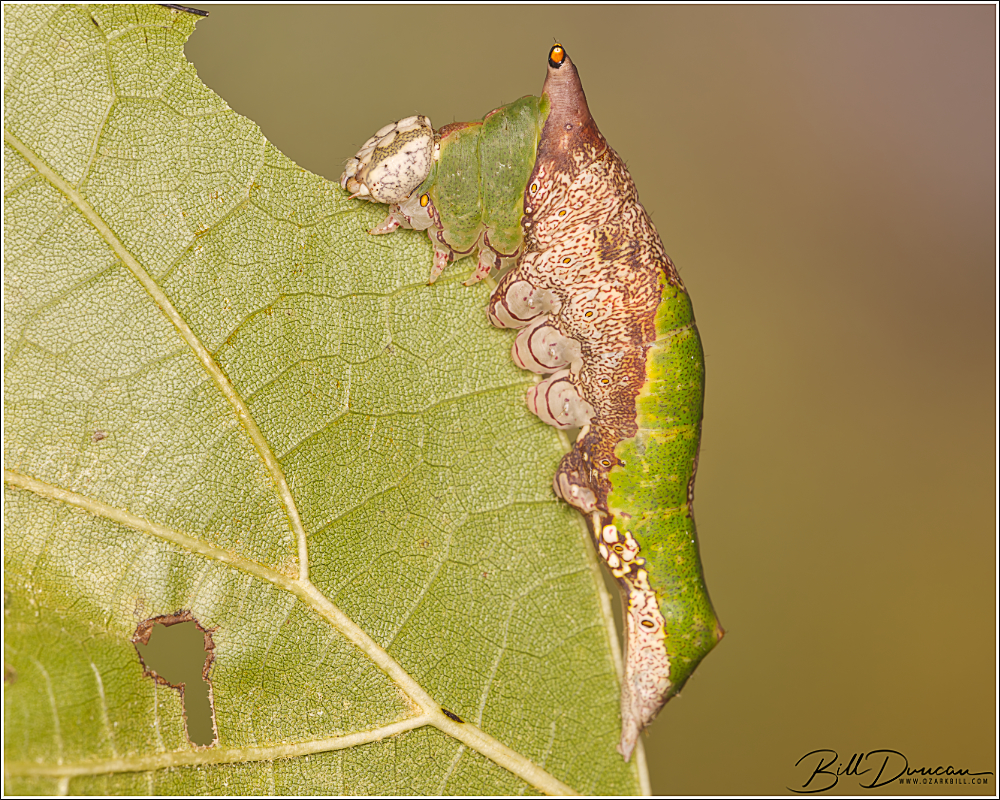
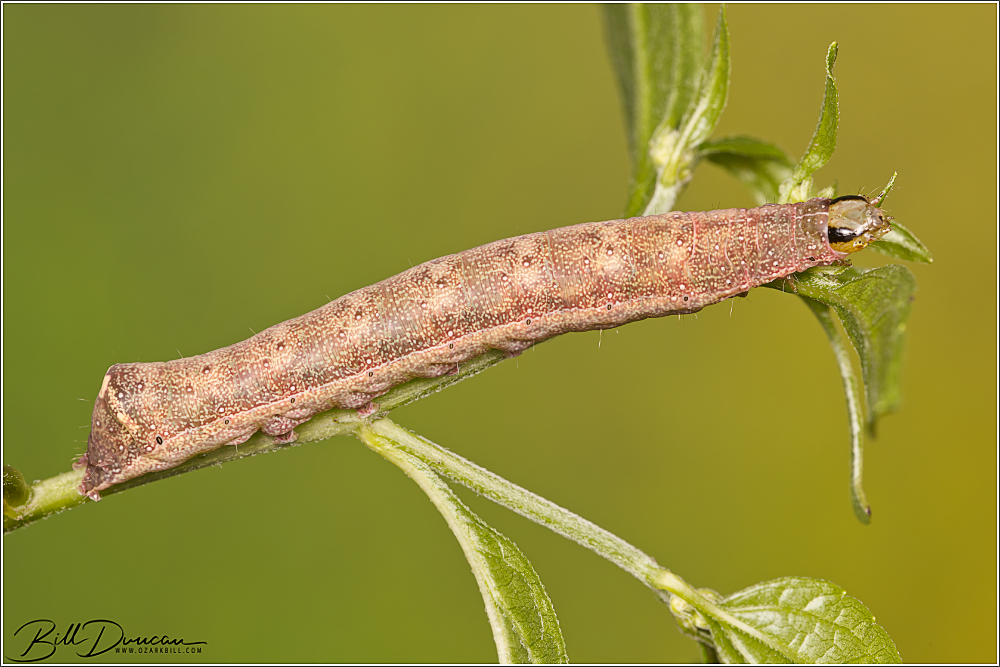
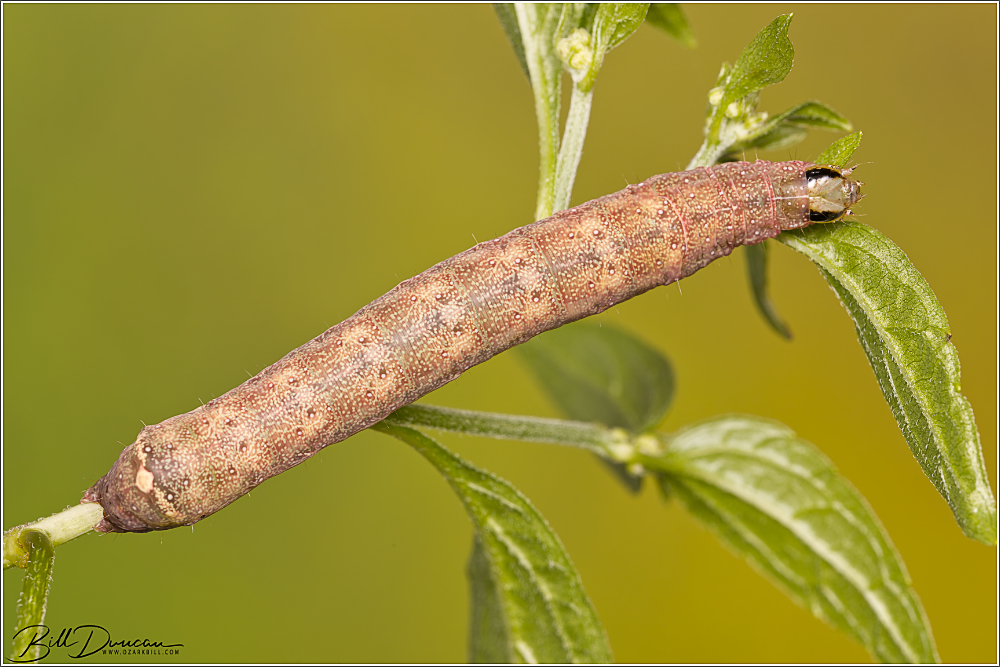
Besides the usual troubles, like trying to identify geometers, I did not run into many too difficult to identify cats this season. The one photographed above is an exception. This individual was found during a WGNSS entomology group outing to Loggers Lake in Shannon County in mid-August. It was found in a bark crevice of a shortleaf pine tree at about head height. This strongly suggests this could belong to one of the pine-feeding Zale species. However, several characteristics also align with Allotria elonympha (false underwing) that hosts principally on black gum (Nyssa sylvatica). Therin lies the issue. The area where we found this guy holds as many black gum as it does pine trees. Was this simply a Zale sp. passing the day in its pine host, or could it have been a wandering Allotria elonympha? The experts on iNaturalist cannot conclude, so for now it is simply labeled as Erebinae subfamily. Sometimes you simply cannot get to certain species determination.

Saturniidae
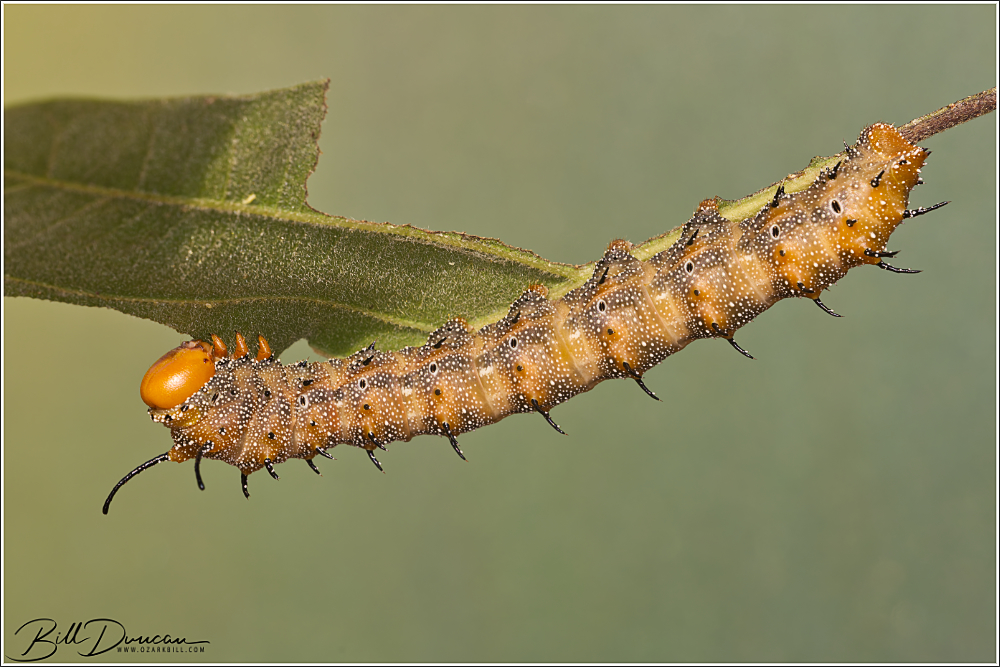
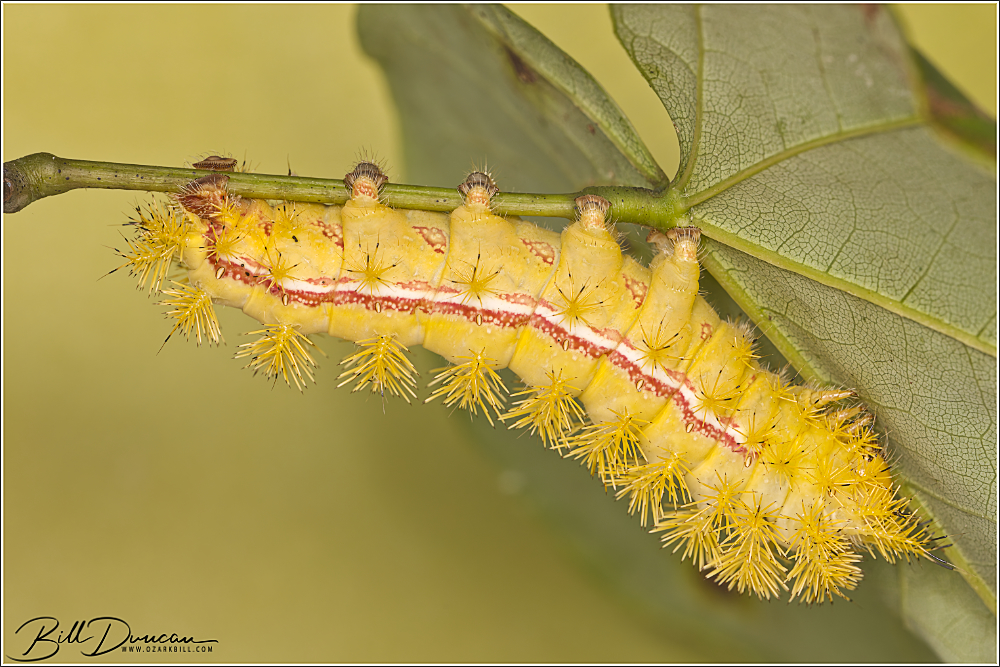
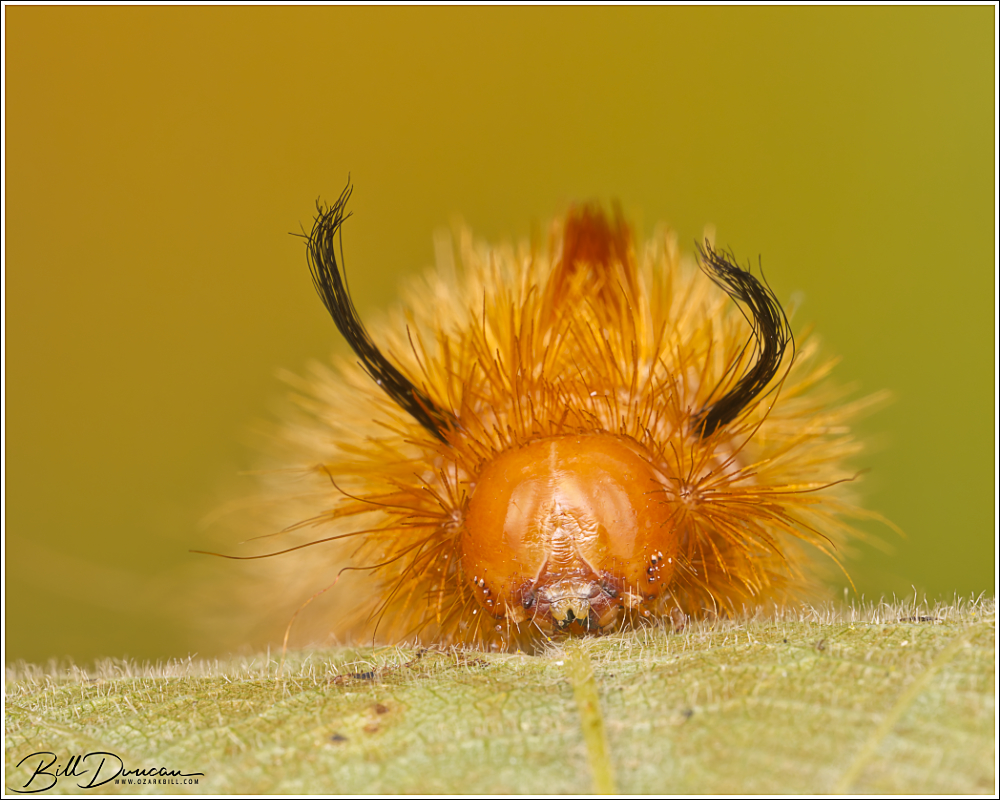
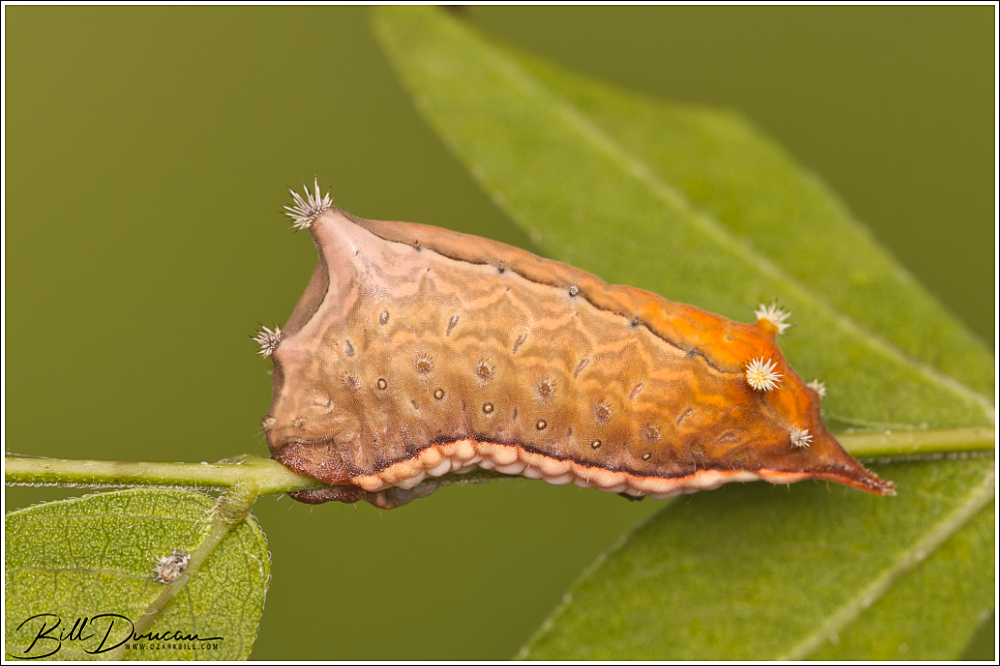
This spiney oakworm Anisota stigma was found at Meramec State Park in late August.

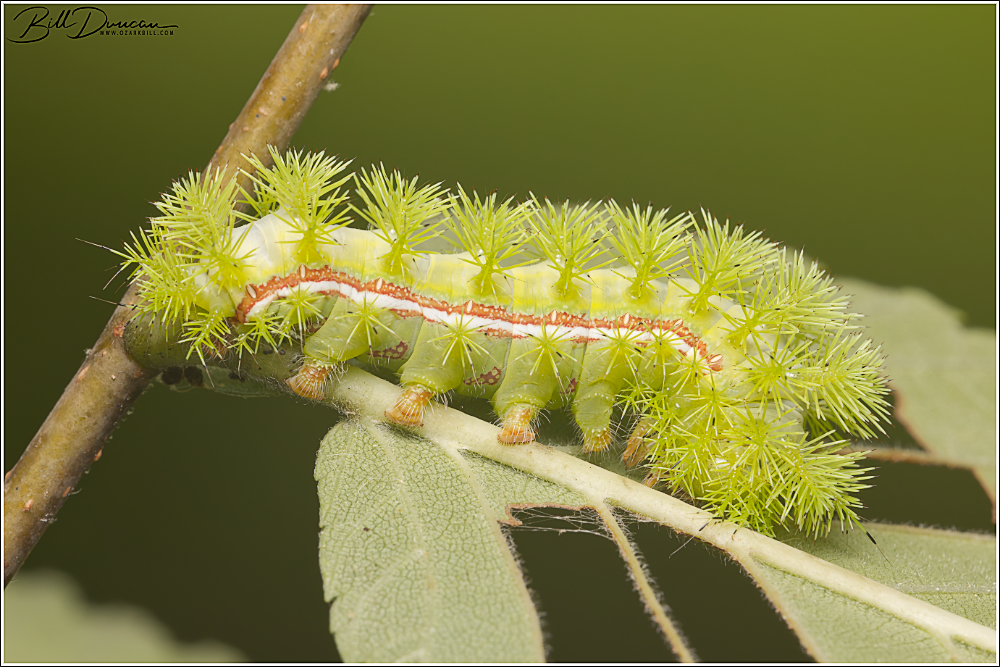
Io moth (Automeris io) caterpillars were frequent finds this year, showing up when you least expect them.

Sphingidae
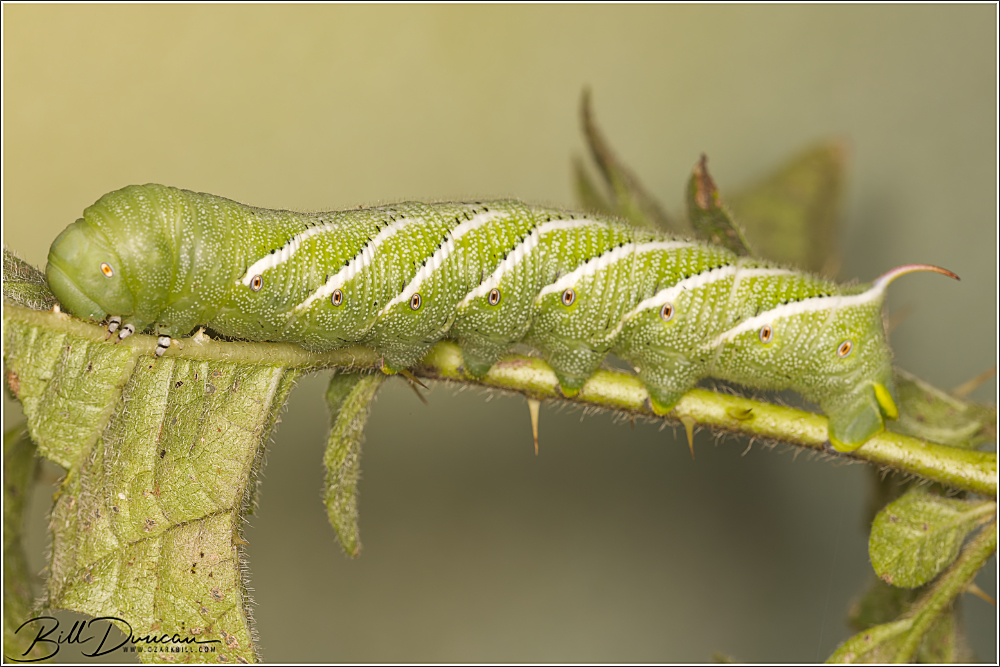
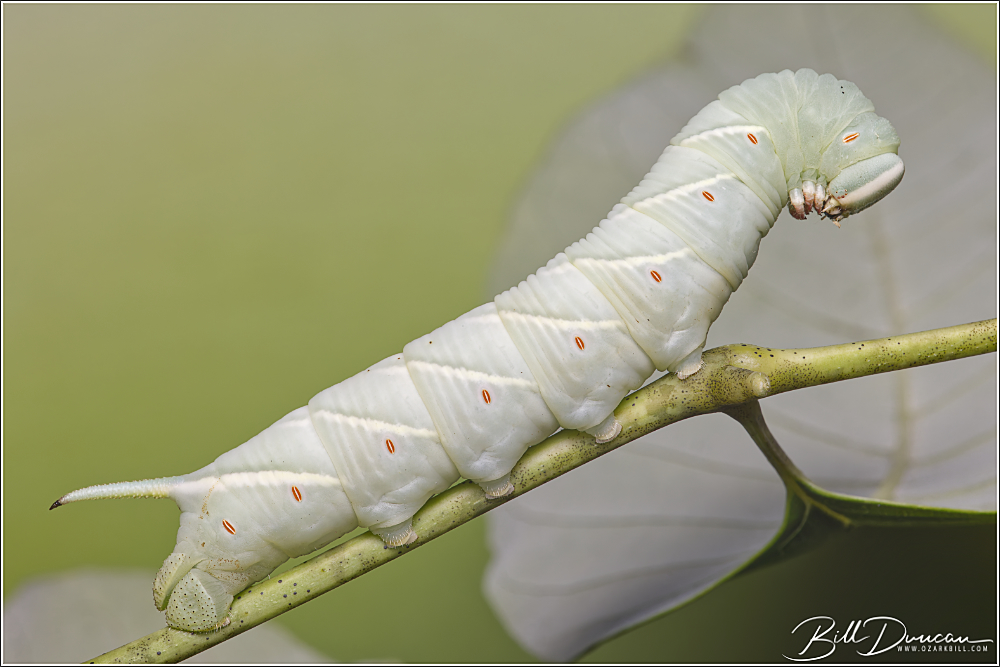
Carolina sphinx/tobacco hornworm were found in the dozens on a single night hunt at Tyson Research Center in early September.
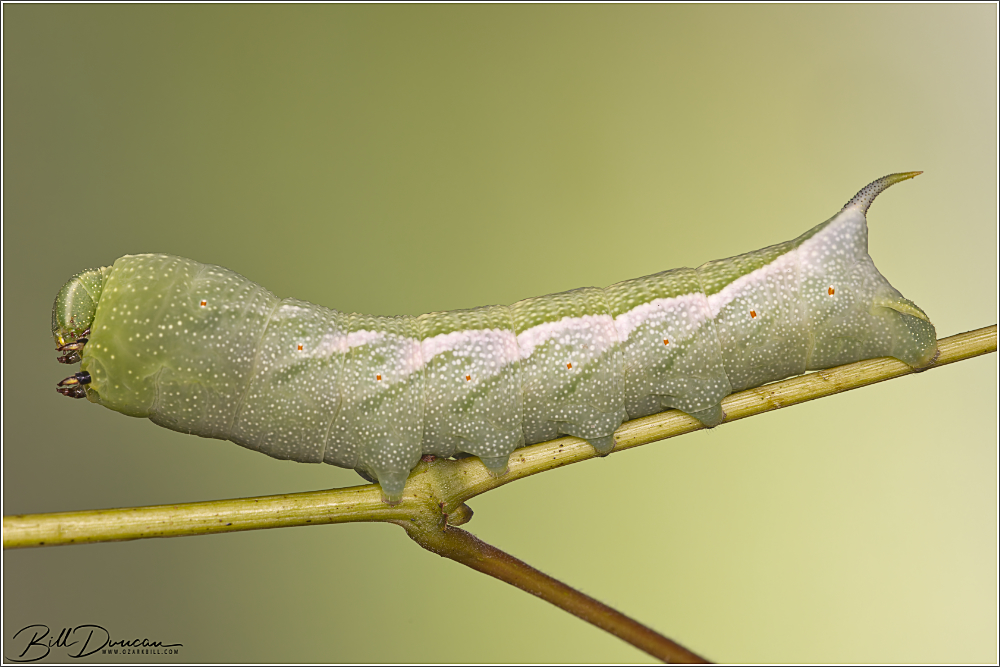
I get a bit tired of finding Virginia Creeper/Hog Sphinx by late August, but this handsome one screamed for a photo to be taken.
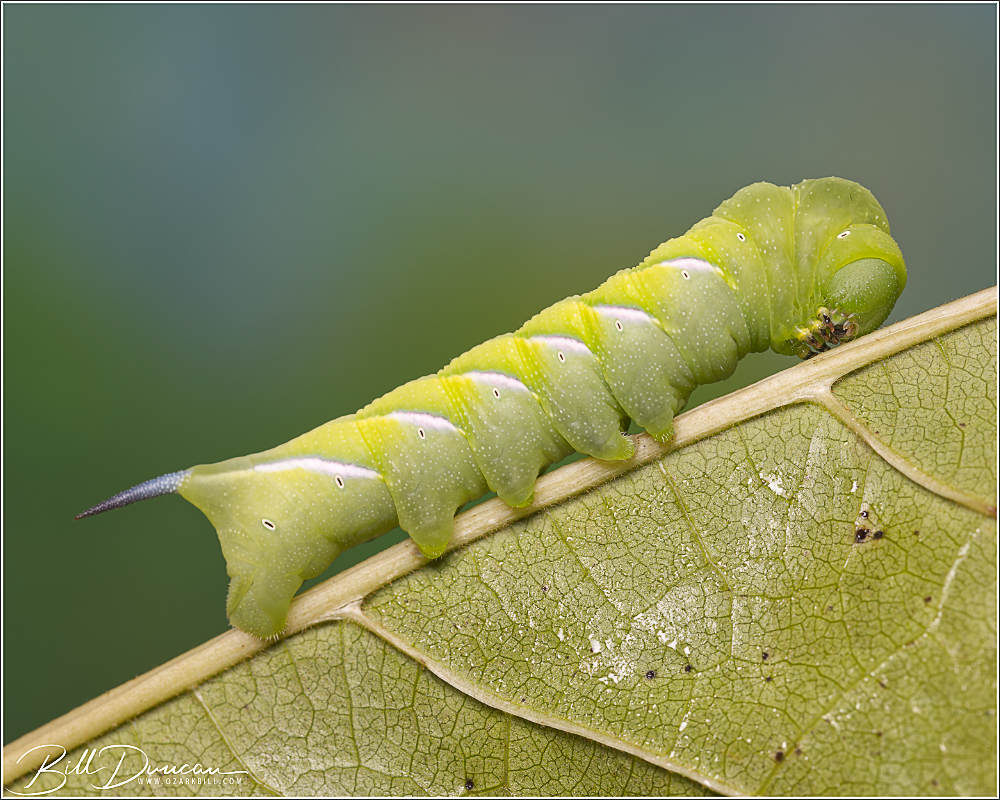
This large waved sphinx (Ceratomia undulosa) was found in late July at Tyson Research Center.
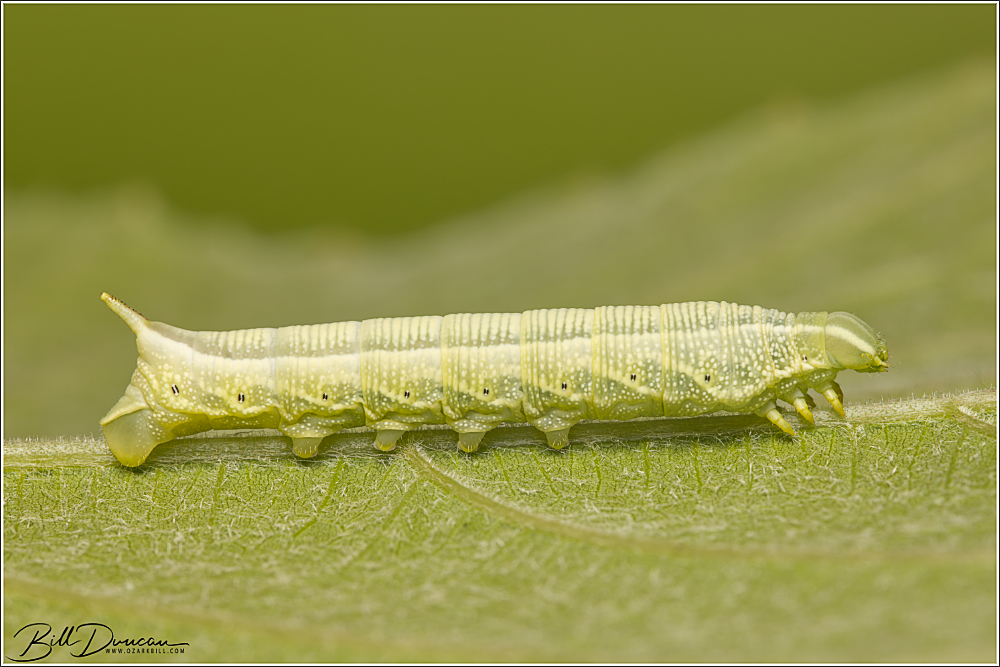
It was fun getting aquanted with the lettered sphinx (Deidamia inscriptum), which are an abundant early-season sphinx moth.
This early instar hummingbird clearwing (Hemaris thysbe) was found in early August.
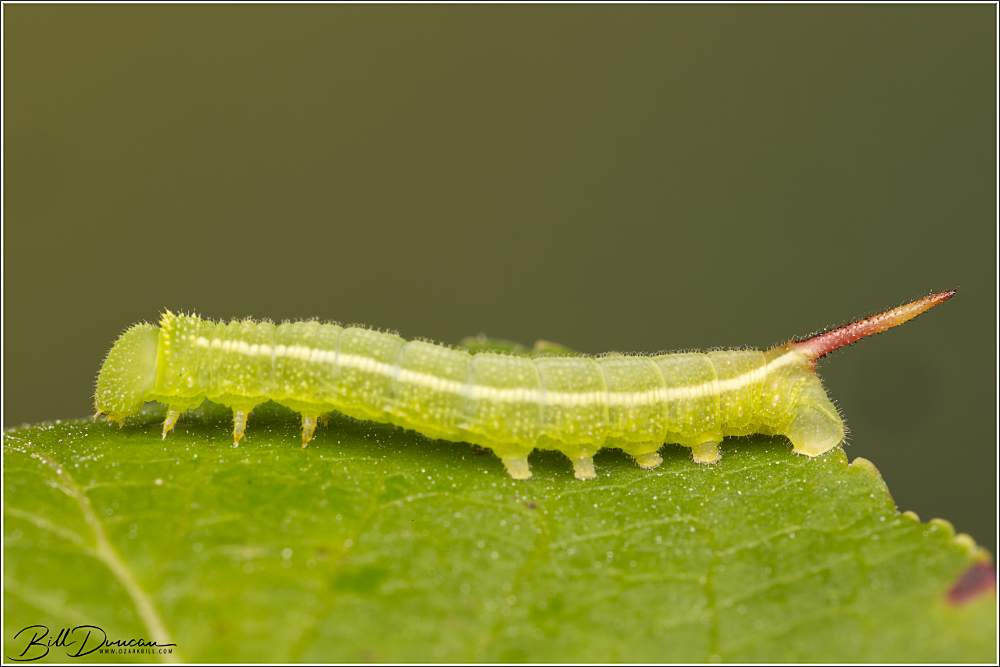
A gorgeous pawpaw sphinx (Dolba hyloeus) found at Tyson Research Center in late August.
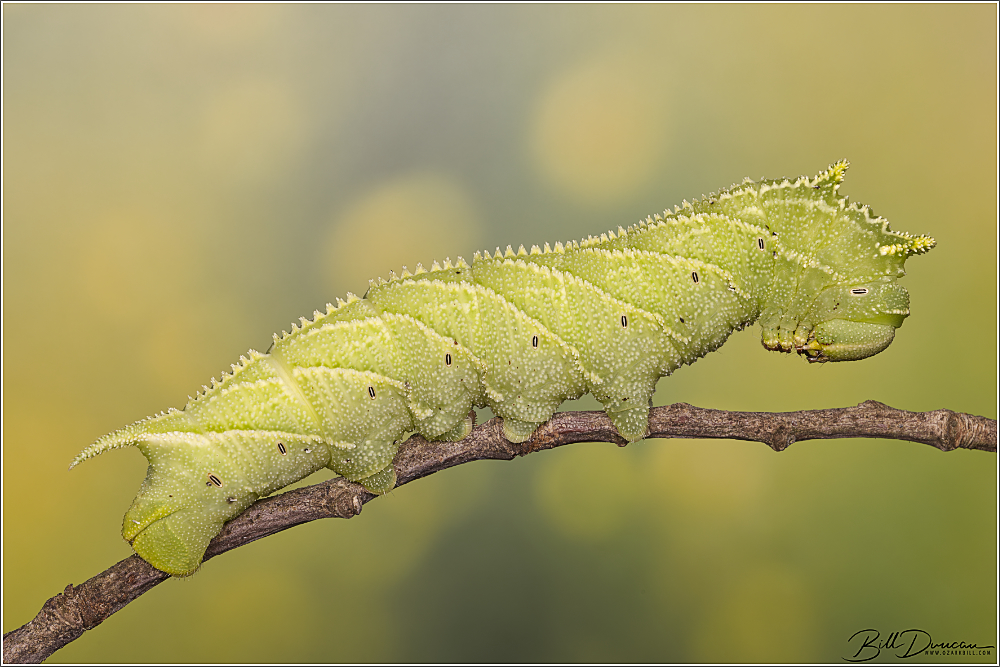
Finally, the largest among the several elm/four-horned sphinx (Ceratomia amyntor) cats I found this year.

Notodontidae

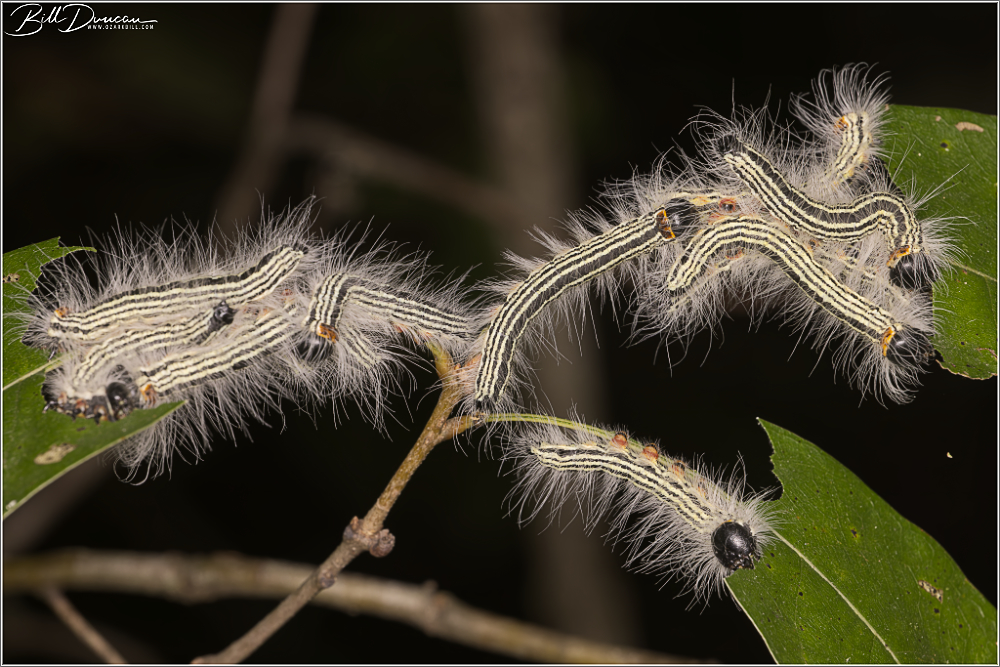
A group of contracted datana (Datana contracta) found at Tyson Research Center in late August.
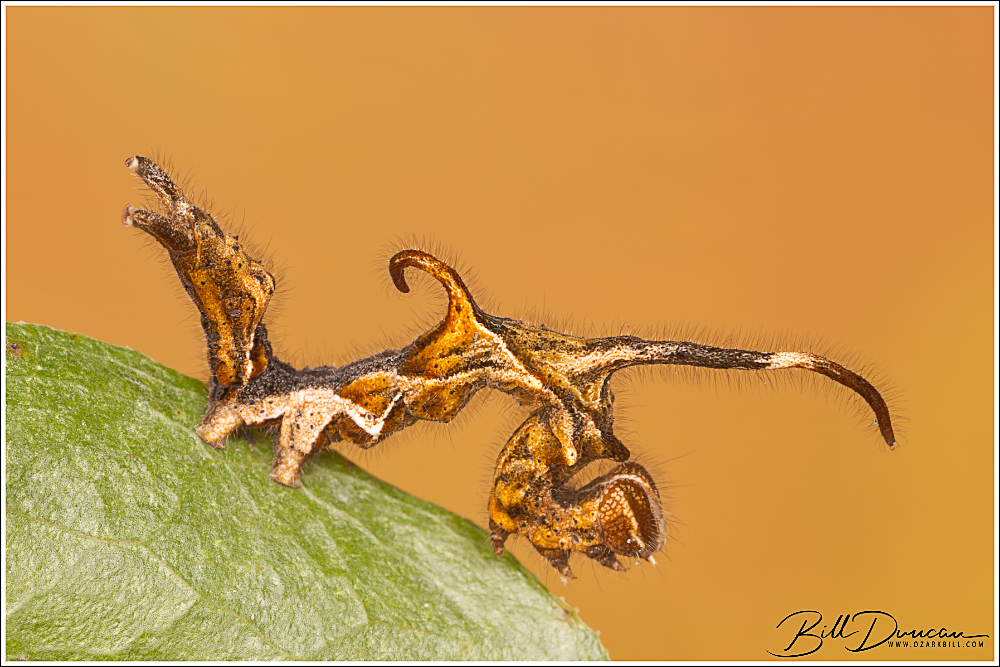
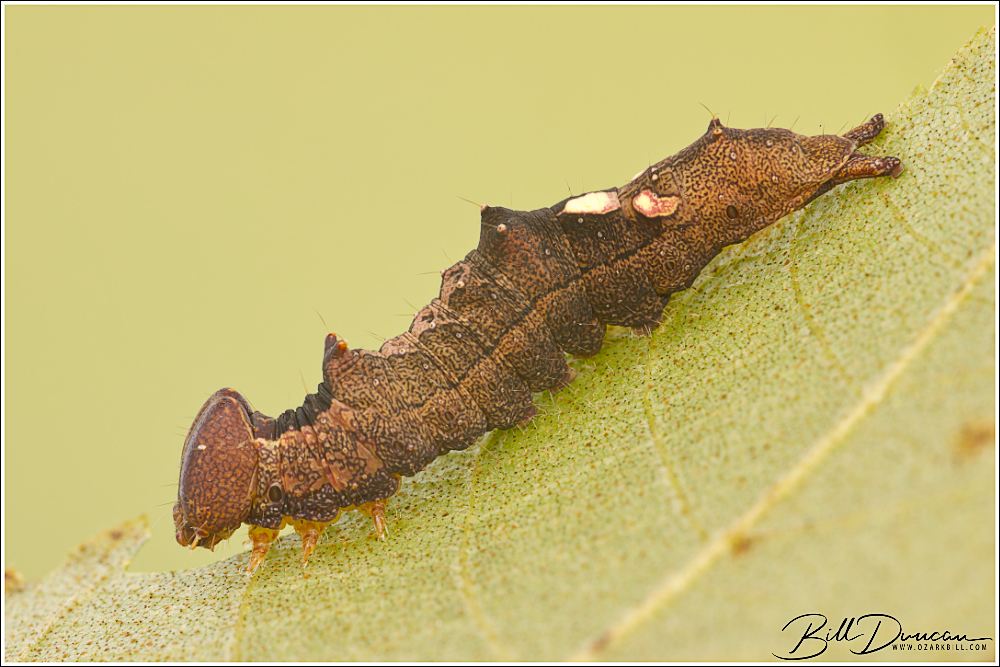
I did not come across many cool late-season notodontids this season. This is a rather small black-blotched prominent (Oedemasia leptinoides) that we found at Logger’s Lake in mid-August.

Noctuidae

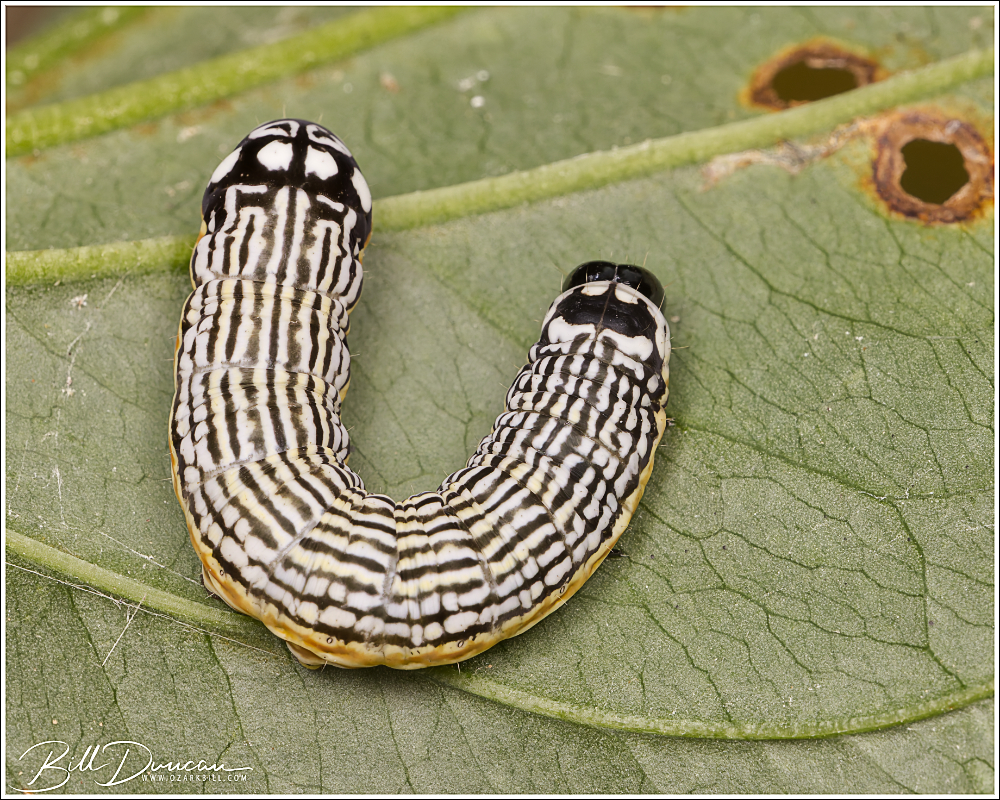
It took me until late September, but I was finally able to find a final instar turbulent phosphila (Phosphila turbulenta) at Blue Springs Creek Conservation Area in Crawford County.
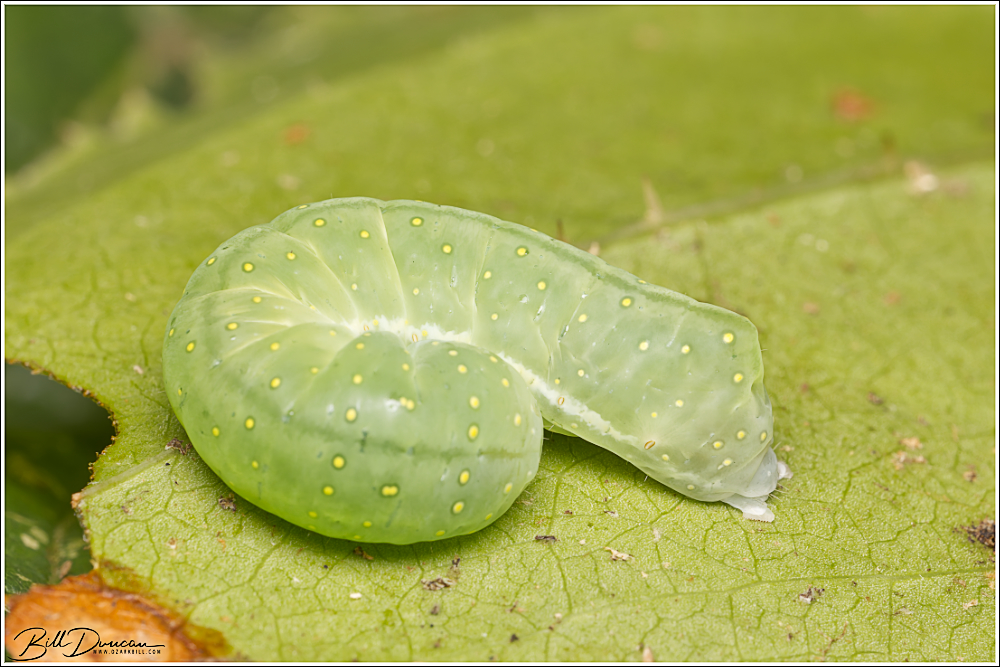
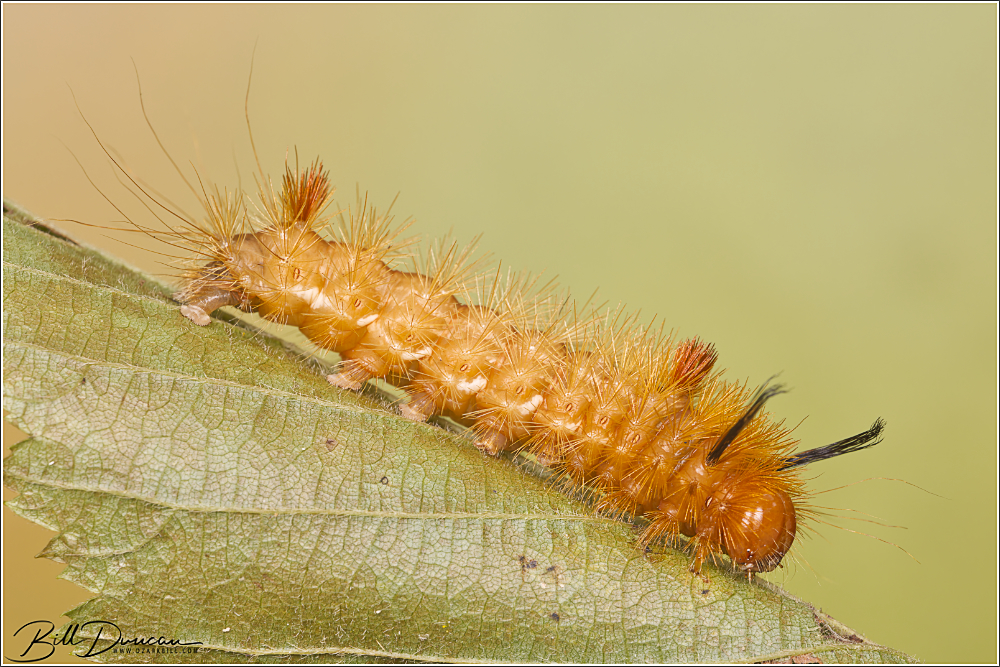
The less gaudy and easier to find spotted phosphila (Phosphila miselioides).

After spoiling an opportunity to photograph a yellowhorn (Colocasia sp.)cat earlier in the season, I was happy to find another that looked identical at Blue Springs Creek Conservation Area in late September.
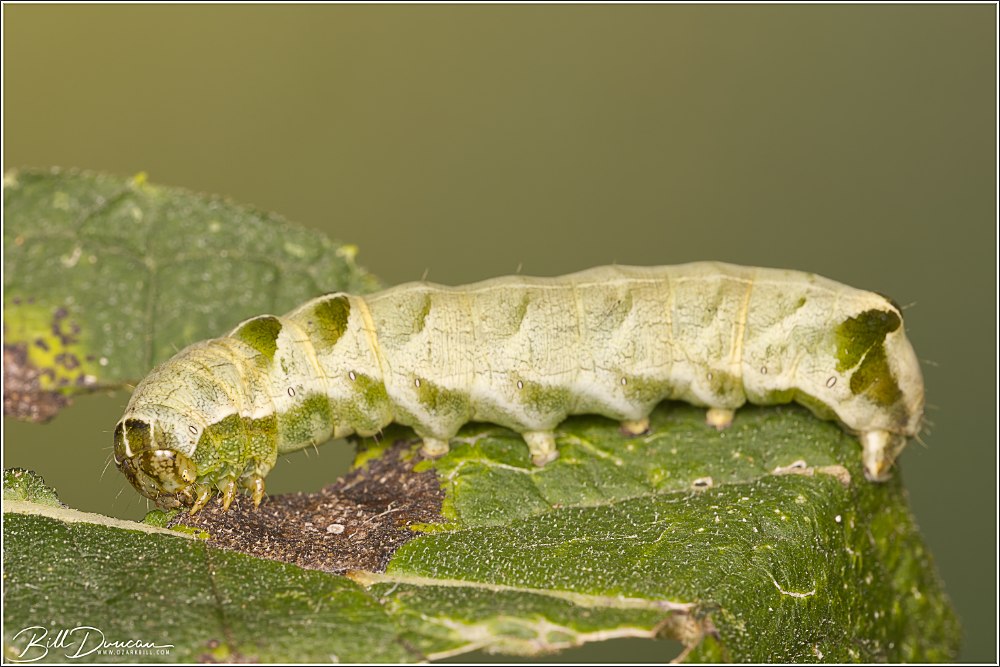
A nice hitched arches (Melanchra adjuncta) found on a night hunt at Tyson Research Center in early September.

A fantastic laugher moth (Charadra deridens) that we found in Ste. Genevieve County in August. This individual has set up a cocoon on the back porch. Hopefully, I can see it as an sdult this spring.
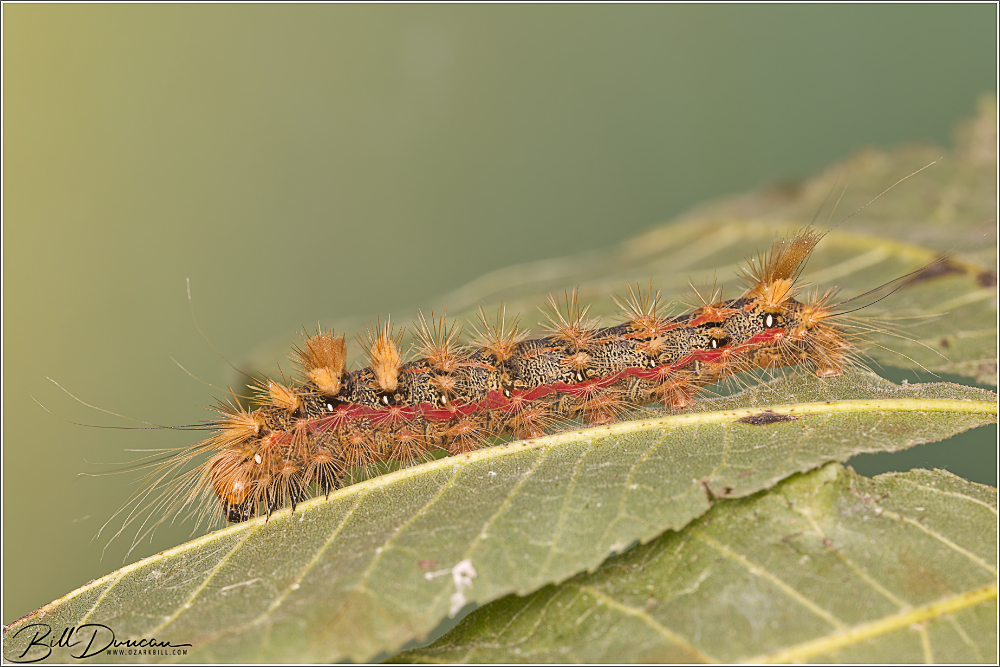
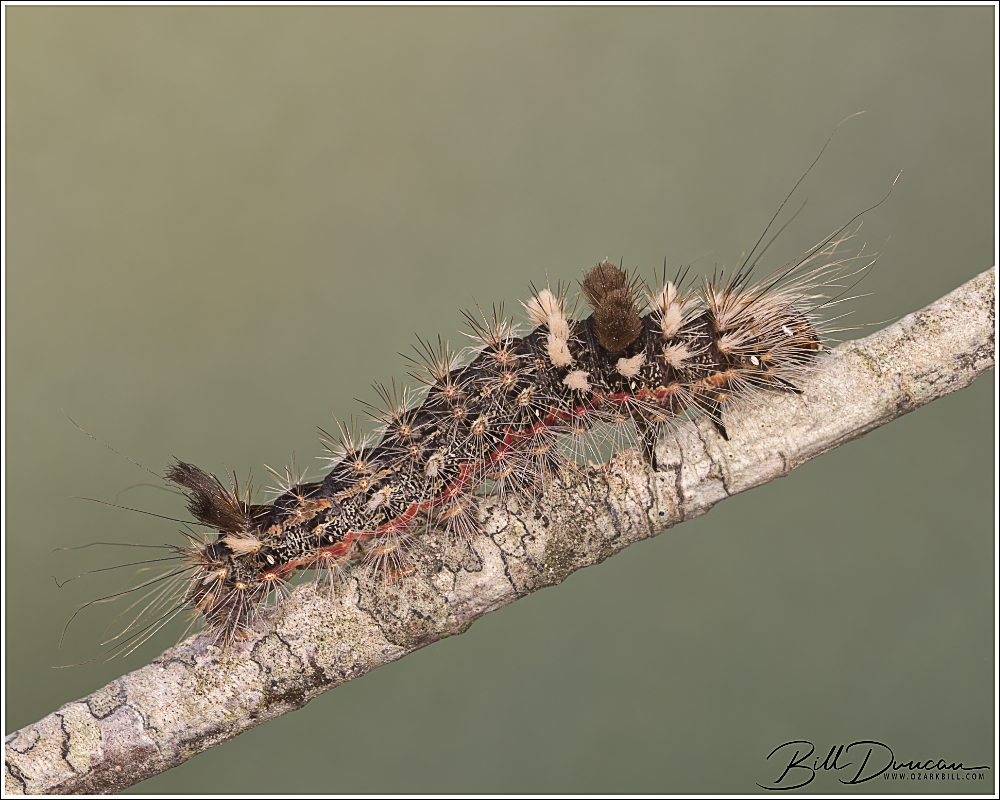
The past two seasons have been great in finding lots of yellow-haired dagger moths (Acronicta impleta).
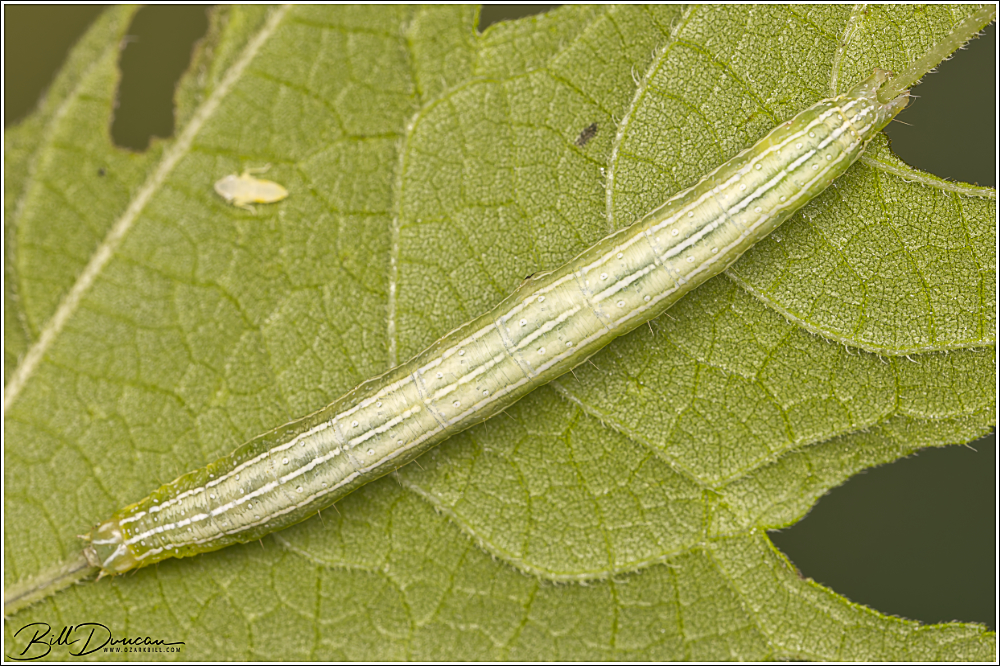
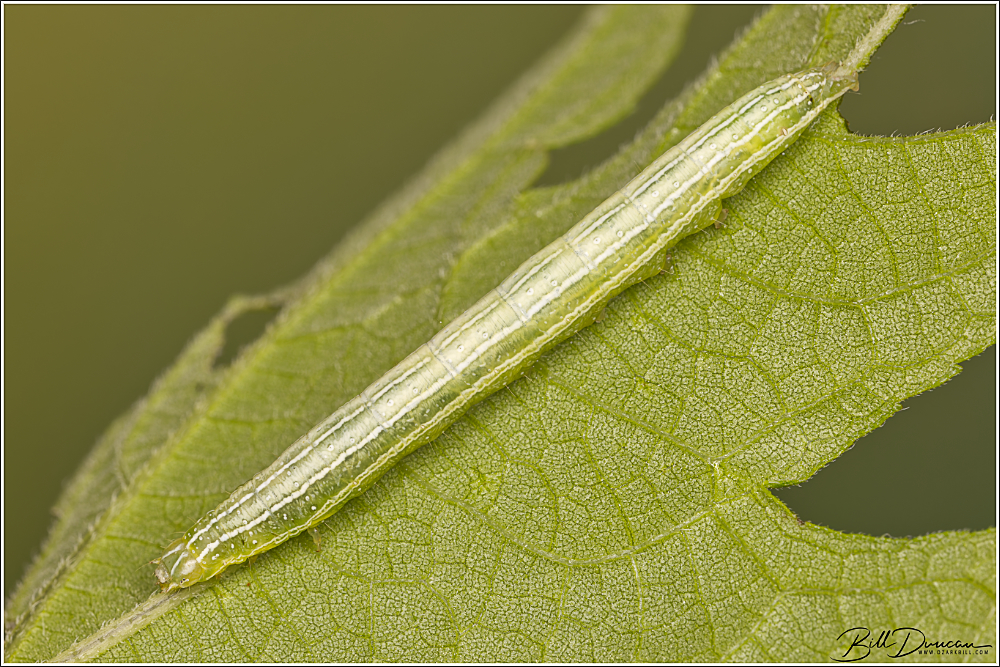
A common pinkband groundling (Ogdoconta cinereola) found in Ste. Genevieve County in early August.
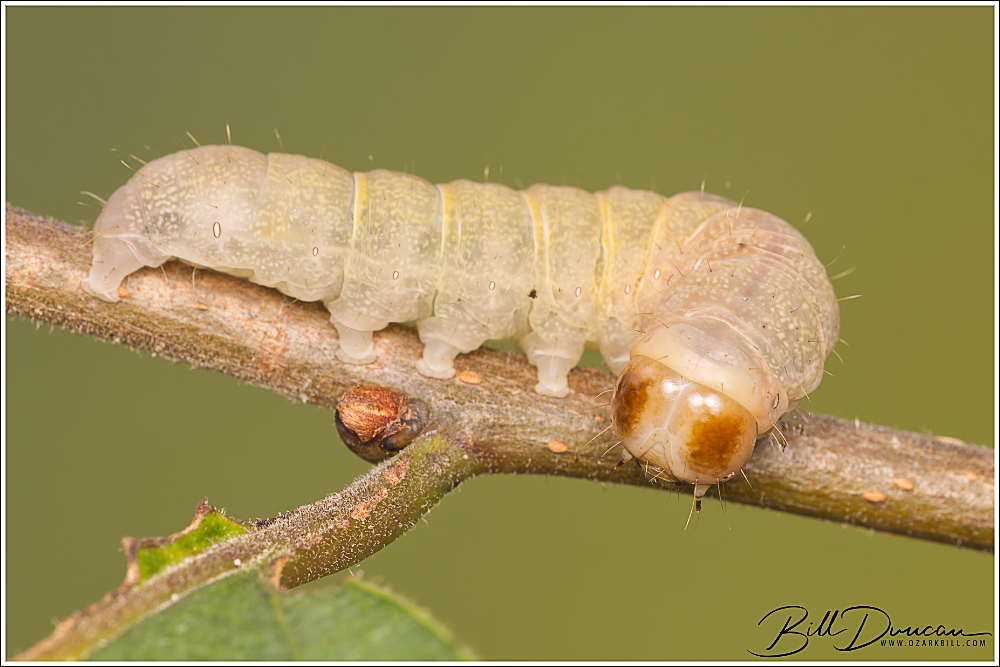
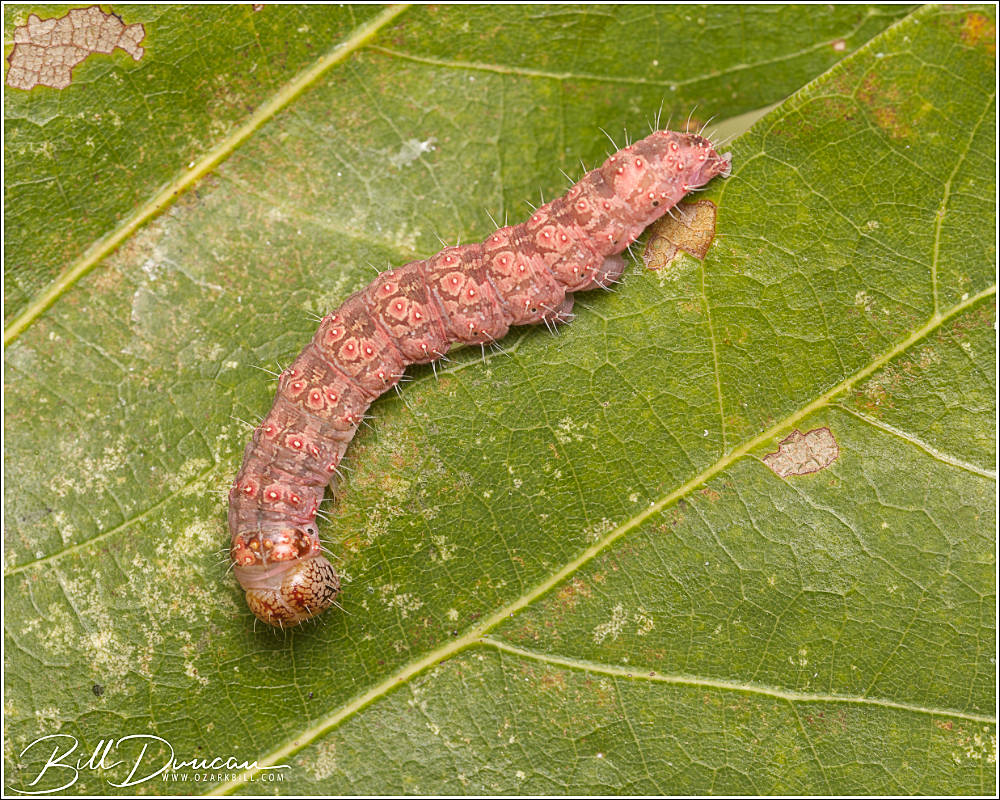
A confused woodgrain (Morrisonia confusa) found at Meramec State Park in late August.

This attractive cat could be Acronicta ovata, or it could belong to one of six other species that make up this confusing complex.
2026 Caterpillar Season – Fall Webworm Moth

Fall Webworm Moth
Hyphantria cunea (Drury, 1773), fam. Erabidae, P-no. 930319
Host plants: Extremely polyphagous. The recorded hosts are a wide variety of herbaceous and woody species in 50 plant families, encompassing over 600 species worldwide.
Date found(s): August 23, 2025; October 17, 2026
Location(s) found: Tyson Research Center, St. Louis County, MO; Hughes Mountain Natural Area, Washington County, MO
Notes: Two distinct phases, red-headed and black-headed, of fall webworm moth caterpillars are sympatric in Missouri. These two phases have been shown to have distinct food preferences and ecological characteristics. In work conducted by Makio Takeda (2005), he found that the red-headed form was univoltine in Missouri and fed mainly at night. The black-headed form were bivoltine and fed without a clear day-night rhythm.

You can learn a lot by observing a nice sized tent full of fall webworm caterpillars. Tap on a nest and you may see hundreds of caterpillars begin to jerk and wiggle in unison. This synchronized behavior is a defensive tactic. To a predator like a bird or an arthropod, the sudden, rhythmic movement of the entire mass makes it difficult to target an individual caterpillar and may even seem like a larger, more intimidating organism. Tents of this species often encompass entire branches, including the terminus. Unlike the similar eastern tent caterpillar (Malacosoma americanum) that build their nests in the crotches of limbs and then leave their nests to feed, the fall webworm builds their nests around the leaves on which they feed. When they have stripped a limb of its leaves, they will evacuate the nest and build another.

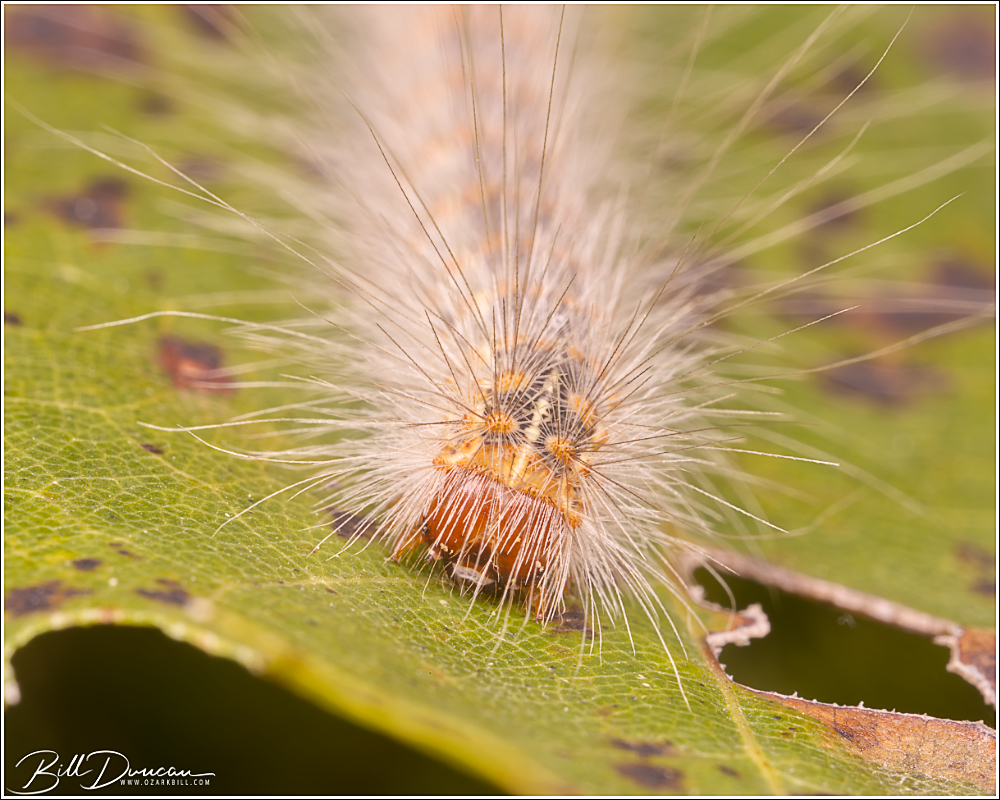
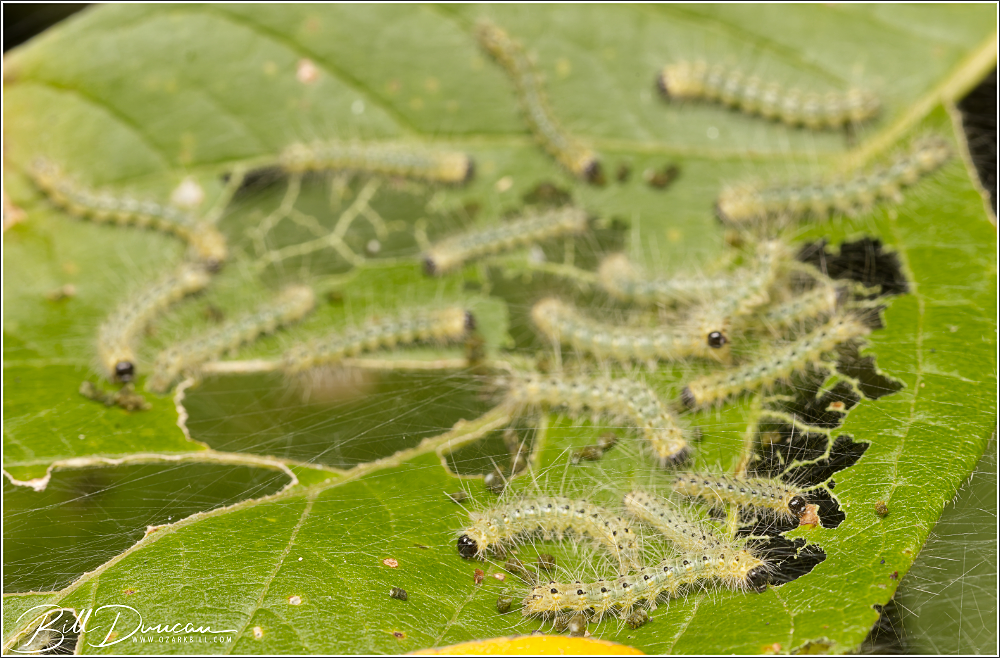
Black-headed phase of Hyphantria cunea.

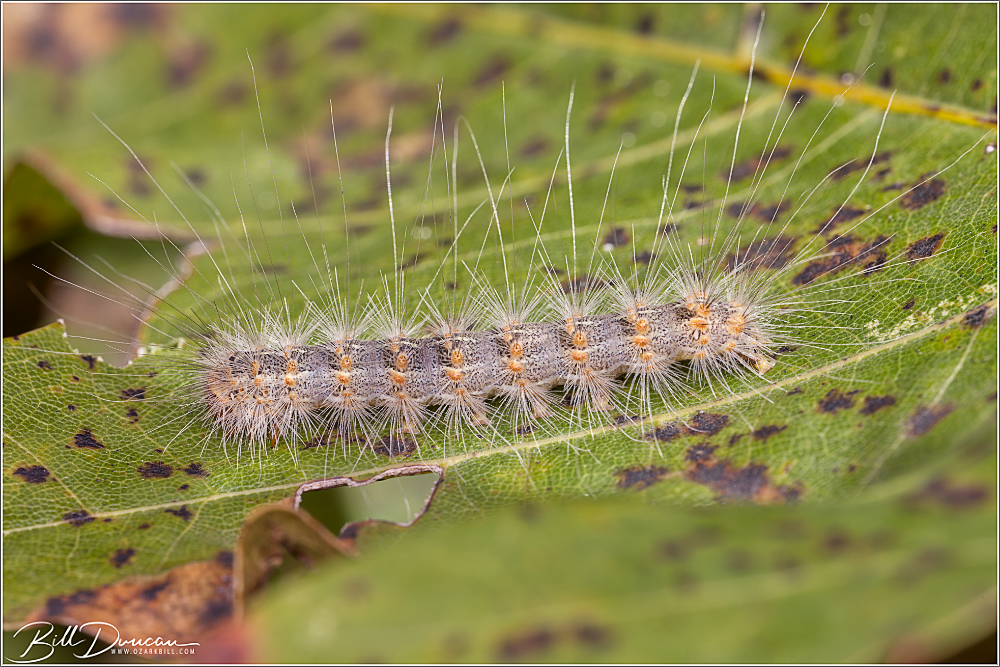
Red-headed phase of Hyphantria cunea.

2026 Caterpillar Season – The Slugs

I do not believe I have shared a single slug moth (fam. Limacodidae) caterpillar in 2026. This is mainly because I shared so many of these in the past several years. I did, however, photograph a few this year and I thought I would pool them all in this one post.

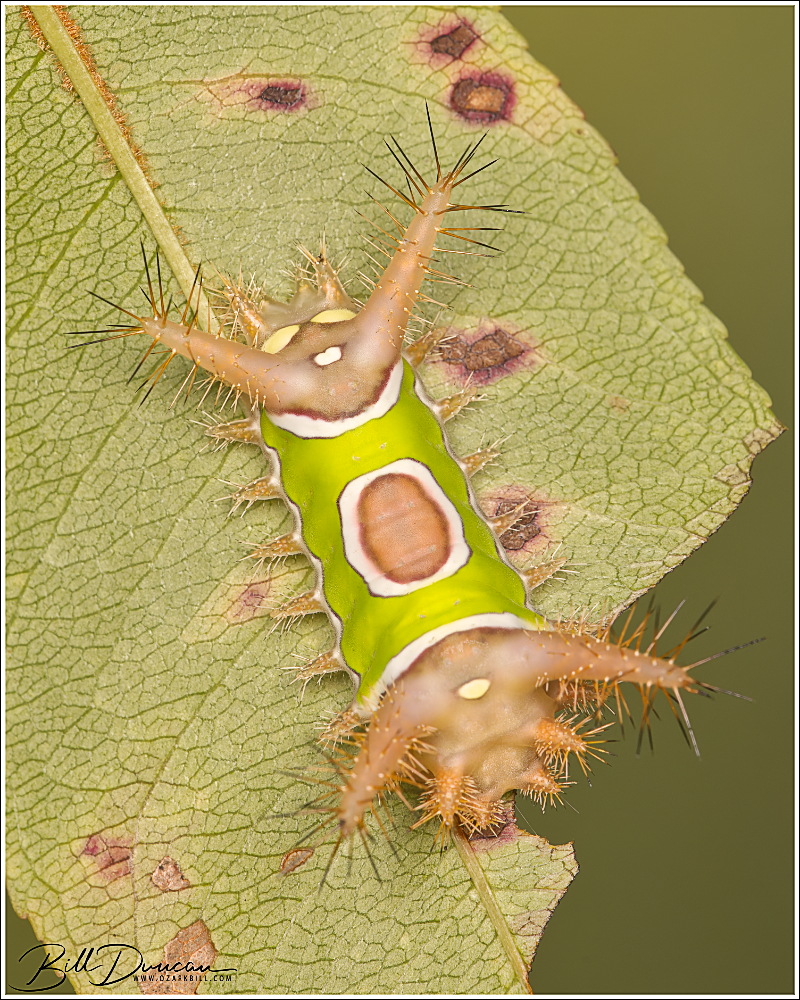
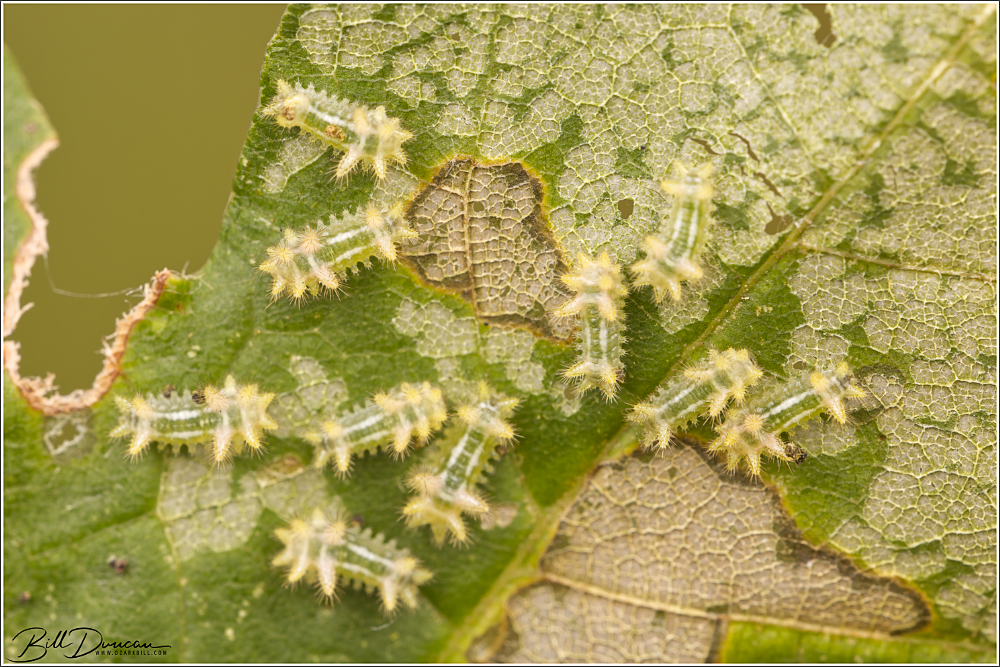
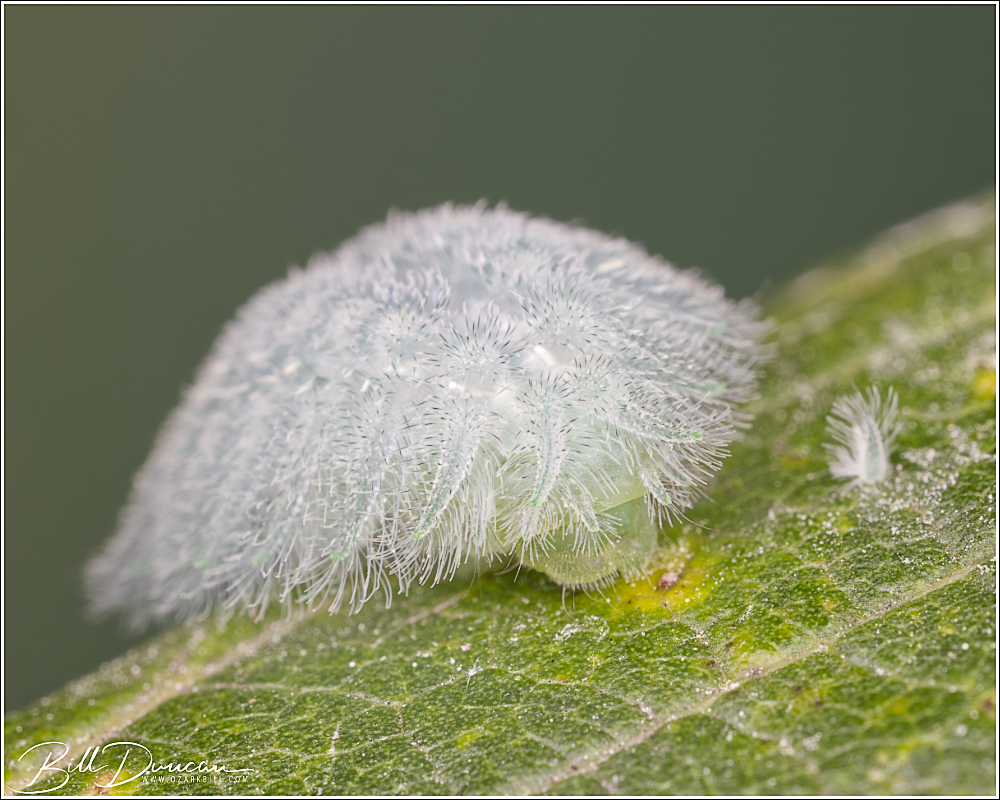
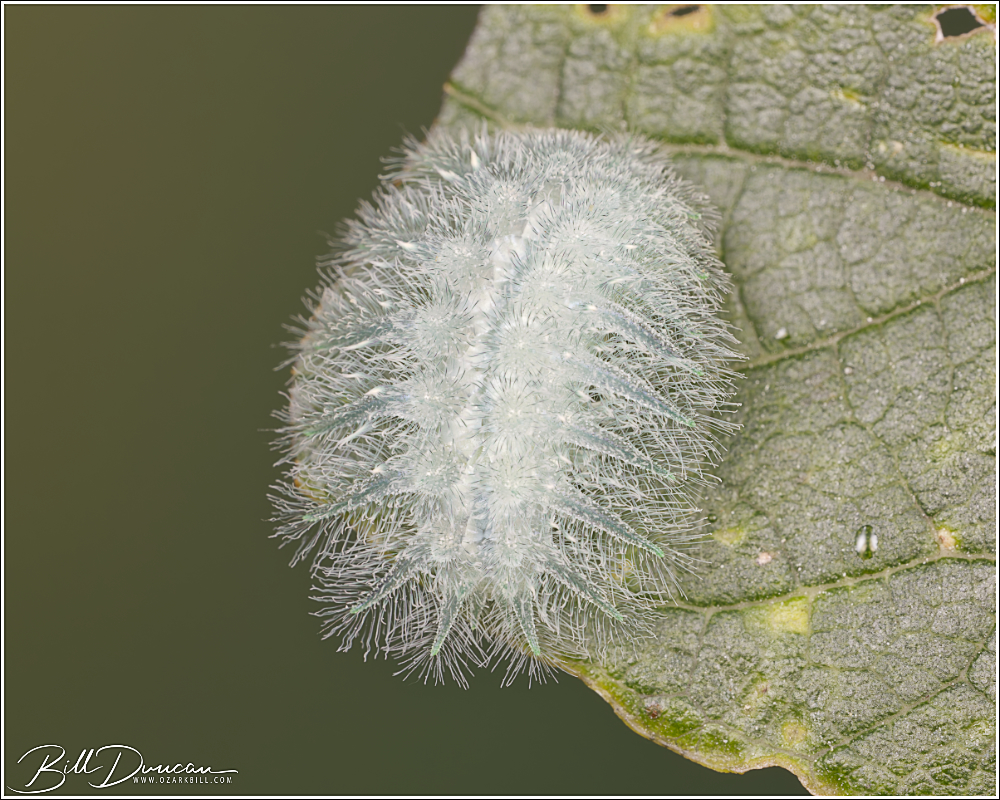
First up is the saddleback caterpillar (Acharia stimulea).
The little ones, which are likely 1st instars, were found at Don Robinson State Park in Jefferson County, while the more developed individual was found at the WGNSS trip to Logger’s Lake in Shannon County. Note in the photo on the right that the little ones do not consume the whole leaf, but at this small stage, they scrape the upper layer of the leaf surface.

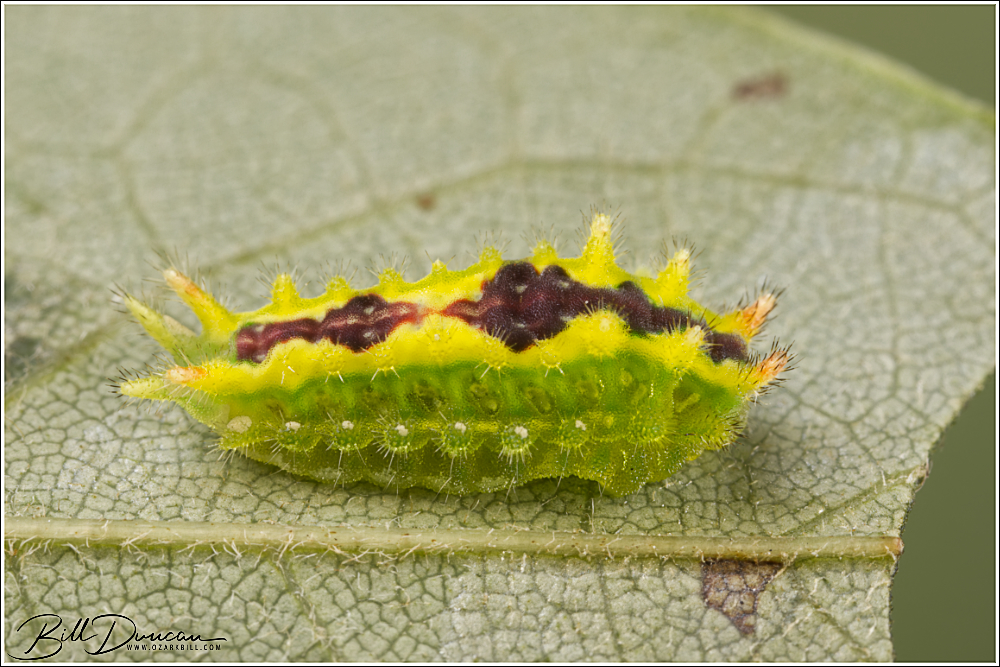
Next up is the yellow-shouldered slug moth (Lithacodes fasciola).
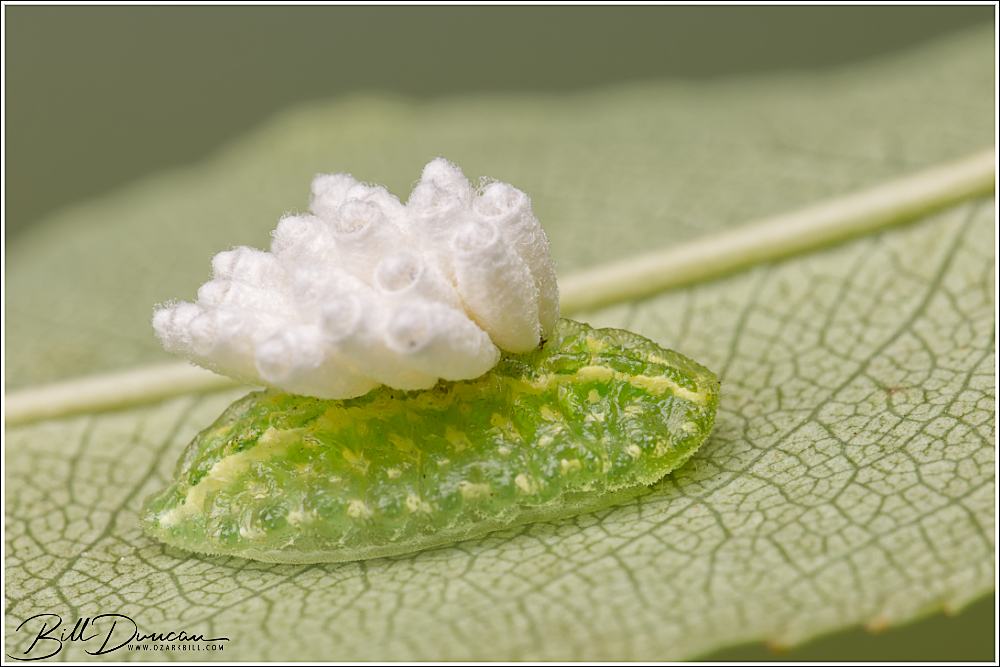
The healthy final instar individual was found in Ste. Genevieve County in August, while the poor victim of braconid parasitoid wasps was found at Tyson Research Center in early July.

This shagreened slug moth (Apoda biguttata) caterpillar can often be confused with the species before and after. Notice the shagreen-leather-like texture of the integument to discern this one from the yellow-shouldered slug and the following species. This one was found at Don Robinson State Park in mid-September.

The yellow-collared slug moth (Apoda y-inversum) can be identified by the yellow collar at the anterior end along with the yellow sub-dorsal striping. This one was found at Tyson Research Center in early July.

I had a lot of luck finding the crowd-favorite spun glass slug moth (Isochaetes beutenmuelleri) this season. This one was found in Ste Genevieve County in early August on hackberry.

I typically don’t have much luck finding the smaller parasa (Parasa chloris) caterpillars, but this season we discovered five. The two pictured here were found on honey locust and pin oak. Most limacodids are notorious as being highly polyphagous and can be expected on nearly any woody plant species in the state. This year, I found one of this species feeding on the herbaceous wingstem (Verbesina alternifolia).

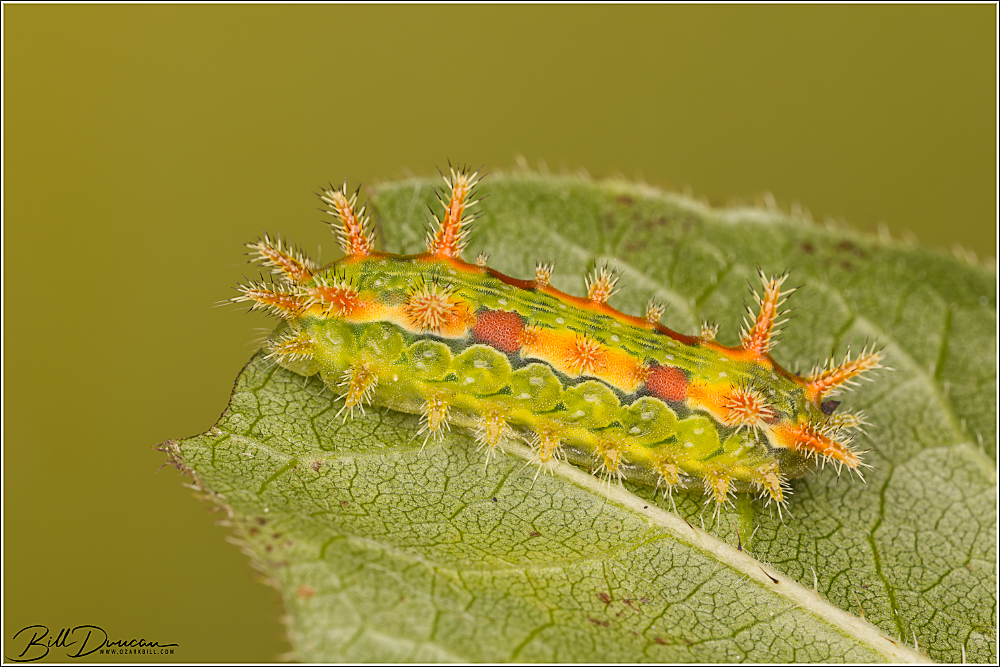
This beautiful purple-crested slug moth (Adoneta spinuloides) was found at Tyson Research Center in late July.

The spiny oak slug (Euclea delphinii) is typically, but not always found feeding on oaks. This year, however, we found one using Roseshell Azalea (Rhododendron prinophyllum) as host.

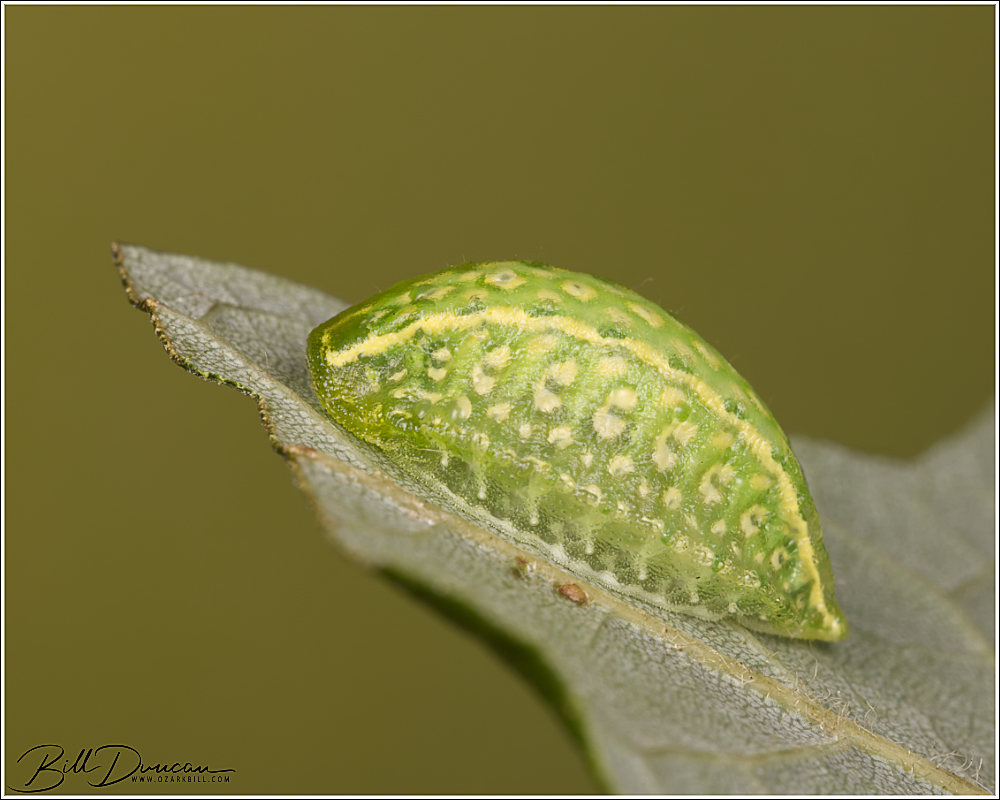
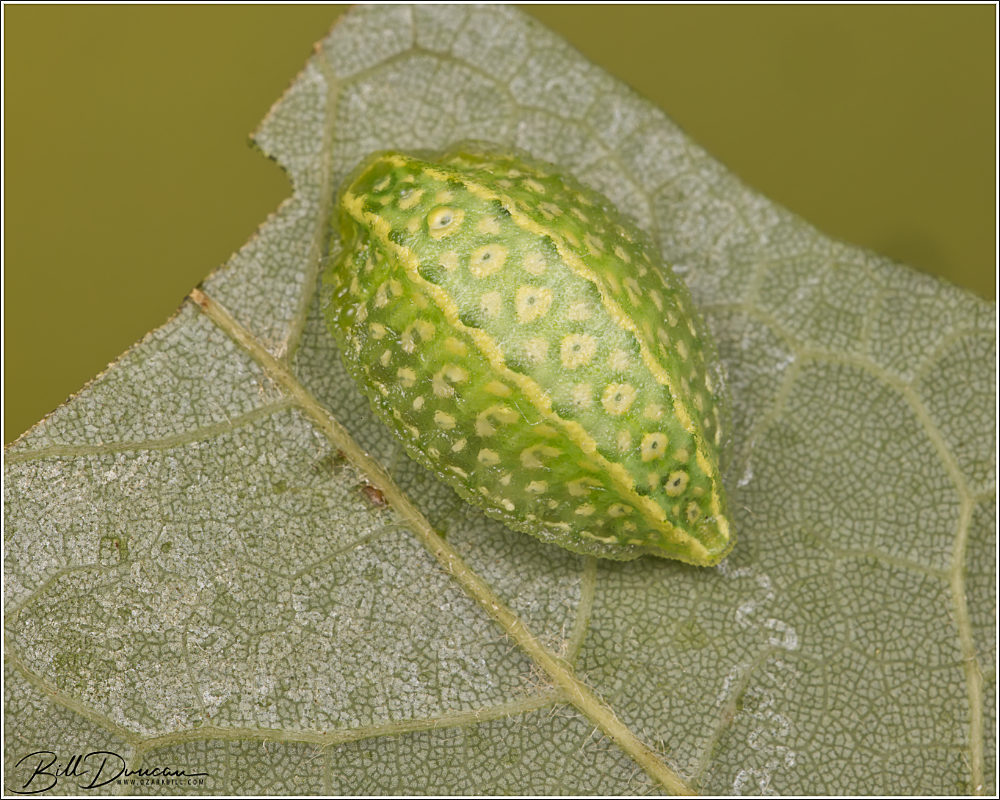
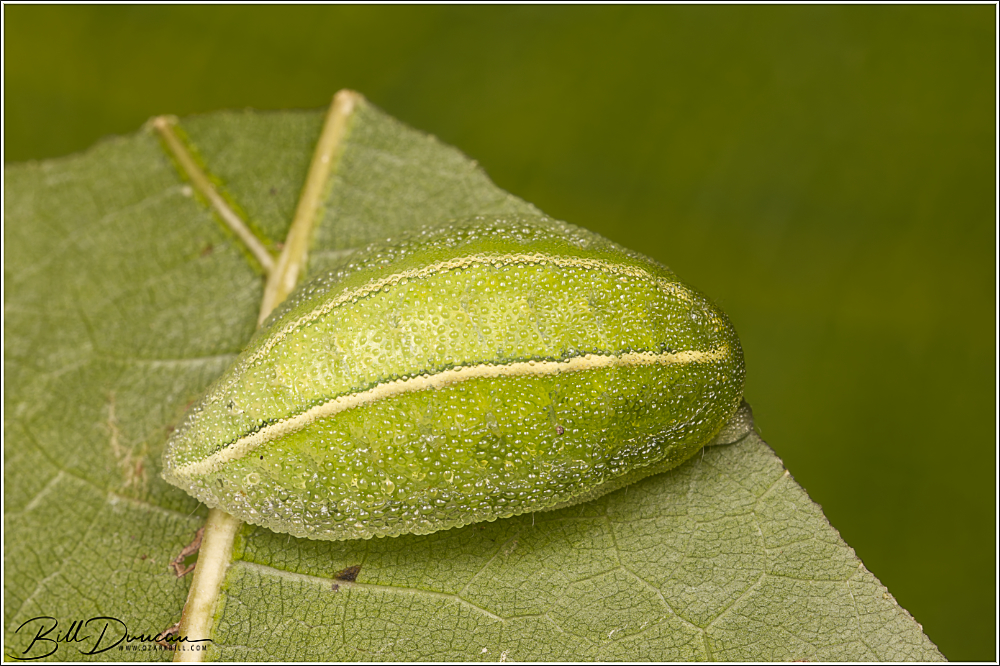
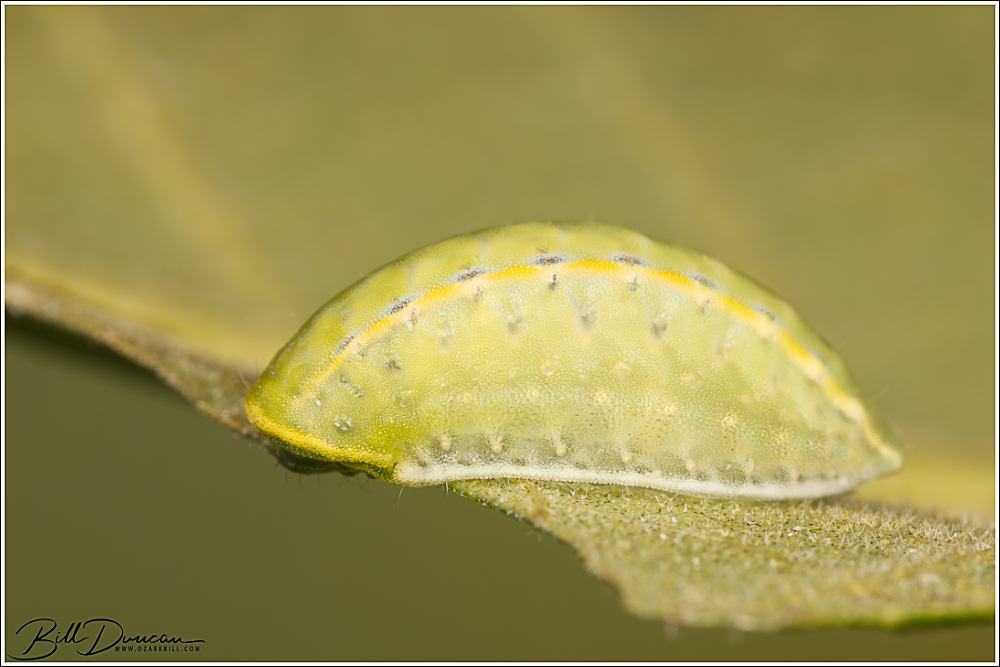
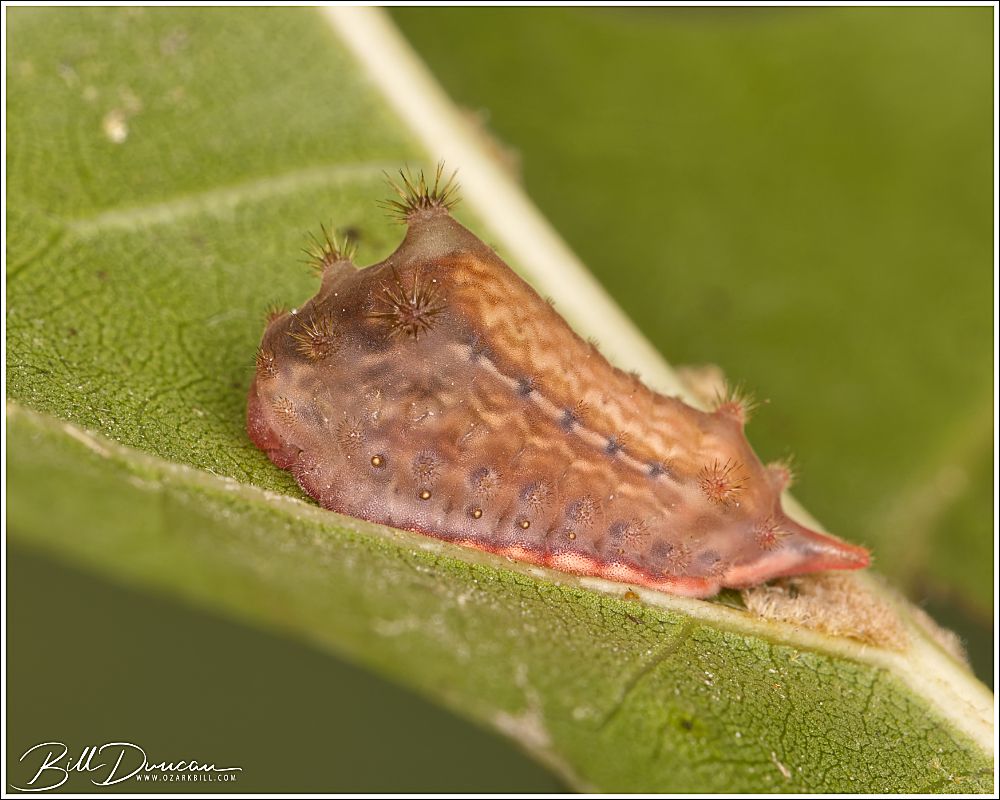
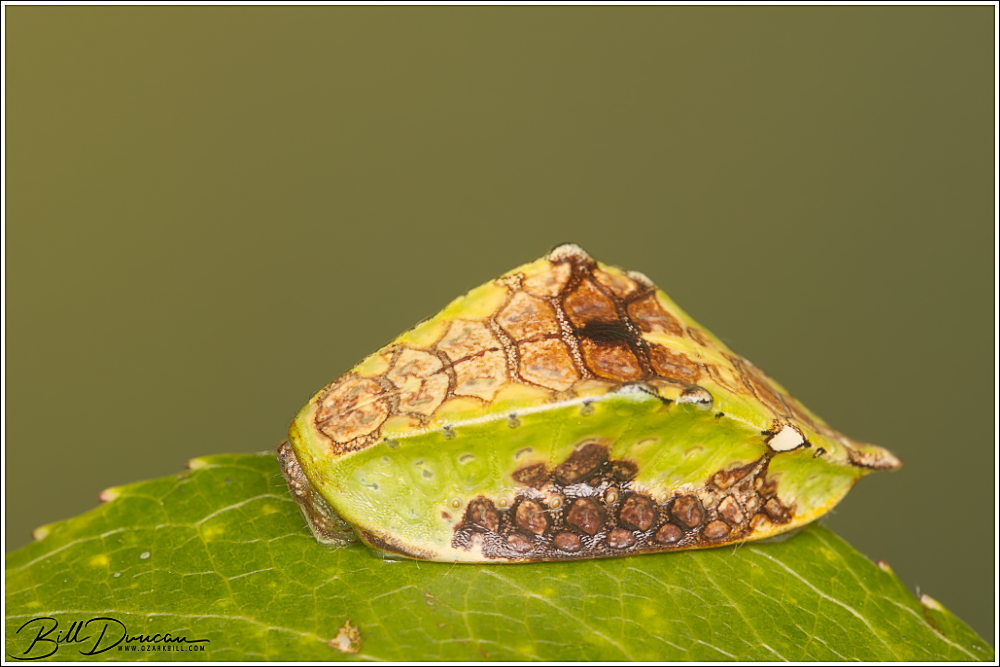
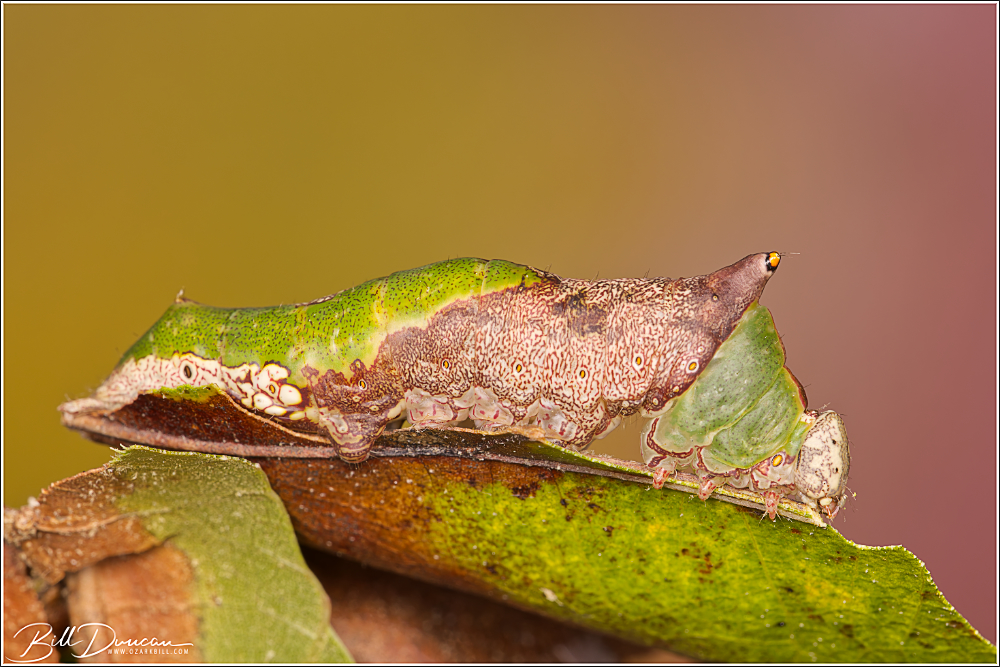
Last but not least is this wonderful skiff moth (Prolimacodes badia). These guys come in a wide assortment of patterns, ranging from mostly green, to what you see here, an animal dressed as a scenescent and diseased leaf. This one was found on the WGNSS trip to Logger’s Lake in mid-August.

This covers the slug moth caterpillars I photographed in 2026. One odd thing to note is that no monkey slug cats were found this year. I’m still trying to wrap my ahead around limacodid abundance and dispersal. Some years, certain species are found in large numbers across a variety of habitat types, while the next year they are difficult or impossible to find. These swings are most likely due to parasitoid pressures that wax and wane and are effective biological controls for all lepidopterans.

2026 Caterpillar Season – Verbena Moth

Verbena Moth
Crambodes talidiformis (Guenée, 1852), fam. Noctuidae, P-no. 932030
Host plants: Hosts solely on vervains (Verbena spp.).
Date found(s): September 6, 2026
Location(s) found: Tyson Research Center, St. Louis County, MO
Notes: In the vast world of insects, where single families can contain tens of thousands of species, the verbena moth stands practically alone. It is a monotypic species, meaning the genus Crambodes contains no other living species anywhere else on Earth. Evolutionary biologists find monotypic lineages highly intriguing because they represent isolated branches of the evolutionary tree that have survived without diversifying into a larger cluster of related species.

2026 Caterpillar Season – Silver-spotted Skipper

Silver-spotted Skipper
Epargyreus clarus (Crammer, 1755), fam. Hesperiidae, P-no. 70044
Host plants: Hosts on members of the Fabaceae, including Amporpha, Desmodium, Robinia, and Gleditsia.
Date found(s): September 6, 2026
Location(s) found: Tyson Research Center, St. Louis County, MO
Notes: Here is a lepidopteran even most novice naturalists are familiar with. This is a common and large skipper that is easily identified by the white-silver spots located on the ventral side of the hind wings. This species is often found in backyard gardens and even in urban areas. Caterpillars of this species are best found by looking for leaf tents they build among the foliage of false indigo, wisteria, or other Fabaceae species.

2026 Caterpillar Season – Lace-capped Caterpillar

Lace-capped Caterpillar (White-streaked Prominent)
Ianassa lignicolor (Walker, 1855), fam. Notodontidae, P-no. 930106.7
Host plants: Primarily oaks (Quercus spp.).
Date found(s): August 29, 2026
Location(s) found: Tyson Research Center, St. Louis County, MO
Notes: For decades, this moth was known as Oligocentria lignicolor. However, recent genomic research revealed that it was more closely related to the genus Ianassa. This taxonomic revision is a great example of how modern DNA sequencing is proving that species which look similar (like Oligocentria) are not always the closest relatives.

2026 Caterpillar Season – Spotted Apatelodes

Spotted Apatelodes
Apatelodes torrefacta (J.E. Smith, 1797), fam. Apatelodidae, P-no. 890001
Host plants: Highly polyphagous. Documented feeding primarily on woody species in 18 plant families. I have found these most often on redbud (Cercis canadensis), black cherry (Prunus serotina), and sassafras (Sassafras albidum).
Date found(s): August 22; September 6, 2026
Location(s) found: Meramec State Park, Franklin County, MO; Tyson Research Center, St. Louis County, MO
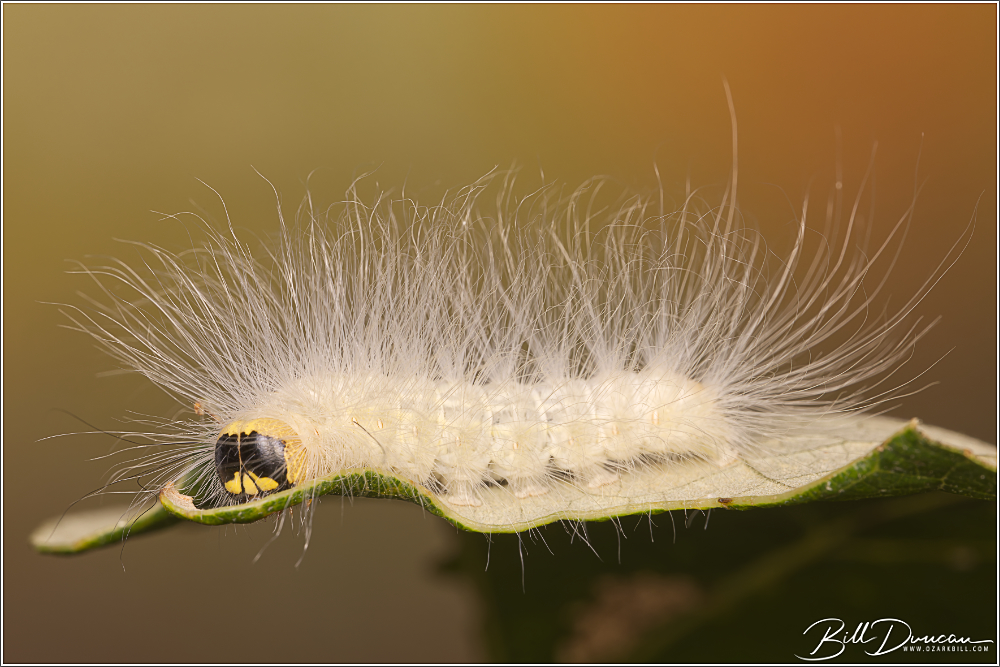
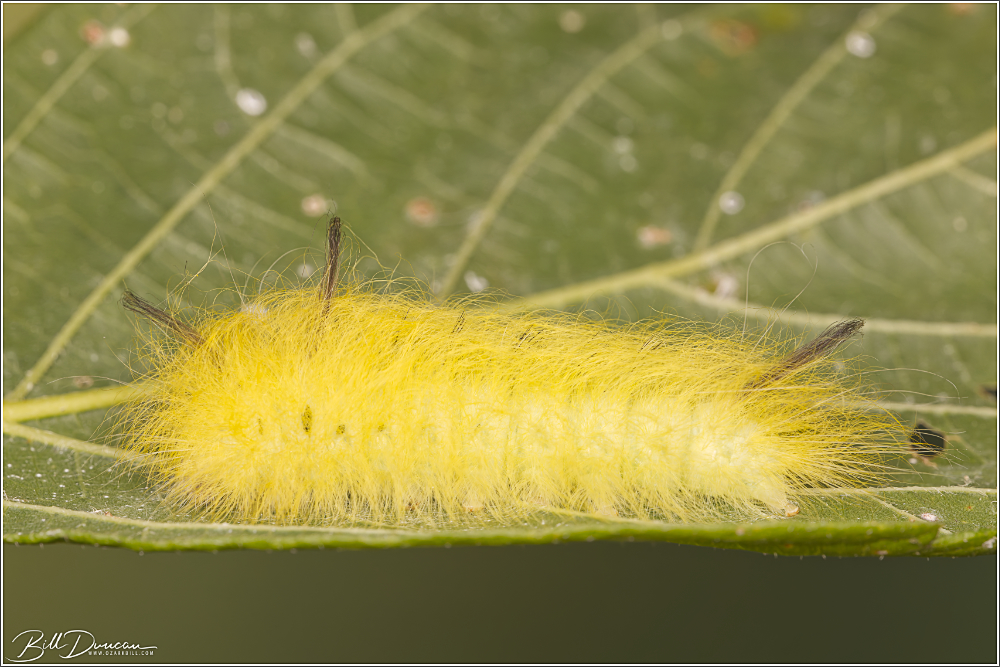
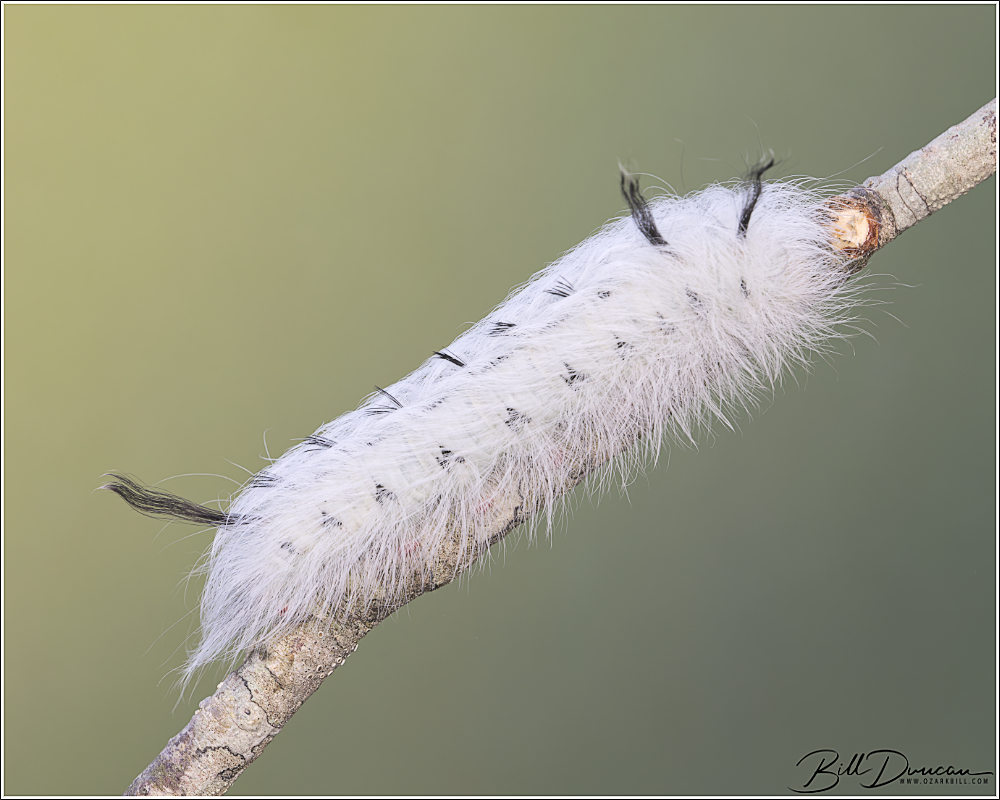
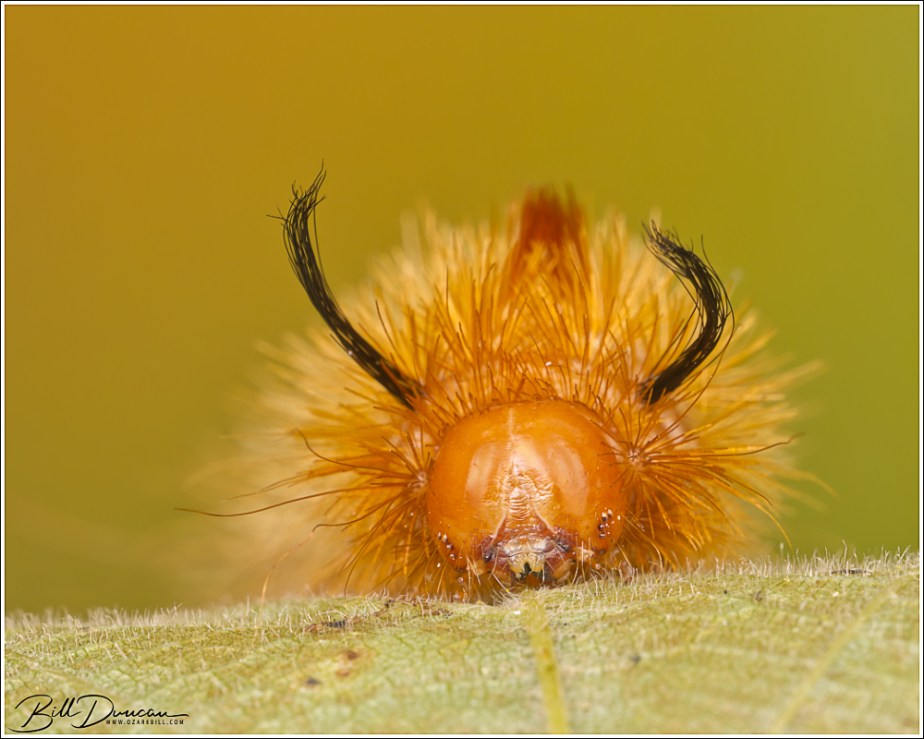
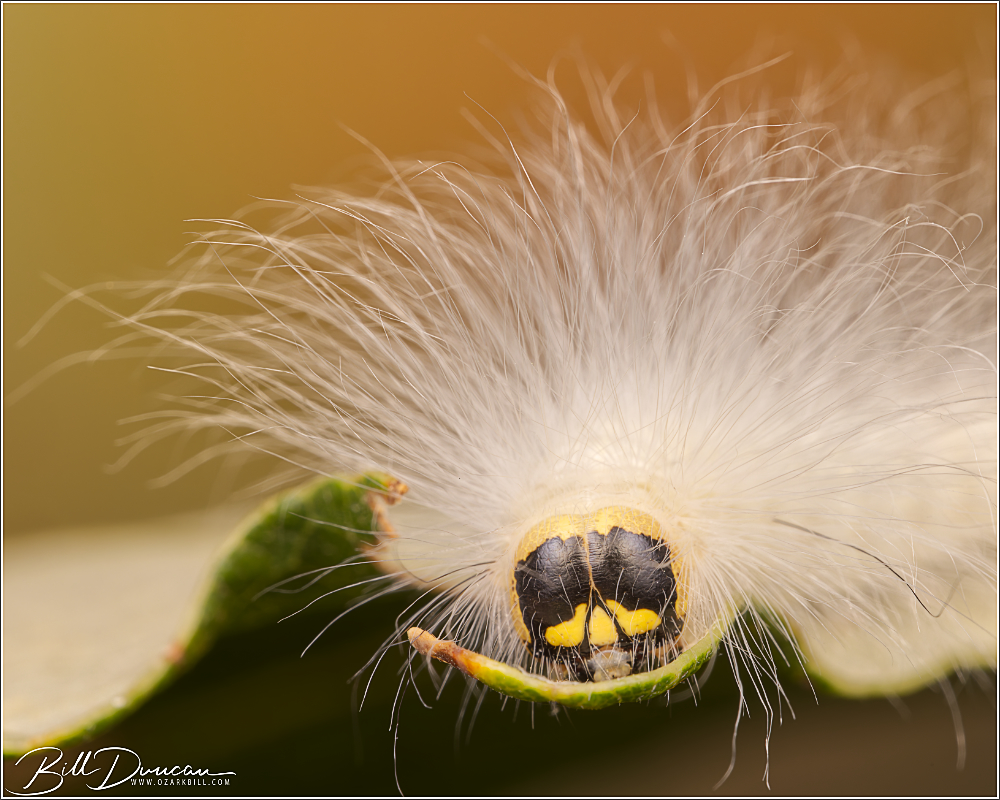
Notes: Large, covered in long setae with long, black middorsal “lashes.” Shorter urticating setae are found underneath that can deliver stings. Come in two “flavors:” lemon chiffon, or frosty white. Also look for the diagnostic red abdominal prolegs. This species shows up regularly on late summer or early autumn caterpillar hunts. This is likely due to their large size, bright color, and the habit of resting conspicuously on the leaves on which they feed.

2026 Caterpillar Season – Dusky Groundling

Dusky Groundling
Condica vecors (Guenée, 1852), fam. Noctuidae, P-no. 931995
Host plants: Hosts on a variety of Asteraceae family members, seemingly especially fond of boneset (Eupatorium spp.).
Date found(s): September 7, 2026
Location(s) found: Tyson Research Center, St. Louis County, MO
Notes: Caterpillars of this species spend their days blending in on the undersides of their host leaves. They are much more active and more easily found feeding at night.

2026 Caterpillar Season – Luna Moth

Luna Moth
Actias luna (Linnaeus, 1758), fam. Saturniidae, P-no. 890072
Host plants: Highly polyphagous. The recorded hosts are plants in 18 families, utilizing mostly woody species.
Date found(s): August 26, September 3, 2026
Location(s) found: Tyson Research Center, St. Louis County, MO; Ste Genevieve County, MO
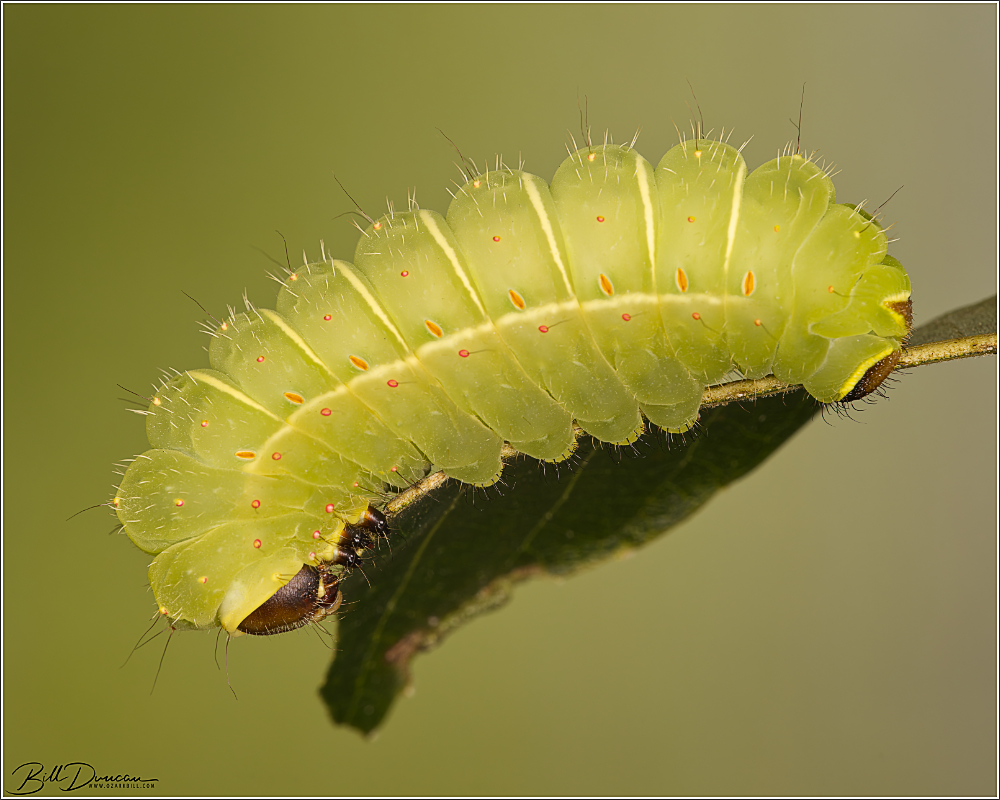
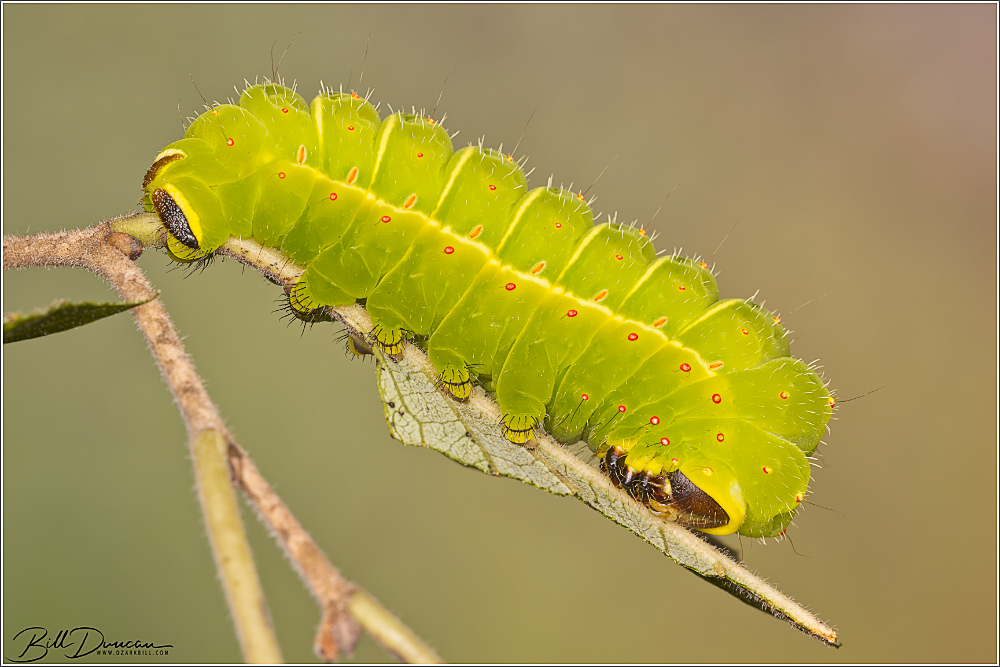
Notes: Perhaps the most beautiful and certainly among the most well-known adult moths in Missouri, the luna caterpillars are no ugly ducklings either. These caterpillars are voracious eaters, usually staying on their hatch tree until it is time to pupate. Like all our saturniids, the adult luna lacks mouth parts and does not eat. Their time as adults is short, living 7-10 days.

2026 Caterpillar Season – Trumpet Creeper Sphinx

Trumpet Creeper Sphinx
Paratrea plebeja (Fabricius, 1777), fam. Sphingidae, P-no. 890110
Host plants: Primarily feeds on trumpet vine (Campsis radicans). Also reported hosting on Oleaceae, Passifloraceae, and Solanaceae, although these are likely seldom used.
Date found(s): September, 2026
Location(s) found: Tyson Research Center, St. Louis County; Franklin County, MO
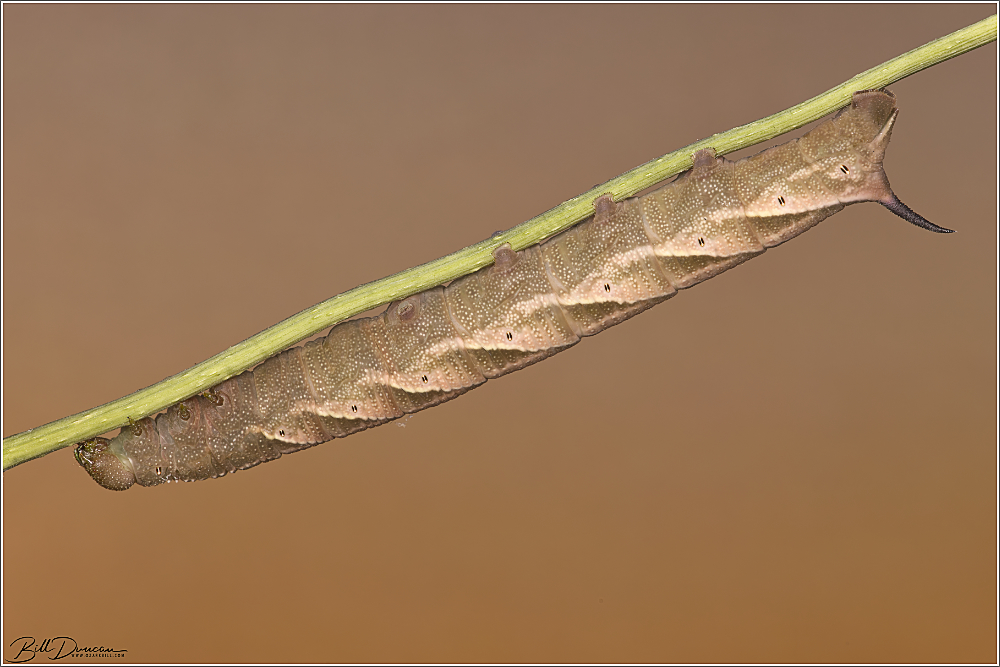
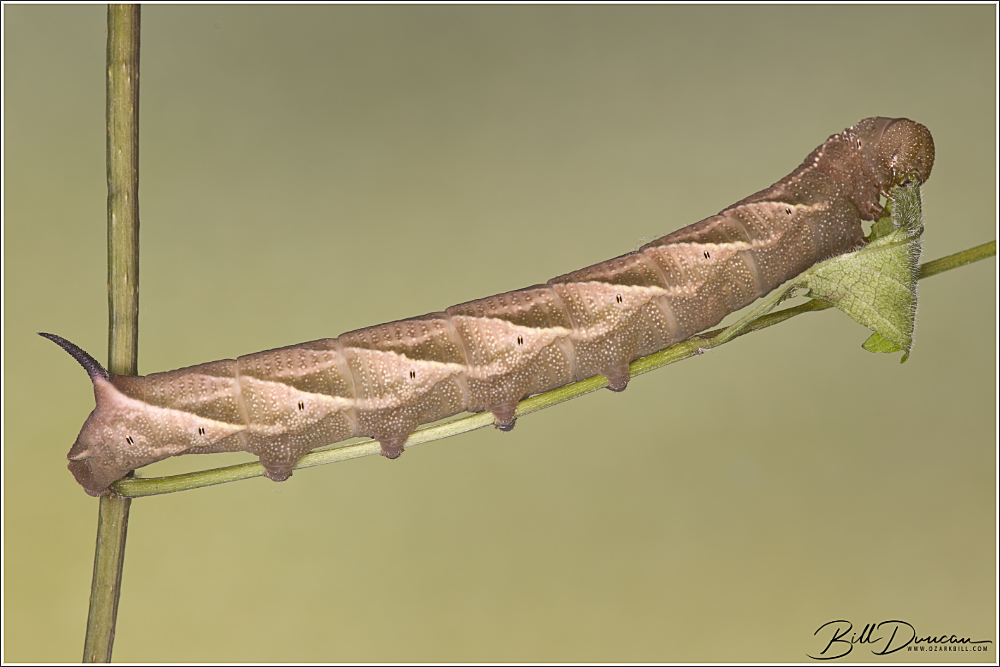
Notes: Trumpet creeper vines are heavily targeted by birds and predatory wasps during the day. To survive, the trumpet vine sphinx caterpillar utilizes a clever defensive routine. During daylight hours, the caterpillar shifts to the underside of the plant’s woody stems, pressing its body flat against the bark to become practically invisible. Only when darkness falls does it crawl out onto the leaves to feed safely under the cover of night. Here is another reason to get out after dark to find a greater diversity of caterpillars!

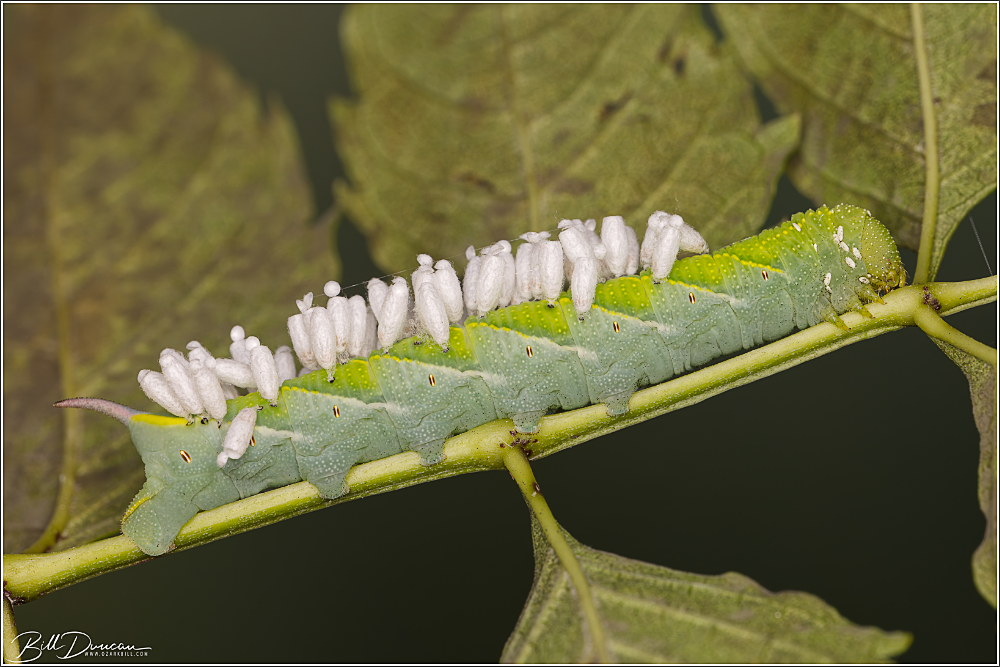
The Trumpet Creeper Sphinx comes in two primary color phases. The green phase, like the poor heavily parasitized individual pictured here (found at Tyson Research Center), and a less commonly found brown phase, pictured here and found by Eva Wiedeman in Franklin County, MO.