"What a thousand acres of Silphiums looked like when they tickled the bellies of the buffalo is a question never again to be answered, and perhaps not even asked." -Aldo Leopold
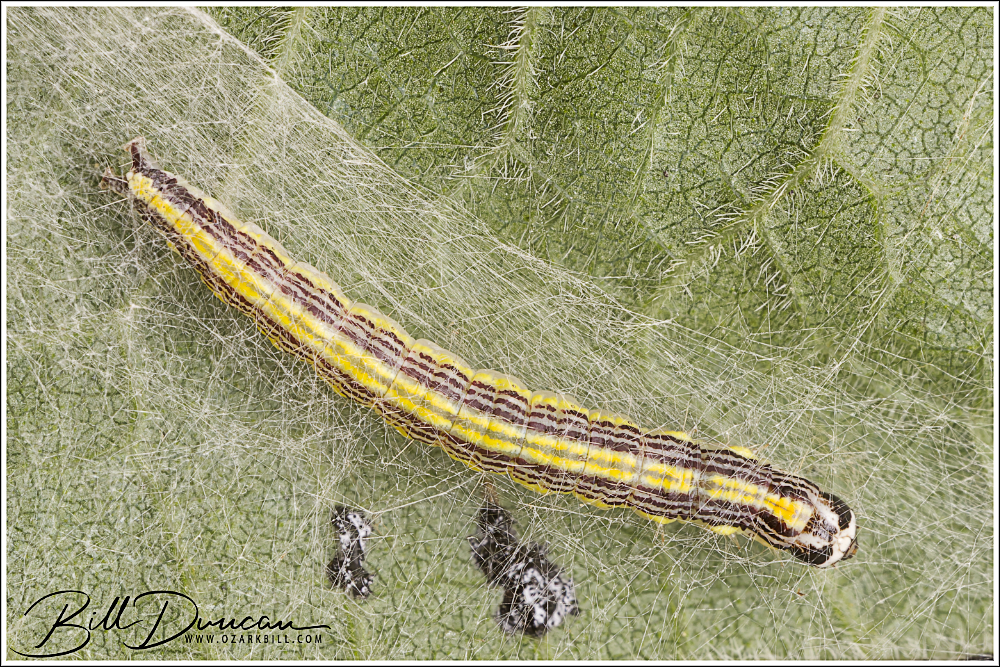
Dimorphic Macalla Epipaschia superatalis (Clemens, 1860), fam. Pyralidae, P-no. 80a0619 Host plants: In Missouri, this species’ sole host is poison ivy (Toxicodendron radicans). It has also been recorded hosting on poison sumac (T. vernix) and may likely utilize other Toxicodendron species. Date found(s): June 28, 2026 Location(s) found: Pinewoods Lake Recreation Area, Carter County, MO Notes: This distinctive caterpillar is most often found in leaf folds of its creation among poison ivy leaves. The “dimorphic” in its common name refers to the two distinct color morphs of the adult moths. The green form has gorgeous mint-green forewings contrasted by a deep chocolate brown, while the tan form has straw-colored forewings but keep the same chocolate-brown lower half.
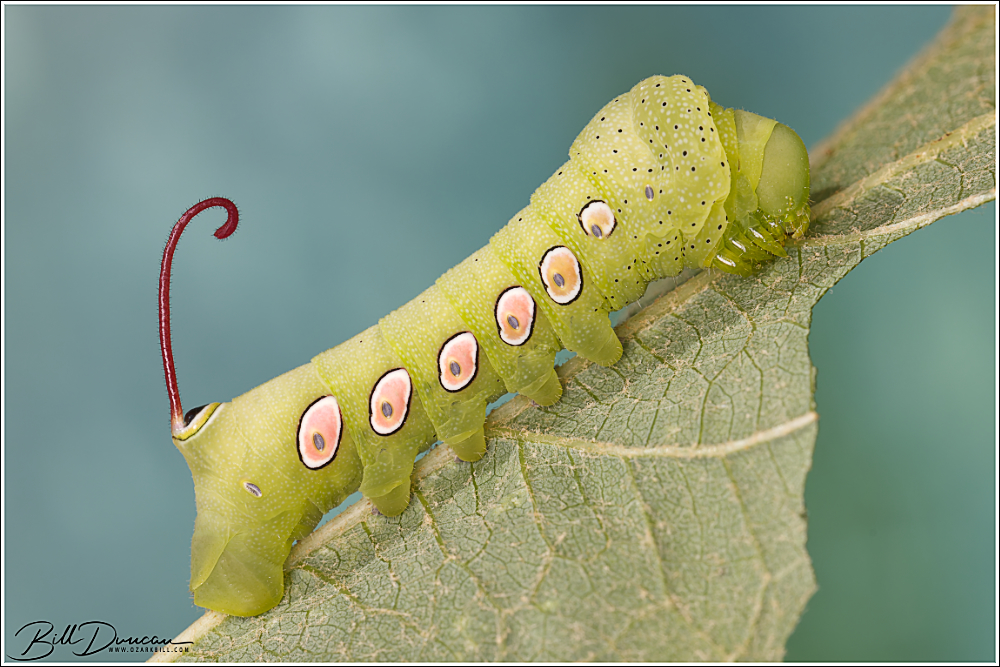
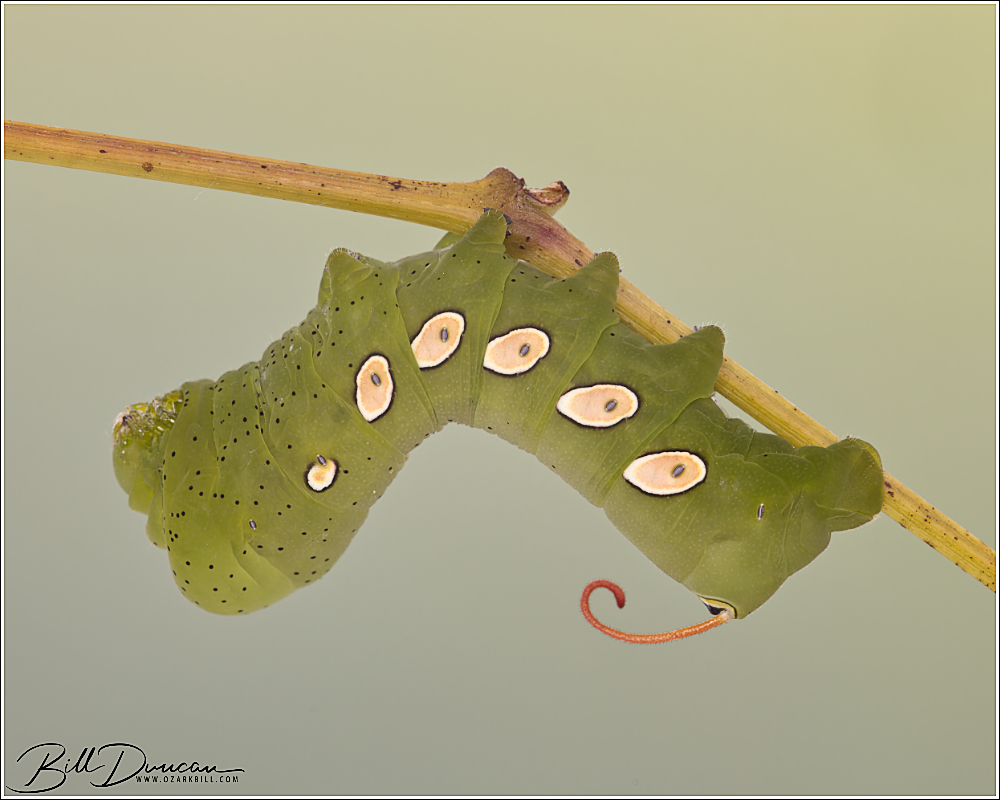
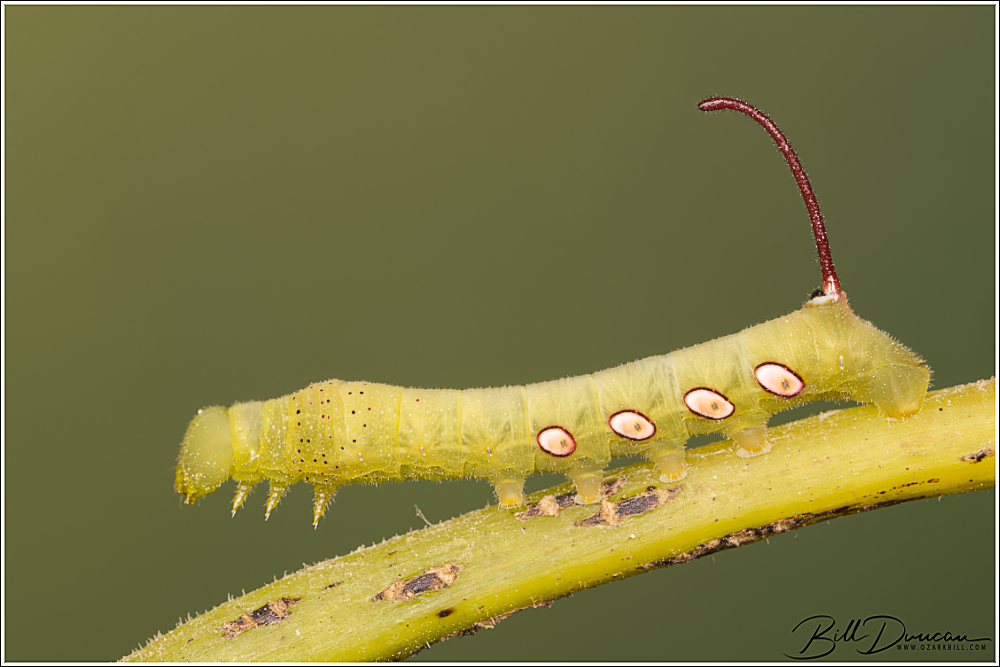
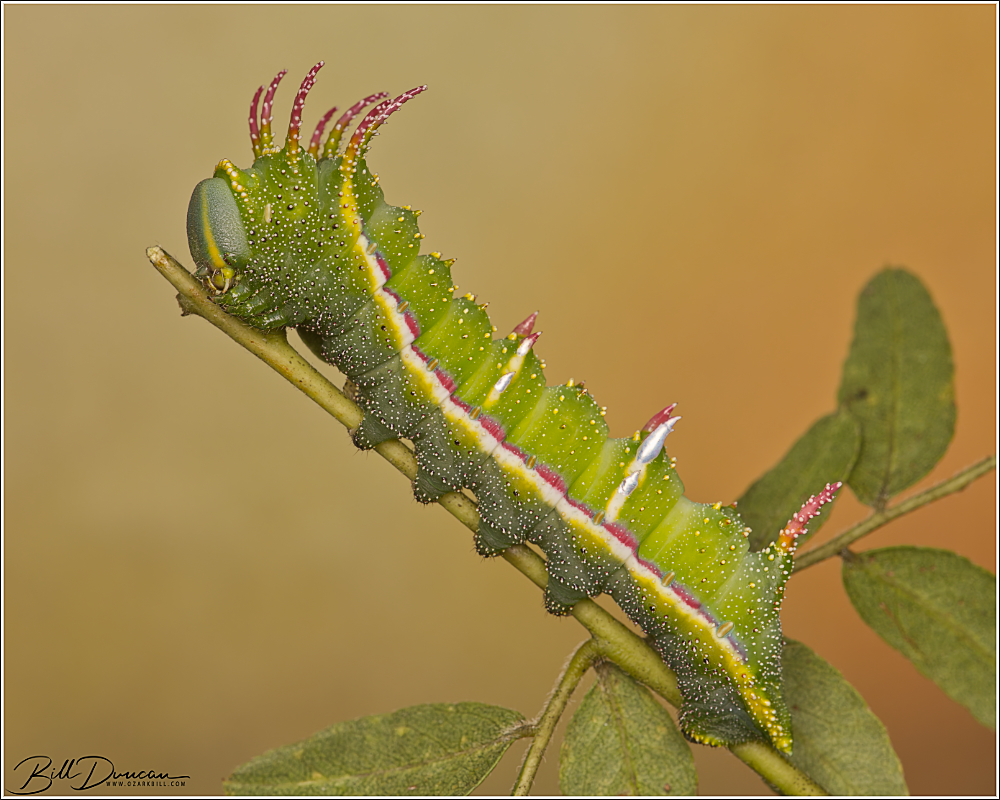
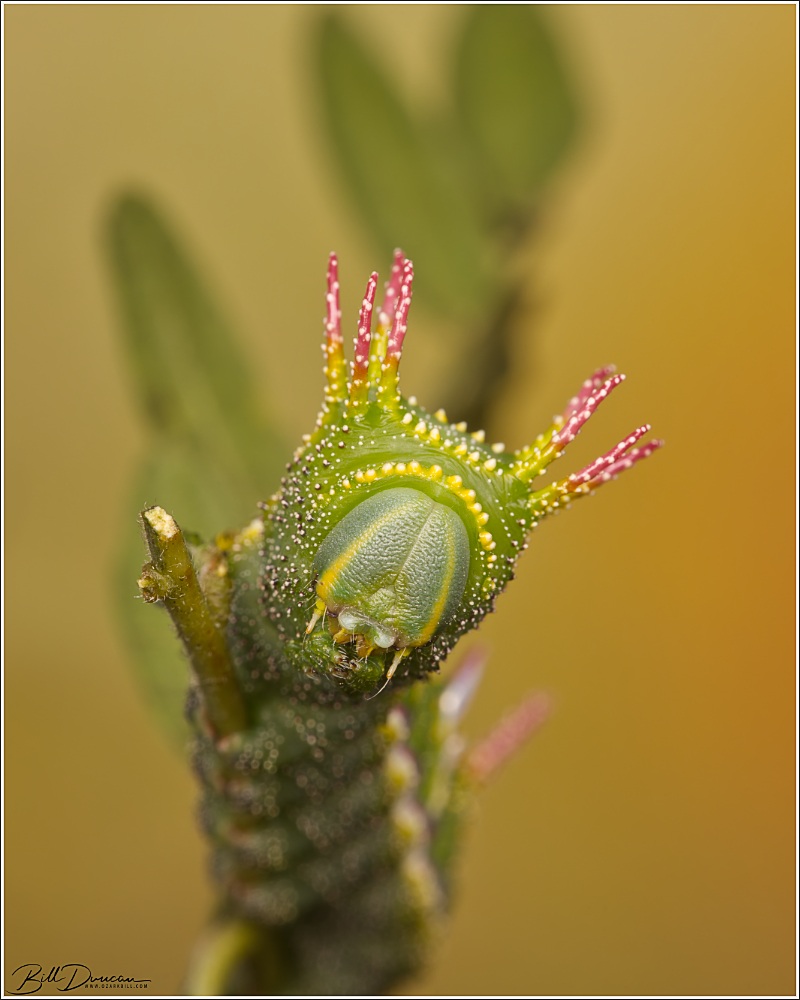
I previously shared photos of a final instar padora sphinx earlier this summer. Since then I’ve found a few early to mid-instar caterpillars of this species. I love these guys with their little pigtail-like horns.
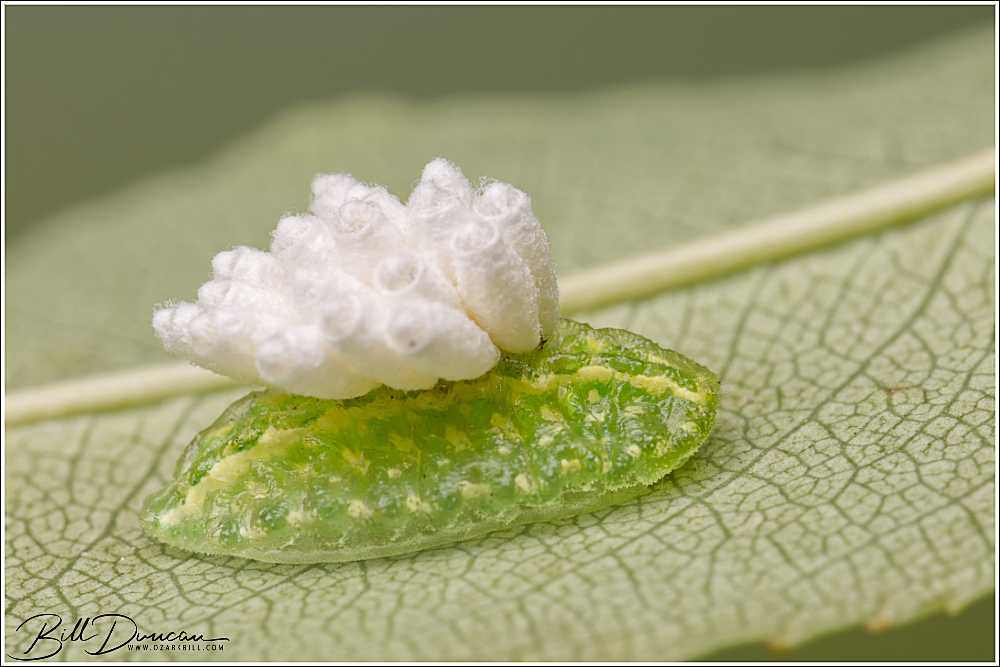
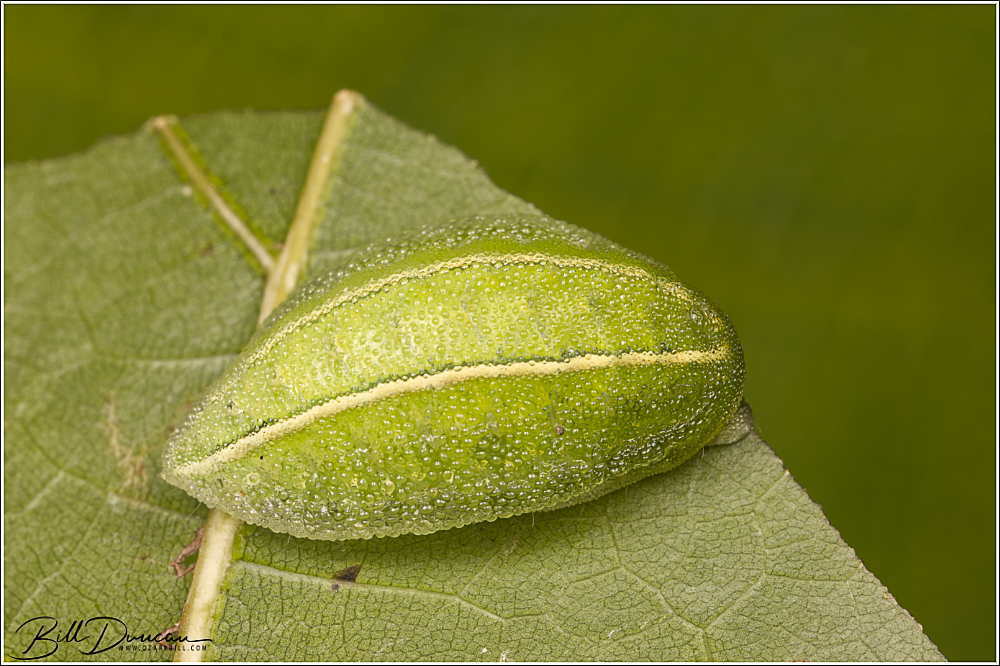
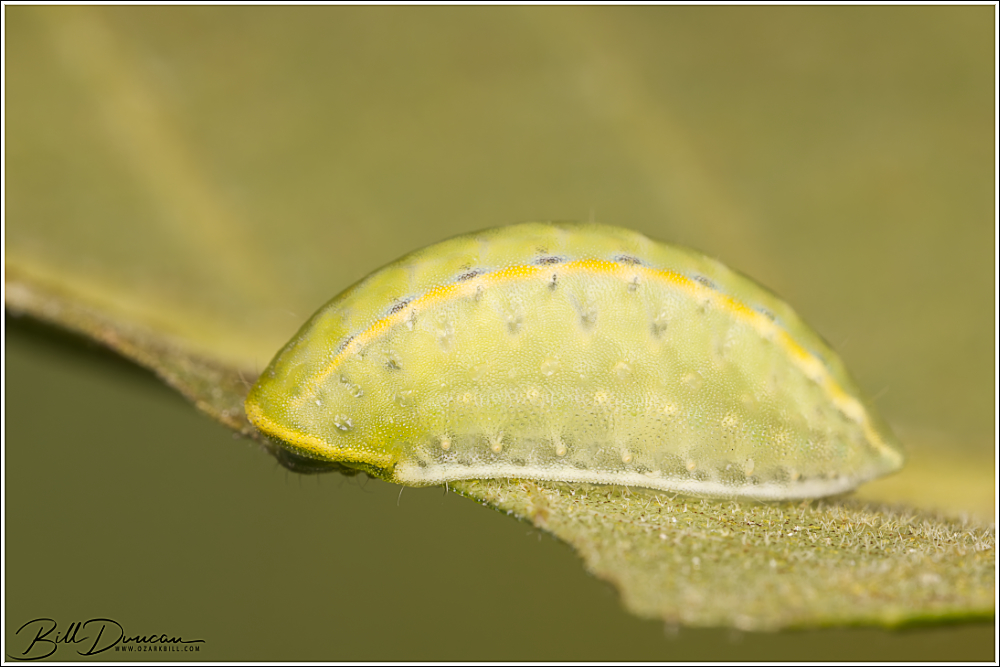
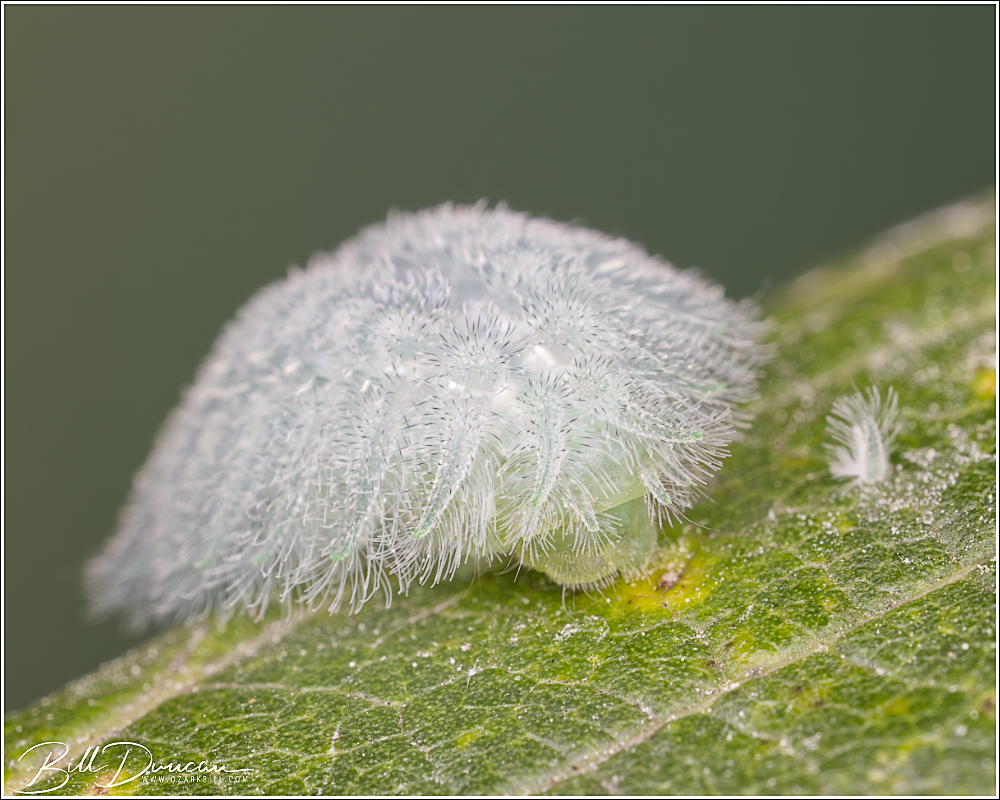
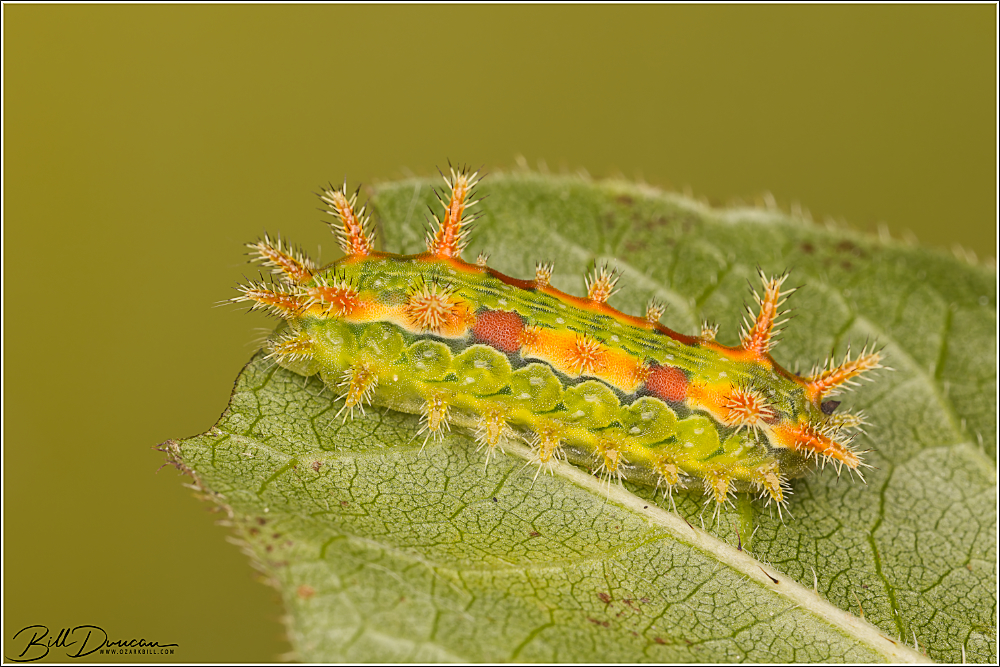
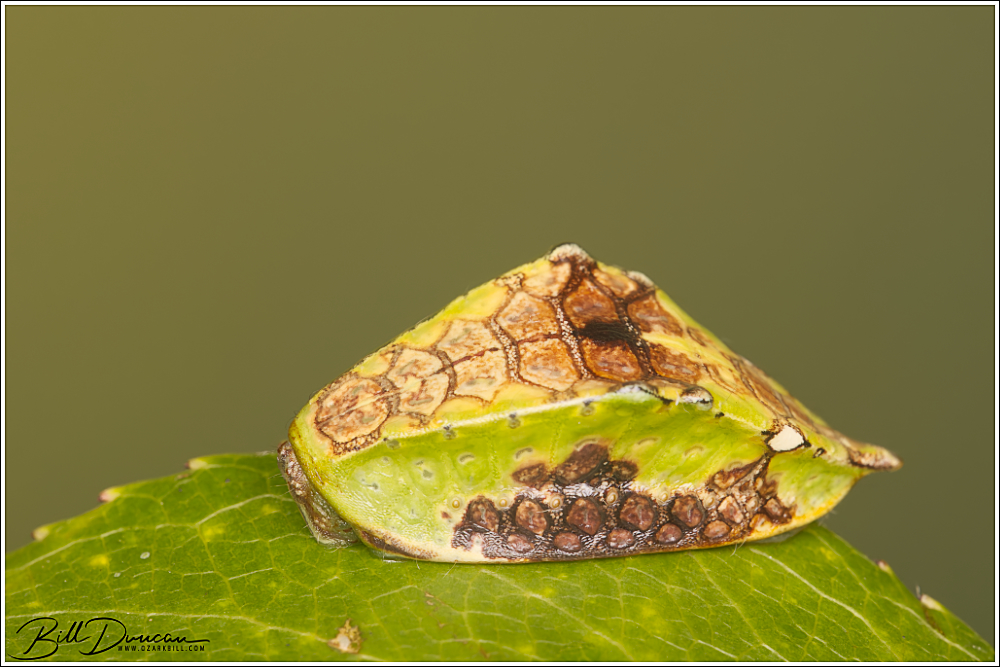
I do not believe I have shared a single slug moth (fam. Limacodidae) caterpillar in 2026. This is mainly because I shared so many of these in the past several years. I did, however, photograph a few this year and I thought I would pool them all in this one post.
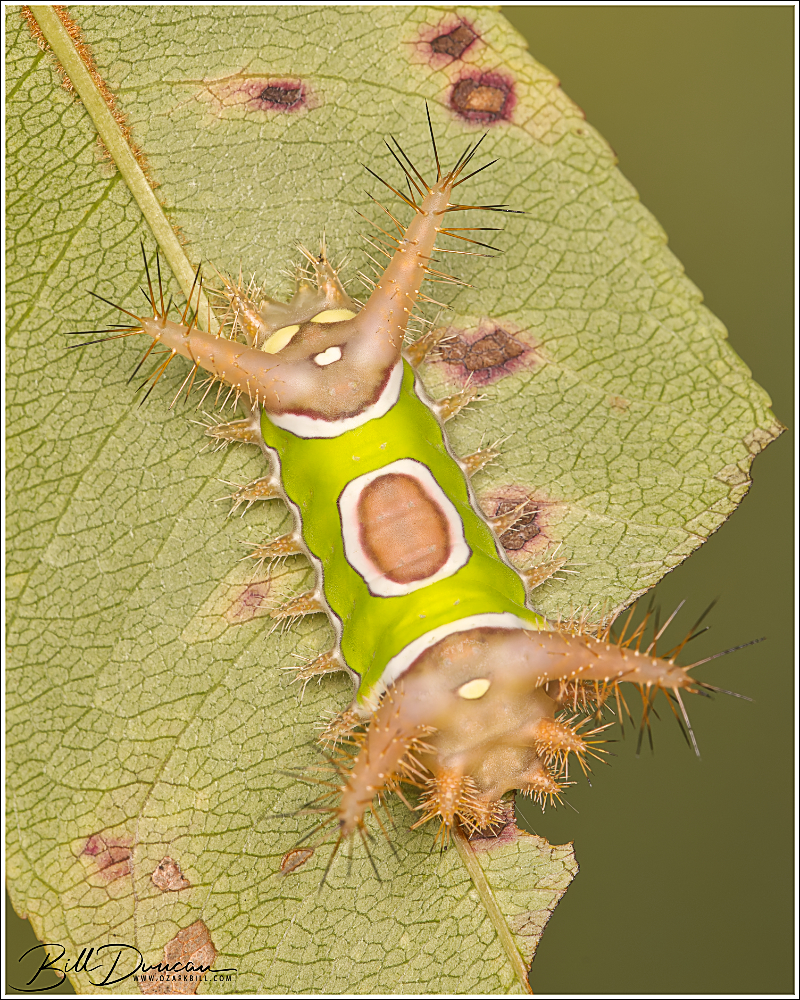
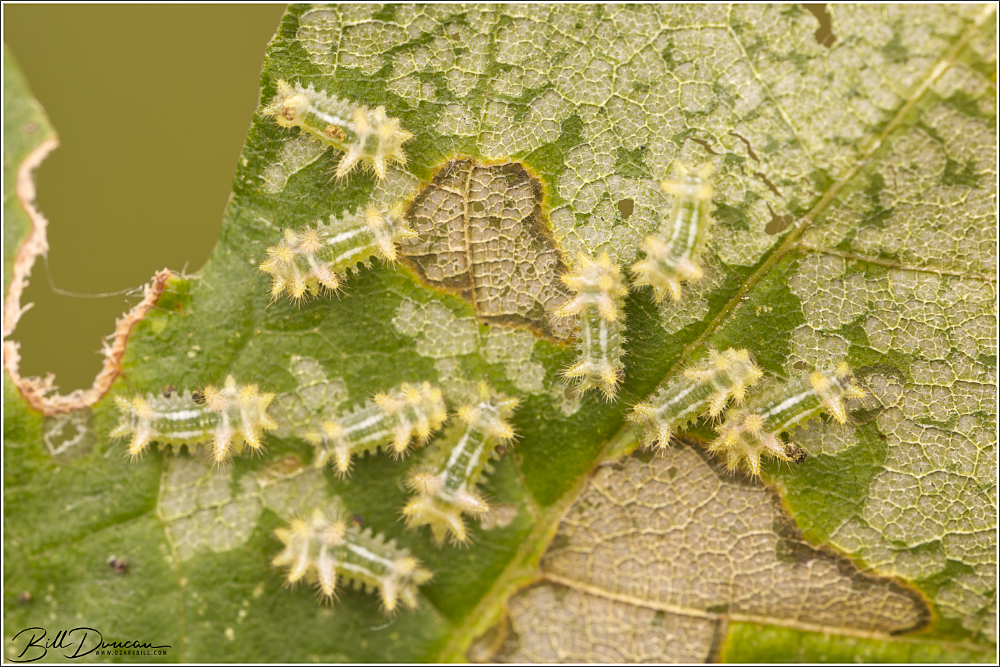
First up is the saddleback caterpillar (Acharia stimulea). The little ones, which are likely 1st instars, were found at Don Robinson State Park in Jefferson County, while the more developed individual was found at the WGNSS trip to Logger’s Lake in Shannon County. Note in the photo on the right that the little ones do not consume the whole leaf, but at this small stage, they scrape the upper layer of the leaf surface.
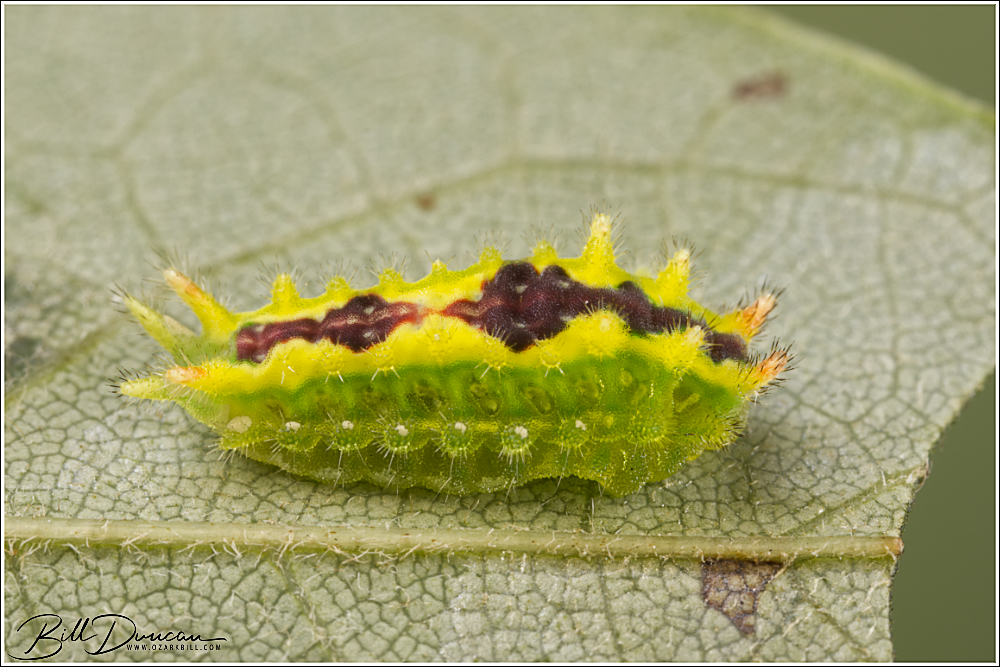
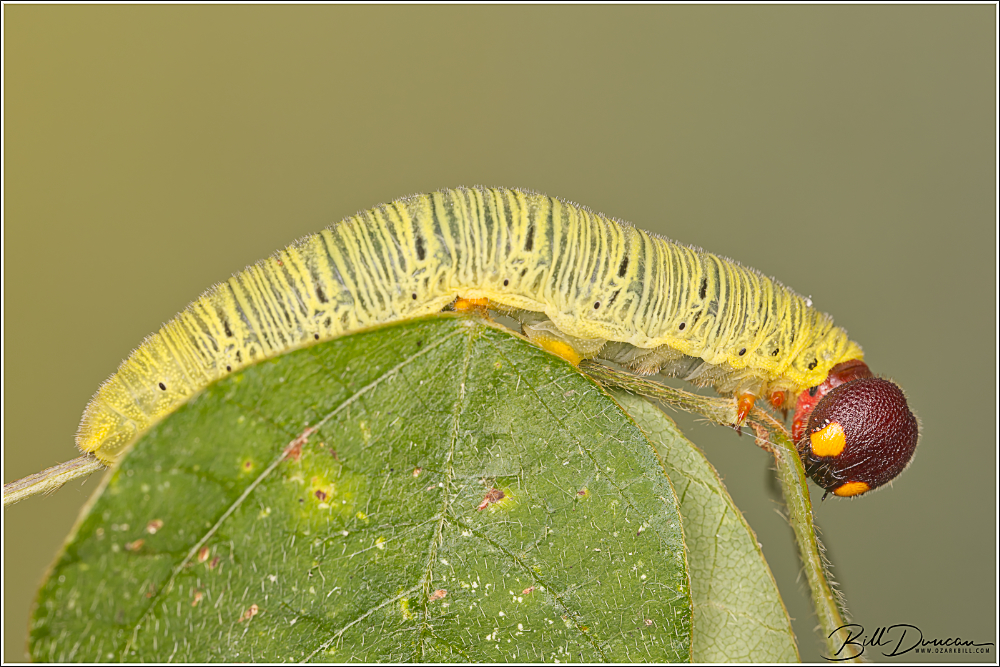
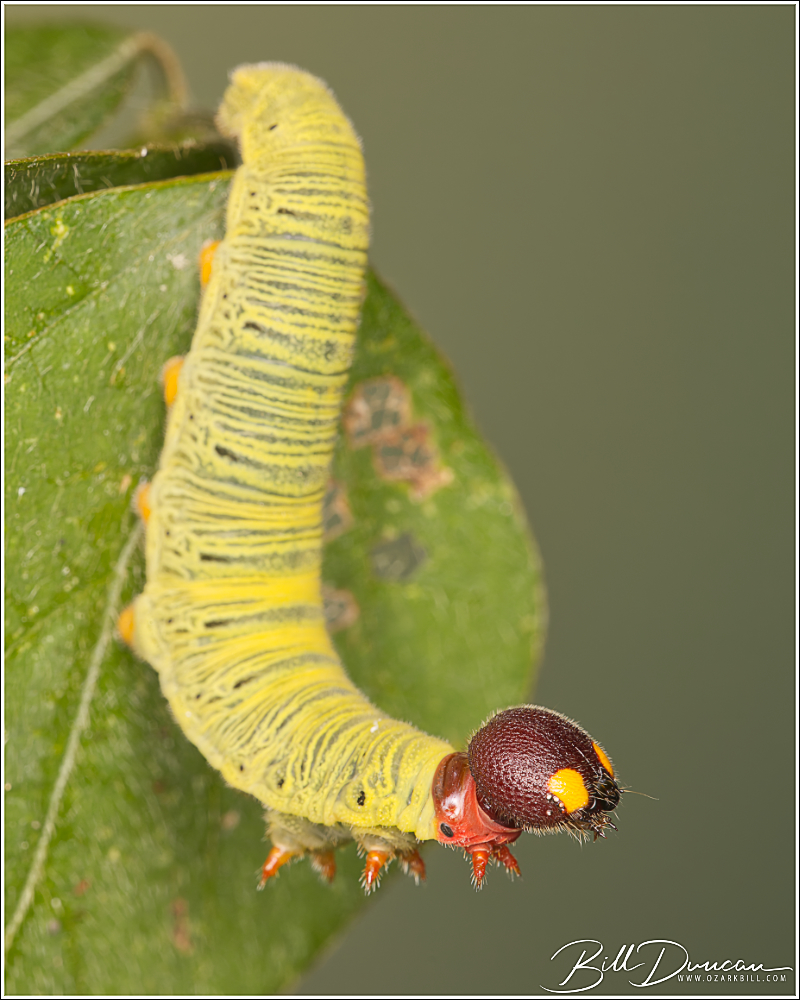
Next up is the yellow-shouldered slug moth (Lithacodes fasciola). The healthy final instar individual was found in Ste. Genevieve County in August, while the poor victim of braconid parasitoid wasps was found at Tyson Research Center in early July.
This shagreened slug moth (Apoda biguttata) caterpillar can often be confused with the species before and after. Notice the shagreen-leather-like texture of the integument to discern this one from the yellow-shouldered slug and the following species. This one was found at Don Robinson State Park in mid-September.
The yellow-collared slug moth (Apoda y-inversum) can be identified by the yellow collar at the anterior end along with the yellow sub-dorsal striping. This one was found at Tyson Research Center in early July.
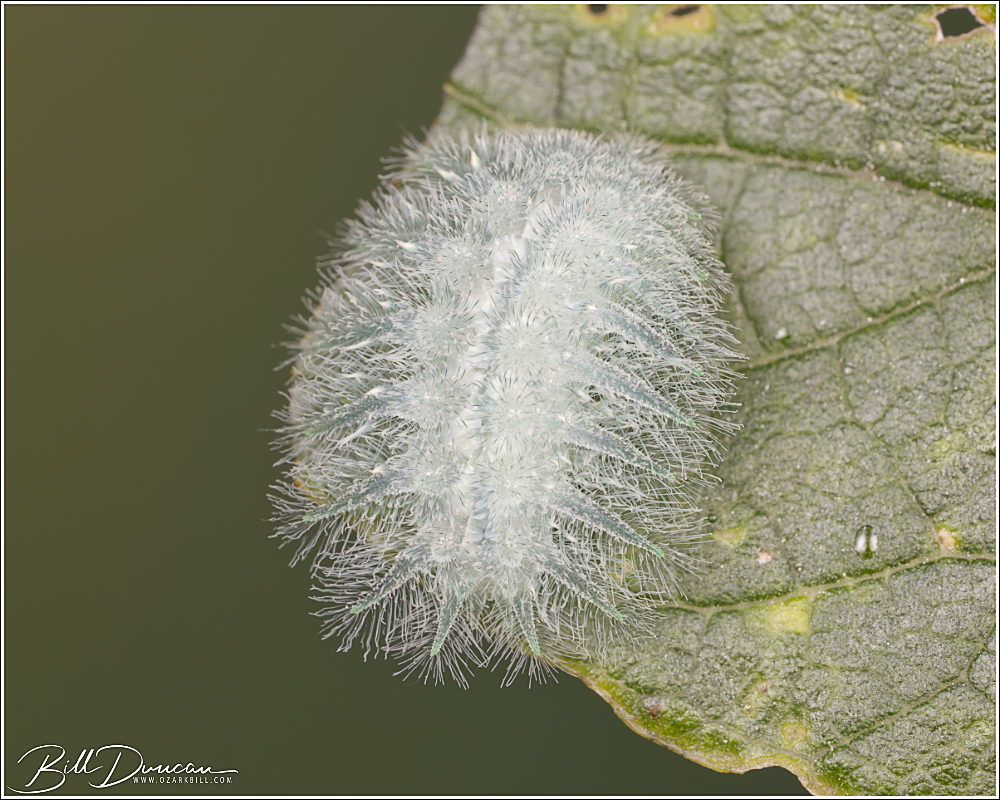
I had a lot of luck finding the crowd-favorite spun glass slug moth (Isochaetes beutenmuelleri) this season. This one was found in Ste Genevieve County in early August on hackberry.
I typically don’t have much luck finding the smaller parasa (Parasa chloris) caterpillars, but this season we discovered five. The two pictured here were found on honey locust and pin oak. Most limacodids are notorious as being highly polyphagous and can be expected on nearly any woody plant species in the state. This year, I found one of this species feeding on the herbaceous wingstem (Verbesina alternifolia).
This beautiful purple-crested slug moth (Adoneta spinuloides) was found at Tyson Research Center in late July.
The spiny oak slug (Euclea delphinii) is typically, but not always found feeding on oaks. This year, however, we found one using Roseshell Azalea (Rhododendron prinophyllum) as host.
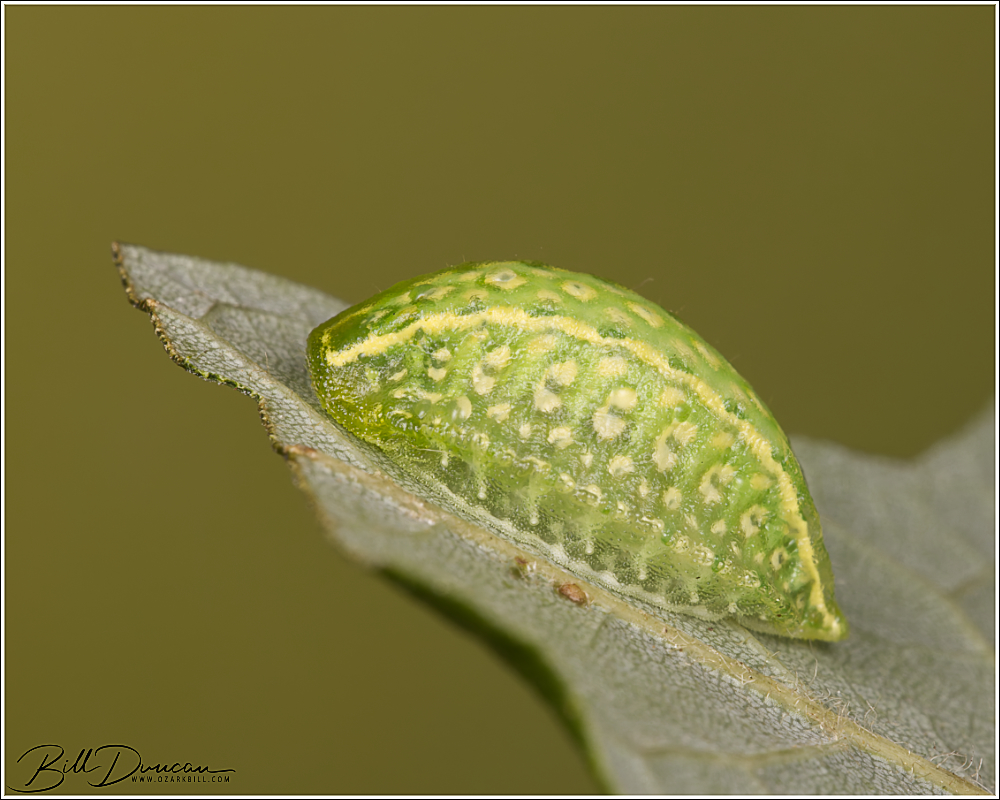
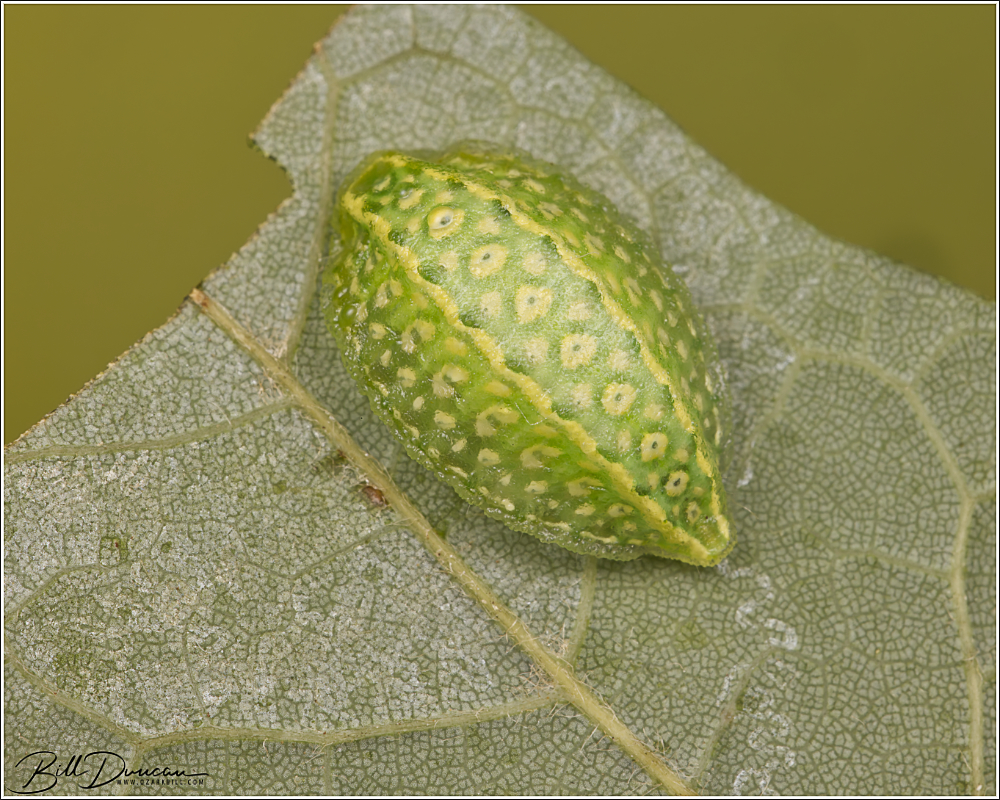
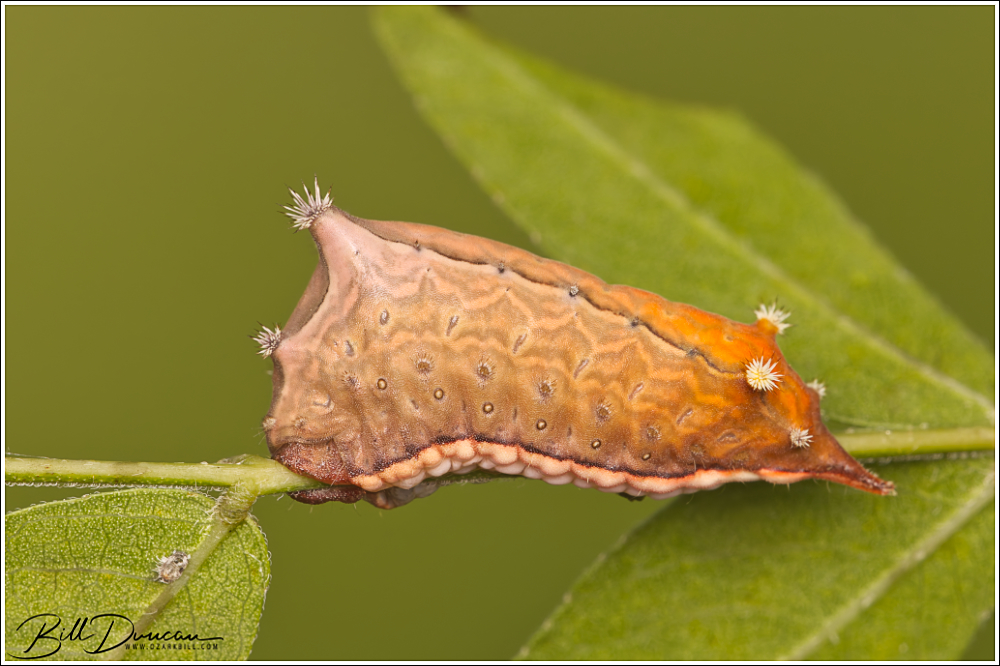
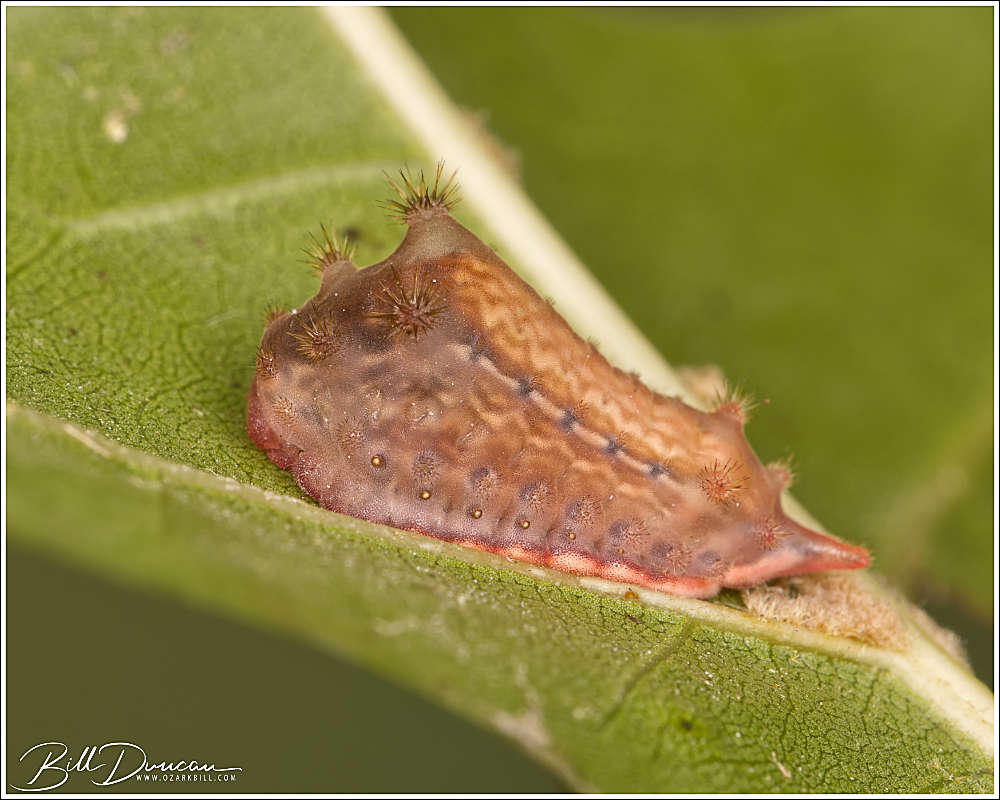
Last but not least is this wonderful skiff moth (Prolimacodes badia). These guys come in a wide assortment of patterns, ranging from mostly green, to what you see here, an animal dressed as a scenescent and diseased leaf. This one was found on the WGNSS trip to Logger’s Lake in mid-August.
This covers the slug moth caterpillars I photographed in 2026. One odd thing to note is that no monkey slug cats were found this year. I’m still trying to wrap my ahead around limacodid abundance and dispersal. Some years, certain species are found in large numbers across a variety of habitat types, while the next year they are difficult or impossible to find. These swings are most likely due to parasitoid pressures that wax and wane and are effective biological controls for all lepidopterans.
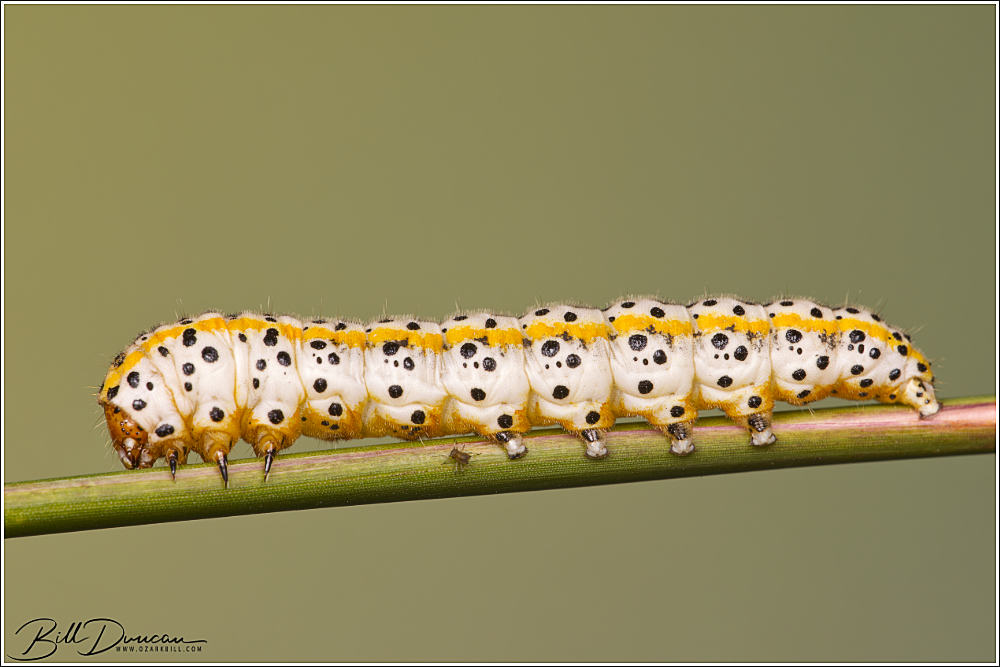
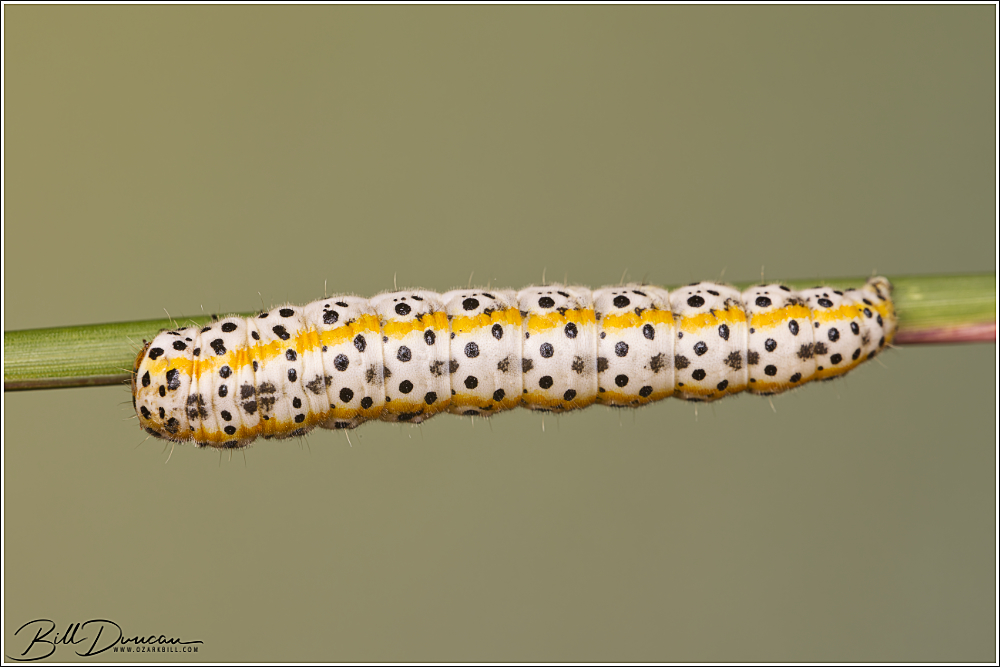
Verbena Moth Crambodes talidiformis (Guenée, 1852), fam. Noctuidae, P-no. 932030 Host plants: Hosts solely on vervains (Verbena spp.). Date found(s): September 6, 2026 Location(s) found: Tyson Research Center, St. Louis County, MO Notes: In the vast world of insects, where single families can contain tens of thousands of species, the verbena moth stands practically alone. It is a monotypic species, meaning the genus Crambodes contains no other living species anywhere else on Earth. Evolutionary biologists find monotypic lineages highly intriguing because they represent isolated branches of the evolutionary tree that have survived without diversifying into a larger cluster of related species.
I shared photos of this species this year already. However, I was fortunate to find several of these this year and I find these to be one of the more spectacular caterpillars in the state. This one was found in Ste. Genevieve County in early September.
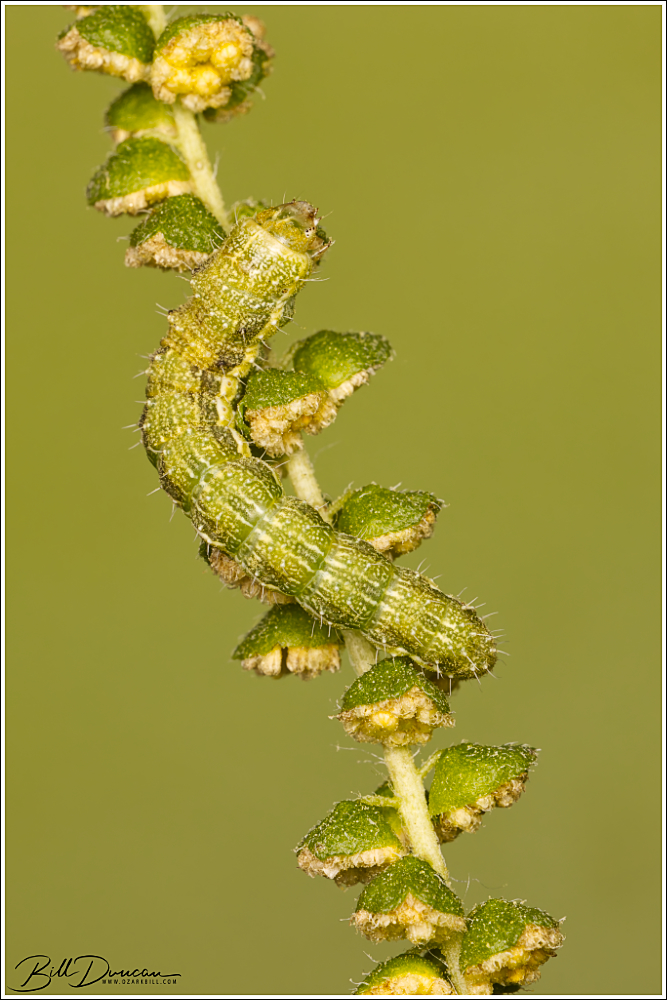
Ragweed Flower Moth Schinia rivulosa (Guenée, 1852), fam. Noctuidae, P-no. 932091 Host plants: Hosts solely on ragweed (Ambrosia spp.). Date found(s): September 4, 2026 Location(s) found: Ste. Genevieve County, MO Notes: For those with a sensitivity to ragweed, like me, the ragweed flower moth should be a favorite. This abundant species feeds on flower buds, blooms and seeds of Ambrosia, acting as a significant natural control for these highly allergenic plants.
False Boneset Flower Moth Schinia grandimedia (Hardwick, 1996), fam. Noctuidae, P-no. 932095 Host plants: Hosts solely on false boneset (Brickellia eupatorioides). Date found(s): September 12, 2026 Location(s) found: Don Robinson State Park, Jefferson County, MO Notes: The false boneset flower moth was described in 1996, most likely due to the similarity of the adult moth to a close relative, the three-lined flower moth (Schinia trifascia). Thankfully, the caterpillars are easily distinguished between the two. Like many of the Schinia, the caterpillars of S. grandimedia feed only on flowers and developing seeds of its host and will almost always be found by looking for them on these tissues.
This species is more common in the great plains and has only a few records from Missouri. This one was found at Don Robinson State Park during a WGNSS caterpillar hunting trip.
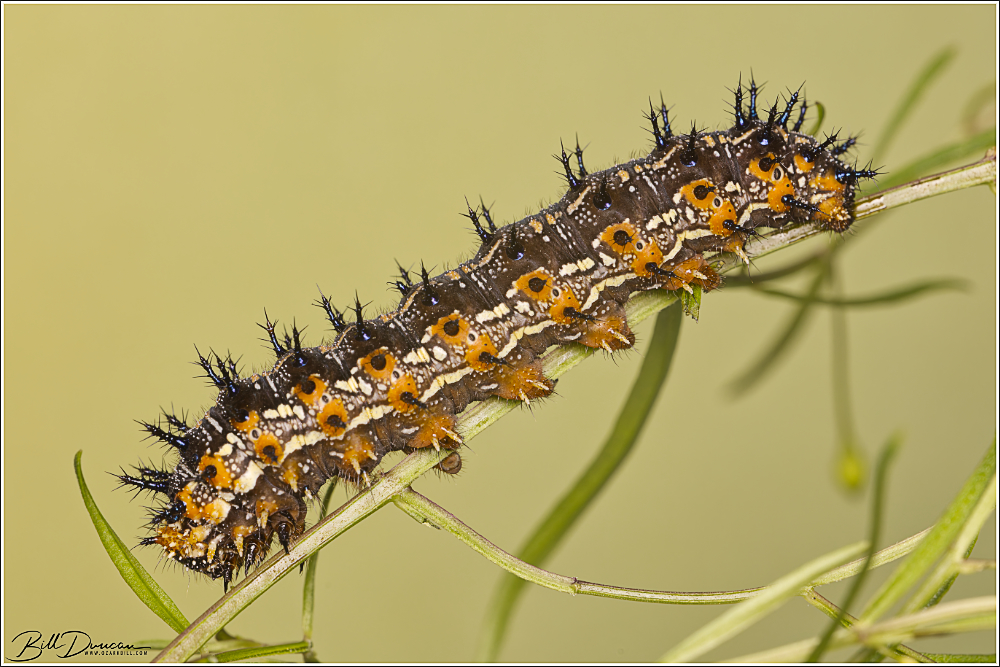
Common Buckeye Junonia coenia (Hubner, 1822), fam. Nymphalidae, P-no. 77a0831 Host plants: Hosts include members of the figwort (Scrophulariaceae), plantain (Plantaginaceae), and acanthus (Acanthaceae) families. Date found(s): August 22, 2026 Location(s) found: Meramec State Park, Franklin County, MO Notes: The common buckeye’s preferred hosts contain quantities of the bitter and toxic compounds called iridoid glycosides. The caterpillars sequester these compounds and gain considerable protection from them against predators like birds and wasps. However, this protection can come with a considerable tradeoff. High concentrations of iridoid glycosides have been shown to reduce the caterpillar’s immune system, making it incredibly vulnerable to parasitic wasps, flies, and deadly pathogens. To avoid this, female buckeye adults carefully taste potential host plants, striving for just the right amount of iridoid glycosides, prior to choosing the specific plant to oviposit upon.
For the common buckeye, the benefits of this chemical sequestration do not continue to the pupal and adult life stages. Larvae actively metabolize the iridoid glycosides, and these compounds have been shown to drop considerably in late fifth-instar caterpillars and eventually become undetectable in adults. Adults then adopt a different strategy of using warning coloration and patterning of the large “buckeyes” to deter would-be predators.
Silver-spotted Skipper Epargyreus clarus (Crammer, 1755), fam. Hesperiidae, P-no. 70044 Host plants: Hosts on members of the Fabaceae, including Amporpha, Desmodium, Robinia, and Gleditsia. Date found(s): September 6, 2026 Location(s) found: Tyson Research Center, St. Louis County, MO Notes: Here is a lepidopteran even most novice naturalists are familiar with. This is a common and large skipper that is easily identified by the white-silver spots located on the ventral side of the hind wings. This species is often found in backyard gardens and even in urban areas. Caterpillars of this species are best found by looking for leaf tents they build among the foliage of false indigo, wisteria, or other Fabaceae species.
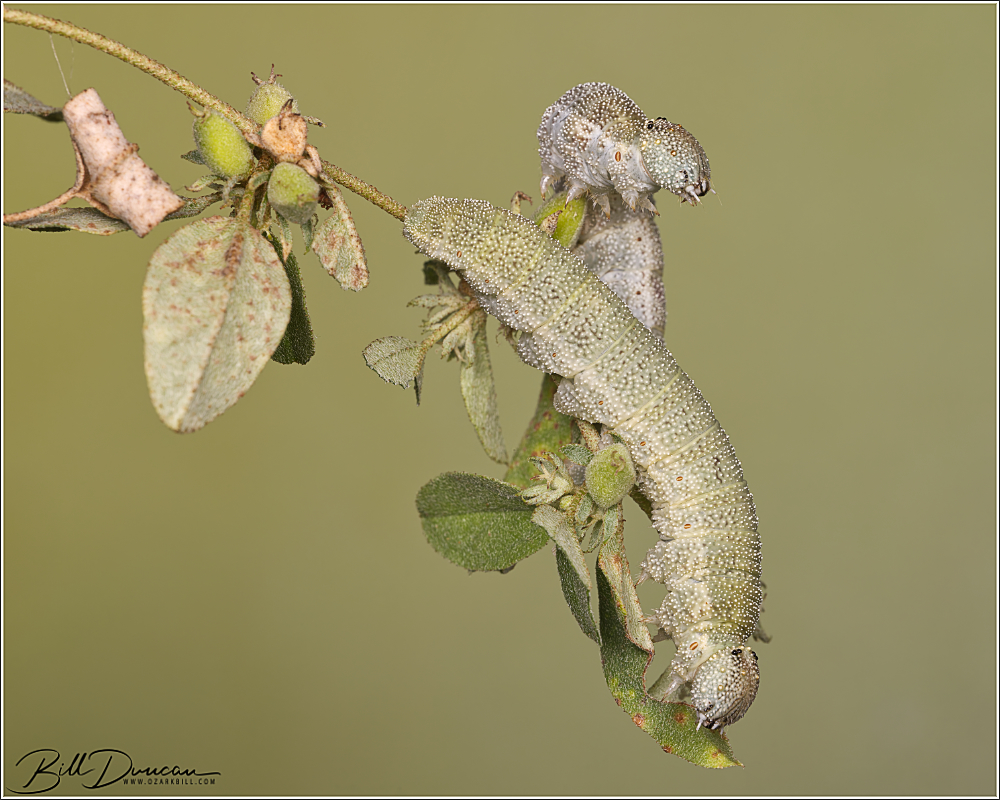
I shared photos of caterpillars of the goatweed leafwing last year. Last month, the WGNSS Nature Photography Group went to Don Robinson State Park in Jefferson County, MO for our annual late season caterpillar hunt and found quite a few of these guys on thier croton host plants. I was pleased to get a nice photo of a couple of active late instar larvae pictured here.