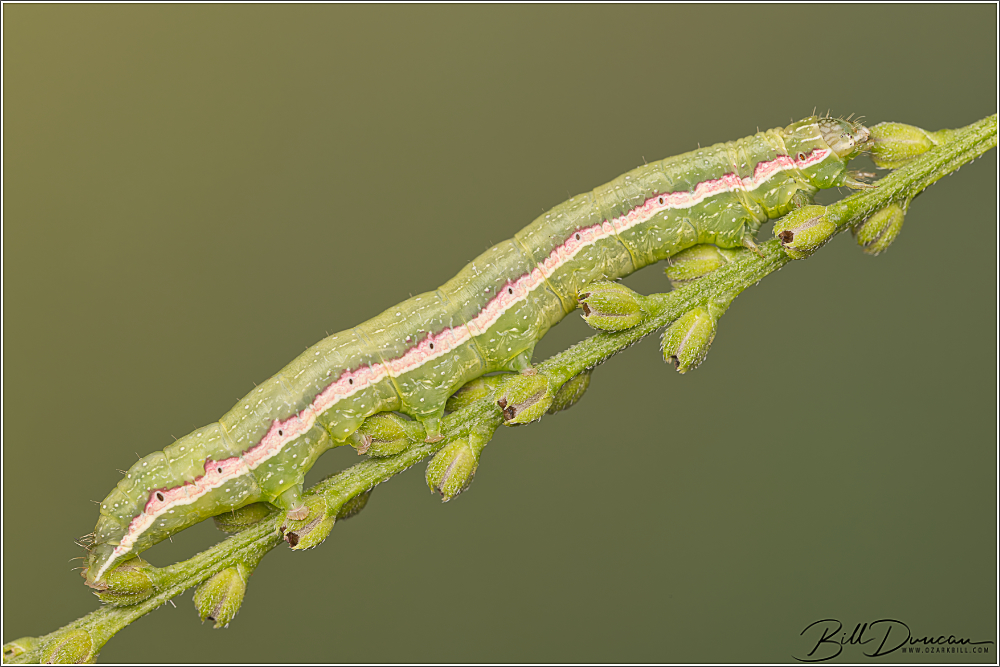
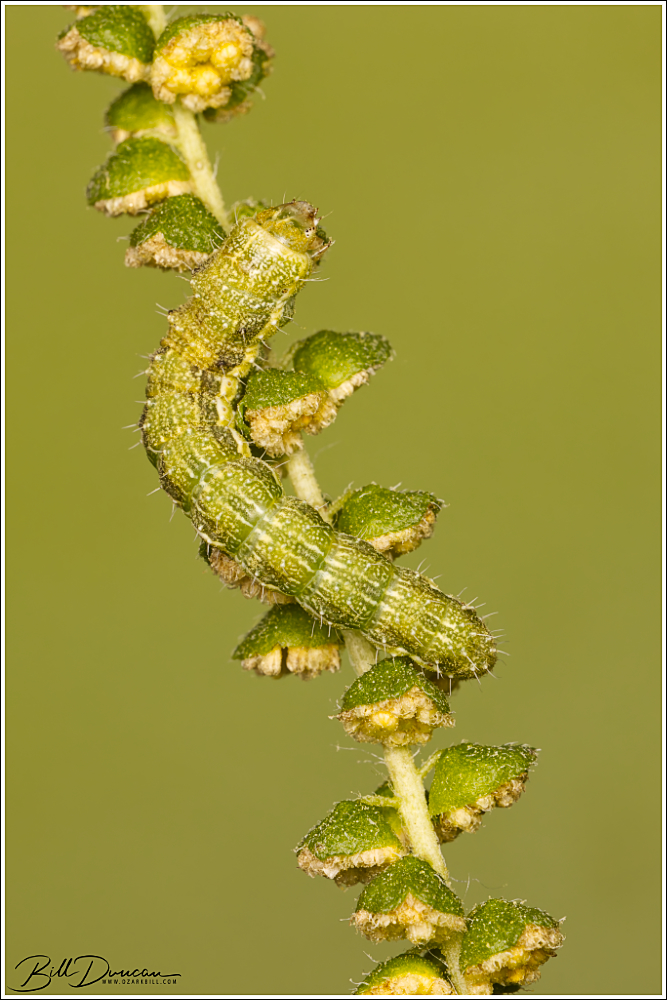
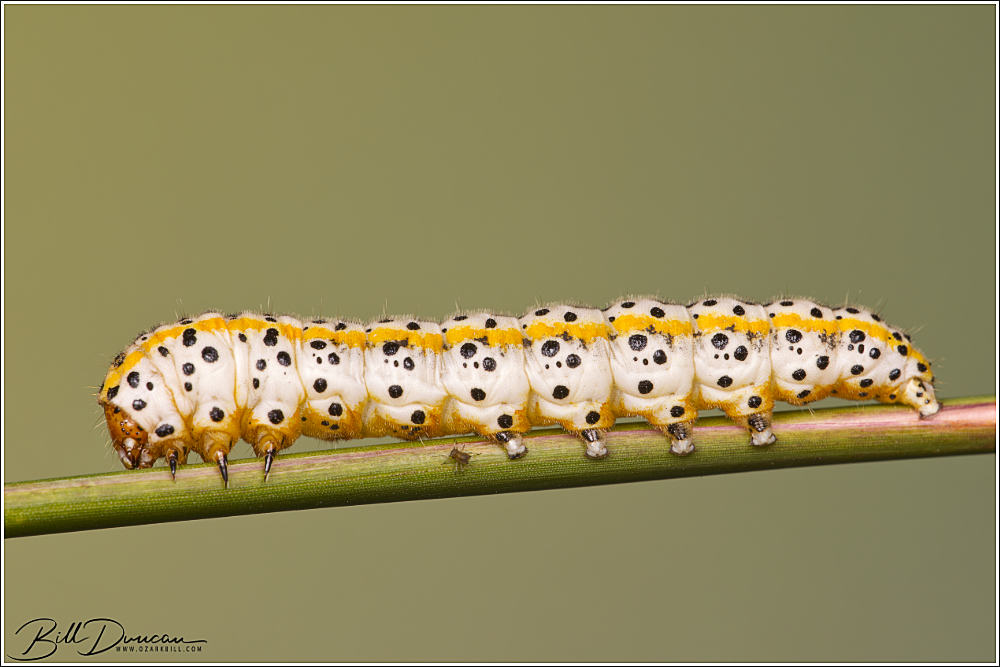
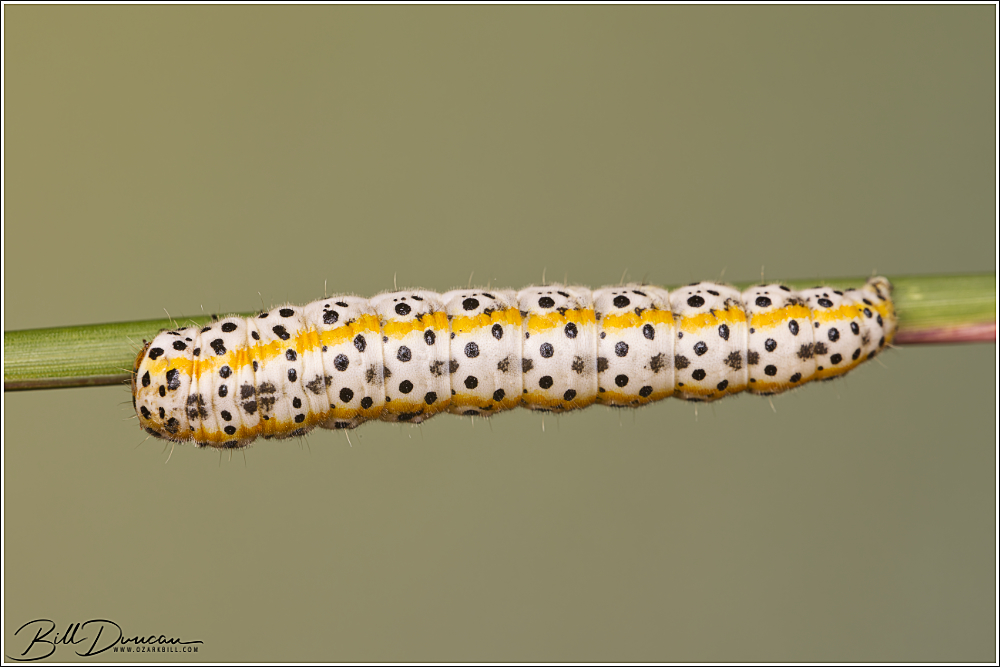
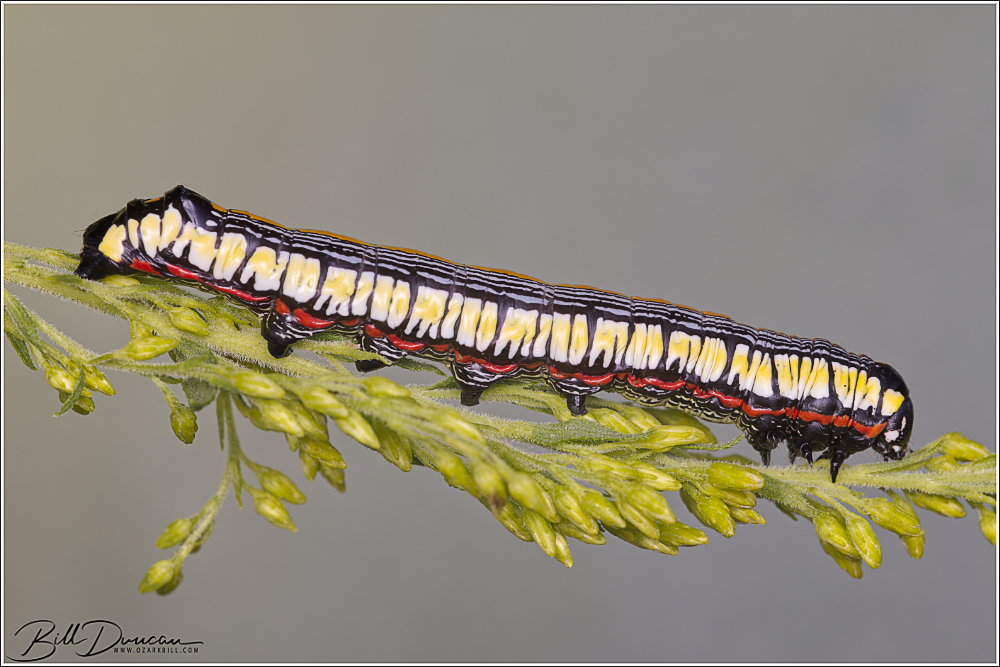
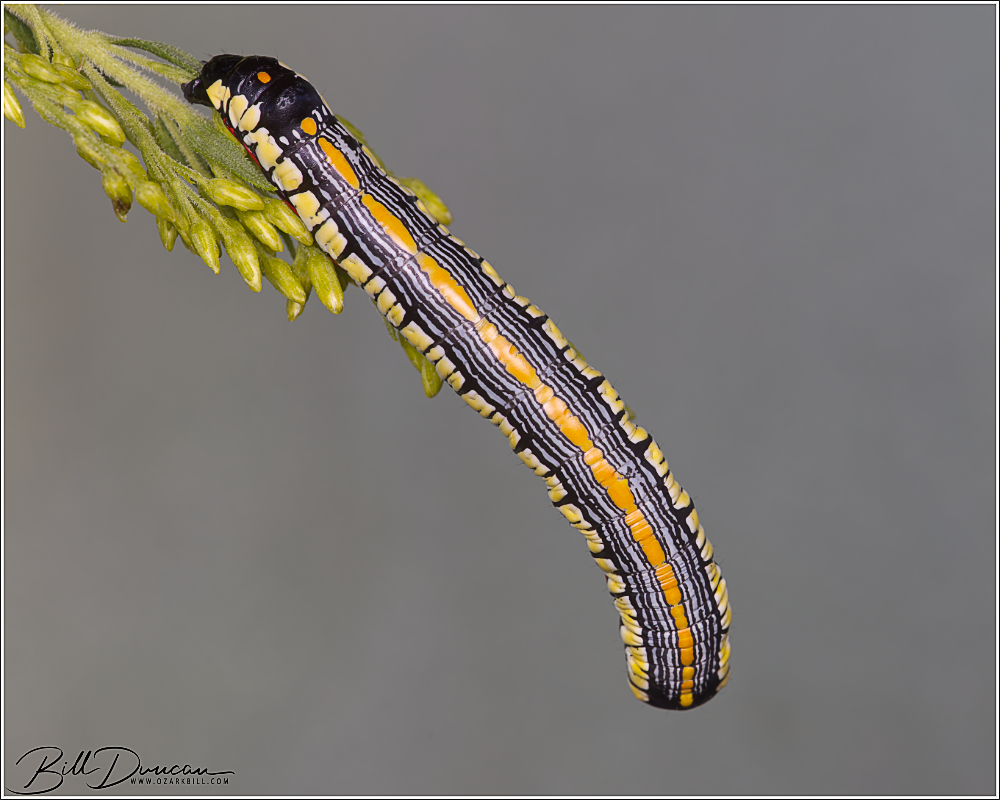
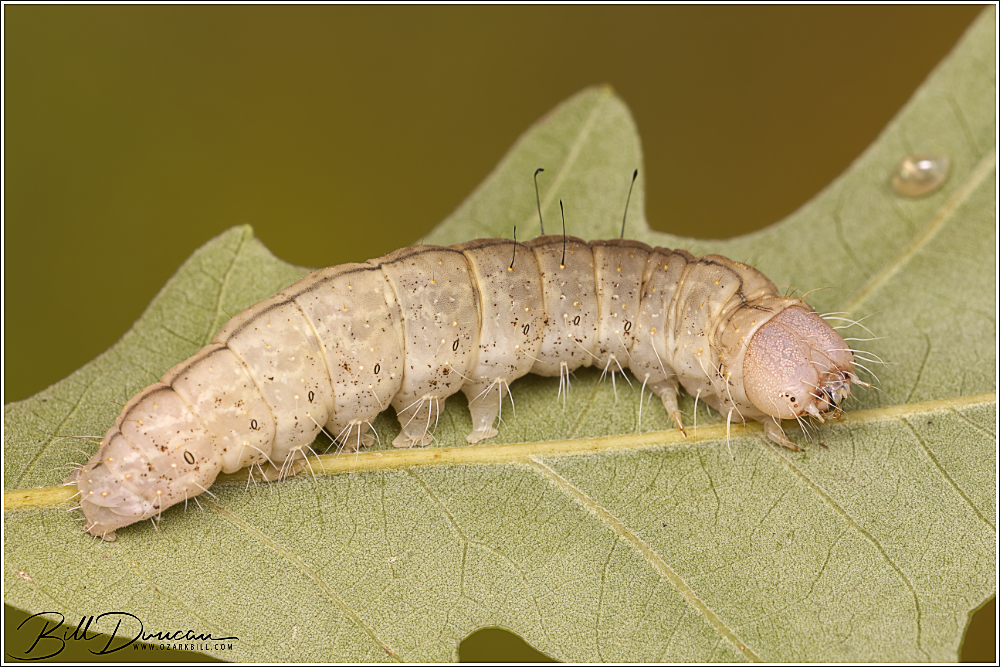
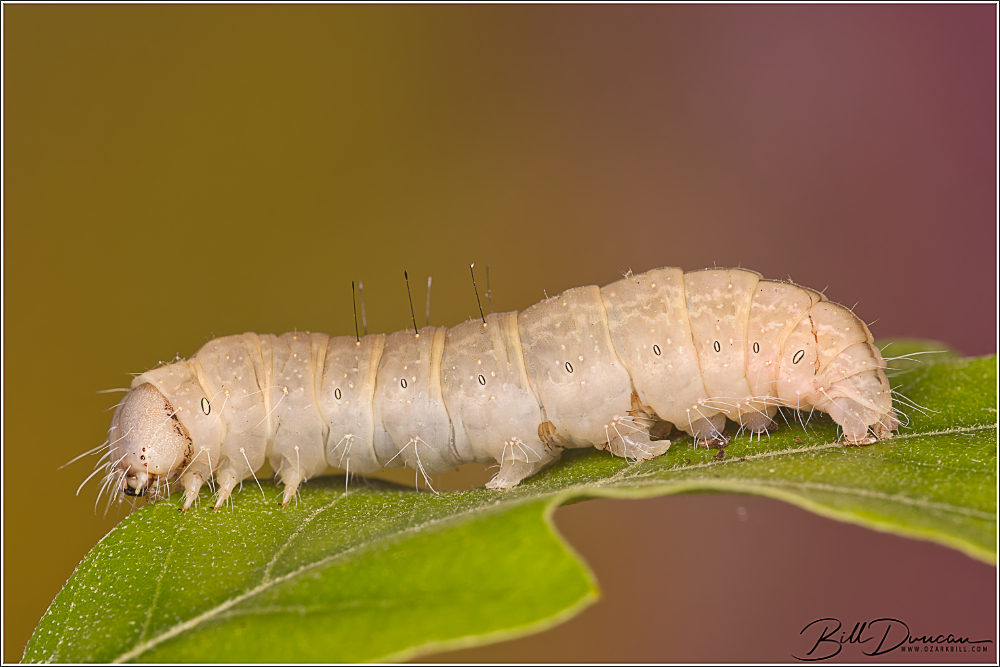
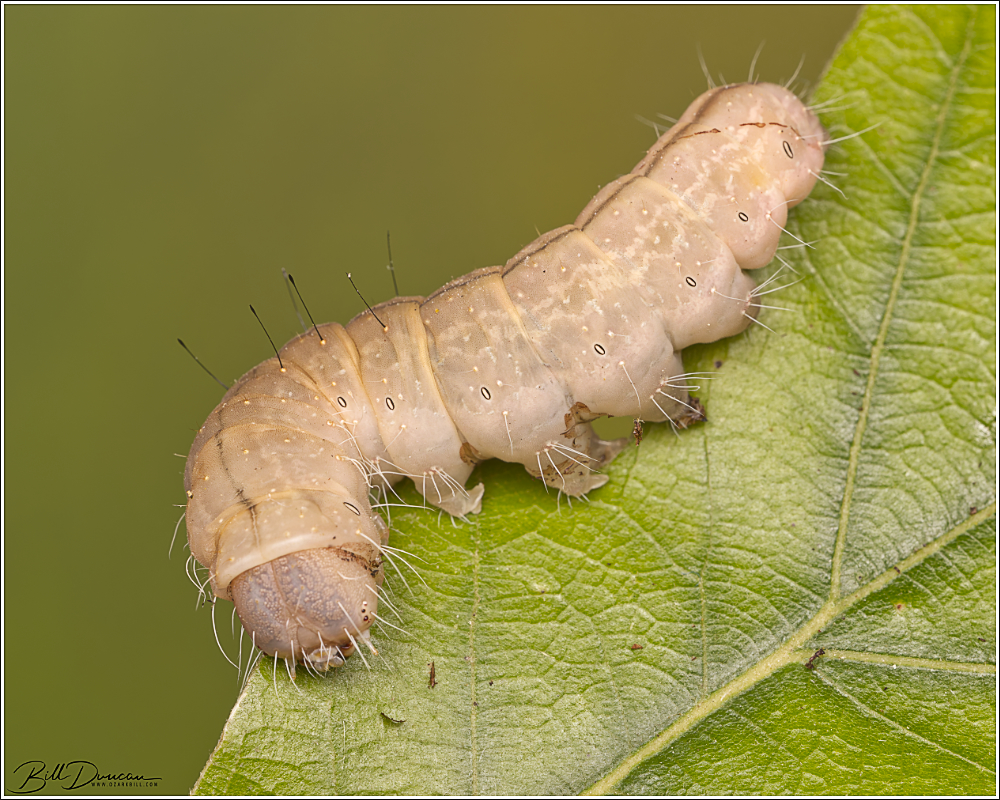
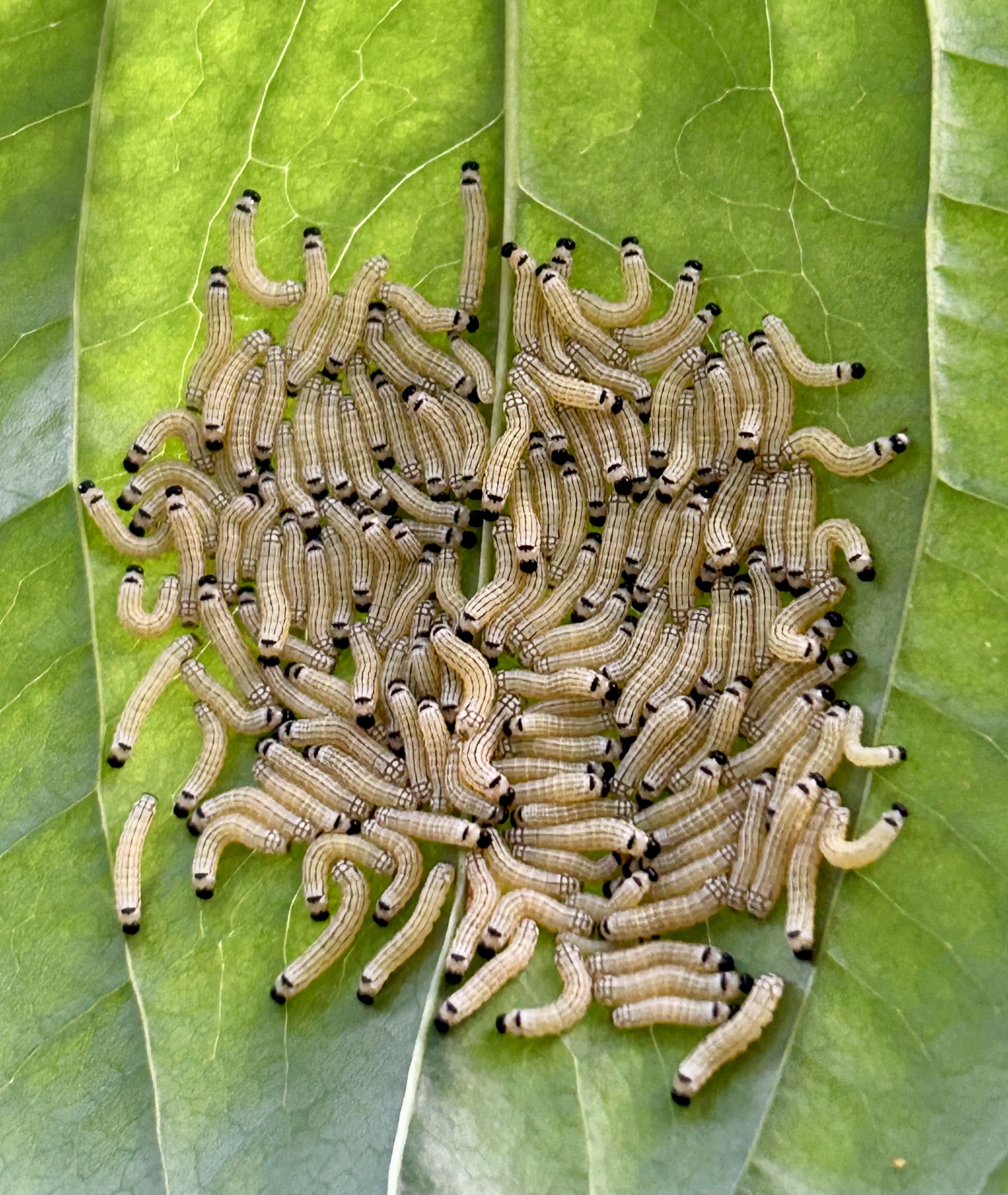
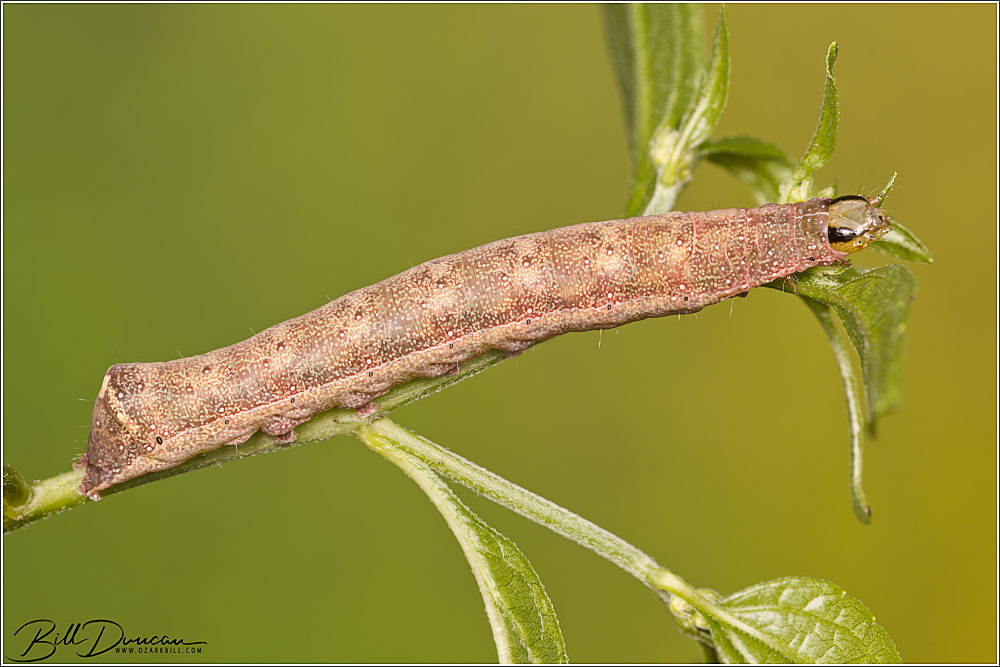
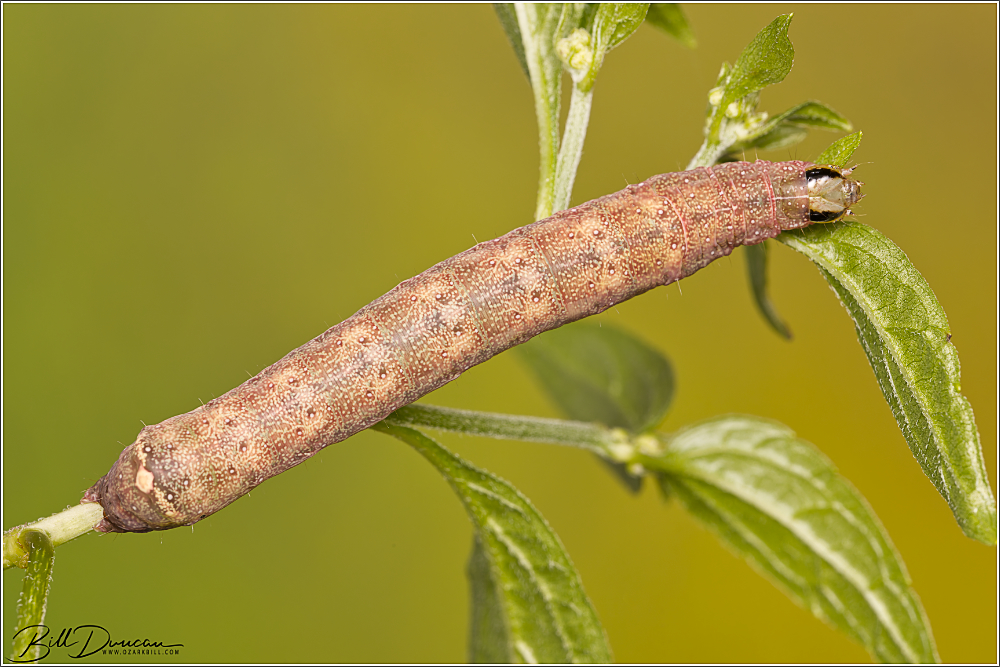
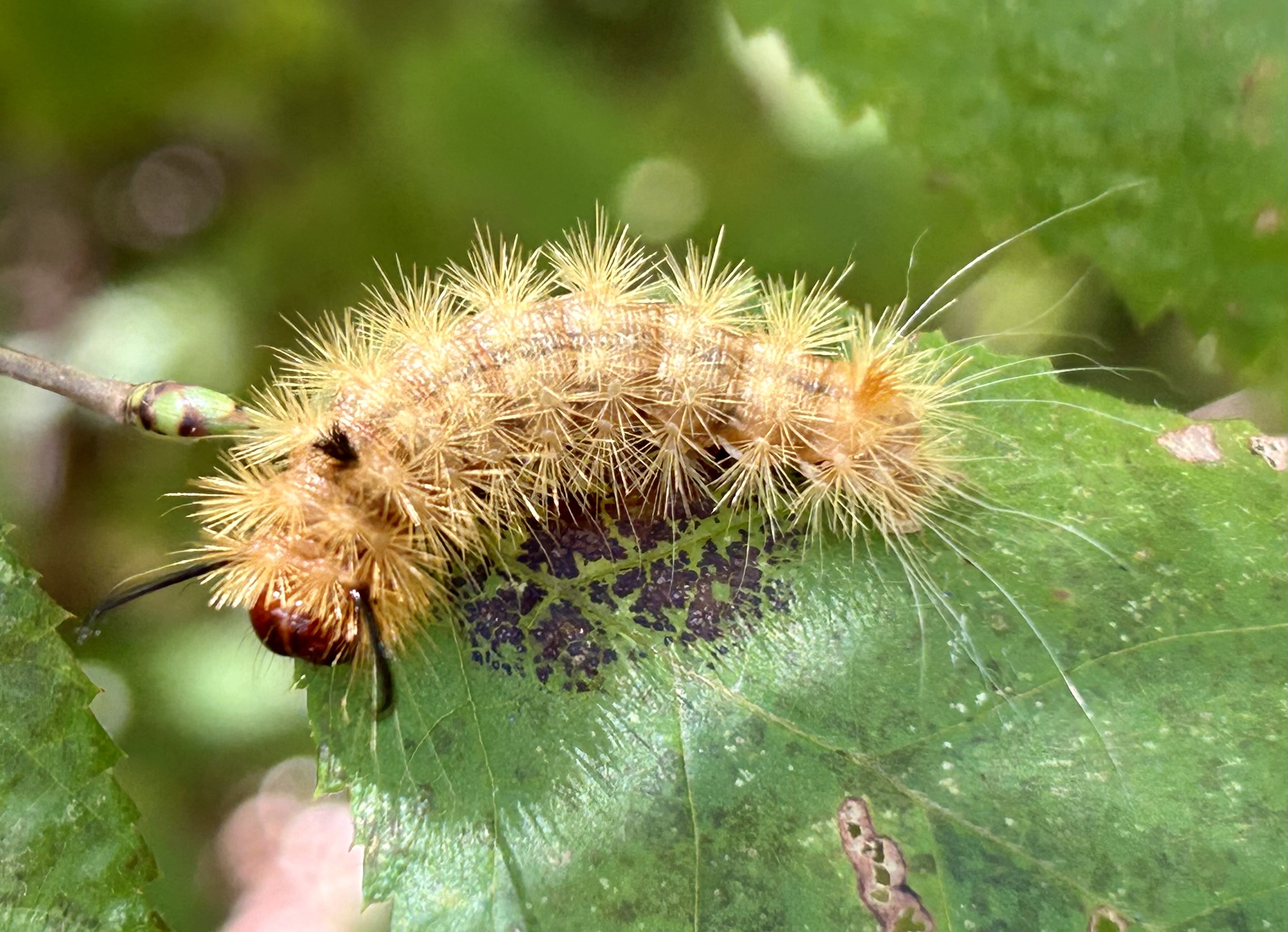
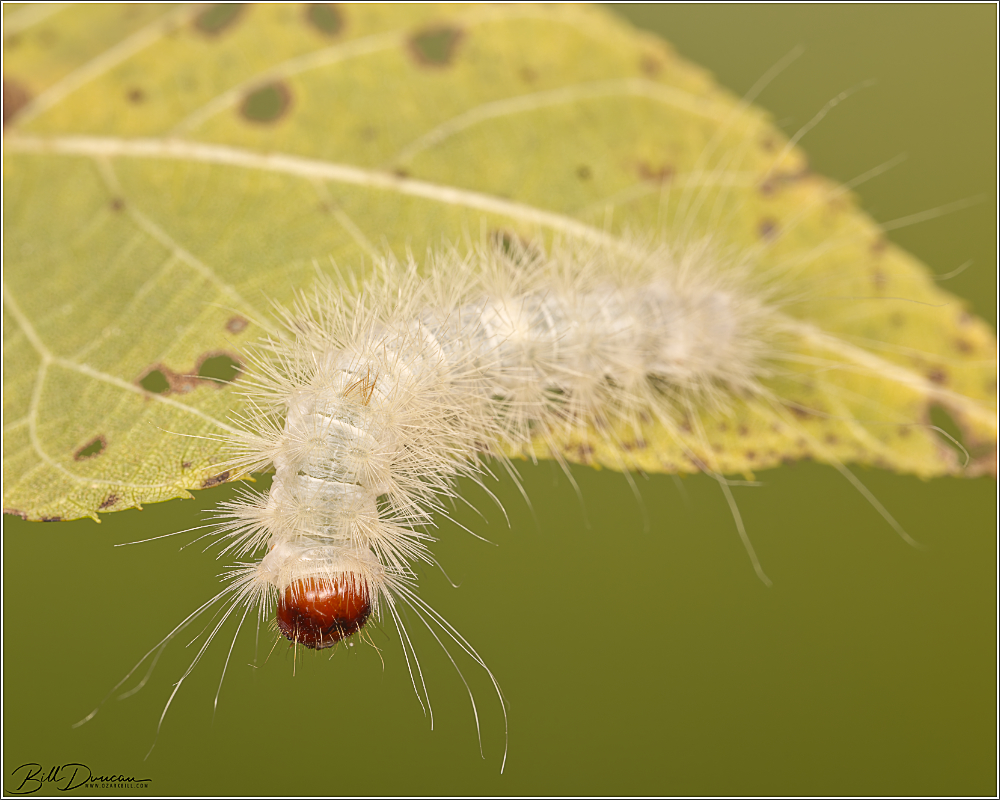
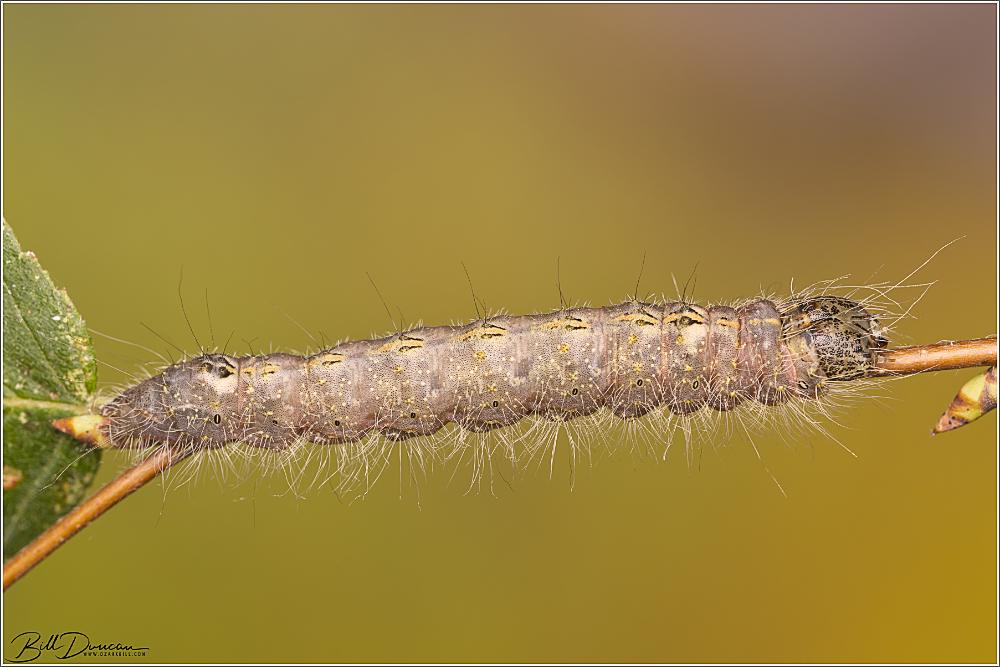
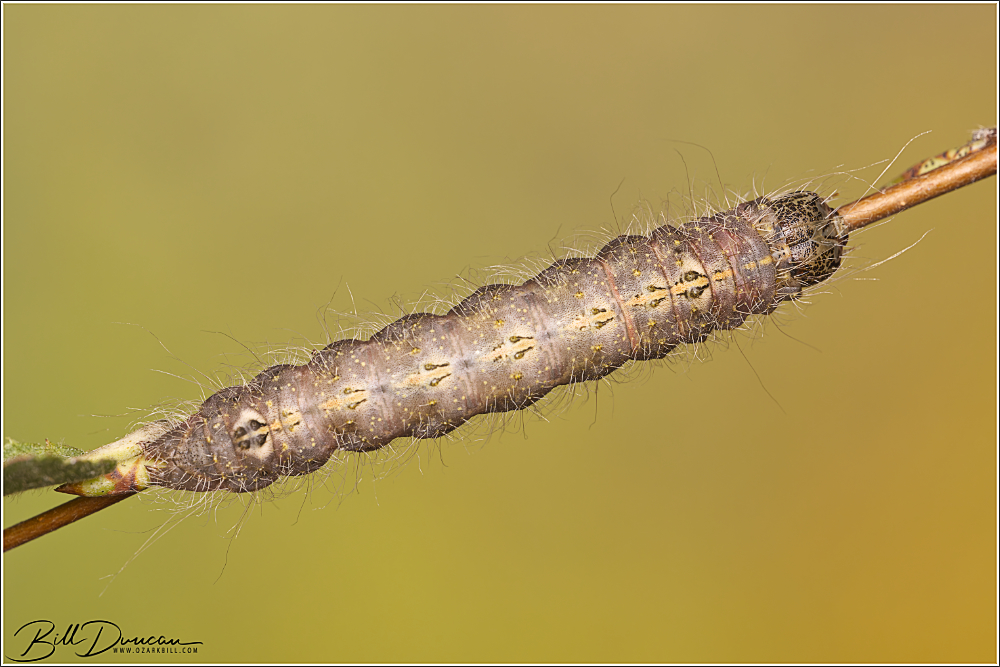
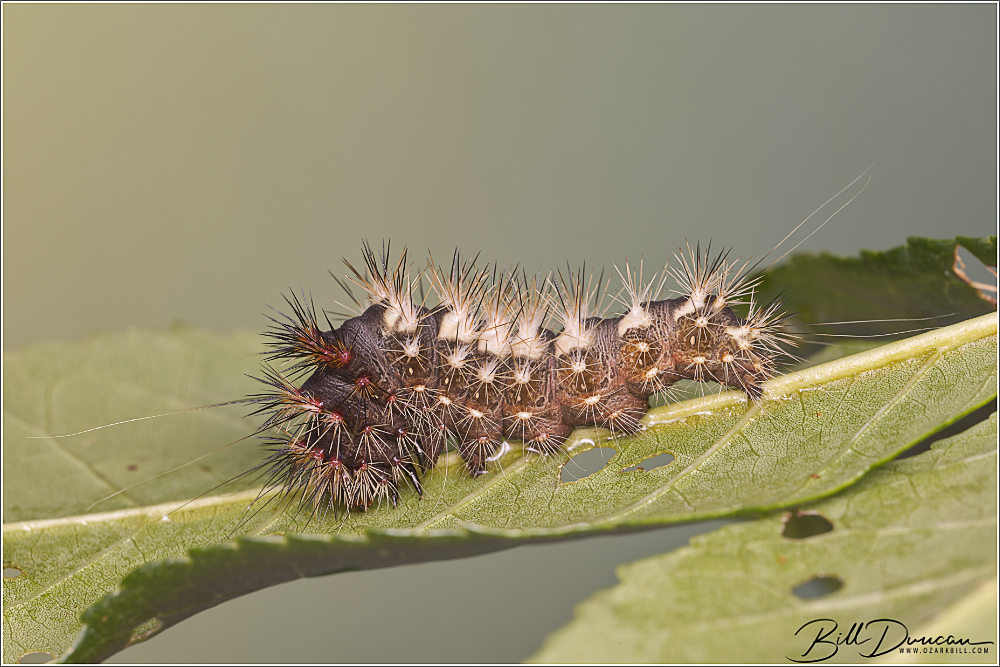
Long-winged Dagger
Acronicta longa (Guenée, 1852), fam. Noctuidae, P-no. 931485
Host plants: Reported feeding on woody species within nine plant families. In Missouri, I have found these on oak (Quercus spp.) and ash (Fraxinus spp.).
Date found(s): 22 August, 2026
Location(s) found: Meramec State Park, Franklin County, MO
Notes: Despite a species being considered a generalist across their range, individual lineages can be wildly picky eaters. In a rearing log documented on BugGuide, a citizen scientist hatched a clutch of A. longa eggs. Despite being surrounded by prime, classic host plants like oak (Quercus nigra) and cherry (Prunus sp.), the newly hatched caterpillars stubbornly refused to eat and began to starve. In a desperate last-ditch effort, the researcher offered them blueberry leaves (Vaccinium sp.). The caterpillars immediately devoured them, proving that while the species is a generalist, individual populations may dynamically “lock into” specific regional hosts.
Tag: noctuidae
2026 Caterpillar Season – Green Leuconycta
Green Leuconycta
Leuconycta diphteroides (Guenée, 1852), fam. Noctuidae, P-no. 932026
Host plant (s): Hosts on a variety of Asteraceae family members including fleabane (Erigeron spp) and goldenrod (Solidago spp).
Date found(s): 28 June, 2026
Location(s) found: Pinewoods Lake Recreation Area, Carter County, MO
Notes: Due to its host plant preferences, look for this moth in meadows, fields and prairies. If you plant native composite wildflowers, you may even have luck in finding them in your own backyard. The adult moth is a stunner and is often a popular subject when arriving at blacklights. It has received a common nickname in mothing circles—the “mint chocolate chip moth.”
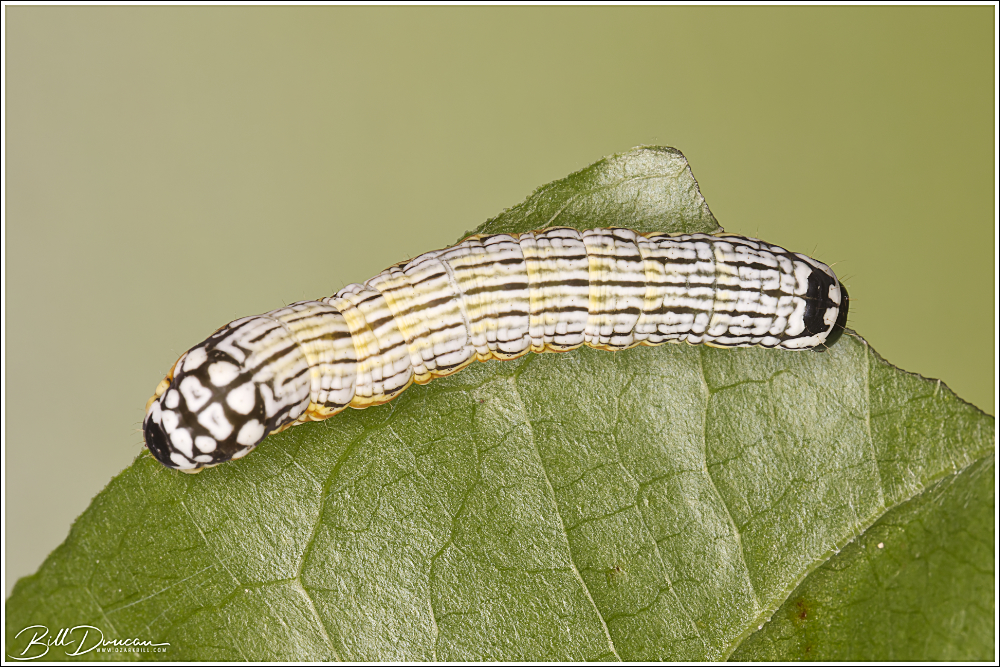
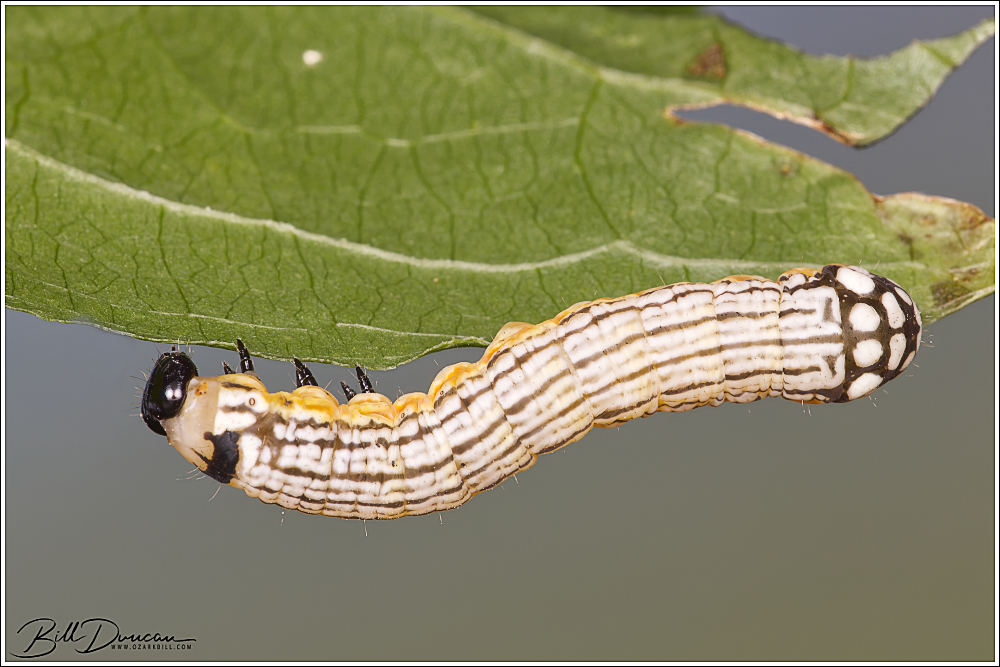
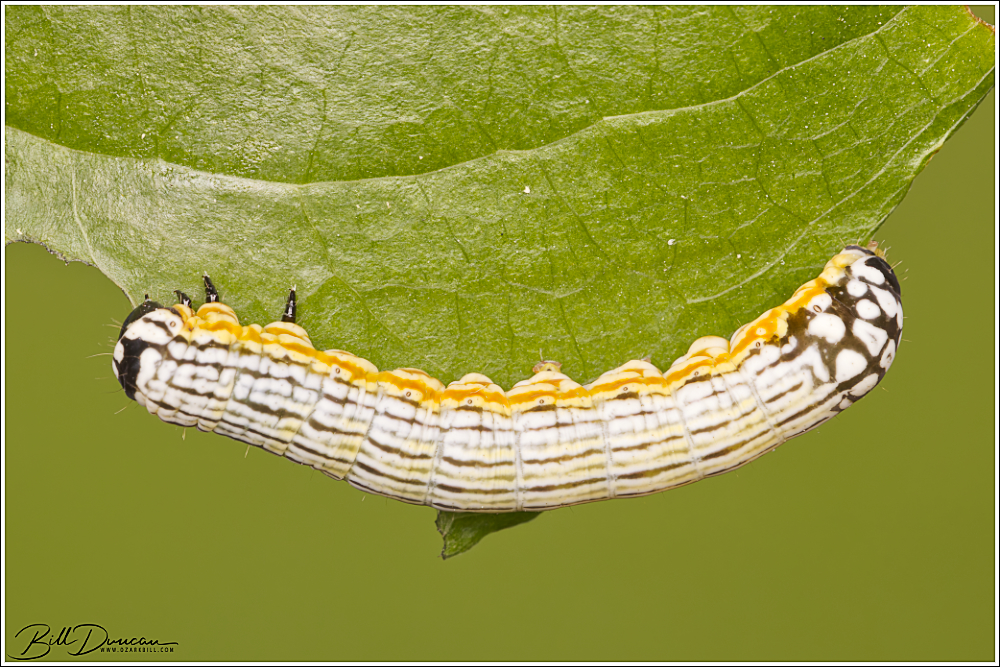
2026 Caterpillar Season – Witch Hazel Dagger Moth
Witch Hazel Dagger Moth
Acronicta hamamelis (Guenée, 1852) P-no. 931434.5
Host plant: Found on Ozark witch hazel (Hamamelis vernalis)
Date found: 15–16 August, 2026
Location found: Logger’s Lake Recreation Area, Shannon County, MO
Notes: The WGNSS Entomology and Nature Photography groups had a great joint overnight trip to Logger’s Lake this past weekend. Obviously, among the several entomofauna groups we focused on, caterpillars were high on our list. The species pictured here was one of our most exciting finds. During my studies of field guides and online sources to determine new caterpillar species to look for, the witch hazel dagger moth caught my attention. Southeastern Missouri has plenty of its obligate host plant afterall. However, after looking on iNaturalist a couple of years ago, I discovered there were no documentations of this species in our state. Checking with the Heitzman catalogue, I found that there was only one recorded observation in Missouri—from 1889! I still kept this species in mind; there were a few documentations in Arkansas and eastern Kentucky and Tennessee, and as I mentioned, the host is abundant in Missouri.


During our caterpillar hikes this past weekend, we were delighted to find seven Acronicta hamamelis larvae at various stages. I collected a couple to take home and hopefully rear to adults. The more advanced individual spent the next day feeding on my ozark witch hazel and then changed to its warm pre-pupal coloration. It has since made a cocoon and I hope to see an adult eventually.
2026 Caterpillar Season – Distinct Quaker
Distinct Quaker
Achatia distincta (Hübner, 1813) P-no. 932800, fam. Noctuidae
Host plant: Found on Carolina buckthorn (Frangula caroliniana)
Dates found: 24 May, 2026
Locations found: Tyson Research Center, St. Louis County, MO
Notes: This common noctuid larvae can be found in April and May. This is a univoltine species, and the adults are early fliers. This species spends most of its life cycle in the cocoon.


2026 Caterpillar Season – Grote’s Sallow
Grote’s Sallow
Copivaleria grotei (Morrison, 1874) P-no. 931557, fam. Noctuidae
Host plant: green ash (Fraxinus pennsylvanica)
Dates found: 2 May, 2026
Locations found: Tyson Research Center, St. Louis County, MO
Notes: Copivaleria grotei is classified within a monotypic genus, meaning it is the sole member found in the genus Copivaleria. But it is not alone among many lepidopterans that specialize on ash trees or use ash trees as one of their preferred hosts. These species are at risk in Missouri due to the destruction of millions of ash trees by the invasive emerald ash borer (Agrilus planipennis).


2026 Caterpillar Season – Ashen Pinion
Ashen Pinion
Lithophane antennata (Walker, 1858) P-no. 932577, fam. Noctuidae
Host plant: Found on white oak (Quercus alba)
Dates found: 2 May, 2026
Locations found: Tyson Research Center, St. Louis County, MO
Notes: This species is noteworthy for a couple of interesting natural history stories. First, this is a rare case of a lepidopteran that overwinters as an adult. Larvae of this species are also known to be cannibalistic, feeding on other caterpillars in addition to the leaves of their host plant. Check out this amazing video showing the predatory behavior of one of these caterpillars: https://www.facebook.com/watch/?v=941240722582546


2025 Caterpillar Season – The Brother
The Brother
Raphia frater fam. Noctuidae (Hodges#9193)
Host plant: black willow (Salix nigra)
Dates found: 16 September, 2025
Locations found: Johnson’s Shut-ins State Park, Reynolds County, MO
Notes: This species ranges over most of the lower 48 United States and southern Canada. It is infrequently found in Missouri.
2025 Caterpillar Season – Greater Oak Dagger Moth
Greater Oak Dagger Moth
Acronicta lobeliae fam. Noctuidae (Hodges#9238)
Host plant: Found on red oak species (Quercus sp.)
Date found: 30, Aug, 2025
Location found: Tyson Research Center, St. Louis County, MO
Notes: This poor guy has a couple tachinid fly eggs attached. It was likely host to this parasitoid and will not make it to adulthood.