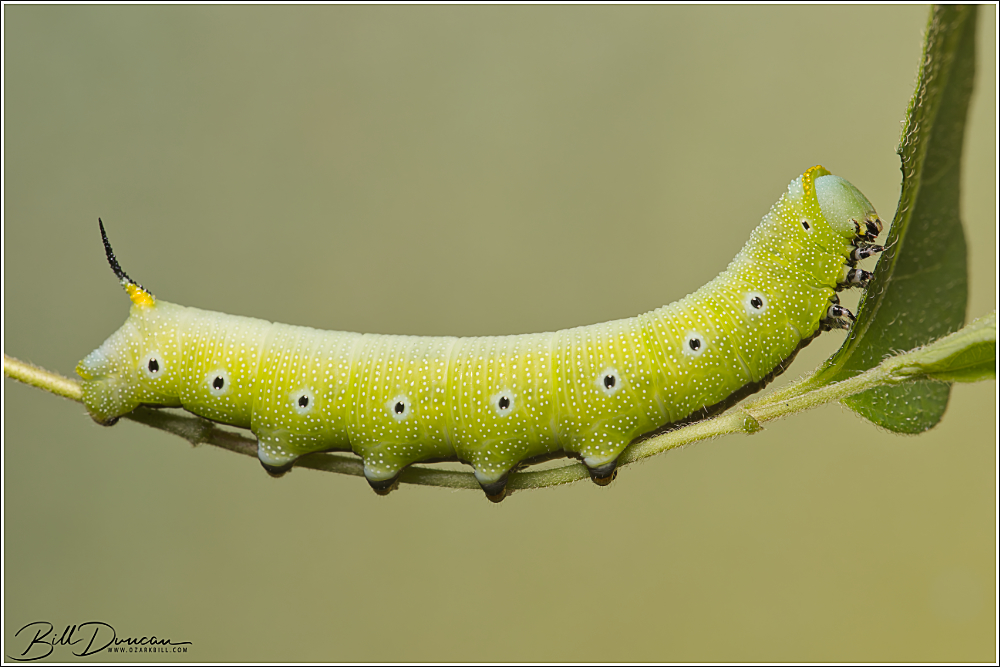
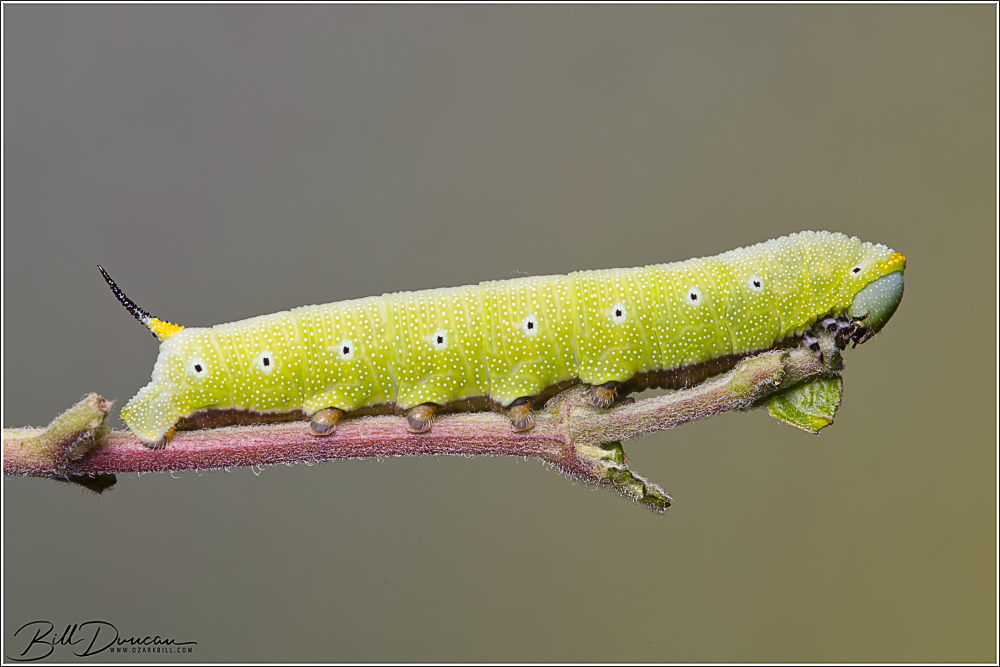
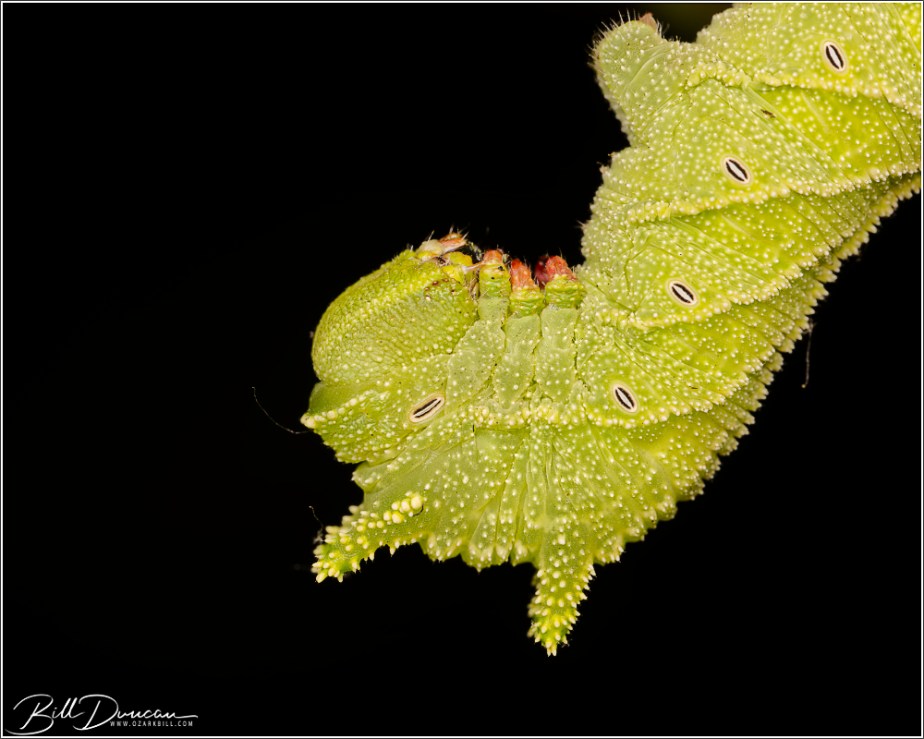
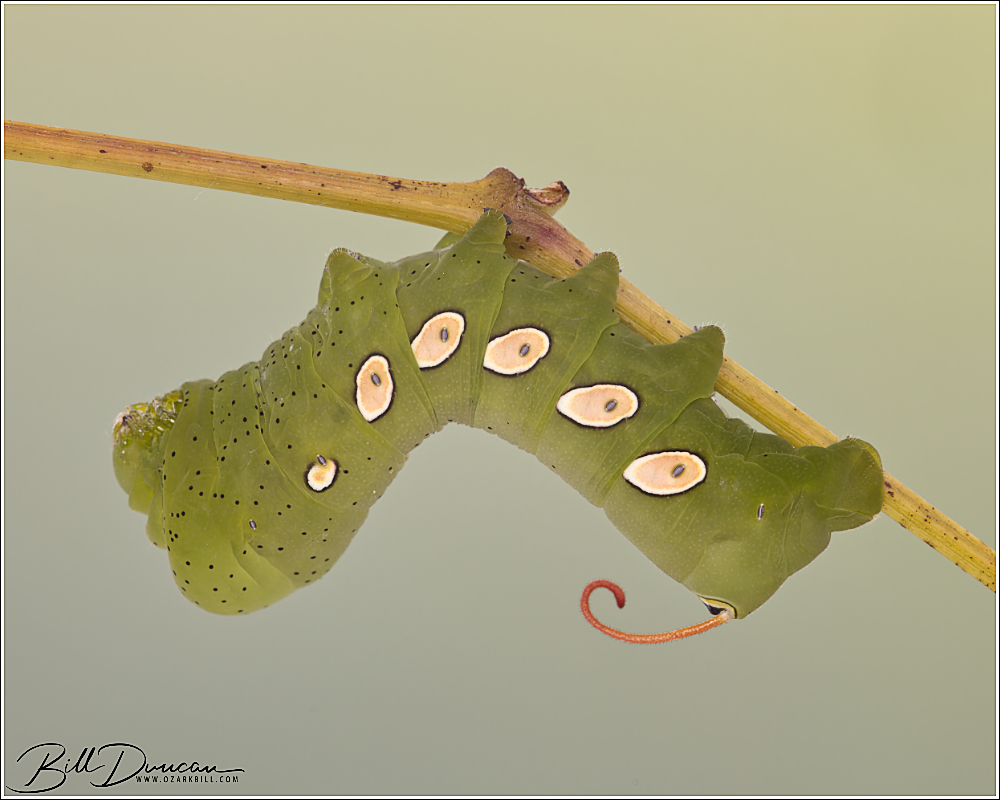
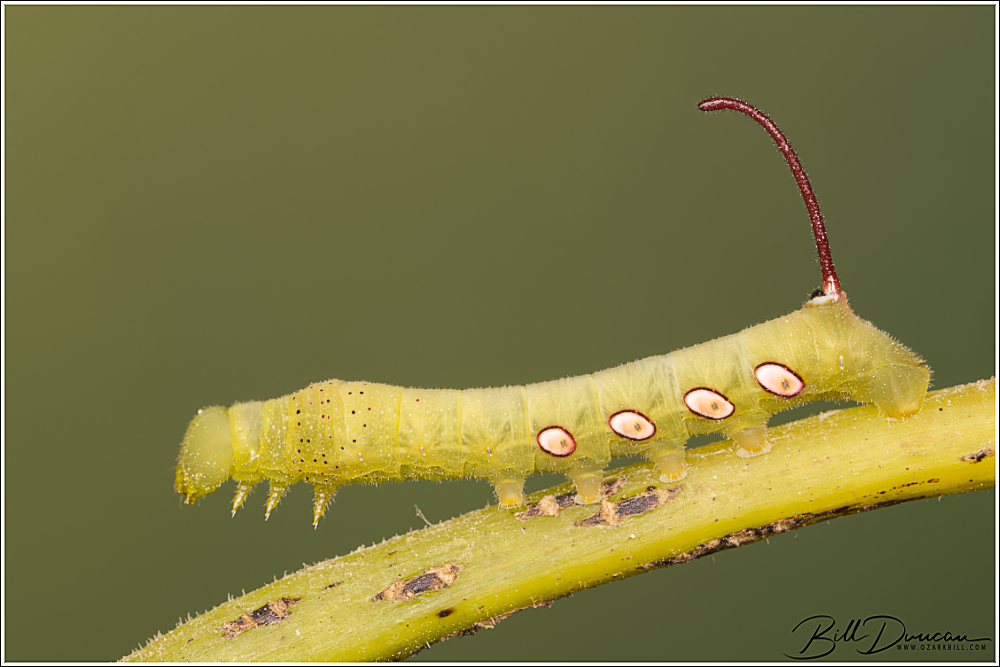
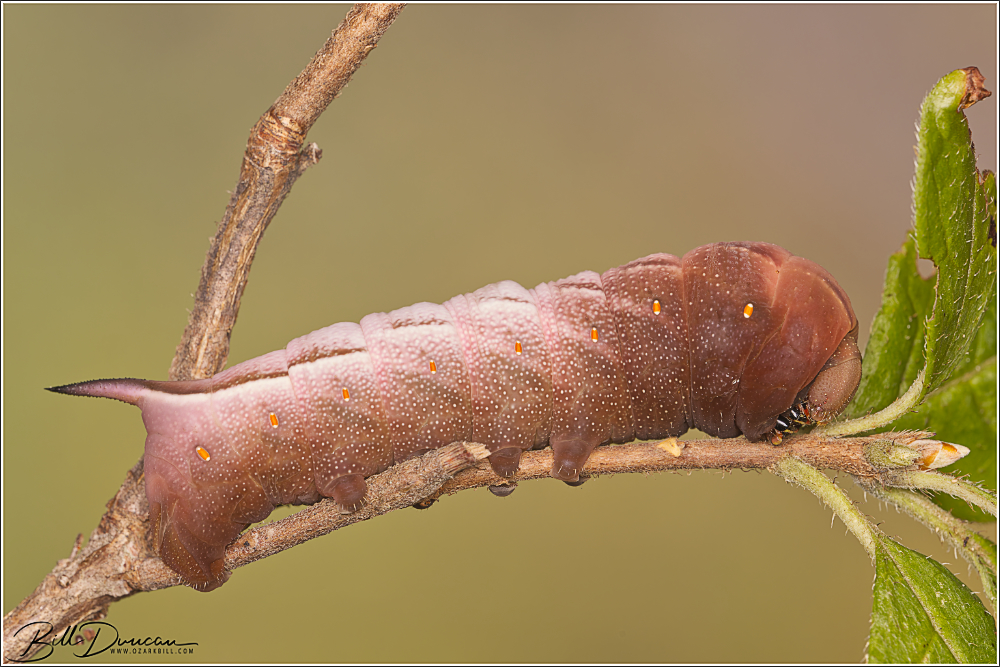
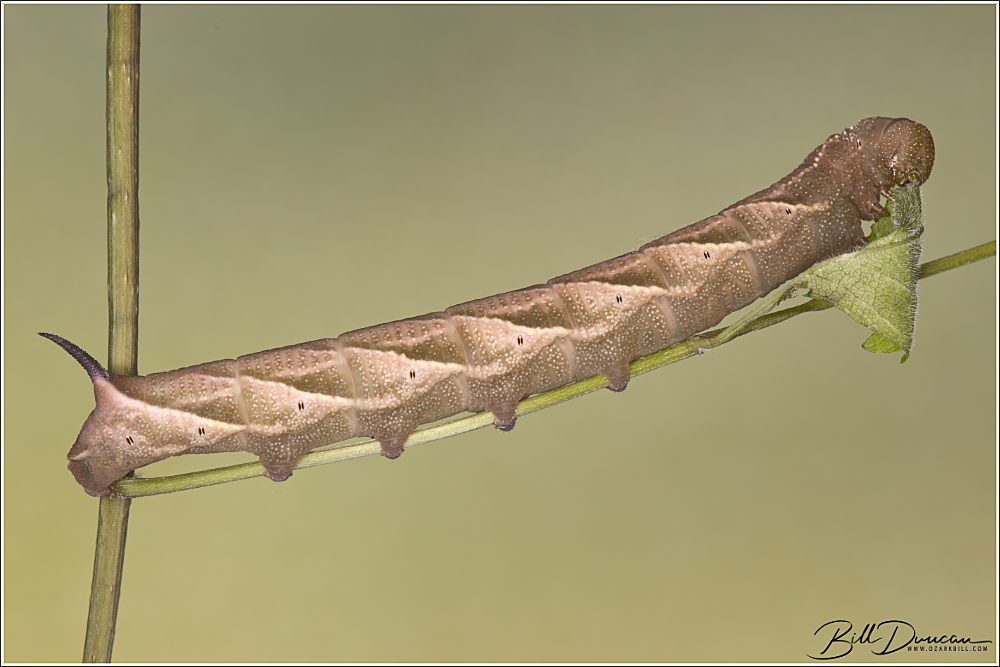
I previously shared photos of a final instar padora sphinx earlier this summer. Since then I’ve found a few early to mid-instar caterpillars of this species. I love these guys with their little pigtail-like horns.
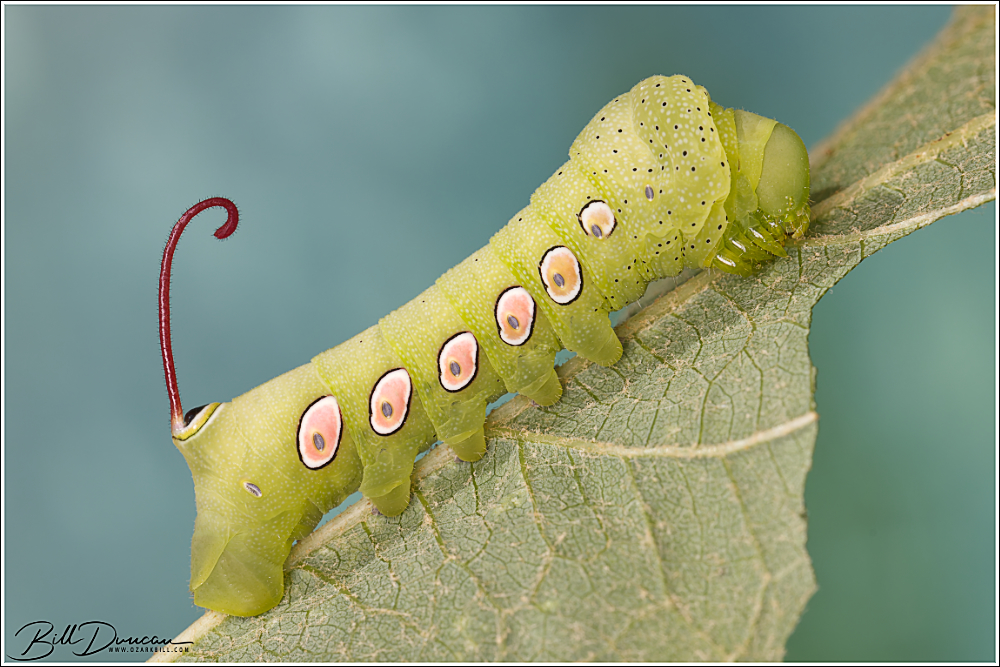
"What a thousand acres of Silphiums looked like when they tickled the bellies of the buffalo is a question never again to be answered, and perhaps not even asked." -Aldo Leopold
I previously shared photos of a final instar padora sphinx earlier this summer. Since then I’ve found a few early to mid-instar caterpillars of this species. I love these guys with their little pigtail-like horns.
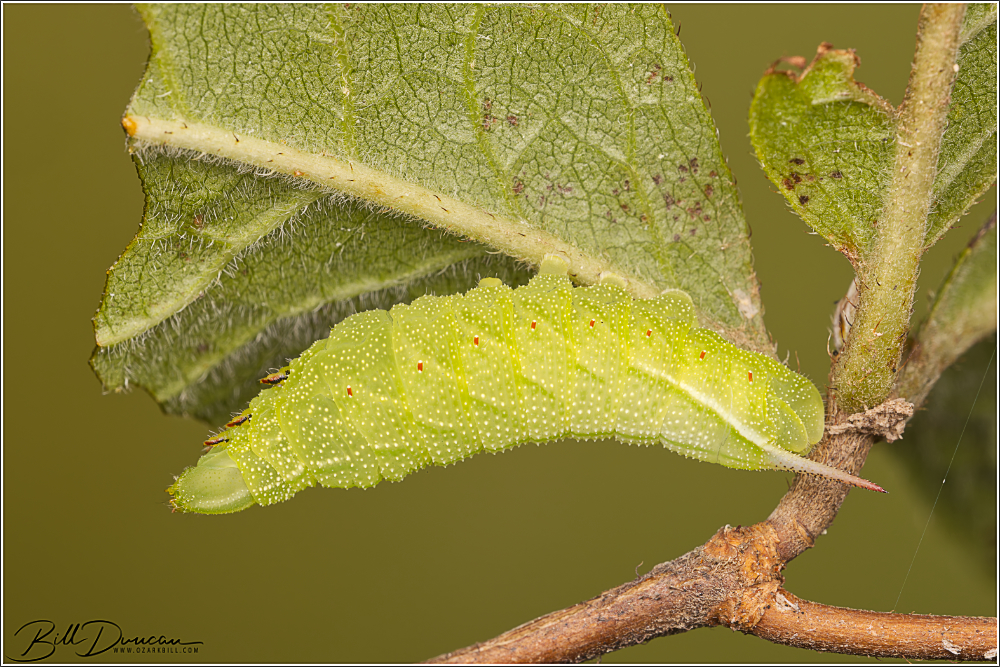
I recently shared some photos of likely forth instar azalea moth caterpillars that we found in early August. Steve and I went back to Hawn State Park in early September hoping to find some late/final instars and had some luck! To my great surprise, after returning home from one of these outings on Labor Day weekend, I found a final instar caterpillar on my backyard nannyberry (Viburnum lentago).
Final instar azalea sphinx caterpillar
Fawn Sphinx
Sphinx kalmiae (J.E.Smith, 1797), fam. Sphingidae, P-no. 890118
Host plants: Specializes in woody members of the olive family (Oleaceae), such as ash (Fraxinus spp.), and fringe-tree (Chionanthus virginicus).
Date found(s): August 16, 2026
Location(s) found: Loggers Lake Recreation Area, Shannon County, MO
Notes: The species epithet, kalmiae, is a misnomer that, unfortunately, has created a misunderstanding about the natural history of this species that continues to this day. Because of the name kalmiae, early entomologists assumed the moth’s main host was mountin-laurel (Kalmia), which are not even true laurels. In reality, field data has shown that the caterpillars heavily favor plants in the olive family (Oleaceae). The kalmiae name was given to honor Pehr (Peter) Kalm, an 18th-century Swedish botanist and apostle of Carl Linnaeus, and not in reference to laurels. The name Fawn Sphinx has been suggested and is now becoming more widely accepted.
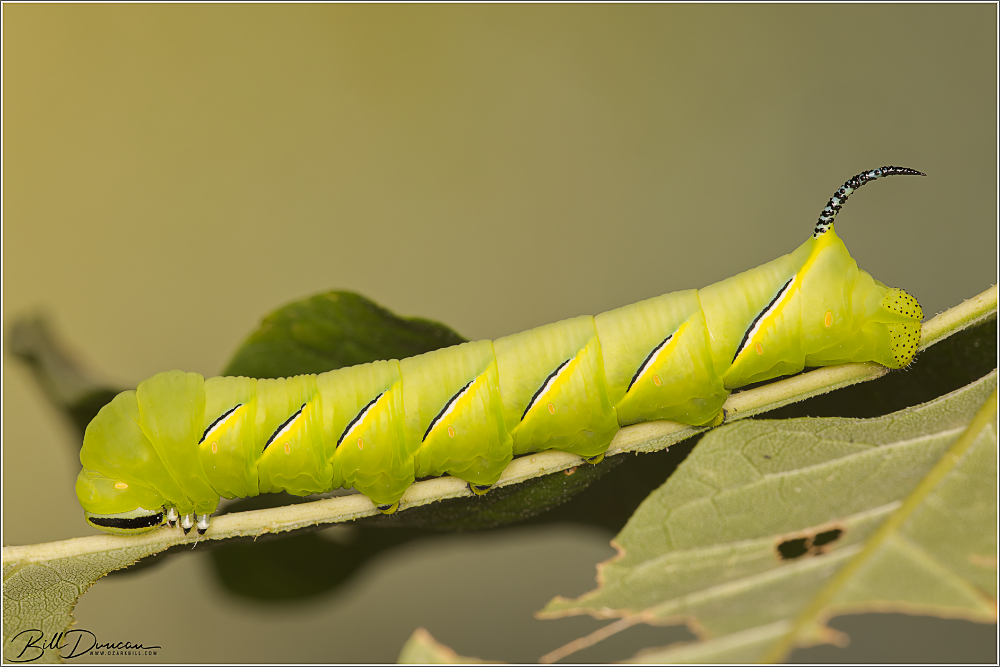
Trumpet Creeper Sphinx
Paratrea plebeja (Fabricius, 1777), fam. Sphingidae, P-no. 890110
Host plants: Primarily feeds on trumpet vine (Campsis radicans). Also reported hosting on Oleaceae, Passifloraceae, and Solanaceae, although these are likely seldom used.
Date found(s): September, 2026
Location(s) found: Tyson Research Center, St. Louis County; Franklin County, MO
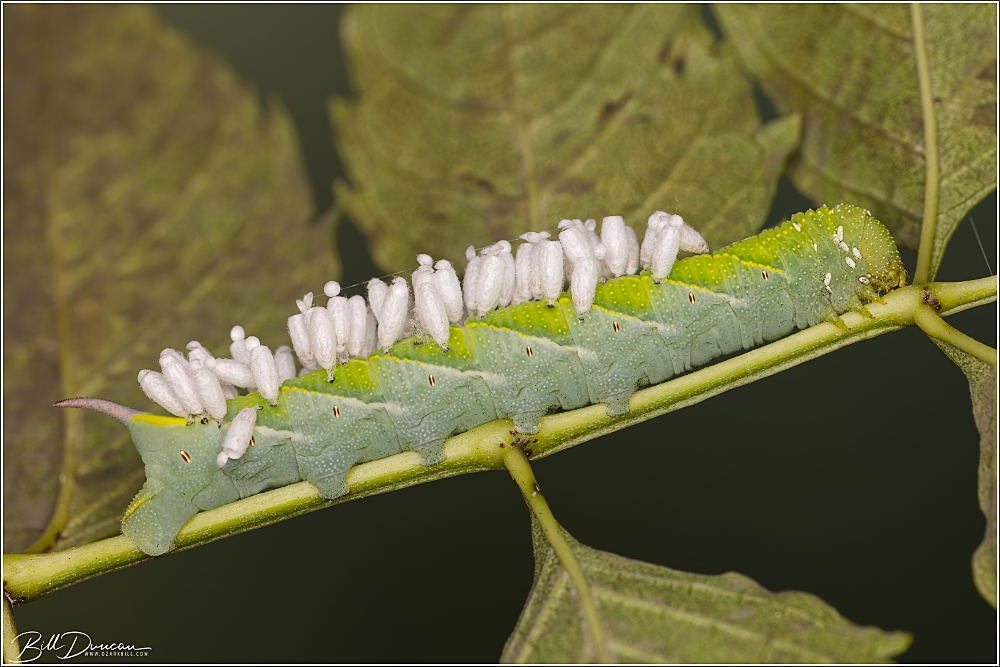
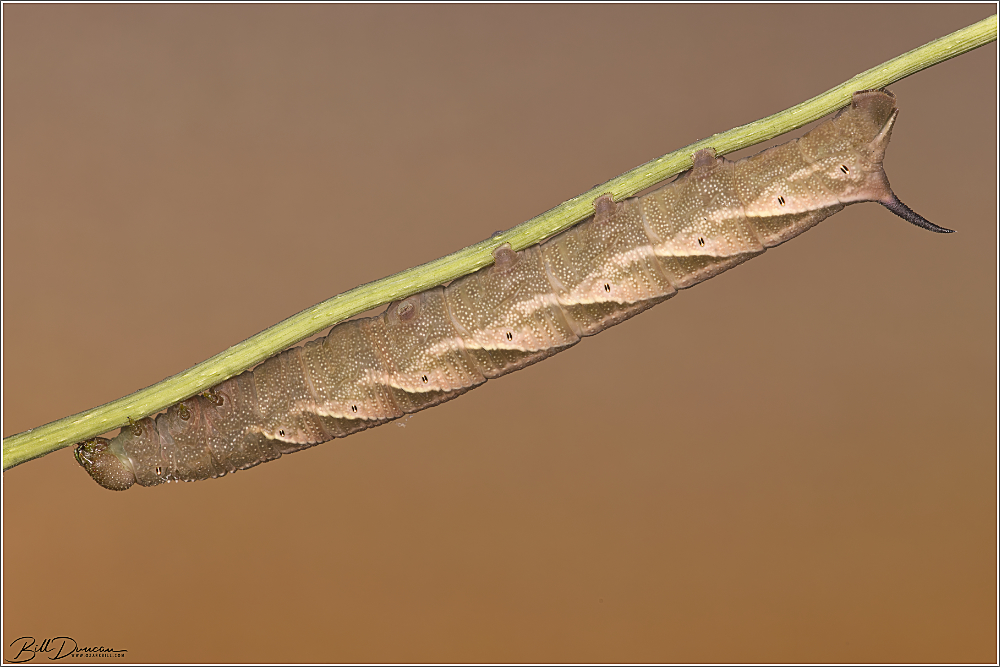
Notes: Trumpet creeper vines are heavily targeted by birds and predatory wasps during the day. To survive, the trumpet vine sphinx caterpillar utilizes a clever defensive routine. During daylight hours, the caterpillar shifts to the underside of the plant’s woody stems, pressing its body flat against the bark to become practically invisible. Only when darkness falls does it crawl out onto the leaves to feed safely under the cover of night. Here is another reason to get out after dark to find a greater diversity of caterpillars!
The Trumpet Creeper Sphinx comes in two primary color phases. The green phase, like the poor heavily parasitized individual pictured here (found at Tyson Research Center), and a less commonly found brown phase, pictured here and found by Eva Wiedeman in Franklin County, MO.
Azalea Sphinx
Darapsa choerilus (Cramer, 1779) P-no. 890208
Host plant: Roseshell azalea (Rhododendron prinophyllum)
Date found(s): 4 August, 2026
Location(s) found: Hawn State Park, Ste. Genevieve County, MO
Notes: Azalea sphinx moth caterpillars can be found during the daytime clinging to the midvein on leaves of their azalea hosts. In their disturbance pose, as seen in the fourth-instar caterpillar pictured here, I found them remarkably similar in appearance and size to the green developing fruits of the azalea.
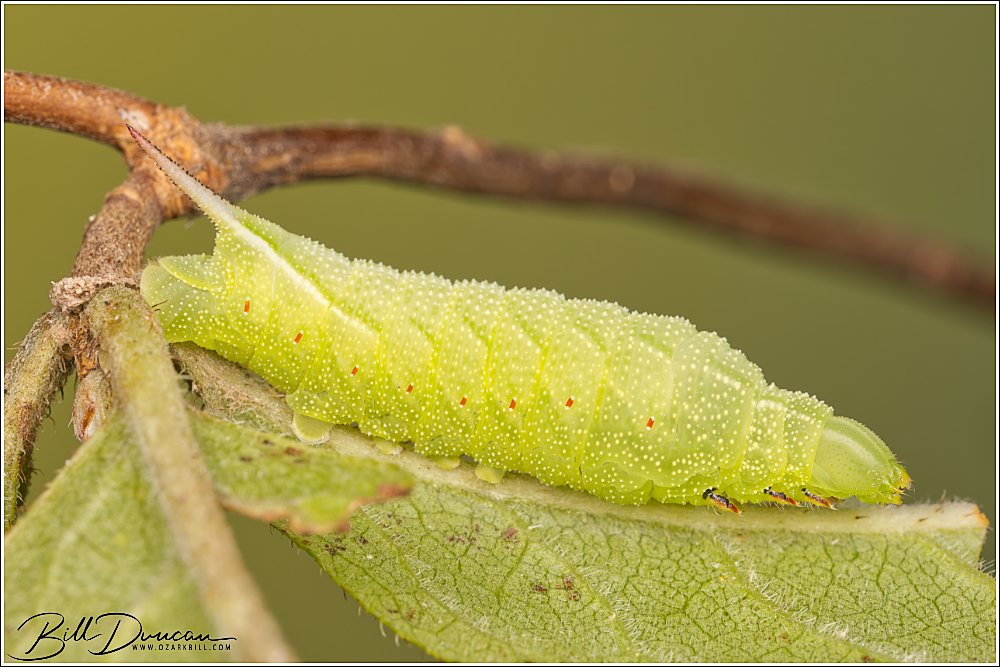
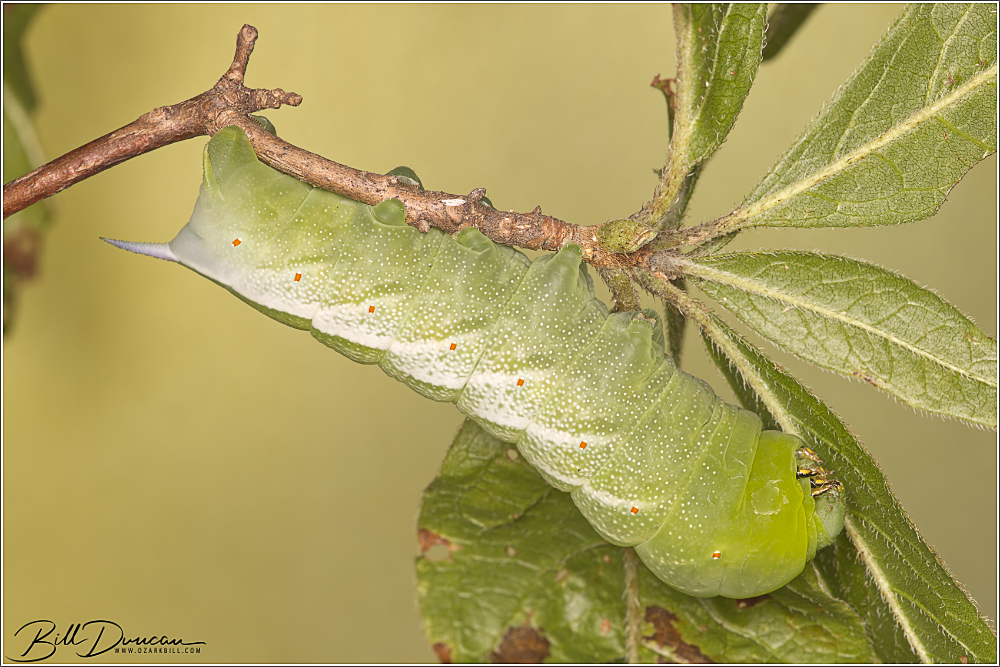
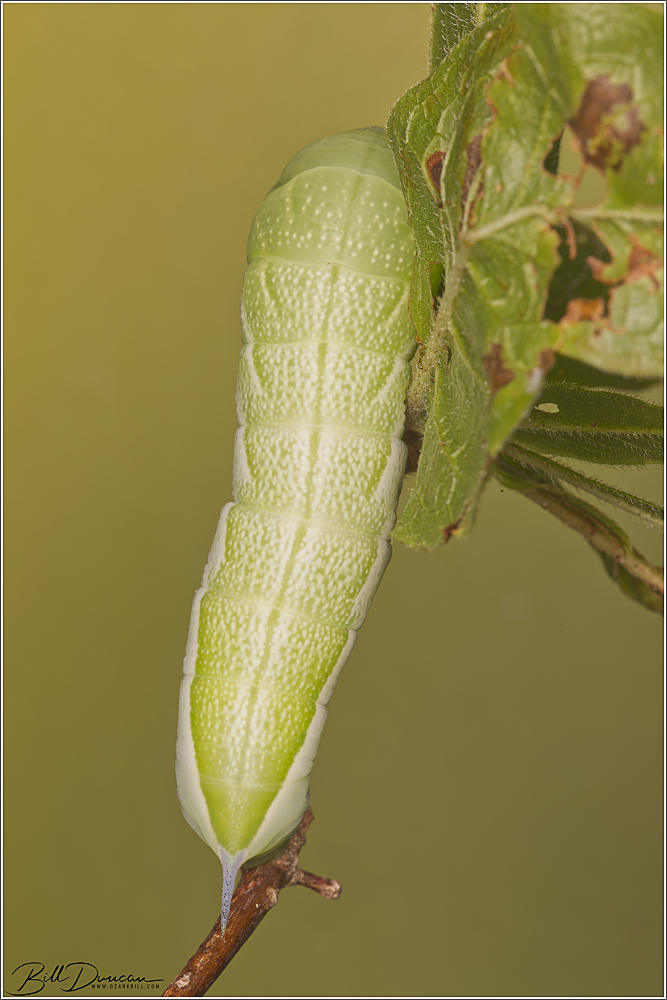
Elm Sphinx (Four-horned Sphinx)
Ceratomia amyntor (Geyer, 1835) P-no. 890102
Host plant: Found on American elm (Ulmus americana)
Date found(s): July–August, 2026
Location(s) found: Carter County, MO, Ste. Genevieve County, MO; St. Louis County, MO
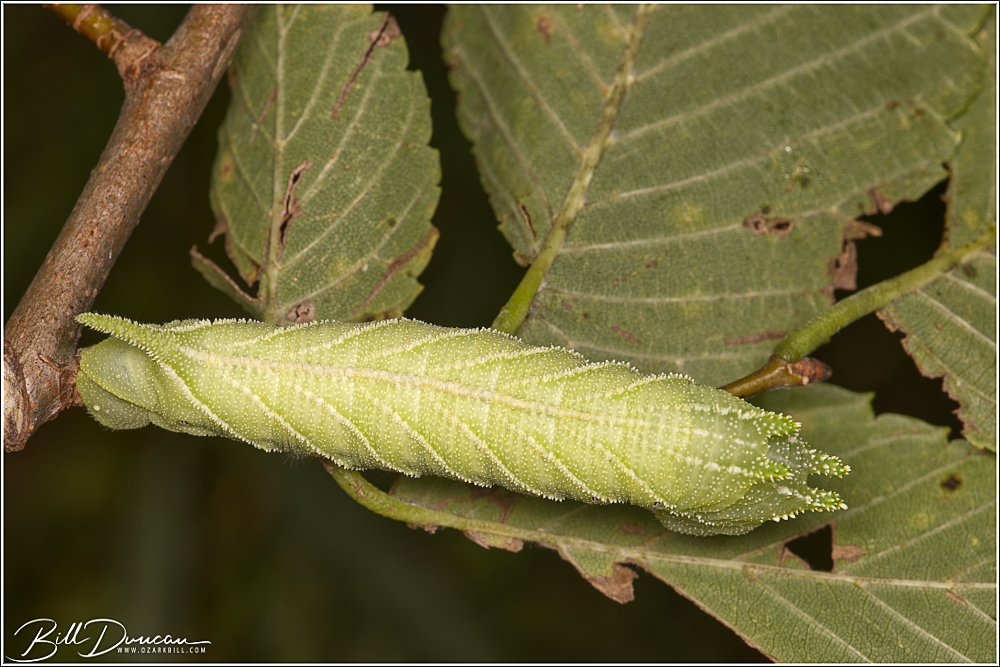
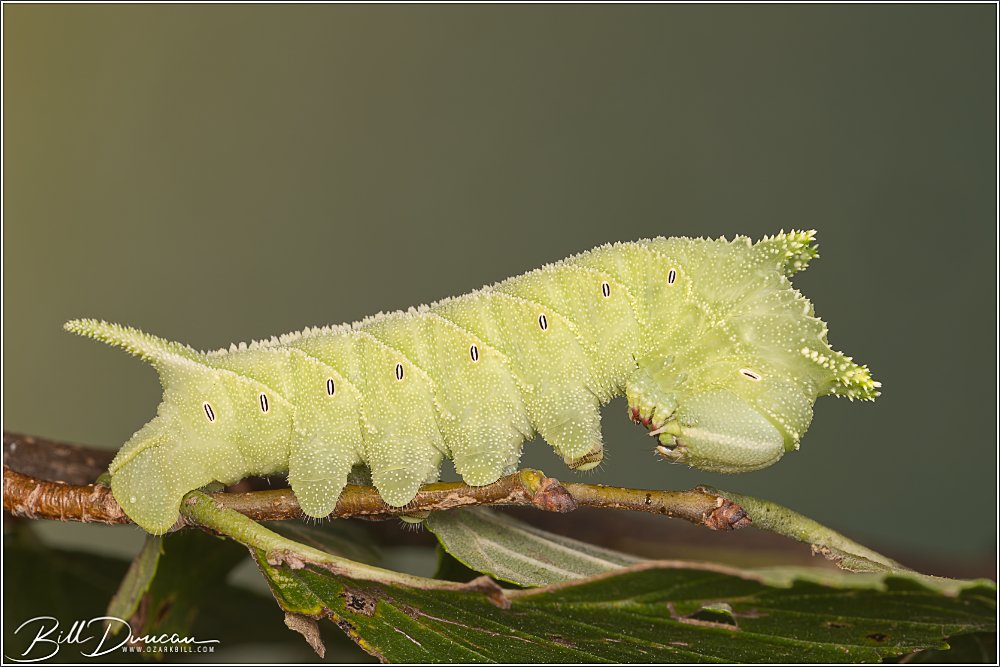
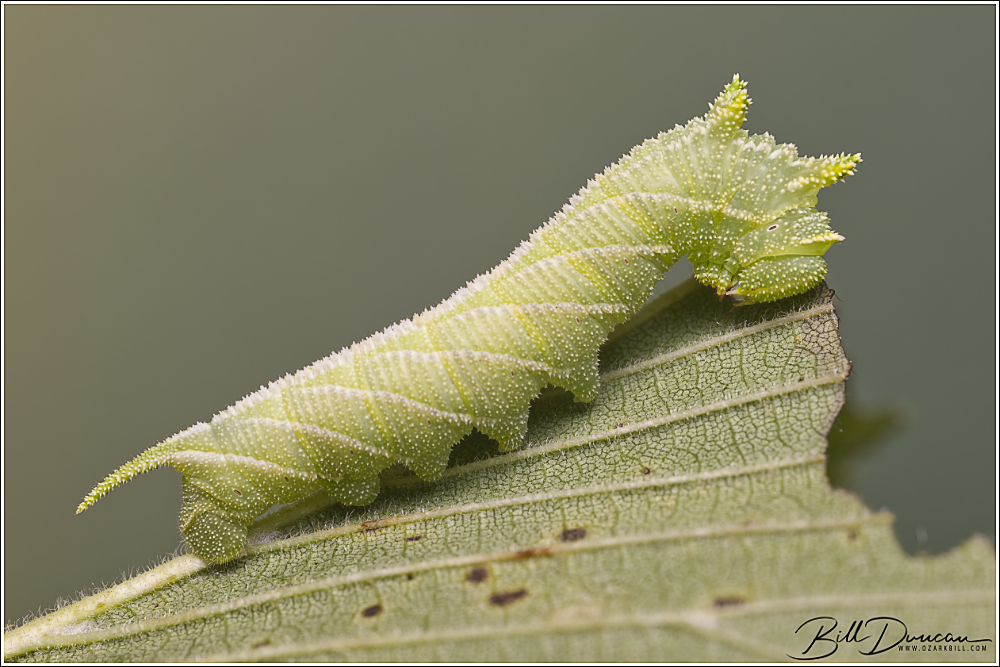
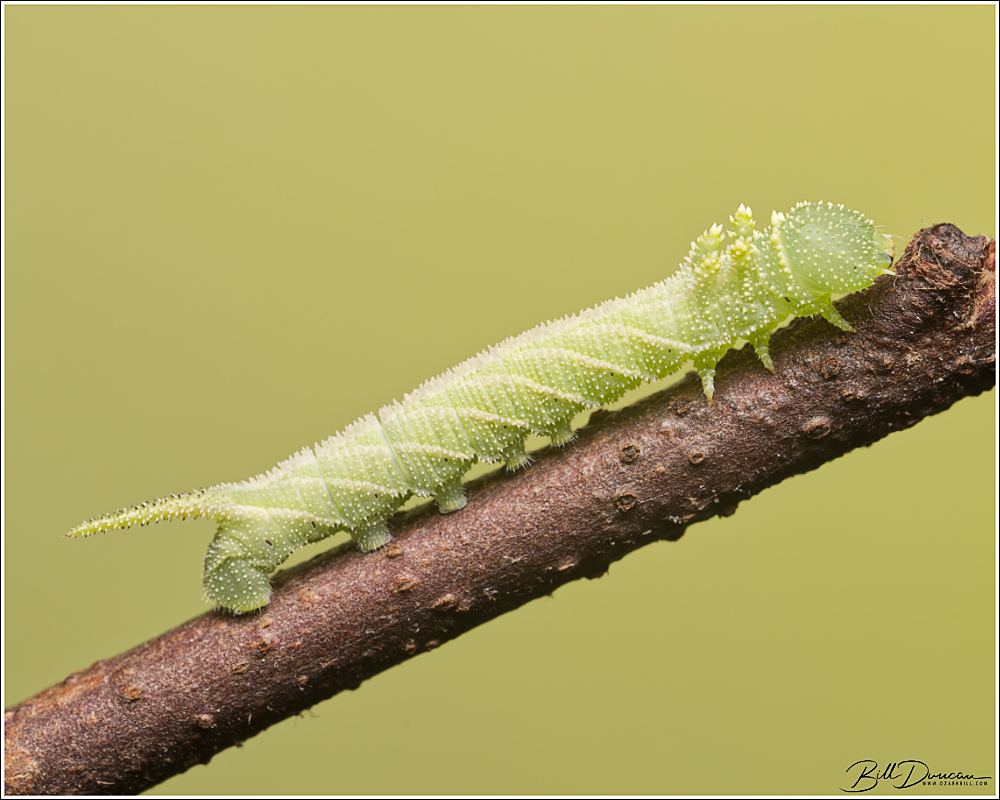
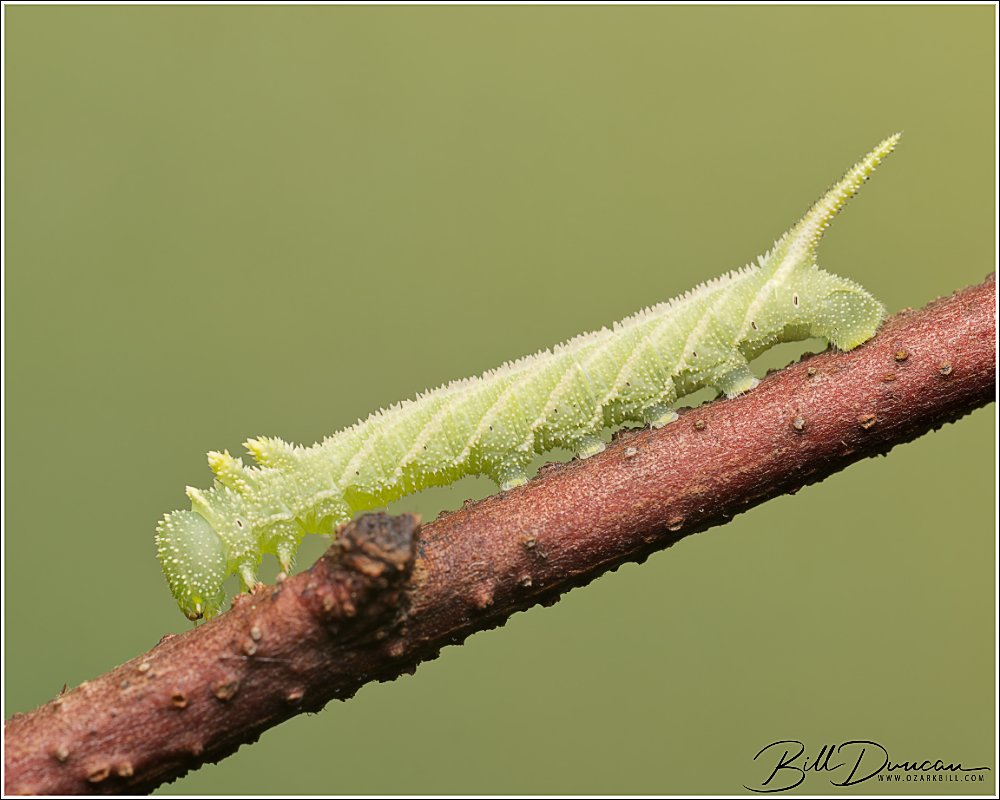
Notes: An excellent example of camouflage. The four thoracic horns aptly mimic the teeth on the margins of the leaves on which they feed. These larva spend most of their time hiding upside-down on the undersides of elm leaves. The pale, oblique lines leading from the stomata to the mid-dorsal line let them blend in with elm leaves that feature prominent pinnate venation on their undersides (see photo).

Blinded Sphinx
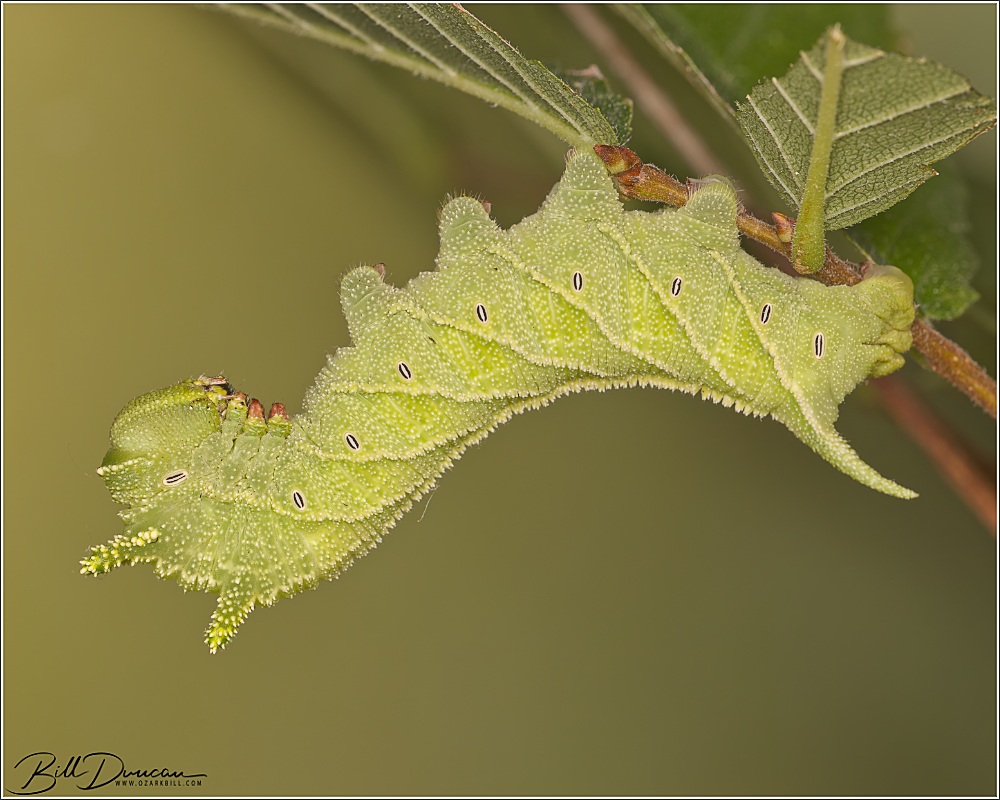
Paonias excaecata (J.E.Smith, 1797) P-no. 890144
Host plant: Found on black cherry (Prunus serotina)
Date found: 5 August, 2026
Location found: Ste. Genevieve County, MO
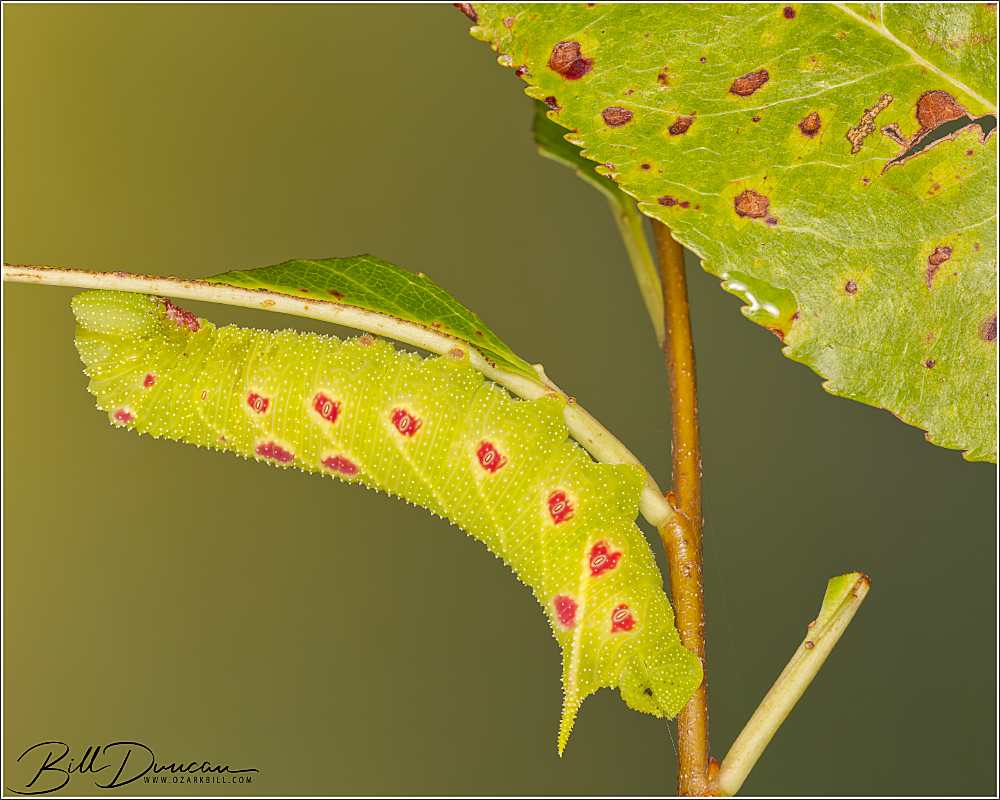
Notes: Note the red blotches that are surrounded by yellow, nicely mimicking later season leaves. This undoubtedly provides nice camouflage and may explain why certain color morphs are found on certain hosts.
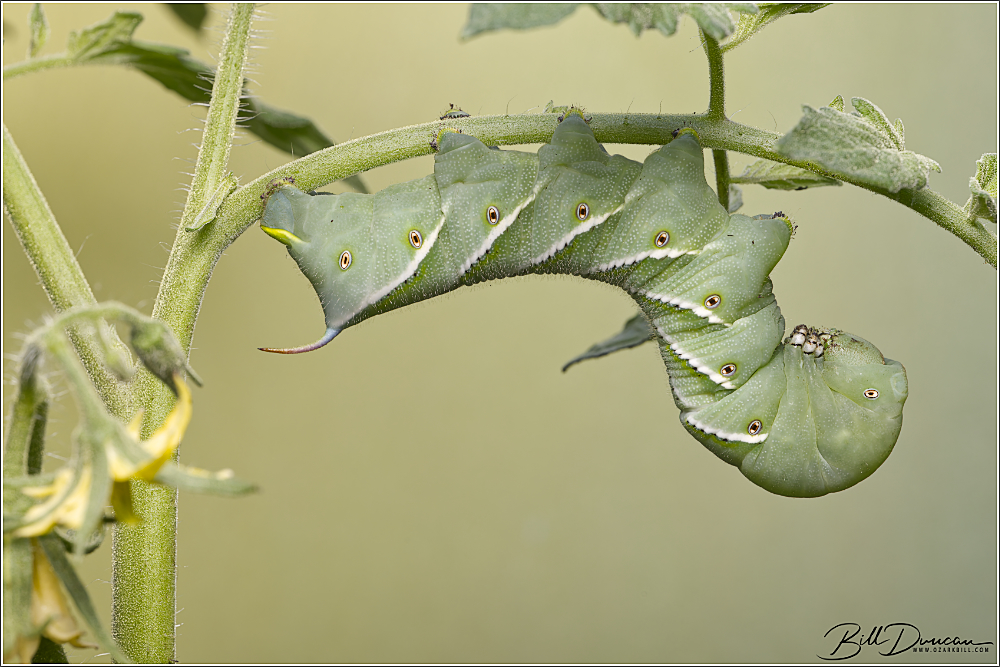
Tobacco Hornworm (Carolina Sphinx)
Manduca sexta (Linnaeus, 1763) P-no. 890090
Host plant: Found on tomato (Solanum lycopersicum)
Date found: July–August, 2026
Location found: St. Louis County, MO
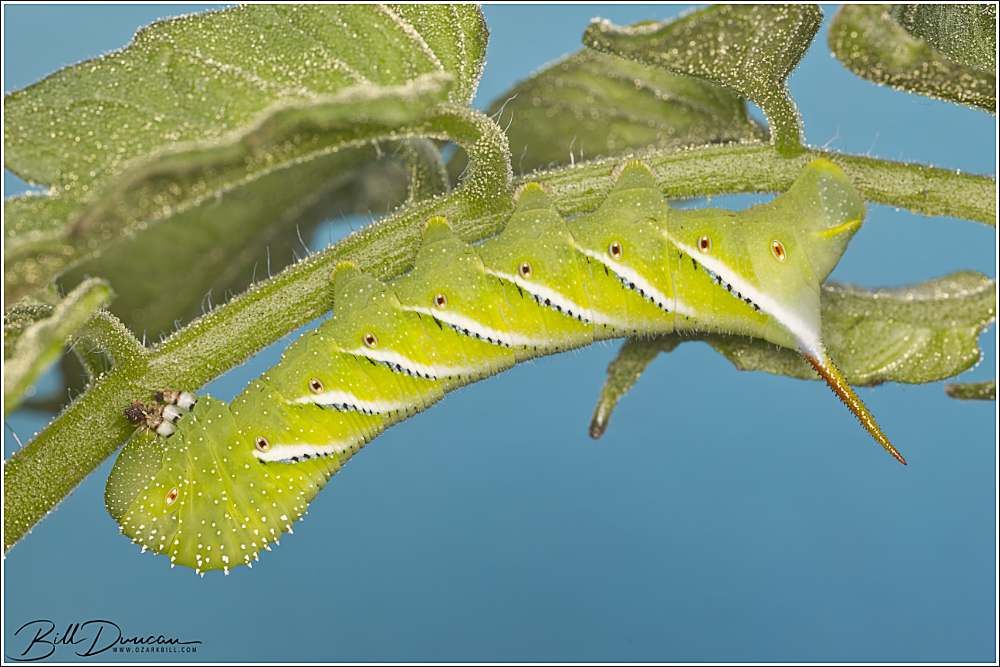
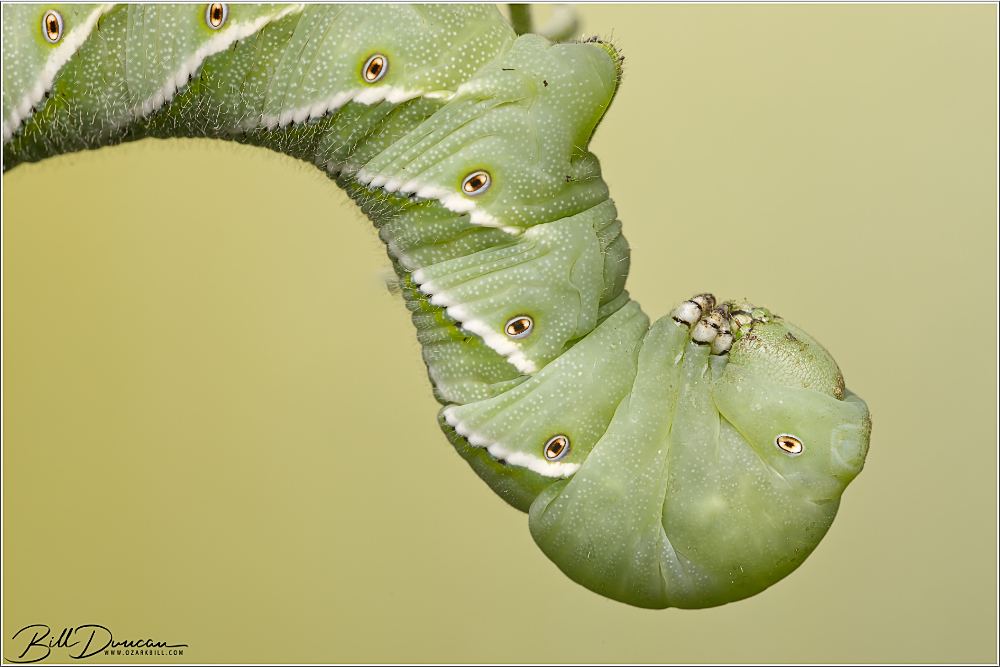
Notes: It took me long enough to collect some photos of this common species. This species is so common that most non-naturalists have seen them as they terrify their tomato plants they tend in backyard gardens. I had the pleasure of seeing a few of these this year, thanks to my pop, Bart, who invited me to photograph a couple he found on his tomato plants. He also gave me a few plants to grow in my backyard this year (mostly for the caterpillars). We found a couple, one of which I reared in a flight cage and has now went to ground to pupate. With luck, I’ll be able to see the adult moth next spring.
Pandora Sphinx
Eumorpha pandorus (Hübner, 1821) P-no. 890182, fam. Sphingidae
Host plant(s): Found on Virginia creeper (Parthenocissus quinquefolia)
Date(s) found: 13 July, 2026
Locations found: Ste. Genevieve County, MO
Notes: I shared a red phase of this species last year. A couple weeks ago, my friend, Steve, shared with me the caterpillar pictured here, which is the brown, or “chocolate,” phase of the same species. So, I drove the hour to make sure I did not miss the opportunity to photograph another color of this impressive larvae.


Snowberry Clearwing
Hemaris diffinis (Boisduval, 1836) P-no. 890204.5, fam. Sphingidae
Host plant: Found on both bush honeysuckle (Lonicera maackii) and Japanese honeysuckle (Lonicera japonica)
Dates found: 9 May, 2026; 27 June, 2026
Locations found: Tyson Research Center, St. Louis County, MO; Pinewoods Lake Recreation Area, Carter County, MO
Notes: This species seems to be able to host on any honeysuckle species found in Missouri, both native and exotic. There are not a lot of reasons for the modern ecologist to celebrate, but it genuinely brings me cheer when finding these caterpillars feeding on invasive bush honeysuckle and Japanese honeysuckle.