Fall Webworm Moth
Hyphantria cunea (Drury, 1773), fam. Erabidae, P-no. 930319
Host plants: Extremely polyphagous. The recorded hosts are a wide variety of herbaceous and woody species in 50 plant families, encompassing over 600 species worldwide.
Date found(s): August 23, 2025; October 17, 2026
Location(s) found: Tyson Research Center, St. Louis County, MO; Hughes Mountain Natural Area, Washington County, MO
Notes: Two distinct phases, red-headed and black-headed, of fall webworm moth caterpillars are sympatric in Missouri. These two phases have been shown to have distinct food preferences and ecological characteristics. In work conducted by Makio Takeda (2005), he found that the red-headed form was univoltine in Missouri and fed mainly at night. The black-headed form were bivoltine and fed without a clear day-night rhythm.
You can learn a lot by observing a nice sized tent full of fall webworm caterpillars. Tap on a nest and you may see hundreds of caterpillars begin to jerk and wiggle in unison. This synchronized behavior is a defensive tactic. To a predator like a bird or an arthropod, the sudden, rhythmic movement of the entire mass makes it difficult to target an individual caterpillar and may even seem like a larger, more intimidating organism. Tents of this species often encompass entire branches, including the terminus. Unlike the similar eastern tent caterpillar (Malacosoma americanum) that build their nests in the crotches of limbs and then leave their nests to feed, the fall webworm builds their nests around the leaves on which they feed. When they have stripped a limb of its leaves, they will evacuate the nest and build another.
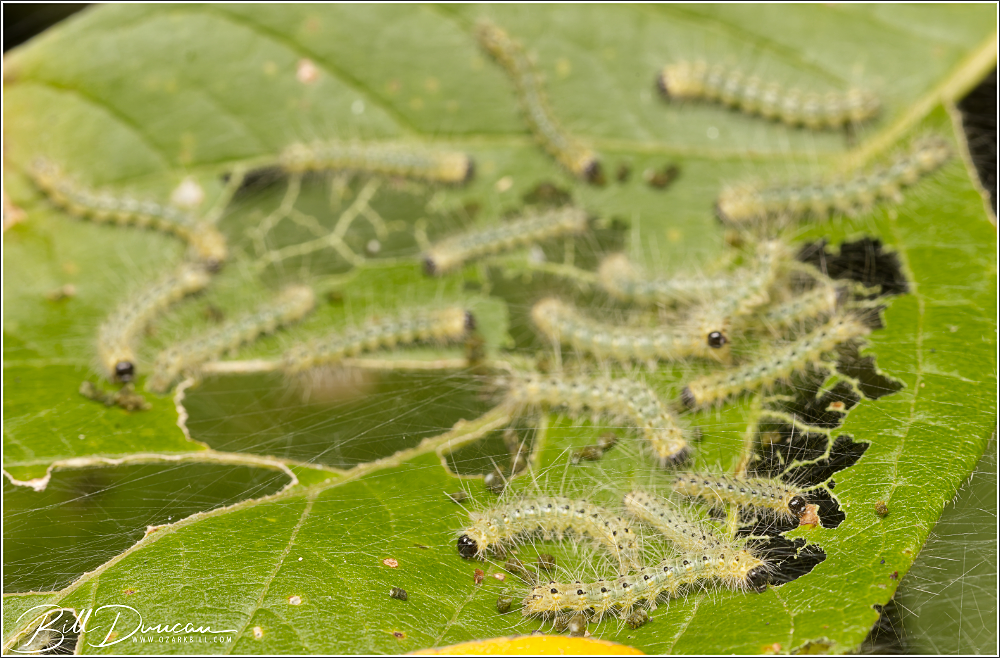
Black-headed phase of Hyphantria cunea.
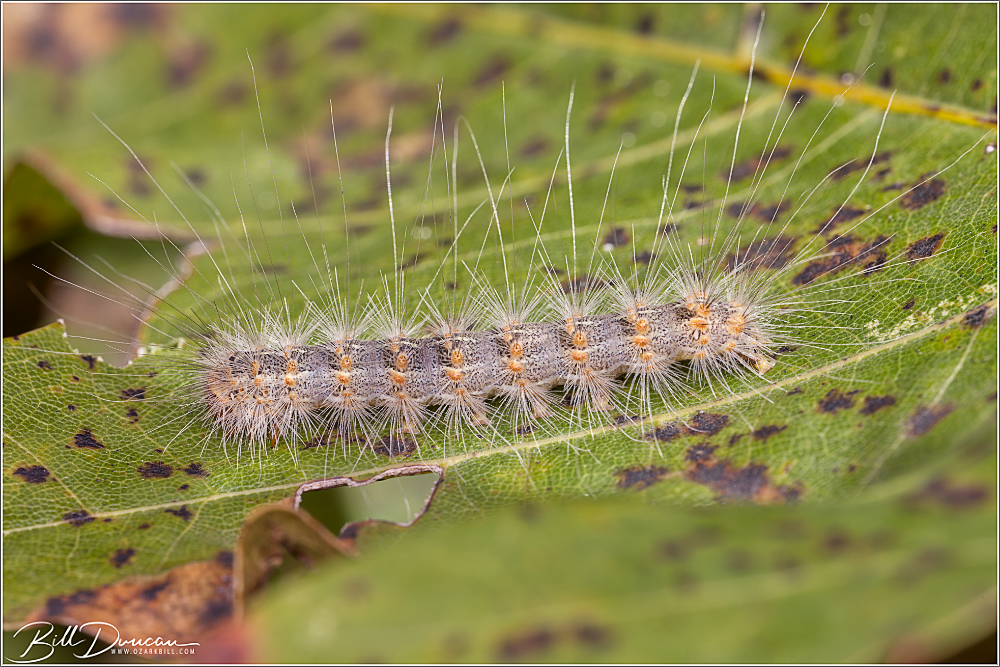
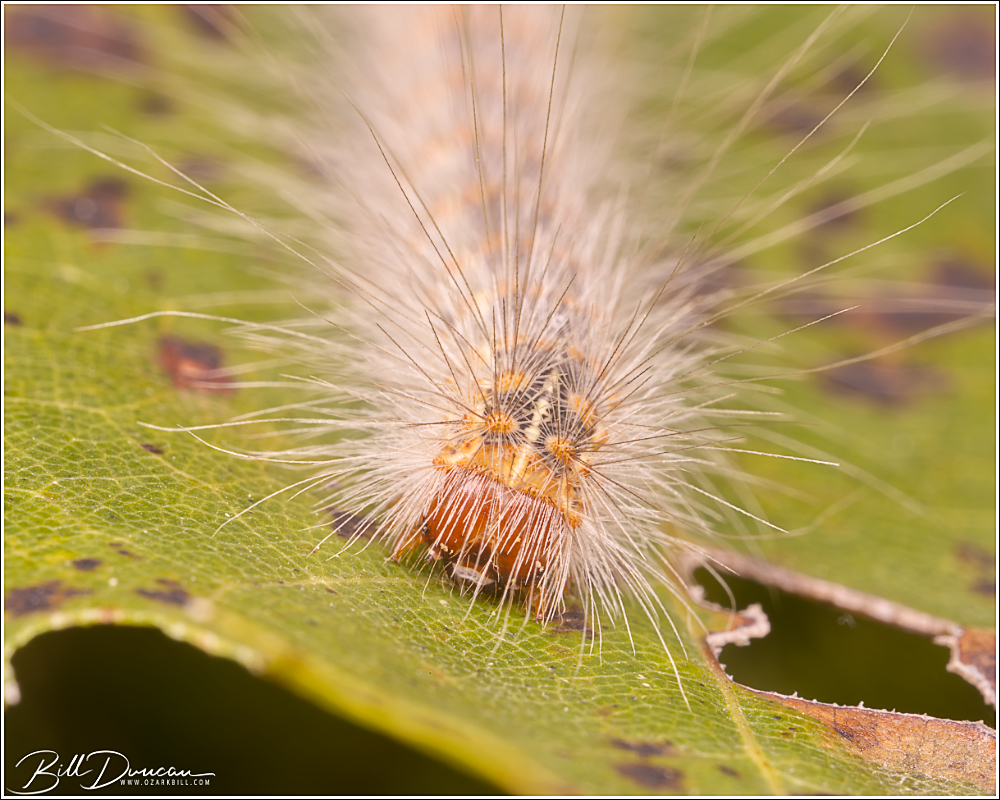
Red-headed phase of Hyphantria cunea.

