2026 Caterpillar Season – Lace-capped Caterpillar

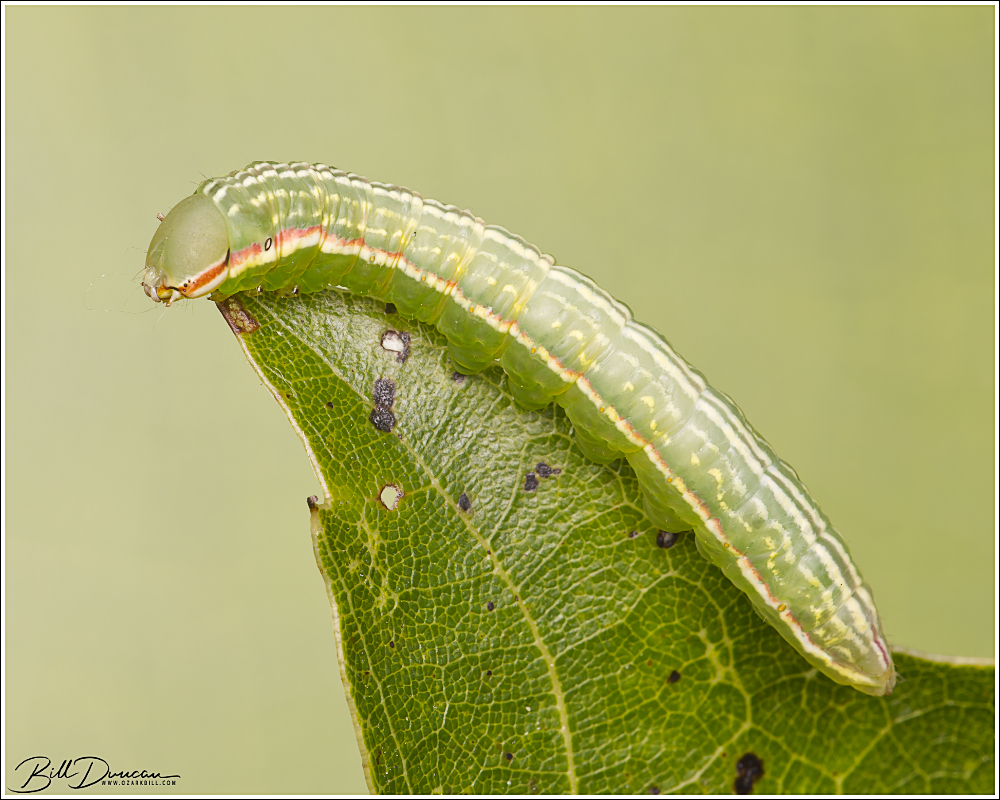
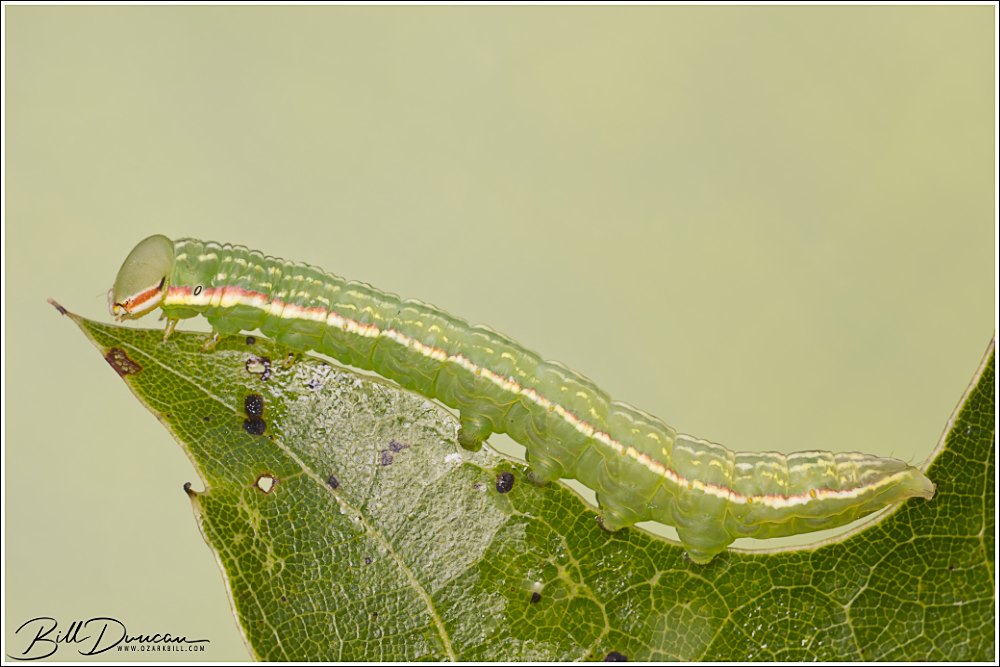
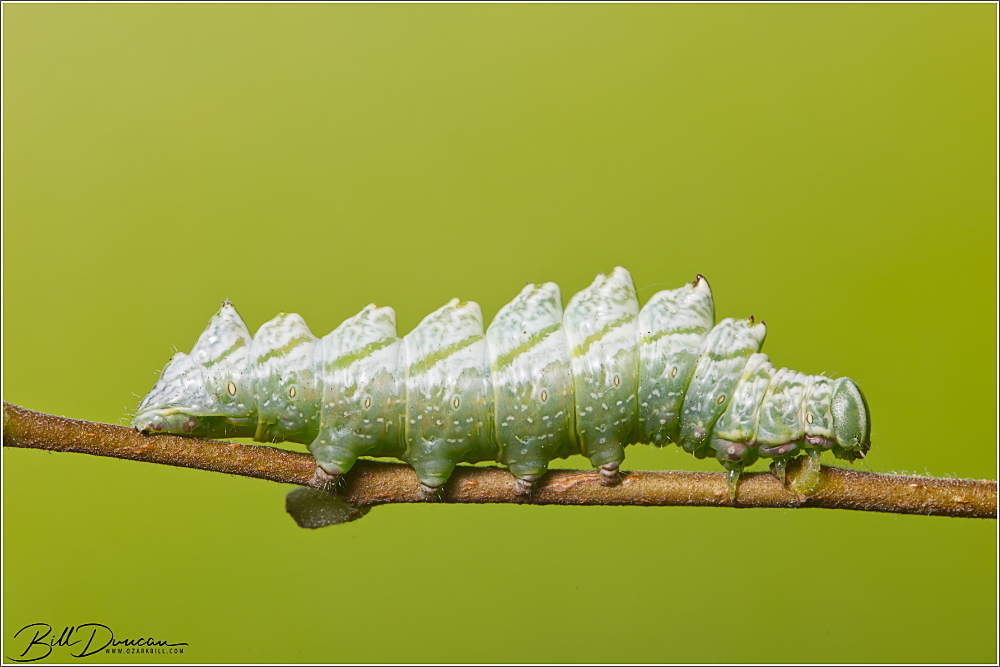
Lace-capped Caterpillar (White-streaked Prominent)
Ianassa lignicolor (Walker, 1855), fam. Notodontidae, P-no. 930106.7
Host plants: Primarily oaks (Quercus spp.).
Date found(s): August 29, 2026
Location(s) found: Tyson Research Center, St. Louis County, MO
Notes: For decades, this moth was known as Oligocentria lignicolor. However, recent genomic research revealed that it was more closely related to the genus Ianassa. This taxonomic revision is a great example of how modern DNA sequencing is proving that species which look similar (like Oligocentria) are not always the closest relatives.
2026 Caterpillar Season – Angulose Prominent

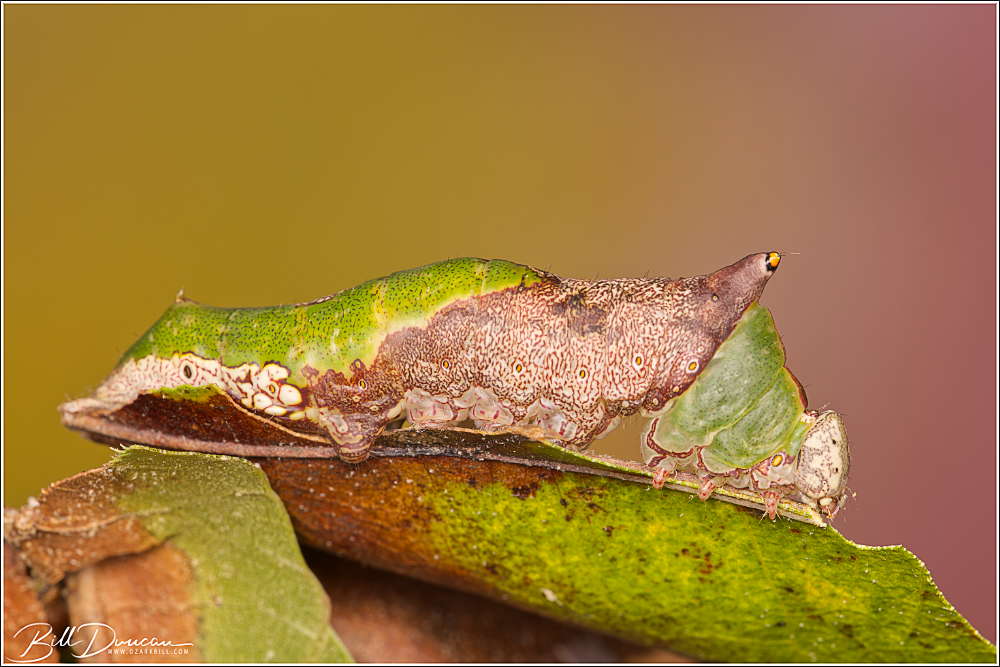
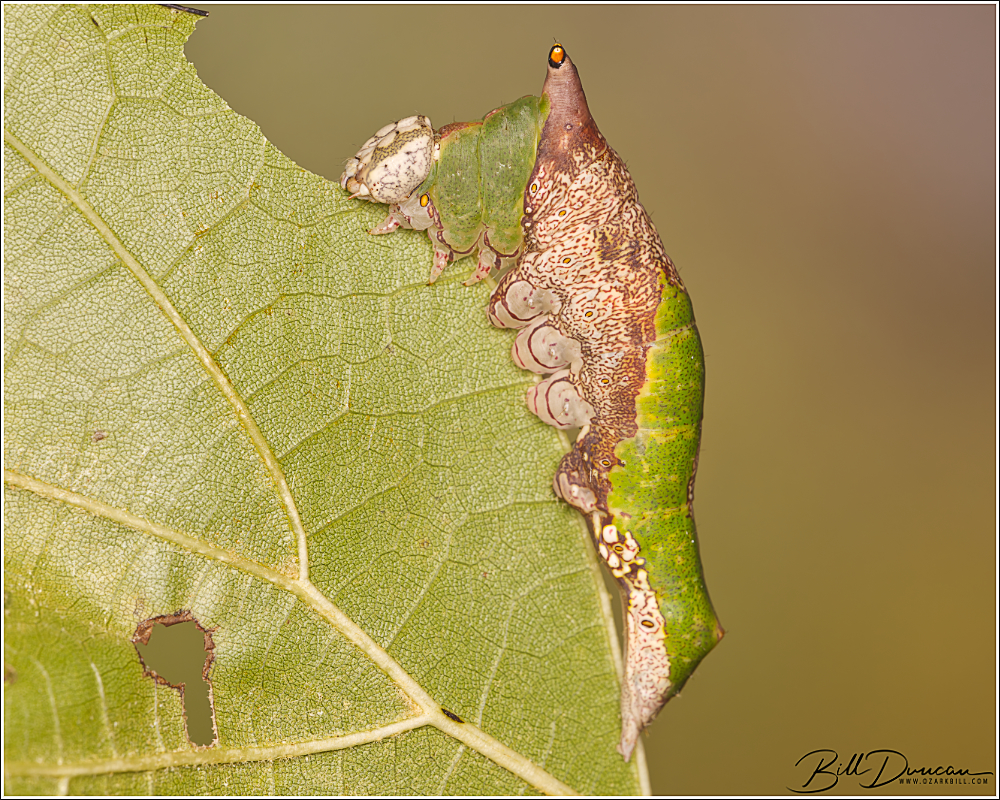
Angulose Prominent
Peridea angulosa (J.E.Smith, 1797), fam. Notodontidae, P-no. 930049
Host plants: Primarily oaks but hickory has been reported.
Date found(s): August 22; September 6, 2026
Location(s) found: Little Creve Coeur Ecological Area, St. Louis County, MO
Notes: Two other members of this genus, the oval-based prominent (Peridea basitriens) and chocolate prominent (P. ferruginea), are found in Missouri and look somewhat similar to the angulose prominent. However, the angulose prominent is the only one of the three to host on oaks. Oval-based prominent hosts on maple and the chocolate prominent hosts on birch.

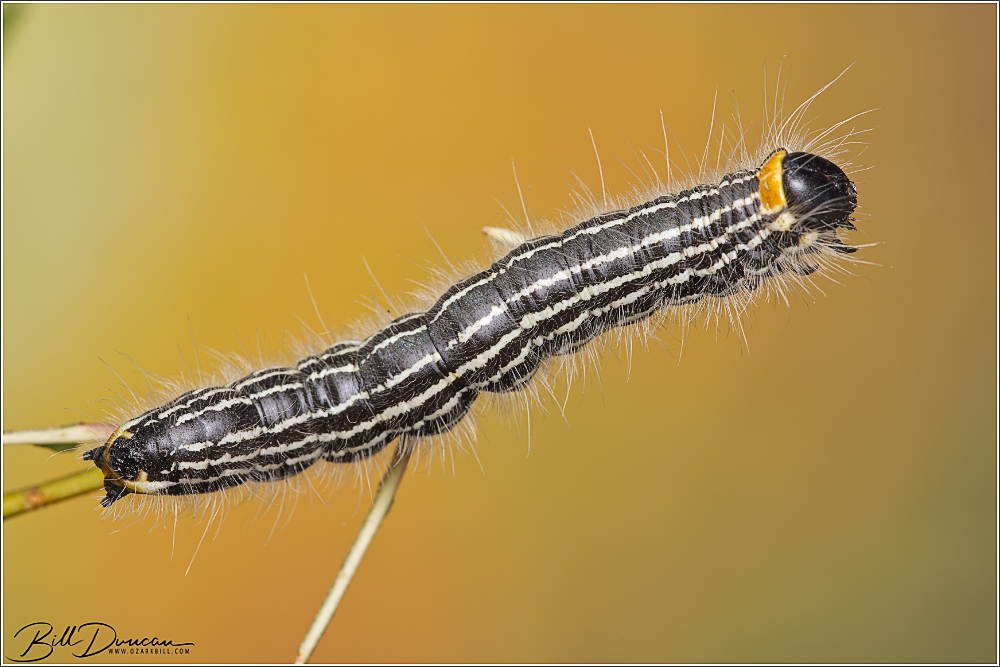
2026 Caterpillar Season – Yellow-necked Caterpillar Moth

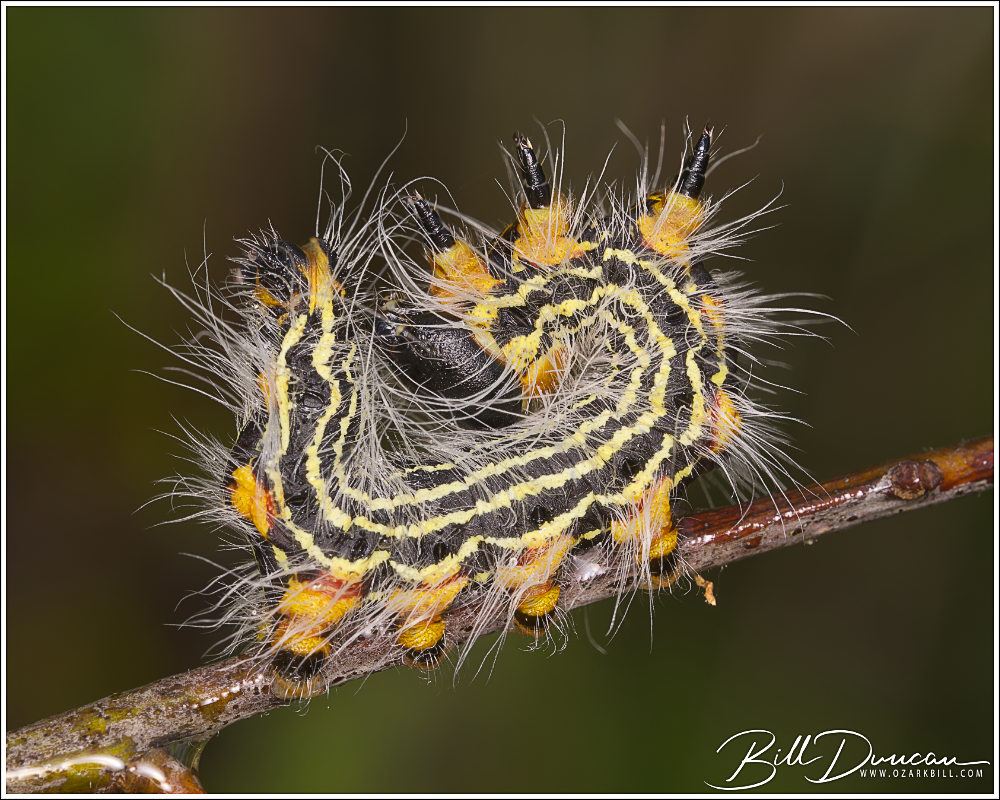
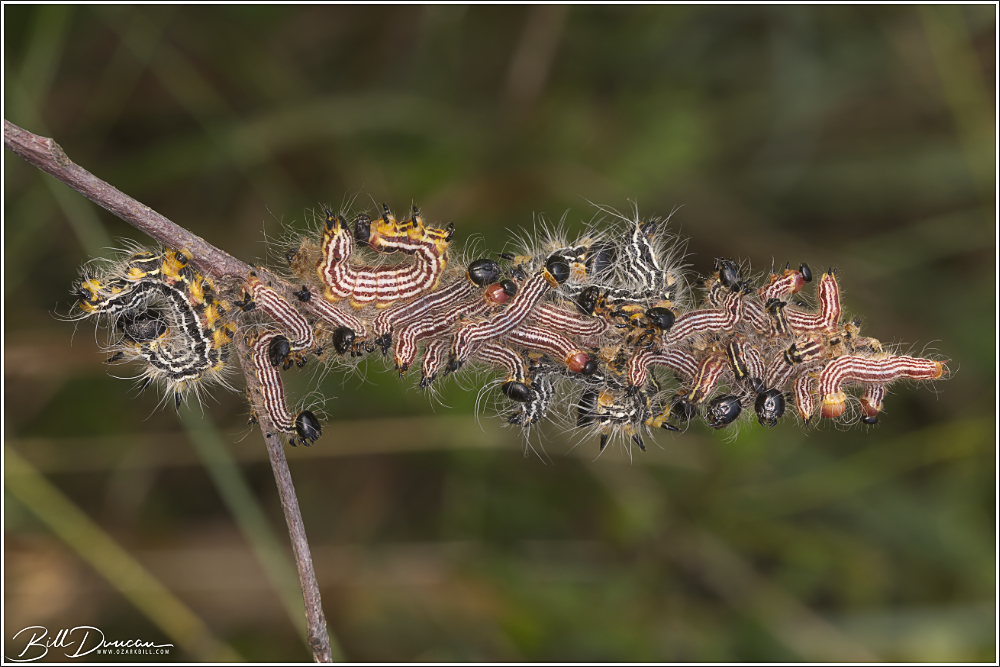
Yellow-necked Caterpillar Moth
Datana ministra (Drury, 1773), fam. Notodontidae, P-no. 930033
Host plants: The recorded hosts are a wide variety of woody species in 15 plant families.
Date found(s): August 22, 2026
Location(s) found: Meramec State Park, Franklin County, MO
Notes: The yellow-necked caterpillar, like most Datana, go through several color phases as they develop. Early instars are reddish -brown to green. Mid-instars become striped but may be considerably different colors than the final instar. Although Datana caterpillars may be easy to identify at most stages, getting them to species is usually best accomplished with final instars.

2026 Caterpillar Season – Black-etched Prominent—Redux

I shared photos of the black-etched prominent a few weeks ago. Since then, I was able to photograph this ultimate instar that we found at Young Conservation Area in Jefferson County, Missouri.

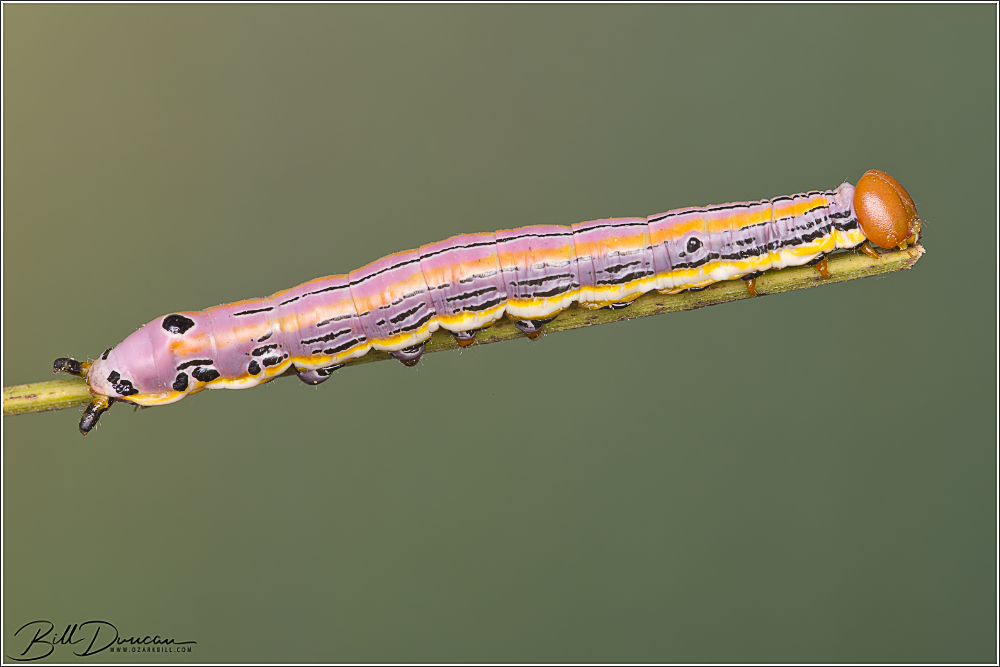
2026 Caterpillar Season – Black-spotted Prominent

Black-spotted Prominent
Dasylophia anguina (J.E.Smith, 1797), fam. Notodontidae, P-no. 930133
Host plants: Feeds on mostly herbaceous members of the Fabaceae family but can be found on locust trees and Amorpha shrubs.
Date found(s): September 7, 2026
Location(s) found: Franklin County, MO
Notes: An alternative form of the black-spotted prominent can be found that replaces the lavenders and oranges with greens and blues. Many thanks to Eva Wiedeman for finding this one and letting me photograph it!

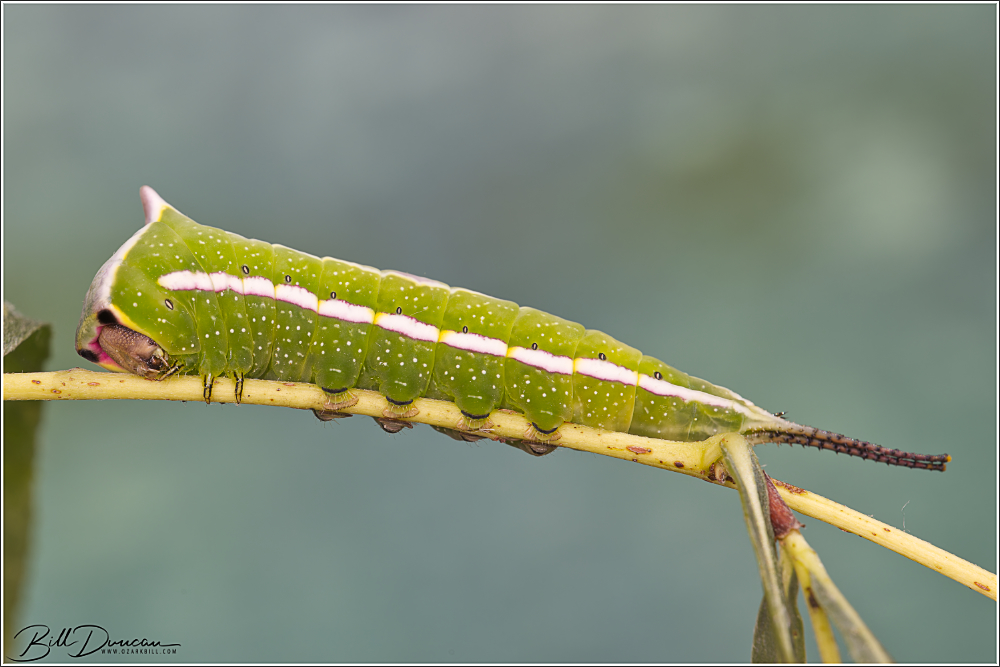
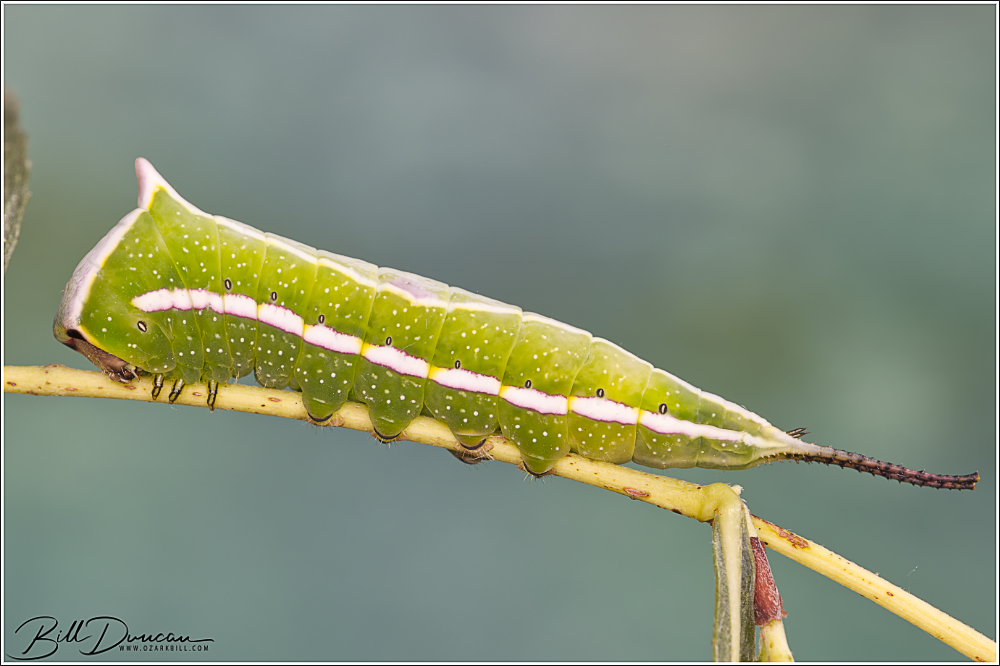
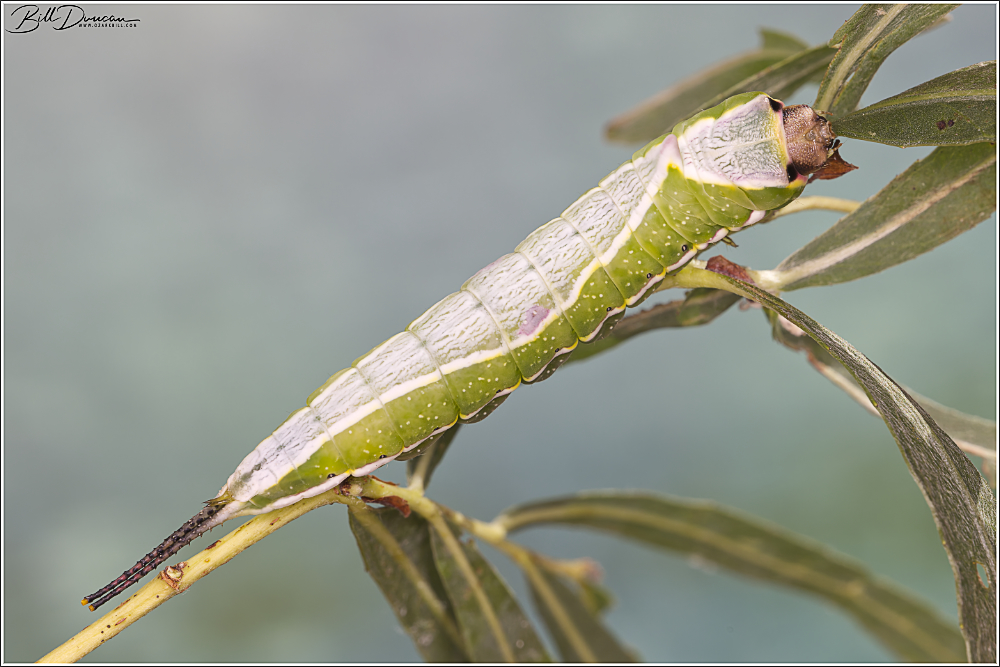
2026 Caterpillar Season – Angle-lined Prominent

Angle-lined Prominent
Clostera inclusa (Hübner, 1831), fam. Notodontidae, P-no. 930004
Host plants: Feeds on birch (Betulaceae) and willows (Salix spp.).
Date found(s): August 22, 2026
Location(s) found: Meramec State Park, Franklin County, MO
Notes: Unlike the closely related sigmoid prominent, the angle-lined prominent is typically gregarious. They are usually found in groups of 2–20 individuals during the day, wrapped within shelters produced from living leaves spun together with their silk. Find these by looking for these leaf shelters on willows or by hunting at night when they are more likely to be found feeding in the open.

2026 Caterpillar Season – Black-etched Prominent

Black-etched Prominent
Americerura scitiscripta (Walker, 1865), fam. Notodontidae, P-no. 930030
Host plants: Feeds on members of the Salicaceae Family, including poplars (Populus spp.) and willows (Salix spp.).
Date found(s): 26 August, 2026
Location(s) found: Logger’s Lake, Shannon County, MO
Notes: The WGNSS group came upon the individual pictured here in Shannon County in August of 2026. When it realized we discovered it, we were in for a short but thrilling experience. The caterpillar arched its long anal prolegs over its back, extruded the yellow and red portions thereby doubling their length, and then thrashed them about wildly in an obvious attempt to threaten and dissuade us. Unfortunately, this act lasted merely seconds, and it could not be coaxed into a repeat performance after we had set it up for photographs. If this method of dissuasion does not do the trick, the caterpillar can spray acid from a gland in its thorax.

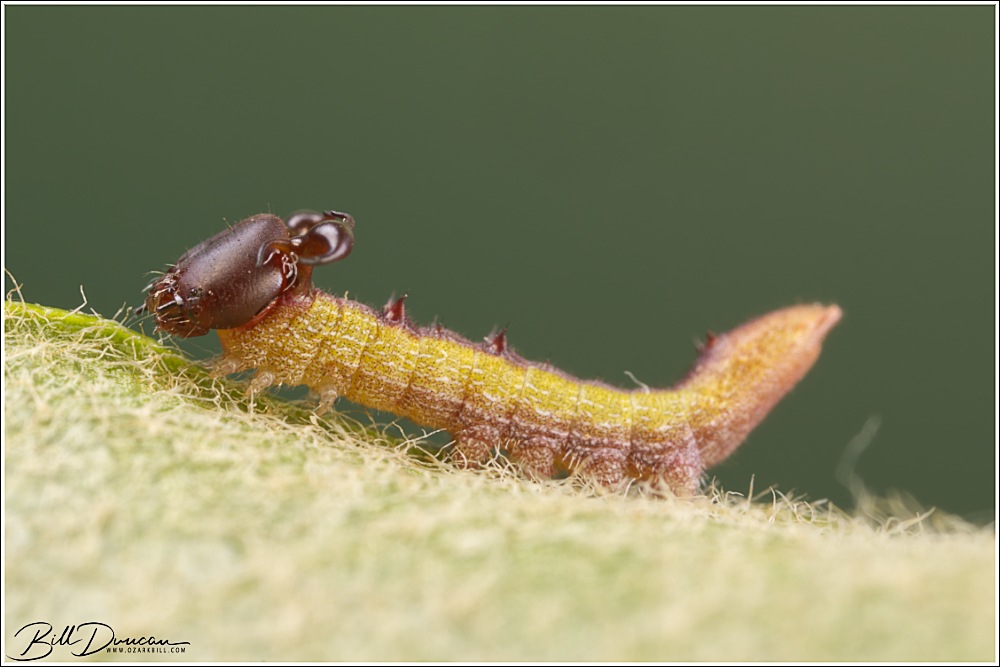
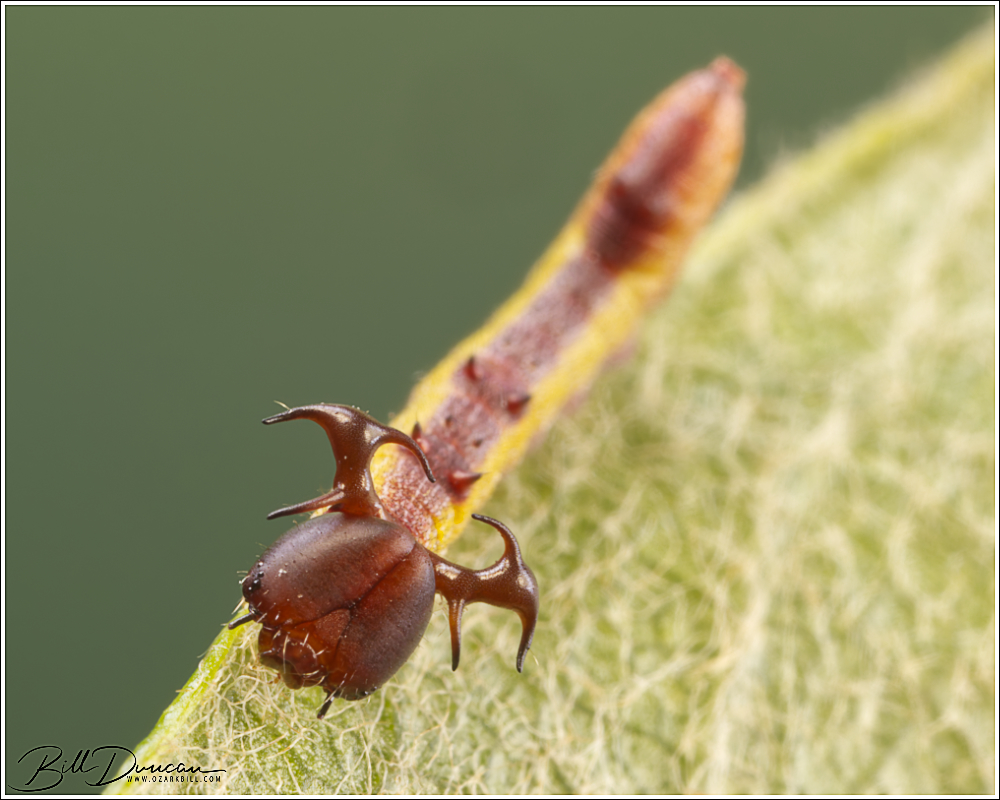
2026 Caterpillar Season – Harvey’s Prominent

Harvey’s Prominent
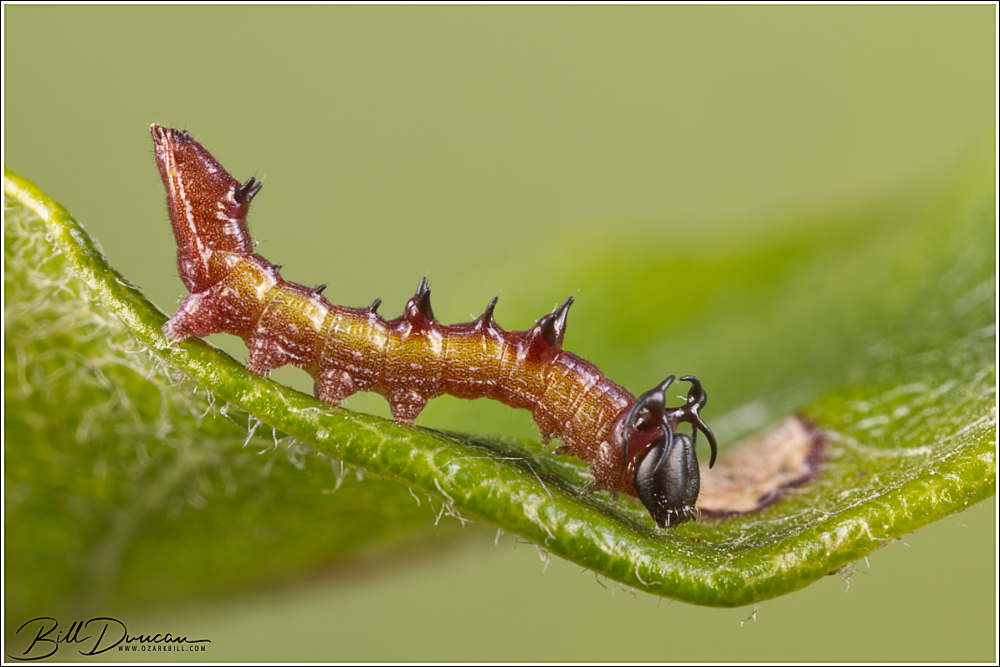
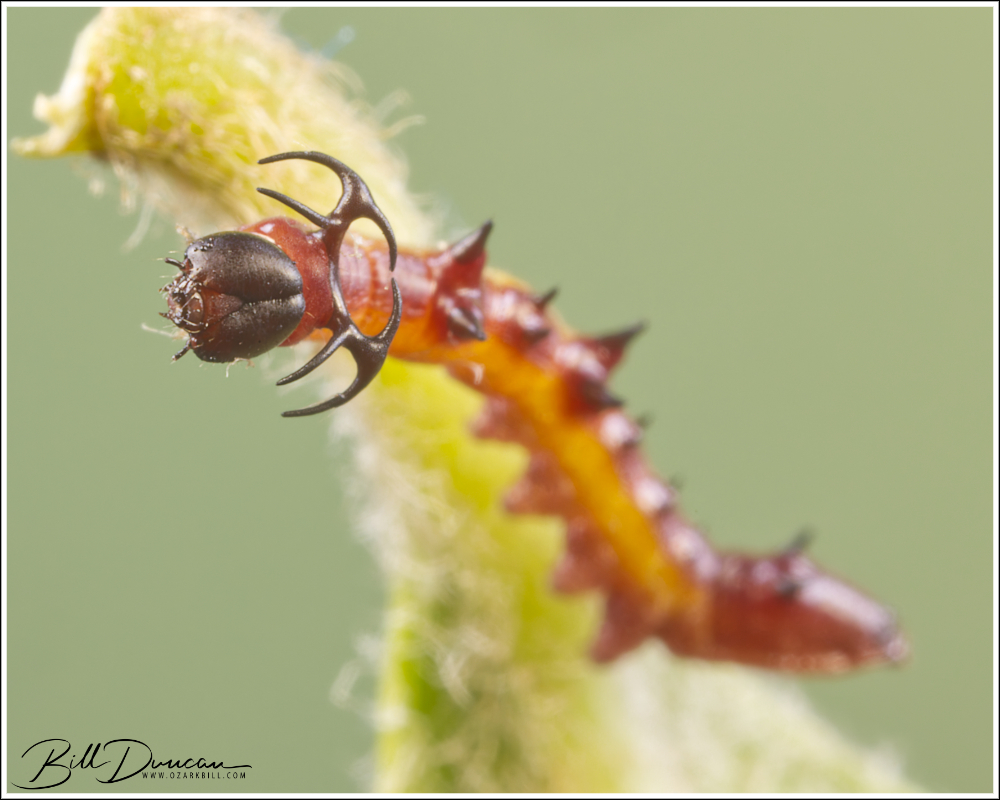
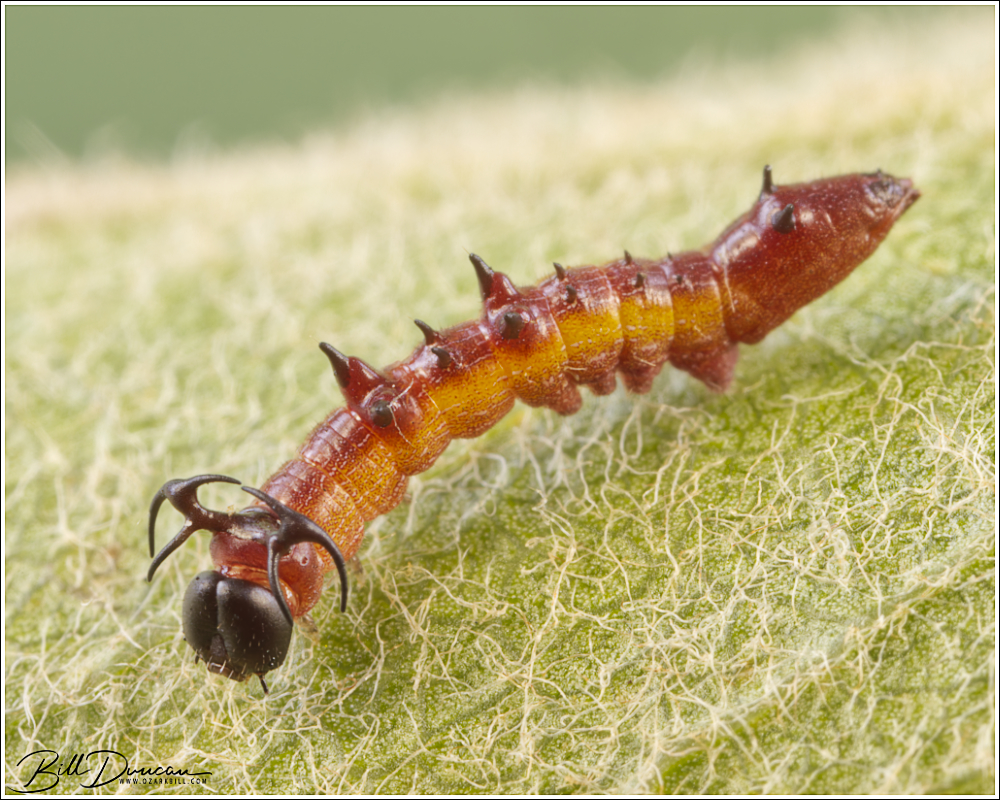
Litodonta hydromeli (Harvey, 1876) P-no. 930060, fam. Notodontidae
Host plant(s): Found on gum bumelia (Sideroxylon lanuginosum)
Date(s) found: 20 June, 2026
Locations found: Victoria Glade Conservation Area
Notes: I know I’ve shared this species on a number of occasions, like here, here, and here, but I can’t get enough of these fascinating little ones. Based on the antler-like prothoracic scoli and integument coloration and pattern, I believe these two, found during a WGNSS trip, are a third and second instar.

2026 Caterpillar Season – Double-toothed Prominent

Double-toothed Prominent
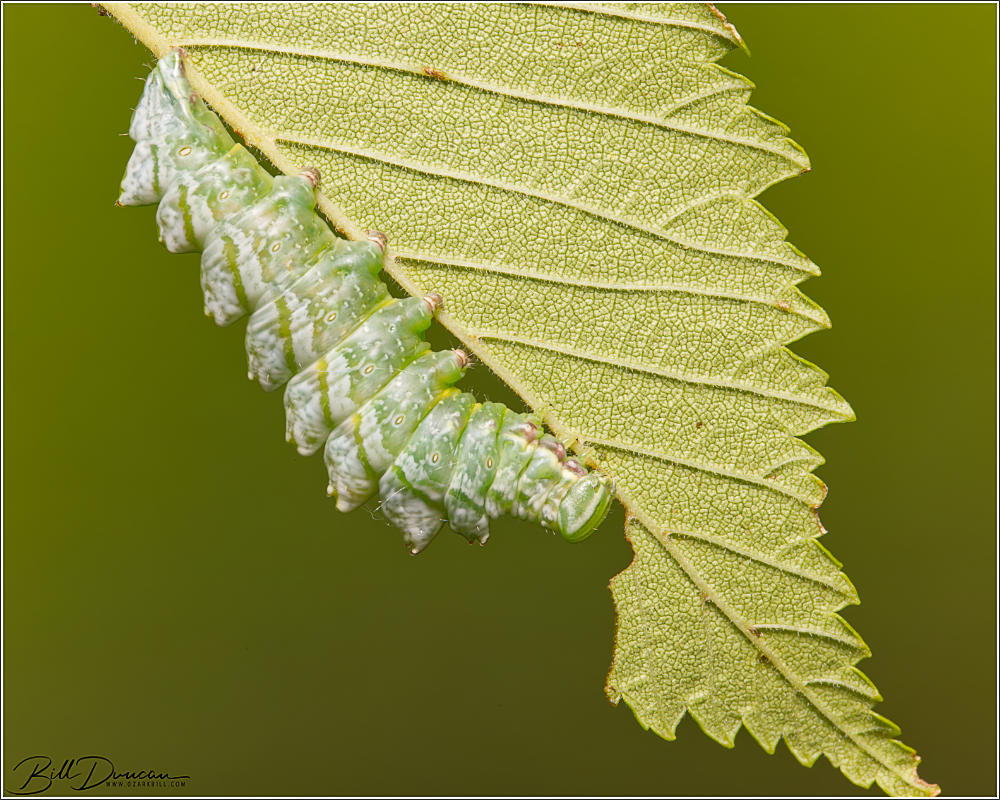
Nerice bidentata (Walker, 1855) P-no. 930018, fam. Notodontidae
Host plant: Found on white oak (Quercus alba)
Dates found: 24 May, 2026
Locations found: Tyson Research Center, St. Louis County, MO
Notes: A master of camouflage. The double-toothed dorsal keel and the oblique subdorsal lines matching the leaf veins do a great job in blending into the leaf on which they feed and breaking up the form of a caterpillar.

2025 Caterpillar Season – Contracted Datana

Contracted Datana
Datana contracta fam. Notodontidae
Host plant: Oak
Dates found: 16 September, 2025
Locations found: Not recorded
Notes: Caterpillars of the genus Datana are easily recognized. They have the same basic body plan of long hair-like setae giving them a fuzzy appearance. They are all gregarious, being found in groups of up to hundreds of individuals. When disturbed, they react by throwing their heads and posteriors upwards, forming a “U” shape.