2026 Caterpillar Season – Clover Looper

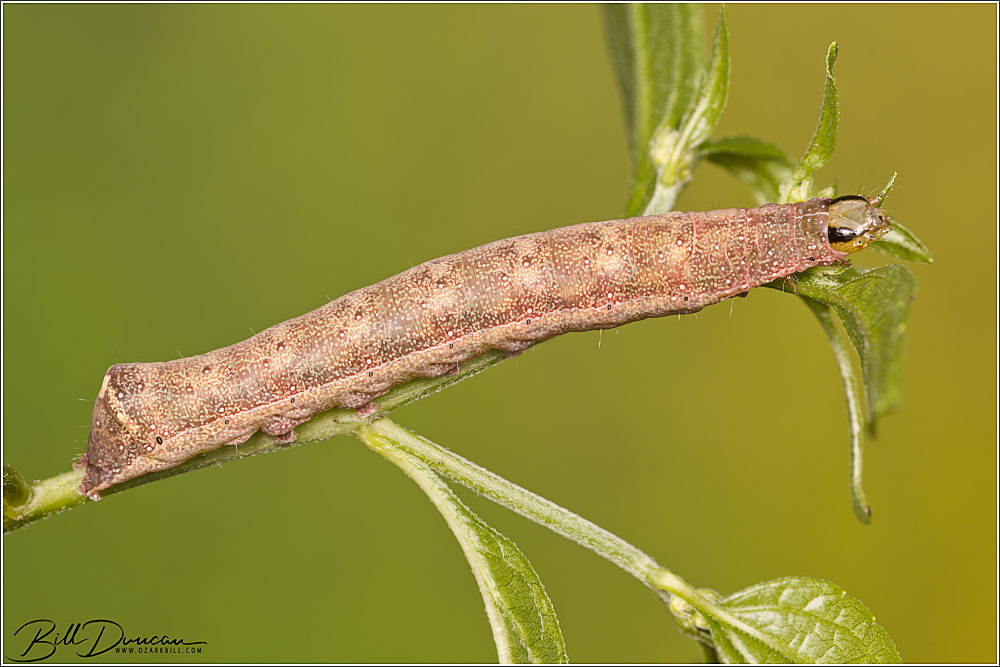
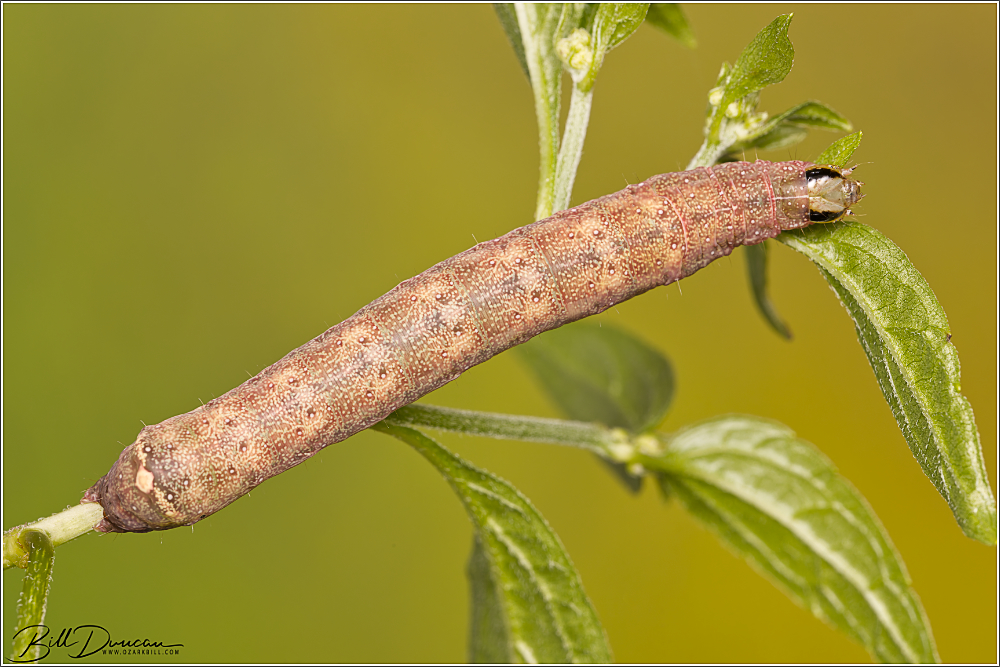
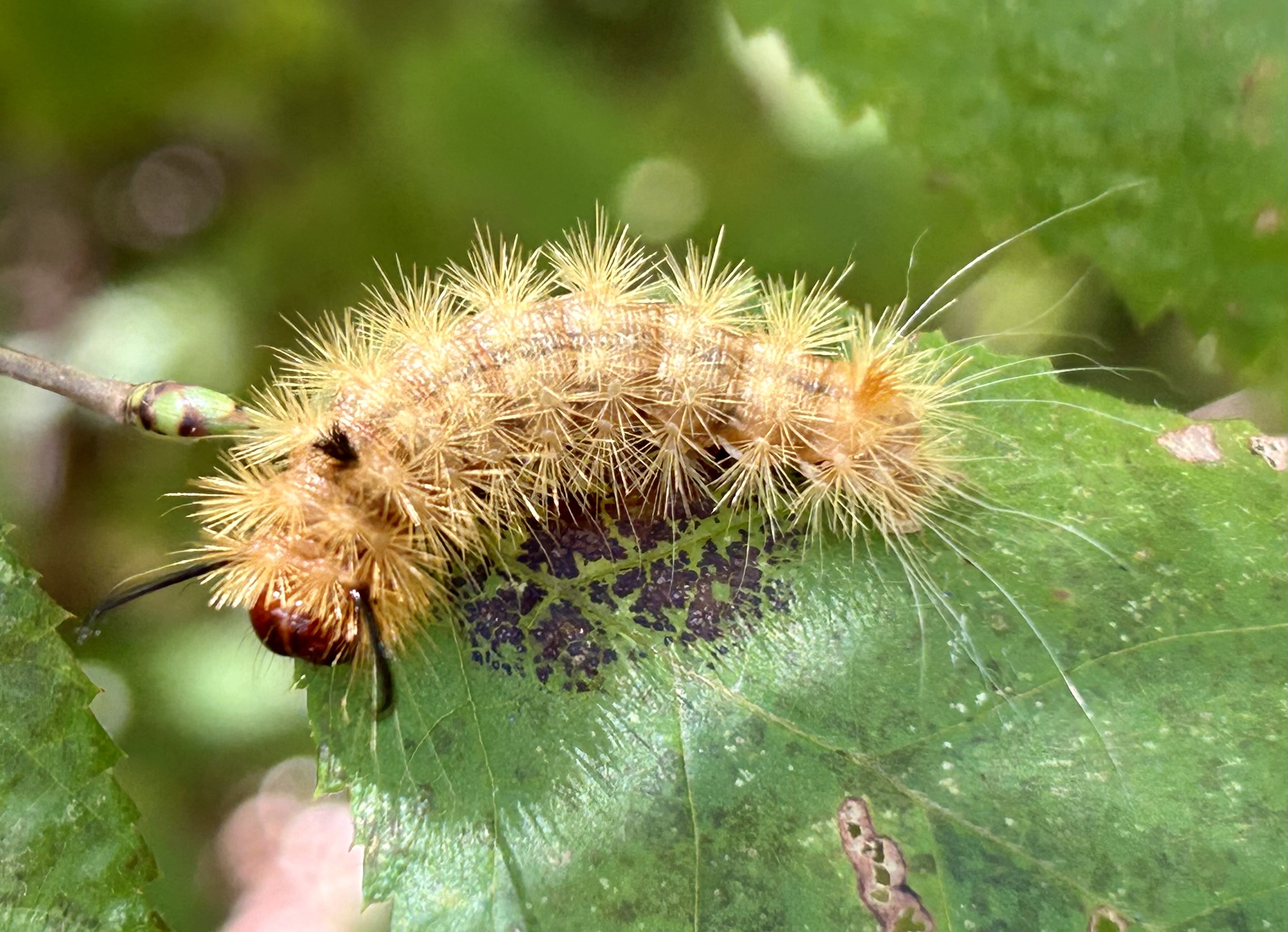
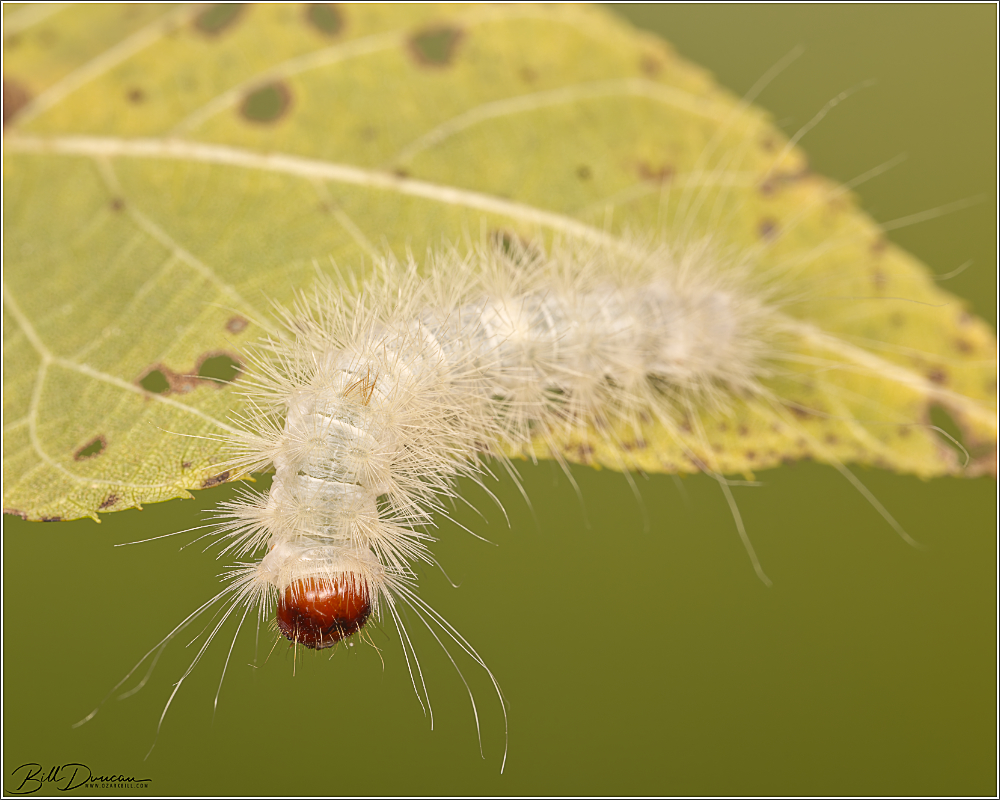
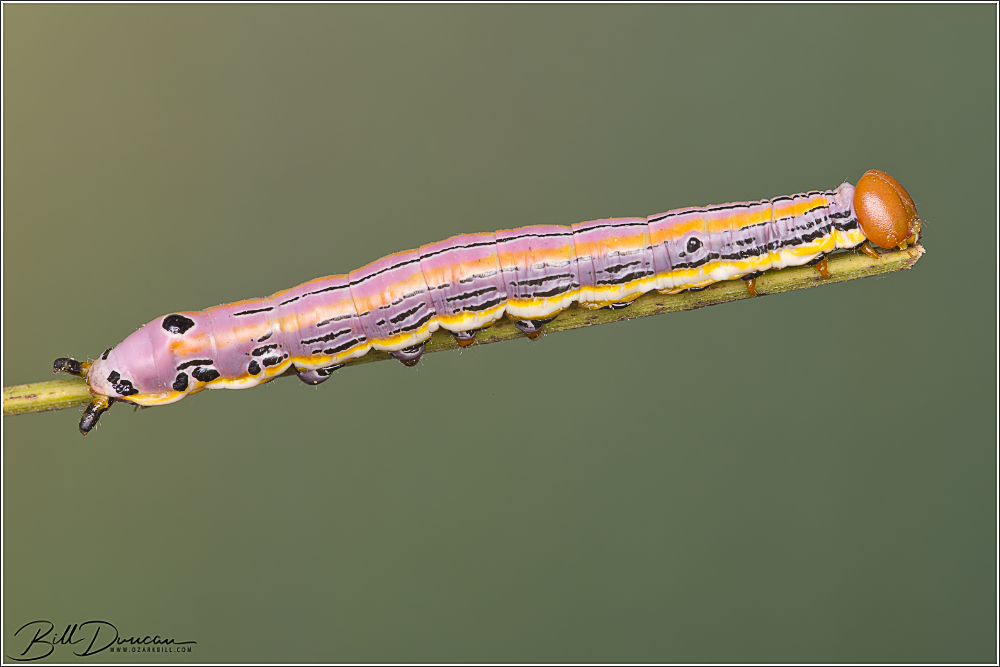
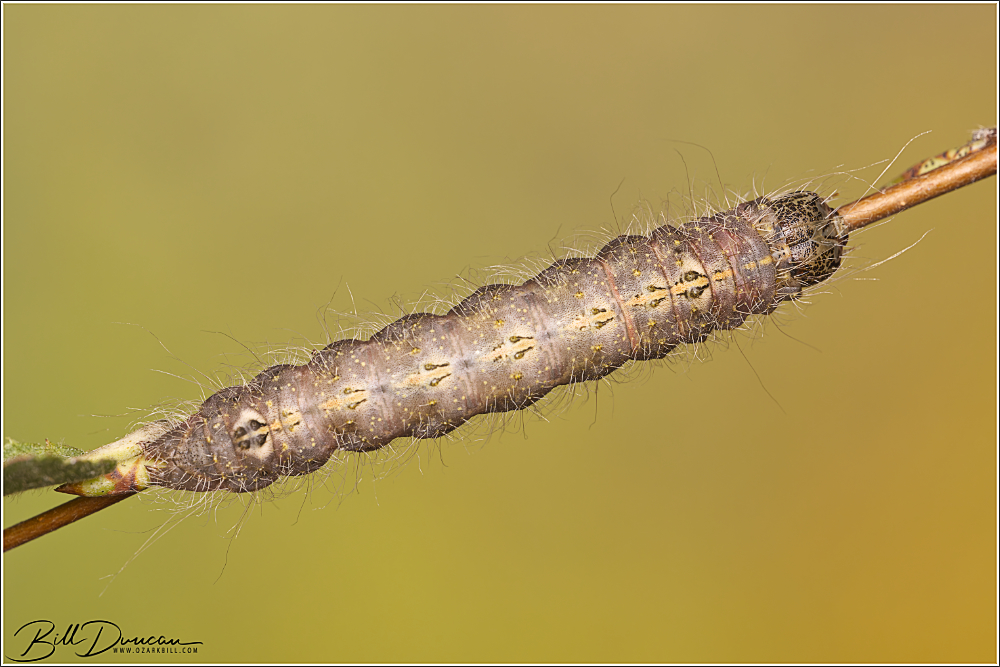
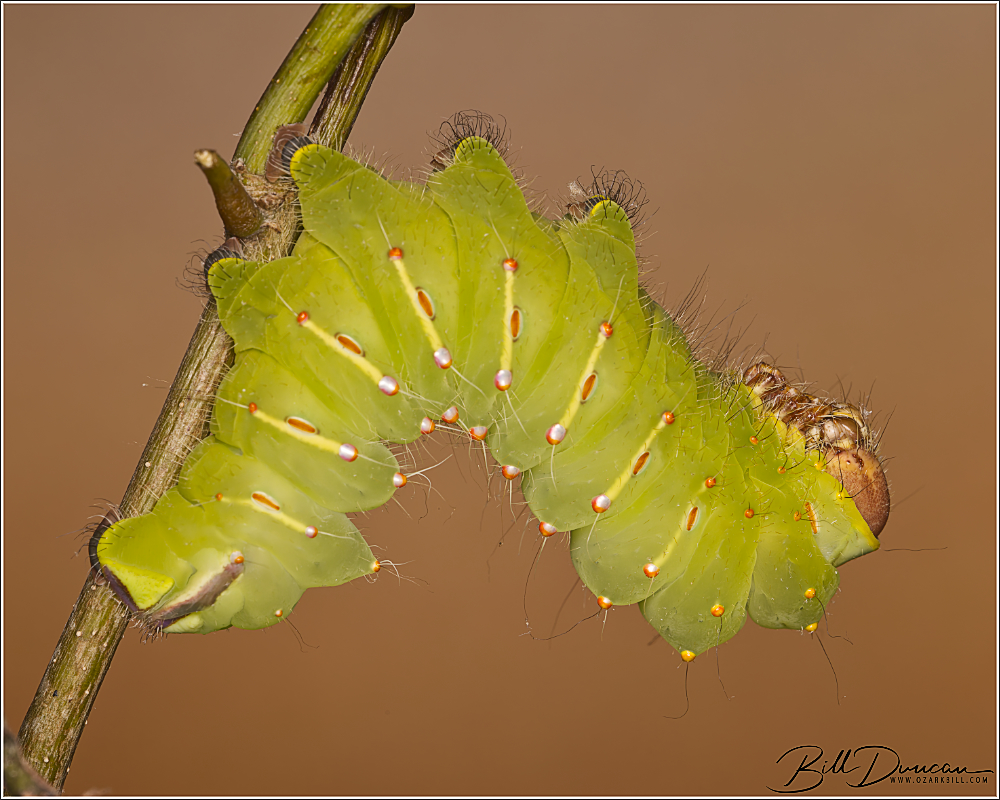
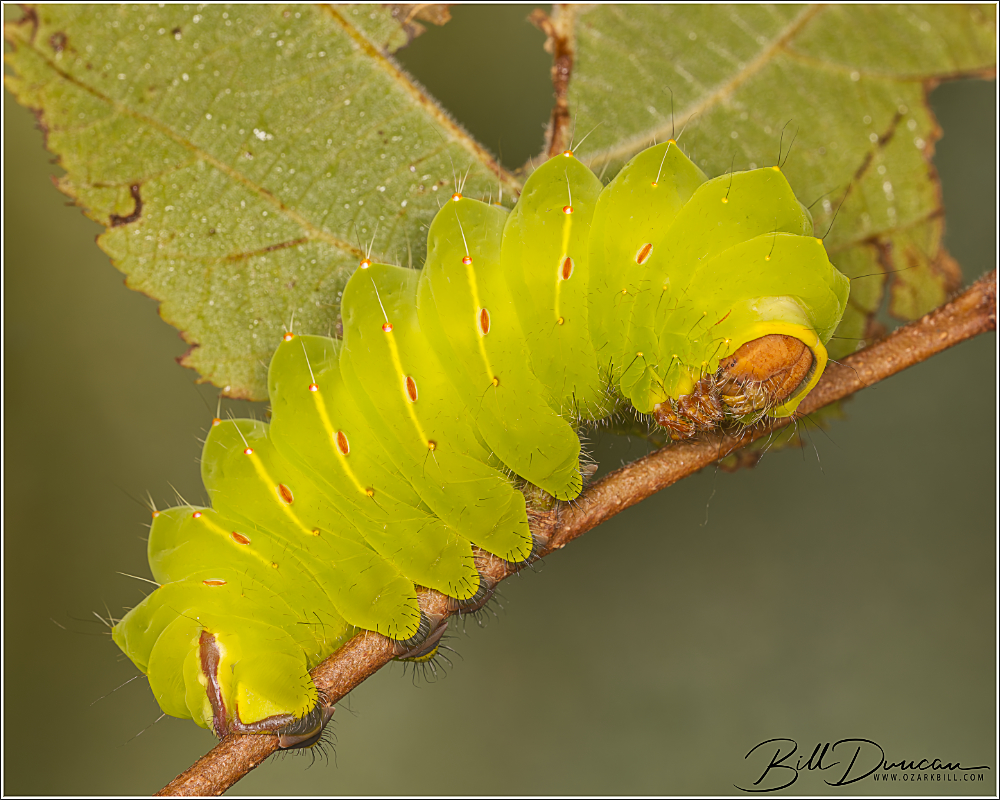
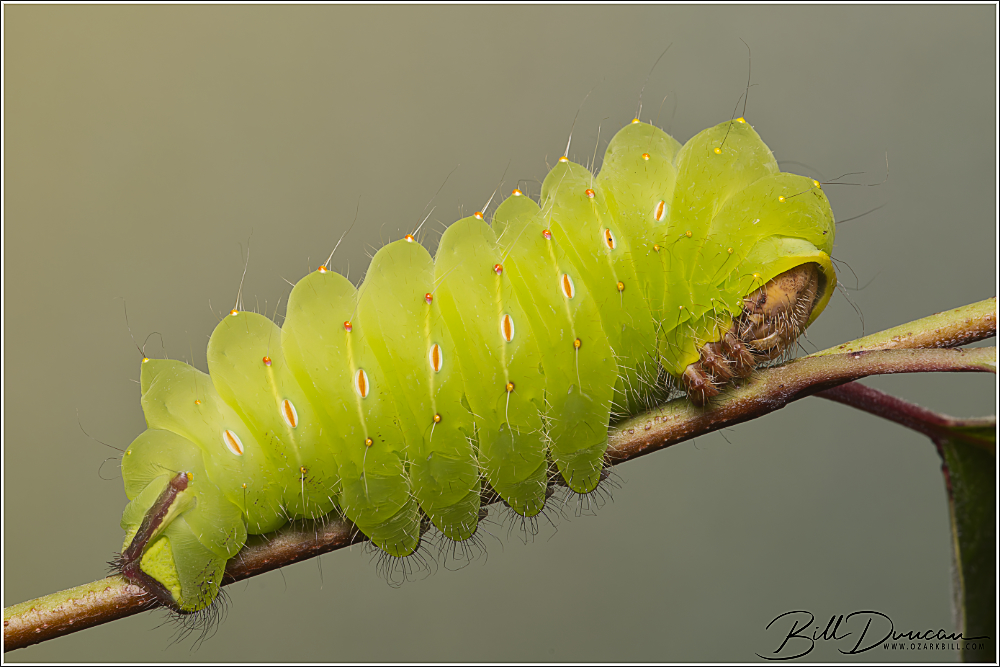
Clover Looper
Caenurgina crassiuscula (Haworth, 1809) P-no. 930923, fam. Erebidae
Host plant(s): Unidentified herbaceous legume
Date(s) found: 24 May, 2026
Locations found: Tyson Research Center, St. Louis County, MO
Notes: The clover looper larvae is indistinguishable from Caenurgina crassiuscula (forage looper), and even adults can only be distinguished by close inspection of genitalia.

2026 Caterpillar Season – Skiff Moth

Skiff Moth
Prolimacodes badia (Hübner, 1822) P-no. 57a0065, fam. Limacodidae
Host plant(s): Found on ironwood (Ostrya virginiana)
Date(s) found: 2 August, 2026
Locations found: Don Robinson State Park, Jefferson County, MO
Notes: Skiff moths can be found in a variety of colors and patterns—from nearly pure green to containing lots of warm brown colorations that assist them in camouflage by mimicking necrotic spots on leaves. I thought the one pictured here was pretty enough to take some photos.

Larvae of the Limacodidae usually keep their heads protected within their thoracic segments. Here is a nice opportunity to see the head capsule of Prolimacodes badia along with those impressive dark mandibles.
It’s not everyday you can see the true legs of a slug moth caterpillar, but they do have them as you can see if you look closely at this photo. They provide little in regards to locomotion, but I assume they find some purpose for them.

2026 Caterpillar Season – Pandora Sphinx

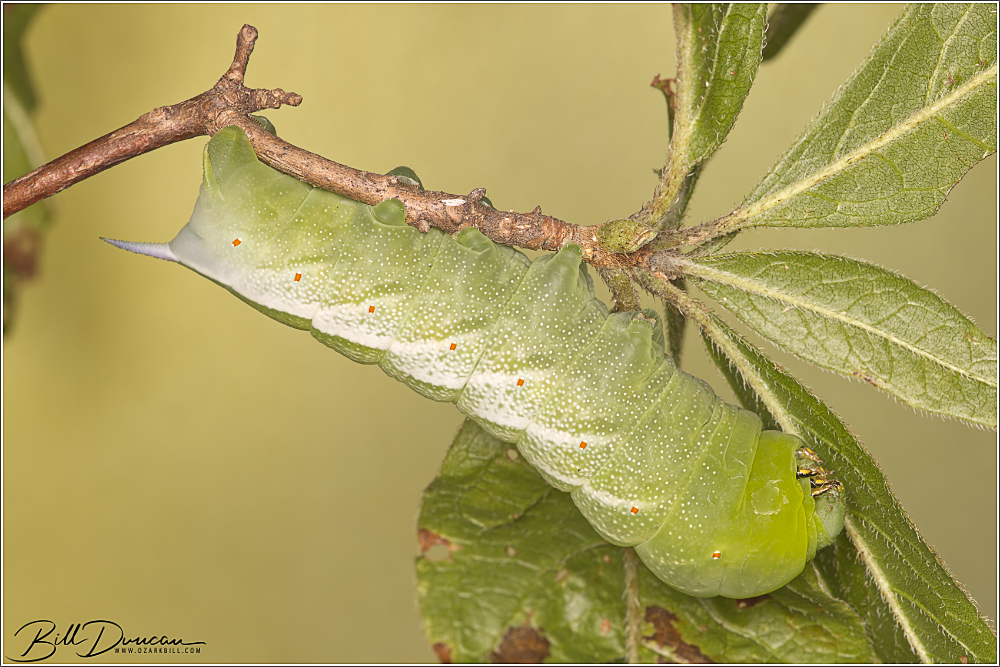
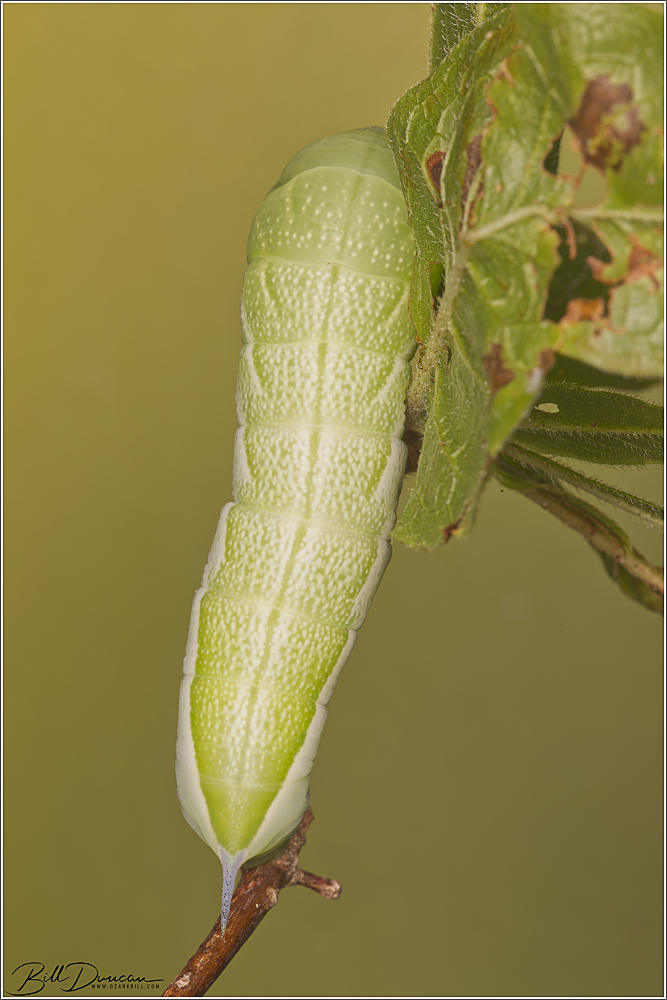
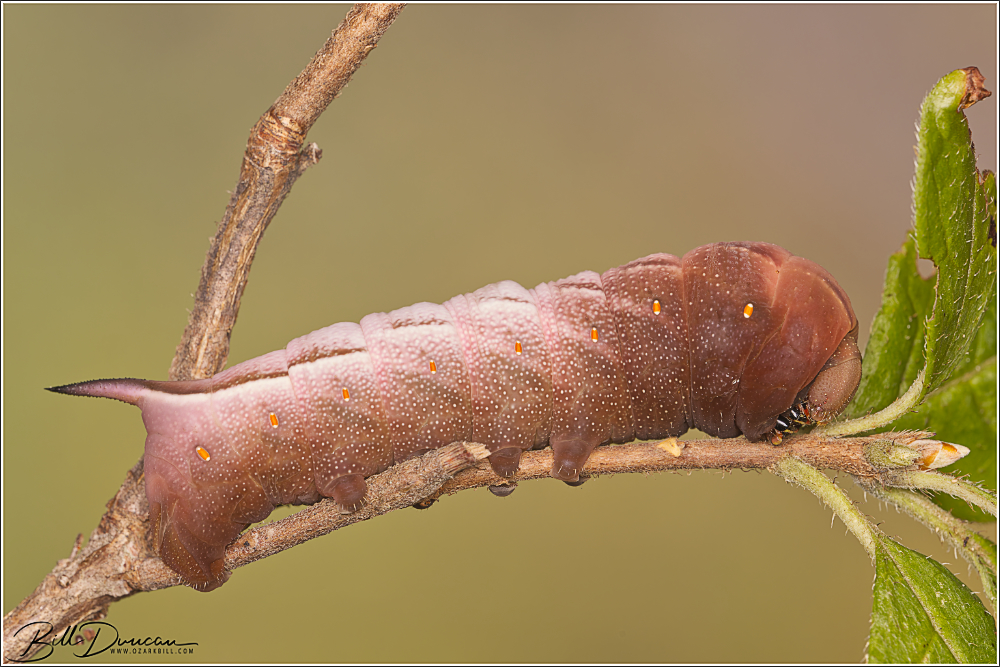
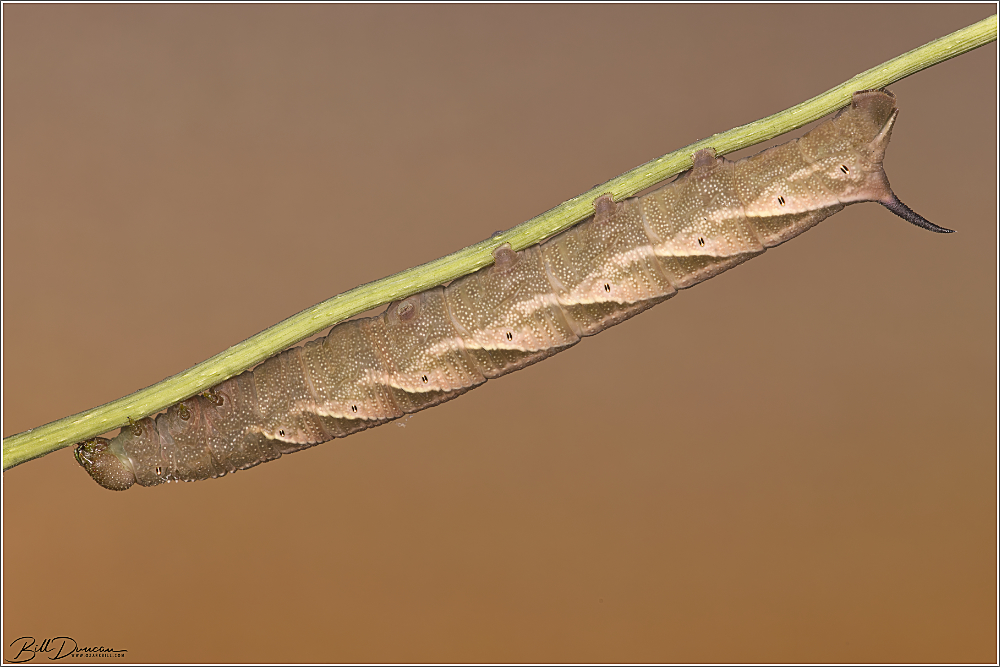
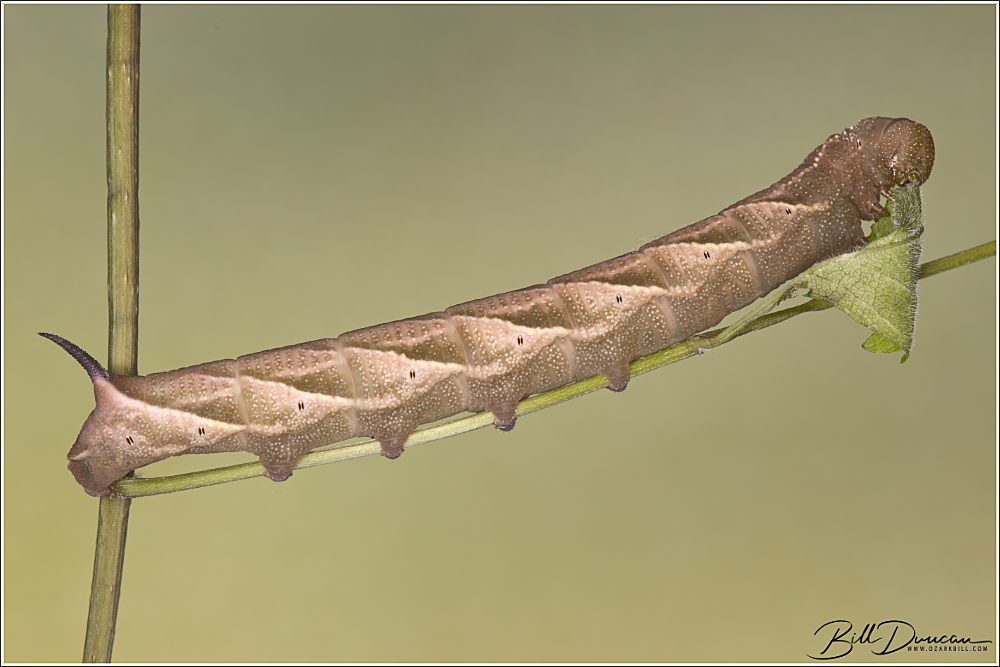
Pandora Sphinx
Eumorpha pandorus (Hübner, 1821) P-no. 890182, fam. Sphingidae
Host plant(s): Found on Virginia creeper (Parthenocissus quinquefolia)
Date(s) found: 13 July, 2026
Locations found: Ste. Genevieve County, MO
Notes: I shared a red phase of this species last year. A couple weeks ago, my friend, Steve, shared with me the caterpillar pictured here, which is the brown, or “chocolate,” phase of the same species. So, I drove the hour to make sure I did not miss the opportunity to photograph another color of this impressive larvae.

2026 Caterpillar Season – Byssus Skipper

Byssus Skipper
Problema byssus (Edwards, 1880) P-no. 77a0186, fam. Hesperiidae
Host plant(s): Found on eastern gamagrass (Tripsacum dactyloides)
Date(s) found: 18 July, 2026
Locations found: Powder Valley Conservation Area, St. Louis County, MO
Notes: My first grass skipper cat! Byssus skipper caterpillars spend their time in cylindrical shelters typically made from one grass stem. Look for these in higher quality prairie habitats where their host plants are abundant. Due to loss and degradation of grassland habitat, the byssus skipper and most of the grass skippers are at risk. Although the byssus skipper has a wide range, it is not considered common in any state.

2026 Caterpillar Season – Bicolored Honey Locust Moth

Bicolored Honey Locust Moth
Syssphinx bicolor (Harris, 1841) P-no. 890024, fam. Saturniidae
Host plant(s): Found on honey locust (Gleditsia triacanthos)
Date(s) found: 3 July, 2026
Locations found: Tyson Research Center, St. Louis County, MO
Notes: The caterpillar of Syssphinx bicolor can be confused with that of S. bisecta (bisected honey locust moth) that also occurs in Missouri. However, S. bisecta typically does not exhibit the magenta coloration in the thoracic horns and lacks red coloration in the subspiracular lateral stripe. These two species are among the few Lepidoptera species known to host on Kentucky coffee tree (Gymnocladus dioicus).

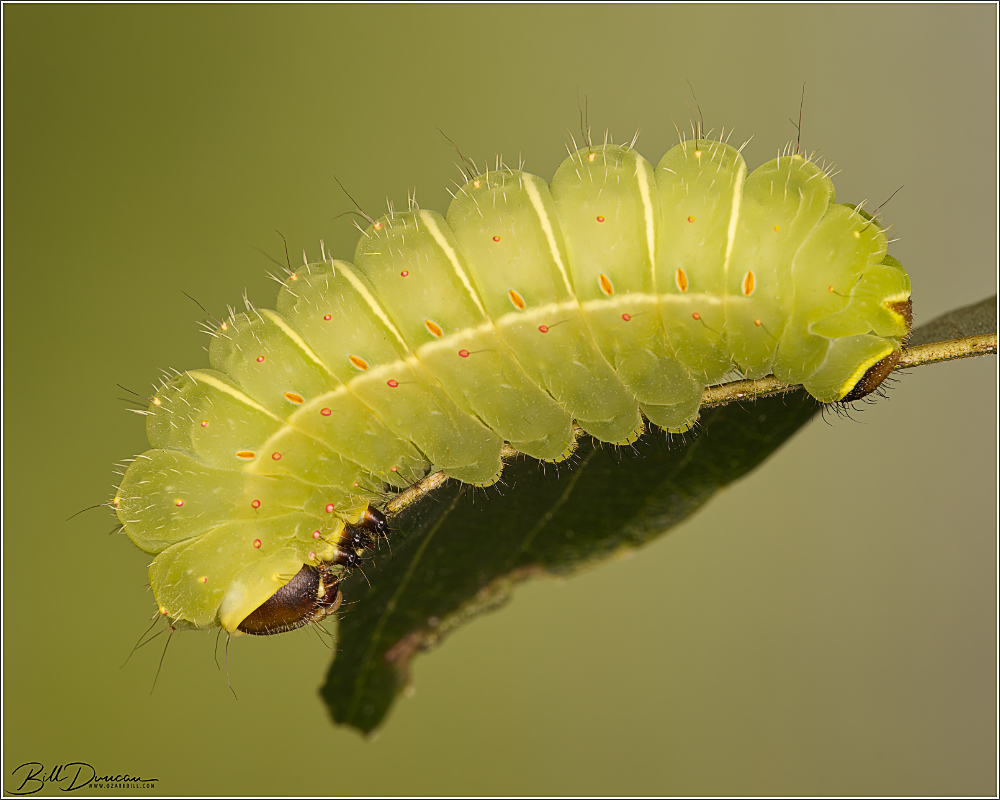
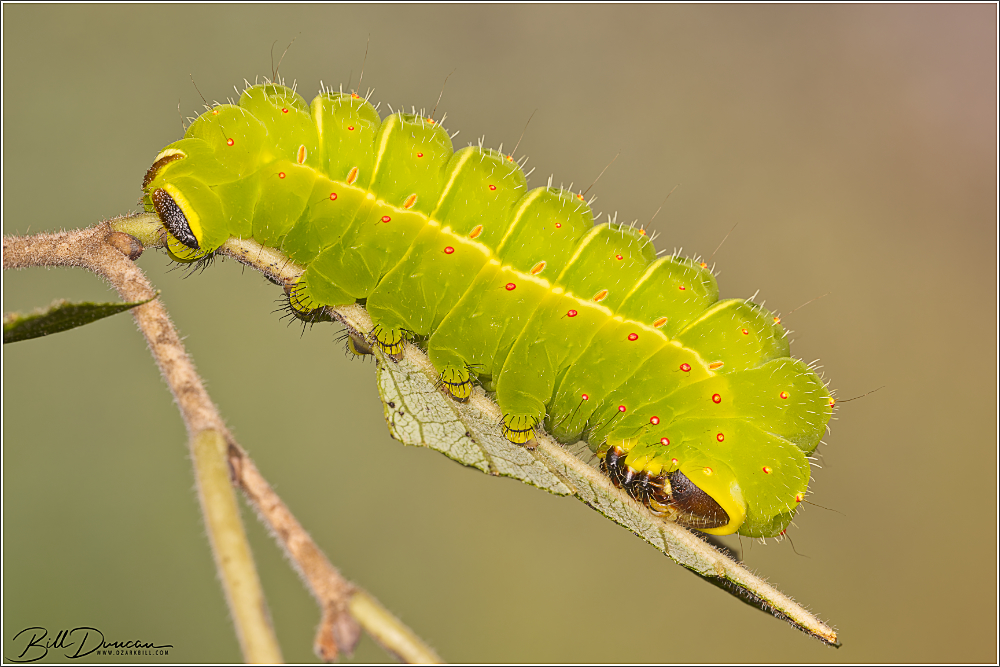
Penultimate instar larvae of Syssphinx bicolor
Ultimate instar larvae of Syssphinx bicolor
Syssphinx bicolor adult reared from larvae pictured above.

2026 Caterpillar Season – Harvey’s Prominent

Harvey’s Prominent
Litodonta hydromeli (Harvey, 1876) P-no. 930060, fam. Notodontidae
Host plant(s): Found on gum bumelia (Sideroxylon lanuginosum)
Date(s) found: 20 June, 2026
Locations found: Victoria Glade Conservation Area
Notes: I know I’ve shared this species on a number of occasions, like here, here, and here, but I can’t get enough of these fascinating little ones. Based on the antler-like prothoracic scoli and integument coloration and pattern, I believe these two, found during a WGNSS trip, are a third and second instar.

2026 Caterpillar Season – Snowberry Clearwing

Snowberry Clearwing
Hemaris diffinis (Boisduval, 1836) P-no. 890204.5, fam. Sphingidae
Host plant: Found on both bush honeysuckle (Lonicera maackii) and Japanese honeysuckle (Lonicera japonica)
Dates found: 9 May, 2026; 27 June, 2026
Locations found: Tyson Research Center, St. Louis County, MO; Pinewoods Lake Recreation Area, Carter County, MO
Notes: This species seems to be able to host on any honeysuckle species found in Missouri, both native and exotic. There are not a lot of reasons for the modern ecologist to celebrate, but it genuinely brings me cheer when finding these caterpillars feeding on invasive bush honeysuckle and Japanese honeysuckle.

2026 Caterpillar Season – Abbott’s Sphinx

Abbott’s Sphinx
Sphecodina abbottii (Swainson, 1821)P-no. 890192, fam. Sphingidae
Host plant: Found on wild grape (Vitus sp.)
Dates found: 27 June, 2026
Locations found: Pinewoods Lake Recreation Area, Carter County, MO
Notes: The ultimate instar presents an eerie, hyper-realistic “eyespot” complete with an iris, pupil, and even a white catchlight reflection. Along with the scale-like pattern, it becomes an apt snake mimic. If a predator comes too close, the caterpillar will lash, squeak, and try to bite its attacker. While this larval form makes a great interpretation of a snake, the diurnal adult phase makes a great bee mimic, including yellow patches on its hind wings. When at rest, the moth folds in its hind wings, leaving it perfectly camouflaged against the bark of a tree.

2026 Caterpillar Season – Distinct Quaker

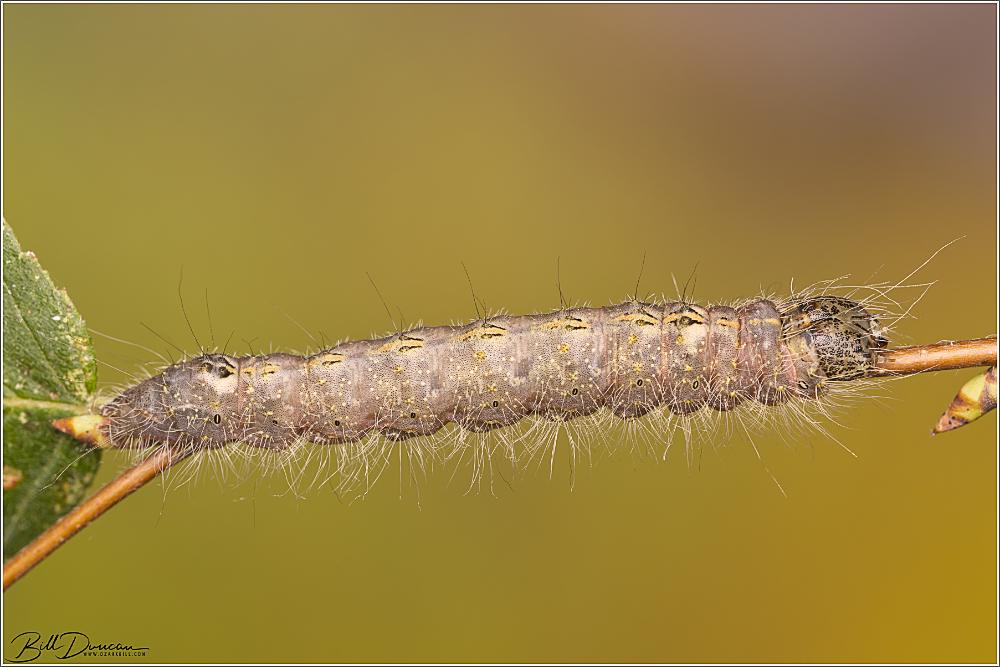
Distinct Quaker
Achatia distincta (Hübner, 1813) P-no. 932800, fam. Noctuidae
Host plant: Found on Carolina buckthorn (Frangula caroliniana)
Dates found: 24 May, 2026
Locations found: Tyson Research Center, St. Louis County, MO
Notes: This common noctuid larvae can be found in April and May. This is a univoltine species, and the adults are early fliers. This species spends most of its life cycle in the cocoon.

2026 Caterpillar Season – The Betrothed

The Betrothed
Catocala innubens (Guenée, 1852) P-no. 930761, fam. Erebidae
Host plant: honey locust (Gleditsia triacanthos)
Dates found: 6 June, 2026
Locations found: Tyson Research Center, St. Louis County, MO
Notes: With more than 60 species documented in Missouri, the Catocala are common moths in our state. Despite this fact, this was my first time finding a caterpillar in this genus. Special efforts are needed to find them. They are strictly nocturnal feeders, spending the daylight hours hidden in bark crevices or even climbing all the way down their host tree’s trunk to spend the day in the leaf litter or in nearby herbaceous vegetation. Early instars can be found by beating tree limbs. Later instars can be found by searching at night. A more advanced technique involves using burlap “traps” wrapped around tree trunks. When the caterpillars move up or down, they may stay in the burlap flaps allowing you to check for them during the day. C. innubens is a specialist on honey locust.