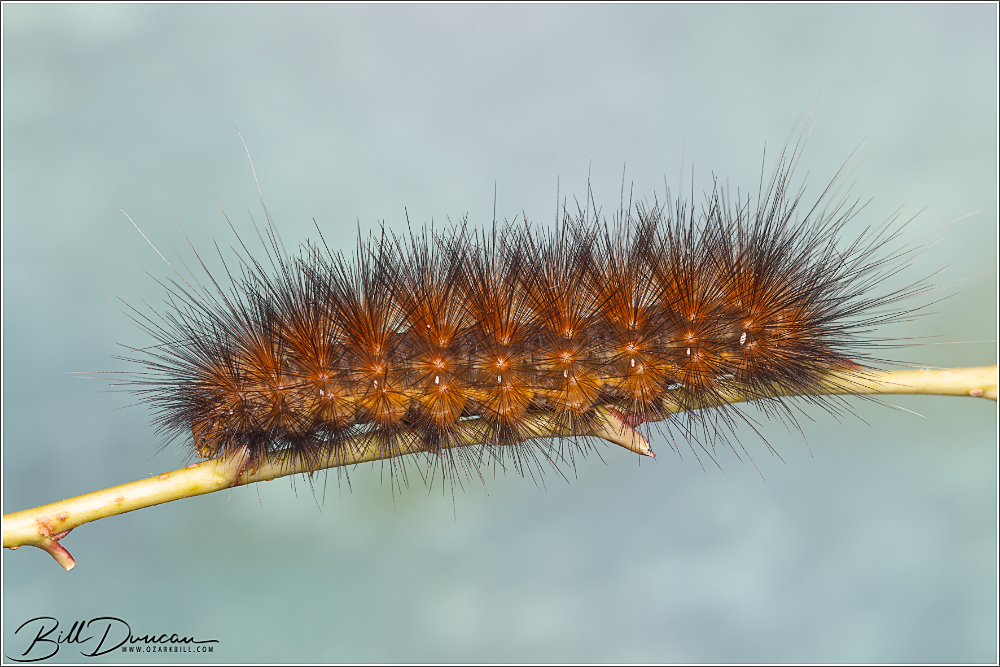
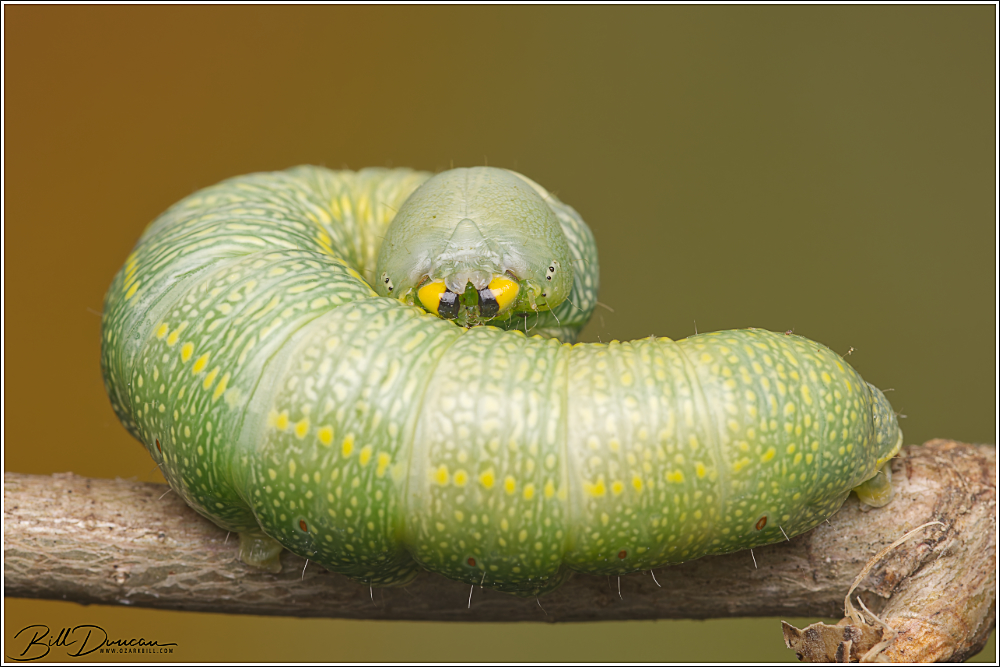
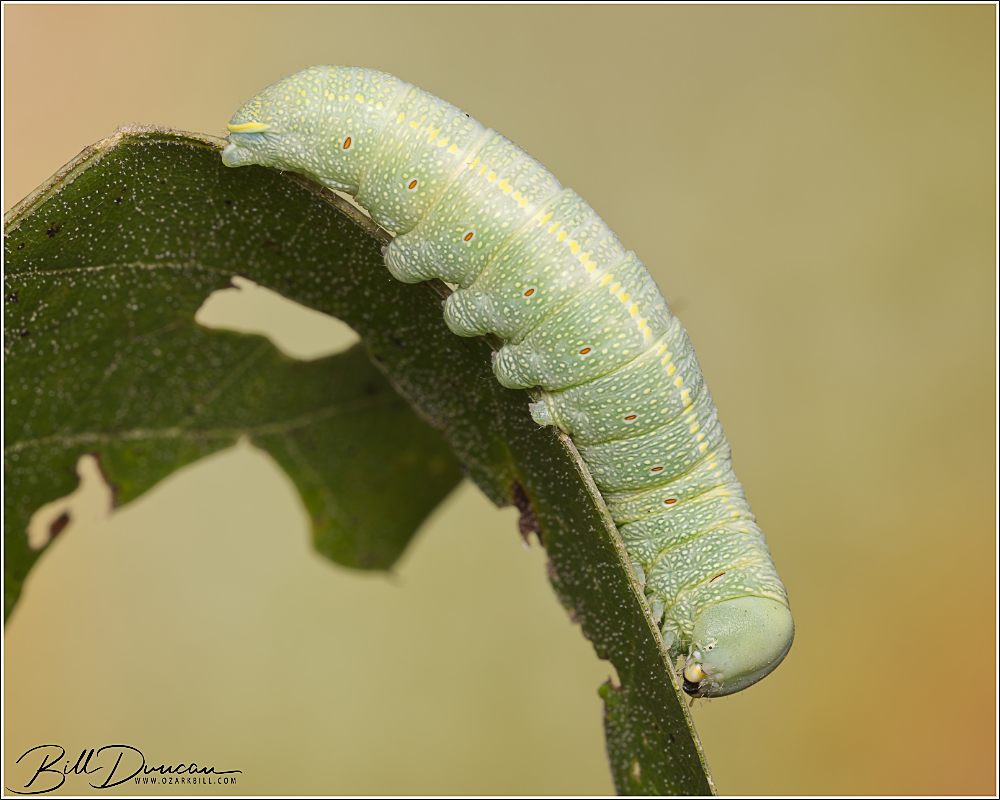
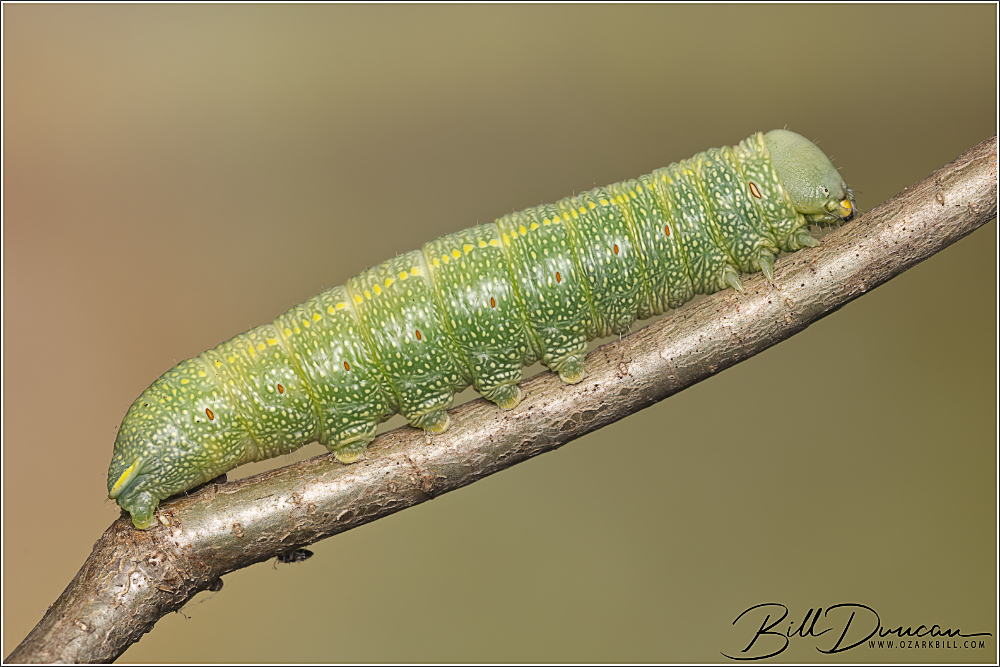
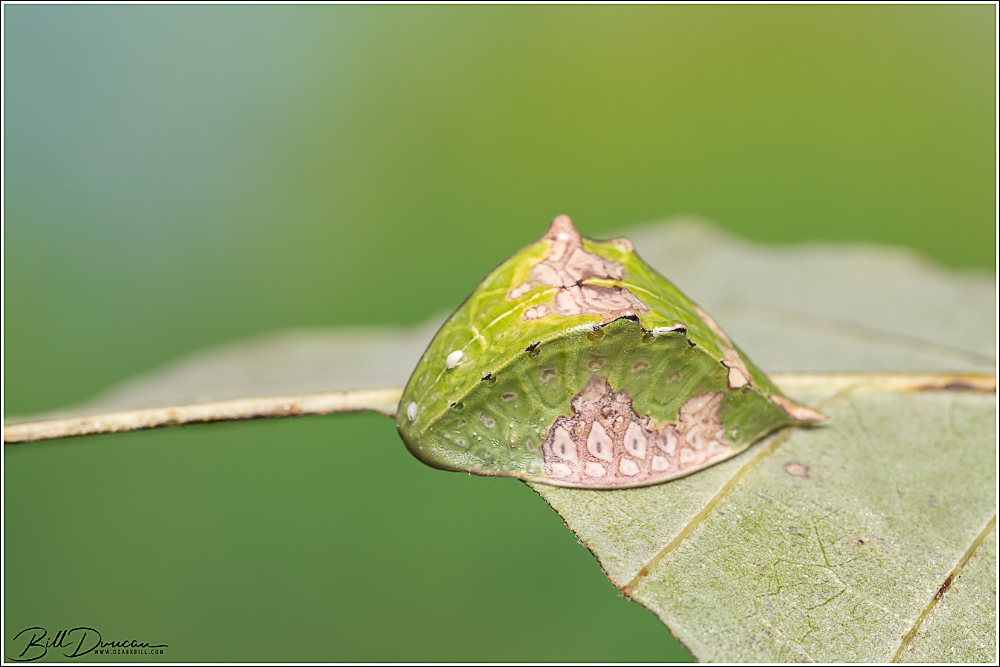
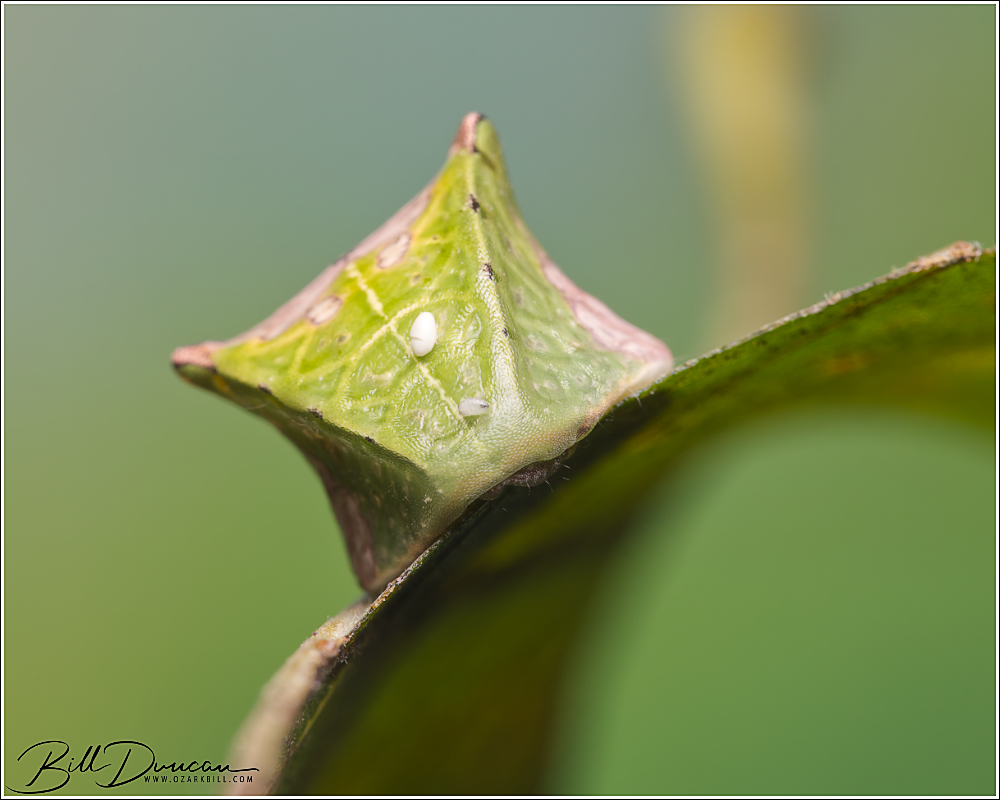
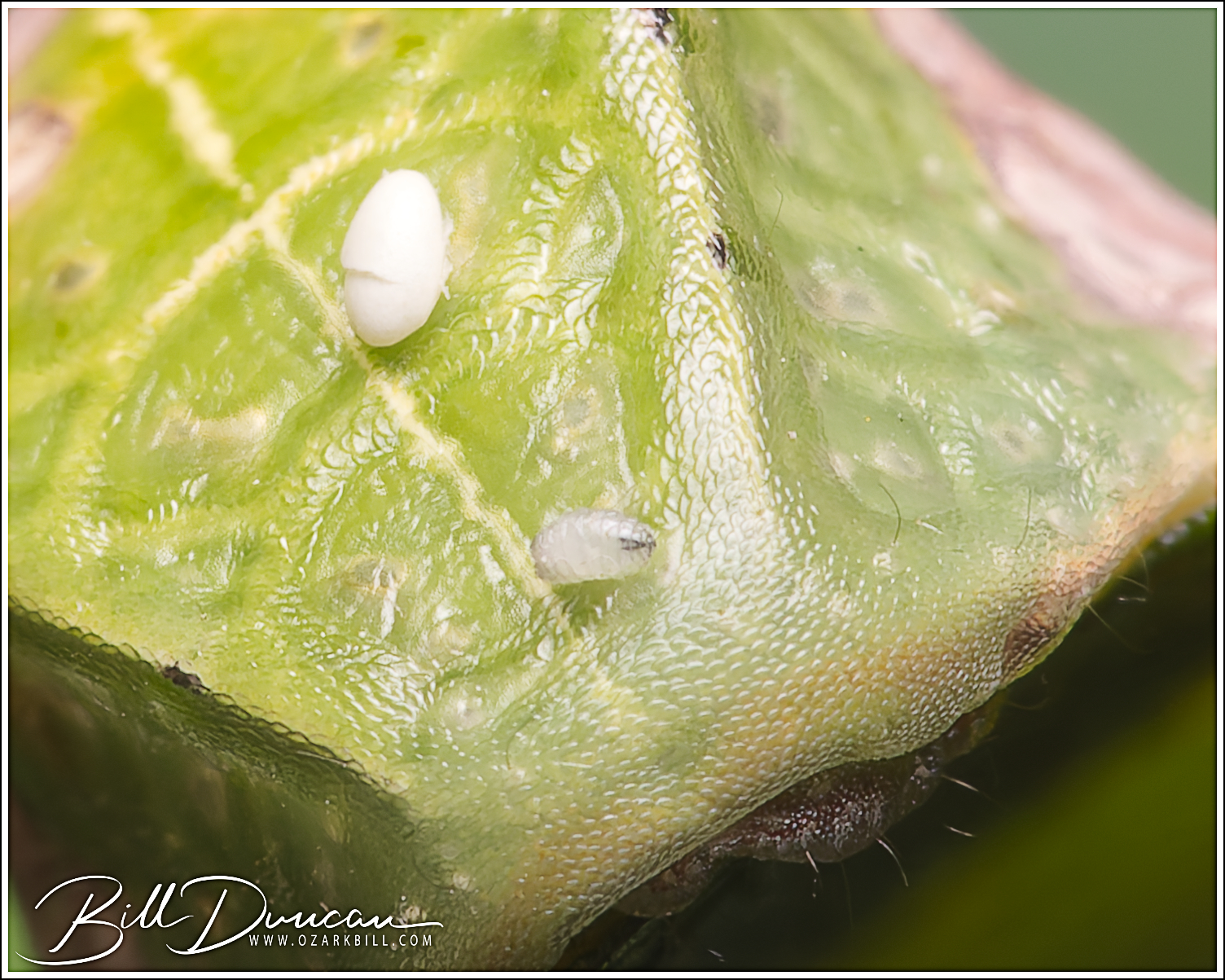
Spiny Oakworm Moth
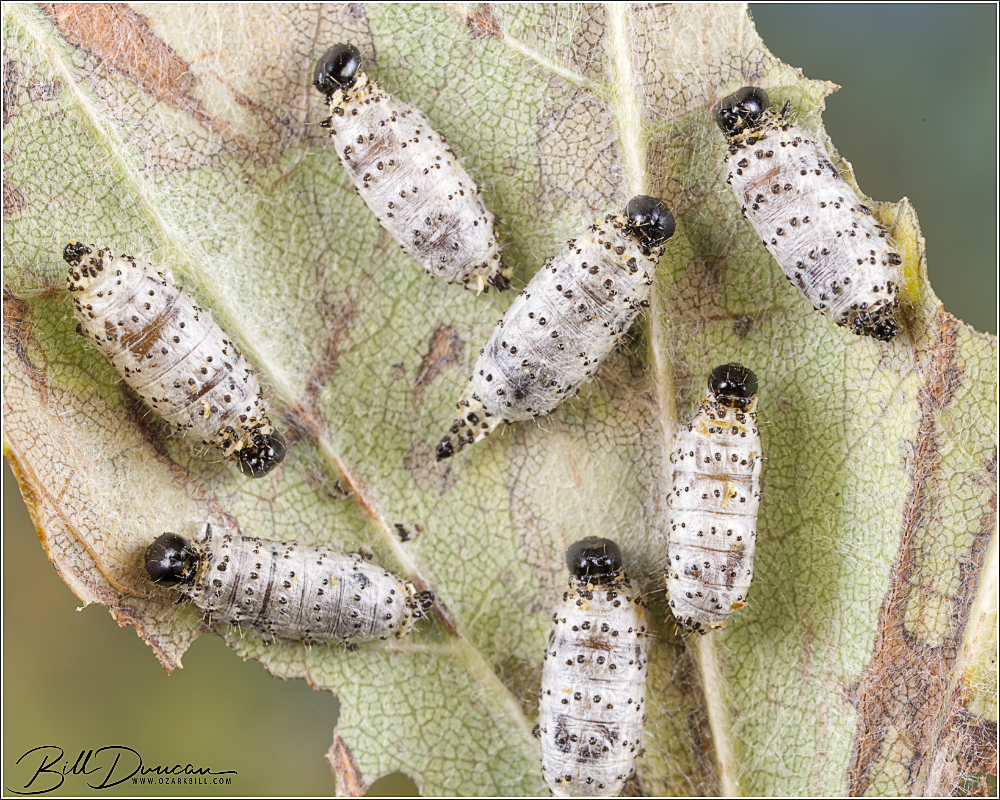
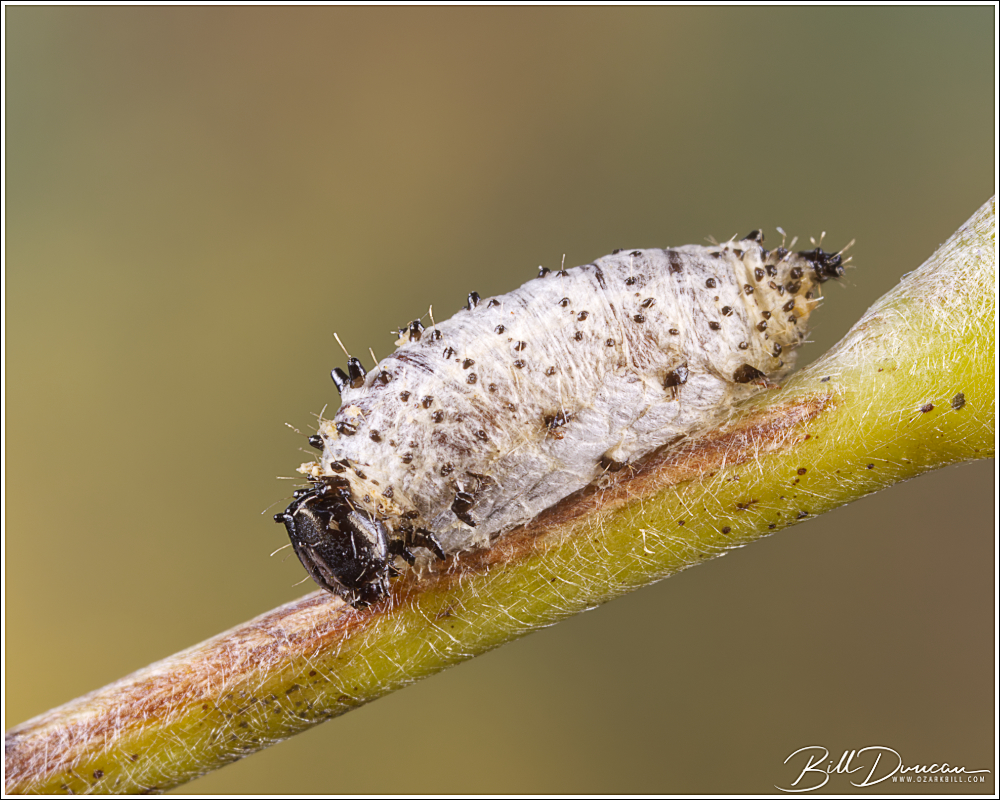
Anisota stigma fam. Saturniidae
Host plant: Found on post oak (Quercus stellata).
Dates found: 24, Aug, 2024
Locations Found: Schoolcraft Prairie, Washington County, MO
Notes: For a Saturn moth, this species is diminutive and overlooked but still quite stunning!
Tag: caterpillars
2024 Caterpillar Season – Hitched Arches
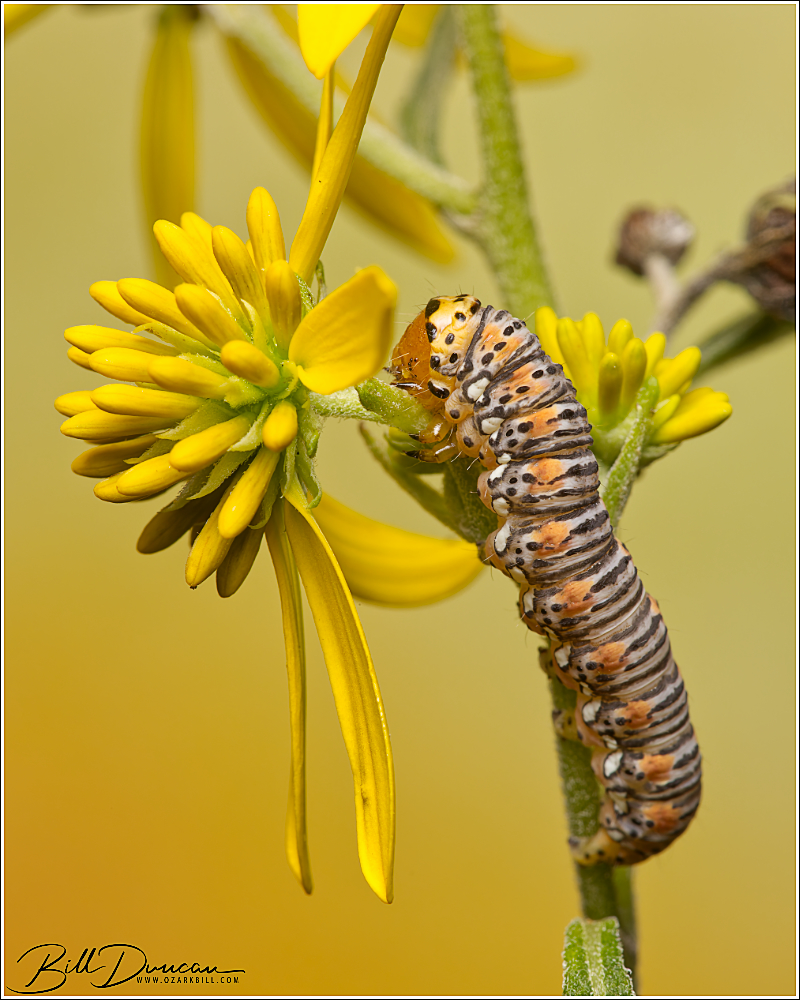
Hitched Arches
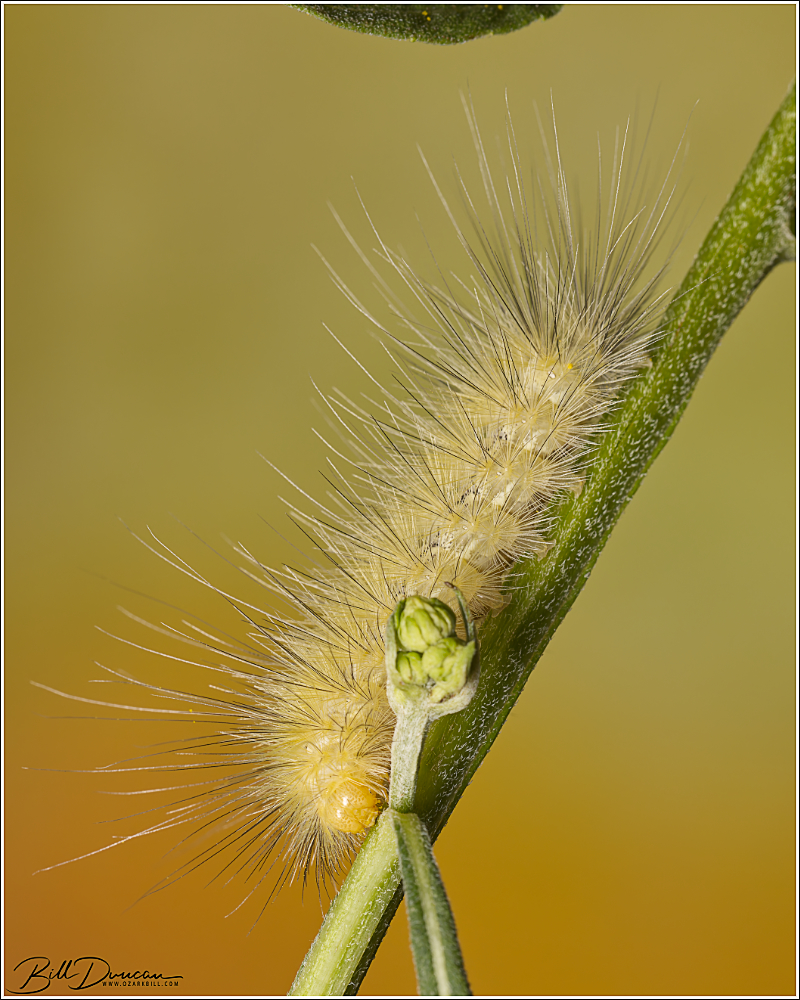
Melanchra adjuncta fam. Noctuidae
Host plant: Found on unrecorded herbaceous plant.
Dates found: 21, Sep, 2024
Locations Found: Meramec State Park, Franklin County, MO
Notes: Both larvae and adult forms are stunning. Sarah impressively found this cat walking along trail. Its positioning and camouflage, making it look like crinkled senescing vegetation, was so effective it took me quite a while to find it even with Sarah pointing directly at it.
2024 Caterpillar Season – Red-fringed Emerald
Red-fringed Emerald
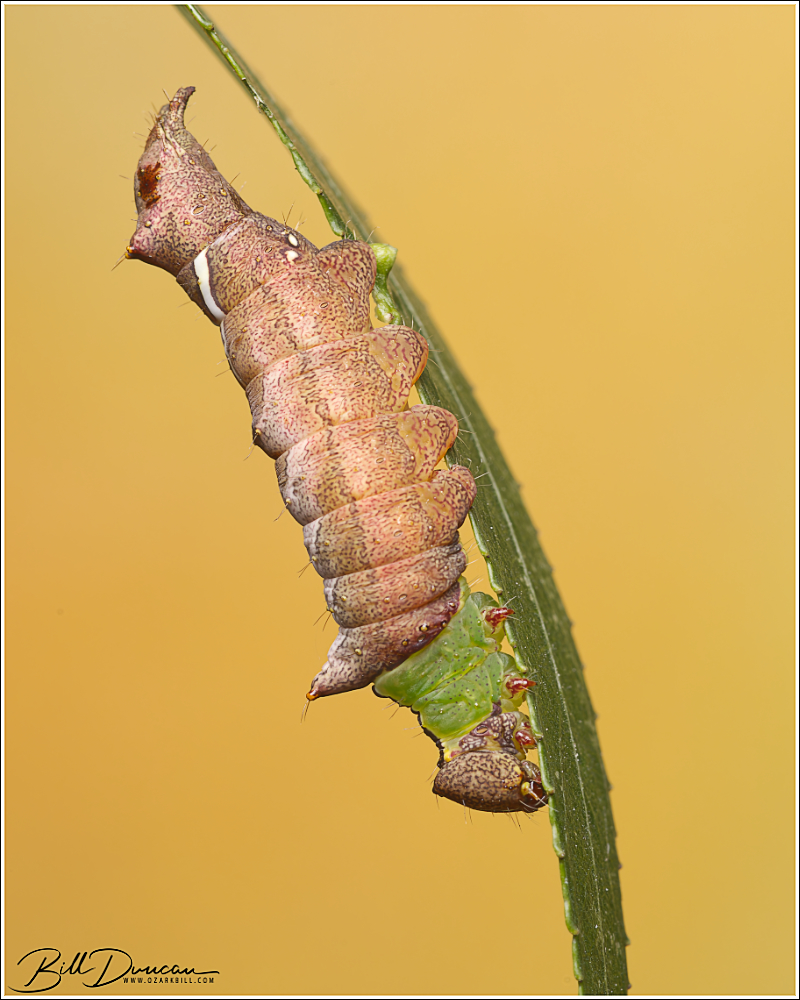
Nemoria bistriaria fam. Geometridae
Host plant: Found on white oak (Quercus alba)
Date found: 7, Sep, 2024
Locations Found: Kaintuck Hollow, Phelps County, MO
Notes: Although some reports suggest other host plants are used, it is likely that this species specializes on white oak.


A Beautiful Ichneumonid
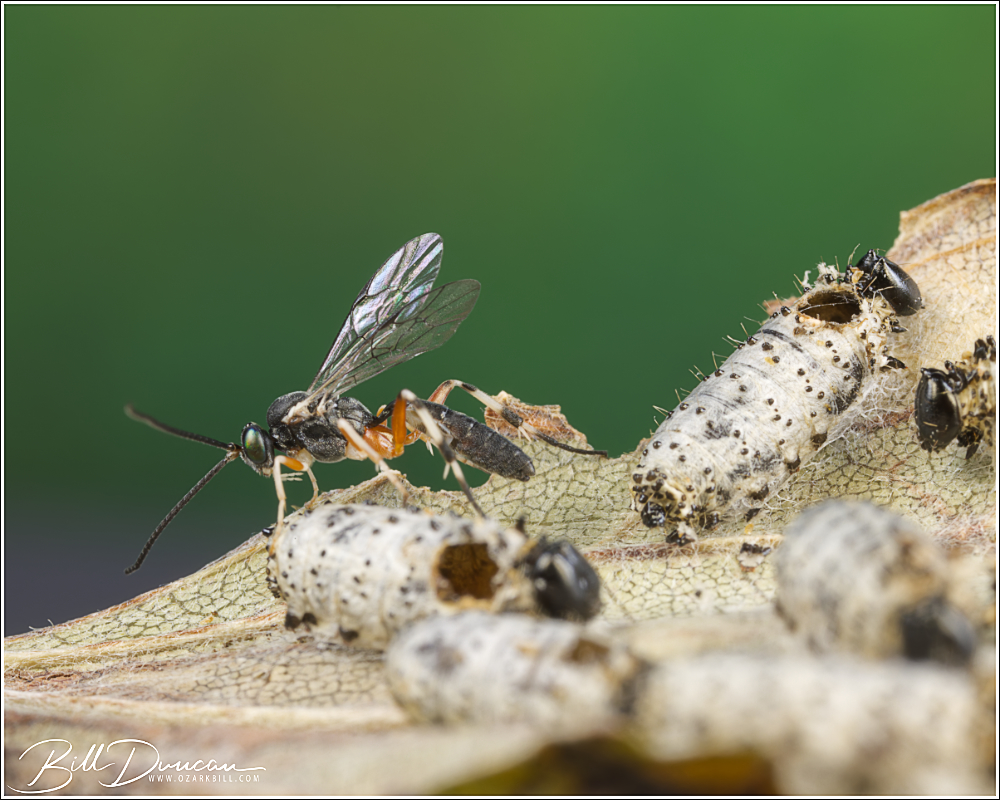
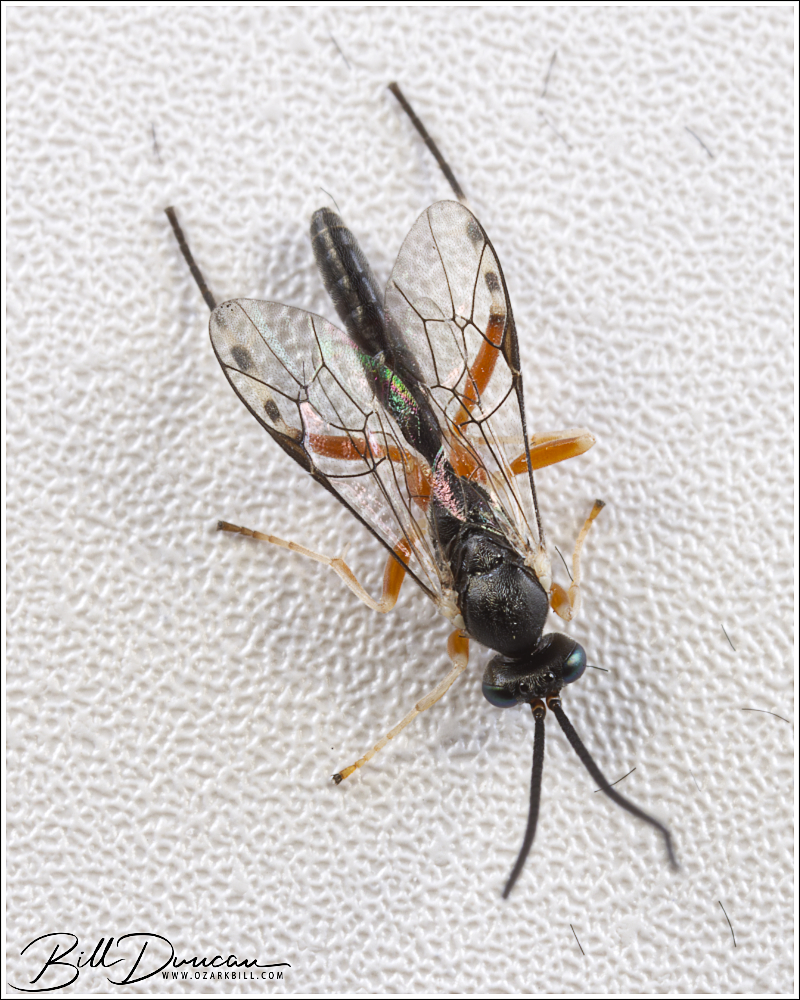
This post is related to the rearing work I shared previously of the Orgyia leucostigma (white-marked tussock moth). During a caterpillar hunting outing with Sarah, I found what was obviously a cocoon of a tussock moth. I can’t say for certain it belonged to O. leucostigma, but it is likely. So, I photographed it in the field and brought it home, keeping it separate from the O. leucostigma cocoons that I was rearing that were collected from my yard. As time went on and the other cocoons I was rearing began producing moths, I figured something was going to be different with the one pictured below.

Checking the container on 6-October, I found this beautiful Orgichneumon calcatorius, an Ichneumonid wasp with a Holarctic range that is a parasitoid of moths in the Orgyia and Dasychira genera. After taking a few photos, I let it go in the backyard. After emerging, females of the species mate and then overwinter as adults utilizing crevices in tree bark. In the spring and summer of the following year, they look for new caterpillars to insert their eggs.
2024 Caterpillar Season – Virginia Creeper Sphinx Moth
Virginia Creeper Sphinx Moth
Darapsa myron fam. Sphingidae
Host plant: Found on wild grape (Vitis sp.)
Date found: 13, Sep, 2024
Locations Found: River’s Edge Park, St. Louis County, MO
Notes: Other common name is hog sphinx.


2024 Caterpillar Season – Variable Oakleaf Caterpillar
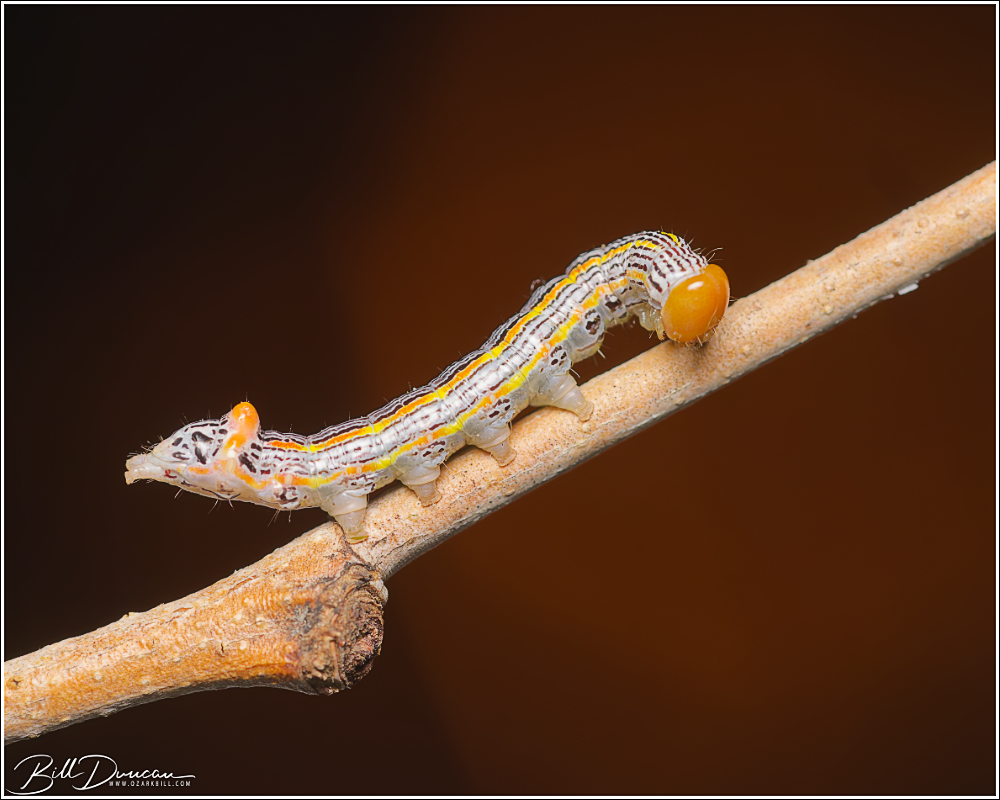
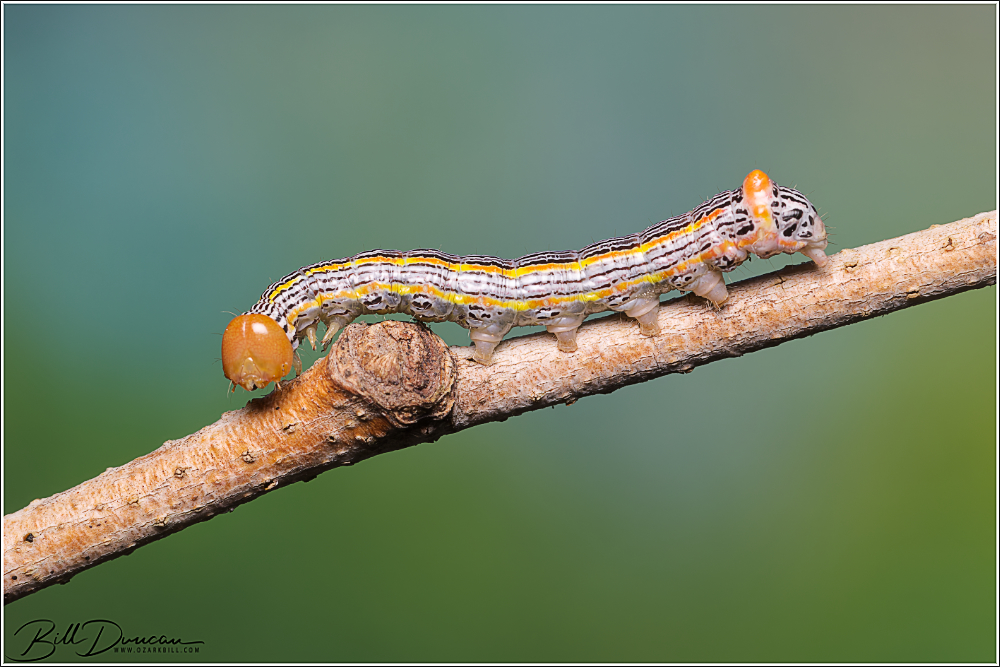
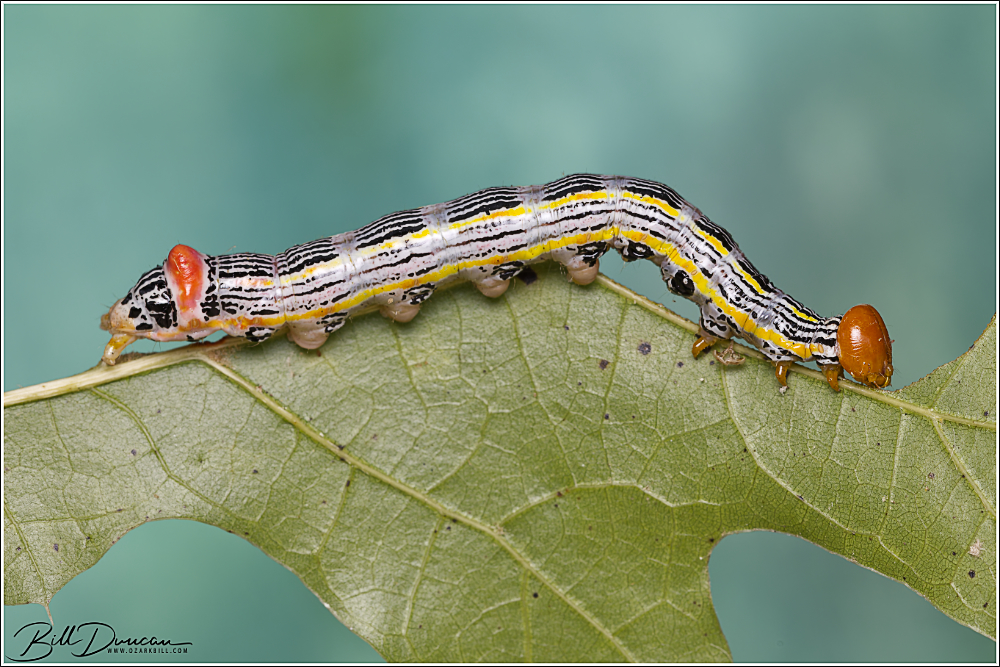
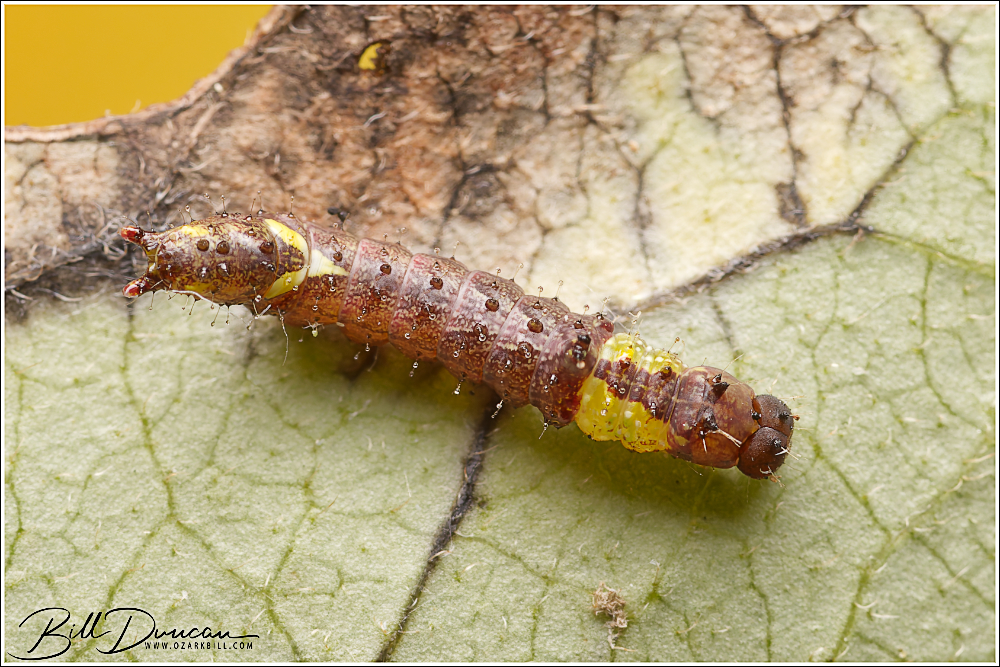
Variable Oakleaf Caterpillar
Lochmaeus manteo and L. bilineata fam. Notodontidae
Host plant: Found on oaks (Quercus sp.)
Date found: Multiple dates in August – September, 2024
Locations Found: Hawn State Park, Ste. Genevieve County, MO; Onondaga Cave State Park, Crawford County, MO
Notes: Highly variable and larvae are apparently impossible to distinguish between the two species.
First, a glimpse of the variable patterns and colors of these cats.


The adult photographed at Schoolcraft Prairie in Washington County, MO in mid-August, 2024.
2024 Caterpillar Season – Walnut Sphinx Moth
For tonight’s caterpillar, I am featuring the Sphingidae family member, Amorpha juglandis – the walnut sphinx moth. This is the only species in the monotypic genus, Amorpha, a name that is shared with a plant genus that holds our leadplant (Amorpha canescens) and false indigo bush (A. fruticosa). This name comes from the Greek – amorphos- meaning formless or mishappen. This describes the lack of wing and keel petals of the corolla of these beans. For the moth, I am not completely certain, but it may have to do with the unique shape and placement of the rear wings when this moth is at rest. This species is very easily identified in both larval and adult forms.
First up are a couple of early instar brood mates that I found on the same walnut tree in mid-July at Kaintuck Hollow in Phelps County, MO.


Next up is an older cat found at Schoolcraft Prairie in Washington County, MO in mid-August. Caterpillars of this species at this stage are infamous for its defensive displays when harassed, including emitting a high-pitched squeak, thrashing and biting. Unfortunately, this one was pretty chill, so I could not show this off to the folks I was with.
Finally, on the same night we photographed the caterpillar pictured immediately above, an adult male moth was attracted to our blacklight setup. This was my first looks at the adult form of this species.
2024 Caterpillar Season – Hackberry Emperor
For the past month or so I’ve been hitting the trails hard, trying my best to find caterpillars in the early to mid season. As expected, this has been tougher than the late season for me. My success rate in finding interesting and new species has been lower than I would like, but good thing the one strength I feel I truly possess in this life is pertinacity.
Usually by the late season cat hunts, hackberry trees (Celtis sp.) have all but dropped their leaves or look as though they should. Once I started beating branches of hackberries this summer, I found that the two species of Asterocampa (Nymphalidae) found in Missouri were quite easily found. Not only are the hackberry butterfly adults beautiful, but I find the caterpillars to be extremely cute as I hope you can agree with the photos below of the hackberry emperor (Asterocampa celtis).


Caterpillars of 2023 – The Rest
Today I’m finishing up with the remaining cats of late summer and autumn hunting trips of 2023 from an assortment of families.
Walnut Sphinx Moth (Amorpha juglandis) Sphingidae, Hodges#7287
These are among my favorites. Not only are they quite handsome when viewed up close, but they are one of the few caterpillars with a voice! Be prepared if you handle or otherwise disturb them; they will let out a surprising squeak when they feel threatened.
Curve-lined Angle (Diagrammia continuata) Geometridae, Hodges#6362
Casey and I observed that the juniper hairstreaks (Callophrys gryneus) had a bumper year this year while hiking in glades early in the season. We thought this might be the year to finally find the fantastic larvae of this species. We spent several hours beat-sheeting the red cedars in these areas in late summer and early fall. No luck in finding that species, but we did find another inconspicuous cat that uses this plant as its host. You can probably see that, like the hairstreak, the caterpillars of this moth species would be next to impossible to find without the use of a beat-sheet.
Undescribed Flower Moth (Schinia nr-jaguarina) Noctuidae, Hodges#11132.01
I shared photos of this yet to be described species before. These are photos of the cats we found at a new location, Horn’s Prairie Grove LWR, in central Illinois.


Red-lined Panopoda (Panopoda rufimargo) Erebidae, Hodges#8587
An interesting cat we found while beet-sheeting a hickory thicket on a friend’s property in St. Francois County.
Pipevine Swallowtail (Battus philenor) Papilionoidea
Conspicuous and distasteful due to the absorbed secondary chemicals of their pipevine host, it seems like we always find these guys in low-light situations, making the use of supplemental light a necessity.
Giant Swallowtail (Papilio cresphontes) Papilionoidea
My favorite swallowtail species. It was a real treat finding this final instar cat back in September.


Caterpillars of 2023 – The Notodontidae
Today I am featuring the more interesting larvae we found of the Notodontidae Family, commonly known as the prominent moths. This is a widely distributed and diverse family with close to 4,000 species described worldwide. Hosts for this family are mostly woody plants and we often find these feeding on oaks and hickories.
Variable Oakleaf Caterpillar (Lochmaeus manteo) Notodontidae, Hodges#7998
Finding a lot more than I decided to photograph, this aptly-named species feeds primarily on oaks (Quercus sp.) and is highly variable in coloration and pattern. This is a species you may get tired of finding when focusing on oaks during your searches.


Mottled Prominent (Macrurocampa marthesia) Notodontidae, Hodges#7975
We found a few of these guys this year and I find these to be very handsome little cats.


Heterocampa pulverea, Notodontidae, Hodges#7990.1
Until recently, this was a pretty large genus, containing close to 50 species. A couple of years ago, armed with molecular data, this genus was split and now contains 18 species. This one was found on a WGNSS group outing at Pickle Spring Conservation Area in early September.
Orange-banded Prominent (Litodonta hydromeli) Notodontidae, Hodges#7968
We found this guy on another WGNSS outing while looking for the bumelia borer beetle (Plinthocoelium suaveolens). We did not find our target that day but I was thrilled to find this cat that previously I did not know existed. This is another specialist that only feeds on the gum bumelia (Sideroxylon lanuginosum).


Saddled Prominent (Cecrita guttivitta) Notodontidae, Hodges#7994
This is a very common species that feeds on oaks and until recently belonged in the genus Heterocampa.


White-streaked Prominent (Ianassa lignicolor) Notodontidae, Hodges#8017
Also known as the lace-capped caterpillar, this is one of many caterpillars in this family that hide in plain sight. You will almost always find these sitting on the section of leaf they have previously eaten, using their coloration and patterns to look like a diseased or senescent portion of the leaf. These can be quite tricky to find until you get the right search engine installed in your brain.
Red-washed Prominent (Oedemasia_semirufescens) Notodontidae, Hodges#8012
Although considered fairly common, this was the first year I was finally able to find one of these outstanding cats. This species is quite polyphagous, feeding on almost any native woody plants. One of the two we found this year was feeding on pawpaw (Asimina triloba).


Datana Caterpillars (Datana sp.) Notodontidae
Most notodontids are solitary. But certain groups, like these Datana are gregarious and can be found in large groups even in later instars.
Symmerista Prominents (Symmerista sp.) Notodontidae
Another gregarious taxa, the Symmerista are notoriously difficult to identify to species in both larval and adult phases.
White-dotted Prominent (Nadata gibbosa) Notodontidae, Hodges#7915
Perhaps the most common caterpillar we find on our hunting trips, the white-dotted prominent can be found in large numbers on oaks. We find these so often that I rarely even tell the others in the group when I find them. But here we find a common species in a not so common situation. We came across this one on its way to find its pupation spot that would likely be in the ground or leaf litter. You can tell this was the case by the reddish or maroon coloration. Many caterpillars will change to this type of coloration immediately before they begin the pre-pupal stage. Unfortunately for the caterpillar, some southern yellowjackets (Vespula squamosa) found it as well. We watched the drama unfold as the wasps continued to sting and bite at the poor creature that will not likely make it to adulthood.


Thanks for stopping by!
-OZB