"What a thousand acres of Silphiums looked like when they tickled the bellies of the buffalo is a question never again to be answered, and perhaps not even asked." -Aldo Leopold
Asimina Webworm Moth Omphalocera munroei fam. Pyralidae (Hodges#5627) Host plant(s): Found on pawpaw (Asimina triloba) Date(s) and location(s): 25 Aug, 2025 – Tyson Research Center, St. Louis County, MO Notes: This species builds leaf shelters typically found at the ends of pawpaw branches. Leaf shelters typically harbor multiple caterpillars that are attractive once removed.
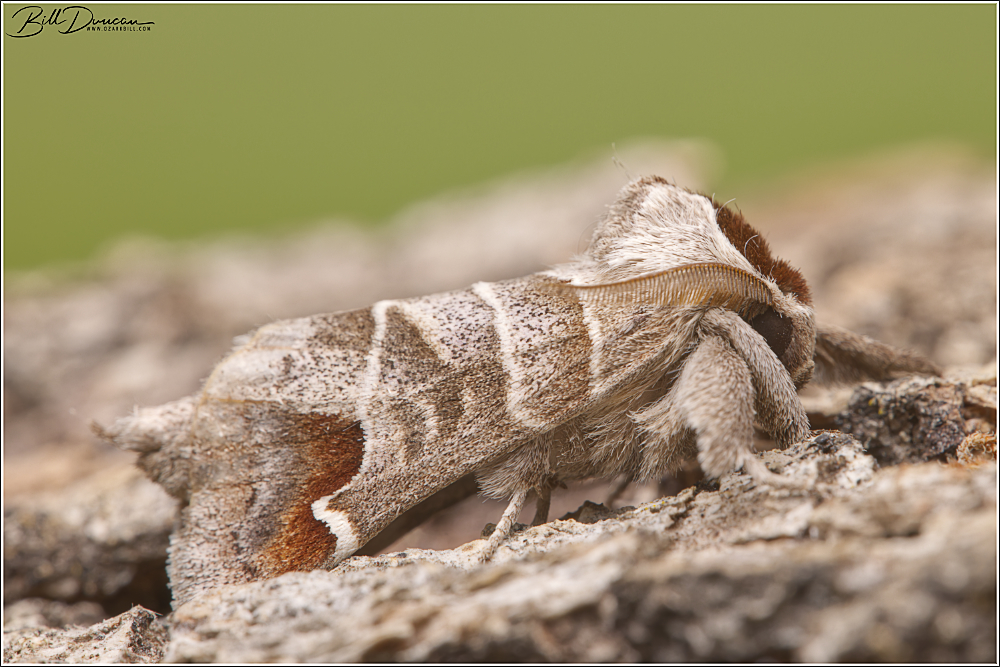
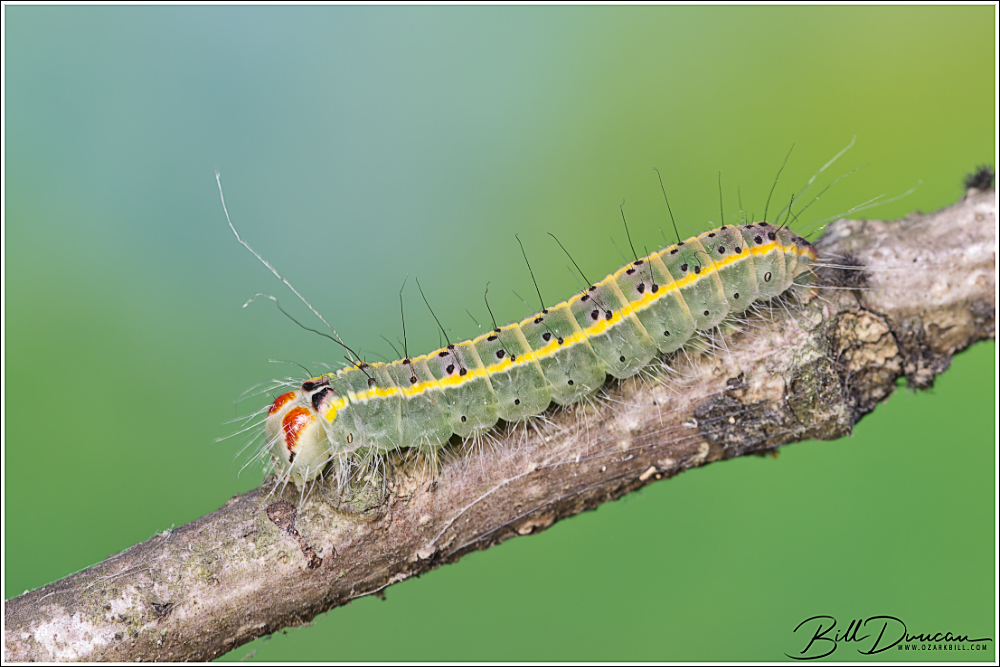
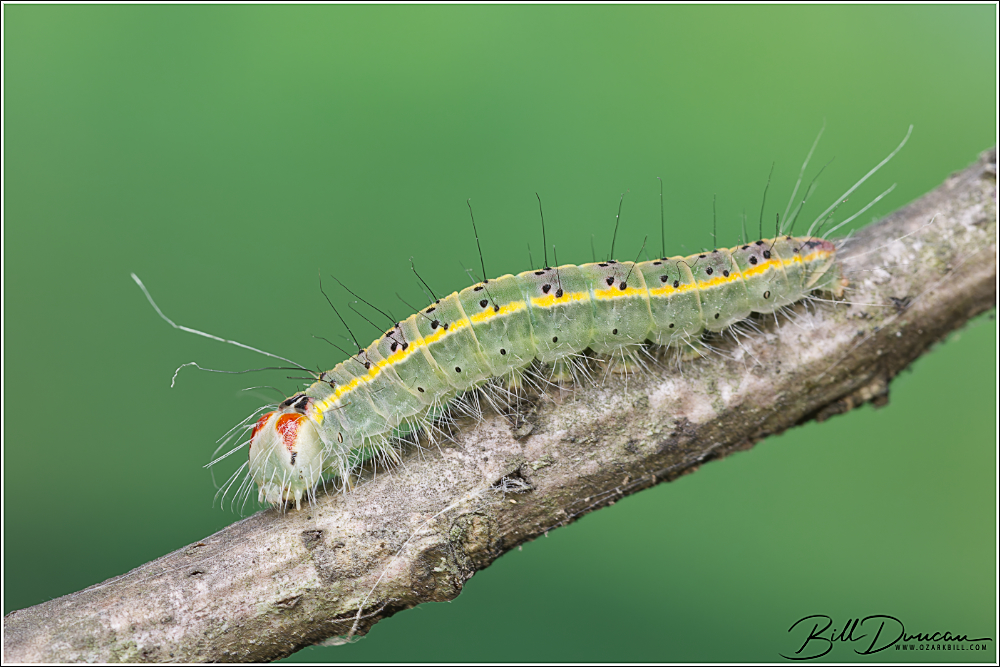
Sigmoid Prominent Clostera albosigma fam. Notodontidae (Hodges#7895) Host plant(s): Found on willow (Salix sp.) Date(s) and location(s): 16 Sep, 2025 – Johnson’s Shut-ins State Park, Reynolds County, MO Notes: The first of this species’ caterpillar I have seen, Pete and I found this while doing some beating on willows. This species also hosts on poplar. The sigmoid prominent can be found over most of the U.S. and Canada, but is most concentrated in the Northeastern and upper Midwest regions. At first glance, this individual looks pretty plain, but on closer inspection the colors and patterns are downright striking. From other photos I have seen, these caterpillars are quite variable in appearance.
Update: In March of 2026, the caterpillar pictured above successfully overwintered and pupated into the moth pictured below.
Connected Dagger Moth Acronicta connecta fam. Noctuidae (Hodges#9219) Host plant(s): willow (Salix sp.) Date(s) and location(s): 31 Aug, 2025 – Tyson Research Center, St. Louis County, MO Notes: A specialist on willows
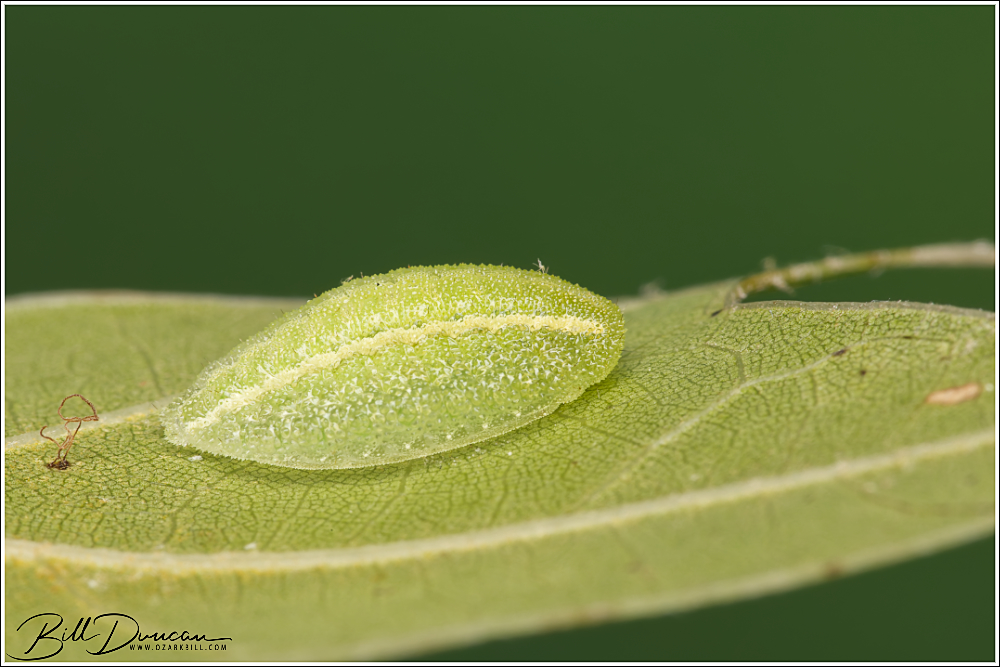
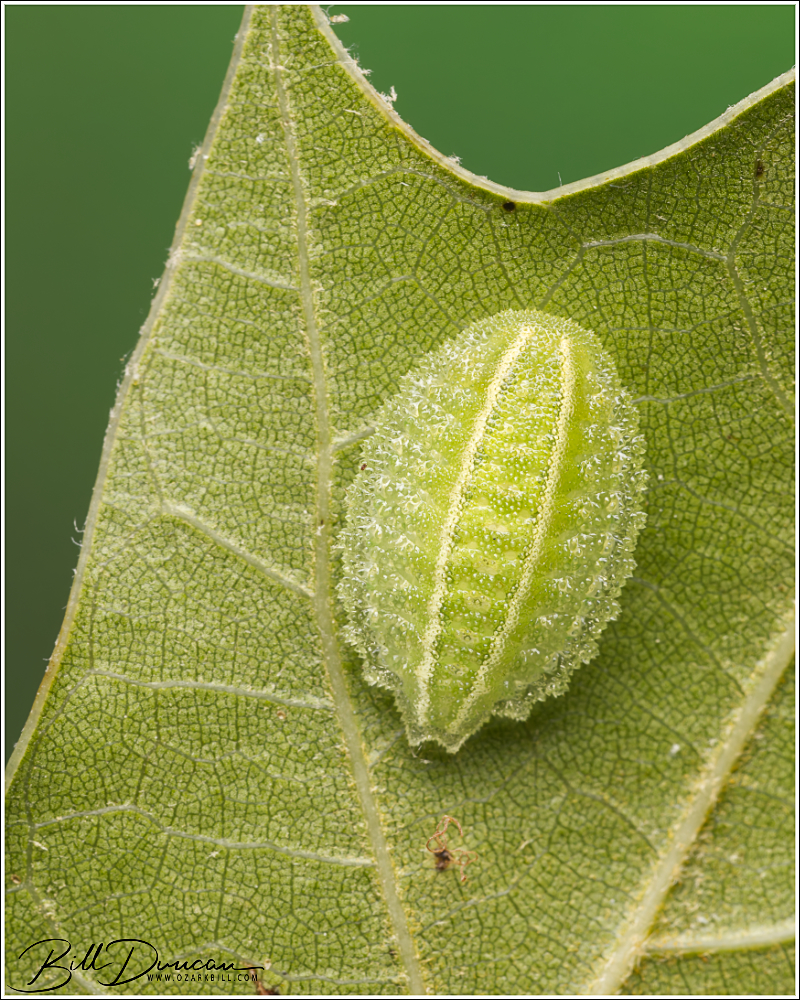
Nason’s Slug Moth Natada nasoni fam. Limacodidae (Hodges#4679) Host plant(s): northern red oak (Quercus rubra), hackberry (Celtis occidentalis), white oak (Quercus alba) Date(s) and location(s): 23, 31 Aug, 2025 – Tyson Research Center, St. Louis County, MO Notes: West of the Mississippi River, this species is rarely found north of the Missouri River.
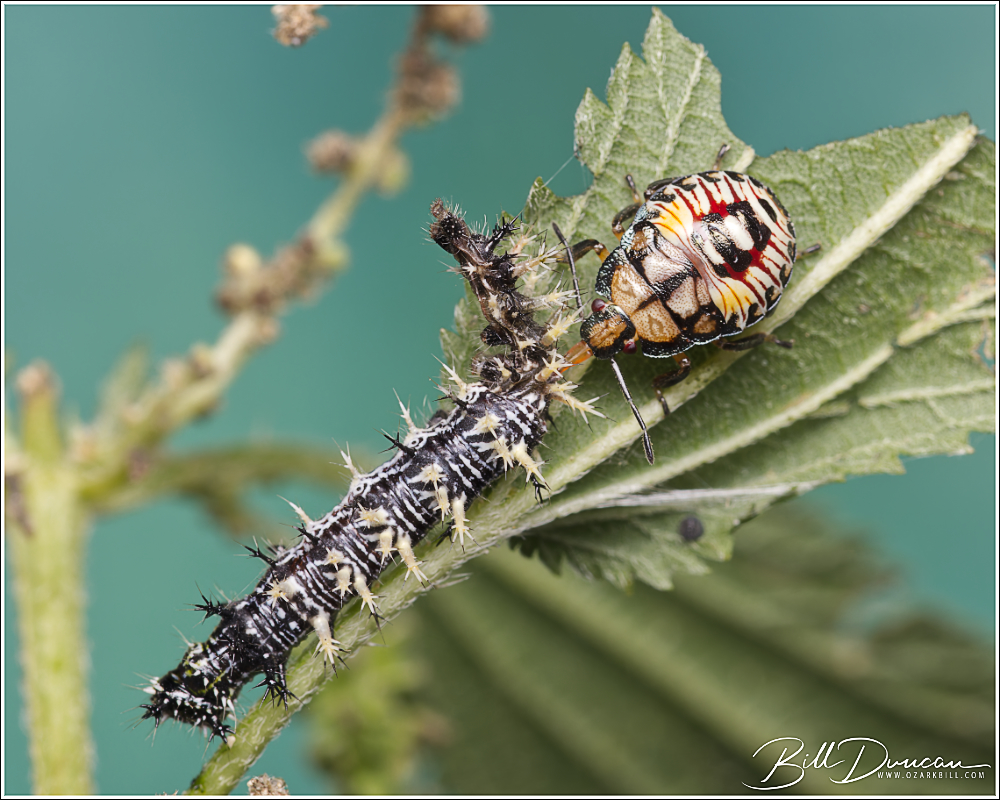
Comma Polygonia c-album fam. Nymphalidae (Hodges#4421) Host plant(s): nettle (Urtica sp.) Date(s) and location(s): 17 Sep, 2025 – Little Creve Coeur Ecological Area, St. Louis County, MO Notes: This poor caterpillar has fallen prey to one of its many enemies, in this case a nymph of Podisus maculiventris (spined soldier bug).
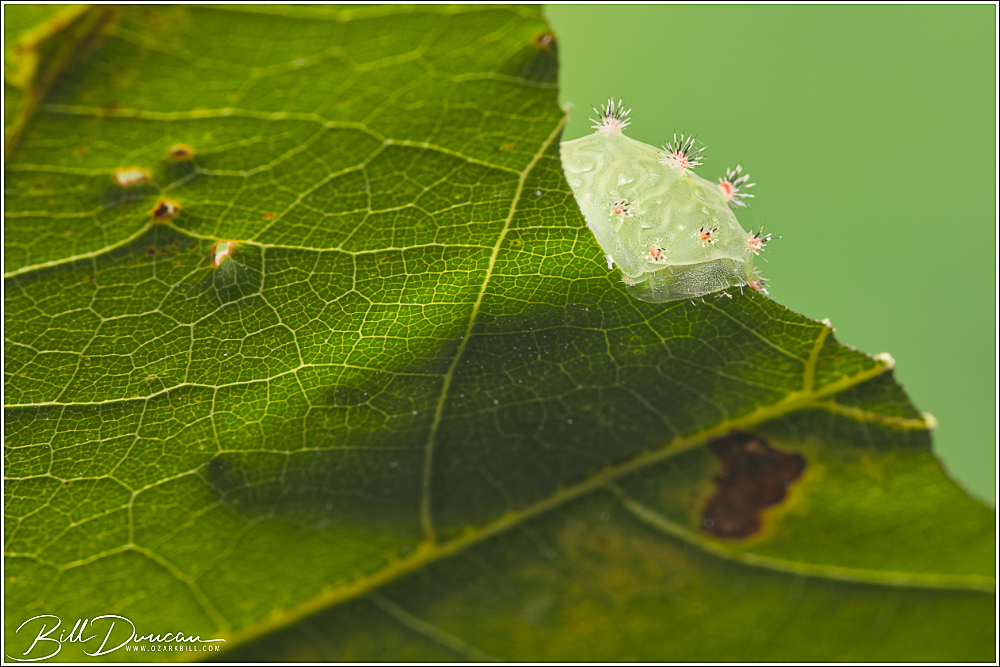
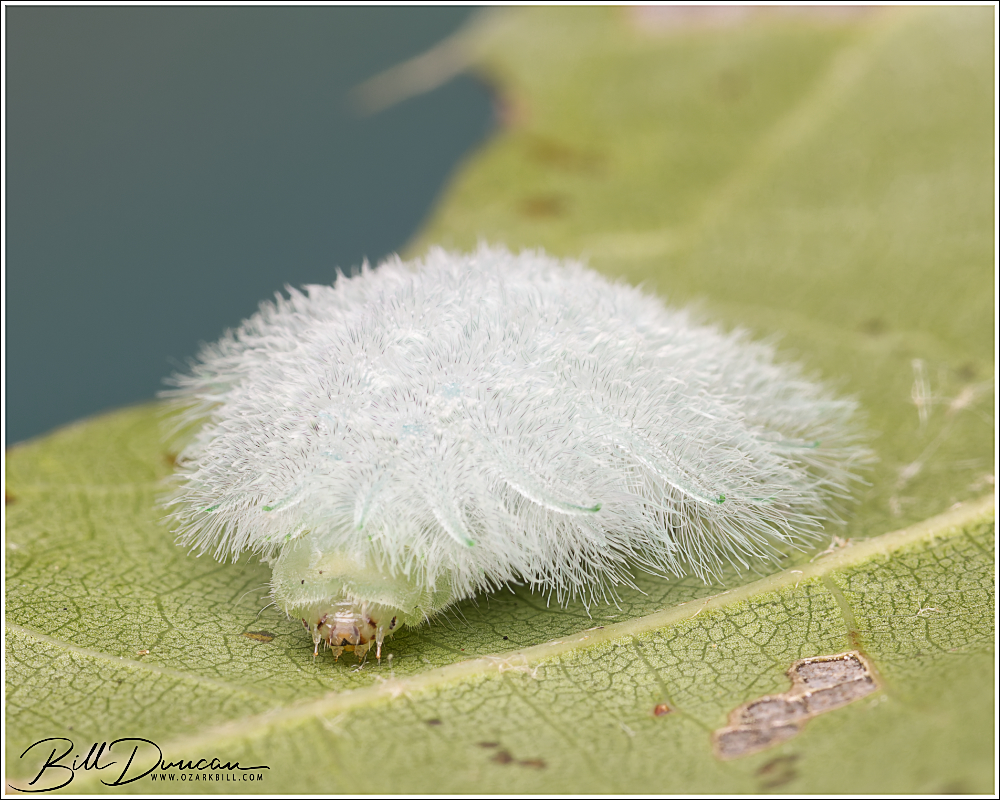
Spun Glass Slug Moth Isochaetes beutenmuelleri fam. Limacodidae (Hodges#4675) Host plant(s): northern red oak (Quercus rubra) Date(s) and location(s): 23 Aug, 2025 – Tyson Research Center, St. Louis County, MO Notes: The feathery appendages of this slug moth caterpillar do not contain urticating spines and do not sting. These dense and soft setae may act as a deterrence to potential wasp and fly parasitoids in blocking easy access to the body of the caterpillar in placing or injecting eggs.
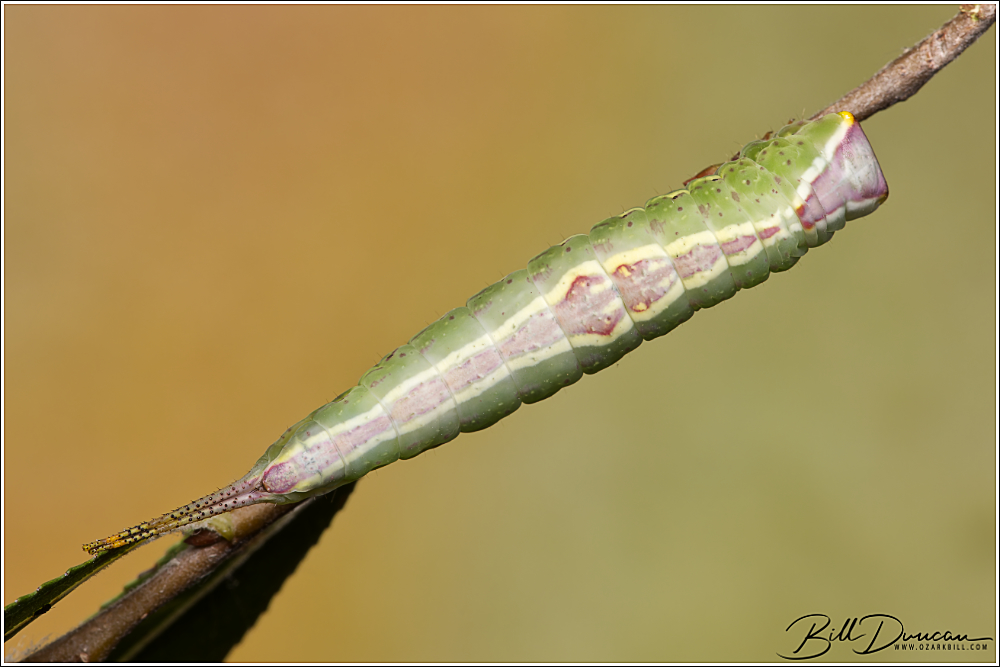
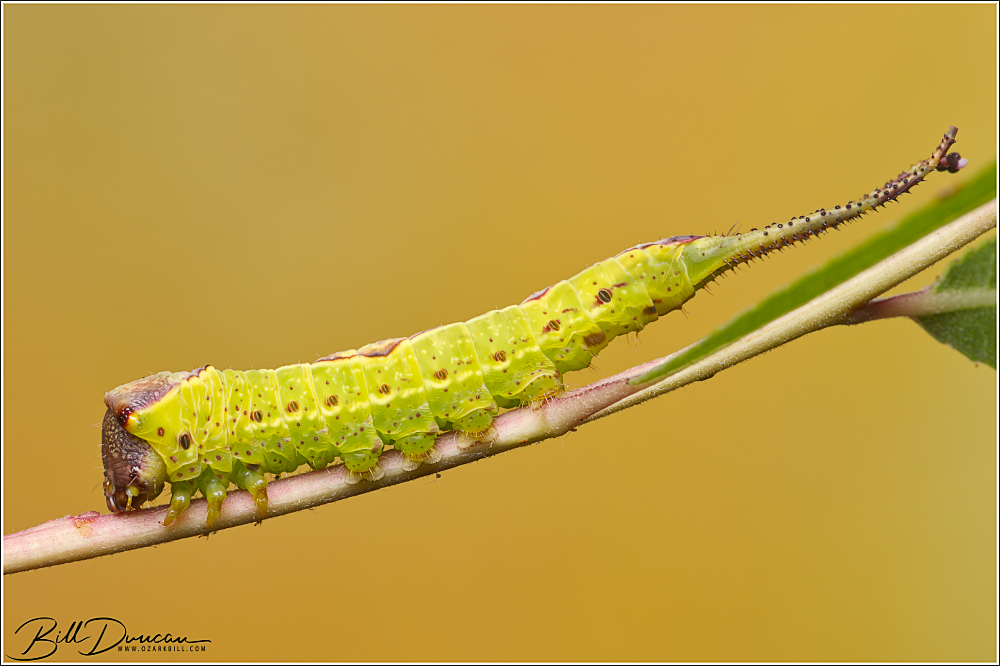
Gray Furcula Moth Furcula cinerea fam. Notodontidae (Hodges#7937) Host plant(s): willow (Salix sp.) Date(s) and location(s): 15 Sep, 2025 – Creve Coeur Lake Park, St. Louis County, MO Notes: The specific name, cinerea, is from the Latin “cinereus” (ashy), referring to the gray color of the forewings of the adult.
Ruddy Dagger Moth Acronicta rubricoma fam. Noctuidae (Hodges#9199) Host plant(s): hackberry (Celtis occidentalis) Date(s) and location(s): 07 Sep, 2025 – Tyson Research Center, St. Louis County, MO Notes: Also known to host on elm and sumac.
Shagreened Slug Moth Apoda biguttata fam. Limacodidae (Hodges#4669) Host plant(s): pin oak (Quercus palustris), red oak (Quercus sp.) Date(s) and location(s): 31 Aug, 2025 – Tyson Research Center, St. Louis County, MO; 19 Sep, 2025 – Don Robinson State Park, Jefferson County, MO Notes: Like most of the limacodids seem to be, this species can be found in a wide variety of habitats and utilize nearly any native woody plant for hosts.
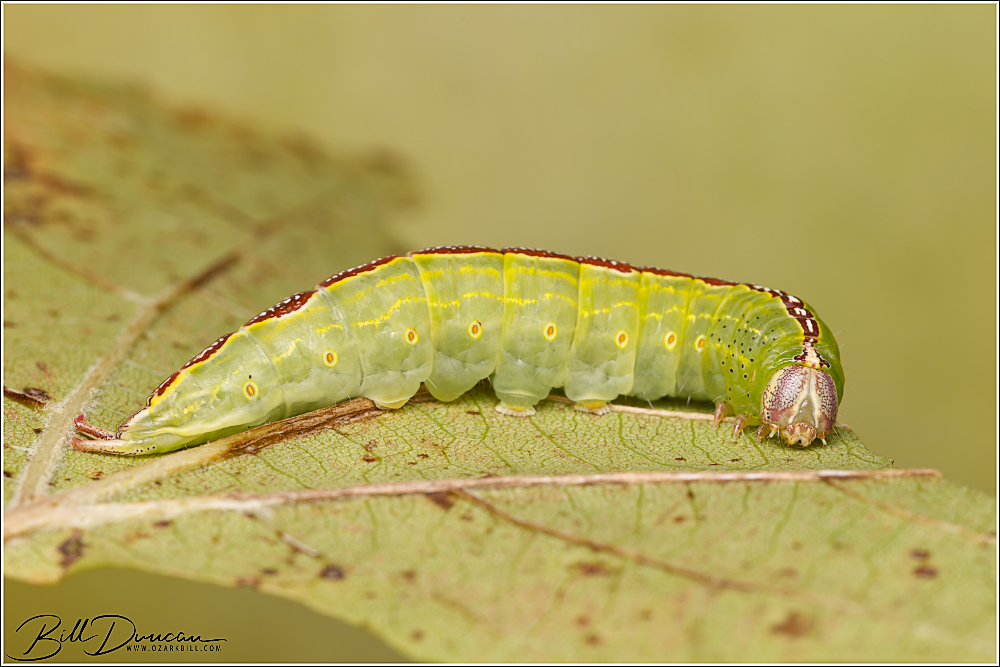
Drab Prominent Misogada unicolor fam. Notodontidae (Hodges#7974) Host plant(s): sycamore (Platanus occidentalis) Date(s) and location(s): 23, 30 Aug, 2025 – Tyson Research Center, St. Louis County, MO; 27 Sep, 2025 – Caney Mountain Conservation Area, Ozark County, MO Notes: The drab prominent is the only species in the monotypic genus Misogada. Named for the relatively plain looking adult, the caterpillar of this species in anything but drab. In addition to sycamore, this species also hosts on cottonwood.