2025 Caterpillar Season – The Hebrew

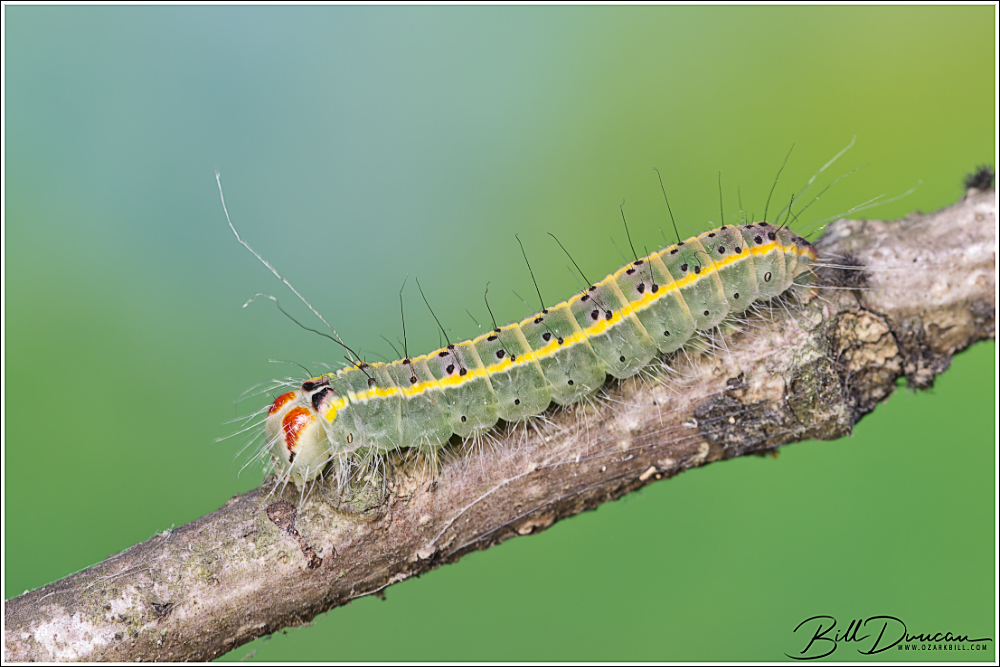
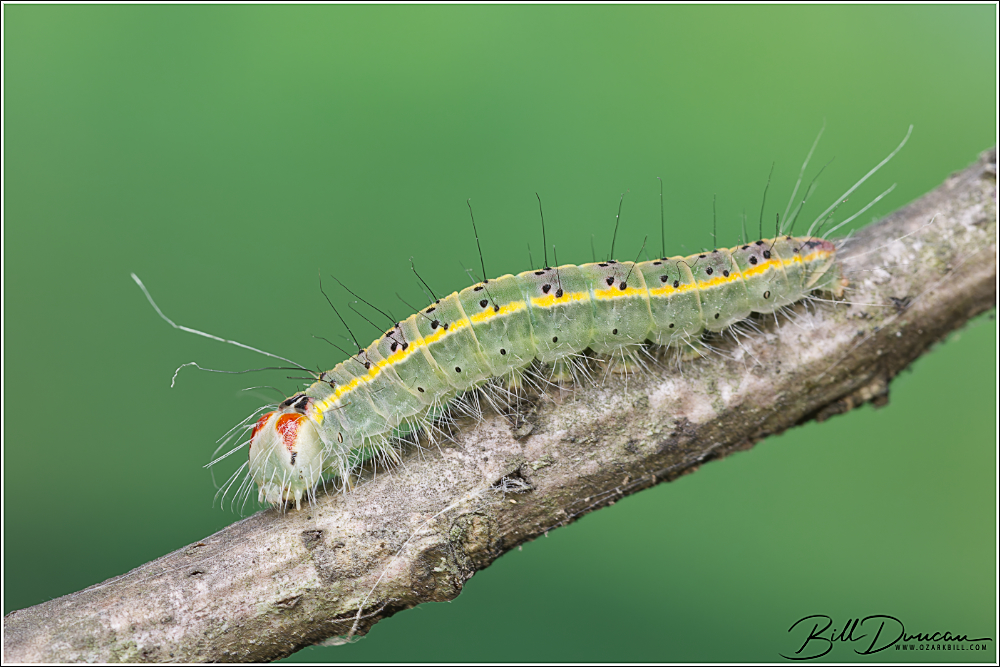
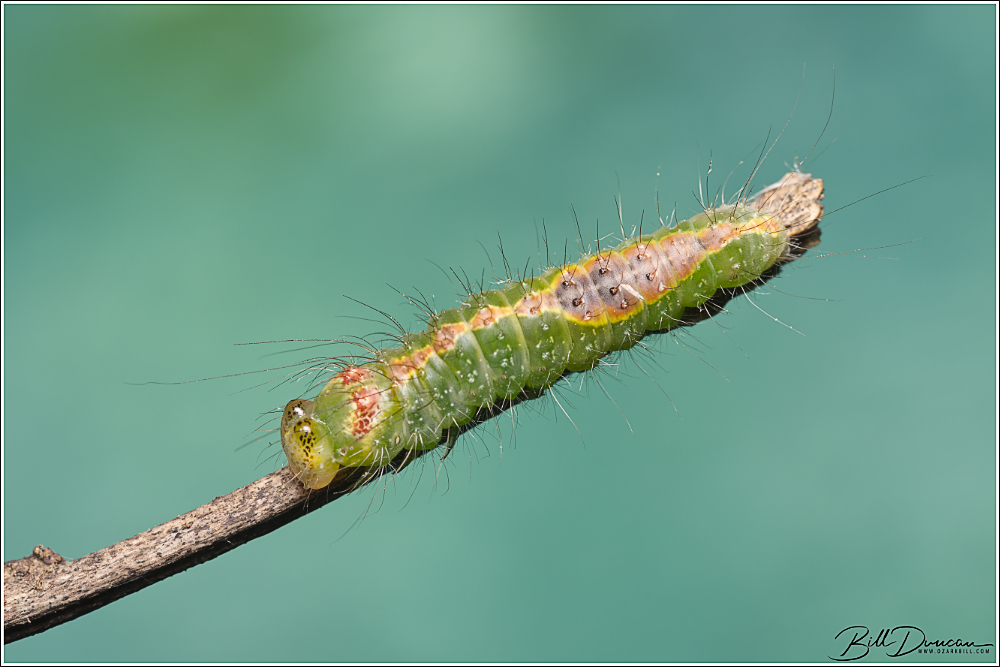
The Hebrew
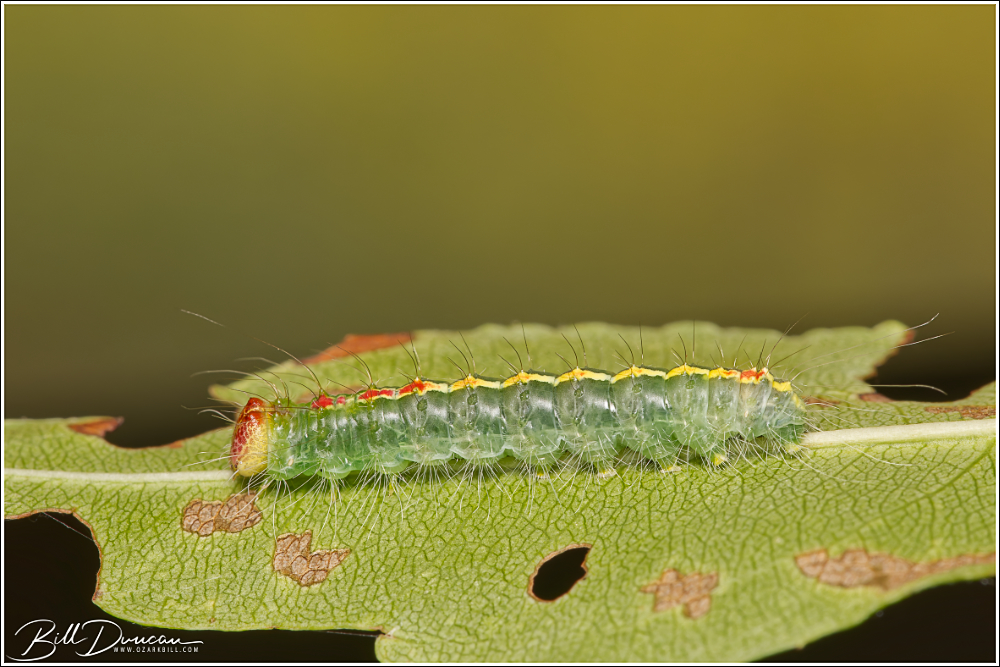
Polygrammate hebraeicum fam. Noctuidae (Hodges#9285)
Host plant: black gum (Nyssa sylvatica)
Date found: 16, Aug, 2025
Location found: Council Bluff Lake, Iron County, MO
Notes: Common and specific names come from apparent resemblance of adult moth’s pattern to Hebrew characters. This was found during the WGNSS joint Entomology and Nature Photography Groups’ outing to Council Bluff Lake.
2025 Caterpillar Season – Radcliffe’s Dagger

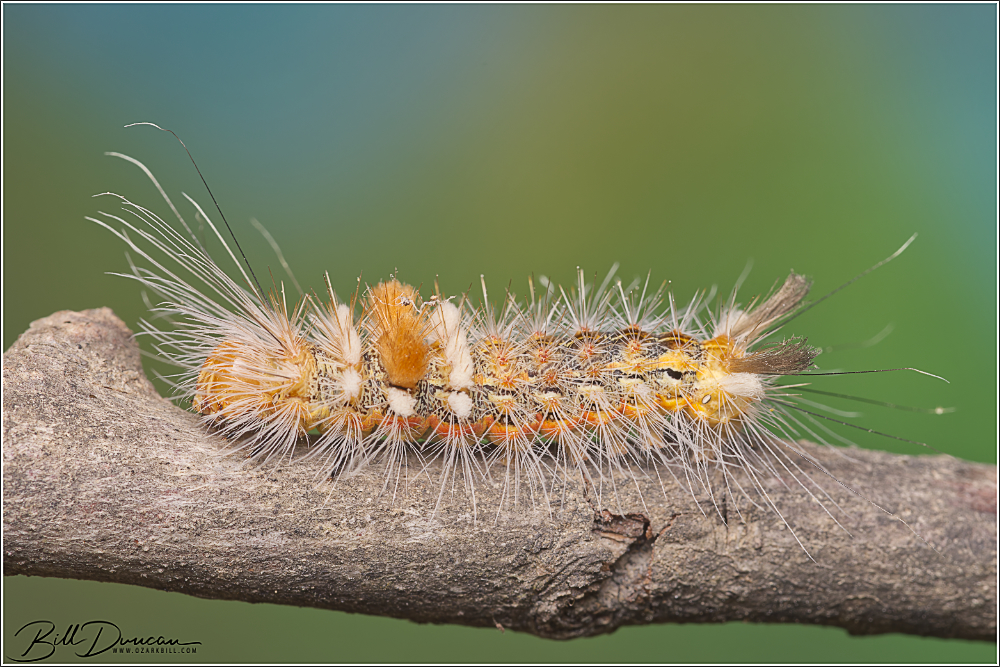
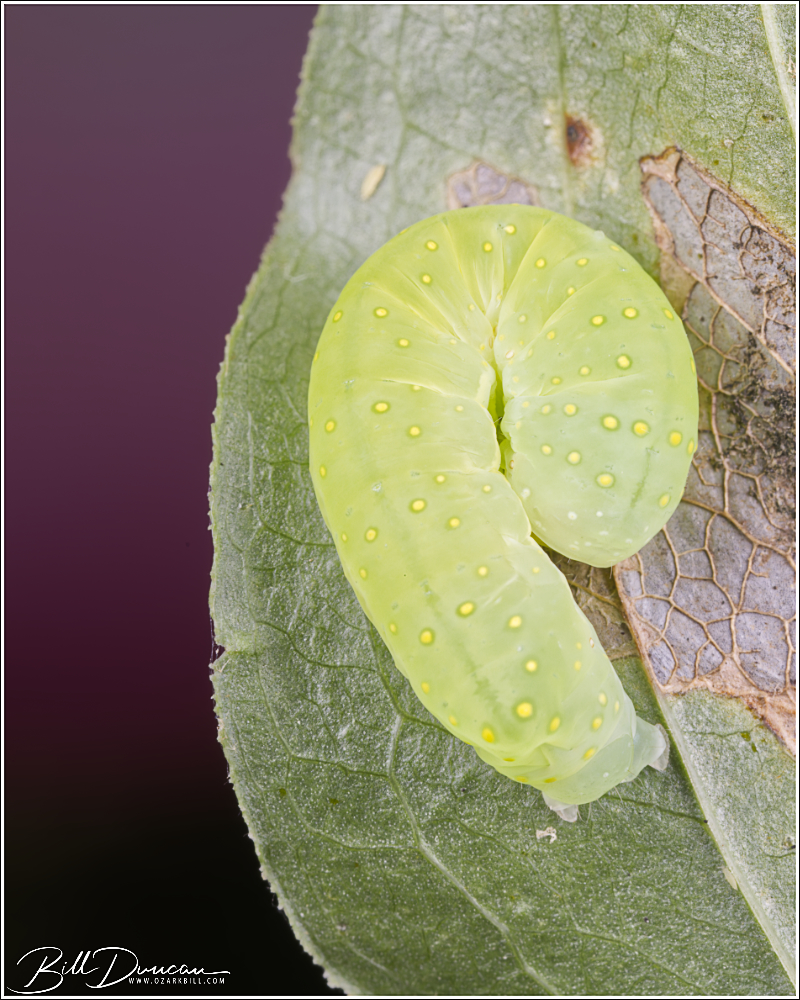
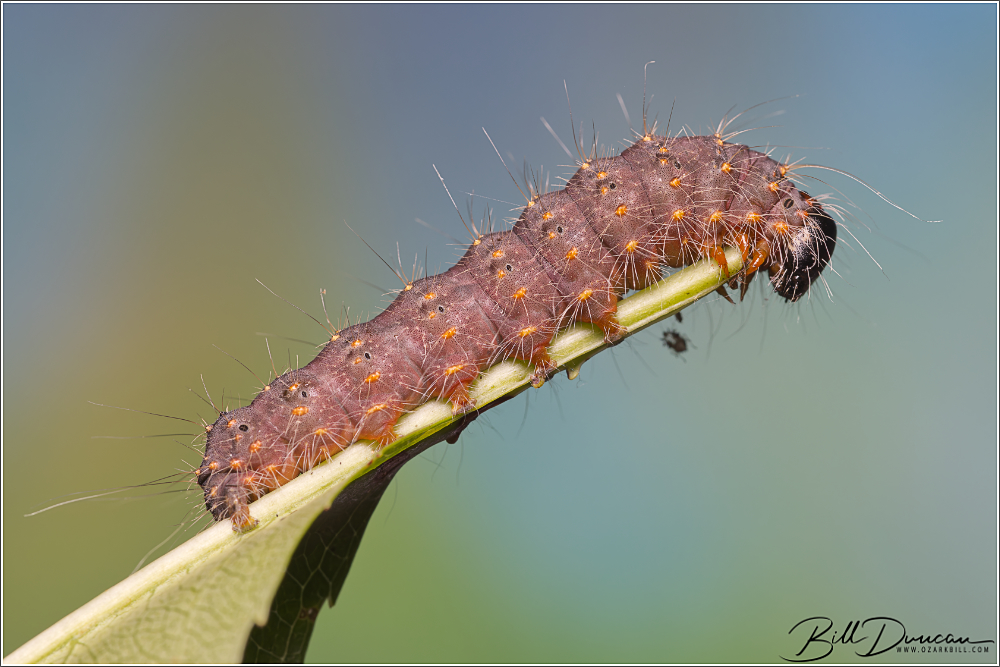
Splendid Radcliffe’s Dagger
Acronicta superans radcliffei fam. Noctuidae (Hodges#9226)
Host plant: black cherry (Prunus serotina)
Date found: ~09, Aug, 2025
Location found: Cuivre River State Park, Lincoln County, MO
Notes: Edit 2/Jan/2026. Science is learning and correcting our mistakes when possible. There have been no confirmed collections of A. superans in MO per Heitzman’s catalogue. The larva of A. superans looks quite similar to the penultimate instar of A. radcliffei, which I now believe this larvae should be labeled as. The primary differences are that A. superans will have black snowflaking on the head, whereas A. radcliffei will have this patterning in red. Another potential option is A. hasta, but I think less likely. All three are cherry/rose specialists. That said, it would not be out of the question for A. superans to be found in Missouri. If any who may have found this post has reason to disagree with my determination, I’d appreciate hearing from you.

2025 Caterpillar Season – Harris’s Three-spot

Harris’s Three-spot
Harrisimemna trisignata fam. Noctuidae (Hodges#9286)
Host plant: buttonbush (Cephalanthus occidentalis)
Date found: ~16, Aug, 2025
Location found: Franklin County, MO
Click here to see the adult moth
Notes: Part spider and part bird dropping, this caterpillar is absolutely astounding. Note the empty head capsules that the caterpillar retains with each successive molt. It has been shown that these caterpillars use these to thrash at potential parasitoid wasps and flies that approach while attempting to deposit eggs on their would-be hosts.

Special thanks to Eva Wiedeman who found this individual in her neighborhood and brought it to our WGNSS fieldtrip at Council Bluff Lake. Photographing this caterpillar was a prime objective for me this season. Now I just need to find one on my own and hopefully a larger 4th instar!

2025 Caterpillar Season – Greater Oak Dagger Moth

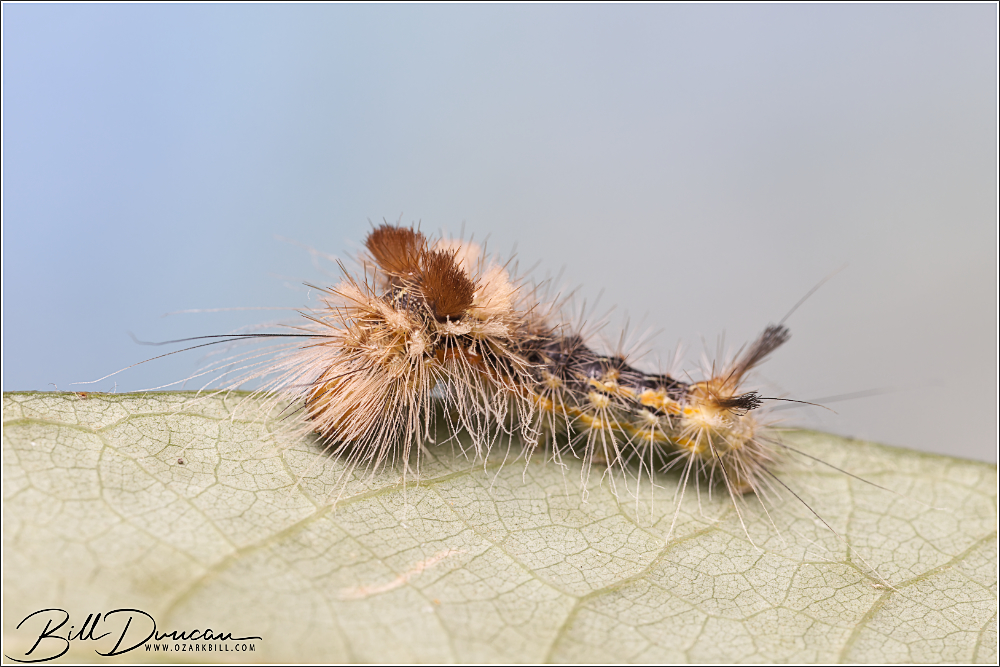
Greater Oak Dagger Moth
Acronicta lobeliae fam. Noctuidae (Hodges#9238)
Host plant: Found on white oak (Quercus alba)
Date found: 09, Aug, 2025
Location found: Cuivre River State Park, Lincoln County, MO
Notes: Our second largest dagger moth species, the erroneously named A. lobeliae is a specialist feeder on oaks.

2024 Caterpillar Season – Radcliffe’s Dagger

Splendid Dagger Radcliffe’s Dagger
Acronicta superans raddcliffei fam. Noctuidae
Host plant: Not recorded
Dates found: 17, Aug, 2024
Locations Found: Schoolcraft Prairie, Washington County, MO
Notes: Edit – 2/Jan/2026. Science is learning and correcting our mistakes when possible. There have been no confirmed collections of A. superans in MO per Heitzman’s catalogue. The larva of A. superans looks quite similar to the penultimate instar of A. radcliffei, which I now believe this larvae should be labeled as. The primary differences are that A. superans will have black snowflaking on the head, whereas A. radcliffei will have this patterning in red. Another potential option is A. hasta, but I think less likely. All three are cherry/rose specialists. That said, it would not be out of the question for A. superans to be found in Missouri. If any who may have found this post has reason to disagree with my determination, I’d appreciate hearing from you.

2024 Caterpillar Season – Hitched Arches

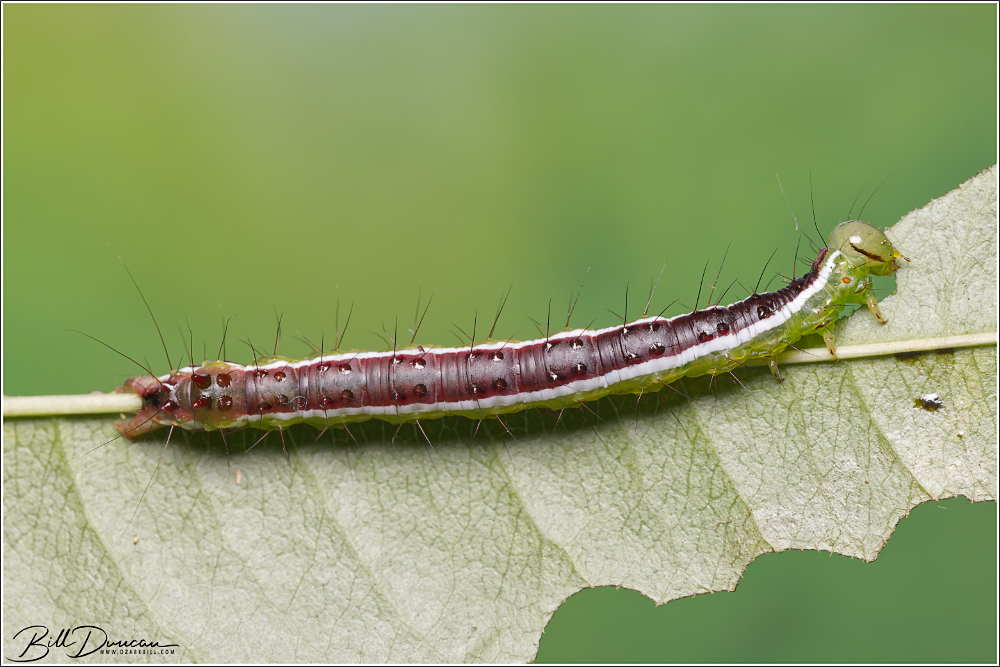
Hitched Arches
Melanchra adjuncta fam. Noctuidae
Host plant: Found on unrecorded herbaceous plant.
Dates found: 21, Sep, 2024
Locations Found: Meramec State Park, Franklin County, MO
Notes: Both larvae and adult forms are stunning. Sarah impressively found this cat walking along trail. Its positioning and camouflage, making it look like crinkled senescing vegetation, was so effective it took me quite a while to find it even with Sarah pointing directly at it.

Biological Pest Control

Today I am showcasing an example of biological pest control that I came across in my own neighborhood in late April of this year. The image below shows a bronzed cutworm moth larvae (Nephelodes minians) in the Family Noctuidae that has been parasitized by a Braconid wasp in the genus Cotesia. This is a very species-rich genus of parasitoids, but there is a fair chance of this species being C. marginiventris. Thanks very much to Alex Soohoo-Hui for his assistance in narrowing down the identification of this minute wasp.

A deceased bronzed cutworm (Nephelodes minians) caterpillar in the final stages of hosting its parasitoid Braconid brood.

The bronzed cutworm is a very common moth that feeds on various grasses, including crops like maize and other cereals as well as turf grasses. I consistently find these cats or their chrysalis whenever I dig a new hole in the yard.

When I found and collected these animals, the last couple of wasp larvae were finishing up spinning their cocoons.

After the wasp deposits her eggs on the host, the wasp larvae feed on the caterpillar internally, being careful not to do much damage to vital organs. The host will never survive, but the parasitoids must ensure that it stays alive long enough for the brood to reach maturity. Often, the caterpillar will still be alive when the wasp larvae emerge and begin to spin their cocoons and will defend itself and its parasites from potential predators.

Three cocoons showing the doors that the adult wasps chewed their way out of.

In this case, the caterpillar seemed dead. I collected it and took it home with hopes of rearing out the tiny wasps to photograph and identify. In about four days, I came home to find 15-20 adult wasps had emerged.

The adult wasps are extremely tiny, measuring 2-3 mm. In order to have a chance at getting photographs, I placed their enclosure into the refrigerator for a minute or two. The wasps in the accompanying images might appear dead, but they perked up within a couple of minutes. After getting my photographs, I released the brood into my backyard to continue their pest control services.

A Braconid wasp in the genus Cotesia, potentially C. marginiventris.

A couple more looks at this diminutive but effective parasitoid.

Caterpillars of 2023 – The Noctuidae

Here are a few of the members of the Noctuidae family of moth caterpillars we found in 2023. Commonly know as “owlet moths,” this is a very diverse clade that is still continuing to be revised and divided. Until recently, this was the largest lepidopteran family. A number of economically important members are found in this family, such as armyworm and cutworm species.

American Dagger Moth (Acronicta americana) Noctuidae, Hodges#9200
Rarely a day on the hunt goes by without finding one or more of these little beauties. This guy was not perturbed at all by us stopping to watch. It continued to chow on the leaf as I photographed it.

Two-spotted Oak Punkie (Meganola phylla) Noctuidae, Hodges#8983.1
Found on Quercus alba (white oak).

Eclipsed Oak Dagger (Acronicta increta) Noctuidae, Hodges#9249
Not that I keep great records but I am pretty certain that this one is by far the most abundant caterpillar we come across while looking on oaks. I probably find five of these to one of other species on oaks. There are a few similar species. The second one may be a different species of Acronicta.

Noctuidae (Acronicta sp.)
This is what I get for not taking photos of some of these from multiple angles. Not even the experts on iNaturalist could get this guy to species using this one image. It was a gorgeous and large caterpillar.

Gold Moth (Basilodes pepita) Noctuidae, Hodges#9781
Finally – I am sharing a cat that does not feed on woody plants. Also, a rare case of a moth that is gorgeous in both adult and larval forms. Unfortunately, this was a pretty early instar and does not show the bright and contrasting colors of older caterpillars. The gold moth feeds exclusively on Verbina species (wingstems, crownbeards).

Have a good one!
-OZB