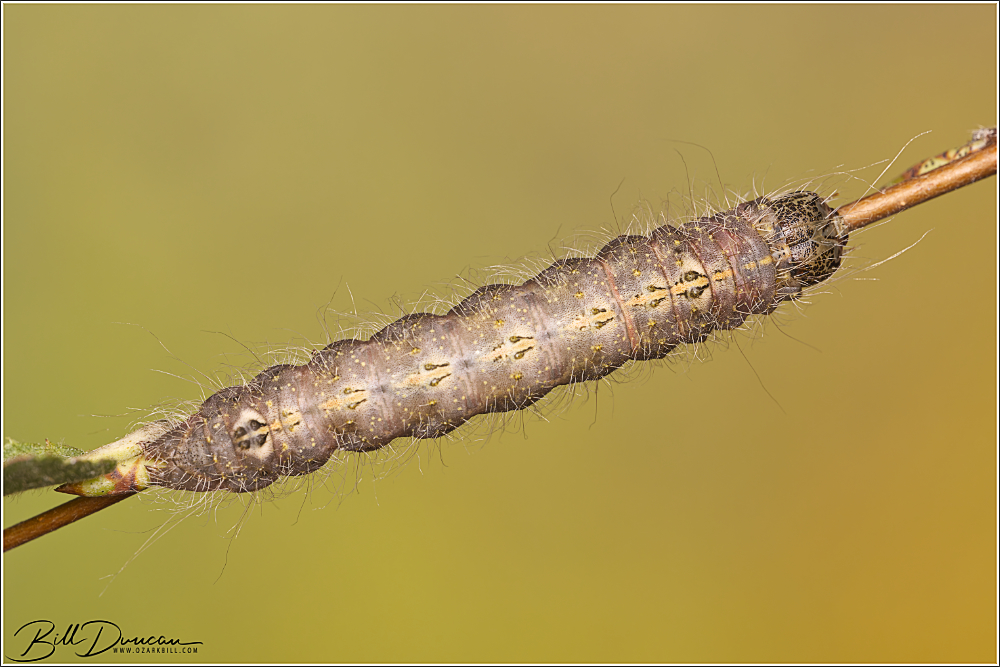
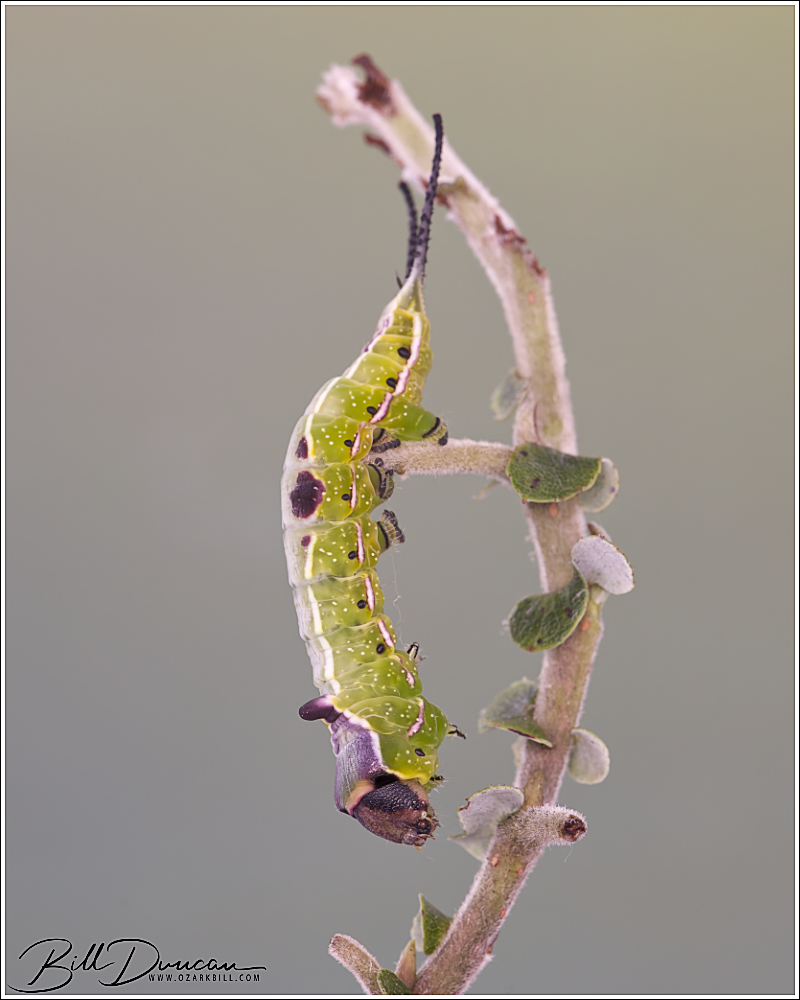
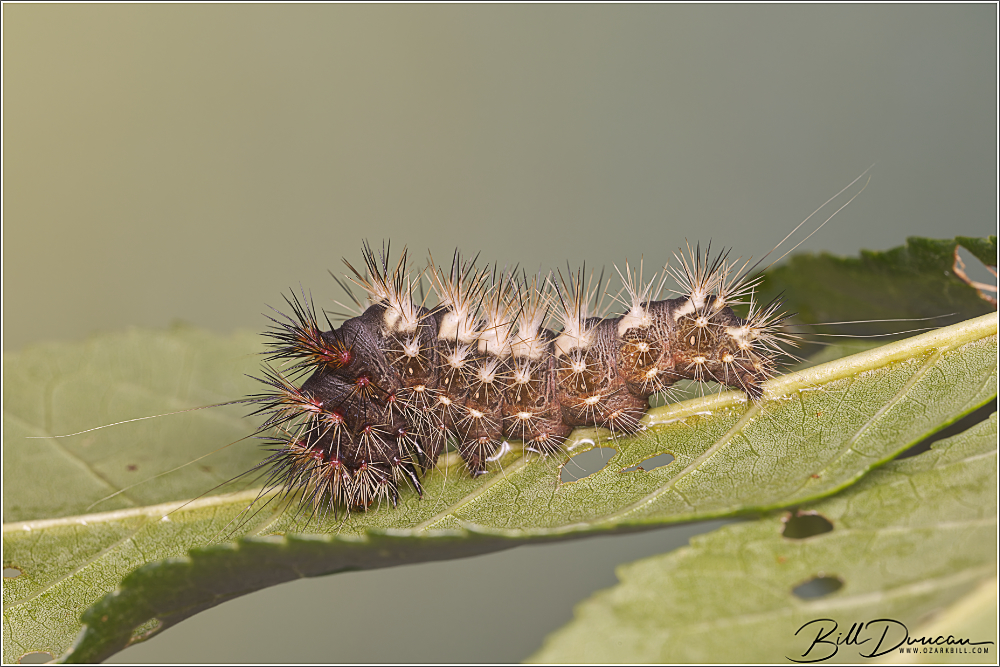
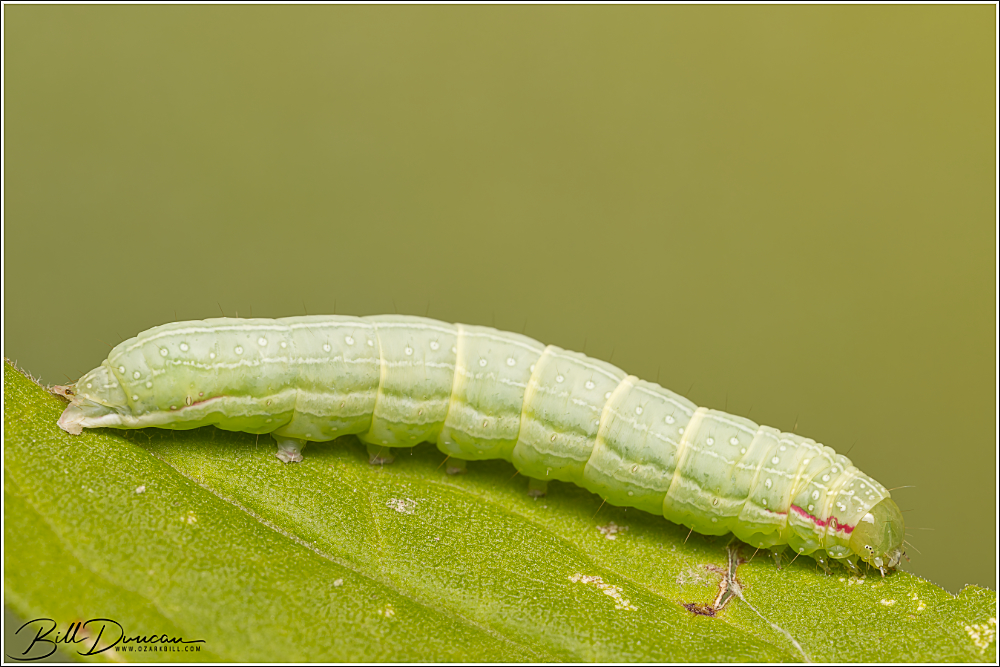
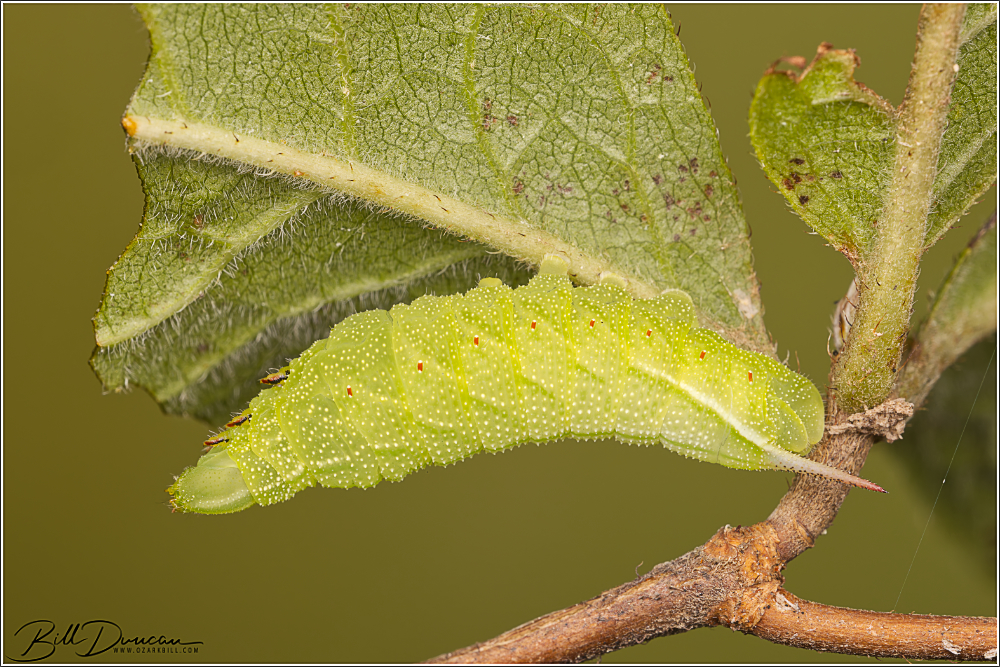
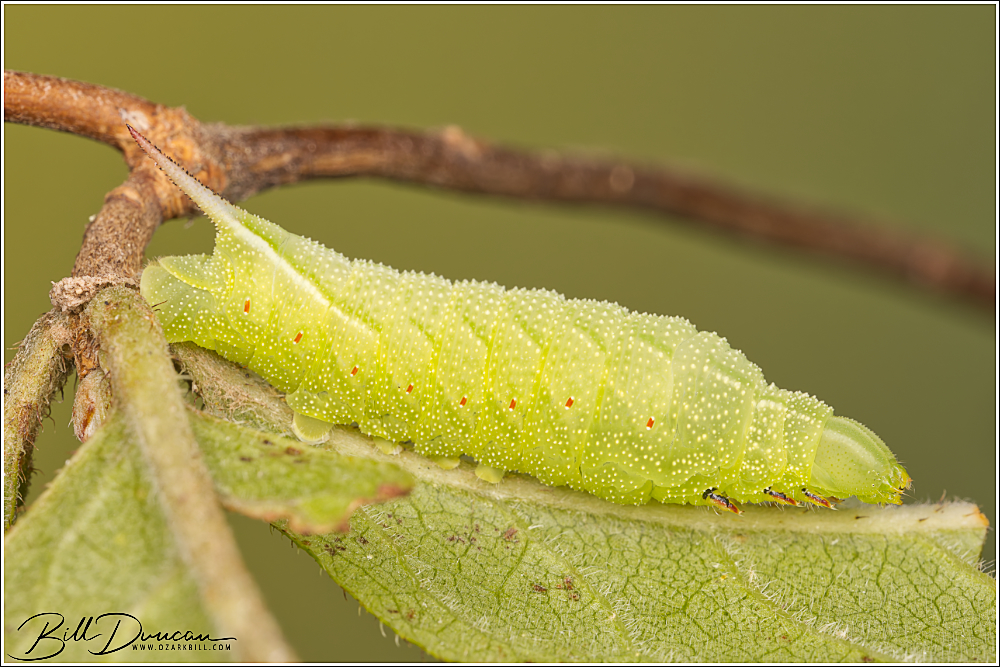
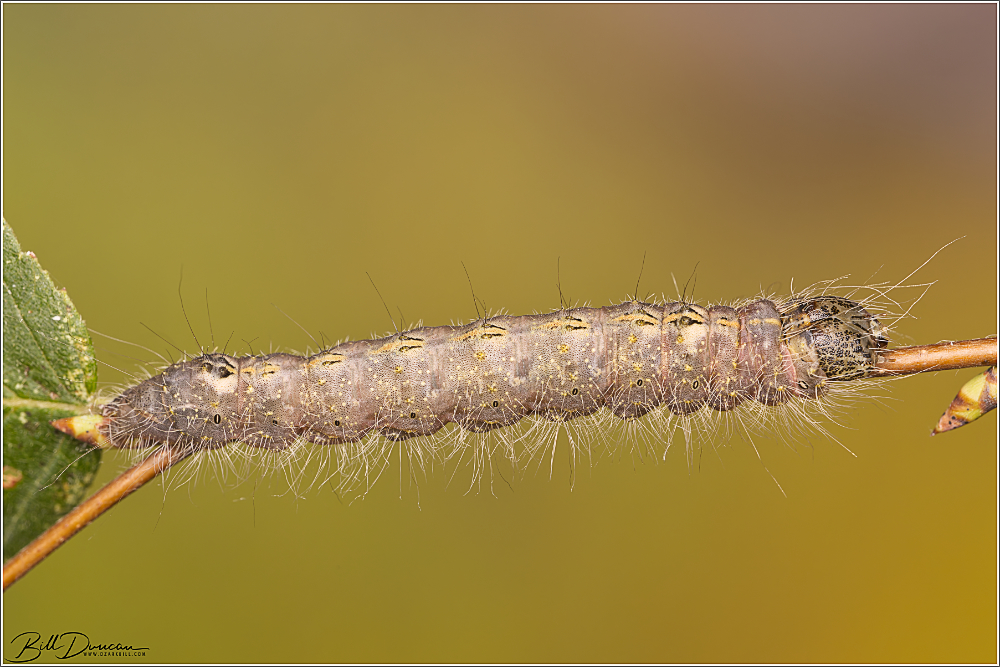
Black-spotted Prominent
Dasylophia anguina (J.E.Smith, 1797), fam. Notodontidae, P-no. 930133
Host plants: Feeds on mostly herbaceous members of the Fabaceae family but can be found on locust trees and Amorpha shrubs.
Date found(s): September 7, 2026
Location(s) found: Franklin County, MO
Notes: An alternative form of the black-spotted prominent can be found that replaces the lavenders and oranges with greens and blues. Many thanks to Eva Wiedeman for finding this one and letting me photograph it!
Tag: moths
2026 Caterpillar Season – Luna Moth
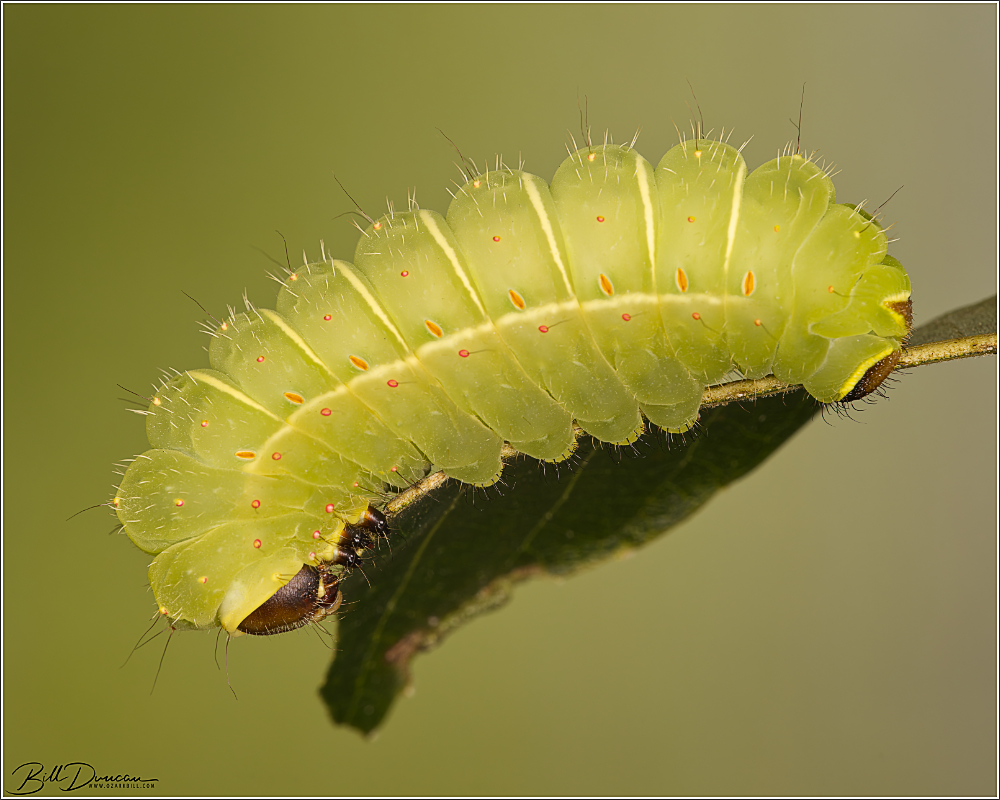
Luna Moth
Actias luna (Linnaeus, 1758), fam. Saturniidae, P-no. 890072
Host plants: Highly polyphagous. The recorded hosts are plants in 18 families, utilizing mostly woody species.
Date found(s): August 26, September 3, 2026
Location(s) found: Tyson Research Center, St. Louis County, MO; Ste Genevieve County, MO
Notes: Perhaps the most beautiful and certainly among the most well-known adult moths in Missouri, the luna caterpillars are no ugly ducklings either. These caterpillars are voracious eaters, usually staying on their hatch tree until it is time to pupate. Like all our saturniids, the adult luna lacks mouth parts and does not eat. Their time as adults is short, living 7-10 days.


2026 Caterpillar Season – Pleasant Dagger
Pleasant Dagger
Acronicta laetifica (Smith, 1897), fam. Noctuidae, P-no. 931444
Host plants: Feeds solely on woody members of the Betulaceae family, namely musclewood (Carpinus caroliniana) and ironwood (Ostrya virginiana).
Date found(s): September 4, 2026
Location(s) found: Hawn State Park, Ste Genevieve County, MO
Notes: Host plant preferences for the pleasant dagger are not as cut and dry as many of our lepidopterans. Some authoritative sources, particularly historical references, list either hickory (Carya) or woody Rosaceae members as hosts. However, modern surveys have only found this species utilizing the above-mentioned members of the Betulaceae as hosts. It is unclear whether these discrepancies are related to changes in host preferences, or if previous documentation may refer to incorrectly identifying the moth species.


2026 Caterpillar Season – Angle-lined Prominent
Angle-lined Prominent
Clostera inclusa (Hübner, 1831), fam. Notodontidae, P-no. 930004
Host plants: Feeds on birch (Betulaceae) and willows (Salix spp.).
Date found(s): August 22, 2026
Location(s) found: Meramec State Park, Franklin County, MO
Notes: Unlike the closely related sigmoid prominent, the angle-lined prominent is typically gregarious. They are usually found in groups of 2–20 individuals during the day, wrapped within shelters produced from living leaves spun together with their silk. Find these by looking for these leaf shelters on willows or by hunting at night when they are more likely to be found feeding in the open.
2026 Caterpillar Season – Trumpet Creeper Sphinx
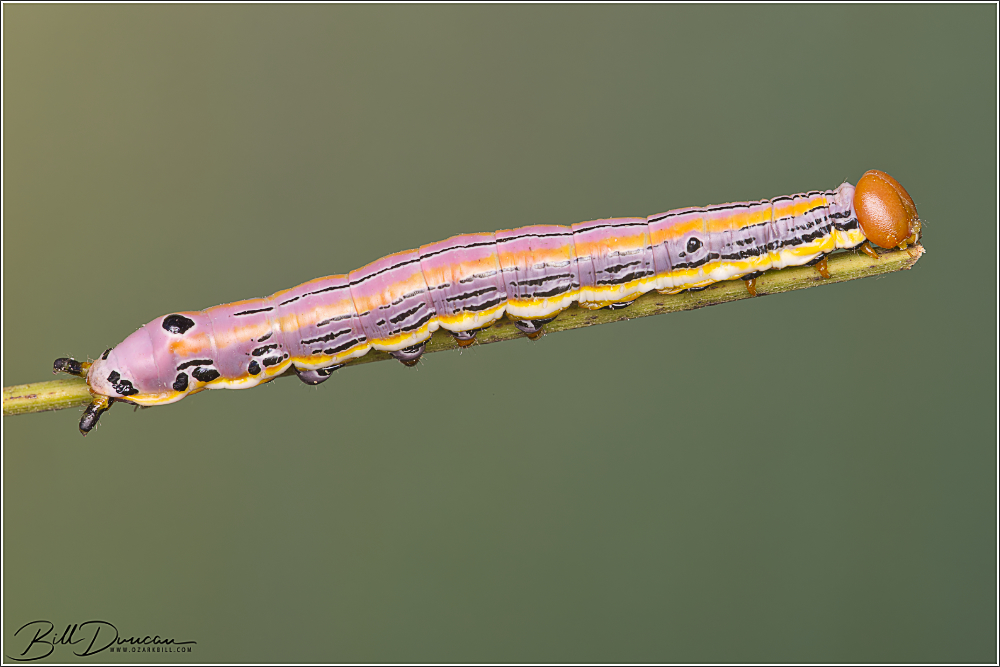
Trumpet Creeper Sphinx
Paratrea plebeja (Fabricius, 1777), fam. Sphingidae, P-no. 890110
Host plants: Primarily feeds on trumpet vine (Campsis radicans). Also reported hosting on Oleaceae, Passifloraceae, and Solanaceae, although these are likely seldom used.
Date found(s): September, 2026
Location(s) found: Tyson Research Center, St. Louis County; Franklin County, MO
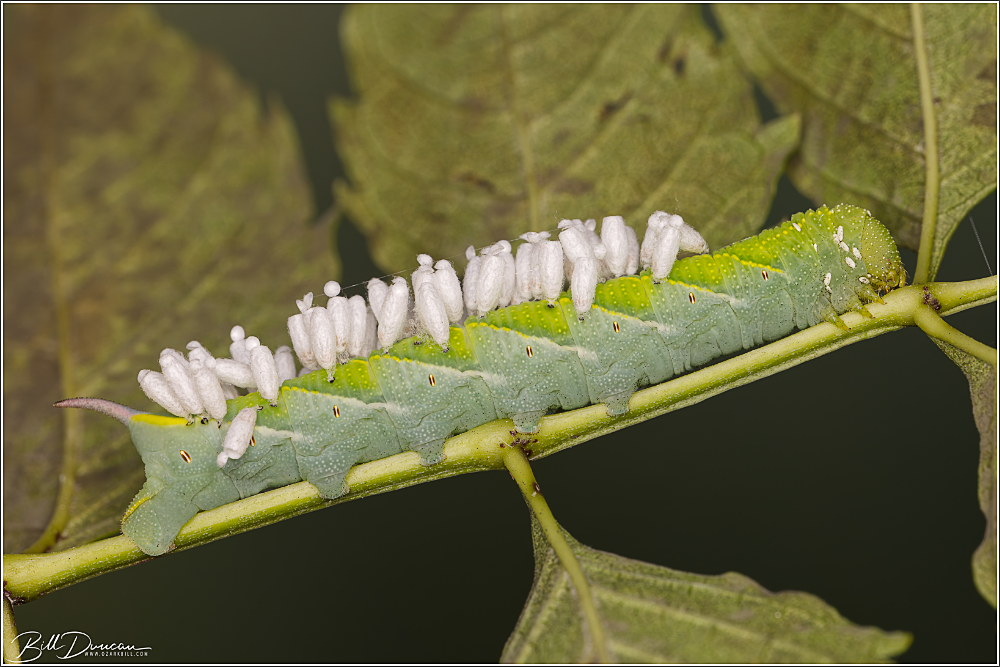
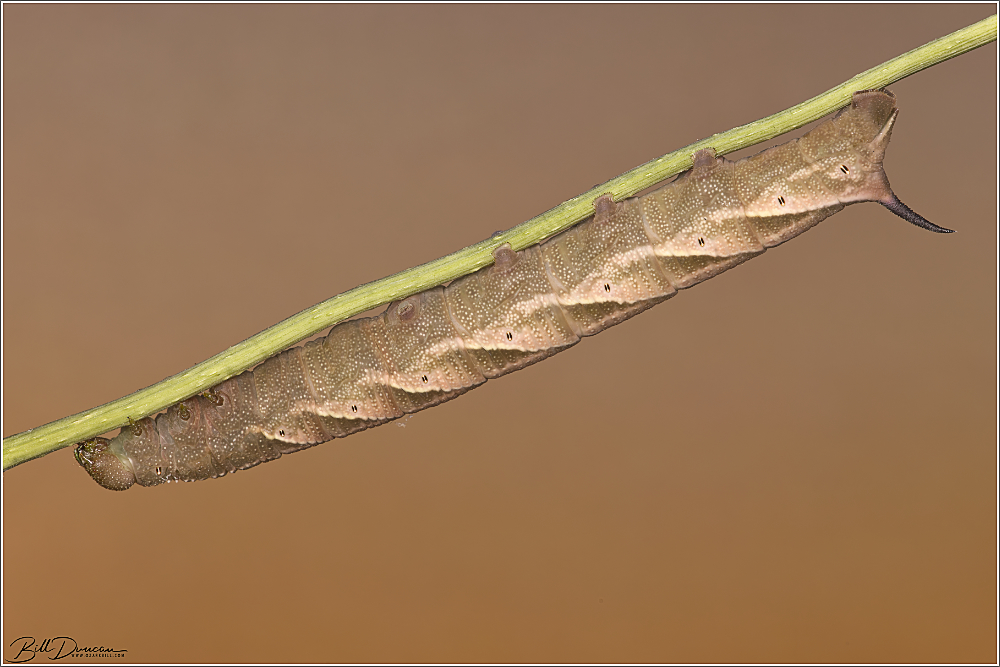
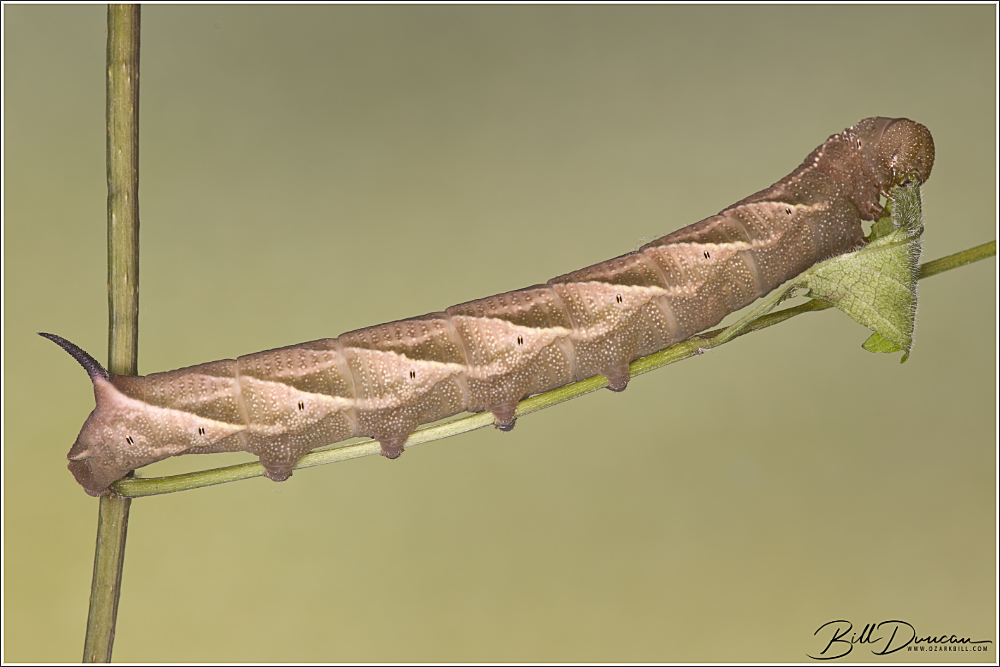
Notes: Trumpet creeper vines are heavily targeted by birds and predatory wasps during the day. To survive, the trumpet vine sphinx caterpillar utilizes a clever defensive routine. During daylight hours, the caterpillar shifts to the underside of the plant’s woody stems, pressing its body flat against the bark to become practically invisible. Only when darkness falls does it crawl out onto the leaves to feed safely under the cover of night. Here is another reason to get out after dark to find a greater diversity of caterpillars!
The Trumpet Creeper Sphinx comes in two primary color phases. The green phase, like the poor heavily parasitized individual pictured here (found at Tyson Research Center), and a less commonly found brown phase, pictured here and found by Eva Wiedeman in Franklin County, MO.
2026 Caterpillar Season – Polyphemus Moth
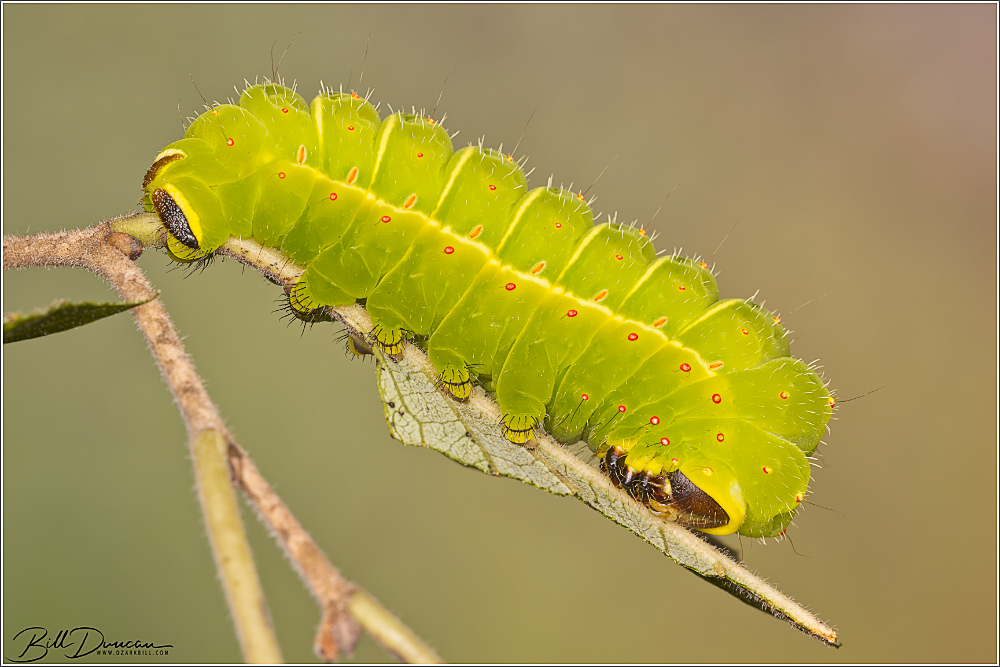
Polyphemus Moth
Antheraea polyphemus (Crammer, 1777), fam. Saturniidae, P-no. 890070
Host plants: Highly polyphagous. The recorded hosts are plants in 25 families, utilizing mostly woody species.
Date found(s): July-August, 2026
Location(s) found: St. Louis and Ste. Genevieve Counties, MO
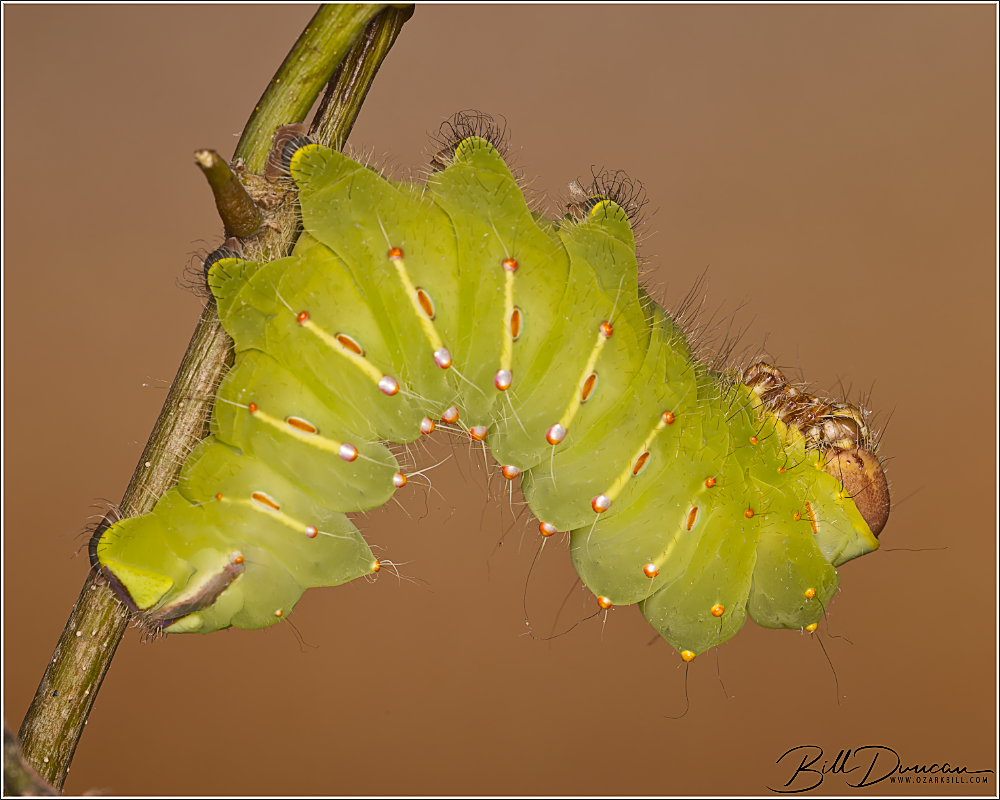
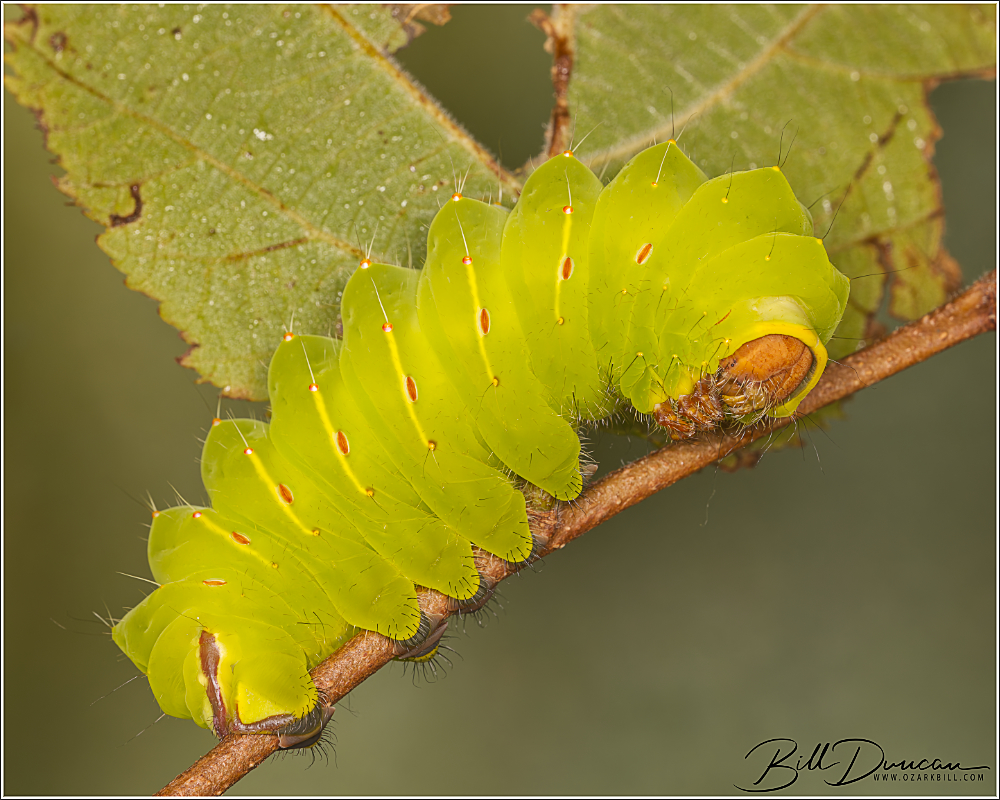
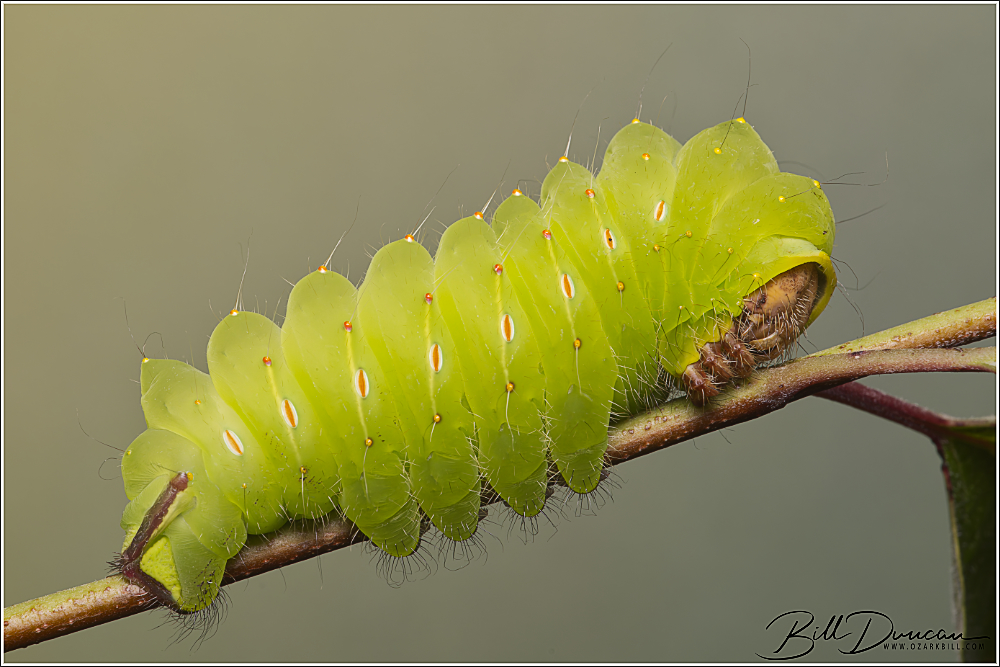
Notes: One of the more commonly found of the large saturniid caterpillars during my searches. At first glance, these caterpillars look like those of the luna moth (Actius luna). However, a few easily remembered characteristics can be used to discern these two species: 1) the head capsule of the polyphemus is textured with long setae that give it a bearded appearance, while the luna head capsule is relatively smooth; 2) luna caterpillars have a yellow subspiracular stripe that is absent in the polyphemus; 3) the transverse lines that are found on the abdominal segments of the polyphemus caterpillar run roughly through the spiracle, whereas these lines seem to separate the segments in the luna.


2026 Caterpillar Season – Black-etched Prominent
Black-etched Prominent
Americerura scitiscripta (Walker, 1865), fam. Notodontidae, P-no. 930030
Host plants: Feeds on members of the Salicaceae Family, including poplars (Populus spp.) and willows (Salix spp.).
Date found(s): 26 August, 2026
Location(s) found: Logger’s Lake, Shannon County, MO
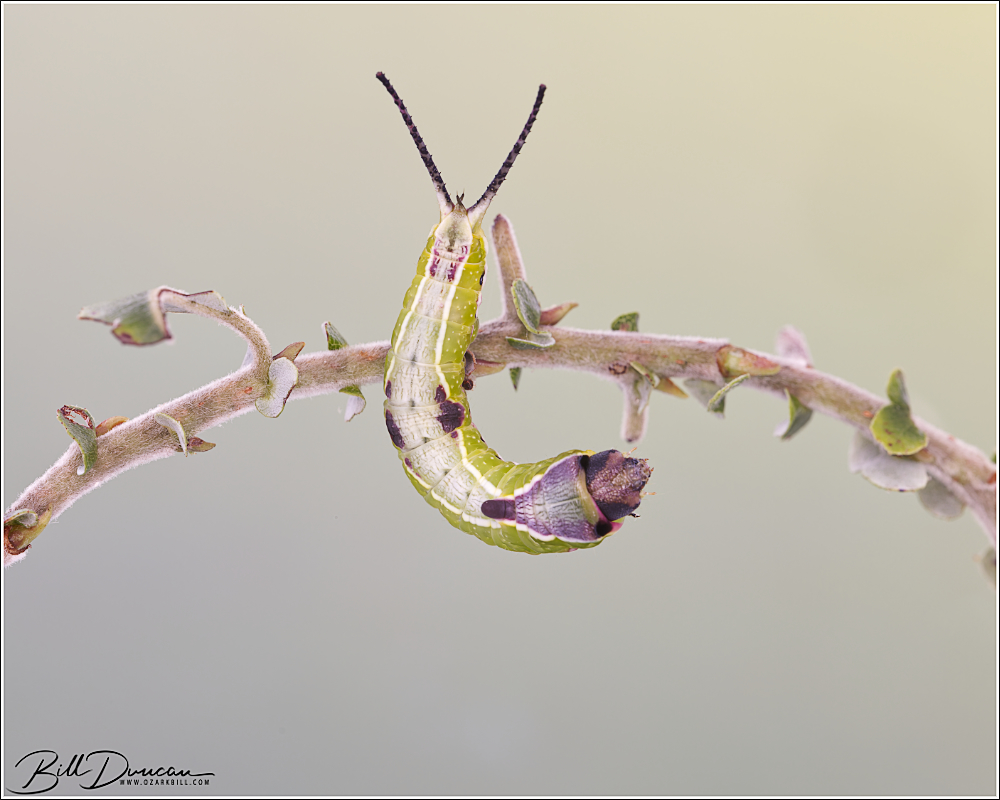
Notes: The WGNSS group came upon the individual pictured here in Shannon County in August of 2026. When it realized we discovered it, we were in for a short but thrilling experience. The caterpillar arched its long anal prolegs over its back, extruded the yellow and red portions thereby doubling their length, and then thrashed them about wildly in an obvious attempt to threaten and dissuade us. Unfortunately, this act lasted merely seconds, and it could not be coaxed into a repeat performance after we had set it up for photographs. If this method of dissuasion does not do the trick, the caterpillar can spray acid from a gland in its thorax.


2026 Caterpillar Season – Long-winged Dagger
Long-winged Dagger
Acronicta longa (Guenée, 1852), fam. Noctuidae, P-no. 931485
Host plants: Reported feeding on woody species within nine plant families. In Missouri, I have found these on oak (Quercus spp.) and ash (Fraxinus spp.).
Date found(s): 22 August, 2026
Location(s) found: Meramec State Park, Franklin County, MO
Notes: Despite a species being considered a generalist across their range, individual lineages can be wildly picky eaters. In a rearing log documented on BugGuide, a citizen scientist hatched a clutch of A. longa eggs. Despite being surrounded by prime, classic host plants like oak (Quercus nigra) and cherry (Prunus sp.), the newly hatched caterpillars stubbornly refused to eat and began to starve. In a desperate last-ditch effort, the researcher offered them blueberry leaves (Vaccinium sp.). The caterpillars immediately devoured them, proving that while the species is a generalist, individual populations may dynamically “lock into” specific regional hosts.
2026 Caterpillar Season – Green Leuconycta
Green Leuconycta
Leuconycta diphteroides (Guenée, 1852), fam. Noctuidae, P-no. 932026
Host plant (s): Hosts on a variety of Asteraceae family members including fleabane (Erigeron spp) and goldenrod (Solidago spp).
Date found(s): 28 June, 2026
Location(s) found: Pinewoods Lake Recreation Area, Carter County, MO
Notes: Due to its host plant preferences, look for this moth in meadows, fields and prairies. If you plant native composite wildflowers, you may even have luck in finding them in your own backyard. The adult moth is a stunner and is often a popular subject when arriving at blacklights. It has received a common nickname in mothing circles—the “mint chocolate chip moth.”
2026 Caterpillar Season – Azalea Sphinx
Azalea Sphinx
Darapsa choerilus (Cramer, 1779) P-no. 890208
Host plant: Roseshell azalea (Rhododendron prinophyllum)
Date found(s): 4 August, 2026
Location(s) found: Hawn State Park, Ste. Genevieve County, MO
Notes: Azalea sphinx moth caterpillars can be found during the daytime clinging to the midvein on leaves of their azalea hosts. In their disturbance pose, as seen in the fourth-instar caterpillar pictured here, I found them remarkably similar in appearance and size to the green developing fruits of the azalea.