"What a thousand acres of Silphiums looked like when they tickled the bellies of the buffalo is a question never again to be answered, and perhaps not even asked." -Aldo Leopold
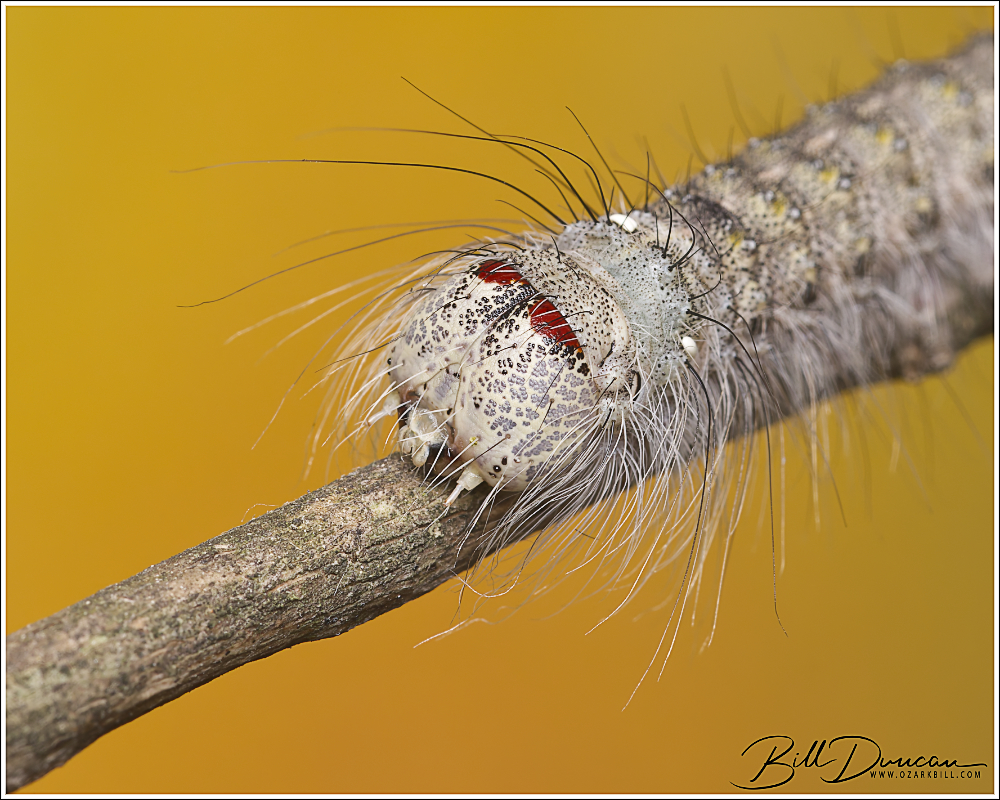
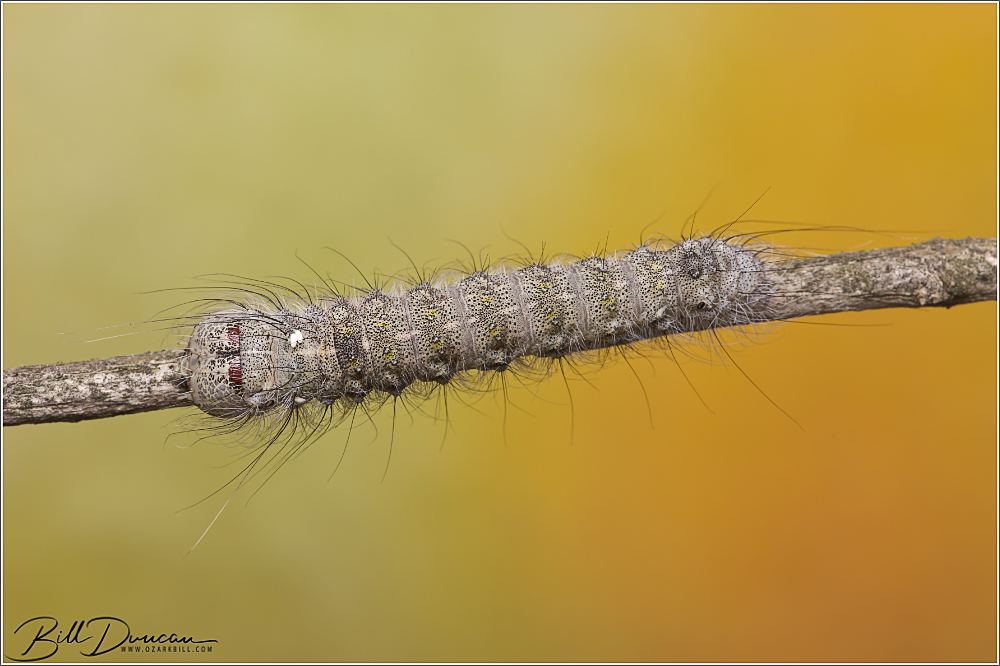
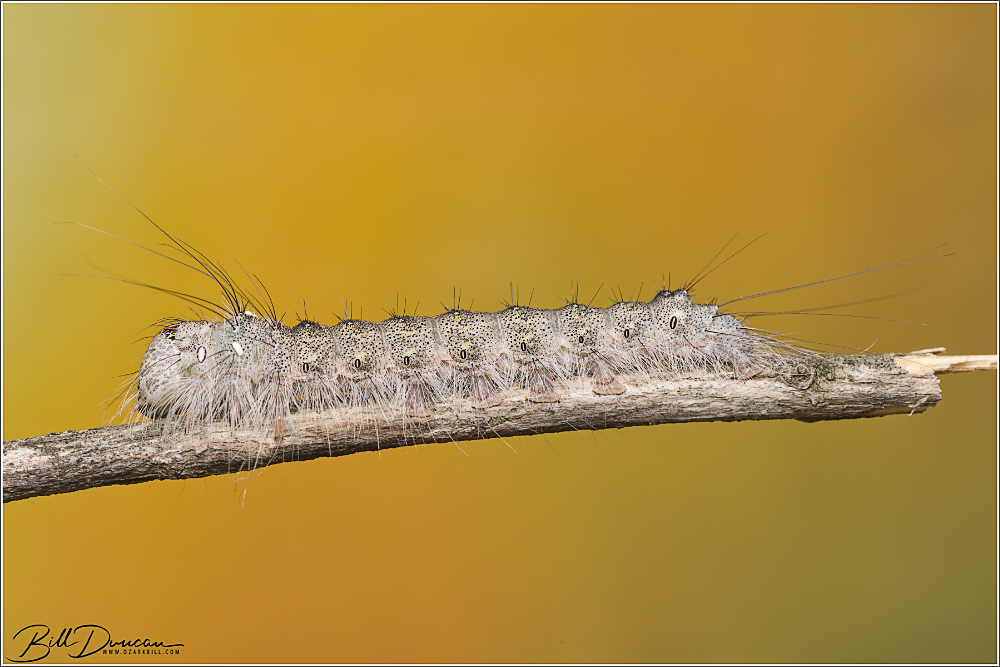
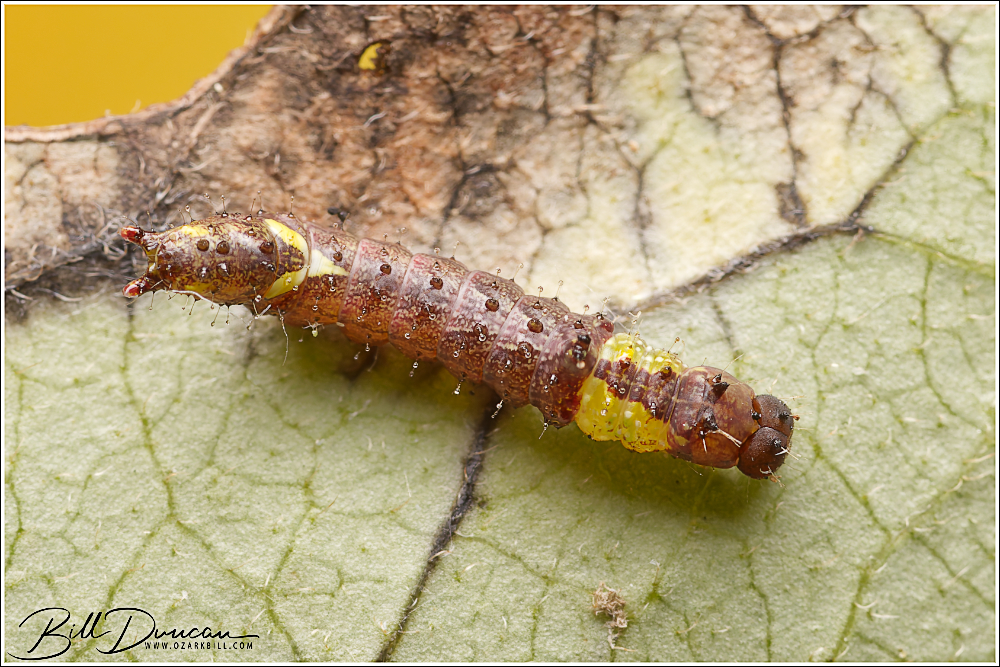
Greater Oak Dagger Moth Acronicta lobeliae fam. Noctuidae (Hodges#9238) Host plant: Found on red oak species (Quercus sp.) Date found: 30, Aug, 2025 Location found: Tyson Research Center, St. Louis County, MO Notes: This poor guy has a couple tachinid fly eggs attached. It was likely host to this parasitoid and will not make it to adulthood.
Birch Dagger Moth Acronicta betulae fam. Noctuidae (Hodges#9208) Host plant(s): river birch (Betula nigra) Date(s) and location(s): 15 September, 2025 – Creve Coeur Lake Park, St. Louis County, MO Notes: A specialist, hosting only on river birch.
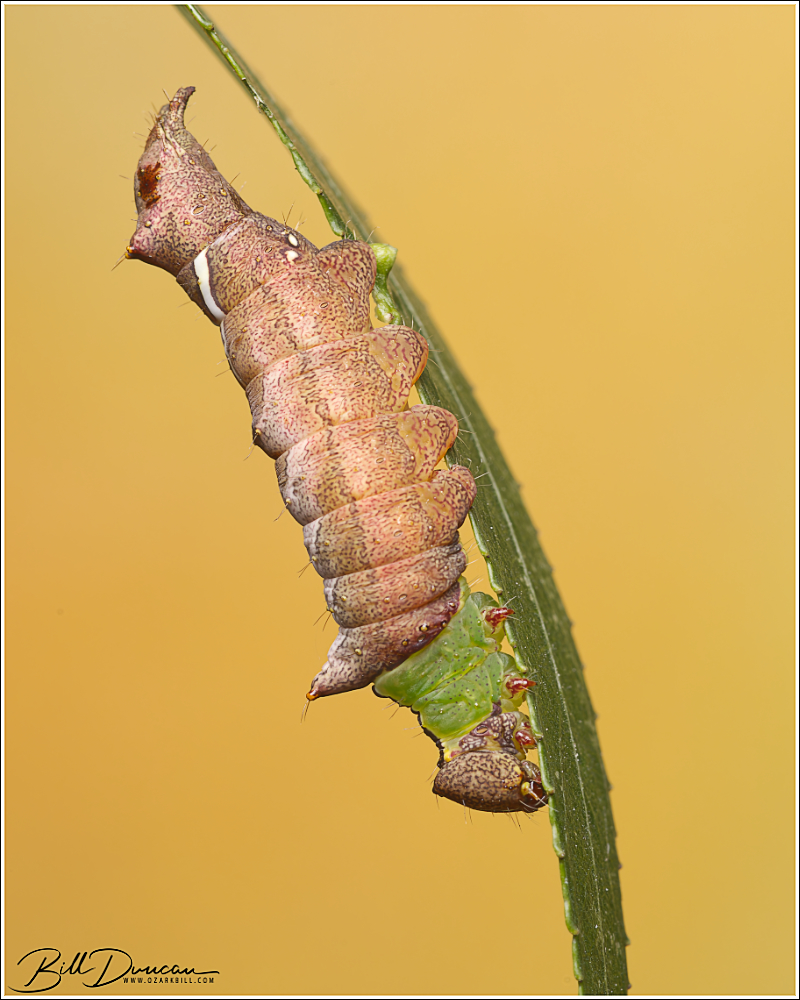
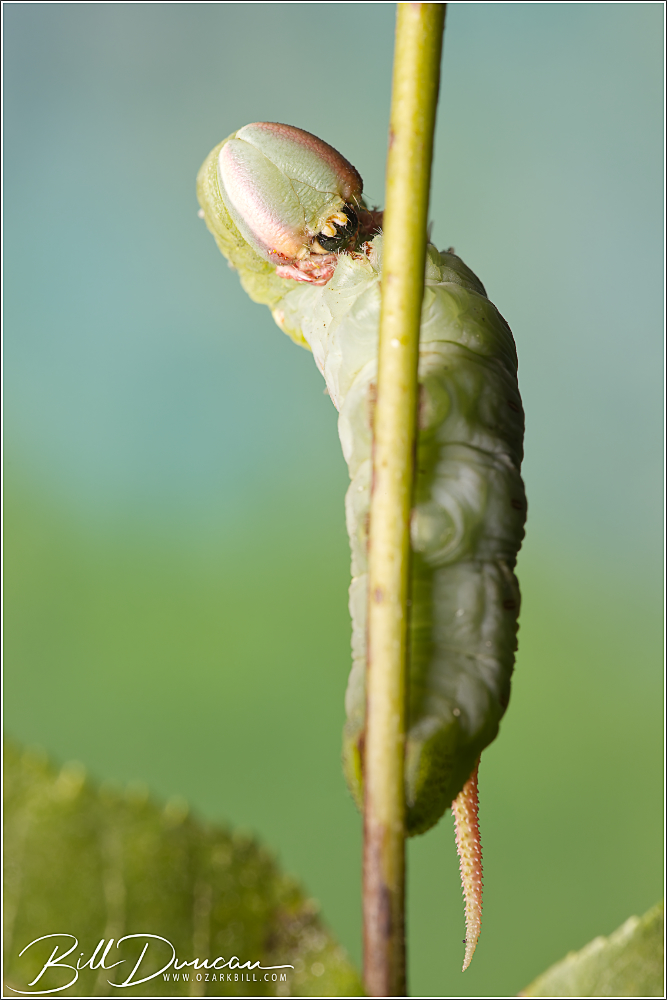
Unicorn Caterpillar Moth Coelodasys unicornis fam. Notodontidae (Hodges#8007) Host plant(s): redbud, hackberry, willow Date(s) and location(s): 30 August, 2025 – Tyson Research Center, St. Louis County, MO; 06 September 2025 – Babler State Park, St. Louis County, MO; 15-September, 2025 – Creve Coeur Lake Park, St. Louis County, MO Notes: Previous to this year, I assumed this species was an oak/hickory specialist. This is obviously not the case. This species is polyphagous and I was surprised at how many I found on willows this year. Look closely at the upper right photo in this gallery for signs that this individual was parasitized.
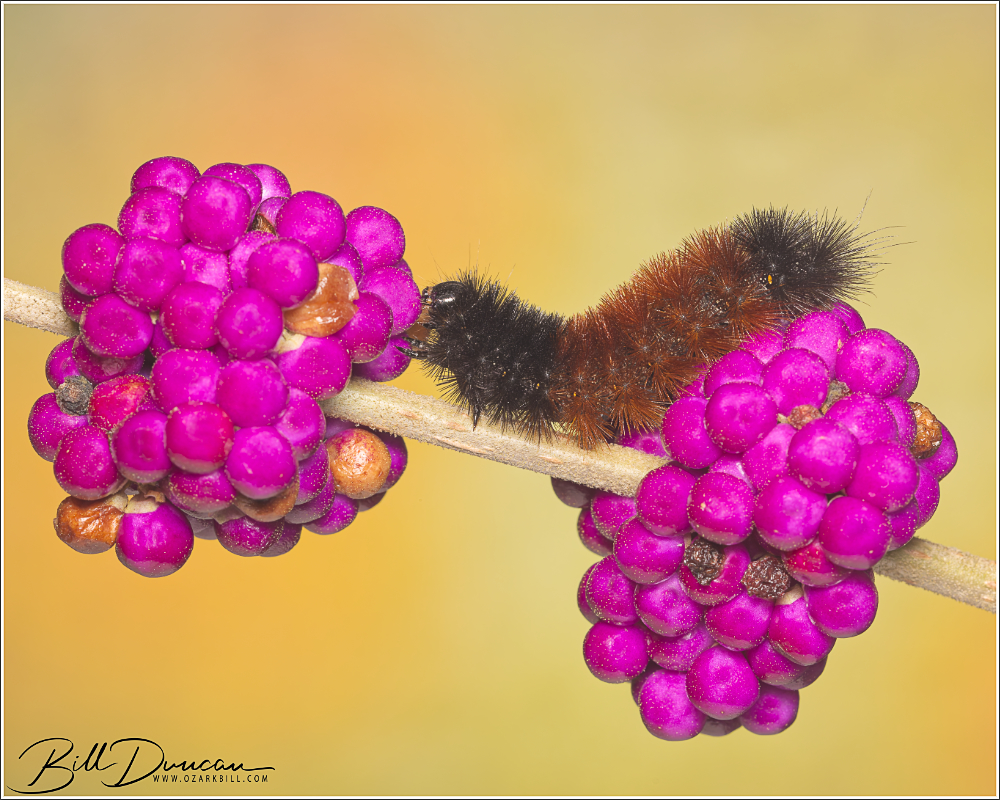
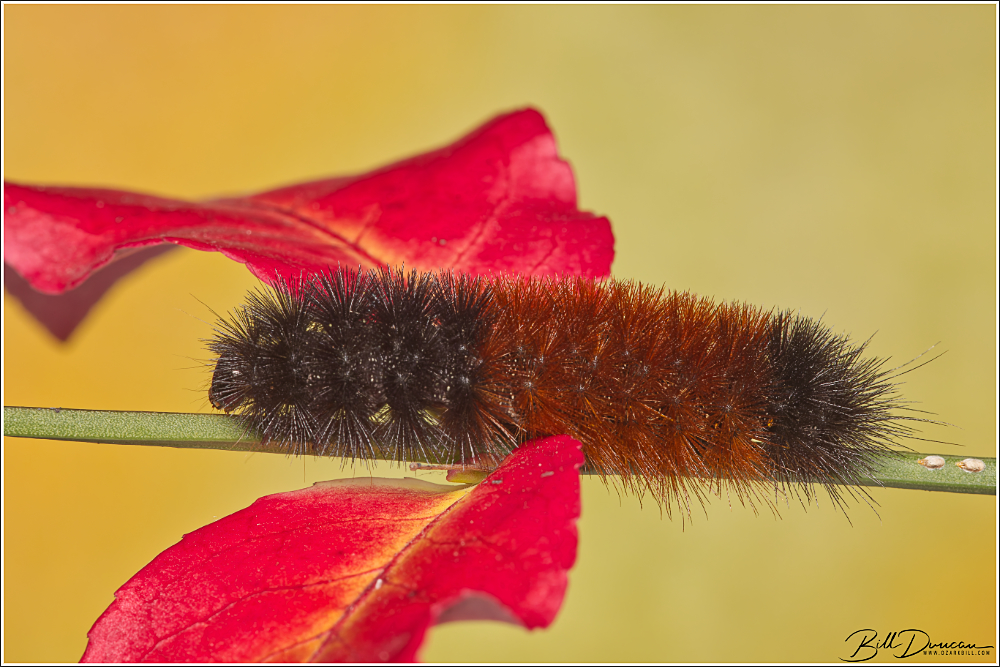
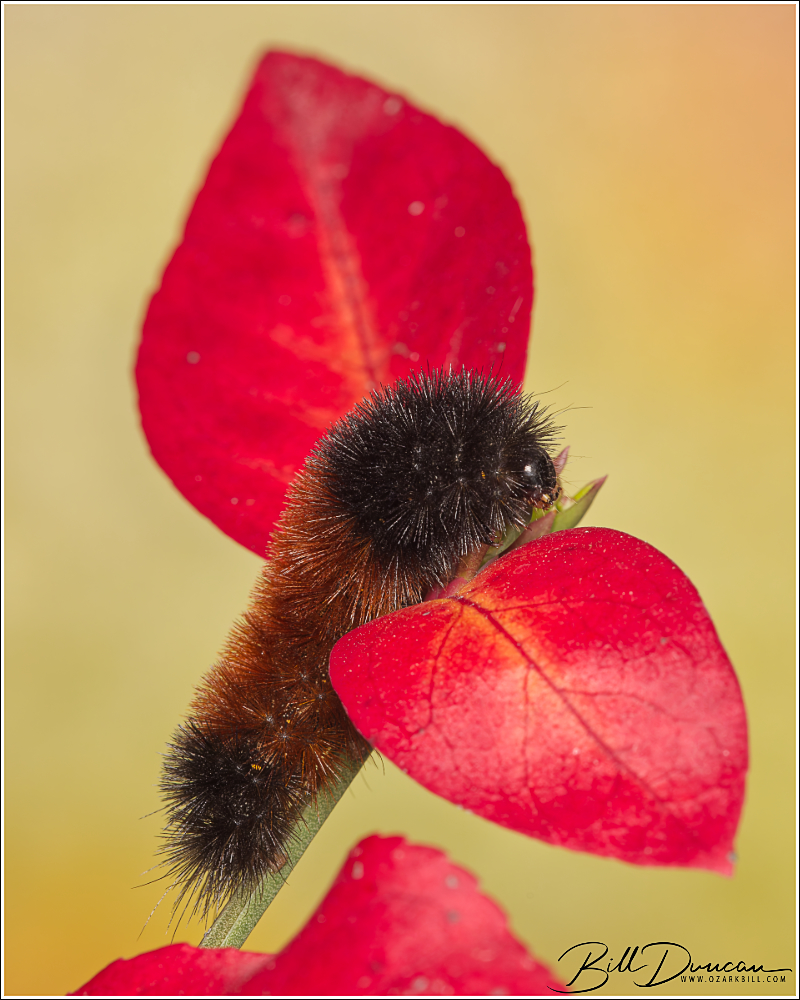
Wooly Bear Pyrrharctia isabella fam. Erebidae (Hodges#8129) Host plant(s): Found wandering Date(s) and location(s): 08 November, 2025 – Riverlands Migratory Bird Sanctuary, St. Charles County, MO Notes: Perhaps the most widely known caterpillar by the general public, the wooly bear is known as the Isabella tiger moth in its adult form. The caterpillars are often found crossing paths and roads during autumn, for reasons not fully understood. This species is highly polyphagous, eating a variety of trees, forbs and grasses. I chose some season-appropriate plants (Callicarpa americana & Euonymus americanus) from the backyard to photograph this caterpillar exploring.
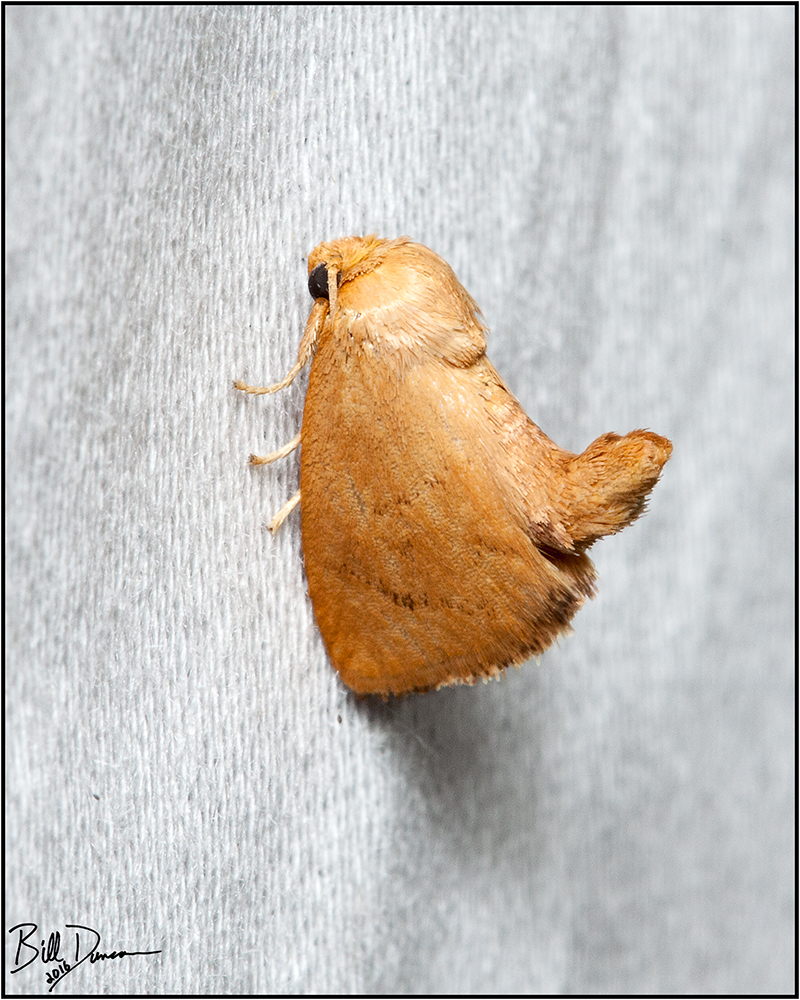
Red-crossed Button Slug Tortricidia pallida fam. Limacodidae (Hodges#4653) Host plant(s): Found on white oak (Quercus alba) Date(s) and location(s): 31 August, 2025 – Tyson Research Center, St. Louis County, MO Notes: Click here to see adult.
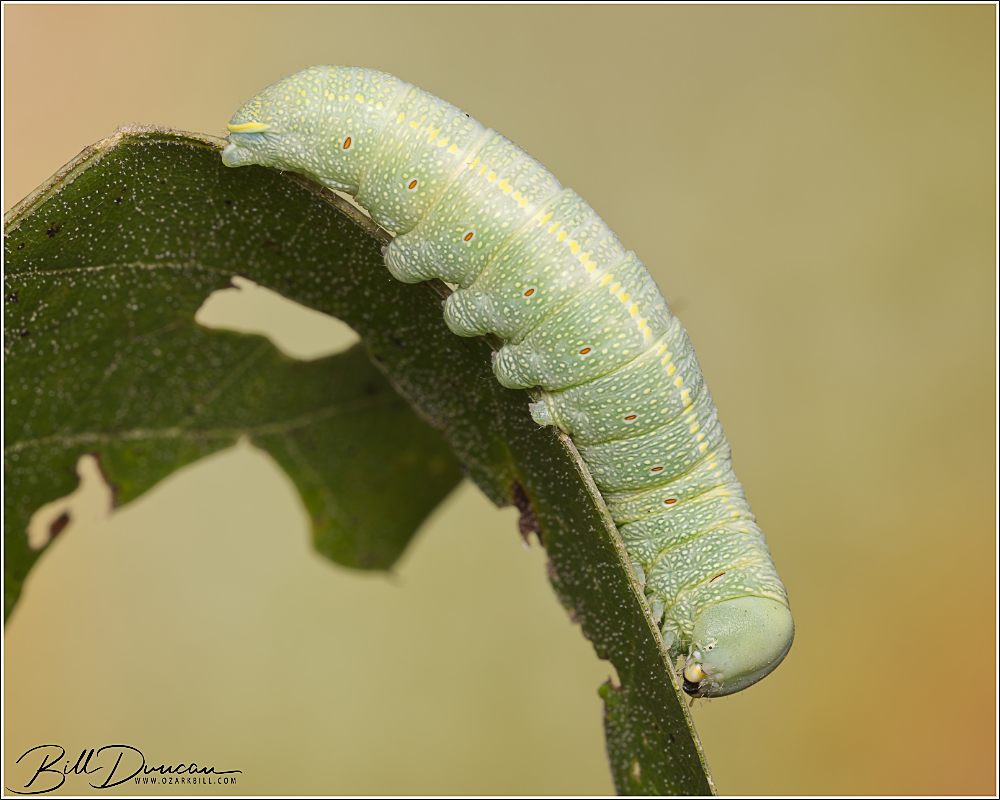
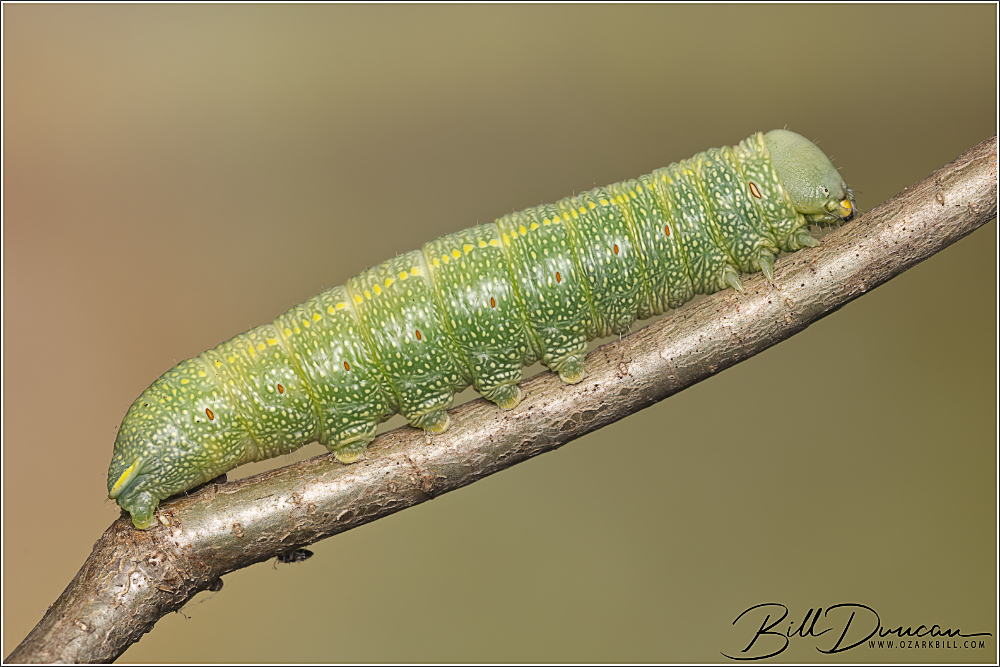
Waved Sphinx Ceratomia undulosa fam. Sphingidae (Hodges#7787) Host plant(s): Found on hickory (Carya sp.) Date(s) and location(s): 31 August, 2025 – Tyson Research Center, St. Louis County, MO Notes: This is one of those perplexing situations. Wagner and most other authorities suggest this species hosts solely on ash (Fraxinus), but I found this guy actively feeding on a mid-sized hickory during an evening hunt.
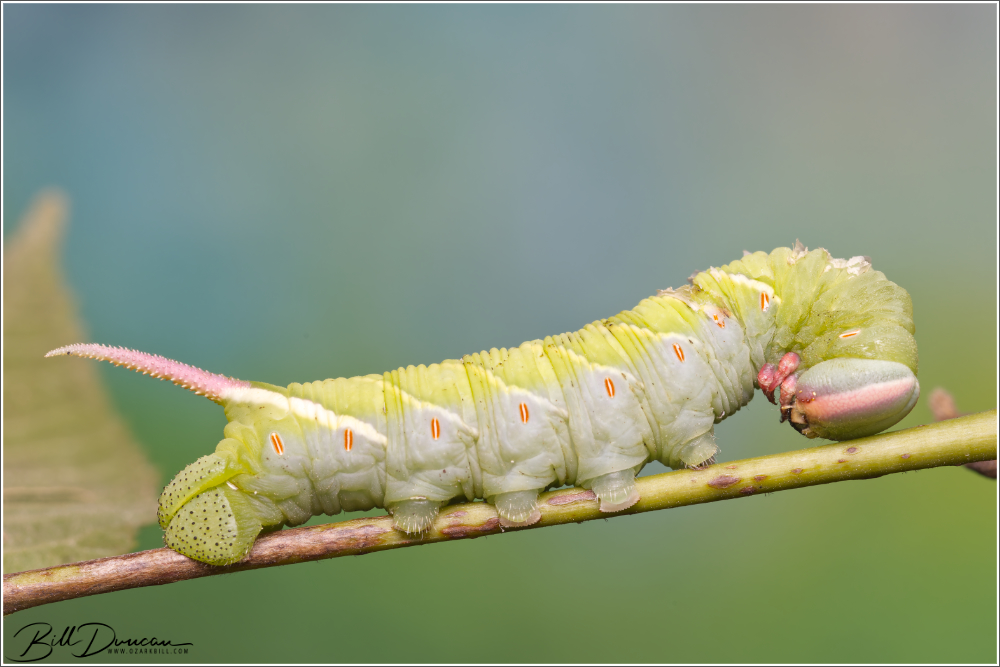
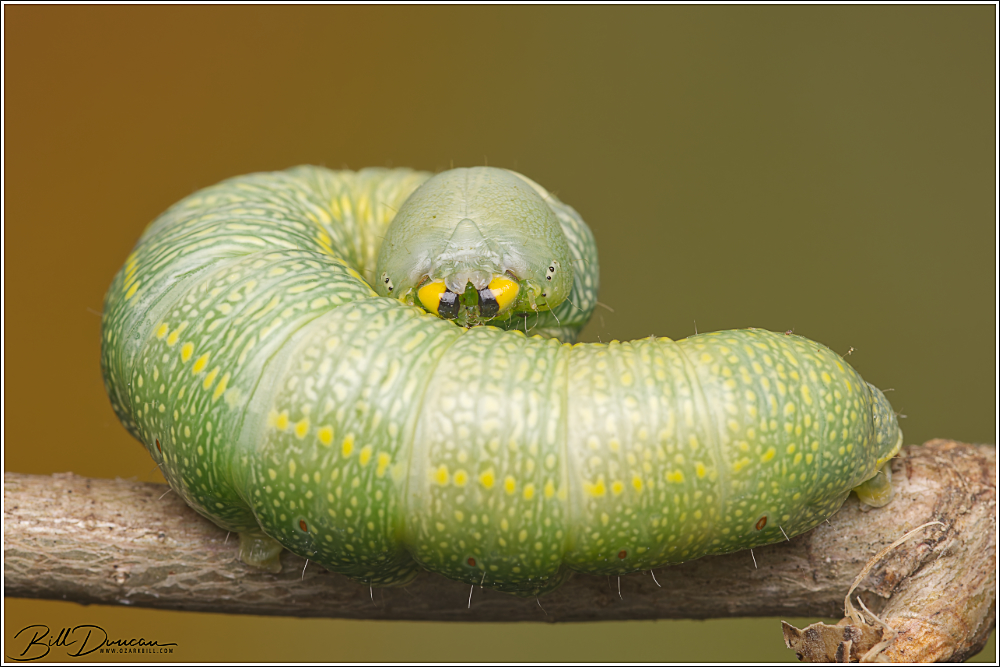
White-dotted Prominent Nadata gibbosa fam. Notodontidae (Hodges#7915) Host plant(s): Found on white oak (Quercus alba) Date(s) and location(s): 25 September, 2025 – Council Bluff Lake, Iron County, MO Notes: When threatened, caterpillars of this species curl their heads over their bodies exposing their large yellow, black-tipped mandibles.
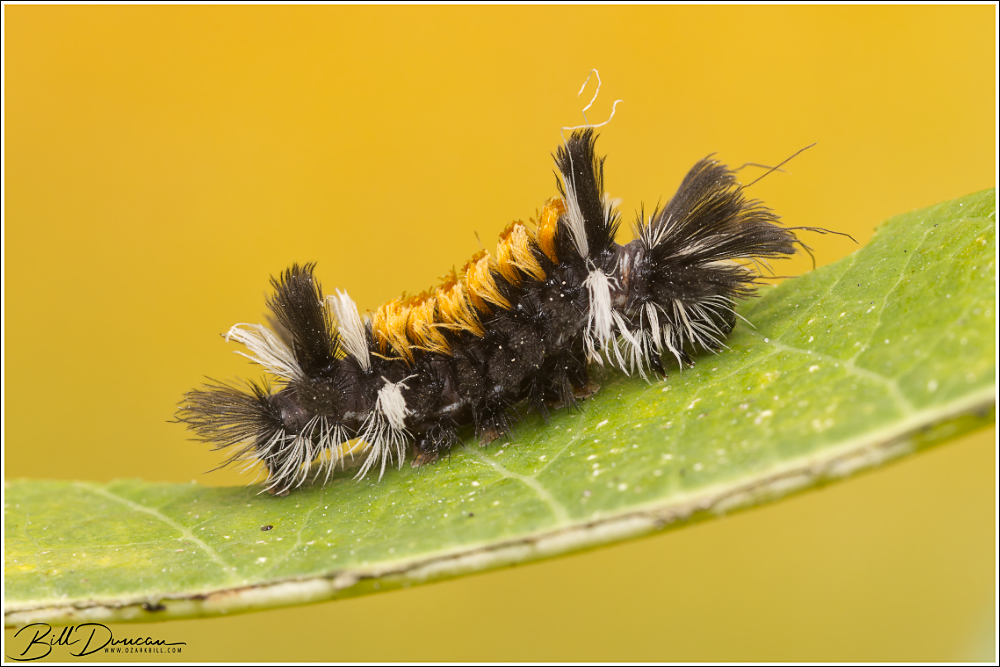
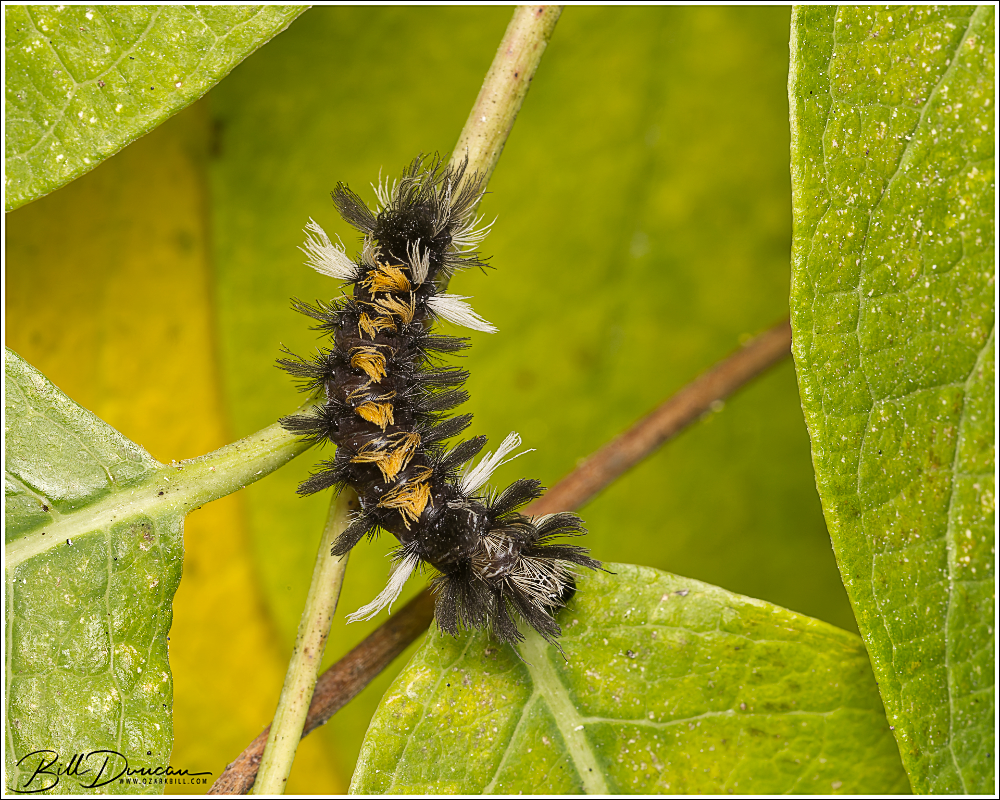
Milkweed Tussock Moth Euchaetes egle fam. Erebidae (Hodges#8238) Host plant(s): Found on dogbane (Apocynum cannabinum) Date(s) and location(s): 30 August, 2025 – Tyson Research Center, St. Louis County, MO
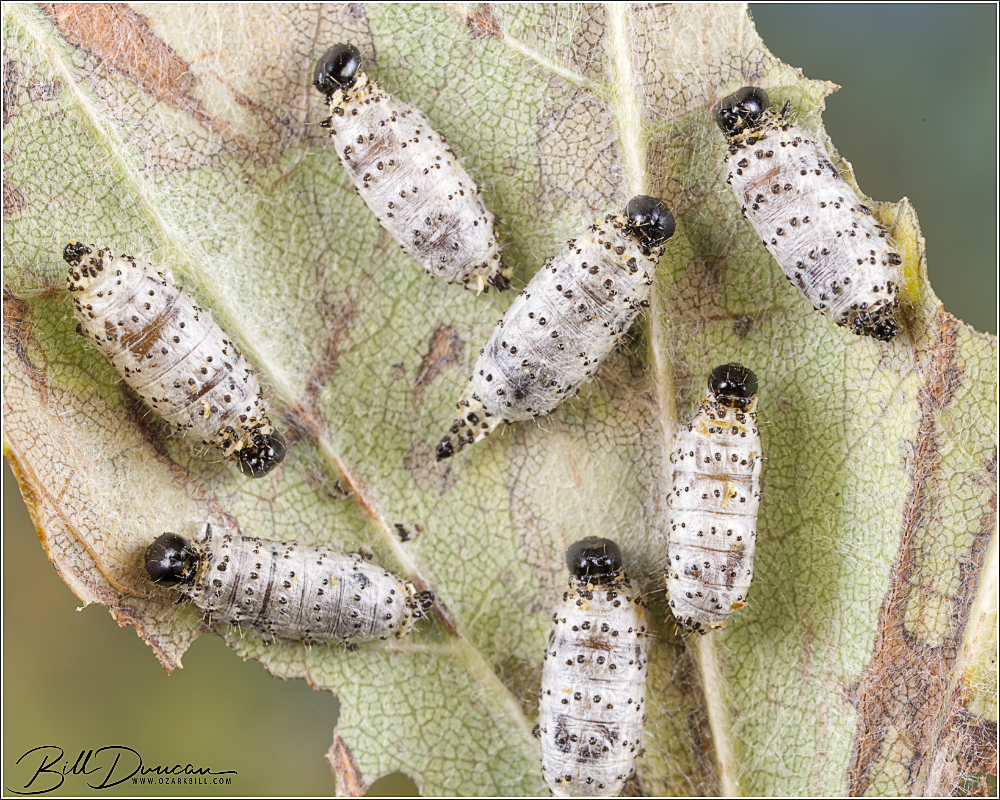
During a caterpillar hunt in mid-September at Don Robinson State Park, I came across a redbud leaf with a number of mummified Oedemasia concinna (red-humped caterpillar moth) caterpillars. These cats all appeared to be dead and were wrapped in what looks like their own silk. After close inspection, I could not find any exit holes that the potential parasitoid would have made. So, I collected the leaf and the baker’s dozen of these hosts and took them home to hopefully rear the parasitoids.
Parasitized Oedemasia concinna (red-humped caterpillar). This species is gregarious as early instars.
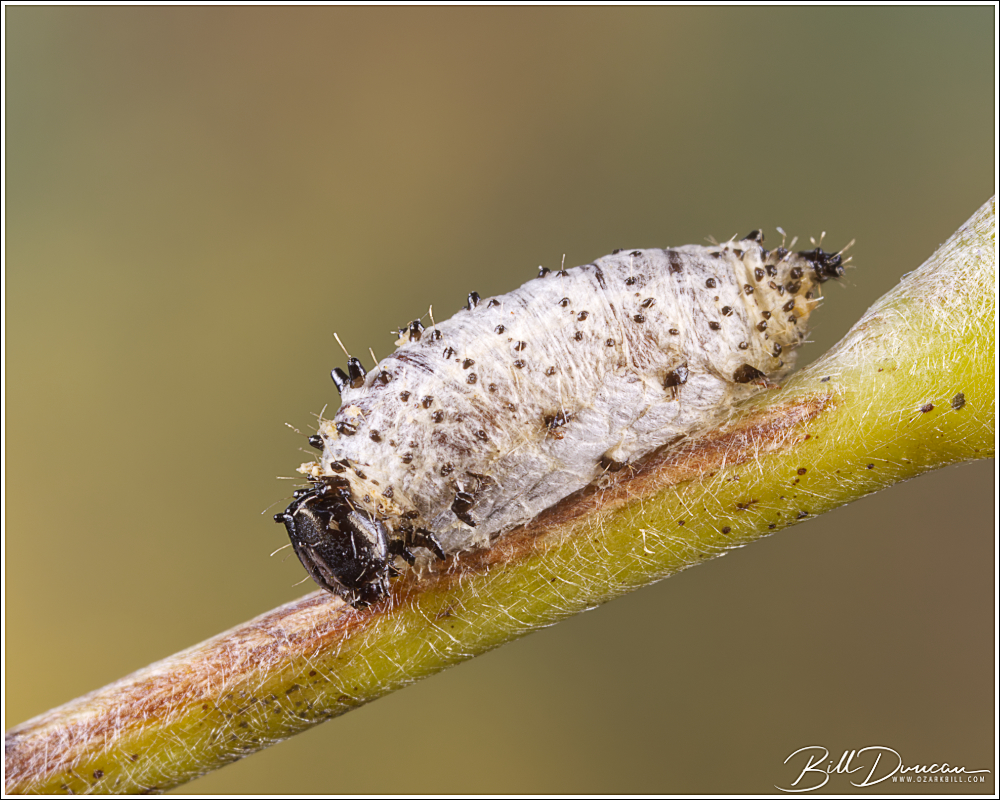
A closeup of one of the unfortunate caterpillars.
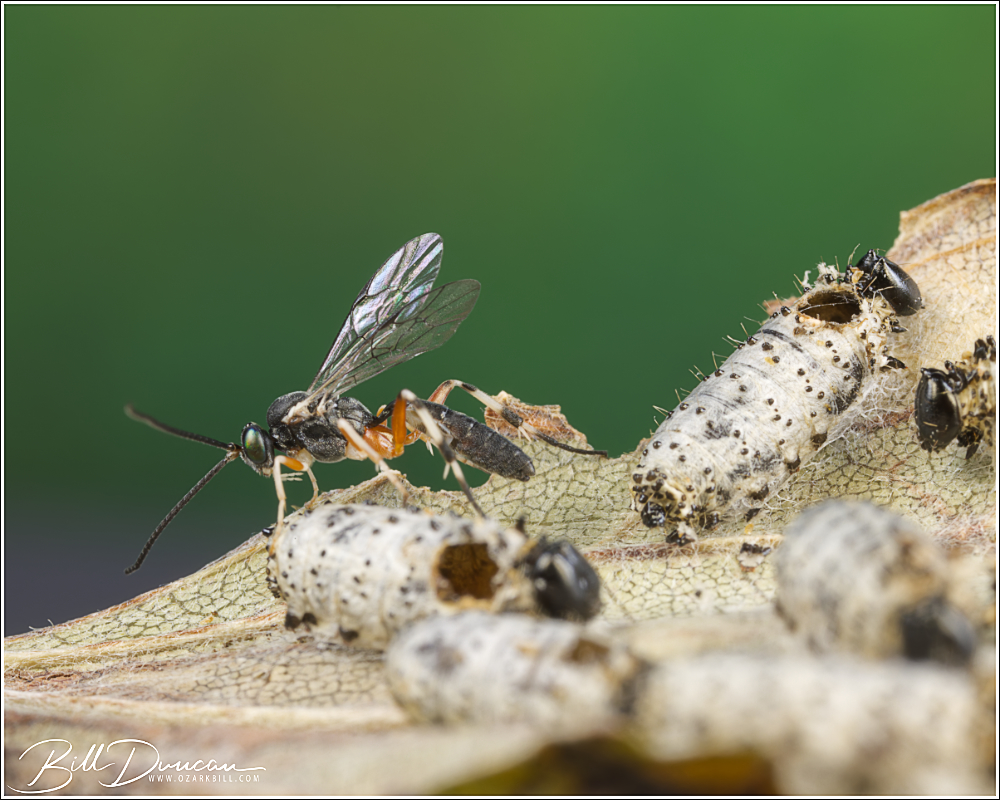
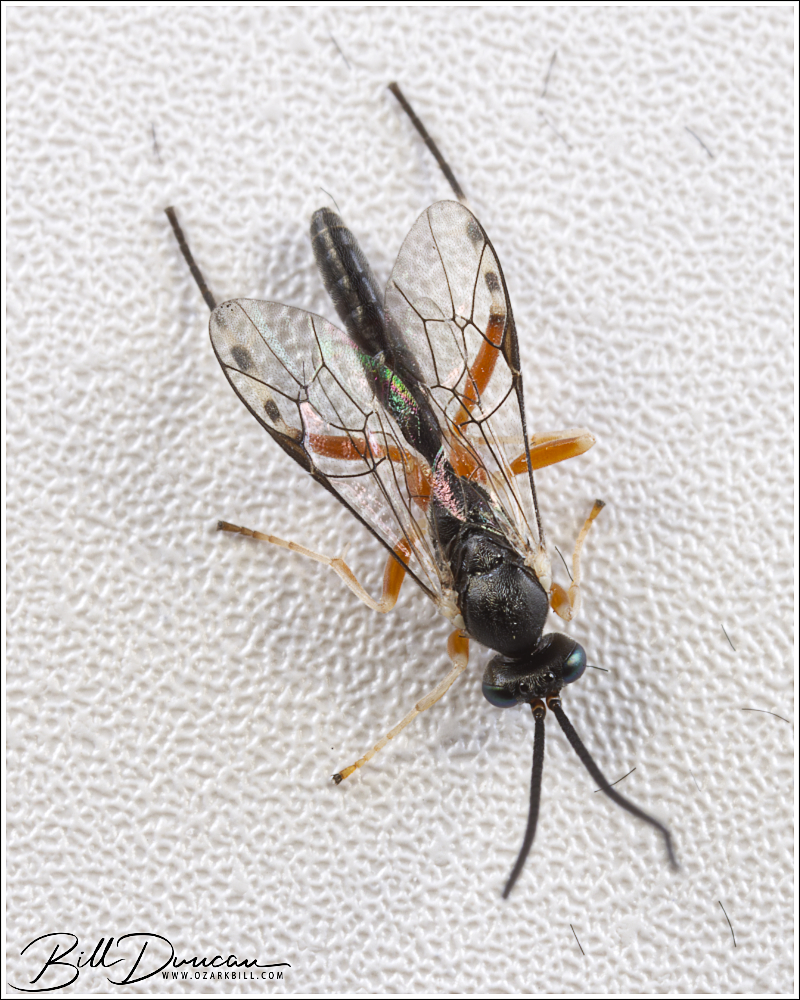
About three days later I checked the container that held these guys. To my surprise every single parasitoid had emerged from their hosts. In this case, the natural enemy is the Ichneumonid parasitoid, Hyposoter fugitivus. In the following images you can see the tiny wasps that have emerged from the even tinier caterpillars.
The ichneumonid wasp Hyposoter fugitivus recently emerged from its host, Oedemasia concinna.The ichneumonid wasp Hyposoter fugitivus recently emerged from its host, Oedemasia concinna.
Here are some closeups of the wasps.
Finally, a photo of the gorgeous caterpillar they may have become if not for these natural enemies…
Oedemasia concinna (red-humped caterpillar) found at Tyson Research Center, St. Louis County, MO.
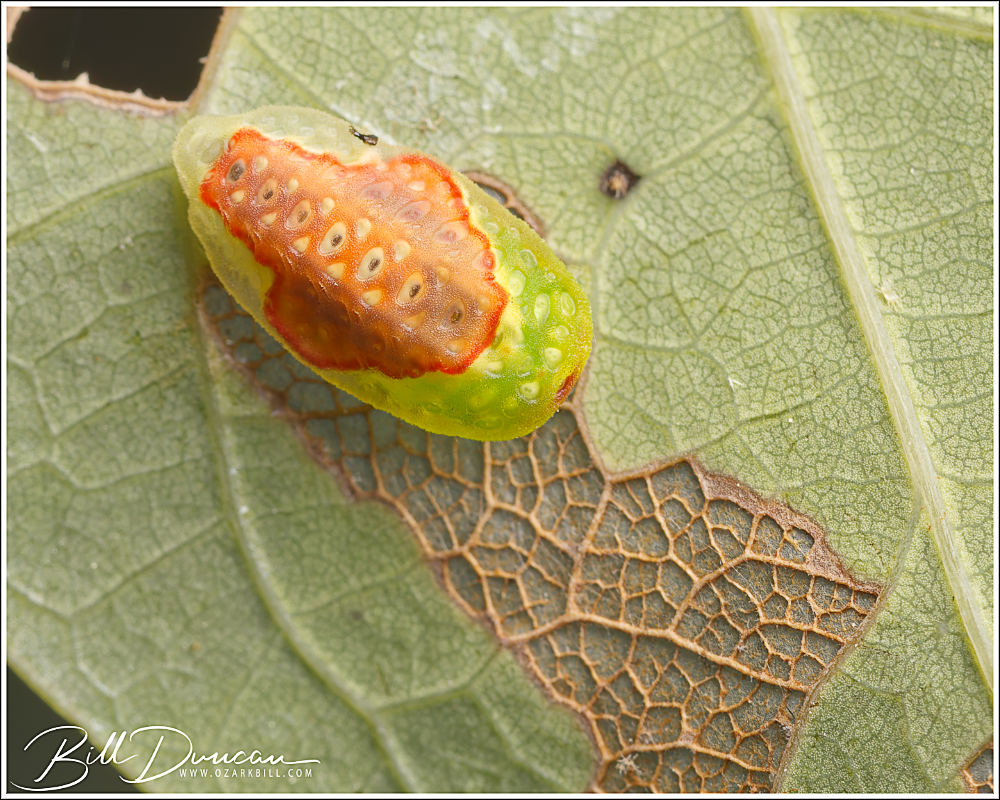
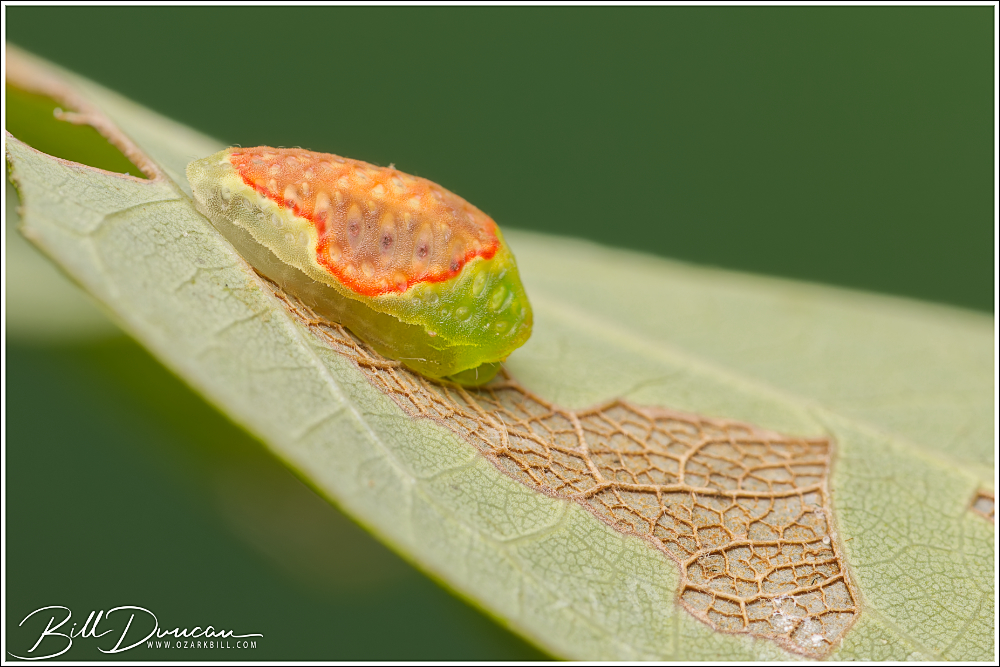
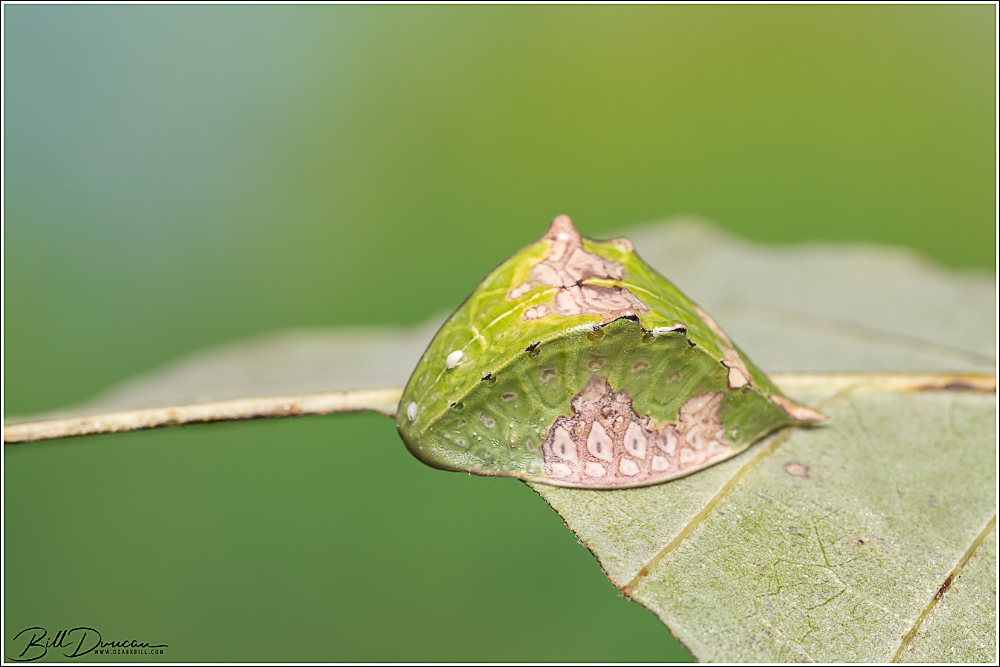
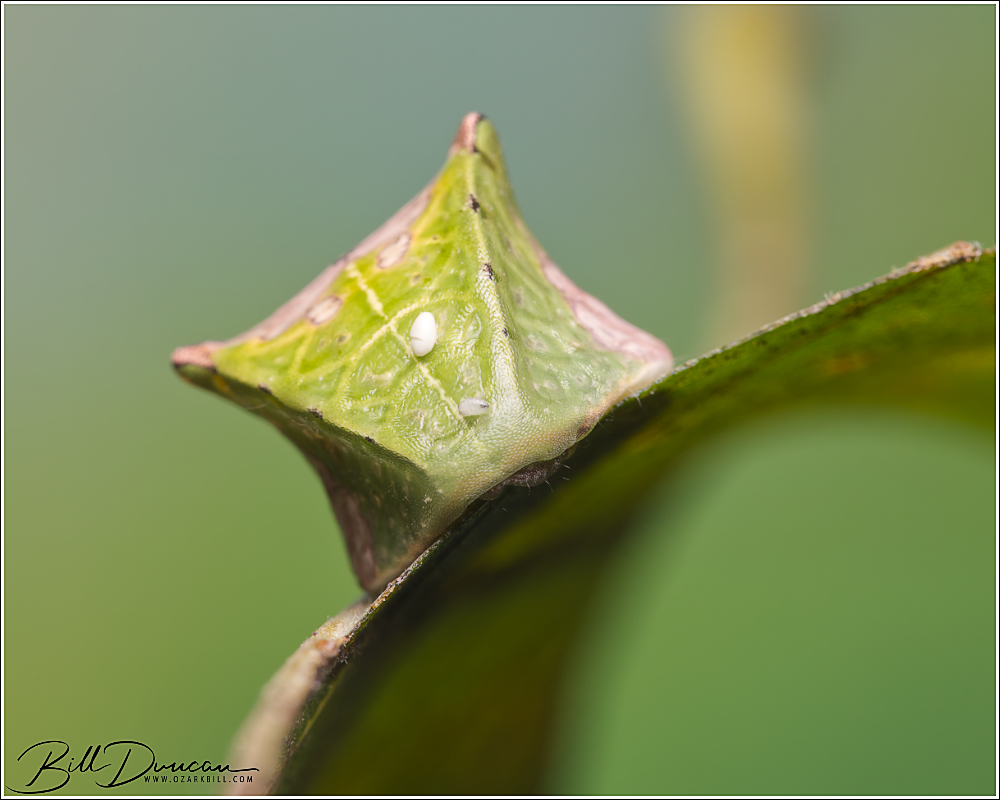
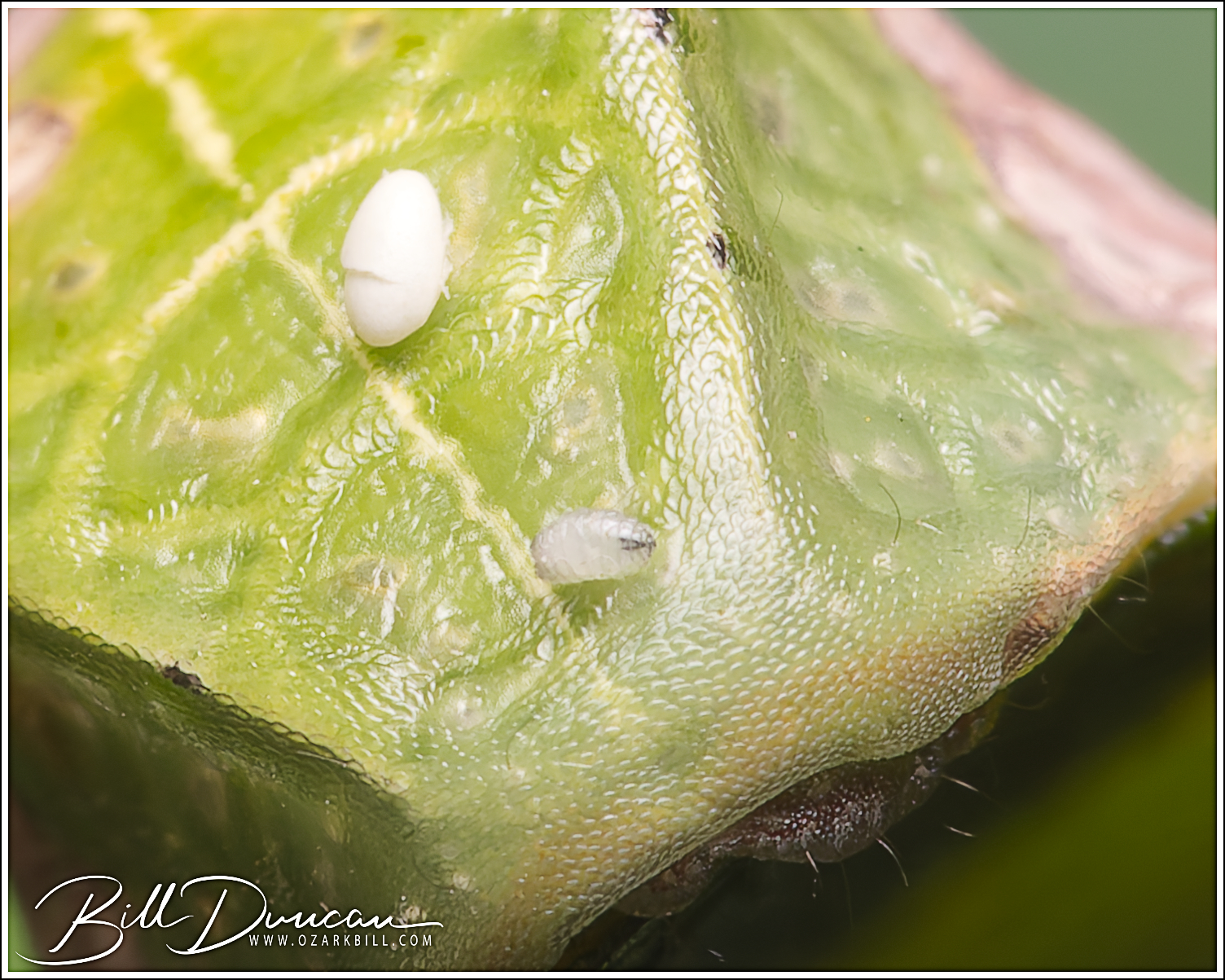
Skiff Moth Prolimacodes badia fam. Limacodidae (Hodges#4671) Host plant(s): Found on chinquapin oak (Quercus muehlenbergii) Date(s) and location(s): 31 August, 2025 – Tyson Research Center, St. Louis County, MO Notes: This poor cat is host to a tachinid fly larvae. A closeup image is included showing the egg as well as the larvae that has pierced the skin of the caterpillar in order to breath.






 A Thousand Acres of Silphiums