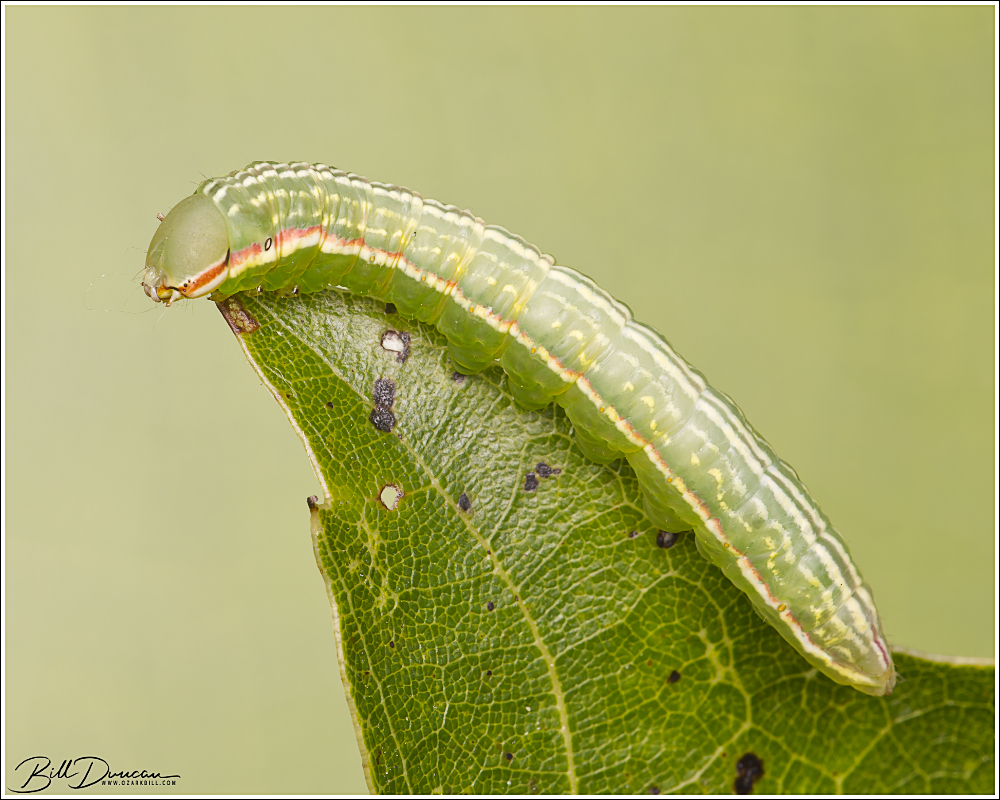
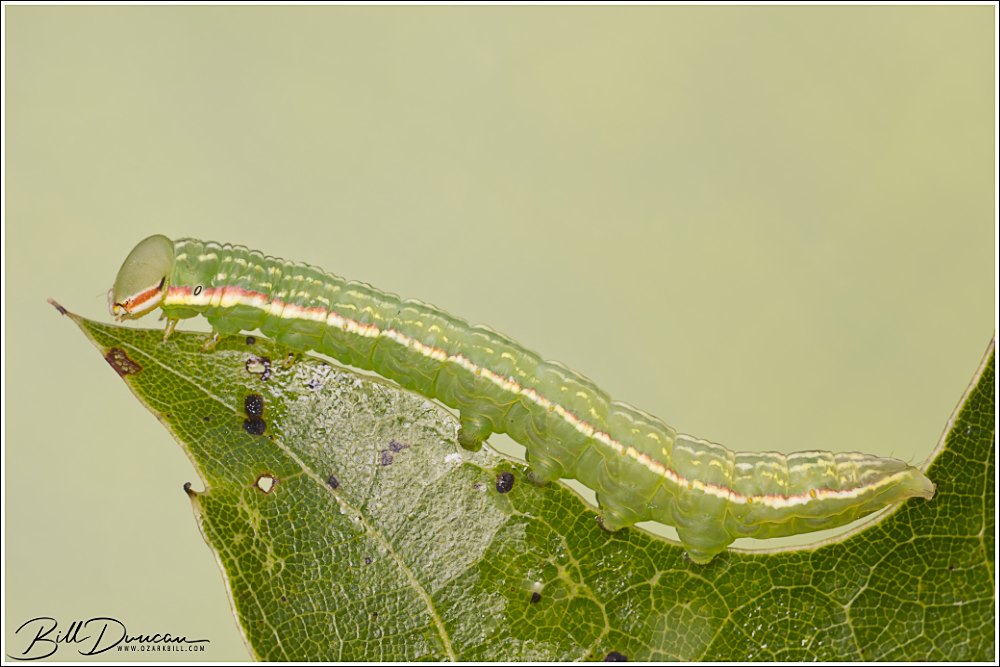
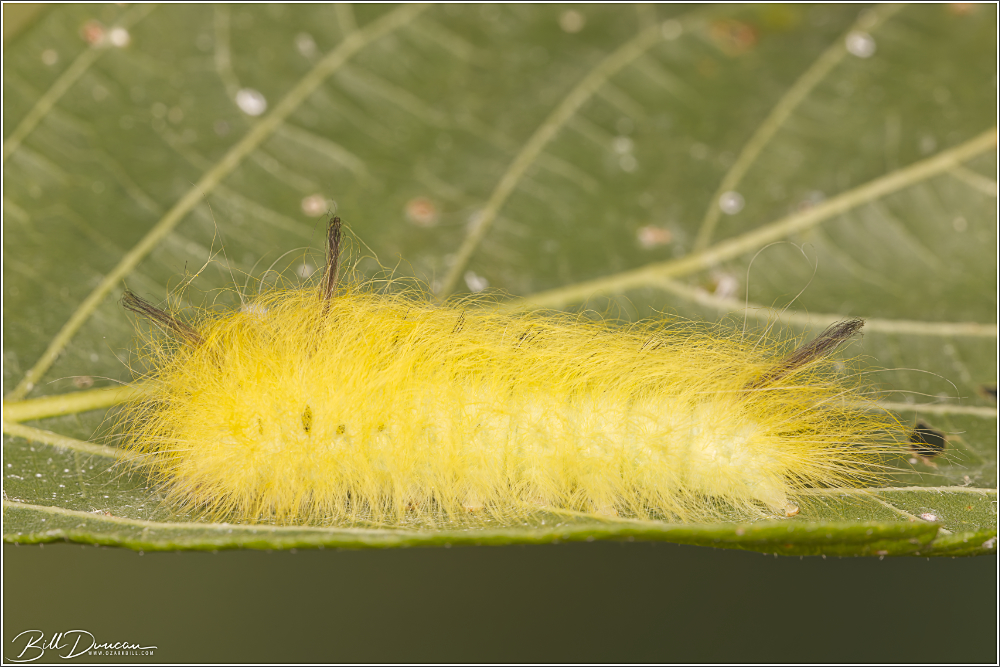
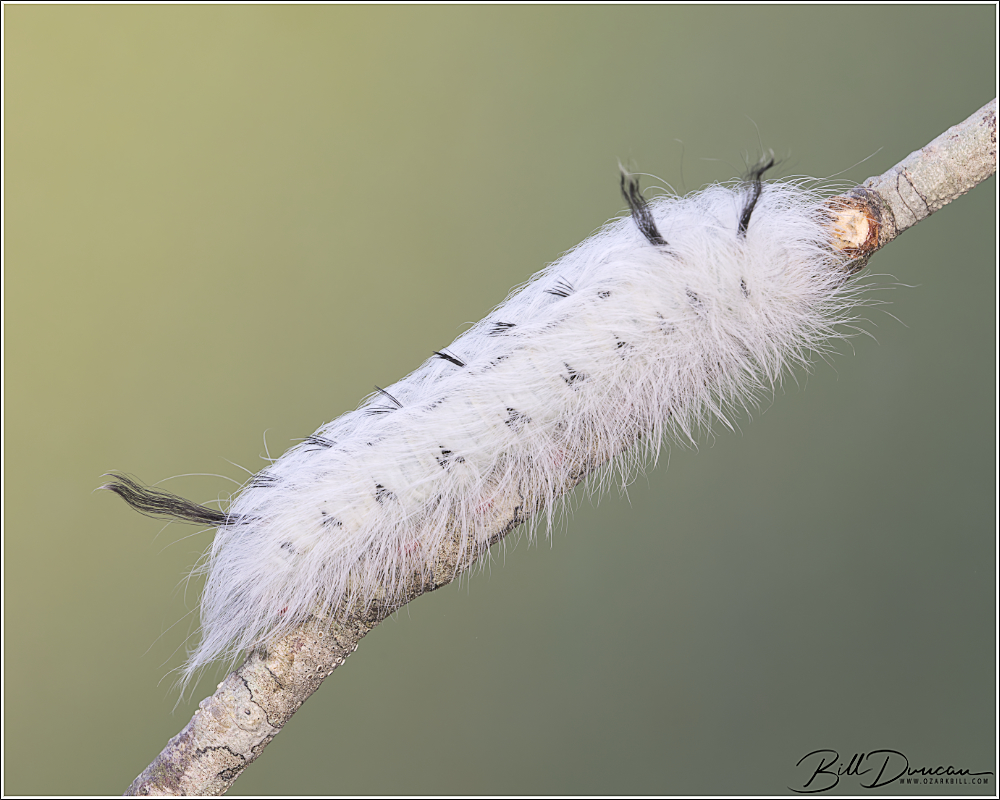
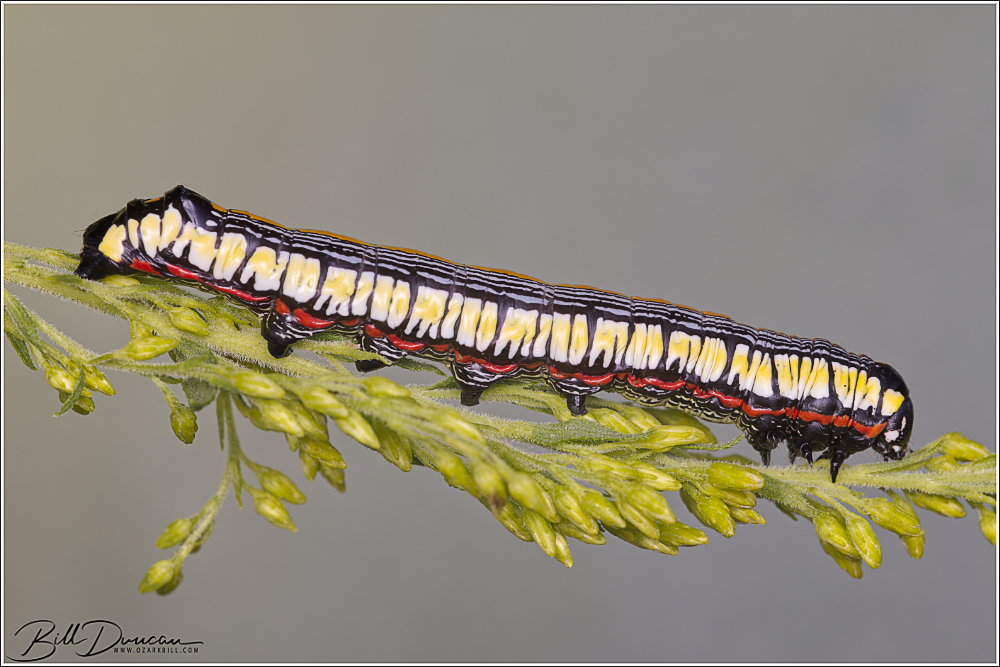
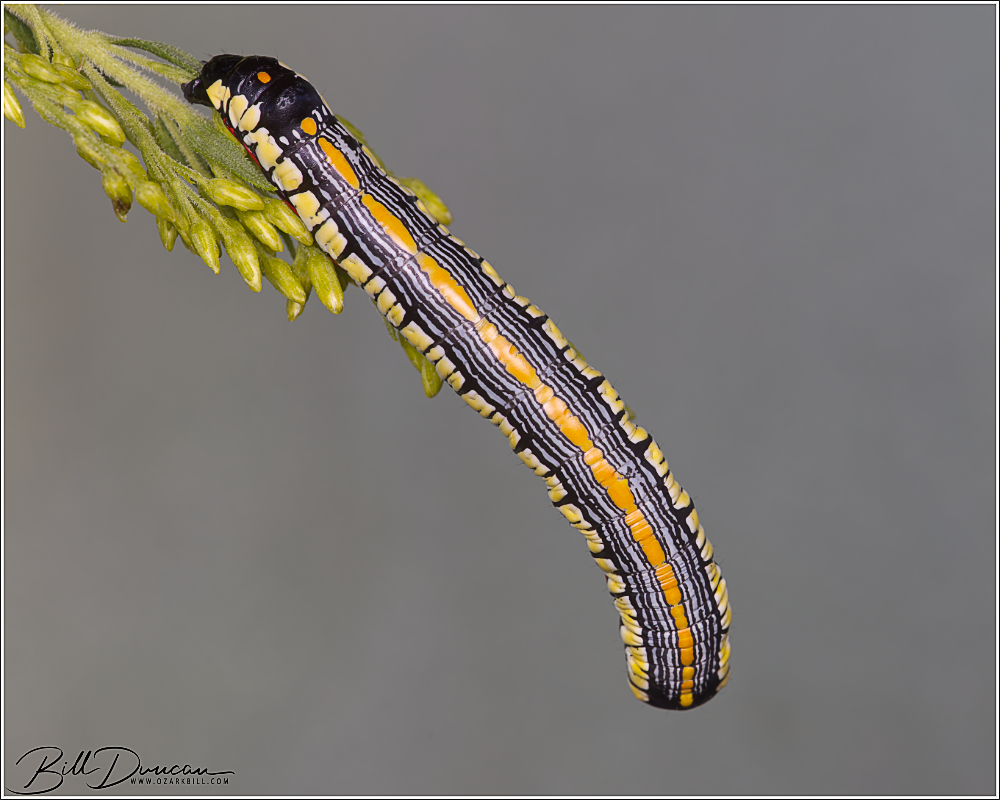
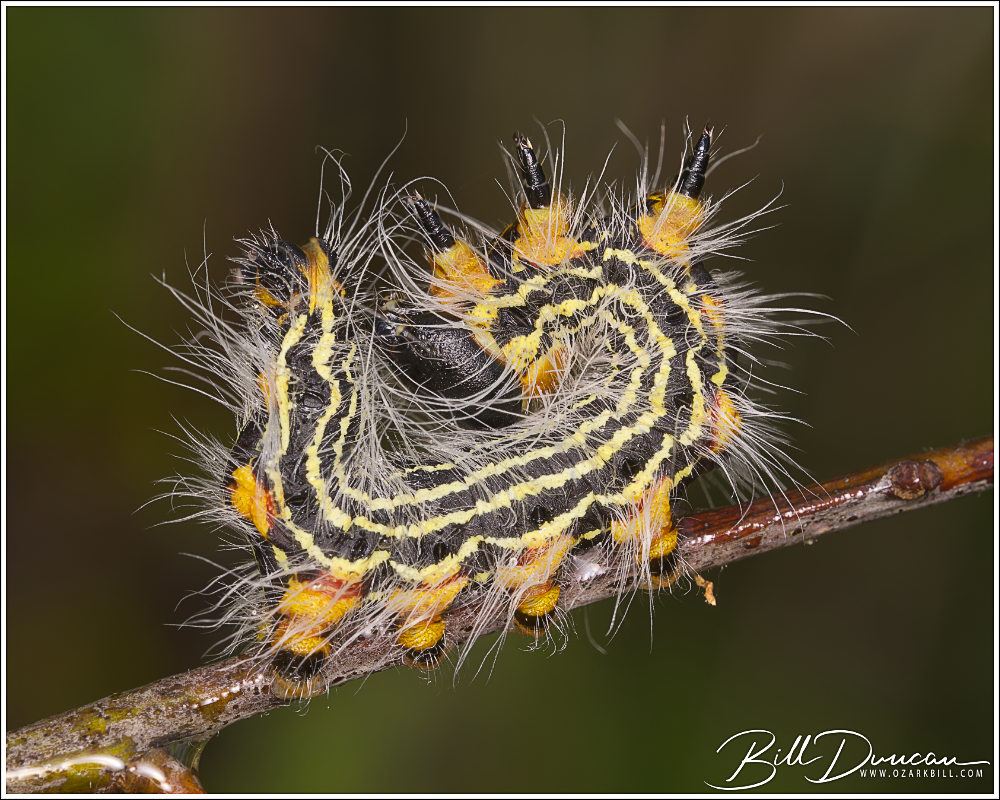
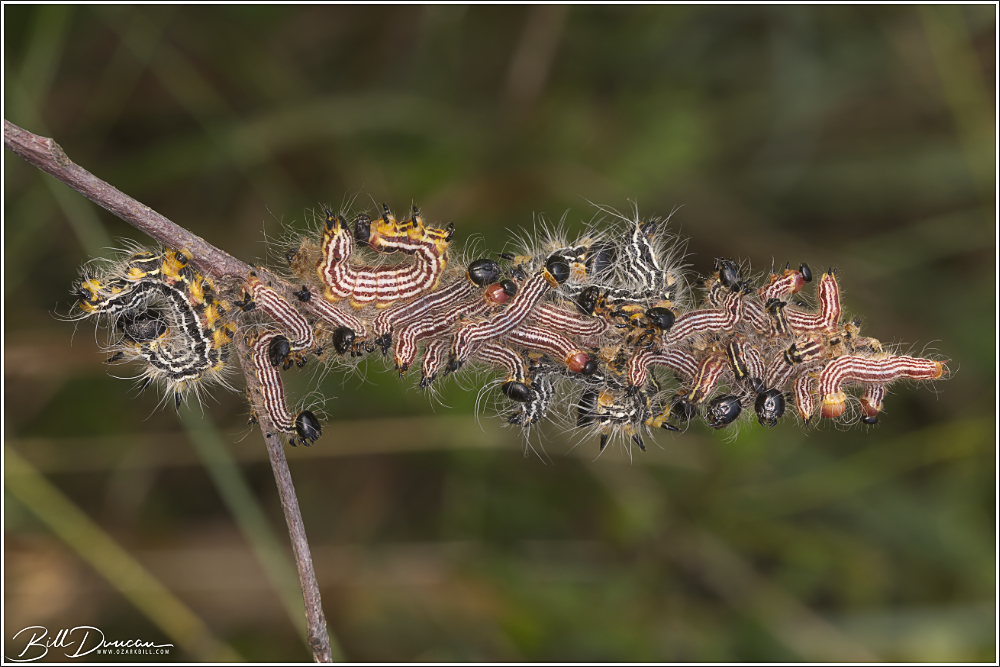
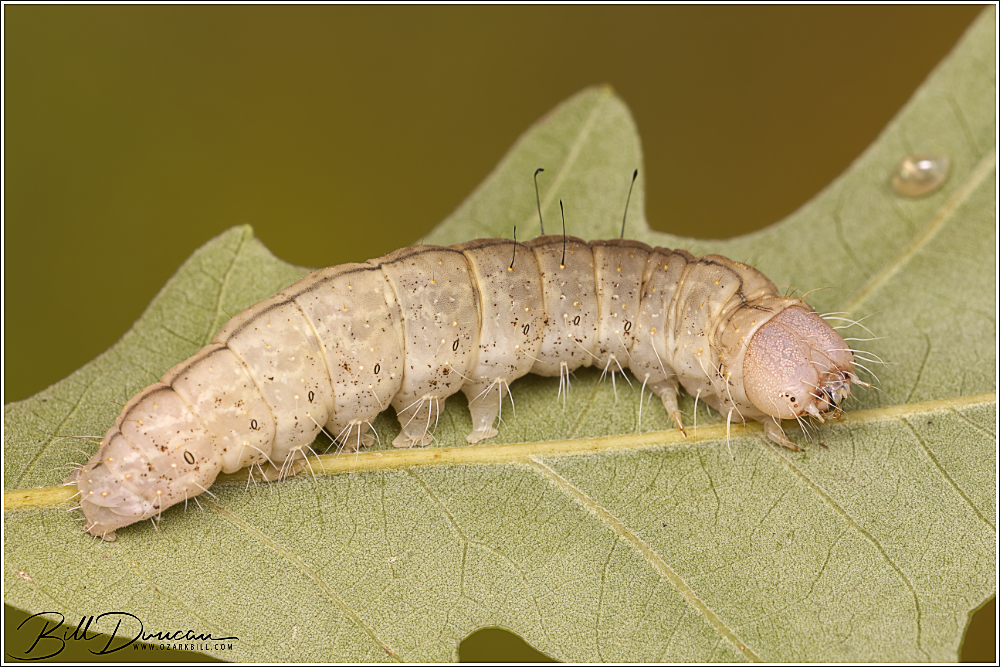
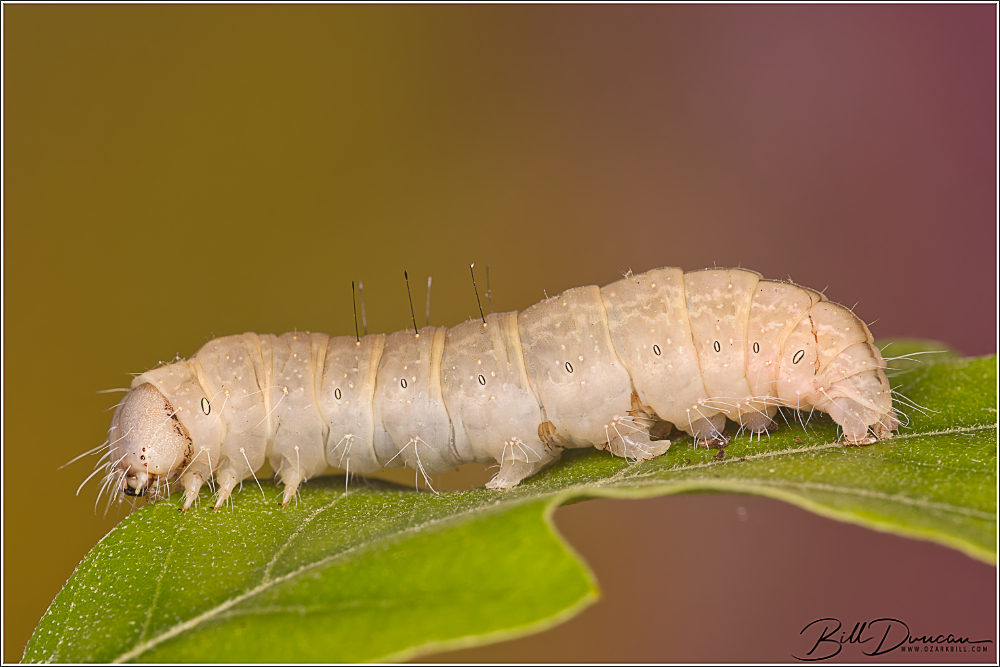
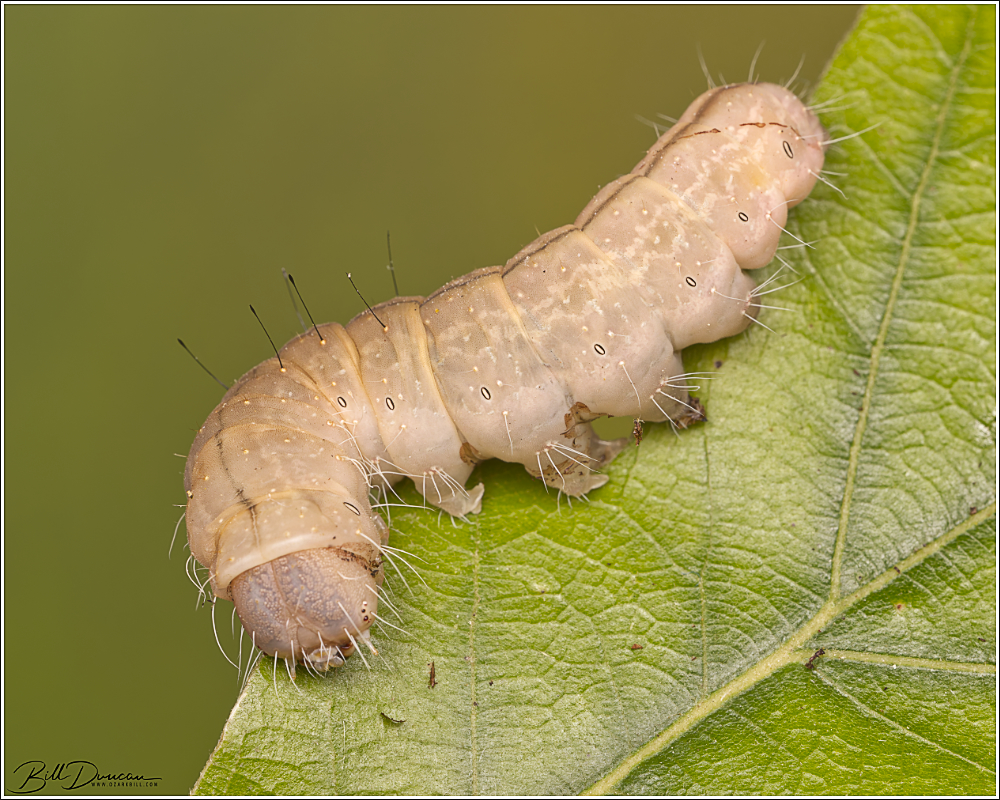
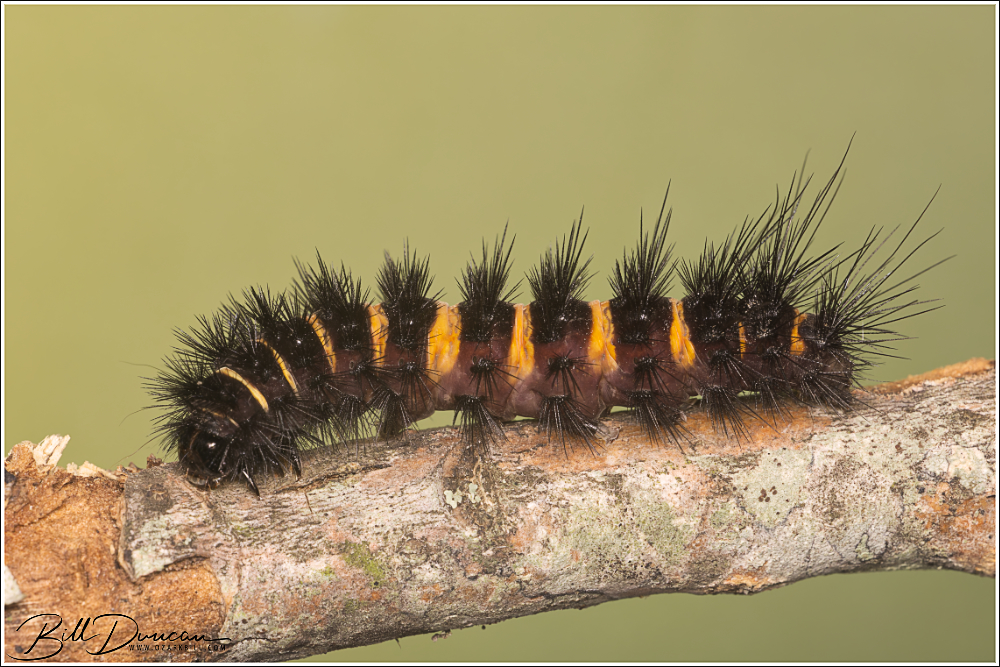
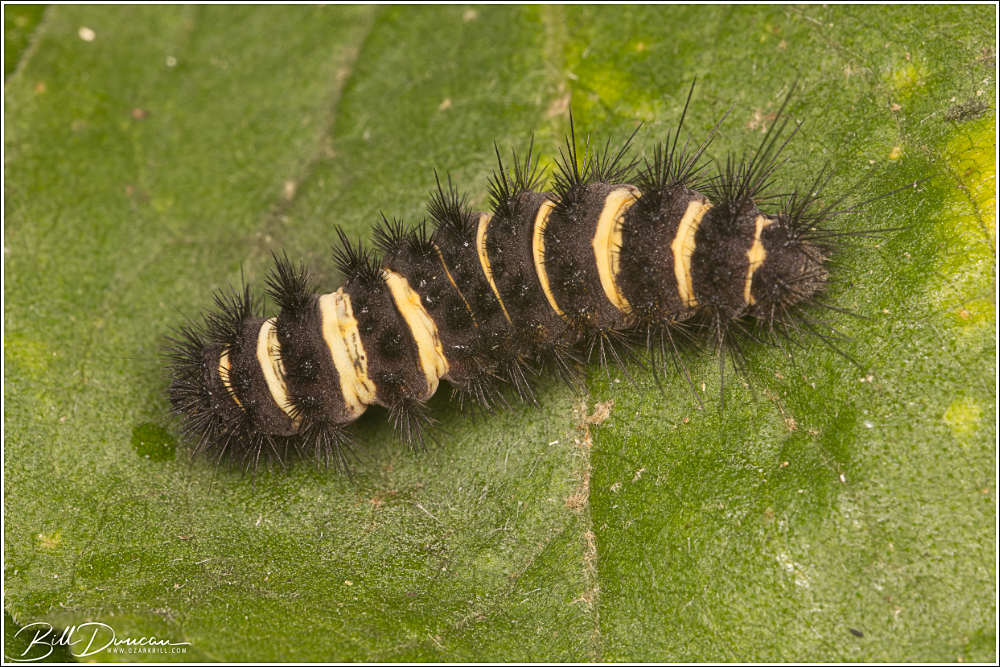
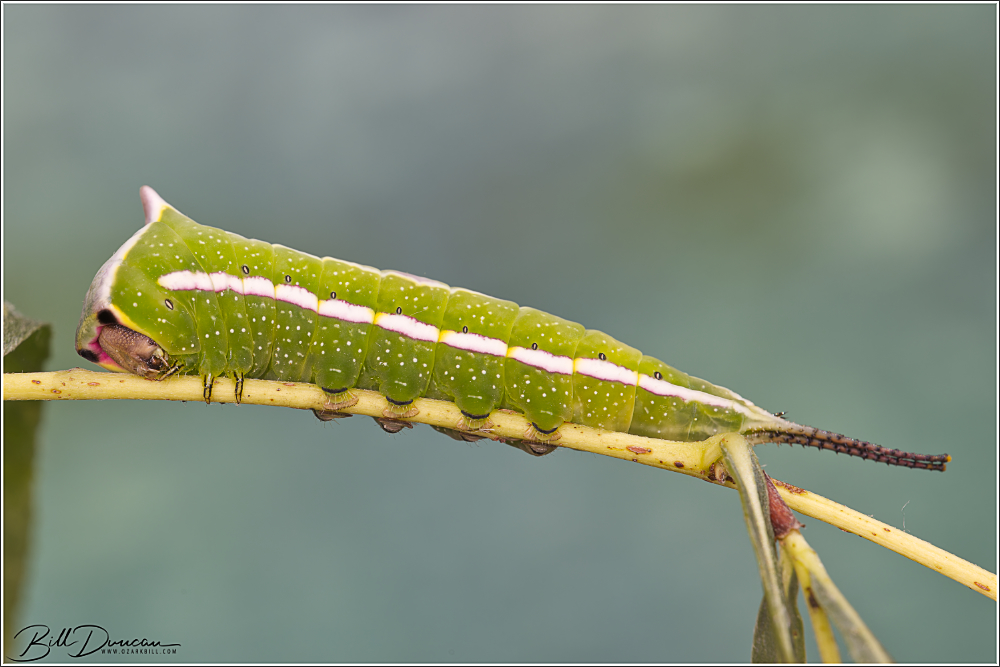
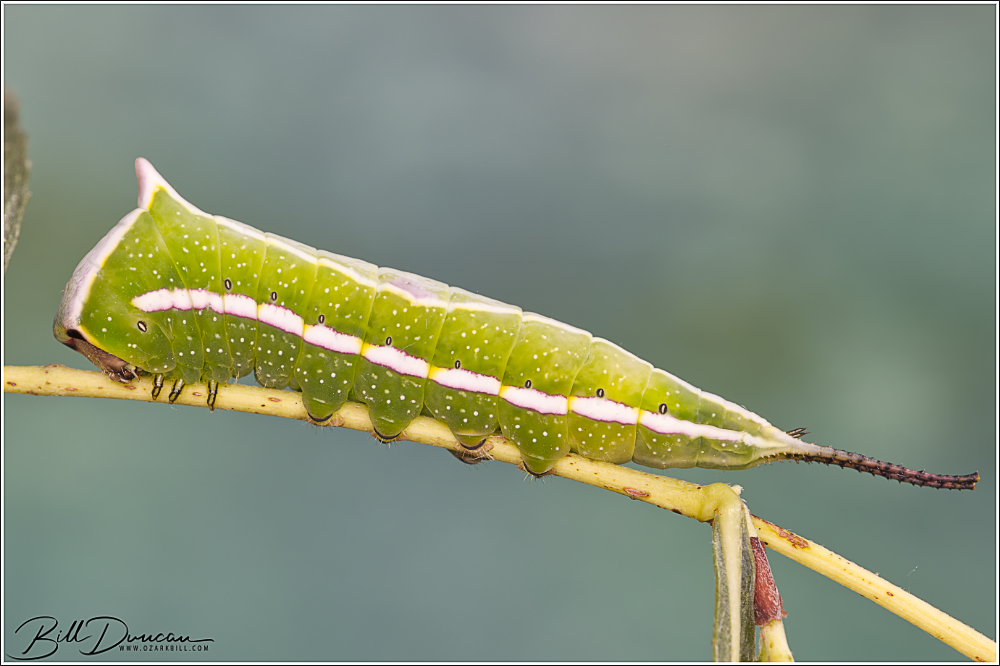
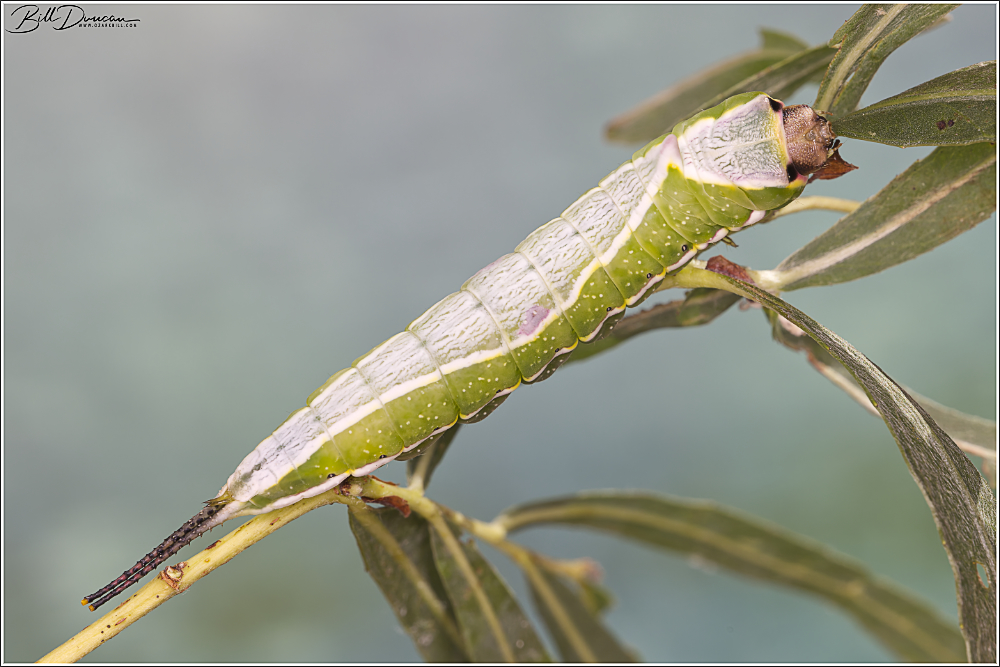
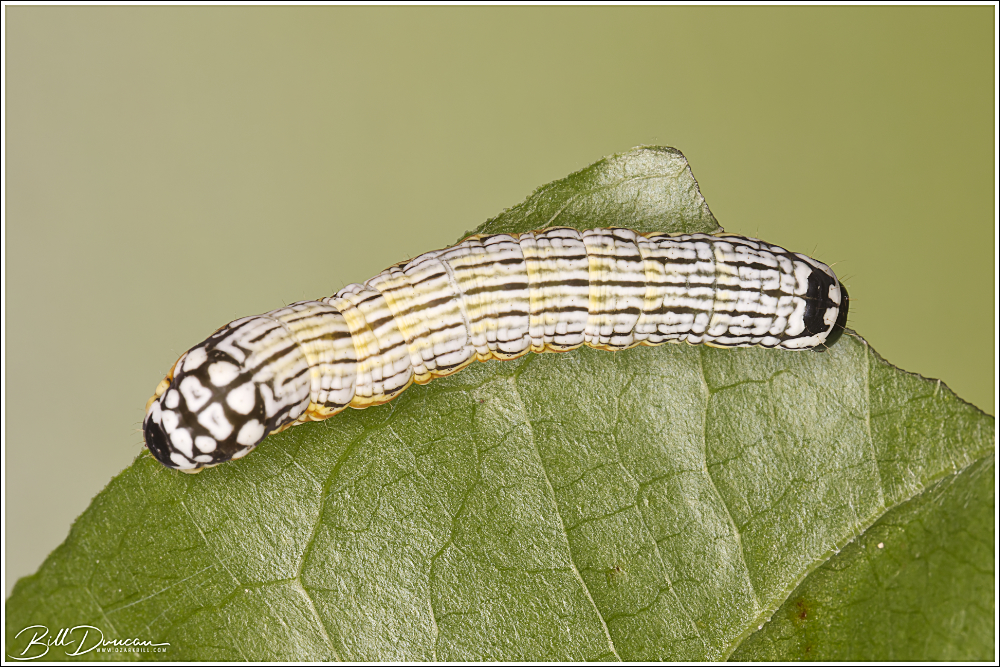
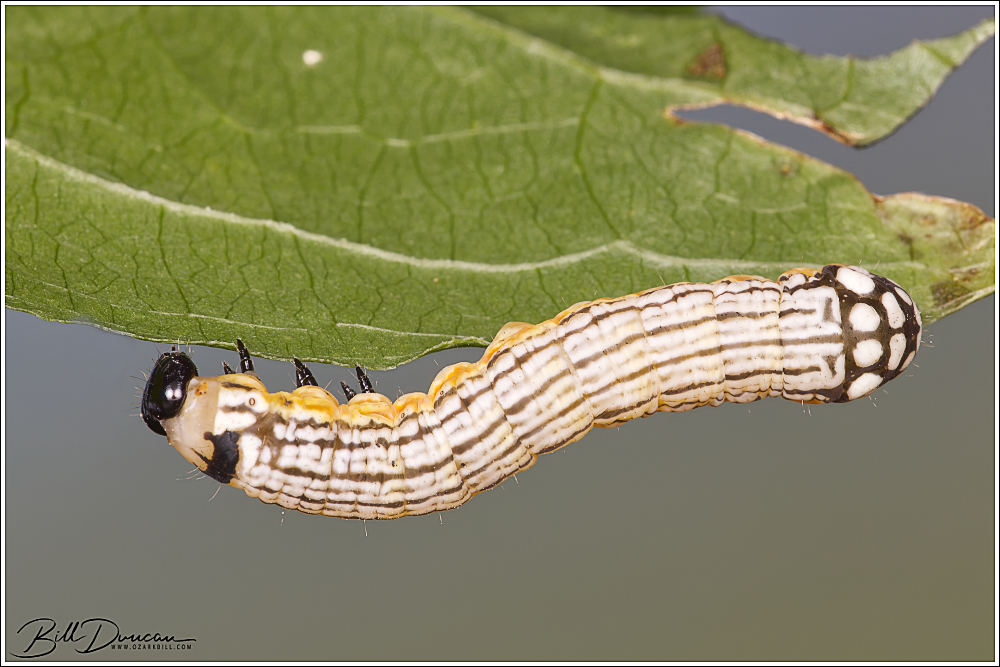
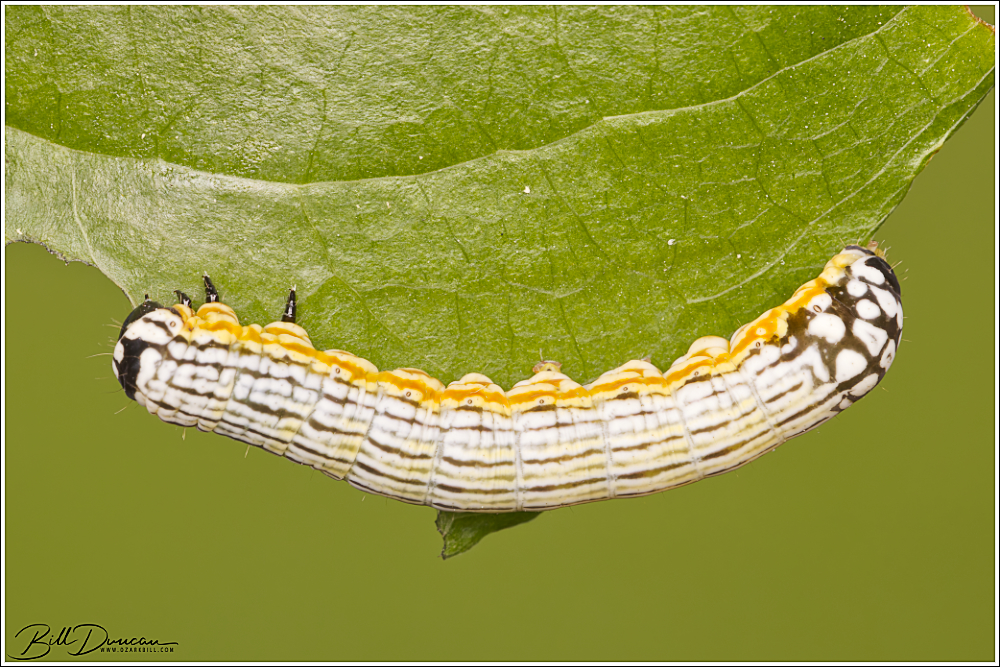
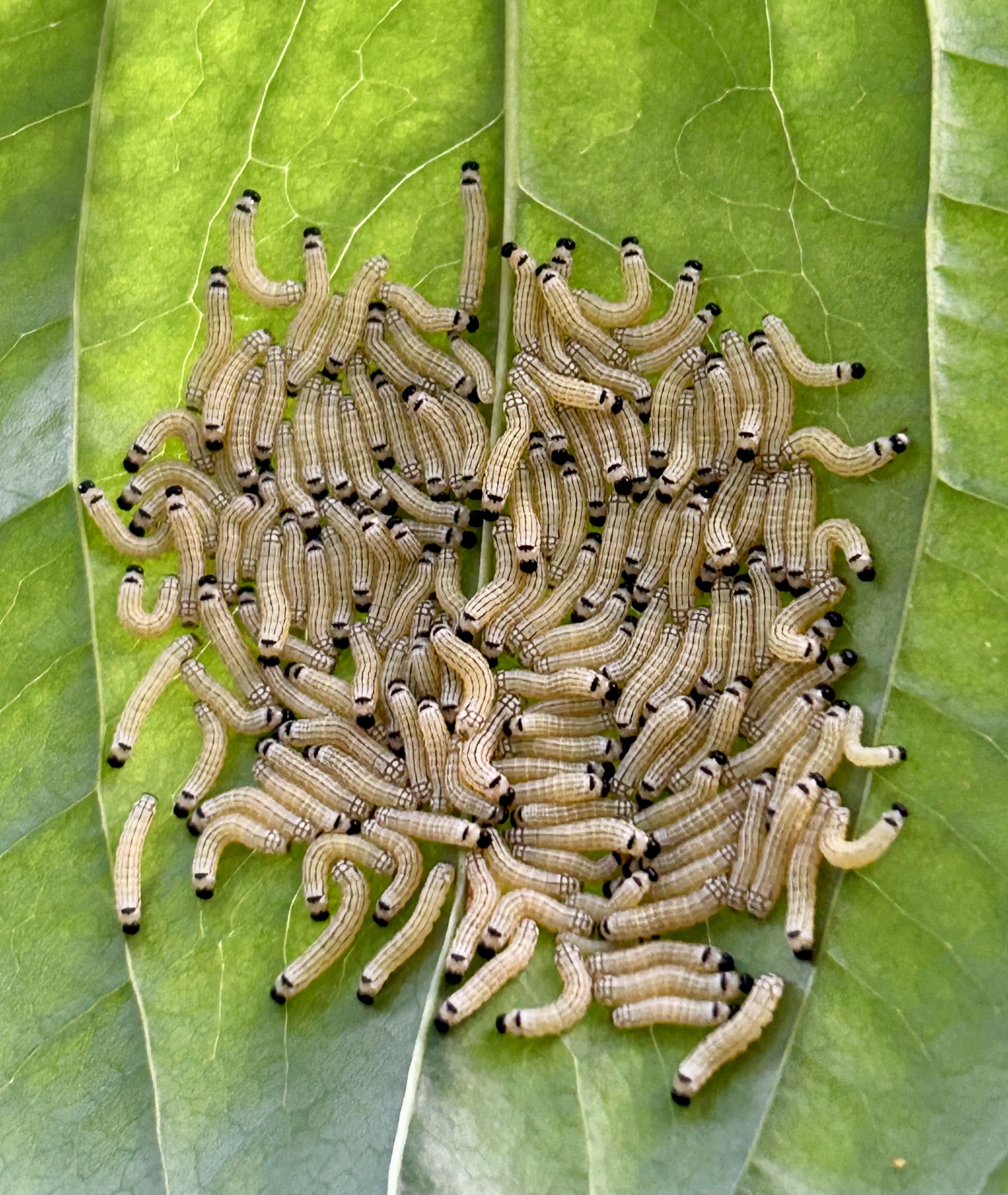
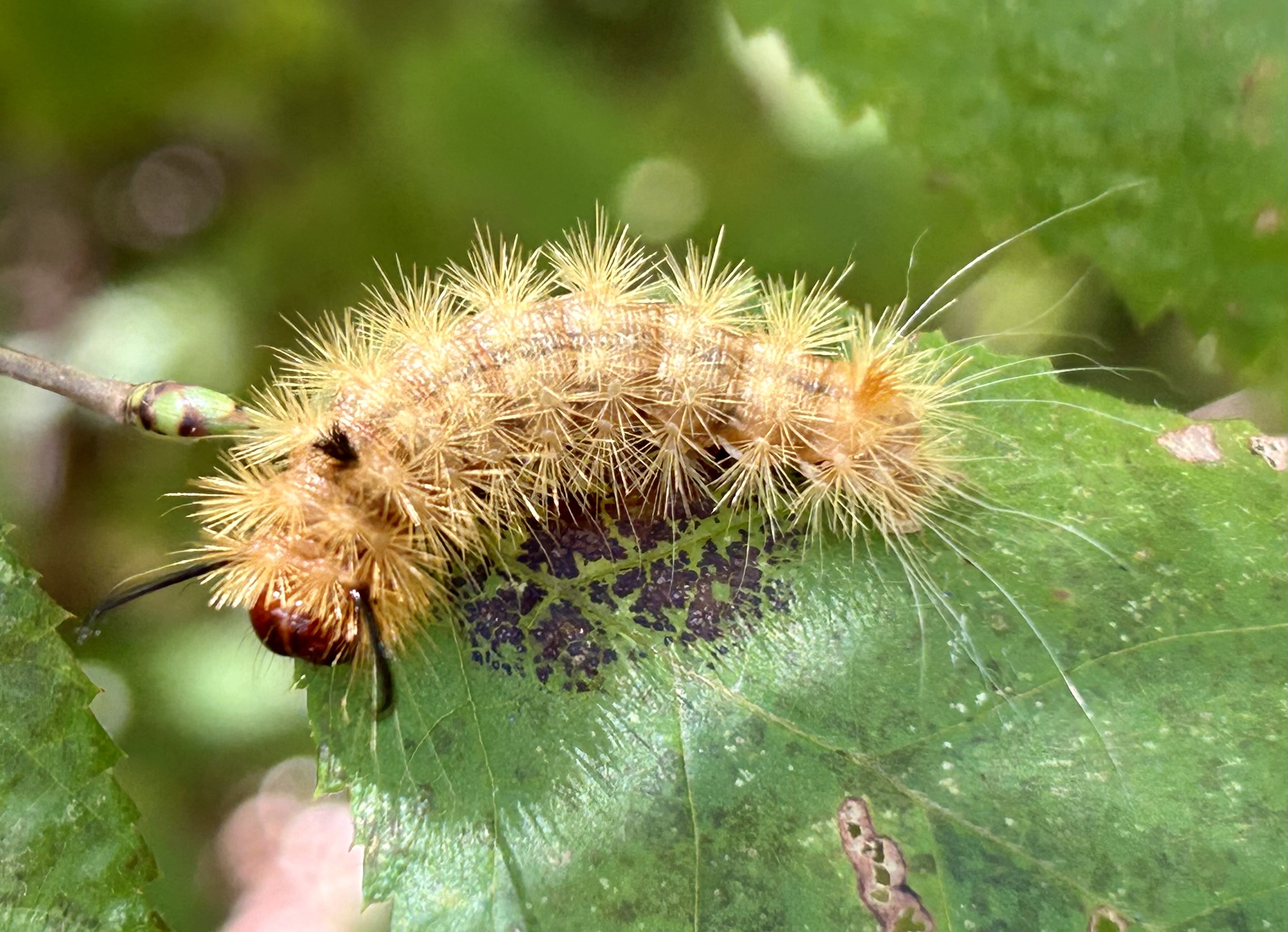
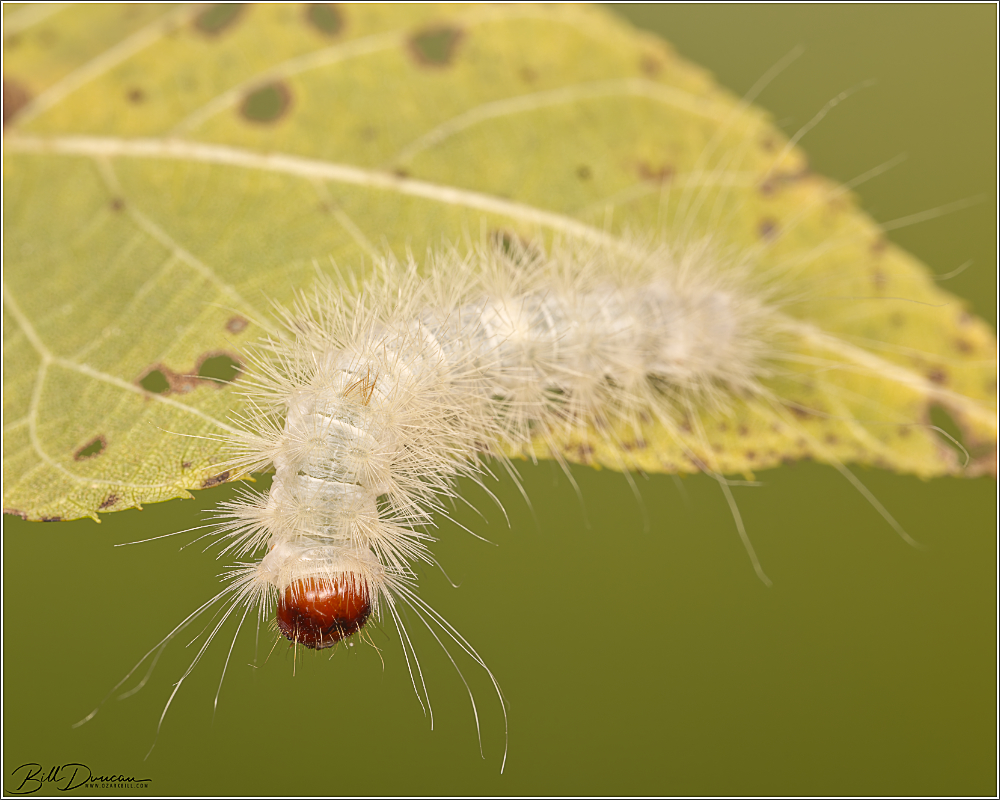
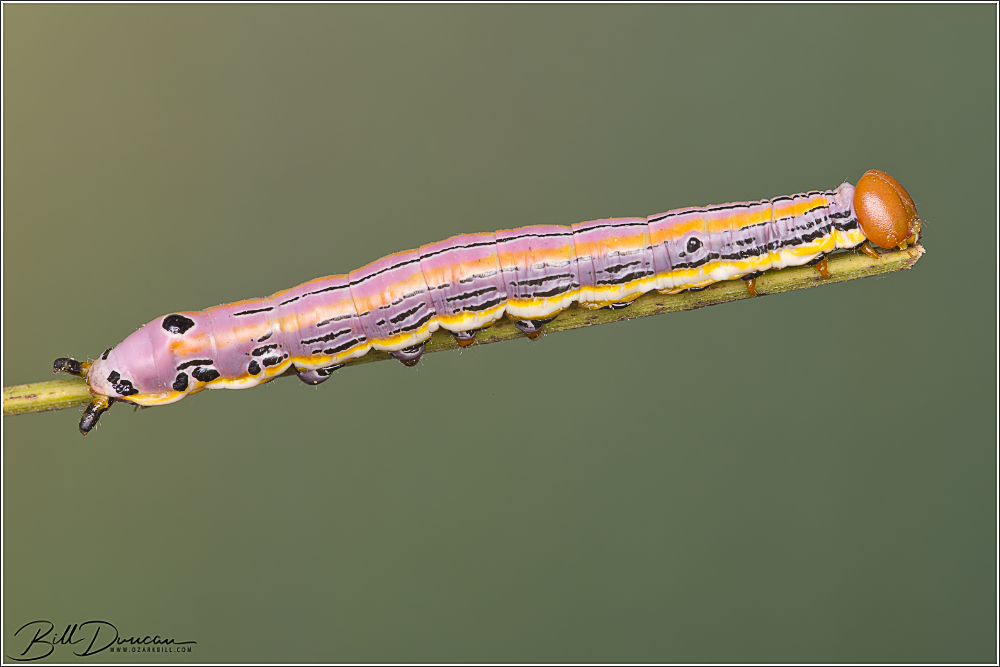
Black-spotted Prominent
Dasylophia anguina (J.E.Smith, 1797), fam. Notodontidae, P-no. 930133
Host plants: Feeds on mostly herbaceous members of the Fabaceae family but can be found on locust trees and Amorpha shrubs.
Date found(s): September 7, 2026
Location(s) found: Franklin County, MO
Notes: An alternative form of the black-spotted prominent can be found that replaces the lavenders and oranges with greens and blues. Many thanks to Eva Wiedeman for finding this one and letting me photograph it!
Tag: Lepidoptera
2026 Caterpillar Season – Luna Moth
Luna Moth
Actias luna (Linnaeus, 1758), fam. Saturniidae, P-no. 890072
Host plants: Highly polyphagous. The recorded hosts are plants in 18 families, utilizing mostly woody species.
Date found(s): August 26, September 3, 2026
Location(s) found: Tyson Research Center, St. Louis County, MO; Ste Genevieve County, MO
Notes: Perhaps the most beautiful and certainly among the most well-known adult moths in Missouri, the luna caterpillars are no ugly ducklings either. These caterpillars are voracious eaters, usually staying on their hatch tree until it is time to pupate. Like all our saturniids, the adult luna lacks mouth parts and does not eat. Their time as adults is short, living 7-10 days.


2026 Caterpillar Season – Pleasant Dagger
Pleasant Dagger
Acronicta laetifica (Smith, 1897), fam. Noctuidae, P-no. 931444
Host plants: Feeds solely on woody members of the Betulaceae family, namely musclewood (Carpinus caroliniana) and ironwood (Ostrya virginiana).
Date found(s): September 4, 2026
Location(s) found: Hawn State Park, Ste Genevieve County, MO
Notes: Host plant preferences for the pleasant dagger are not as cut and dry as many of our lepidopterans. Some authoritative sources, particularly historical references, list either hickory (Carya) or woody Rosaceae members as hosts. However, modern surveys have only found this species utilizing the above-mentioned members of the Betulaceae as hosts. It is unclear whether these discrepancies are related to changes in host preferences, or if previous documentation may refer to incorrectly identifying the moth species.


2026 Caterpillar Season – Azalea Sphinx—Redux
I recently shared some photos of likely forth instar azalea moth caterpillars that we found in early August. Steve and I went back to Hawn State Park in early September hoping to find some late/final instars and had some luck! To my great surprise, after returning home from one of these outings on Labor Day weekend, I found a final instar caterpillar on my backyard nannyberry (Viburnum lentago).
Final instar azalea sphinx caterpillar


2026 Caterpillar Season – Fawn Sphinx
Fawn Sphinx
Sphinx kalmiae (J.E.Smith, 1797), fam. Sphingidae, P-no. 890118
Host plants: Specializes in woody members of the olive family (Oleaceae), such as ash (Fraxinus spp.), and fringe-tree (Chionanthus virginicus).
Date found(s): August 16, 2026
Location(s) found: Loggers Lake Recreation Area, Shannon County, MO
Notes: The species epithet, kalmiae, is a misnomer that, unfortunately, has created a misunderstanding about the natural history of this species that continues to this day. Because of the name kalmiae, early entomologists assumed the moth’s main host was mountin-laurel (Kalmia), which are not even true laurels. In reality, field data has shown that the caterpillars heavily favor plants in the olive family (Oleaceae). The kalmiae name was given to honor Pehr (Peter) Kalm, an 18th-century Swedish botanist and apostle of Carl Linnaeus, and not in reference to laurels. The name Fawn Sphinx has been suggested and is now becoming more widely accepted.
2026 Caterpillar Season – Trumpet Creeper Sphinx
Trumpet Creeper Sphinx
Paratrea plebeja (Fabricius, 1777), fam. Sphingidae, P-no. 890110
Host plants: Primarily feeds on trumpet vine (Campsis radicans). Also reported hosting on Oleaceae, Passifloraceae, and Solanaceae, although these are likely seldom used.
Date found(s): September, 2026
Location(s) found: Tyson Research Center, St. Louis County; Franklin County, MO
Notes: Trumpet creeper vines are heavily targeted by birds and predatory wasps during the day. To survive, the trumpet vine sphinx caterpillar utilizes a clever defensive routine. During daylight hours, the caterpillar shifts to the underside of the plant’s woody stems, pressing its body flat against the bark to become practically invisible. Only when darkness falls does it crawl out onto the leaves to feed safely under the cover of night. Here is another reason to get out after dark to find a greater diversity of caterpillars!
The Trumpet Creeper Sphinx comes in two primary color phases. The green phase, like the poor heavily parasitized individual pictured here (found at Tyson Research Center), and a less commonly found brown phase, pictured here and found by Eva Wiedeman in Franklin County, MO.


2026 Caterpillar Season – Eastern Tiger Swallowtail
Eastern Tiger Swallowtail
Papilio glaucus (Linnaeus, 1758), fam. Papilionidae, P-no. 77a0386
Host plants: Polyphagous, hosting on woody species in at least 20 families. In Missouri most commonly found on tulip tree (Liriodendron tulipifera) and black cherry (Prunus serotina).
Date found(s): 3 September, 2026
Location(s) found: Ste. Genevieve County, MO
Notes: Eastern tiger swallowtail adults come in two color phases. Males are yellow with black wing margins and black vertical striping. Females are polymorphic, exhibiting a yellow phase as well as a dark phase. This is an interesting case of Batesian mimicry—when a harmless mimic adopts the warning signals (e.g. aposematic coloration) of a toxic or unpalatable species. In this case, the dark phase females closely resemble the pipevine swallowtail that are unpalatable due to the sequestration of aristolochic acids they obtain from their host plants. Lepidopterists have discovered that the dark phase mimics are more abundant in areas with higher numbers of pipevine swallowtails, and conversely, are rarely found in areas without their distasteful models.


2026 Caterpillar Season – Green Leuconycta
Green Leuconycta
Leuconycta diphteroides (Guenée, 1852), fam. Noctuidae, P-no. 932026
Host plant (s): Hosts on a variety of Asteraceae family members including fleabane (Erigeron spp) and goldenrod (Solidago spp).
Date found(s): 28 June, 2026
Location(s) found: Pinewoods Lake Recreation Area, Carter County, MO
Notes: Due to its host plant preferences, look for this moth in meadows, fields and prairies. If you plant native composite wildflowers, you may even have luck in finding them in your own backyard. The adult moth is a stunner and is often a popular subject when arriving at blacklights. It has received a common nickname in mothing circles—the “mint chocolate chip moth.”
2026 Caterpillar Season – Blinded Sphinx
Blinded Sphinx
Paonias excaecata (J.E.Smith, 1797) P-no. 890144
Host plant: Found on black cherry (Prunus serotina)
Date found: 5 August, 2026
Location found: Ste. Genevieve County, MO
Notes: Note the red blotches that are surrounded by yellow, nicely mimicking later season leaves. This undoubtedly provides nice camouflage and may explain why certain color morphs are found on certain hosts.
2026 Caterpillar Season – Tobacco Hornworm
Tobacco Hornworm (Carolina Sphinx)
Manduca sexta (Linnaeus, 1763) P-no. 890090
Host plant: Found on tomato (Solanum lycopersicum)
Date found: July–August, 2026
Location found: St. Louis County, MO
Notes: It took me long enough to collect some photos of this common species. This species is so common that most non-naturalists have seen them as they terrify their tomato plants they tend in backyard gardens. I had the pleasure of seeing a few of these this year, thanks to my pop, Bart, who invited me to photograph a couple he found on his tomato plants. He also gave me a few plants to grow in my backyard this year (mostly for the caterpillars). We found a couple, one of which I reared in a flight cage and has now went to ground to pupate. With luck, I’ll be able to see the adult moth next spring.