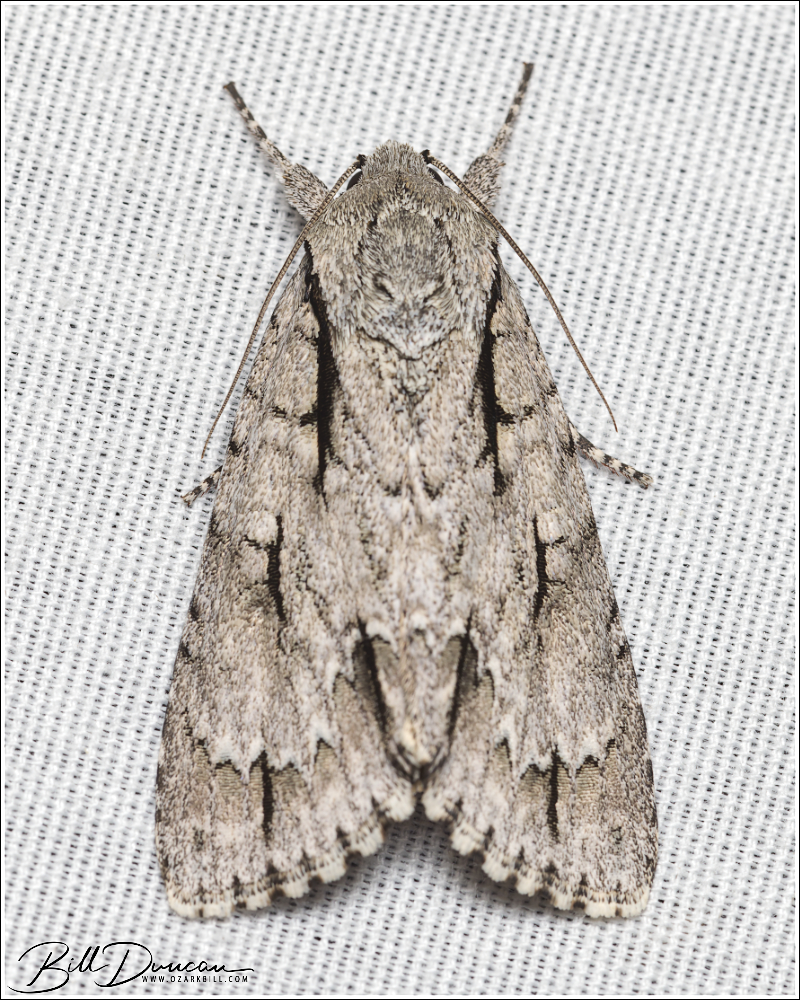
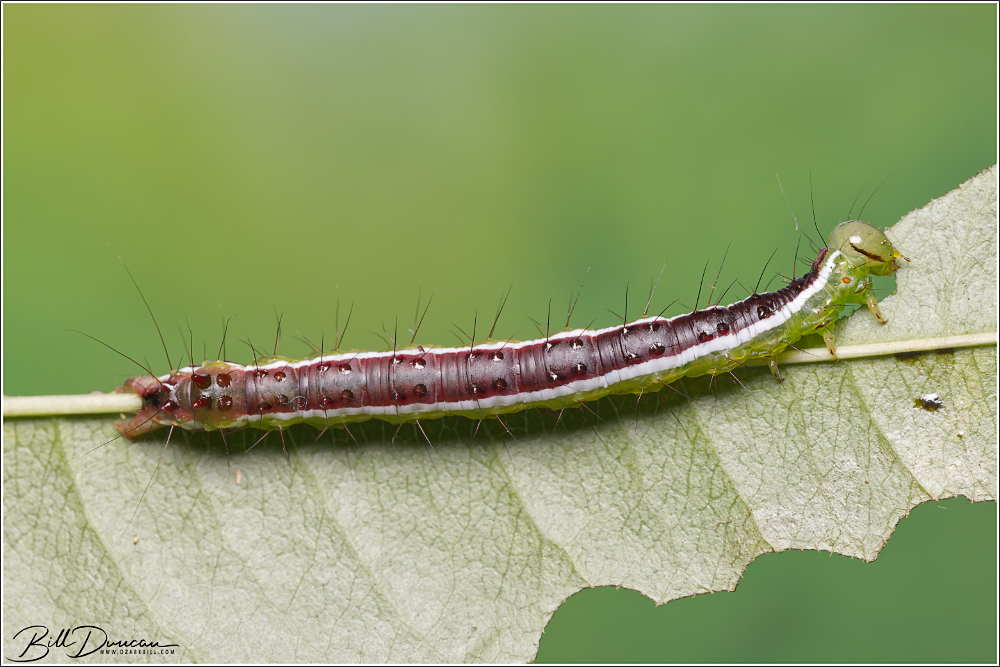
Interrupted Dagger
Acronicta interrupta fam. Noctuidae (Hodges#9237)
Host plant(s): Found on elm (Ulmus sp.)
Date(s) and location(s): 31 Aug, 2025 – Tyson Research Center, St. Louis County, MO
Notes: The first of this species I have found.


"What a thousand acres of Silphiums looked like when they tickled the bellies of the buffalo is a question never again to be answered, and perhaps not even asked." -Aldo Leopold
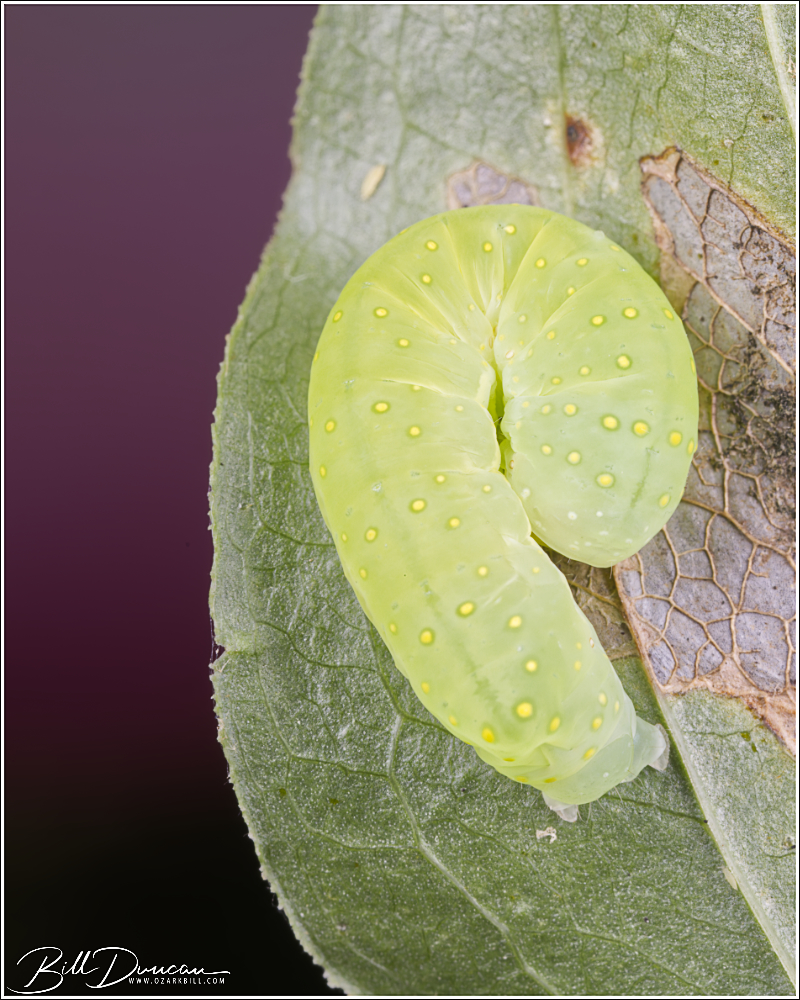
Interrupted Dagger
Acronicta interrupta fam. Noctuidae (Hodges#9237)
Host plant(s): Found on elm (Ulmus sp.)
Date(s) and location(s): 31 Aug, 2025 – Tyson Research Center, St. Louis County, MO
Notes: The first of this species I have found.
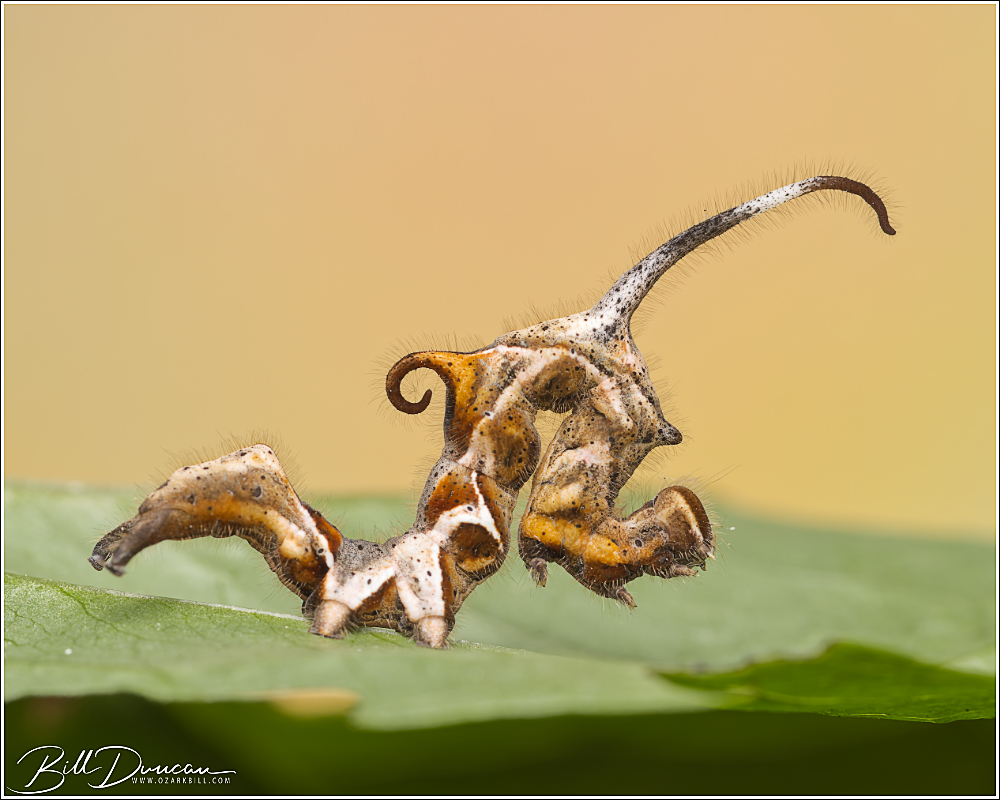
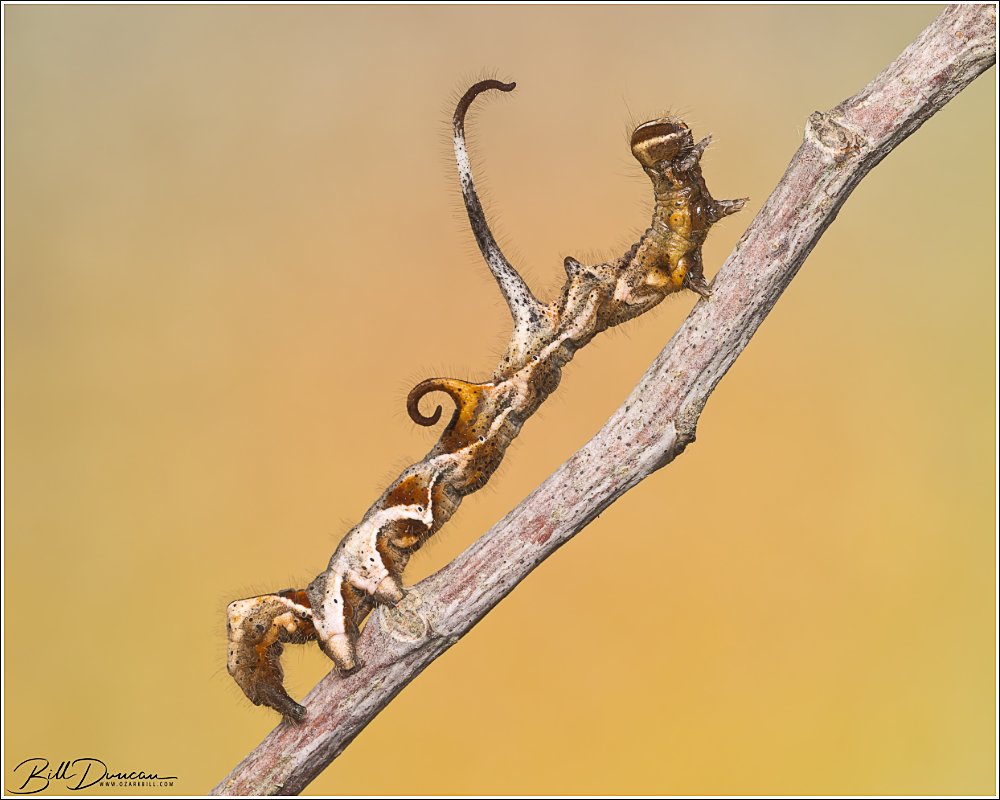
Curve-lined Owlet
Phyprosopus callitrichoides fam. Erebidae (Hodges#8525)
Host plant(s): Found on greenbrier (Smilax sp.)
Date(s) and location(s): 15 Sep, 2025 – Creve Coeur Lake Park, St. Louis County, MO
Notes: My favorite caterpillar species and one that I have not had the pleasure to find in over nine years! In all of the high-quality habitats I visit in Missouri during the late summer, I take the time to carefully investigate any greenbrier that I happen to find, always on the lookout for this magnificent creature. Imagine my surprise to find one in St. Louis County! Looking like it could have been the creation of Dr. Seuss or Tim Burton, this cat looks and behaves as though it might be a dead leaf or portion of a tendril of its greenbrier host. When disturbed, it will sway back and forth as if being simply a piece of detritus moving with the wind.
These guys are often found in brood groups. I made every effort to find others nearby but found none. I did find two large wolf spider nests very close (within inches) to the vegetation where I found this cat. Could this be why I found none of its siblings?

Tulip Tree Beauty
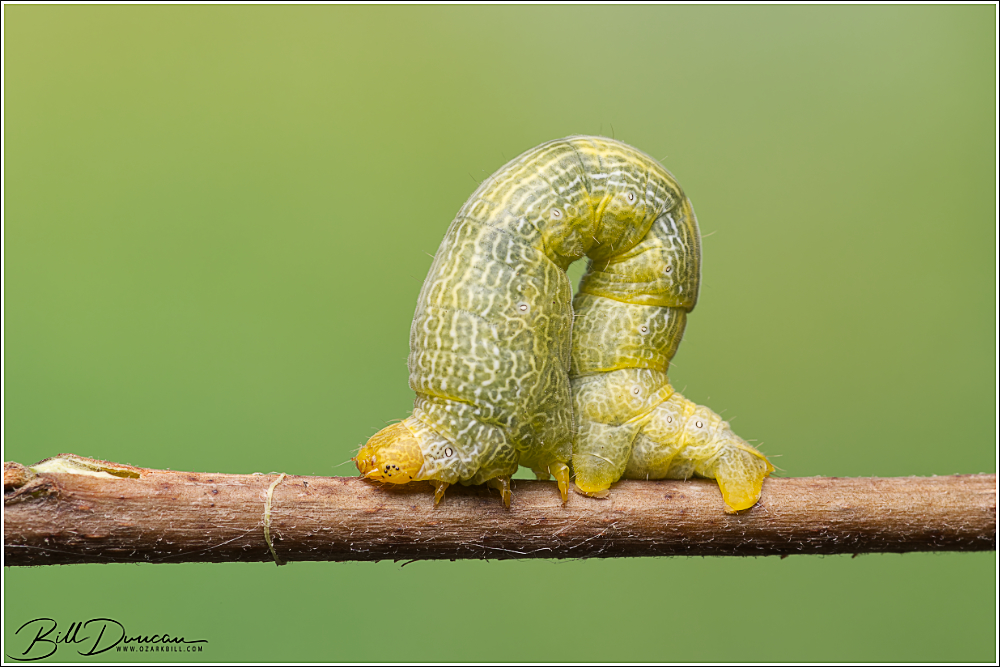
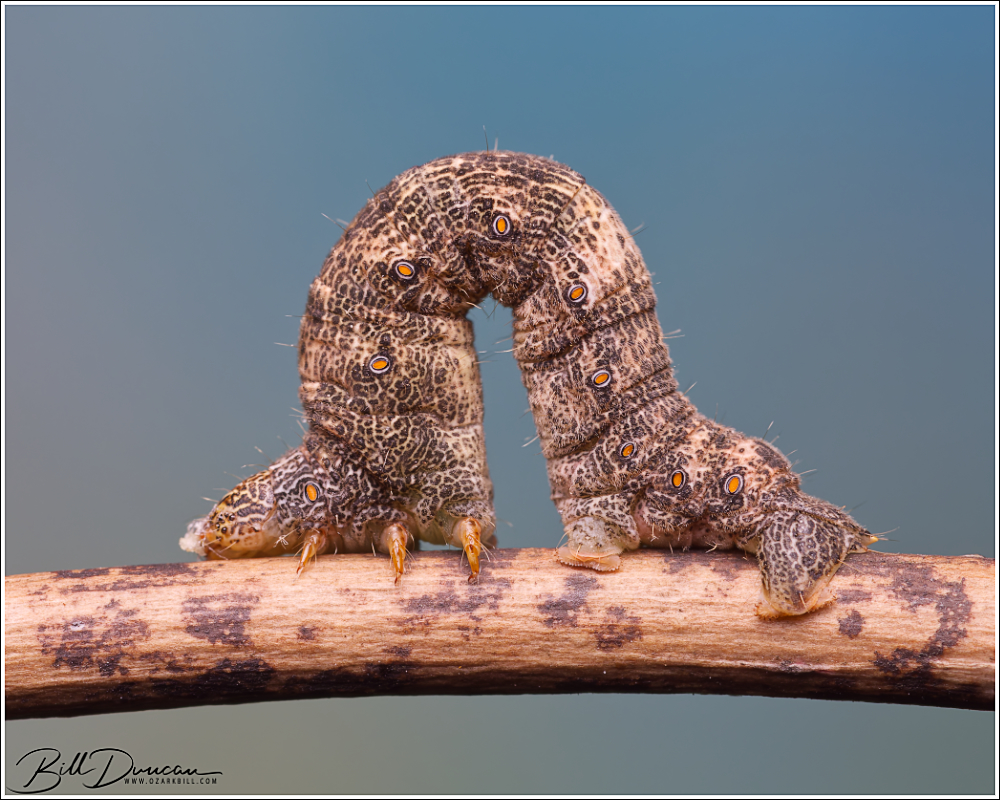
Epimecis hortaria fam. Geometridae (Hodges#6599)
Host plant(s): Found on sassafras (Sassafras albidum) and pawpaw (Asimina triloba)
Date(s) and location(s): 23, 25 Aug, 2025 – Tyson Research Center, St. Louis County, MO
Notes: Other commonly used hosts include poplars and tulip trees.


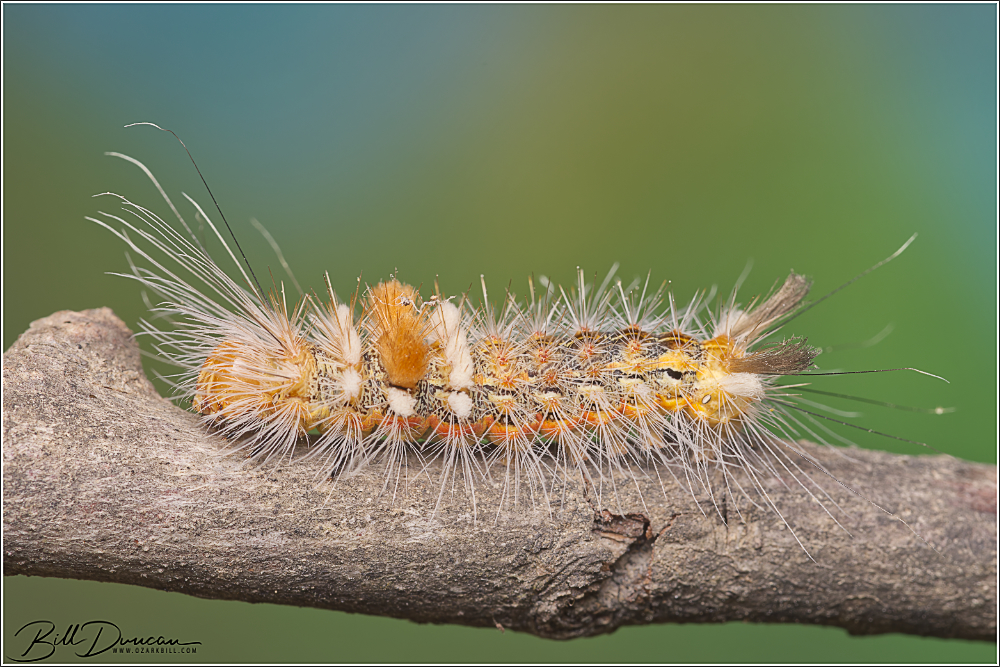
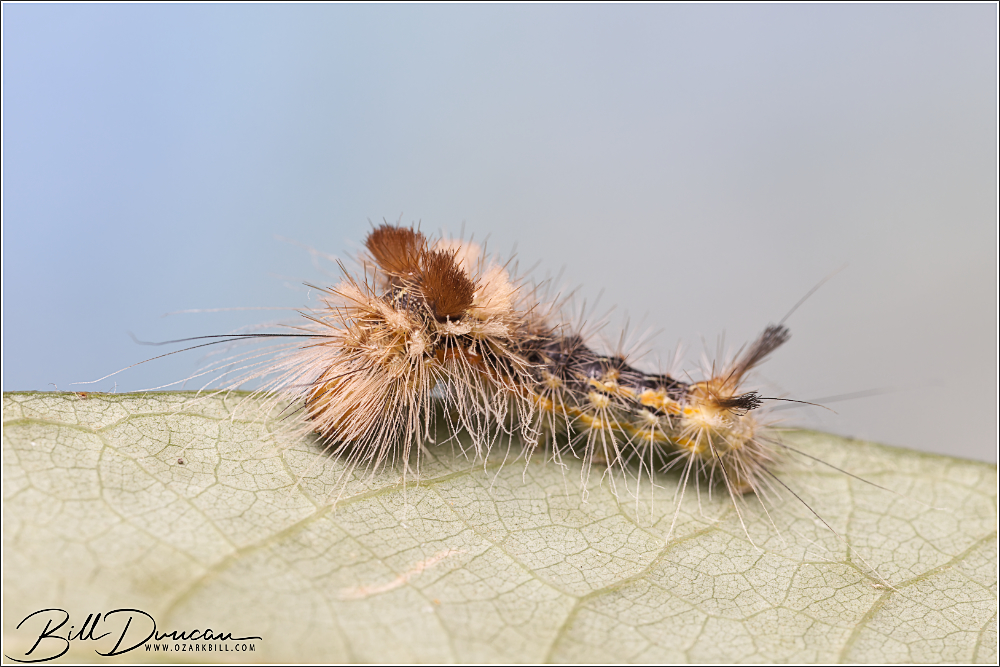
Yellow-haired Dagger
Acronicta impleta fam. Noctuidae (Hodges#9257)
Host plant: Found on red oak (Quercus sp.)
Dates and locations: 23, Aug, 2025 – Tyson Research Center, St. Louis County, MO; 06, Sep, 2026 – Babler State Park, St. Louis County, MO
Notes: Batesian mimicry, a form of mimicry wherein a harmless species has evolved to imitate the warning signals of a harmful species in order to benefit from these signals’ tendency to deter their mutual predators, is common among adult moths and butterflies. However, it has been found to be rare in caterpillars. The yellow-haired dagger seems to be a rare case of this defense in caterpillars as it seems to mimic tussock moth caterpillars (Dasychira, Orgyia) in both appearance and behavior.


Georgian Prominent
Paraeschra georgica fam. Notodontidae (Hodges#7917)
Host plant: Found on red oak (Quercus sp.)
Date found: 30, Aug, 2025
Location found: Tyson Research Center, St. Louis County, MO
Notes: This is the first from a series of caterpillars I will be sharing from a new survey project that will document the caterpillars of Tyson Research Center.


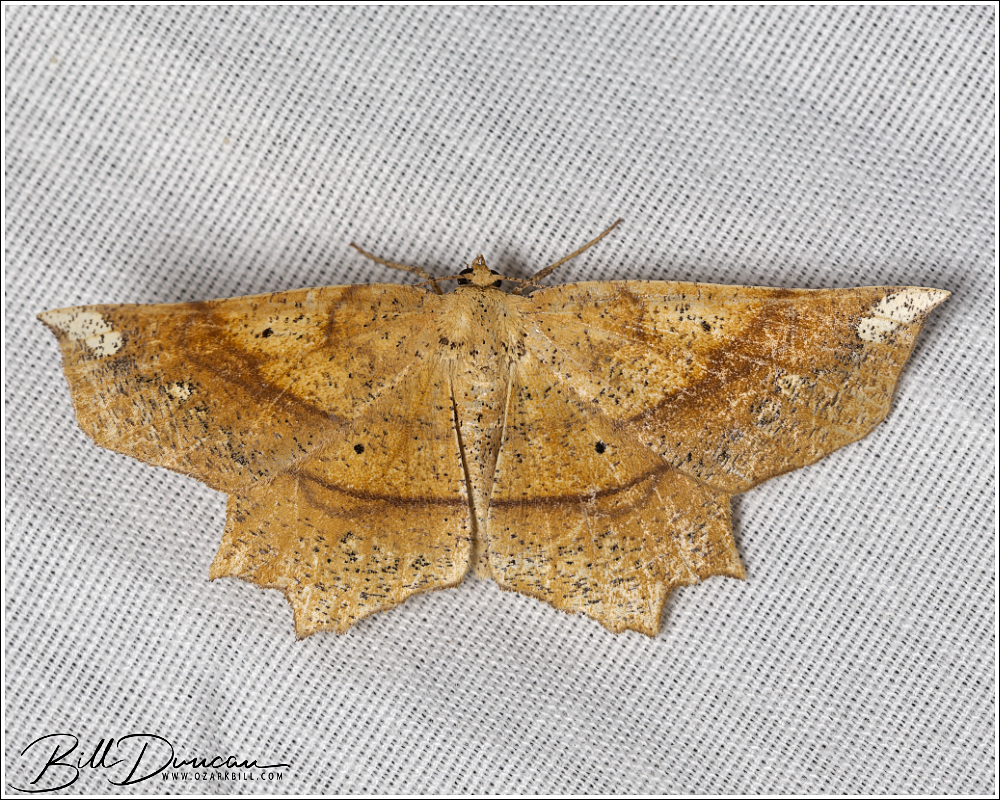
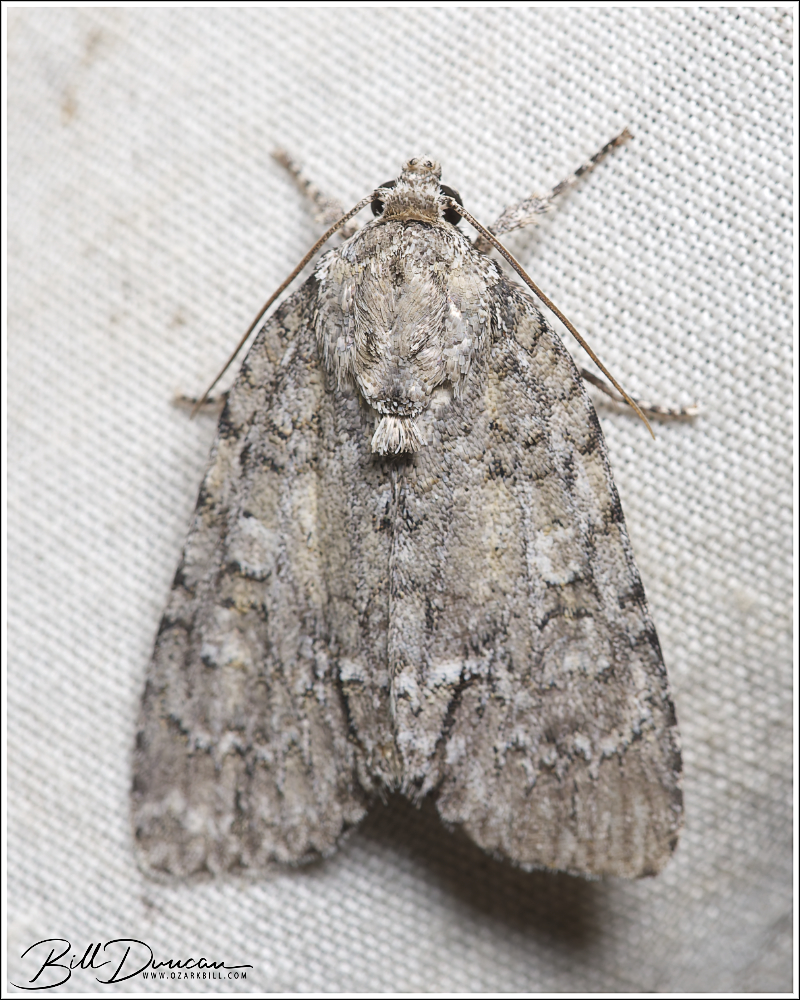
Going back to the August 16th WGNSS trip to Council Bluff Lake. After a day (and night) of caterpillar hunting, a couple of us set up light stations to attract nocturnal insects. Here are a few of the moths that I photographed from this evening.
Erebidae

Geometridae
Noctuidae
Click here to see photos of the greater oak dagger caterpillar


Click here to see photos of the Hebrew caterpillar

Click here to see photos of the paddle caterpillar (final instar)
Click here to see photos of the paddle caterpillar (mid-instar)
Notodontidae


Saturniidae

Click here to see a photo of the caterpillar of the polyphemus moth caterpillar
Sphingidae

Click here to see a photo of the Virginia creeper sphinx moth caterpillar
Spotted Phosphila
Phosphila miselioides fam. Noctuidae (Hodges#9619)
Host plant: Found on greenbrier (Smilax sp.)
Date found: 16, Aug, 2025
Location found: Council Bluff Lake, Iron County, MO
Notes: Two species of Phosphila can be found in Missouri. This was found during the WGNSS joint Entomology and Nature Photography Groups’ outing to Council Bluff Lake.
Double-toothed Prominent
Nerice bidentata fam. Notodontidae (Hodges#7929)
Host plant: Found on elm (Ulmus sp.)
Date found: 16, Aug,, 2025
Location found: Council Bluff Lake, Iron County, MO
Notes: Also known as the stegosaurus, this species is an elm specialist. This was found during the WGNSS joint Entomology and Nature Photography Groups’ outing to Council Bluff Lake.

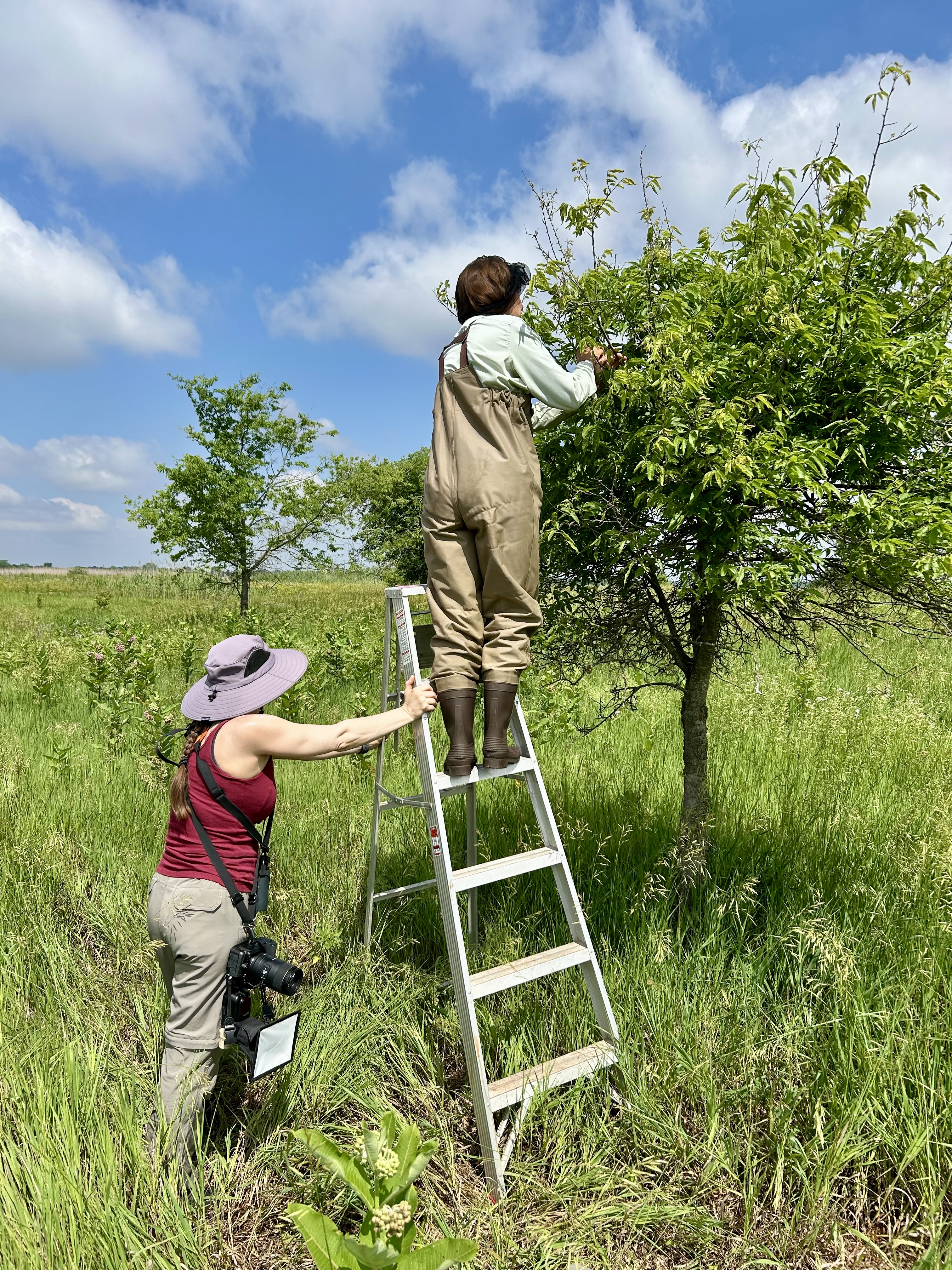
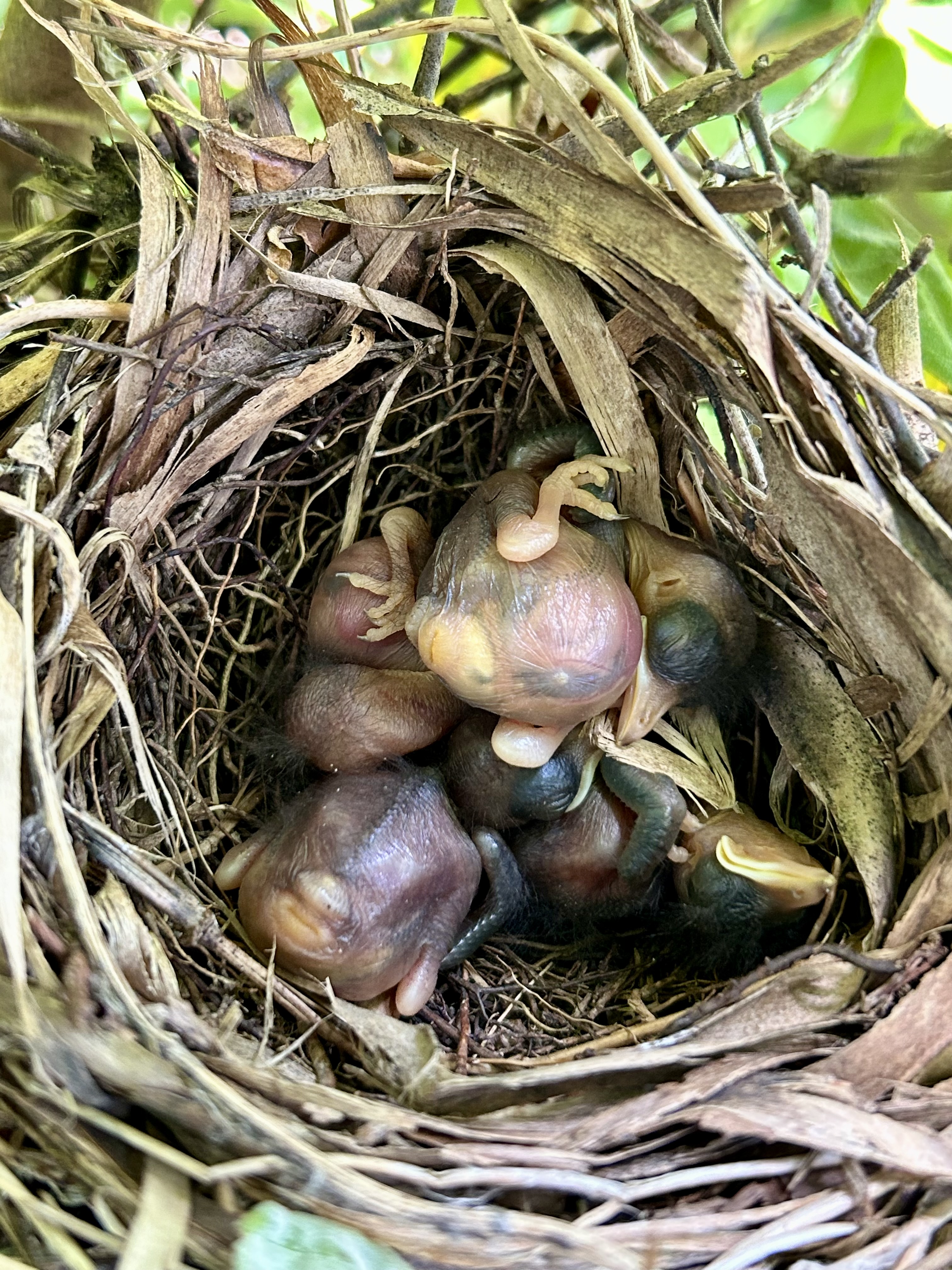
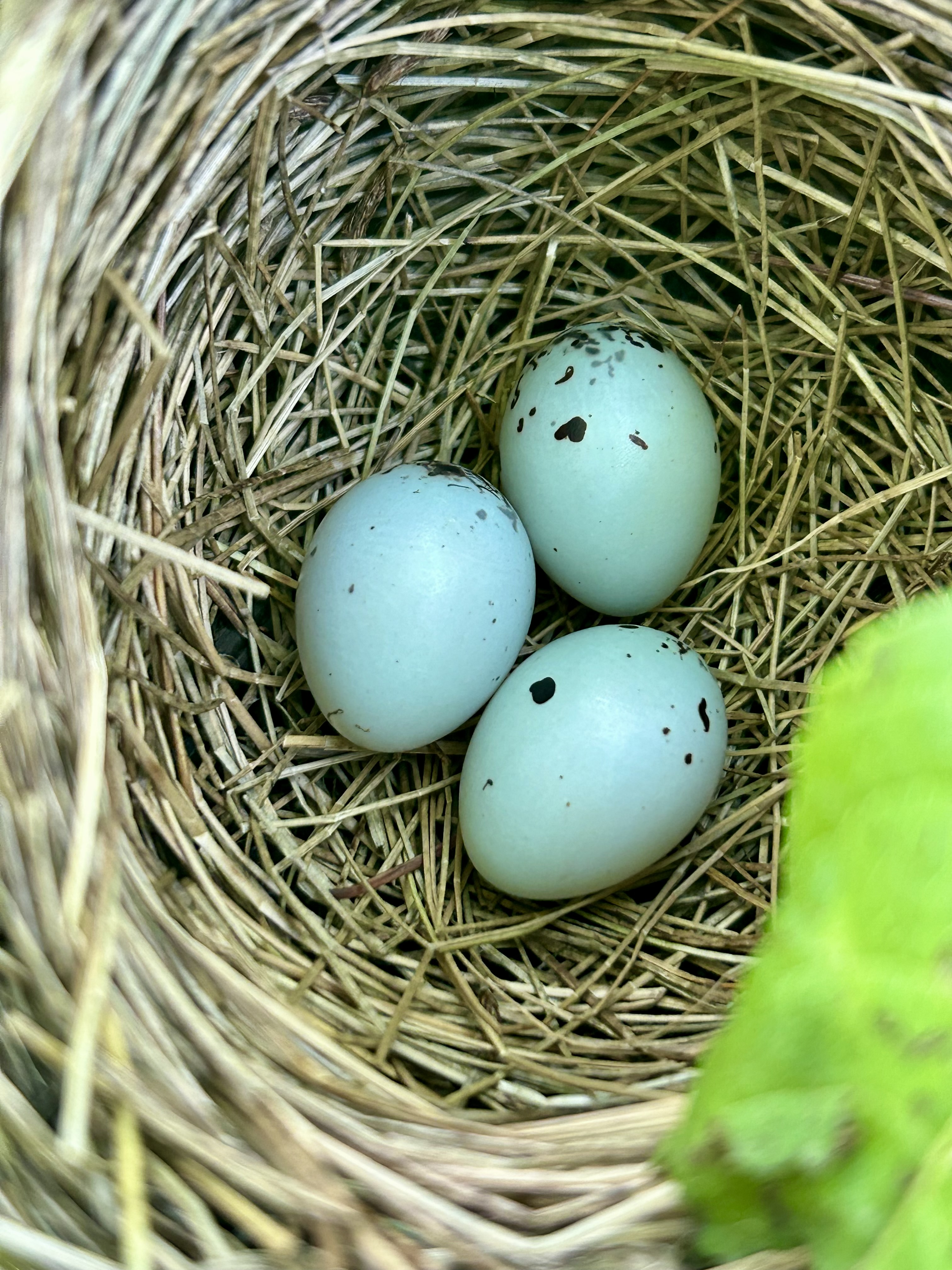
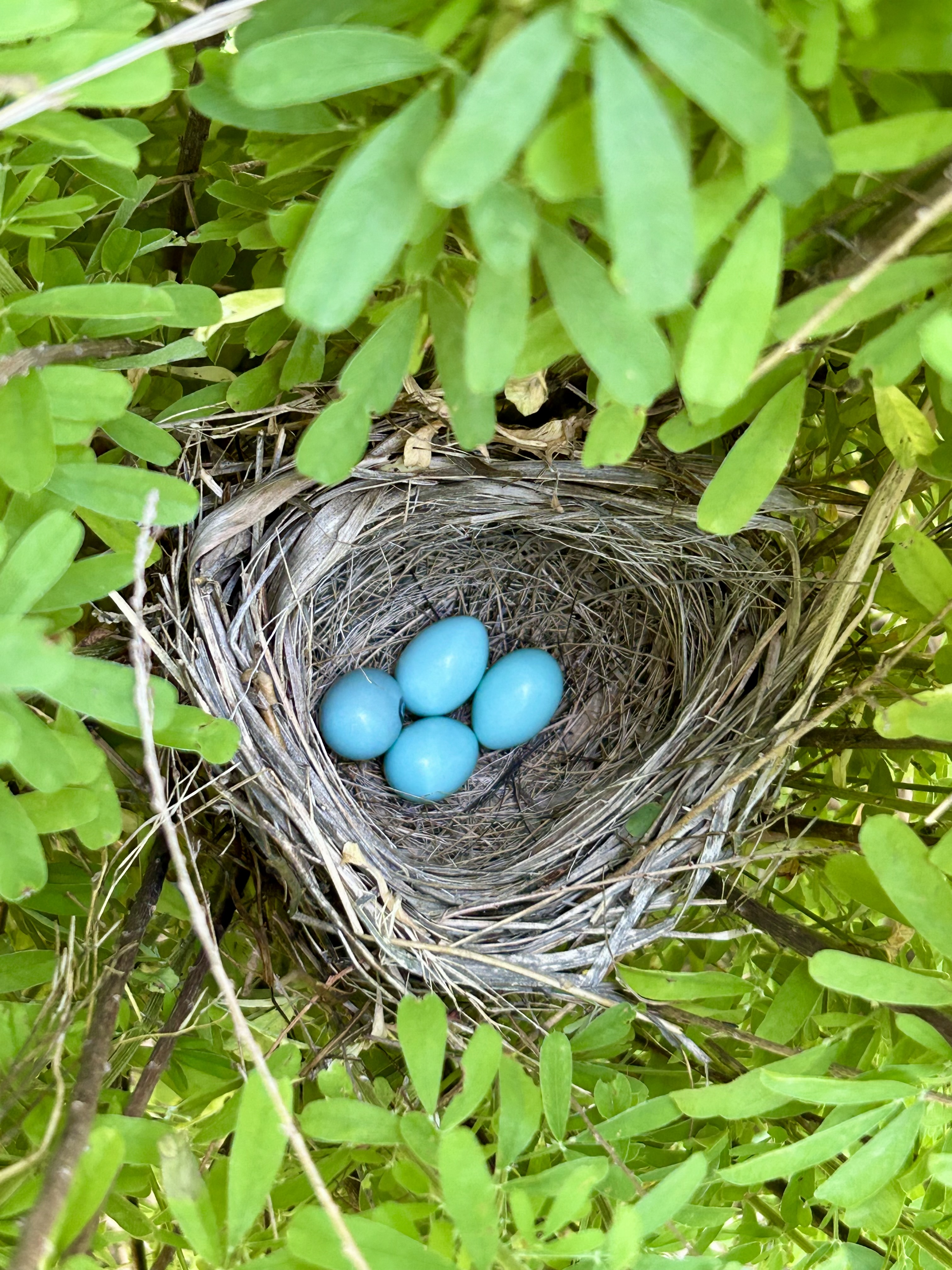
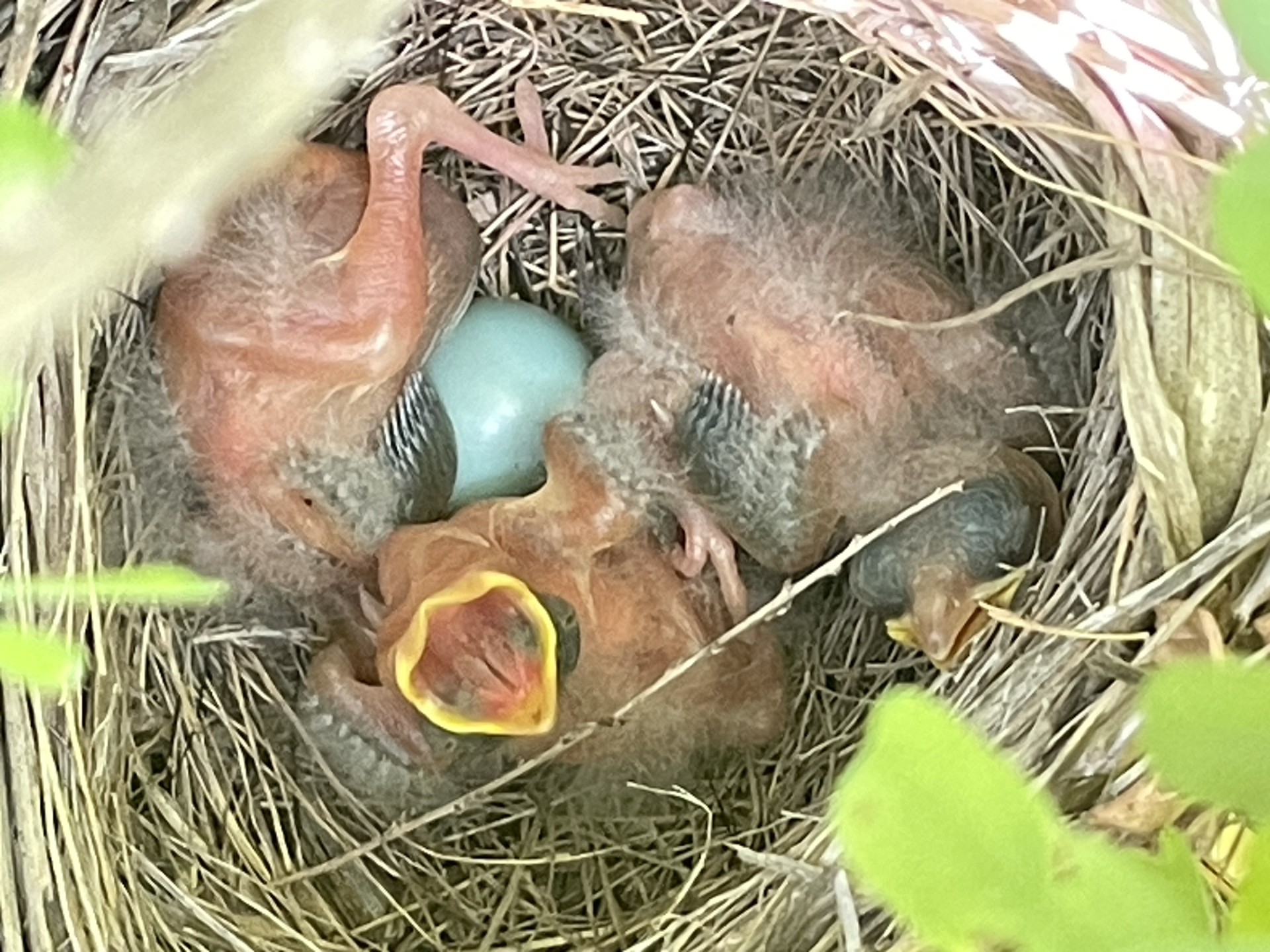
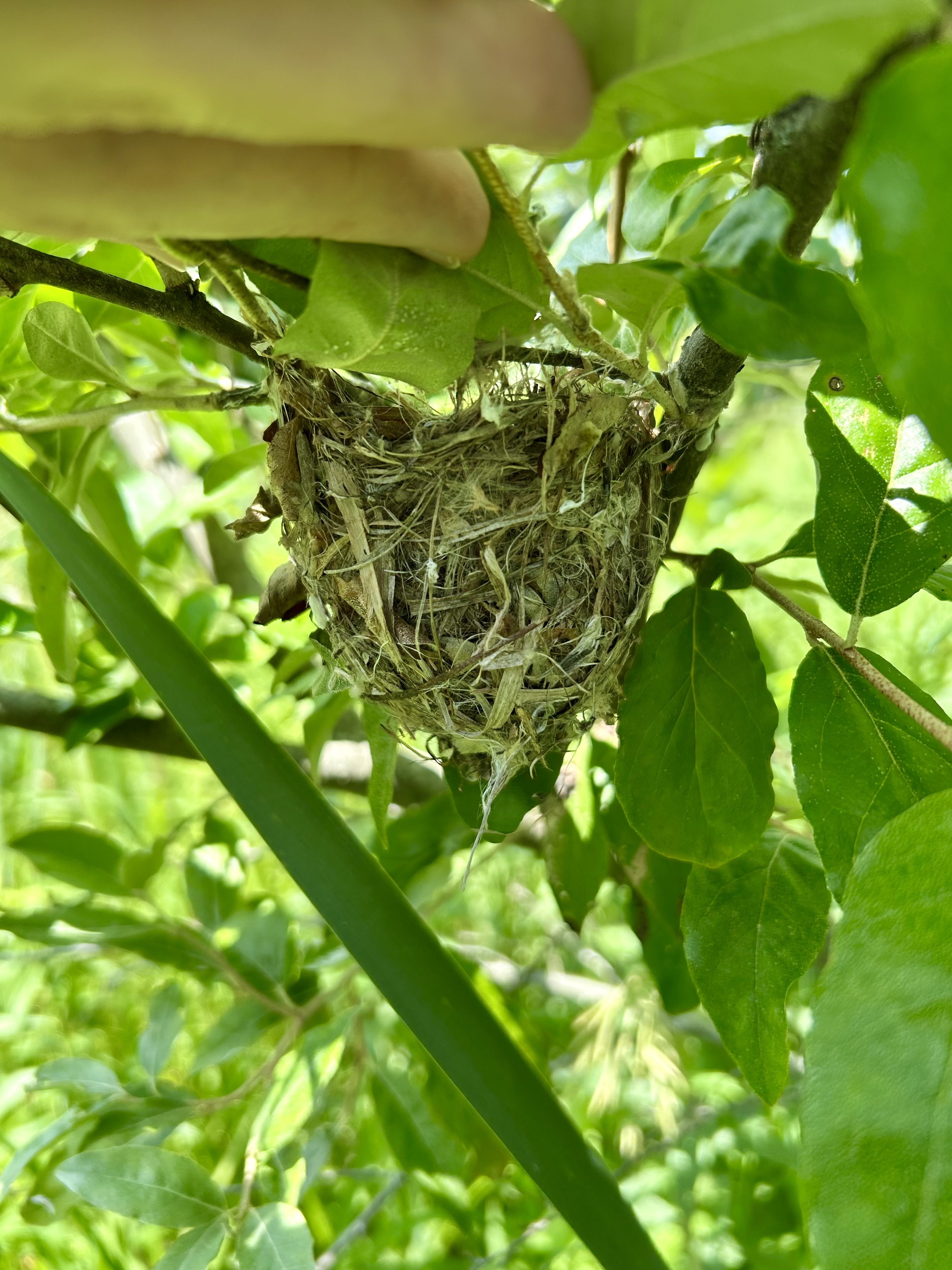
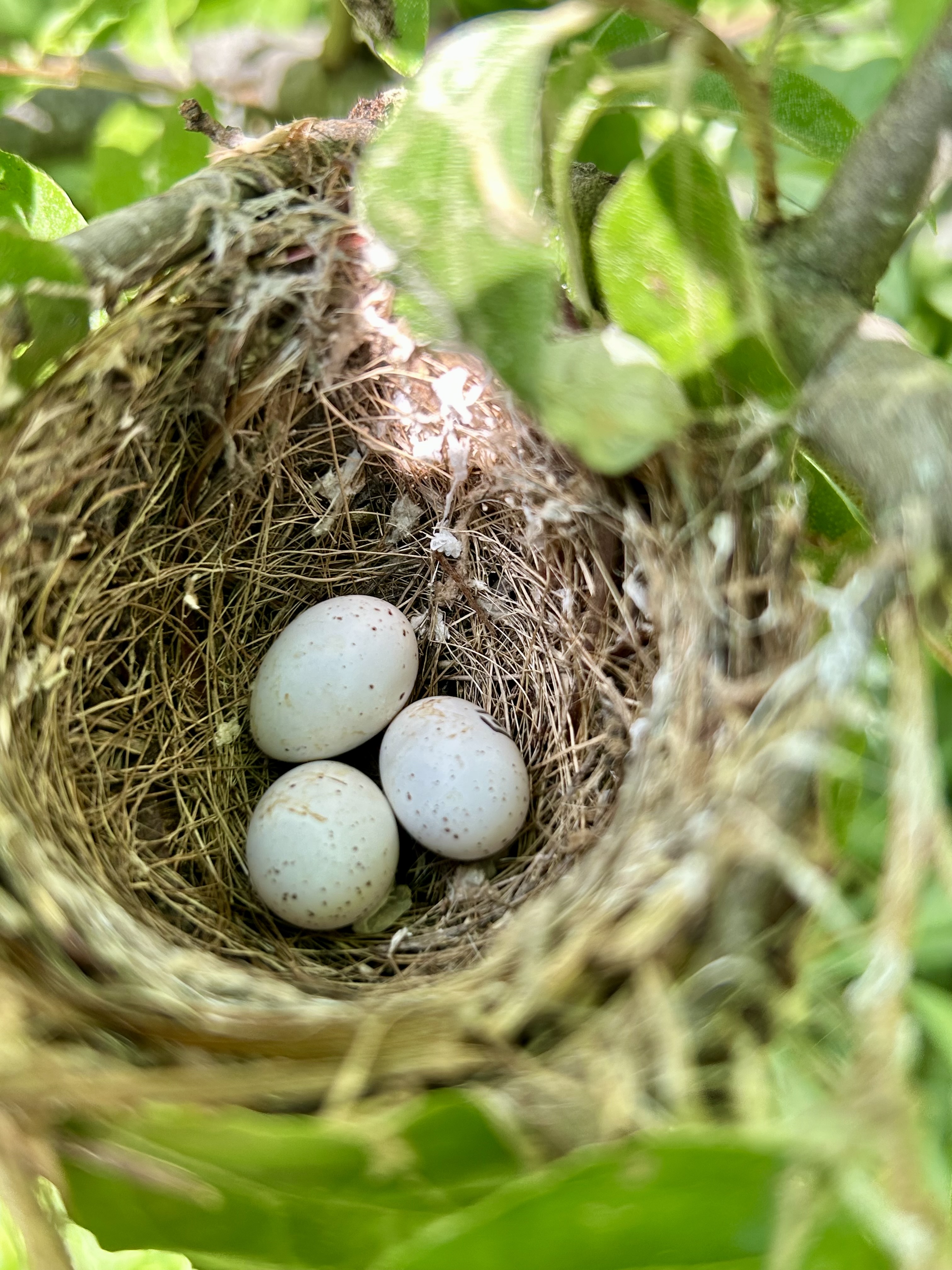
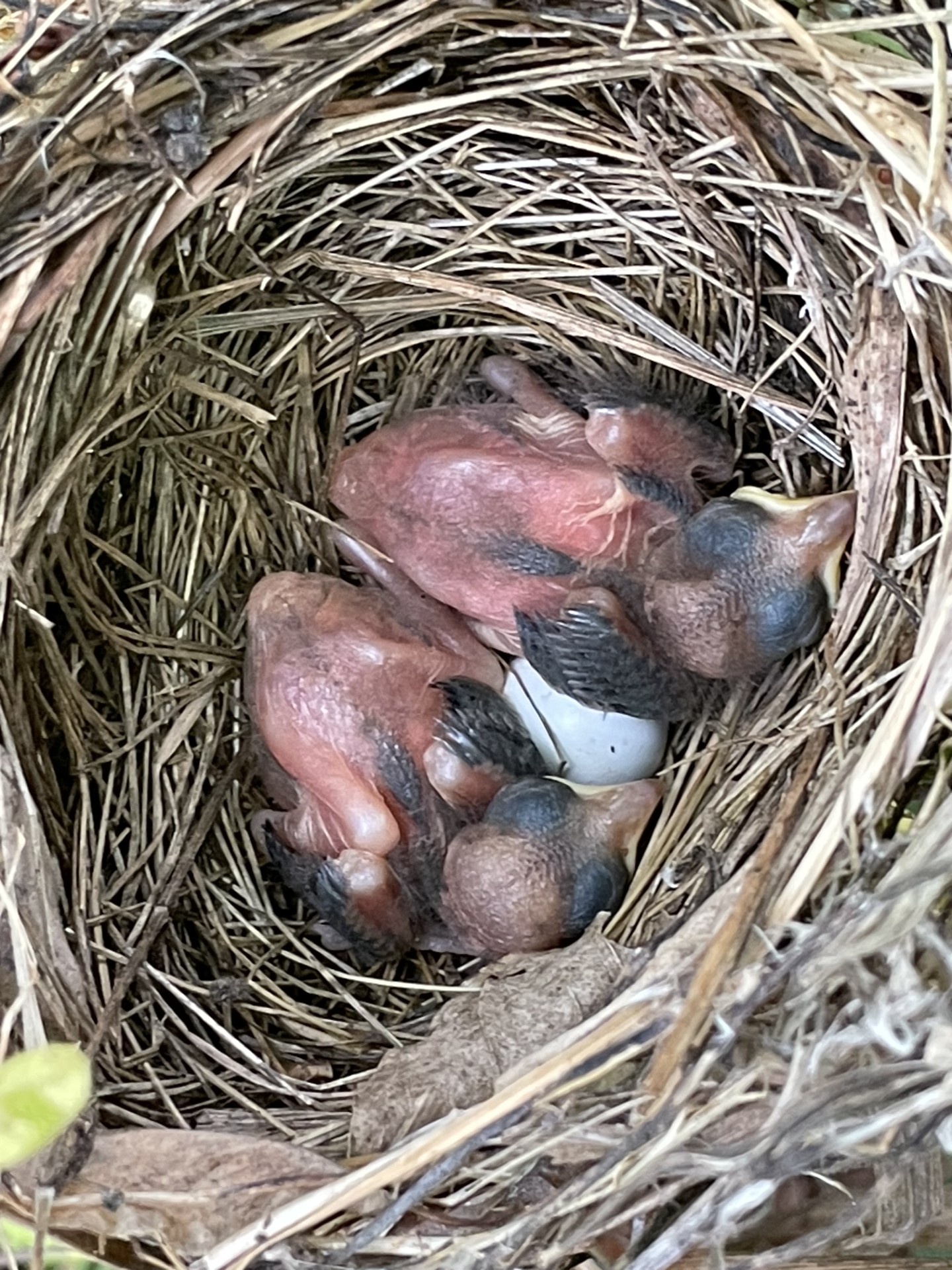
Back in early June of this year, the WGNSS Nature Photography Group travelled east to Pyramid State Recreation Area in Perry County, Illinois. Here we met with Stacia Novy, a wildlife biologist working with Southern Illinois University. Stacia’s goals are to find and identify grassland bird species nests, collect morphometric, embryonic and maturation data on eggs and nestlings, and to document fledging and depredation rates. Stacia is a true professional and she took care in how we approached nests and got our photographs. She finds dozens of nests each year and collects important data used for conservation and habitat management decisions.
Approximately 60% of all of North America’s grasslands have been destroyed due to agriculture and other development purposes. Unsurprisingly, grassland species in general are the most at risk birds from this loss of habitat. The numbers of these obligate grassland species have declined by 40% since 1970.
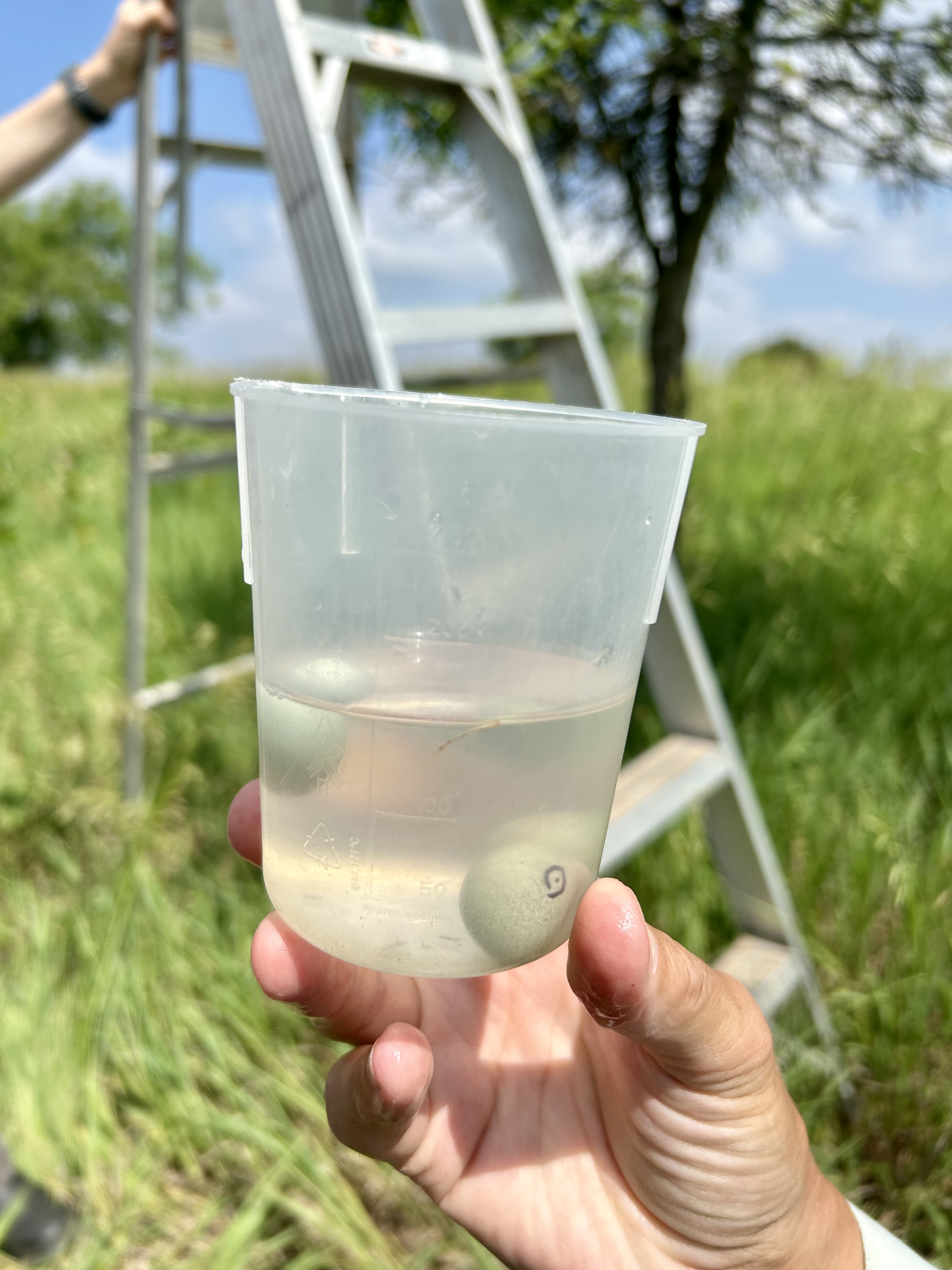
Due to high incidence of predation, grassland bird species must be quite careful about where and how they place their nests. Stacia showed us the types of vegetation different species like to use and how they attempt to camouflage their nests. It takes a lot of work and diligence to find these nests and we appreciated Stacia sharing some of these with us.
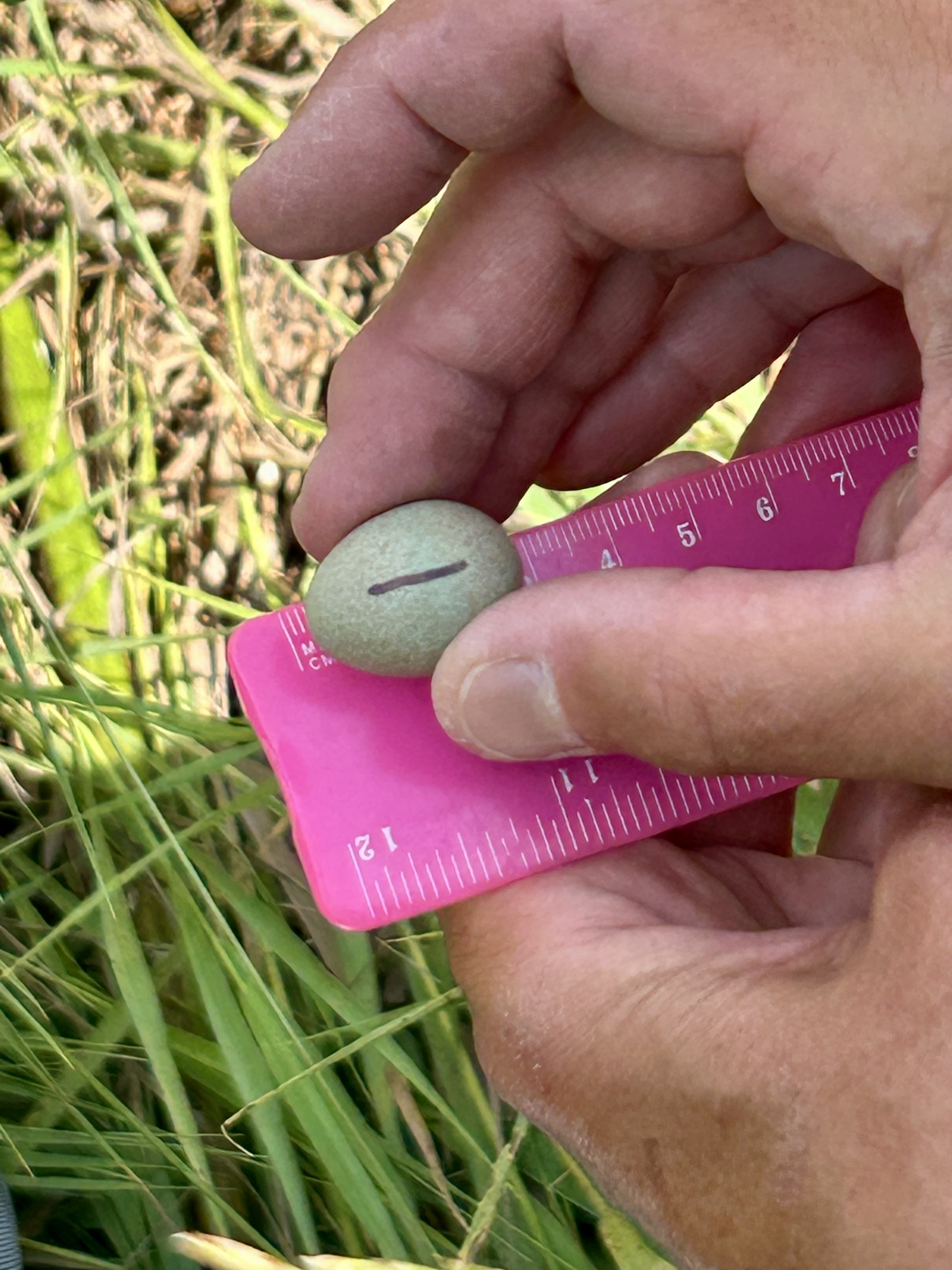
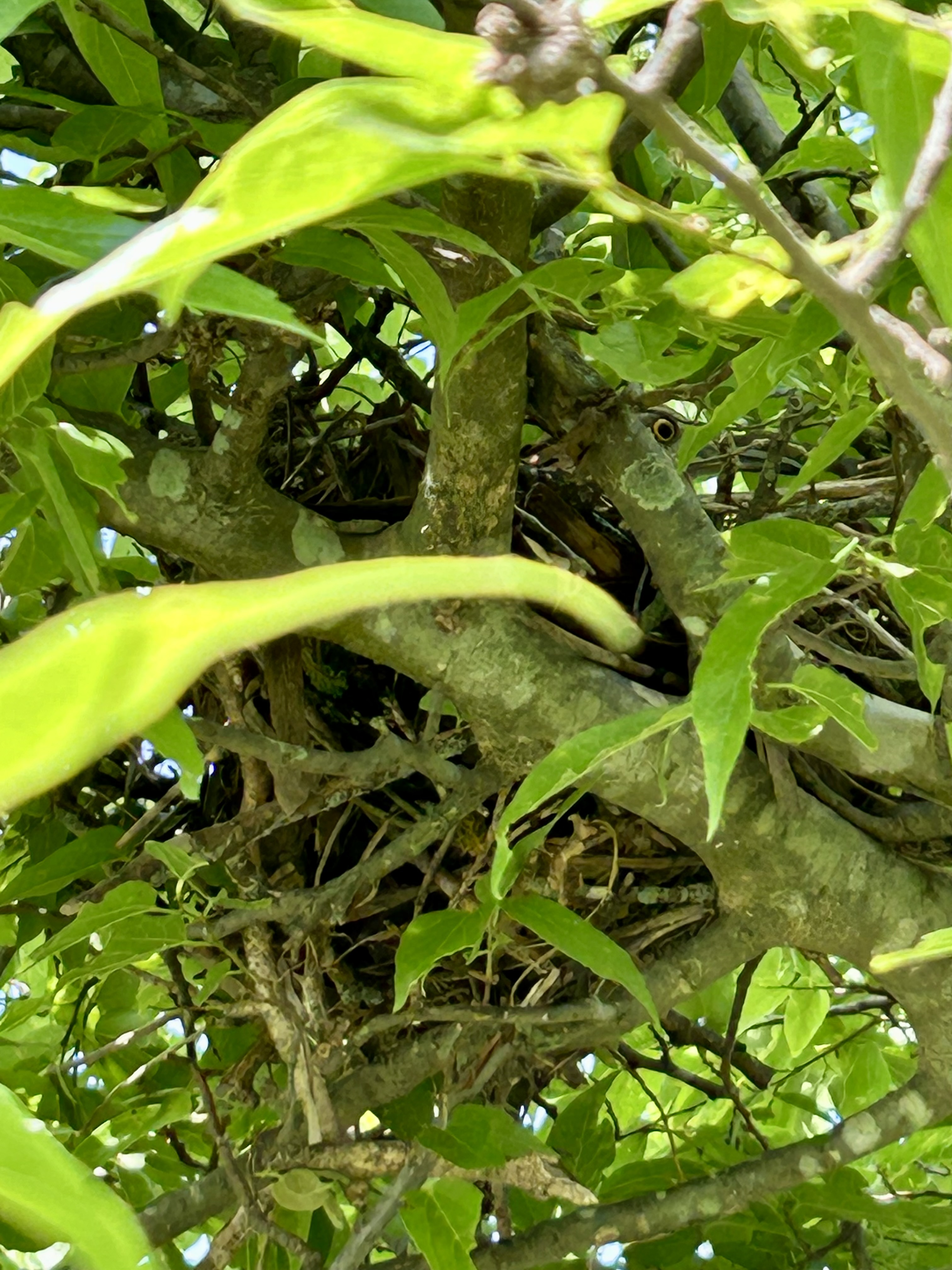
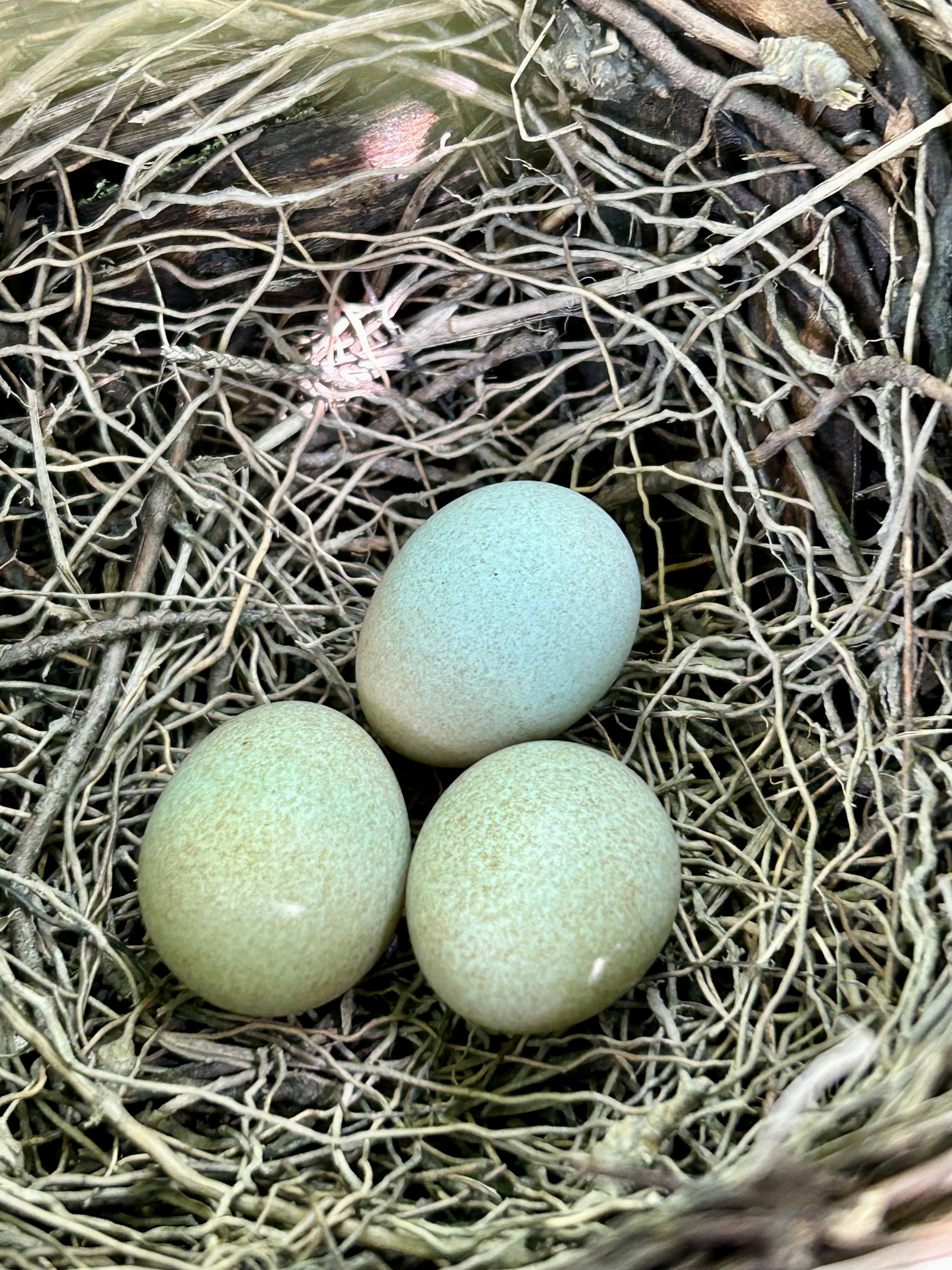
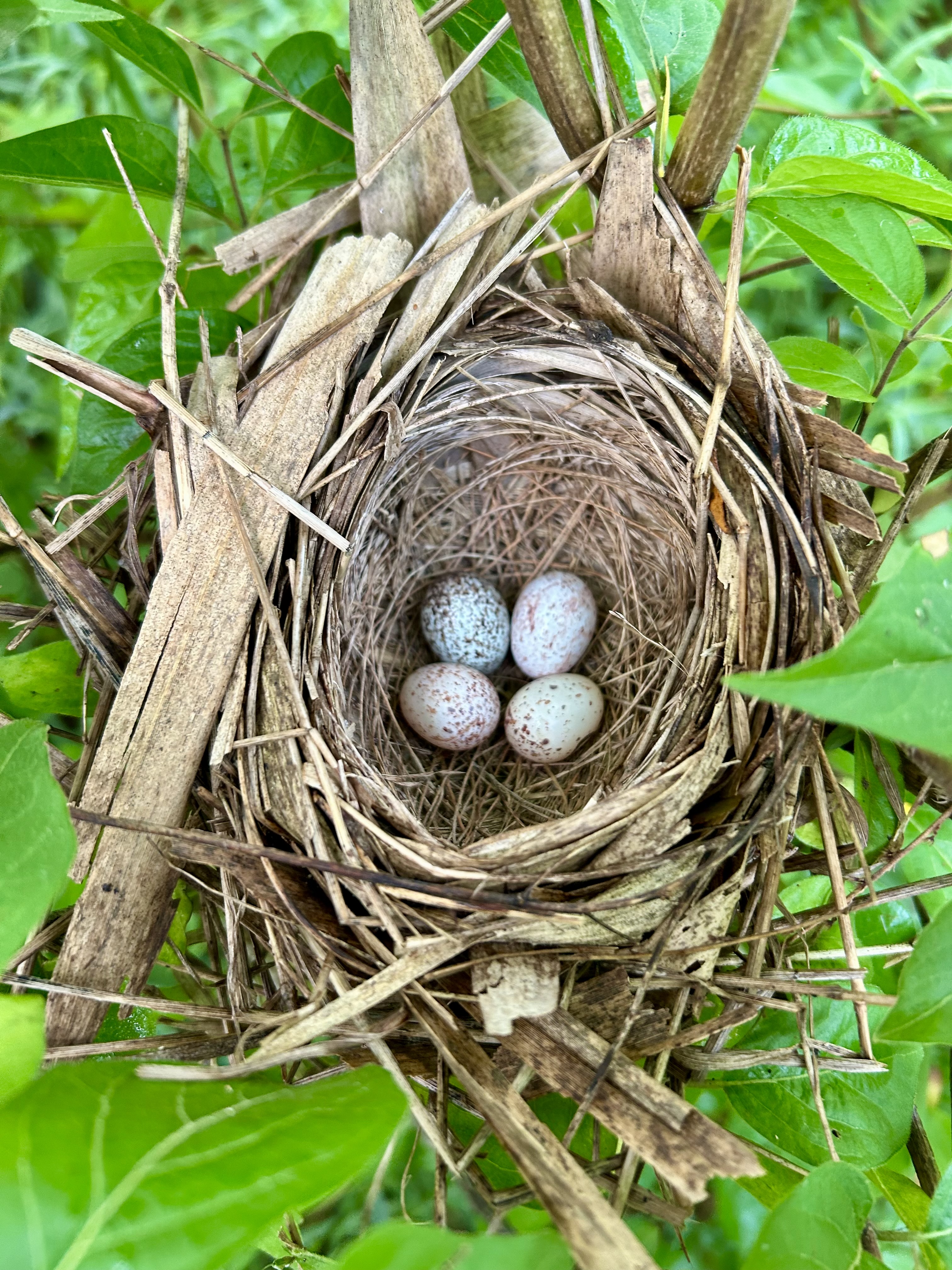
Here are some of the photos I took with my cellphone of some of the species we were fortunate to be able to see.
Tufted Bird Dropping Moth
Cerma cerintha fam. Noctuidae (Hodges#9062)
Host plant: Host plant not recorded but species is known to feed on Rosaceae Family members
Date found: 16, Aug,, 2025
Location found: Council Bluff Lake, Iron County, MO
Notes: As should be obvious by the common name, the adults of this moth are bird dropping mimics. These caterpillars tunnel into soft wood at the end of the season where they overwinter as a pupa.


 A Thousand Acres of Silphiums
