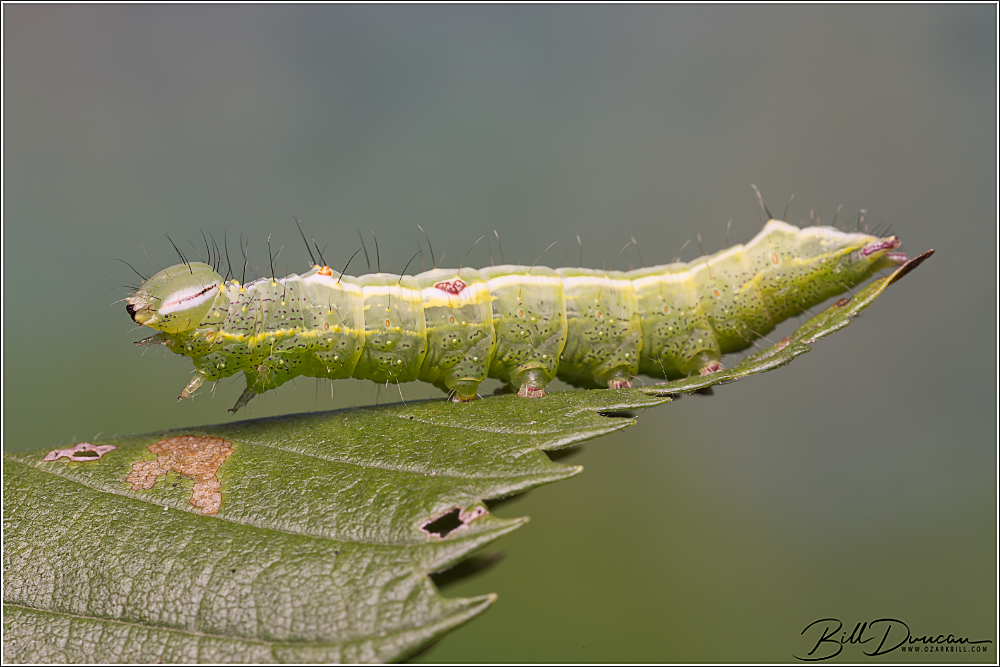
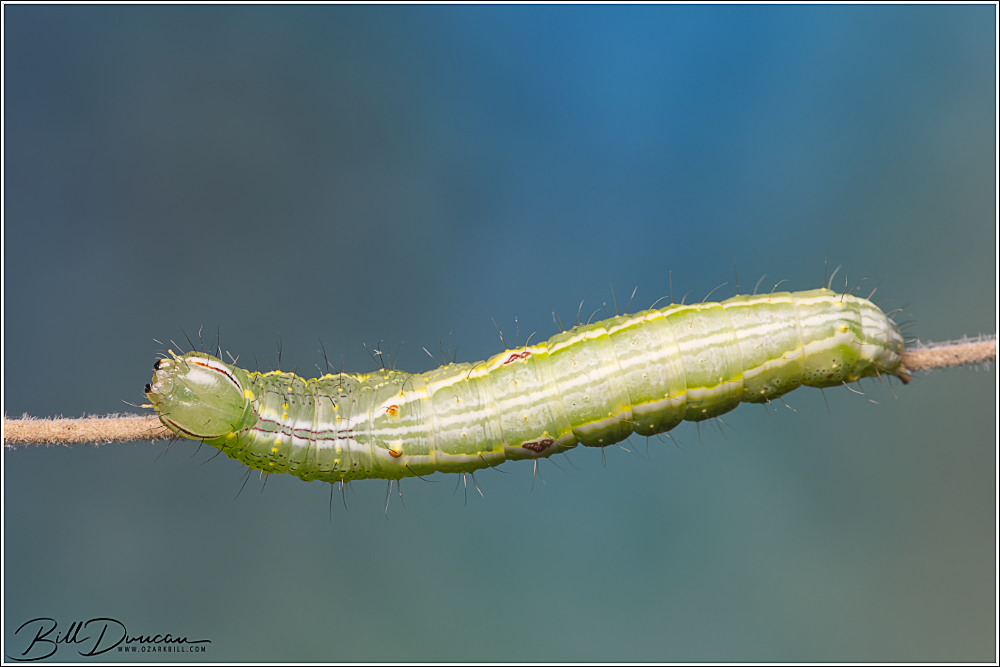
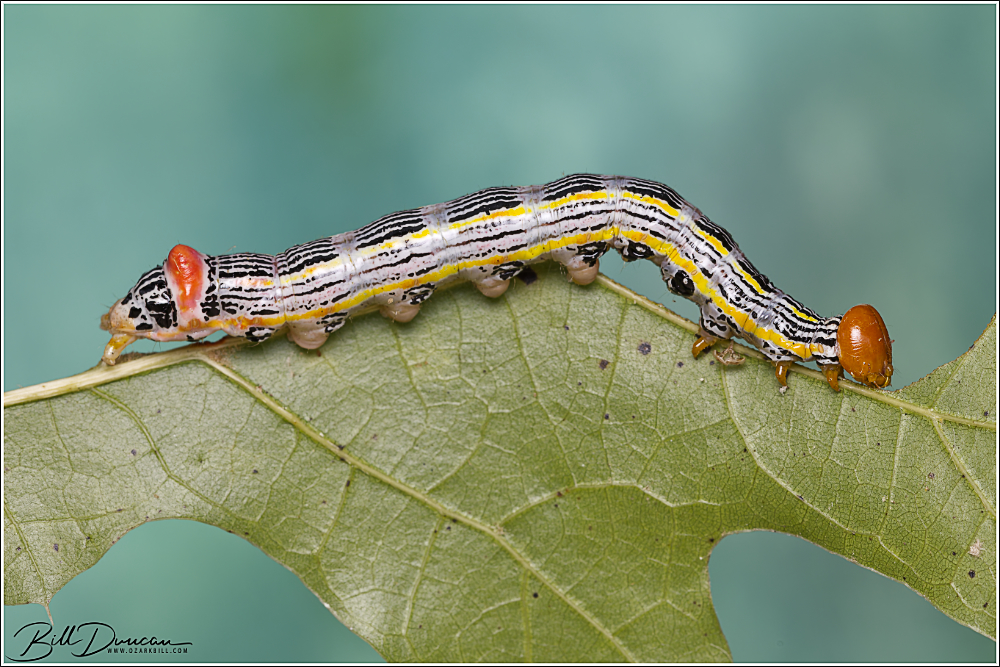
2025 Caterpillar Season – Gray-edged Hypena

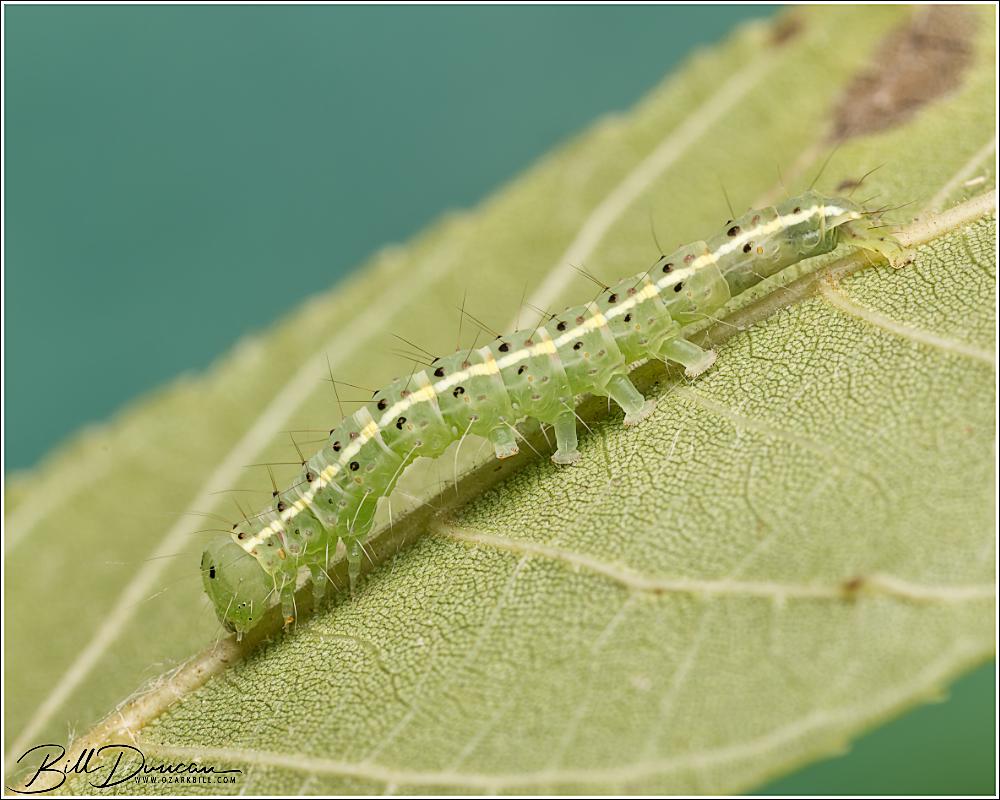
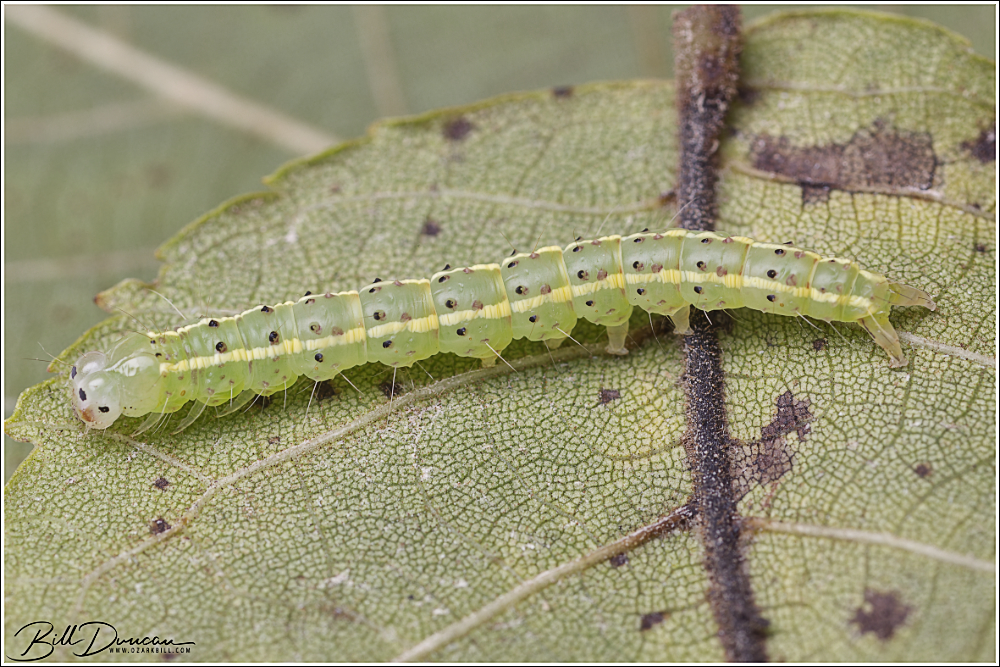
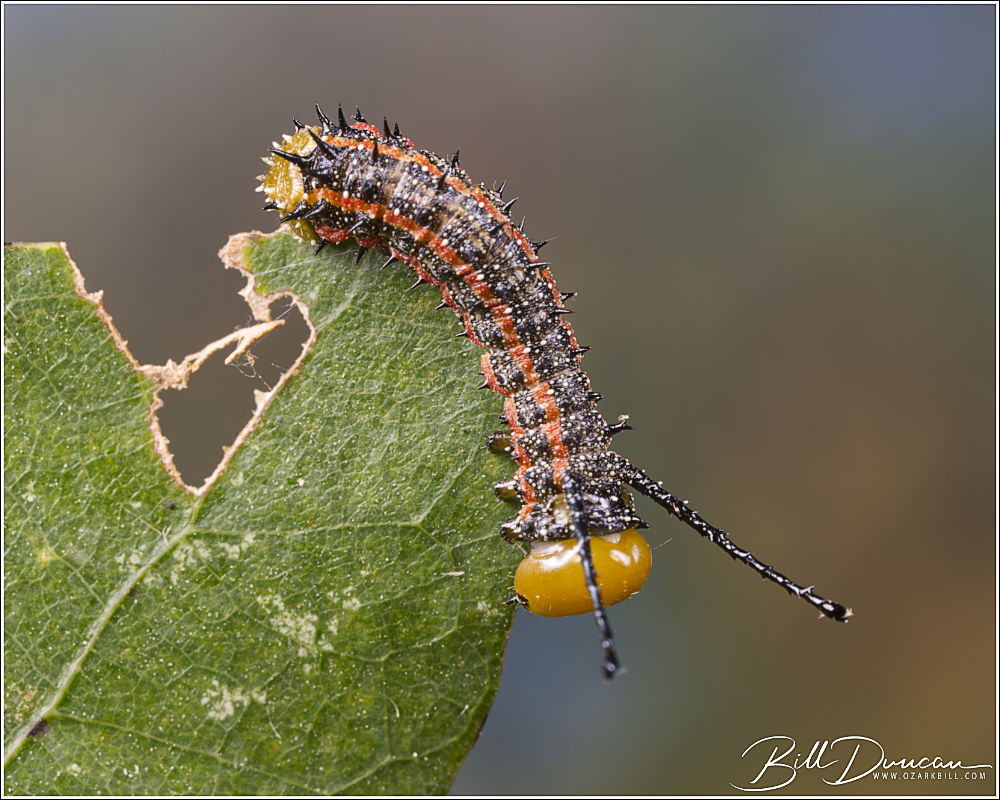
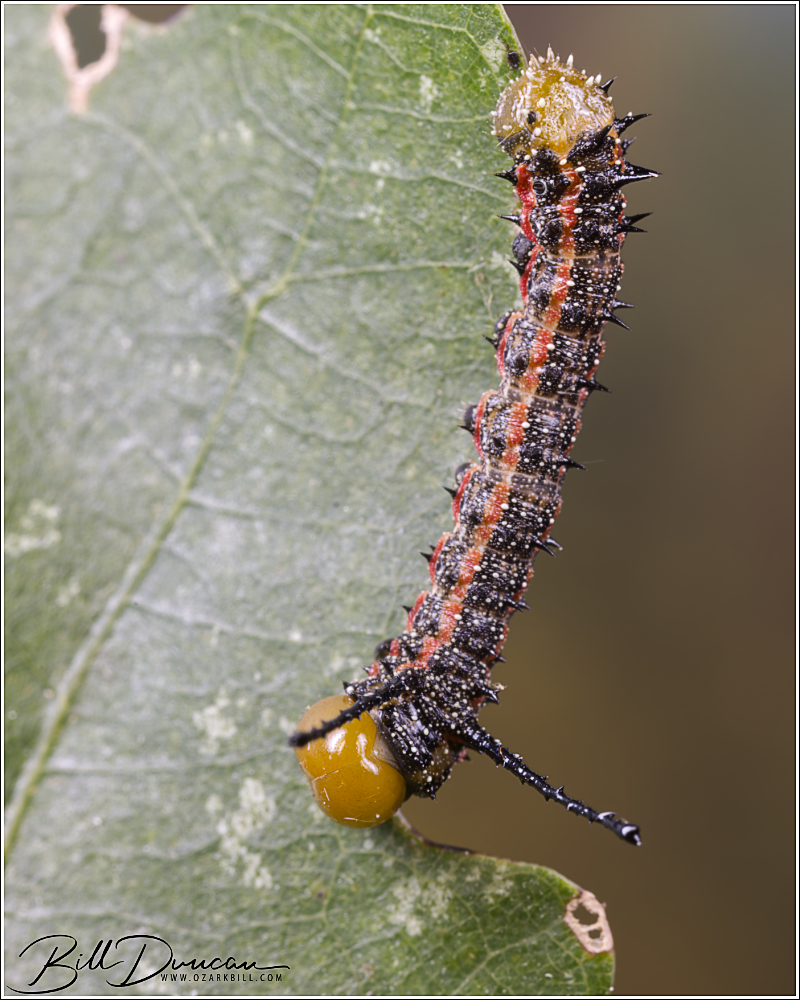
Gray-edged Hypena
Hypena madefactalis fam. Erebidae (Hodges#8447)
Host plant: Found on black walnut (Juglans nigra)
Date found: 09, September, 2025
Location found: Tyson Research Center, St. Louis County, MO
Notes: A specialist on black walnut, this species has also been reared on shagbark hickory (Carya ovata).

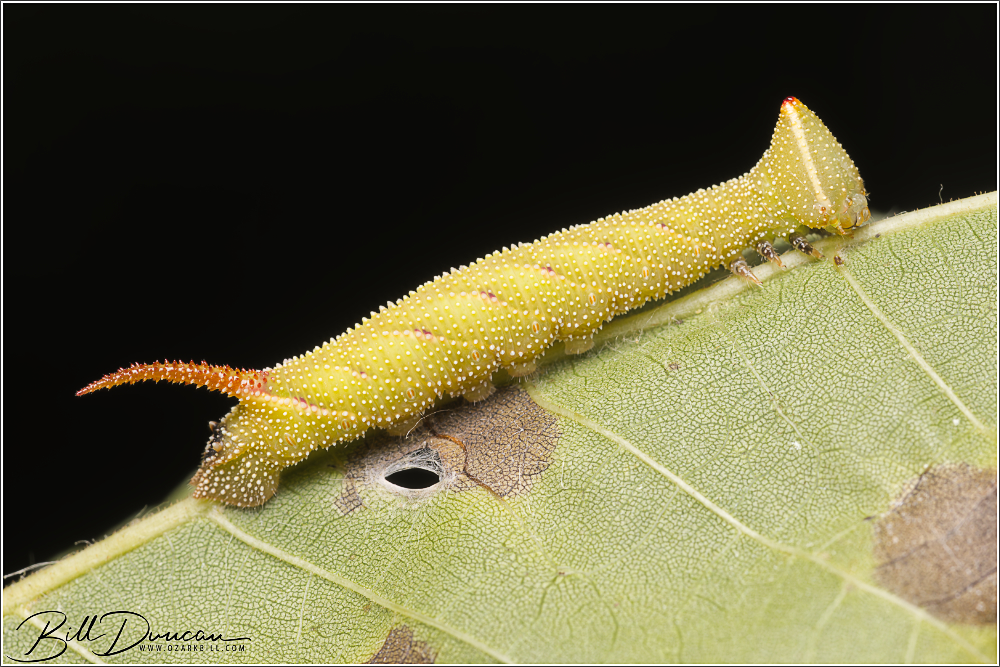
2025 Caterpillar Season – Ailanthus Webworm

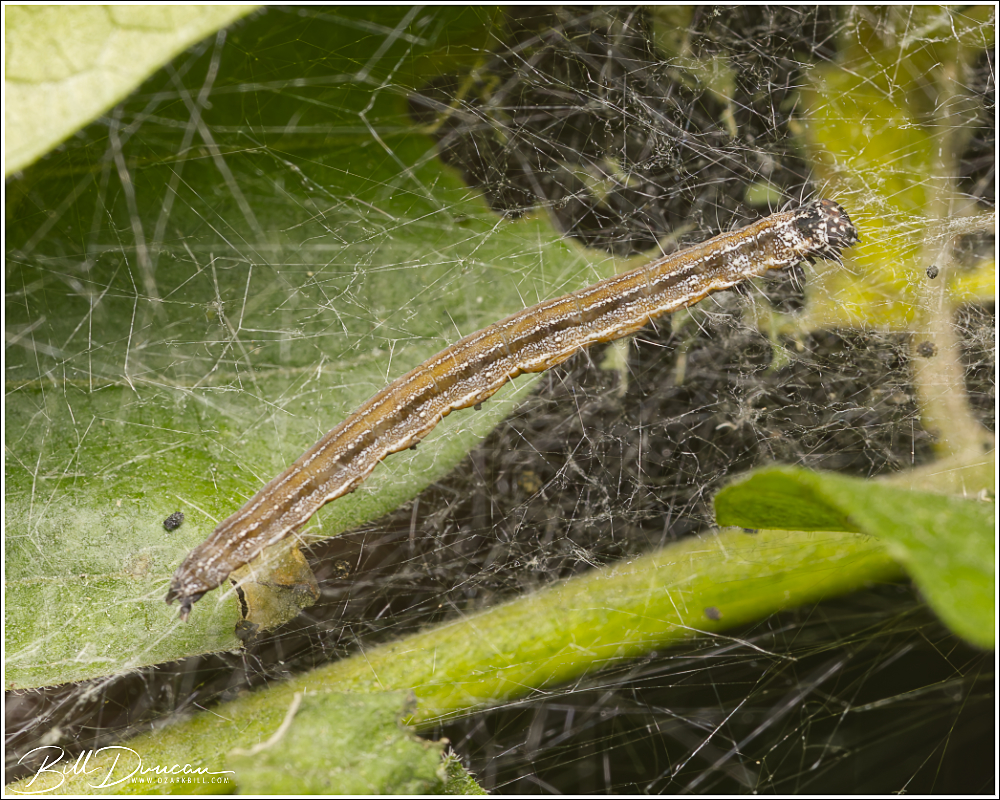
Ailanthus Webworm Moth
Atteva aurea fam. Attevidae (Hodges#2401)
Host plant: Found on tree of heaven (Ailanthus altissima)
Date found: 30, August, 2025
Location found: Tyson Research Center, St. Louis County, MO
Notes: It is currently unclear whether Atteva aurea is native to the southeastern U.S. where corkwood and other members of Simaroubaceae are found and then expanded its range into Missouri following the introduction of the tree of heaven, or if it was introduced from China.

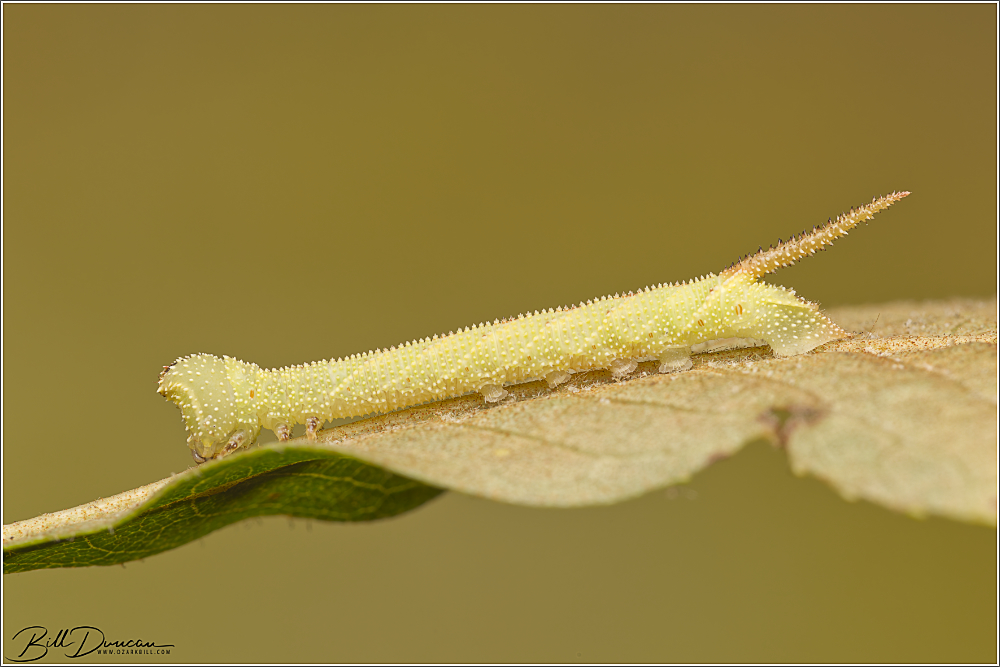
2025 Caterpillar Season – Pink-striped Oakworm Moth

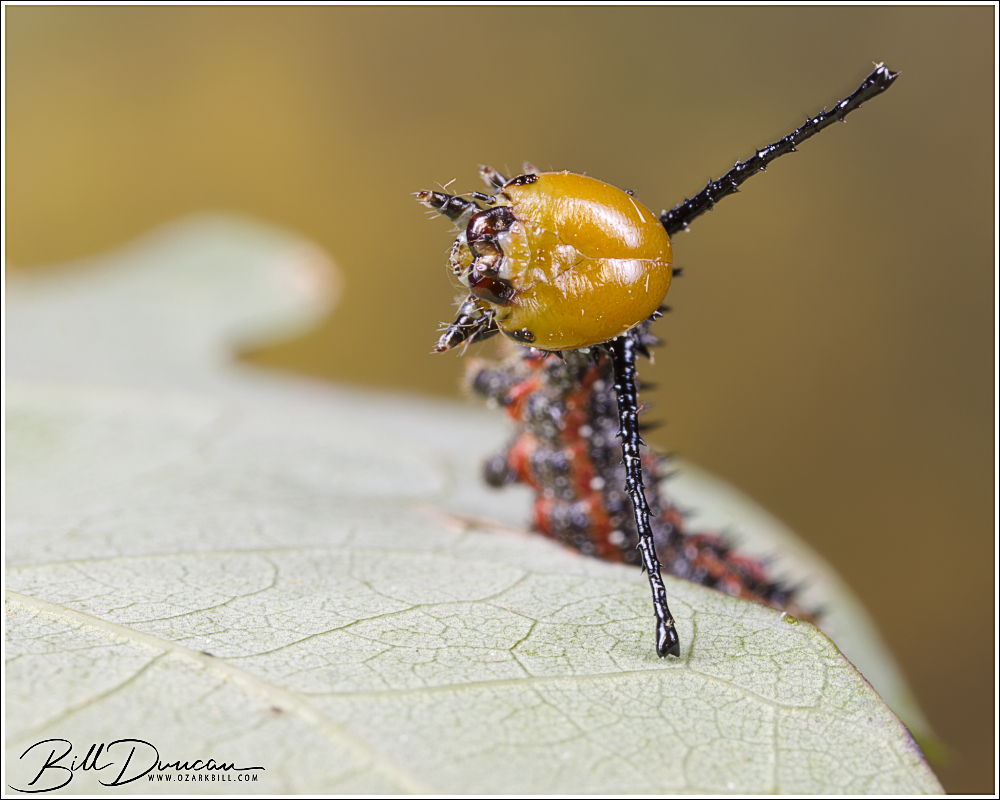
Pink-striped Oakworm Moth
Anisota virginiensis fam. Saturniidae (Hodges#7723)
Host plant: Found on white oak (Quercus alba)
Date found: 19, Sep, 2025
Location found: Don Robinson State Park, Jefferson County, MO
Notes: Photos of an early instar larvae.

2025 Caterpillar Season – Greater Oak Dagger Moth

Greater Oak Dagger Moth
Acronicta lobeliae fam. Noctuidae (Hodges#9238)
Host plant: Found on red oak species (Quercus sp.)
Date found: 30, Aug, 2025
Location found: Tyson Research Center, St. Louis County, MO
Notes: This poor guy has a couple tachinid fly eggs attached. It was likely host to this parasitoid and will not make it to adulthood.

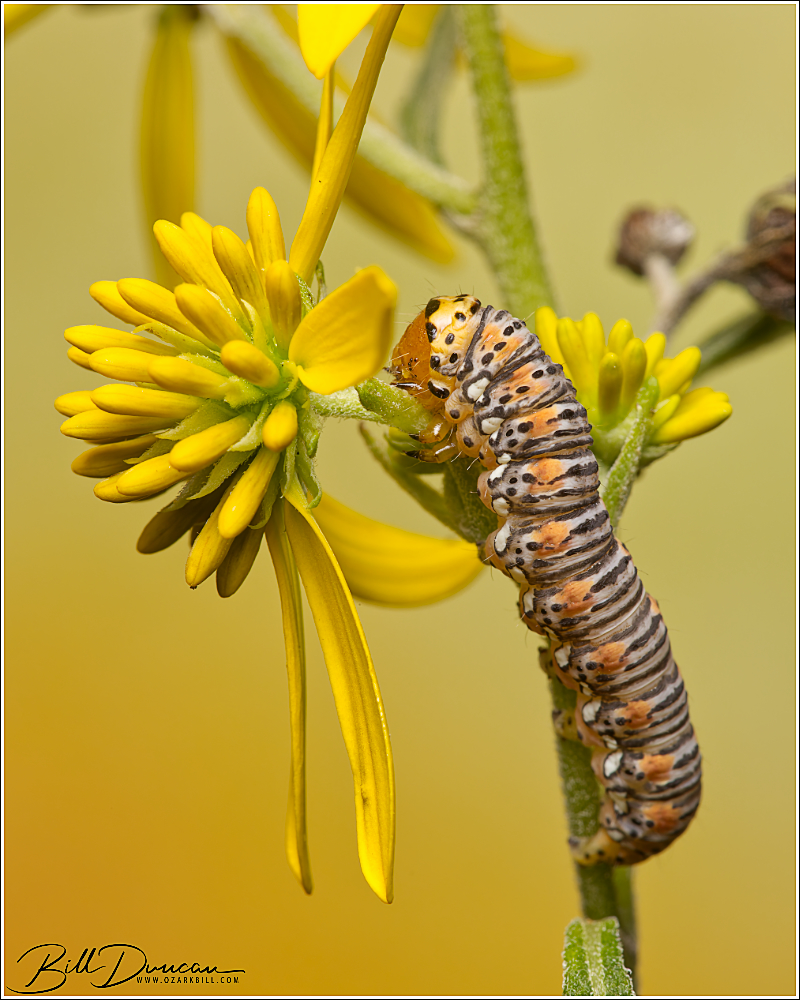
2025 Caterpillar Season – Gold Moth

Gold Moth
Basilodes pepita fam. Noctuidae (Hodges#9781)
Host plant(s): Found on wingstem (Verbesina alternifolia)
Date(s) and location(s): 13 September, 2025 – Tyson Research Center, St. Louis County, MO
Notes: A specialist on Verbesina species.

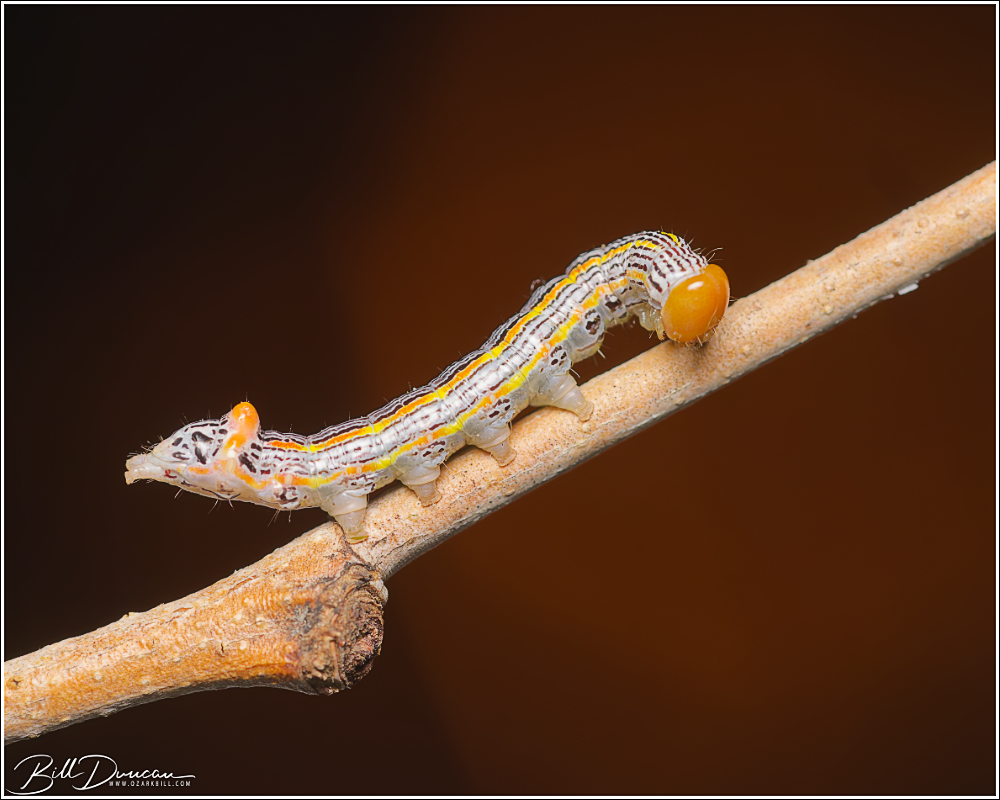
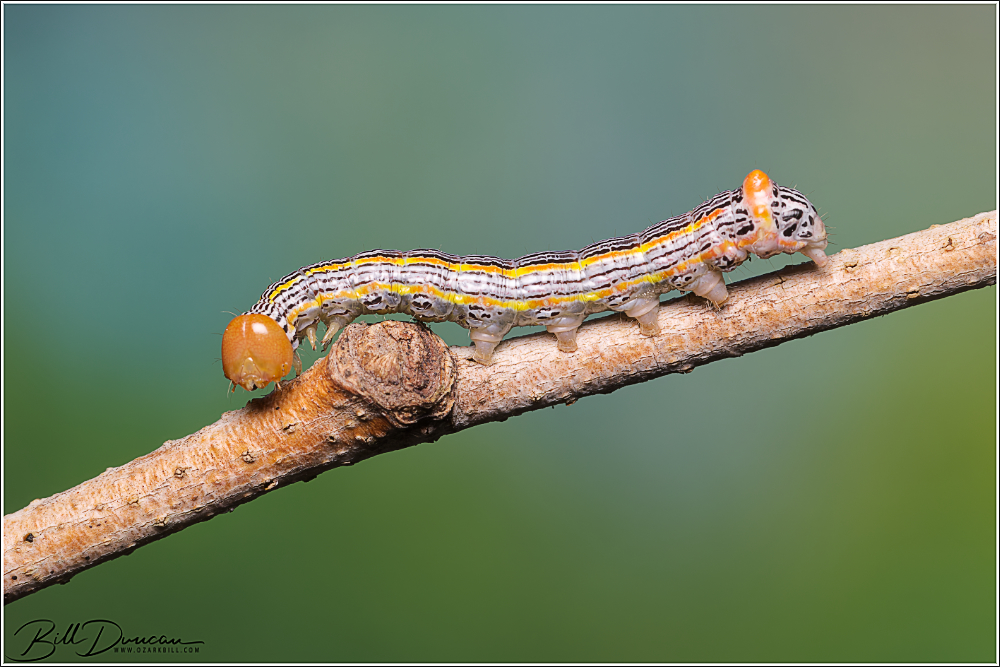
2025 Caterpillar Season – Humped Oakworm

Humped Oakworm Moth
Symmerista sp. fam. Notodontidae
Host plant(s): Found on oak (Quercus sp.)
Date(s) and location(s): 18 September, 2025 – Council Bluff Lake, Iron County, MO; 27-September, 2025 – Caney Mountain Conservation Area, Ozark County, MO
Notes: Caterpillars of S. canicosta (red-humped oakworm) and S. albifrons (white-headed prominent) are indistinguishable as larvae and are so similar as adults that the only way to distinguish the two is by dissecting the genitalia. Both species are found in Missouri and both feed on the same host plants – beech, chestnut and oaks (any members of the Fagaceae).

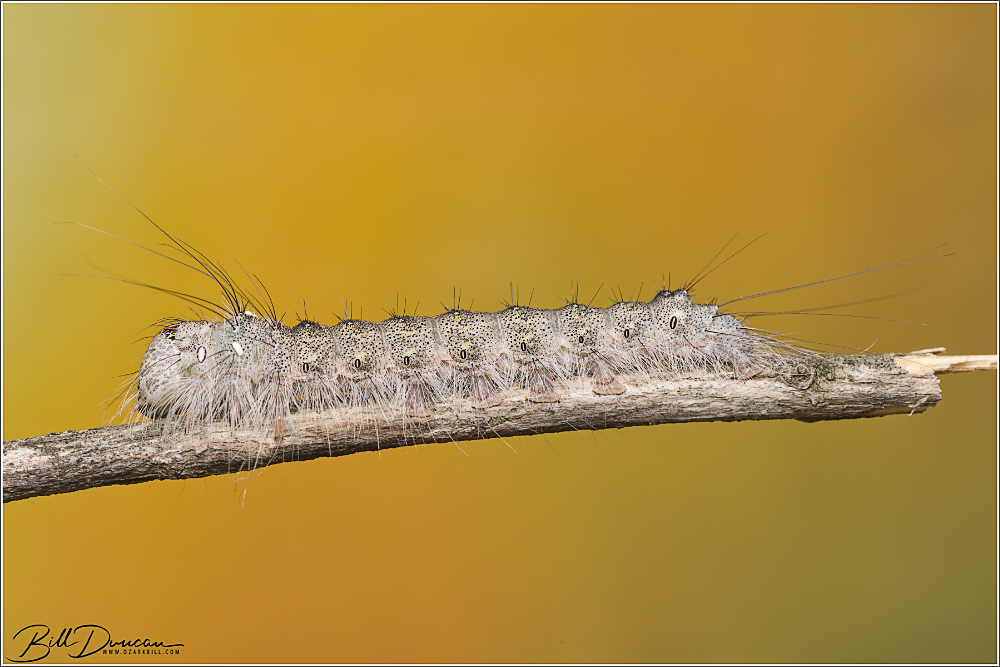
2025 Caterpillar Season – Virginian Tiger Moth

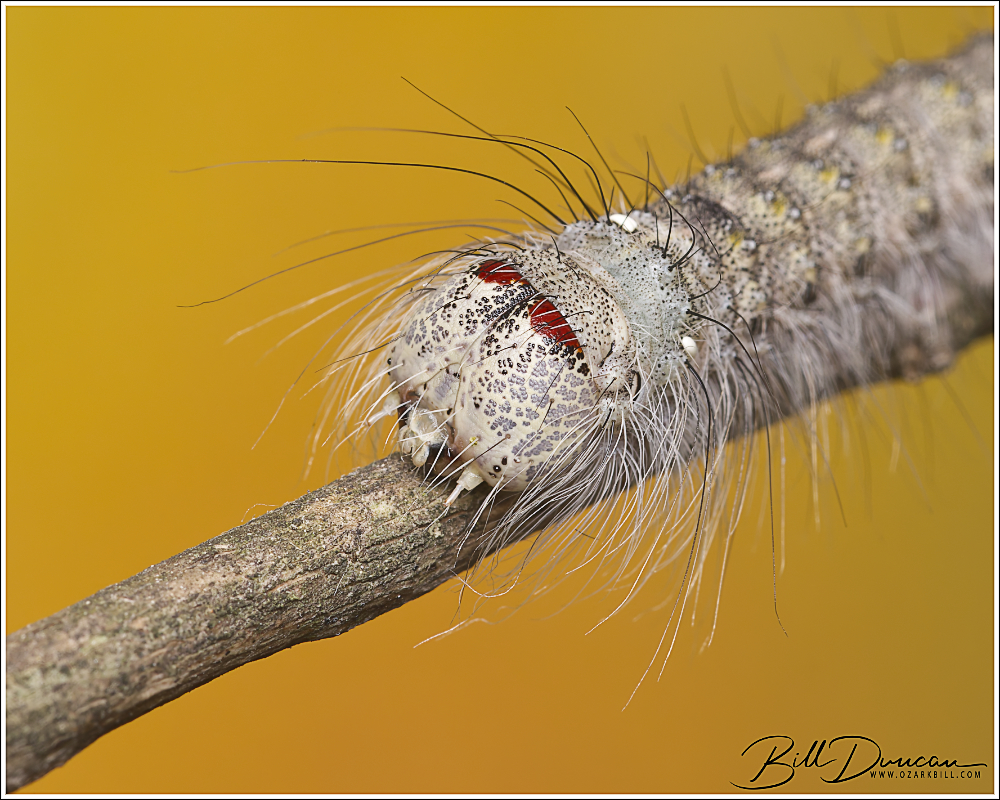
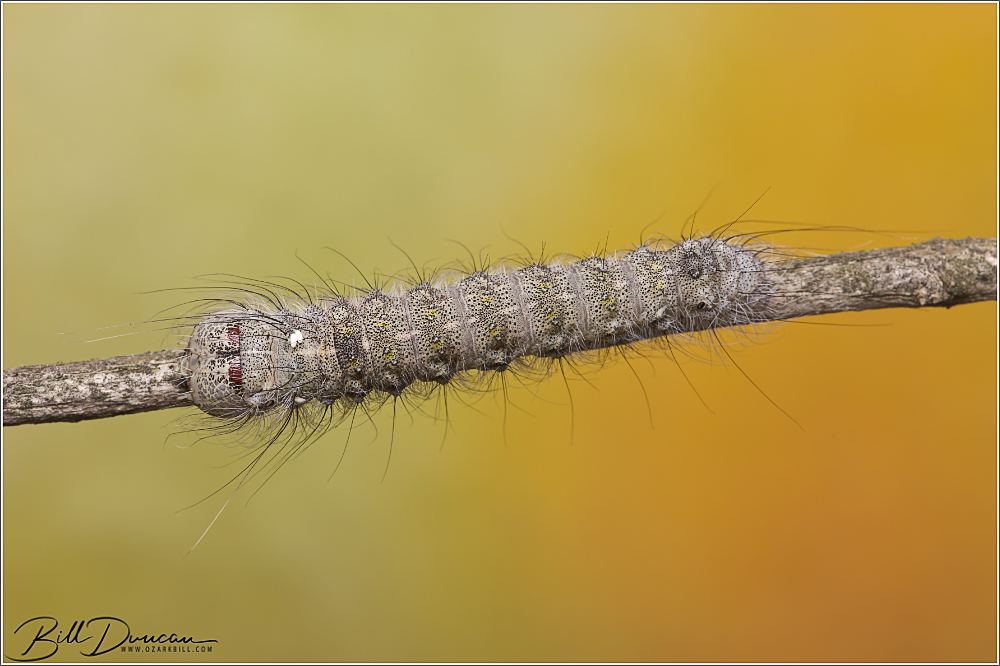
Virginian Tiger Moth
Spilosoma virginica fam. Erebidae (Hodges#8137)
Host plant(s): Found on wingstem (Verbesina alternifolia), swamp white oak (Quercus bicolor) and black willow (Silax nigra)
Date(s) and location(s): 13 September, 2025 – Tyson Research Center, St. Louis County, MO; 17-September, 2025 – Little Creve Coeur Ecological Area
Notes: Also referred to as the yellow wooly bear, this species is highly polyphagous.

2025 Caterpillar Season – Birch Dagger Moth

Birch Dagger Moth
Acronicta betulae fam. Noctuidae (Hodges#9208)
Host plant(s): river birch (Betula nigra)
Date(s) and location(s): 15 September, 2025 – Creve Coeur Lake Park, St. Louis County, MO
Notes: A specialist, hosting only on river birch.

2025 Caterpillar Season – Unicorn Caterpillar Moth

Unicorn Caterpillar Moth
Coelodasys unicornis fam. Notodontidae (Hodges#8007)
Host plant(s): redbud, hackberry, willow
Date(s) and location(s): 30 August, 2025 – Tyson Research Center, St. Louis County, MO; 06 September 2025 – Babler State Park, St. Louis County, MO; 15-September, 2025 – Creve Coeur Lake Park, St. Louis County, MO
Notes: Previous to this year, I assumed this species was an oak/hickory specialist. This is obviously not the case. This species is polyphagous and I was surprised at how many I found on willows this year. Look closely at the upper right photo in this gallery for signs that this individual was parasitized.

2025 Caterpillar Season – Wooly Bear

Wooly Bear
Pyrrharctia isabella fam. Erebidae (Hodges#8129)
Host plant(s): Found wandering
Date(s) and location(s): 08 November, 2025 – Riverlands Migratory Bird Sanctuary, St. Charles County, MO
Notes: Perhaps the most widely known caterpillar by the general public, the wooly bear is known as the Isabella tiger moth in its adult form. The caterpillars are often found crossing paths and roads during autumn, for reasons not fully understood. This species is highly polyphagous, eating a variety of trees, forbs and grasses. I chose some season-appropriate plants (Callicarpa americana & Euonymus americanus) from the backyard to photograph this caterpillar exploring.