"What a thousand acres of Silphiums looked like when they tickled the bellies of the buffalo is a question never again to be answered, and perhaps not even asked." -Aldo Leopold
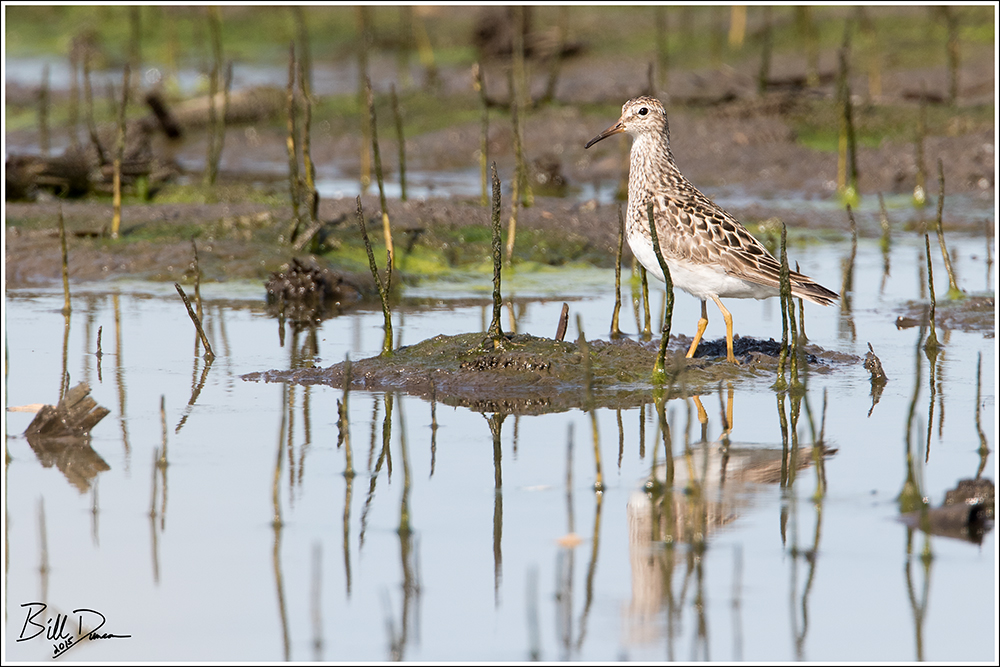
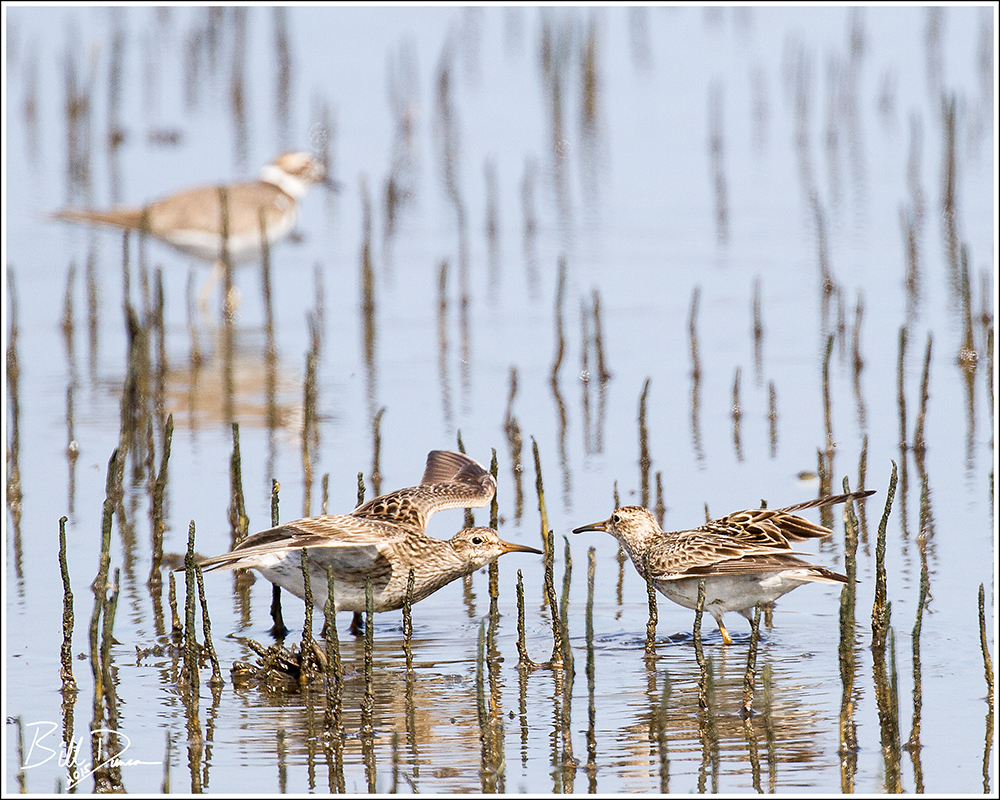
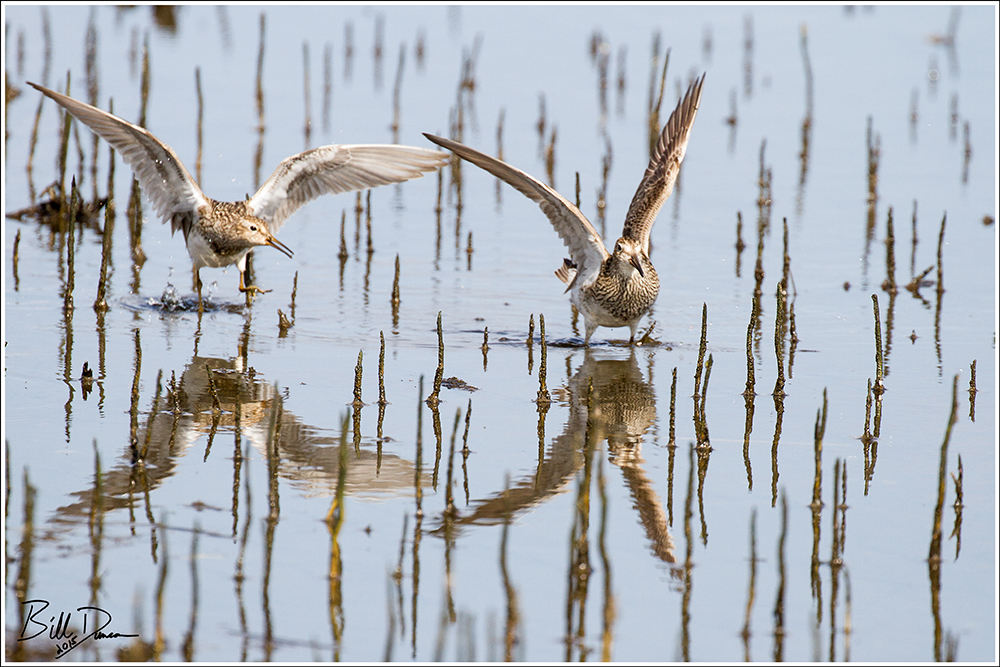
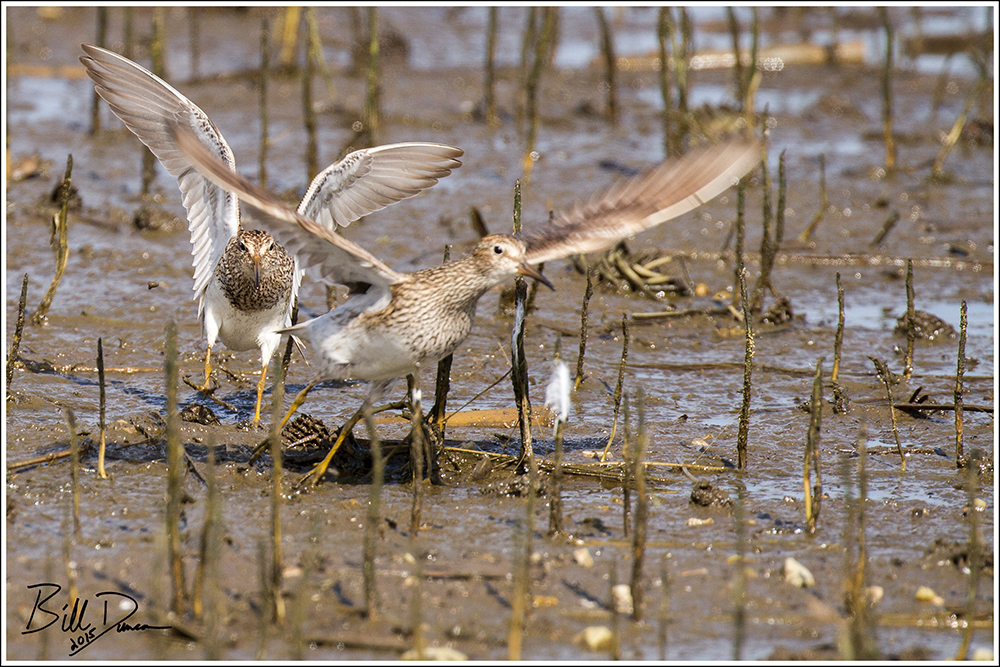
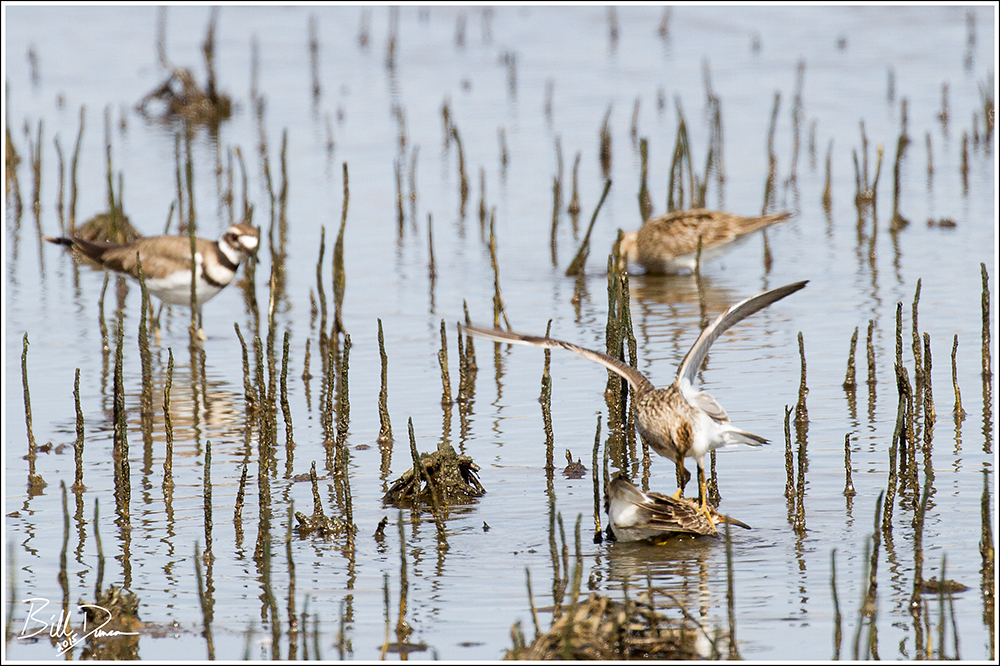
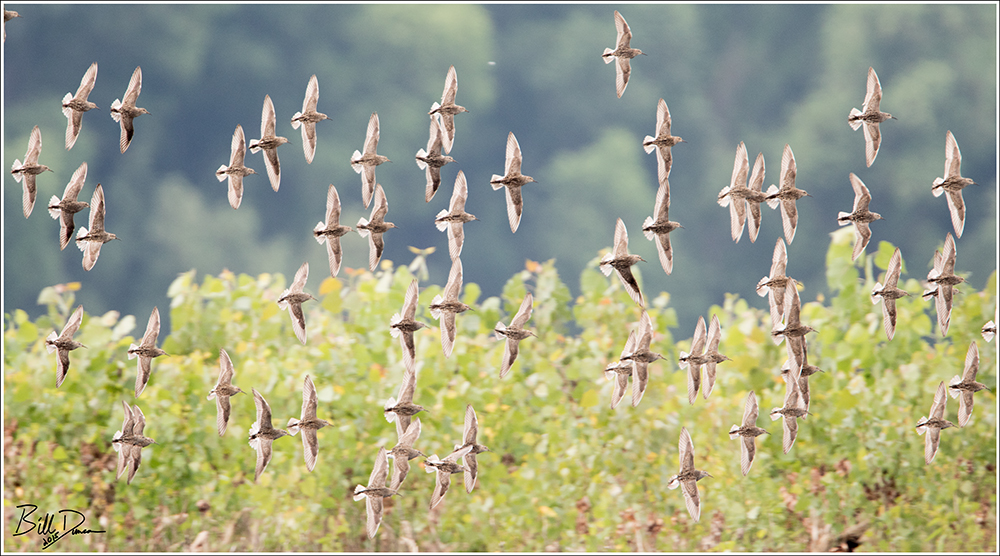
On the first day of August I found myself sitting next to one of the larger field puddles in the RMBS area watching the groups of migrating Pectoral Sandpipers. These guys were probably less than a week or two outside of their nesting grounds on the arctic tundra and their hormones were still raging. I was pretty surprised by their level of territoriality on their migratory route. Maybe this is how they behave year-round, but I have not been able to confirm this in any source I can find.
The Chase is On!!The Chase Continues!!Pectoral Pounce!!A Peck of Pecs
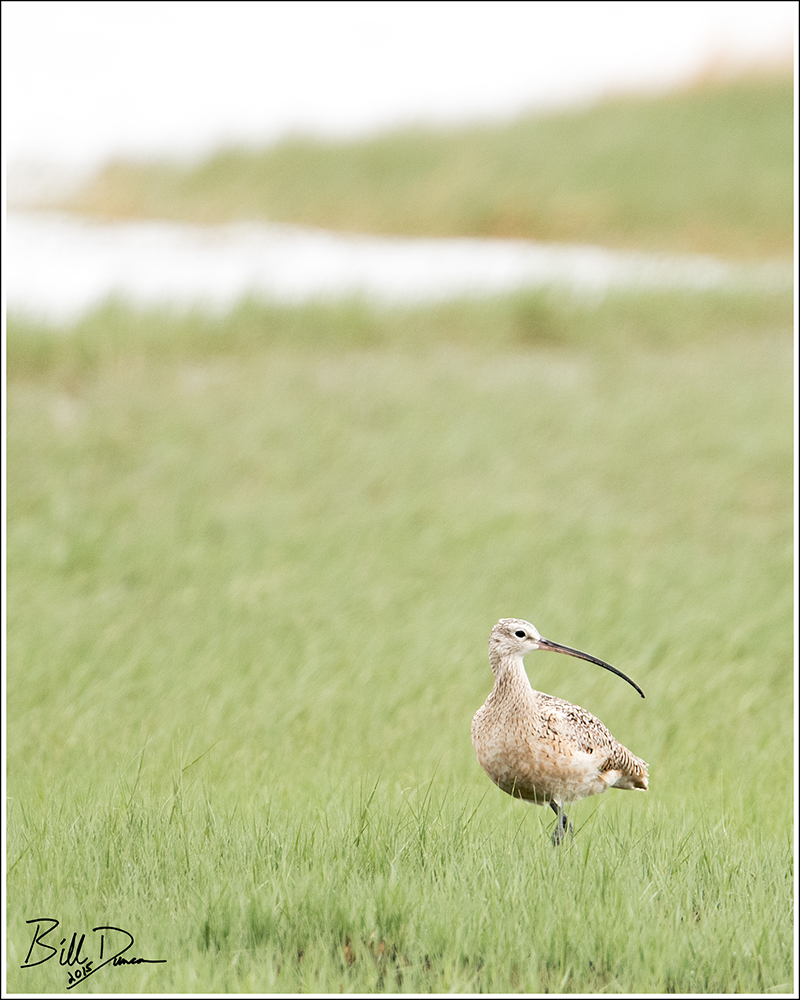
A bird of the west, the Long-billed Curlew was quite a treat for Steve and I and a rare bird to be found at Quivira NWR. Imagine our surprise and pleasure at finding two!
Long-billed Curlew
As usual, habitat destruction via modern agriculture and livestock has severely diminished the numbers of this species. Will we ever again see the numbers that Audubon once observed? In describing the flocks of thousands he was able to observe, Audubon in The Birds of America wrote the following:
“They flew directly towards their place of rest, called the Bird Banks, and were seen to alight without performing any of the evolutions which they exhibit when at their feeding places, for they had not been disturbed that season. But when we followed them to the Bird Banks, which were sandy islands of small extent, the moment they saw us the congregating flocks, probably amounting to several thousand individuals all standing close together, rose at once, performed a few evolutions in perfect silence, and realighted as if one accord on the extreme margins of the sandbank close to tremendous breakers. It was now dark, and we left the place, although some flocks were still arriving.”
I heard about the death of a friend this week. I had only known Gary since March, when I met him and his wife, Patricia, while we were all looking for American Woodcock at Young C.A. one evening. I did not know Gary long or even very well, but to give an idea of what kind of person he was, I will share this story.
I lent my binoculars to the Bohns in order to share the Woodcock I was watching and photographing. We watched the bird while we introduced ourselves and after a few minutes said goodnight. When I arrived home later I discovered I was without my binoculars. I have a horrible habit of leaving equipment on top of my car and driving away. Forgetting that I had lent the binoculars to Gary and Patricia, I assumed I had made yet another expensive and embarrassing mistake. The next day at the office, still smarting from my assumed mistake, I noticed I had a voice message. It was Gary informing me they had my binoculars. Gary had remembered what he learned about me the night before and taken the steps to track me down to make sure I got my binoculars back.
Gary and I met for dinner later that week and discovered we had several things in common. He shared that he had worked as a photographer for the St. Louis Post Dispatch for a number of years. In recent years he had gotten more interested in birds, butterflies, habitat restoration and nature photography. We had agreed to get together in the near future for some spring birding/photography. We were only able to do so together on a couple of occasions, and the photo above was from one of these outings. Gary took me to a popular birding destination at Weldon Springs C.A. – a place I knew about but had never visited before. We had pretty good luck with getting a number of nesting songbird species, including hearing no fewer than three singing Cerulean Warblers. We were both able to get shots of this cooperative Blue-winged Warbler. Looking at the images on the back of his camera, I liked his better.
In May, I had shared with Gary the details of a trip that Steve and I took to Quivira NWR and Cheyenne Bottoms in central Kansas. He was hooked and couldn’t wait to get there himself. I shared the details we had gathered and I know he made the trip sometime in the weeks prior to his passing. Unfortunately I was not able to hear from him about his experience there. I do hope he enjoyed it.
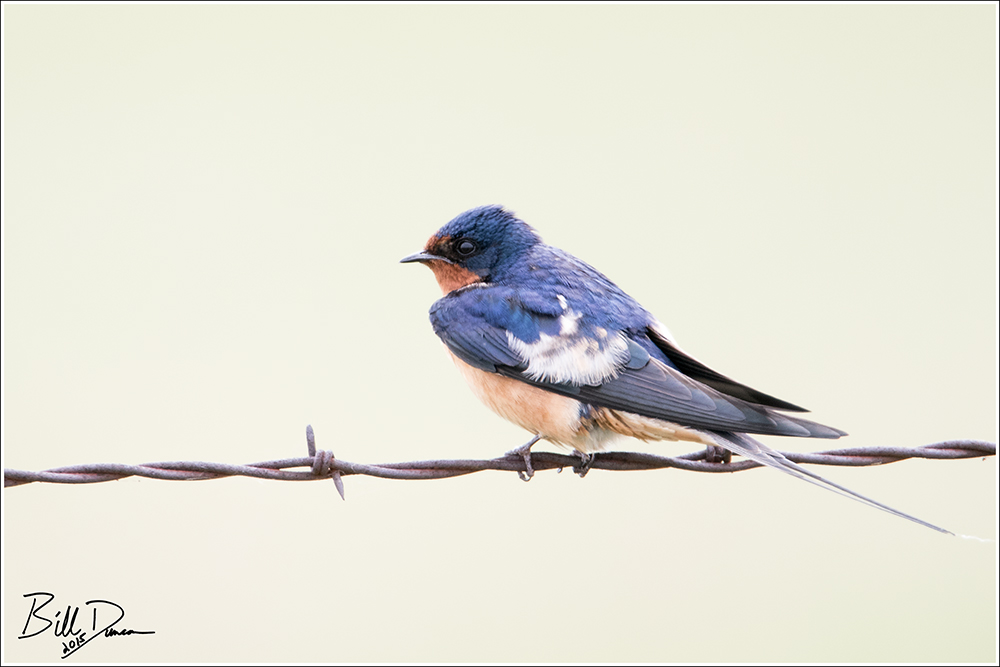
This warm season, including this spring at Quivira, I finally took some time to get to know the Swallows a little better, not only in visual description, but in song, behavior and flight. Other than their beauty, I find the Barn Swallows to be the most gracefully designed and beautiful fliers of their kind. With their long, forked tail and sleek and slender wings, I am sure they could beat any other swallow in a dogfight. It’s a simple pleasure to watch them swoop down, mere inches above a field to catch an insect on the wing, to then see them rise a few hundred feet while banking and rolling. Their varied and constant chatter ranks among my favorites as well.
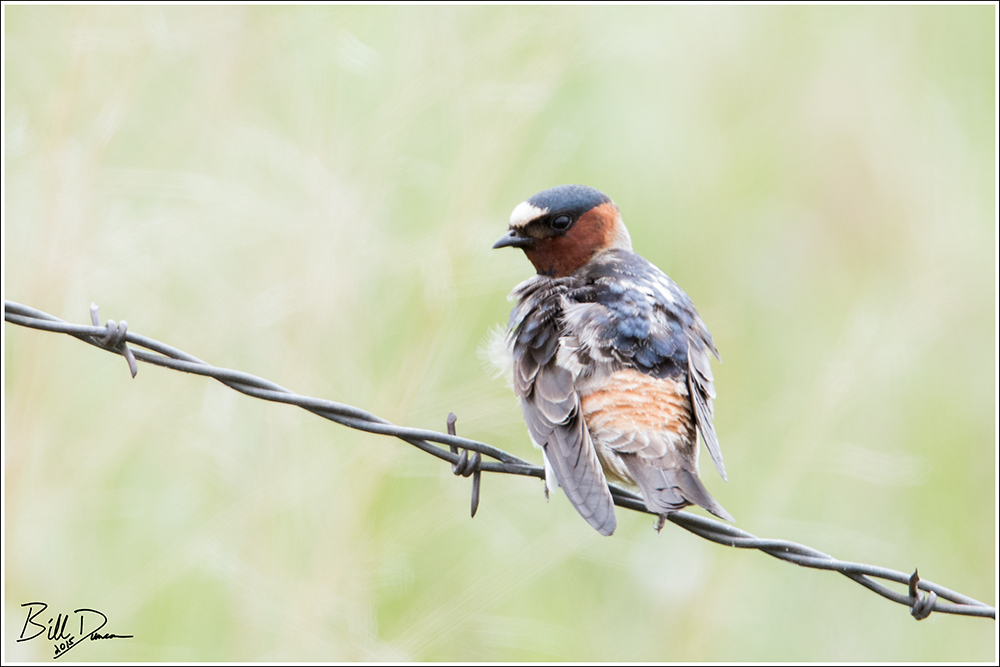
Cliff Swallow
Pete Dunne most appropriately describes the Cliff Swallow as a “…husky crop-tailed Barn Swallow wearing a miner’s lamp.” Another gorgeous swallow, this species is very communal and will often nest in the hundreds or thousands together, making gourd-shaped nests out of mud. The image below shows a few birds collecting mud on the banks of a stream that runs through Quivira.
Tonight I am sharing a few miscellaneous shorebirds. First up to bat is a shorebird that isn’t much of a shorebird at all – the Upland Sandpiper. So named due to its preference for higher and drier habitat, the Upland Sandpiper can be found in fields and meadows. Look for it on a typically elevated perch and find it by its haunting song.
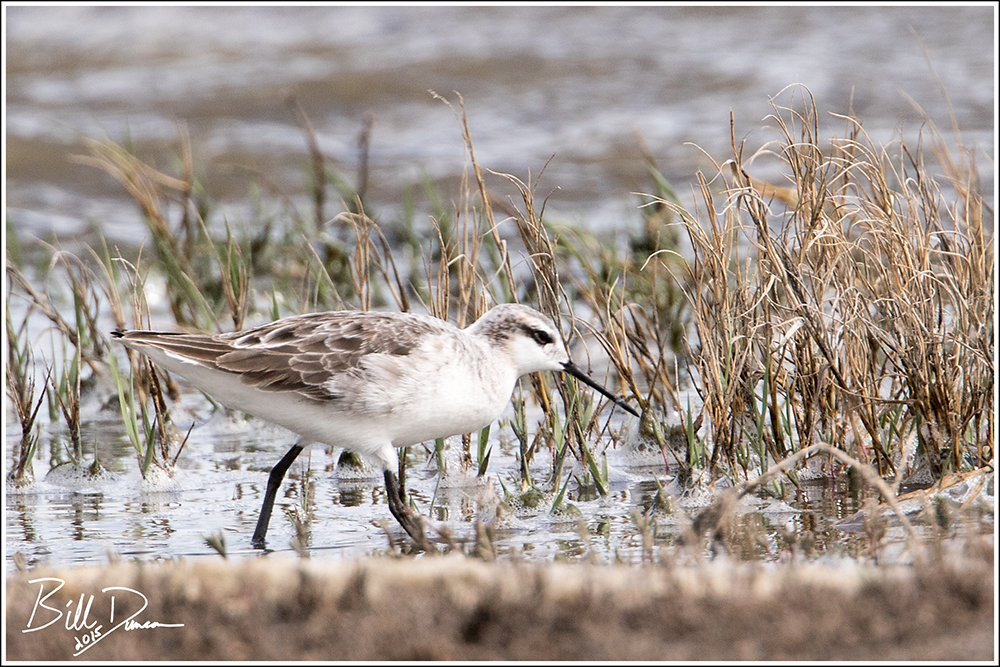
Red-necked Phalarope
With a ratio of what must have been close to 1000:1, the Wilson’s Phalarope greatly outnumbers any other Phalarope. However, Steve and I were still able to find and ID a couple of Red-necked Phalarope in winter plumage, as pictured above.
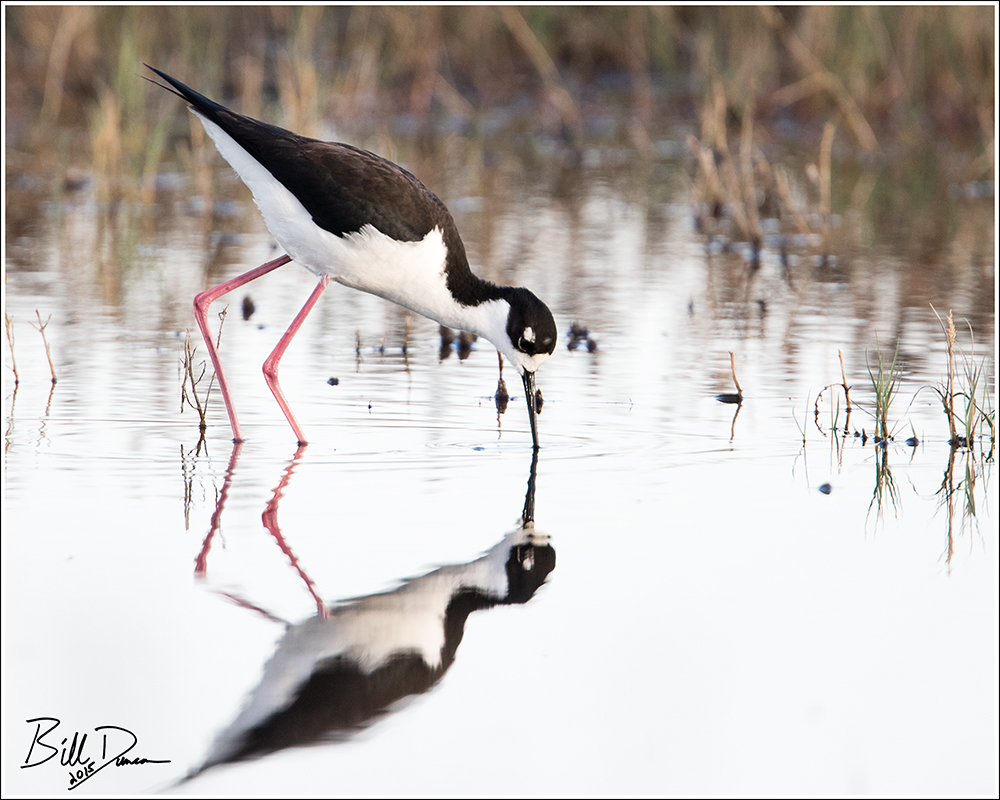
Black-necked Stilt
A true wetland favorite, the Black-necked Stilt is as pleasing to watch for its behavior as it is a piece of natural art.
Willet
As stout and cute as a Bulldog puppy, Willets are always a site for sore eyes.
Willet
On our last evening and during our very few hours of decent, golden hour light Steve and watched a number of Willets and Avocets feeding in the shallows near the road.
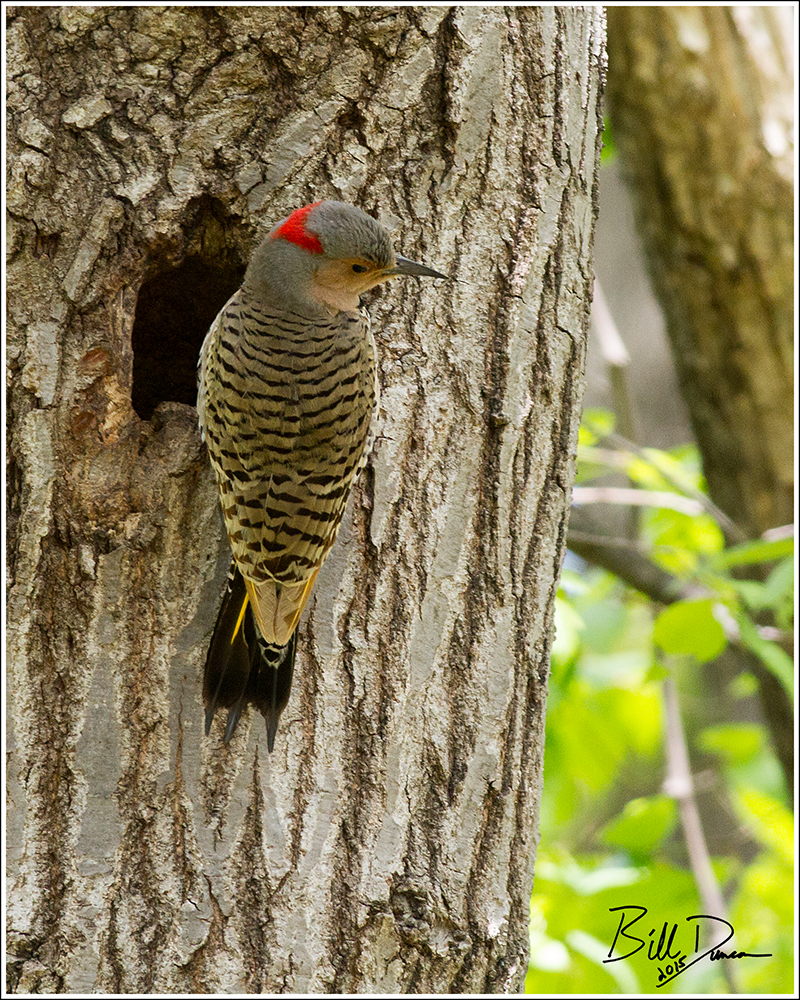
Earlier this spring I watched with anticipation as a pair of Flickers inspected a potential nest cavity in a wood lot where I work. I watched over several mornings as they came and went and made a ruckus. Here, the male admires the view from the front door.
Northern Flicker – Female
The female is pictured above, inspecting the potential nest sight.
No Thanks!
But alas, for whatever reason, the pair decided this wasn’t the spot for them this year. Ah well.
With unique coloration and behavior, the Ruddy Turnstone is a shorebird that does not take a second guess to identify. The photograph above captures this conspicuous behavior for which these birds have earned their name. They do turn anything that they can – looking for any type of small invertebrate that may be hiding underneath. Anything includes dead fish or other animals, shells or trash washed up on a beach.
Ruddy Turnstone
These guys typically migrate along the coasts and finding them in the interior is not that common. Although we missed out on finding any Buff-breasted Sandpipers during this visit, we were glad to have the opportunity to watch these guys in action.
This Great Egret is in full breeding plumage and has acquired the green mask that are indicative of adult birds. This one has also sustained an injury to its bill, perhaps from an aggressive encounter with another male?
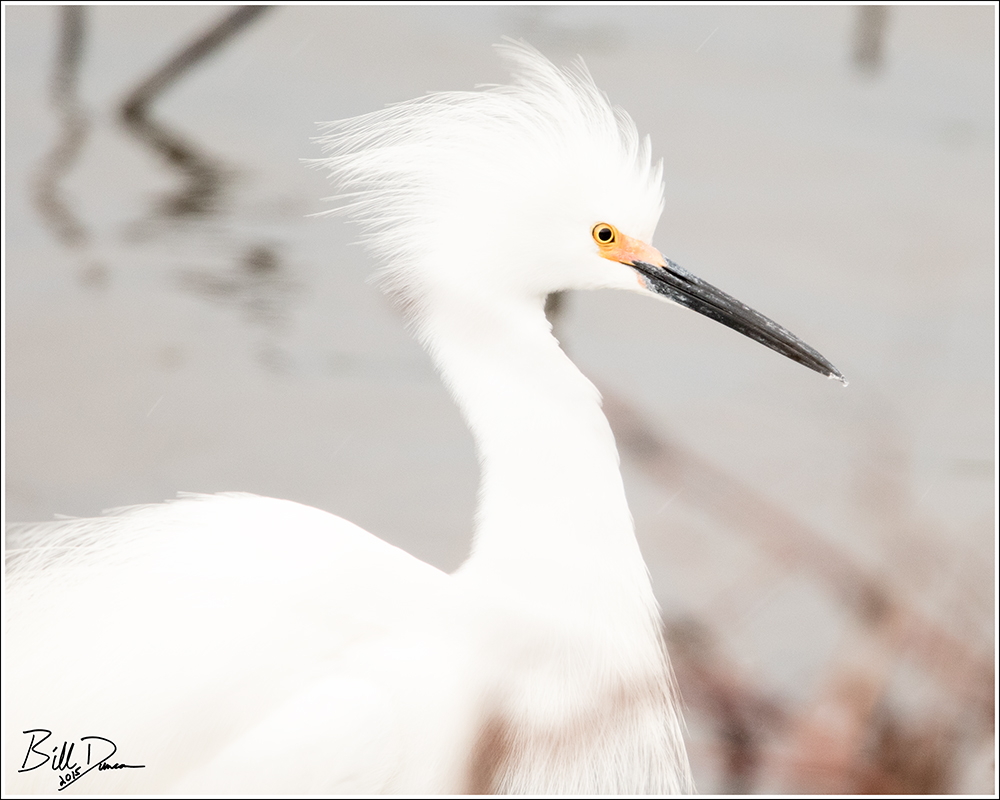
Snowy Egret
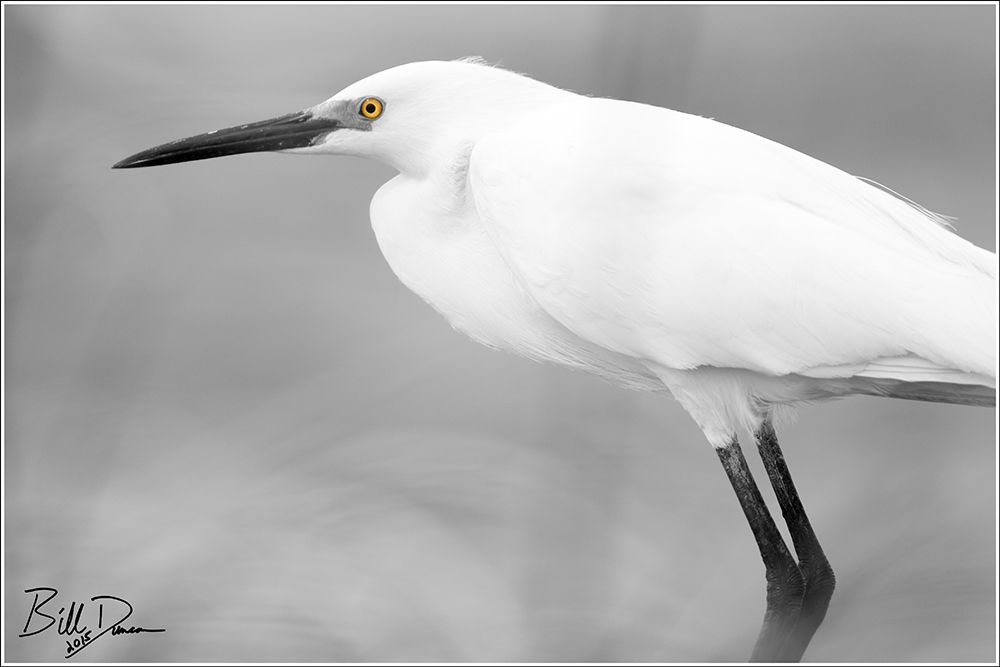
What is more striking than a Snowy Egret?
Snowy Egret
Finally, I realized I haven’t included too much in terms of habitat shots of Quivira. Here is a pano of one of the more productive sections of the reserve. It’s a pity to think of how much of this habitat has been lost on this continent. How many care or even know?
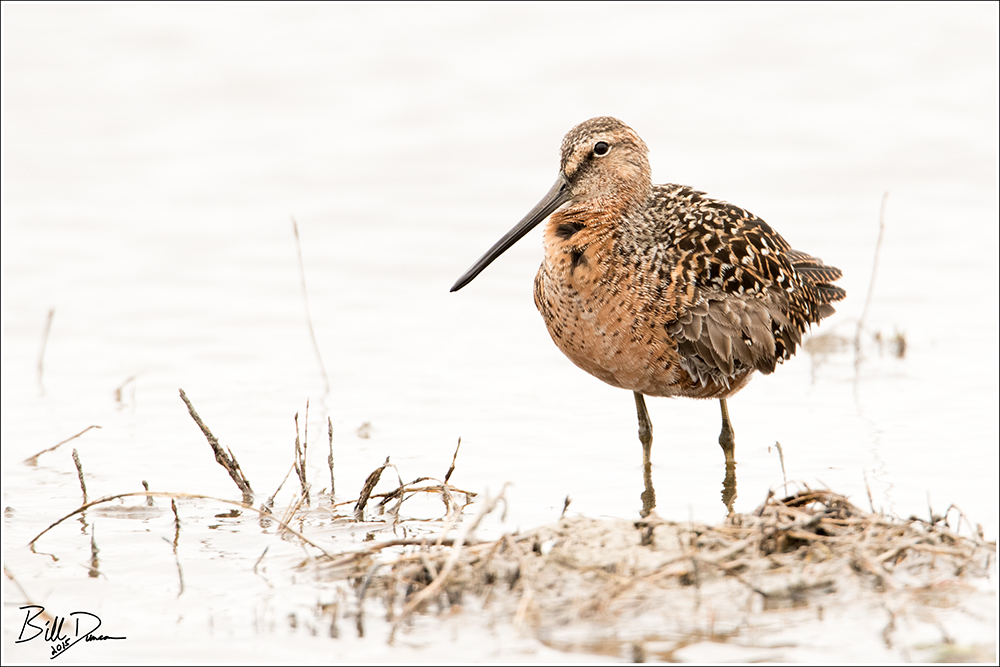
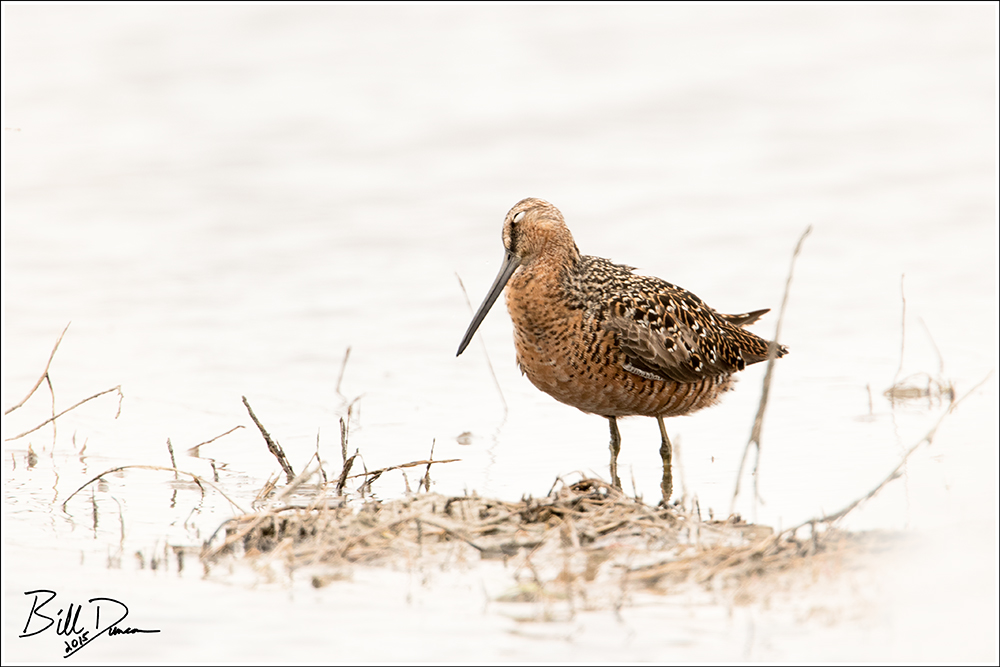
Considered conspecifics for decades, both the Long-billed and Short-billed Dowitchers breed in the high arctic. Differences in plumage, migratory routes and breeding isolation, followed by allozyme and mtDNA evidence suggested separate species status. The Long-billed, pictured in this post was the only Dowitcher species Steve and I were find at Quivira. This is not altogether surprising due to the Long-billed’s preference for freshwater during migration and the Shirt-billed’s tendency to stick to marine environments.
Long-billed Dowitcher
The long, thick legs and bill give indication as to the depth of water in which these birds feed and they probe for prey using a rapid up and down motion that is quite reminiscent of the action of a sewing machine.
Most of the waterfowl had long since migrated north by the time Steve and I visited Quivira in May, but we were able to find a few. We encountered a few Eared Grebe and with the winds as high as they were, the waves were impressive in such shallow bodies of water.
Eared Grebe – Winter
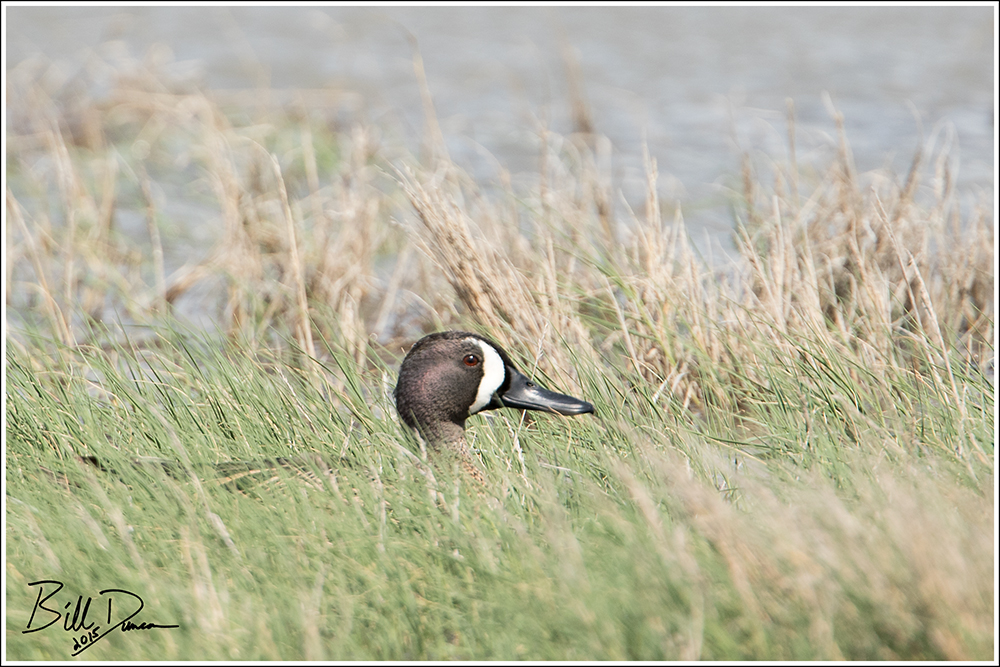
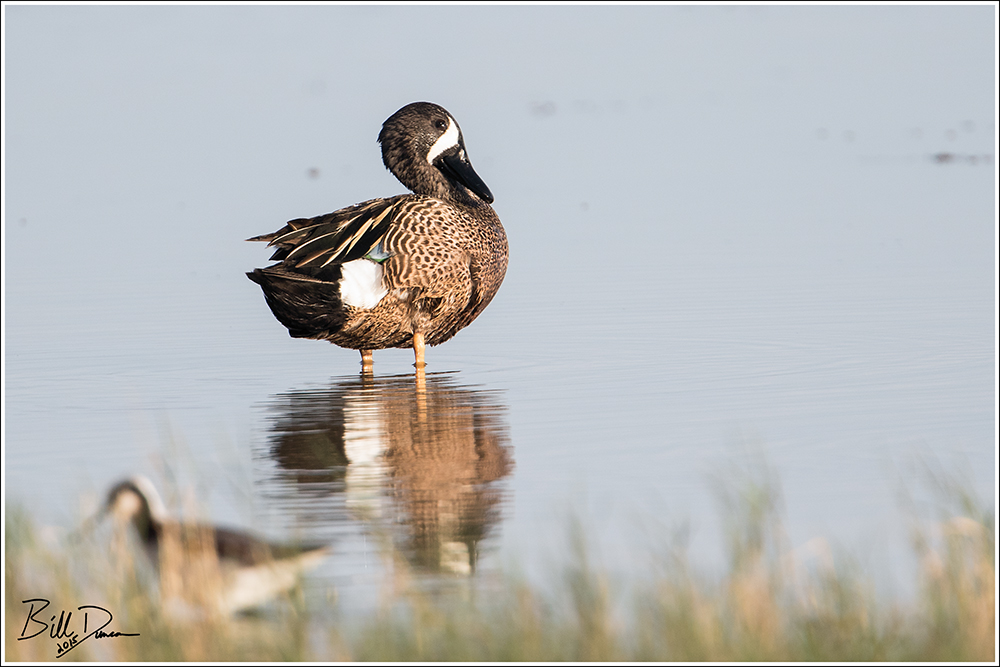
Blue-winged Teal were the most abundant of the waterfowl.
Blue-Winged TealBlue-winged Teal
Finally, we watched this gorgeous pair of Canada Geese in golden hour light. They seemed more appropriate here than in any other setting I had ever seen them before.