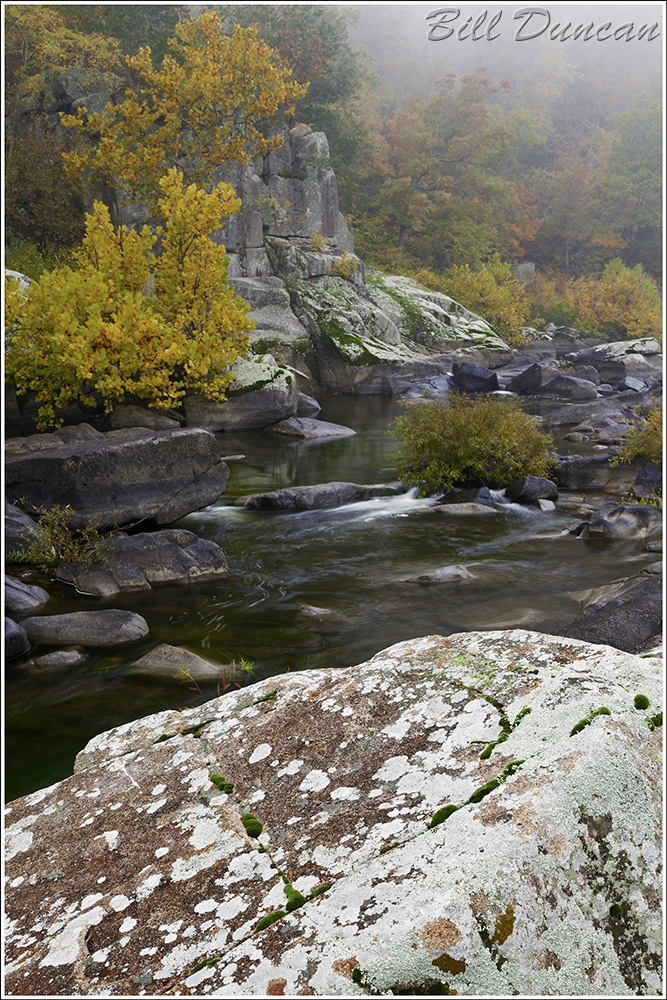
Disappointment at the Gnatcatchers’

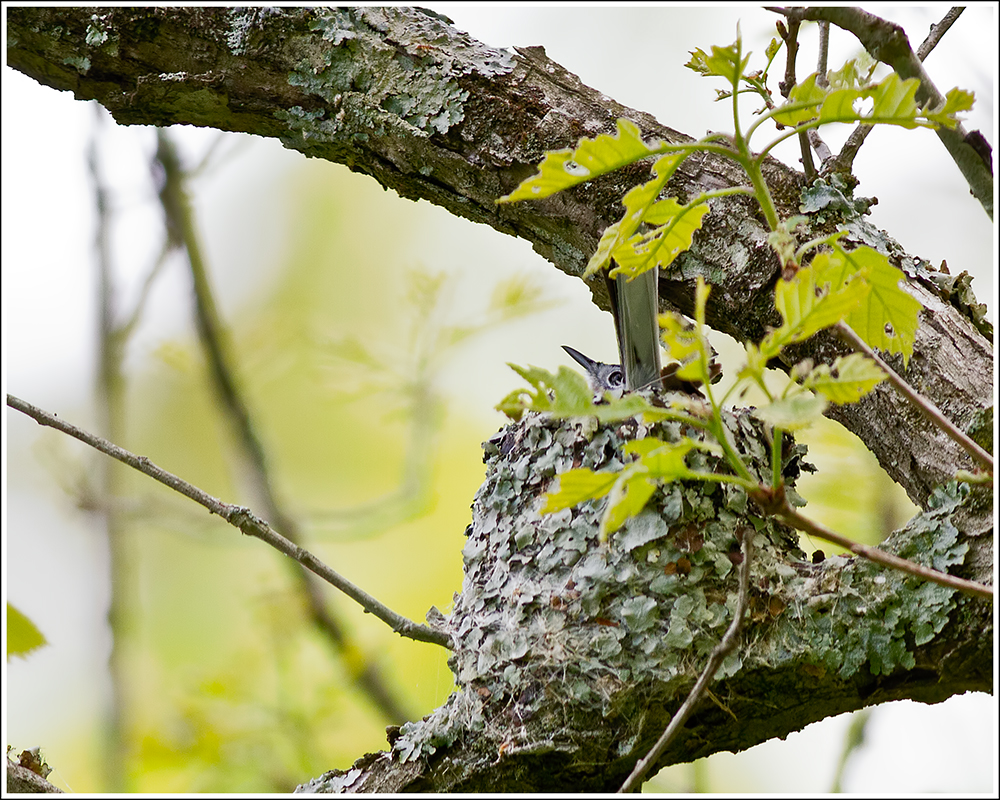
Steve selflessly checked on the Gnatcatcher’s nest at St. Francois SP late this past week to give me an update to help plan for the weekend.  When he arrived he watched as the pair appeared to be deconstructing the nest and moving the materials!  This was surprising as they definitely were incubating eggs when I had visited about five days prior.  We found one description of this kind of behavior in Harrison’s Eastern Bird Nests:

“Unusual characteristic of this bird: it tears up a completely or partly completed nest and reuses the material to build nest nearby.  Author has seen this several times; believes that awareness of possible discovery during building may be cause.”

I have a few pieces of evidence to possibly explain why they would move a nest in which they were already incubating a clutch.

1) They built this nest ~20 feet above a rather popular State Park trail and the numbers of people walking underneath caused them to seek a different spot.

2) Egg predation.  Someone found the nest and relieved them of their brood.

3) Cowbirds.  The BHCB activity was apparent around the nest when I visited.  Perhaps they snuck an egg in and the host birds discovered the ploy?

I guess we will never know.  Steve tried his best to follow the “contractors” as they moved their building materials to the new construction site.  Their speed and the fully-leaved trees made this an impossible task.  Oh well, maybe next time.

IMG_3999

“Housing Crisis”

Technical details: Canon EOS 7D camera, EF500mm f/4.5L USM lens, ISO 640,  f/6.3, 1/200 sec

Blue-grey Gnatcatcher Nest Update

I spent a little time watching and shooting the BGGN nest this past Saturday.  Here are a few notes: -Nest is in action.  I believe there are likely eggs in the nest.  Not yet hatched.  One parent will stay on the nest continuously.  Every 5-10 minutes the other parent would come by and give a few quick, low call notes.  The parent on the nest will reply with a similar vocalization most, but not every time, and then leave to where the other parent is calling in nearby branch or tree.  The new parent then takes its place on the eggs.  The nest never stayed open for more than 45 seconds.  Cowbirds were definitely in the area and I believe are probably aware of the nest.  Migrant songbirds were everywhere.  Here is a quick list of birds I had in the parking lot or at the nest. TEWA OVBI REVI BLWA COBI GCFL PEWE SWTH NOWA LOWA SCTA.

If I make it back there this weekend, there is a good chance I could see feeding of the chicks.

IMG_3975

“BGGN Nest Update – May-11 2013”

Technical details: Canon EOS 7D camera, EF500mm f/4.5L USM lens, ISO 640,  f/6.3, 1/200 sec

Enjoying the Gems Under Your Nose

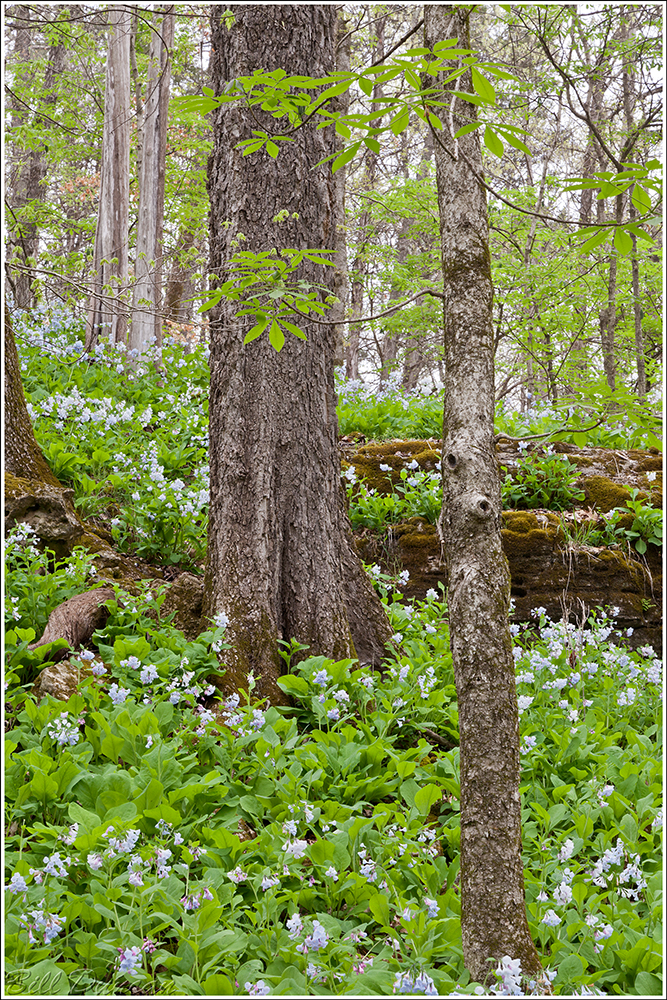
I have often said I am more interested in the places the Ozarks have to offer compared to the possible visits to iconic destinations in the rest of the country.  I know I would love and appreciate those spots, of course.  But the millions of photographs generated are probably enough without my lousy contributions.  I am more interested in showcasing the animals and habitats that can be found in the Show Me State, the places with names that so many who live here have never even heard.  I’ve come to realize lately that I am guilty of ignoring a few places less than an hour’s drive from my doorstep that have a lot to offer, passing them by on my three hour drives to more exotic Ozark locations.  These places include Castlewood, Washington and Babler State Parks, Emmenegger Nature Park, Bush Wildlife and a handful of other Conservation Areas.  The place I’ve gotten to know much better this spring is the location spotlighted in this post, St. Francois State Park.

St. Francois SP, located just north of Bonne Terre, MO, has a lot to offer the nature lover.  I have now hiked the three primary trails and they each offer unique features that should satisfy any true Ozarker.  Sarah and I enjoyed a nice hike on the Swimming Deer Trail a couple weeks ago and stumbled across the best bunch of Bluebells I have seen personally.  I did not bring the camera on that hike, but later that week we took a few days break to travel south and made sure we stopped back here again.  I was hoping the show would still be ongoing and I was not disapointed.  We were even fortunate to have a nice overcast sky and relatively little wind.  So the poor photography is my own blame.  Picking out compositions that worked was more trouble than I anticipated, of course.

IMG_3770

“Bluebells and Limestone″

Technical details: Canon EOS 5D Mark II camera, EF17-40mm f/4L USM @ 23mm, ISO 320,  f/13, 0.3 sec

This trail also contains the largest number of Ohio Buckeyes that I have seen at one location in Missouri.  These trees and their emerging, distinctive leaves were found everywhere.  Along with Pawpaws, these small trees fit in perfectly beneath the larger oaks and hickories that dominate the upper canopy.  Pictured below is one of the larger buckeyes I found on this day.
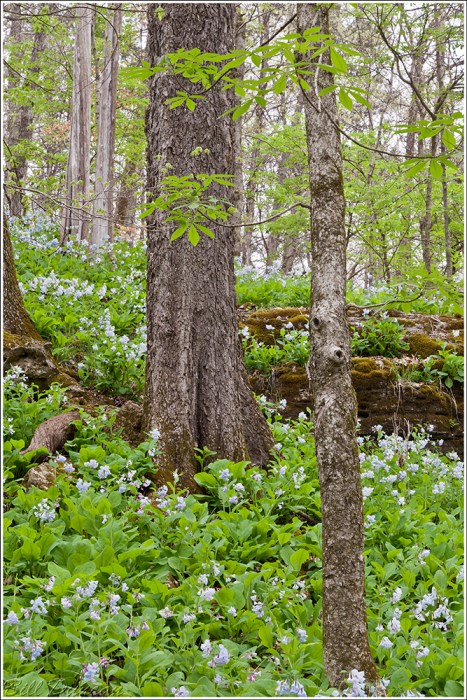
IMG_3795

“Bluebells and Buckeyes″

Technical details: Canon EOS 5D Mark II camera, EF17-40mm f/4L USM @ 70mm, ISO 320,  f/18, 0.5 sec

Along with this great display of wildflowers and trees, the Swimming Deer Trail offers nice views into the Big River valley from atop tall bluffs that are adorned with the characteristic Eastern Red Cedars who are so adept at holding on to cracks and crevices to get the best possible looks as the seasons fly by.
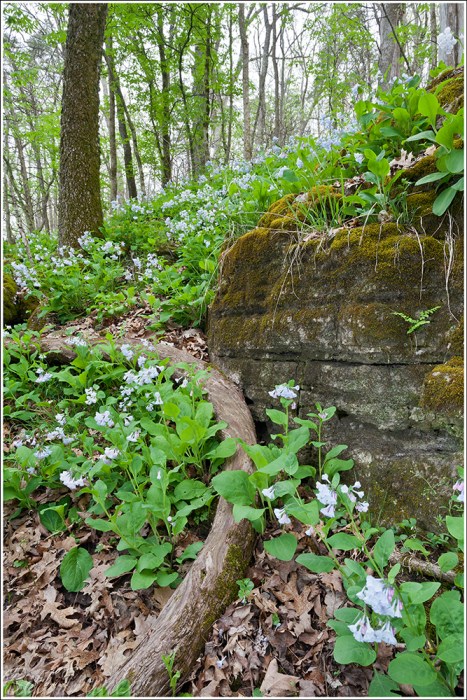
IMG_3779

“Bluebells and Woody Vine″

Technical details: Canon EOS 5D Mark II camera, EF17-40mm f/4L USM @ 24mm, ISO 400,  f/16, 0.4 sec

I apologize for so many vertical compositions.  I once read a photography e-article that suggested this tendency was more typical of the “stand up, aggressive, masculine” (male) photographer, whereas women photographers (and painters I assume), who are assuredly the “weaker sex” are more apt to produce horizontal landscapes, obviously the more passive and prostrate the compositional choice.  If there is any truth to this hogwash, I wonder what it says about the artist who prefers the square ratio?  😉

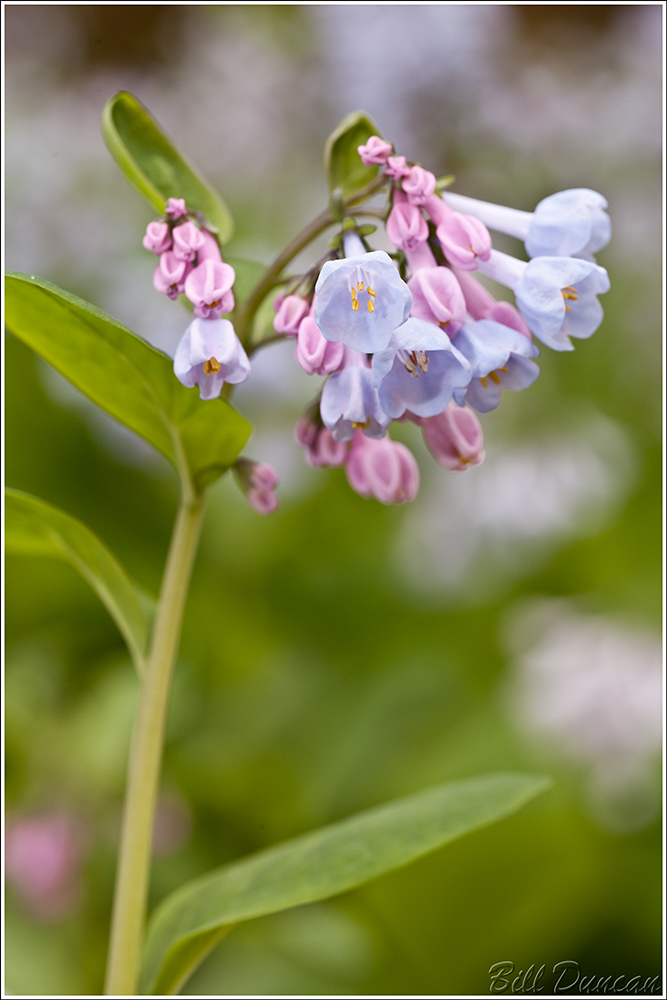
Anyway, back to the nature stuff, right?  Well, any nature photographer who still cares to keep his union badge has to shoot the cliched Bluebell macro shot, right?  Here it is.
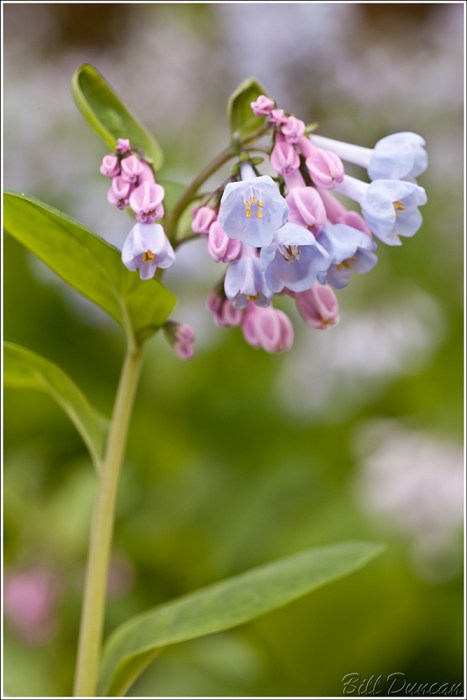
IMG_3815

“Nature Porn″

Technical details: Canon EOS 5D Mark II camera, EF100mm f/2.8L Macro IS USM, ISO 160,  f/8, 1/10 sec

Of course, anywhere in the Ozarks at this time of year is going to be heaven for any birder who is worth their salt.  St. Francois SP is definitely no exception.  During my several visits over the last month, I loved listening and watching the nesting wood warblers and other songbirds as they busily setup their territories, build nests and feed themselves.  I used to think the Romanticists’ metaphorical descriptions of spring as a bunch of overly sentimental hogwash.  Now I find myself just as captivated by this line of interpretation as I do the underpinning that natural history presents.  What heaven is spring!

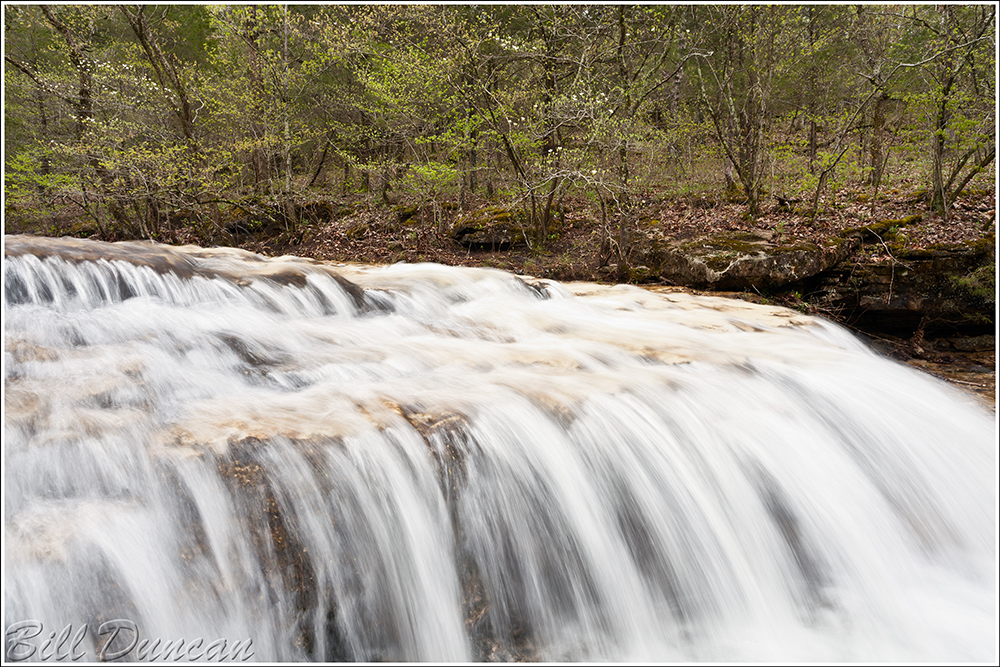
A week or so following Sarah’s and my trip, Steve gave me a guided tour of the last trail I had yet explored at St. Francois SP: “Mooner’s Hollow”.  A beautiful sloped-shelf waterfall, rocky outcrops and wonderful examples of spring ephemeral wildflowers along the river bottom of Coonville Creek Wild Area were the expected highlights.  What we were not expecting was the fortunate stumbling upon of a Blue-grey Gnatcatcher’s nest!  The second smallest bird in the state, these guys build a nest that is similar in size and construction to that of the state’s smallest, the Ruby-throated Hummingbird.  In the picture below you can hopefully get a look at the construction materials of plant fibers, spider webs, fur and lichen, which is used so beautifully to camouflage the nest.

I watched the nest for a couple of hours.  In this little time I noticed the pair did not stay at the nest, which makes me believe there were not yet any eggs.  The pair stopped at the nest for no more than 60 seconds.  During this time one of the pair would enter the nest, add a bit of lichen or other material they had brought, do a little manipulation and then they would leave again.  This would be repeated every 15 – 20 minutes.  I hope to visit the nest soon to see if eggs, or perhaps even chicks might be found.
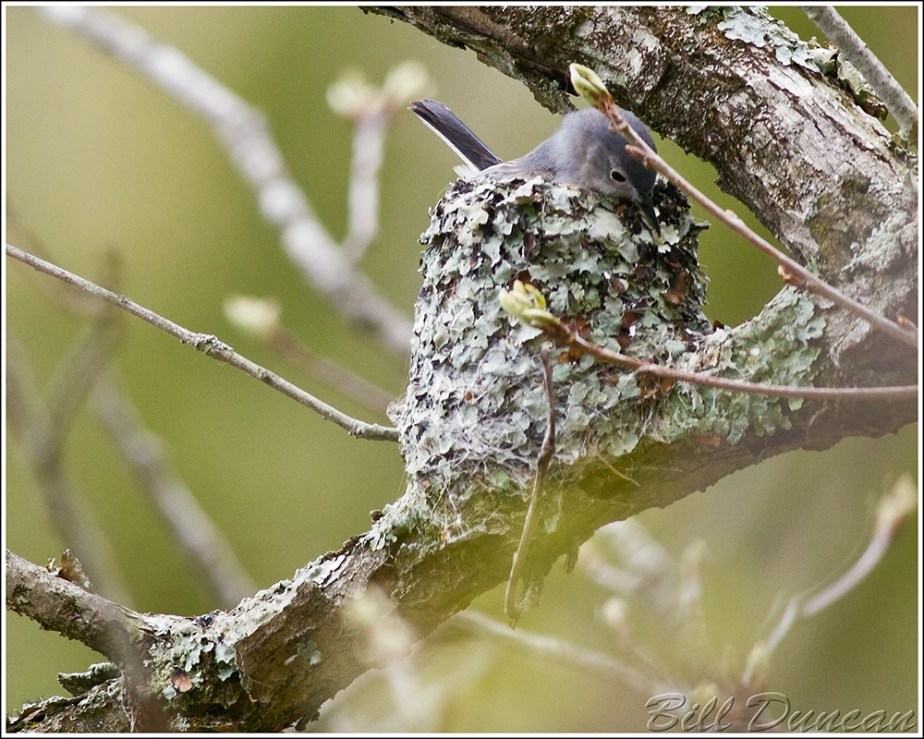
IMG_2992

“Not Just Gnatcatching”

Technical details: Canon EOS 7D camera, EF500mm f/4.5L USM lens, ISO 640,  f/6.3, 1/320 sec

This spring I have been fortunate to spend a fair amount of time in the rugged, karst topography that is so unique to the Ozark Highlands.  This continues to bring to mind what it must have been like to travel and exist in this country before ‘modern conveniences’ were introduced to muddle the experience.  A great series of roads can take you to within a ten mile hike or less to basically any spot on the map in Missouri.  For now, I leave with a great quote from that Confederate bushwhacking bastard, Sam Hildebrand.  This is in reference to a cave that is apparently located within or nearby St. Francois SP.  A reason for further exploring some day.

“We passed quietly through Butler County, along the western line of Madison, then through St. Francois and across Big River to those native hills and hunting grounds of my boyhood, known as the Pike Run hills.  The reader must bear in mind that these hills possess peculiar advantages over any other part of the country between St. Louis and the Arkansas line.  They look like the fragments of a broken up world piled together in dread confusion, and terminating finally in an abrupt bluff on the margin of Big River, where nature has left a cavern half way up the perpendicular rock, now known as “The Hildebrand Cave,” mouth to which cannot be seen either from the top or bottom.”

IMG_4082 2

“Fragments of a Broken Up World″

Technical details: Canon EOS 5D Mark II camera, EF17-40mm f/4L USM @ 24mm, ISO 100,  f/14, 1/8 sec
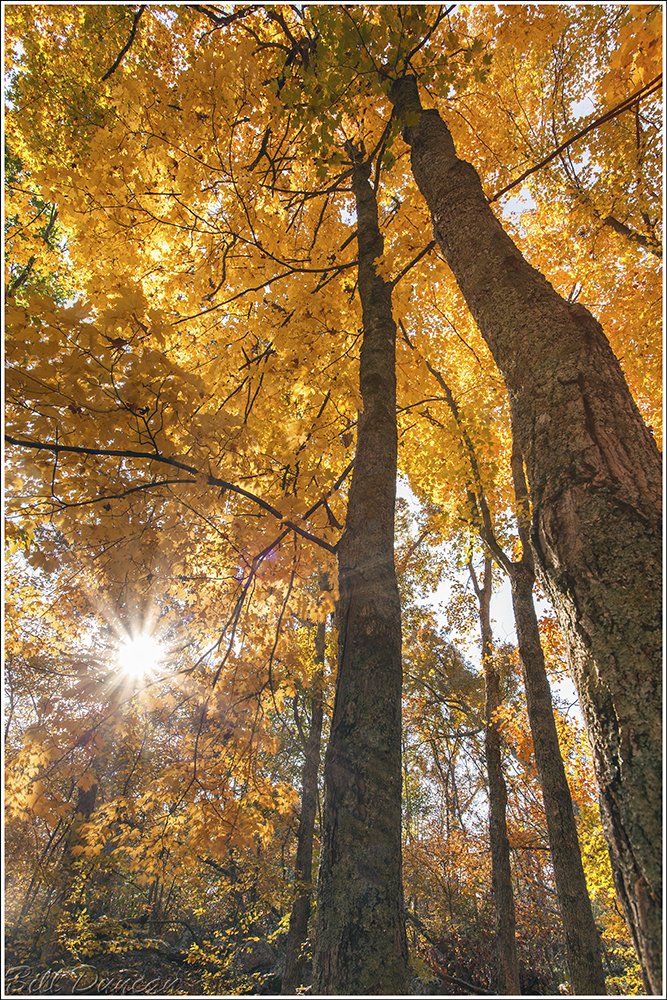
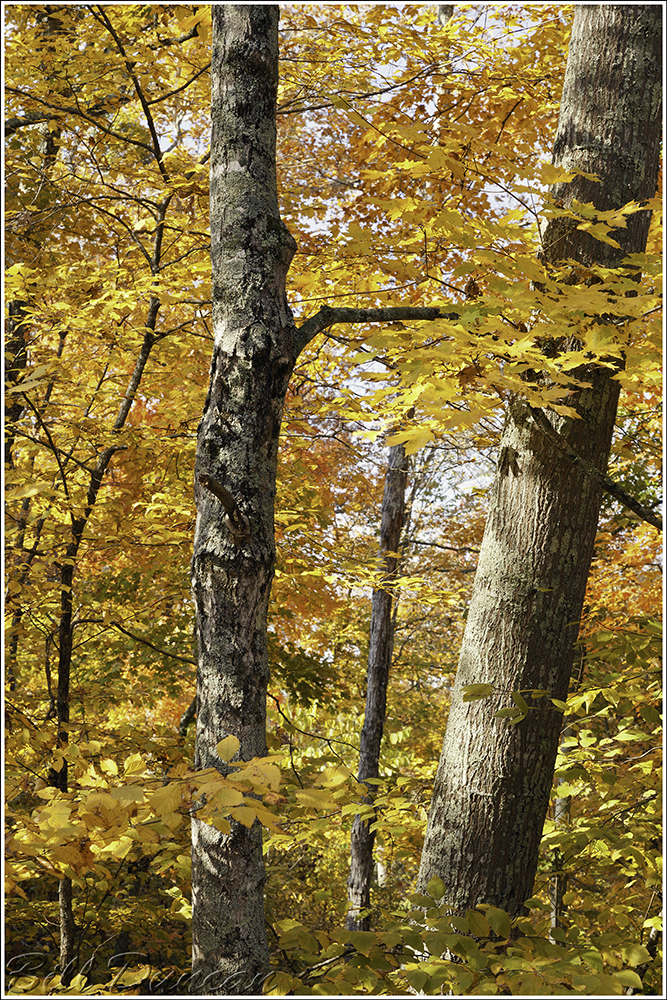
October Splendor

“How beautiful, when a whole tree is like one great scarlet fruit full of ripe juices, every leaf from lowest limb to topmost spire, all aglow, especially if you look toward the sun! What more remarkable object can there be in the landscape?”

-Henry David Thoreau-

“October Splendor″
Technical details: Canon EOS 5D Mark II camera, EF17-40mm f/4L USM @ 21mm, ISO 100,  f/14, 1/4 sec

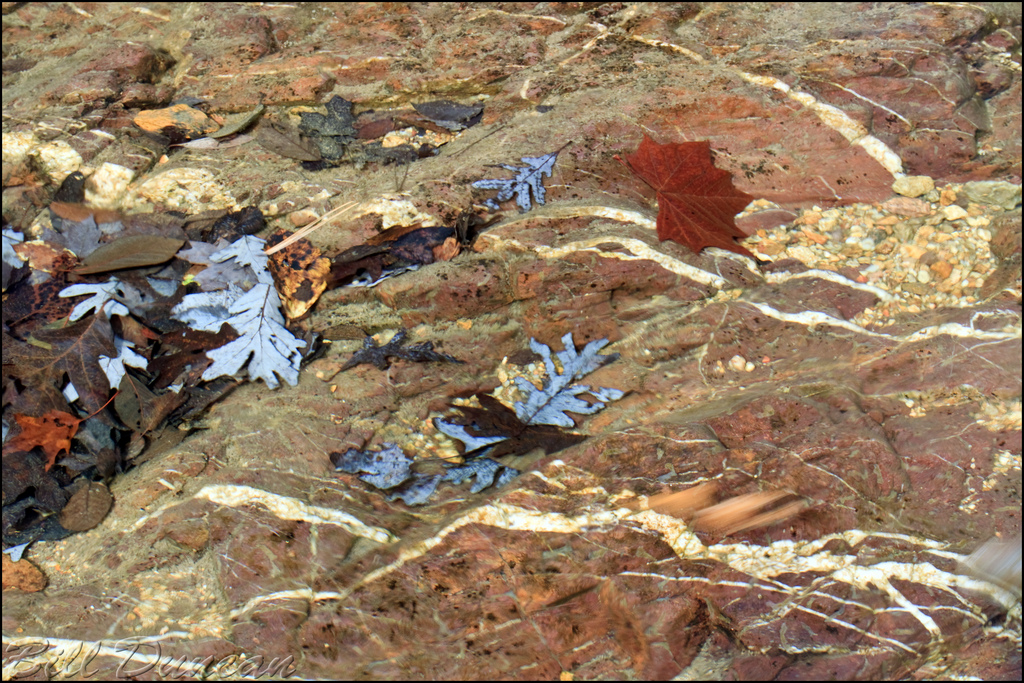
October Poetry

“When the leaves fall, the whole earth is a cemetery pleasant to walk in. I love to wander and muse over them in their graves. Here are no lying nor vain epitaphs.”

-Henry David Thoreau-

“October Poetry″
Technical details: Canon EOS 5D Mark II camera, EF24-105mm f/4L IS USM @ 73mm, ISO 100,  f/11, 1/6 sec

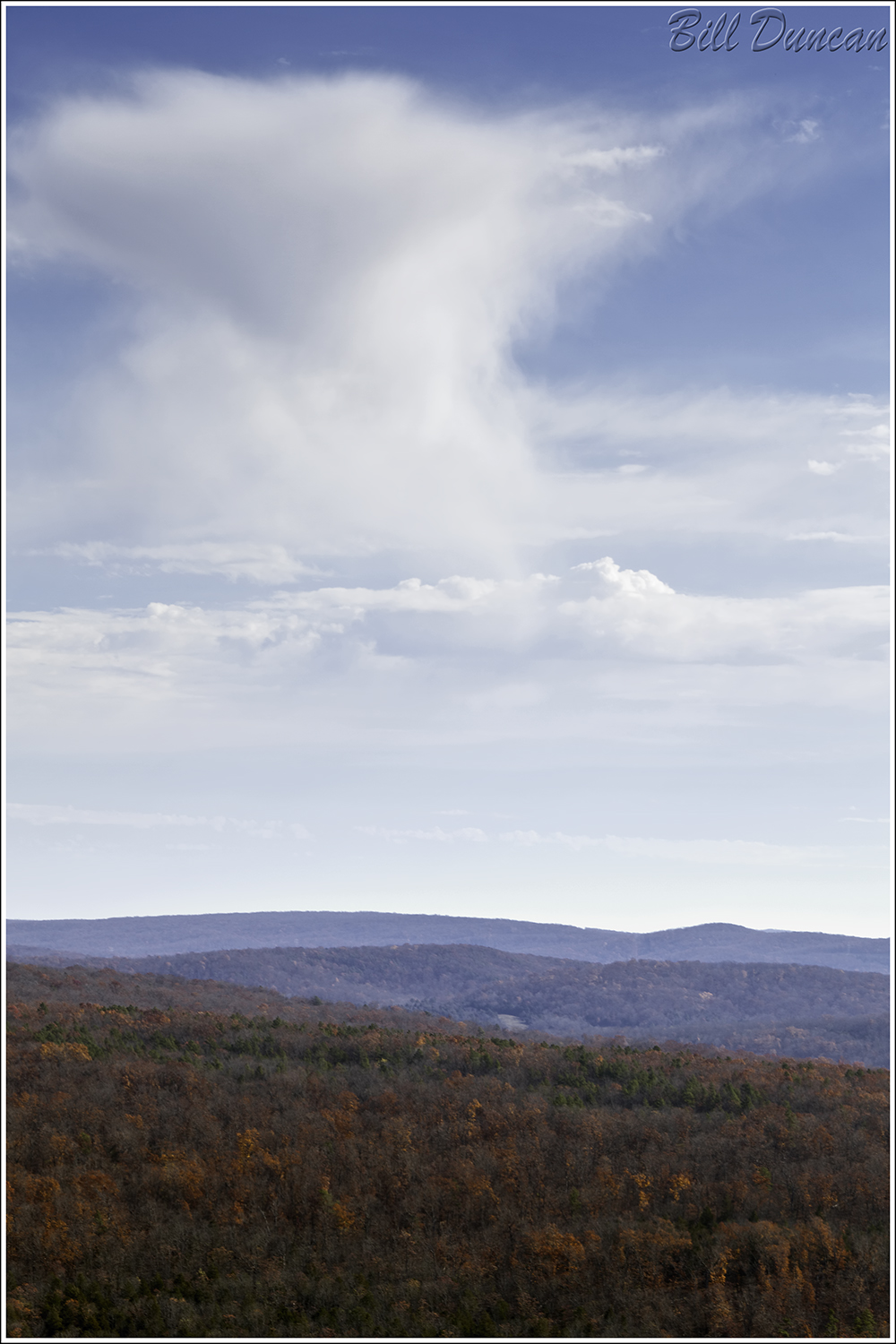
Bell Mountain Willderness Loop Trail – Success!

Surprisingly, I found myself in the St. Francois Mountains again yesterday.  I decided to finally attempt the full loop trail within Bell Mountain Wilderness.  I have hiked to the summit and back the same way several times over the past five years or so, a hike that is approximately ten miles.  The loop requires you go down the other side, follow and cross “Joe’s Creek” and its feeder streams along the way and then ascend Bell once again before going back down to the southern trail head.  It wound up being just short of a 13 mile trek.

“St. Francois Mountains – Late Autumn – 2012″
Technical details: Canon EOS 5D Mark II camera, EF70-200mm f/4L IS USM @ 127mm, ISO 100,  f/16, 1/10 sec

An “Indian Summer” kind of weekend assured I was not the only one with the idea of hiking this summit.  Normally a place where you would be unlikely to see another person, I crossed paths with close to 40 hikers, most of which seemed to be carrying camping gear.  I started the the trail promptly at 8:00 when the temperature was still pleasantly in the low 50s.  Unfortunately when I arrived back at my car  around 2:00 the temp was in the mid 70s, a bit on the warm side for hiking such a challenging trail.

“The Burning Bush″
Technical details: Canon EOS 50D camera, EF17-40mm f/4L USM @ 26mm, ISO 160,  f/18, 0.4 sec

The images above and below this text showcase what makes this area so special – the Ozark glades.  These pinkish, lichen-covered, rhyolite/granite boulders protrude from thin soils and create igneous glades.  This specific habitat is associated with several specialized plant and animal species.  In periods of hot and dry weather these areas seem completely abandoned, but will come alive following a drenching rain.  The image posted below was subjected to a “hand-painted” treatment in computer post-processing.

“Changes″
Technical details: Canon EOS 50D camera, EF17-40mm f/4L USM @ 28mm, ISO 100,  f/11, 0.25 sec

The image below this text documents a perplexing problem with officially designated wilderness areas.  As the law was written, no human management of the land, of any kind, can be performed.  While this law includes items you want a “wilderness” to be protected from, building of structures, new roads, logging and grazing, etc., it also includes management for the protection of habitats.  Although glades exist primarily due to shallow soils and dry, higher elevations, periodic fires also play a key role in limiting the succession of habitat type.  Fires, both natural and anthropogenic in origin, played a key role in controlling secondary succession shrubby tree species such as sumac, sassafras, and especially the eastern cedars.  In many well-managed lands across the Ozarks, prescribed fires are doing their part to control this succession and preserve these habitats.  On wilderness areas, prescribed fires are not legal.  Modern fire-prevention in private and public lands also drastically reduces the occurrence of natural fire.  The glades on Bell Mountain and its nearby slopes are all being choked by eastern cedars.  Given enough time this potentially put many Ozark glade areas at risk as the succession continues to include various oak and hickory species.

“Bell Mountain Glade in Autumn″
Technical details: Canon EOS 50D camera, EF17-40mm f/4L USM @ 26mm, ISO 100,  f/16, 1/8 sec

Bell Mountain is bordered by Shut-In Creek on the east, which has helped carve the distinction between Bell Mountain and nearby Lindsey Mountain.  This creek bottom is a short, but extremely sharp drop from the summit, and the creek is a perennial spring-fed water source.  Joe’s Creek borders the western side of Bell Mountain and is also partially spring-fed.  These two bodies provide many a backpacker with a source of water.  I can’t wait to try exploring this creek after a good wet period.

“Shut-In Creek Bottom″
Technical details: Canon EOS 50D camera, EF-S60mm f/2.8 Macro USM, ISO 200,  f/16, 1/4 sec

An Early Hike on the Ozark Trail – Marble Creek Section

During my fall break I finally visited Crane Lake for a hike on a beautiful autumn morning.  There was not a cloud in the sky and the colors were really popping.  The hike was just perfect and I had several interesting wildlife encounters, including watching a Bald Eagle nearby along the shore as soon as I left my car.  The primary tree in this image is the short-leaf pine, the only native pine of the Missouri Ozarks and definitely a characteristic species of the St. Francois Mountains.

“An Early Hike on the Ozark Trail″
Technical details: Canon EOS 5D Mark II camera, EF17-40mm f/4L USM @ 17mm, ISO 160,  f/16, 0.6 sec

An Autumn Hike Along the St. Francis

I started my autumn vacation early on a Saturday morning with a hike along one of the prettiest of Ozark Streams, the St. Francis River.  I was joined by my new friend, Stephen, who knows these waters quite well.  While I had previously visited a couple of the destinations I’ll be describing, I had long wanted to take the hike between two of Missouri’s great shut-ins – Tiemann Shut-Ins and those located downstream a couple miles at Silver Mines Recreation Area.  Stephen and I met at the trail head at the USFS Silver Mines Rec Area, located in Madison County near the towns of Fredericktown and Arcadia.

“Store of Summer Rains″
Technical details: Canon EOS 5D Mark II camera, EF24-105mm f/4L IS USM @ 58mm, ISO 100,  f/11, 2.5 sec

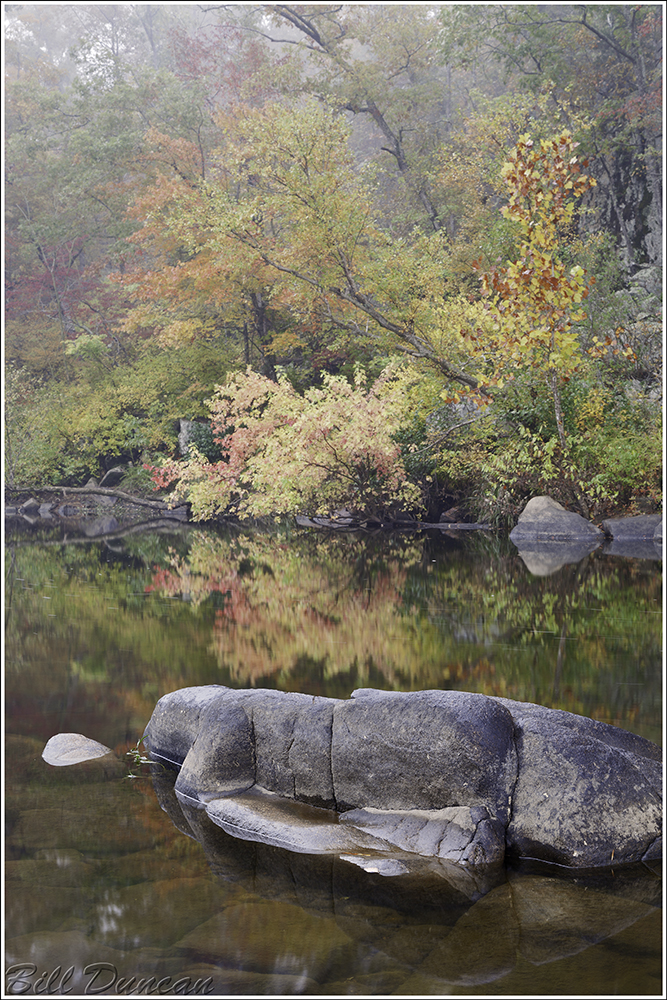
There is a relatively easy path between these two points, but Stephen and I followed along the river, jumping from boulder to boulder for most of the stretch.  We were pleasantly surprised arriving near dawn to find a nice blanket of fog.  While fog tends to lessen contrast considerably in a photographic frame of mind, the lighting helps those wonderful fall colors pop.  In person, eyes are drawn to a bright warm maple growing between riverside rocks.  Once my camera was out, we were in danger of spending the entire day within the first quarter mile of our hike.  I do appreciate Stephen’s patience as I took the time to set up the tripod and repeatedly dove into my bag to swap lenses.

“Solid Out of Liquid″
Technical details: Canon EOS 5D Mark II camera, EF24-105mm f/4L IS USM @ 58mm, ISO 100,  f/11, 1/5 sec, Orton processing in PS CS6

The St. Francis is one of the more productive of Missouri’s Ozark streams.  While this means you won’t see the crystal clear waters of the Black, Current, or Eleven Point, the mass of life and biological diversity is more obvious.  Moving along the banks one is forced to path-find between Ozark Witch Hazel and Sandbar Willow.  Organic matter deposited on rocks makes food for algae and makes any wet surface as slippery as ice.  A hike-ending fall was a possibility in the early part of the day.  More than 50 species of fish have been documented in this river and this stretch is home for the St. Francis Crawfish, an endemic species to the St. Francois Mountains and a species of conservation concern.

“Sweet Kisses″
Technical details: Canon EOS 5D Mark II camera, EF100mm f/2.8L Macro IS USM, ISO 400,  f/6.3, 1/25 sec

Although making Stephen a bit apprehensive, I was completely stoked that were able to cross paths with five cottonmouths, including this cute little juvenile.  This one I spotted almost on the trail as he flapped his bright-white mouth at me, mere inches from my boot.  My first thought was of a small moth or butterfly flapping its wings in alternating bright dorsal and dull ventral aspects.  Taking a second, closer glance I was able to pick out this well-camouflaged beauty.  I think Stephen will pay me well to save the story of what happened when we came upon a larger relative of this guy in the crevice of a couple of boulders.  😉

“Einstein Mine Dam On The St. Francis″
Technical details: Canon EOS 5D Mark II camera, EF24-105mm f/4L IS USM @ 65mm, ISO 100,  f/11, 1/25 sec

Here you have a view of the granite block dam built to supply power to the milling operations of the nearby Einstein Mine.  The mine did not last long and is now a nice home for bats.  Did you know that Missouri has almost continually been first in lead production of the USA for almost two centuries?  Today Missouri produces nearly 90% of the nation’s lead and 75% of its zinc as well as large amounts of iron, silver and copper.  This area is of great interest to geologists.  The rock you see in this post, primarily granites and rhyolites, are among the hardest and oldest exposed rocks on the planet.

“Endless Forms Most Beautiful And Most Wonderful″
Technical details: Canon EOS 5D Mark II camera, EF24-105mm f/4L IS USM @ 67mm, ISO 100,  f/13, 0.6 sec

Many thanks to Stephen for being a great guide and showing me a lot along this hike.  I definitely would not have been able to find as much on my own.  We passed Mud Creek Shut-ins and eventually found ourselves at Teimann Shut-Ins, described as the largest shut-ins in Missouri.  Located within Millstream Conservation Area, Teimann SI is truly impressive.  This spot has a great deal more potential than Johnson’s SI for photography and is on a much larger scale.  I do not know for certain, but I imagine Stephen is contemplating the diverse biological community and if these “endless forms most beautiful and most wonderful” go about their existence without contemplating us.

“Wayward Rivulets In Autumn Flowing″
Technical details: Canon EOS 5D Mark II camera, EF24-105mm f/4L IS USM @ 40mm, ISO 100,  f/16, 1 sec

It took almost the entire day to meander over the boulders to Millstream Gardens.  It was getting so late that in the end, we took the relatively straight and flat trail back to our cars, arriving just after sunset.  We topped it off with a nice meal in nearby Farmington.  I couldn’t have asked for a better way to start off my autumn break.  This was just the beginning to a fun week across the Missouri Ozarks.  I look forward sharing more real soon.

What Would YOU Call a 680 Ton Rock?

Meet Dumbo, probably the largest of the free standing boulders to be found at Elephant Rocks.  I’ve shared images of this beast before.  You can see more photographs of Dumbo and it’s granite pachyderm brethren on my Elephant Rocks State Park Set on Flickr.  I’ve recently started really trying to take my post-processing to the next level.  I have come to believe that I can control what happens to the exposure inside the magic light-capture box almost as well as I could possibly want. I’m not saying I know every trick in the book, but I do not feel that I am missing too much.  Post-processing on the ol’ computer (equivalent of working on prints in the wet dark room of yesterday), I realize I can use some improvements and practice.  So, recently I adopted some new software and set out to better improve my workflow and learn some new tricks on the other side of the negative.  I am NOT saying I want to become a Photoshop/graphic artist, but just desire to be able to control aspects of the file that will allow me to create a final image that best represents my concept of the scene when I hit the shutter release.

What am I getting at and just what does it have to do with this image?  One of the possible adjustments that can be found in the latest versions of Adobe software products is the ability to correct for geometric lens distortion.  This is a very cool correction device that allows issues of wide angle (barrel) and telephoto (pin cushion) distortions, usually seen in at least some respect in any zoom lens, to be easily corrected for in the computer.  Depending on the subject, barrel distortion can be particularly troublesome.  In this photo of Dumbo, I proudly went to ACR’s lens correction tab and hit the go button and looked at the results of the default setting.  All of a sudden the cool, slightly exaggerated perspective of Dumbo was gone.  The image became pretty boring, to be honest.  This was a good lessen for me for a couple of reasons.  First, just as nature photographers might use changes in color-cast, manipulations of tonal range, or cropping unwanted portions of an image, we can also use (or remove) perspective changes from lens distortions to make our desired image.  Second, any of these lens corrections made (vignetting, chromatic aberration, and especially geometric distortion) can and will cause degradation to the quality of the final image.  We must carefully decide what corrections are necessary and use the sliders to make the minimum needed adjustments.  Do not blindly accept the defaults given by the software.  I have not been able to find much to read on this specific topic and I am still learning as I get more practice.

“Dumbo”
Technical details: Canon EOS 5D Mark II camera, EF17-40mm f/4L IS USM lens @ 17mm, ISO 160,  f/13, 1/30 sec