"What a thousand acres of Silphiums looked like when they tickled the bellies of the buffalo is a question never again to be answered, and perhaps not even asked." -Aldo Leopold
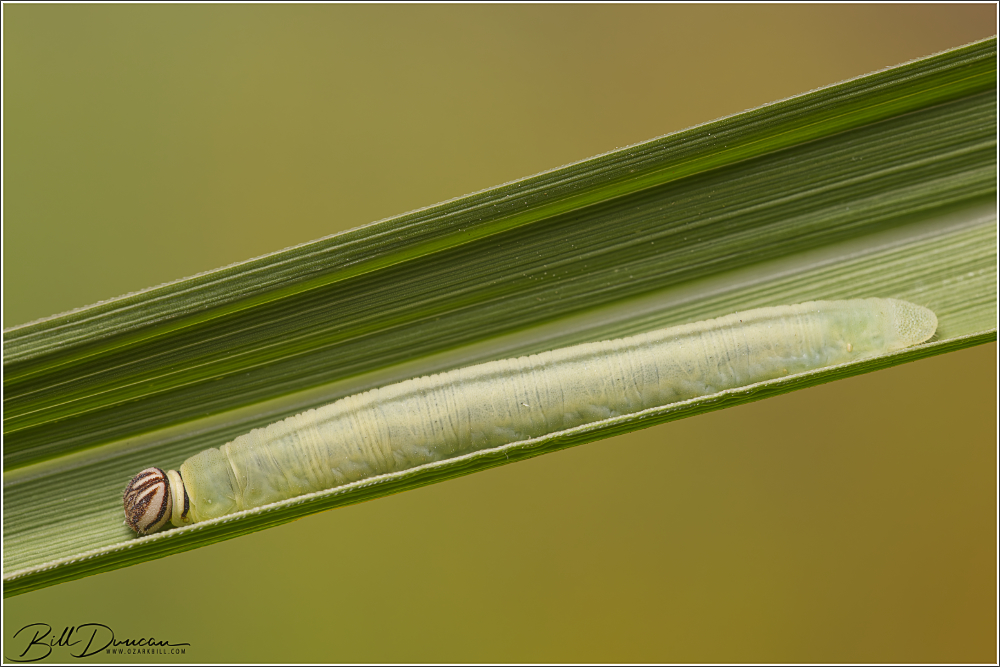
Byssus Skipper Problema byssus (Edwards, 1880) P-no. 77a0186, fam. Hesperiidae Host plant(s): Found on eastern gamagrass (Tripsacum dactyloides) Date(s) found: 18 July, 2026 Locations found: Powder Valley Conservation Area, St. Louis County, MO Notes: My first grass skipper cat! Byssus skipper caterpillars spend their time in cylindrical shelters typically made from one grass stem. Look for these in higher quality prairie habitats where their host plants are abundant. Due to loss and degradation of grassland habitat, the byssus skipper and most of the grass skippers are at risk. Although the byssus skipper has a wide range, it is not considered common in any state.
This season Casey and I have been focusing on trying to find some of the more rare and harder to find skipper butterflies in the family Hesperiidae. We’ve come up short a few times – there are several who seem to be on severe declines in our area and may be extirpated from previous well-known sites. Here are a few we had luck with finding and worked our tails of to get a few photos.
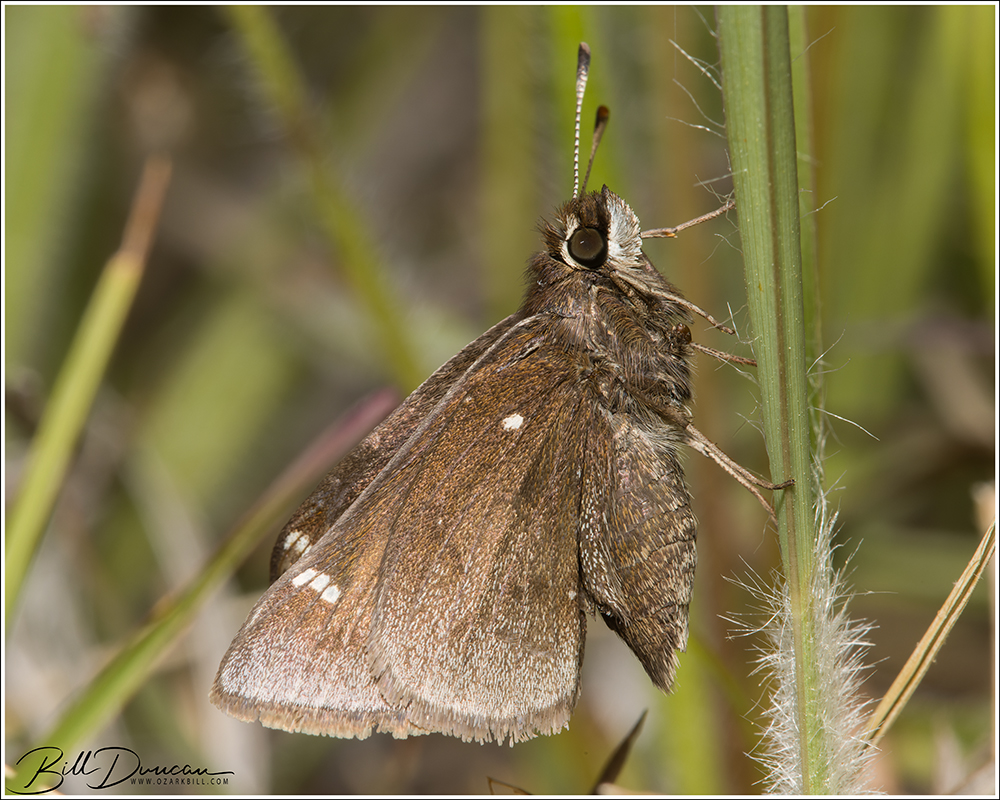
Atrytonopsis hianna (dusted skipper) This striking skipper was found in the glades of Jefferson County, MO in May of 2023.
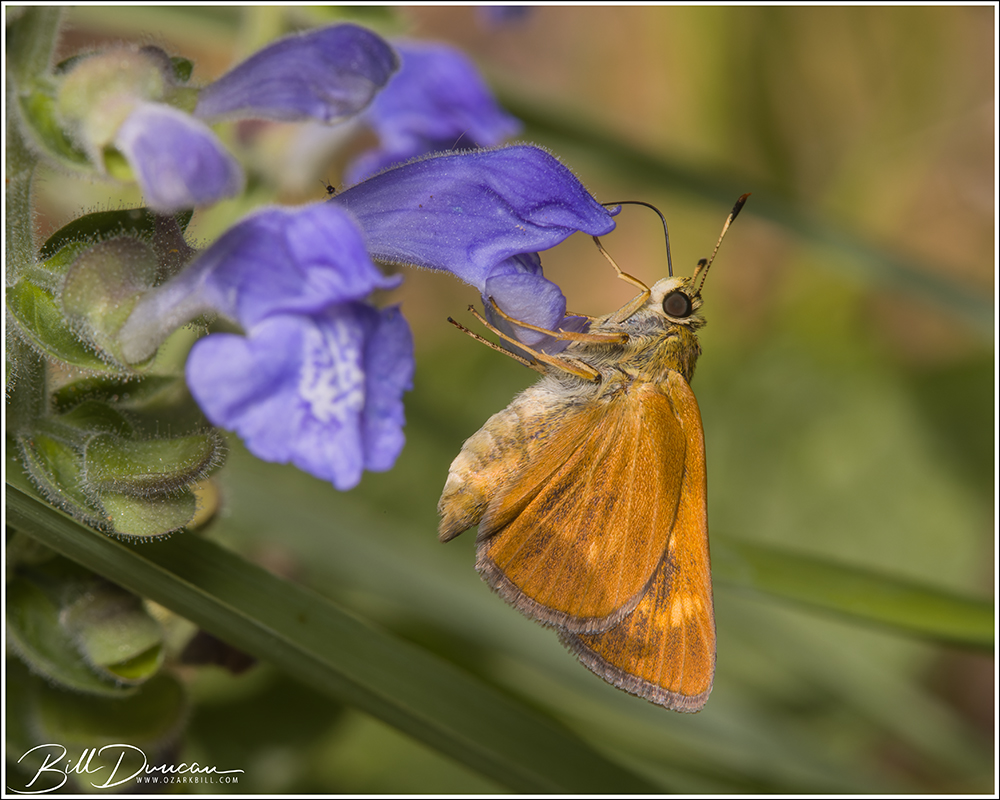
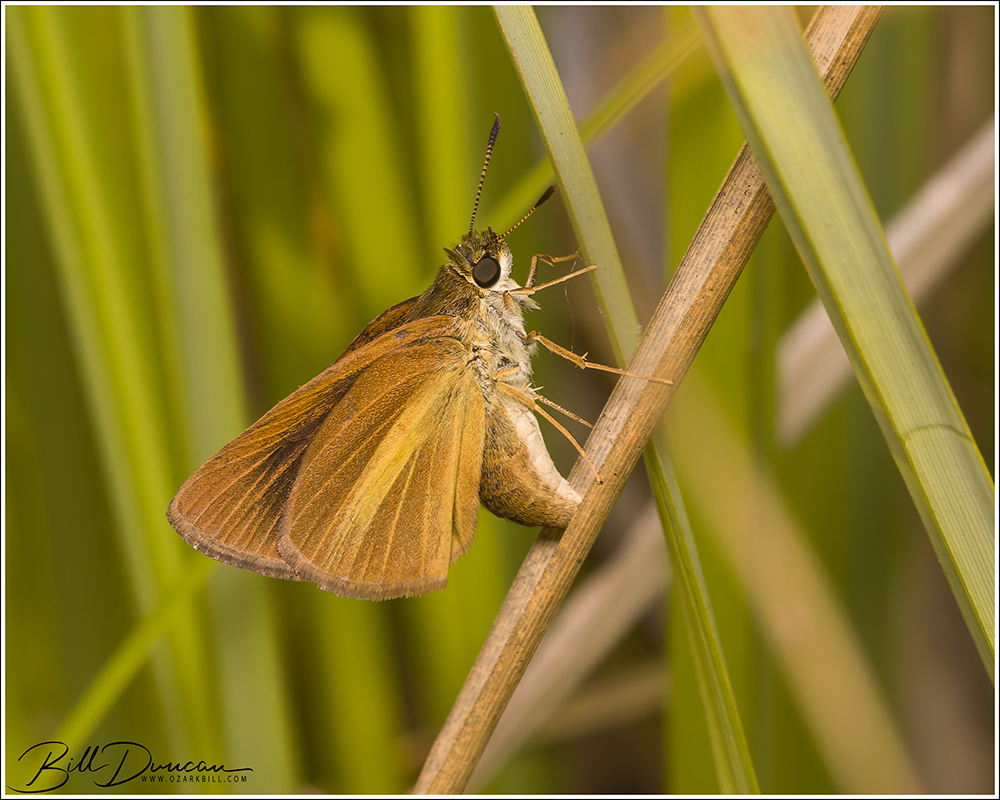
Problema byssus (byssus skipper) Classified as vulnerable by the Xerces Society, the byssus skipper uses eastern gamma grass and big bluestem as its host and is threatened by the continued loss of prairie and grassland habitat throughout its range.
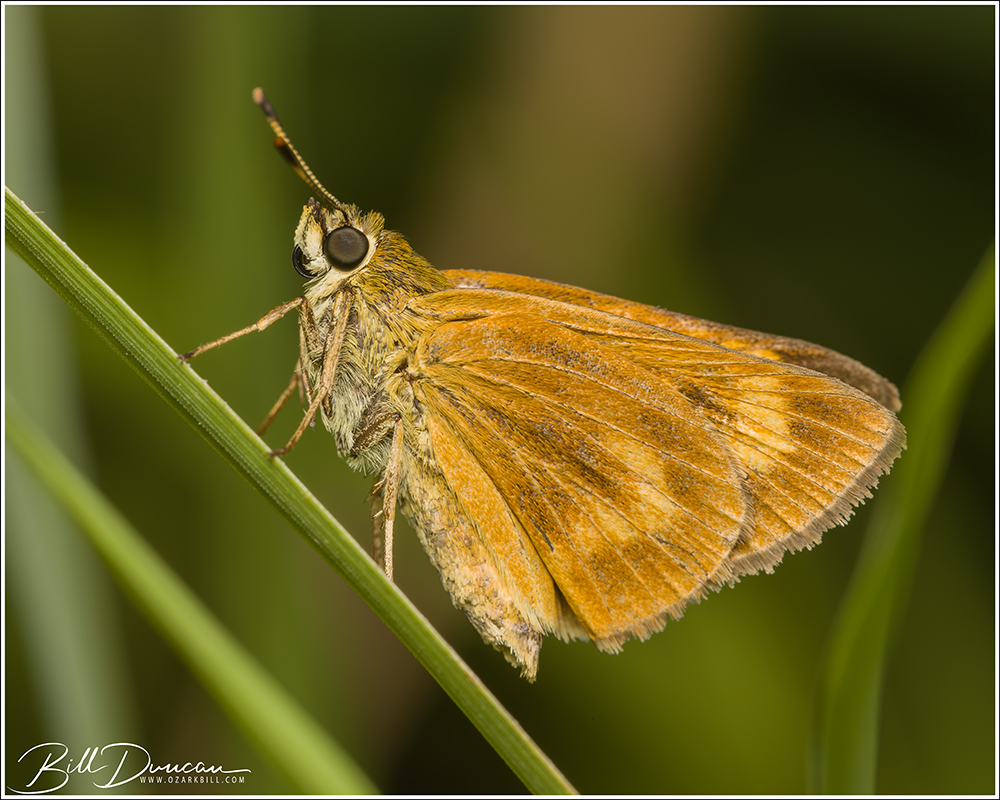
Euphyes dukesi (Duke’s skipper) Uncommon throughout its fragmented range, the Duke’s skipper uses sedges in moist fields, marshes and forests for its host. This species is highly vulnerable to ongoing draining and development of these habitats. Casey and I refound this particular population in St. Charles County and we were happy to find a few in ditches alongside heavily trafficked roads.
Dorsal view of Euphyes dukesi (Duke’s skipper)
I has thrilled to be able to catch this female Duke’s skipper ovipositing on a sedge stem
Amblyscirtes hegon (pepper and salt skipper) With a very large range, covering most of the eastern U.S., the pepper and salt skipper is nevertheless difficult to find and photograph.