Touched by the Sun

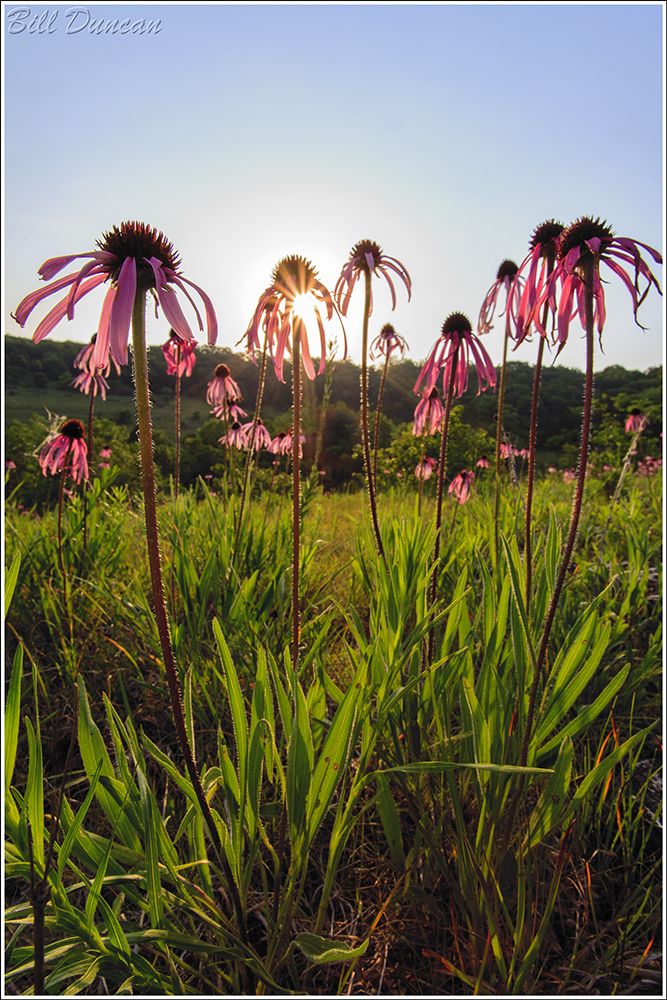
These glade coneflowers, Echinacea simulata, were found in peak bloom during a May hike at Valley View Glades Natural Area.  Pollen color separates this species from the near identical and more widespread pale coneflower, E. pallida, but some differences in growth habit can be seen as well.  Some species of Echinacea are considered threatened or endangered and loss of habitat and the removal of these plants by non-licensed hunters for the pharmaceutical trade are the primary threats.  There can often be found signs of plant harvesting and rock turning (looking for reptiles and arachnids for the pet trade) at this location and nearby Victoria Glad N.A.  It’s a pity that more cannot be done to protect these ever-shrinking habitats.

“Touched by the Sun″
Technical details: Canon EOS 5D Mark II camera, EF17-40mm f/4L USM lens @ 19mm, ISO 400,  f/18, 1/13 sec

Location Spotlight: Devil’s Icebox Cave

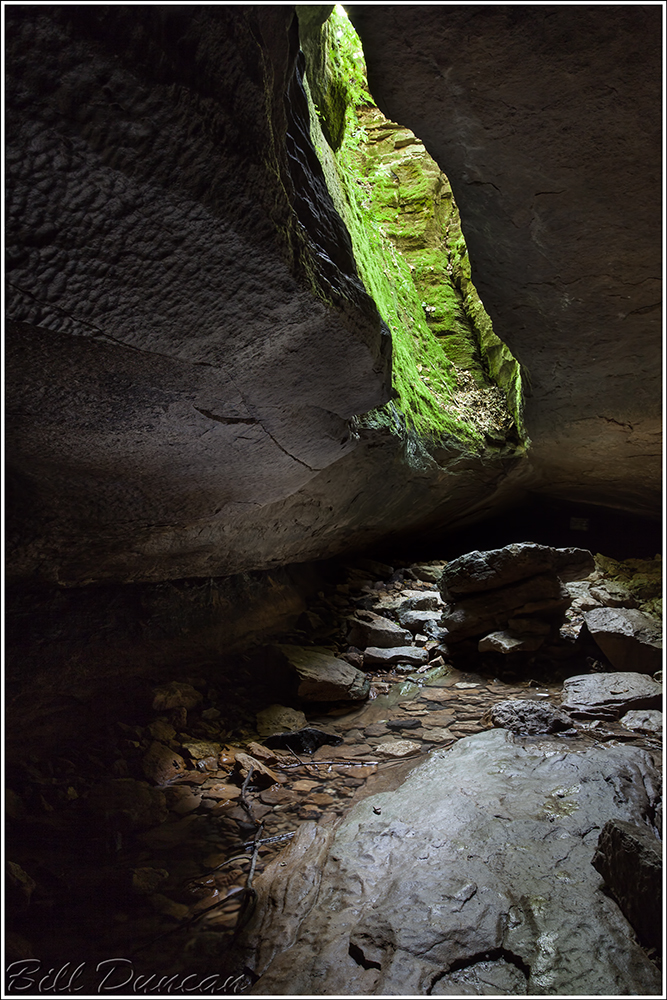
Located within Rockbridge State Park, just south of Columbia in Boone County, Missouri lies the Devil’s Icebox.  This name generally refers to a collapsed section, or sinkhole of this cave system.  One of the largest caves in Missouri, there is an estimated seven miles of caverns, tunnels and sinkhole surface connections.  The geologic features found here were carved of the same Burlington limestone that formed The Pinnacles found a few miles to the north.  This is also one of the most biologically active and diverse cavern systems in Missouri, being home to two endangered species of bat and a very cool species of pink planaria (flat worm) that is found nowhere else on the planet!  I’ve only had the pleasure of two brief visits to this location, but when water levels are low, like we have now, the underground streams and pools drop and allow for relatively easy access to exploring the caves.  Apparently a good sized section is considered easy to explore and a couple of good headlamps are all that is required.  A summertime visit is the perfect time of year to find out first hand why this place got its name.  The temperature seemed to drop about 40 degrees F during our visit this past weekend.  I can’t wait to get back here and explore some more!

“Devil’s Icebox″
Technical details: Canon EOS 5D Mark II camera, EF17-40mm f/4L IS USM lens @ 28mm, ISO 400,  f/11, manual blend of two exposures

What Would YOU Call a 680 Ton Rock?

Meet Dumbo, probably the largest of the free standing boulders to be found at Elephant Rocks.  I’ve shared images of this beast before.  You can see more photographs of Dumbo and it’s granite pachyderm brethren on my Elephant Rocks State Park Set on Flickr.  I’ve recently started really trying to take my post-processing to the next level.  I have come to believe that I can control what happens to the exposure inside the magic light-capture box almost as well as I could possibly want. I’m not saying I know every trick in the book, but I do not feel that I am missing too much.  Post-processing on the ol’ computer (equivalent of working on prints in the wet dark room of yesterday), I realize I can use some improvements and practice.  So, recently I adopted some new software and set out to better improve my workflow and learn some new tricks on the other side of the negative.  I am NOT saying I want to become a Photoshop/graphic artist, but just desire to be able to control aspects of the file that will allow me to create a final image that best represents my concept of the scene when I hit the shutter release.

What am I getting at and just what does it have to do with this image?  One of the possible adjustments that can be found in the latest versions of Adobe software products is the ability to correct for geometric lens distortion.  This is a very cool correction device that allows issues of wide angle (barrel) and telephoto (pin cushion) distortions, usually seen in at least some respect in any zoom lens, to be easily corrected for in the computer.  Depending on the subject, barrel distortion can be particularly troublesome.  In this photo of Dumbo, I proudly went to ACR’s lens correction tab and hit the go button and looked at the results of the default setting.  All of a sudden the cool, slightly exaggerated perspective of Dumbo was gone.  The image became pretty boring, to be honest.  This was a good lessen for me for a couple of reasons.  First, just as nature photographers might use changes in color-cast, manipulations of tonal range, or cropping unwanted portions of an image, we can also use (or remove) perspective changes from lens distortions to make our desired image.  Second, any of these lens corrections made (vignetting, chromatic aberration, and especially geometric distortion) can and will cause degradation to the quality of the final image.  We must carefully decide what corrections are necessary and use the sliders to make the minimum needed adjustments.  Do not blindly accept the defaults given by the software.  I have not been able to find much to read on this specific topic and I am still learning as I get more practice.

“Dumbo”
Technical details: Canon EOS 5D Mark II camera, EF17-40mm f/4L IS USM lens @ 17mm, ISO 160,  f/13, 1/30 sec

The Fabulous Water Mills of Jim Lalumondiere

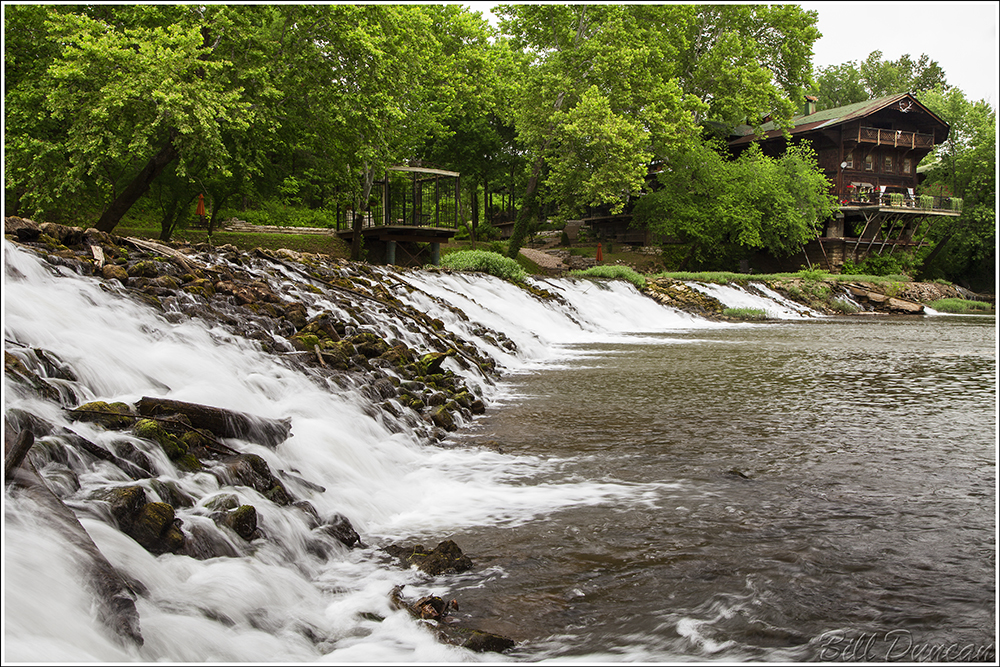
Several weeks back Sarah and I jumped in the N.E.V. and decided to go put a few more Missouri Ozark water mills on our list.  Armed with a copy George Suggs’ “Water Mills of the Missouri Ozarks”, we decided to go after a few that were closer to home.  The first on the list for the day was the Byrnesville Mill.  After doing some location scouting on Google and Google Maps, I decided to just tell the GPS to take us to the town of Byrnesville, then I would go from there.  Of all the cool things, the GPS led us directly to the mill!  If only all my destinations were this easy.  We pulled into a large drive and I realized quickly we were on private property, with cool farm, pioneer and ruin type structures all around us.  Looking around I see a white-haired gentlemen coming out of one of the buildings.  We strike up a conversation and I let him know what we are looking for.  He goes on to tell us some fascinating stories about the buildings and particularly the Byrnesville Mill.
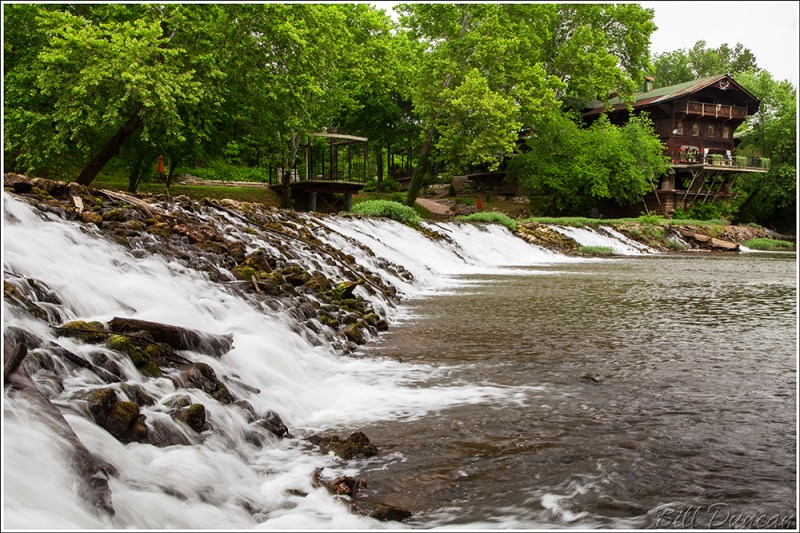
“Byrnesville Mill, June 2012”
Technical details: Canon EOS 5D Mark II camera, EF24-105mm f/4L IS USM lens @ 35mm, ISO 100,  f/14, 1/13 sec

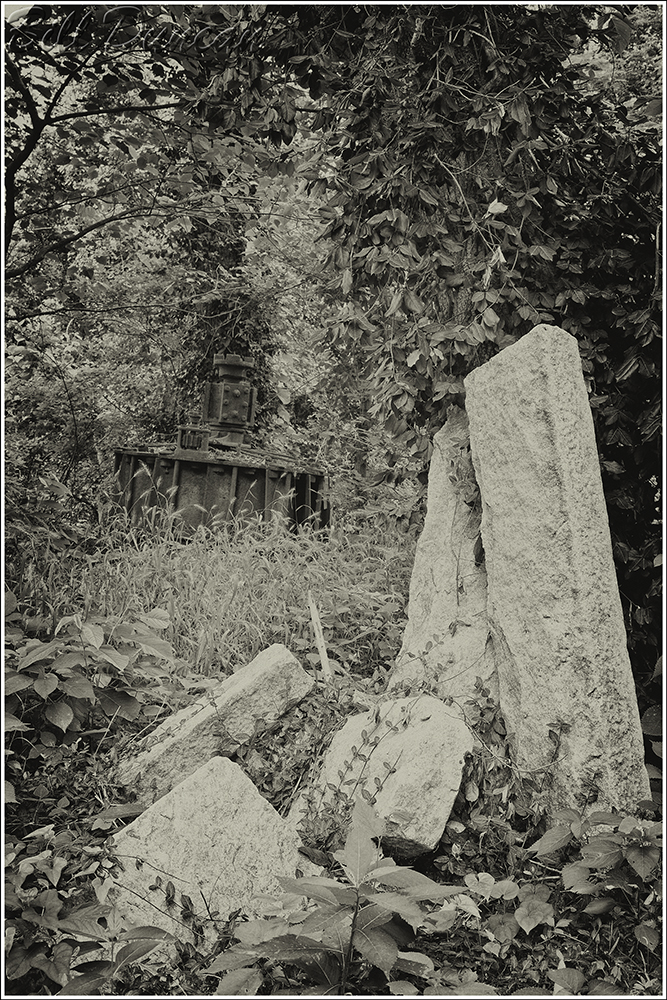
Jim had bought this mill in 1976 and converted it into a home where he raised a family.  I couldn’t think of a better place to grow up!  This was one of a dozen or more mills along a rather short stretch of the Big River.  Elaborate dams, like the one pictured above, and other containment structures were built with most of these mills in order to efficiently harness the water’s power.  The Big River is a remarkable waterway for Smallmouth Bass fishing and apparently it doesn’t get much better than right outside Jim’s back door.  Talk about envy!  Jim was most gracious and let us walk about the property, including his own personal bridge that the railways used to cross the Big River.  The image below shows some of the fascinating objects one can find by exploring the property.
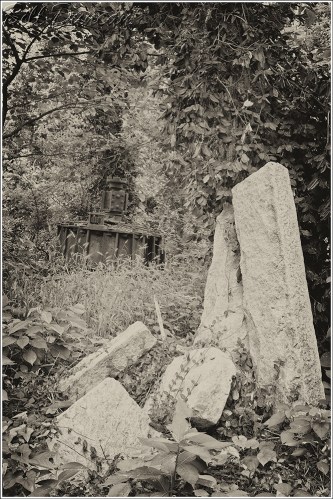
“Mill & Stone Ruins”
Technical details: Canon EOS 5D Mark II camera, EF24-105mm f/4L IS USM lens @ 47mm, ISO 100,  f/13, 0.8 sec

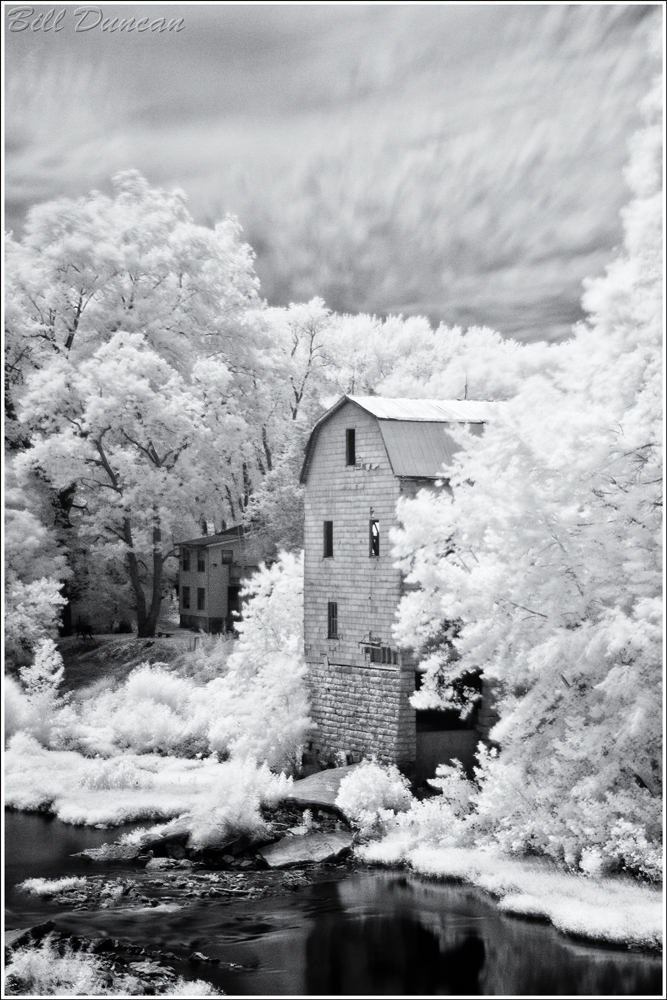
Further conversation with Jim led to the discovery that he also owned the nearby Cedar Hill Mill, which we had planned on visiting as well.  Jim had purchased this mill in 1982 with plans on using it to generate and sell electricity.  This plan did not work out and he has been doing a pretty good job of maintaining it since.  They are currently brainstorming ways that the structure could be used for business.
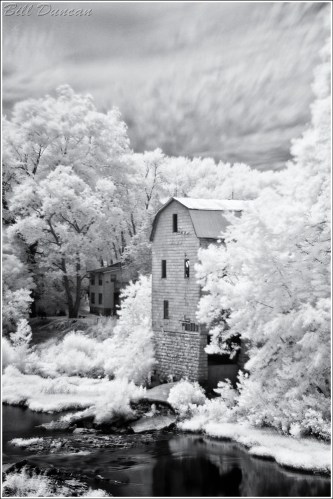
“Cedar Hill Mill, IR, June-2012”
Technical details: Canon EOS 5D Mark II camera, EF24-105mm f/4L IS USM lens @ 82mm, ISO 640,  f/10, 120 sec

I told Jim about the boom in micro/craft beers and brewery/restaurant style establishments in St. Louis during the past several years.  This building is four stories with part of a river running through it.  Would this not be the perfect place for a little micro brewery and pub!?!?

“Cedar Hill Mill Workings I”
Technical details: Canon EOS 5D Mark II camera, EF17-40mm f/4L IS USM lens @ 23mm, ISO 400,  f/10, Photomatix-HDR blend of 8-images

Seriously, just relocate the several thousand mud-daubers and the swallows, but leave everything else as is.  I’ll even name the first brew: Cedar Hill Mill IPA.  Easy.

It is interesting to read and hear about the changes that went through the life cycle of these water mills as diesel and electricity became much more efficient sources of power.  This mill, built in 1876, was first built to mill grain for human consumption.  Jim told me it was also used to mill grain for the pet-food trade and the energy captured was also utilized in the production of ice.

“Cedar Hill Mill Workings II”
Technical details: Canon EOS 5D Mark II camera, EF17-40mm f/4L IS USM lens @ 21mm, ISO 320,  f/8, Photomatix-HDR blend of 7-images
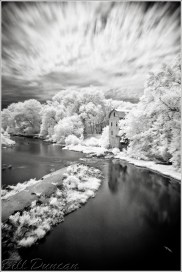
“Cedar Hill Mill & Big River Dam, IR, June-2012”
Technical details: Canon EOS 5D Mark II camera, EF24-105mm f/4L IS USM lens @ 32mm, ISO 640,  f/10, 90 sec

The majority of the water mill structures along this popular stretch of the Big River have fallen to time and ages.  Likewise many of the dams have been breached as can be seen in the above picture.  This was a popular spot on this Sunday afternoon as dozens of people swarm to this spot to swim and fish.  Just as Jim allowed us access inside his mill to take photos, it comes as no surprise he allows his neighbors to use the dam and the river along his property.  With the magic of long-exposure photography, you can see no signs of the several people who were moving along the dam when this image was taken.

Even though Sarah and I could not find a great place for a meal (always a goal of mine during travels) during this trip, meeting Jim and taking some images I’m somewhat happy with was a great way to spend the day.  I can’t wait to visit Jim again, give him a print or two as thanks for allowing us to explore his properties and hopefully make some more memories.


Hey Kid, Boogie Too, Did Ya?

Do I have a man-crush on David Essex?  You’re damn right, and I’m not apologizing.  I know a lot of people have strong feelings about what they want done with their bodily remains following their last breath.  My personal philosophy was put very nicely by the comic, David Cross, “…I don’t care, because I can’t.”  If I have any loved ones when I die, I hope they do whatever they think is best and most convenient for them.  However, if they want to go through with a lot of trouble, instead of spending all that money on an over-priced box and funeral home and burial plot and deli sandwiches, here is something at least I would be entertained by.

I once read about a procedure that the hipsters in Europe are doing as an alternative to cremation.  Lyophilization.  This is just the fancy term for freeze-drying.  In this hypothetically more environmentally friendly procedure, the body is freeze dried then thrown into a hopper filled with heavy ball bearings.  Then the hopper is shaken by a giant paint shaker type apparatus until the remains are basically a fine powder.  So, everything but the water is gone and I helped by slowing my carbon’s escape into the environment!

Okay, so if 60% of a human body is water weight, what to do with the 60 lbs of powdered Bill?  That’s a great question.  Here is what I think would be nice (no, snorting or ingesting of said product will not be considered).  On a pleasant evening near sunset, hall my ass up to Elephant Rocks in as many Thomas Coffee cans as needed, gather whoever desires to be present and play David Essex’s “Rock On” on a boom box or giant speaker wall or whatever is handy.  Then you can spread Bill-dust across the landscape while Rosie Perez screams “Billy!” over and over, a la White Men Can’t Jump.  Like I said, I don’t really care what happens after I die, because I can’t.  But, if nobody has any better ideas, I’m thinking this would be a pretty cool way to be sent off.

Here is a photo…

“Walled In”

Technical details: Canon EOS 5D Mark II camera, EF24-105mm f/4L IS USM lens @ 24mm, ISO 100,  f/14, manual blend of two exposures


Earth & Sky

Along with being a place of limitless compositions, another reason I love visiting and making pictures at Elephant Rocks is the variety of those potential compositions.  The grander landscape shots are there; however, if you find yourself visiting on a late Saturday morning during the summer (why do most people venture to these places during the hottest times of the year?), you’ll find that these types of comps are not possible without catching little Johnny and his folks as well.  Trust me little Johnny and his mother don’t give a damn that you have been sitting in the same spot for over an hour waiting for just the right light or clouds to move in.  They’ll walk directly in front of your lens.  At Elephant Rocks there is also great potential for the intimate landscapes.  With these types of comps you can move right into the tight spaces and will have a much better chance of not having little Johnny and his booger-picking fingers in you final image.  Do be careful though, as little Johnny and his siblings will likely be climbing on these rocks and might easily come into contact with your tripod, which might be precariously setup on the same rocks they’re interested in jumping on.

Technical details: Canon EOS 5D Mark II camera, EF24-105mm f/4L IS USM lens @ 24mm, ISO 100,  f/14, 1/4 sec

My Country ‘Tis of Thee

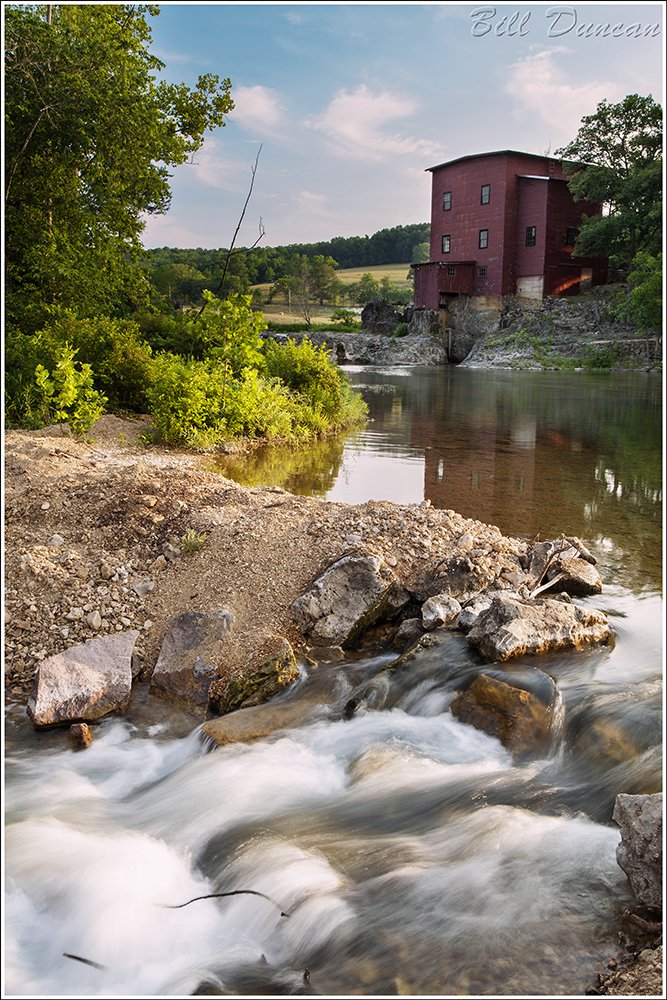
Part of my Missouri Ozarks grist mill series, this image shows the Dillard Mill in late afternoon light, watching over the Huzzah Creek as the small river works it’s way through a series of man-made impoundments.  There has been a mill structure on this location since 1853, the current building was completed in 1908.  This was the last stop of the day in a day trip Sarah and I took this spring.  Although warm, the setting was perfect.  The quaint, old, warm structure set against last years hay bales in the field immediately behind, the contrasts in water as it rushed down rocky barricades, stopping in motionless, clear ponds, and the chatter of birds like the Belted Kingfisher made us hate to get back into the car and take the drive back to the city.

Technical details: Canon EOS 5D Mark II camera, EF24-105mm f/4L IS USM lens @ 32mm, ISO 100,  f/14, manual blend of three exposures

Location Spotlight: The Canyon-land of Ferns and Waters – Hickory Canyons Natural Area

Today’s post spotlights a few images I took recently at the least well-known, but perhaps my favorite, of the Ste. Genevieve trio gem locations found in south-eastern Missouri, Hickory Canyons Natural Area.  The other two nearby locations are Hawn State Park and Pickle Springs Natural Area.  Much of the exposed rock in this area is known as LaMotte sandstone and was deposited around 500 million years ago under the Paleozoic sea, which covered this region except the igneous knobs of what are now called the St. Francois Mountains.  Unlike the other sedimentary rocks – like dolomite and limestone that compose much of the Ozarks, sandstones are generally much more resistant to erosion.  This results in rock features that are often quite spectacular to the eye and the canyons, bluffs and other exposed sandstone bedrock have become favorites for hikers, rock climbers and other travelers to this region.

“Addressing the Optimates”

Technical details: Canon EOS 7D camera, EF70-200mm f/4L IS USM lens @ 89mm, ISO 320,  f/20,  0.4 sec

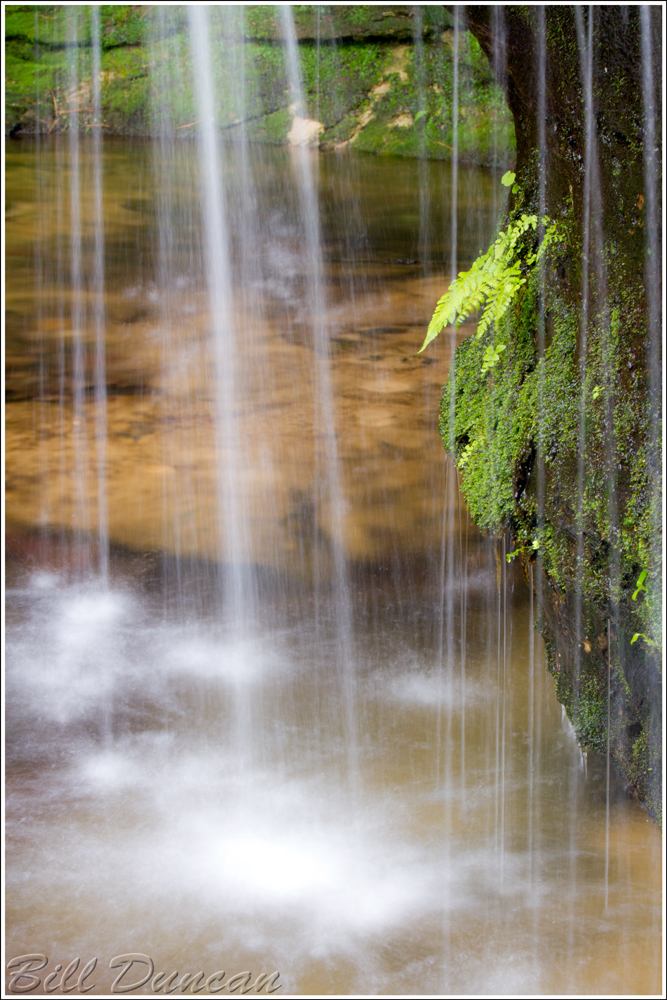
Two short hikes are available at Hickory Canyons N.A.  Both offer great views of the rock formations, including wet-weather waterfalls like the one shown below.

“The Bath House”

Technical details: Canon EOS 7D camera, EF70-200mm f/4L IS USM lens @ 70mm, ISO 320,  f/16,  1.3 sec

The overhangs and cracks created in these box canyons, gorges and cascades provide opportunities for ferns, mosses and lichens.  In fact, these three spots mentioned above in Ste Genevieve Co are the only place the fern enthusiast need travel to in Missouri.  The well-draining, sandy and acidic soils found here are perfect for species like wild-rose azalea, hay fern and rattlesnake orchid.  White oak, hickories, sugar maples, short-leaf pine and flowering dogwood are the primary tree species found at this location.  A few trips during spring time are definitely worth it to find some of these fantastic plants in bloom set against these dripping canyons and ephemeral cascades and waterfalls.  The wild-rose azaleas bloomed about six weeks early this spring and I missed them.  Oh well, something to look forward to next year.

“The Senate”

Technical details: Canon EOS 7D camera, EF24-105mm f/4L IS USM lens @ 28mm, ISO 160,  f/16,  2.5 sec

“Floralia”

Technical details: Canon EOS 7D camera, EF70-200mm f/4L IS USM lens @ 93mm, ISO 250,  f/16,  1 sec

“Virere Candere”

Technical details: Canon EOS 7D camera, EF24-105mm f/4L IS USM lens @ 24mm, ISO 160,  f/16,  1.6 sec

“Arboris Relictus”

Technical details: Canon EOS 7D camera, EF100mm f/2.8L Macro IS USM lens, ISO 160,  f/16,  0.5 sec

As the glaciers of the last major ice age retreated, species that required lower temps and had higher water requirements moved back north as well.  These canyons provide cooler and wetter environments for relict species like the one pictured above, the partridge berry.  This evergreen vine-like tiny shrub can be found throughout the canyon and hollow floors along with lichens and mosses.

I Got Your Oxalis Right Here!

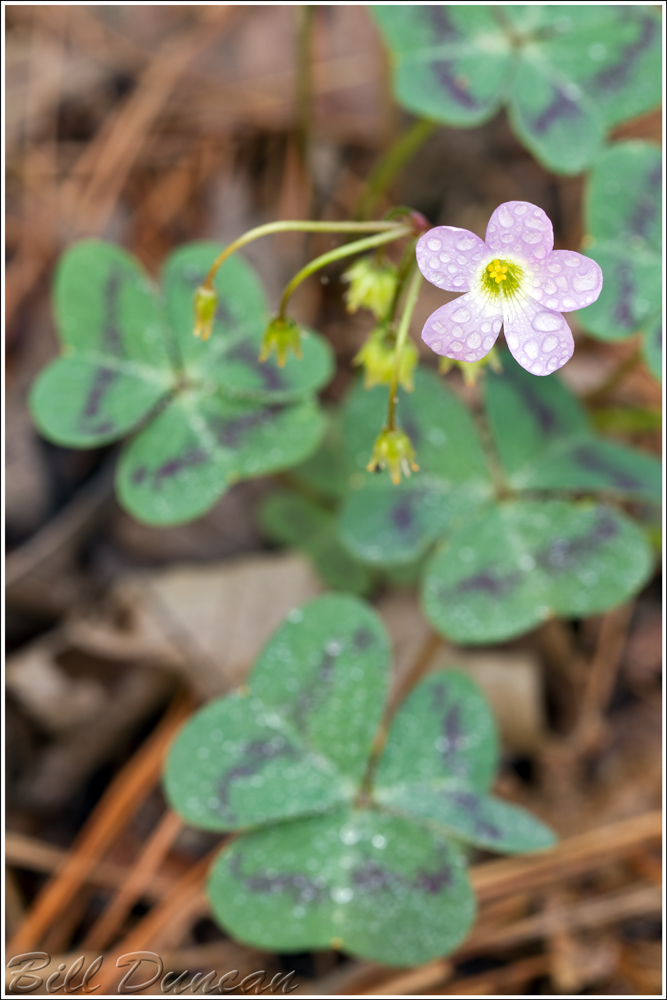
“Violet Wood Sorrel”

Technical details: Canon EOS 7D camera, EF100mm f/2.8L Macro IS USM lens. ISO 160,  f/10, 1/15 sec

Dedicated to my bros Brian K. and Jeff H.  They’ll know what I mean. ;=)

The name “sorrel” comes from the sour-like taste these plants give.  This taste comes from oxalic acid and these guys were the first source from which this compound was isolated.  I have recently read that much like most of the forbs in the Ozarks these guys were used by Native Americans and early European settlers as a food source to spice up salads as well as having intended medicinal values.  Don’t eat too much, however, as the concentrations of oxalate in these plants are even higher than in spinach and tea and apparently kidney stones could be a consequence.

Violet wood sorrel grows from tiny bulbs beginning in mid spring in the Ozarks and is usually found in acidic, rocky open woods, fallow fields, prairies and roadsides according to Steyermark.  These guys will bloom multiple times across the growing season, usually following a cool rainy spell.

I spent most of yesterday hiking Hawn State Park, where these guys were one of the most abundant wildflower in bloom.  I hiked all three loops, Whispering Pines North and South and the White Oak trail for the first time in one day.  Including the connector trail I believe this was a bit more than 15 miles.  With my 27 pound pack and lunch + water, let me tell you I felt it during the last five miles or so.  I didn’t take the camera out much, being mostly interested in the hike and not seeing too much that interested me composition-wise anyway.

I’m still stunned about the schedule spring has taken and I can’t stop talking about it.  I went to Hawn hoping to time the bloom of the wild azaleas, which usually do not start to bloom until the last week of April or the first week of May in the park.  Yesterday I found only two or three bushes that were still in bloom along sheltered north-facing hillsides.  The rest had bloomed and were nearly in full leaf!  Everywhere I look vegetation is 4-6 weeks ahead of typical schedule.  I was waiting to see if bird migration might be early as well.  We have seen some evidence of this.  There have been reports already of new early arrival state records of warblers and yesterday all the usual nesters seemed to be in the area and setting up territories.

This time of year at Hawn can be quite useful for the birder-by-ear.  Yesterday, several hard-to-discern trillers could be found and compared in the field at one time.  Within my hike I found the Pine and Worm-eating Warblers, the Chipping Sparrow the Dark-eyed Junco and Swamp Sparrow all singing their trill-like advertisements.  Every spring it seems like I have to start my ear from scratch, the Worm-eating Warbler being the most distinctive to me.  After a couple weeks I finally think I make some progress and then forget again soon after.  Usually I can go by location; the Junco leaves pretty soon and the other two sparrows are usually found in more open, grassy habitats, which leaves the two warblers to discern.  There, as its name suggests, the Pine is found in concentrations of the short-leaf pin in our region and the Worm-eating is more often found amongst deciduous tree tops.

Yesterday was a glorious day for hiking at Hawn S.P.  As usual, I was surprised but pleased that I did not see more folks on the trails.  If a day like that can’t tear you away from the couch I don’t know what can.


Promise of a New Day

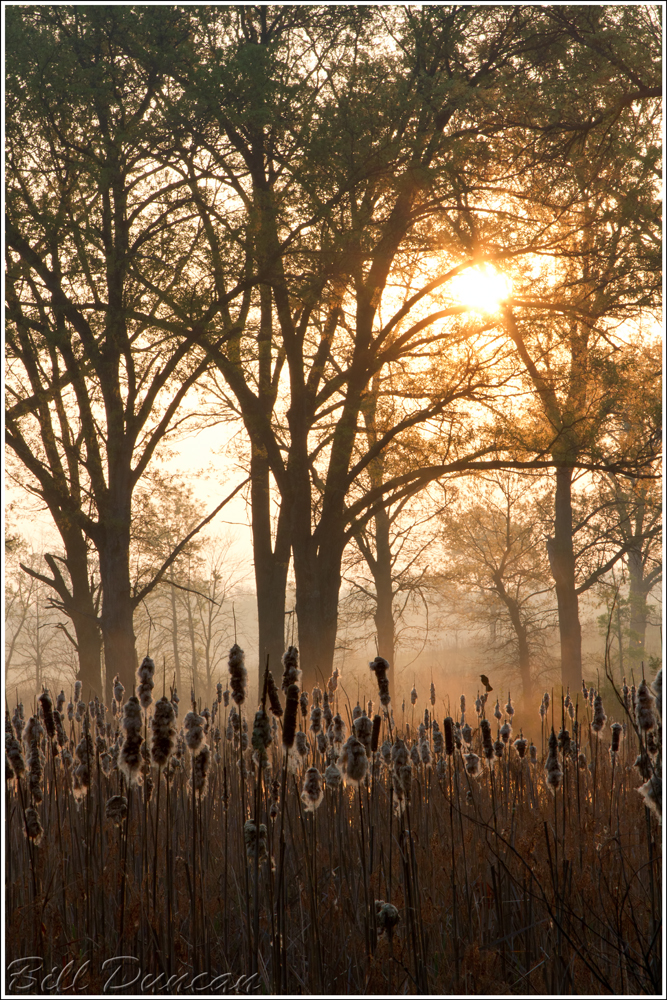
“Dawn at Shaw Nature Reserve”

Technical details: Canon EOS 7D camera,  EF24-105mm f/4L IS USM lens @ 92mm, ISO 160,  f/18, 1/13 sec

First of all, I hope the title of this post doesn’t give too much away about my love for everything Paula Abdul.  ;=)  My hope for this post is to  present the possibilities of experiences that Shaw Nature Reserve offers the nature lover, hiker, birder, artist, or anyone trying to escape the confines of modern culture and everyday life.  SNR is located in Gray Summit, MO, about 30 minutes outside the St. Louis metropolitan area.  It is an easy to get to spot to find yourself in a well-managed and diverse range of native Ozark habitats.

I love spending the early morning hours at SNR.  I have spent many a Saturday morning, having arrived before first light, with the entire reserve to myself.  I try to have a plan for those ephemeral golden hours where I can pretend I am the only person on the planet: macro photography of wildflowers, a hawk’s nest, a particular landscape image, etc.  More often than not the weather or light or my desire to put some miles on the trails forces me to forget my plans and try to take advantage of the best available opportunity.

Everything in nature seems to be fully awake at dawn and just like the opportunities for the photographer the stimulus for the senses at dawn are almost infinite.  During this morning the frogs were still advertising, song birds – Towhee, Field Sparrow, Carolina Wren, and Redwing Blackbird are singing their unique songs, the Barred Owls are talking to one another.  The light and colors of early morning are constantly changing and the brisk temperatures and fog in the air are pleasant on the skin and a joy for hiking.

Being a little windy on this particular morning I knew that my goal of photographing spring wildflowers would be a bit frustrating.  I also felt that need to walk so I started on the trails knowing there would be ample opportunities for some early morning landscapes. This section of this trail emerges from denser woods to a savannah-like habitat with a cattail pond.  I tried several compositions and focal lengths and this one was one of my favorites with a Redwing Blackbird perched facing the sun.

So, please join the crowds and make a visit to Shaw after 10:00 in the morning.  Maybe I’ll see you on my way out.  ;=)