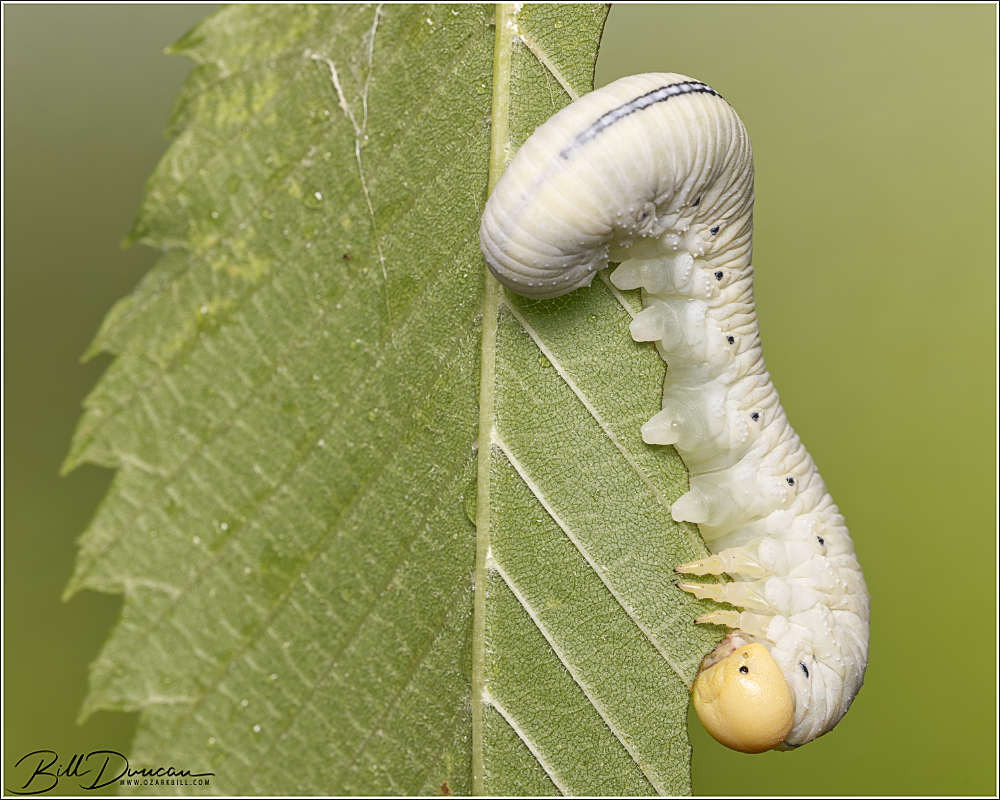
I figure any regular viewers of this blog may be getting a little tired of all the caterpillar posts. So, to mix things up a great deal, today’s post is an image of a larval elm sawfly (Cimbex americanus) that I photographed in late May at Tyson Research Center in St. Louis County, MO. Despite looking very much like a caterpillar, I assure you it is not. The sawflies, also known as horntails and wood wasps, are an old lineage (first appearing in fossil records roughly 250 million years ago) within the order Hymenoptera (bees and wasps). The larvae can be distinguished from caterpillars by possessing extra sets of prolegs (six pairs or more). Caterpillars have five or fewer pairs of prolegs. The prolegs of sawflies also lack crochets—the hooklike structures found on the ends of caterpillar prolegs.
The elm sawfly is the largest sawfly in North America. The animal pictured here was very close to two inches long. Accordingly, the elm sawfly adults are large as well, with black, white and red markings making it look very much like an intimidating wasp. No worries there, however, as sawflies do not possess a stinger.


Great work Bill. So they use mimicry primarily as a form of protection. So does that mean the mimic other species?