Entrenched Meanderment

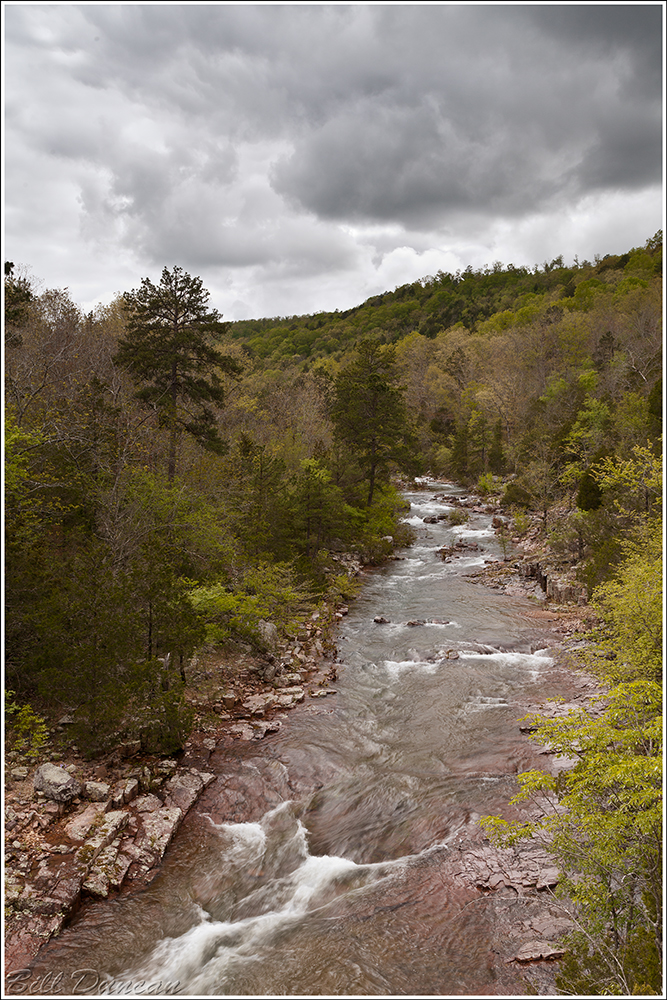
Entrenched meanderment?  What in the world is OZB going on about now?  Beveridge gives a wonderful explanation of the meandering nature of virtually all Missouri Ozark streams in “Geologic Wonders and Curiosities of Missouri”.  Within, he provides a few fascinating geological hypothesis as to the hows and whys of streams forming in such a manner with some of the hardest rock on the planet as their bed.  Think about it.  How and why would streams form in rock like this, with very little floodplain, steep cliffs/bluffs and not be straight?  Pick up Beveridge’s book to read of these hypothesis as well as learn about narrows, cutoffs and lost hills – the geologic features that are formed by these entrenched, meandering streams.

Two streams with an entrenched meandering environment on public land I have known and loved for a while.  These are the Meramec River at Vilander Bluffs N.A. and Jam Up Cave/Bluff on the upper Jacks Fork.  These are always worth a visit.  While flipping through Bryan Haynes’ book recently, I came across a panoramic painting of his that I have admired.  I saw the title: “Lee’s Bluff”.  Having never heard of this feature and the fact that his image was such a dramatic scene, I assumed that this must be found in some western wilderness, far from being a day trip destination.  I went ahead and searched the web, and to my surprise discovered this was in Missouri, along the St. Francis River and smack in the middle of those lovely St. Francois Mountains.  With Steve wearing his best navigator’s hat, we found the location pretty easily on a blustery, winter’s day.

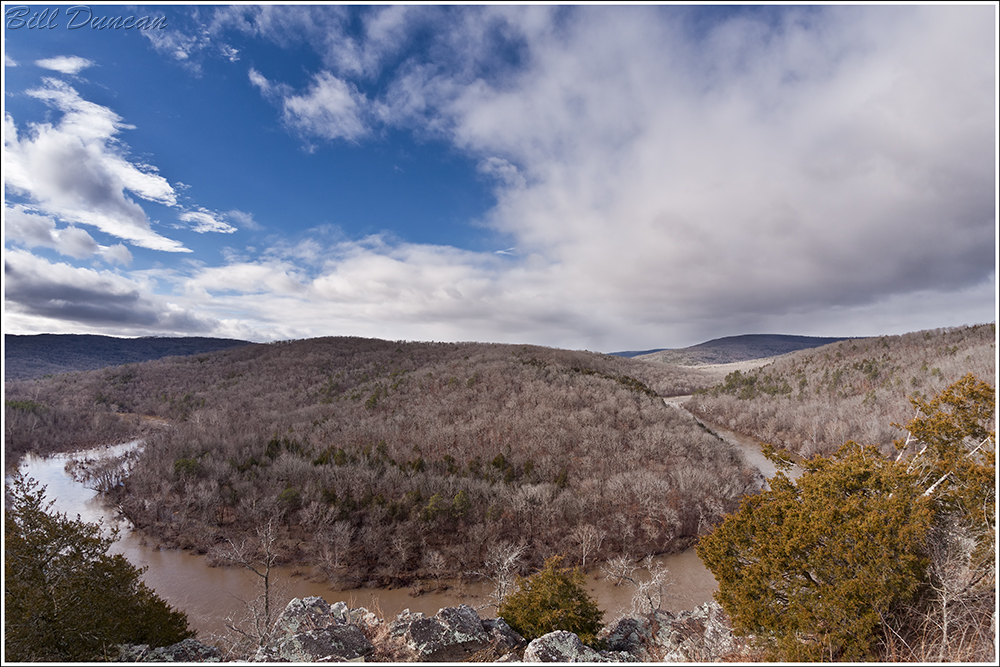
Here’s an overview image taken with a 15mm lens.  You can see the features typical of a meandering entrenched stream, the steep bluffs formed on the outside of the bend and gentle sloping floodplains on the inside.  In the direct center you can see the “incipient lost hill” as described by Beveridge.  One day the “narrows” on the far side of that hill will succumb and a “cutoff” will form, straightening the river.
IMG_7082

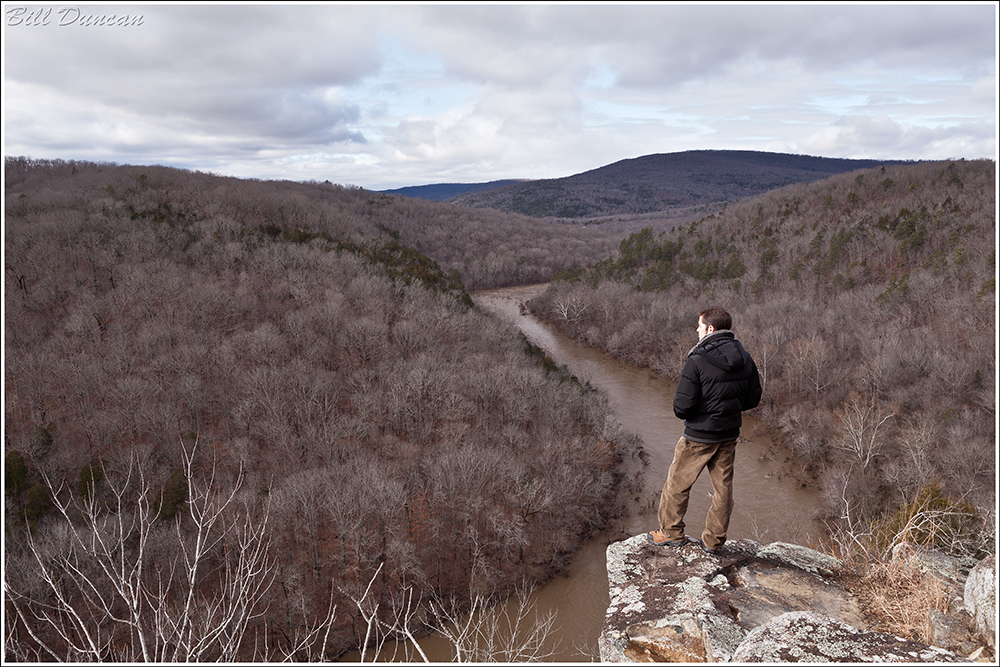
   The sky was a constant change on this day.  Here Steve poses while the sun breaks through an opening.
IMG_7112

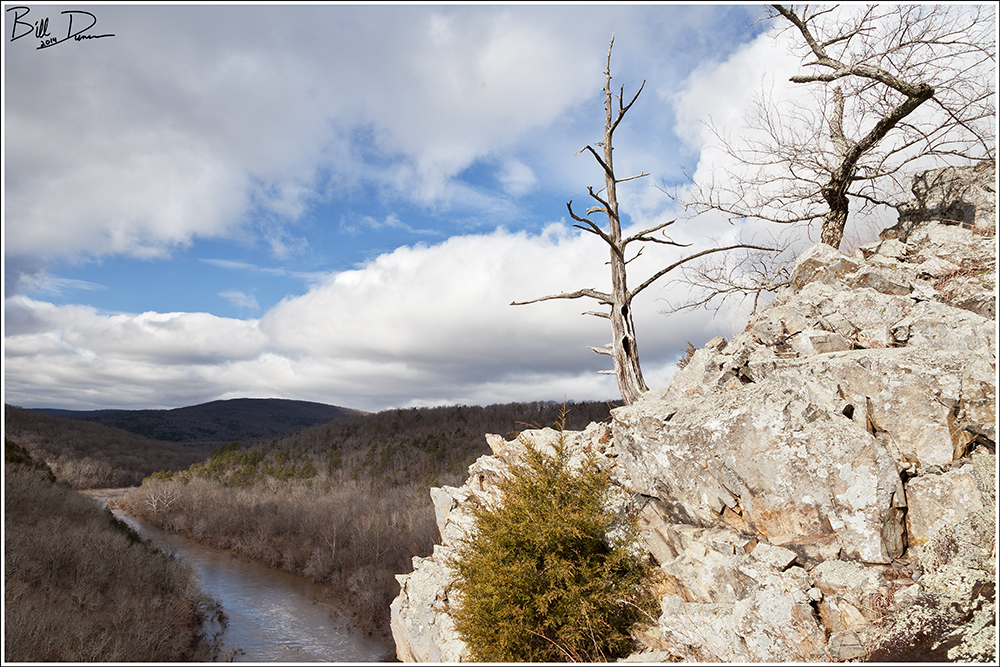
Climbing around on the steep, sharp rocks of the bluff we came across an ancient skeleton of an eastern red cedar.  The relative youngster below looks ready to take its place in another couple of centuries.
IMG_7168

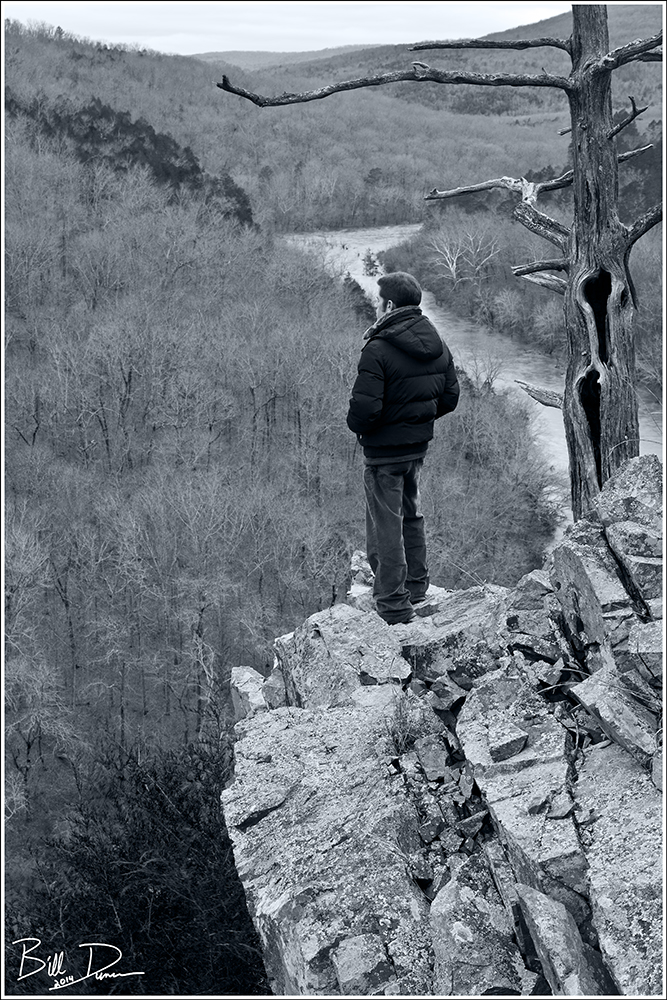
Professional schlepper, navigator, and photo model.  I’m sure glad Steve works for free!  😉  Here he stands next to the old tree to give the image some perspective.
IMG_7197

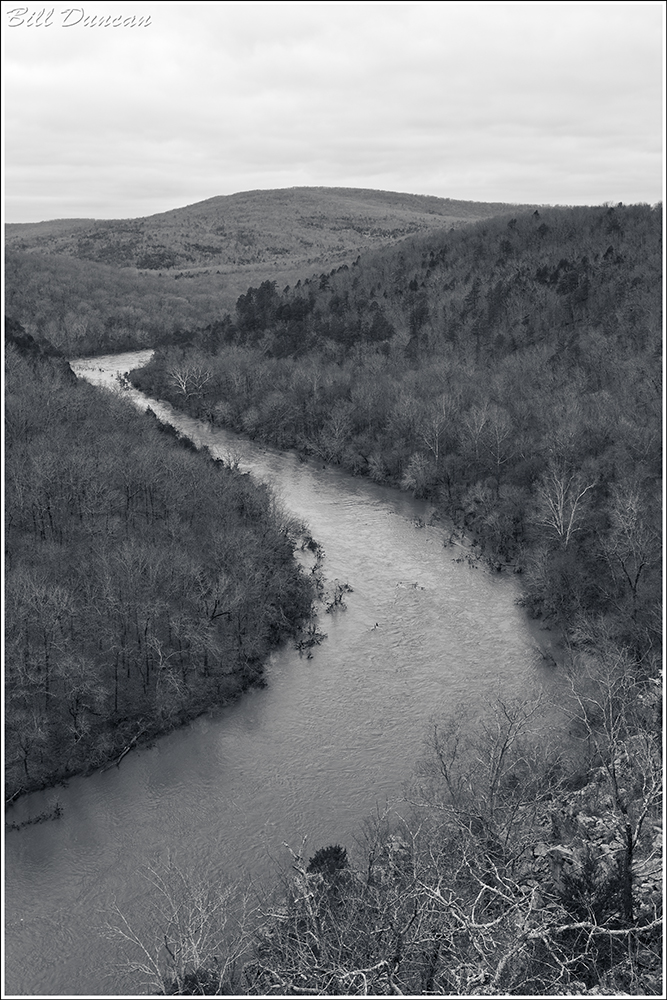
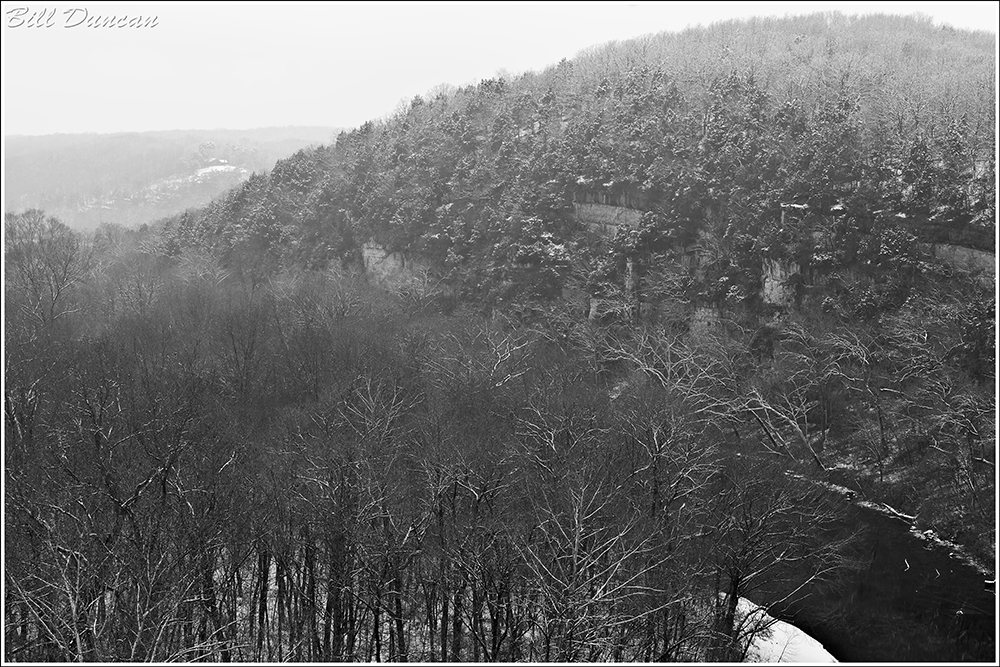
The image below is probably my favorite from this day.  One of the visual beauties of these types of entrenched stream environments is that there are two S-curves in each one.  You just have to figure out where to place your camera to take advantage of it.  Under the right light and weather conditions, this place holds a lot of photographic potential, not to mention the potential for reflection and wonderment.
IMG_7203

Happy Holidays

Happy winter solstice holidays to all my friends and family!


A Winter Eden

by Robert Frost

A winter garden in an alder swamp,

Where conies now come out to sun and romp,

As near a paradise as it can be

And not melt snow or start a dormant tree.

It lifts existence on a plane of snow

One level higher than the earth below,

One level nearer heaven overhead,

And last year’s berries shinning scarlet red.

It lifts a gaunt luxuriant beast

Where he can stretch and hold his highest feast

On some wild apple-trees tender young bark,

What well may prove the year’s high girdle mark.

So near to paradise all pairing ends:

Here loveless birds now flock with winter friends,

Content with bud-inspecting.  They presume

To say which buds are leaf and which are bloom.

A feather-hammer gives a double knock.

This Eden day is gone at two o’clock.

An hour of winter day might seem too short

To make it worth life’s while to wake and sport.


IMG_6901

“A Winter Eden”

Potholes In My Lawn

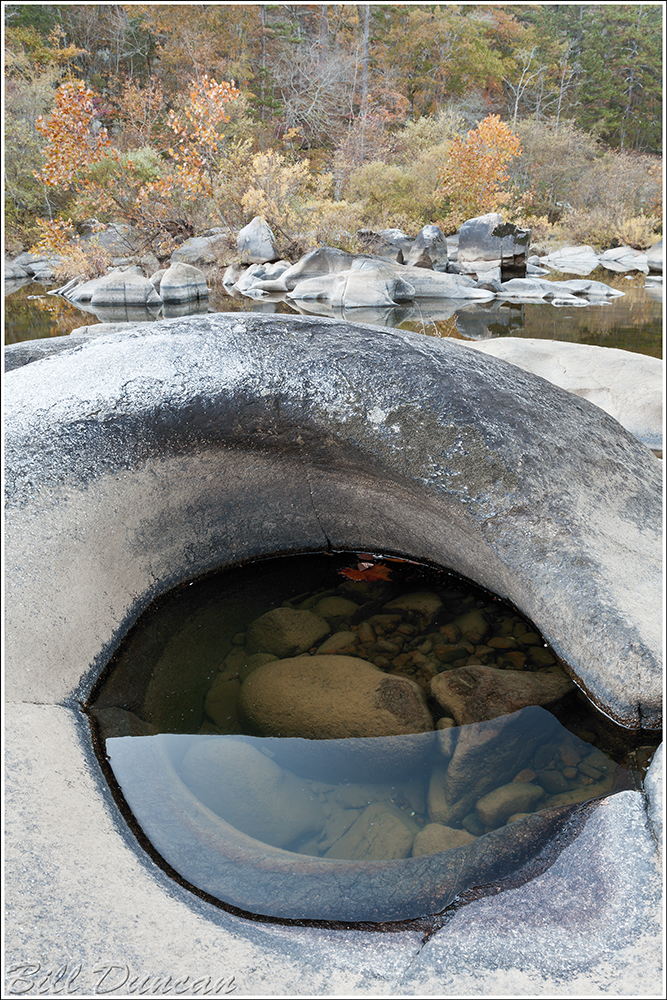
Specifically referred to as potholes, this feature was found in the long stretch of shut-ins of the St. Francis River between Silvermines Recreation Area and Millstream Gardens.  Steve and I took this, one of our favorite hikes, this autumn, just before peak color came into this section of the Ozarks.  Here is a wonderful description of this feature’s formation from Tom Beveridge’s Geologic Wonders and Curiosities of Missouri:

“Potholes are formed at the nearly right-angled intersection of channelways where the direction of flow is abruptly changed.  The abrupt changes in direction of flow and the intersecting channelways create local whirlpools where the swirling waters grind out circular holes using sand and gravel carried in suspension as a natural abrasive.  Man did not invent sandblasting – he only mechanized it!  Deepening of the holes is also expedited by the steep gradient of the stream;  some holes are in part plunge pools formed by the impact of water descending vertically and gouging out the bed at the base of individual waterfalls.”

See my Flickr account for similar images made on this day.

IMG_6294

“All Seeing Eye”

A Walk Through Blue Spring Natural Area

This past June, Steve and I took a walk through one of the highest quality woodlands our Ozark hills have to offer.  The short hike from the head of the spring to the Powder Mill trail-head and back offered an amazing diversity of life.  Here are just a few of the things we were able to find and capture on camera.

Nothing can be mentioned about this location without first discussion of the spring itself.  The Osage Indians referred to it as “Spring of the Summer Sky”, a most apt description for a spring who’s appearance defines the color blue.  And in summer, when the flow is not overly encumbered by the suspension of dissolved limestone from heavy rains, the crystal-clear waters afford a look to the bottom of the spring, some 250 feet below the pool’s surface.

IMG_4637

“Blue Spring Run”

The small nooks and crevices carved over the ages into the limestone and dolomite that overlook the spring pool make the perfect shelter for the Eastern Phoebe to make their nests.  Most folks have likely seen the nests of this species under overhangs on human-made structures.  It has only been within the last year that I have been fortunate enough to observe these nests in their more natural of settings.  A perfectly placed snag within the spring’s pool makes for a fine resting place for a young Phoebe that is taking a break from the carrying on that was taking place near these nests.  It was also a great place and time for us to take a break and take in everything this spot has to offer.

IMG_7194

“Eastern Phoebe on a Snag“

Back on the trail a few minutes later Steve and I were pleased to find this guy.  A first for the both of us, this Dung Beetle was moving this “resource” with full conviction.  We couldn’t figure out where she was moving it, but she was sure not going to let us get in her way.  When gently stopped she would climb to the top of her ball and let it be known that it was claimed.

IMG_4656

“King of the Hill“

Here’s a little “motion pan” to give an idea of the speed at which she could move her grocery towards its future larder.

IMG_4662

“The Cache”

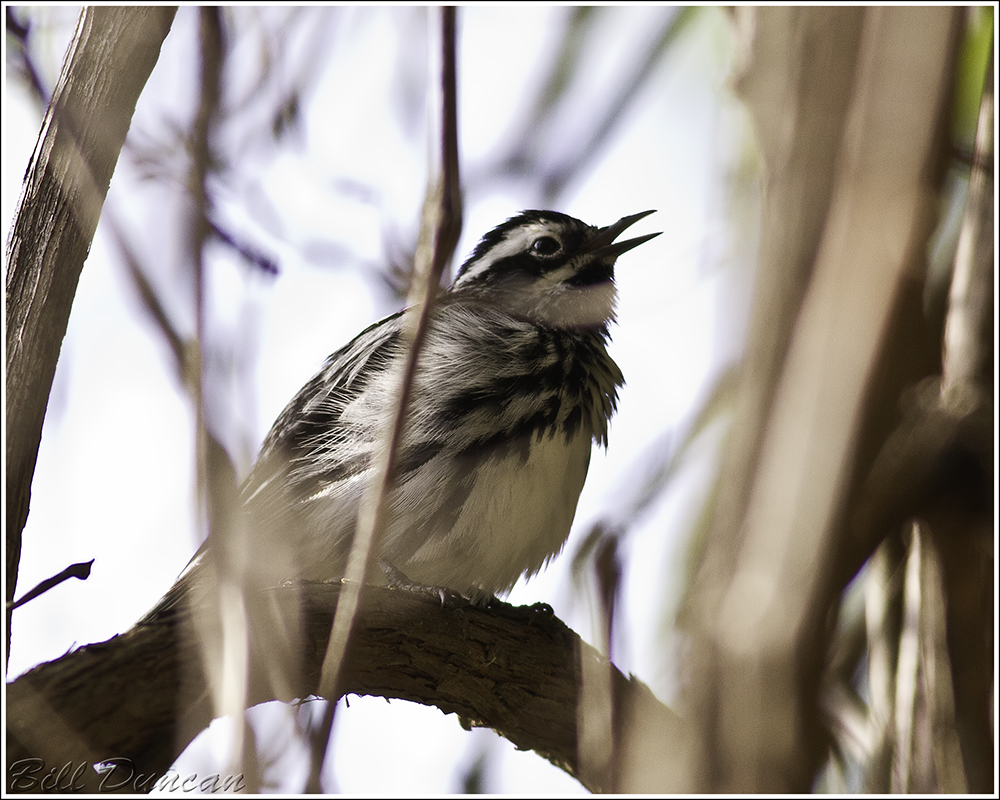
Our primary goals for this early summer day where to see if we couldn’t find and photograph any or all of three of the more rare warblers that are known to nest in this area.  These would be the Swainson’s, Cerulean and Hooded Warbler.  Although we did get a few confirmed vocalizations from a Swainson’s, we could not get our eyes on the sneaky guy through all the vegetation.  A few quick and loud playbacks did, however, coax 4-5 male Cerulean Warblers to descend from the forest canopy in order to meet the new male who had apparently set up shop amidst their territory cluster.

IMG_7493

“Singing Cerulean”

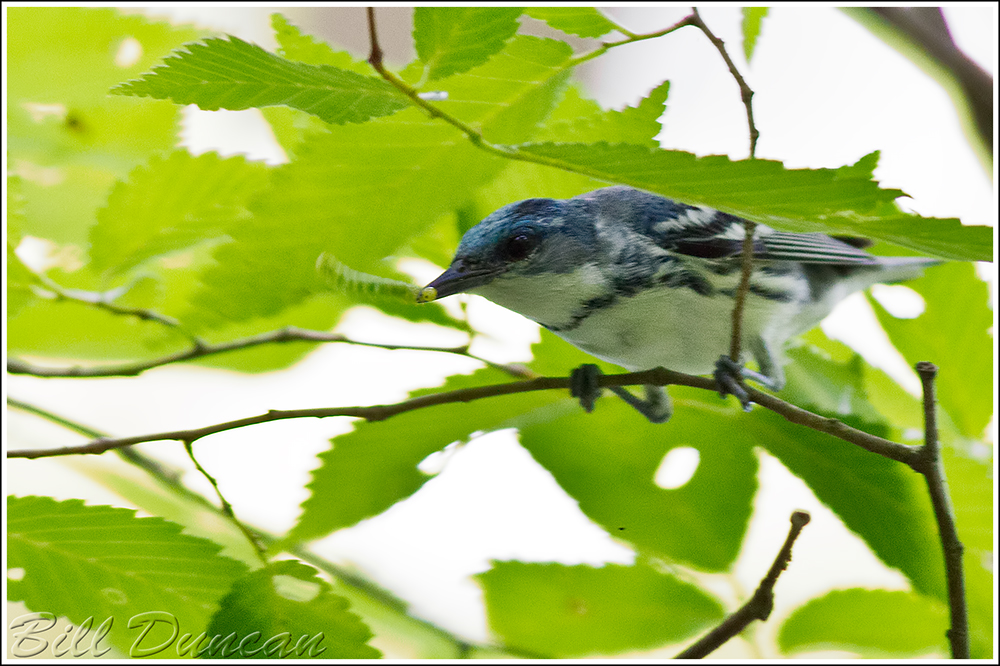
This was a sweeter treat for us than spending time with Willy Wonka (Wilder not Depp) and Heather Graham in a chocolate factory.  They seemed totally curious and intrigued as they moved among lower branches, foraging and singing as they went.  Did you know this species has suffered more than 70% population decline since the 1960’s?  Approximately 500,000 birds are the current population estimates and habitat destruction and fragmentation continue to threaten this species.  Check out The Nature Conservancy for more information on this great bird, and consider checking out Cerulean Blues.

IMG_7329

“Cerulean with Insect“

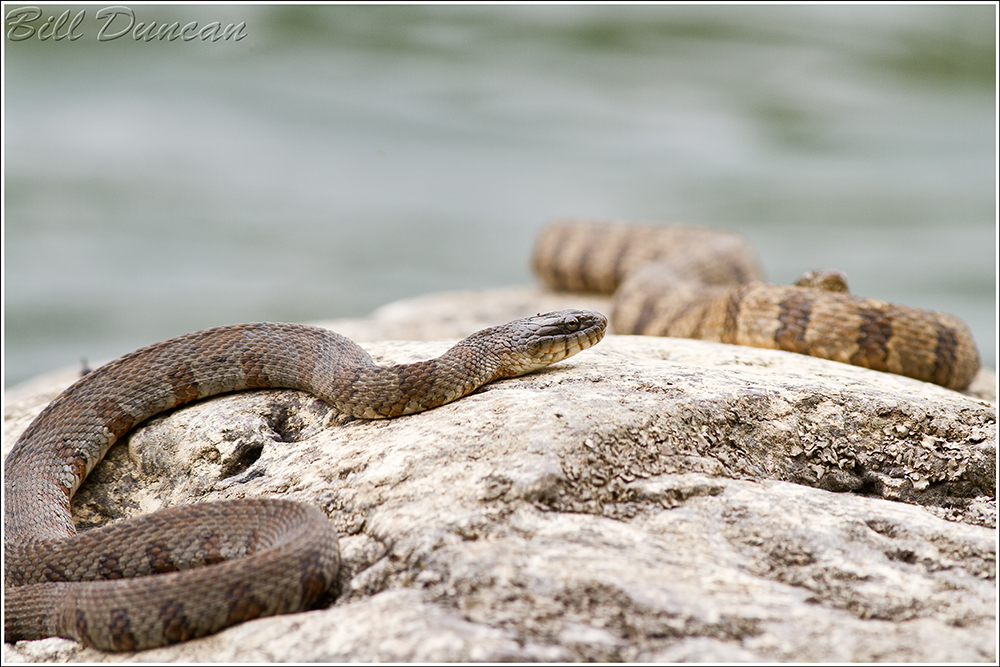
Finally, I present a pair of gorgeous Northern Water Snakes that were basking on some exposed rock not to far from shore along the Current River.

IMG_7563

“Basking Water Snakes”

An Evening at Hughes Mountain Natural Area

I’ve discussed Hughes Mountain Natural Area a few times in this blog.  There is still so much I have yet to discover and photograph here, that I am always keen to pay a visit.  Typically, plants go quickly dormant and animals become hard to find during summer’s dog days.  The cooler, wet summer we are had this year provided an extended window of activity for many of the residents of this glade-covered knob.  These images were taken during a July evening as Steve and I paid a visit to one of our mutual favorite destinations.

For a while now, I’ve know of the first citizen I’d like to introduce to you.  Because I often have troubles slowing down and looking around, I had never actually seen one of these guys until this summer.  Of course, they are everywhere you look.  I am speaking of the Lichen Grasshopper, a species perfectly adapted at blending in with the lichen-covered exposed rocks on igneous glades such as those found at Hughes Mountain.

IMG_4782

“Lichen Grasshopper“
 

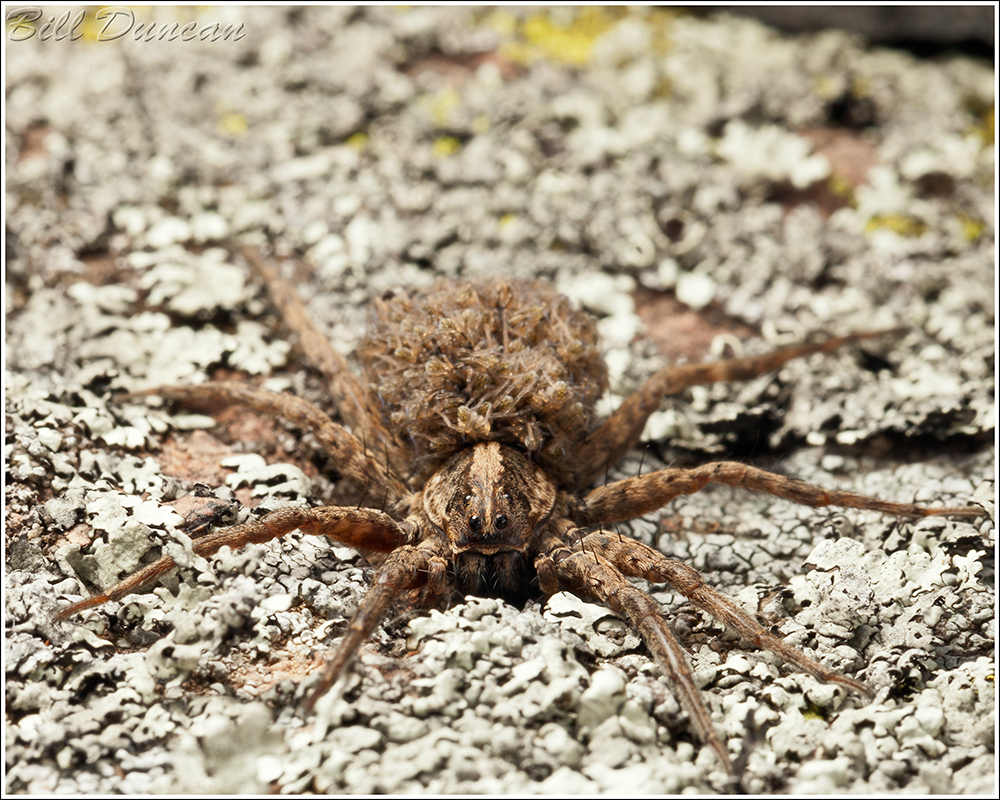
As I was destroying my delicate knees and elbows trying to get a shot of these weary grasshoppers I happened across this gal, a mamma Wolf Spider, out for a stroll with the kids.  She didn’t seem to mind the paparazzo activity.

IMG_4798

“Mamma Wolf“
 

The Fame Flower, a member of the succulent tending, Purslane family, is also known as Rock Pink and Flower-of-an-Hour, due to the ephemeral flowers opening late in the afternoon.  The flowers of this magnificent little plant are suspended on fine, wispy, leafless stalks (scape) many times longer than the short, succulent leaves.  Any small breeze sets these warmly saturated blooms swaying back and forth, bringing difficulty to obtaining a nice photograph.  Bravos to Steve for identifying this one!

IMG_4799

“Fame Flower“
 

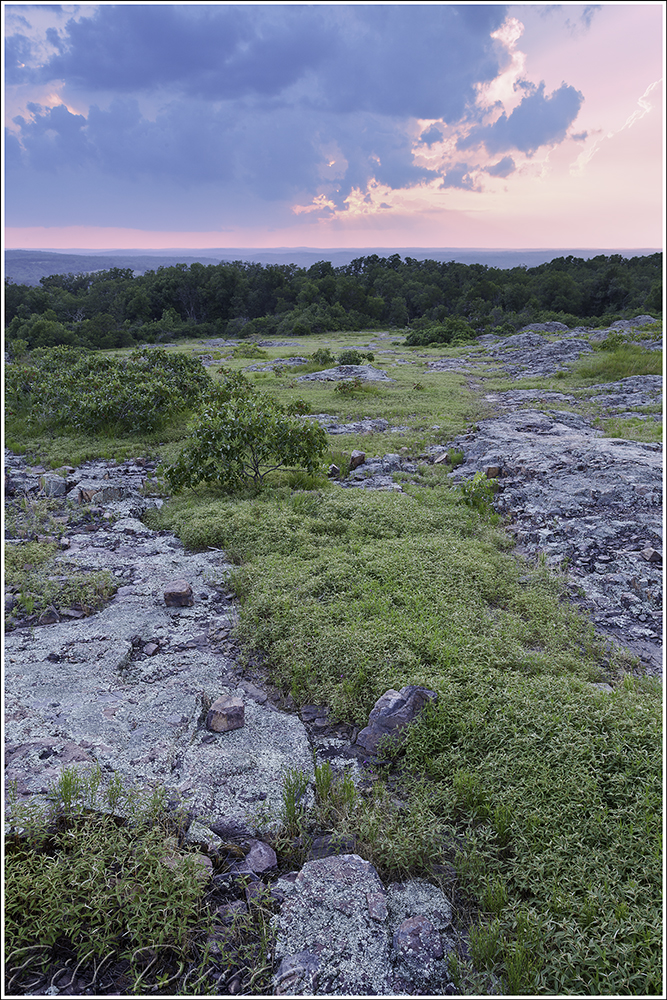
Finally, I wanted to provide a “habitat shot” that exemplifies where these organisms can be found.  Hopefully next time I can show you some of the other kind-hearted citizens of the Ozark Glades, like the Tarantula, the Black Widow and Scorpions.

IMG_4812

“Moist Times“

Steelville Natural Bridge

Located mere feet from the Meramec River in Crawford County, I came across this natural bridge – named “Steelville NB” in Beveridge’s “Geologic Wonders and Natural Curiosities of Missouri” while visiting Zahorsky Woods.  An adjoining lot’s owner invited me to hike his trails and gave me directions to it’s location.  I’d love to go back following a heavy rain.

IMG_3691