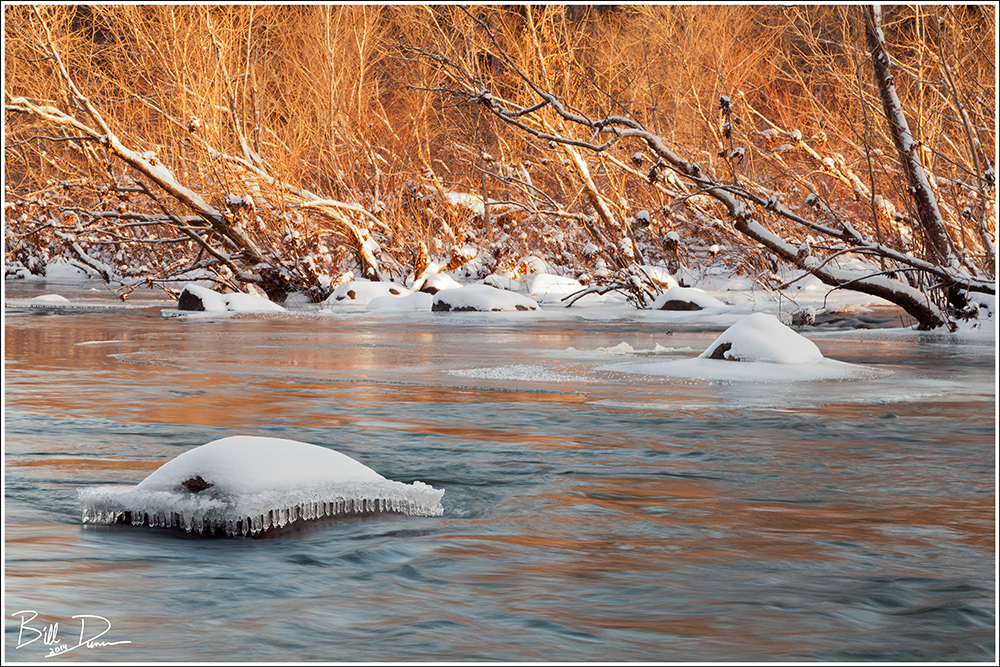
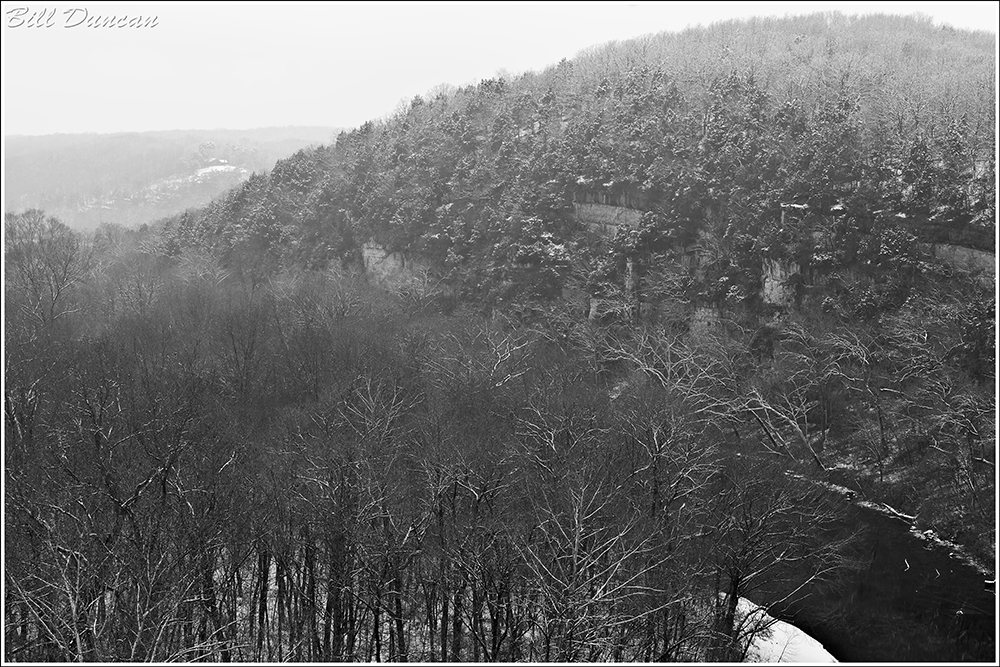
Just kidding. This is what was happening on the St. Francis River near the end of one of this winter’s glorious days.
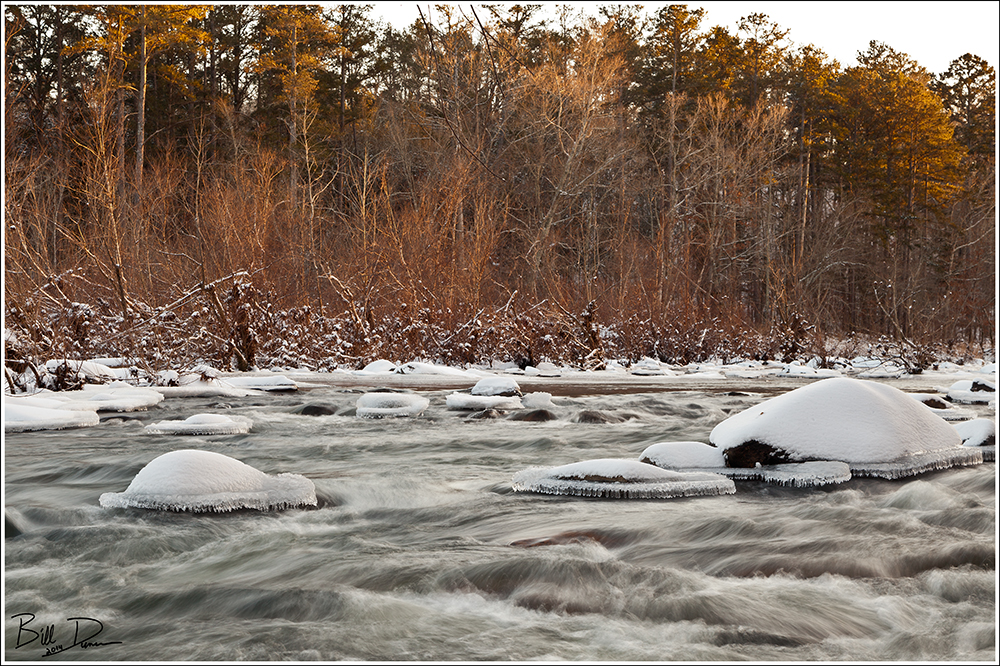
Pictured below is a view a little farther upstream.
"What a thousand acres of Silphiums looked like when they tickled the bellies of the buffalo is a question never again to be answered, and perhaps not even asked." -Aldo Leopold
Just kidding. This is what was happening on the St. Francis River near the end of one of this winter’s glorious days.
Pictured below is a view a little farther upstream.
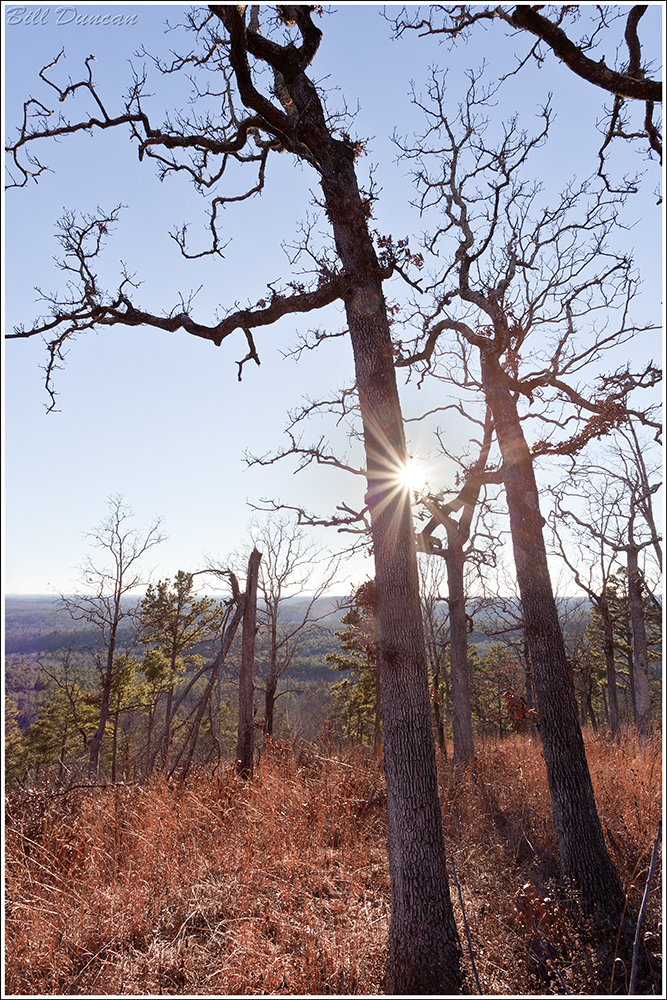
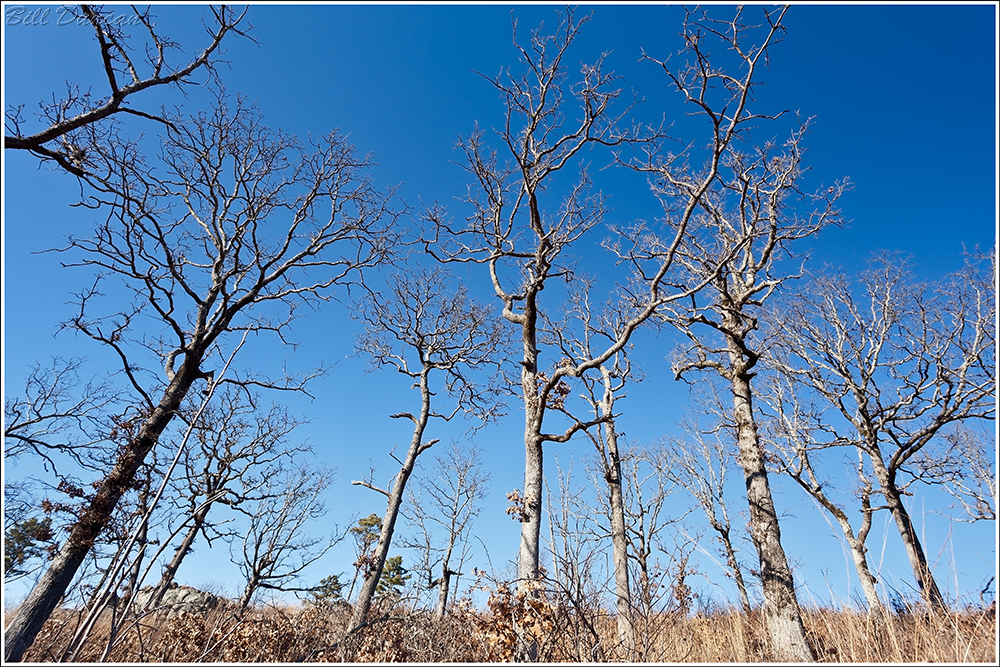
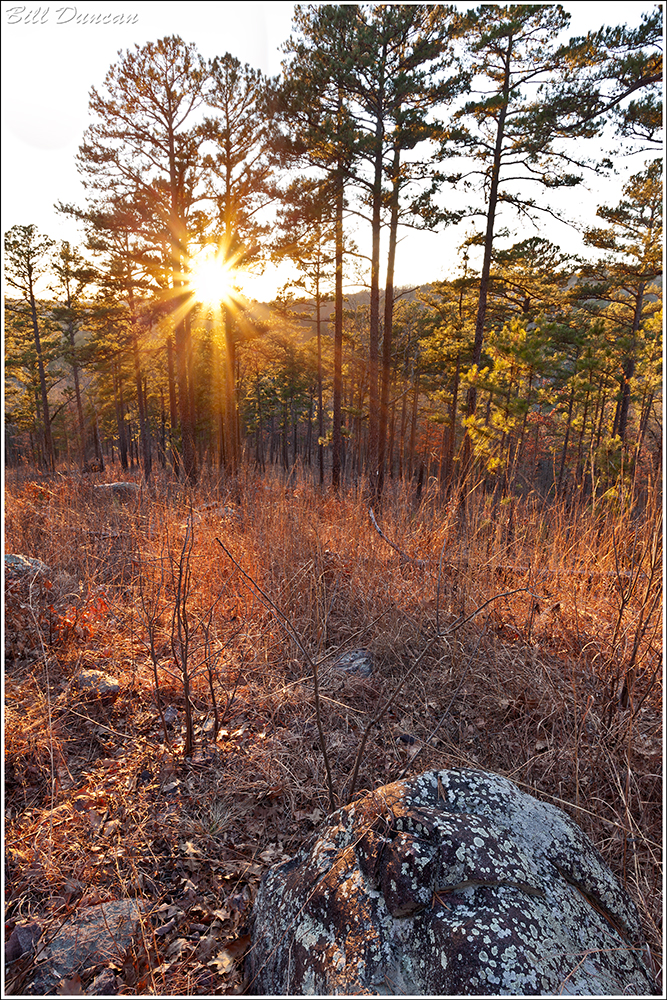
A number of years ago one of the first hikes I remember into the Missouri Ozarks was a short spur trail off the OZT up to the summit of Stegall Mountain within Peck Ranch C.A. I had my first “serious” camera that I wanted to document Nature as I found her on these journeys and I made a couple images that I was satisfied with at the time. This past holiday break we found ourselves back at this location and enjoyed a pleasant winter’s day. Here are a few images from this visit.
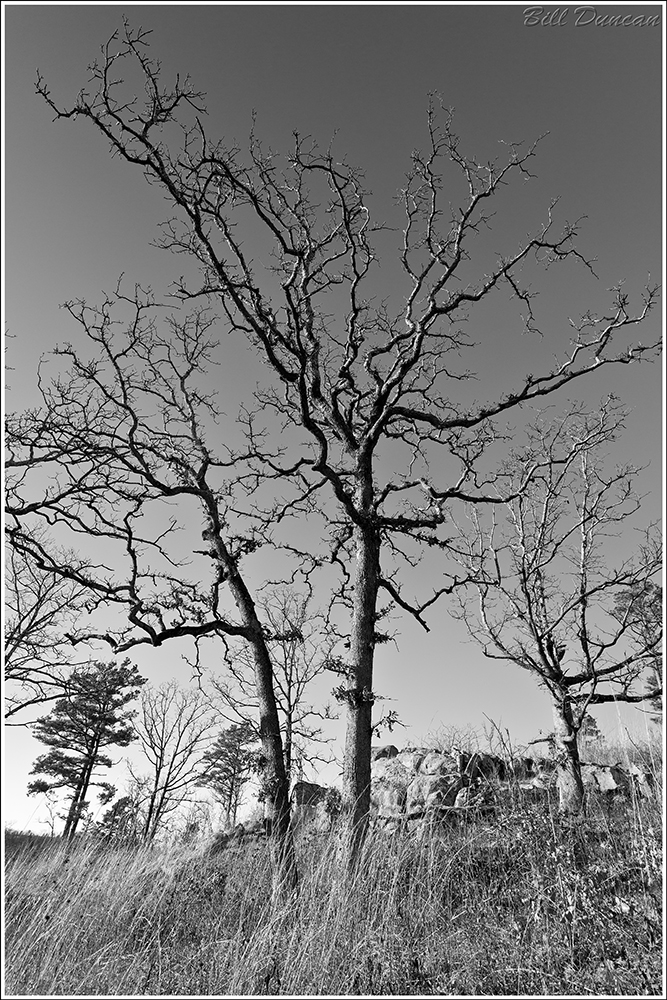
One of the highlights of Stegall Mountain Natural Area are the Oak savanna and glades. Some of the most gloriously colored rhyolite in the state is found in this area. The trees pictured in thes images are mostly stunted and gnarled Post Oaks. I couldn’t get enough of them.
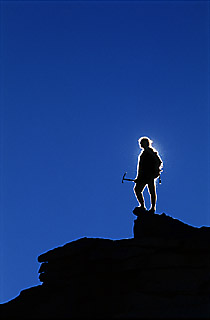
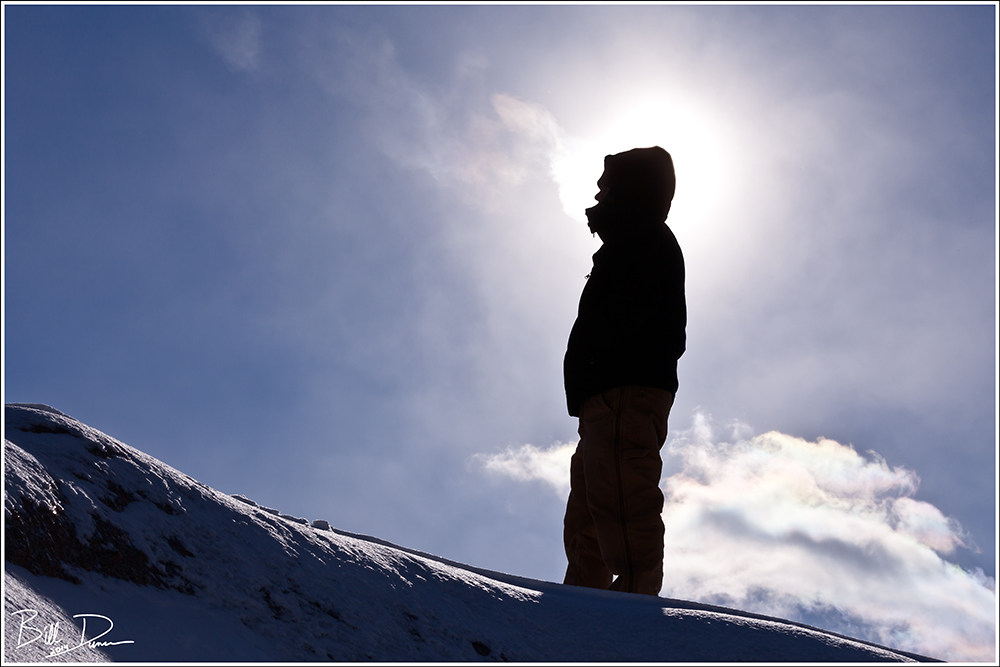
No, Steve and I did not take a daytrip to make it to the summit of K2 or one of the other Himalayan peaks, although we easily could. This image was made on one of this winter’s sub-zero days at Elephant Rocks. I had an idea of the image I wanted to make that may showcase an optical effect that Galen Rowell made famous called “diffraction fringe“. By putting oneself in the shadow of your back-lit subject at just the right difference and position, one may see a ring of hot light that outlines the silhouette of the subject. This proper geometry of sun, subject and camera (including optical settings) is just one requirement to observe and capture this effect. The other, as far as my understanding allows is the need for dry, clean air. On this particular day we had temps below zero degrees Fahrenheit and the air was as dry as could be with no interference from any noticeable smog. With the air quality requirement met, it was simply a matter of trying to position the model (Steve) at the correct position between myself and the sun. This part was more difficult in this setting and ultimately led to us missing our ultimate goal. Trying to work this out in minus 30 degree windchill proved our undoing. I could only ask Steve to climb so many boulders in this type of weather, which seemed to be increasingly affecting our mood and thought process the longer we were in these elements. Ultimately, I did not achieve the diffraction fringe. I am not sure as to the reasoning for this failure. I feel the geometry of our positioning, afforded by the placement of boulders and the limited availability of where I could position myself was the biggest factor. Getting the required distance that I believe necessary was impossible. Other factors that could have played a part were not having the most appropriate focal length and aperture settings, the air quality not being as suitable as I thought and perhaps the quality of the optics I was using. Many of these optical phenomena are the result of imperfection in lens design. Galen took most of his images with older generation optics that were often lower quality compared to today’s standards.
I’m not exactly sure what the reason for the failure in acquiring this diffraction fringing was. I guess this was just a very long explanation of an image I thought turned out to be pretty successful anyway. I look forward to trying this one again one day.
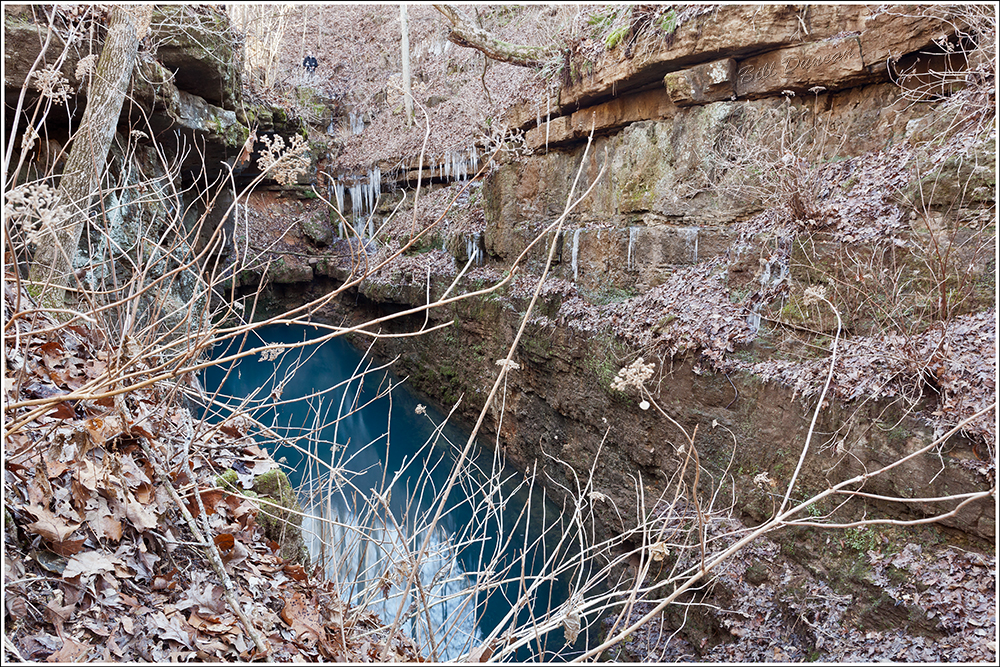
Pulled from Beveridge’s gift early after my discovery of the book, “The Gulf” of Wayne County has been on my list of desired destinations for a while now. Recently Steve and I made this our target in a winter’s outing, which is an appropriate time for nice viewing of many of the Missouri Ozarks geological features due to lack of green vegetation that blocks views and light. The Gulf is a narrow sinkhole that is approximately 100 feet long and 20 feet wide. This sinkhole is actually an opening to an underground lake that is more than 200 feet deep at its maximum depth.
Here Steve posses for a bit of reference. In periods of lower water, the entrance of the “cave” portion of the underground lake would be seen at the opposite end of the sinkhole from where Steve stands. A small boat and/or scuba equipment would provide for excellent opportunities for exploring.
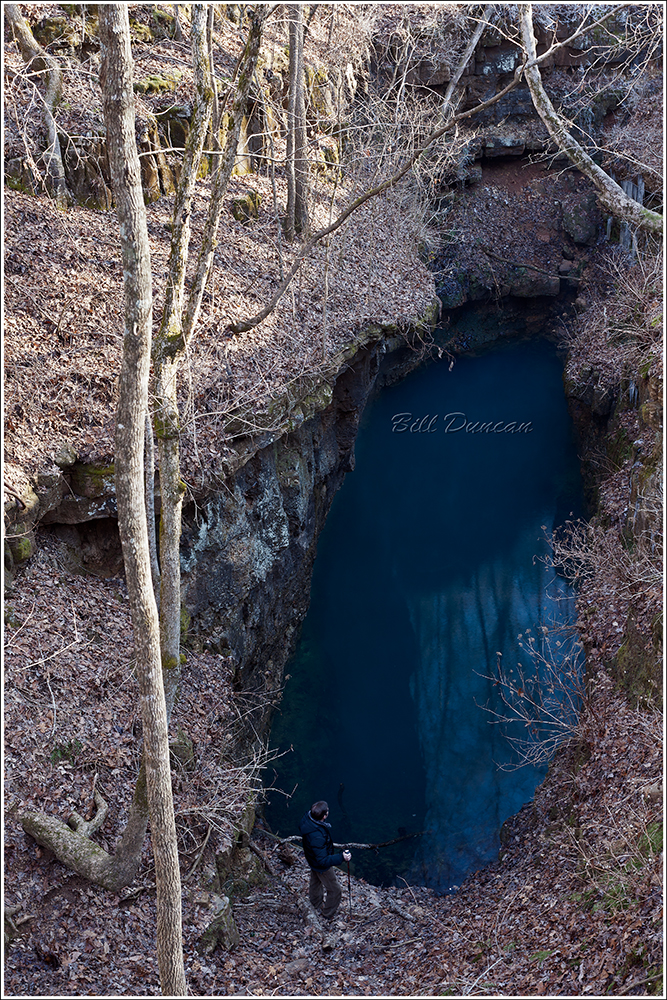
Just as the Tyndall Effect explains why the sky is blue, it is also the reason that the deep bodies of water found in the Ozarks often appear blue. These carving waters carry the dissolved limestone with them. This ultra-fine suspension scatters the shorter blue wavelengths more than the other colors of natural light, giving the blue appearance in the waters, even though there are no blue pigments to be found. In fact, this blue appearance is somewhat dictated be the angle of light and the viewer’s position to the reflecting light. With a slight turn of the head, the water will often change color.
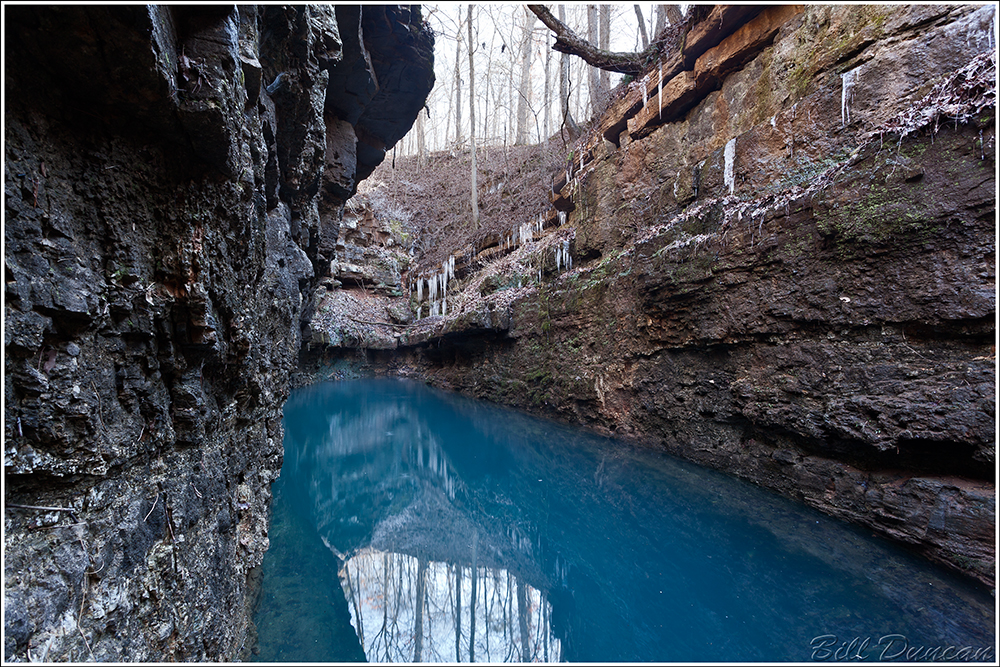
A potential practice picture for spring, here you can see some old wild hydrangea growing on the edge of the sinkhole. Can you find Steve in this image?
Entrenched meanderment? What in the world is OZB going on about now? Beveridge gives a wonderful explanation of the meandering nature of virtually all Missouri Ozark streams in “Geologic Wonders and Curiosities of Missouri”. Within, he provides a few fascinating geological hypothesis as to the hows and whys of streams forming in such a manner with some of the hardest rock on the planet as their bed. Think about it. How and why would streams form in rock like this, with very little floodplain, steep cliffs/bluffs and not be straight? Pick up Beveridge’s book to read of these hypothesis as well as learn about narrows, cutoffs and lost hills – the geologic features that are formed by these entrenched, meandering streams.
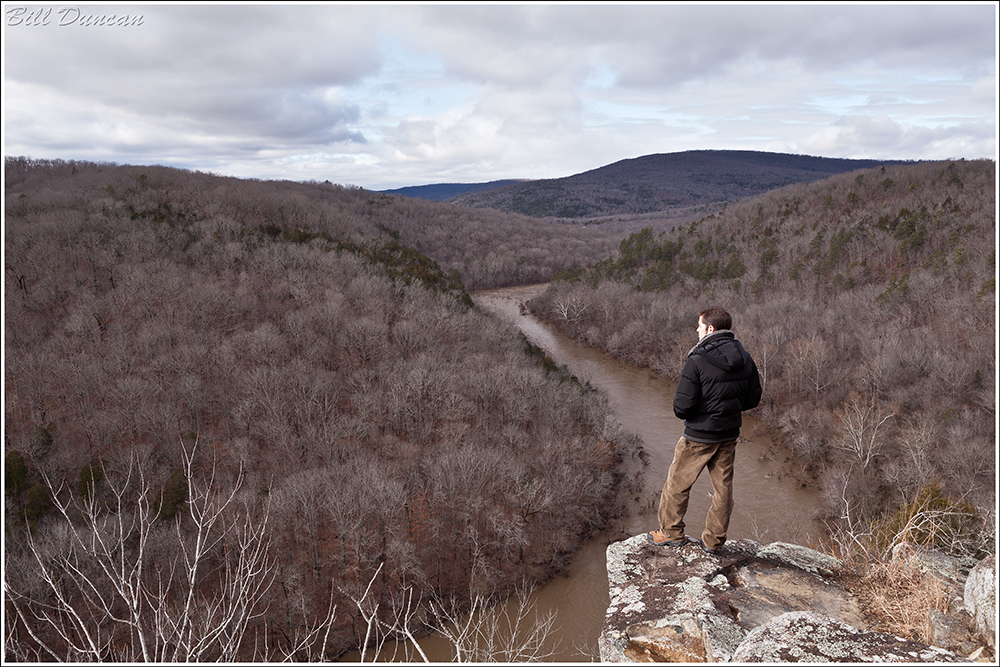
Two streams with an entrenched meandering environment on public land I have known and loved for a while. These are the Meramec River at Vilander Bluffs N.A. and Jam Up Cave/Bluff on the upper Jacks Fork. These are always worth a visit. While flipping through Bryan Haynes’ book recently, I came across a panoramic painting of his that I have admired. I saw the title: “Lee’s Bluff”. Having never heard of this feature and the fact that his image was such a dramatic scene, I assumed that this must be found in some western wilderness, far from being a day trip destination. I went ahead and searched the web, and to my surprise discovered this was in Missouri, along the St. Francis River and smack in the middle of those lovely St. Francois Mountains. With Steve wearing his best navigator’s hat, we found the location pretty easily on a blustery, winter’s day.
Here’s an overview image taken with a 15mm lens. You can see the features typical of a meandering entrenched stream, the steep bluffs formed on the outside of the bend and gentle sloping floodplains on the inside. In the direct center you can see the “incipient lost hill” as described by Beveridge. One day the “narrows” on the far side of that hill will succumb and a “cutoff” will form, straightening the river.
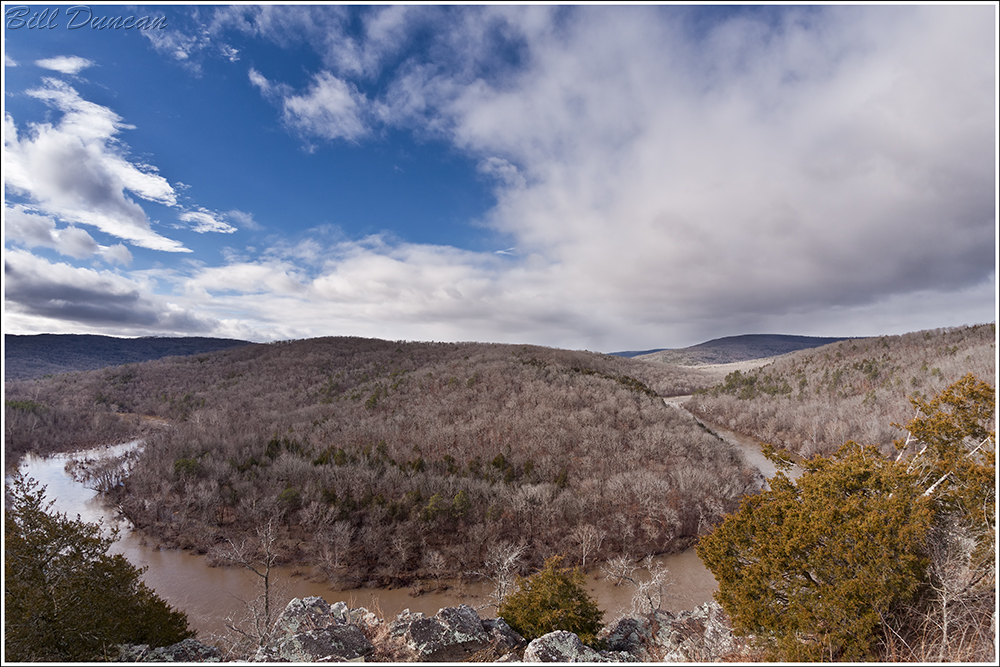
The sky was a constant change on this day. Here Steve poses while the sun breaks through an opening.
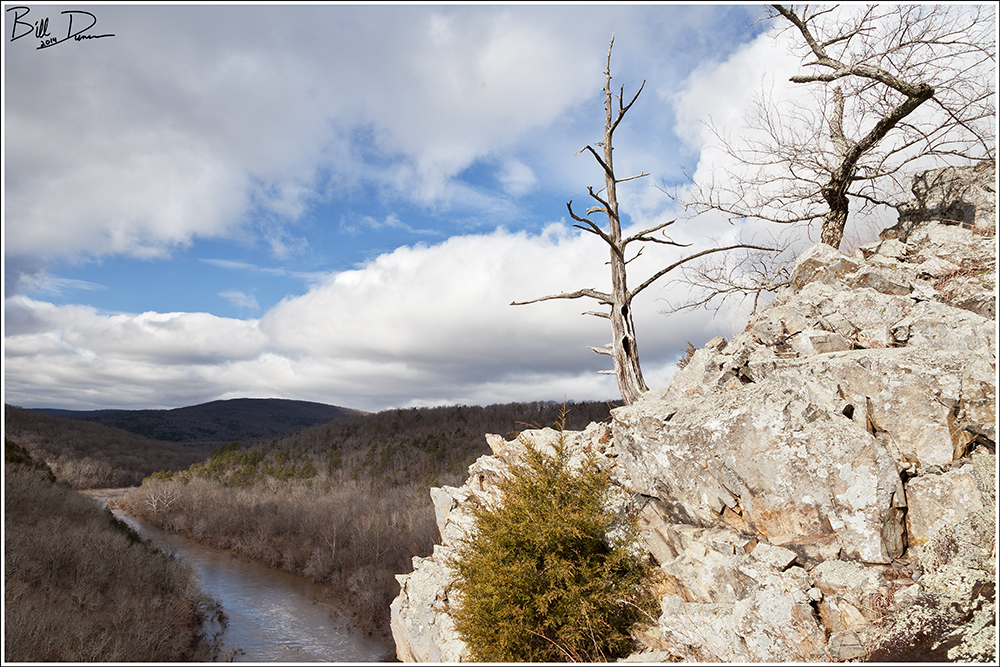
Climbing around on the steep, sharp rocks of the bluff we came across an ancient skeleton of an eastern red cedar. The relative youngster below looks ready to take its place in another couple of centuries.
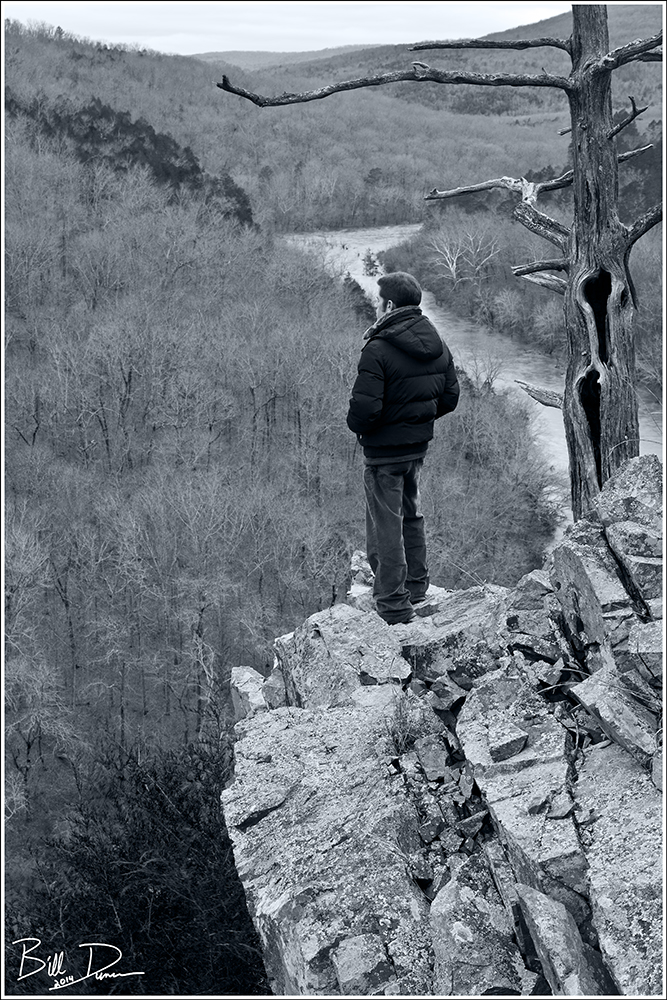
Professional schlepper, navigator, and photo model. I’m sure glad Steve works for free! 😉 Here he stands next to the old tree to give the image some perspective.
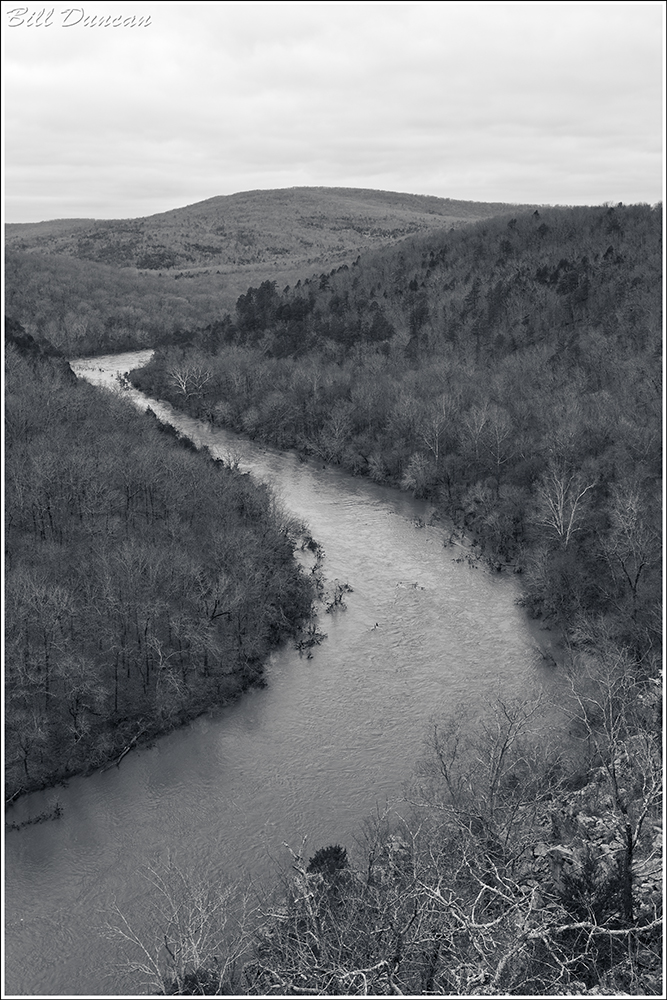
The image below is probably my favorite from this day. One of the visual beauties of these types of entrenched stream environments is that there are two S-curves in each one. You just have to figure out where to place your camera to take advantage of it. Under the right light and weather conditions, this place holds a lot of photographic potential, not to mention the potential for reflection and wonderment.
Happy winter solstice holidays to all my friends and family!
by Robert Frost
A winter garden in an alder swamp,
Where conies now come out to sun and romp,
As near a paradise as it can be
And not melt snow or start a dormant tree.
It lifts existence on a plane of snow
One level higher than the earth below,
One level nearer heaven overhead,
And last year’s berries shinning scarlet red.
It lifts a gaunt luxuriant beast
Where he can stretch and hold his highest feast
On some wild apple-trees tender young bark,
What well may prove the year’s high girdle mark.
So near to paradise all pairing ends:
Here loveless birds now flock with winter friends,
Content with bud-inspecting. They presume
To say which buds are leaf and which are bloom.
A feather-hammer gives a double knock.
This Eden day is gone at two o’clock.
An hour of winter day might seem too short
To make it worth life’s while to wake and sport.
“A Winter Eden”
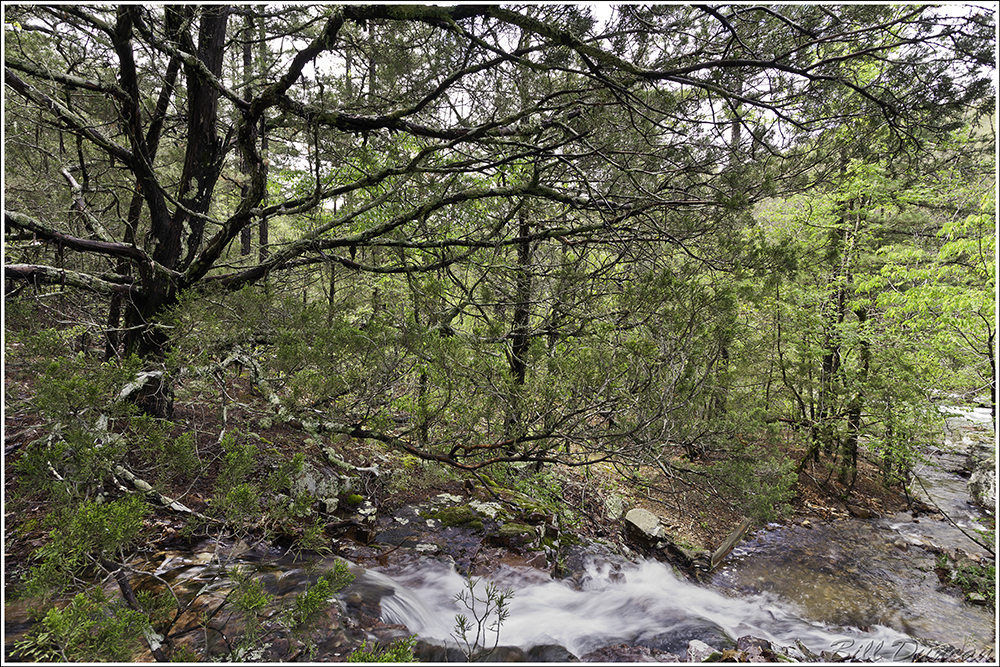
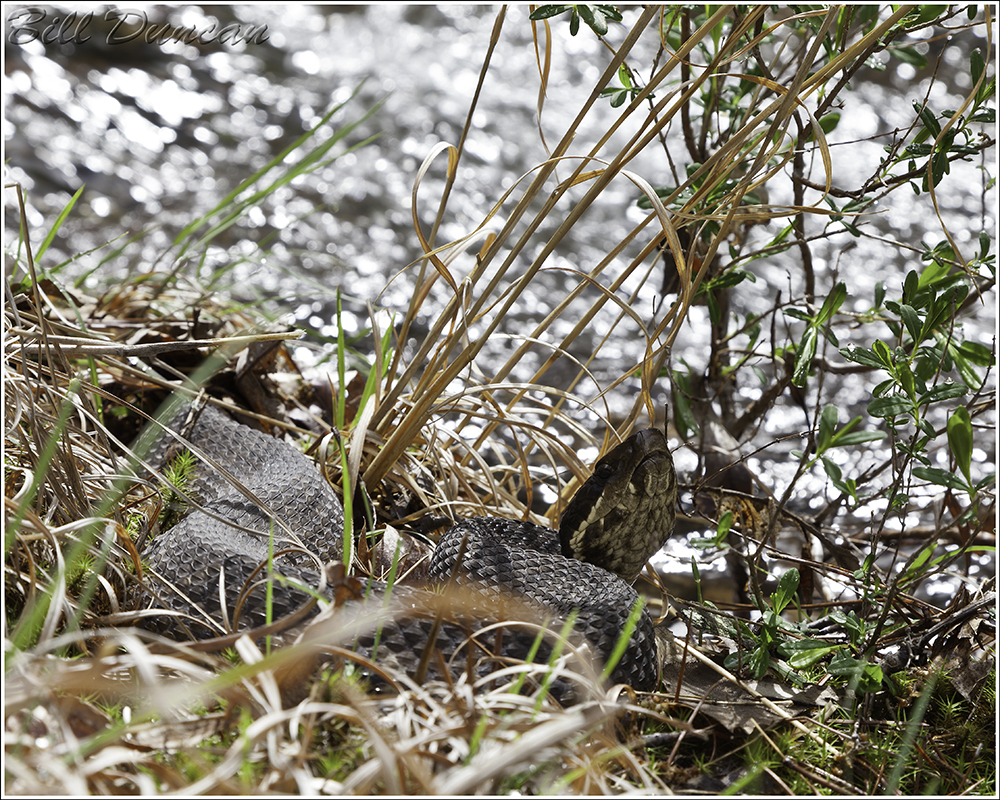
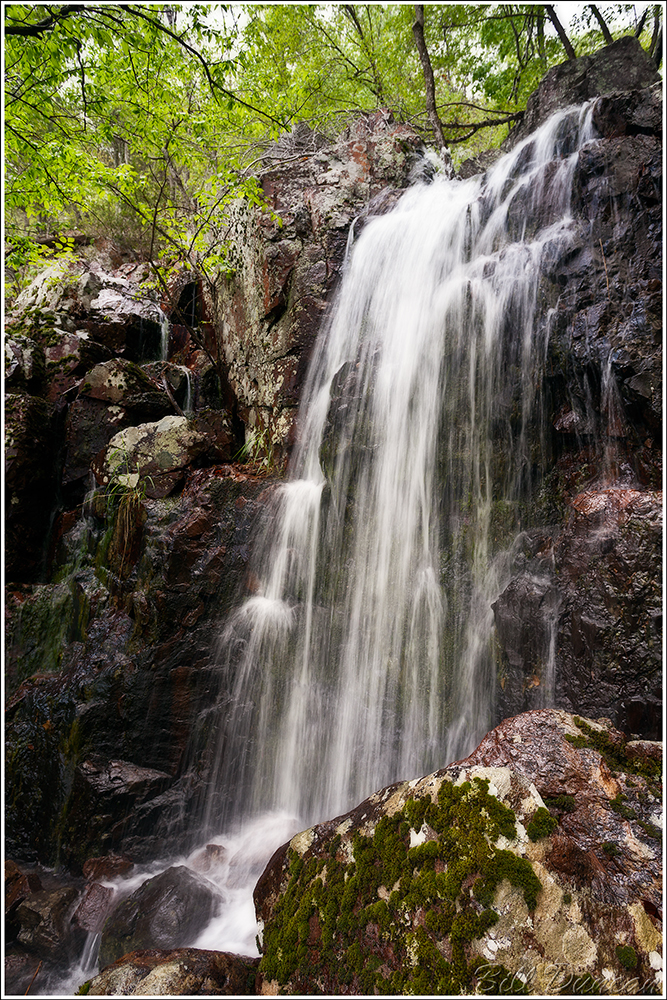
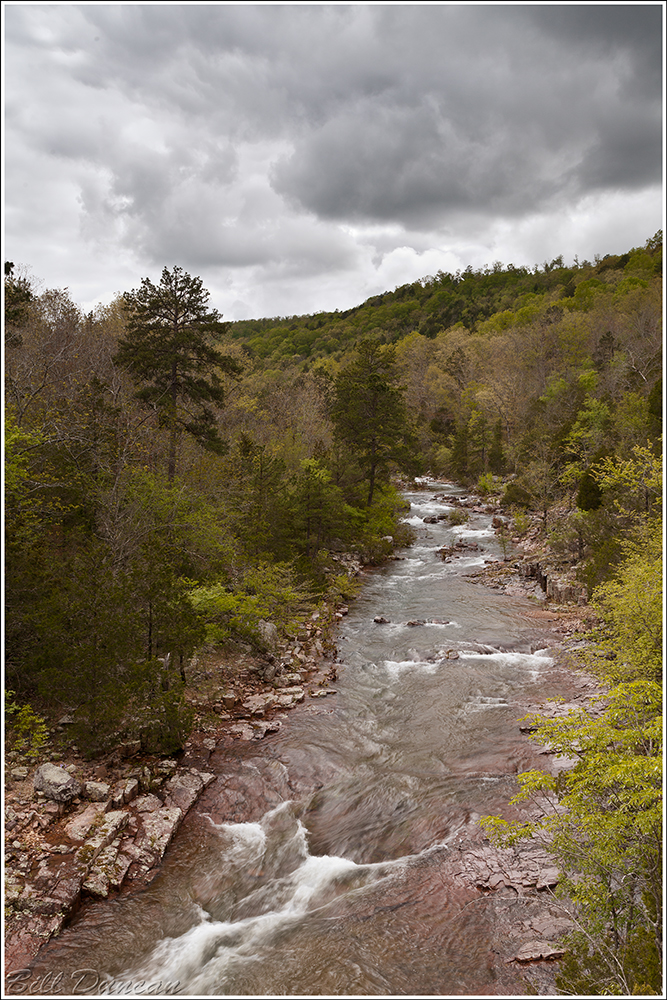
Here are a few of my favorites from a hike along Lower Rock Creek that Steve and I had this past May.
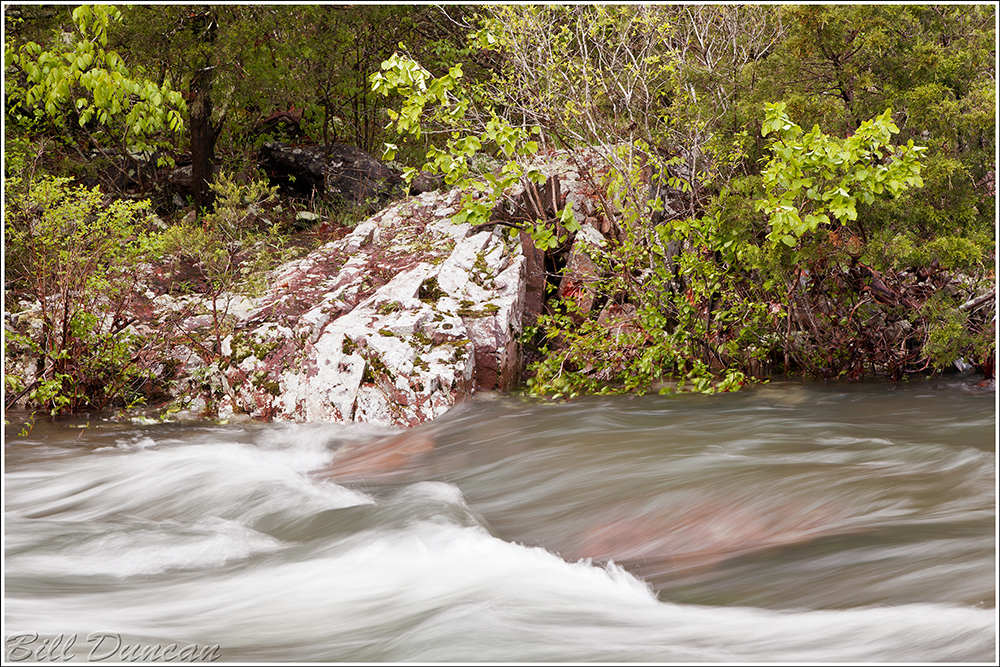
Specifically referred to as potholes, this feature was found in the long stretch of shut-ins of the St. Francis River between Silvermines Recreation Area and Millstream Gardens. Steve and I took this, one of our favorite hikes, this autumn, just before peak color came into this section of the Ozarks. Here is a wonderful description of this feature’s formation from Tom Beveridge’s Geologic Wonders and Curiosities of Missouri:
“Potholes are formed at the nearly right-angled intersection of channelways where the direction of flow is abruptly changed. The abrupt changes in direction of flow and the intersecting channelways create local whirlpools where the swirling waters grind out circular holes using sand and gravel carried in suspension as a natural abrasive. Man did not invent sandblasting – he only mechanized it! Deepening of the holes is also expedited by the steep gradient of the stream; some holes are in part plunge pools formed by the impact of water descending vertically and gouging out the bed at the base of individual waterfalls.”
See my Flickr account for similar images made on this day.
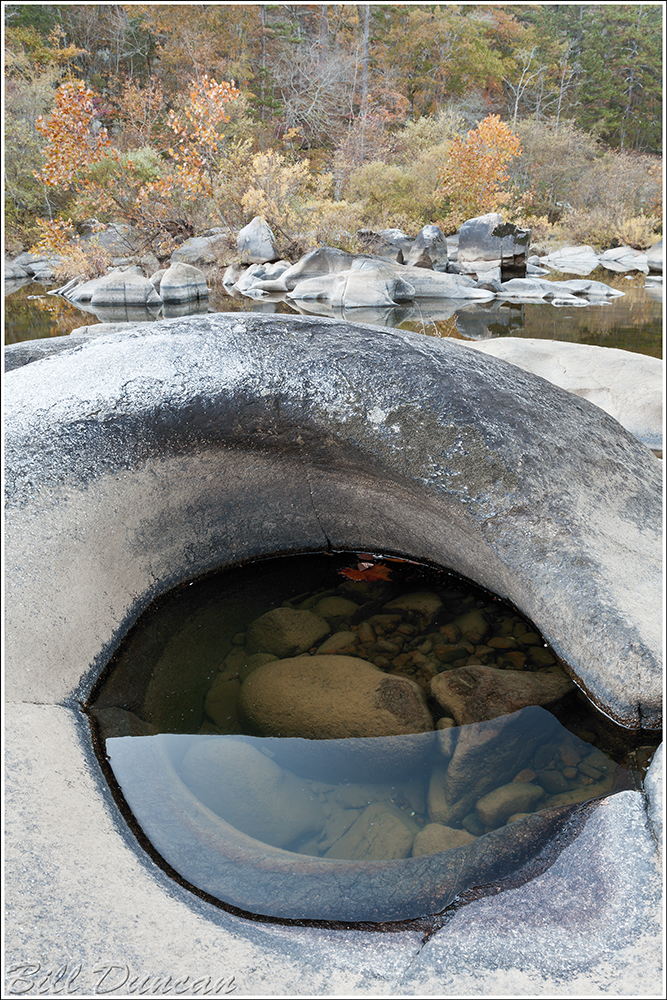
“All Seeing Eye”
An image of a Black and White Warbler taken this past spring. The song-birds have begun moving south now. Things have been so busy, I’ve barely had a chance to go birdwatching to watch them pass through.
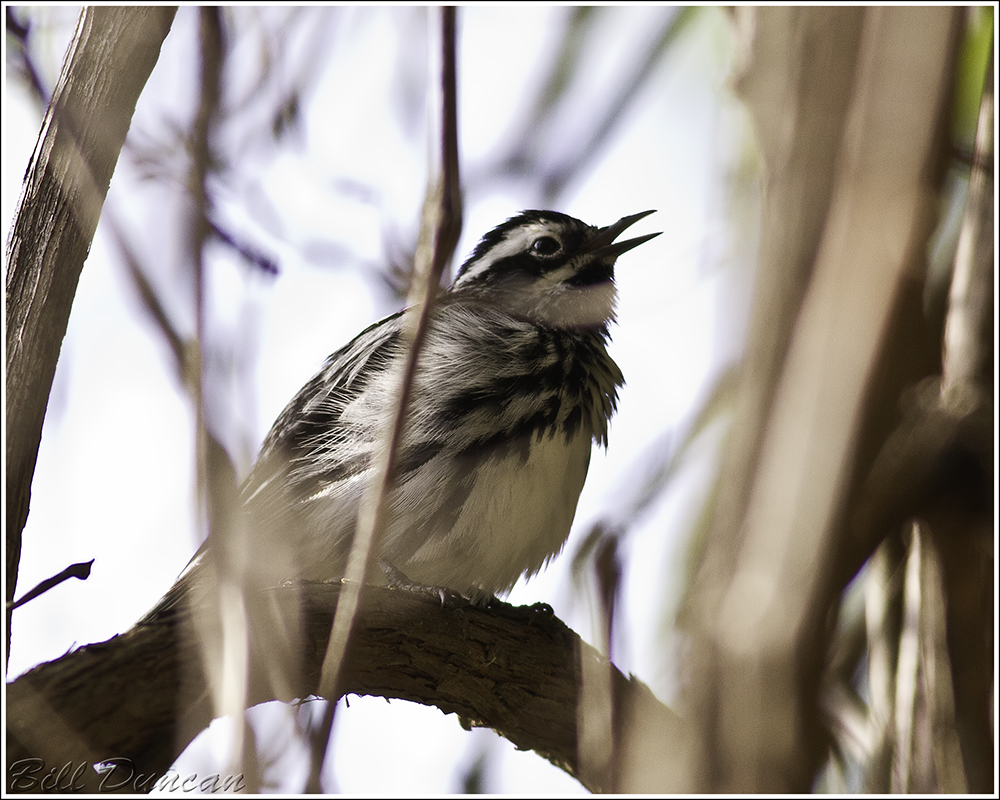
“Black and White Warbler”
This past June, Steve and I took a walk through one of the highest quality woodlands our Ozark hills have to offer. The short hike from the head of the spring to the Powder Mill trail-head and back offered an amazing diversity of life. Here are just a few of the things we were able to find and capture on camera.
Nothing can be mentioned about this location without first discussion of the spring itself. The Osage Indians referred to it as “Spring of the Summer Sky”, a most apt description for a spring who’s appearance defines the color blue. And in summer, when the flow is not overly encumbered by the suspension of dissolved limestone from heavy rains, the crystal-clear waters afford a look to the bottom of the spring, some 250 feet below the pool’s surface.

“Blue Spring Run”
The small nooks and crevices carved over the ages into the limestone and dolomite that overlook the spring pool make the perfect shelter for the Eastern Phoebe to make their nests. Most folks have likely seen the nests of this species under overhangs on human-made structures. It has only been within the last year that I have been fortunate enough to observe these nests in their more natural of settings. A perfectly placed snag within the spring’s pool makes for a fine resting place for a young Phoebe that is taking a break from the carrying on that was taking place near these nests. It was also a great place and time for us to take a break and take in everything this spot has to offer.

“Eastern Phoebe on a Snag“
Back on the trail a few minutes later Steve and I were pleased to find this guy. A first for the both of us, this Dung Beetle was moving this “resource” with full conviction. We couldn’t figure out where she was moving it, but she was sure not going to let us get in her way. When gently stopped she would climb to the top of her ball and let it be known that it was claimed.

“King of the Hill“
Here’s a little “motion pan” to give an idea of the speed at which she could move her grocery towards its future larder.

“The Cache”
Our primary goals for this early summer day where to see if we couldn’t find and photograph any or all of three of the more rare warblers that are known to nest in this area. These would be the Swainson’s, Cerulean and Hooded Warbler. Although we did get a few confirmed vocalizations from a Swainson’s, we could not get our eyes on the sneaky guy through all the vegetation. A few quick and loud playbacks did, however, coax 4-5 male Cerulean Warblers to descend from the forest canopy in order to meet the new male who had apparently set up shop amidst their territory cluster.

“Singing Cerulean”
This was a sweeter treat for us than spending time with Willy Wonka (Wilder not Depp) and Heather Graham in a chocolate factory. They seemed totally curious and intrigued as they moved among lower branches, foraging and singing as they went. Did you know this species has suffered more than 70% population decline since the 1960’s? Approximately 500,000 birds are the current population estimates and habitat destruction and fragmentation continue to threaten this species. Check out The Nature Conservancy for more information on this great bird, and consider checking out Cerulean Blues.
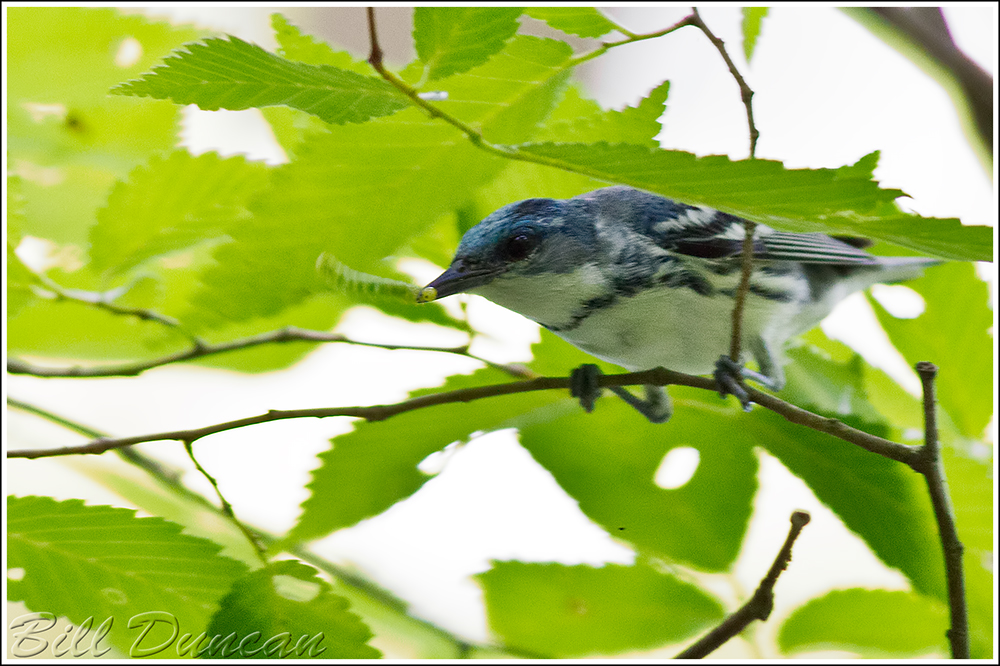
“Cerulean with Insect“
Finally, I present a pair of gorgeous Northern Water Snakes that were basking on some exposed rock not to far from shore along the Current River.
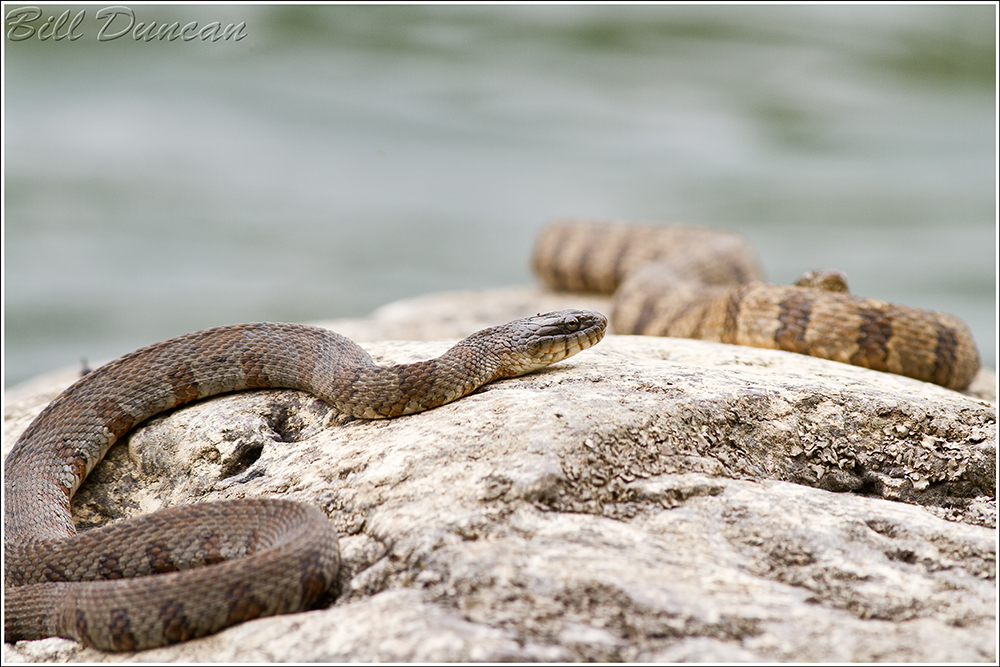
“Basking Water Snakes”
 A Thousand Acres of Silphiums