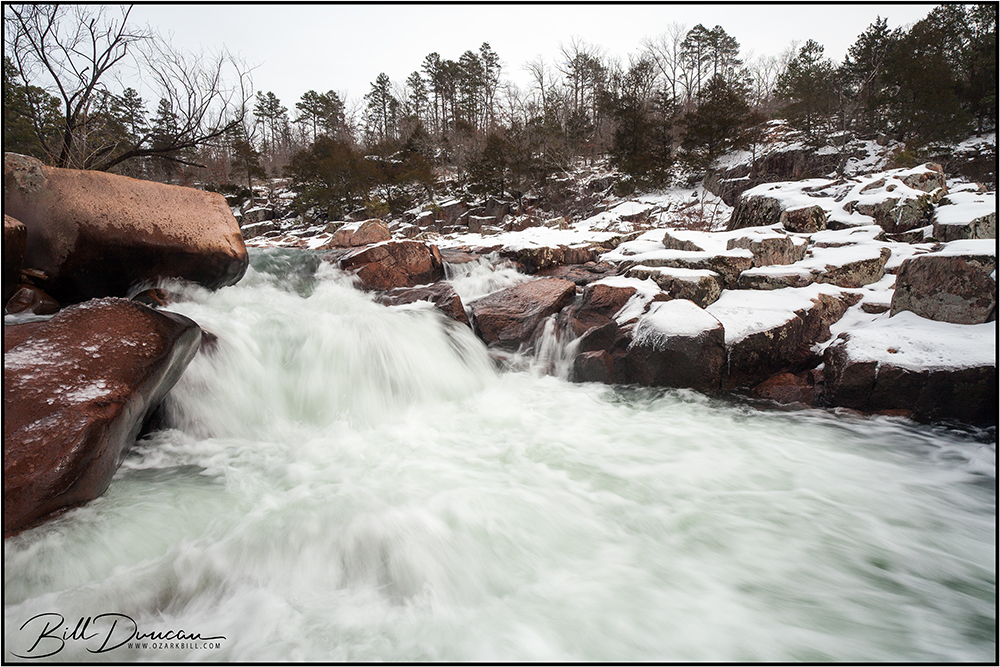
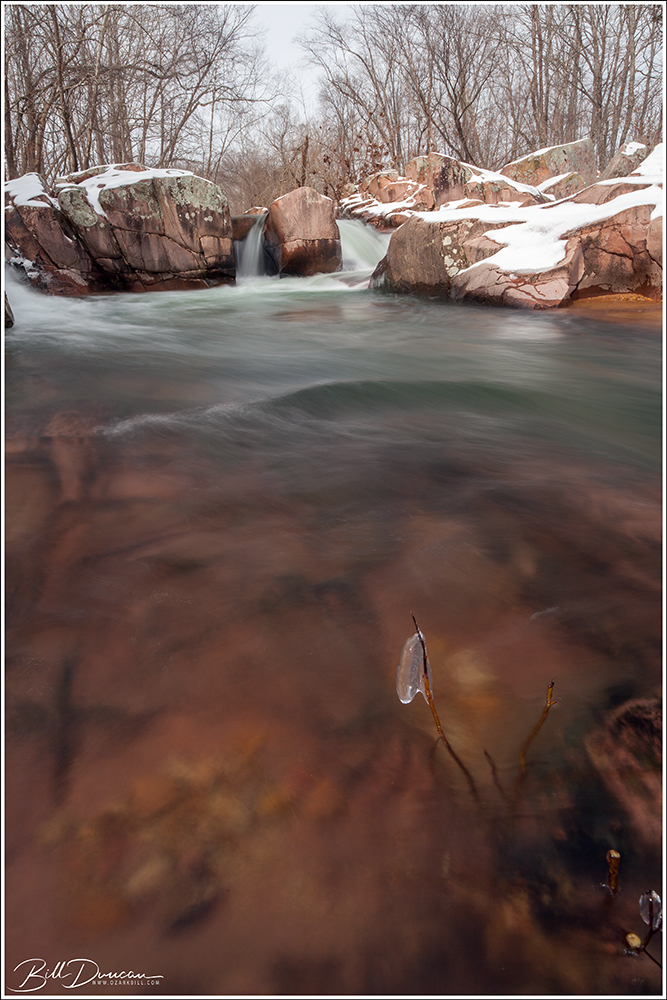
In early November, with the insect and green seasons drawing to a close, the WGNSS Nature Photography Group dusted off our landscape photography gear and got a very early start on a day devoted to capturing the remarkable geology of the St. Francois Mountains, hopefully complemented by some lingering autumn color. Our destination was one of our favorite places for this type of photography: the Castor River Shut-ins, located within the Amidon Memorial Conservation Area in Madison County, Missouri. This area was once known as Hahn’s Mill Shut-ins, named for mills that formerly operated along this stretch of the Castor River. Unfortunately, the mills are long gone, and the old name is probably familiar only to longtime residents and those interested in the area’s history.
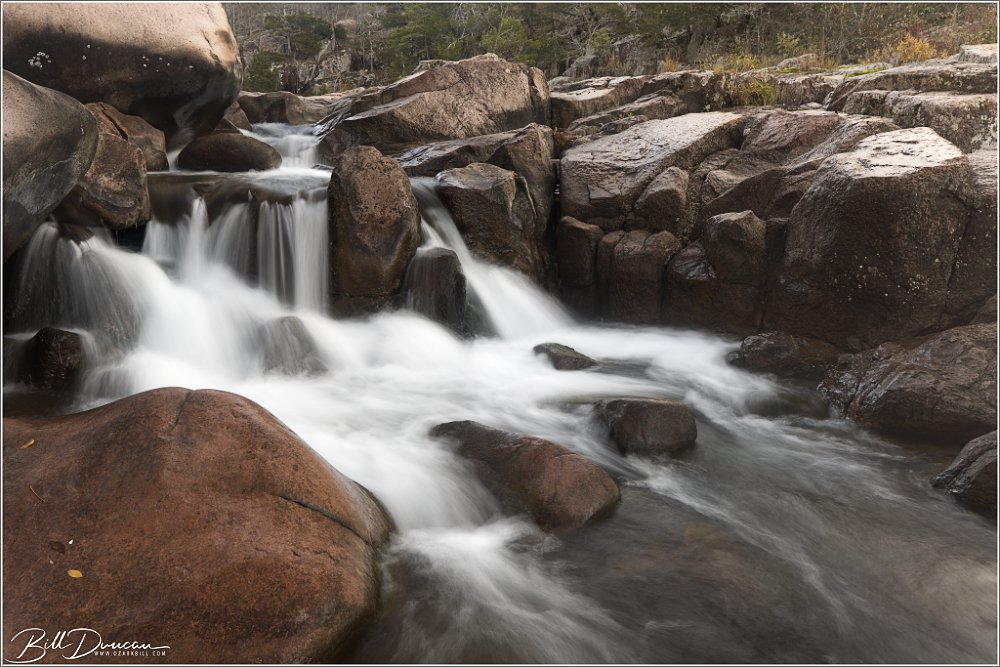
Image details: Canon R5, EF24-70mm f/4L IS USM lens @ 30mm, f/10, 0.8 sec., ISO-100
Both flowing water and autumn foliage are best photographed under overcast skies, which provide soft, even illumination. Disappointingly, the forecast called for mostly clear skies on the day of our visit. To avoid the harsh, direct sunlight that creates excessive contrast, distracting patches of light and shadow, and blown-out highlights on the water, we decided to get an early start and arrive just before sunrise. Setting my alarm for 3:30 a.m. is always a blow to my senses, but I struggled through it, and six of us arrived at the desired time. This afforded us two to three hours of usable light before the sun climbed above the surrounding slopes and effectively spoiled the fun. We got to work.
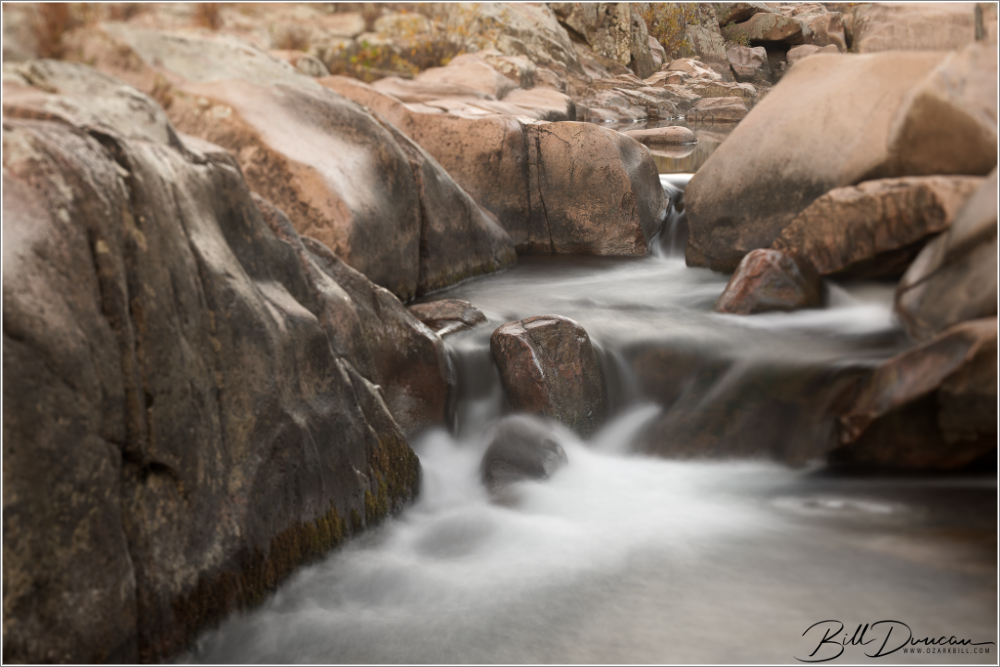
Image details: Canon R5, TS-E 90mm f/2.8L macro lens, f/5.6, 4 sec., ISO-200
Timing the peak of autumn color is always a challenge. The progression is typically quite local, with peak color generally occurring first at northern latitudes before moving south. Additionally, factors such as differences between nighttime lows and daytime highs, seasonal precipitation, and local windstorms can have dramatic effects on any particular patch of forest. Unfortunately for us, peak color at the shut-ins appeared to have passed, and many trees had already lost their leaves, likely hastened by recent windy weather. Nevertheless, there were still pockets of beauty to be found. Although water levels were lower than we would have liked, there was enough flowing through the shut-ins to provide a glimpse of the forces that have shaped the ancient granite for which this place is so well known.
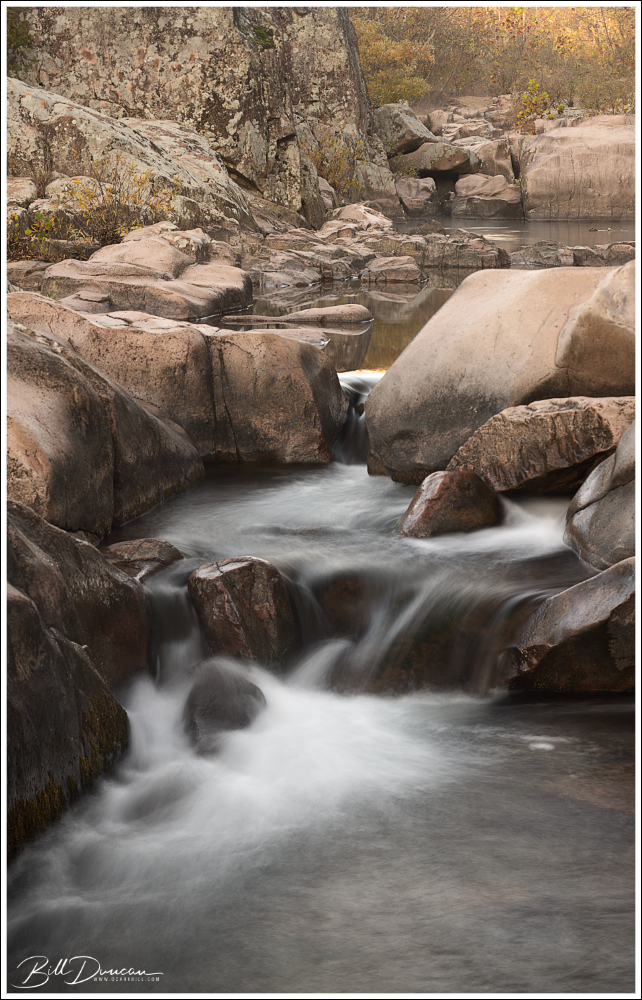
Image details: Canon R5, TS-E 90mm f/2.8L macro lens, f/5.6, 2 sec., ISO-320
The pink granite comprising these shut-ins, part of the Breadtray Formation, is approximately 1.5 billion years old, dating to the Precambrian Era when the region experienced extensive volcanic activity. Unlike rhyolite, which formed as lava and volcanic material cooled at the Earth’s surface and makes up much of the exposed bedrock of the St. Francois Mountains, granite formed when molten magma cooled slowly deep underground. This gradual cooling allowed visible crystals of quartz, feldspar, and other minerals to develop, with potassium feldspar contributing to the rock’s distinctive pink coloration. Over immense spans of geological time, erosion stripped away the overlying rock, exposing the ancient granite. As the Castor River encountered this exceptionally resistant bedrock, its channel became confined to a narrow passage, or shut-in. The relentless action of flowing water, particularly during floods when sand and gravel act as natural abrasives, has gradually sculpted the granite into the smooth, rounded surfaces, deep channels, and potholes visible today.
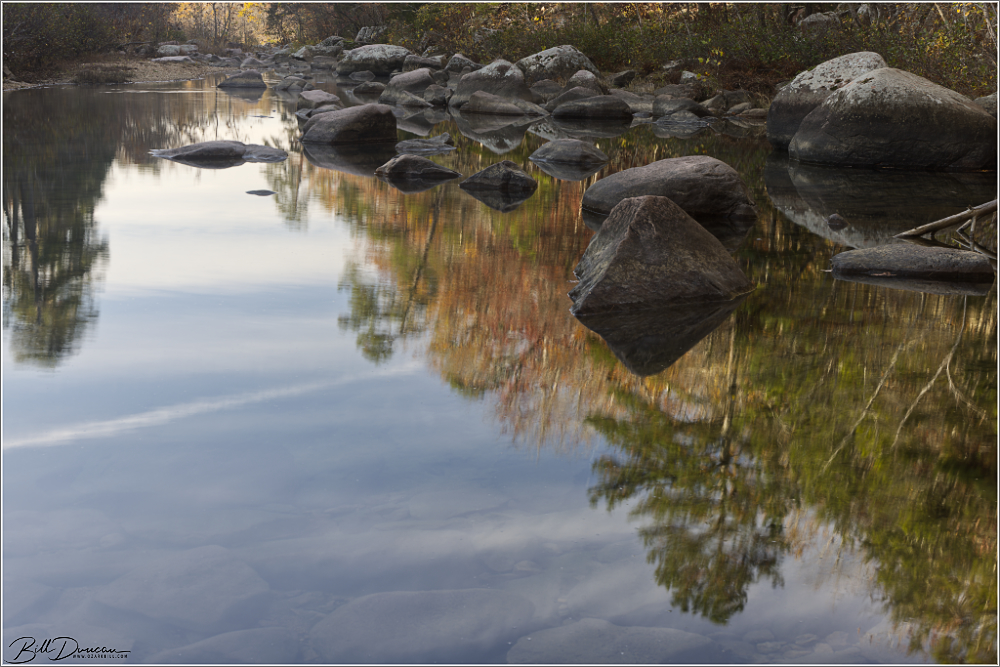
Image details: Canon R5, EF24-70mm f/4L IS USM lens @ 57mm, f/16, 1 sec., ISO-100
Beyond their obvious photographic appeal, the shut-ins and surrounding rocky slopes are also fascinating for the variety of habitats they support. Along the rocky slopes overlooking the river, igneous glades occur where shallow, nutrient-poor soils and exposed bedrock create hot, dry conditions that contrast sharply with the cooler, moister stream corridor below. These open habitats support specialized vegetation, including little bluestem, prickly pear cactus, fame flower, lance-leaf coreopsis, and an assortment of mosses and lichens. Scattered shortleaf pines, blackjack oaks, and eastern red cedars add to the distinctive character of the landscape, while surrounding woodlands provide habitat for numerous birds and other wildlife. Periodic fire has historically helped maintain these open glade communities by limiting the encroachment of woody vegetation. Meanwhile, the Castor River supports a rich aquatic ecosystem, with pools and rocky riffles providing habitat for native fishes, crayfish, and numerous aquatic invertebrates.
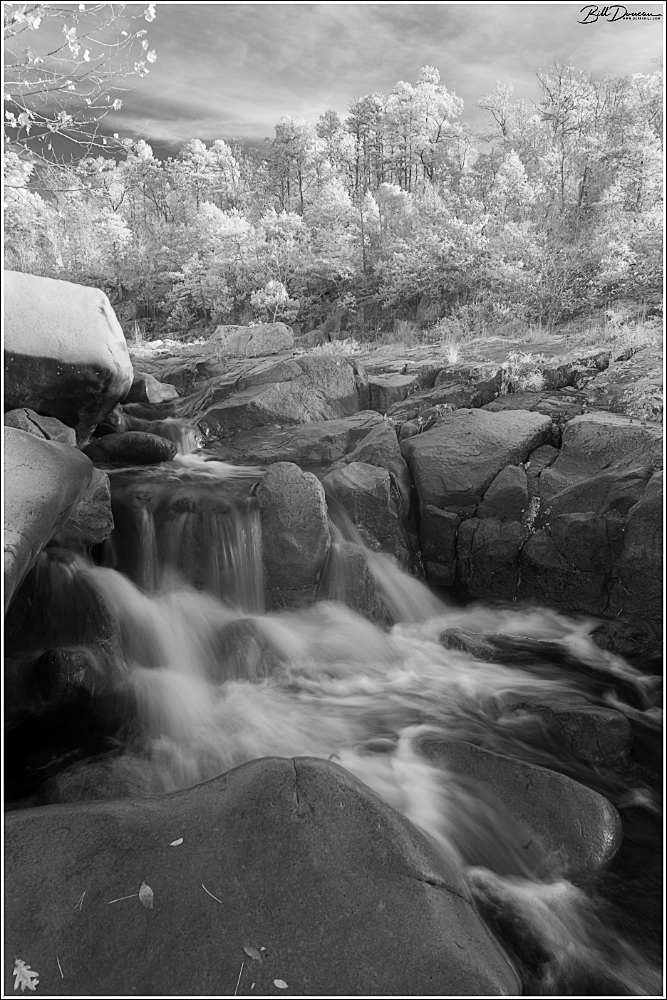
Infrared-converted Canon 5D mkii, EF24-70mm f/4L IS USM lens @ 24mm, f/16, 0.5 sec., ISO-100
Although we would have welcomed more color in the trees and more water in the river, it was still a successful outing. I enjoyed spending a cold but beautiful morning with friends, giving my landscape photography gear some much-needed use, and revisiting one of Missouri’s most remarkable natural landscapes. Places like the Castor River Shut-ins offer something worth appreciating in every season, even when conditions don’t quite match our photographic expectations.
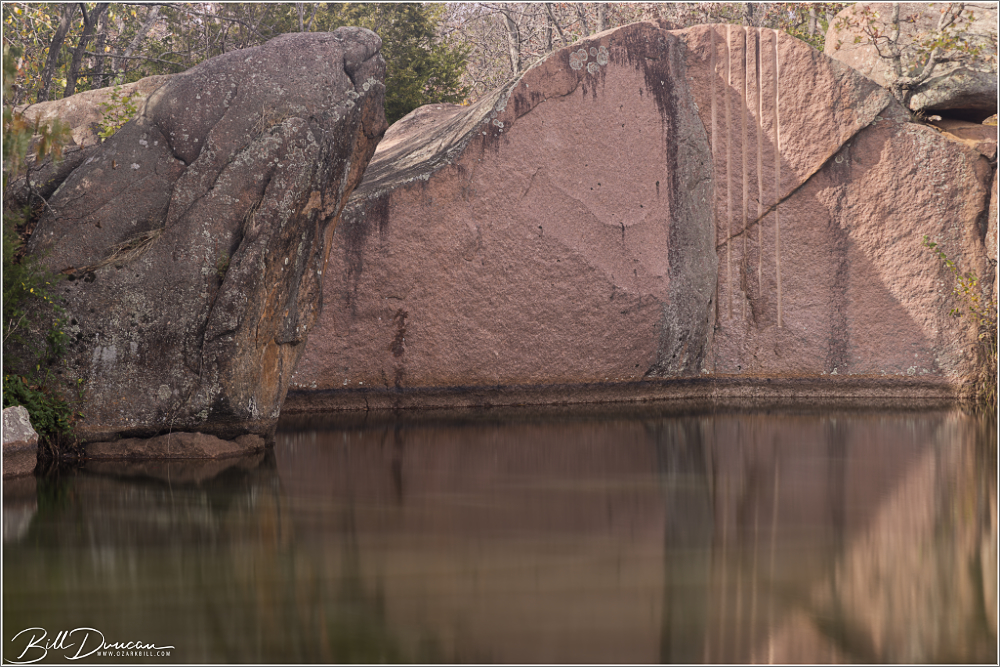
Image details: Canon R5, EF70-200mm f/4L IS USM lens @ 97mm, f/11, 5 sec., ISO-100
We decided to end our visit to Castor River Shut-ins aroung mid-morning due to the poor lighting conditions within the Canyon. With still plenty of daylight and gumption left, the group decided to grab second breakfast in the Fredericktown area and then headed to Elephant Rocks State Park with hopes of doing more infrared photography with the fantastic geology and the increasing clouds. As we should have likely guessed, our hopes were dashed when we saw the ample parking lot there was near capacity. I did not even give a try to the main bolder field there. I knew the throngs would not be conduicive to getting what I wanted. Instead, we headed to the also photogentic quarry lake. Although the people were still thicker than we would have liked, there was some opportunity to be had for photography.
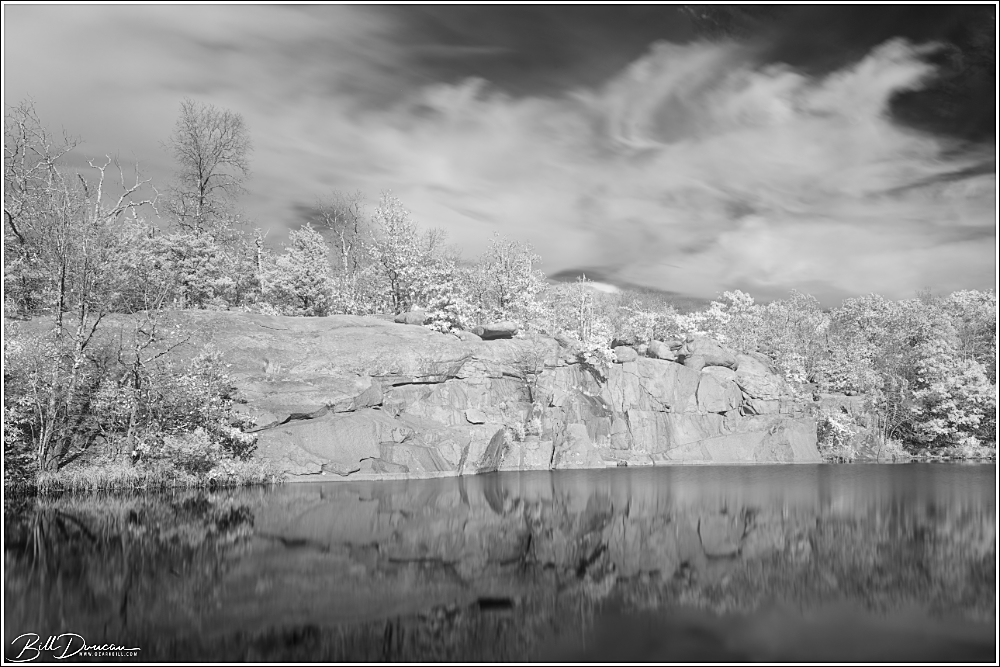
Image details: Infrared-converted Canon 5D mkii, EF24-70mm f/4L IS USM lens @ 28mm, f/16, 20 sec., ISO-100
The WGNSS Nature Photography Group meets once a month (typically a Saturday). Care to join us to share your interest in photographing the natural world? You can find out what we’re up to at our website and on our Facebook page. You do not have to be a member to join us on these outings. Hope to have you join us!