"What a thousand acres of Silphiums looked like when they tickled the bellies of the buffalo is a question never again to be answered, and perhaps not even asked." -Aldo Leopold
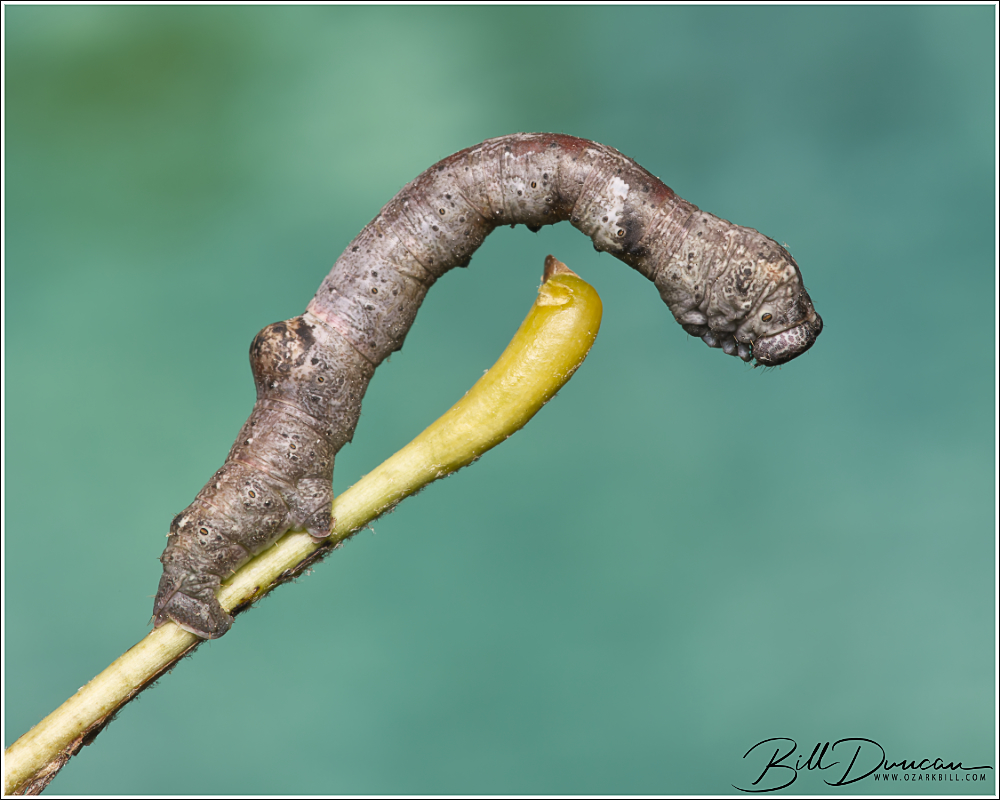
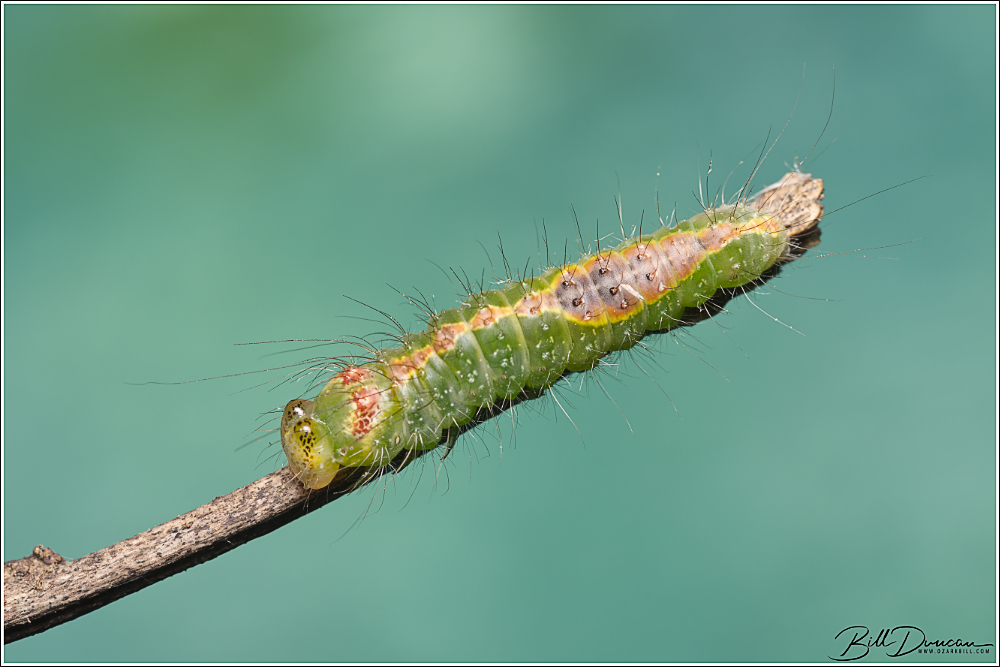
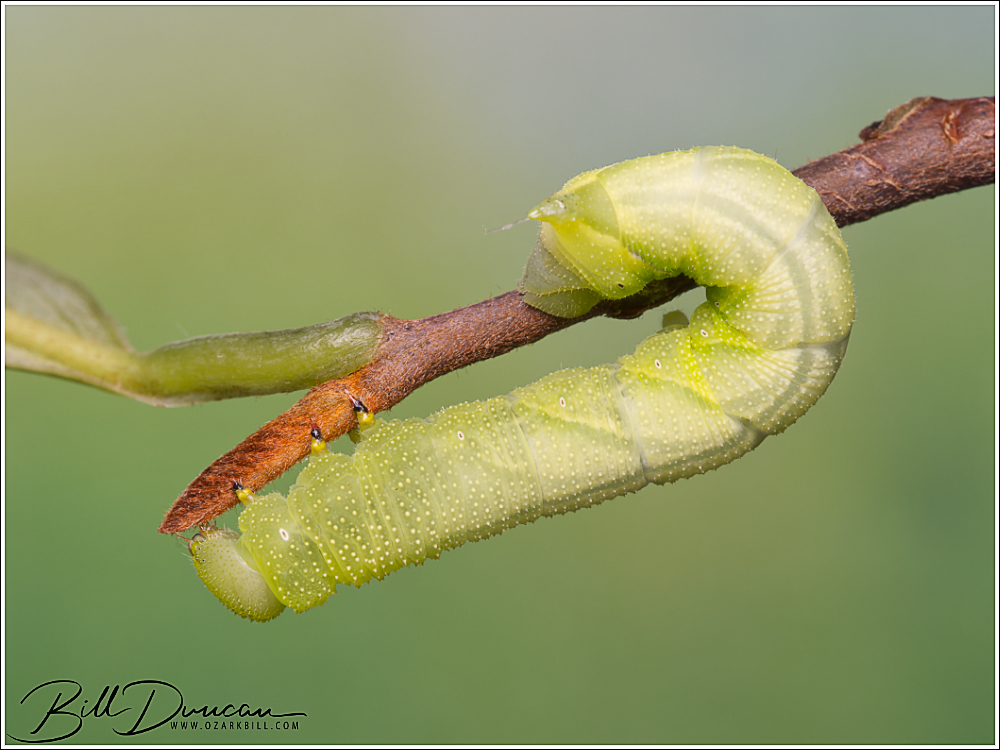
Plagodis Geometer Caterpillar Plagodis sp. fam. Geometridae Host plant: Not recorded Dates found: 06 September, 2025 Locations found: Babler State Park, St. Louis County, MO Notes: Plagodis larvae are well camouflaged to look like woody twigs on their host plants. Their body shape and coloration are not their only tools to use in their adaptive subterfuge. When disturbed, these twig mimics will become rigid instead of attempting to flea, often assuming this position while being handled.
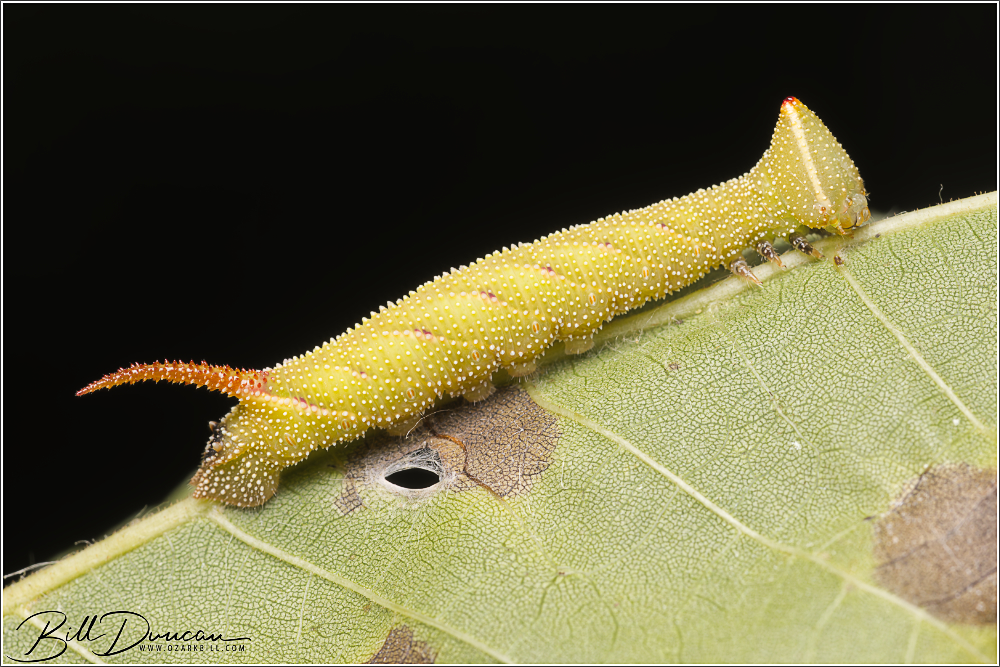
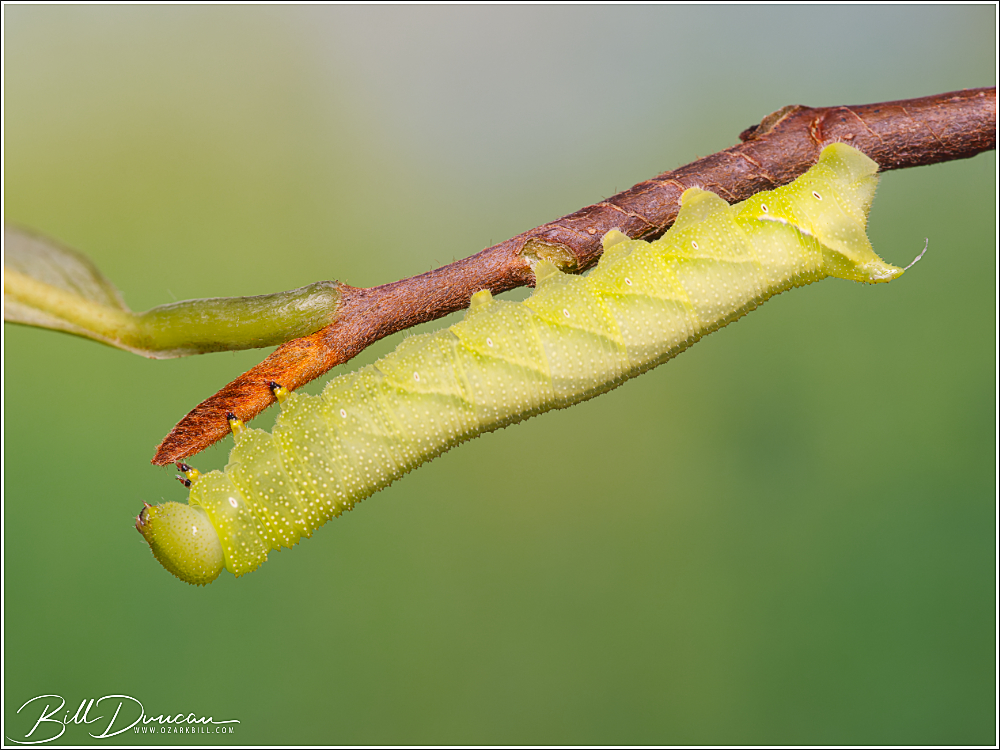
Walnut Sphinx Amorpha juglandis fam. Sphingidae (Hodges#7827) Host plant: Found on hickory (Carya sp.) Date found: 6, 13, September, 2025 Location found: Babler State Park, Tyson Research Center, St. Louis County, MO Notes: This is the only species of this genus in North America.
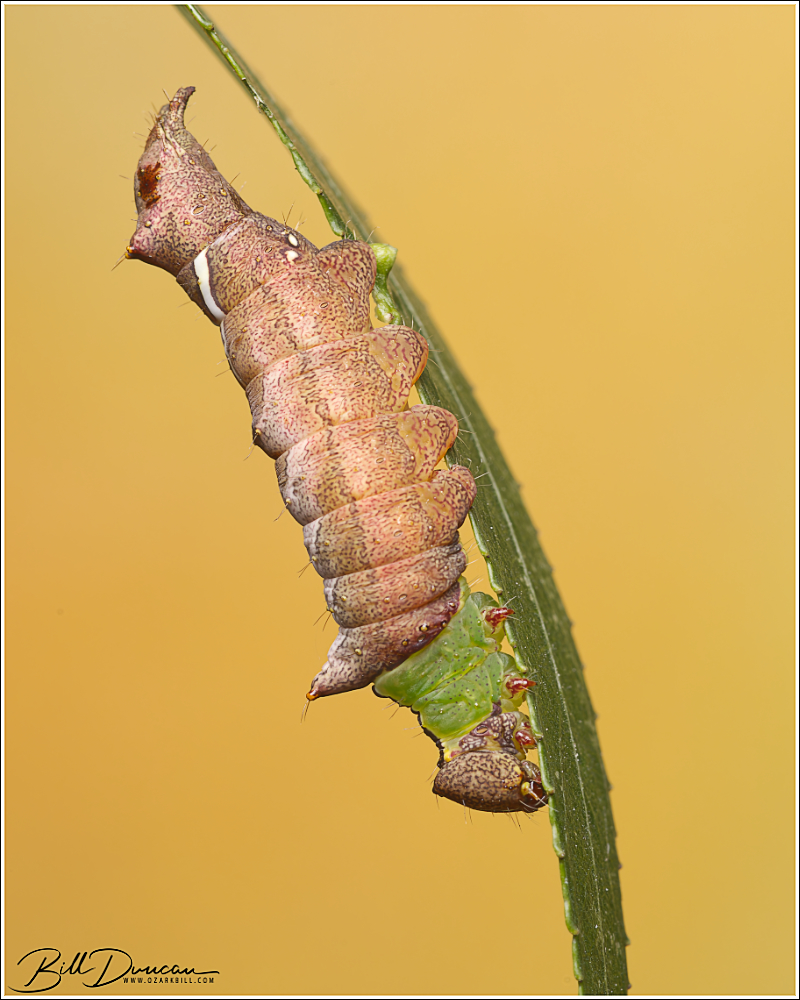
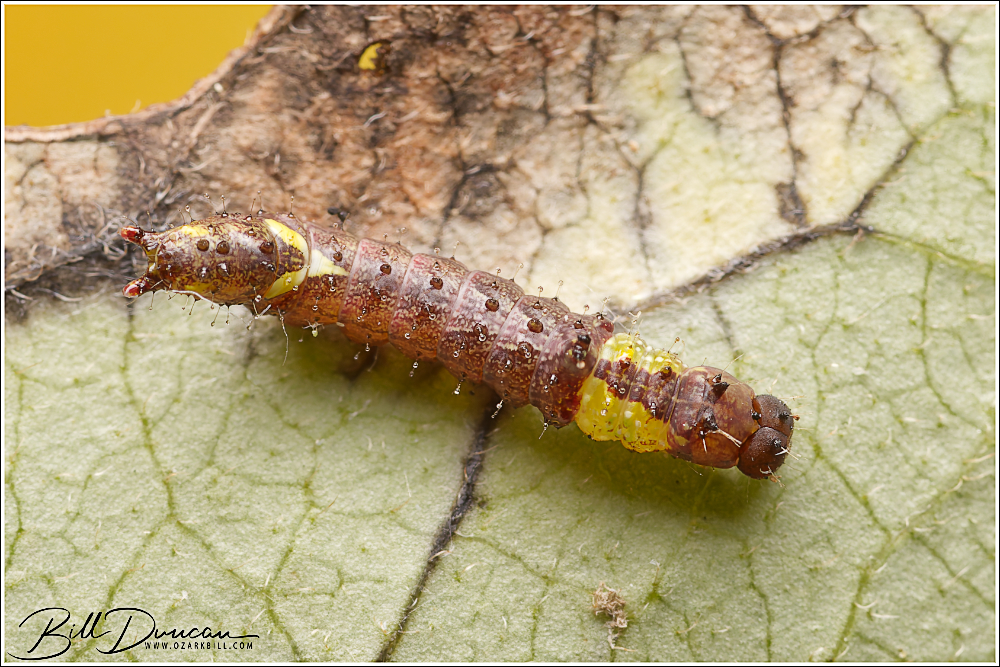
Unicorn Caterpillar Moth Coelodasys unicornis fam. Notodontidae (Hodges#8007) Host plant(s): redbud, hackberry, willow Date(s) and location(s): 30 August, 2025 – Tyson Research Center, St. Louis County, MO; 06 September 2025 – Babler State Park, St. Louis County, MO; 15-September, 2025 – Creve Coeur Lake Park, St. Louis County, MO Notes: Previous to this year, I assumed this species was an oak/hickory specialist. This is obviously not the case. This species is polyphagous and I was surprised at how many I found on willows this year. Look closely at the upper right photo in this gallery for signs that this individual was parasitized.
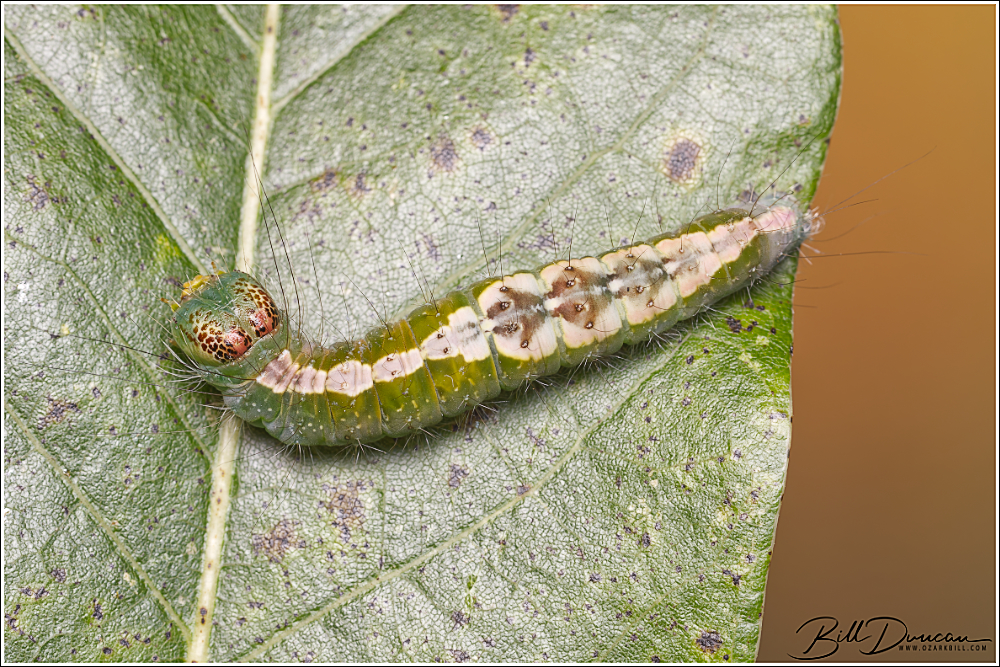
Streaked Dagger Moth Acronicta lithospila fam. Noctuidae (Hodges#9266) Host plant(s): red oak (Quercus sp.), shingle oak (Quercus imbricaria) Date(s) and location(s): 30 Aug, 2025 – Tyson Research Center, St. Louis County, MO; 6 Sep, 2025 – Babler State Park, St. Louis County, MO; 13 Sep, 2025 – Don Robinson State Park, Jefferson County, MO Notes: This species host primarily on Fagaceae (oaks, beech) and is stunning in both larval and adult forms.
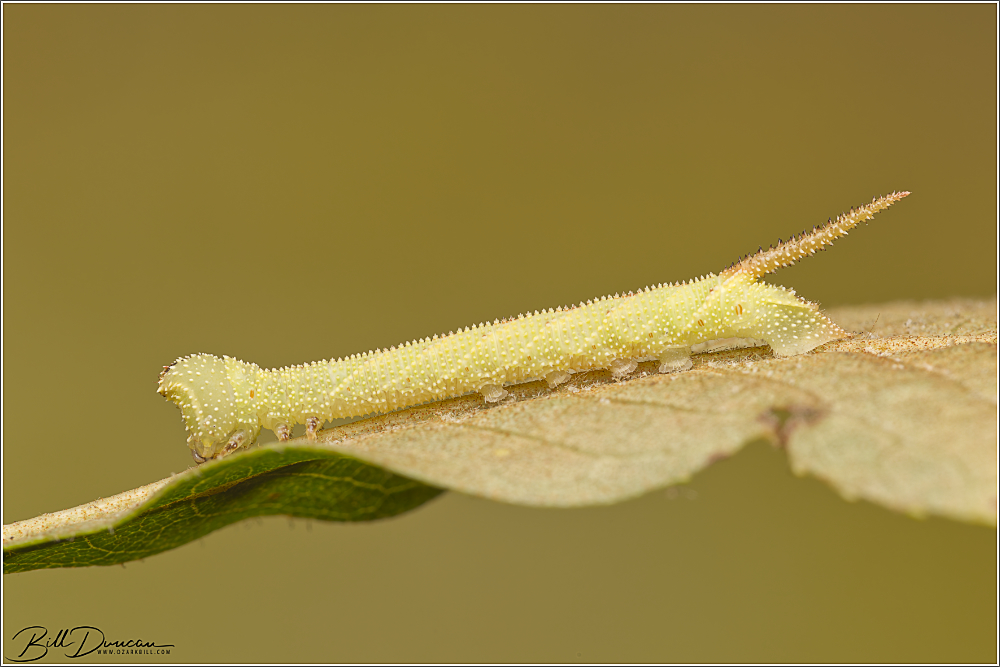
Today’s caterpillar is from another monotypic genus in the family Sphingidae. The pawpaw sphinx (Dolba hyloeus) hosts not only on pawpaw (Asimina triloba), but also on hollies-Ilex and blueberries-Vaccinium. This animal was found on A. triloba in early August at Babler State Park in St. Louis County, MO.
I’ll admit it, I will typically put members of the Geometridae right back on the plants that I found them on without taking any photos. The “inchworms” or “loopers” are typically very small and difficult to get a good photograph of. Additionally, species in this family tend to exhibit a great deal of variability in colors and patterns. To make matters even worse, members of this family tend to be polyphagous, or generalists when it comes to their host plants. These factors can make it quite difficult to accurately identify the specimens to species level when working only with photographs. However, this is a very important family when it comes to available biomass to birds and other predators in the spring and early summer.
Tulip-tree Beauty (Epimecis hortaria – 6599)
I tend to be a big fan of common names given to moths, but I feel this one misses the mark. This season, I found the tulip-tree beauty (Epimecis hortaria – 6599) on sassafras, pawpaw and flowering dogwood. Why they chose this name for such a generalist species is beyond me. However, I guess it definitely is a beauty.
Tulip-tree Beauty (Epimecis hortaria – 6599)
This species is known to have a good deal of variability in the color and patterns they exhibit, but the half dozen or so I found all looked like the one pictured in this post. Maybe this variability is region specific, or I just had bad luck? It is a relatively easy species of inchworm to identify due to its unusual body proportion, making it look as though it might brag about how much it can bench 😉
Tulip-tree Beauty (Epimecis hortaria – 6599)
This poor guy has fallen prey to an external parasitoid wasp (Euplectrus sp.) larvae and, unfortunately, will not make it to its adult stage.
Spiranthes ovalis var. erostellata (oval ladies ‘-tresses)
Spiranthesovalis var. erostellata can be very difficult to find. Usually growing in groups of ones and twos, it is a small plant that prefers shadier locations that get dappled sunlight. I want to thank John Oliver for all his assistance getting me on this and a number of other Spiranthes species this year.
This species of ladies’-tresses is known for its graceful and diminutive flowers. Casey and I found only a couple of plants, each with flowers rather less developed than hoped for. I’m not sure if we were a day or two early, or if this might be all to expect from this population. We found these plants alongside trails at Babler State Park in mid-September.
Spiranthes ovalis var. erostellata (oval ladies ‘-tresses) The flowering stem can be seen here at the same time as its basal leaf.









 A Thousand Acres of Silphiums