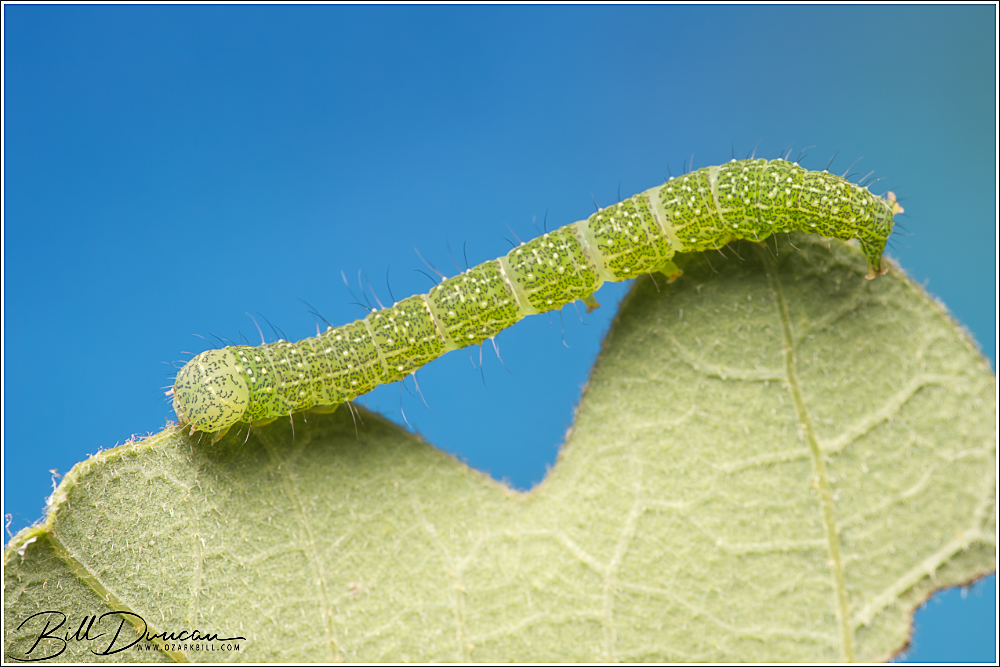
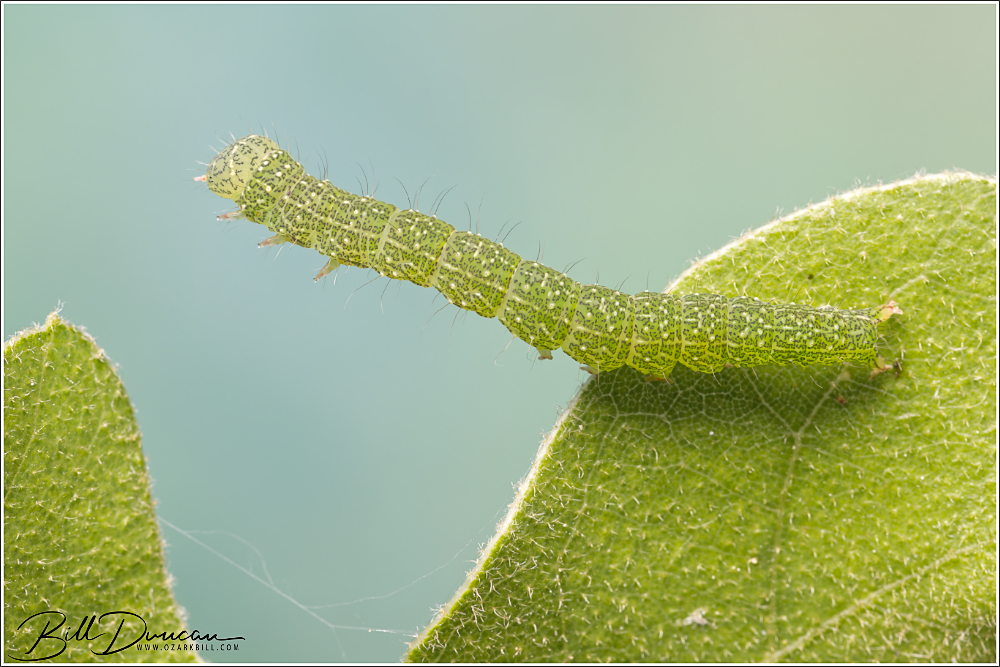
Imperial Moth
Eacles imperialis fam. Saturniidae (Hodges#7704)
Host plant: Three individuals found at this date and location: 2-redbud (Cercis canadensis), 1-sassafras (Sassafras albidum)
Date found: 16, Aug, 2025
Location found: Council Bluff Lake, Iron County, MO
Notes: This was found during the WGNSS joint Entomology and Nature Photography Groups’ outing to Council Bluff Lake.
Category: WGNSS Field Trips
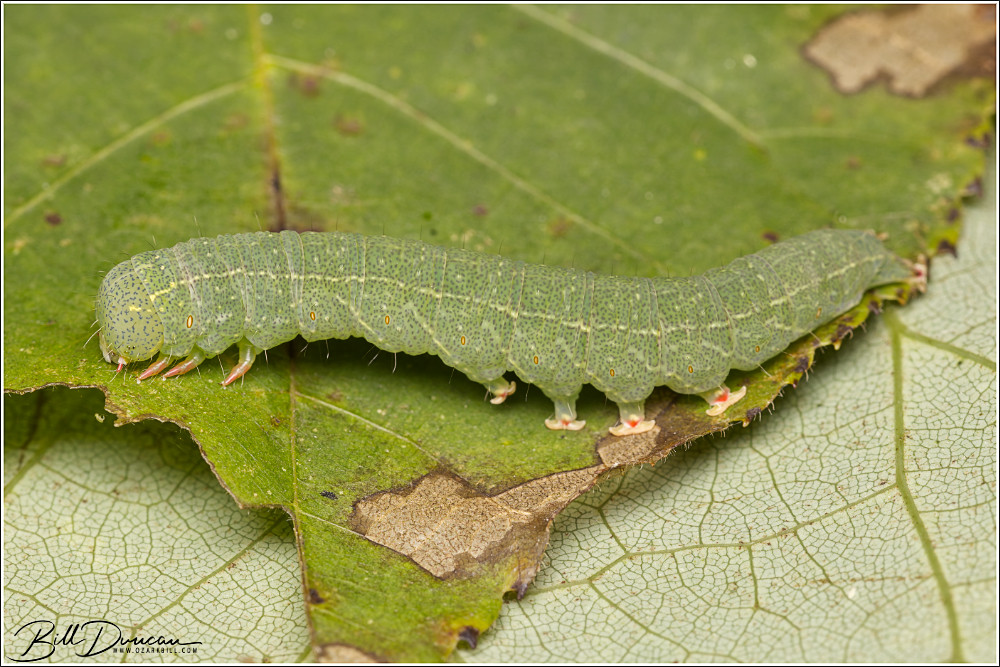
2025 Caterpillar Season – The Hebrew
The Hebrew
Polygrammate hebraeicum fam. Noctuidae (Hodges#9285)
Host plant: black gum (Nyssa sylvatica)
Date found: 16, Aug, 2025
Location found: Council Bluff Lake, Iron County, MO
Notes: Common and specific names come from apparent resemblance of adult moth’s pattern to Hebrew characters. This was found during the WGNSS joint Entomology and Nature Photography Groups’ outing to Council Bluff Lake.
2025 Caterpillar Season – Question Mark
Question Mark
Polygonia interrogationis fam. Nymphalidae (Hodges#4420)
Host plant: NA
Date found: 16, Aug, 2025
Location found: Council Bluff Lake, Iron County, MO
Notes: Two individuals found at this date and location. One was found on sassafras and the other on redbud. Typical hostplants include elm and hackberry. One individual pupated in contained overnight, further suggesting that both were pre-pupal and collected on plants during wandering. This was found during the WGNSS joint Entomology and Nature Photography Groups’ outing to Council Bluff Lake.
2025 Caterpillar Season – Pandora Sphinx
Pandora Sphinx
Eumorpha pandorus fam. Sphingidae (Hodges#7859)
Host plant: Virginia creeper (Parthenocissus quinquefolia)
Date found: 16, Aug, 2025
Location found: Council Bluff Lake, Iron County, MO
Notes: During its final instar, this sphinx caterpillar loses its horn and is replaced with a button (not pictured). This was found during the WGNSS joint Entomology and Nature Photography Groups’ outing to Council Bluff Lake.
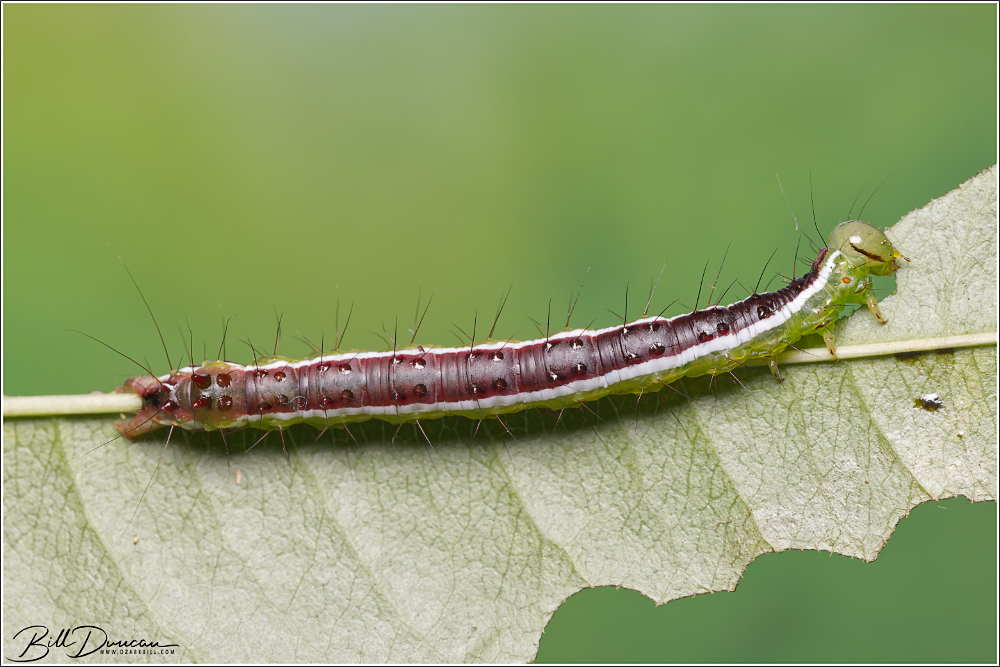
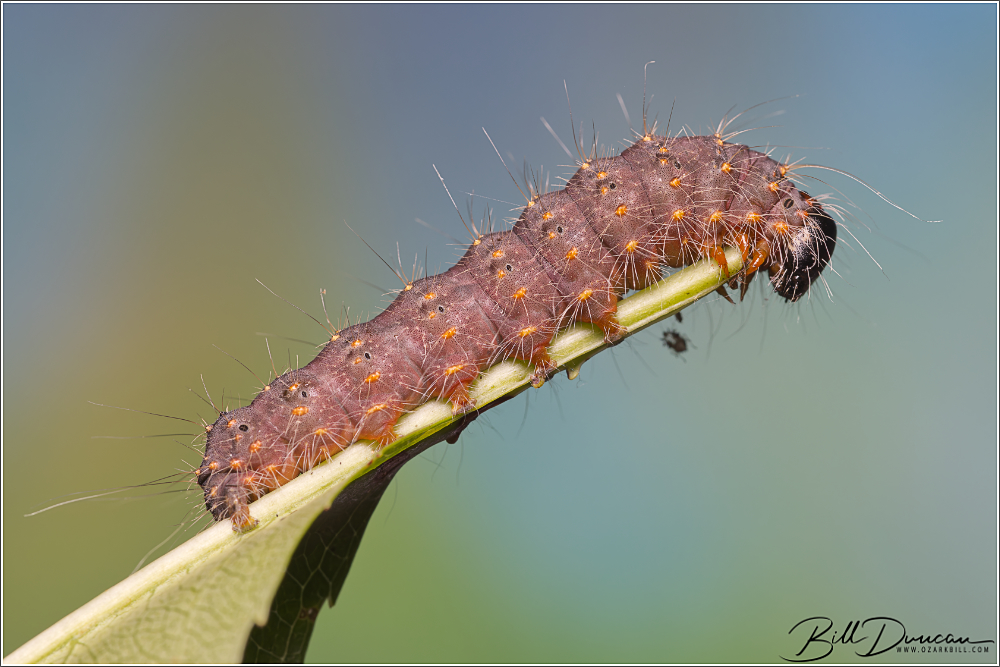
2025 Caterpillar Season – Brown Panopoda
Brown Panopoda
Panopoda carneicosta fam. Erebidae (Hodges#8588)
Host plant: Found on hickory (Carya sp.)
Date found: 09 & 16, Aug, 2025
Location found: BK Leach Conservation Area, Lincoln County, MO; Council Bluff Lake, Iron County, MO
Notes: With information I have, there appears to be no easy methods to discern between larvae of Panopoda carneicosta and P. rufimargo (red-lined panopoda). However, there is suppose to be distinct differences in host preferences, with P. carneicosta showing strong preferences for hickory and other members of Juglandaceae, while P. rufimardo reportedly feed on oak and beech (Fagaceae). My identification is based on the host plants on which the cats were found.


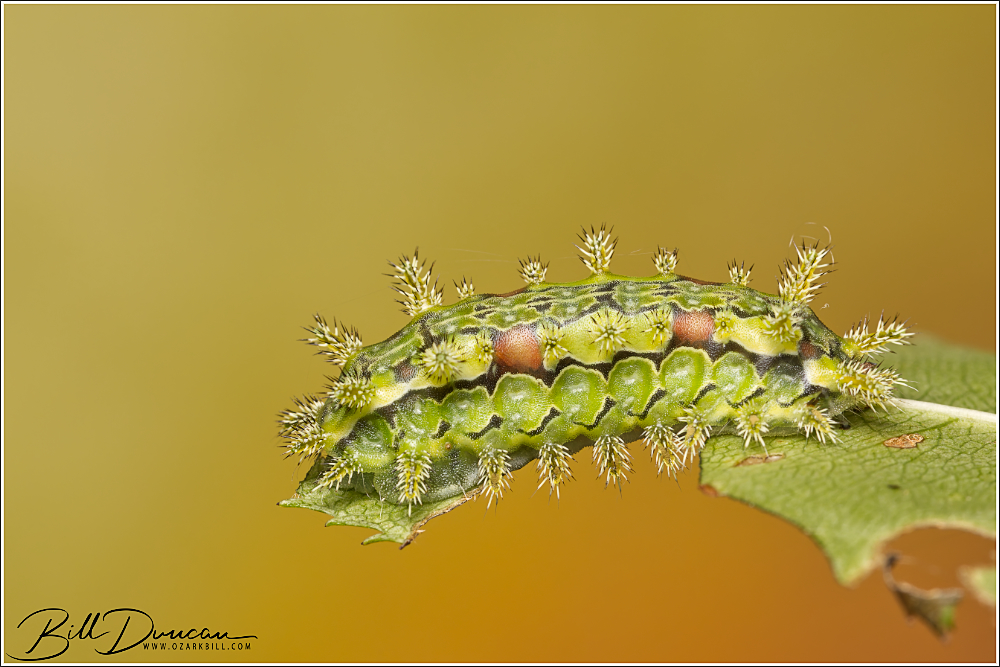
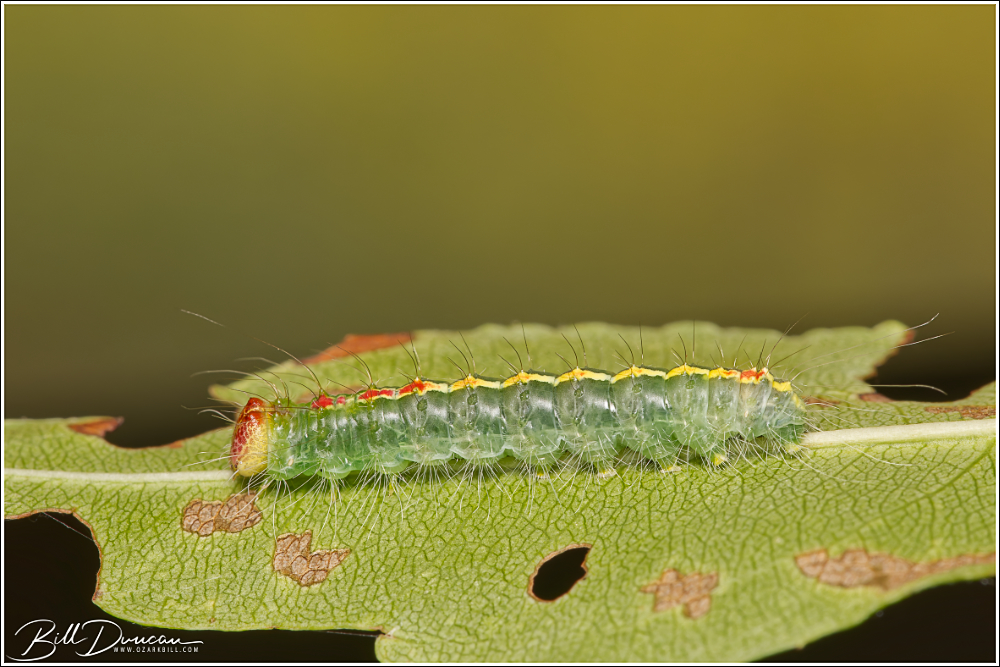
2025 Caterpillar Season – Red-humped Caterpillar Moth
Red-humped Caterpillar Moth
Oedemasia concinna fam. Notodontidae (Hodges#8010)
Host plant: Found on redbud (Cercis canadensis)
Date found: 16, Aug, 2025
Location found: Council Bluff Lake, Iron County, MO
Notes: Shown in defensive posture with tail raised above its head. This was found during the WGNSS joint Entomology and Nature Photography Groups’ outing to Council Bluff Lake.
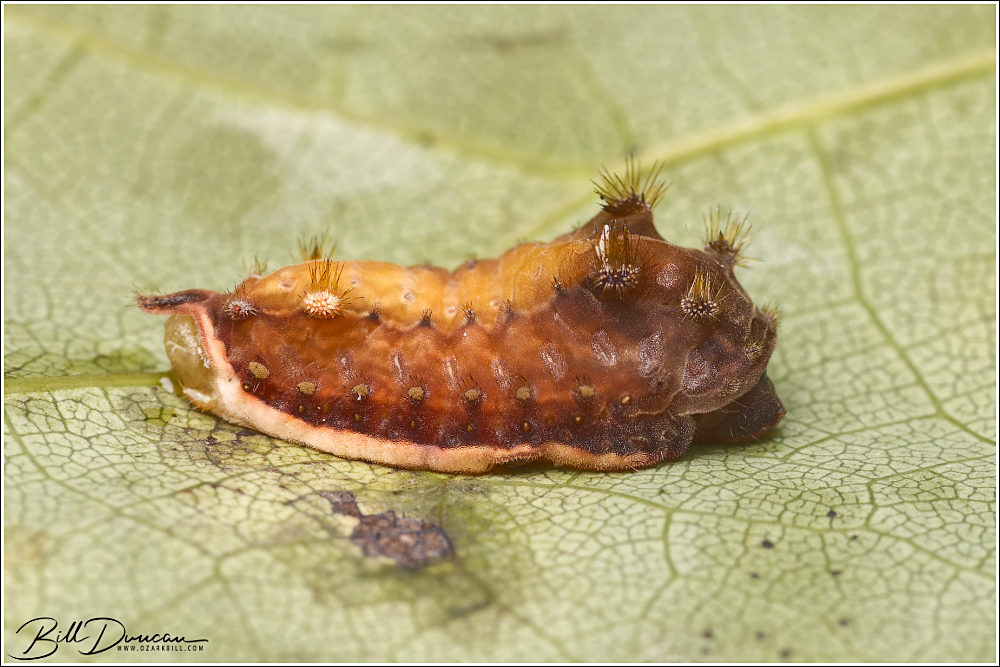
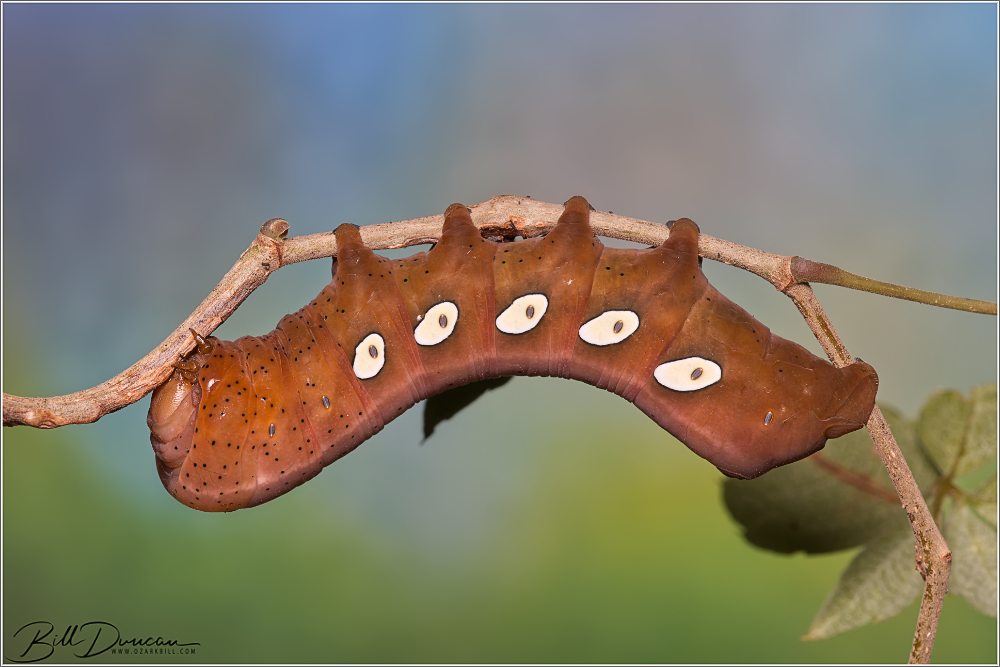
2025 Caterpillar Season – Virginia Creeper Sphinx
Virginia Creeper/Hog Sphinx
Darapsa myron fam. Sphingidae (Hodges#7885)
Host plant: Six individuals were found on this date and location: grape (Vitis sp.)-5, Virginia creeper (Parthenocissus quinquefolia)-1
Date found: 16, Aug, 2025
Location found: Council Bluff Lake, Iron County, MO
Notes: This one showing the autumn/pre-pupal warm/brown coloration. All other individuals found were green. This was found during the WGNSS joint Entomology and Nature Photography Groups’ outing to Council Bluff Lake.
2025 Caterpillar Season – Harris’s Three-spot
Harris’s Three-spot
Harrisimemna trisignata fam. Noctuidae (Hodges#9286)
Host plant: buttonbush (Cephalanthus occidentalis)
Date found: ~16, Aug, 2025
Location found: Franklin County, MO
Click here to see the adult moth
Notes: Part spider and part bird dropping, this caterpillar is absolutely astounding. Note the empty head capsules that the caterpillar retains with each successive molt. It has been shown that these caterpillars use these to thrash at potential parasitoid wasps and flies that approach while attempting to deposit eggs on their would-be hosts.
Special thanks to Eva Wiedeman who found this individual in her neighborhood and brought it to our WGNSS fieldtrip at Council Bluff Lake. Photographing this caterpillar was a prime objective for me this season. Now I just need to find one on my own and hopefully a larger 4th instar!


Cecropia – King of the Moths
Last month the WGNSS Nature Photography Group took a side trip back to one of our favorite places – the Roston Native Butterfly House in Springfield, MO. Among other fantastic native leps on display were adult and larval forms of Hyalophora cecropia, or the Cecropia Moth. Named after the legendary King Cecrops of Athens, H. cecropia is the largest moth native to North America. Thanks again to the Roston Butterfly House and to the great volunteers who staff the facility and put up with a bunch of old dudes with cameras.
Blacklighting at Tyson Research Center
On the 24th of July, during the new moon and National Moth Week, the WGNSS Entomology Group set up several blacklighting stations at Tyson Research Center as a start of an entomological survey. Between WGNSS members, TRC staff and students from Washington University, I estimate there were 25-30 people in attendance until around midnight. Overall, I think the evening was a success and the numbers and diversity of insects was good. We had a few nice highlight species, but because of the number of people, I did not spend time trying to remove moths from the sheet and onto a natural background. I still have a few to process, but this post covers the moths I cared to photograph.
Many thanks to Katie Westby and Rich Thoma for organizing this event. I’d also like to thank jwileyrains at butterfliesandmoths.org for confirming and helping me with some identifications.
Family Crambidae


Family Erebidae


Family Geometridae


Family Limacodidae


Family Noctuidae


Family Saturniidae

Family Sphingidae


I’m looking forward to a few more blacklighting sessions before the season ends and I will share what I find here on the blog.
Thanks for stopping by!
-OZB