Return to Stegall Mountain

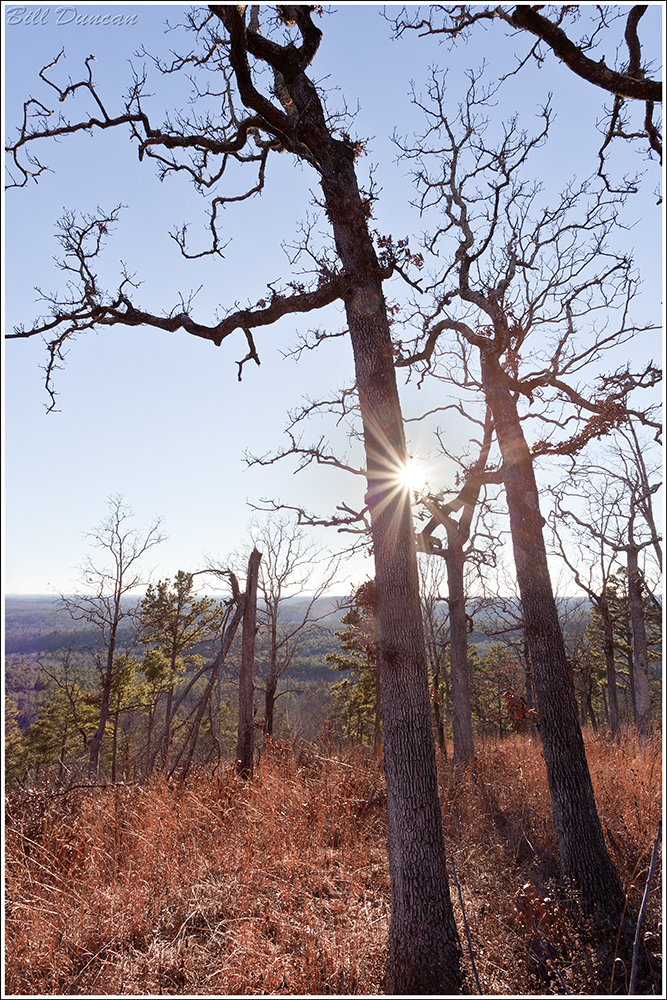
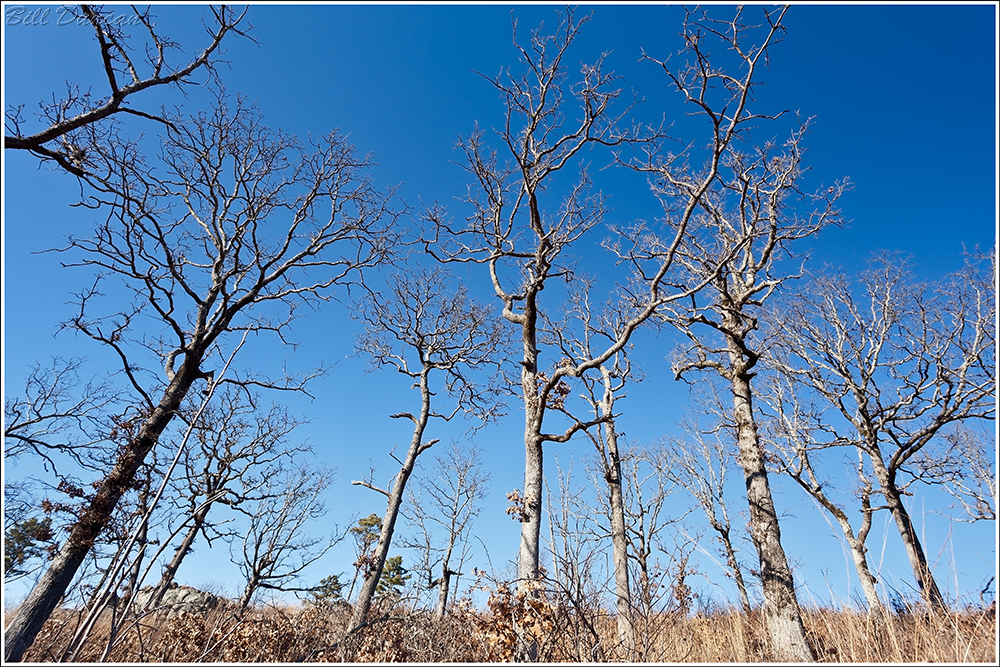
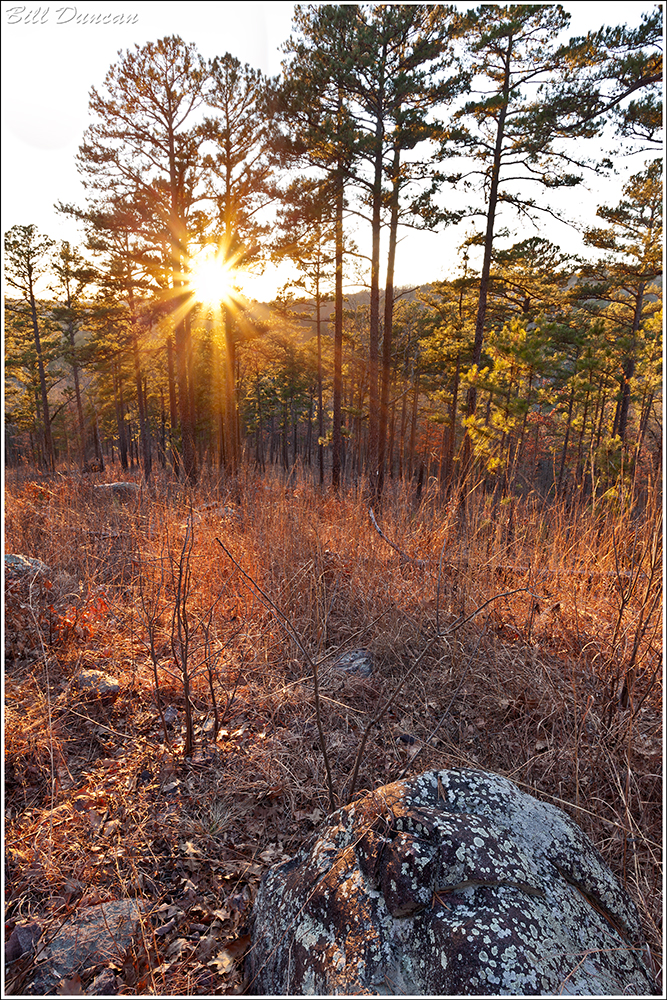
A number of years ago one of the first hikes I remember into the Missouri Ozarks was a short spur trail off the OZT up to the summit of Stegall Mountain within Peck Ranch C.A.  I had my first “serious” camera that I wanted to document Nature as I found her on these journeys and I made a couple images that I was satisfied with at the time.  This past holiday break we found ourselves back at this location and enjoyed a pleasant winter’s day.  Here are a few images from this visit.

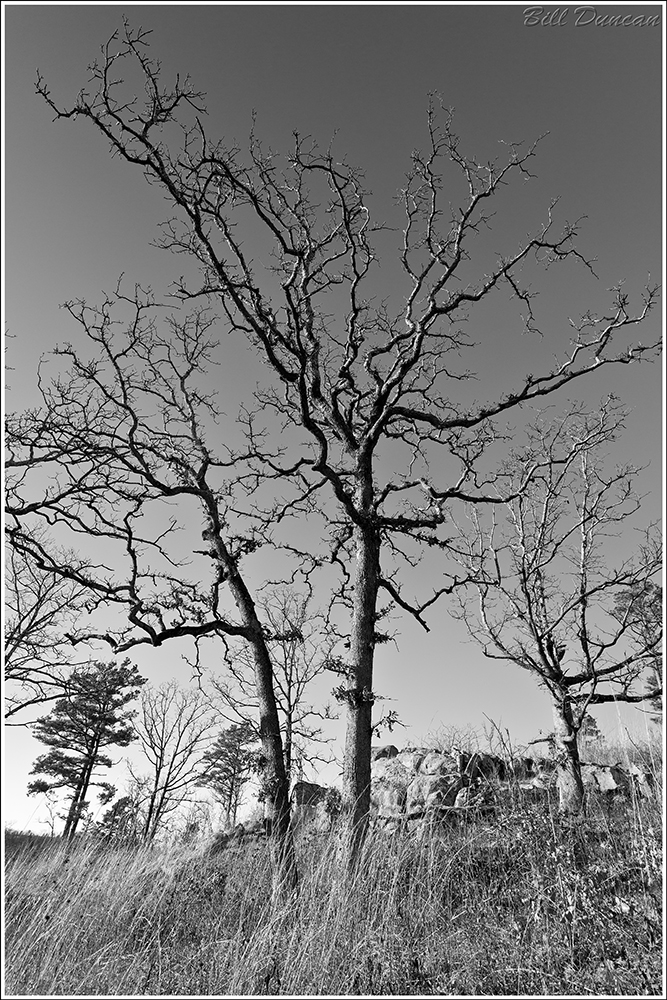
One of the highlights of Stegall Mountain Natural Area are the Oak savanna and glades.  Some of the most gloriously colored rhyolite in the state is found in this area.  The trees pictured in thes images are mostly stunted and gnarled Post Oaks.  I couldn’t get enough of them.

IMG_7294

IMG_7300

IMG_7285

IMG_7329

The Gulf

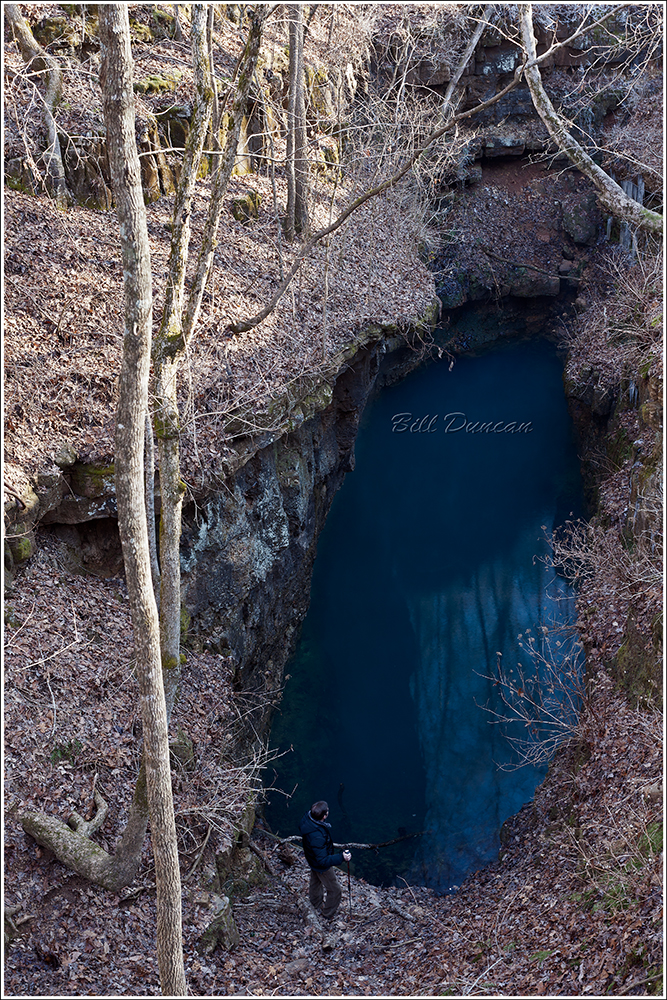
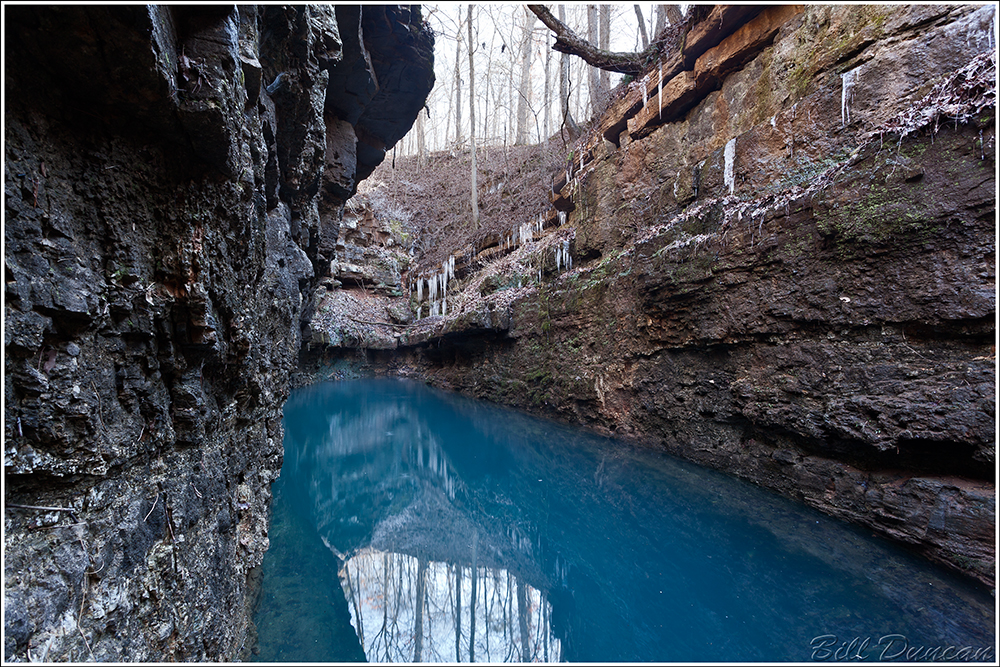
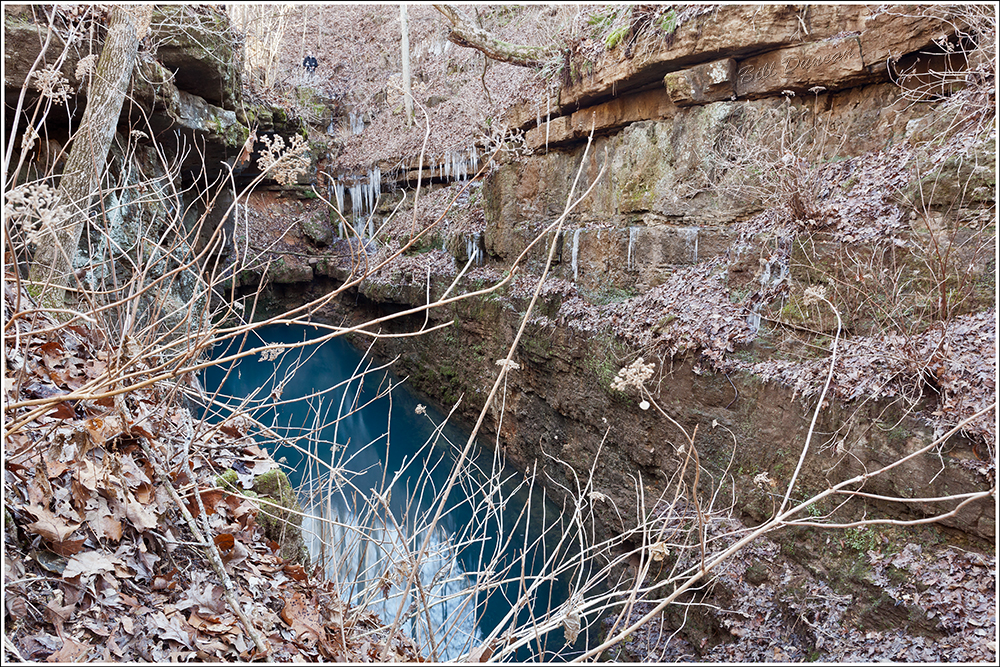
Pulled from Beveridge’s gift early after my discovery of the book, “The Gulf” of Wayne County has been on my list of desired destinations for a while now.  Recently Steve and I made this our target in a winter’s outing, which is an appropriate time for nice viewing of many of the Missouri Ozarks geological features due to lack of green vegetation that blocks views and light.  The Gulf is a narrow sinkhole that is approximately 100 feet long and 20 feet wide.  This sinkhole is actually an opening to an underground lake that is more than 200 feet deep at its maximum depth.

Here Steve posses for a bit of reference.  In periods of lower water, the entrance of the “cave” portion of the underground lake would be seen at the opposite end of the sinkhole from where Steve stands.  A small boat and/or scuba equipment would provide for excellent opportunities for exploring.

IMG_7236

Just as the Tyndall Effect explains why the sky is blue, it is also the reason that the deep bodies of water found in the Ozarks often appear blue.  These carving waters carry the dissolved limestone with them.  This ultra-fine suspension scatters the shorter blue wavelengths more than the other colors of natural light, giving the blue appearance in the waters, even though there are no blue pigments to be found. In fact, this blue appearance is somewhat dictated be the angle of light and the viewer’s position to the reflecting light.  With a slight turn of the head, the water will often change color.

IMG_7255

A potential practice picture for spring, here you can see some old wild hydrangea growing on the edge of the sinkhole.  Can you find Steve in this image?

IMG_7273

Entrenched Meanderment

Entrenched meanderment?  What in the world is OZB going on about now?  Beveridge gives a wonderful explanation of the meandering nature of virtually all Missouri Ozark streams in “Geologic Wonders and Curiosities of Missouri”.  Within, he provides a few fascinating geological hypothesis as to the hows and whys of streams forming in such a manner with some of the hardest rock on the planet as their bed.  Think about it.  How and why would streams form in rock like this, with very little floodplain, steep cliffs/bluffs and not be straight?  Pick up Beveridge’s book to read of these hypothesis as well as learn about narrows, cutoffs and lost hills – the geologic features that are formed by these entrenched, meandering streams.

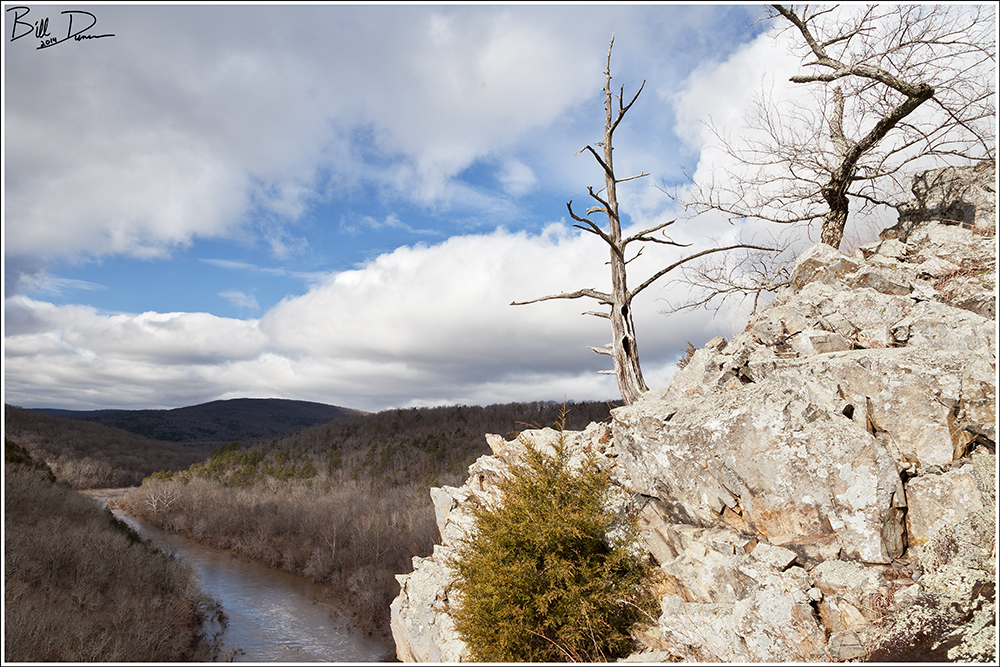
Two streams with an entrenched meandering environment on public land I have known and loved for a while.  These are the Meramec River at Vilander Bluffs N.A. and Jam Up Cave/Bluff on the upper Jacks Fork.  These are always worth a visit.  While flipping through Bryan Haynes’ book recently, I came across a panoramic painting of his that I have admired.  I saw the title: “Lee’s Bluff”.  Having never heard of this feature and the fact that his image was such a dramatic scene, I assumed that this must be found in some western wilderness, far from being a day trip destination.  I went ahead and searched the web, and to my surprise discovered this was in Missouri, along the St. Francis River and smack in the middle of those lovely St. Francois Mountains.  With Steve wearing his best navigator’s hat, we found the location pretty easily on a blustery, winter’s day.

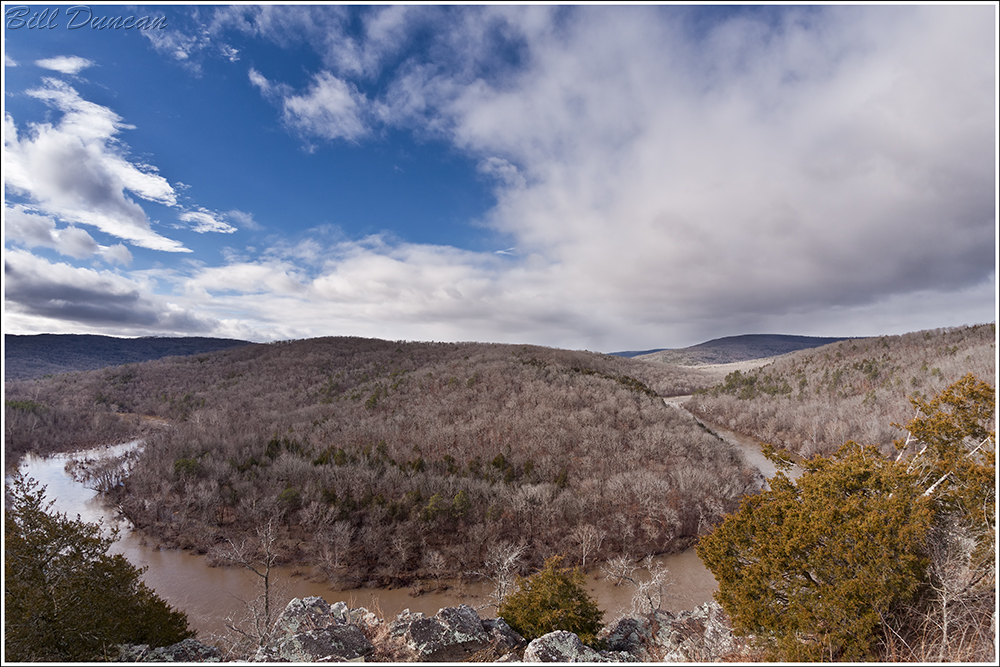
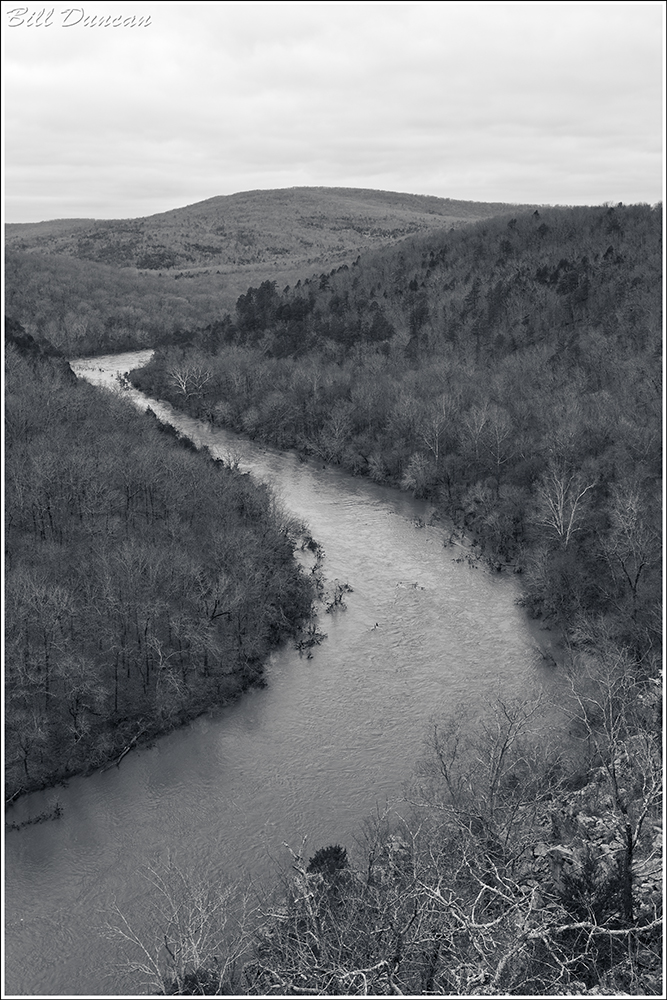
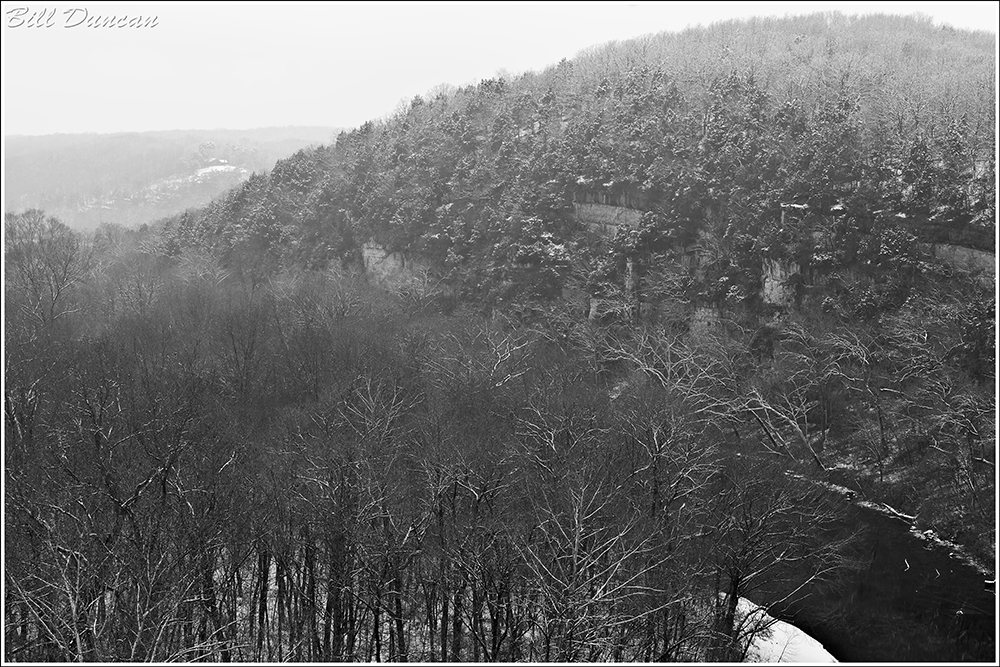
Here’s an overview image taken with a 15mm lens.  You can see the features typical of a meandering entrenched stream, the steep bluffs formed on the outside of the bend and gentle sloping floodplains on the inside.  In the direct center you can see the “incipient lost hill” as described by Beveridge.  One day the “narrows” on the far side of that hill will succumb and a “cutoff” will form, straightening the river.

IMG_7082

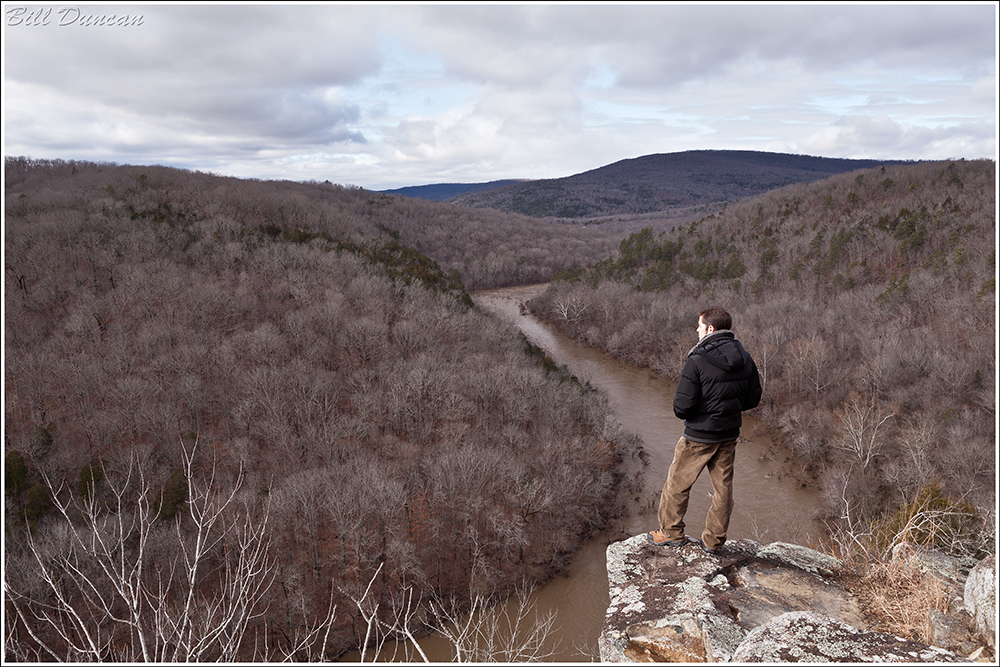
   The sky was a constant change on this day.  Here Steve poses while the sun breaks through an opening.

IMG_7112

Climbing around on the steep, sharp rocks of the bluff we came across an ancient skeleton of an eastern red cedar.  The relative youngster below looks ready to take its place in another couple of centuries.

IMG_7168

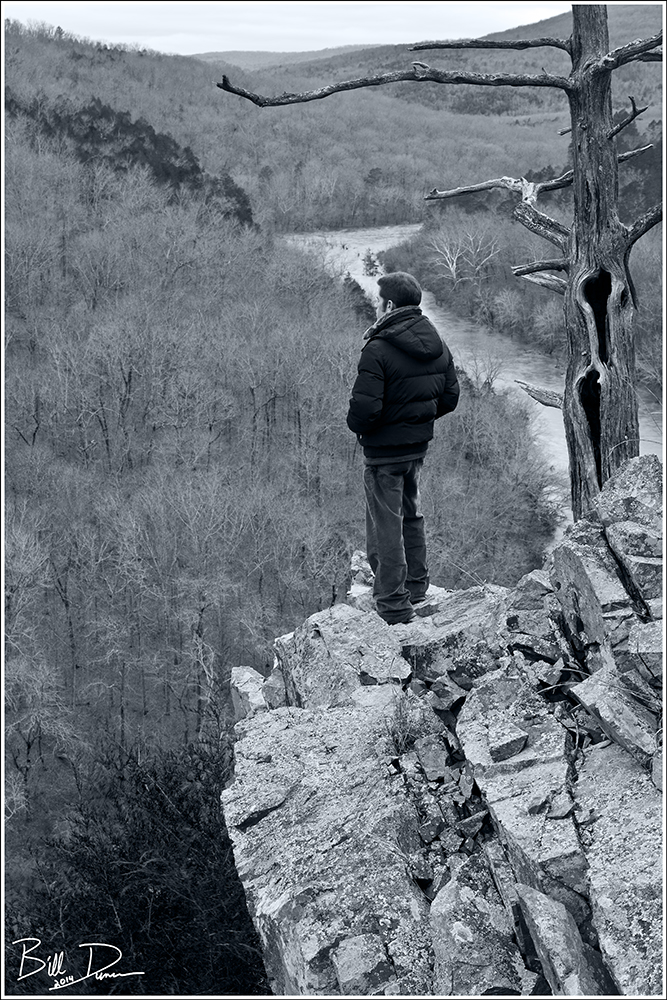
Professional schlepper, navigator, and photo model.  I’m sure glad Steve works for free!  😉  Here he stands next to the old tree to give the image some perspective.

IMG_7197

The image below is probably my favorite from this day.  One of the visual beauties of these types of entrenched stream environments is that there are two S-curves in each one.  You just have to figure out where to place your camera to take advantage of it.  Under the right light and weather conditions, this place holds a lot of photographic potential, not to mention the potential for reflection and wonderment.

IMG_7203

Return to Squaw Creek NWR

I have posted about Squaw Creek National Wildlife Refuge before.  One of the prime birding locations in the state, I asked Steve to accompany me for a Thanksgiving week’s trip.  Nothing is assured during this time on the calendar in Missouri, and we knew that there was a chance the entire refuge could be frozen over, pushing the 500,000 snow geese that could potentially be visiting to warmer, more southerly locations.  The weather that week was barely below freezing so we were optimistic that the refuge would be mostly open and the birding would be good.  Arriving in Mound City after dark, we were forced to wait until the next morning to check out the refuge.  Being the proper naturalists/photographer/birders that we are, we arose in plenty of time to fill ourselves with coffee and roughage, pack up the car with optics and winter gear and make it to the refuge before first light.  Driving around the well-placed road, we could hear little but wind.  At one point we left the car and Steve through a rock into the black.  The response was quite an unusual sound that was definitely not the plash expected of liquid water, but could only be the vibrations of a rock on a large flat ice sheet.  As the light grew we could see that most of the refuge was indeed frozen (>90%).  We would not get to see the numbers of snowies that could potentially be visiting, but we would see 10,00-20,000 birds that were using the two small ice-free spots.  Steve seemed impressed, nonetheless.

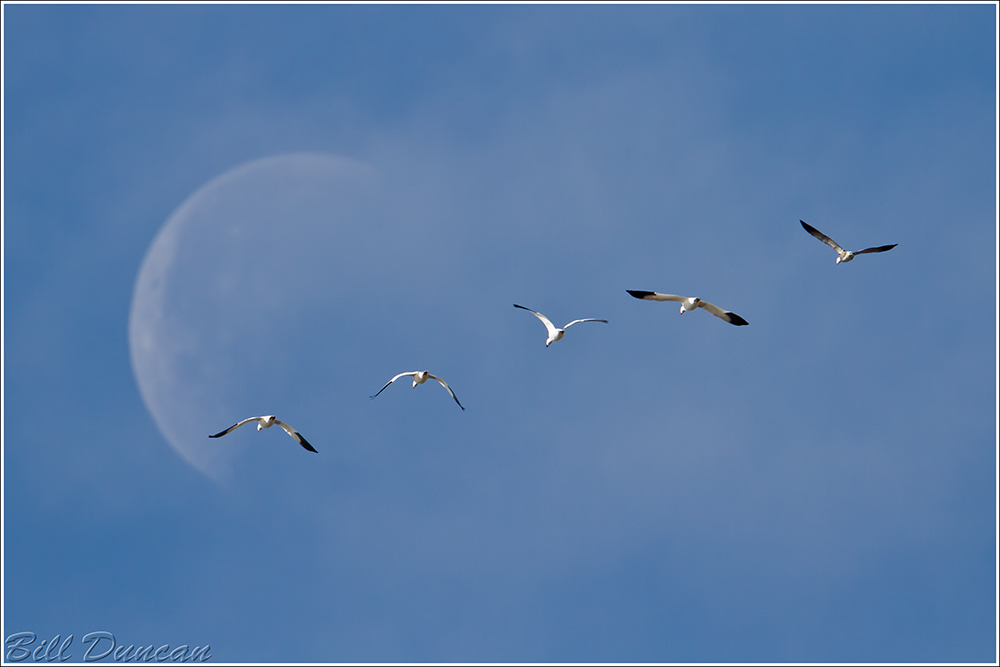
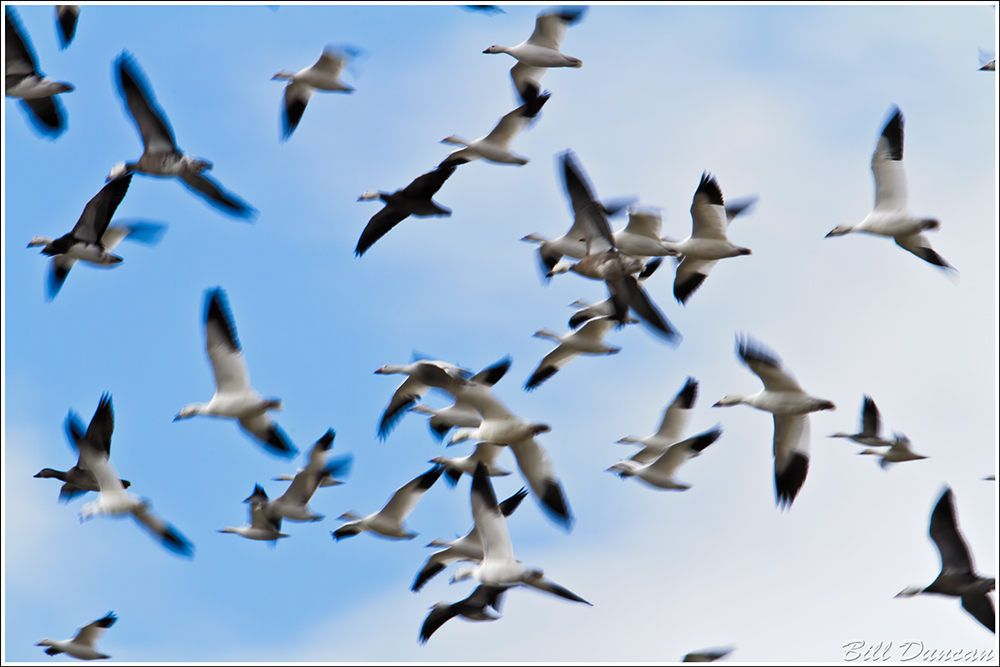
Presented first is an image of a few geese flying with the wind between us and the moon.  Any nature photographer worth their glass would have pre-visualized this and remembered to have taken a sharp capture of the moon in focus and then combined that with the in-focus geese to make a much nicer final photograph.  One of these days…

IMG_1520

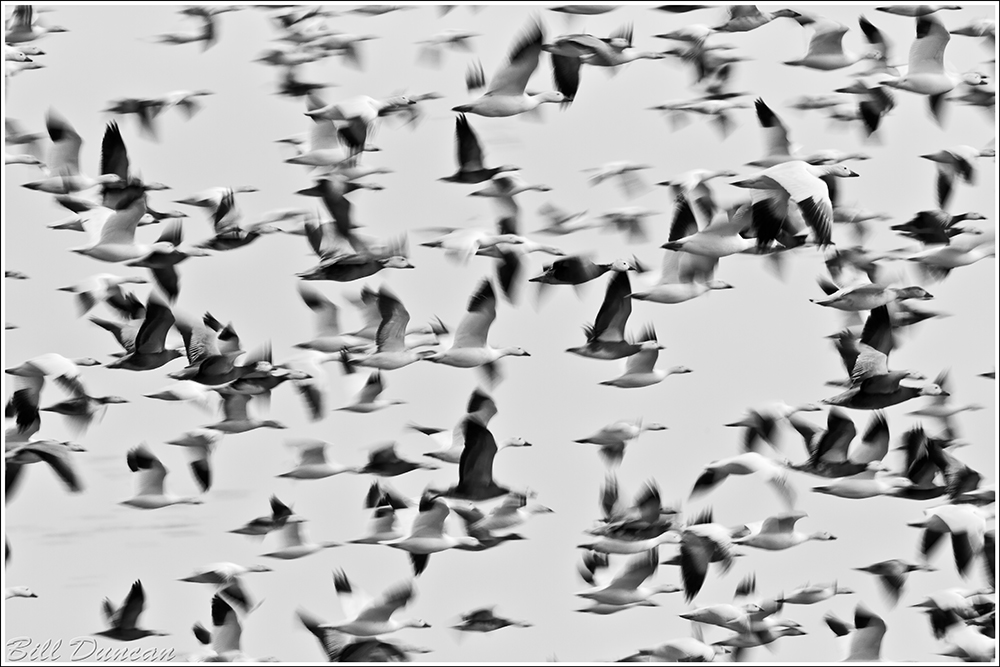
We were subjected to a few flybys of large groups of geese as they moved from the refuge to surrounding fields to feed on spent grain.  Collisions do occur, but when looking at it this way, it’s a wonder they don’t happen more regularly.  Of course, I was pooped on. 😉

IMG_1742

The image below really shows the difference between the lighter, “snow” and the darker, “blue” phases this species comes in.

IMG_1795

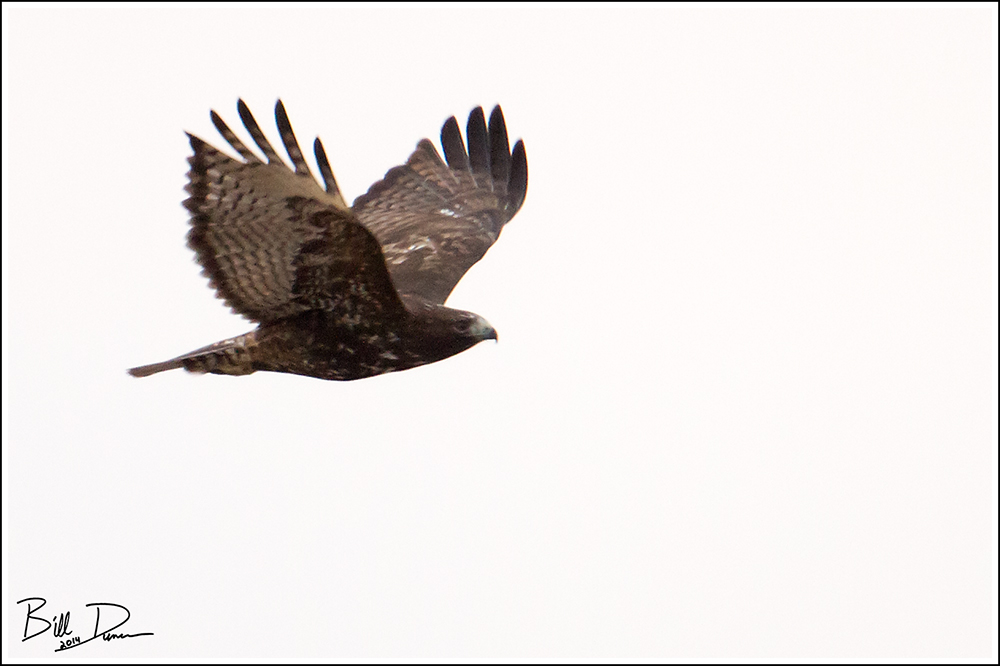
Red-tailed Hawks were quite common in this area of the state, but were very much different than the typical plumage seen from the eastern subspecies from the opposite side of Missouri.  This is what I believe should be considered the “western” subspecies, but can be difficult to distinguish from “Harlan’s” subspecies in winter.  The ABA has a nice article on this variably-plumed raptor.

IMG_2351

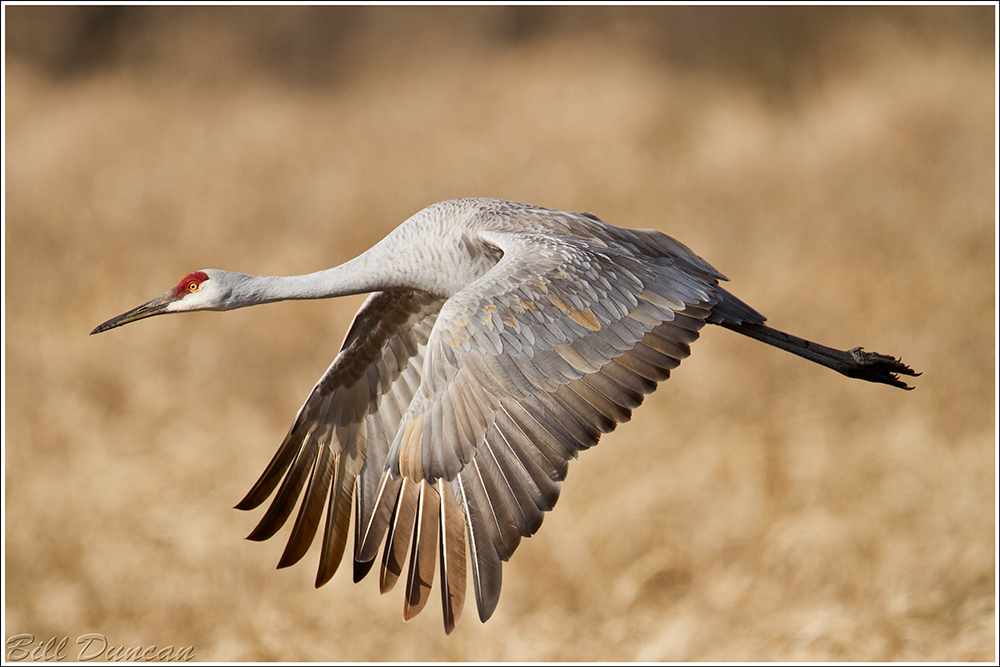
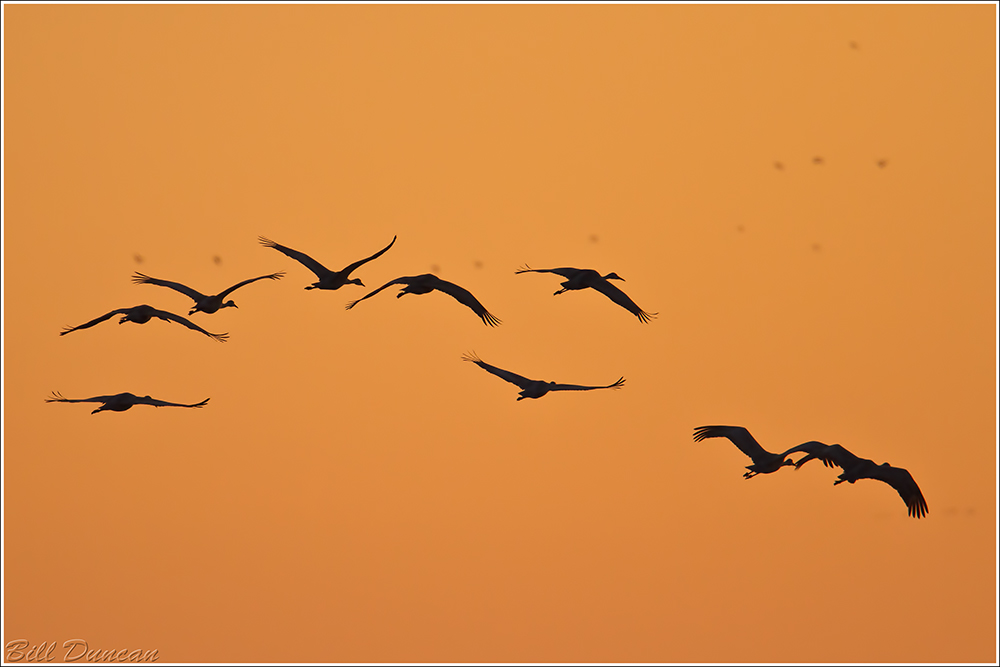
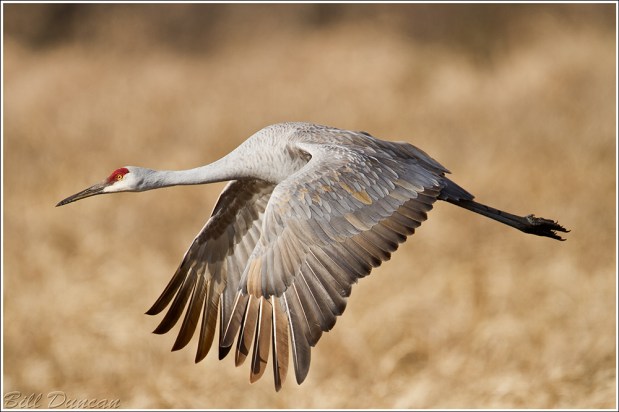
The beauty of Squaw Creek is the potential for all sorts of bird species and other wildlife one is likely to find.  The snow show is definitely the main attraction this time of year, but other migrants are likely to be found as well.  Taking the ~10 mile auto route allows for close-up viewing in a variety of wetland habitats.  Across a canal, in some warm winter grasses we found a couple of familiar heads sticking up.  Two Sand-hill Cranes!  I got out of the car as silently as possible and set up the tripod and big lens.  They did not seem too concerned with us.  As they foraged we watched and I took photos.  A couple in an SUV pulled up not too far down the road and were not as considerate.  This seemed to be too much for the pair, who took to wing.  Luckily, I was prepared and was somehow able to squeeze this keeper.
IMG_1998

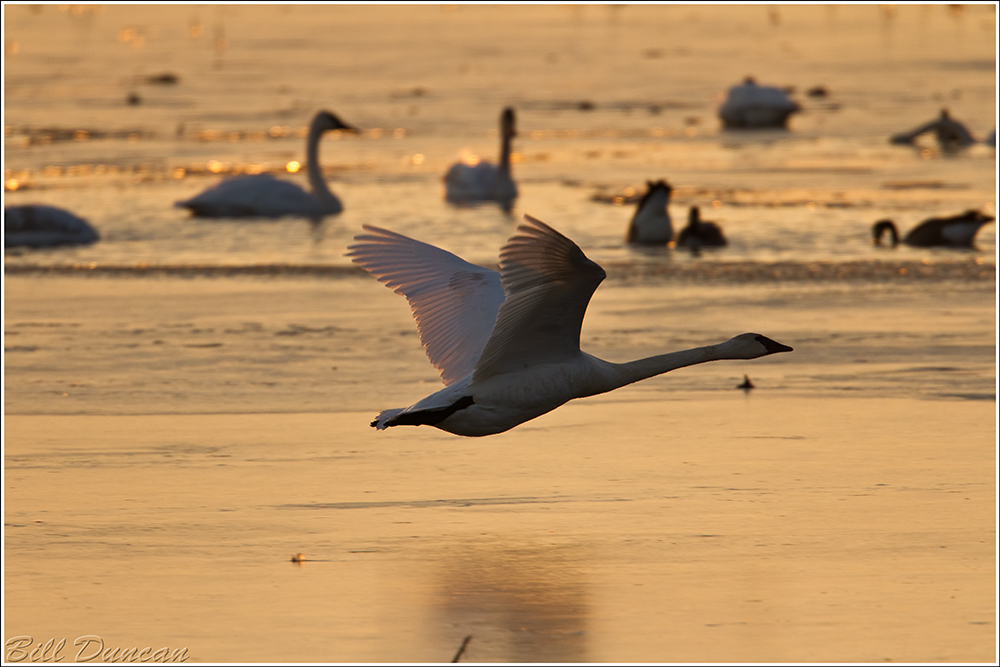
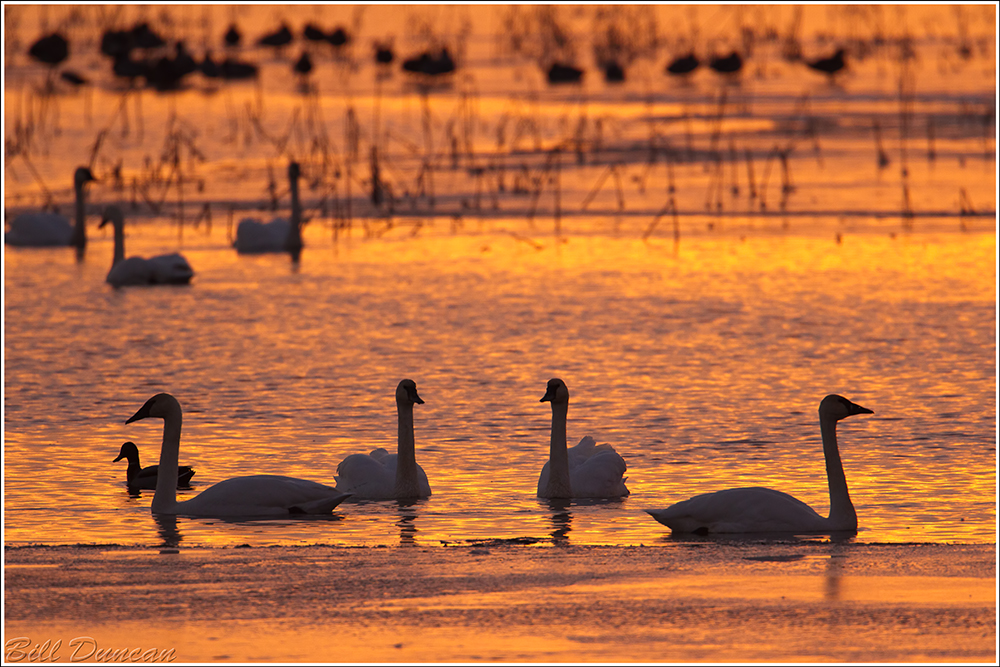
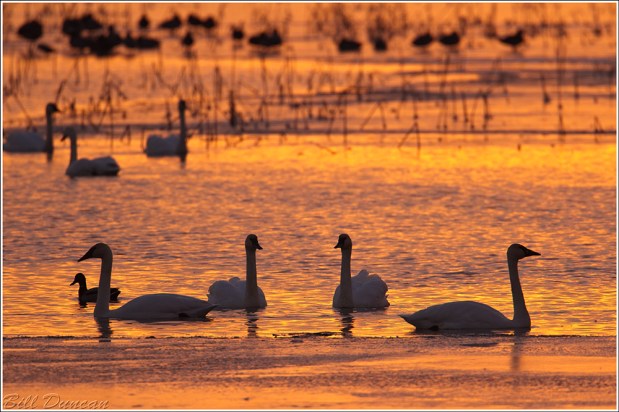
Sunrise and sunset are the times to be in a wetland.  The lighting is perfect and the birds are most active, heading into open water for roost.  It really does seem that many birds on the wetlands fly around for the sheer enjoyment.  Trumpeter Swans are a favorite of mine to watch.

IMG_2188

As we watched the show, we hear a familiar and longed-for music.  I can’t explain it better than Aldo… “High horns, low horns, silence, and finally a pandemonium of trumpets, rattles, croaks, and cries that almost shakes the bog with its nearness, but without yet disclosing whence it comes.”  Travelling south passed a group of Cranes.

IMG_2246

The warm temperature of the light near sunset betrays the senses.  The skin knows the eye is false.  Even so, watching this show makes it all worthwhile.
IMG_2263

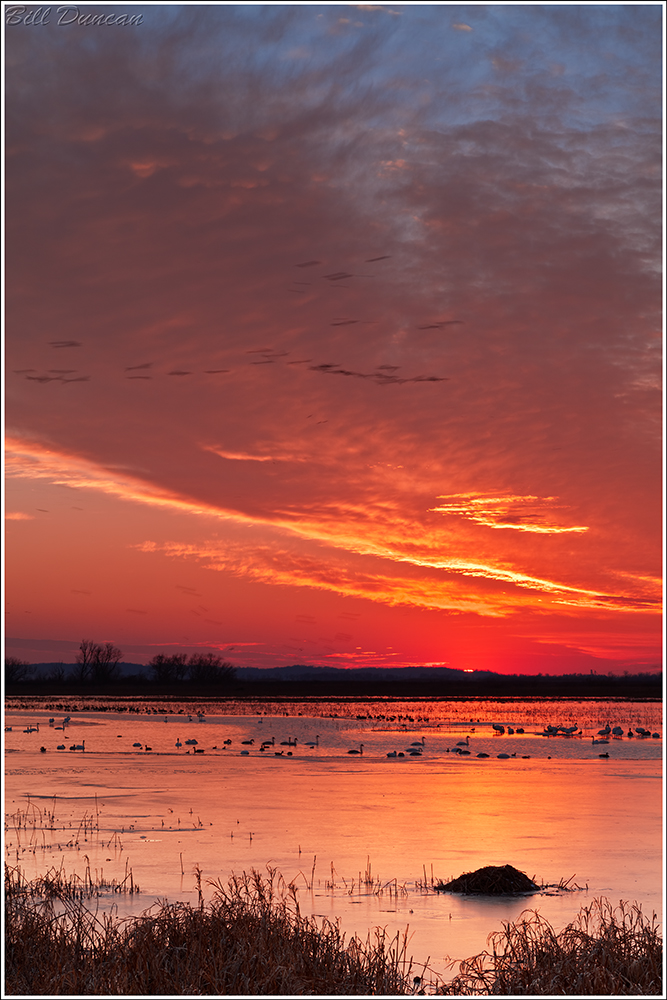
Marsh grasses, muskrat mounds and loess hills.  Can you imagine a more satisfying landscape?

IMG_6732

I’m not sure I’ll get there next year or not, but it goes without saying that I can’t get enough of Squaw Creek.

IMG_6750

Dunn Ranch Bison

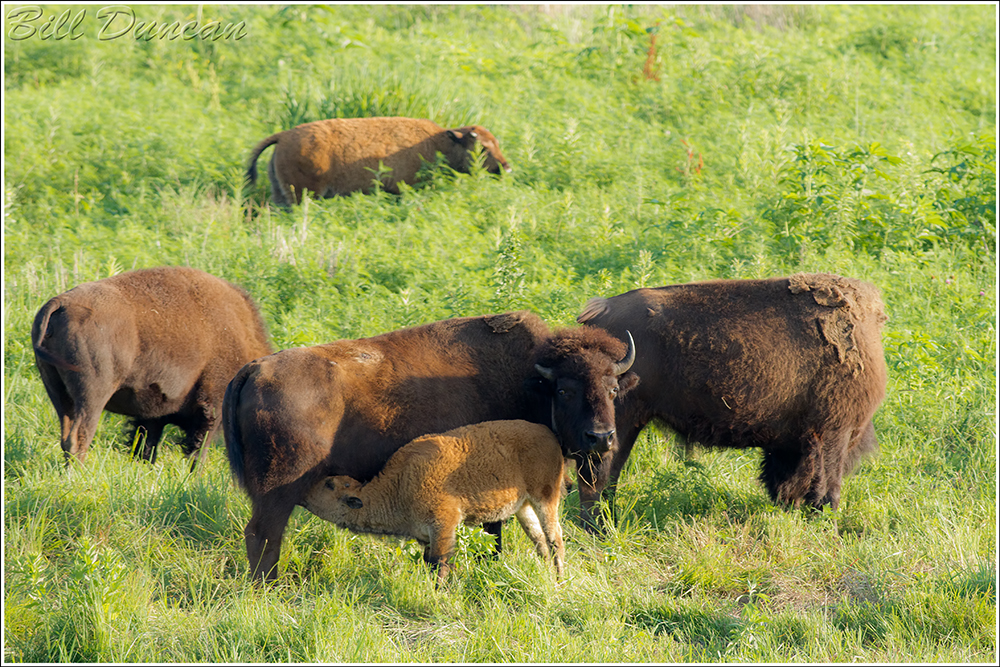
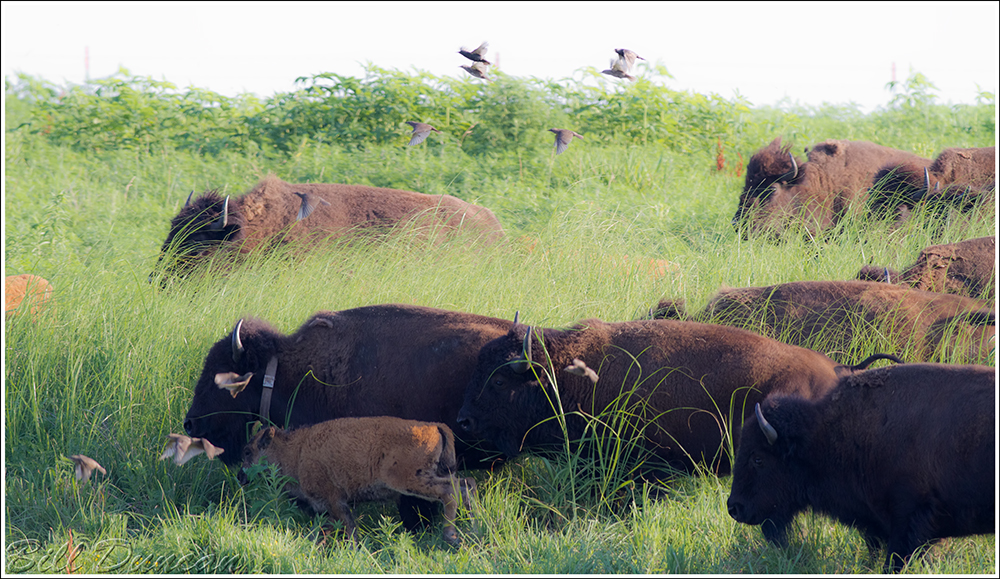
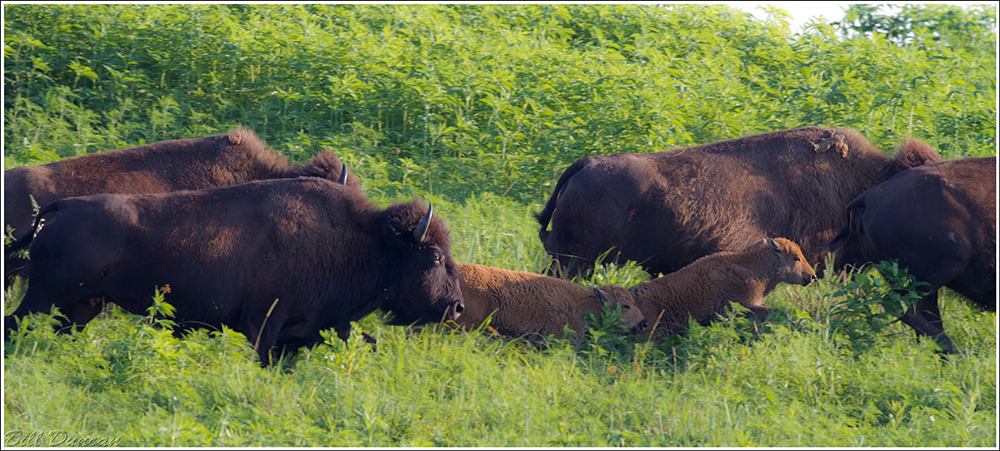
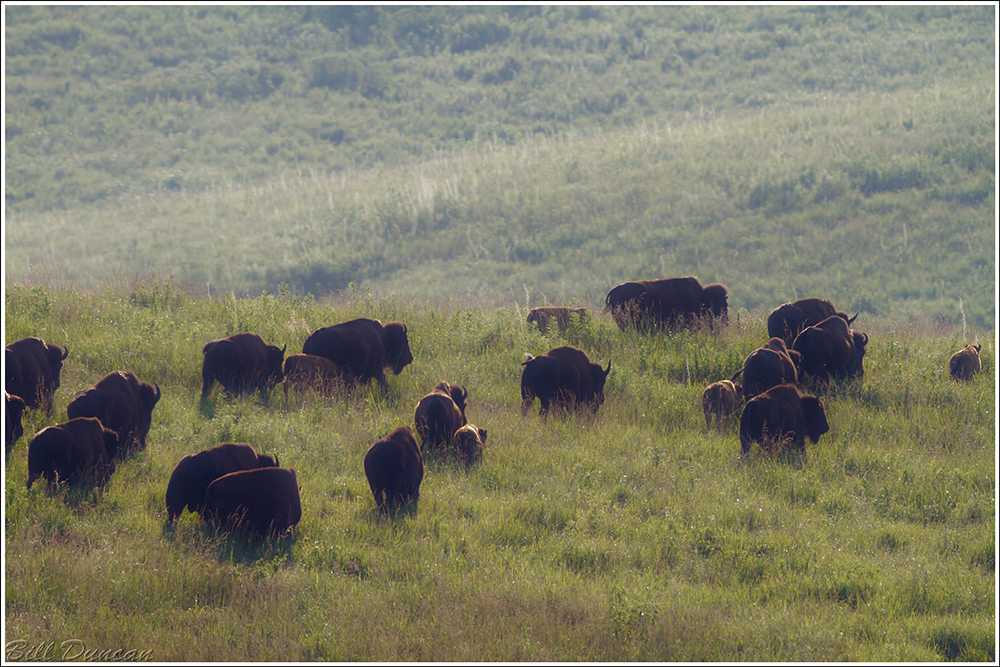
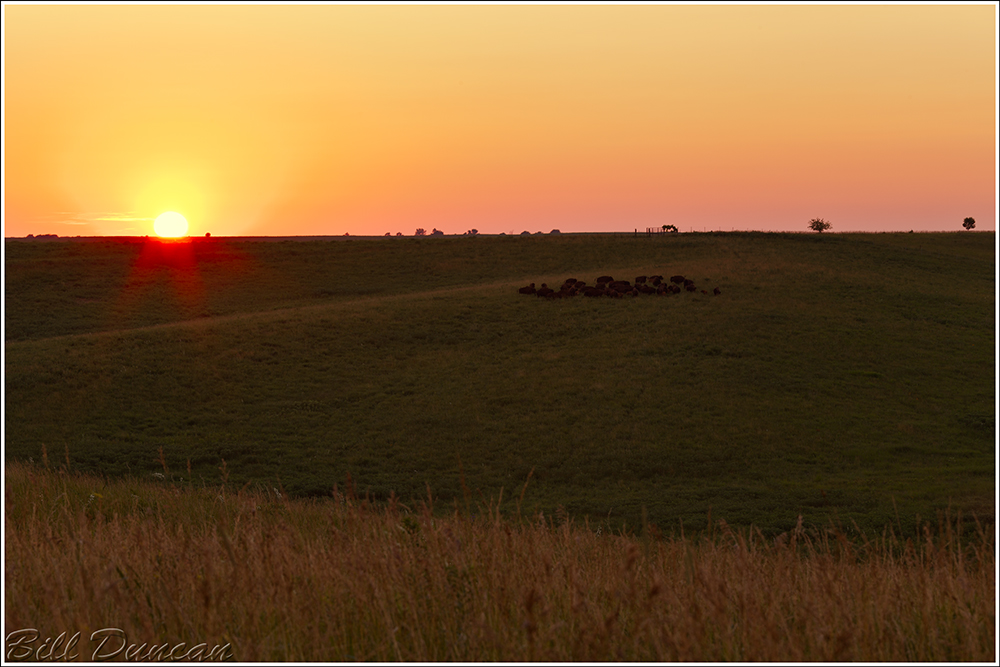
Here are a few of my favorite images of Buffa Bison that make their home at Dunn Ranch Prairie.  These were taken during Steve and my trip there this past summer.


Young had been born just a couple months before our arrival.

IMG_9321

Oh no, run!  It’s Ozark Bill!

IMG_9358

I’m continuously amazed by the speed of these guys.  They slowed down for the youngsters a little, but not much.

IMG_9400

Moving up and over the hilly landscape is no problem for these guys.

IMG_9464

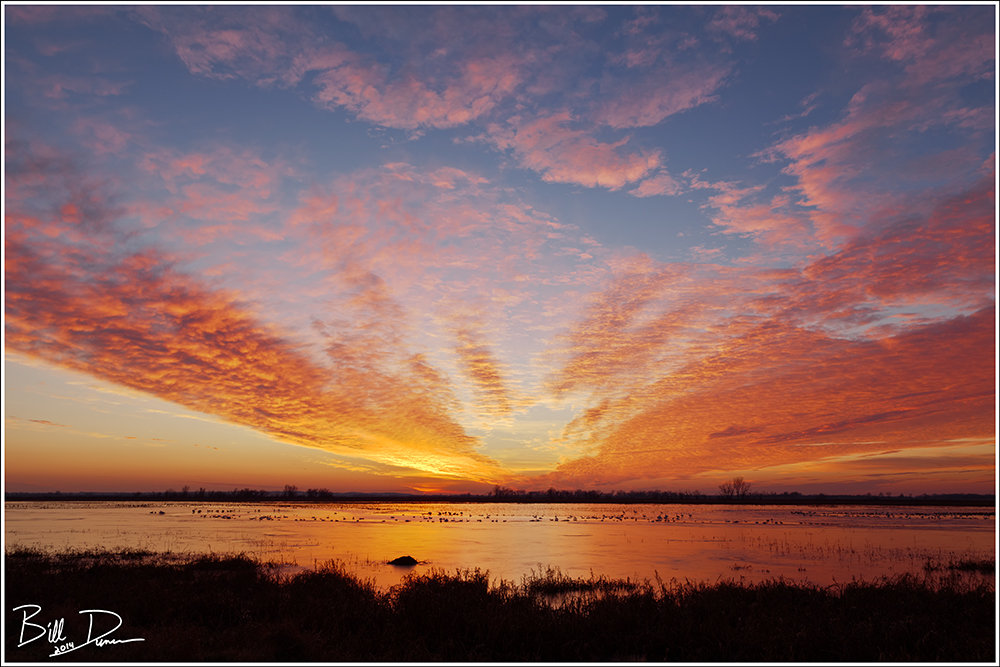
What could possibly be more satisfying than watching that hot globe fall out of a large open sky with a view like this?

IMG_4957

Happy Holidays

Happy winter solstice holidays to all my friends and family!


A Winter Eden

by Robert Frost

A winter garden in an alder swamp,

Where conies now come out to sun and romp,

As near a paradise as it can be

And not melt snow or start a dormant tree.

It lifts existence on a plane of snow

One level higher than the earth below,

One level nearer heaven overhead,

And last year’s berries shinning scarlet red.

It lifts a gaunt luxuriant beast

Where he can stretch and hold his highest feast

On some wild apple-trees tender young bark,

What well may prove the year’s high girdle mark.

So near to paradise all pairing ends:

Here loveless birds now flock with winter friends,

Content with bud-inspecting.  They presume

To say which buds are leaf and which are bloom.

A feather-hammer gives a double knock.

This Eden day is gone at two o’clock.

An hour of winter day might seem too short

To make it worth life’s while to wake and sport.


IMG_6901

“A Winter Eden”

Potholes In My Lawn

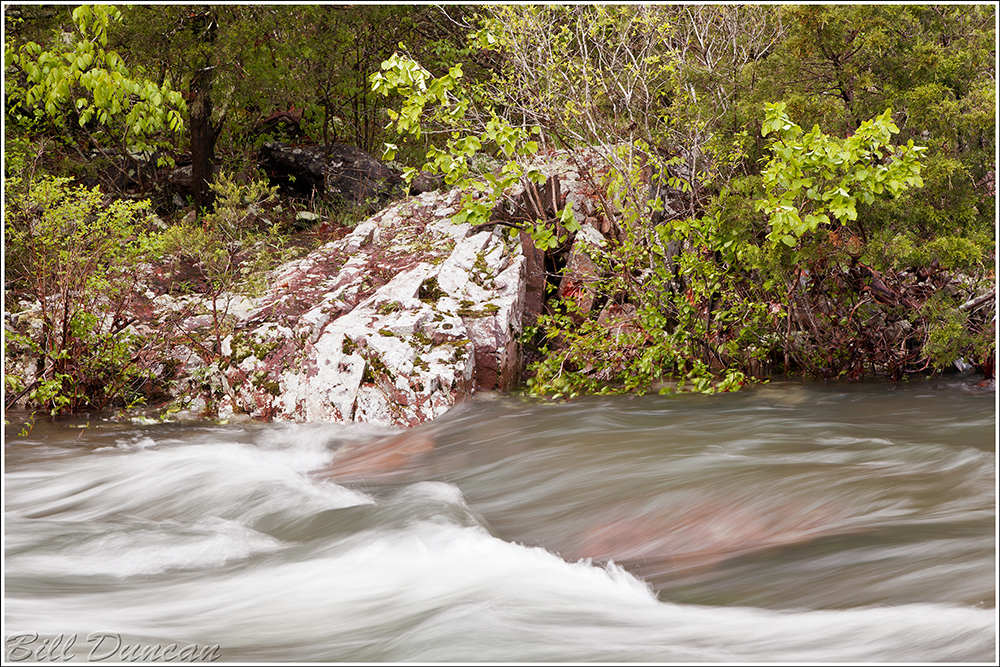
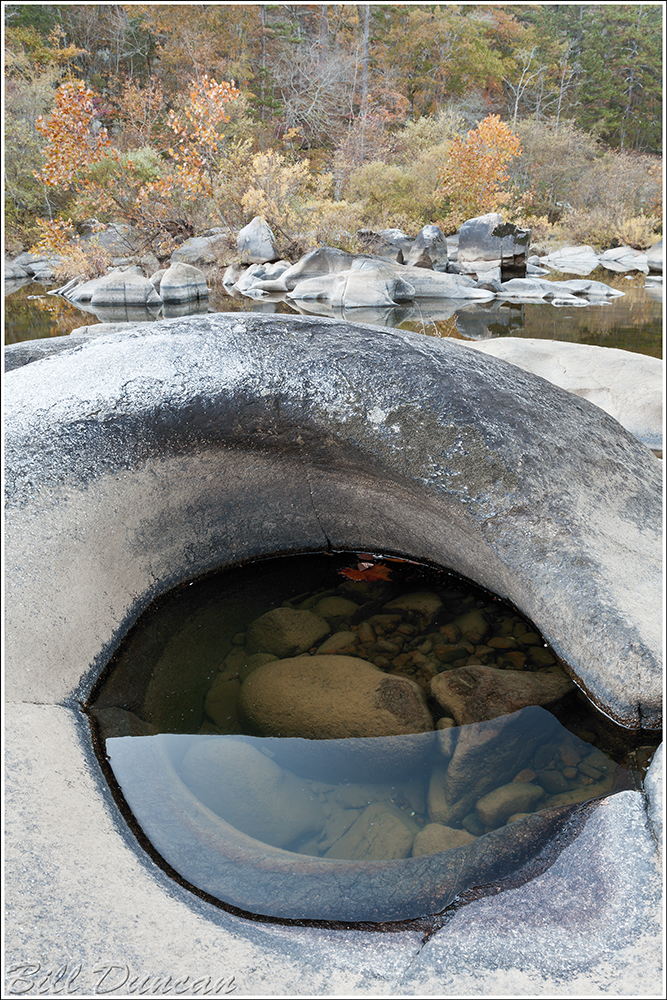
Specifically referred to as potholes, this feature was found in the long stretch of shut-ins of the St. Francis River between Silvermines Recreation Area and Millstream Gardens.  Steve and I took this, one of our favorite hikes, this autumn, just before peak color came into this section of the Ozarks.  Here is a wonderful description of this feature’s formation from Tom Beveridge’s Geologic Wonders and Curiosities of Missouri:

Potholes are formed at the nearly right-angled intersection of channelways where the direction of flow is abruptly changed.  The abrupt changes in direction of flow and the intersecting channelways create local whirlpools where the swirling waters grind out circular holes using sand and gravel carried in suspension as a natural abrasive.  Man did not invent sandblasting – he only mechanized it!  Deepening of the holes is also expedited by the steep gradient of the stream;  some holes are in part plunge pools formed by the impact of water descending vertically and gouging out the bed at the base of individual waterfalls.”

See my Flickr account for similar images made on this day.

IMG_6294

“All Seeing Eye”

Big Spring Trip – Autumn, 2013

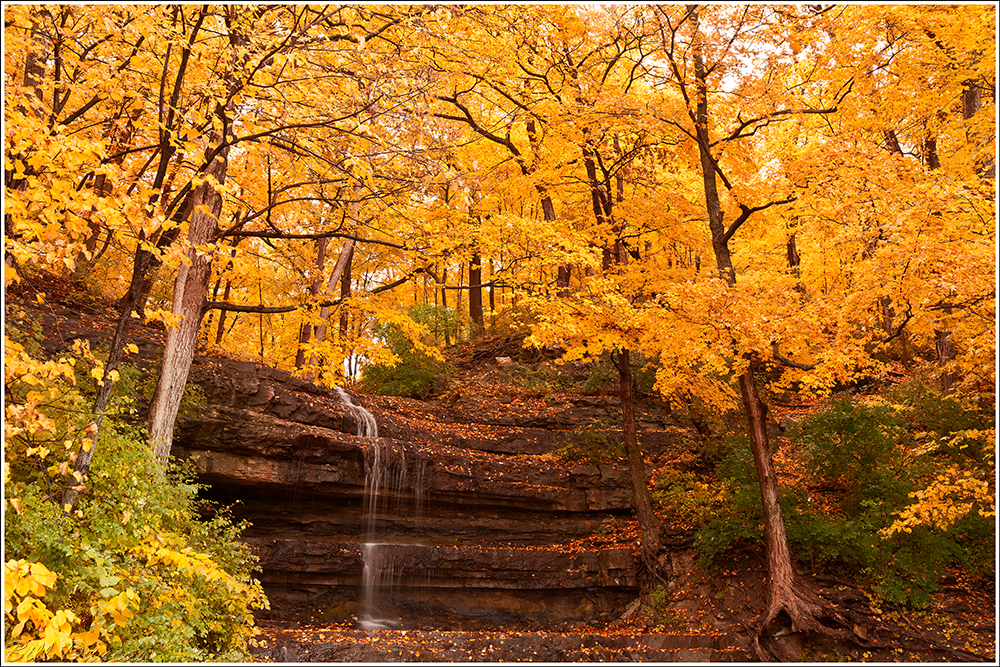
For me, a landscape does not exist in its own right, since its appearance changes at every moment; but the surrounding atmosphere brings it to life — the light and the air which vary continually. For me, it is only the surrounding atmosphere which gives subjects their true value.

-Claude Monet

IMG_6162

“Ageless Banks”

IMG_6220

“Amber Mists”

IMG_6171 - 76

“Changing Time”