An Early Rise from Brood XIX?

During my morning walk in our Chesterfield suburban neighborhood this morning, I found quite a fascinating thing! I ran across several groups of periodical cicadas (Magicicada spp.) that had emerged during the night. I estimate that I found approximately 250 of these large hemipterans without leaving the sidewalk!

An exuviae (shed exoskeleton) of a recently molted periodical cicada (Magicicada spp.)
A pile of periodical cicada (Magicicada spp.) exuviae found on a sidewalk underneath a young maple tree.

I am not quite certain about what exactly is going on here. Our next big emergence of these insects is supposed to occur next season in 2024 – the so-called “Brood XIX.” Brood XIX is composed of four species of periodical cicada (Magicicada tredecim, M. tredecassini, M. tredecula, and M. neotredecim) that all follow the 13 year emergence pattern.

A periodical cicada (Magicicada spp.) nymph. This one is a little behind the others. They usually climb up and fasten themselves to an anchoring place to make their final molt into their adult form during the early night hours.
Ecdysis in action! I wish I had my good camera with me on my walk. This is a periodical cicada (Magicicada spp.) making its final molt and will begin its adult form. It took approximately 13 years to get this far.
Why are we seeing these emerge this year? A couple of possible explanations could account for this. These could be “stragglers,” the term used to describe individuals that emerge in years before or after the bulk of the particular brood. This makes evolutionary sense; if the entire brood emerged all on the same year (emergence of the entire brood within a given location occurs within a couple of weeks) and they are struck with a weather or some other disaster, then this would be a very bad day for the brood. With some individuals emerging a year or two before or after the primary year, then this would obviously be beneficial in hedging their bets.

Here you can see a freshly emerged adult periodical cicada (Magicicada spp.) that is still hanging on to its last shed exuviae.
A newly emerged adult periodical cicada (Magicicada spp.) that has not yet hardened its exoskeleton and developed the dark colors that should come over the next few hours.

Another possible explanation is that this could represent a sub-population of Brood XIX that is on a slightly different schedule and may routinely emerge early. This could be due to differences in climate patterns between this one and what the rest of the brood experiences. Brood XIX covers a large area of the southeastern U.S.

An adult periodical cicada (Magicicada spp.) that is waiting for its new shell to dry.

Or, could this be the result of some differentiation between emergence patterns between the four species that constitutes Brood XIX? I don’t know but I would love to hear any thoughts from those of you who are more educated and experienced in these things than I am. I will be keeping my ears open during the next several weeks with hope of hearing this rare song.

An adult periodical cicada (Magicicada spp.) that has made it to its last stage in life and is getting ready to fly into the treetops to find a mate.

Thanks for stopping by!
Ozark Bill

2022 Kansas Trip – Ferruginous Hawk

I was definitely on the lookout for Ferruginous Hawks during our visit to western Kansas last year and we were fortunate to have one fly directly over us as we visited a badlands monument. What I didn’t expect is to be able to see an active nest. This was at a private ranch where we had the opportunity to see and photograph Lesser Prairie Chicken leks. The rancher was understandably weary of getting too close or staying too long, so we took our shots from a good distance from the vehicle windows.

Ferruginous Hawk
Active Ferruginous Hawk nest on cliff’s edge

A New Great-horned Owl Nest!

I finally had the opportunity to visit my buddy Jim’s property to check out the nest site of a Great-horned Owl nest. This pair has used this snag for about 5 years to raise their brood and I am disappointed in myself for not visiting sooner. I had no idea how perfect the views into this nest were. You couldn’t ask for a better setup. Unfortunately, I was a bit late this season as well. The chicks fledged within days of my first and only visit. Hopefully next year!

Here are a few from my visit. These were taken in early afternoon so the light was a bit harsh.

2022 Kansas Trip – Semipalmated Sandpiper

I can’t believe it’s been more than a year since this trip and I still have quite a few photos to share. Not much time or gumption to post much lately. Here are some photos of one of the more abundant shorebirds we had on this particular visit – the Semipalmated Sandpiper. It was fun and interesting to see so many individuals up close. You can really see variations in individual plumages at this time of year, as I hope this collection shows

Long-eared Owls Finally!

The Long-eared Owl has been on my top most wanted list for adding to my photographed species list for nearly 15 years. During this past New Years Eve, I finally found that opportunity.

Long-eared Owls are a bit different in that they hold and keep winter roosting sites, sometimes using the same trees or a single tree for these winter roosts year after year. This was the case here, where we found five birds roosting in a couple of exotic pine trees. Unfortunately, all but the one pictured here were too far in the mix of branches to be photographed. I am sure happy to have this one.

I had heard that this species is particularly weary, flushing with the least provocation. I did not find this to be the case at all with this group. Yes, this was a hard to find location and they do not likely see many visitors. When we stepped from the car they did become aware, moving their heads back and forth to get better looks at us from between branches. But, with keeping low voices, slow movements and respectful distances, they got used to our presence fairly quickly. I was even amused that they began ignoring us, turning their backs to us, going back to sleep and having what seemed to me normal behaviors and interactions. We stayed until dusk at which point they began stirring, moving from perch to perch and interacting with one another. This was too dark for still photographs but I did collect a little bit of video that I hope to process and share someday.

I know this is a sought after species in our region. This roost is on private property in which we were invited. I will not be able to share the location information for this site. Thanks for understanding.

Insect’s of Horn’s Prairie Grove LWR

Part of the Horn’s Prairie Grove LWR with obedient plant blooming in the foreground and joe pye weed behind.

The WGNSS Entomology and Nature Photography Groups had a splendid treat in July of 2022 when we jointly visited Horn’s Prairie Grove Land Water Reserve (LWR) near Ramsey IL. This 40 acre patch represents part of the less than 1% of the remaining southern till plain prairie ecosystem that was nearly wiped from the planet due to land conversion for farming. Even better, about 30 acres are original “virgin” prairie, (the largest intact remnant prairie in IL) meaning these spots were never touched by the plow. Even better still, at this location there lies five different types of prairie habitat: seep/wetland, dry hillside, mesic, black soil and savanna.

Keith Horn, owner and guide to Horn’s Prairie Grove LWR

The story of this land is interesting. The current owners, Keith and Patty Horn, purchased the land in 2001 as “junk land” from an old farmer who’s family had owned since the 1870s. They liked the fact that the majority of the land was in a “wild” state. The untouched 30 acres had been used as a wild hay field, being cut almost yearly. They had noticed some nice wildflowers in bloom but did not realize what they had until a few years into a wildlife habitat improvement plan that included periodic burning. Every year they noticed more and more species in bloom. They have sought help in identifying the plant species here and the current list is now at 619 species, including six native orchid species! Bravo to the Horns for identifying what they had and taking the steps to see their land improved. This remnant prairie could have been destroyed in the blink of an eye if it had fallen into the wrong hands.

Although most of us were simply thrilled to be in such high quality habitat, the primary purpose of the trip was to check out the arthropod life. Unfortunately, in late July, we were there on a truly miserable day of weather. The heat and humidity created a heat index that was well above the safety zone. This meant not many of us had the nerve to do a great deal of walking and searching, especially much after lunch time.

Efferia aestuans, the friendly robber (Family Asilidae)
Calopteryx maculata, an ebony jewelwing damselfly that was found on the forest and prairie edge.
Members of our group walking among the blooming Liatris.
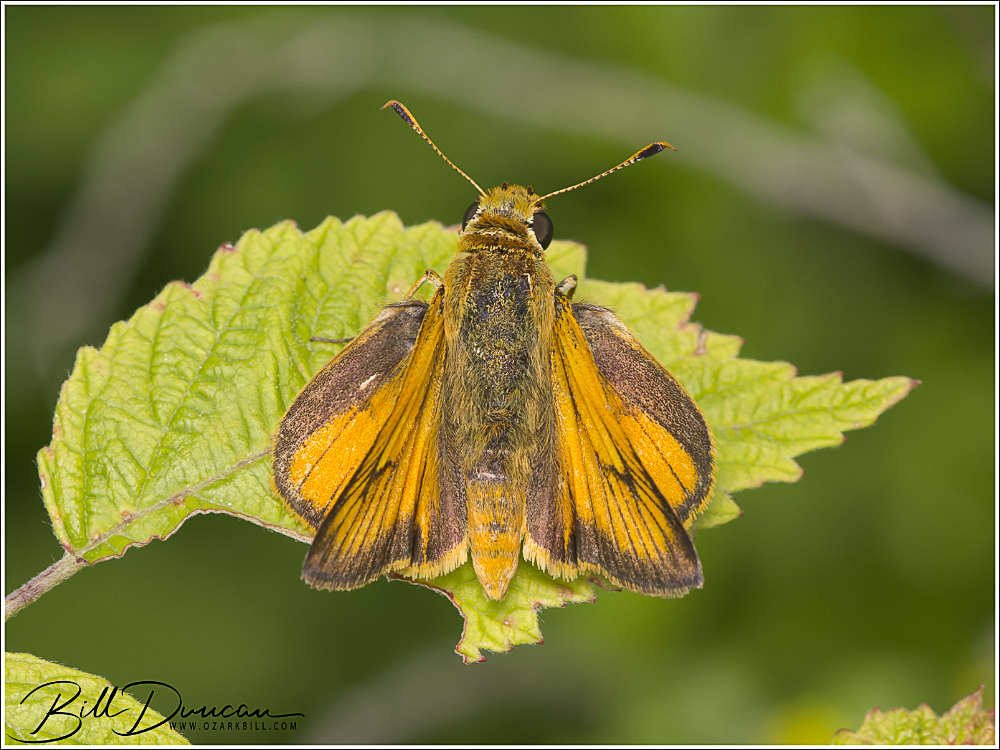
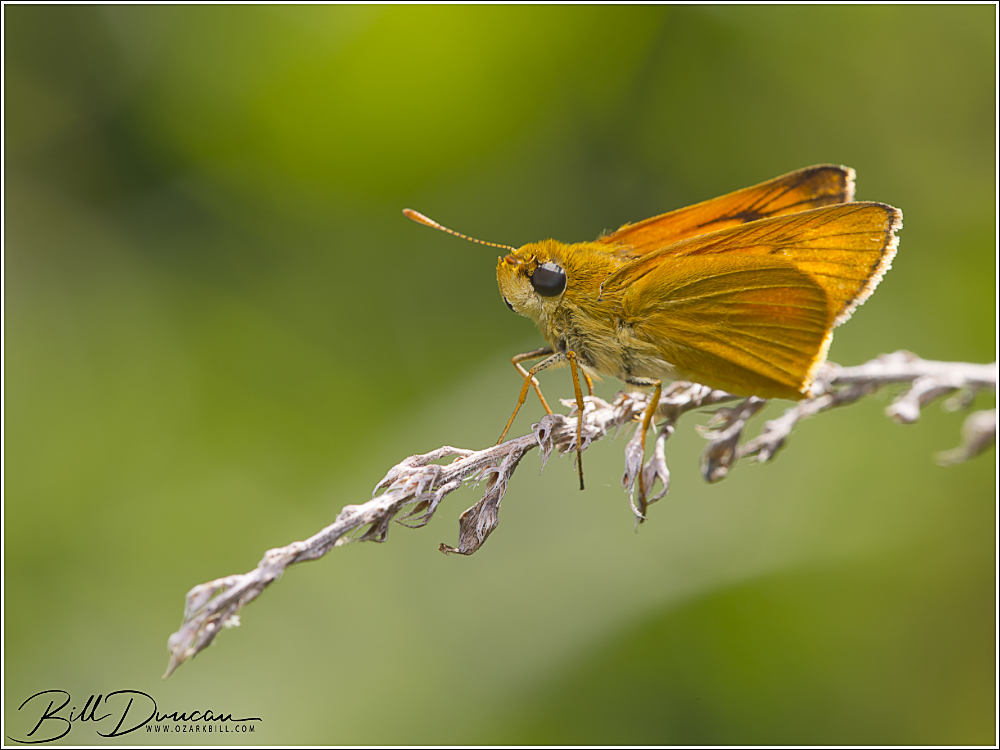
A gorgeous Poanes zabulon, Zabulon skipper (Family Hesperiidae)
What I am calling Wallengrenia egeremet, the northern broken-dash (Family Hesperiidae)
Keith Horn (back) and Chris Brown (front)
We were lucky to find both Mydas fly species to be found in Illinois, but I was only able to photograph this Mydas tibialis.
The gnat ogre! (Holcocephala sp.)
Interested in making visits to interesting high-quality habitats like this? Then consider joining Webster Groves Nature Study Society! Visit http://www.wgnss.org to find out more.

2022 Kansas Trip – Long-billed Dowitcher

We didn’t have a great deal of diversity in the shorebirds during this early season trip to the “central coast,” but, we had great numbers in the early migrating species like the Long-billed Dowitcher. There may have been some Short-billed Dowitchers mixed in here but none that we could confirm identity. The LBDO uses the central flyway predominantly while the SBDO primarily moves along the coasts during spring migration.