Spent some time recently looking for mink in a St. Louis County park. No luck on the mink but this vocal Cooper’s Hawk flew in for a minute on this perch and allowed me to get a few shots. This species was named after the American naturalist, William Cooper, who was a contemporary of John James Audubon and Charles Lucien Bonaparte.
Tag: wildlife photography
Hardworking for Hyperactive Hesperiidae
This season Casey and I have been focusing on trying to find some of the more rare and harder to find skipper butterflies in the family Hesperiidae. We’ve come up short a few times – there are several who seem to be on severe declines in our area and may be extirpated from previous well-known sites. Here are a few we had luck with finding and worked our tails of to get a few photos.
Atrytonopsis hianna (dusted skipper)
This striking skipper was found in the glades of Jefferson County, MO in May of 2023.


Problema byssus (byssus skipper)
Classified as vulnerable by the Xerces Society, the byssus skipper uses eastern gamma grass and big bluestem as its host and is threatened by the continued loss of prairie and grassland habitat throughout its range.


Euphyes dukesi (Duke’s skipper)
Uncommon throughout its fragmented range, the Duke’s skipper uses sedges in moist fields, marshes and forests for its host. This species is highly vulnerable to ongoing draining and development of these habitats. Casey and I refound this particular population in St. Charles County and we were happy to find a few in ditches alongside heavily trafficked roads.
Amblyscirtes hegon (pepper and salt skipper)
With a very large range, covering most of the eastern U.S., the pepper and salt skipper is nevertheless difficult to find and photograph.
Schinia nr-jaguarina (French-grass Flower Moth)
These are some older photos that I posted on Facebook back in 2018 when I had the annoying habit of posting some interesting topics only on Facebook for some reason.
Only discovered in 2012, this species of flower moth (Schinia nr-jaguarina) has yet to be described and named. This was photographed at Desplaines State Fish and Wildlife Area near Joliet Illinois. This species seems to be an obligate feeder on Orbexilum onobrychis (scurf pea, french-grass, among others). To read more about this recent discovery, head over to this location: http://jimmccormac.blogspot.com/…/interesting-moth-new…
2023 Update
This past weekend, the WGNSS Entomology Group spent the better part of a day exploring the wonderful Horn’s Prairie Grove LWR, just north of Vandalia, IL, and discovered a population of Schinia nr-jaguarina (apparently, this species has still not been officially described and the specific name given here is just a placeholder).
One of us collected a specimen to rear so I might be able to get photographs of an adult soon.
Photography and Observations of a Northern Flicker (Yellow-Shafted) Nest
Bird nests are my favorite photographic subjects and I was ever so fortunate this spring to have an ideal situation land in my lap. Many thanks to my friends and neighbors, Larry, Sheryl and Beth for telling me about this and allowing me to setup camp in their yard for quite a few morning hours. This nest was right across the street from our St. Louis County, Missouri home, making this an easy target to get to in the early minutes of daylight. Due to a very busy year at work, I have had less flexibility in my schedule and this opportunity helped save my sanity. I can’t imagine what early morning passersby must have thought, seeing me sitting there with my long lens pointing in the general direction of a neighbor’s upper windows.
Northern Flicker nesting behaviors
Like most woodpeckers, the Northern Flicker excavates their nesting cavities in the dead or dying wood of tree trunks or large limbs. Where this nest cavity was located was quite fortuitous. Dead wood is difficult to find in the suburbs where we live. Many suburbanites immediate cull dead limbs and whole trees as soon as they show the first signs of decline. This is both for safety of life and property as well as what many consider the poor aesthetics of the imperfect tree. I’m thankful for the neighbors who put up with a dead bough of their silver maple that gave this pair of beautiful Flickers the opportunity to nest. I’m hoping they let it be! This is because Flickers are one of a few woodpecker species that will use the same nest cavity in successive years. I really hope for a replay of this one!
Unfortunately, I missed all of the interesting pre-nesting courtship behaviors that this species is well known for. By the time I was turned onto the nest, eggs were well into their development and I believe the eggs hatched shortly before or right when I began my observations. Northern Flickers can have a large range in clutch size, laying between three and 17 eggs, depending on things like nest latitude, food availability and nest cavity size. The more typical range is six to eight eggs per clutch. In this case, the pair had three male chicks that hatched and fledged. After hatching, chicks may take 24-30 days before fledging and they will typically spend another six weeks with the parents before going their own way.
As in most bird species, the Northern Flicker exhibits bi-parental care. Both parents take part in nest excavation, brooding the eggs and young, feeding of chicks and protection. Because there is a lot of down time when sitting at a nest and waiting for that decisive moment, I was happy to collect some of my own minimal data on the nesting behaviors of this particular pair.
My observations
Because woodpeckers use tree cavities to raise their brood, this somewhat limits the opportunities for those wonderful photos of parents bringing food to their young. In addition, the habits of Flickers and most woodpeckers is to feed their young via regurgitation. I did not witness a single event in which a parent brought food in its bill to handoff directly to a chick. When the developing chicks are young and small, the parents will enter and spend their time in the nest, each parent taking turns feeding and brooding. At a certain point, the chicks are developed enough to climb the inside walls of their cavity and reach the entrance. Due to this and the more considerable space the larger chicks occupy, the parents cease entering the nest and will visit only to feed and presumably check on the welfare of their developing brood.
In this case the change was quite rapid. From one day to the next, the parents quit entering the nest regularly and I have broken down my observations into these two parts. I began collecting data on May 19th, although I did visit the nest to photograph a few days before this. After the early morning hours of June 4th, the parents quit entering the nest. During the period where the action was taking place inside the nest cavity, I spent my efforts on the challenging task of getting sharp enough photos of the parents coming and going.
May 19th – June 3rd (Table 1)
Between the 19th of May and the 3rd of June, I observed the nest mostly during early morning hours on nine days. During these nine days, I spent a total of 18 hours and 55 minutes at the nest. The number of times visited and time spent by each parent in the nest was pretty similar, with the male visiting a couple of times more but averaging slightly less time per nest visit.
June 4th – June 9th (Table 2)
Between June 4th and June 9th, I observed the nest for six straight days, again mostly during early morning hours. During the 16 hours and 56 minutes I spent observing during this period, the female visited the nest to feed 30 times (1.8 feedings per hour) compared to the male who visited the nest to feed 25 times (1.5 feedings per hour).
My observations described above and in the accompanying tables are in agreement with published data suggesting that overall provisioning rates do not differ between the sexes in the Northern Flicker.1

The fascinating case of momma dominance
Copulations are common during the egg laying phase of nesting in this species. Unfortunately, I missed this portion of the show. However, I did witness “copulations” that mostly took place at nest duty changeovers between the two parents during the brooding phase.
Cases of female dominance in the pair bond of this species has been documented2, but I have not yet found documentation on this particular “copulatory” behavior. I admit, it took me a while to discern that anything was out of the ordinary. I guess I was too busy with the camera. After looking at the photos in the camera a little more closely, it finally dawned on me that the female was mounting the male! This wasn’t a single fleeting bit of behavior. I observed the female mounting the male on at least 11 different occasions and I never once observed the male mounting the female.
I wonder if this has something to do with the size of the two birds in this pair. Field guides and other sources suggest that males in this species are usually slightly larger than females. In my opinion, that is not the case with this pair. In this image and in the video below, the female looks significantly larger than the male.
Trials and tribulations of suburban cavity nesters
Another behavior that was relatively easy for me to record was the interactions between the Flicker pair and European Starlings. As mentioned above, cavity sites can be difficult to find in the suburbs. As a consequence, competition for this resource can be considerable. Exotic invasive European Starlings are known to aggressively mob and dislocate native cavity nesting species. During the brooding period, I counted six times where a parent chased away a European Starling that had come too close for comfort (Table 1, 2). On one occasion, a parent chased away a Red-bellied Woodpecker that came very close to the cavity opening. Although I never observed a Starling chase while the parents were visiting the nest in the post-brooding phase, this likely occurred outside my range of viewing. Additionally, the risk from European Starlings taking over a nest cavity is probably highest immediately after the cavity construction and during egg laying. I was not on the site to make observations at this stage.

Another significant competitor for larger cavity nesting birds like these Flickers is the squirrel. My friend, Dave, told me about a similar opportunity he had from his property vantage this spring, in which a grey squirrel actually took over the nest cavity from a pair of Flickers, presumably destroying and potentially eating the eggs or developing chicks.
I was really concerned that I was going to witness something like this with my nest as well. Less than three feet about their nest cavity was a much larger, natural cavity that faced straight up and was being used by a couple of grey squirrels as a sort of day bed. The squirrels moved up and down the bough of this tree, right past the nest on several occasions but the parents never seemed too concerned about them.
Get busy Feeding
Obviously, I enjoyed myself the most during the time that the chicks were old enough to stick their heads out of the nest and be fed by the parents. This didn’t always result in good photo opportunities – often the parents would stick their heads far into the nest, blocking clear views of these interactions, but I caught enough to make me happy.


Fledging
Before we get to the details, I want to share a video of the behaviors the adults took to try and coax the chicks to leave the nest. This one is shot in normal speed with on-site audio. You can hear the adults giving the chicks their keeyer calls and the chicks responding. It was near impossible to predict when the chicks would take their dive out of the nest. I filled memory cards with video and stills in hopes of capturing this.
I guess I’ve grown used to the heartache that comes with not catching the first flights of chicks on camera. It seems there is always something that gets in the way. In this case, Miguel and I watched as the first chick took his first flight out of the nest. Or I should say, Miguel got to watch and take a series of unforgettable photos (see the GIF I put together of these below). I was busy at the time taking feeding notes… But, I was still optimistic. This was early on a Saturday morning and I didn’t have to get to work. I felt confident that the other two would be sure to follow shortly. Five hours later and a total of nearly eight hours of continuous sitting at the nest, I decided to call it a day. I had grass to mow, needed a meal and a shower. So, I packed it up, feeling confident that the other chicks would likely wait until the next day to take their leave from their wooden nursery. I checked that evening around 7:00 and the nest was dead silent. The remaining chicks were gone. I heard Flicker vocalizations coming from the surrounding neighborhood. I missed this opportunity but was warmed by the idea that all three chicks were successfully on to their next stage, learning to forage from two obviously apt parents.
And that is that. I’m glad there are a few more Flickers in the neighborhood and will anticipate and hope these two will return to their nest cavity next year. I hope you’ve enjoyed this story a fraction as much as I did telling it.
Ozark Bill
Literature Cited
1 Weibe KL. and Elchuk, C.L. 2003. Correlates of parental care in Northern Flickers Colaptes auratus: do the sexes contribute equally while provisioning young? Ardea 91(1): 91-101.
2 Kilham, Lawrence 1959. Early reproductive behaviors of flickers. The Wilson Bulletin Vol 71, No.4.
2022 Kansas Trip – Baird’s Sandpiper
A pleasant surprise of this spring trip to Quivira and Cheyenne Bottoms was finally getting nice close looks and some respectable photos of the tundra breeding Baird’s Sandpiper.


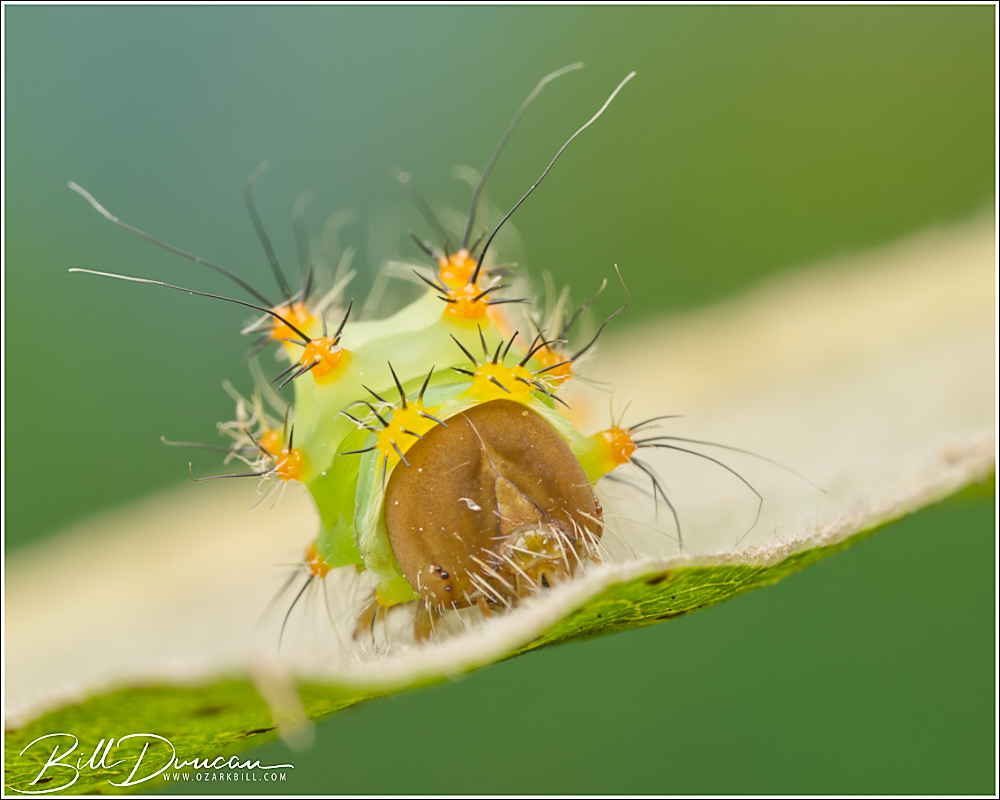
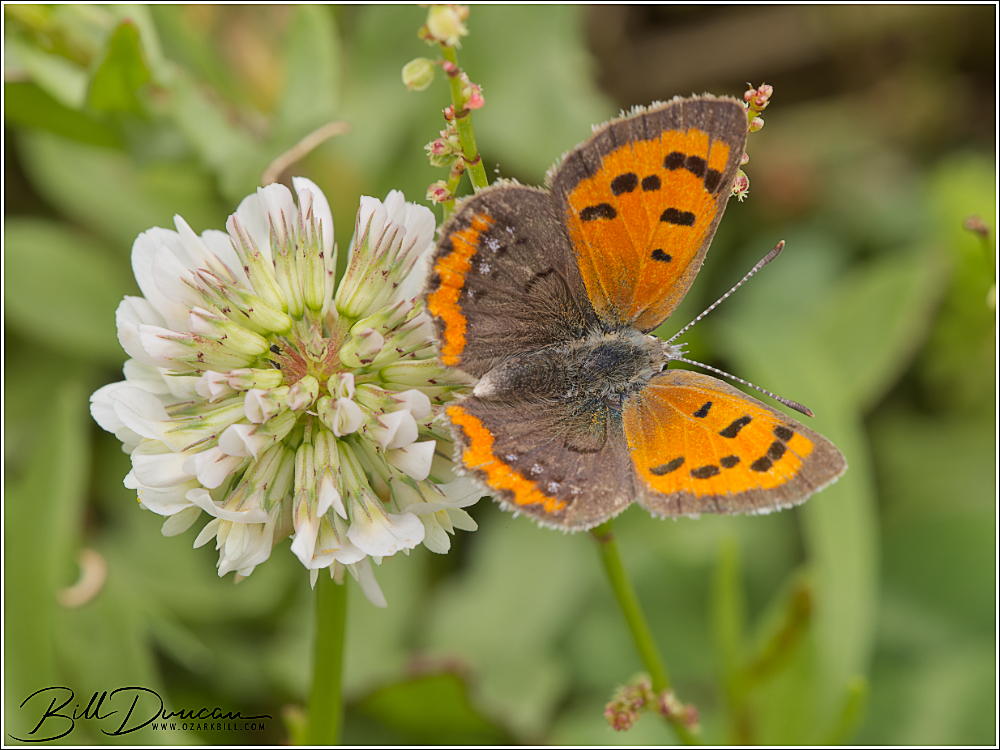
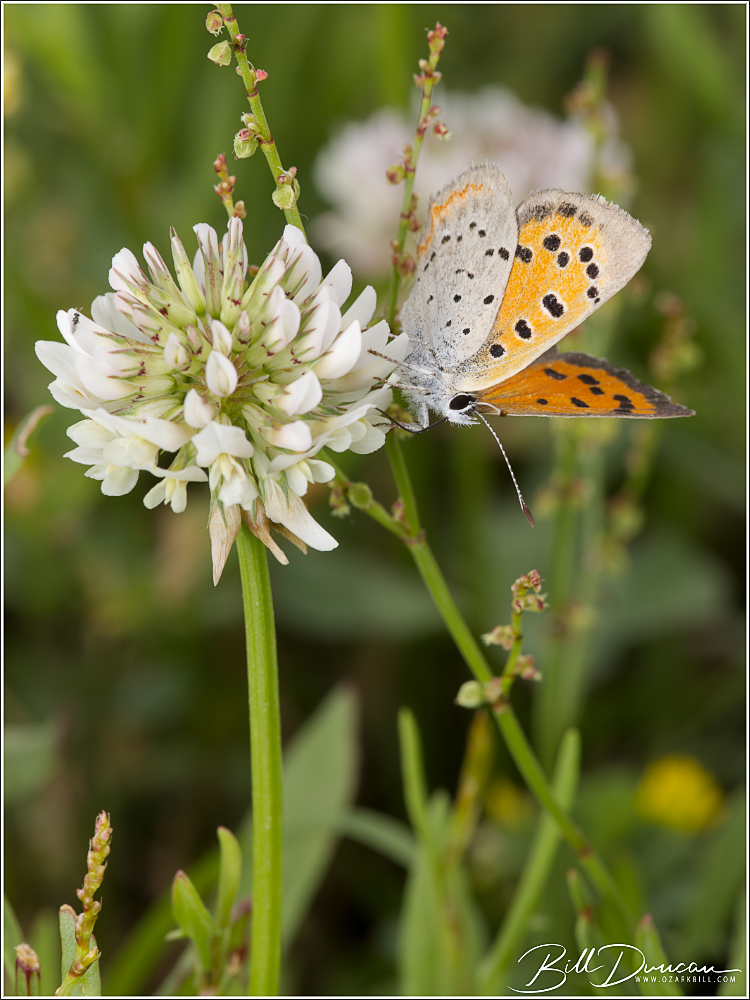
Some Lovely Lycaenids
Tonight I’m just sharing some photos of a few lovely Lycaenid butterflies that I had the pleasure of photographing this season. The Lycaenidae family is the second largest family of butterflies, with about 6,000 species worldwide. The highlight was the bountiful season that the juniper hairstreak (Callophrys gryneus) had. Prior to this year, I had only seen one or two in a season, usually without my macro rig with me. In a few trips to the glades in Jefferson County this spring, Casey and I had at least two dozen individuals. They are not usually cooperative, but we worked pretty hard to get something.
First up is the afore mentioned C. gryneus.


Illinois Chorus Frog!
Miguel and I were offered a very special treat back in April when our new friends and gracious hosts, Rick and Jill, offered to show us a very unique and amazing animal, the Illinois chorus frog (Pseudacris illinoensis). The Illinois chorus frog is a species of study for Rick and his students, who are hard at work trying to document the life history and ecological details of this species of conservation concern. Existing in only a handful of counties scattered across Illinois, Missouri and Arkansas, this frog is classified as G3, meaning it is vulnerable to extinction. The primary forces causing the decline of this species is land development, primarily from agriculture.
The Illinois chorus frog requires sandy wetlands. These types of areas are being lost due to drainage efforts for agriculture. The scattered remnants of these habitats are increasingly becoming isolated, likely limiting geneflow between pocketed populations.
The natural history of this species is incredible. Due to the quick draining nature of their preferred sandy habitat, these frogs spend 90% of their lives below ground. Their breeding season typically begins in February, where they take advantage of water from icy thaws and early spring rains to breed in ephemeral pools. By May, the frogs have buried themselves in underground tunnels that they dig with muscular forearms. Unlike most other frog species that spend large amounts of time in subterranean environments, the Illinois chorus frog is known to feed, eating worms and small invertebrates.

Organizations like the University of Illinois, Illinois Department of Natural Resources and the Heartland Conservancy are doing a lot of work in a number of places to discover more about their ecological needs and protecting and managing habitat these frogs need.
Another great thing Rick and Jill showed us were Illinois chorus frog tadpoles that were in artificial breeding “ponds” that were setup for them. As the hundreds of tadpoles we saw suggest, they were doing really well here.
I’m still excited about being able to see and photograph these wonderful frogs and hope to visit them again during an early spring.
OZB
An Early Rise from Brood XIX?
During my morning walk in our Chesterfield suburban neighborhood this morning, I found quite a fascinating thing! I ran across several groups of periodical cicadas (Magicicada spp.) that had emerged during the night. I estimate that I found approximately 250 of these large hemipterans without leaving the sidewalk!

I am not quite certain about what exactly is going on here. Our next big emergence of these insects is supposed to occur next season in 2024 – the so-called “Brood XIX.” Brood XIX is composed of four species of periodical cicada (Magicicada tredecim, M. tredecassini, M. tredecula, and M. neotredecim) that all follow the 13 year emergence pattern.


Why are we seeing these emerge this year? A couple of possible explanations could account for this. These could be “stragglers,” the term used to describe individuals that emerge in years before or after the bulk of the particular brood. This makes evolutionary sense; if the entire brood emerged all on the same year (emergence of the entire brood within a given location occurs within a couple of weeks) and they are struck with a weather or some other disaster, then this would be a very bad day for the brood. With some individuals emerging a year or two before or after the primary year, then this would obviously be beneficial in hedging their bets.


Another possible explanation is that this could represent a sub-population of Brood XIX that is on a slightly different schedule and may routinely emerge early. This could be due to differences in climate patterns between this one and what the rest of the brood experiences. Brood XIX covers a large area of the southeastern U.S.
Or, could this be the result of some differentiation between emergence patterns between the four species that constitutes Brood XIX? I don’t know but I would love to hear any thoughts from those of you who are more educated and experienced in these things than I am. I will be keeping my ears open during the next several weeks with hope of hearing this rare song.

Thanks for stopping by!
Ozark Bill
2022 Kansas Trip – Ferruginous Hawk
I was definitely on the lookout for Ferruginous Hawks during our visit to western Kansas last year and we were fortunate to have one fly directly over us as we visited a badlands monument. What I didn’t expect is to be able to see an active nest. This was at a private ranch where we had the opportunity to see and photograph Lesser Prairie Chicken leks. The rancher was understandably weary of getting too close or staying too long, so we took our shots from a good distance from the vehicle windows.
A New Great-horned Owl Nest!
I finally had the opportunity to visit my buddy Jim’s property to check out the nest site of a Great-horned Owl nest. This pair has used this snag for about 5 years to raise their brood and I am disappointed in myself for not visiting sooner. I had no idea how perfect the views into this nest were. You couldn’t ask for a better setup. Unfortunately, I was a bit late this season as well. The chicks fledged within days of my first and only visit. Hopefully next year!
Here are a few from my visit. These were taken in early afternoon so the light was a bit harsh.