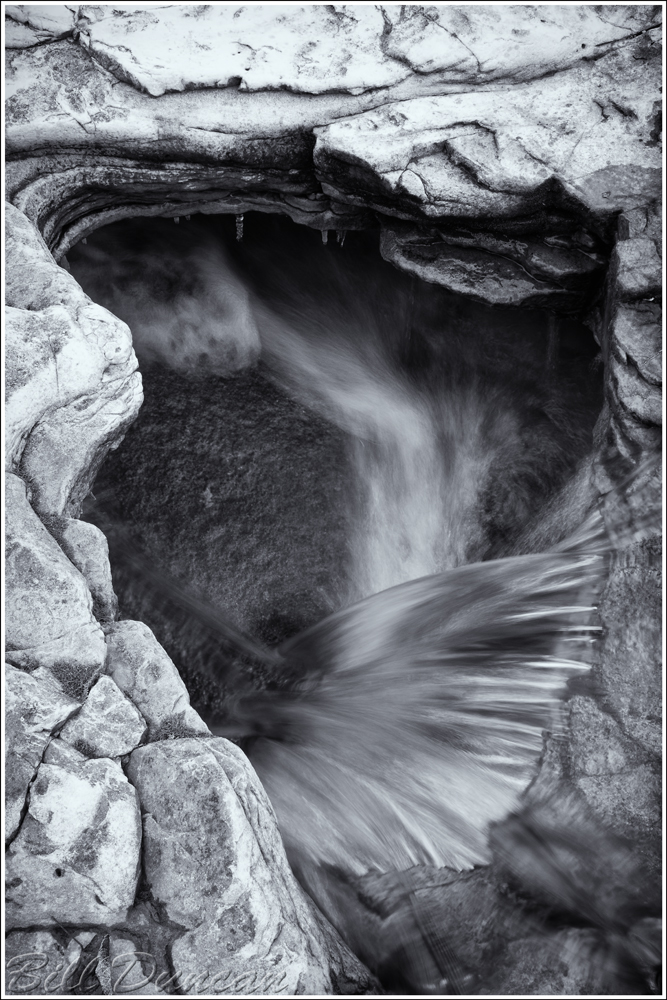
Hey Kid, Boogie Too, Did Ya?

Do I have a man-crush on David Essex?  You’re damn right, and I’m not apologizing.  I know a lot of people have strong feelings about what they want done with their bodily remains following their last breath.  My personal philosophy was put very nicely by the comic, David Cross, “…I don’t care, because I can’t.”  If I have any loved ones when I die, I hope they do whatever they think is best and most convenient for them.  However, if they want to go through with a lot of trouble, instead of spending all that money on an over-priced box and funeral home and burial plot and deli sandwiches, here is something at least I would be entertained by.

I once read about a procedure that the hipsters in Europe are doing as an alternative to cremation.  Lyophilization.  This is just the fancy term for freeze-drying.  In this hypothetically more environmentally friendly procedure, the body is freeze dried then thrown into a hopper filled with heavy ball bearings.  Then the hopper is shaken by a giant paint shaker type apparatus until the remains are basically a fine powder.  So, everything but the water is gone and I helped by slowing my carbon’s escape into the environment!

Okay, so if 60% of a human body is water weight, what to do with the 60 lbs of powdered Bill?  That’s a great question.  Here is what I think would be nice (no, snorting or ingesting of said product will not be considered).  On a pleasant evening near sunset, hall my ass up to Elephant Rocks in as many Thomas Coffee cans as needed, gather whoever desires to be present and play David Essex’s “Rock On” on a boom box or giant speaker wall or whatever is handy.  Then you can spread Bill-dust across the landscape while Rosie Perez screams “Billy!” over and over, a la White Men Can’t Jump.  Like I said, I don’t really care what happens after I die, because I can’t.  But, if nobody has any better ideas, I’m thinking this would be a pretty cool way to be sent off.

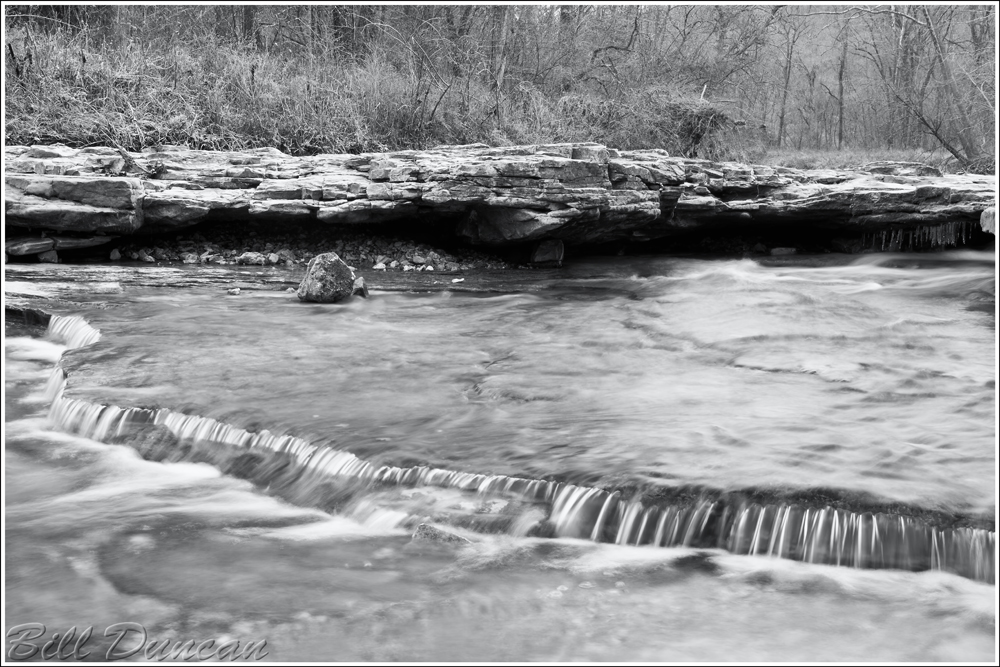
Here is a photo…

“Walled In”

Technical details: Canon EOS 5D Mark II camera, EF24-105mm f/4L IS USM lens @ 24mm, ISO 100,  f/14, manual blend of two exposures
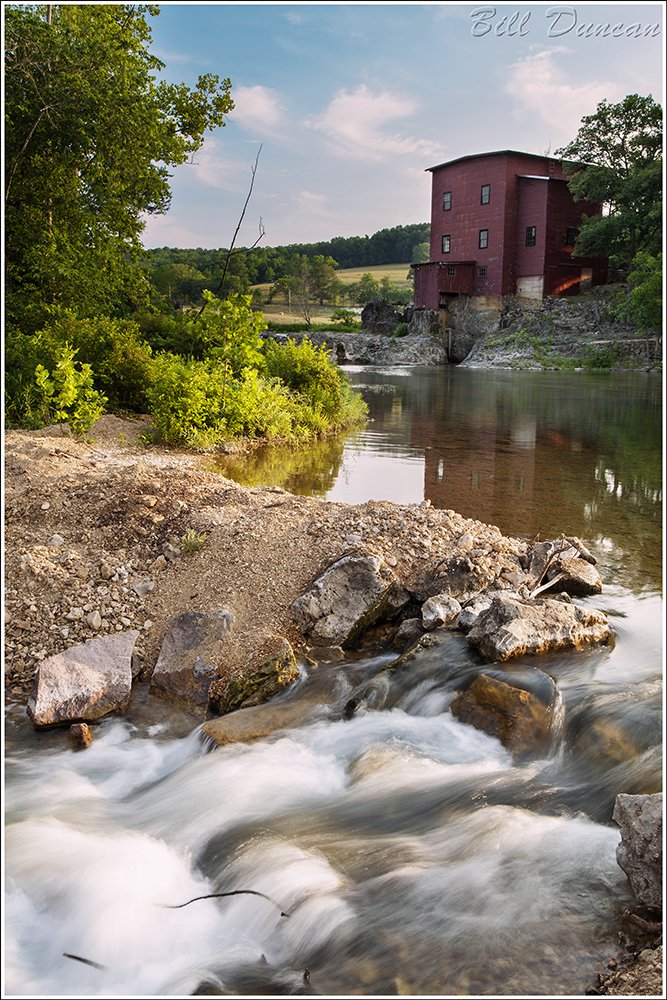
 

My Country ‘Tis of Thee

Part of my Missouri Ozarks grist mill series, this image shows the Dillard Mill in late afternoon light, watching over the Huzzah Creek as the small river works it’s way through a series of man-made impoundments.  There has been a mill structure on this location since 1853, the current building was completed in 1908.  This was the last stop of the day in a day trip Sarah and I took this spring.  Although warm, the setting was perfect.  The quaint, old, warm structure set against last years hay bales in the field immediately behind, the contrasts in water as it rushed down rocky barricades, stopping in motionless, clear ponds, and the chatter of birds like the Belted Kingfisher made us hate to get back into the car and take the drive back to the city.

Technical details: Canon EOS 5D Mark II camera, EF24-105mm f/4L IS USM lens @ 32mm, ISO 100,  f/14, manual blend of three exposures

Dawn in the Garden

After a long hiatus from blogging, I decided to try this again.  I was able to load this image with no problems.  Hopefully this will continue and I can keep making posts.

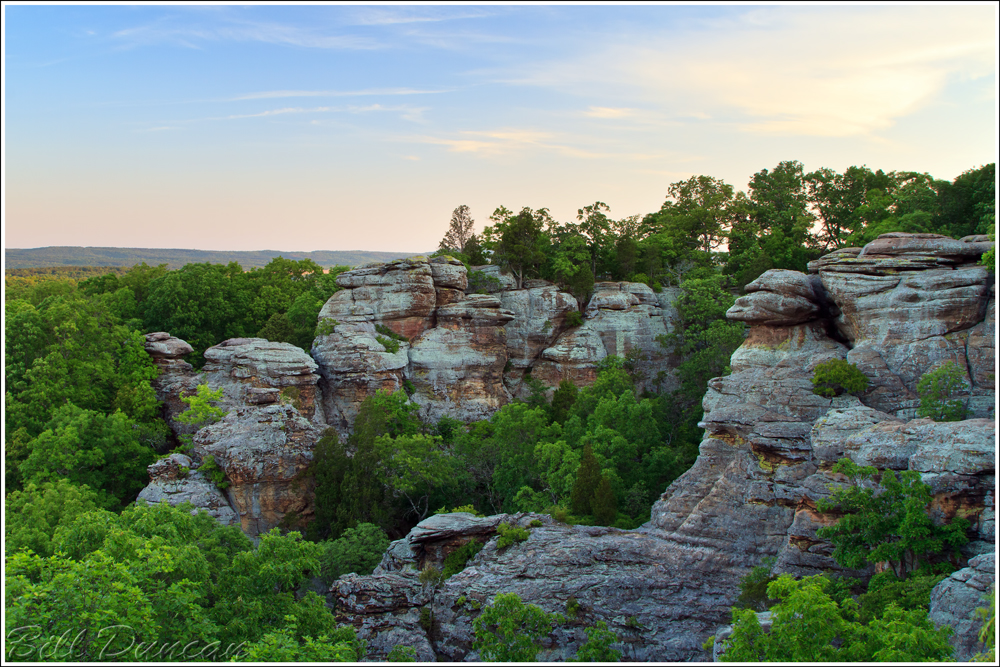
This is probably my favorite image made during Sarah and my trip through the Shawnee region of southern Illinois this spring.  Seeing some spectacular images online of this place, I couldn’t wait to get here.  Garden of the Gods is located on the eastern side of the Shawnee, so this was our “final destination” as we progressed further from StL.  And although we did see some nice spots, like Bell Smith Springs and Burden Falls, during this rather dry spring, GoG turned out to be the paramount stop.

We arrived with less than 30 minutes of light left during the first evening.  We only saw a limited view of the exposed rocks and watched a pretty nice sunset, but had no real time for or notion of how to set up for a photograph.  We drove back to the very nice cabin we had located near Eddyville, about a 30 minute drive from GoG, and stayed the night.  I got up well before dawn and arrived back at GoG about a half hour before sun rise.  Although I was not fortunate enough to be able to capture a spectacular sunset or sunrise during our brief visit, I was happy with the light presented the morning I made this image.

What I found fascinating is the apparent remoteness of this spot.  Even though it is only about 30-45 minutes from some decent sized towns, this spot seemed more remote and “out of the way” than most spots I visit in the Ozarks.  The morning I made this image I was alone except for one young man who seemed to be in his early twenties.  I saw him in the parking lot with nothing but the clothes on his back.  There were no other vehicles and he was pacing around acting oddly.  I wondered if I should ask him if he needed some assistance or a ride, but something about him was weird.  He didn’t seem to acknowledge me, so I didn’t confront him.  I’m not sure if I did the right thing or not.  I watched him lay down on a bench as I drove away.

As I believed I mentioned before, the one nice thing I learned was how close many of these spots in the Shawnee are to StL.  GoG is only about 2.5 hours from our front door.  For some reason I expected these spots to be a longer drive.  I’m definitely excited to make some more visits to these spots and keep tracking that sweet light.

“Dawn In The Garden”

Technical details: Canon EOS 7D camera, EF24-105mm f/4L IS USM lens @ 24mm, ISO 160,  f/13, manual blend of three exposures


Location Spotlight: Black Mountain Cascades

This post features one of my favorite places to visit and photograph in my beloved St. Francois Mountains. Black Mountain and these cascades that tumble down more than 400 vertical feet in a series of steps lie southwest of Fredericktown and can be found literally alongside Highway E.  The waters run under a drainage pipe in the road and travel another few yards before dumping into the St. Francois River. I was first turned on to this place by a fantastic landscape photographer of the Missouri Ozarks named Mark Karpinski.  I highly suggest looking him up and buying a bunch of his photographs for your walls.  His images are the best I’ve seen of this region.

“Rivers or Veins”

Technical details: Canon EOS 7D camera,  EF-S10-22mm f/3.5-4.5 USM lens @ 12mm, ISO 200,  f/13, 0.5 sec

As I mentioned in previous posts, this “winter” brought out possibilities for photography that I would normally be taking advantage of in the warmer months.  These images were taken in early February following a couple of rainy days.  These cascades run out completely in dry times, so you must carefully plan a visit following rainy periods.

“Roll of Ancient Thunder”

Technical details: Canon EOS 7D camera,  EF-S10-22mm f/3.5-4.5 USM lens @ 10mm, ISO 160,  f/13, 0.4 sec

Before you make plans for a visit, listen to warning.  There are no trails here – it is just bush-whacking up the slopes.  Sometimes you will need to go up leaf-littered hills and sometimes you must climb hand and foot over rocks and the cascades.  There are all sorts of risks here.  The rocks are extremely slippery.  I highly suggest the use of felt-bottomed shoes or waders and take all precautions against water and your camera equipment.  You will get wet!  In the growing season I have been to few places with as much or worse concentrations of poison ivy.  If you visit in mid to late summer, cover yourself head to toe and then burn your clothes afterwards.  And ticks!  In early February I hadn’t given a thought to ticks.  This day I received a tick bite and found another three on my pants.  I learned my lesson to pay attention to the temperature and not the calendar.

“Crash of Molars”

Technical details: Canon EOS 7D camera,  EF-S10-22mm f/3.5-4.5 USM lens @ 20mm, ISO 200,  f/11, 2 sec

I’ve been fortunate enough to have spent some great days on this mountain.  I have visited on 50% chance of rain days and was able to spend a few hours of cloudy, but relatively rain free weather – perfect for this type of photography.  If you are in shape and have the determination to make the hike to the top, the view of the St. Francis River valley below is sure worth it.  Pack a picnic basket!

“Firing Diamonds At Boots”

Technical details: Canon EOS 7D camera,  EF-S10-22mm f/3.5-4.5 USM lens @ 16mm, ISO 200,  f/13, 0.6 sec

The titles of the images in this post I stole from the lyrics of a song called “Buried in Teeth” by Mariee Sioux.  I can’s stop listening to this song or Mariee’s music in general lately.  I realize this may be considered IP infringement, but I have trouble with titles and I also wanted to  try and give her some props, so to speak.

“Swallowed Into the Gut of Centuries”

Technical details: Canon EOS 7D camera,  EF-S10-22mm f/3.5-4.5 USM lens @ 11mm, ISO 200,  f/16, 0.8 sec

Thanks for visiting the blog.  You can find more of my photos from this location here.  If you decide to make an excursion to this spot or anywhere else into the St. Francois Mountain region, please be careful, enjoy yourself, leave only footprints and take only photographs!

Seven Days of Mina Sauk Falls – Day Seven

“Taum Sauk Eternal”

Technical details: Canon EOS 7D camera,  EF24-105mm f/4L IS USM lens @ 40mm, ISO 200,  f/14, 0.6 sec

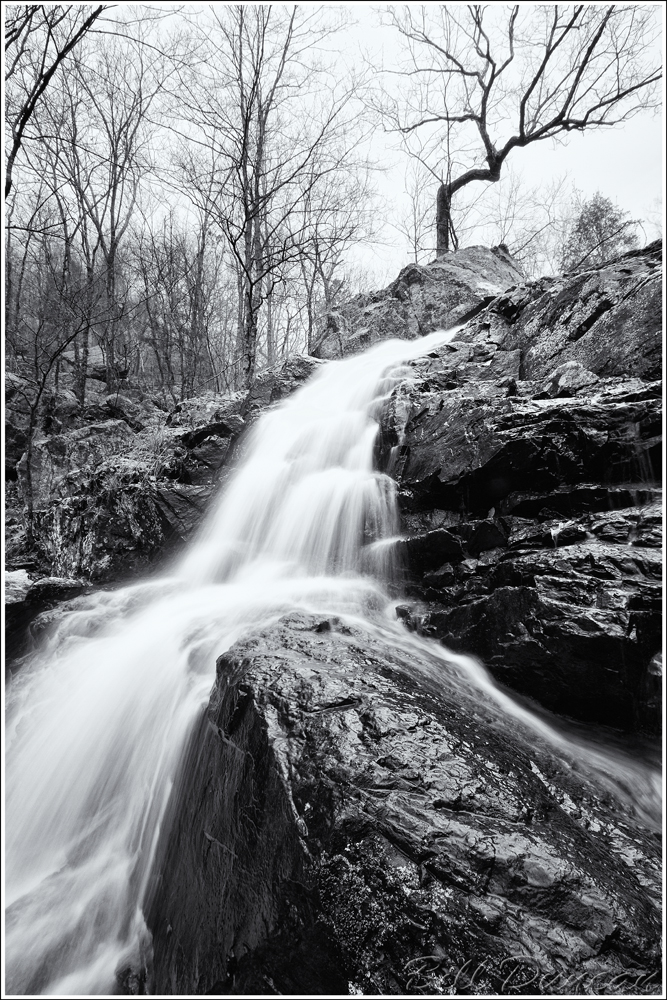
Hi everyone.  Here is the last in my planned succession of image postings of Mina Sauk Falls of the Missouri Ozarks.  This photograph may be my favorite of the day.  The textures of the rock and the patterns of the lichen suggested to me that this would make a nice black and white.  I added a light Orton effect to enhance these contrasts and bring out the highlights a bit more.  The pool of water might be my favorite aspect of the image.

I had another great Saturday exploring and photographing in the Ozarks.  We really had some magnificent lightning displays from thunderstorms that went through the region in the afternoon.  I hope none of you had any damage or other worries from these storms.  I started my day with an actual plan and had to make changes due to the weather.  I started my day in the Labarque Creek Watershed, thinking the storms we had on Thursday may have filled the drainage creeks and there would potentially be lots of falls, cascades and other water features to shoot.  I also realized that the spring ephemeral wild flowers would be really getting going.  Well, the water flow was next to nothing.  The rain from early in the week had either drained quickly or was not enough to get things flowing.  The spring ephemerals were exactly what I expected.  Spring beauty, rue anemone, Dutchman’s breeches, hounds tooth and blood root were all present in the thousands.  I wish I had actually spent more time shooting these, but I had other plans as well.

My plan after Labarque was to head to the nearby Shaw Nature Reserve to photograph the early happenings of the Red-shouldered Hawk nest located there.  I hauled all my photo equipment and my spotting scope and my chair and snacks, set up, had an opportunity to take a few shots when the rains came in.  So, I packed up and started back home.  I knew the weather would also interfere with my plan to photograph a local Great-horned Owl nest that I was planning on visiting in the late afternoon and evening.  I went back home, ate dinner and checked weather.com.  There looked to be a gap between 5:00PM and 7:00PM where the chance of rain was significantly lower.  I suspected that the 0.5-1″ or so of rain we received this afternoon may be enough to really get the ephemeral drainage creeks of Labarque flowing.  So, I packed up and headed back to Eureka, knowing it still might rain for another few hours and I may not even get out of the car.  When I arrived, it was barely sprinkling so I put my rain gear on and covered my camera pack with its rain cover and with my hiking pole and trusty Tilley to keep my head dry, I started on the trail – anxious about the weather and quickly cover the mile or so to the features I most hoped would be filled with water.  The situation was not perfect.  It rained about half the time I was on the hike.  I was able to pull the camera out and do some shooting, but the light was very low, even for shooting moving water!  In a couple of brief deluges I carried myself and my gear to a small cave to wait it out.  This was one of the most memorable hikes of my life.  The light, sky, fog water and life all around me seemed to be changing by the minute.  At least half a dozen frog species were singing and the Eastern Towhees were constantly telling me to “Drink your Tee!”.  I heard the ever-vocal Red-shouldered Hawks and the hoots of Barred and Great-horned Owls.

Finally, when the light was so low I couldn’t get anything shorter than a 30 second exposure, I headed back to the car.  Upon reaching the top of one of the steep ridges I saw a spectacular display of warm colors as the sun was able to break through a bit near the horizon and juxtapose itself with the cumulonimbus clouds and associated displays of lightning.

I apologize if this is boring any readers, but I am using this blog as a journal in as much as anything else.  I haven’t really looked at any of the photos I took today.  Hopefully the images will be close to what I hope they can be.  If not, I will always be looking forward to the next hike in the Missouri Ozarks.

Seven Days of Mina Sauk Falls – Day Six

“Warm Flow”

Technical details: Canon EOS 7D camera,  EF24-105mm f/4L IS USM lens @ 24mm, ISO 160,  f/11, 1/4 sec

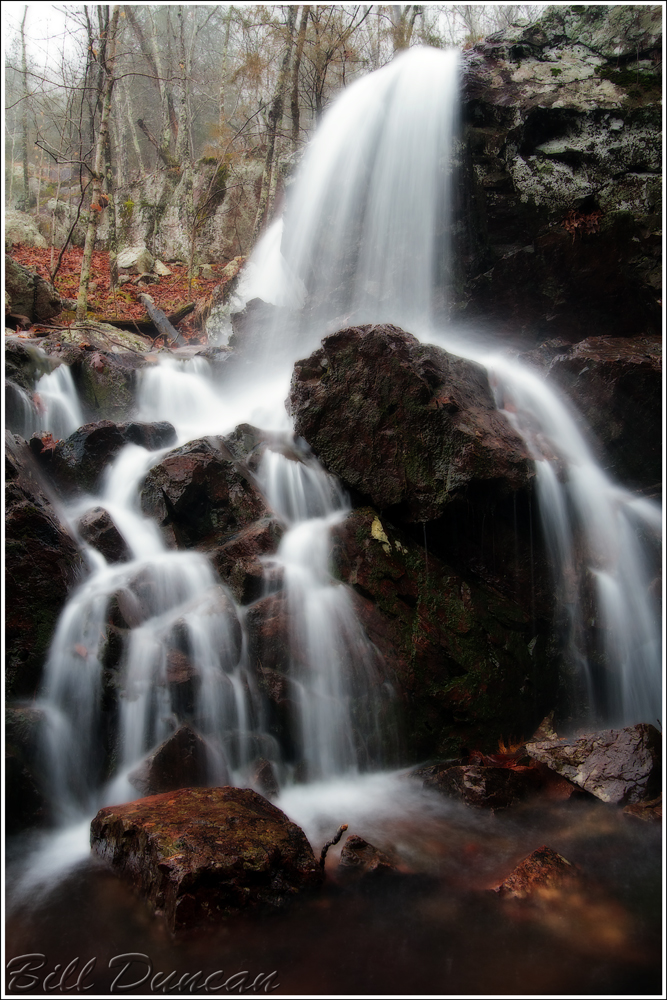
Near the top of Taum Sauk these cascades were very appealing but somewhat difficult to shoot as the sun began to creep in.  Ice covering the rocks was still an issue and I carefully moved along a ledge to get close to this pretty little slide.  Being able to rest a bit in the sunshine and eat some cocoa-covered almonds and have some coffee while listening to the falls was great after spending the previous hour or two on the shadow side of the mountain in the cold and mist.

Seven Days of Mina Sauk Falls – Day Five

“Frigid Mina”

Technical details: Canon EOS 7D camera,  EF-S10-22mm f/3.5-4.5 USM lens @ 11mm, ISO 250,  f/14, 0.4 sec

Here we have one of the mid-tier drops of Mina Sauk.  This one falls about 20 feet and on this morning the temperature was just cold enough to freeze the mist of the falls on whatever it landed upon.  It was a real challenge keeping the front of the lens free of freezing drops.  The icy rock surfaces were also quite a challenge of foot near any of the falls.  I really grew to appreciate the different colors and tones in the rocks here during this trip.  With no greenery of warmer months or warm colors of autumn the purples, pinks and various other hues that these granites and their lichen passengers exhibit was something to focus on.

Seven Days of Mina Sauk Falls – Day Four

“Spanning Time”

Technical details: Canon EOS 7D camera,  EF24-105mm f/4L IS USM lens @ 24mm, ISO 200,  f/10, 1/4 sec

So how did Mina Sauk and her father mountain, Taum Sauk, get their names?  I am currently looking for an original and direct source for the telling of the legend of Mina Sauk.  Here are a few paragraphs collected from the web that were originally published by the Kansas City Star:

The Legend of Taum Sauk Mountain ~ A Native American “Romeo and Juliet” story as told to John Russell, from the Kansas City Star, by “Old Uncle Jim Connelly” back in 1953, the summer after the park became accessible by automobile to the public.  Uncle Jim, an ex-railroad worker, who for many years ran a service station and tourist court from his home near Ironton, knew a host of stories and Indian legends tied up with the mountain.

“Uncle Jim’s favorite story probably is one about Taum Sauk, the Piankashaw Indian chieftain after whom the mountain is named, and his daughter, Mina Sauk, for whom the beautiful waterfall on the northwestern slope of the mountain is named.

“Long before the white man came here,”  Uncle Jim relates, “this land of flowers, now called the Arcadia Valley, was the hunting grounds of the Piankashaw Indians.  The Piankashaws had a famous chieftain, Sauk-Ton-Qua.  Because the name was hard for the white man to pronounce, he was later call Taum Sauk.”

“Taum Sauk was wise and although the Piankashaws were not as large a tribe as the Cherokees or Osages, he was able to hold his territory against their invasions.  The Piankashaws lived in comparative peace in and around the Arcadia Valley, where they hunted and fished and raised a little corn in the summertime.  In the winter they would move to the limestone bluff shelters along the Mississippi river and stay there until warm weather.”

“Taum Sauk’s beautiful daughter, Mina Sauk, was greatly desired by all the young warriors in the tribe.  However, Mina Sauk met a young Osage warrior in the woods and lost her heart to him.”

“For a long time he wooed her secretly, but one day she was discovered in the arms of the young Osage.  The young warrior was captured and taken before the chieftain.  He was tried and condemned to death.”

“He was executed on the slopes of Taum Sauk Mountain, where a great porphyry outcrop form an escarpment overlooking Taum Sauk creek and facing Wildcat mountain. The young warrior was tossed from the parapet down a succession of benches on the mountainside, thrown from bench to bench with the spears of warriors.  He fell bleeding and dying in the valley below.”

“The grief-stricken maiden was restrained by the tribal women from interfering with the execution.  But at the fatal moment, she broke loose from her captors and threw herself to death on the same benches.”

“The old Indian legend says that this displeased the great spirit, and that the earth trembled and shook, and the mountain cracked.  Then a stream of water poured forth and flowed down the rock benches, washing away the blood.”

“The place is still known as the Mina Sauk falls and along the edges of the rivulet, even today, there grow little flowers with crimson blossoms which the Indians believed got their color from this ancient tragedy.”


-I really like this story and think it could be something special if it were fleshed out more fully.  I find it hard to believe that someone like Longfellow never picked this one up and turned it into a classic.  But, I guess this part of the country has never had too many literary classicists.  Maybe Woodrell can pick this up and give it a modern Ozark face.  Someone should suggest this to him.


Thorny Creek Shut-in

Technical details: Canon EOS 7D camera, EF24-105mm f/4L IS USM lens @ 32mm, ISO 250,  f/14, 0.5 sec. Orton effect applied in PS Elements 9.

One of my several lifelong photo projects is to find and photograph every interesting shut-in I can within the Missouri Ozarks.  What is a “shut-in” you may ask?  A shut-in is a section of a river that is forced to move through resistant, igneous rock, such as the rhylolite pictured above.  Because the igneous rock is much tougher to erode, the water is often forced through narrow passages resulting in picturesque cascades, drops, chutes, steps, shelves, potholes, waterfalls and other sensory pleasing features.  Beveridge listed near 90 Shut-ins in Missour and most of these are located within the sturdy St. Francois Mountains.  Shut-in was originally an Appalachian term that was brought by the first white settlers in the Ozark region. It is now a term that is almost entirely used by Ozark residents.

This particular shut-in, on a small tributary of the Current River called Thorny Creek is located not to far from where the creek meets the Current.  It is also quite close to the three spectacular shut-ins of Rocky Creek and the rugged shut-ins type cascades of Prairie Hollow Gorge.  This location would actually have been easier reached by boat from the Current River.  Not knowing all that much about boating and not having access to one if I did, I hiked about two hours one way to make my way here.  I was quite pleased with myself upon reaching my goal as some amount of bushwhacking was required and I was not completely sure of where the location was.  Using maps and GPS was crucial.

Finding and spending time at a shut-in is always a grand idea.  Often these location not only provide candy for the eyes and ears, but are great spots for having a swim, fishing, taking a nap as well as doing some nature watching.  Most of the Missouri shut-ins are found within high-quality forest habitat and it is usually easy to find an interesting plant in bloom or a bird stopping at the fresh flowing water for a drink.  If I’m going to find many of the other shut-ins I will definitely need to build my skills in reading maps as well as talking with land-owners when these locations might be found on private property.

Location Spotlight: Devil’s Shadowbox

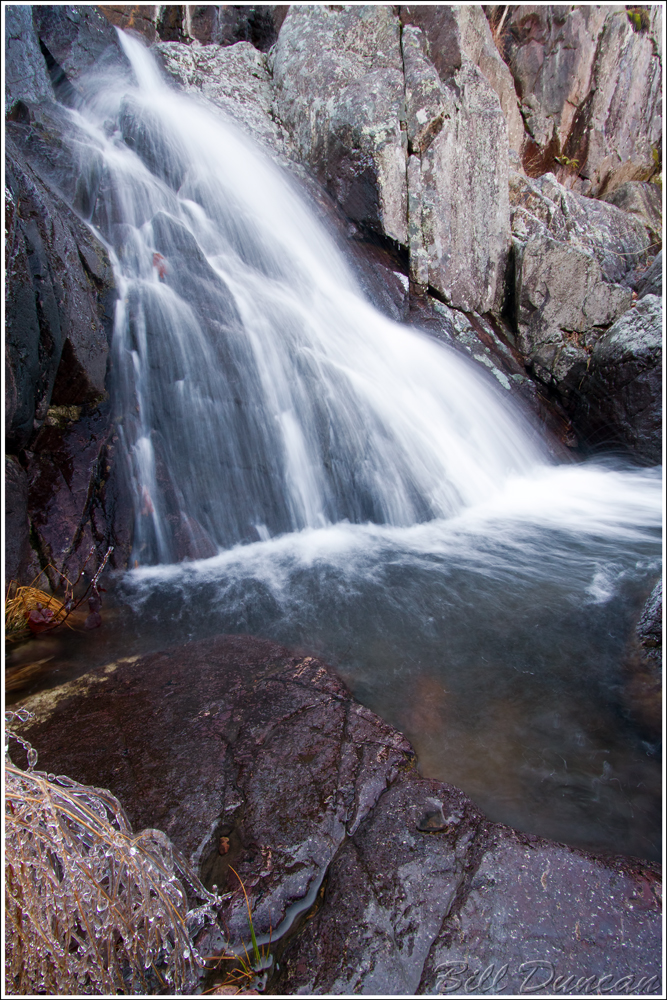
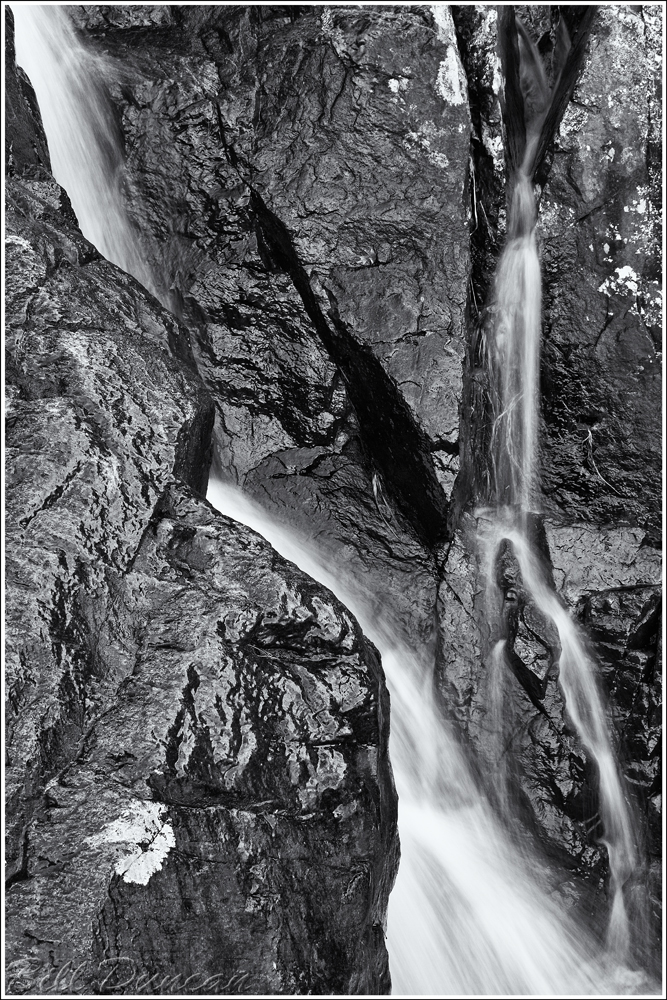
Early European settlers and pioneers of the Missouri Ozarks were said to be tough, rugged and individualistic.  The Ozarks were and still are a difficult place to “make a living”, especially  based on traditional agricultural methods.  I will suggest that these settlers had little imagination when it came to naming the geologic and other natural features of their newly found homeland.  In “The Geologic Wonders and Curiosities of Missouri”, Beveridge lists no fewer than 80 features with Devil in the title.  This includes 25 “Devil’s Backbones” and close to ten “Devil’s Den’s”.  Beveridge makes the interesting comparison of the Missouri Ozarks naming conventions to those of the south-western United States which use Angel in a large number of their names for geological features and rarely use Devil.  This is likely due to the cultural differences between the settlers of the Ozarks, largely Scots-Irish, and the Latin/Spanish influences of the American south-west.  Beveridge accounts for no named surface feature in Missouri with Angel in the monicker.

Technical details: Canon EOS 7D camera, EF24-105mm f/4L IS USM lens @ 24mm, ISO 160,  f/14, 1/3 sec

My goal for this particular winter’s morning was to find a “Devil’s Den Hollow” purported to be found in Warren County in the northern Ozark area.  I believe I was pretty close to finding the location, with several runs of rapids and waterfalls so excellently described in Beveridge’s book, but ultimately gave up because it seemed to be surrounded by private property.  I was able to find this little feature presented in this post.  I am unsure whether it has an existing name of its own, but I am calling it Devil’s Shadowbox to continue our Ozark naming convention.

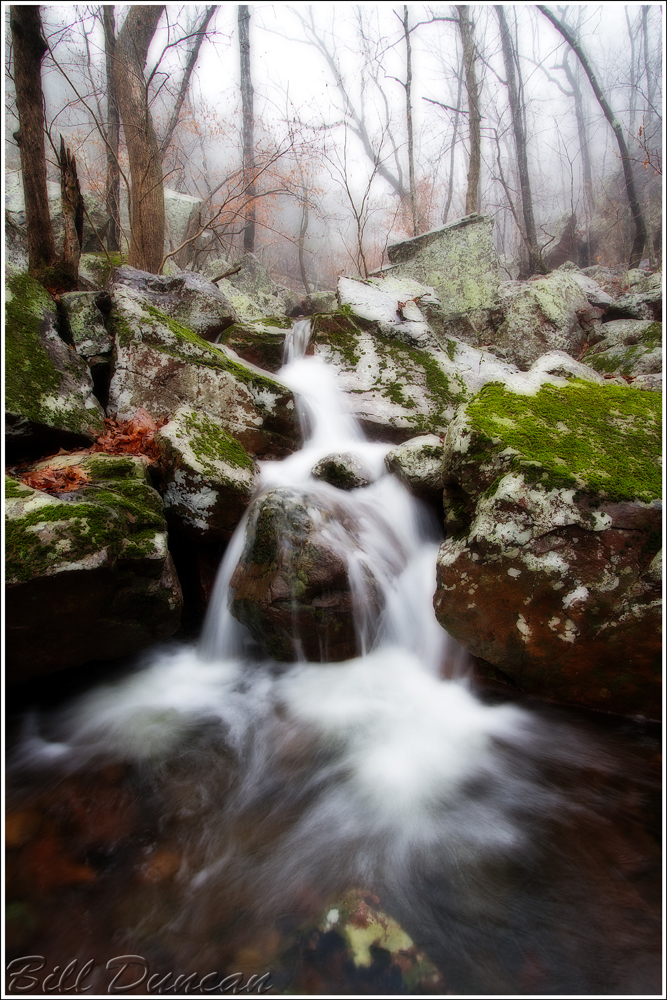
Technical details: Canon EOS 7D camera, EF24-105mm f/4L IS USM lens @ 65mm, ISO 100,  f/14, 0.8 sec

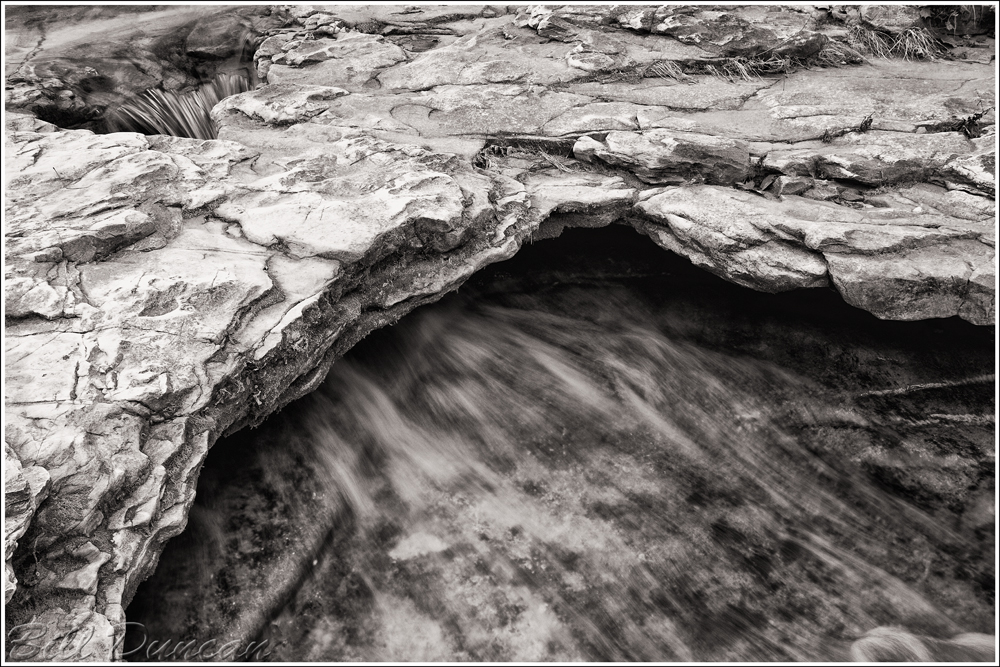
Devil’s Shadowbox was also on private property but was literally feet from the road.  I decided to beg forgiveness if necessary and spent an hour working the scene.  I didn’t see another person the entire time I was there.  The water level was low enough that I could stroll through the creek with my Gortex-lined hiking boots.  My feet did stay dry but the water had to have been close to the freezing mark and my feet where painful and numb by the end.

Technical details: Canon EOS 7D camera, EF24-105mm f/4L IS USM lens @ 32mm, ISO 100,  f/16, 0.8 sec

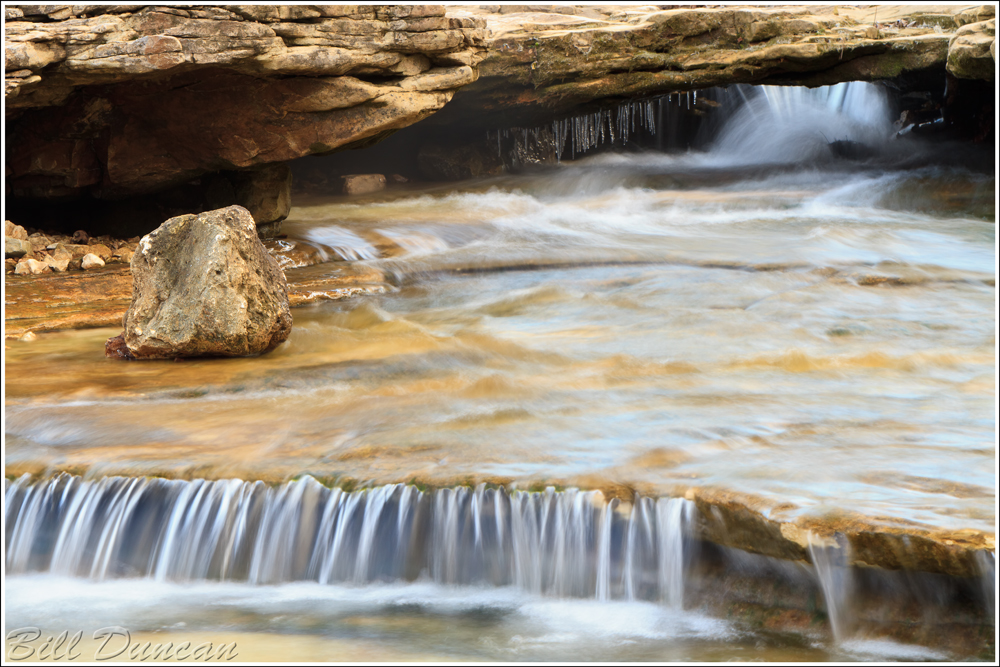
This relatively un-flashy feature actually had a few small pieces that came together nicely.  Above you can see a short (4-6″) shelf that crosses the stream.  This shelf lies just downstream from the hole/natural arch.  There may be some potential here depending on what the spring foliage looks like.  Too much water, however may take something away from the geology that is visible under these conditions.

Technical details: Canon EOS 7D camera, EF24-105mm f/4L IS USM lens @ 24mm, ISO 160,  f/14, 1/5 sec

I really do try and respect the rights of the property owners while out on my expeditions.  The problem is finding out who owns the property in question and how to contact them to ask permission.  From what I’ve read, in most circumstances the owners of the property have no problems allowing hikers, photographers and explorer types access to their property.  If you have any familiarity with this feature or have any knowledge concerning Devil’s Den Hollow in Warren County, Missouri please let me know.  I will be forever grateful to find out anything else that would help me find and make a lawful visit to the waterfalls and other features this place promises.

Bill Duncan: ceibatree@gmail.com