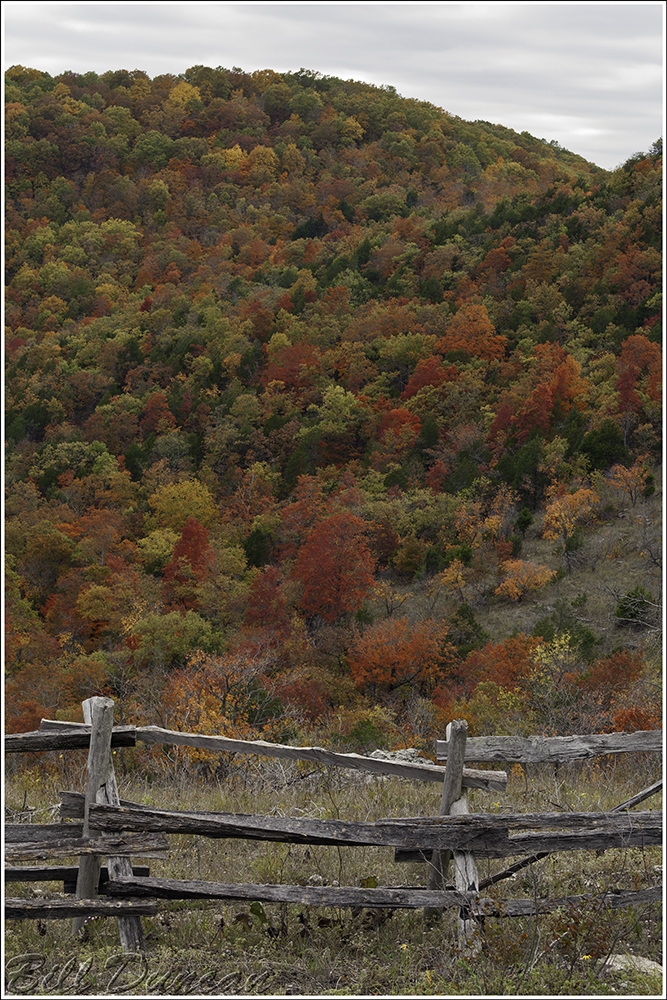
“Song Sparrow, Autumn 2012”
"What a thousand acres of Silphiums looked like when they tickled the bellies of the buffalo is a question never again to be answered, and perhaps not even asked." -Aldo Leopold
“Song Sparrow, Autumn 2012”
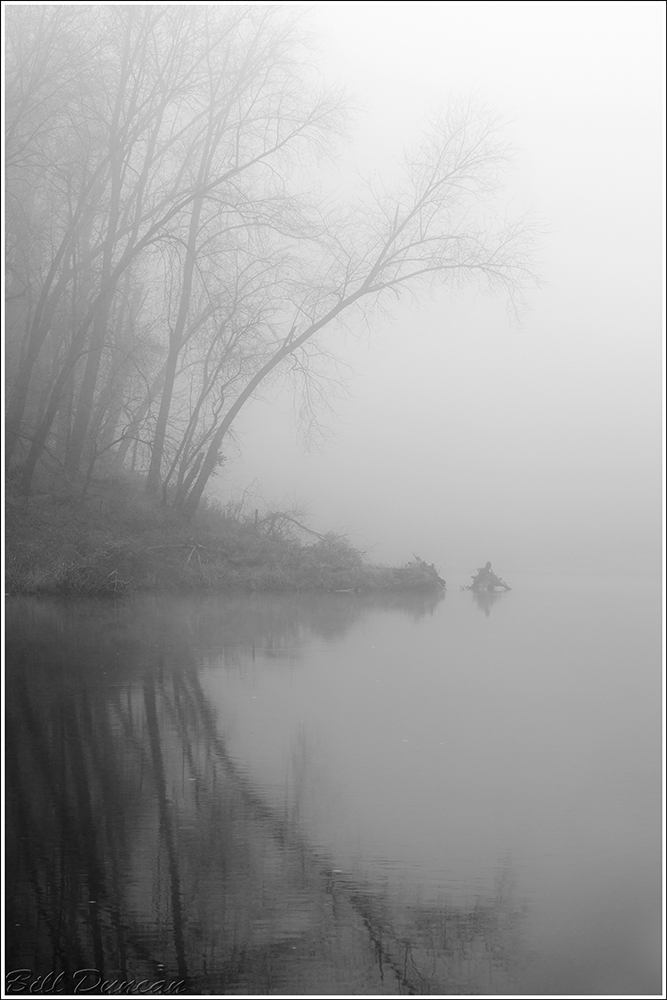
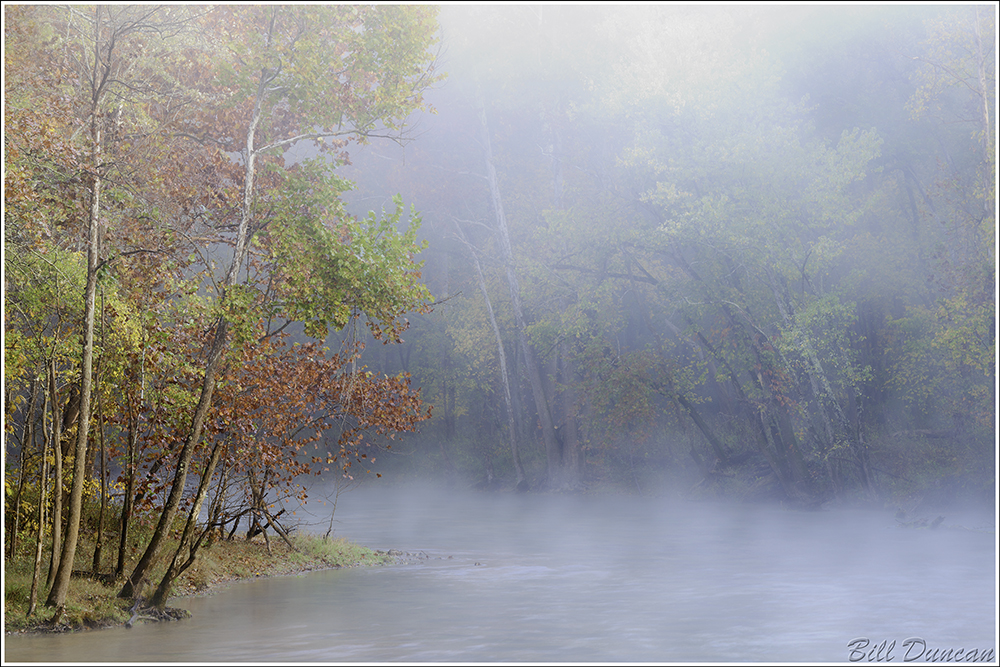
It’s the day before Thanksgiving. I was fortunate again to be able to have most of the week off of work. This day I decided I would allow myself the uncommon treat of “sleeping in” and catching up on some rest, allow myself some down time. I rarely do this and I think it helps to “turn off” every now and then to help slow down, to say, it is OK to not be productive. So that was the plan, and I even stayed up pretty late. Then, just a scant few hours after I shut my eyes, I hear a voice, far off. Eventually I realize it was Sarah trying to convey some sort of message. I believe she had to repeat herself no fewer than four times before I comprehended – “The weather guy is saying this may likely be one of the foggiest days in St. Louis history.” She knows I am a sucker for a foggy day. Because we live so far from many of the great nature scenes, more often than not, I cannot get to a destination before the typical morning ephemeration has burned down. Figuring this would likely be the case on this particular morning, I almost said forget it, and went back to sleep. But, as Sarah knew, I would definitely have kicked myself repeatedly if I at least did not get out and try. If nothing else, the least I would get is a nice hike on a beautiful morning. I chose the relatively close Castlewood State Park. Sarah and I had recently tackled a particularly scenic trail with bluff views along the Meramec River, and I knew that a thick fog could be used well for a dramatic composition. Here are a few images I’ve had the opportunity to process so far. My “immortal thanks” to Sarah for waking me and to Mr. Whitman for his lines that follow.
To think of time – of all that retrospection,
To think of today, and the ages continued henceforward.
Have you guess’d you yourself would not continue?
Have you dreaded these earth beetles?
Have you fear’d the future would be nothing to you?

Is today nothing? is the beginningless past nothing?
If the future is nothing they are just as surely nothing.
To think that the sun rose in the east – that men and women were flexible, real, alive – that everything was alive,
To think that you and I did not see, feel, think, nor bear our part,
To think that we are now here and bear our part.
Not a day passes, not a minute or second without an accouchement,
Not a day passes, not a minute or second without a corpse.

To think the thought of death merged in the thought of materials,
To think of all these wonders of city and country, and others taking great interest in them, and we taking no interest in them.
To think how eager we are in building our houses,
To think others shall be just as eager, and we quite indifferent.
Slow-moving and black lines creep over the whole earth – they never cease – they are the burial lines,
He that was President was buried, and he that is now President shall surely be buried.
“A sense of history should be the most precious gift of science and of the arts, but I suspect that the grebe, who has neither, knows more history than we do. His dim primordial brain knows nothing of who won the Battle of Hastings, but it seems to sense who won the battle of time. If the race of men were as old as the race of grebes, we might better grasp the import of his call. Think what traditions, prides, disdains, and wisdoms even a few self-conscious generations bring to us! What pride of continuity, then, impels this bird, who was a grebe eons before there was a man.”
-Aldo Leopold-
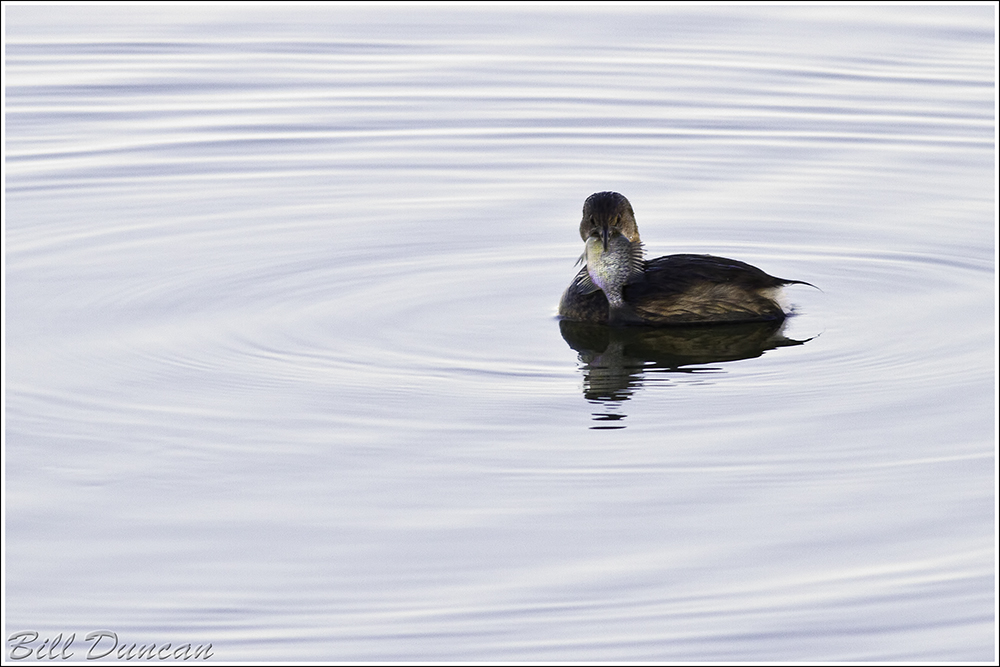
“Peid-billed Grebe with Fish”
“The outstanding characteristic of perception is that it entails no consumption and no dilution of any resources. The swoop of a hawk, for example, is perceived by one as the drama of evolution. To another it is only a threat to the full frying-pan. The drama may thrill a hundred successive witnesses; the threat only one – for he responds with a shotgun.”
-Aldo Leopold-
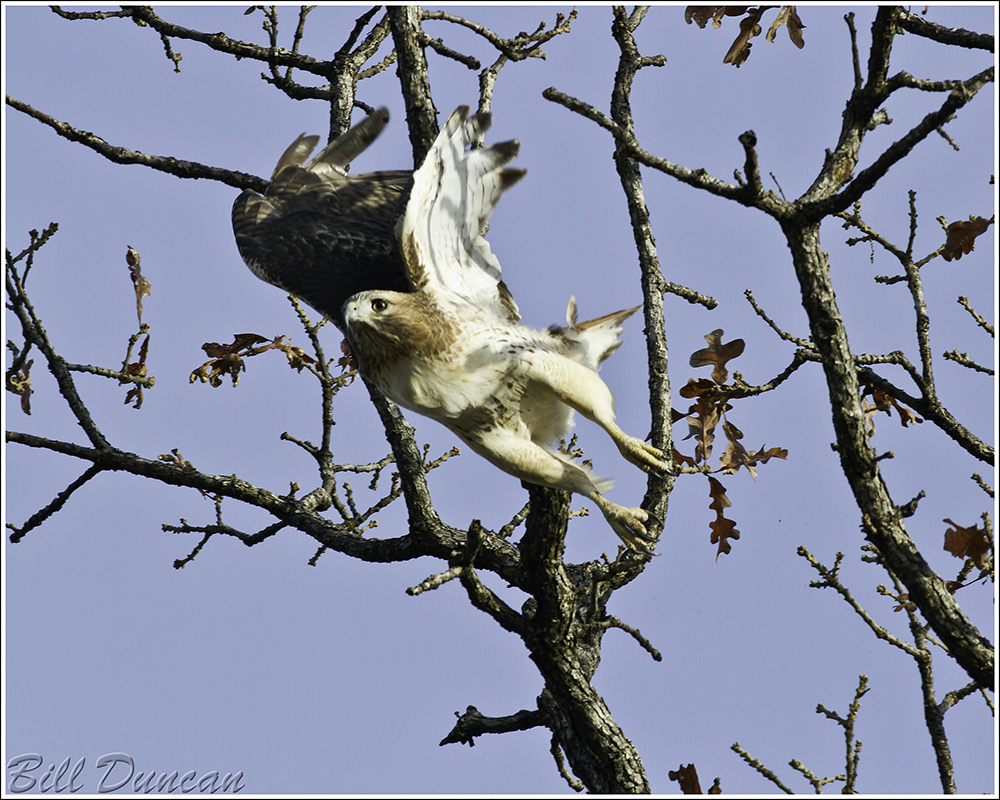
“Red-tailed Hawk”
“That thing called ‘nature study’, despite the shiver it brings to the spine of the elect, constitutes the first embryonic groping of the mass-mind toward perception.”
-Aldo Leopold-

“Tennessee Warbler – Autumn Migration 2012”
“No living man will see again the long-grass prairie, where a sea of prairie flowers lapped at the stirrups of the pioneer. We shall do well to find a forty here and there on which the prairie plants can be kept alive as species. There were a hundred such plants, many of exceptional beauty. Most of them are quite unknown to those who have inherited their domain.”
-Aldo Leopold-
Please here my plea in considering using plant species that were/are native to your geographic area the next time you consider a landscaping project. I have gotten a lot of pleasure from the couple of native wildflower patches I put into my yard. If you are a nature photographer or an appreciator of Nature and all her diversity, this is an excellent way to continue these passions while contributing to the conservation ethic. You may even suggest this to the companies you work for and organizations in which you are involved.

“The trophy-recreationist has peculiarities that contribute in subtle ways to his own undoing. To enjoy he must possess, invade, appropriate. Hence the wilderness that he cannot personally see has no value to him. Hence the universal assumption that an unused hinterland is rendering no purpose to society. To those devoid of imagination, a blank space on a map is a useless waste; to others, the most valuable part. (Is my share in Alaska worthless to me because I will never go there? Do I need a road to show me the arctic prairies, the goose pastures of the Yuckon, the Kodiak bear, the sheep meadows behind McKinley?)”
-Aldo Leopold-
No, I’m not talking Yankees or those pesky French-Canadians. The invaders I’m speaking about are rare northern birds that are moving further south than usual, including the Ozarks. I’ve been having some fun trying to find these rarities, and some of these we can’t even call rare this winter. During the past month Missouri has had multiple reports of sightings of at least these birds: Common Redpoll, Pine Siskin, Red-breasted Nuthatch, Red Crossbill, White-winged Crossbill and Northern Shrike. I have been able to photograph all these with the exception of the WWCB and CORE, but it looks as though I may have ample time to find these species yet.
In the five or six years I have been bird watching I can count on one hand how many times I’ve been able to see a Red-breasted Nuthatch. In the past month or two I’ve literally been able to spot more than 100 of these birds. It has been fun training my ear to discern the differences between the nasal call notes of the WBNH and the more nasal notes of the RBNH. From what I’ve heard and read the irruption southward of this species happens periodically every few years or so.
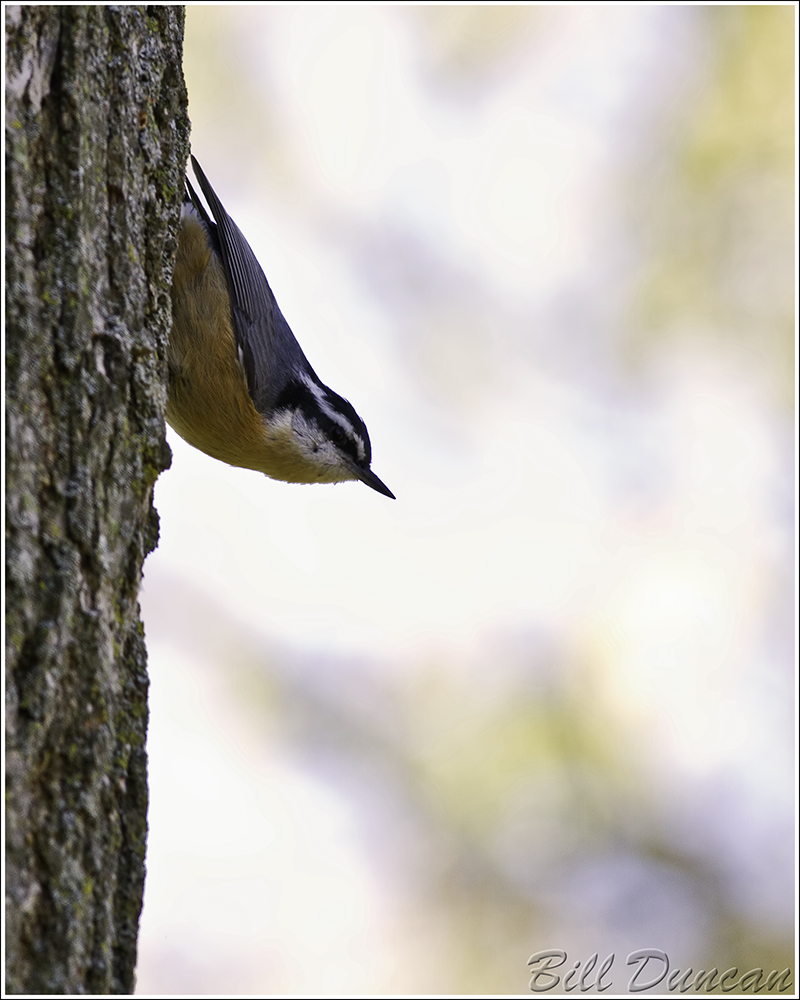
“Red-breasted Nuthatch”
Pine Siskins can also be found over most of Missouri right now. Almost always found in flocks ranging from six to thirty or more birds, these guys typically prefer to forage at the top of branches of seed-bearing trees, like this hemlock. Similar to the RBNH, this species is well known to have irruption years where they plunge southward in great numbers.
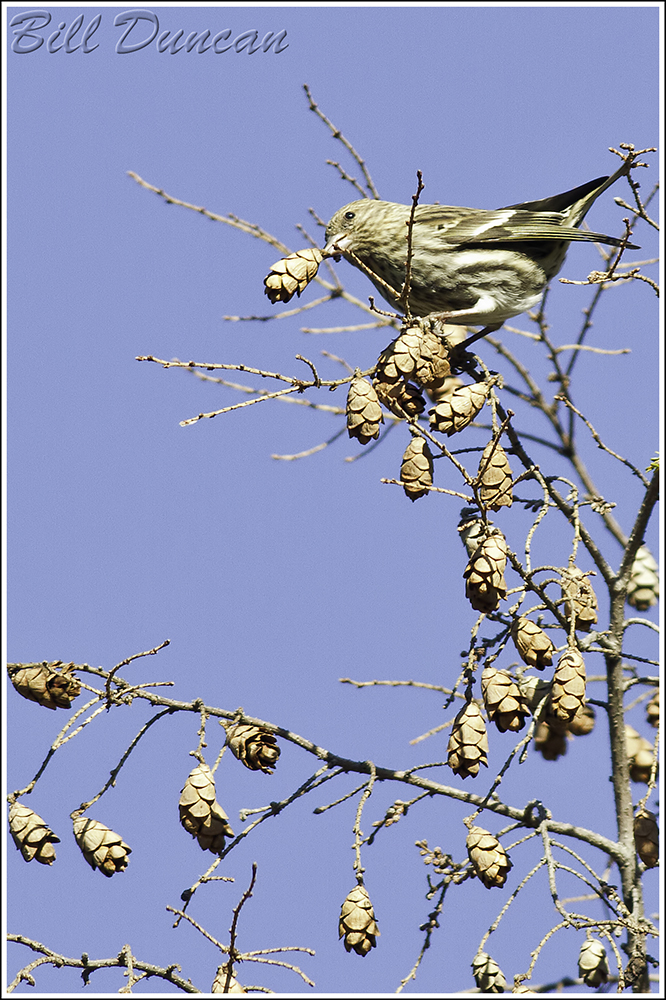
“Pine Siskin”
Not only was this the first photograph of a Red Crossbill I was able to get, but it was a lifer for me as well. This was definitely an unexpected and exciting development in the StL area this year. These guys are feeding mainly on Hemlocks and Sweetgums in selected parks where these trees are found around the metropolitan area. You can just make out the characteristic crossed-bills in this photo, apparent adaptations for better removing seeds from the cones of tree species like hemlocks. Like I mentioned earlier, I have yet to photograph the WWCR, but I did get to see one lone individual briefly.
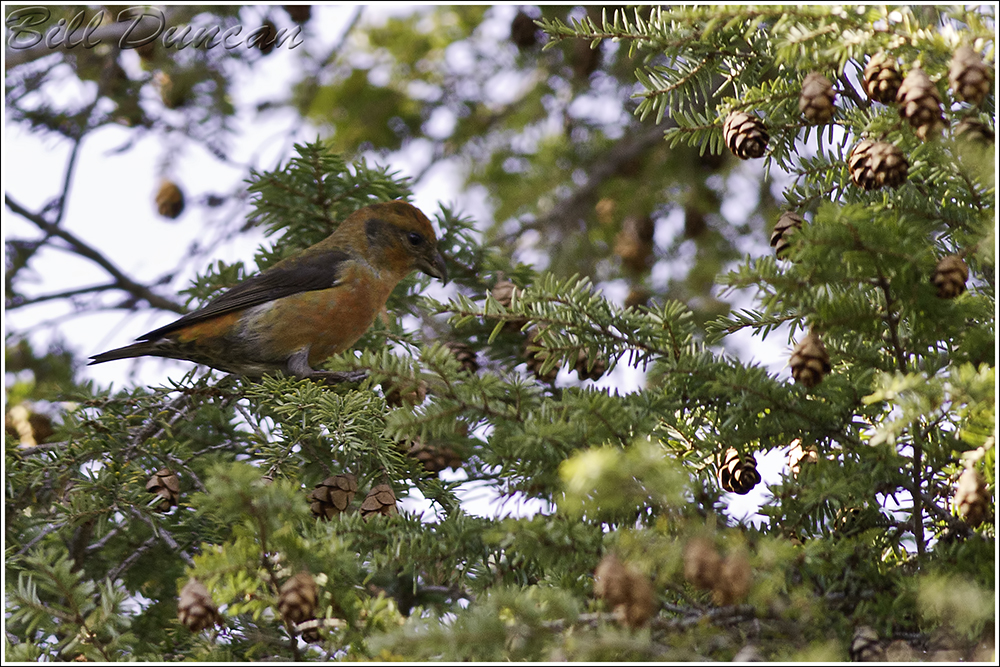
“Red Crossbill”
The next and final bird in this post is one of those special and unusual species for my tenure as a birder. The Northern Shrike is apparently much more uncommon in Missouri than the Loggerhead Shrike. I believe this is the forth NOSH I have seen and I have yet to see a LOSH. It seems that the NOSH might find something it likes around the StL area, where they seem to have been spotted more frequently. For any “non-birder” reading this, if you do not know about the Shrikes, look them up now. These birds are too cool for school and I love watching them. Check out this interesting link for more information.
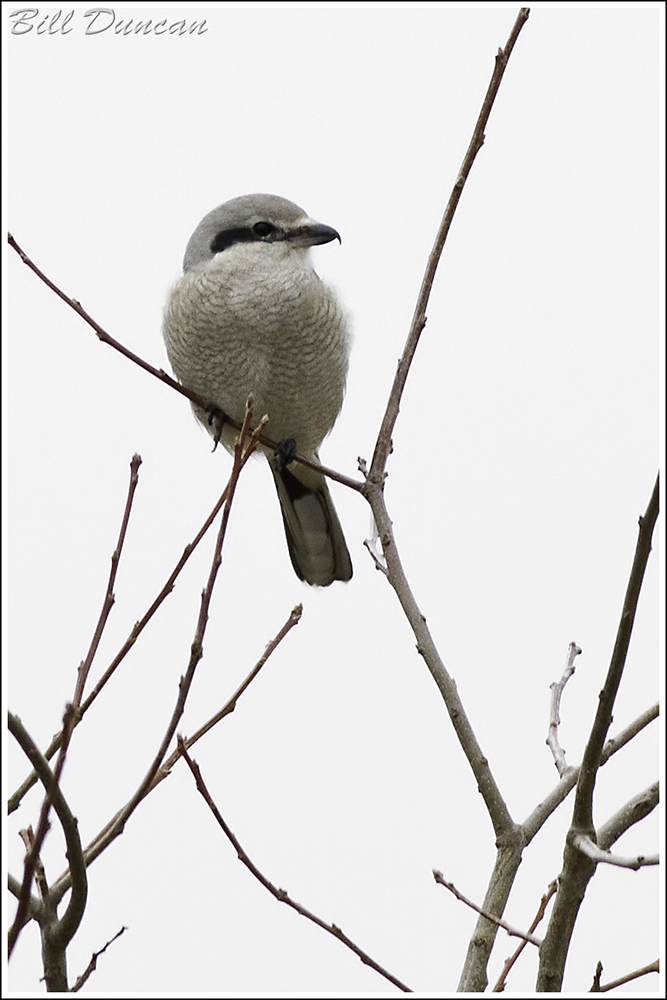
“Northern Shrike”
During my hunt through the fields of this nice little park, located in the western outskirts of the StL metro area, I was stoked to be able to find three short honey-locust trees that this bird was using as food caches. There are several reasons proposed for the uses of these caches, including use as a food reserve, territory marking and attracting mates. All three of these ideas sound like they could be plausible. These birds will use barbed-wire to do this as well, and sometimes small vertebrates such as lizards, small rodents and even smaller song birds can be found stuck on thornes. Not only was I pleased to find these cache’s, but I am really excited about bringing my love for all things Lionel Ritchie, by using this photo’s title… ;=)
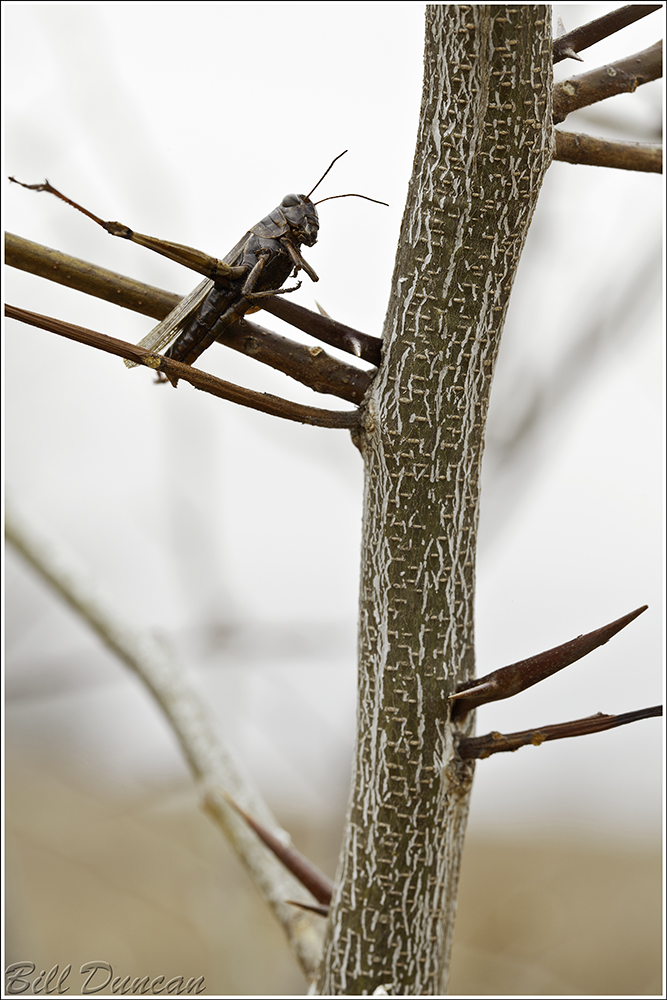
“…Yes I’m on my way, I’m mighty glad you stayed…”
Did you know…?
The YBSS can be identified from other woodpeckers by their drumming? Sapsuckers have a stuttering, Morse-code like cadence to their drumming. Listen for this the next time you are in the woods.

“Yellow-bellied Sapsucker”
“All this you surely will see, and much more, if you are prepared to see it, -if you look for it. Otherwise, regular and universal as this phenomenon is, whether you stand on the hill-top or in the hollow, you will think for threescore years and ten that all the wood is, at this season, sear and brown. Objects are concealed from our view, not so much because they are out of the course of our visual ray as because we do not bring our minds and eyes to bear on them; for there is no power to see in the eye itself, any more than in any other jelly. We do not realize how far and widely, or how near and narrowly, we are to look. The greater part of the phenomena of Nature are for this reason concealed from us all our lives.”
-Henry David Thoreau-