"What a thousand acres of Silphiums looked like when they tickled the bellies of the buffalo is a question never again to be answered, and perhaps not even asked." -Aldo Leopold
One has to love a plover. These birds are often the only obvious sign of life in some pretty rough places. Adorable little fluff balls, Snowy Plovers can be found on salt flats and beaches on the pacific and gulf coasts as well as deep into the Caribbean. There are also populations that nest inland, such as the ones we encountered in central Kansas. I was quite fortunate to find these birds on salt flats in Kansas as well as Puerto Rico within a month apart… 🙂
Snowy Plover
Steve and I encountered somewhere in the neighborhood of 3-5 active nests during our early May visit to Quivira. Unfortunately, no chicks decided to hatch while we were there. It was difficult to leave without seeing the little chicks.
Snowy Plover
Most populations of Snowy Plover are doing well, relative to other Plover species. This inland nesting population is the only population that does any real migrating, coastal populations typically stick to one area of coast.
Snowy Plover
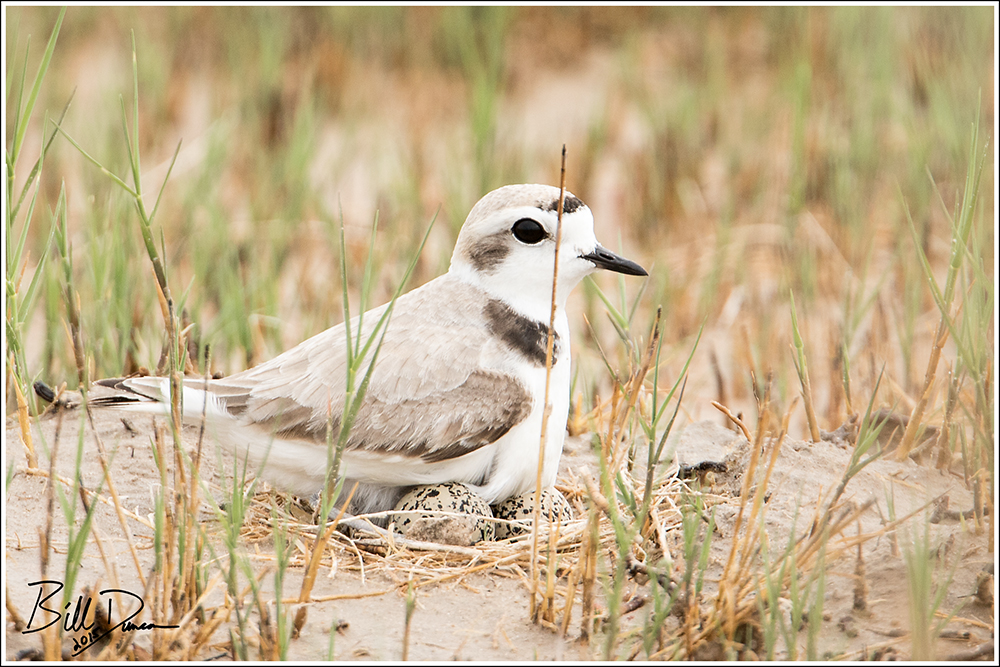
The little guy above is hiking through some of the salt tolerant vegetation that dominate these salt flat habitats.
Snowy Plover
Steve and I were tickled by the ability of these birds to live and work in constant 30-40 mph winds. Facing into the wind, the bird on its nest pictured above documents just that. We noted that when the parents left the nest, the eggs were placed such that they did not budge in the wind, although I am sure they lose heat quickly in such circumstances. Another one of my favorites… 😉
Talk about the place to eat. I had a great time watching these birds preening and carrying on over the mangrove patches at a fantastic Mediterranean style restaurant named Santorini Ocean Lounge Restaurant. Parts Greek, Spanish and Puerto Rican, seafood is the reason to dine here. Add the views of the Caribbean Sea, potential for birds, English menus and servers and craft beer, and there is no reason to eat anywhere else in the area near the Holiday Inn in Ponce.
Less social than the American White Pelican, the Brown Pelican usually hunts alone and frequently dives for its food. The American White is considered accidental as far south as Puerto Rico, but the Brown is quite common across southern shorelines. This bird kept eyeing my seafood paella.
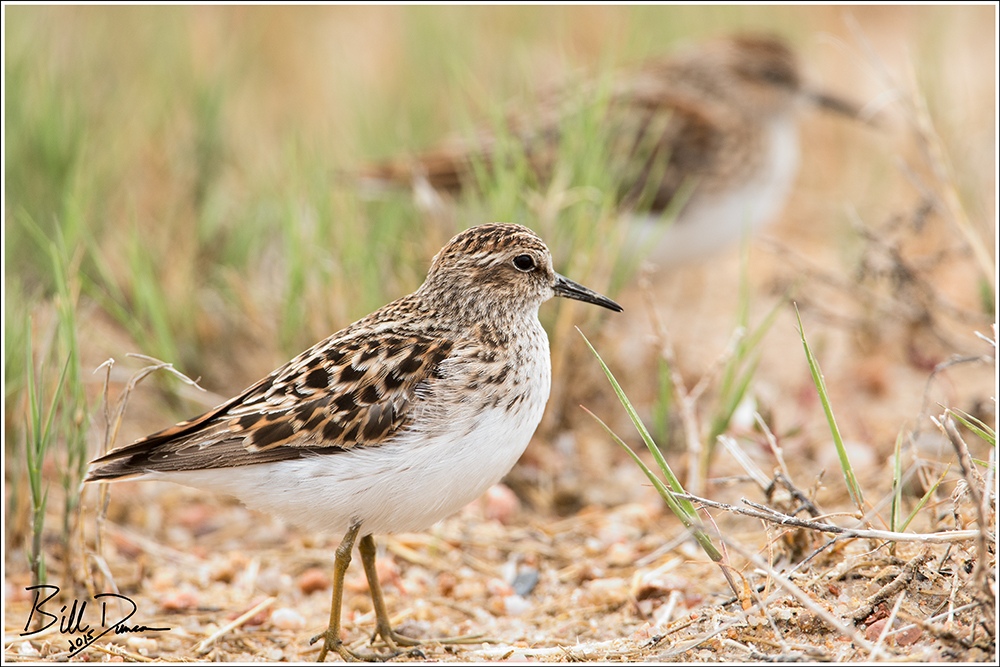
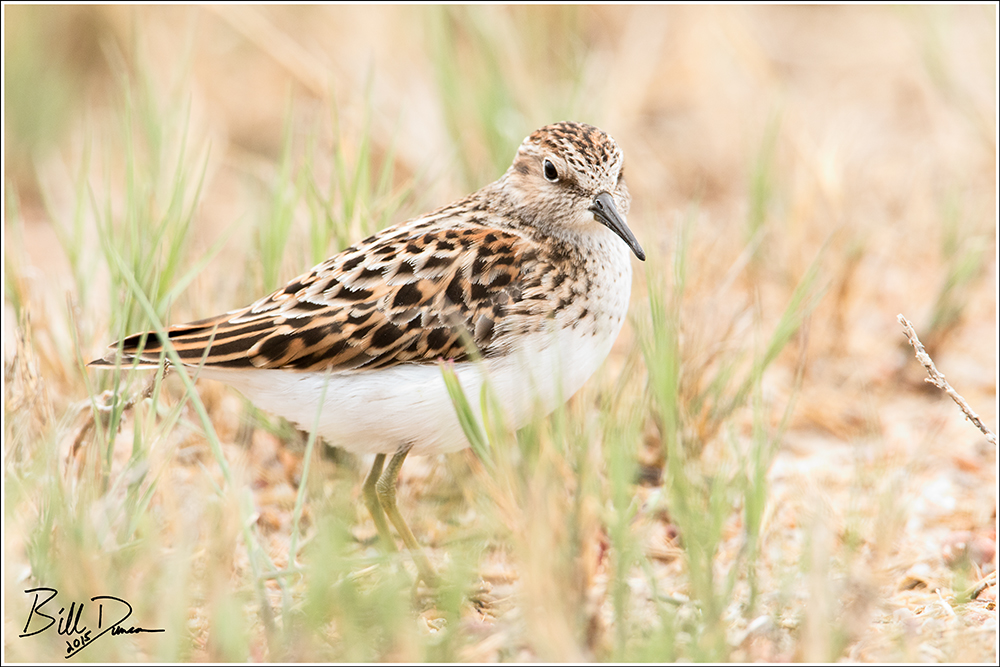
Peeps, or “stints” if you find yourself in the old world refer to a group of small shorebirds in the genus Calidris (formally Erolia). The smallest of the peeps, and therefore, all shorebirds is the Least Sandpiper, which is also one of the more abundant shorebirds to travel through the interior of the United States on its way to its near-arctic nesting grounds.
Least Sandpiper
Peeps are notoriously difficult to identify, but much depends on the circumstances. During winter, with few other species or birds available for comparison, it can be quite difficult. In breeding plumage, with other Calidris species in near proximity, proper identification will be easier with a little practice. There are plenty of resources to help you with identification, so I will not repeat those here. The Least Sandpiper is one of the more tame of the shorebirds, often coming quite close to a patient birder.
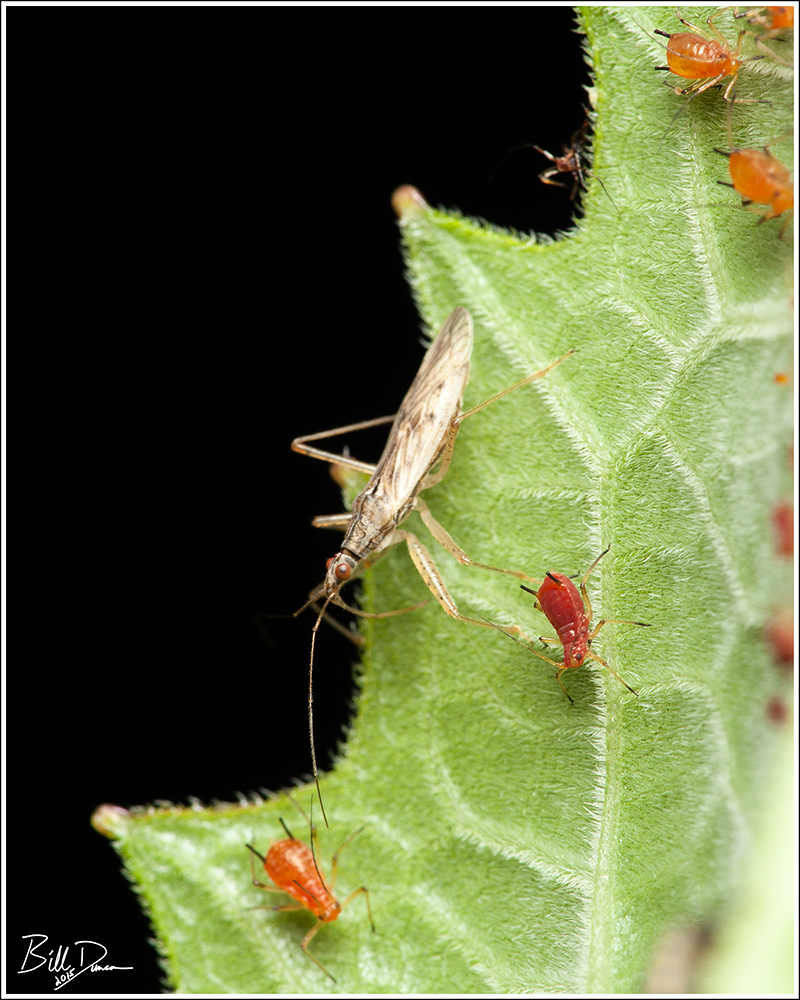
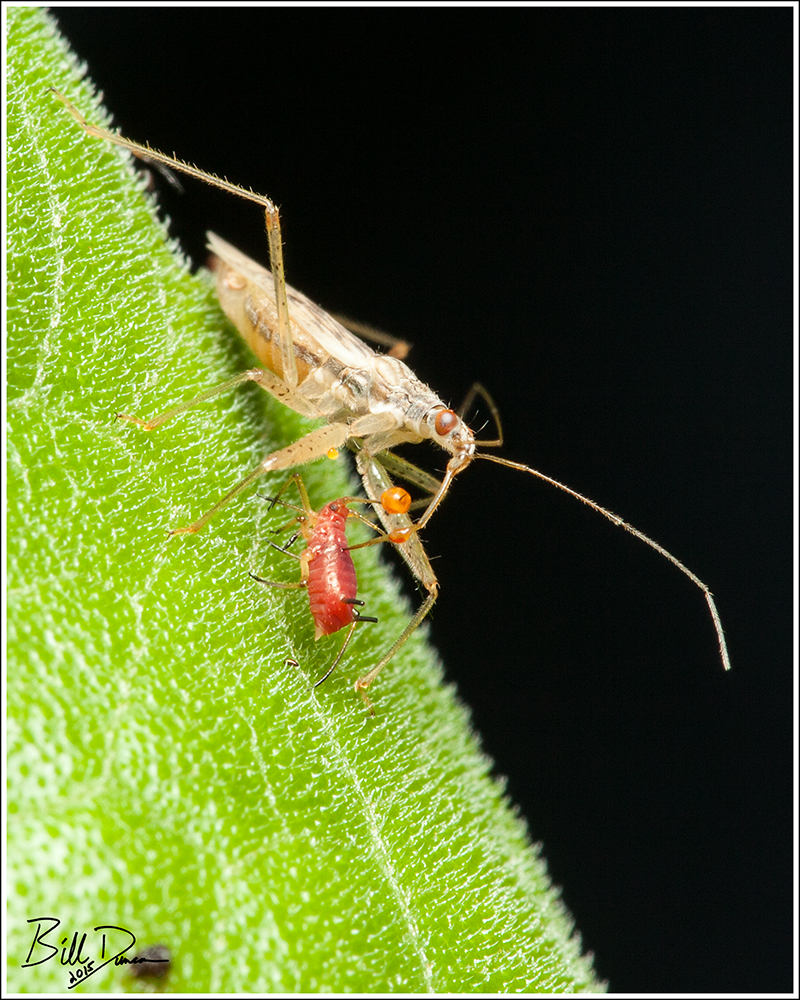
I imagine the conversation may have went something like this…
Aphid (with a cockney accent, of course): “Oh, hello, who are you then?”
Damsel: “Name’s Damsel…” “Oh, that’s a lovely name. My name is Aphid.” “No, I think I’ll call you ‘Sugar Bag.’ “ “Sugar Bag? Now that doesn’t sound Aghhh!…”
😉
Sugar Bag
I caught a glimpse of this guy early one morning patrolling around the surfaces of my rosinweed and decided to watch. I didn’t wait long to observe the hunt. This bug is definitely in the family Nabidae, and I am going to call this one the common damsel bug, Nabis americoferus, due to it matching a few photos and the fact that this is considered to be the one of the most common hemipterans in the United States.
Nabis
I have read that these guys overwinter as adults and have a wide selection in the prey they choose. It seems that if it is smaller than they are, or close in size at least, they will poke it and suck out their hemolymph. Like I said, “damsel” in name only…
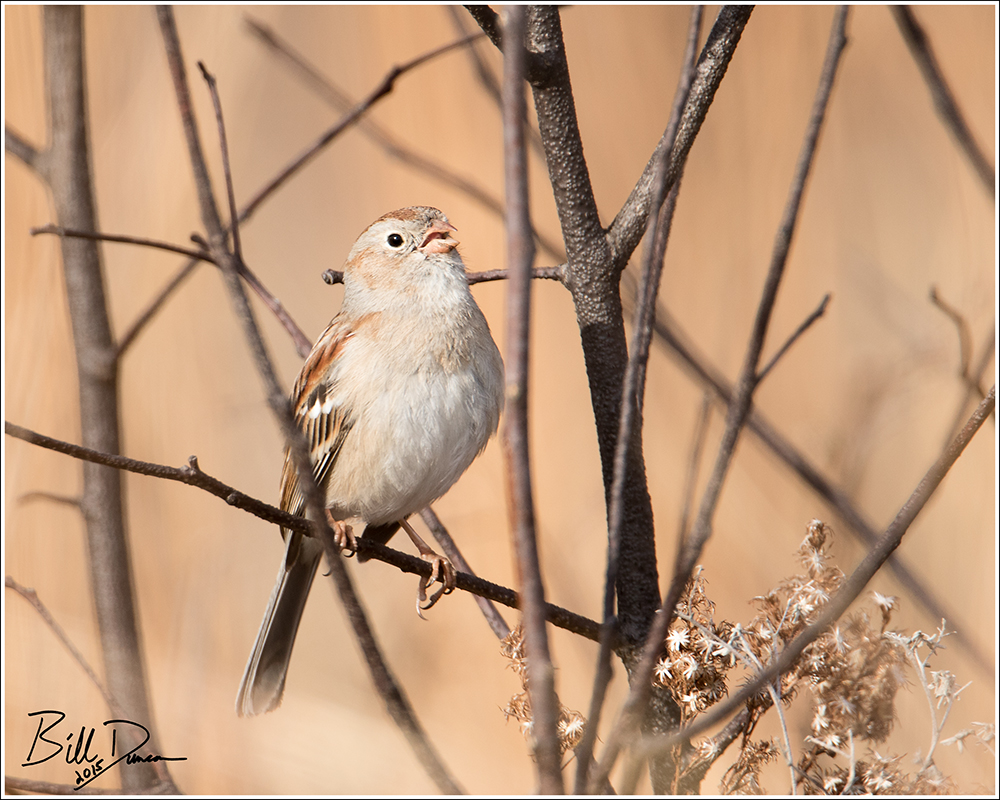
Birds of the wetlands are definitely the primary attraction and our focus for our visit to Quivira NWR. But, of course, we had to keep an eye out to see what “land birds” we could find. Quivira has a few wood lots to explore on foot, but is setup splendidly for birding from a vehicle. Driving near some shrub, we heard that familiar song. It took Steve and I a couple repetitions, but we eventually ID’d the singer by voice and waited for him to make an appearance. This one turned out to be one of my favorite images of the trip.
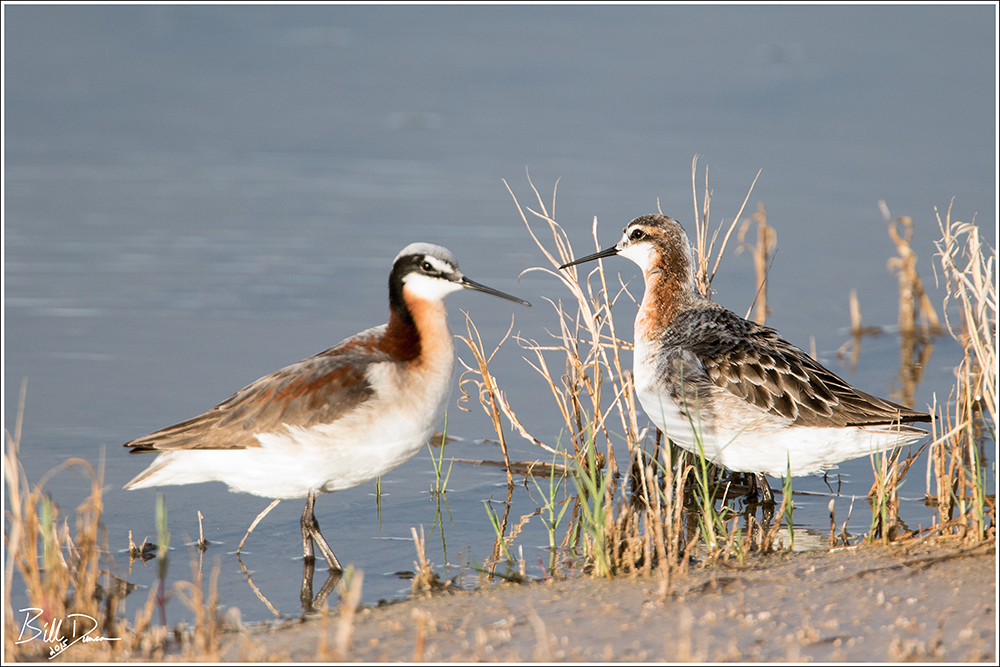
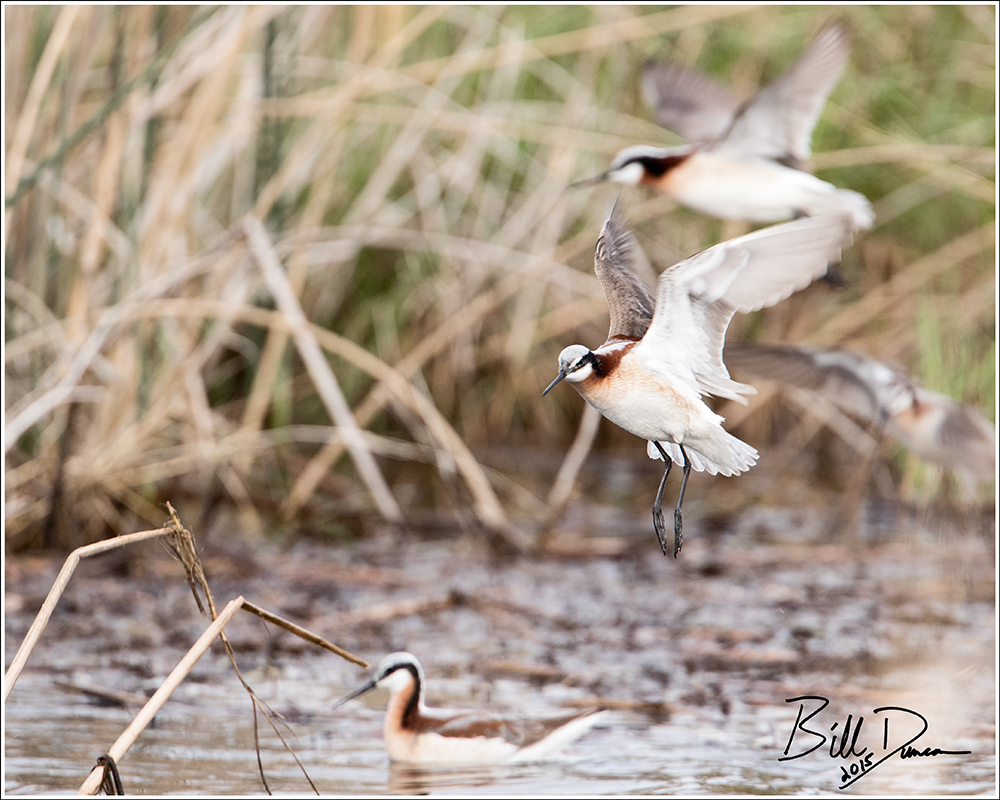
The Phalaropes are quite the interesting group. First of all, two of the three species are considered pelagic – meaning they spend a great part of their time out at sea, away from visible land. The Wilson’s Phalarope, pictured throughout this post was the most abundant of the shorebirds during our visit to Quivira NWR, and do nest within the refuge. The Phalaropes exhibit reverse sexual dimorphism – both in visual and behavioral characteristics. This means that females are the more brightly colored of the sexes. Similarly, the females display and fight for males. The males will immediately take over the responsibilities of incubating the eggs and raising the chicks, while the polyandrous female will attempt to find and mate with other males. See the photo below of a relatively drab male with his mate.
Wilson’s Phalarope Pair
After reading of this role reversal in a field guide recently, of course I had to find out why. This is not an easy one to answer. Do a quick search and terms like Operational Sex Ratio (ratio of sexually active males and females in a given time and place) and Potential Reproductive Rate (potential offspring production rate if mate availability is unlimited) and Bateman’s Principle (in most species, reproductive success is more variable in males than in females – primarily due to anisogamy) come up often.
Wilson’s Phalarope
So what forces add up to cause this reversal in sexual selection (females competing for males – males choosing females)? Ultimately, this is quite a complex question to answer, and I cannot begin to cover all possible variables that affected this change. The primary changes that had to occur in these species is that OSR of males and females had to be skewed to a situation where females outnumber males in mating opportunities. This produces a scenario where females are forced to compete for males. There are anecdotal accounts of males actually competing for females in this species when the OSR switches to favor males (although males still kept their brood-rearing responsibilities). Another aspect to this model is that PRR must shift so that females can reproduce at rates close to that or greater than males. For instance, nesting sites should not be limited based on other resources. And, similar to traditional sex role systems, the male must be pretty certain that the eggs and brood he will be caring for are his. Observational reports confirm very few extra pair copulations/fertilizations occur in species where this role reversal has developed.
Wilson’s Phalarope
I must admit I only have a hint at the factors that go into creating sexual role reversal in these birds. Obviously there are important endocrinological and physiological changes that must go with the social and environmental changes. Here are a few of the sources that I have used to get these thoughts together. I look forward to learning more about this interesting phenomenon.
Marcel Eens, Rianne Pinxten. Sex-role reversal in vertebrates: behavioural and endocrinological accounts. Behavioural Processes 51 (2000) 135–147.
Ingrid Ahnesjö , Charlotta Kvarnemo, and Sami Merilaita. Using potential reproductive rates to predict mating competition among individuals qualified to mate. Behavioral Ecology (2001) 12 (4):397-401.
Hanna Kokko and Pat Monaghan. Predicting the Direction of Sexual Selection. Ecology Letters (2001) 4: 159-165.
Mark A. Colwell. Shorebird Ecology, Conservation, and Management. University of California Press, Oct 17, 2010.
I had been watching this exquisitely camouflaged spider on this Common Milkweed (Asclepias syriaca) all week. This evening I noticed it had grabbed itself some tucker and grabbed the camera. In these two photos (not the same bee) check out the pollinium (pollen sacs) that are attached to the honeybee’s legs. This is quite the interesting pollination system that milkweed use. As an insect is having a meal on the nectar the flowers provide, the pollinium attaches itself to the leg of the visitor and is removed from the donor flower. Upon removal, the pollen sack is turned perpendicular to the receptor sight, known as the “stigmatic slit” – thus avoiding self-pollination. A few minutes or so later, as the insect is visiting other flowers, the translator arms begin to dry and that flat sack of pollen now orients itself to be able to fit in this slit – thus pollinating another flower. Often, these pollinium can attach to themselves, forming long, branched chains, which may increase the chances for successful pollination.
Obviously the honeybee is not the natural pollinator of milkweed, but this exotic insect is now the primary pollinator of A. syriaca and several other milkweed species. Scientists are unsure which native species were primarily responsible for this service prior to the introduction of the honeybee, or why they are not found in more abundance currently. With the current plight of both the honeybee and the monarch butterfly, it would be a wise thing to plant as many milkweed as we can in neighborhoods and in reconstructions of prairie habitats. So far my milkweed are looking good and I hope to collect plenty of seed this year (aphids really limited flower and seed production the last two years). So, if you are interested in planting some milkweed, let me know.
In that half-forgotten era, With the avarice of old, Seeking cities he was told Had been paved with yellow gold,
In the kingdom of Quivira-
Came the restless Coronado To the open Kansas plain, With his knights from sunny Spain; In an effort that, though vain,
Thrilled with boldness and bravado.
In the year 1540 a band of Spaniards led by ultra-badass Francisco Vasquez de Coronado set out to find the fabled “Seven Cities of Cibola” within the kingdom known as “Quivira”. You can probably guess why. The region was supposedly overflowing with rich mines of gold and silver, and New Spain was bound and determined to get some of that. Coronado’s righteous expedition, into what is now central Kansas, yielded no riches to return to the crown and was thus considered a failure.
Fast forward 475 years when a two-man expedition, this time based in the french port of Saint Louis, set out for the Kingdom of Quivera. This expedition would in fact find riches that Coronado wouldn’t have noticed unless they were hanging from his fire spit. Way back in early May (where in the world is time going?), Steve and I packed up the N.E.V. and headed west to Quivira NWR to observe one of the natural wonders of the great plains.
Long-billed Curlew
League by league, in aimless marching, Knowing scarcely where or why, Crossed they uplands drear and dry, That an unprotected sky
Had for centuries been parching.
But their expectations, eager, Found, instead of fruitful lands, Shallow streams and shifting sands, Where the buffalo in bands Roamed o’er deserts dry and meager.
This section of south-central Kansas (near the town of Great Bend) is a crossroads of different habitat type and is a critical staging area for migrating birds throughout the central flyway. Parts tallgrass prairie, shortgrass prairie, sand prairie, salt marsh, salt flats and fresh water wetlands – this region is used by birds of the east and the west. More than 340 species of bird have been documented within the NWR and it has been estimated that up to 90% of all shorebirds that use the Central Flyway (and up to 45% of all NA shorebirds) on their way to arctic nesting grounds will stop here and in nearby Cheyenne Bottoms Reserve to have a fill-up.
Blue Grosbeak
Back to the scenes more trite, yet tragic, Marched the knights with armor’d steeds; Not for them the quiet deeds; Not for them to sow the seeds
From which empires grow like magic.
For centuries the Europeans looked upon the prairie – particularly the short-grass regions of the great plans – as worthless desert. Although the livestock – cows and green-colored deere the Europeans introduced nearly extinguished these grassland habitats, these few low and wet patches were mostly spared and are now offered some, if imperfect protection.
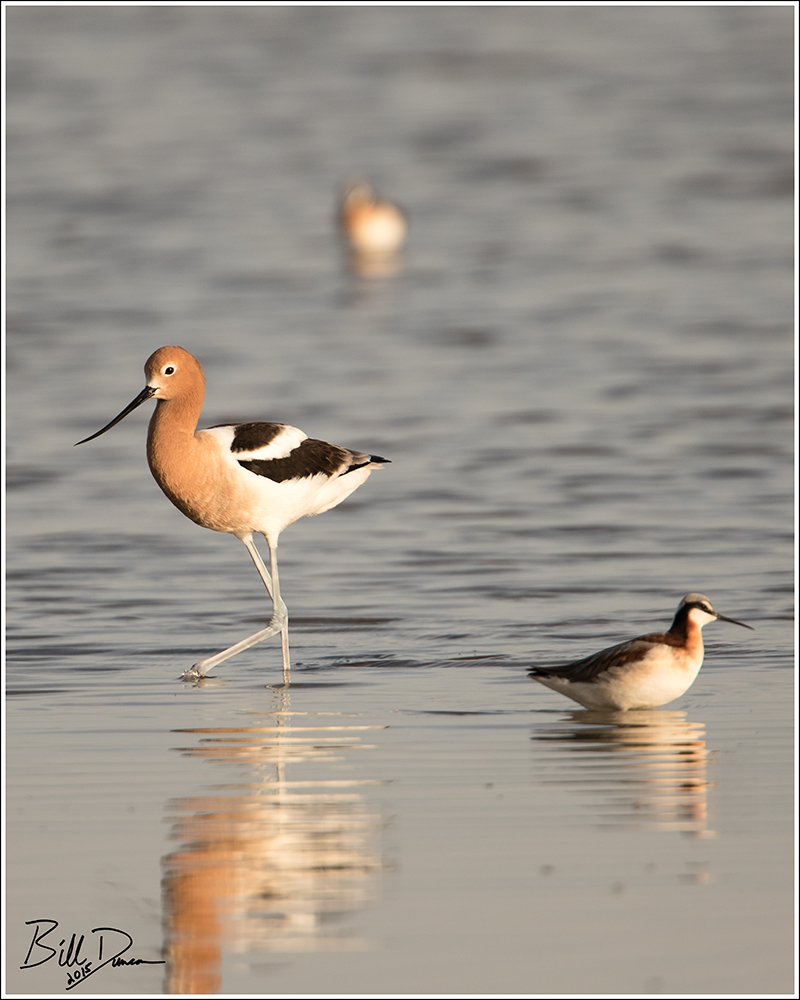
American Avocet and Wilson’s Phalarope
Thus Quivira was forsaken; And the world forgot the place Through the lapse of time and space. Then the blue-eyed Saxon race
Came and bade the desert waken.
— Eugene Ware —
It has been a crazy spring, with this trip, a short sail along the Jacks Fork and a puddle jump to the enchanted isle of Puerto Rico (another former Spanish colony). I will be sharing much more about the birds and ecosystems of the Kingdom of Quivira as well as the rest of these locals over the coming weeks and months.
Thanks so much for paying a visit and keeping in touch.
OZB
You can email me at: handsomeozarkbillyboy@gmail.com
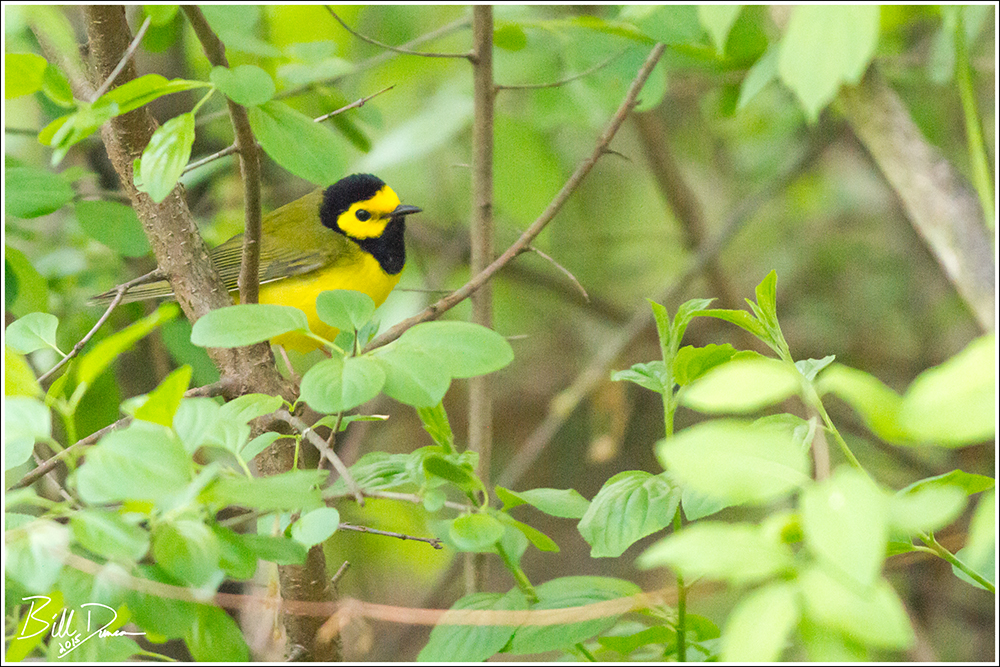
Here are a couple of pics of a Hooded Warbler that visited a favorite birding spot of mine a couple of weeks ago. Quite low light on a cloudy early morning, so I apologize for the grain and poor detail.













 A Thousand Acres of Silphiums