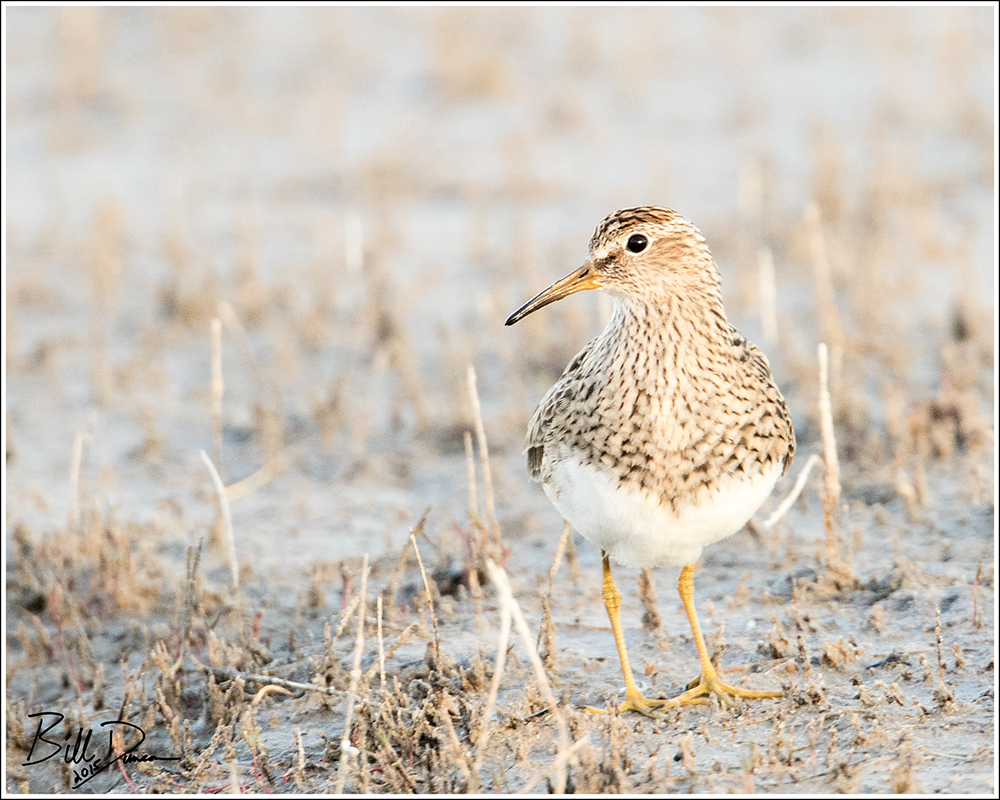
Birds of Quivira – The Thunder Boomer of the Great North (Pectoral Sandpiper)

Pectoral Sandpiper
Pectoral Sandpiper

One dream I have is to visit the tundra nesting grounds of the shorebirds in the arctic of northern Alaska and witness the territorial displays and nesting activities of these fascinating creatures.  Probably the species I am most keen on observing would have to be the Pectoral Sandpiper.
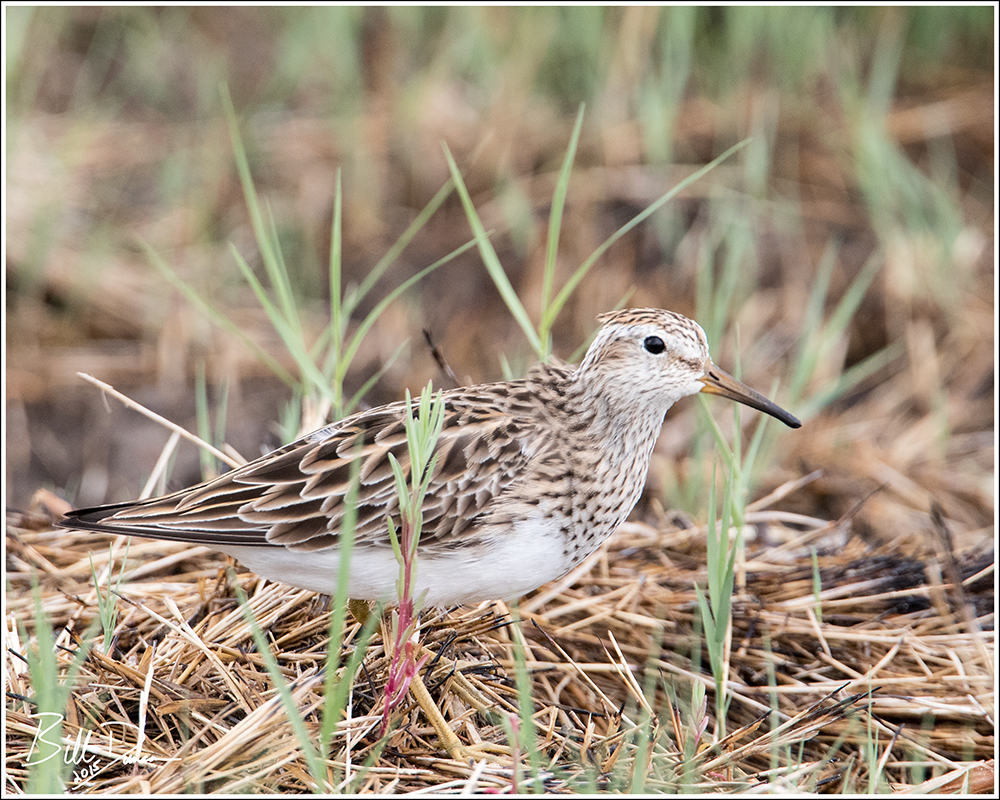
Pectoral Sandpiper
Pectoral Sandpiper

The “Pec” looks like a larger, slightly better dressed Least Sandpiper, and are relatively common to see during migration in Missouri.  It is when on the nesting grounds when this “pre-lek” species shows its true colors.  Watch this video and this video.  Their “thunder booming”, reminiscent of a Prairie Chicken,  while in flight display is truly impressive and can be heard here:

http://www.xeno-canto.org/139702/embed?simple=1
Pectoral Sandpiper
Pectoral Sandpiper

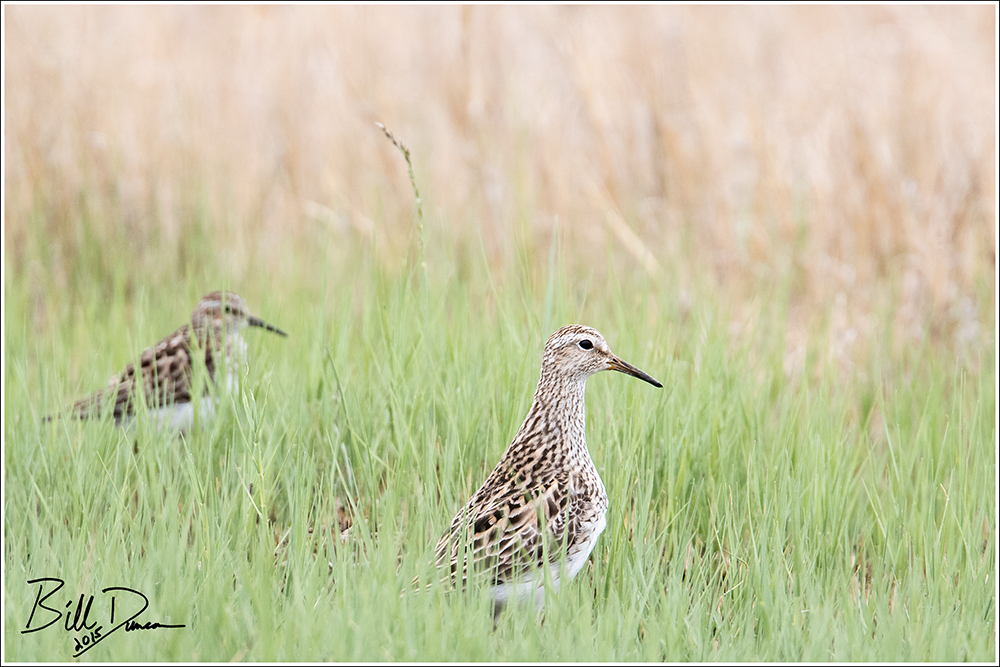
As the above photo suggests, this is a species more comfortable with its feet in grass than on the sand or mud, such as typically found with other calidrids.

Well, see you in Alaska one lovely summer day.  😉

Thanks for stopping by.

OZB
email: handsomeozarkbillyboy@gmail.com

Those Sexy Syrphids

Time Flies Like an Arrow... Hover Flies Like a Flower
Time Flies Like an Arrow…
Hover Flies Like a Flower

Anyone who has spent any amount of time studying flowers in the backyard garden has at some point noticed Syrphid flies.  Known as hover flies, flower flies, bee flies and other names, this group is most well known for mimicking bees and wasps (Batesian mimicry).  This small guy was captured feeding on my Ohio Spiderwort this spring.

Bee Fly
Bee Fly

This is quite the important group of insects.  The Syrphids are major pollinators for numerous flowering plants, potentially as important as native bees in this service.  Larvae in this group may feed on rotting vegetation and many species will feed on aphids and other plant pests.  The rather large bee fly pictured above was found feeding on a Common Milkweed in the backyard.

Syrphid Sensuality
Syrphid Sensuality

Eating and making baby Syrphids…  If it isn’t already on a T-shirt, it should be.  I often find these guys doing the Diptera 12-step in my backyard.  If we did that, we’d be thrown in jail!

Thanks for stopping by…

OZB
email: handsomeozarkbillyboy@gmail.com

Snowberry Clearwing Moth

Snowberry Clearwing
Snowberry Clearwing

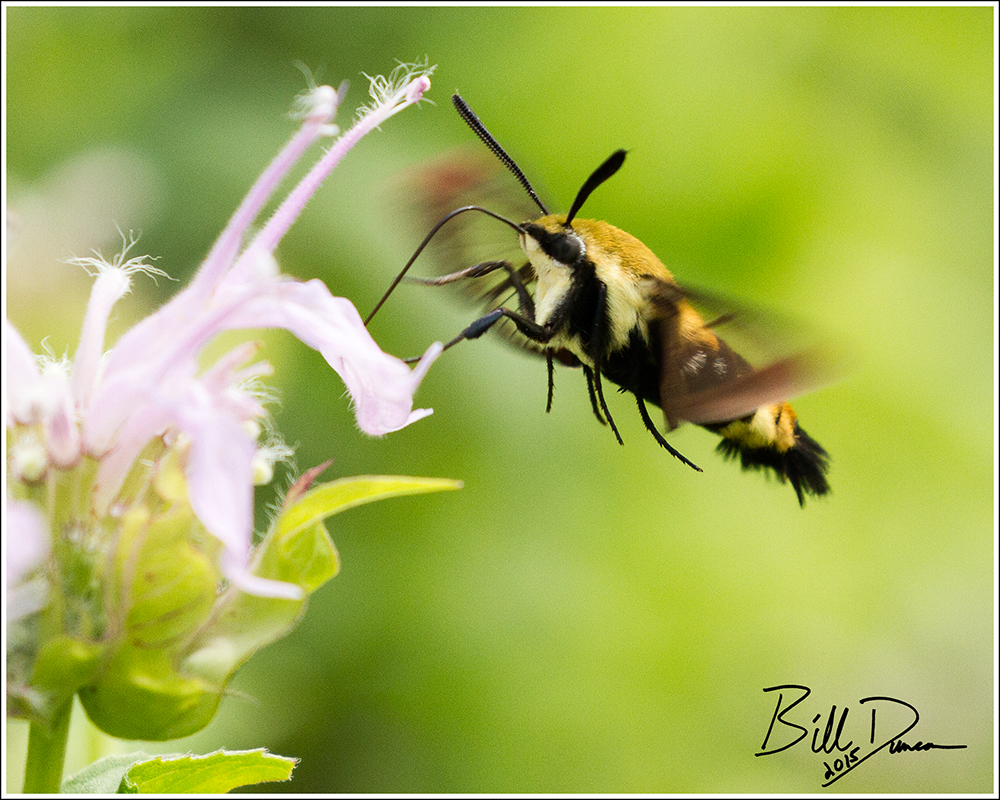
The Snowberry Clearwing is a member of the Sphinx Moths (AKA Hawk Moths).  Its name comes from the fact that one of this species important larval foods is the Snowberry plant.  Sphinx moths are important pollinators and are often mistakenly identified as Hummingbirds or Bumble Bees due to their size and their habits of visiting flowers.  Most Sphinx Moths are active nocturnally or at dawn and dusk, but the Snowberry Clearwing is diurnal.  One Missouri favorite, the Missouri Evening Primrose of glade habitats, shares an obligate pollination mutualism with a species of Hawk Moth, meaning that no other animal can provide pollination services for this plant.  This is a photography project someday in the future!

A Sphinx Moth
Not a Humingbird…


The caterpillars of these moths are known as “hornworms”, and they are just as fascinating as the adults.  Included in this group is the Tobacco Hornworm, which is a notorious pest on tomato plants.  A useful natural controller of hornworms are the parasitoid braconid wasps that lay their eggs on the developing moth and whose larvae then eat the caterpillar from the inside out.

Not a Hummingbird...
A Sphinx Moth

Next time you are in the garden, take a closer look at that bumblebee or hummingbird.  It might not be what you assume it to be!

Thanks for visiting…

OZB
email: handsomeozarkbillyboy@gmail.com

Birds of Quivira – Semipalmated Sandpiper

Semipalmated Sandpiper

The Semipalmated Sandpiper is the “middle child” of the three trickiest of the peeps.  At certain times of the year, it can be downright difficult to distinguish the “Semi” from a Western, but under most conditions it should be relatively straight forward telling this bird apart from the Least Sandpiper.  Minor differences between the Least and the Semi include the Semi being slightly larger, slightly grayer and containing more white on its breast.  The primary differences, however, can be seen in the legs.  The legs of the Semi are black and its toes are partially webbed, contrasting with the clean toes and yellow-green legs of the Least.

Semipalmated Sandpiper

The Semi is a long-haul migratory bird.  These little ones winter throughout Central and South America and nest in the arctic and high arctic regions of North America.  To reach these nesting grounds, these birds will fly nonstop for up to several thousands of miles, only stopping at important staging grounds such as the salt flats of Quivira.

Thanks for visiting.

OZB
email: handsomeozarkbillyboy@gmail.com
 

Birds of Quivira – Xanthocephalus

Yellow-headed Blackbird

Found rarely in Missouri, the Yellow-headed Blackbird was a real treat for Steve and me to find in Kansas.  I had seen one or two during our trip out west last September, but not in the numbers we were to experience this spring at Quivira.

Yellow-headed Blackbird

Their habitat preferences, habits and behaviors seemed to me to be quite similar to the more familiar to the easterner – Red-winged Blackbird.  Most will not agree, but I found the song of this species to be preferable to the Red-winged.

Yellow-headed Blackbirds

We found a couple flocks that were surprisingly large.  Containing a goodly number of Brown-headed Cowbirds, we watched these flocks roll across the wetlands as the clouds rolled with the winds across the big skies of Kansas.

Yellow-headed Blackbird

Thanks for looking.

OZB
email: handsomeozarkbillyboy@gmail.com

Birds of Puerto Rico – Grey Kingbird

Grey Kingbird
Grey Kingbird

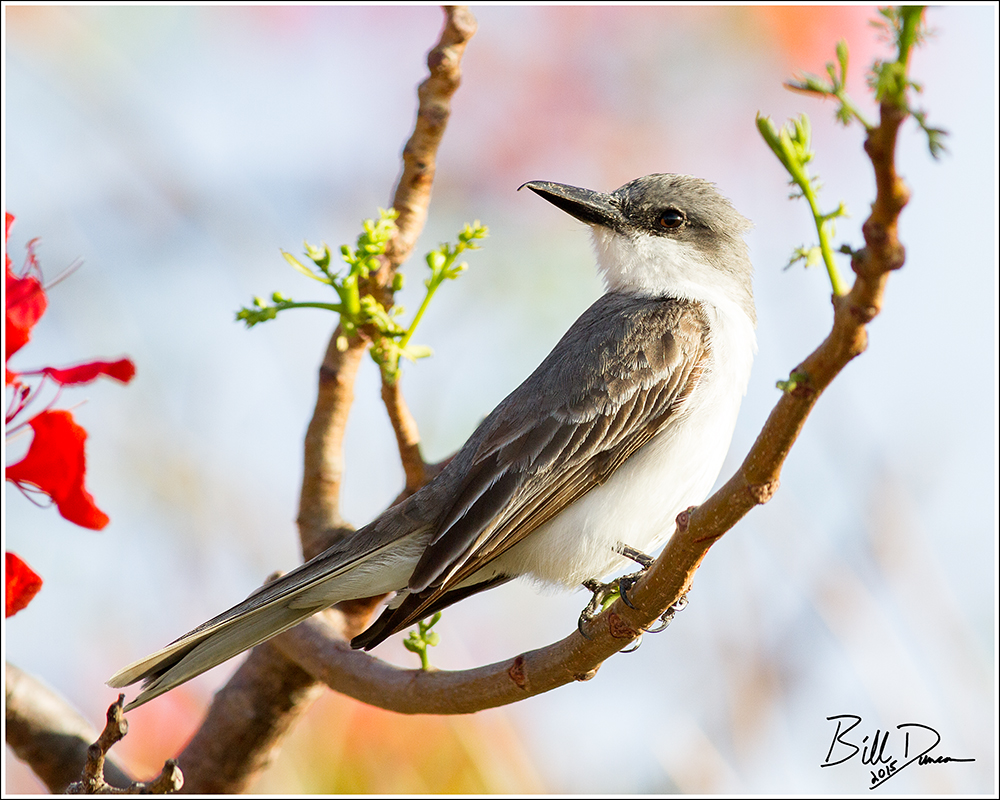
The Grey Kingbird is found at lower elevations throughout the Caribbean as well as coastal Florida.  Typical Kingbird behavior, these guys fear nothing and take charge of whatever territory they call their own.  I found these birds at most places I visited on the island, but the ones around the hotel were so bold, I tended to watch my back lest they use that hooked beak on me…

Grey Kingbird
Grey Kingbird

Thanks for your visit.

OZB
email: handsomeozarkbillyboy@gmail.com

The Flies

Carrion Fly
Carrion Fly

The beetles (order Coleoptera) are famous for being the most diverse group of animals on the planet.  The flies, however, are not too far behind and many people are surprised to hear how many forms and places flies can be found.  I have been able to find and photograph a few of these forms in my own backyard and will share them here.  I photographed this carrion fly (Calliphoridae) hanging out on my rosinweed.

The Soldier

Soldier Beetle
Soldier Beetle

Most soldier beetles are true opportunists when it comes to tucker.  While not being the most efficient pollinators, these beetles can be found around almost any flowers from mid to late summer where they feed on nectar, pollen and small insects like aphids and ants.  This one was photographed on my common milkweed (Asclepias syriaca).

Thanks for stopping by.

OZB
email: handsomeozarkbillyboy@gmail.com

Prothonotary Warbler

Prothonotary Warbler

Way back in April Steve and I visited Larue Road, AKA “Snake Road”, to visit the swamps of western Shawnee National Forest.  We came up mostly short on snakes and found way to many naked apes on this particular Saturday, but we were pretty certain to find a good feathered reptile show, and we were not disappointed.

Prothonotary Warbler

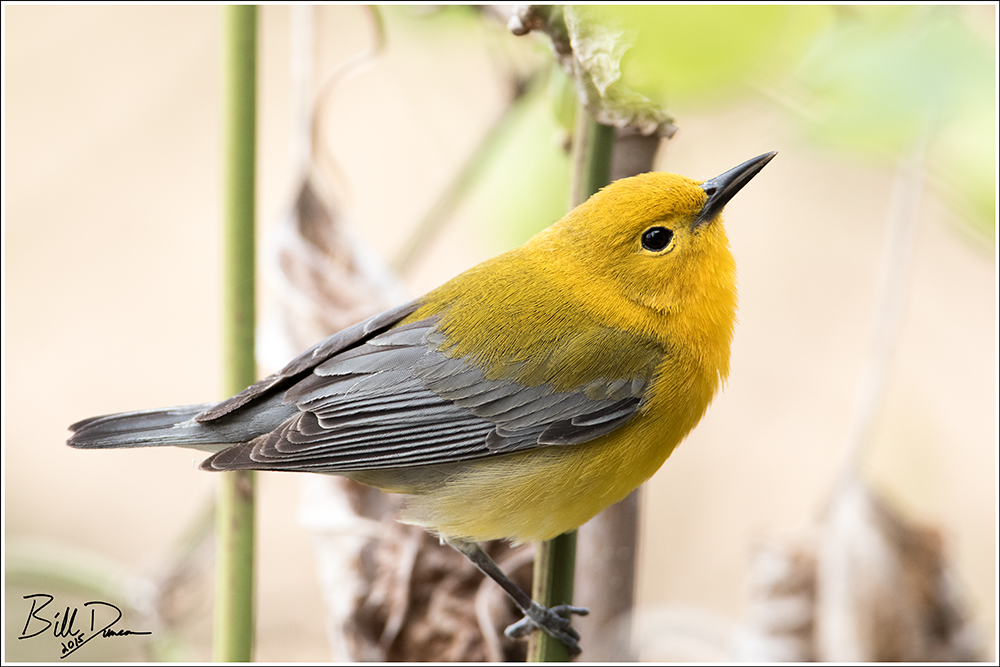
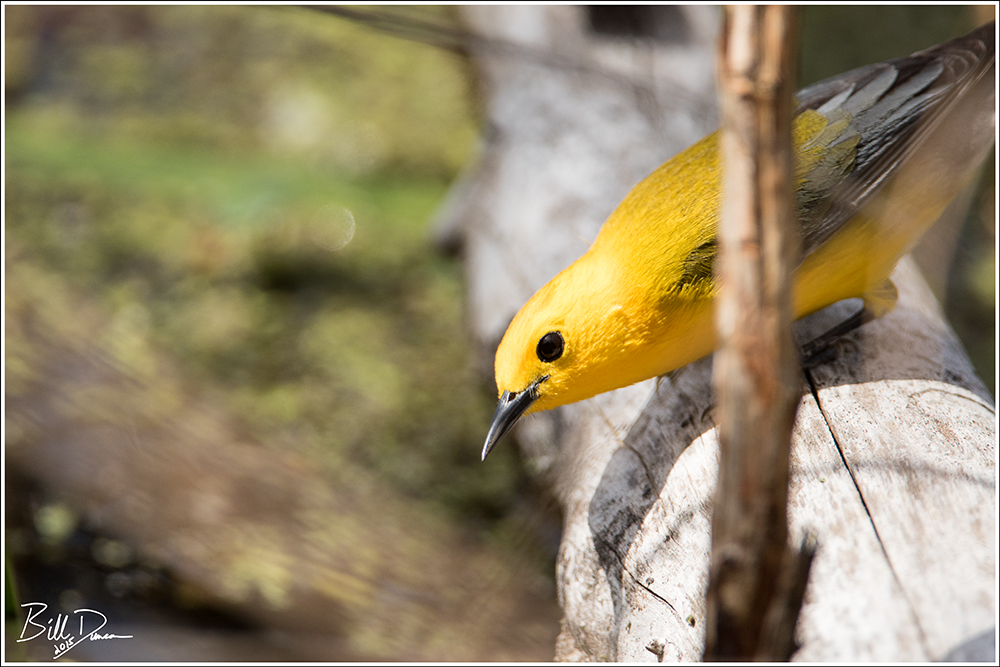
The Prothonotary Warbler is a staple of southern swamps and this area sure has its share.  We were pleasantly surprised to find a number of these birds foraging along the road, without a care about what we were up to.  This allowed for some very nice looks and photographic opportunities.

Prothonotary Warbler
The Original Entomologist

The image above shows how these guys (and most warblers) go about making a living.  They know better than any entomologist that the best opportunities for finding caterpillars and spiders is to look under leaves and inside the folds and crevices of new leaves and flowers.

Prothonotary Warbler

We didn’t find a nest cavity of one of these monks during this visit, but they were undoubtedly tending nests and potentially caring for eggs.  If only this area were not a three hour drive!

Cute Coots
Cute Coots

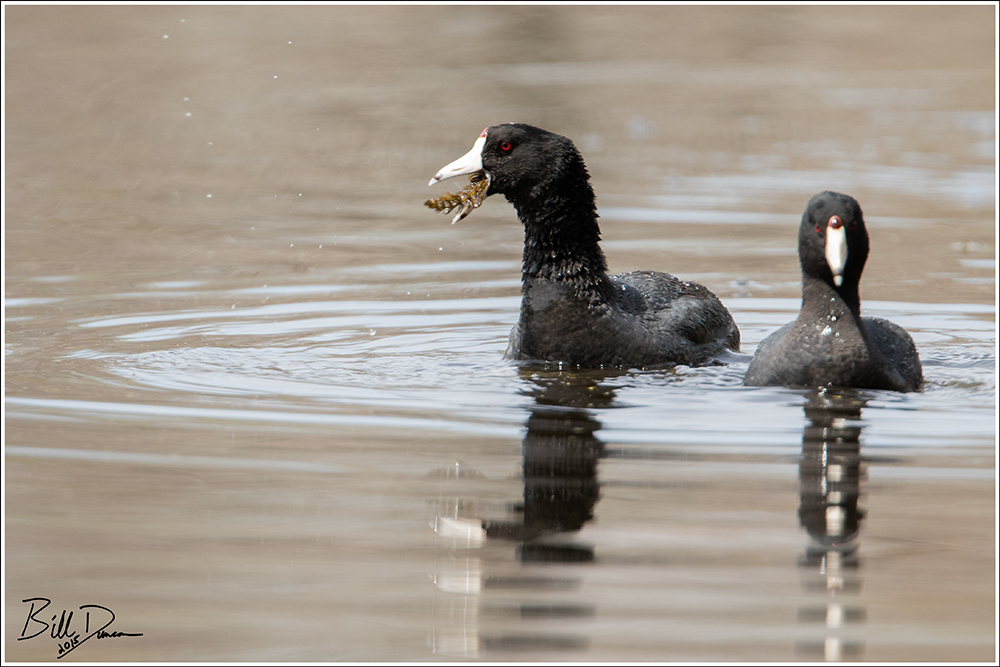
Lastly, at one end of the road we were greeted by a gang of Coots feasting on Coon’s Tail.

Thanks for the visit.

OZB
email: handsomeozarkbillyboy@gmail.com