Mondays Are For The Birds – Golden Crowned Kinglet

“”In short, they who have not attended particularly to this subject are but little aware to what an extent quadrupeds and birds are employed, especially in the fall, in collecting, and so disseminating and planting, the seeds of trees.”

-Henry David Thoreau-

“Golden-crowned Kinglet”

Technical details: Canon EOS 7D camera,  EF400mm f/5.6L USM lens, ISO 640,  f/5.6, 1/250 sec

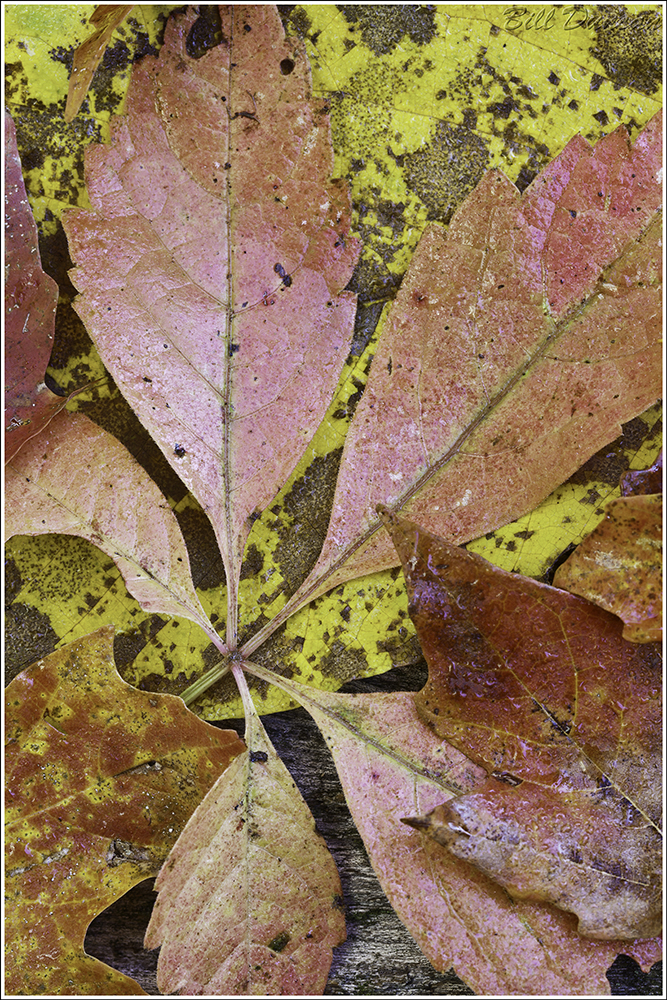
When the Maples Blaze

“I do not see what the Puritans did at this season, when the Maples blaze out in scarlet. They certainly could not have worshiped in groves then. Perhaps that is what they built meeting-houses and fenced them round with horse-sheds for.”

-Henry David Thoreau-

“When the Maples Blaze″
Technical details: Canon EOS 5D Mark II camera, EF100mm f/2.8L Macro IS USM, ISO 160,  f/16, 1.3 sec

Ansel Adams or Bob Ross???

Ansel Adams and some of his cohorts fought an epic battle in the first half of the 20th century against pictorialism – the manipulation of pure, sharp photographs with other artistic objectives.  Pictorialists often produced images that were deliberately lacking in sharpness, low DoF, were hand-painted or toned with various pigments, all in order to place more of an artistic interpretation to the relatively cold and literal technological tools that photography introduced.  Although most of the greats of this period, Adams and Steichen, Weston and Cunningham, began as Pictorialists, by the end of their respective careers these folks had shunned this practice and those that persisted to its employ.  The literal interpretive of negative to positive in the photographic process was considered to be the only truly valid option of the photographic artist.  Certain protocol were acceptable – using darkroom tools to manipulate emphasis in tones of the final print, for example.  But, other than focusing on composition and obtaining as much DoF and overall sharpness as possible, the photographer became shackled in the tools that were “acceptable” to being taken seriously as an artist.

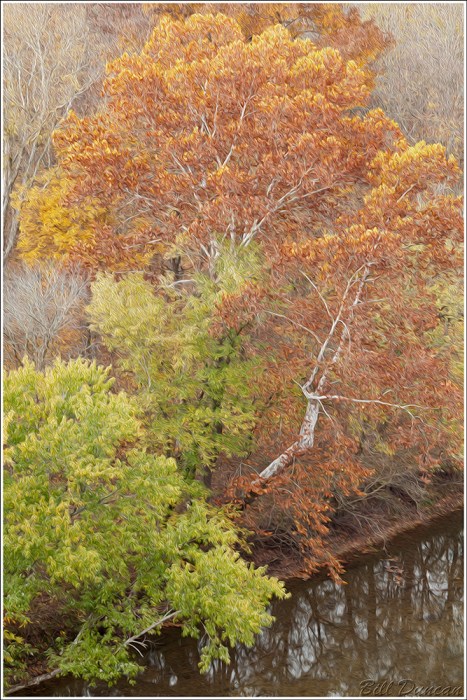
This is pretty much true today.  Sure photography has been and to this day is still used in other types of art – using photos in mixed-media, pop culture works for instance.  But the modernist view of photography is still the dominant and expected form.  Any manipulation in making the exposure “in the camera” is acceptable, but other than the digital manipulation that is analogous to the darkroom of old, you are not allowed to interfere with risk of being completely shunned.  For as long as I have been involved in serious photography I have wholeheartedly agreed with this.  We have all seen the effects of plug-in filters in “Photoshop” and how tacky and cliched they become.  I have looked through images like these on Flickr and thought those thoughts exactly.  Until recently.  The latest Photoshop, “CS6” has a new and improved “oil paint” filter.  I have experimented with it a bit lately and I must say, it is growing on me.  I think it does a great job of mimicking a real oil-painting.

“St. Francis Rock Garden″
Technical details: Canon EOS 5D Mark II camera, EF24-105mm f/4L IS USM @ 50mm, ISO 100,  f/13, 1/4 sec

The “photographer” is given six sliders to manipulate their painting/photo: four for the “brush”: stylization, cleanliness, scale and bristle detail, and two for “lighting”: angular direction and shine.  With these sliders the artist can manipulate the “canvas” almost as much as one of those snobby old people with an easel who insist in sitting right where you’d prefer to set up your tripod.  Just kidding!  The majority of painters I’ve come across have been quite friendly and eager to talk nature with me.  My point is that you have a lot of options in how the final output can look like.

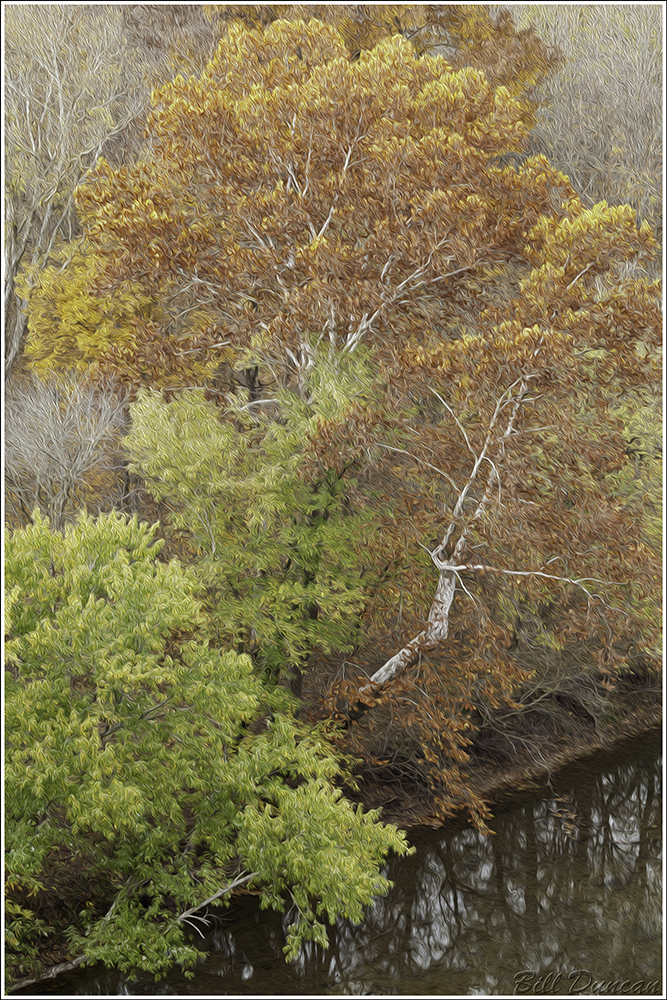
“Marble Creek Shut-Ins″
Technical details: Canon EOS 5D Mark II camera, EF24-105mm f/4L IS USM @ 85mm, ISO 100,  f/14, 1 sec

What I feel I like best about doing this to a photograph can be observed in the two images above.  In both of these un-manipulated photos the bush was nearly too chaotic, although each had pleasing colors, shapes and form.  It made the composition messy.  Putting some brush strokes on top of this took a bite out of all that detail and presented, may I say – order? from the brush of the “composer”.

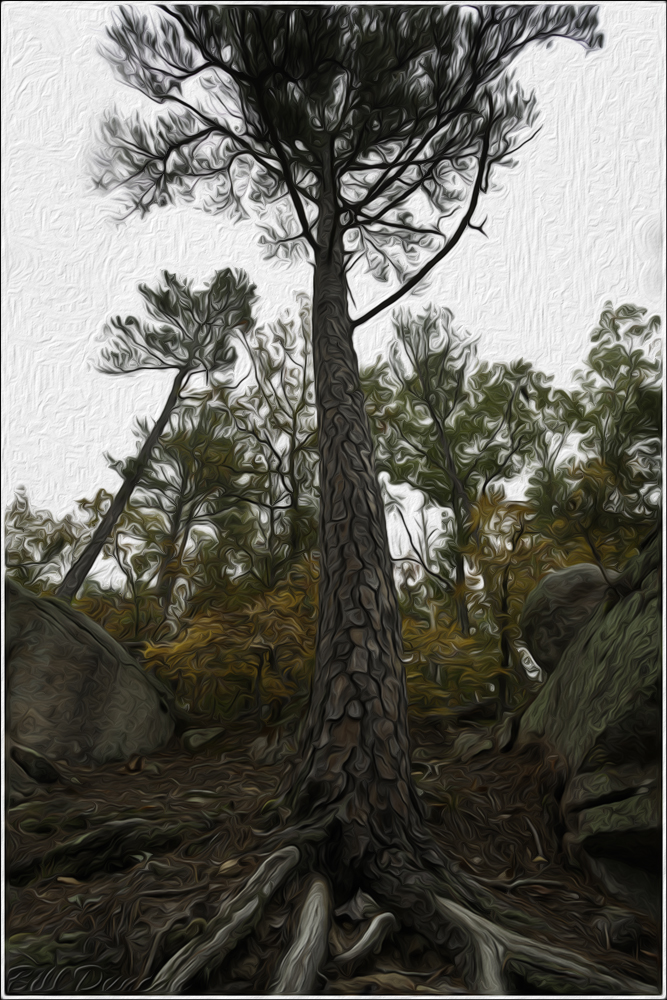
“Shortleaf Pine″
Technical details: Canon EOS 5D Mark II camera, EF17-40mm f/4L USM @ 20mm, ISO 100,  f/11, 1/8 sec

One of the most characteristic plants of the St. Francois Mountain region of the Missouri Ozarks, these trees are easily identified by their unique bark.  If I were patient enough to paint, I know that bark would be my favorite thing to represent in this composition.  The oil paint filter adds a bit of texture to the empty, white negative space.  I feel this images is improved by this treatment as well.
“Pair of Planes″
Technical details: Canon EOS 5D Mark II camera, EF70-200mm f/4L IS USM @ 116mm, ISO 160,  f/16, 6 sec

I love that this technique can be used to emphasize texture and pattern, something that could be difficult to do in a traditional modern photograph.  I can easily see an image like one of these printed on canvas.  Would you be able to tell the difference?  I’m not saying that all photos should be presented like this.  It would be easy to overdo and I can see this one becoming cliche’ like the emboss or watercolor filters that have been in PS for years.  I do think there is something interesting going on.  Painters have been using photography, to greater or lesser degree, to help their art work for decades.  In some of these cases the only difference in output is that the person lays down oils on top of projections.  Here, the computer does the same thing in a shorter time.

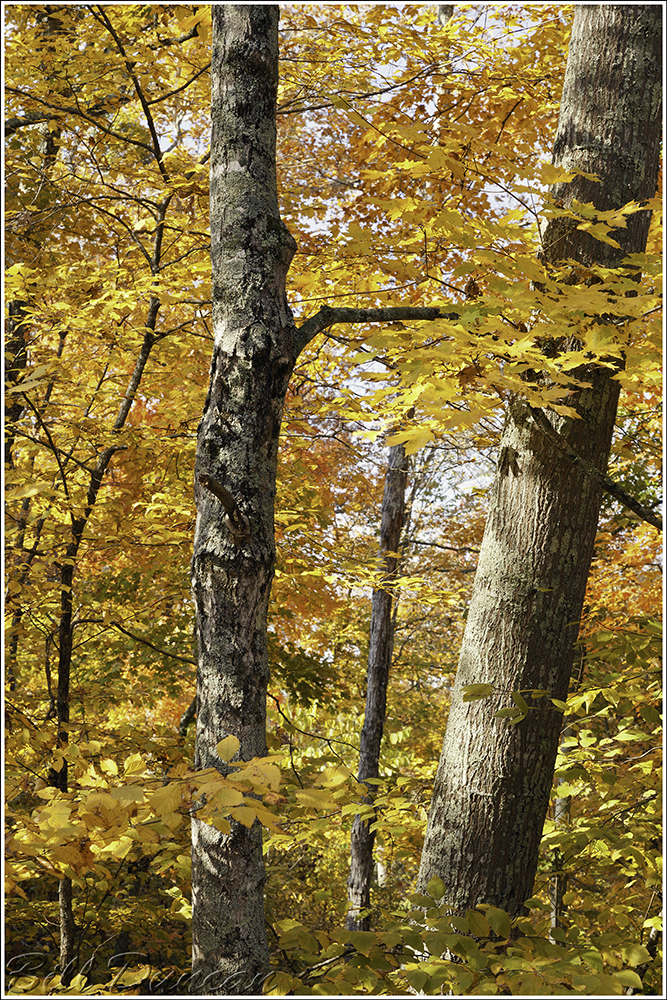
Transitions

“When you come to observe faithfully the changes of each humblest plant, you find that each has, sooner or later, its peculiar autumnal tint; and if you undertake to make a complete list of the bright tints, it will be nearly as long as a catalogue of the plants in your vicinity.”

-Henry David Thoreau-

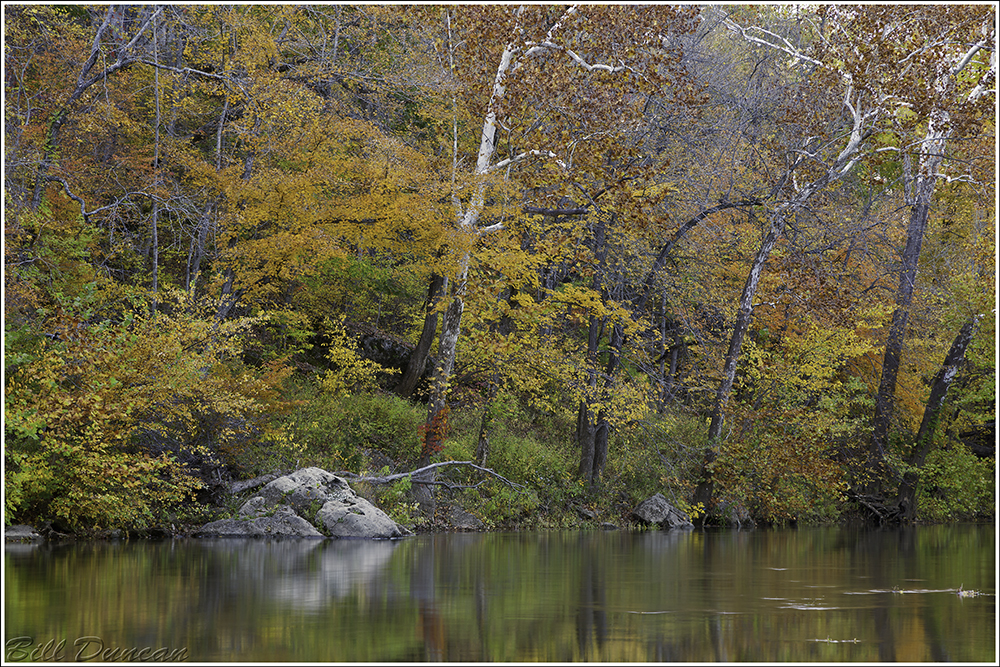
“October Transitions″
Technical details: Canon EOS 5D Mark II camera, EF24-105mm f/4L IS USM @ 105mm, ISO 100,  f/11, 2 sec

October Splendor

“How beautiful, when a whole tree is like one great scarlet fruit full of ripe juices, every leaf from lowest limb to topmost spire, all aglow, especially if you look toward the sun! What more remarkable object can there be in the landscape?”

-Henry David Thoreau-

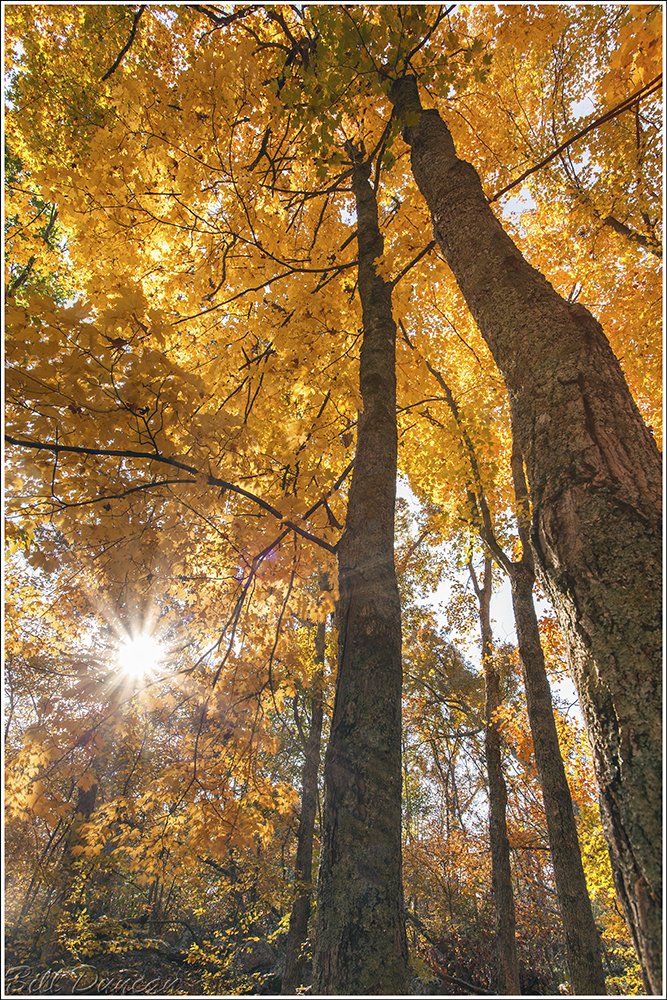
“October Splendor″
Technical details: Canon EOS 5D Mark II camera, EF17-40mm f/4L USM @ 21mm, ISO 100,  f/14, 1/4 sec

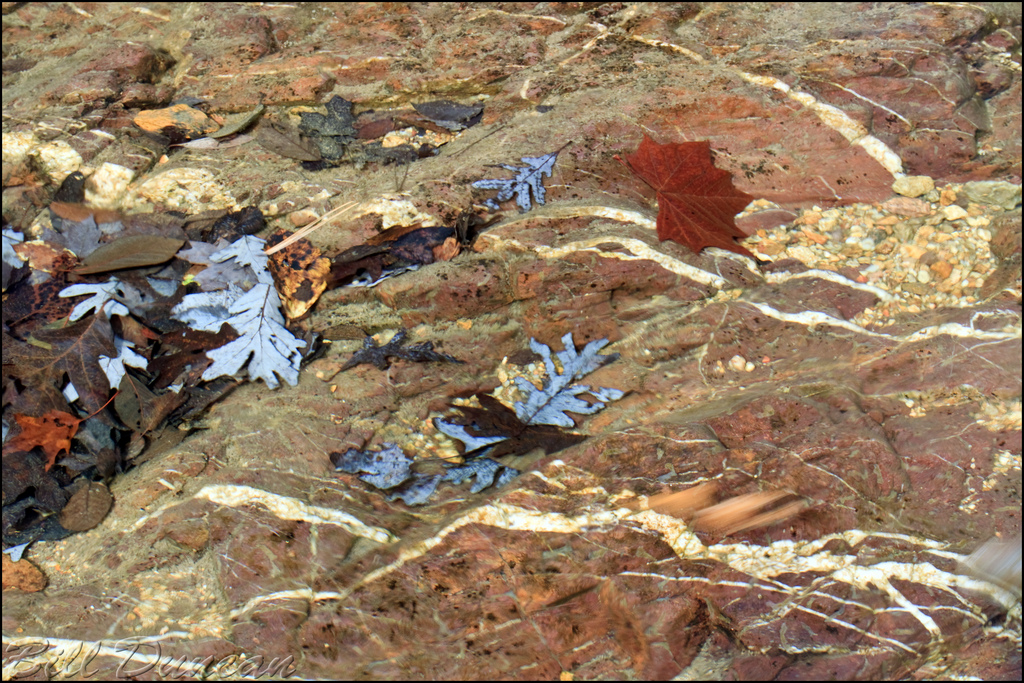
October Poetry

“When the leaves fall, the whole earth is a cemetery pleasant to walk in. I love to wander and muse over them in their graves. Here are no lying nor vain epitaphs.”

-Henry David Thoreau-

“October Poetry″
Technical details: Canon EOS 5D Mark II camera, EF24-105mm f/4L IS USM @ 73mm, ISO 100,  f/11, 1/6 sec

Mondays Are For The Birds – Scarlet Tanager

I have a challenge for myself that I have not yet built up the courage to try.  I want to one day go into a wooded lot and only feed on insects or other invertebrates I find in the trees, shrubs and forest floor.  Have you ever watched an insect-eating song bird closely as the scavenge about for bugs?  It is truly amazing how often they are able to find and capture prey items.  Often they seem to pick them out nowhere, gulp them down and continue on the hunt.  The photo below pictures a southern-bound, female Scarlet Tanager as it eats a larvae of some kind that it just pulled from inside a small branch.

“Autumn Scarlet Tanager”

Technical details: Canon EOS 7D camera,  EF400mm f/5.6L USM lens, ISO 800,  f/5.6, 1/320 sec

Compromise

Along with the concept of the “Golden Rule” go ahead and put the law of compromise up on the list of common sense life lessons we all should have learned by the age of eight or so.  That being said, at my age I have come to realize how strongly this law affects any aspect of life I can think of.  Do nothing but eat Little Debbies and watch He-Man & the Masters of the Universe after school then don’t be surprised at the talentless overweight adult you have become.  Do nothing but work at studies, tirelessly trying to become the most productive individual on the planet, then chances are you will wind up with a joyless existence.  Don’t work, go hungry.  Do nothing but work and starve just the same.  I think you get my point.

Photography is the perfect example of this law.  The contemporary photographer has the exposure triad – equal parts shutter speed, aperture setting and ISO speed.  Increasing any one of these three for particular aesthetic effects (DOF, action freeze, etc…) will necessitate a change in one or both of the others.  We can rarely get everything we want from all three corners of the triad without a good deal of work, patience and serendipity.  Taking this even further, the nature photographer – as I describe myself, has what I call a “subject triad” that covers the landscape, the wildlife, and the macro.  Now, none of these are mutually exclusive, but rather like the exposure triad it can be seen as a continuous three-way interaction.

The larger point I’m attempting to make is, just like using the exposure triad in making a proper exposure under constantly changing lighting, a nature photographer should be open at all times to changing subjects.  This point was driven home recently when Sarah and I paid a visit to the Castor River Shut-ins within Amidon Conservation Area.  This is one of my favorite locations for landscape photography.  It can often be very challenging, however.  Compositions must be hunted down and the light needs to be near perfect to capture the rocks, water and vegetation just the way you like.  During this particular visit, even though there was some nice autumn color, the lighting was utter crap at the shut-ins.  As I hopped from rock to rock attempting not to drown myself or my over-priced gear trying to make something happen with what little I was presented with, I happened to take a look back at my wife, Sarah.  As usual, she had taken a short little stroll and was in the woods taking pictures!  I noticed she was taking back-lit foliage pics as well as macro shots.  I then cursed myself for putting the blinders on and looking only for that grand landscape composition and forgetting the other points within my self-described triad.  The maples and hickories were in glorious colors and I was able to take some macro shots that I am pretty pleased with.  This is why I try to carry as much gear with me as I comfortably can.  If I did not have my macro equipment, then I would have likely been out of luck.  The compromise?  Aching legs and shoulders for the next few days!

“But we gotta get happy when we wiggle in the middle” – John Hartford

“Creeper, Pawpaw & Maple″
Technical details: Canon EOS 5D Mark II camera, EF100mm f/2.8L Macro IS USM, ISO 160,  f/16, 1.6 sec

Bell Mountain Willderness Loop Trail – Success!

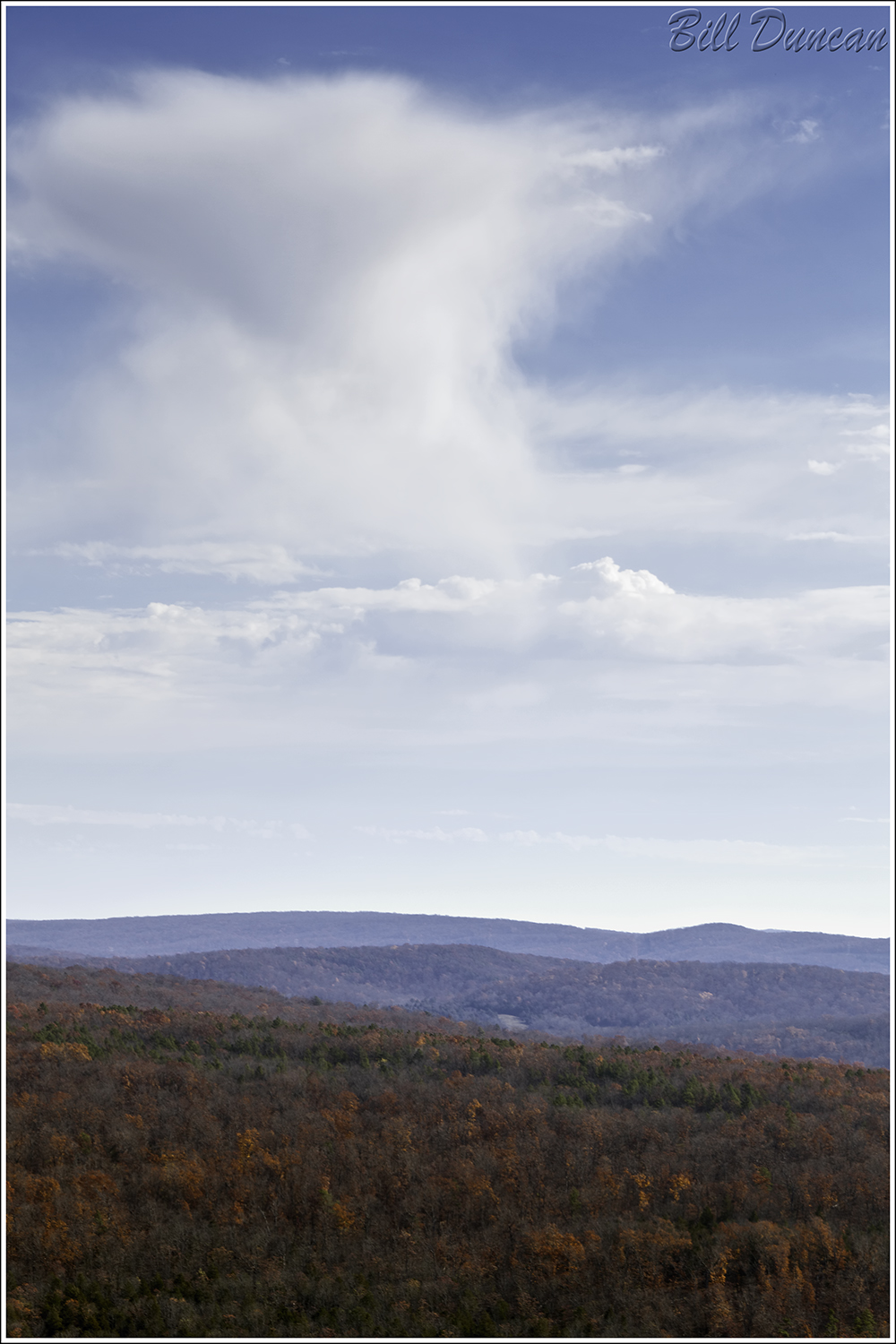
Surprisingly, I found myself in the St. Francois Mountains again yesterday.  I decided to finally attempt the full loop trail within Bell Mountain Wilderness.  I have hiked to the summit and back the same way several times over the past five years or so, a hike that is approximately ten miles.  The loop requires you go down the other side, follow and cross “Joe’s Creek” and its feeder streams along the way and then ascend Bell once again before going back down to the southern trail head.  It wound up being just short of a 13 mile trek.

“St. Francois Mountains – Late Autumn – 2012″
Technical details: Canon EOS 5D Mark II camera, EF70-200mm f/4L IS USM @ 127mm, ISO 100,  f/16, 1/10 sec

An “Indian Summer” kind of weekend assured I was not the only one with the idea of hiking this summit.  Normally a place where you would be unlikely to see another person, I crossed paths with close to 40 hikers, most of which seemed to be carrying camping gear.  I started the the trail promptly at 8:00 when the temperature was still pleasantly in the low 50s.  Unfortunately when I arrived back at my car  around 2:00 the temp was in the mid 70s, a bit on the warm side for hiking such a challenging trail.

“The Burning Bush″
Technical details: Canon EOS 50D camera, EF17-40mm f/4L USM @ 26mm, ISO 160,  f/18, 0.4 sec

The images above and below this text showcase what makes this area so special – the Ozark glades.  These pinkish, lichen-covered, rhyolite/granite boulders protrude from thin soils and create igneous glades.  This specific habitat is associated with several specialized plant and animal species.  In periods of hot and dry weather these areas seem completely abandoned, but will come alive following a drenching rain.  The image posted below was subjected to a “hand-painted” treatment in computer post-processing.

“Changes″
Technical details: Canon EOS 50D camera, EF17-40mm f/4L USM @ 28mm, ISO 100,  f/11, 0.25 sec

The image below this text documents a perplexing problem with officially designated wilderness areas.  As the law was written, no human management of the land, of any kind, can be performed.  While this law includes items you want a “wilderness” to be protected from, building of structures, new roads, logging and grazing, etc., it also includes management for the protection of habitats.  Although glades exist primarily due to shallow soils and dry, higher elevations, periodic fires also play a key role in limiting the succession of habitat type.  Fires, both natural and anthropogenic in origin, played a key role in controlling secondary succession shrubby tree species such as sumac, sassafras, and especially the eastern cedars.  In many well-managed lands across the Ozarks, prescribed fires are doing their part to control this succession and preserve these habitats.  On wilderness areas, prescribed fires are not legal.  Modern fire-prevention in private and public lands also drastically reduces the occurrence of natural fire.  The glades on Bell Mountain and its nearby slopes are all being choked by eastern cedars.  Given enough time this potentially put many Ozark glade areas at risk as the succession continues to include various oak and hickory species.

“Bell Mountain Glade in Autumn″
Technical details: Canon EOS 50D camera, EF17-40mm f/4L USM @ 26mm, ISO 100,  f/16, 1/8 sec

Bell Mountain is bordered by Shut-In Creek on the east, which has helped carve the distinction between Bell Mountain and nearby Lindsey Mountain.  This creek bottom is a short, but extremely sharp drop from the summit, and the creek is a perennial spring-fed water source.  Joe’s Creek borders the western side of Bell Mountain and is also partially spring-fed.  These two bodies provide many a backpacker with a source of water.  I can’t wait to try exploring this creek after a good wet period.

“Shut-In Creek Bottom″
Technical details: Canon EOS 50D camera, EF-S60mm f/2.8 Macro USM, ISO 200,  f/16, 1/4 sec

An Early Hike on the Ozark Trail – Marble Creek Section

During my fall break I finally visited Crane Lake for a hike on a beautiful autumn morning.  There was not a cloud in the sky and the colors were really popping.  The hike was just perfect and I had several interesting wildlife encounters, including watching a Bald Eagle nearby along the shore as soon as I left my car.  The primary tree in this image is the short-leaf pine, the only native pine of the Missouri Ozarks and definitely a characteristic species of the St. Francois Mountains.

“An Early Hike on the Ozark Trail″
Technical details: Canon EOS 5D Mark II camera, EF17-40mm f/4L USM @ 17mm, ISO 160,  f/16, 0.6 sec