Three Lesser Known Shut-ins of the St. Francois River Watershed

Anyone with a bit of knowledge about the St. Francois River of southeastern Missouri has probably heard of or has even visited the well-known stretch of the Tiemann Shut-ins that create the great series of class 1-3 rapids that experienced kayakers long to ride. The stretch of this river between Millstream Gardens and Silver Mines Recreational Area is one of the most scenic and biodiverse areas of the Show-Me State.

This spring I was turned on to three new-to-me shut-ins in the St. Francois watershed that I should have visited long ago. At first, it was surprising to me that these three geological features are not more well known. However, once I found out a little of the difficulty of getting to these locations, I am now not surprised at all.
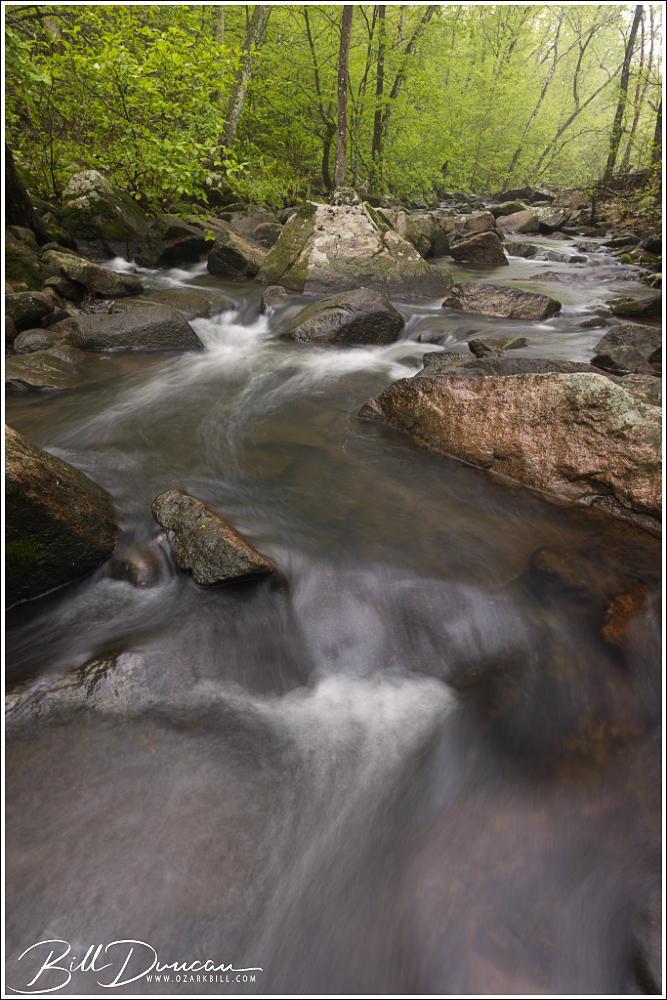
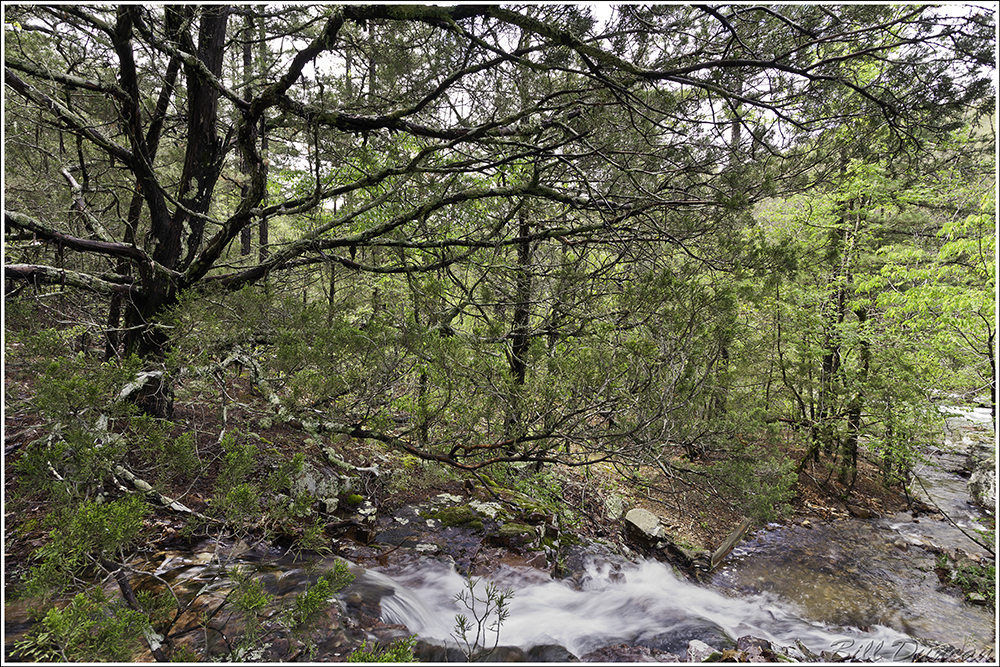
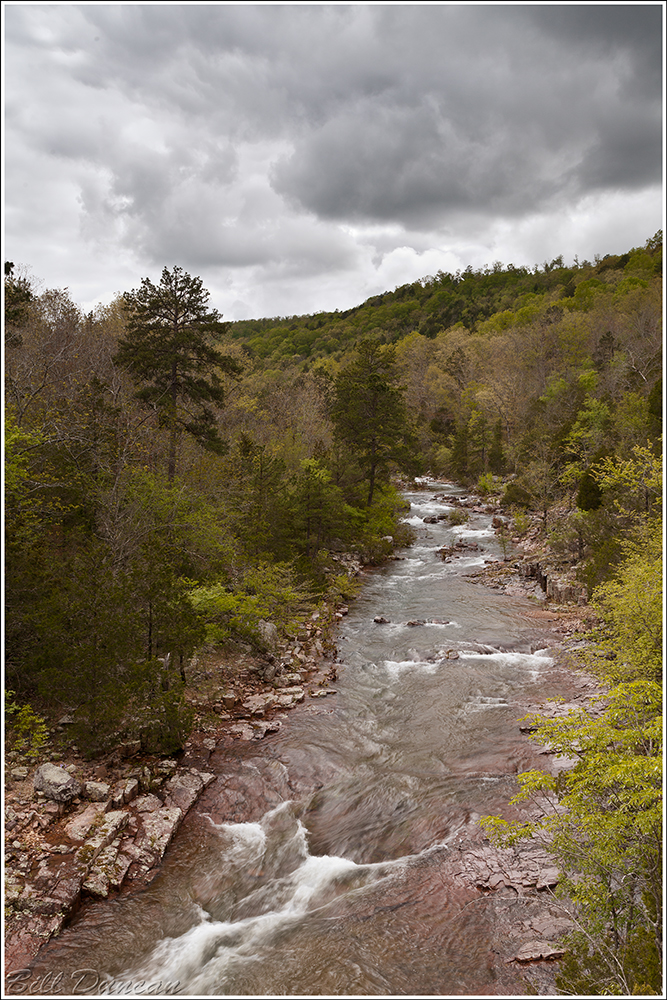
Looking up Turkey Creek

The St. Francois Watershed
The geological history of the St. Francois River watershed is a tale written in stone, shaped over millions of years by dynamic processes. At its core lies the ancient Ozark Plateau, characterized by its resilient dolomite and limestone bedrock, remnants of a bygone era when shallow seas covered the region. Erosion and uplift sculpted the landscape, carving out rugged hills, steep bluffs, and winding valleys that define the watershed’s topography today.

Upper Stouts Creek Shut-ins

Within the embrace of the St. Francois River watershed thrives a rich tapestry of ecological diversity, harboring a multitude of habitats that support an abundance of plant and animal life. The forested slopes of the Ozarks provide refuge for a myriad of tree species, from towering oaks and hickories to delicate dogwoods and redbuds. Beneath the canopy, a lush understory of ferns, wildflowers, and mosses carpet the forest floor, while clear, spring-fed streams meander through the landscape, sustaining populations of freshwater mussels, fish, and amphibians.
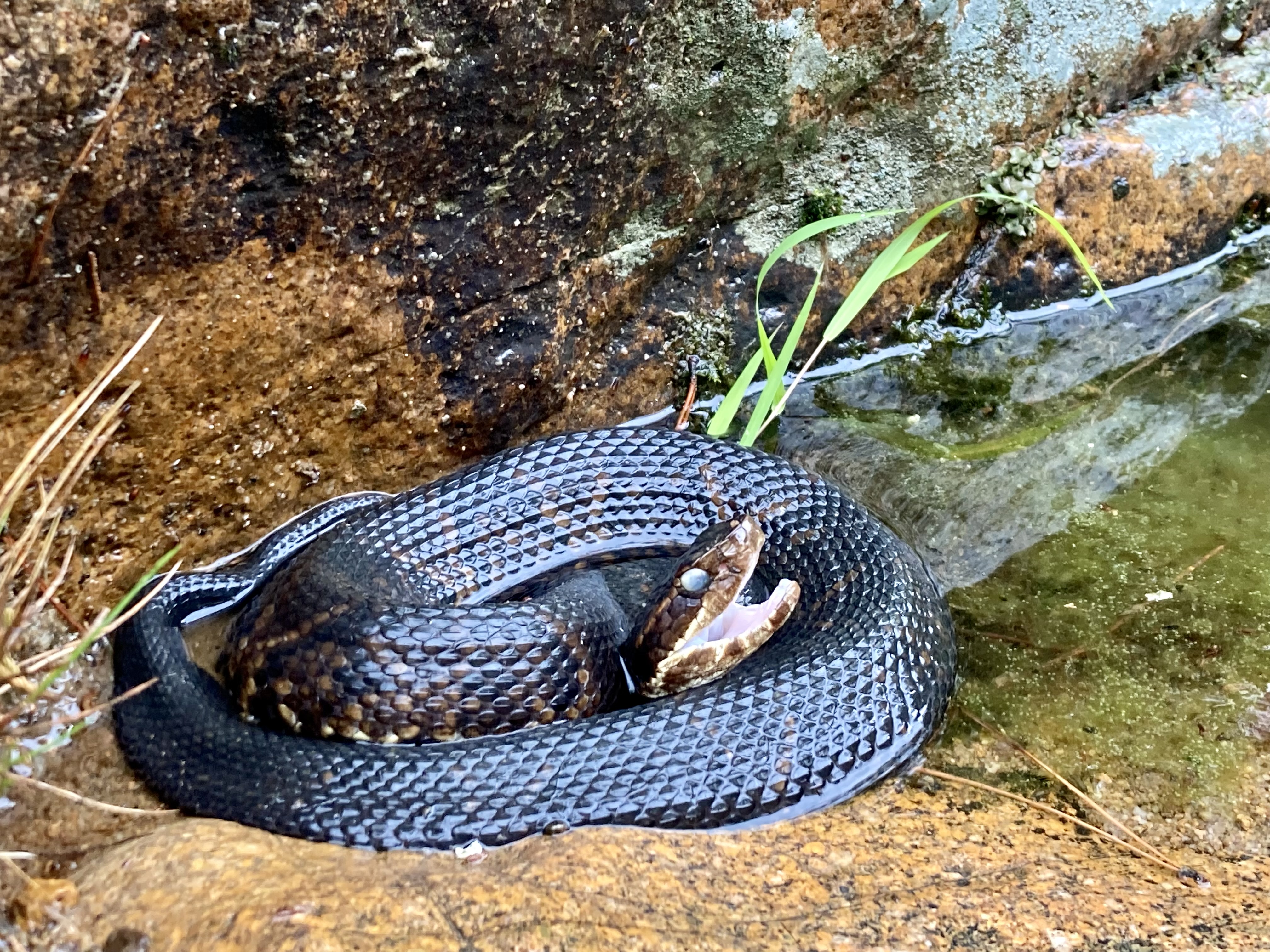
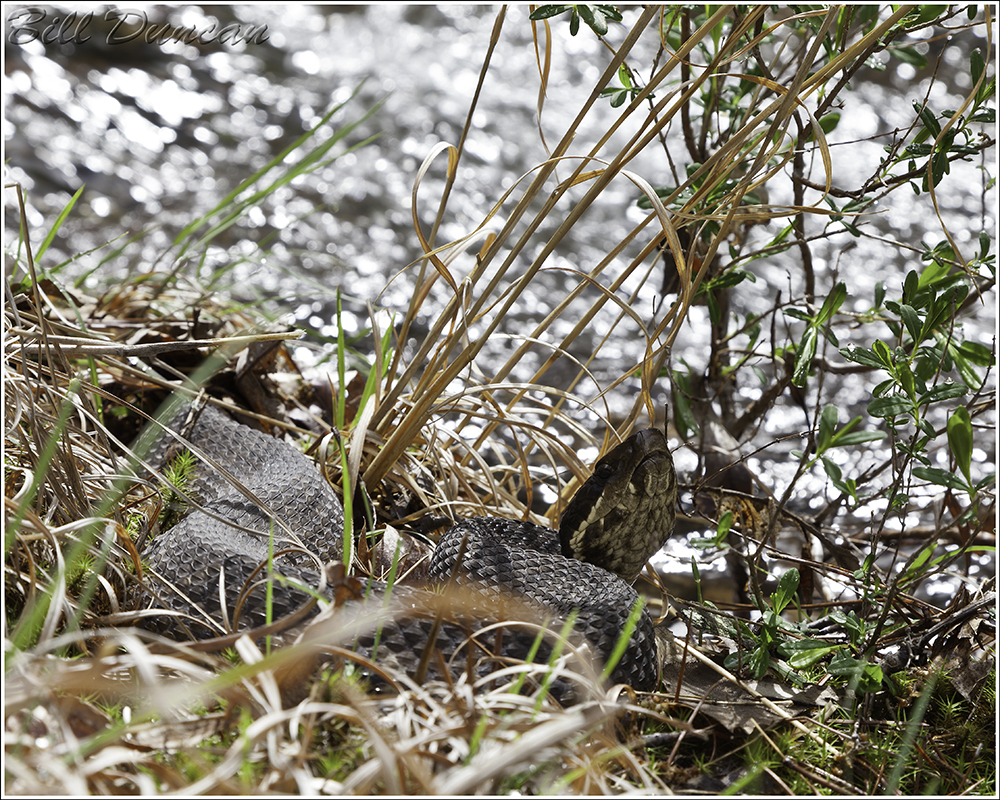
The traveler to the shut-ins of the St. Francois River watershed should always be on the lookout for cottonmouths.

The river itself serves as a lifeline for countless species, offering vital habitat and nourishment along its meandering course. From the elusive Ozark hellbender to the Bald Eagle, the St. Francois River watershed supports a diverse array of wildlife, including many species of conservation concern. Endemic flora and fauna, such as the Ozark chinquapin and the Hine’s emerald dragonfly, find sanctuary within the watershed, highlighting its importance as a stronghold for biodiversity.

About Missouri’s Shut-ins
Shut-ins are a testament to the enduring forces of nature. Formed over many thousands of years, these unique rock formations are the result of a complex interplay between water erosion and geological upheaval. The shut-ins, characterized by narrow channels and cascading waterfalls, are formed when swiftly flowing streams encounter resistant igneous bedrock, creating natural barriers that redirect the flow and sculpting the surrounding landscape into breathtaking formations.
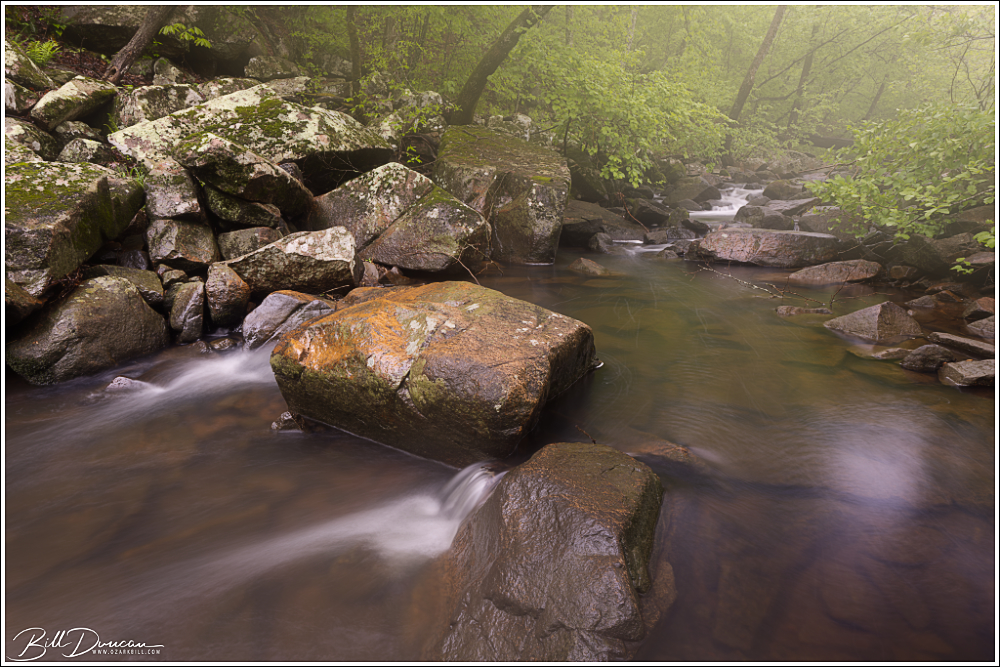
Humidity in these creek beds is usually very high, creating fog and haze. Turkey Creek Shut-ins.

Beyond their stunning beauty, shut-ins are also home to a diverse array of flora and fauna. The cool, clear waters of the shut-ins provide a habitat for various aquatic species, including aquatic invertebrates, freshwater mussels and fish. Along the rocky banks, towering hardwood forests thrive, offering refuge to an abundance of wildlife, from songbirds to white-tailed deer. The unique microclimate created by the shut-ins supports a rich tapestry of plant life, including rare species adapted to the harsh conditions of the rocky terrain.

Upper Stouts Creek Shut-ins
One of the main feeding branches of the St. Francois River, Stouts Creek contains a number of picturesque shut-ins. Casey and I had noted this particular one driving by for years but had never made the stop. We had to trespass a little to get our shots, but the folks who own this property are, theoretically at least, supposed to be inclined to forgive those who trespass. We spent just a few minutes here and were in and out without incident.
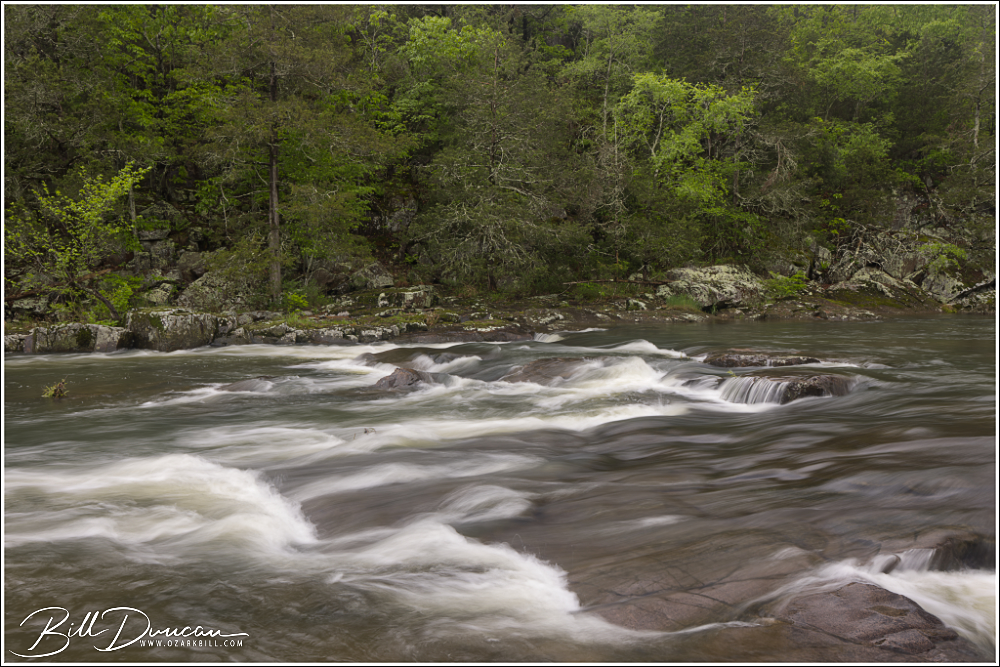
Upper Stouts Creek Shut-ins

Turkey Creek Shut-ins
Flowing from the north, Turkey Creek empties its contents into the east side of the St. Francois River, just upriver from the historic Silvermines Dam. Getting to the Turkey Creek Shut-ins requires either a treacherous hike along the creek from the confluence, or a slightly less arduous bushwhack up and over a highland to the sight of the more picturesque parts of the shut-ins. Taking the easier way means missing portions of the shut-ins but will also result in fewer potential run-ins with cottonmouth snakes and ankle-snapping rocks.

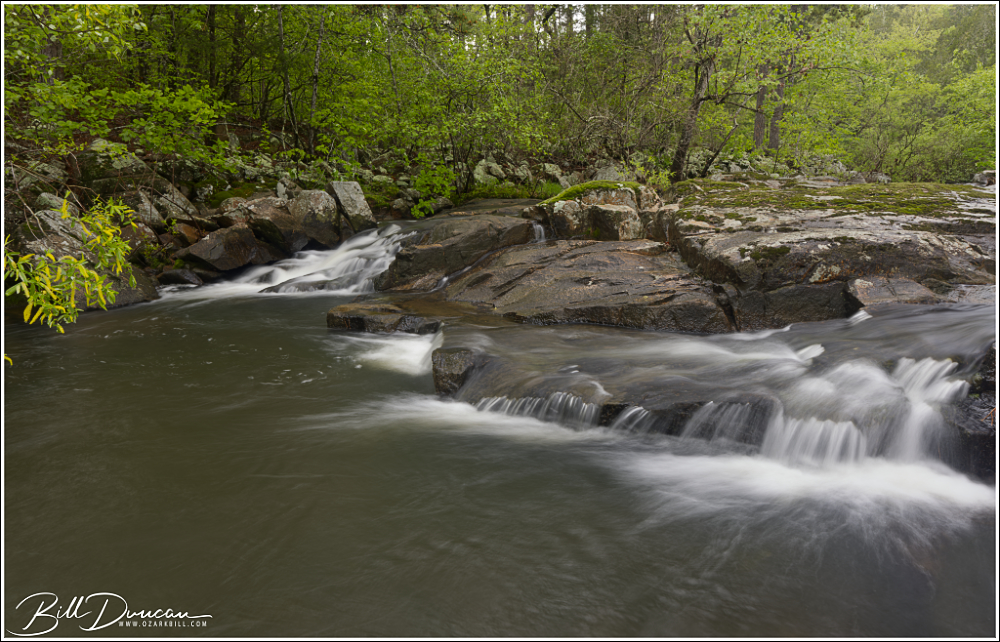
Turkey Creek Shut-ins
Swimming holes abound in shut-ins like these at Turkey Creek.
Turkey Creek Shut-ins

Mud Creek Shut-ins
Mud Creek Shut-ins are definitely one of the most memorable shut-ins that I have had the pleasure to visit – not only because of their classic St. Francois Mountain beauty, but due to my story in reaching them. As is the case with Turkey Creek Shut-ins, these shut-ins can be reached by paddling the St. Francois River. However, I doubt my kayak skills would service safe passage across the class-3 rapids of this stretch of the river, especially while carrying expensive camera gear.

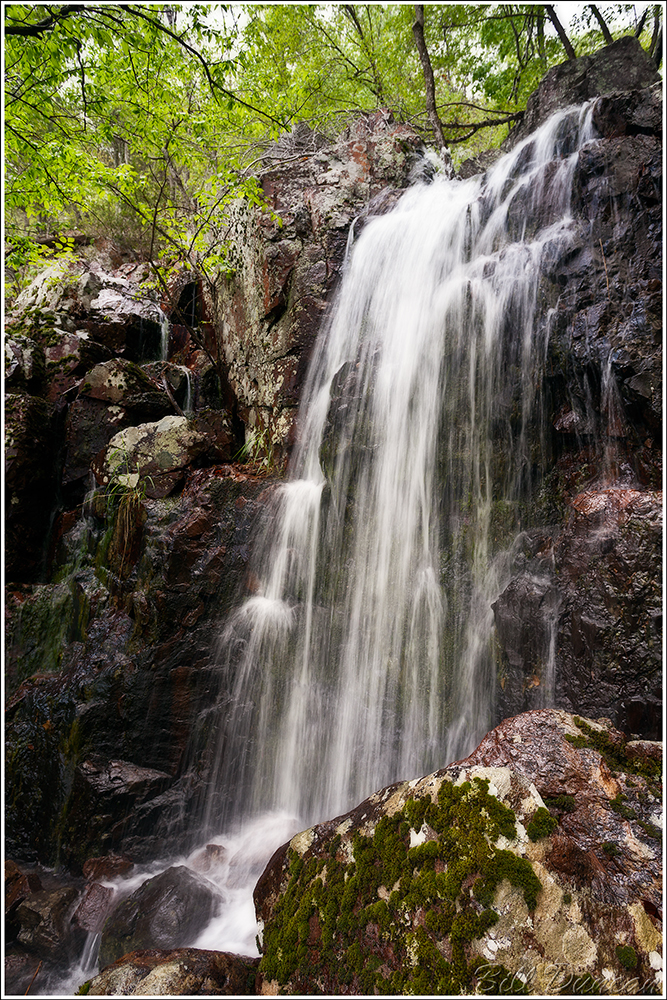
Moving upstream along Mud Creek from its confluence with the St. Francois, one first gets to view this very nice waterfall.

The next best option? Footing it across. I began this trek from the parking lot of the Silvermines Recreational Area. In times of high water, the low footbridge across the St. Francois River can be underwater, so I recommend parking on the north side of the river and paying the ridiculous $5.00 to park your car for a few hours.
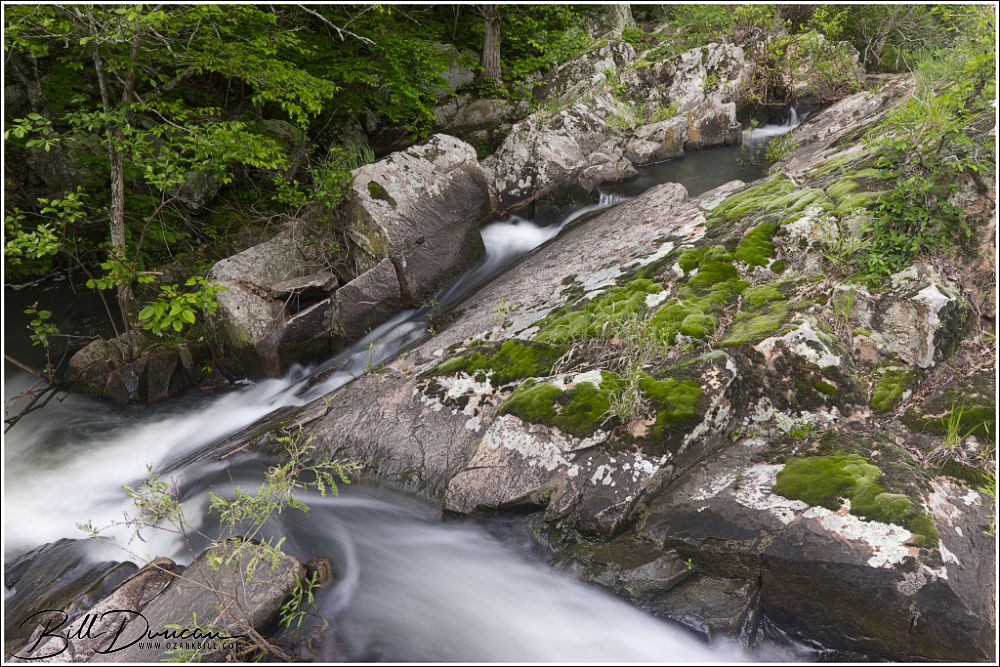
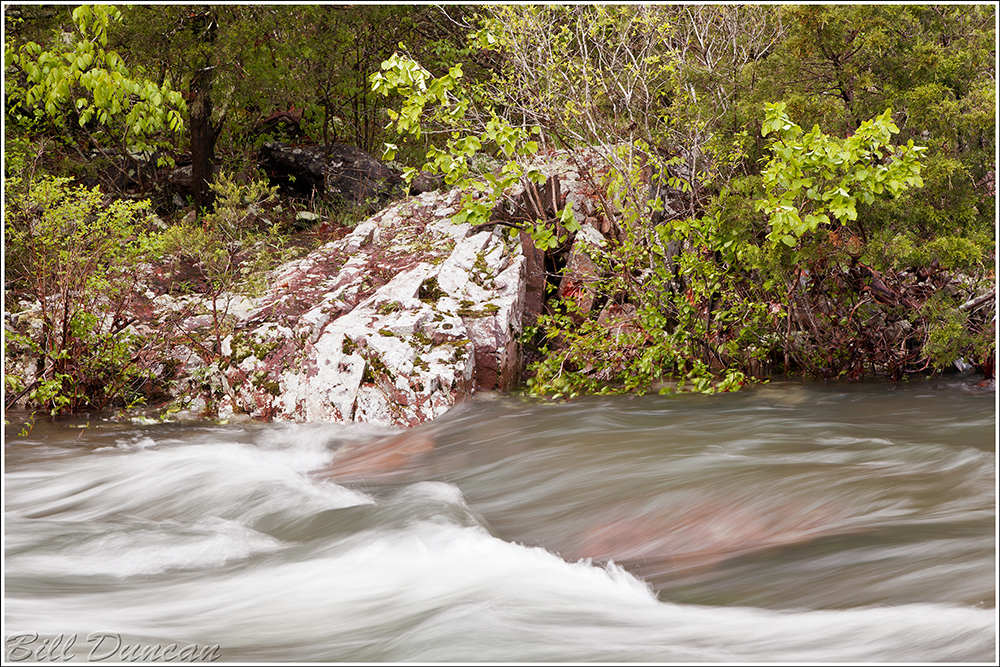
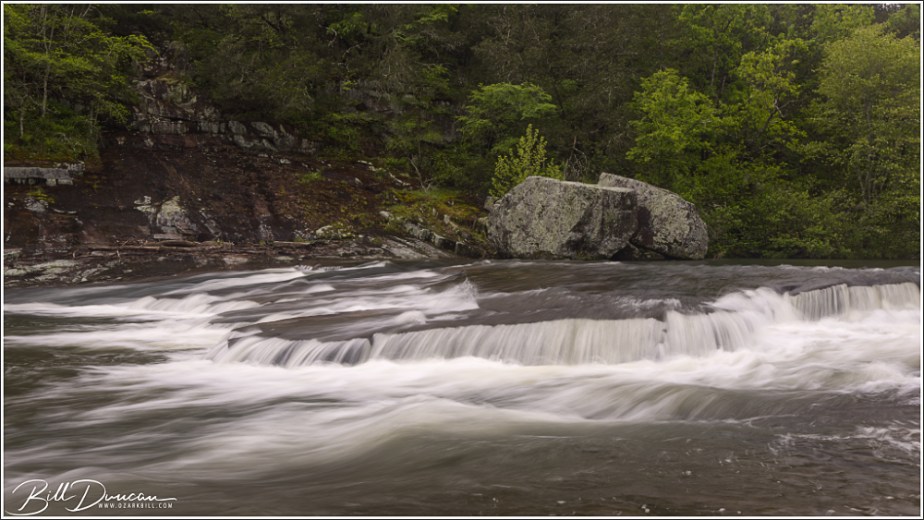
The water finds multiple pathways against the rock as the creek races down the ravine.

From the parking area, I took the “trail” that runs upstream along the north side of the river until I got to the namesake mines. From here, it was steep climbing until I eventually ran into an old two-track that allowed for some switch-backing until I eventually rose from the river’s ravine into a more upland forest. Although the topology here was more manageable, fallen trees were everywhere, presumably from strong storms of recent years. The bushwhacking got frustrating, especially with the need to eat a spider or two every five to ten steps! Using my GPS, I kept the river to my right side and generally headed to the northeast to where Mud Creek meets the St. Francois. I should have headed much further to the north, but I kept finding myself heading back into the boulder-strewn ravine of the river. Eventually, I learned my lesson and rose to the highest elevation possible and made a direct line to where the GPS told me the confluence would be. Finally arriving, I realized I was then facing the hurdle of heading back down the ravine to the confluence. I could hear rushing water from the east and the north, shut-ins along the river and creek, respectively. I chose my point to descend into the ravine, not knowing if this would take me to sheer cliffs that would force me back up to try again. I eventually stumbled into the relatively small river bank that was thick with twenty foot tall alder and witch-hazel thickets.

Mud Creek Shut-ins

Clearing these thickets, with water halfway up my wellies (I got my first pair of Gumleaf boots recently, so I can no longer call these muck boots), I was finally able to see the confluence. Navigating around huge boulders, I began clambering up Mud Creek and almost immediately came upon the nicest waterfall of these shut-ins. About this time, the sky began to darken. Most of my trek to this point was in mostly sunny skies, making me wonder if the overcast skies forecasted for this afternoon where ever going to happen. Now I was hearing thunder and watching dark skies closing in quickly from the west.

Porphyry and swirls

I realized I probably had limited rain-free time with the shut-ins so I got to work, moving myself and my gear from one point of interest to the next upstream. This type of landscape photography is not for the faint of heart! Due to the sharp sides of the ravine, I was forced to cross the creek several times, negotiating deep pools, fast-moving water and slippery rocks. On several occasions, I used my tripod as an extra set of legs, helping me stabilize myself while crossing the creek.

Mudd Creek Shut-ins

Getting about a half mile upstream from the confluence, the shut-ins widened, opening up to large sections of exposed granite. It was around here that I decided the storm was not going to pass me by, but come right down on me. The thunder was getting closer and more frequent. I put my camera bodies and lenses into individual Ziplock bags and put the rain cover over my bag just when the sky opened up with torrential rains. It was then that I realized I was on the wrong side of the creek to get back to where I needed to be. I also sensed the waters in Mud Creek were starting to rise. The opposite side of the creek this far upstream looked like near-vertical cliffs, but I knew I probably did not have time to head back downstream to a point where I made the crossing earlier. I found the closet point to make a relatively safe crossing and found myself with just a few feet between the steep rise of the ravine and the creek that seemed to be increasing inch by inch. I found some handholds and started climbing. Spiders be damned!
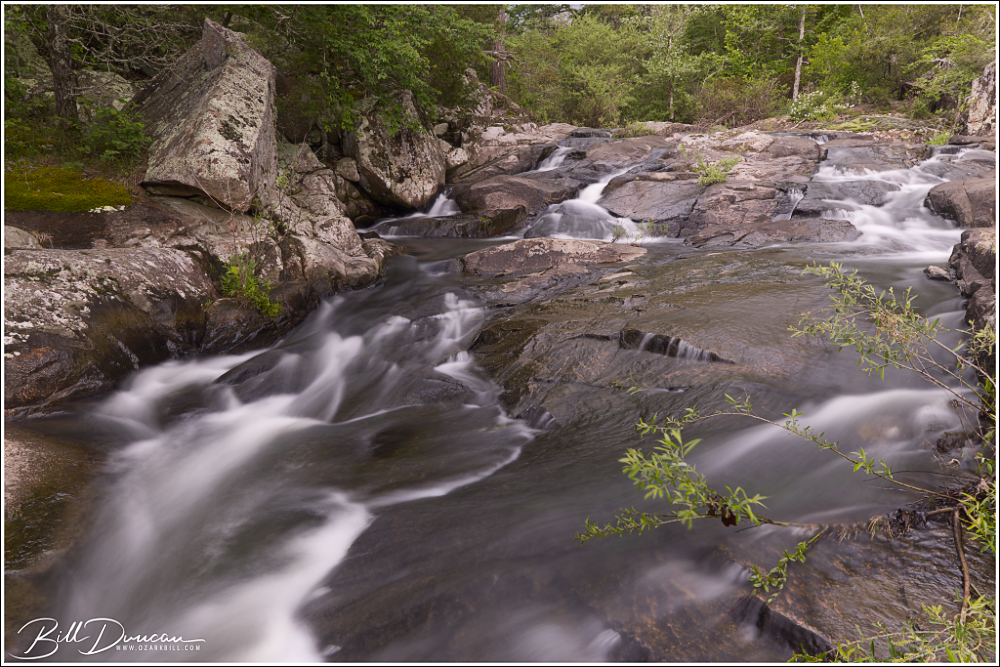
St. Francois Mountain Beauty!

I climbed as carefully as possible, making progress while the rain came down in sheets and lighting danced across the sky directly above me. In five to ten minutes I made it up the approximately 400 feet of increased elevation and reached the top of the ravine. Not liking the idea of clambering down the opposite side of the ravine to get back to the mines, I decided a better route back would be to stay in the uplands and head north to Highway D to get back to my car. That was another two-mile bushwhack, back through the fallen trees, my wellies filling up with rain water, and limited visibility. I eventually made it to the road, finding my way safely back to my car. Not wanting to ruin my seat with my soaking wet cloths and not having a dry change of cloths, I striped to my boxer-briefs, put a towel down on my seat and drove the two-hours home. Thankfully I did nothing to raise the attention of any authorities on the way. 😉

I’d Like to thank Casey Galvin, Kathy Bildner and midwesthiker.com for the information that helped me reach these fantastic locations!
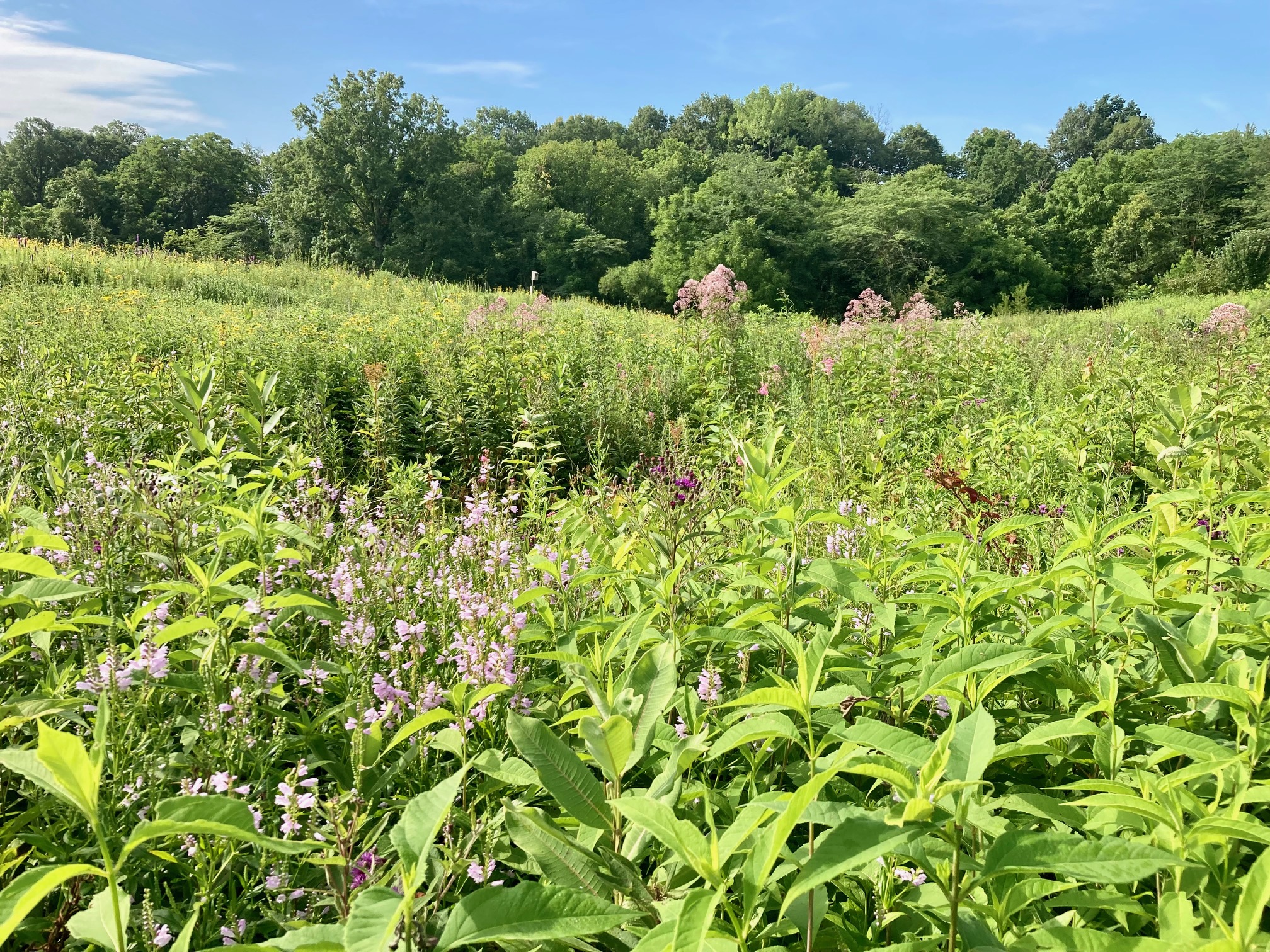
Insect’s of Horn’s Prairie Grove LWR

Part of the Horn’s Prairie Grove LWR with obedient plant blooming in the foreground and joe pye weed behind.

The WGNSS Entomology and Nature Photography Groups had a splendid treat in July of 2022 when we jointly visited Horn’s Prairie Grove Land Water Reserve (LWR) near Ramsey IL. This 40 acre patch represents part of the less than 1% of the remaining southern till plain prairie ecosystem that was nearly wiped from the planet due to land conversion for farming. Even better, about 30 acres are original “virgin” prairie, (the largest intact remnant prairie in IL) meaning these spots were never touched by the plow. Even better still, at this location there lies five different types of prairie habitat: seep/wetland, dry hillside, mesic, black soil and savanna.

Keith Horn, owner and guide to Horn’s Prairie Grove LWR

The story of this land is interesting. The current owners, Keith and Patty Horn, purchased the land in 2001 as “junk land” from an old farmer who’s family had owned since the 1870s. They liked the fact that the majority of the land was in a “wild” state. The untouched 30 acres had been used as a wild hay field, being cut almost yearly. They had noticed some nice wildflowers in bloom but did not realize what they had until a few years into a wildlife habitat improvement plan that included periodic burning. Every year they noticed more and more species in bloom. They have sought help in identifying the plant species here and the current list is now at 619 species, including six native orchid species! Bravo to the Horns for identifying what they had and taking the steps to see their land improved. This remnant prairie could have been destroyed in the blink of an eye if it had fallen into the wrong hands.

Although most of us were simply thrilled to be in such high quality habitat, the primary purpose of the trip was to check out the arthropod life. Unfortunately, in late July, we were there on a truly miserable day of weather. The heat and humidity created a heat index that was well above the safety zone. This meant not many of us had the nerve to do a great deal of walking and searching, especially much after lunch time.

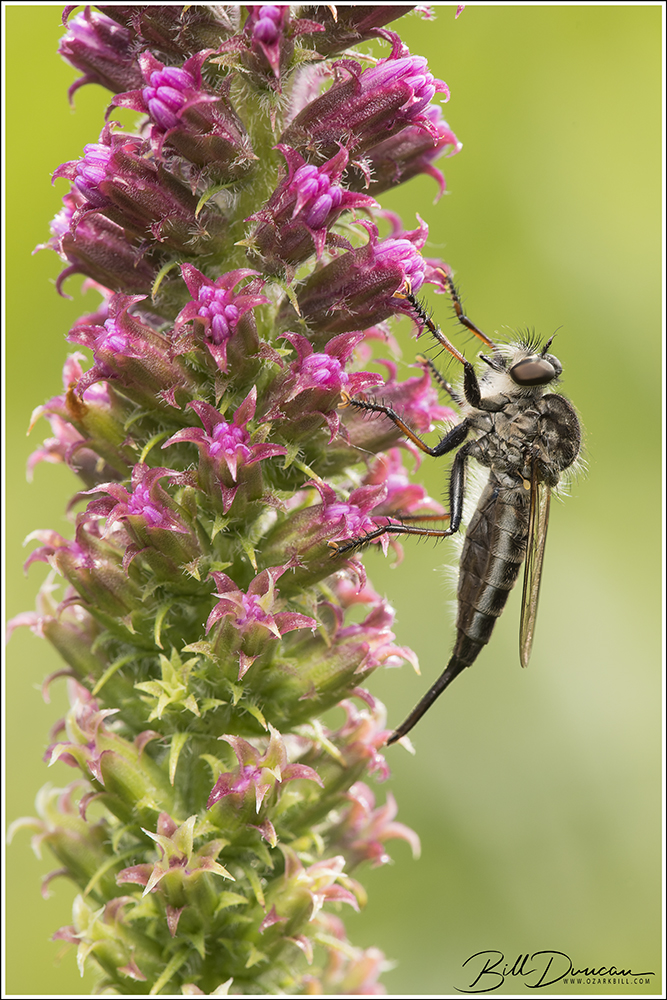
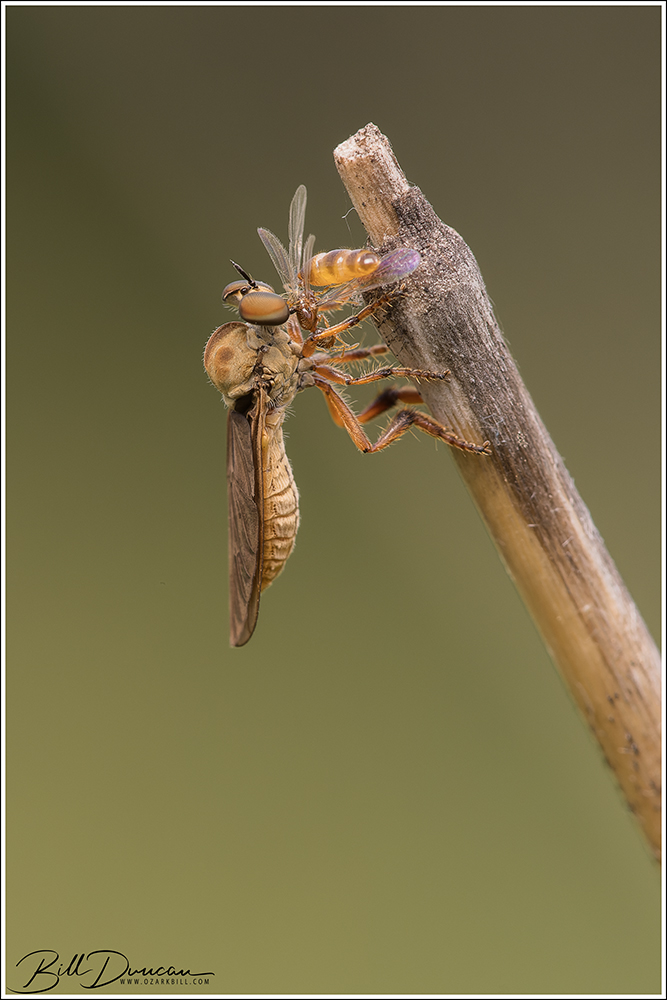
Efferia aestuans, the friendly robber (Family Asilidae)
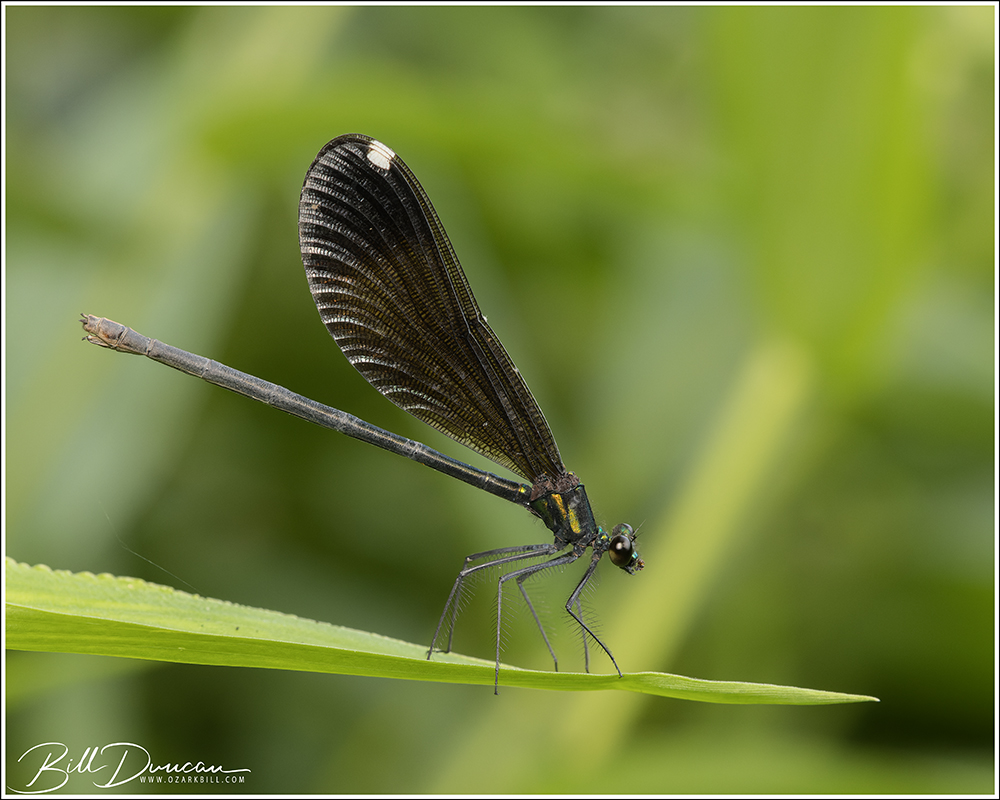
Calopteryx maculata, an ebony jewelwing damselfly that was found on the forest and prairie edge.
Members of our group walking among the blooming Liatris.
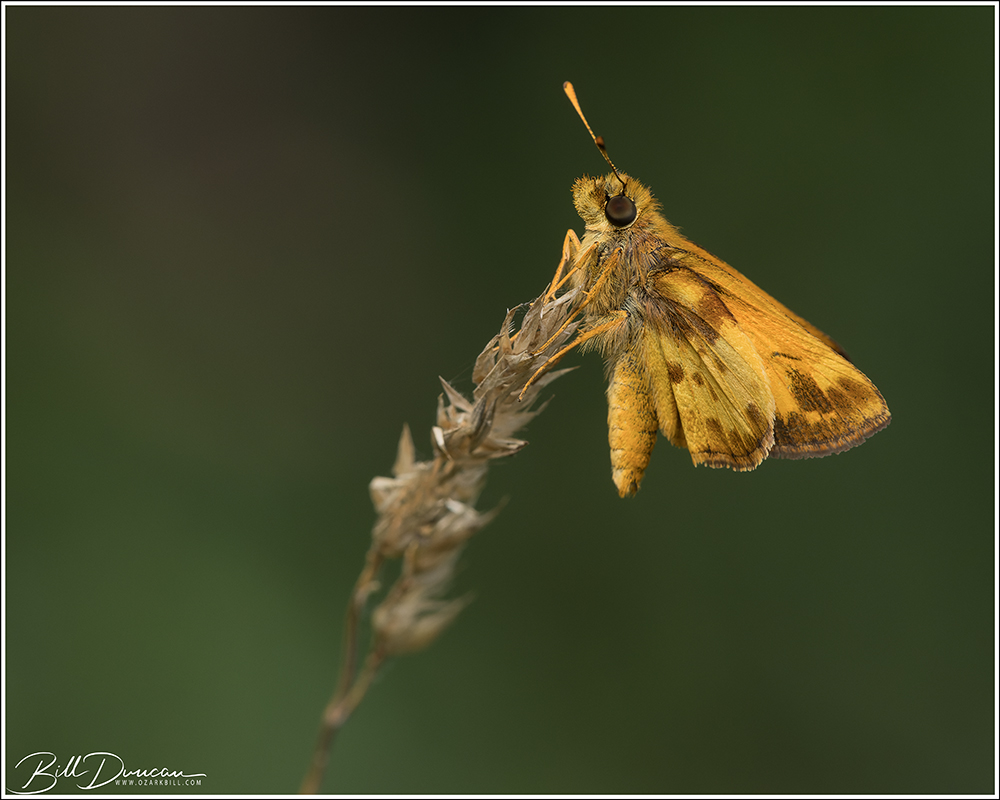
A gorgeous Poanes zabulon, Zabulon skipper (Family Hesperiidae)
What I am calling Wallengrenia egeremet, the northern broken-dash (Family Hesperiidae)
Keith Horn (back) and Chris Brown (front)
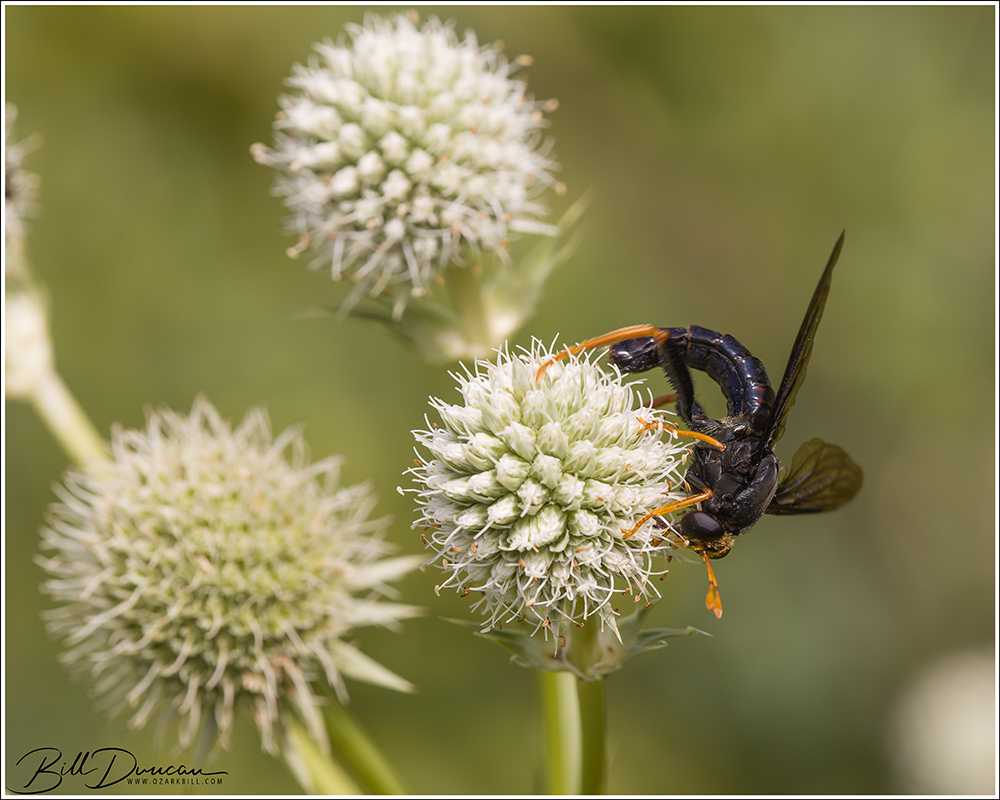
We were lucky to find both Mydas fly species to be found in Illinois, but I was only able to photograph this Mydas tibialis.
The gnat ogre! (Holcocephala sp.)
Interested in making visits to interesting high-quality habitats like this? Then consider joining Webster Groves Nature Study Society! Visit http://www.wgnss.org to find out more.

Tingler Prairie Conservation Area

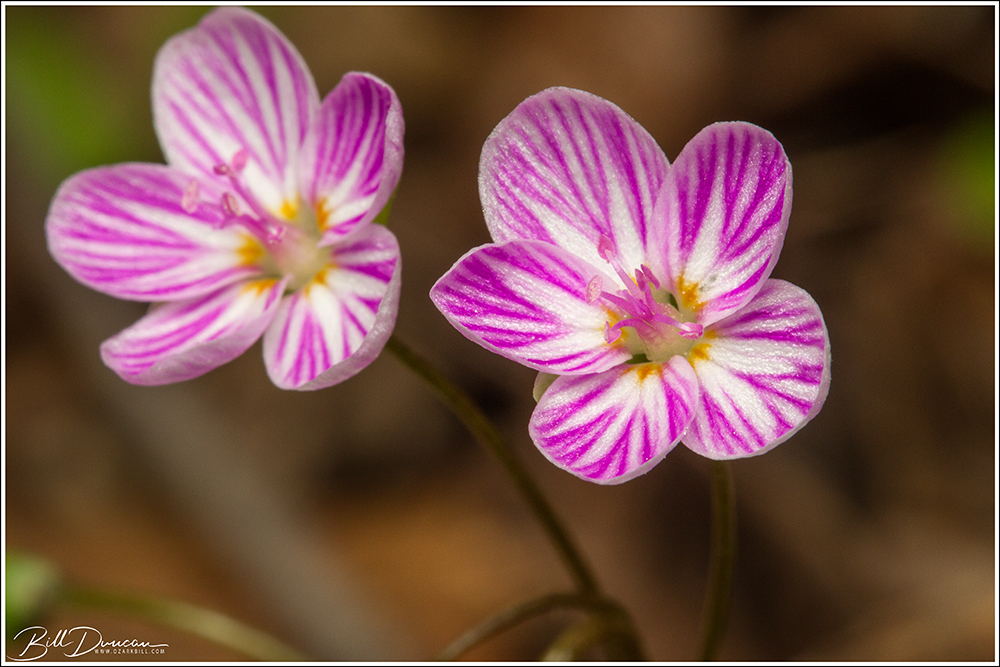
Claytonia virginica – Spring Beauty

These images were taken during a trip with Ted MacRae and Chris Brown this past April at Tingler Prairie Conservation Area in Howell County, MO. The first shows an exceptionally colored spring beauty (Claytonia virginica) in peak bloom.

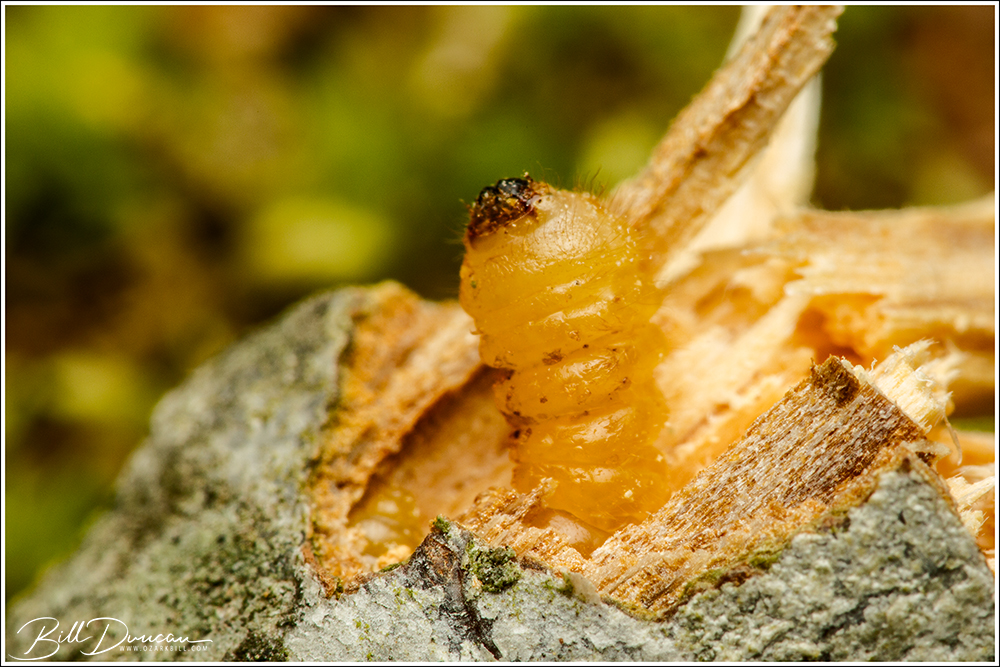
Elaphidionoides villosus (oak twig pruner)

This beetle larvae was something I had read about for years. Ted found several oak twigs that the mother beetles prune to serve as safe nurseries for their developing offspring as they rest on the forest floor. Ted delicately opened up the gallery to expose its occupant so we could take some photos.

Metallic Dung Beetle (Canthon viridis)

Buprestidae – Acmaeodera sp.

These Buprestid beetles were gorgeous as they foraged in the wood sorrel. Once in a while, they would stand still long enough to let us photograph them.

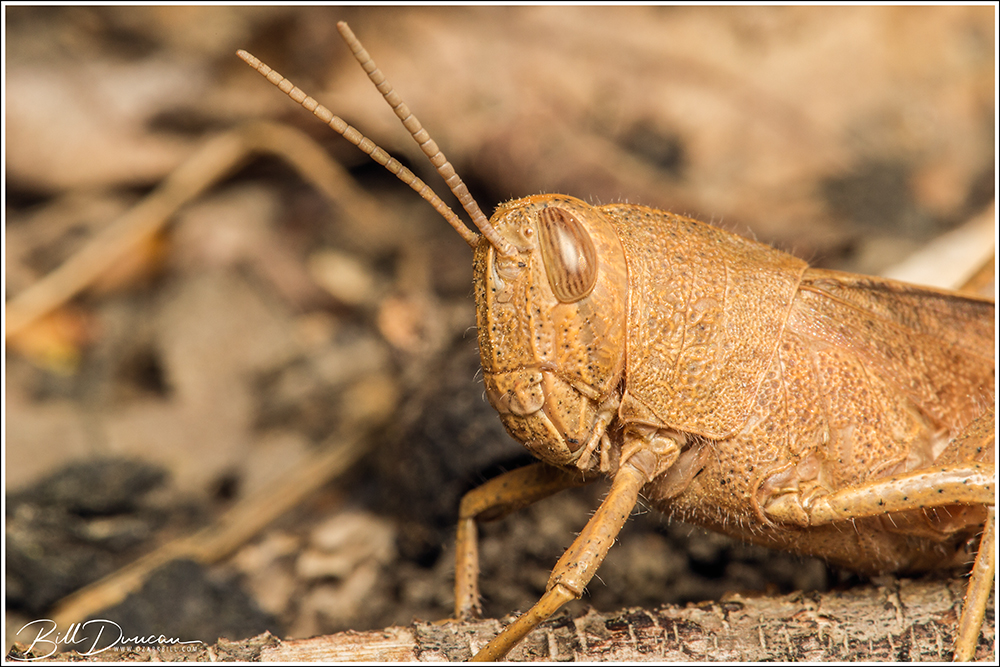
Arphia sulphurea ??

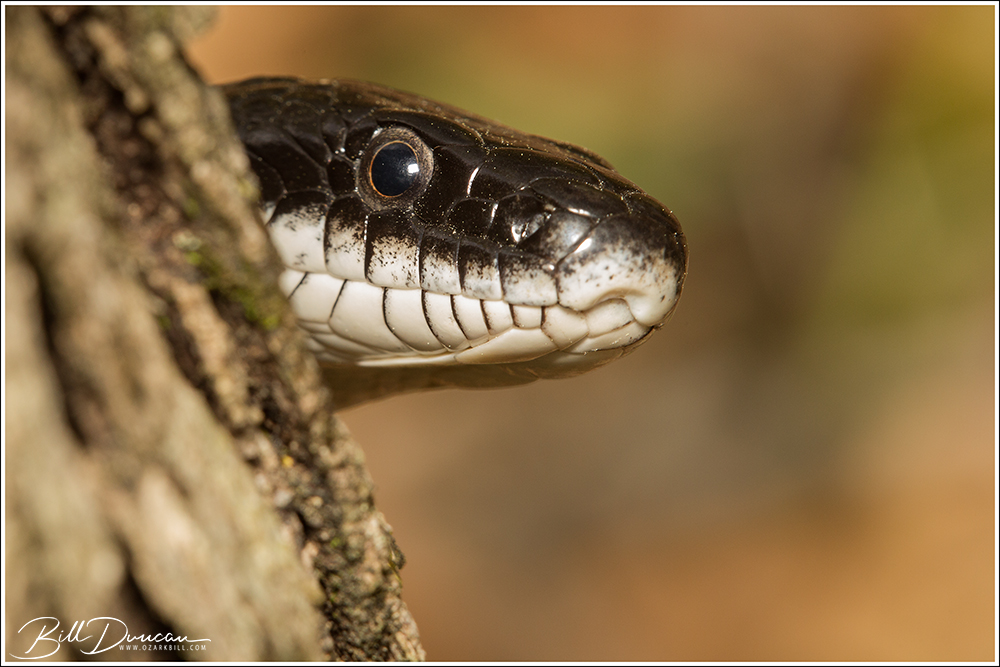
Black Rat Snake (Pantherophis obsoletus)

Finally, we found this black rat snake as it attempted to climb a tree near the trail. Maybe caught a whiff of something higher up?

-OZB

Location Spotlight – Little St. Francis River Pinnacles

Missouri's Palisades? Little St. Francis River Pinnacles - Madison County, MO
Little St. Francis River Pinnacles – Madison County, MO

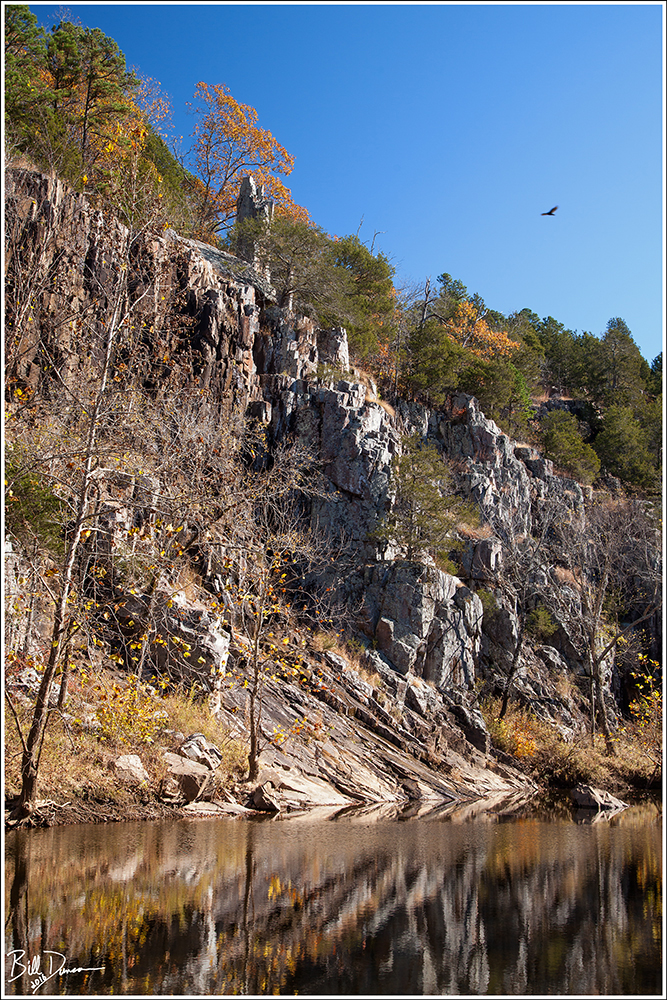
“The Pinnacles are not easy to reach but a visit to the site is worth a considerable amount of time and effort.  Differential weathering of vertically fractured pink porphyry created a sheer bluff cresting a hundred feet above the bed of the Little St. Francis River.  Individual columns rising as monoliths above the bluff are responsible for the name, but the bluff per se is even more spectacular than the pinnacles.  The site could be compared to the Palisades of the Hudson and merits photography but defies the lazy or poor planner.”

Thomas R. Beveridge
Geologic Wonders and Curiosities of Missouri

img_9174
Missouri’s Pallisades? – Little St. Francis River Pinnacles – Madison County, MO

Eight different pinnacles are listed in the Legacy that Dr. Beveridge left this state.  This particular pinnacles, along with associated geological features, is located in the St. Francois Mountains, just a stone’s throw away from a number of other classic destinations of this area.  Steve and I had been discussing our potential route for this excursion for quite some time.  We had tried once for an overland route but could not find or did not wish to aproach the private property owners and so decided that a water route was the best option for us.  This past November, with leaves being mostly fallen and temperatures being much warmer than average, was the perfect opportunity to try out our designed route.

This destination lies on a stretch of the Little St. Francis River (LSF) approximately 1.5 – 2.0 miles upstream from its confluence with the St. Francis River.  We knew that water levels were on the low side but we were completely uncertain what this would mean for traveling upstream into the LSF.  Would there be any navigable water at all?  If not, would it be possible to navigate within its bed by foot?  Facing the possibility of failure, we decided to give it a shot.  We loaded the canoe onto the powerful, symmetrical all wheel drive Subaru Forester and hit the road.

25320508709_f42914f285_o
Love. It’s what makes a boxer a boxer…


We dropped off Steve’s truck at our takeout –  the Cedar Bottom Creek bridge and put into the St. Francis at Silver Mines Recreation Area.  With the sun directly in our eyes (as almost always seems to be the case), it was a pleasant and short paddle downstream to its confluence with the LSF.  See the following map for the highlighted route that we took that day.

stfrancis

Arriving at the confluence, our spirits were lifted.  We were forced to push a little to get over a sandbar, but the route upstream was slow and just deep enough to allow for paddling most of the way.  We portaged a few times, but we expected worse.

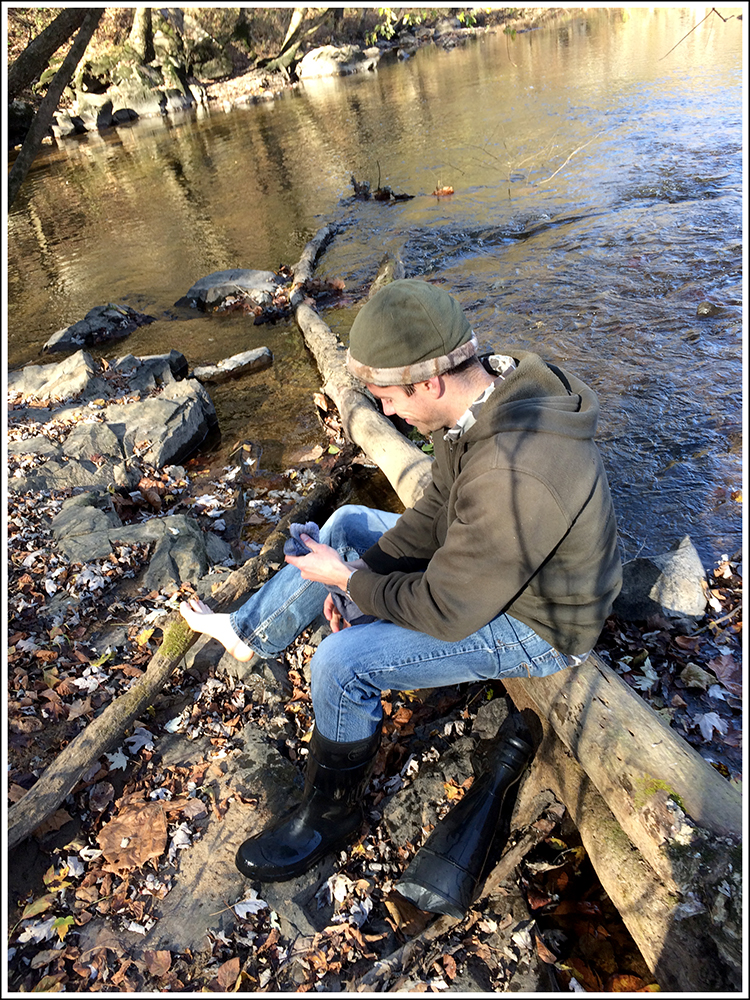
Steve Emptying his Boots
Steve emptying his boots

After taking in the initial views of the bluffs, we were naturally drawn to see the pinnacles themselves up close.  A quick lung-burning climb and we were there.

img_9108
Ozark Monolith – Little St. Francis River Pinnacles – Madison County, MO

Although not the tallest of these spires, this monolith was the more picturesque.  I have other photography plans in mind for this guy if I can ever visit again.  See below to see Steve in the frame for scale.

30654606050_f4b9e3c408_o
Monolithic – Little St. Francis River Pinnacles – Madison County, MO

The views from atop the bluff were quite nice.  The primary hill that faces south was Tin Mill Mountain and Pine Mountain lies to the north.  Here is an example of the rhyolite porphyry that composes the majority of this bluff.

img_9171
Rhyolite Porphyry Bluff – Little St. Francis River Pinnacles – Madison County, MO

This place reminded us a lot of Lee’s Bluff, which was not surprising due to how close these locations are to one another.  However, the pinnacles here brought a bit more visual interest.  Here Steve poses with a small, but likely ancient cedar, clutched within a crack that is probably older than the human species.

img_9127
Little St. Francis River Pinnacles – Madison County, MO

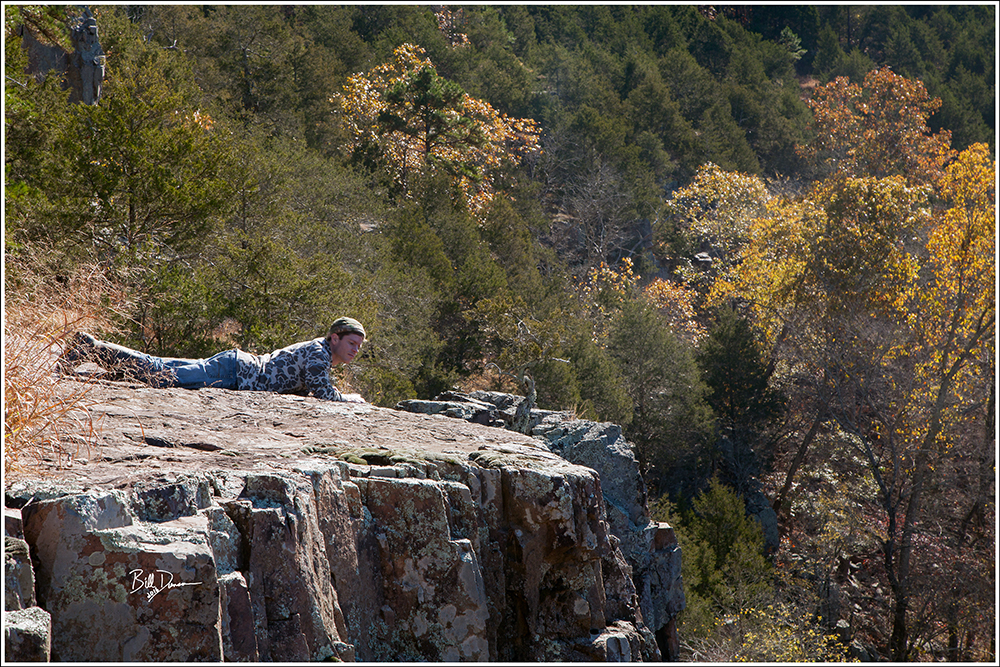
To conclude, here I captured Steve doing a belly crawl to the edge of the bluff.  As I say so often, I long for another visit here.  It seems the LSF has several other features to share.  I hope we can one day float the entire ~15 miles with a couple or more feet of water.  There are apparently a couple of stretches of shut-ins that shouldn’t be missed.

img_9166
Little St. Francis River Pinnacles – Madison County, MO

Until next time…
-OZB


Location Spotlight – Mingo National Wildlife Refuge and Wilderness

We had been anxious to get Steve’s newly acquired canoe wet for sometime.  The only questions were, “where to put in?” and “how to find the time to do so?”  Because we found ourselves near the halfway mark of the summer season, we knew the favored Ozark streams would potentially be packed with the pop-top kind of crowds.  Getting familiar with Mingo, which lies near Puxico in south-east Missouri, had been near the top of my list for sometime.  The opportunity to do so during what might be considered the most mildly pleasant summer of our lives made the decision easy.

On what was to turn out to be a perfect July day, I was on the road at 04:00, breaking my fast with an apple, granola bar, and French press that I prepared the night before.  Arriving at Steve’s promptly at 05:30, I found he already had his Dagger Legend canoe tied into his tiny Toyota Tacoma – a somewhat comical appearance.  We hit the road and it worked out great.  We were in the water within ditch number five by a little after 08:00, paddling slowly northward towards Monopoly Marsh, the true Wilderness of Mingo.

In less than fifteen minutes we spotted our first wildlife find of the day, this perched Mississippi Kite.  This was my first experience of the fact that Steve had previously explained; wildlife react differently to humans in the water than they do to people on land (a learning that caused me considerable agitation throughout the day).  We were able to glide right under this spectacular bird without disturbing it.  Not knowing how long I might have, I burned through nearly half a memory card before being satisfied.

Mississippi Kite
Mississippi Kite

Other birds of note in our list, which grew to near 60 species by the end of the day, were Acadian Flycatchers, Yellow-billed Cuckoos, Wood Duck, Yellow Warbler, and Canada Geese.

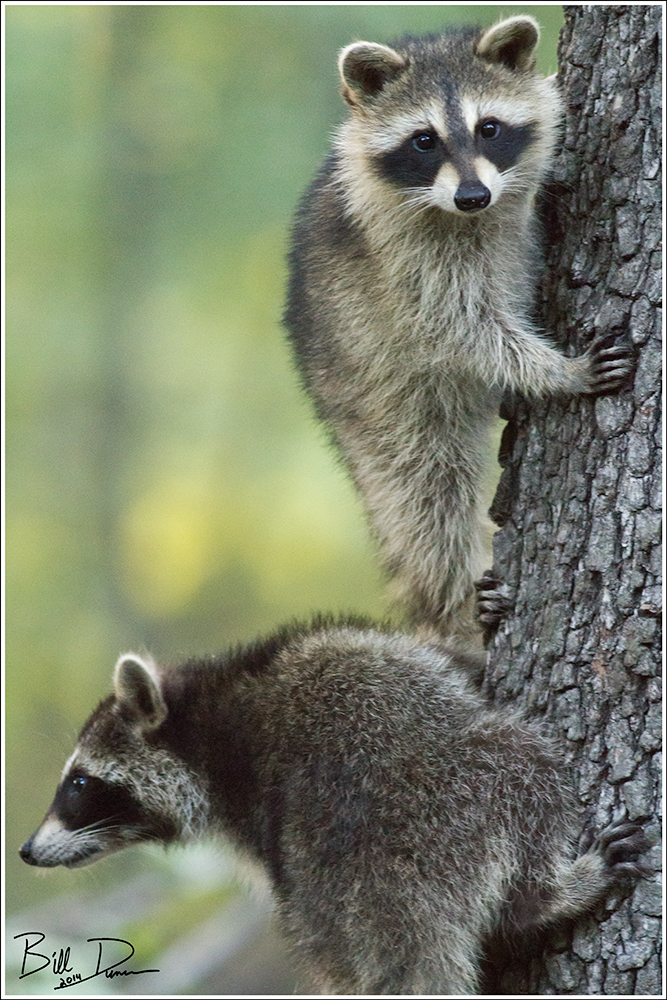
To save space in the dry bag inside the canoe, I brought only two lenses on this trip.  Covering the extremes of focal lengths, I brought a wide-angle zoom and a fixed 400mm f5.6.  As I mentioned above, this proved to be almost heartbreaking, as I have never experienced “having too much lens” in a wildlife photography situation.  But, this would turn out to be the case on several run-ins with wildlife throughout the day.  It was in ditch number five that we encountered our first of several groups of raccoon.  A couple times we came across a mom with up to four youngsters.  We were usually so close that I had to settle for head-shots!  😉

Mingo Raccoons
Mingo Raccoons

In October, 1976 Mingo and Hercules Glades Wilderness areas became the first of the officially designated Wilderness Areas in Missouri (1).  At over 22,00o acres, Mingo is the last significant remnant of swamp and marshland in Missouri, which prior to European settlement were the primary habitats in the Missouri boot-heel.

Mingo Raccoons
Mingo Raccoons

Mingo was named for the mixed tribal peoples known by this name that were composed of assorted Iroquian tribes (2).

Mingo Raccoons
Mingo Raccoons

Oh, how I wish I would have had a medium-zoom lens on this trip.  I was often too close to take an image of any kind.  Oh well, enough about this, just learning for the future.  We continued following ditch number five, with the flooded hardwood forest of bald cypress, tupelo and assorted oaks on one side of us until we came upon the clearing known as Monopoly Marsh.

American Lotus
American Lotus

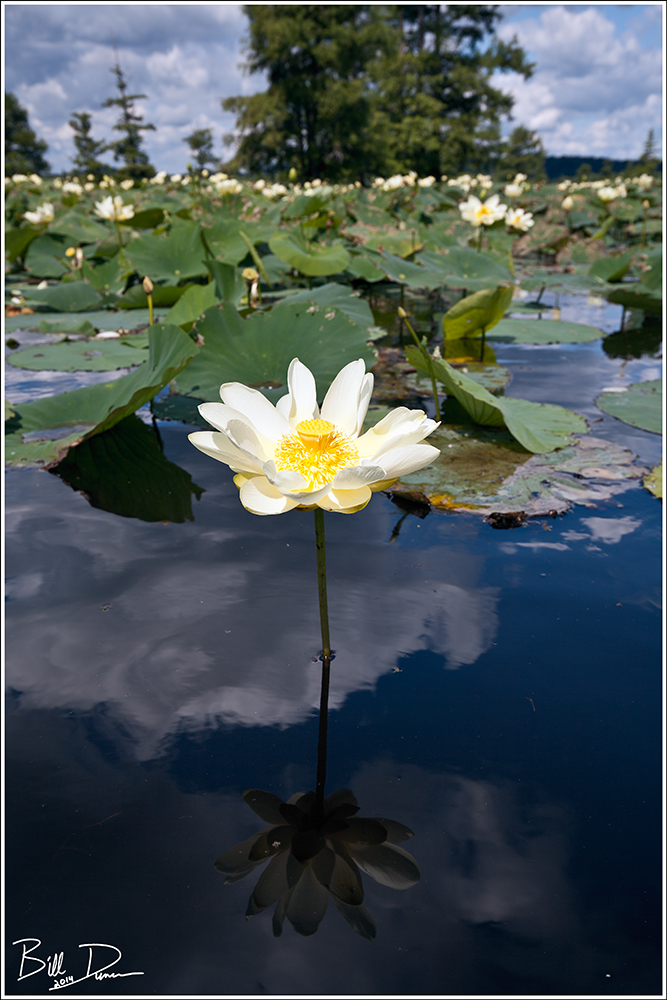
We knew that by this late into the green season the marsh might be impenetrable due to aquatic vegetation such as American Lotus, which we found in peak bloom.  For the most part we were able to make our way around well enough, although much of the marsh would have been quite difficult to navigate by paddle.

The Only Way to Travel

An auto tour route is available that gives access to the refuge area, but the only way to see the Wilderness is by boat.  The Wilderness act of 1964 put into law that no motorized equipment can be used within a Wilderness area.  It was interesting to hear the staff in the Refuge Visitor’s Center say they could only use hand tools to cut through tree falls across waterways in the Wilderness.  I suppose this also means to not expect helicopters or ATVs to come to the rescue in case of emergency?

White-tailed Deer
White-tailed Deer

White-tailed deer where more numerous than the raccoons.  The refuge is more popular for the opportunities for waterfowl hunting, although I believe at least a couple managed dear hunts are conducted each year.  However, without true predators, it seemed to me that the wilderness area was already being potentially overrun by these animals.  We pushed groups into flight nearly every ten minutes along the waterways.

Did I mention all the raccoons?

IMG_5208
More Mingo Raccoons

Mammals and birds are definitely not the only groups of animals that thrive in this Wilderness.  Reptiles and amphibians are quite abundant and are probably second only to the insects in shear biomass.  We glided gently passed this Broad-banded Water Snake, which feeds on other reptiles, amphibians and fish.

Broad-banded Watersnake

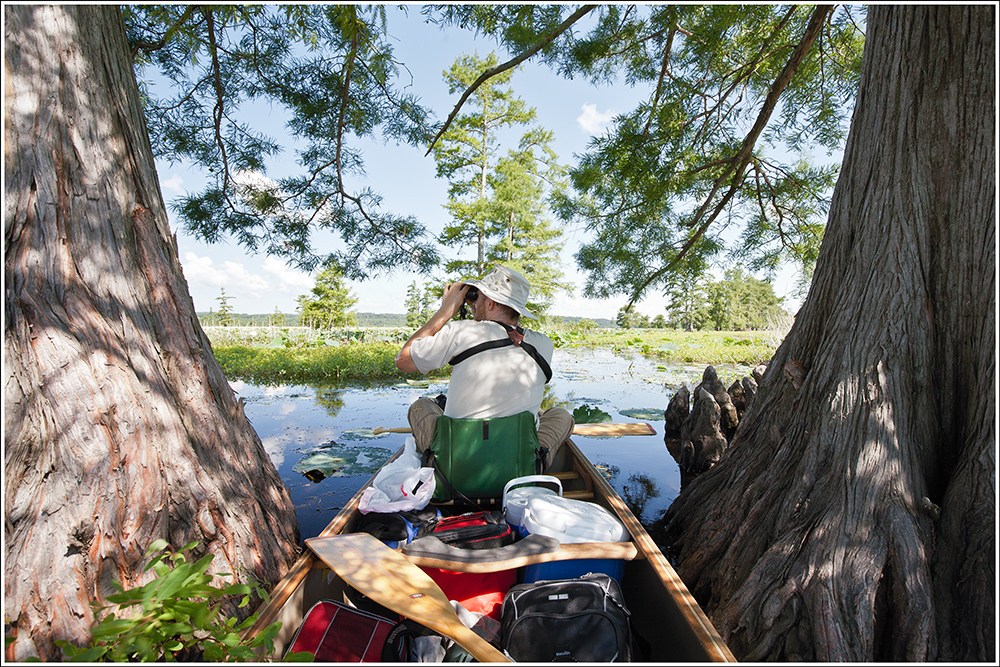
While in Monopoly Marsh, we stopped under a couple of well-placed cypress in order to watch one of the year-long resident Bald Eagles soaring overhead.

IMG_0635
Swamp Thing

After going about as far into the Marsh as we dared try from the south, we headed back to our put-in and had some lunch.  Already the day was worth every bit of respiration, but there was so much more to come!

gg
The Dagger Legend

After lunching on the best hippy food Mother Earth provides and paying an entertaining visit to the newly constructed Visitor’s Center, we decided to put it at Stanley Creek.  Here we planned on heading downstream and then up into the marsh again via the Mingo River.  A GPS or good map skills are critical in finding your way in this area by boat.

We paddled down Stanley Creek with much ease, due to the nearly non-existent currents within these streams.  It was in this section that we came upon the highlight of the day for me and one I will never forget.  River Otters!!!!

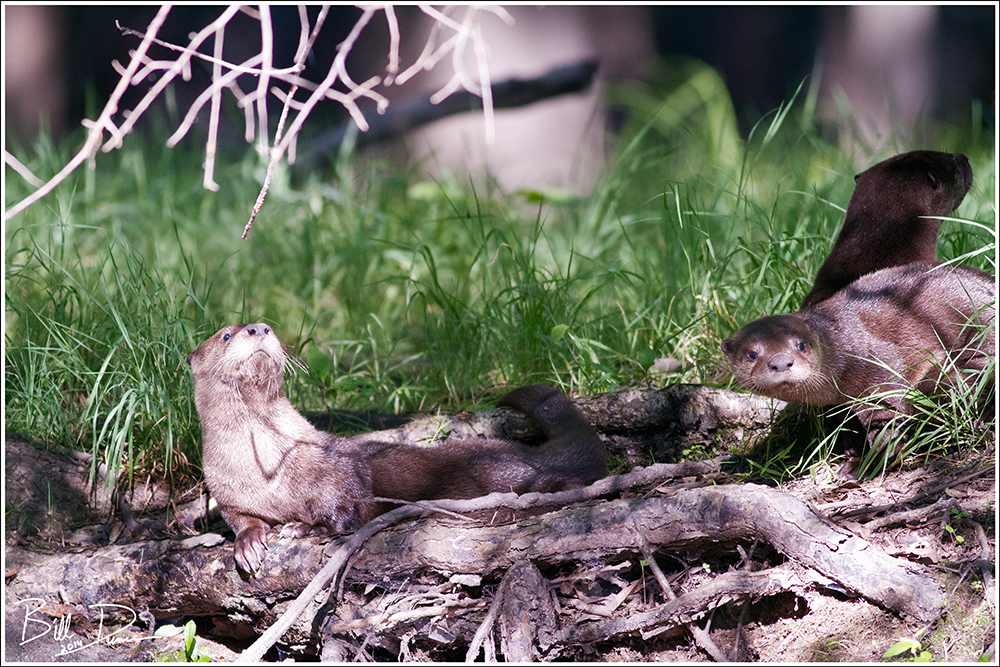
Along a dry bank, almost perfectly eye-level to where we sat in the canoe, we watched a mom and four otter cubs.  I tried my best to capture what Steve so wonderfully described as a “collective ball of play”, but mostly struck out due to their non-stop activity and the fact that they were often obscured by vegetation.

Collective Ball of Play I

It was quite the experience.  We let our momentum move us slowly closer to the bank, watching as play was interrupted by periodic rests and grooming opportunities.

Collective Ball of Play II

Whether due to poor eyesight or that we were mainly a floating log that was downwind, we were quite surprised how close we were able to drift without the alarm being raised.  Finally, we put on the breaks and maintained our distance to take in the show.  Once in a while the play would evolve into a slide into the water by one or two of the animals, followed by heading back onto the land, not to stray too far from mom’s protective gaze.

Lontra
Lontra

The history of the River Otter in the Show-me State is, of course, terrible and controversial.  Between the 1930s and early 1980s otter numbers hovered somewhere between 30-70 animals, due primarily to the loss of marsh and swamp habitats like those of Mingo and because of over-harvesting by the fur industry.  Following the River Otter being classified as endangered in Missouri, the Missouri Department of Conservation finally began a restoration project in 1982.  This was considered a success as River Otter numbers rebounded into the 1990s.  As the animals searched outside their minuscule and not-increasing natural habitats, they discovered that other animals, such as one of their primary prey items – fish, were also being stocked by man (3, 4, 5, 6).

To Relax or Play?
To Relax or Play?

Finding easy prey in stock-ponds, the population grew even more.  Unsurprisingly, the naked apes could no-longer put up with a species trying to compete with its sport and maintenance of the Missouri River Otter population began via a trapping season in 1996.

Collective Ball of Play III

Destruction of commercial stock fish ponds and natural fishing holes along with the usual claims of “property damage” were used to justify the change from restoration to management.

Please don’t get me wrong, I have nothing necessarily against hunting or trapping, especially when we have exterminated all the original predators long ago.  However, I cannot see justification in this day and age for the hunting season on any predator in this country.

Commercial Menace?
Commercial Menace?

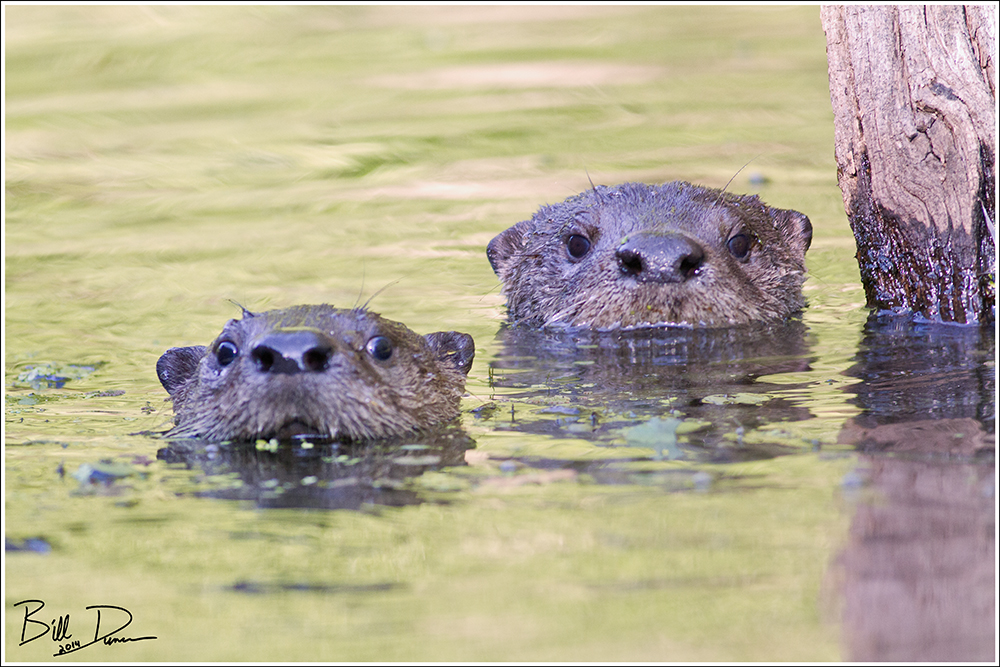
Finally, maybe from the odors of so many digesting fruits, 😉 the jig was up.  We were spotted and all five animals headed to the water.  The next two minutes was like being in some sort of reverse “whack a mole” game.  The pups, sometimes getting within 6-8 feet of our boat, would pop their heads out of the water just long enough to get a look before disappearing.  Mom, keeping a greater distance, would snort and snap at the water, throwing splashes in our direction.  In the photo below, you can see a curious pup immediately in front of mom’s suspicious private eyes.

I See You, You See Me

Finally, just when we started to worry if we should be worried, the entire group disappeared.  We watched them briefly as they resurfaced downstream about 25 yards.  After getting ourselves together, we portaged the boat over Flat Banks Rd to continue into the marsh.

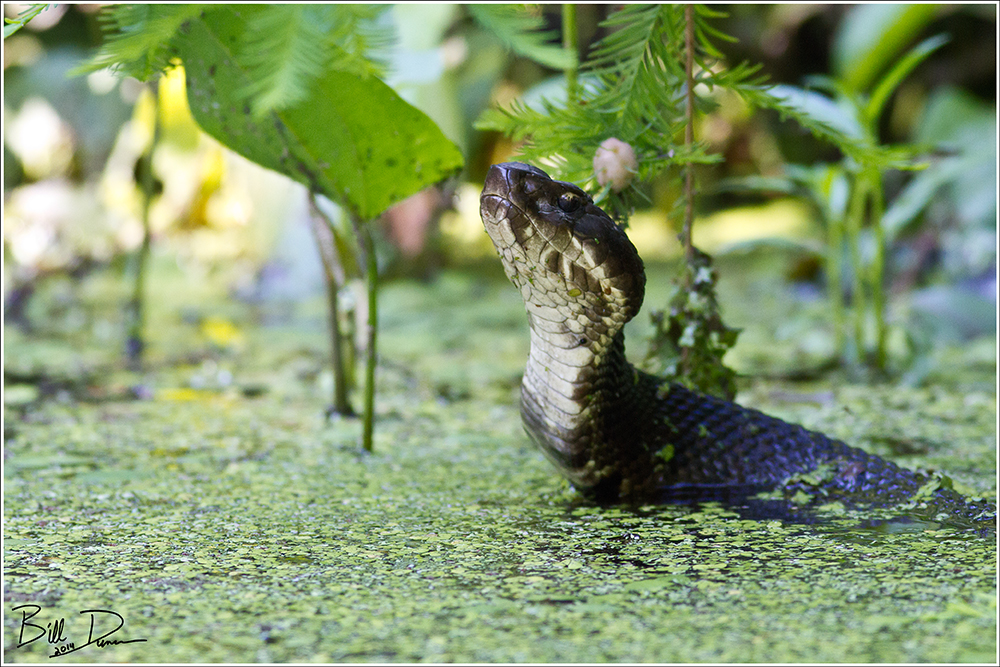
Just prior to getting into the marsh, we spot this handsome Cottonmouth.  We slowly followed the snake as it swam along the bank.  I heard some sort of whimpering coming from the back of the boat, but that fell silent with a dull thud when the snake raised its head and looked back towards us.  Remembering that these guys can be a little more curious, or potentially aggressive when in the water, I called for reverse engines, rather than gaining a new passenger.

No, no, no, it ain't me babe, it ain't me you're looking for, babe
No, No, No, It Ain’t Me Babe, It Ain’t Me You’re Looking For

Arriving into the marsh from this direction got us up close to what must be some of the oldest living organisms in Missouri.

Bald Cypress
I Shall Not Be Moved

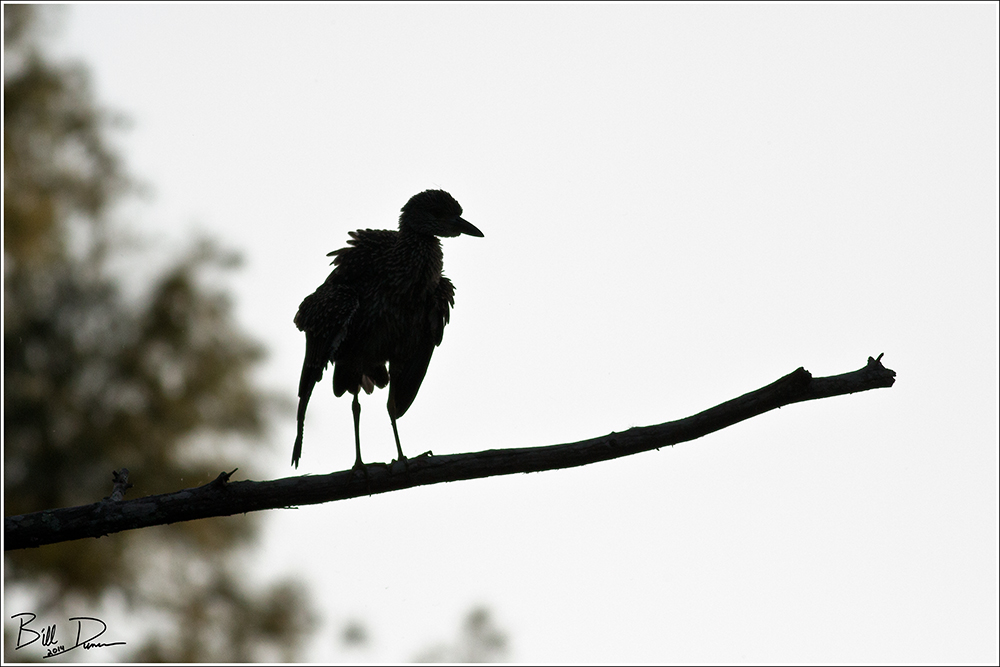
Hooded Mergansers, Belted Kingfishers and Barred Owls were some of the creatures keeping us company as the sun began to fall.  We arrived just in time to tie the boat on to the vehicle before last of light.  Just before we did, we observed that the night shift was checking in.  This juvenile Yellow-crowned Night Heron was preening and stretching on an overhead snag.

Yellow-crowned Night Heron

Well, that’s all from Mingo for now.  These being the highlights from a single day, I can’t wait for another visit!

Bald Cypress
Bald Cypress

Oh, in case you were wondering, yes, that is an 18-pointed sun-star.  😉

Works Cited:

1) Farmer, Charles J. “Unspoiled Beauty – A Personal Guide to Missouri Wilderness”, University of Missouri Press, 1999.

2) http://www.cynthiaswope.com/withinthevines/penna/native/Mingo.html

3) Schwartz, Charles J., Elizabeth R. Schwartz. “The Wild Mammals of Missouri – Second Revised Edition”,  University of Missouri Press and Missouri Department of Conservation, 2001.

4) http://www.otternet.com/ROA/Fall2001/missouri.htm

5) http://www.ozarksfirst.com/story/d/story/conservation-dept-reacts-to-effots-to-lessen-otter/45884/Yxj4OaGNIECRU6_1NJ5a8Q

6) http://mdc.mo.gov/conmag/2007/06/missouri-river-otter-saga?page=full


Return to Stegall Mountain

A number of years ago one of the first hikes I remember into the Missouri Ozarks was a short spur trail off the OZT up to the summit of Stegall Mountain within Peck Ranch C.A.  I had my first “serious” camera that I wanted to document Nature as I found her on these journeys and I made a couple images that I was satisfied with at the time.  This past holiday break we found ourselves back at this location and enjoyed a pleasant winter’s day.  Here are a few images from this visit.

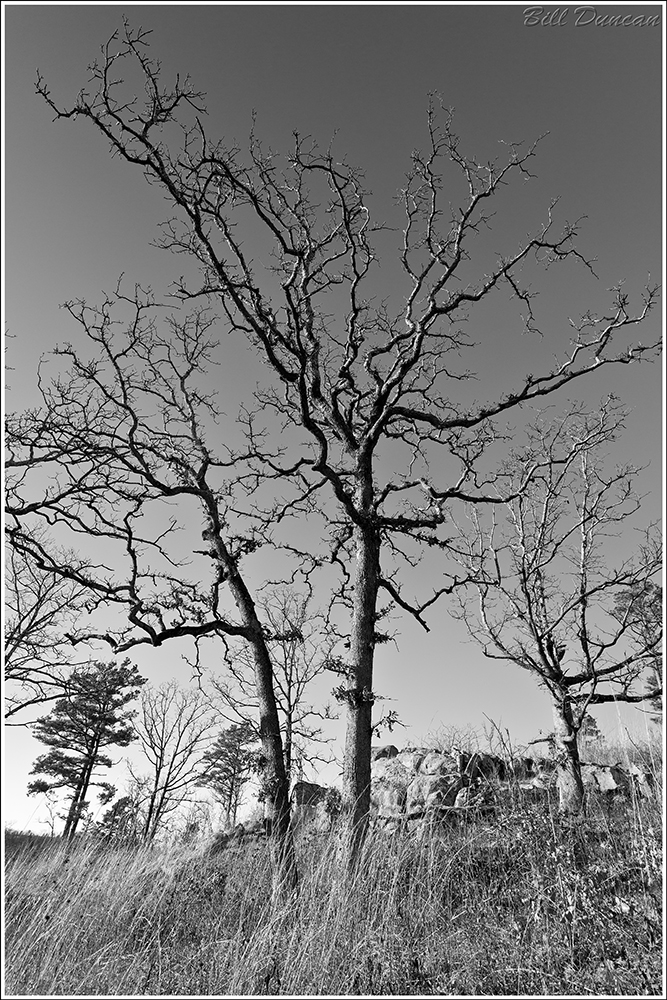
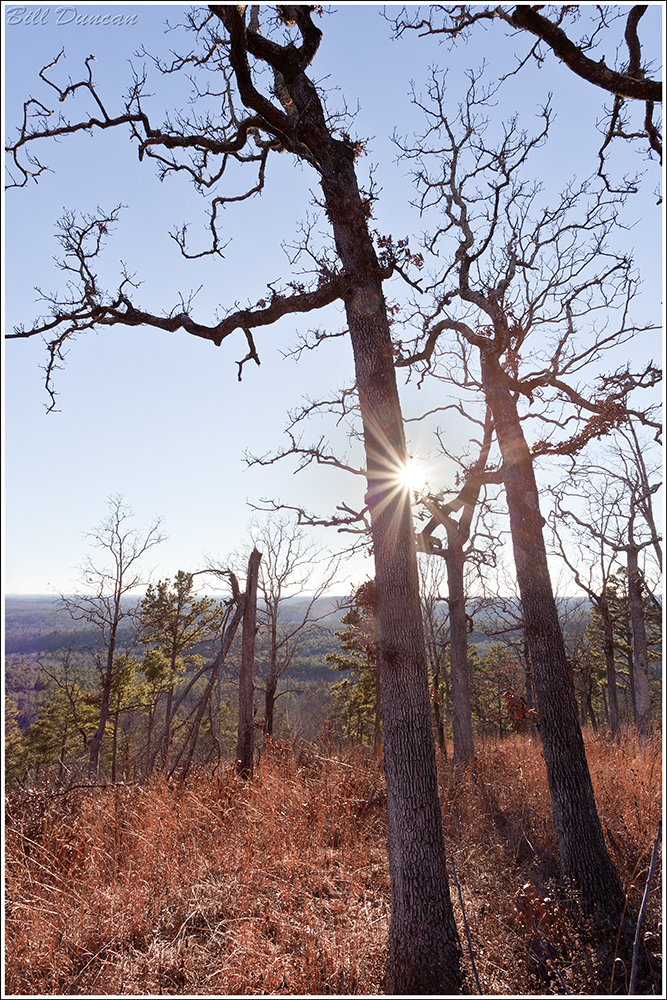
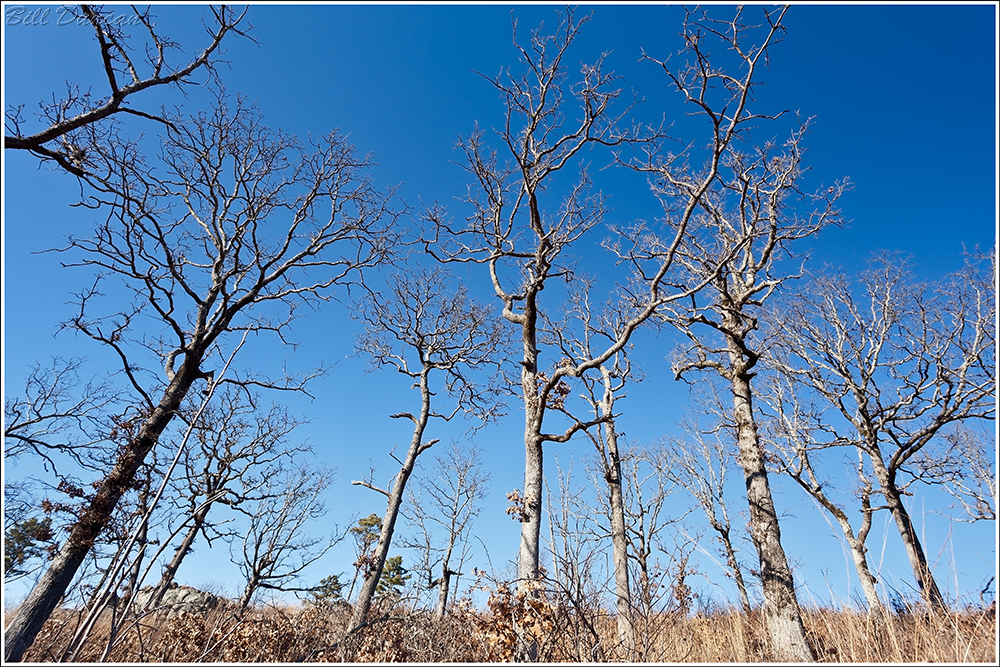
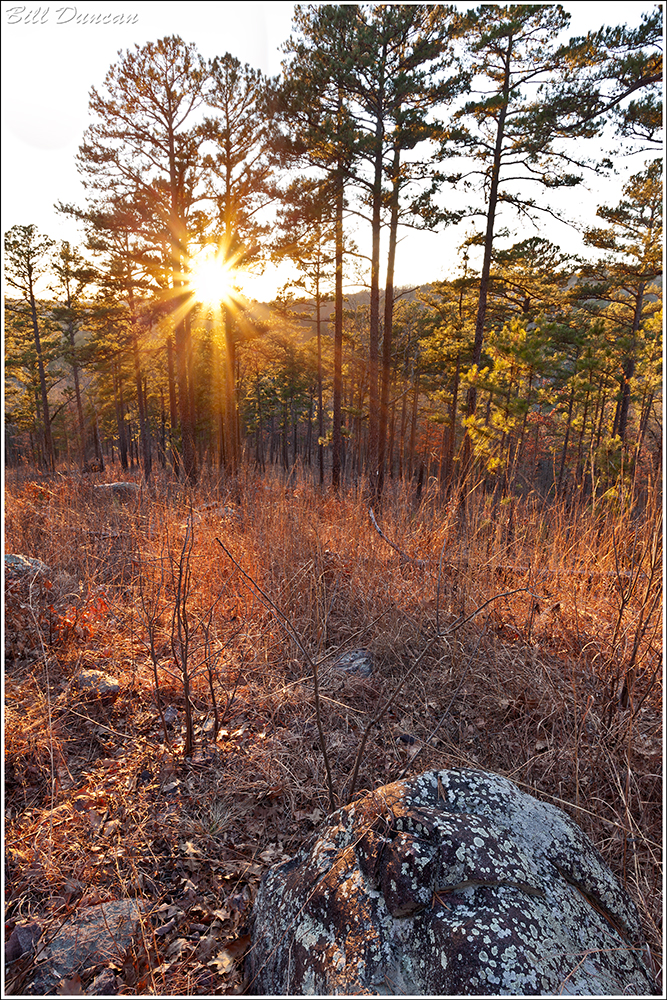
One of the highlights of Stegall Mountain Natural Area are the Oak savanna and glades.  Some of the most gloriously colored rhyolite in the state is found in this area.  The trees pictured in thes images are mostly stunted and gnarled Post Oaks.  I couldn’t get enough of them.

IMG_7294

IMG_7300

IMG_7285

IMG_7329

The Gulf

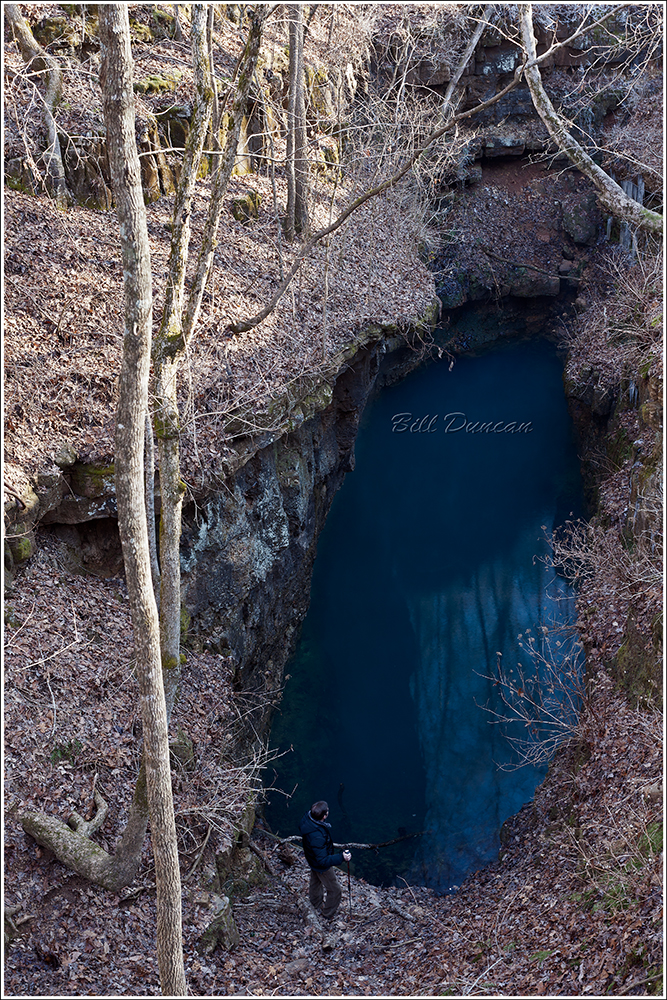
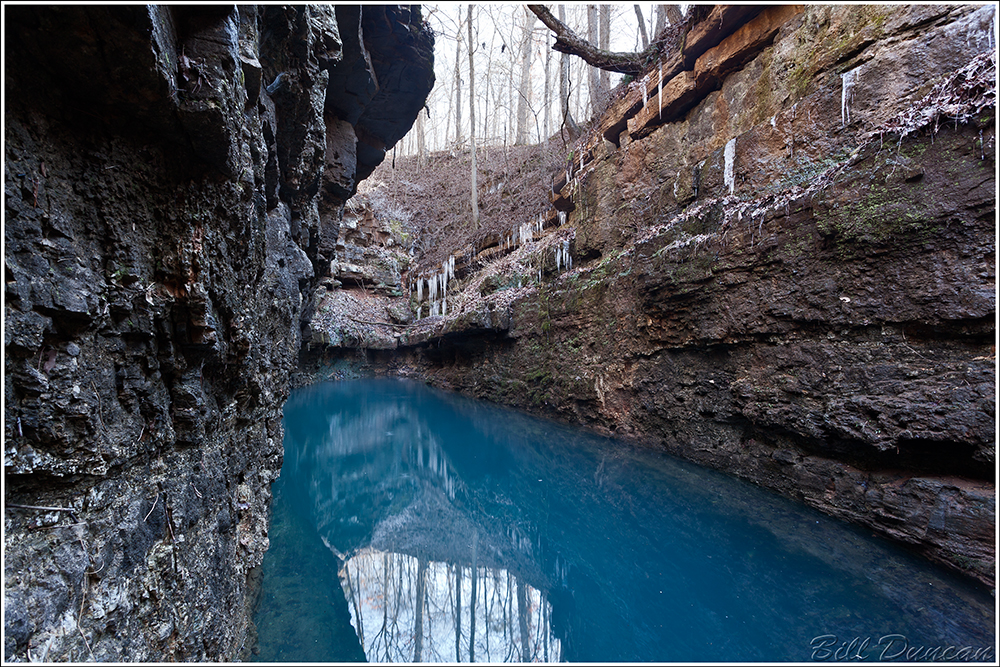
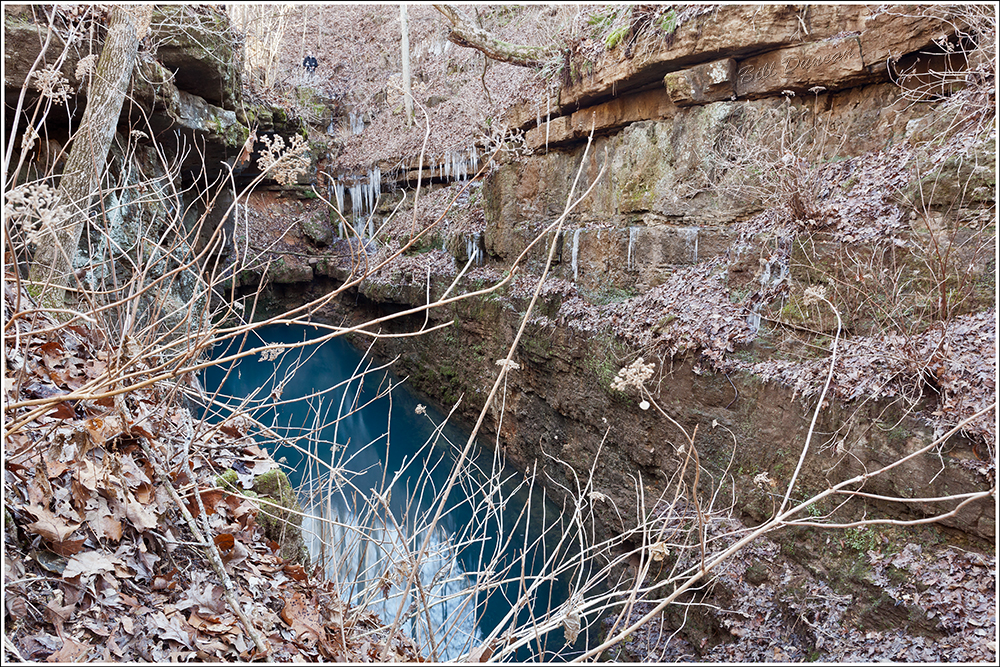
Pulled from Beveridge’s gift early after my discovery of the book, “The Gulf” of Wayne County has been on my list of desired destinations for a while now.  Recently Steve and I made this our target in a winter’s outing, which is an appropriate time for nice viewing of many of the Missouri Ozarks geological features due to lack of green vegetation that blocks views and light.  The Gulf is a narrow sinkhole that is approximately 100 feet long and 20 feet wide.  This sinkhole is actually an opening to an underground lake that is more than 200 feet deep at its maximum depth.

Here Steve posses for a bit of reference.  In periods of lower water, the entrance of the “cave” portion of the underground lake would be seen at the opposite end of the sinkhole from where Steve stands.  A small boat and/or scuba equipment would provide for excellent opportunities for exploring.

IMG_7236

Just as the Tyndall Effect explains why the sky is blue, it is also the reason that the deep bodies of water found in the Ozarks often appear blue.  These carving waters carry the dissolved limestone with them.  This ultra-fine suspension scatters the shorter blue wavelengths more than the other colors of natural light, giving the blue appearance in the waters, even though there are no blue pigments to be found. In fact, this blue appearance is somewhat dictated be the angle of light and the viewer’s position to the reflecting light.  With a slight turn of the head, the water will often change color.

IMG_7255

A potential practice picture for spring, here you can see some old wild hydrangea growing on the edge of the sinkhole.  Can you find Steve in this image?

IMG_7273

Entrenched Meanderment

Entrenched meanderment?  What in the world is OZB going on about now?  Beveridge gives a wonderful explanation of the meandering nature of virtually all Missouri Ozark streams in “Geologic Wonders and Curiosities of Missouri”.  Within, he provides a few fascinating geological hypothesis as to the hows and whys of streams forming in such a manner with some of the hardest rock on the planet as their bed.  Think about it.  How and why would streams form in rock like this, with very little floodplain, steep cliffs/bluffs and not be straight?  Pick up Beveridge’s book to read of these hypothesis as well as learn about narrows, cutoffs and lost hills – the geologic features that are formed by these entrenched, meandering streams.

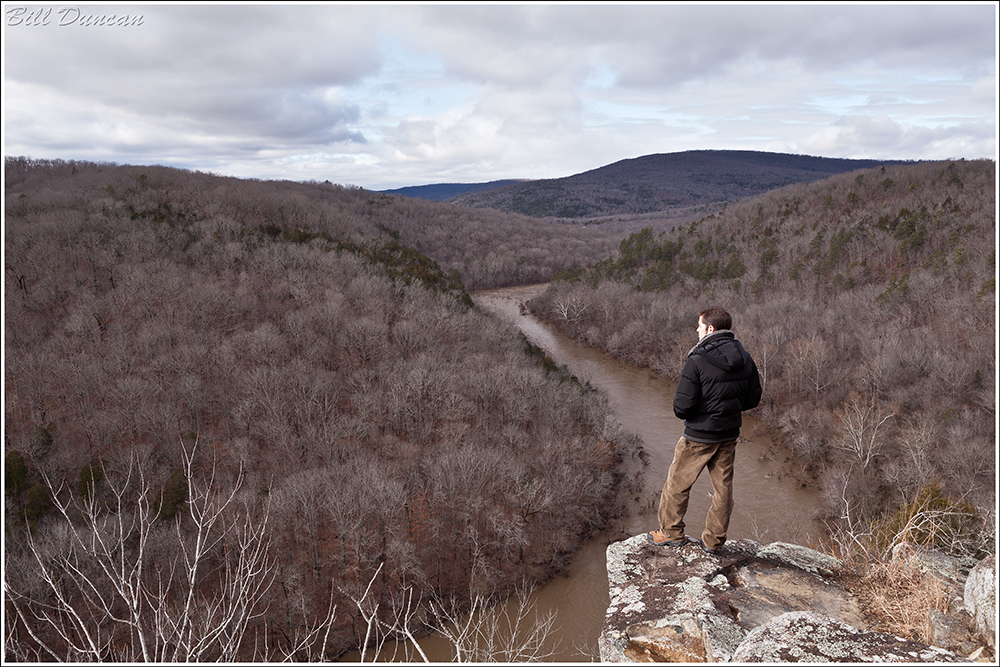
Two streams with an entrenched meandering environment on public land I have known and loved for a while.  These are the Meramec River at Vilander Bluffs N.A. and Jam Up Cave/Bluff on the upper Jacks Fork.  These are always worth a visit.  While flipping through Bryan Haynes’ book recently, I came across a panoramic painting of his that I have admired.  I saw the title: “Lee’s Bluff”.  Having never heard of this feature and the fact that his image was such a dramatic scene, I assumed that this must be found in some western wilderness, far from being a day trip destination.  I went ahead and searched the web, and to my surprise discovered this was in Missouri, along the St. Francis River and smack in the middle of those lovely St. Francois Mountains.  With Steve wearing his best navigator’s hat, we found the location pretty easily on a blustery, winter’s day.

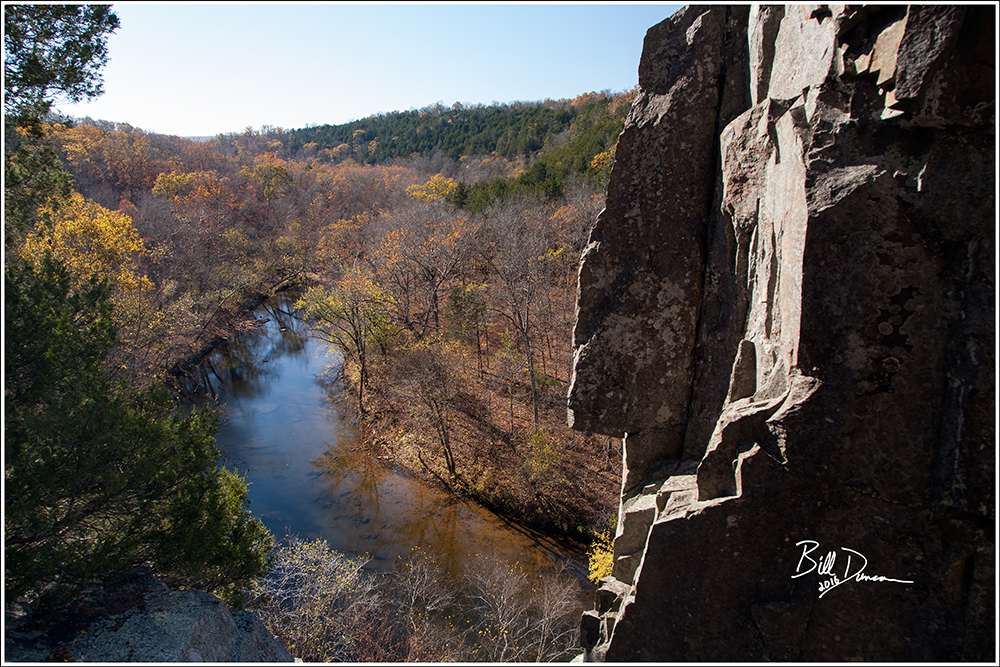
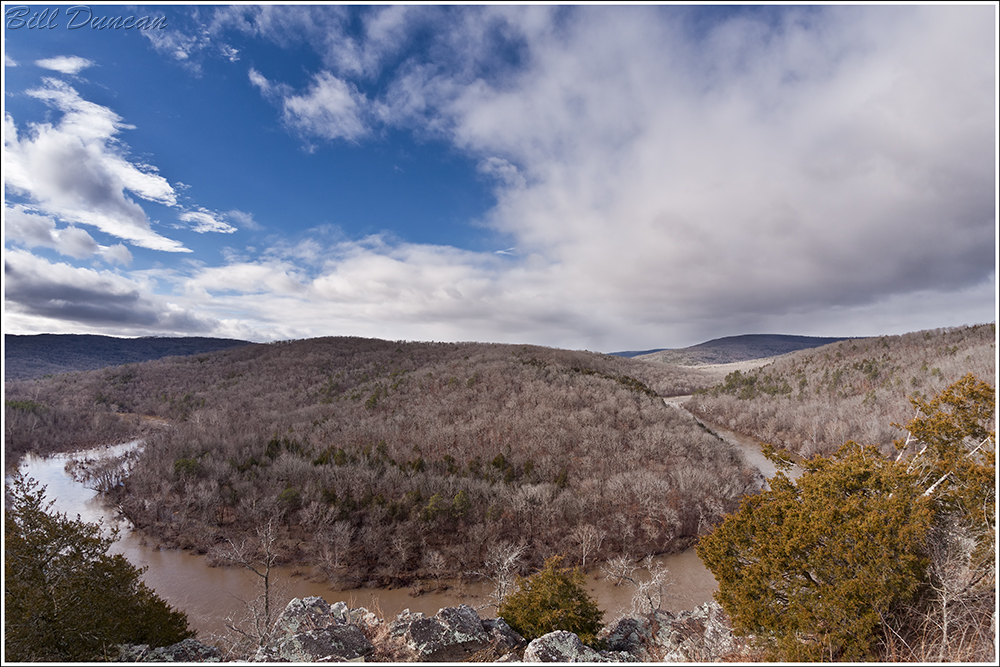
Here’s an overview image taken with a 15mm lens.  You can see the features typical of a meandering entrenched stream, the steep bluffs formed on the outside of the bend and gentle sloping floodplains on the inside.  In the direct center you can see the “incipient lost hill” as described by Beveridge.  One day the “narrows” on the far side of that hill will succumb and a “cutoff” will form, straightening the river.

IMG_7082

   The sky was a constant change on this day.  Here Steve poses while the sun breaks through an opening.

IMG_7112

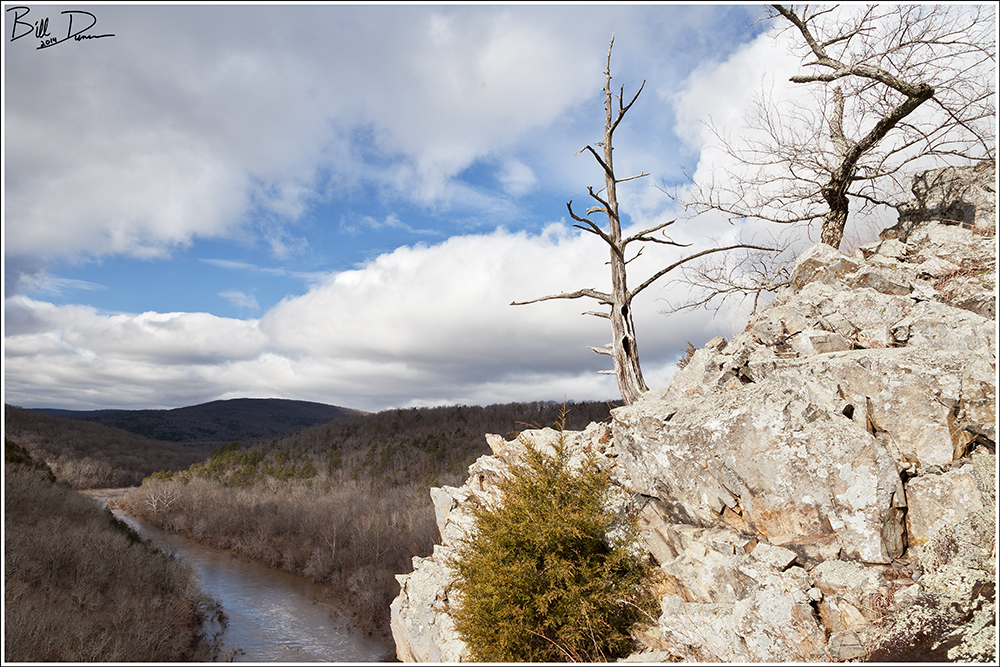
Climbing around on the steep, sharp rocks of the bluff we came across an ancient skeleton of an eastern red cedar.  The relative youngster below looks ready to take its place in another couple of centuries.

IMG_7168

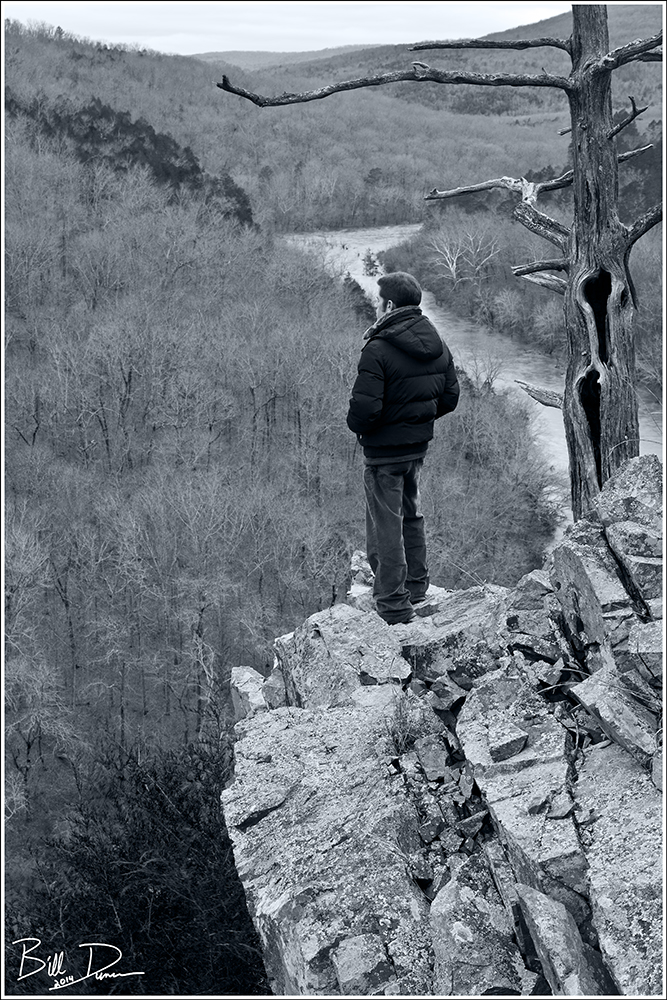
Professional schlepper, navigator, and photo model.  I’m sure glad Steve works for free!  😉  Here he stands next to the old tree to give the image some perspective.

IMG_7197

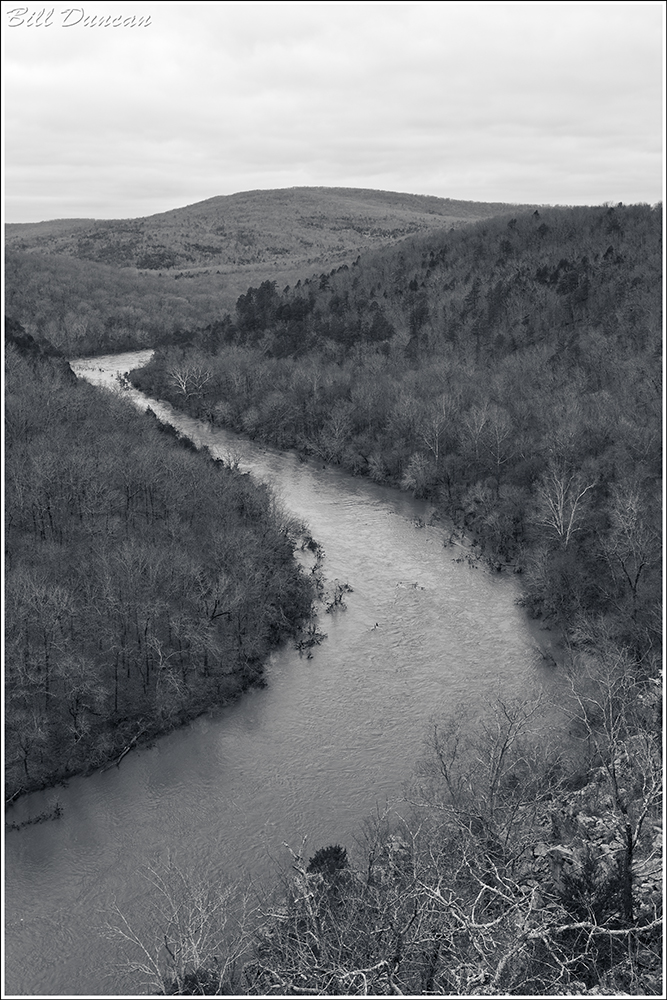
The image below is probably my favorite from this day.  One of the visual beauties of these types of entrenched stream environments is that there are two S-curves in each one.  You just have to figure out where to place your camera to take advantage of it.  Under the right light and weather conditions, this place holds a lot of photographic potential, not to mention the potential for reflection and wonderment.

IMG_7203

Return to Squaw Creek NWR

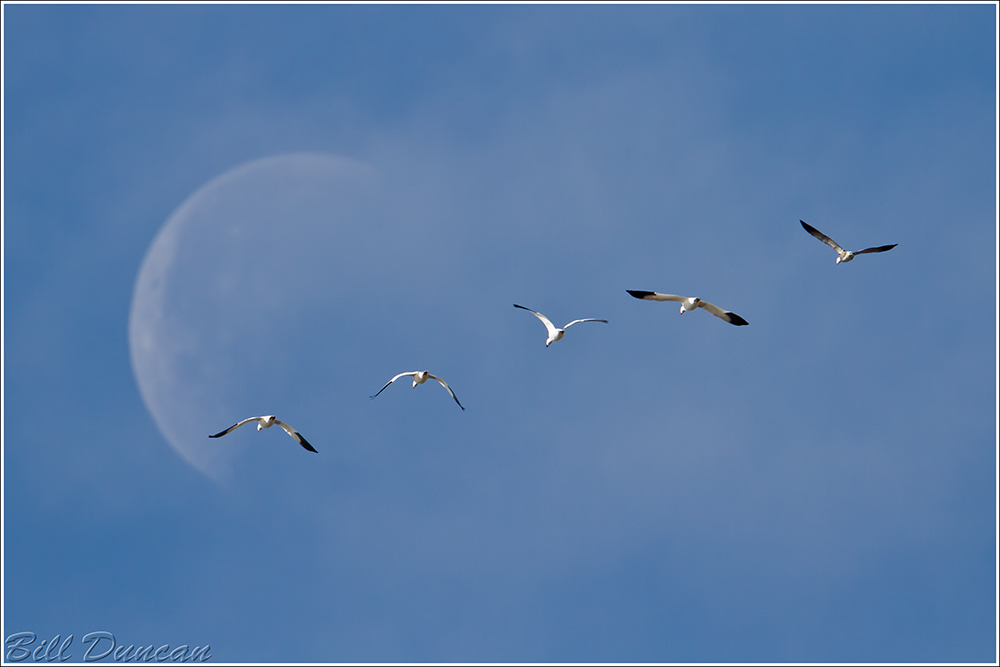
I have posted about Squaw Creek National Wildlife Refuge before.  One of the prime birding locations in the state, I asked Steve to accompany me for a Thanksgiving week’s trip.  Nothing is assured during this time on the calendar in Missouri, and we knew that there was a chance the entire refuge could be frozen over, pushing the 500,000 snow geese that could potentially be visiting to warmer, more southerly locations.  The weather that week was barely below freezing so we were optimistic that the refuge would be mostly open and the birding would be good.  Arriving in Mound City after dark, we were forced to wait until the next morning to check out the refuge.  Being the proper naturalists/photographer/birders that we are, we arose in plenty of time to fill ourselves with coffee and roughage, pack up the car with optics and winter gear and make it to the refuge before first light.  Driving around the well-placed road, we could hear little but wind.  At one point we left the car and Steve through a rock into the black.  The response was quite an unusual sound that was definitely not the plash expected of liquid water, but could only be the vibrations of a rock on a large flat ice sheet.  As the light grew we could see that most of the refuge was indeed frozen (>90%).  We would not get to see the numbers of snowies that could potentially be visiting, but we would see 10,00-20,000 birds that were using the two small ice-free spots.  Steve seemed impressed, nonetheless.

Presented first is an image of a few geese flying with the wind between us and the moon.  Any nature photographer worth their glass would have pre-visualized this and remembered to have taken a sharp capture of the moon in focus and then combined that with the in-focus geese to make a much nicer final photograph.  One of these days…

IMG_1520

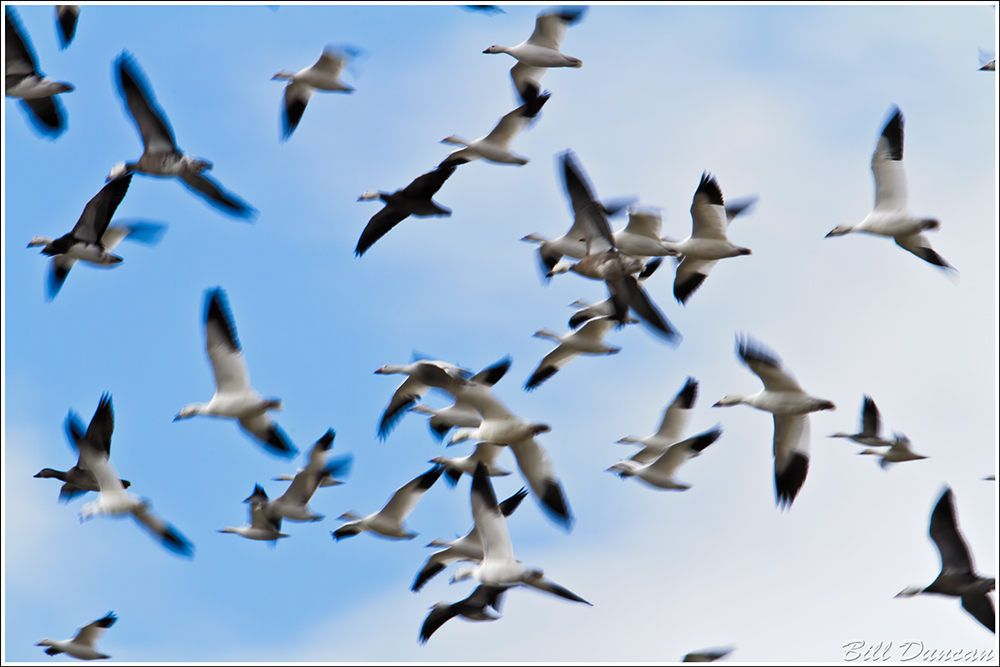
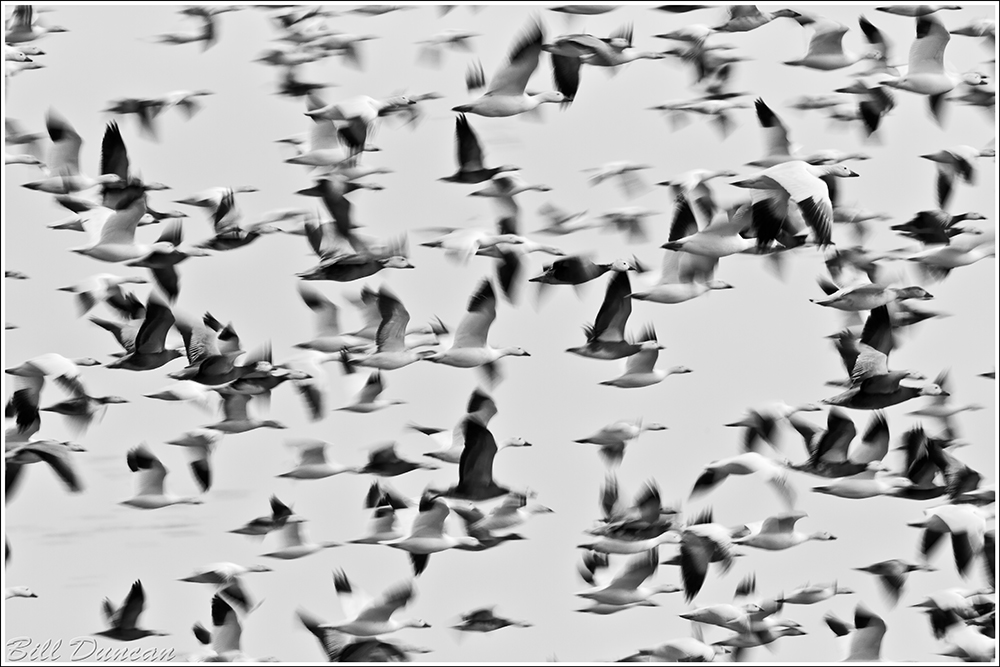
We were subjected to a few flybys of large groups of geese as they moved from the refuge to surrounding fields to feed on spent grain.  Collisions do occur, but when looking at it this way, it’s a wonder they don’t happen more regularly.  Of course, I was pooped on. 😉

IMG_1742

The image below really shows the difference between the lighter, “snow” and the darker, “blue” phases this species comes in.

IMG_1795

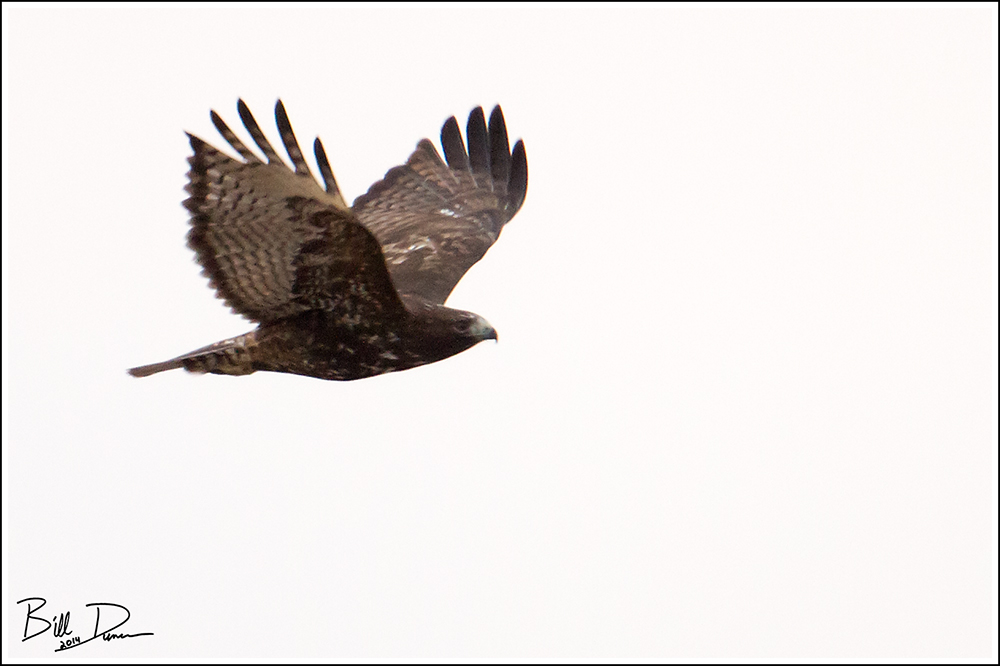
Red-tailed Hawks were quite common in this area of the state, but were very much different than the typical plumage seen from the eastern subspecies from the opposite side of Missouri.  This is what I believe should be considered the “western” subspecies, but can be difficult to distinguish from “Harlan’s” subspecies in winter.  The ABA has a nice article on this variably-plumed raptor.

IMG_2351

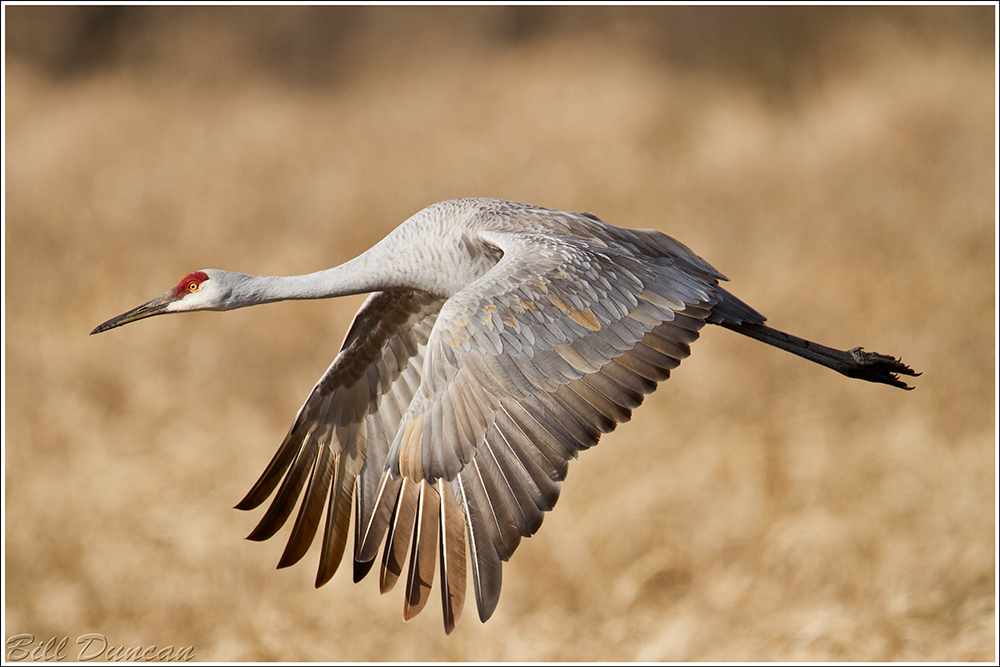
The beauty of Squaw Creek is the potential for all sorts of bird species and other wildlife one is likely to find.  The snow show is definitely the main attraction this time of year, but other migrants are likely to be found as well.  Taking the ~10 mile auto route allows for close-up viewing in a variety of wetland habitats.  Across a canal, in some warm winter grasses we found a couple of familiar heads sticking up.  Two Sand-hill Cranes!  I got out of the car as silently as possible and set up the tripod and big lens.  They did not seem too concerned with us.  As they foraged we watched and I took photos.  A couple in an SUV pulled up not too far down the road and were not as considerate.  This seemed to be too much for the pair, who took to wing.  Luckily, I was prepared and was somehow able to squeeze this keeper.

IMG_1998

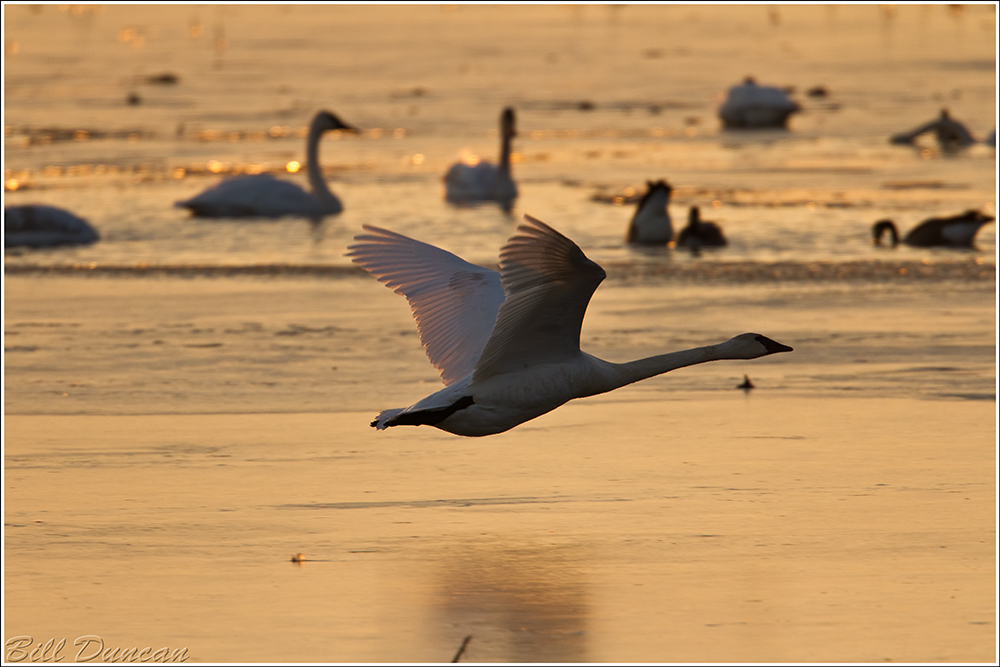
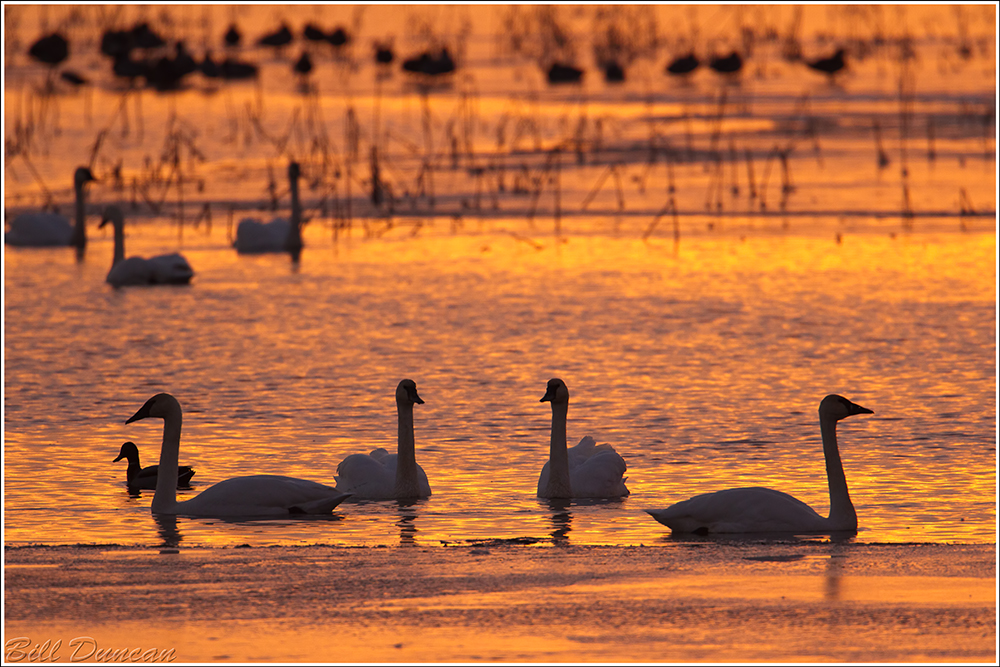
Sunrise and sunset are the times to be in a wetland.  The lighting is perfect and the birds are most active, heading into open water for roost.  It really does seem that many birds on the wetlands fly around for the sheer enjoyment.  Trumpeter Swans are a favorite of mine to watch.

IMG_2188

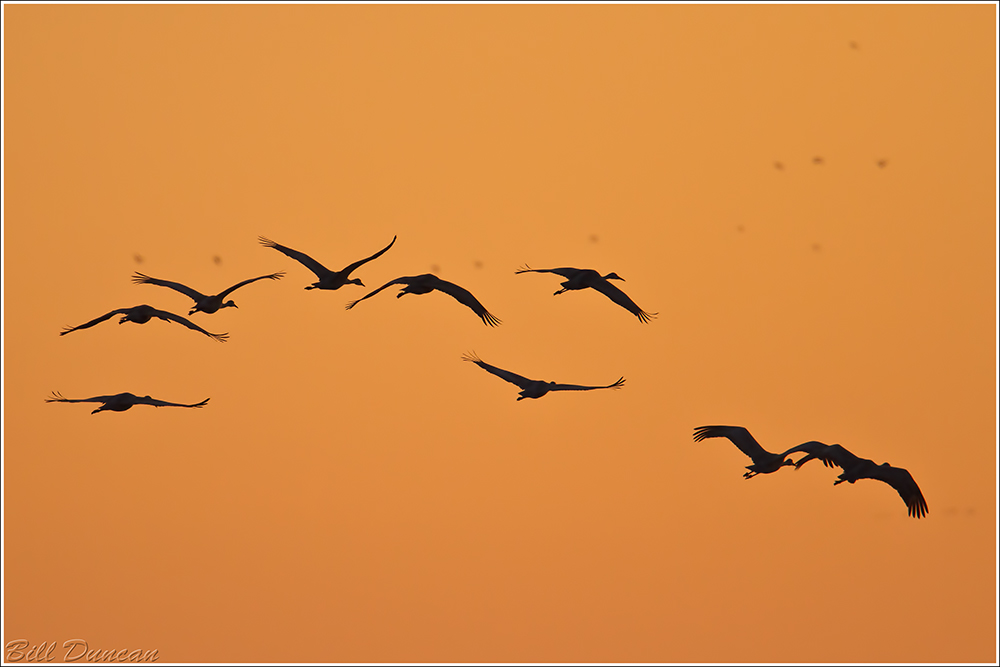
As we watched the show, we hear a familiar and longed-for music.  I can’t explain it better than Aldo… “High horns, low horns, silence, and finally a pandemonium of trumpets, rattles, croaks, and cries that almost shakes the bog with its nearness, but without yet disclosing whence it comes.”  Travelling south passed a group of Cranes.

IMG_2246

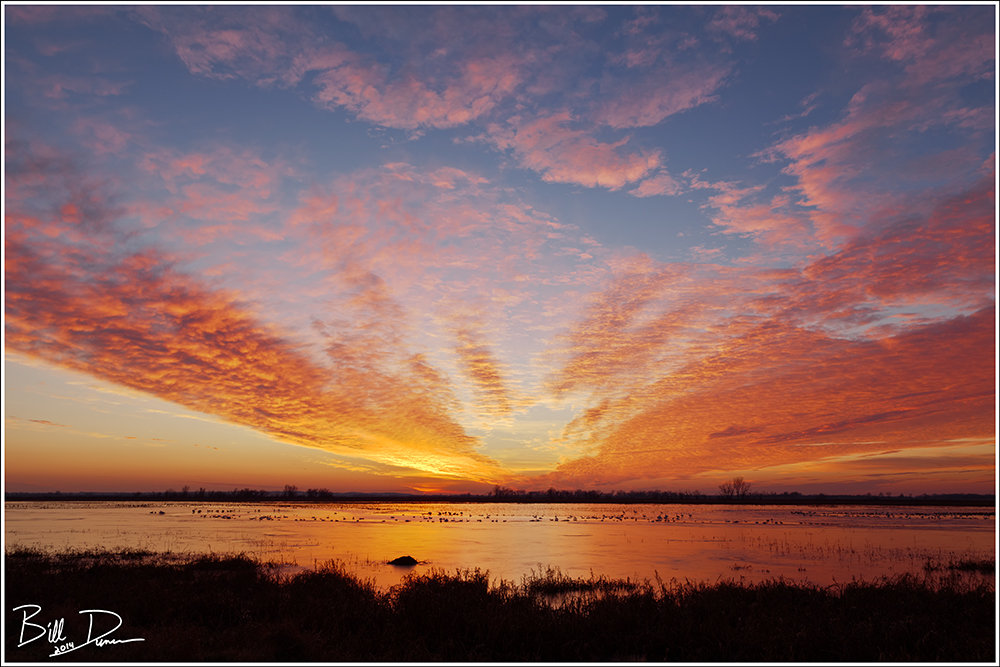
The warm temperature of the light near sunset betrays the senses.  The skin knows the eye is false.  Even so, watching this show makes it all worthwhile.

IMG_2263

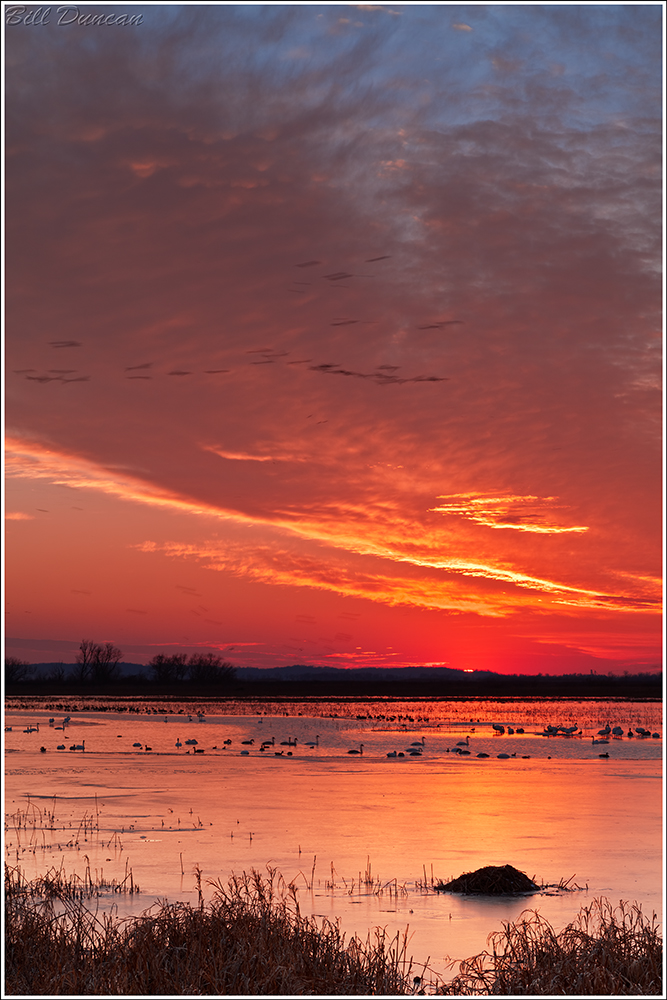
Marsh grasses, muskrat mounds and loess hills.  Can you imagine a more satisfying landscape?

IMG_6732

I’m not sure I’ll get there next year or not, but it goes without saying that I can’t get enough of Squaw Creek.

IMG_6750