"What a thousand acres of Silphiums looked like when they tickled the bellies of the buffalo is a question never again to be answered, and perhaps not even asked." -Aldo Leopold
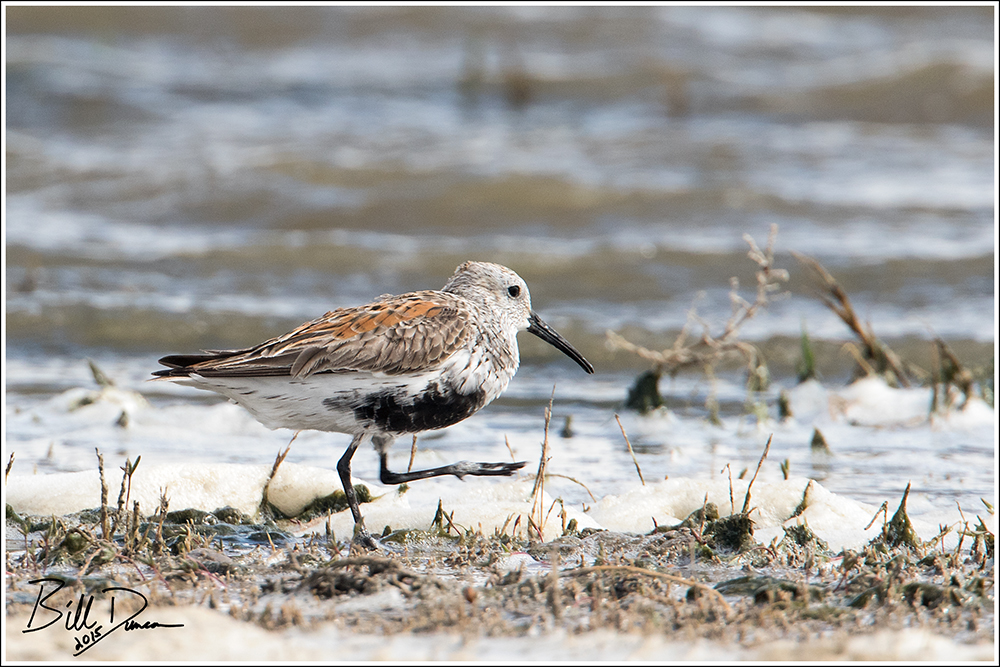
In nesting season, the Dunlin (AKA Red-backed Sandpiper) is the most strikingly colored of the calidrid sandpipers; however, as the name suggests, in winter this bird is downright plain, grayish-tan. Dun.
Red-backed Sandpiper
This species is considered to be one of the most abundant shorebirds in the world, but they are relatively infrequently seen as migrants in the Mississippi Flyway. Steve and I saw barely a handful this spring in Kansas.
The Dunlin are in the air and all,as by an invisible broom,
are swept into a perfect unison of movement . . .
thousands of leadership birds with the cohesion of one body,
supported from one pair of wings.
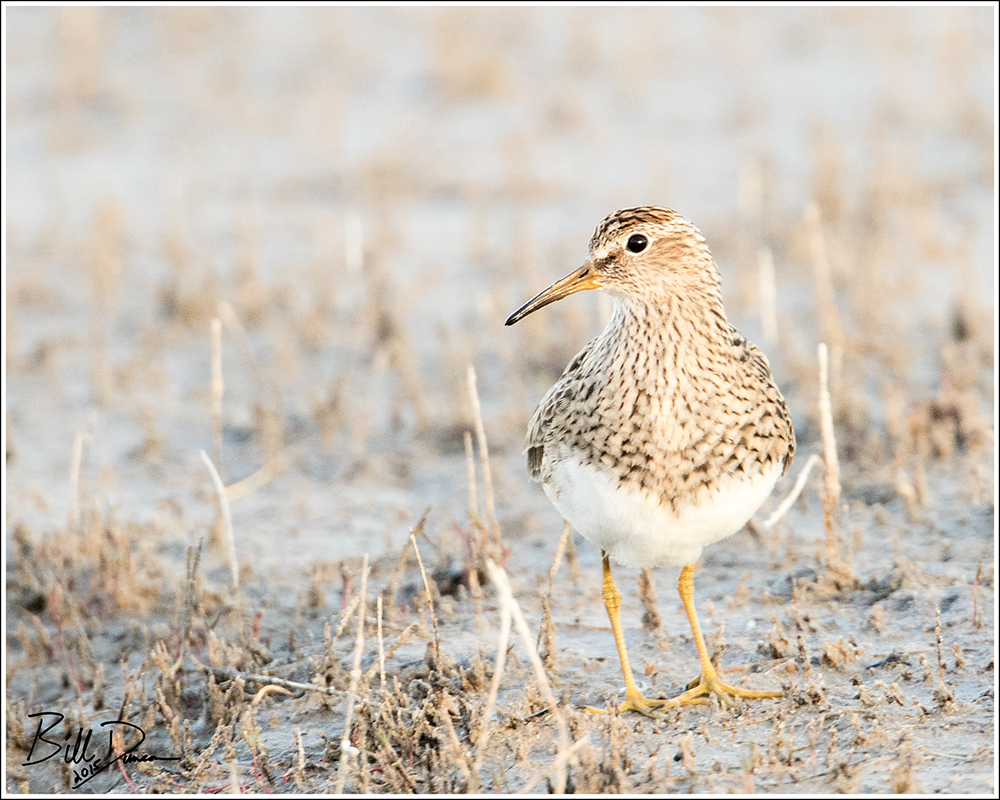
One dream I have is to visit the tundra nesting grounds of the shorebirds in the arctic of northern Alaska and witness the territorial displays and nesting activities of these fascinating creatures. Probably the species I am most keen on observing would have to be the Pectoral Sandpiper.
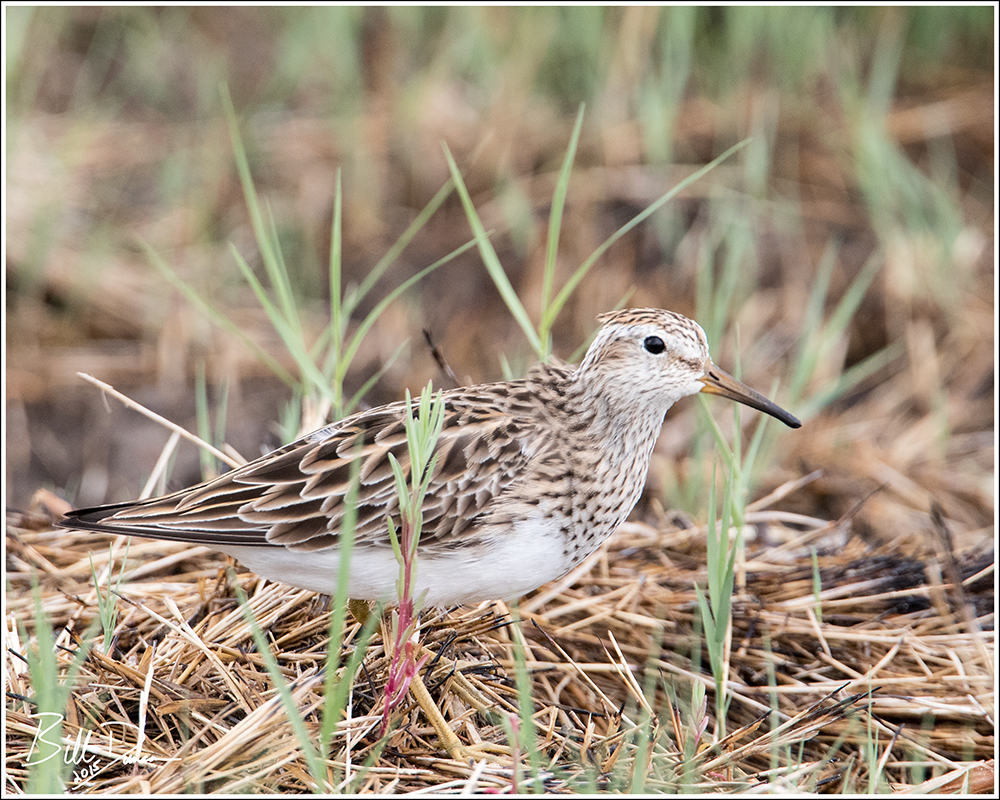
Pectoral Sandpiper
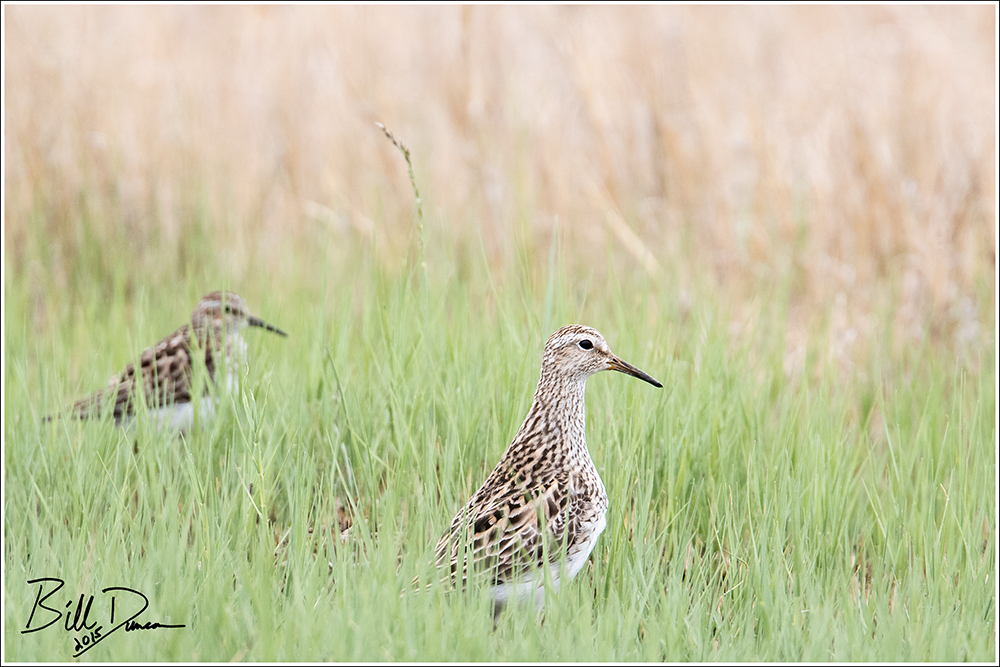
The “Pec” looks like a larger, slightly better dressed Least Sandpiper, and are relatively common to see during migration in Missouri. It is when on the nesting grounds when this “pre-lek” species shows its true colors. Watch this video and this video. Their “thunder booming”, reminiscent of a Prairie Chicken, while in flight display is truly impressive and can be heard here:
As the above photo suggests, this is a species more comfortable with its feet in grass than on the sand or mud, such as typically found with other calidrids.
The Semipalmated Sandpiper is the “middle child” of the three trickiest of the peeps. At certain times of the year, it can be downright difficult to distinguish the “Semi” from a Western, but under most conditions it should be relatively straight forward telling this bird apart from the Least Sandpiper. Minor differences between the Least and the Semi include the Semi being slightly larger, slightly grayer and containing more white on its breast. The primary differences, however, can be seen in the legs. The legs of the Semi are black and its toes are partially webbed, contrasting with the clean toes and yellow-green legs of the Least.
Semipalmated Sandpiper
The Semi is a long-haul migratory bird. These little ones winter throughout Central and South America and nest in the arctic and high arctic regions of North America. To reach these nesting grounds, these birds will fly nonstop for up to several thousands of miles, only stopping at important staging grounds such as the salt flats of Quivira.
Found rarely in Missouri, the Yellow-headed Blackbird was a real treat for Steve and me to find in Kansas. I had seen one or two during our trip out west last September, but not in the numbers we were to experience this spring at Quivira.
Yellow-headed Blackbird
Their habitat preferences, habits and behaviors seemed to me to be quite similar to the more familiar to the easterner – Red-winged Blackbird. Most will not agree, but I found the song of this species to be preferable to the Red-winged.
Yellow-headed Blackbirds
We found a couple flocks that were surprisingly large. Containing a goodly number of Brown-headed Cowbirds, we watched these flocks roll across the wetlands as the clouds rolled with the winds across the big skies of Kansas.
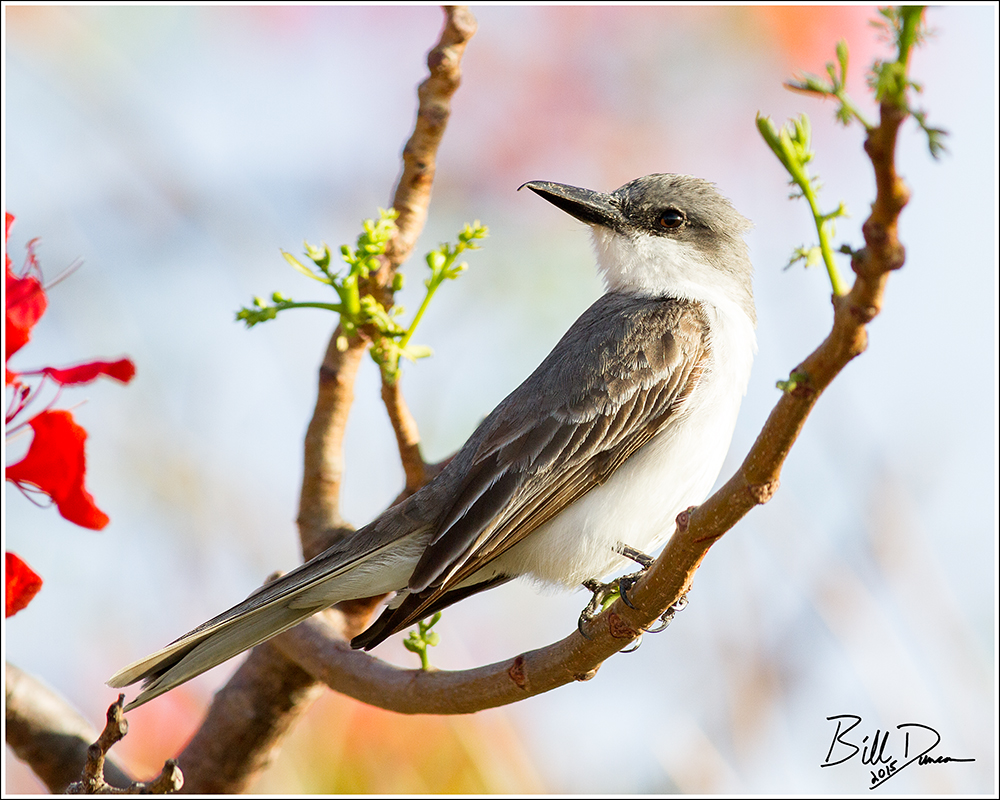
The Grey Kingbird is found at lower elevations throughout the Caribbean as well as coastal Florida. Typical Kingbird behavior, these guys fear nothing and take charge of whatever territory they call their own. I found these birds at most places I visited on the island, but the ones around the hotel were so bold, I tended to watch my back lest they use that hooked beak on me…
Way back in April Steve and I visited Larue Road, AKA “Snake Road”, to visit the swamps of western Shawnee National Forest. We came up mostly short on snakes and found way to many naked apes on this particular Saturday, but we were pretty certain to find a good feathered reptile show, and we were not disappointed.
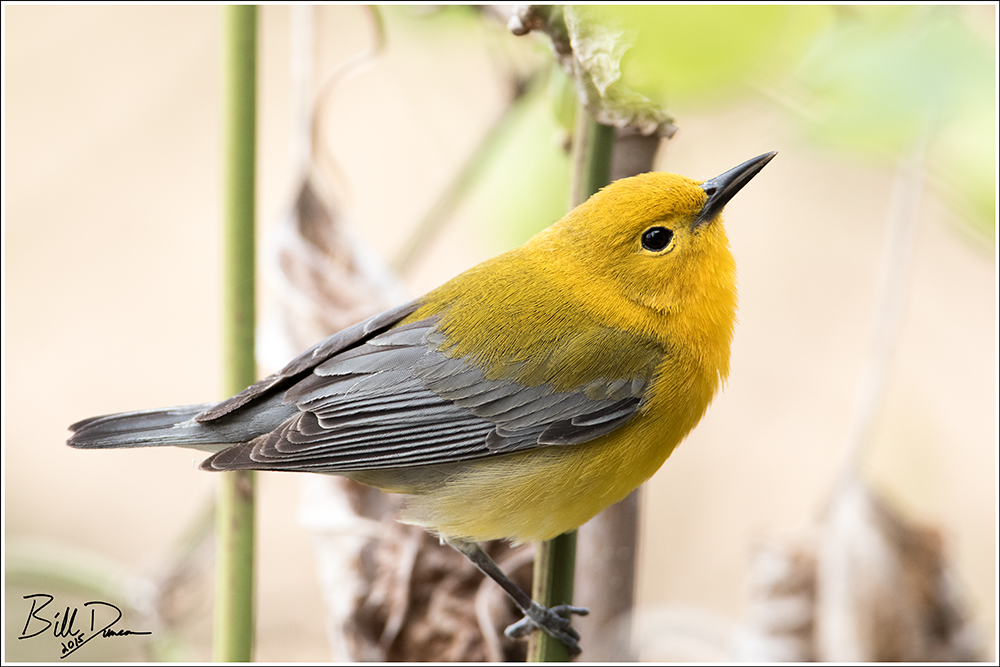
Prothonotary Warbler
The Prothonotary Warbler is a staple of southern swamps and this area sure has its share. We were pleasantly surprised to find a number of these birds foraging along the road, without a care about what we were up to. This allowed for some very nice looks and photographic opportunities.
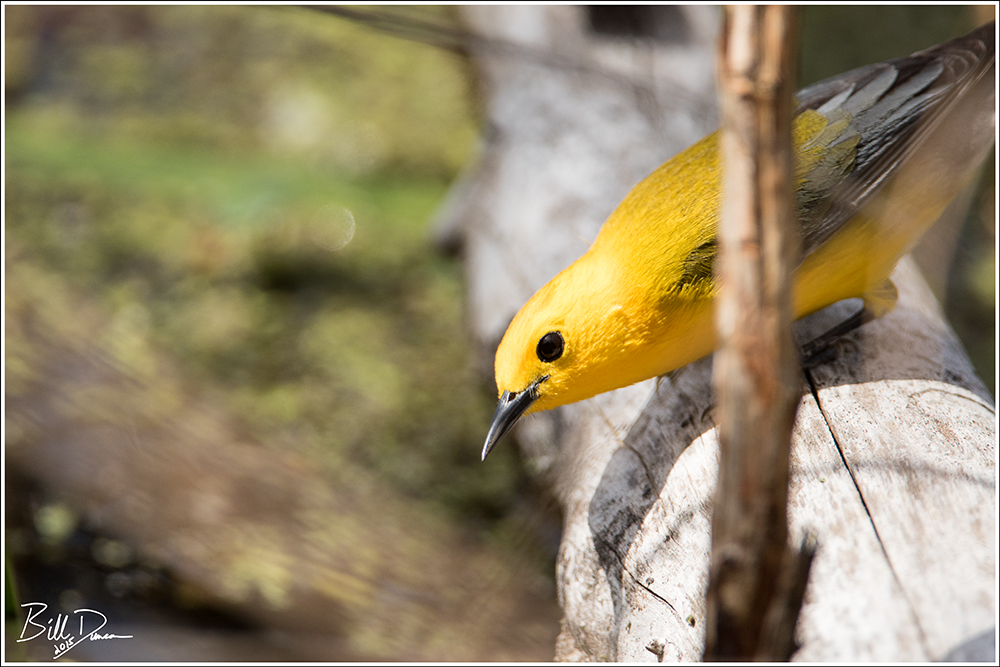
The Original Entomologist
The image above shows how these guys (and most warblers) go about making a living. They know better than any entomologist that the best opportunities for finding caterpillars and spiders is to look under leaves and inside the folds and crevices of new leaves and flowers.
Prothonotary Warbler
We didn’t find a nest cavity of one of these monks during this visit, but they were undoubtedly tending nests and potentially caring for eggs. If only this area were not a three hour drive!
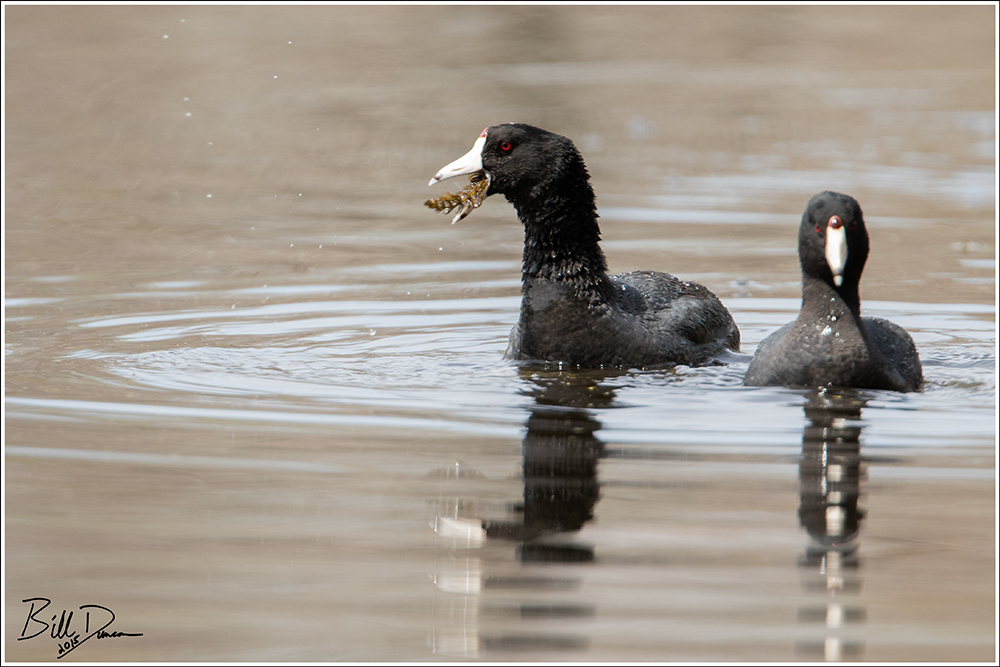
Cute Coots
Lastly, at one end of the road we were greeted by a gang of Coots feasting on Coon’s Tail.
Many thanks to Connie and Jo Alwood who turned me on to this Virginia Rail they were watching this spring at BK Leach Conservation Area. The midday light was poor for photography, but the bird was cooperative as it hunted among the cattails. A couple of weeks later Sarah and I made a visit to BK Leach and found even more great rail habitat. We were able to watch three more Virginia Rails and of course I left the camera at home…
Please have a look at Jo Alwood’s YouTube Channel. I find it to be a treasure of Missouri wildlife documentary that ranks up there with the likes of Charles and Elizabeth Schwartz and Marty Stouffer.
One has to love a plover. These birds are often the only obvious sign of life in some pretty rough places. Adorable little fluff balls, Snowy Plovers can be found on salt flats and beaches on the pacific and gulf coasts as well as deep into the Caribbean. There are also populations that nest inland, such as the ones we encountered in central Kansas. I was quite fortunate to find these birds on salt flats in Kansas as well as Puerto Rico within a month apart… 🙂
Snowy Plover
Steve and I encountered somewhere in the neighborhood of 3-5 active nests during our early May visit to Quivira. Unfortunately, no chicks decided to hatch while we were there. It was difficult to leave without seeing the little chicks.
Snowy Plover
Most populations of Snowy Plover are doing well, relative to other Plover species. This inland nesting population is the only population that does any real migrating, coastal populations typically stick to one area of coast.
Snowy Plover
The little guy above is hiking through some of the salt tolerant vegetation that dominate these salt flat habitats.
Snowy Plover
Steve and I were tickled by the ability of these birds to live and work in constant 30-40 mph winds. Facing into the wind, the bird on its nest pictured above documents just that. We noted that when the parents left the nest, the eggs were placed such that they did not budge in the wind, although I am sure they lose heat quickly in such circumstances. Another one of my favorites… 😉
Talk about the place to eat. I had a great time watching these birds preening and carrying on over the mangrove patches at a fantastic Mediterranean style restaurant named Santorini Ocean Lounge Restaurant. Parts Greek, Spanish and Puerto Rican, seafood is the reason to dine here. Add the views of the Caribbean Sea, potential for birds, English menus and servers and craft beer, and there is no reason to eat anywhere else in the area near the Holiday Inn in Ponce.
Less social than the American White Pelican, the Brown Pelican usually hunts alone and frequently dives for its food. The American White is considered accidental as far south as Puerto Rico, but the Brown is quite common across southern shorelines. This bird kept eyeing my seafood paella.