"What a thousand acres of Silphiums looked like when they tickled the bellies of the buffalo is a question never again to be answered, and perhaps not even asked." -Aldo Leopold
One of the penalties of an ecological education is that one lives alone in a world of wounds. Much of the damage inflicted on land is quite invisible to laymen. An ecologist must either harden his shell and make believe that the consequences of science are none of his business, or he must be the doctor who sees the marks of death in a community that believes itself well and does not want to be told otherwise.
Aldo Leopold
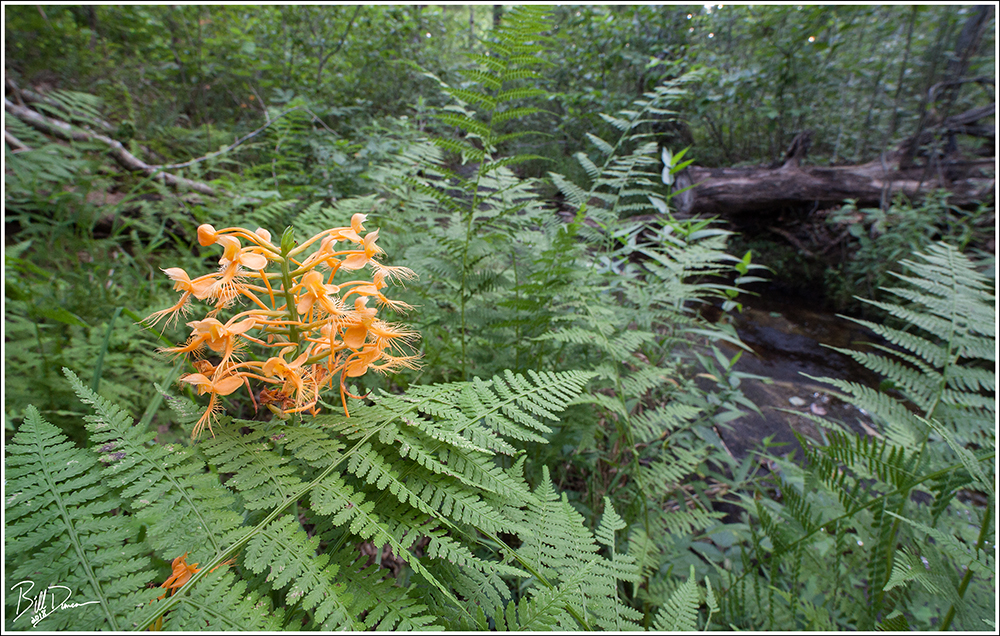
Yellow-fringed Orchid (Platanthera ciliaris)
With the help of a friend, over the last few weeks I’ve been able to get a good start at finding and photographing as many of the 35 +/- orchids that can be found in Missouri. The yellow-fringed orchid (Platanthera ciliaris) is known from only a handful of threatened locations in the state. I was really thankful to be shown these in full bloom where they reside in acidic seeps in St. Francois County.
I had seen rattlesnake plantain (Goodyera pubescens) before, as its wonderful evergreen leaves stand out during winter hikes. This was the first time I’ve seen them in bloom. Photographed in Ste. Genevieve County.
Not the greatest photo of the greatest specimen, but this seemed to be the absolute last grass pink orchid (Calopogon tuberosus) to be found in bloom for the season at this location in St. Francois County.
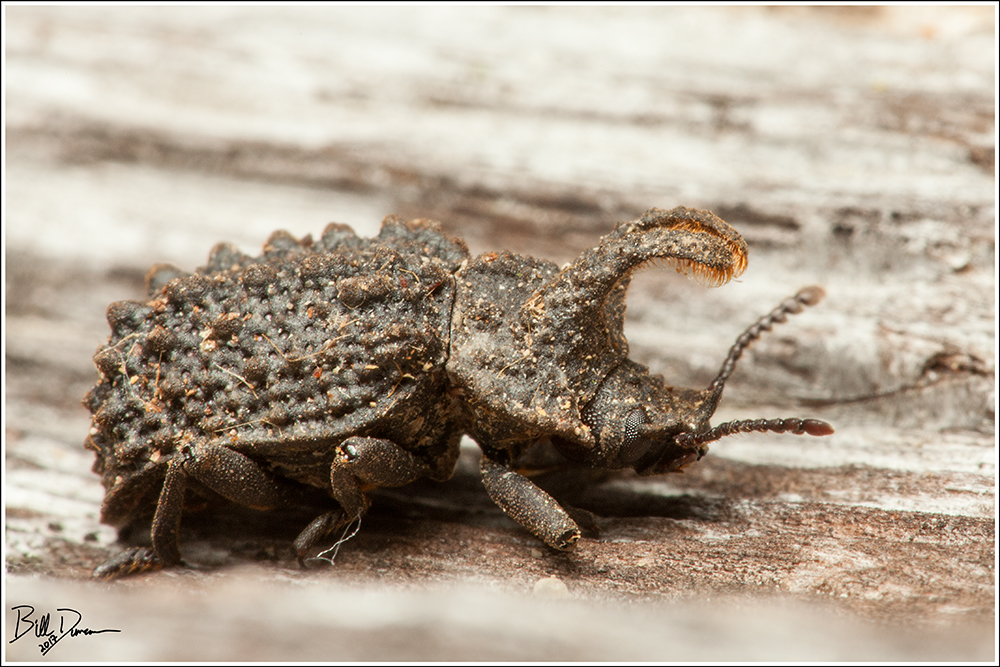
Here is one of the interesting visitors I had to my black lights at Hawn State Park this summer. Bolitotherus cornutus, or horned fungus beetle is in the darkling beetle family, Tenebrionidae. I wish I knew of their preference for polypore fungi as larvae and adults so that I could have photographed them on more suitable substrate.
Members of WGNSS Entomology and Nature Photography Groups met on June 24th, 2017 to see what interesting insects could be found. In this post I am sharing a few of the more interesting that I was able to get photographs of during the day. The find of the day had to be the Cerambycid pictured above that was, by no surprise, found by Ted MacRae.
Delta Flower Scarab
We found that blooms were a great way to find beetles. It is easy to see how the delta flower scarab (Trigonopeltastes delta) got its name.
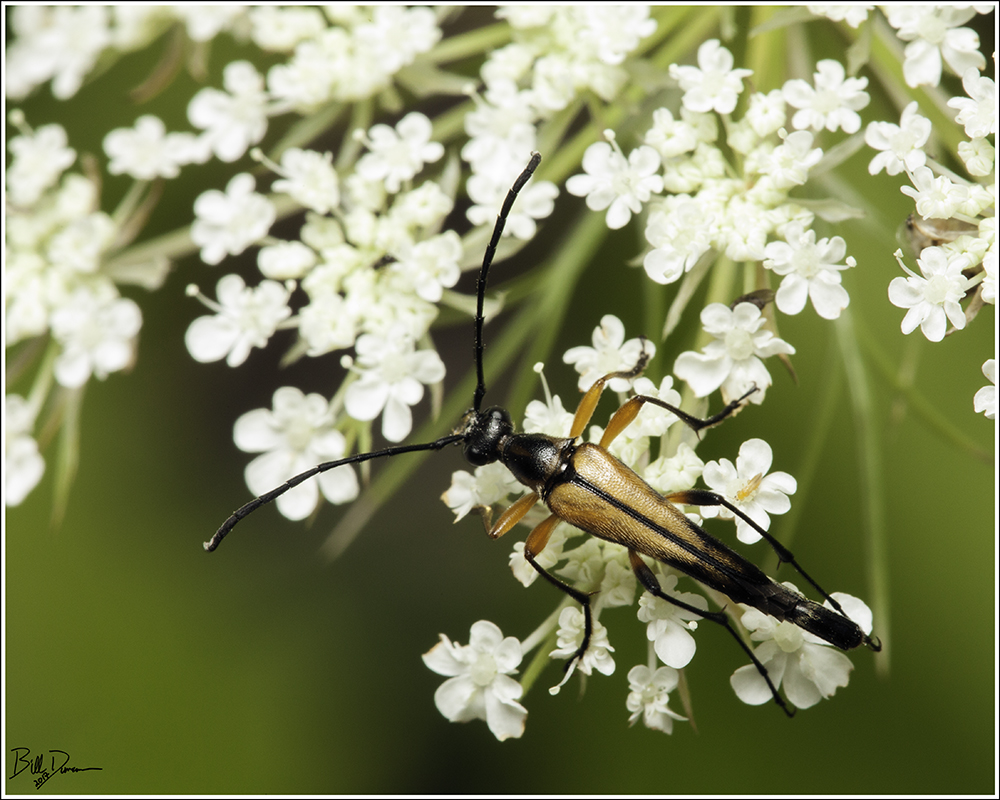
Flower Longhorn
Cerambicids like this flower longhorn can readily be found on blooms.
Banded Netwing
The banded netwing beetle (Calopteron reticulatum) are easy to find, often located in the open atop vegetation. They rely on aposematic coloration to advertise that they carry aboard chemical compounds that make them a distasteful meal.
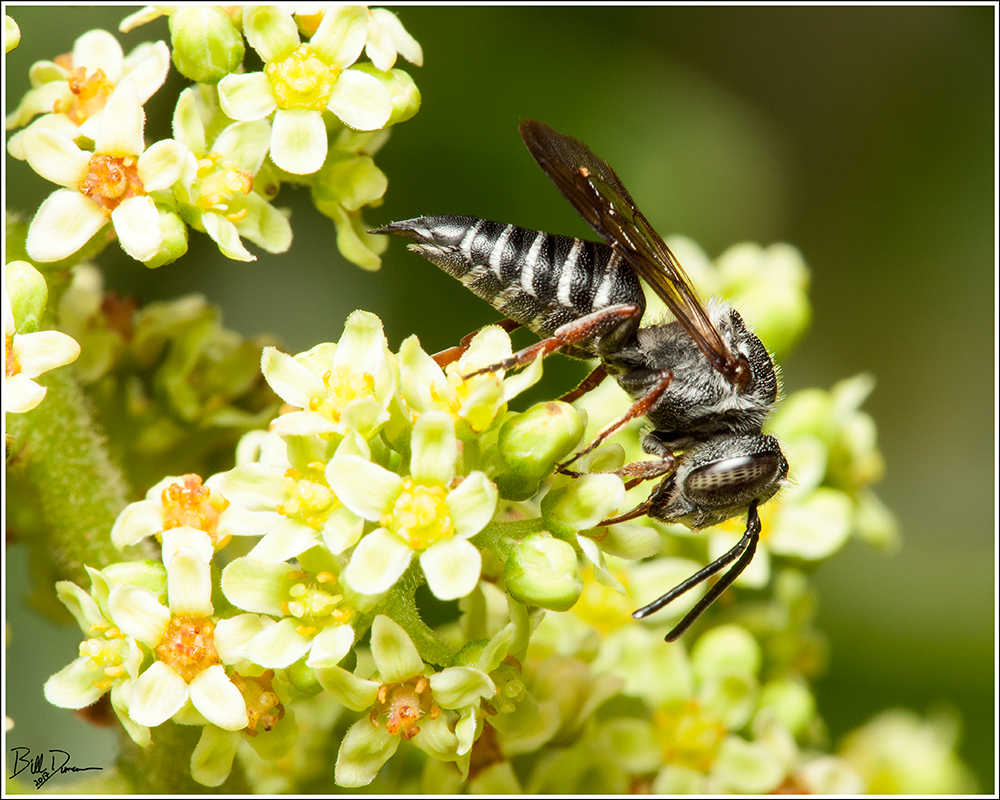
Agapostemon sp
The Hymenoptera were well represented on blooms of wild hydrangea (Hydrangea arborescens), Queen Ann’s lace (Daucus carota) and as pictured above, fragrant sumac (Rhus aromatica). I find the native bees to be tricky to identify by photographs, but I believe this can be placed in the genus Agopostemon. These bees nest in the ground and to promote them, leave patches of soil exposed somewhere in your yard.
Not to leave out the Leps, this double-toothed prominent moth larvae was found. These guys have developed very effective camouflage that allows them to blend in and resemble the toothed, wavy margins of their elm (Ulmus) host plants.











 A Thousand Acres of Silphiums