Mondays Are For The Birds – Red-shouldered Hawks

Monday greetings, human.  Another great day at work instead of taking pictures of birds.  I heard the migratory songbird fallout was quite nice around the St. Louis area today.  Good thing I was at work.  One or two days a week being able to do what I want just doesn’t seem to be enough anymore.  I will have a week’s vacation coming up next month, but that seems a long way off.

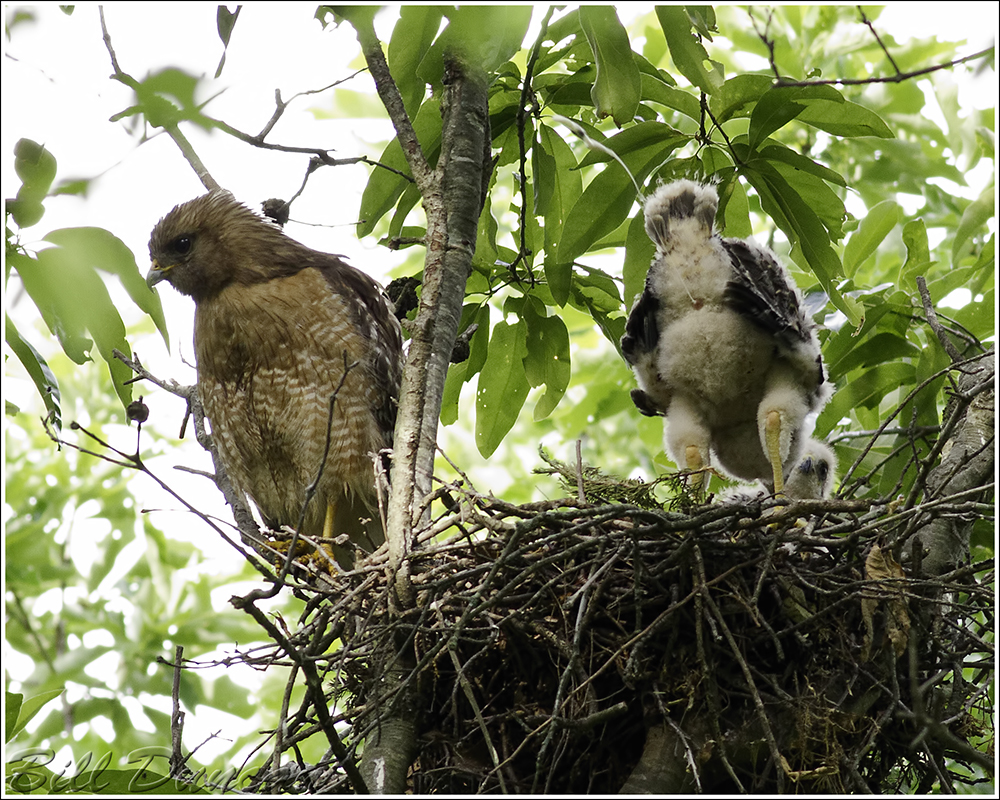
Anyway, I’m finally getting around to processing some photos of the Red-shouldered Hawk nest I photographed over several weeks this past May.  Here, this little one is showing off one of those innate behaviors.  I’m sure those of you with human babies wish they could do something like this a lot earlier than they do.  Have a great week.

“Red-shouldered Hawk Nest”

Technical details: Canon EOS 7D camera,  EF400mm f/5.6L USM lens, ISO 640,  f/6.3, 1/250 sec

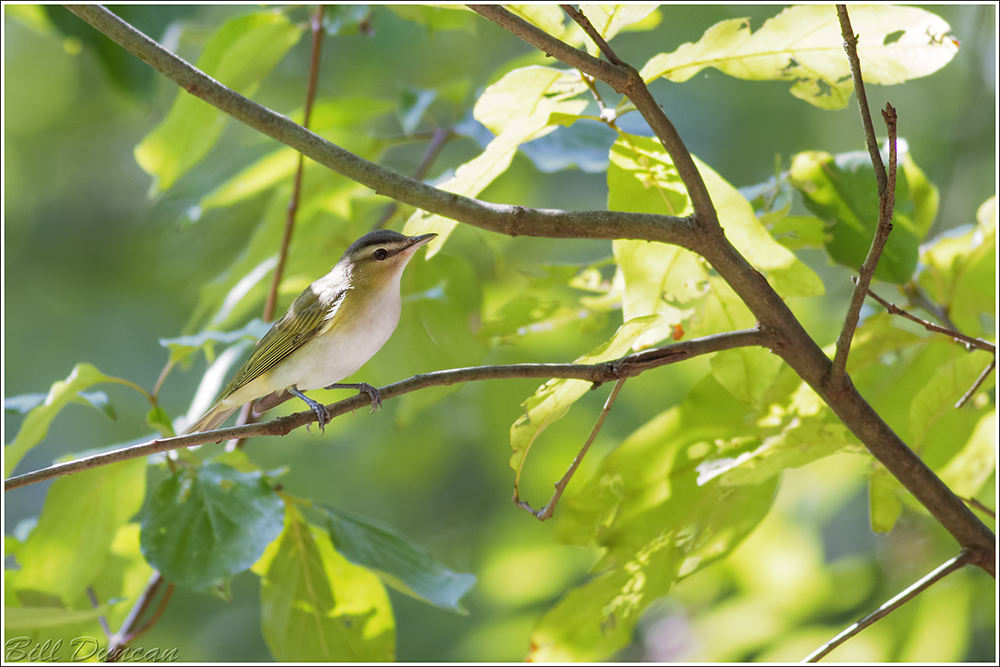
Mondays Are For The Birds – Red-Eyed Vireo

Hello again.  Today I am starting a new blog series that I am calling “Mondays Are For The Birds” and today’s first spotlight bird is this Red-eyed Vireo.  For anyone fool-hardy enough to do some summer hiking in the deciduous woodlands and forests of the Missouri Ozarks, the Red-eyed Vireo shouldn’t be new to you.  When almost all other songbirds have given up claims to their nesting grounds and quit vocalizing for the season, the REVI is just warming up.  In the middle of a sweltering summer’s day one will still hear the questions this guy’s song seems to ask. “Who are you, who am I, Here I am, Look at me, In this tree!”

This photo was taken recently during the fall migration.  This species along with other vireos and warblers will eat primarily caterpillars and other arthropods during spring migration and throughout the summer breeding season, but in fall will switch to a diet primarily consisting of berries, such as those found on the wild grape.

Thanks for visiting today.  I hope you like the photo and I hope you had the best possible Monday.

“Red-Eyed Vireo”

Technical details: Canon EOS 7D camera,  EF400mm f/5.6L USM lens, ISO 800,  f/5.6, 1/250 sec

What Would YOU Call a 680 Ton Rock?

Meet Dumbo, probably the largest of the free standing boulders to be found at Elephant Rocks.  I’ve shared images of this beast before.  You can see more photographs of Dumbo and it’s granite pachyderm brethren on my Elephant Rocks State Park Set on Flickr.  I’ve recently started really trying to take my post-processing to the next level.  I have come to believe that I can control what happens to the exposure inside the magic light-capture box almost as well as I could possibly want. I’m not saying I know every trick in the book, but I do not feel that I am missing too much.  Post-processing on the ol’ computer (equivalent of working on prints in the wet dark room of yesterday), I realize I can use some improvements and practice.  So, recently I adopted some new software and set out to better improve my workflow and learn some new tricks on the other side of the negative.  I am NOT saying I want to become a Photoshop/graphic artist, but just desire to be able to control aspects of the file that will allow me to create a final image that best represents my concept of the scene when I hit the shutter release.

What am I getting at and just what does it have to do with this image?  One of the possible adjustments that can be found in the latest versions of Adobe software products is the ability to correct for geometric lens distortion.  This is a very cool correction device that allows issues of wide angle (barrel) and telephoto (pin cushion) distortions, usually seen in at least some respect in any zoom lens, to be easily corrected for in the computer.  Depending on the subject, barrel distortion can be particularly troublesome.  In this photo of Dumbo, I proudly went to ACR’s lens correction tab and hit the go button and looked at the results of the default setting.  All of a sudden the cool, slightly exaggerated perspective of Dumbo was gone.  The image became pretty boring, to be honest.  This was a good lessen for me for a couple of reasons.  First, just as nature photographers might use changes in color-cast, manipulations of tonal range, or cropping unwanted portions of an image, we can also use (or remove) perspective changes from lens distortions to make our desired image.  Second, any of these lens corrections made (vignetting, chromatic aberration, and especially geometric distortion) can and will cause degradation to the quality of the final image.  We must carefully decide what corrections are necessary and use the sliders to make the minimum needed adjustments.  Do not blindly accept the defaults given by the software.  I have not been able to find much to read on this specific topic and I am still learning as I get more practice.
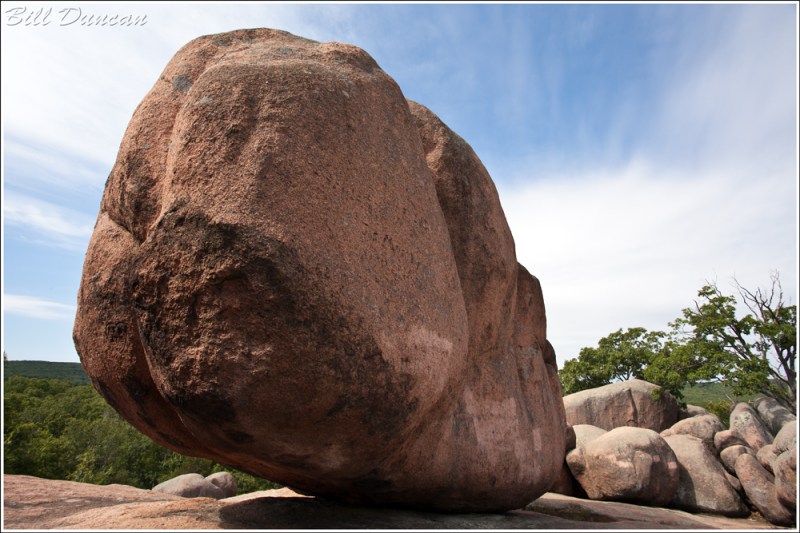
“Dumbo”
Technical details: Canon EOS 5D Mark II camera, EF17-40mm f/4L IS USM lens @ 17mm, ISO 160,  f/13, 1/30 sec
Earth & Sky

Along with being a place of limitless compositions, another reason I love visiting and making pictures at Elephant Rocks is the variety of those potential compositions.  The grander landscape shots are there; however, if you find yourself visiting on a late Saturday morning during the summer (why do most people venture to these places during the hottest times of the year?), you’ll find that these types of comps are not possible without catching little Johnny and his folks as well.  Trust me little Johnny and his mother don’t give a damn that you have been sitting in the same spot for over an hour waiting for just the right light or clouds to move in.  They’ll walk directly in front of your lens.  At Elephant Rocks there is also great potential for the intimate landscapes.  With these types of comps you can move right into the tight spaces and will have a much better chance of not having little Johnny and his booger-picking fingers in you final image.  Do be careful though, as little Johnny and his siblings will likely be climbing on these rocks and might easily come into contact with your tripod, which might be precariously setup on the same rocks they’re interested in jumping on.

Technical details: Canon EOS 5D Mark II camera, EF24-105mm f/4L IS USM lens @ 24mm, ISO 100,  f/14, 1/4 sec

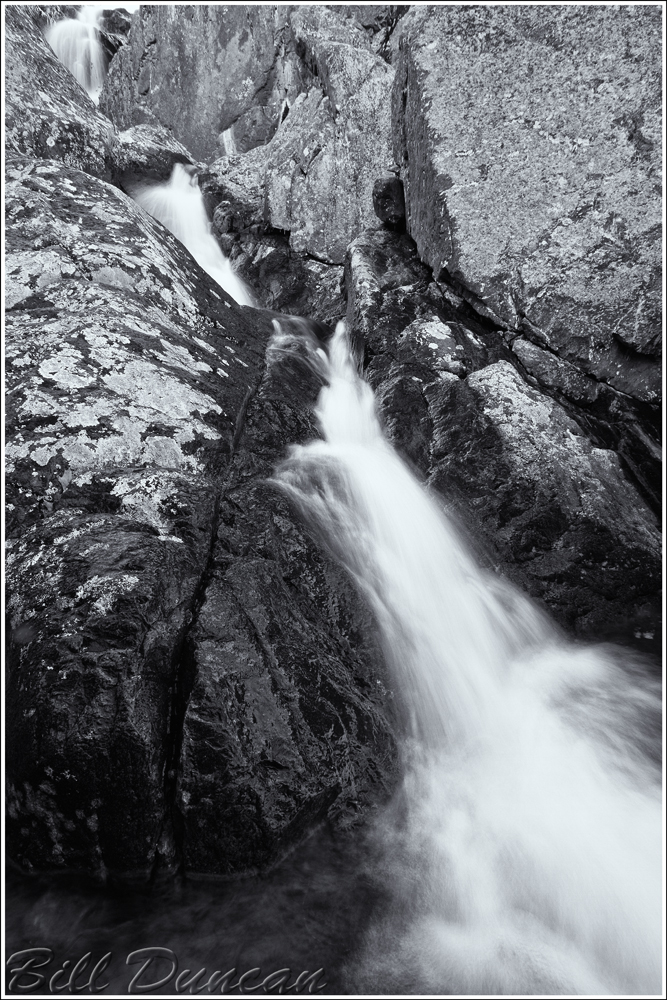
Seven Days of Mina Sauk Falls – Day Two

Technical details: Canon EOS 7D camera, EF-S10-22mm f/3.5-4.5 USM lens @ 10mm, ISO 160,  f/14, 0.6 sec

I estimate the vertical distance in this image in the neighborhood of 60-80 feet or more.  The ultra wide angle utilized in this image takes out a lot of that scale for the viewer.  I should have placed a kitten or something in the near foreground to capture that scale, I know.

The cascades and falls begin much higher up the mountain than this particular section.  Here is where the falls begin their more vertical descent.  This is a good example of the fractures (joints) that form in this super hard and dense rhyolite and granite.  The water slowly works its way in between the cracks and given enough time, water wins.