My Country ‘Tis of Thee

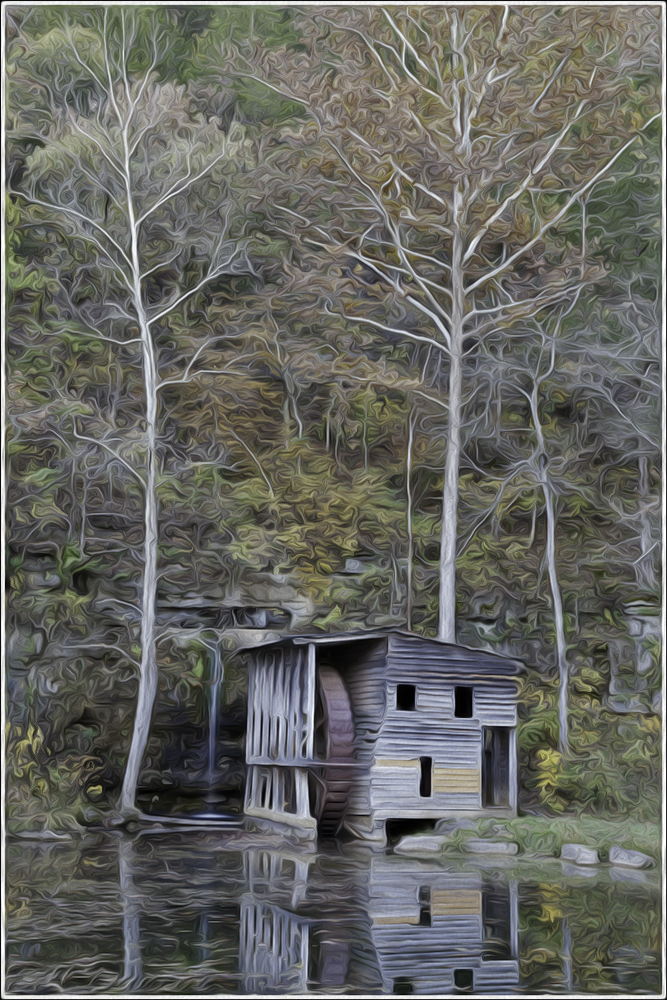
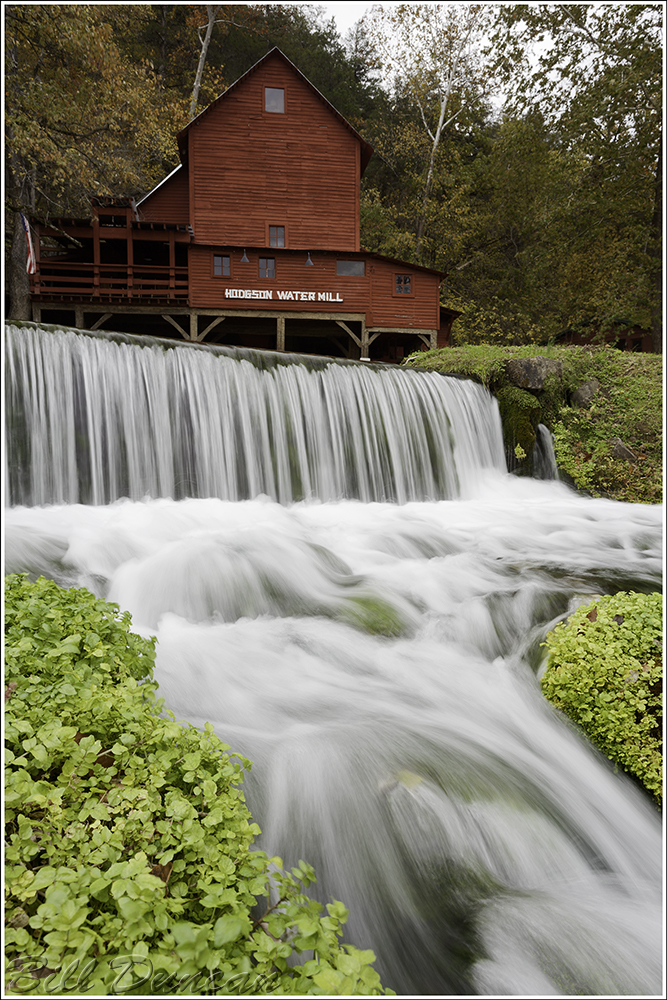
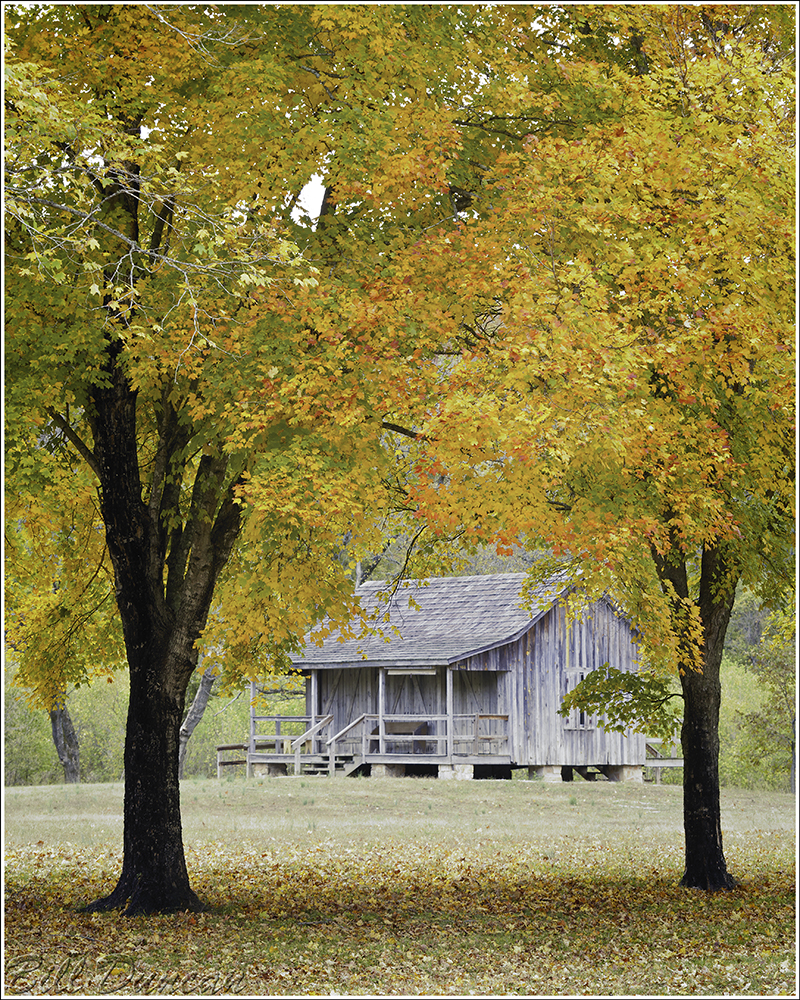
Part of my Missouri Ozarks grist mill series, this image shows the Dillard Mill in late afternoon light, watching over the Huzzah Creek as the small river works it’s way through a series of man-made impoundments.  There has been a mill structure on this location since 1853, the current building was completed in 1908.  This was the last stop of the day in a day trip Sarah and I took this spring.  Although warm, the setting was perfect.  The quaint, old, warm structure set against last years hay bales in the field immediately behind, the contrasts in water as it rushed down rocky barricades, stopping in motionless, clear ponds, and the chatter of birds like the Belted Kingfisher made us hate to get back into the car and take the drive back to the city.

Technical details: Canon EOS 5D Mark II camera, EF24-105mm f/4L IS USM lens @ 32mm, ISO 100,  f/14, manual blend of three exposures

Summer at the Confluence

This weekend I spent both mornings at Riverlands Migratory Bird Sanctuary, arriving near dawn and walking around the trails for a few hours before the extreme heat of the day took over.  Sarah got up early and came with me this morning. Saturday morning I was fortunate to spot this guy feasting on carcases of fish that succumbed to the poorly oxygenated waters of the shrinking, heated pools of the wetlands.  This was my first opportunity at shooting a raccoon.  Even at such an early morning hour, the back-light serves to give a sense of the heat and humidity that were already noticeable.

Technical details: Canon EOS 7D camera,  EF400mm f/5.6L USM lens, ISO 640,  f/5.6, 1/400 sec

One of the photographic challenges of this location is trying to get shots of the song birds that live among the tall grasses.  They usually stay pretty far from the trails and are usually hidden low in the vegetation.  This Common Yellowthroat Warbler was close enough and partially obscured by the grasses.

Technical details: Canon EOS 7D camera,  EF400mm f/5.6L USM lens, ISO 640,  f/5.6, 1/1250 sec

One of the pleasure one can get from a summertime visit to RMBS is watching the Least Tern.  I love watching these guys fish.  This one is beginning the plunge into the water off of Ellis Island to grab a little fish.

Technical details: Canon EOS 7D camera,  EF400mm f/5.6L USM lens, ISO 250,  f/5.6, 1/1600 sec

Kudos to Sarah, who took a closer look at these guys.  What looked like a bunch of tadpoles gulping at the surface of one of these rapidly vanishing pools was actually a nice-sized school of small catfish.  If rains do not come soon, these guys have no chance.

Technical details: Canon EOS 7D camera,  EF400mm f/5.6L USM lens, ISO 800,  f/5.6, 1/400 sec

Sarah also spotted this thistle in early bloom and asked that I take its picture.  I haven’t done a lot of macro style shooting with the 400mm, but I know that using the super tele’s to do this can work magic.  The focus isn’t perfect, but I was actually fighting the minimum focus distance.  I need to try this with dragonflies and other large insects.

Technical details: Canon EOS 7D camera,  EF400mm f/5.6L USM lens, ISO 800,  f/5.6, 1/400 sec

This morning there was actually a bit of cloud cover over the sun.  I decided to try a little panning blur and thought this was an apt image to go along with the record breaking heat we’ve been experiencing.  Stay cool everyone.  I am sure looking forward to all the time I’ll have to spend in the greenhouse this week.  ;=)

Technical details: Canon EOS 7D camera,  EF400mm f/5.6L USM lens, ISO 100,  f/14, 1/125 sec

Location Spotlight: The Canyon-land of Ferns and Waters – Hickory Canyons Natural Area

Today’s post spotlights a few images I took recently at the least well-known, but perhaps my favorite, of the Ste. Genevieve trio gem locations found in south-eastern Missouri, Hickory Canyons Natural Area.  The other two nearby locations are Hawn State Park and Pickle Springs Natural Area.  Much of the exposed rock in this area is known as LaMotte sandstone and was deposited around 500 million years ago under the Paleozoic sea, which covered this region except the igneous knobs of what are now called the St. Francois Mountains.  Unlike the other sedimentary rocks – like dolomite and limestone that compose much of the Ozarks, sandstones are generally much more resistant to erosion.  This results in rock features that are often quite spectacular to the eye and the canyons, bluffs and other exposed sandstone bedrock have become favorites for hikers, rock climbers and other travelers to this region.

“Addressing the Optimates”

Technical details: Canon EOS 7D camera, EF70-200mm f/4L IS USM lens @ 89mm, ISO 320,  f/20,  0.4 sec

Two short hikes are available at Hickory Canyons N.A.  Both offer great views of the rock formations, including wet-weather waterfalls like the one shown below.

“The Bath House”

Technical details: Canon EOS 7D camera, EF70-200mm f/4L IS USM lens @ 70mm, ISO 320,  f/16,  1.3 sec

The overhangs and cracks created in these box canyons, gorges and cascades provide opportunities for ferns, mosses and lichens.  In fact, these three spots mentioned above in Ste Genevieve Co are the only place the fern enthusiast need travel to in Missouri.  The well-draining, sandy and acidic soils found here are perfect for species like wild-rose azalea, hay fern and rattlesnake orchid.  White oak, hickories, sugar maples, short-leaf pine and flowering dogwood are the primary tree species found at this location.  A few trips during spring time are definitely worth it to find some of these fantastic plants in bloom set against these dripping canyons and ephemeral cascades and waterfalls.  The wild-rose azaleas bloomed about six weeks early this spring and I missed them.  Oh well, something to look forward to next year.

“The Senate”

Technical details: Canon EOS 7D camera, EF24-105mm f/4L IS USM lens @ 28mm, ISO 160,  f/16,  2.5 sec

“Floralia”

Technical details: Canon EOS 7D camera, EF70-200mm f/4L IS USM lens @ 93mm, ISO 250,  f/16,  1 sec

Virere Candere

Technical details: Canon EOS 7D camera, EF24-105mm f/4L IS USM lens @ 24mm, ISO 160,  f/16,  1.6 sec

Arboris Relictus

Technical details: Canon EOS 7D camera, EF100mm f/2.8L Macro IS USM lens, ISO 160,  f/16,  0.5 sec

As the glaciers of the last major ice age retreated, species that required lower temps and had higher water requirements moved back north as well.  These canyons provide cooler and wetter environments for relict species like the one pictured above, the partridge berry.  This evergreen vine-like tiny shrub can be found throughout the canyon and hollow floors along with lichens and mosses.

Location Spotlight: Squaw Creek National Wildlife Refuge

“Traditional Boundaries”

Technical details: Canon EOS 7D camera,  EF400mm f/5.6L USM lens, ISO 400,  f/10, 1/1250 sec

I’m finally taking a few of the images I made during my first visit to Squaw Creek National Wildlife Refuge last autumn and putting them into a blog post.  Living within miles of the Mississippi River Flyway – an ancestral route many migratory birds follow in their north-south seasonal movements – I have all sorts of options in visiting well-managed wetland areas to watch and photograph waterfowl.  Of all these locations none has the opportunities for getting great looks at numbers and diversity of bird species that can be found at Squaw Creek NWR, located near Mound City in north-western Missouri, not too far from the Nebraska Border.

“Cacophonic”

Technical details: Canon EOS 7D camera,  EF400mm f/5.6L USM lens, ISO 1600,  f/5.6, 1/125 sec

The big stars at Squaw Creek around Thanksgiving and surrounding weeks are the Snow Geese.  For years I had read about and seen images of the more than one million birds that pass through this location every fall.  At peak times more than 500,000 birds can be counted on the reserve at one time.  I had images in mind that I hoped to make if I could find the birds present in these kinds of numbers.  I really had little clue of where and when I needed to be set up and if I had the ammunition (lenses) to make the images I had in mind.  I feel the photos I was able to get are of mixed success due to several reasons.  I was quite lucky in the numbers of birds that showed up.  A week before my visit the counts were only a little more than 10,000.  The day I arrived the latest weekly count suggested there were more than 250,000 on the reserve.  This is shy of the 500-600K that can be found during peek times, but for my first visit, it was quite a treat!  Of the 1.5 days I had to spend here, one full day was very cloudy and dark, making bird photography particularly troublesome.  Around noon on my last day the sky cleared and I was able to get some nice light.  Hopefully I can spend a few days more during my next visit.

“Let My Army Be The Rocks And The Trees And The Birds In The Sky”

Technical details: Canon EOS 7D camera,  EF400mm f/5.6L USM lens, ISO 400,  f/8,  1/1250 sec

Snow Geese are not the only waterfowl that can be found in good numbers here.  In almost every one of these types of images Greater White-fronted Geese, Green-winged Teal, Northern Pintail, Mallards and more can be found as well.

“The Snow & the Mist”

Technical details: Canon EOS 7D camera,  EF400mm f/5.6L USM lens, ISO 1600,  f/8,  1/100 sec

Squaw Creek NWR and its 7500 acres was established in 1935 just in time.  Close to 98% of the original marshes and related wetlands that border the Missouri River in the state of Missouri have been destroyed or permanently altered – mostly for use as farmland.  Thankfully sportsmen realized the importance for providing habitat for migrating and over-wintering waterfowl and a series of these man-made marshes were built near Kansas City, Columbia and St. Louis.  This image is actually a composite of two separate photographs – the foreground and the background, both taken in extremely cloudy and grey conditions.  I was surprised by how well this blending worked and I feel it represents what it was like on this first day, the geese constantly taking off in large groups and others taking their place in the marshes.

“Squaw Creek Eagle”

Technical details: Canon EOS 7D camera,  EF400mm f/5.6L USM lens, ISO 800,  f/5.6,  1/400 sec

Waterfowl are not the only birds or wildlife that utilize the reserve.  Although you can see more Bald Eagles in spots along the Mississippi River, I have never been able to get as close to these birds perched as I did during this visit.  This is true with the wildlife in general.  The auto-route roads were set perfectly in the reserve, in my opinion.  Getting close enough to the wildlife can be troublesome from the roads at other places I visit, but here the roads are much better situated near the pools and the wildlife never seem to be overly stressed.  During the time of my visit with cloudy weather and poor light, I was able to get closer to several duck species than I have ever been able to before.

“White Ibis”

Technical details: Canon EOS 7D camera,  EF400mm f/5.6L USM lens, ISO 400,  f/5.6,  1/640 sec

This White Ibis was actually a very late bird for this part of Missouri and it made a bit of noise in the MO birding community.  This was also one of my best looks at this species.  I had found it the day before and took some rather poor photos.  I was happy to see it still in the same pool the next day when light was better.

“Snow Geese on Loess”

Technical details: Canon EOS 50D camera, EF70-200mm f/4L IS USM lens @ 150mm, ISO 100,  f/10,  1/200 sec

This image is probably my favorite from this trip.  To me, it really captures the essence of the place and I believe this is what this area looked like when Lewis and Clark first laid eyes to this part of the country.  The bluffs in the background are known as loess hills and are formed by the actions of glaciers.  Along with draining the natural wetland habitats along the Big Muddy, European settlers also got busy destroying many of the impressive loess hills, using the fertile soil for numerous development and farming projects.  Many of these features are still being harvested and destroyed to this day.

There are several more nationally well-known reserves like this throughout the country that scores of photographers, nature lovers, biologists and sportsmen flock to every year.  I can’t imagine a spot being more suited for these activities than Squaw Creek NWR.  I hope to make an annual pilgrimage to this location on Thanksgiving week.

If you make the visit and are looking for a nice place to eat, I highly recommend “Klub”.  This is a great place to enjoy a late dinner after spending the day at the reserve, which is only about ten minutes away.  They have a great menu using a lot of fresh, local ingredients.  I ate here twice during my visit and I was quite surprised to find such a quality establishment in such a little town like Mound City.

Thanks for paying a visit.  You can find more photographs taken from this location by visiting my Squaw Creek Flickr Set

Promise of a New Day

“Dawn at Shaw Nature Reserve”

Technical details: Canon EOS 7D camera,  EF24-105mm f/4L IS USM lens @ 92mm, ISO 160,  f/18, 1/13 sec

First of all, I hope the title of this post doesn’t give too much away about my love for everything Paula Abdul.  ;=)  My hope for this post is to  present the possibilities of experiences that Shaw Nature Reserve offers the nature lover, hiker, birder, artist, or anyone trying to escape the confines of modern culture and everyday life.  SNR is located in Gray Summit, MO, about 30 minutes outside the St. Louis metropolitan area.  It is an easy to get to spot to find yourself in a well-managed and diverse range of native Ozark habitats.

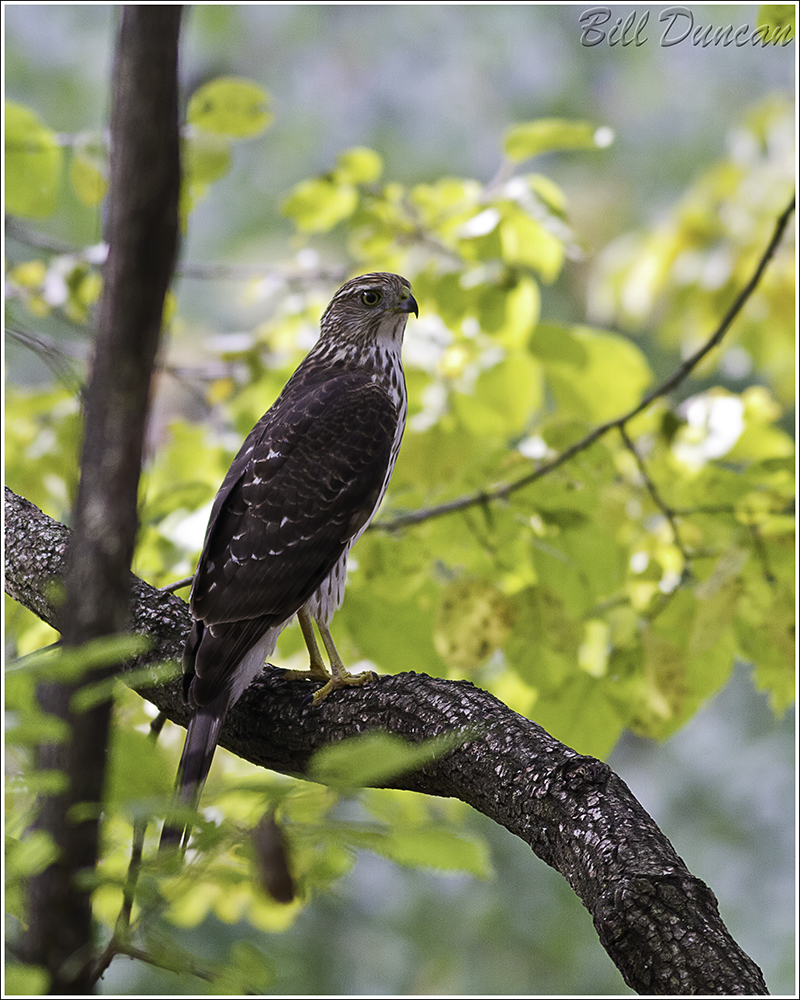
I love spending the early morning hours at SNR.  I have spent many a Saturday morning, having arrived before first light, with the entire reserve to myself.  I try to have a plan for those ephemeral golden hours where I can pretend I am the only person on the planet: macro photography of wildflowers, a hawk’s nest, a particular landscape image, etc.  More often than not the weather or light or my desire to put some miles on the trails forces me to forget my plans and try to take advantage of the best available opportunity.

Everything in nature seems to be fully awake at dawn and just like the opportunities for the photographer the stimulus for the senses at dawn are almost infinite.  During this morning the frogs were still advertising, song birds – Towhee, Field Sparrow, Carolina Wren, and Redwing Blackbird are singing their unique songs, the Barred Owls are talking to one another.  The light and colors of early morning are constantly changing and the brisk temperatures and fog in the air are pleasant on the skin and a joy for hiking.

Being a little windy on this particular morning I knew that my goal of photographing spring wildflowers would be a bit frustrating.  I also felt that need to walk so I started on the trails knowing there would be ample opportunities for some early morning landscapes. This section of this trail emerges from denser woods to a savannah-like habitat with a cattail pond.  I tried several compositions and focal lengths and this one was one of my favorites with a Redwing Blackbird perched facing the sun.

So, please join the crowds and make a visit to Shaw after 10:00 in the morning.  Maybe I’ll see you on my way out.  ;=)

Location Spotlight: Black Mountain Cascades

This post features one of my favorite places to visit and photograph in my beloved St. Francois Mountains. Black Mountain and these cascades that tumble down more than 400 vertical feet in a series of steps lie southwest of Fredericktown and can be found literally alongside Highway E.  The waters run under a drainage pipe in the road and travel another few yards before dumping into the St. Francois River. I was first turned on to this place by a fantastic landscape photographer of the Missouri Ozarks named Mark Karpinski.  I highly suggest looking him up and buying a bunch of his photographs for your walls.  His images are the best I’ve seen of this region.

“Rivers or Veins”

Technical details: Canon EOS 7D camera,  EF-S10-22mm f/3.5-4.5 USM lens @ 12mm, ISO 200,  f/13, 0.5 sec

As I mentioned in previous posts, this “winter” brought out possibilities for photography that I would normally be taking advantage of in the warmer months.  These images were taken in early February following a couple of rainy days.  These cascades run out completely in dry times, so you must carefully plan a visit following rainy periods.

“Roll of Ancient Thunder”

Technical details: Canon EOS 7D camera,  EF-S10-22mm f/3.5-4.5 USM lens @ 10mm, ISO 160,  f/13, 0.4 sec

Before you make plans for a visit, listen to warning.  There are no trails here – it is just bush-whacking up the slopes.  Sometimes you will need to go up leaf-littered hills and sometimes you must climb hand and foot over rocks and the cascades.  There are all sorts of risks here.  The rocks are extremely slippery.  I highly suggest the use of felt-bottomed shoes or waders and take all precautions against water and your camera equipment.  You will get wet!  In the growing season I have been to few places with as much or worse concentrations of poison ivy.  If you visit in mid to late summer, cover yourself head to toe and then burn your clothes afterwards.  And ticks!  In early February I hadn’t given a thought to ticks.  This day I received a tick bite and found another three on my pants.  I learned my lesson to pay attention to the temperature and not the calendar.

“Crash of Molars”

Technical details: Canon EOS 7D camera,  EF-S10-22mm f/3.5-4.5 USM lens @ 20mm, ISO 200,  f/11, 2 sec

I’ve been fortunate enough to have spent some great days on this mountain.  I have visited on 50% chance of rain days and was able to spend a few hours of cloudy, but relatively rain free weather – perfect for this type of photography.  If you are in shape and have the determination to make the hike to the top, the view of the St. Francis River valley below is sure worth it.  Pack a picnic basket!

“Firing Diamonds At Boots”

Technical details: Canon EOS 7D camera,  EF-S10-22mm f/3.5-4.5 USM lens @ 16mm, ISO 200,  f/13, 0.6 sec

The titles of the images in this post I stole from the lyrics of a song called “Buried in Teeth” by Mariee Sioux.  I can’s stop listening to this song or Mariee’s music in general lately.  I realize this may be considered IP infringement, but I have trouble with titles and I also wanted to  try and give her some props, so to speak.

“Swallowed Into the Gut of Centuries”

Technical details: Canon EOS 7D camera,  EF-S10-22mm f/3.5-4.5 USM lens @ 11mm, ISO 200,  f/16, 0.8 sec

Thanks for visiting the blog.  You can find more of my photos from this location here.  If you decide to make an excursion to this spot or anywhere else into the St. Francois Mountain region, please be careful, enjoy yourself, leave only footprints and take only photographs!

Flowers and Blood

“Bloodroot”

Technical details: Canon EOS 7D camera, EF100mm f/2.8L Macro IS USM lens. ISO 160,  f/16, 1/13 sec

I’ve been having a lot of fun with the spring ephemeral wildflowers this year.  It is hard to believe the numbers and diversity that are in peak bloom already this year.  I can’t imagine what the woods are going to look like by the end of April.  You might as well stock up on pyrethrin because by mid-summer the ticks are going to be owning us all.

This image was taken in the Labarque Creek watershed during a early spring hike.  Bloodroot are fascinating plants, getting their name from the reddish sap that is especially prominent in their tuber-like rhizome.  Several Native American tribes have been known to use this sap as a natural dye for artwork projects.

These plants will spread and grow easily clonally and vast colonies can be found that may have started from a single individual.  Another method of reproduction these plants use is myrmecochory, which means that their seeds are dispersed by ants.  The ants feed on a fruit-like structure that is attached to the seed.  The ants move the seeds to the relative safety of their colony and after the ants feed on the fruit they deposit the seed into their underground middens, or trash heaps.  Here the seeds can safely germinate and have access to some useful fertilizer in the process.

Bloodroot sends up a flowering stalk usually before the leaves begin to emerge and blooms usually open before the leaves have fully expanded.  The flowers last less than a full day, so it is recommended you get out on the trail before noon if you really want to seem them in their full glory.

It’s Spring Again. Everybody Know it’s Spring Again.

“Renewal”

Technical details: Canon EOS 7D camera, EF100mm f/2.8L Macro IS USM lens. ISO 250,  f/11, 1/13 sec

“To the girls and boys and people above, This is the time to fall in love”

Sorry, I always turn on the Biz Markie this time of year.  It wouldn’t be spring without him.

This image and post is dedicated to my stepfather, Wally, who bought me my first camera about 20 years ago.  Wally has a birthday this month.  Happy Birthday!  It was a Pentax K-1000, a manual-only film camera in which I learned the basics of exposure.  In my opinion, this body is one of the best values of this class and generation of camera available and still underrated.  It’s too bad they don’t make a digital version of this camera today.  Having a manual-only digital body would something else.  I use manual mode about 95% of the time anyway, so I guess it wouldn’t be a big difference.

I took this photo on a recent hike in the Missouri Ozarks.  This bush must have had two dozen of these emerging leaf buds, each with a drop or two from gutation.  This phenomenon is seen when plants are growing in high humidity or in very saturated soils, like many parts of our region have been experiencing lately.  Between the low light and the high macro magnification getting a sharp image of the foreground subject was tricky.  I pulled out the reflectors to bring a little more light to the situation, but this only helped a little.

More Snipe than You Could Fit in Your Bag

“Scolopacid Dawn”

Technical details: Canon EOS 7D camera,  EF400mm f/5.6L USM lens, ISO 640,  f/5.6, 1/400 sec

I arrived at CBCA well before dawn.  I knew from a visit a week earlier that a large amount of waterfowl, specifically Pintail, were using the habitat here and my hope was to catch some early morning photos of these birds flying by.  In one of the large pools alongside the road I saw nearly 50 of these bizarre birds with a bill almost as long as their bodies.  They were not very flighty at all, allowing me in my “mobile blind” to easily get within distance for some decent shots.

Members of the Scolopacidae family of shorebirds include the traditional Sandpipers, the beautiful Phalaropes, the Curlews, the Dowitchers, and several others – including the bird pictured above, the Common Snipe.  The Scolopacids are well known for their complex and diverse mating behaviors.  Not as complex or developed as the Passerine songbirds, this group also uses extensive advertisement vocalizations, most likely evolved to be well understood on their vast tundra breeding grounds.

Similar to its cousin, the Woodcock, the Common Snipe uses a “winnowing display” to attract mates.  These birds will fly high into the air and plummet towards the ground while fanning their tail feathers, which make a distinctive winnowing noise as the air rushed rapidly over them.

Looking closely at the length of a shorebird species’ bill gives a great clue to what the bird feeds on and how much water they typically forage in.  With the great diversity in the morphology of these birds, the specific depth of water and vegetation these species are accustomed to and food sources they utilize, it is no wonder that habitat management programs can be quite complex.  What works great for waterfowl or a particular species of shorebird may not be useable at all for another species.  CBCA has come a long way in providing the diversity of habitat and the managers seem to be doing a great job in their management practices, especially considering the unpredictable weather patterns we have had in this region the past several years.

Seven Days of Mina Sauk Falls – Day Seven

“Taum Sauk Eternal”

Technical details: Canon EOS 7D camera,  EF24-105mm f/4L IS USM lens @ 40mm, ISO 200,  f/14, 0.6 sec

Hi everyone.  Here is the last in my planned succession of image postings of Mina Sauk Falls of the Missouri Ozarks.  This photograph may be my favorite of the day.  The textures of the rock and the patterns of the lichen suggested to me that this would make a nice black and white.  I added a light Orton effect to enhance these contrasts and bring out the highlights a bit more.  The pool of water might be my favorite aspect of the image.

I had another great Saturday exploring and photographing in the Ozarks.  We really had some magnificent lightning displays from thunderstorms that went through the region in the afternoon.  I hope none of you had any damage or other worries from these storms.  I started my day with an actual plan and had to make changes due to the weather.  I started my day in the Labarque Creek Watershed, thinking the storms we had on Thursday may have filled the drainage creeks and there would potentially be lots of falls, cascades and other water features to shoot.  I also realized that the spring ephemeral wild flowers would be really getting going.  Well, the water flow was next to nothing.  The rain from early in the week had either drained quickly or was not enough to get things flowing.  The spring ephemerals were exactly what I expected.  Spring beauty, rue anemone, Dutchman’s breeches, hounds tooth and blood root were all present in the thousands.  I wish I had actually spent more time shooting these, but I had other plans as well.

My plan after Labarque was to head to the nearby Shaw Nature Reserve to photograph the early happenings of the Red-shouldered Hawk nest located there.  I hauled all my photo equipment and my spotting scope and my chair and snacks, set up, had an opportunity to take a few shots when the rains came in.  So, I packed up and started back home.  I knew the weather would also interfere with my plan to photograph a local Great-horned Owl nest that I was planning on visiting in the late afternoon and evening.  I went back home, ate dinner and checked weather.com.  There looked to be a gap between 5:00PM and 7:00PM where the chance of rain was significantly lower.  I suspected that the 0.5-1″ or so of rain we received this afternoon may be enough to really get the ephemeral drainage creeks of Labarque flowing.  So, I packed up and headed back to Eureka, knowing it still might rain for another few hours and I may not even get out of the car.  When I arrived, it was barely sprinkling so I put my rain gear on and covered my camera pack with its rain cover and with my hiking pole and trusty Tilley to keep my head dry, I started on the trail – anxious about the weather and quickly cover the mile or so to the features I most hoped would be filled with water.  The situation was not perfect.  It rained about half the time I was on the hike.  I was able to pull the camera out and do some shooting, but the light was very low, even for shooting moving water!  In a couple of brief deluges I carried myself and my gear to a small cave to wait it out.  This was one of the most memorable hikes of my life.  The light, sky, fog water and life all around me seemed to be changing by the minute.  At least half a dozen frog species were singing and the Eastern Towhees were constantly telling me to “Drink your Tee!”.  I heard the ever-vocal Red-shouldered Hawks and the hoots of Barred and Great-horned Owls.

Finally, when the light was so low I couldn’t get anything shorter than a 30 second exposure, I headed back to the car.  Upon reaching the top of one of the steep ridges I saw a spectacular display of warm colors as the sun was able to break through a bit near the horizon and juxtapose itself with the cumulonimbus clouds and associated displays of lightning.

I apologize if this is boring any readers, but I am using this blog as a journal in as much as anything else.  I haven’t really looked at any of the photos I took today.  Hopefully the images will be close to what I hope they can be.  If not, I will always be looking forward to the next hike in the Missouri Ozarks.