"What a thousand acres of Silphiums looked like when they tickled the bellies of the buffalo is a question never again to be answered, and perhaps not even asked." -Aldo Leopold
In February, the Webster Groves nature Study Society’s Nature Photography Group headed to the Sophia M. Sachs Butterfly House in Chesterfield. We paid for after-hours access and were delighted with the opportunities presented to us. Many thanks to Casey Galvin, group leader for the Nature Photography Group, for organizing this visit, and to Chris Hartley from the Butterfly House for being a lovely host. Chris patiently dealt with our needs, requests and questions, while wrangling our subjects for us. He and the Butterfly House provided us a wonderful experience of photographing some remarkable arthropods from around the world. Here are some of my favorite photos from the evening.
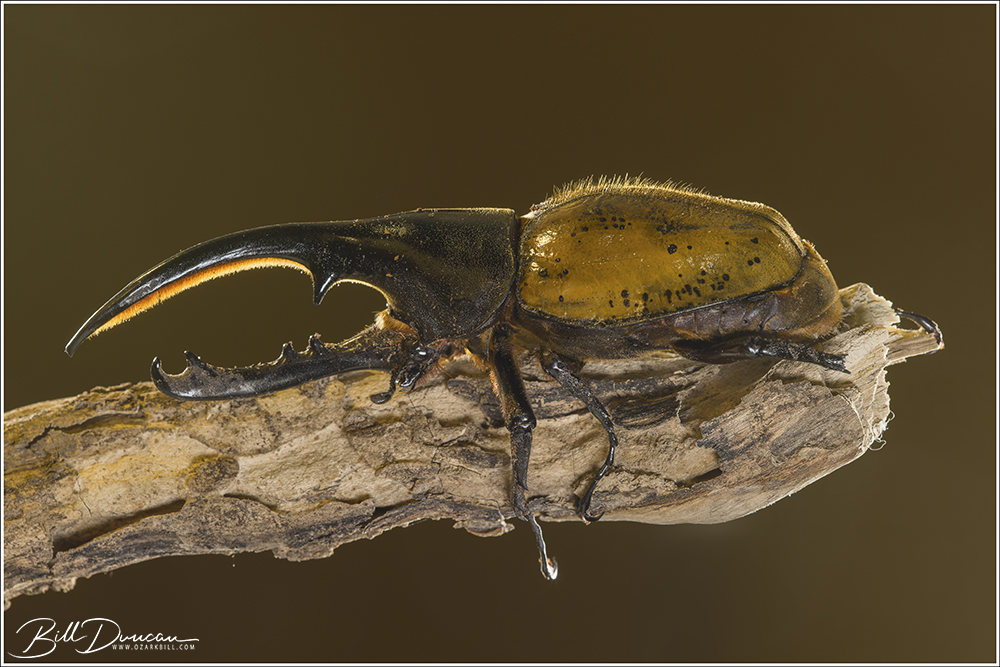
Hercules Beetle (Dynastes hercules) F. Scarabidae. The hercules beetle, found in the neotropics, is the longest extant beetle species in the world.
Rainbow Stag Beetle (Phalacrognathus muelleri) F. Lucanidae. This beetle is found in northern Australia and New Guinea. The mites that can be seen on this beetle do no harm to it. They tag along to pick up a free meal from their sloppy host.
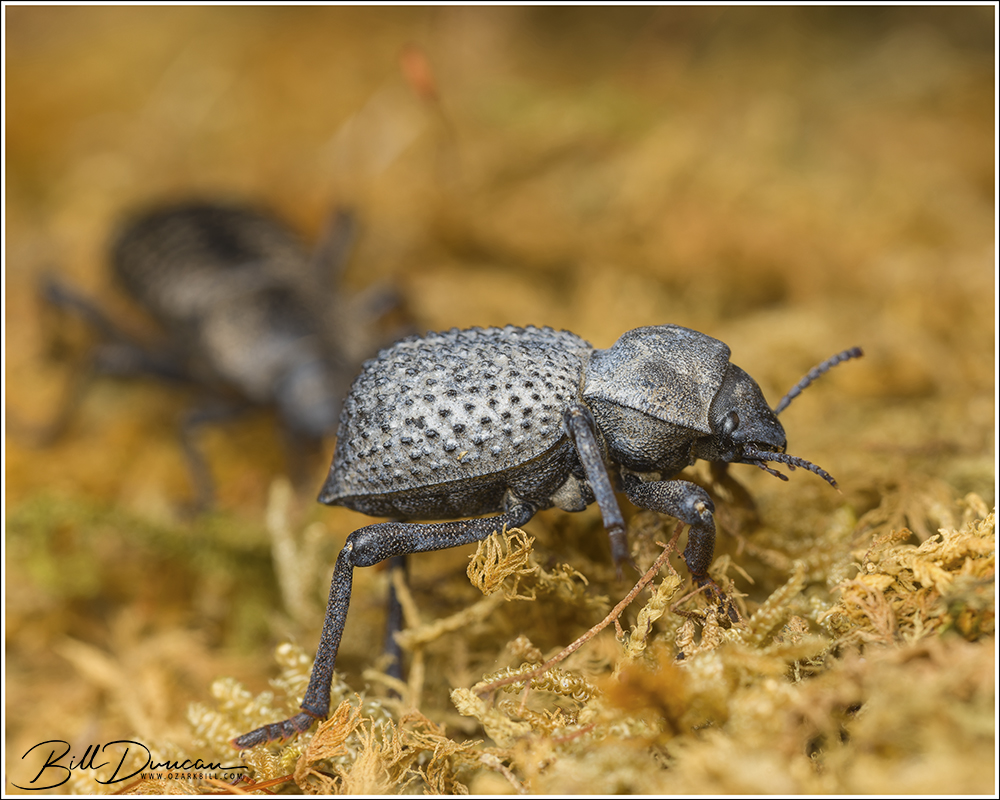
Death-Feigning Beetles (Asbolus verrucosus) F. Tenebrionidae. Found in the desert southwest U.S., these beetles feign death when harassed. After a minute or two they right themselves and continue on their business.
Flamboyant Flower Beetle (Eudicella gralli) F. Scarabaeidae. Found in tropical Africa, this beetle is a sure stunner.
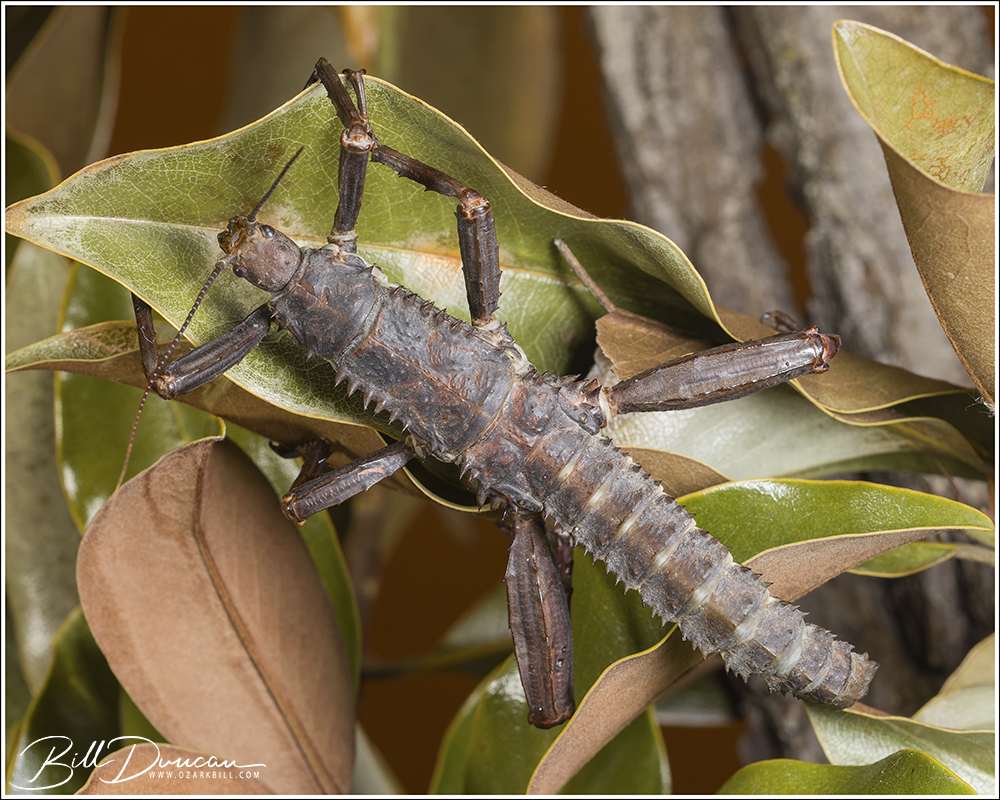
Spiny Stick Insect (Eurycantha calcaratta) F. Lonchodidae. These giant phasmids are endemic to humid rainforests in Australasia.
Curly-haired Tarantula (Tiltocatl albopilosum) F. Theraphosidae. This handsome spider is native to Central America.
That’s all from this outing. Interested in joining in one one of these WGNSS outings? Feel free to contact me or check us out at http://www.wgnss.org to learn more.
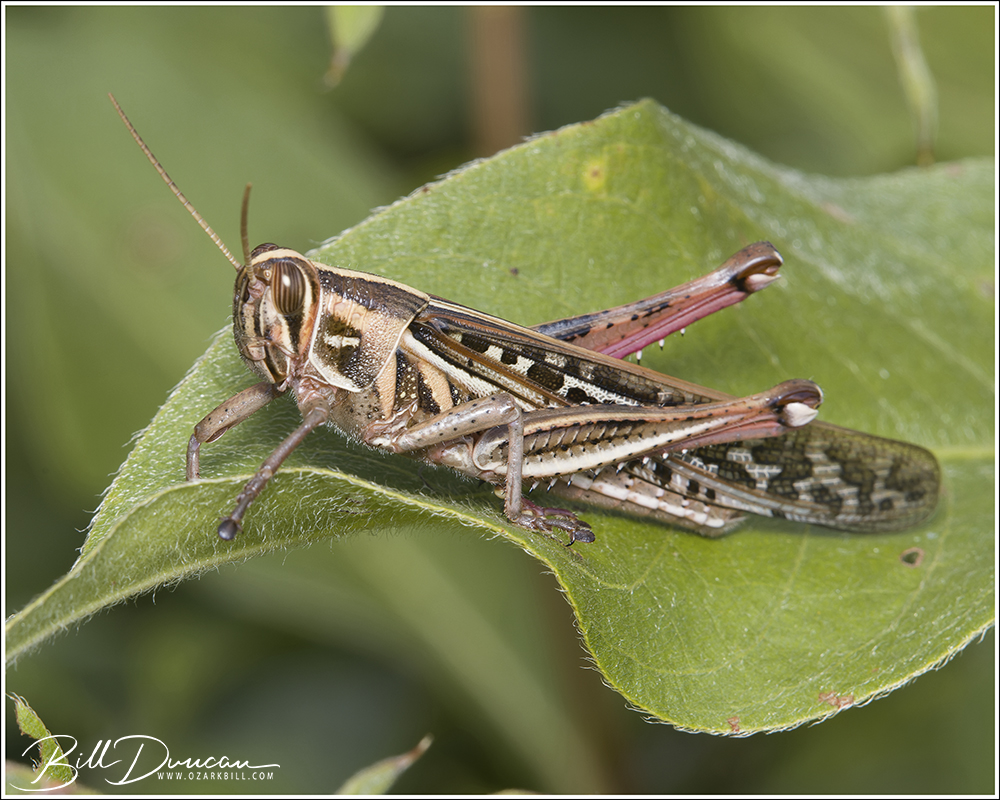
Here are a few handsome Orthopterans from the 2023 season.
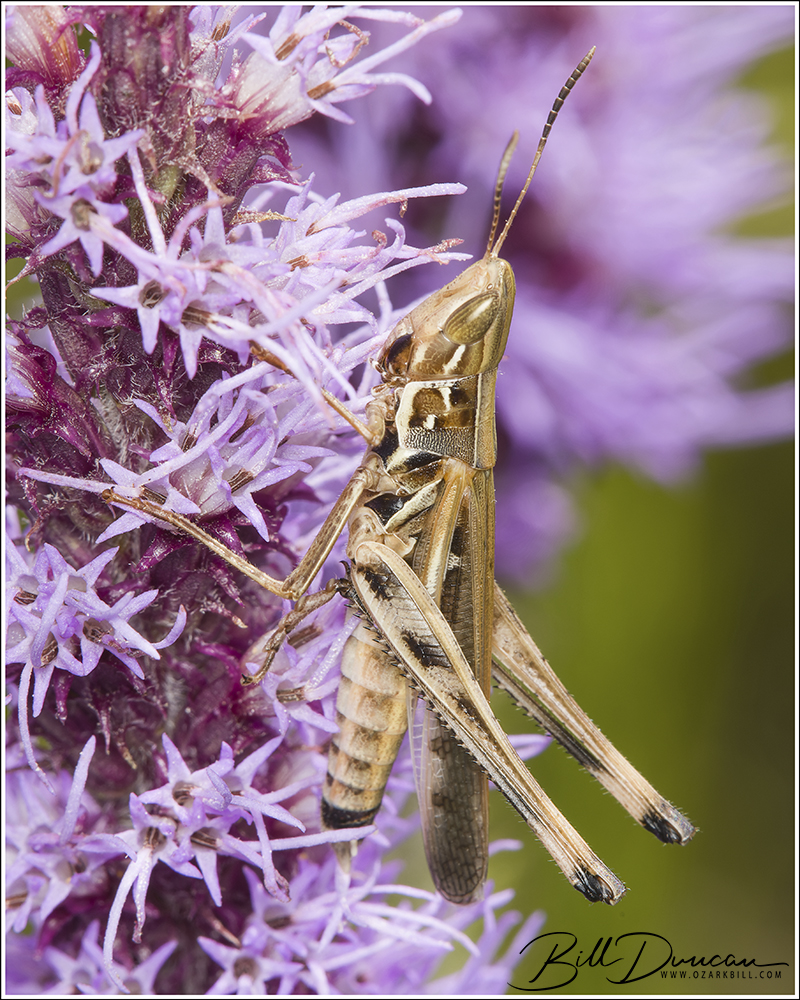
Syrbula admirabilis, is known by the common name – admirable grasshopper. Photographed at Horn Prairie Grove LWR.
Orchelimum nigripes, the black-legged meadow katydid prefers wetland habitats. This individual was found at Marais Temps Clair C.A. in St. Charles County, MO.
This American bird grasshopper (Schistocerca americana) was also photographed at Marais Temps Clair C.A. in St. Charles County, MO.
Today I’m finishing up with the remaining cats of late summer and autumn hunting trips of 2023 from an assortment of families.
Walnut Sphinx Moth (Amorpha juglandis) Sphingidae, Hodges#7287 These are among my favorites. Not only are they quite handsome when viewed up close, but they are one of the few caterpillars with a voice! Be prepared if you handle or otherwise disturb them; they will let out a surprising squeak when they feel threatened.
Walnut Sphinx Moth (Amorpha juglandis)
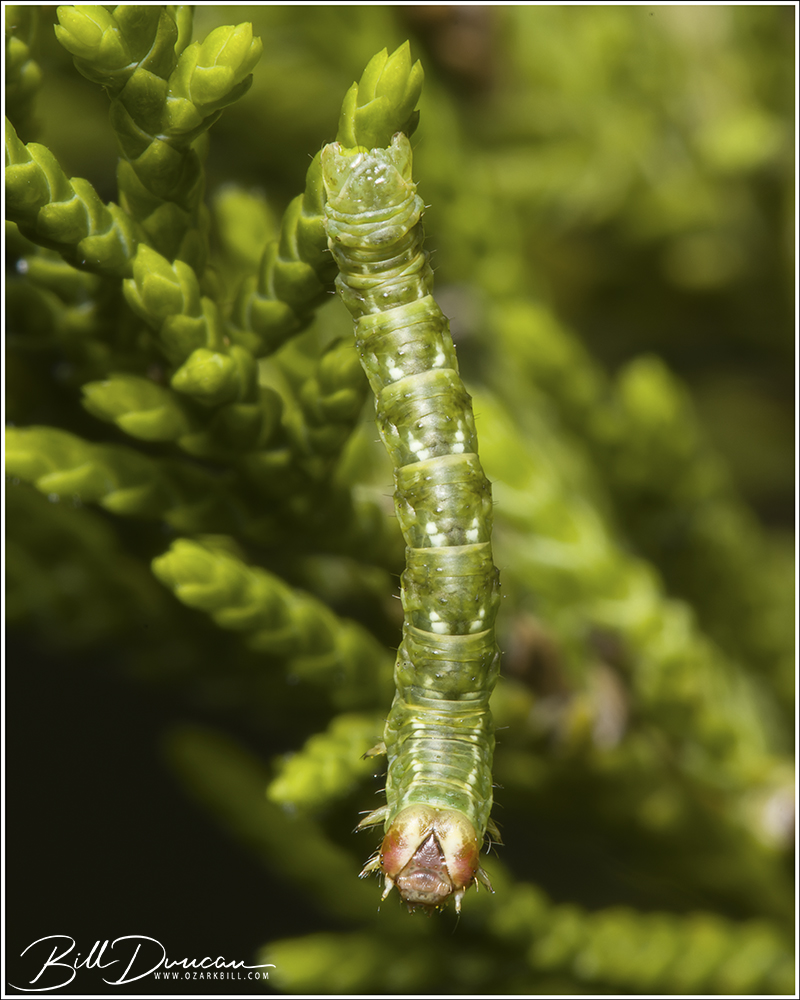
Curve-lined Angle (Diagrammia continuata) Geometridae, Hodges#6362 Casey and I observed that the juniper hairstreaks (Callophrys gryneus) had a bumper year this year while hiking in glades early in the season. We thought this might be the year to finally find the fantastic larvae of this species. We spent several hours beat-sheeting the red cedars in these areas in late summer and early fall. No luck in finding that species, but we did find another inconspicuous cat that uses this plant as its host. You can probably see that, like the hairstreak, the caterpillars of this moth species would be next to impossible to find without the use of a beat-sheet.
Curve-lined Angle (Diagrammia continuata)
Undescribed Flower Moth (Schinia nr-jaguarina) Noctuidae, Hodges#11132.01 I shared photos of this yet to be described species before. These are photos of the cats we found at a new location, Horn’s Prairie Grove LWR, in central Illinois.
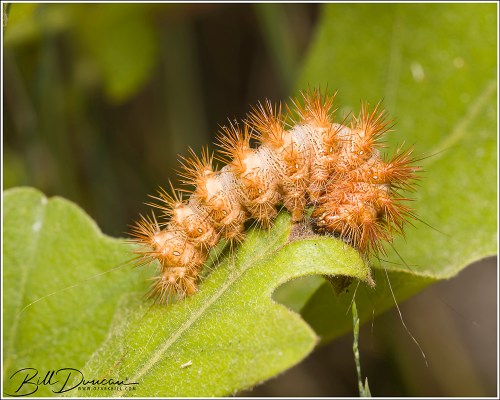
Red-lined Panopoda(Panopoda rufimargo)Erebidae, Hodges#8587 An interesting cat we found while beet-sheeting a hickory thicket on a friend’s property in St. Francois County.
Red-lined Panopoda (Panopoda rufimargo)
Pipevine Swallowtail (Battus philenor) Papilionoidea Conspicuous and distasteful due to the absorbed secondary chemicals of their pipevine host, it seems like we always find these guys in low-light situations, making the use of supplemental light a necessity.
Pipevine Swallowtail (Battus philenor)
Giant Swallowtail (Papilio cresphontes)Papilionoidea My favorite swallowtail species. It was a real treat finding this final instar cat back in September.
Here are a few of the members of the Noctuidae family of moth caterpillars we found in 2023. Commonly know as “owlet moths,” this is a very diverse clade that is still continuing to be revised and divided. Until recently, this was the largest lepidopteran family. A number of economically important members are found in this family, such as armyworm and cutworm species.
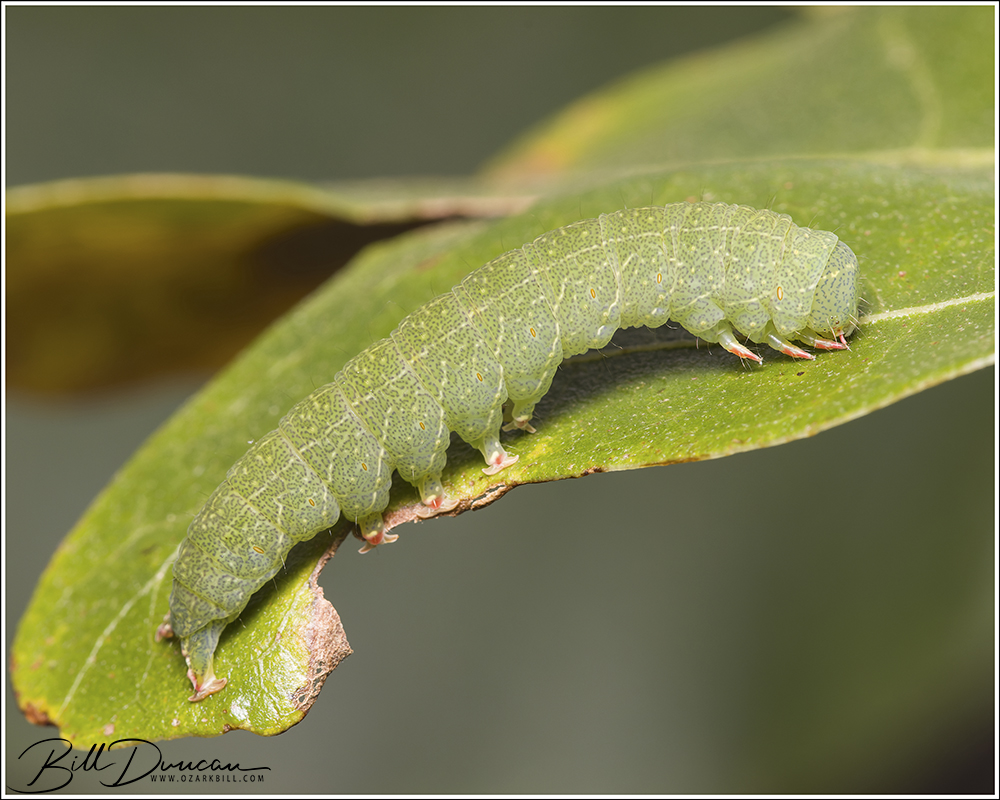
American Dagger Moth (Acronicta americana) Noctuidae, Hodges#9200 Rarely a day on the hunt goes by without finding one or more of these little beauties. This guy was not perturbed at all by us stopping to watch. It continued to chow on the leaf as I photographed it.
Two-spotted Oak Punkie (Meganola phylla) Noctuidae, Hodges#8983.1 Found on Quercus alba (white oak).
Eclipsed Oak Dagger (Acronicta increta) Noctuidae, Hodges#9249 Not that I keep great records but I am pretty certain that this one is by far the most abundant caterpillar we come across while looking on oaks. I probably find five of these to one of other species on oaks. There are a few similar species. The second one may be a different species of Acronicta.
Noctuidae (Acronicta sp.) This is what I get for not taking photos of some of these from multiple angles. Not even the experts on iNaturalist could get this guy to species using this one image. It was a gorgeous and large caterpillar.
Gold Moth (Basilodes pepita) Noctuidae, Hodges#9781 Finally – I am sharing a cat that does not feed on woody plants. Also, a rare case of a moth that is gorgeous in both adult and larval forms. Unfortunately, this was a pretty early instar and does not show the bright and contrasting colors of older caterpillars. The gold moth feeds exclusively on Verbina species (wingstems, crownbeards).
I got a whole one night of black-lighting in this season, when Miguel and I headed to Engelmann Woods Natural Area in Franklin County, Mo in early August. For only a few hours in a single night, our results were pretty fun. Here are some of what I have gotten around to processing so far.
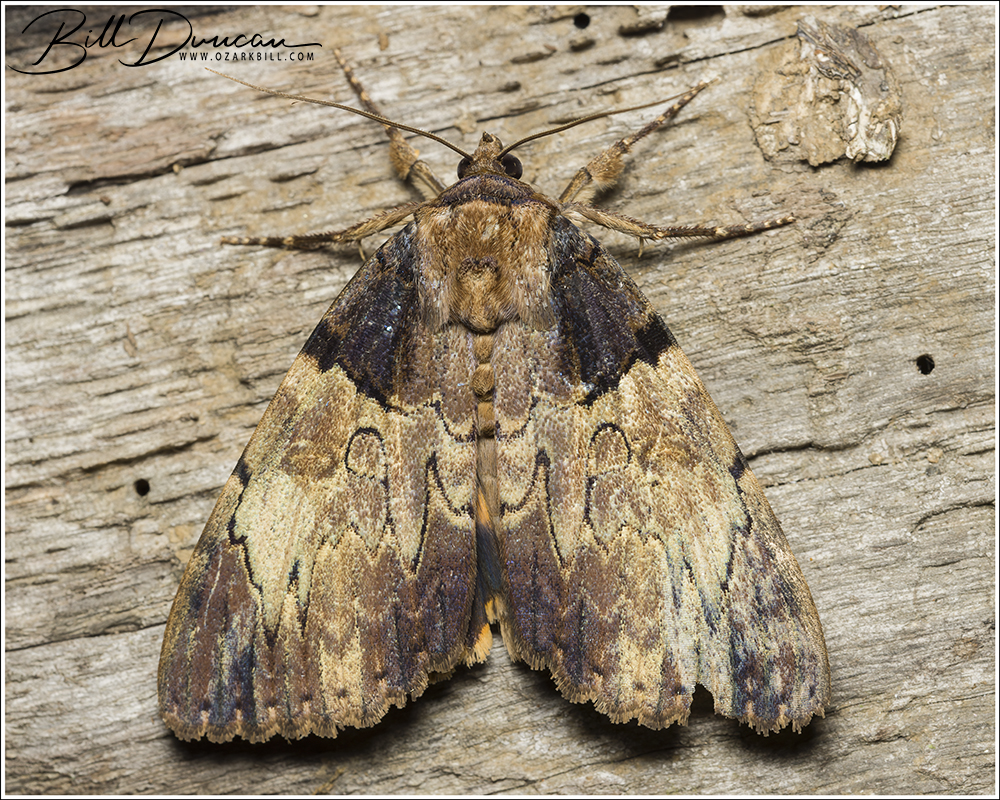
Clouded Underwing (Catocala nebulosa) Erebidae, Hodges#8796 This one wouldn’t open up his wings to show the pink tones that are hiding on the dorsal side of its hind wings. Nonetheless, the pattern and warm tones make this a very handsome species. Now I just need to find the beautiful larvae!
Clouded Underwing (Catocala nebulosa)
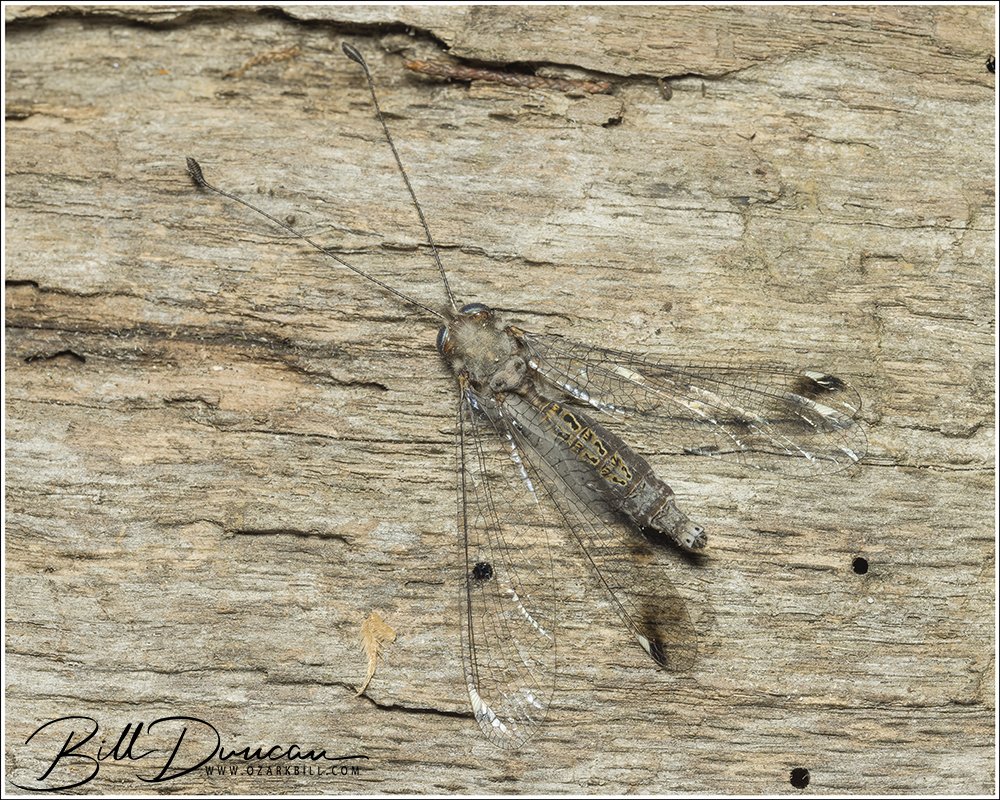
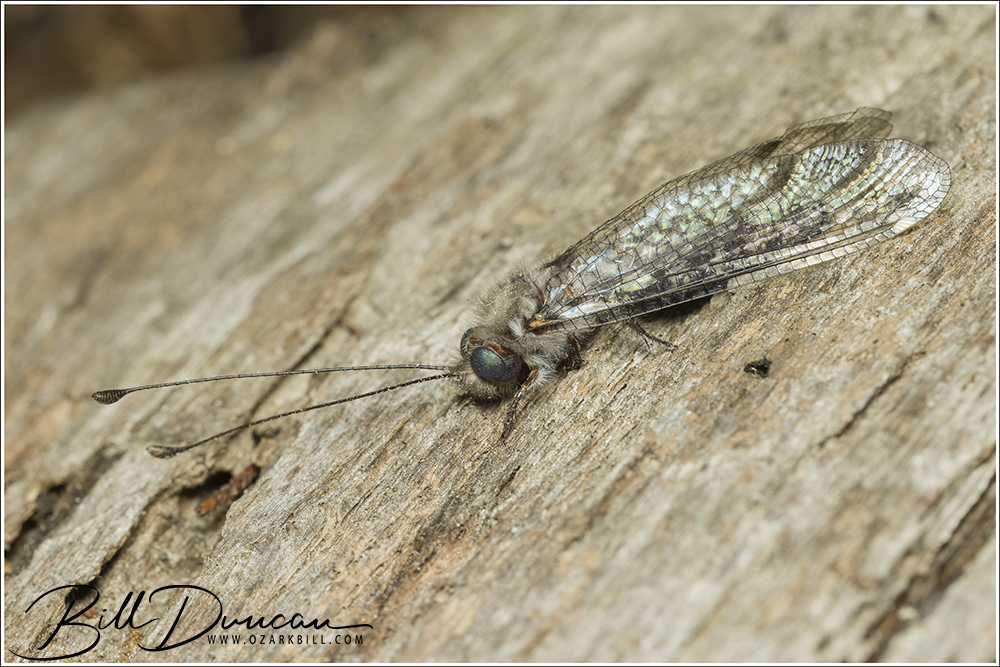
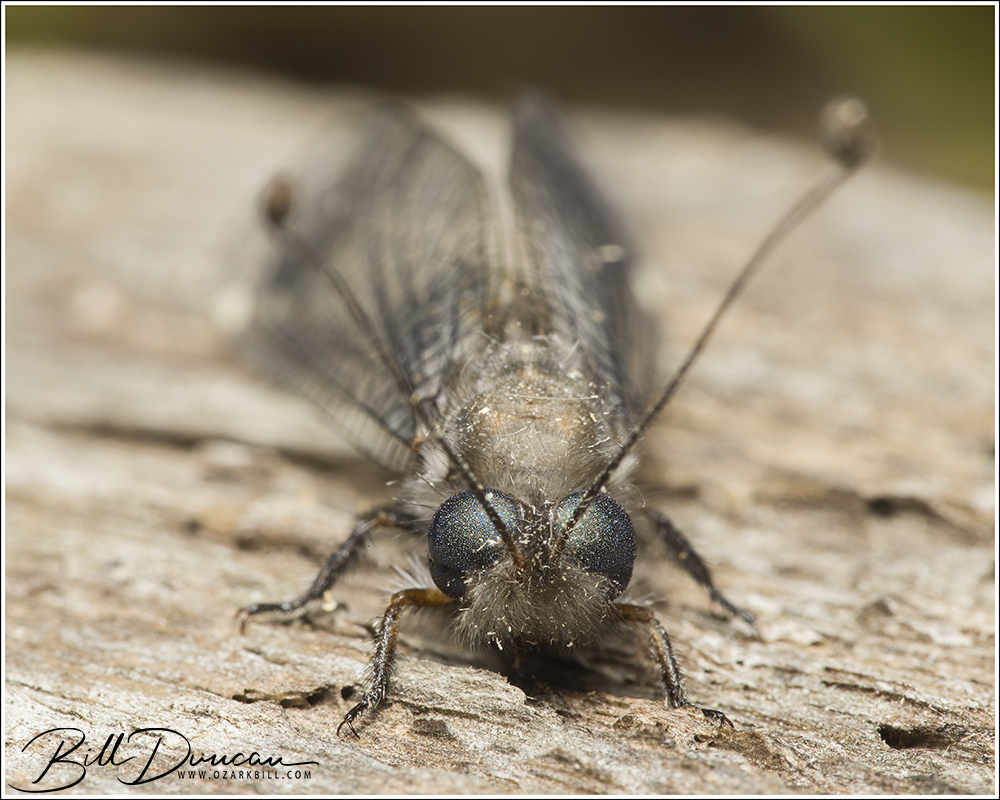
Owlfly (Ululodes sp.) Ascalaphidae These guys show up to the lights from time to time and it’s always a nice treat to find them.
Eastern Hercules Beetle (Dynastes tityus) Scarabaeidae It’s a party when one of these shows up. This is the third individual I’ve been able to find and they were all females. I want to find a male badly!
Heitzman’s Dagger Moth (Acronicta heitzmani) Noctuidae, Hodges#9241.1 Not only is this a very attractive dagger moth (a group I’m becoming much more interested in), but is a really special species for Missouri and a real privilege to find and photograph. Missouri is a stronghold in the range of this species and the type specimen was collected at Truman State Park. It was named for the late lepidopterist, Richard Heitzman – author of the “Butterflies and Moths of Missouri” books published by the MDC. To my knowledge, the larvae of this species has yet to be found or photographed.
Heitzman’s Dagger Moth (Acronicta heitzmani)
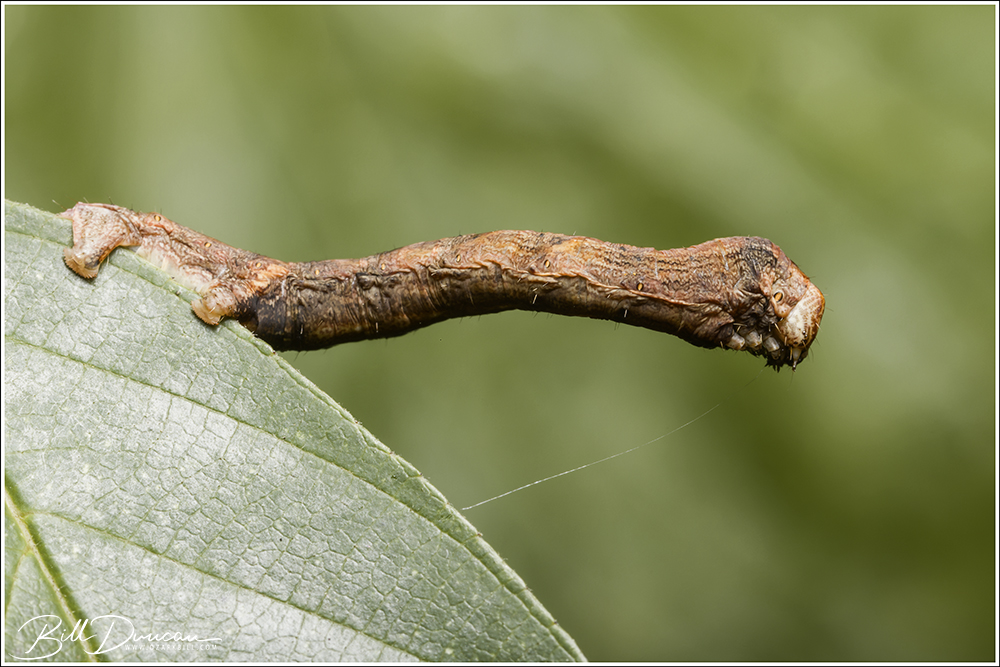
Small engrailed (Ectropis crepuscularia) Geometridae. Hodges#6597 We also found some time to do a little caterpillar hunting. The larvae of this Geometrid are known by the name of saddleback looper. This one was found on persimmon (Diospyros virginiana).
Small engrailed (Ectropis crepuscularia)
Skiff moth (Prolimacodes badia) Limacodidae, Hodges#4671 Limacodid, or “slug” moths are known to be some of the first and most abundant moths attracted to lights and I always feel a bit guilty to see them trapped against the sheets while black-lighting. Even on the slowest evenings, you can usually count on a skiff moth or several to make an appearance.
Skiff moth (Prolimacodes badia)
These are the highlights from black-lighting in 2023. I hope to get out for this a few more times next year.
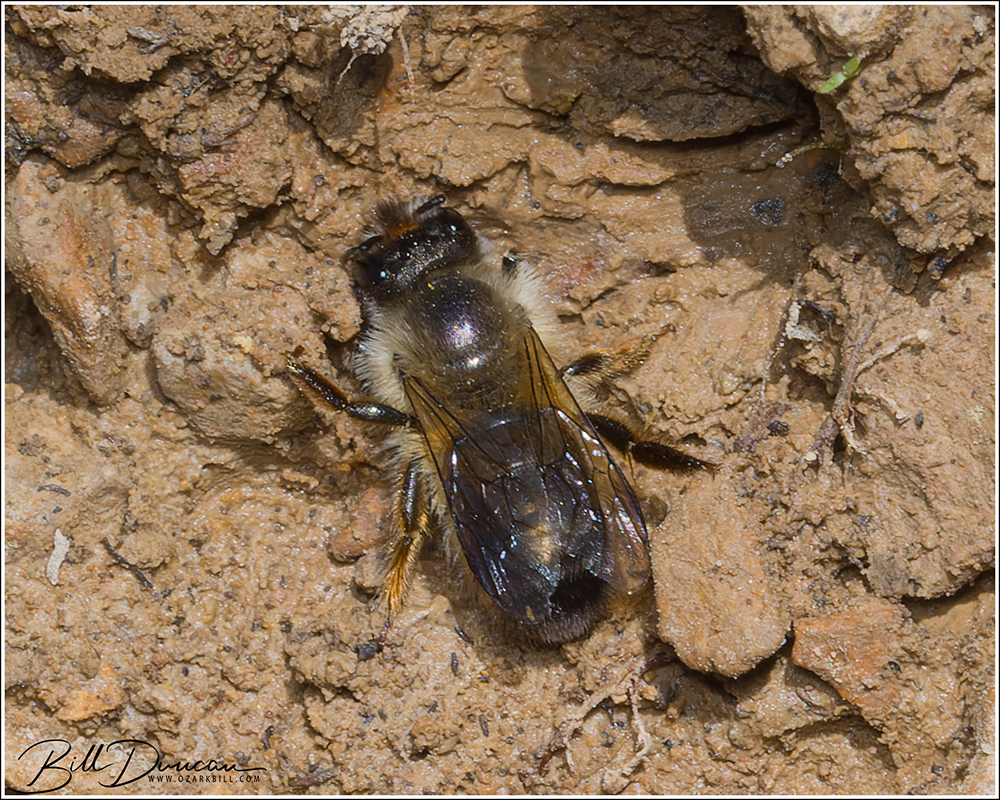
Casey and I found these mason bees in mid April this year at Hughes Mountain N.A. I had no clue what these were but was intrigued to “discover” a new-for-me bee so early in the season. Unfortunately, I was to find out it is yet another introduced species. Apparently these were first found in Maryland in the 1970’s and have spread west since then.
The Languria bicolor (Erotylidae) is placed in the tribe Languriini (lizard beetles). Larvae of lizard beetles develop within the stems of plants and adults feed on the tissues and pollen of the same or nearby plants. This individual was found in July 2021 at the Beaumont Scout Reservation, St. Louis County, Missouri.
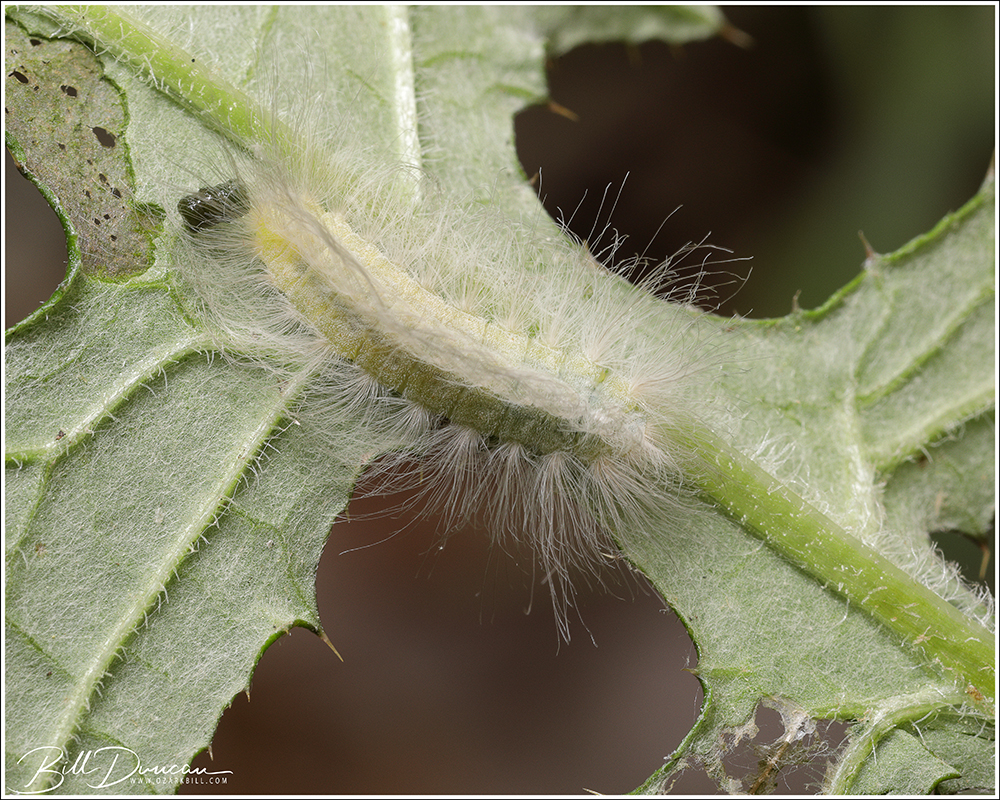
I previously shared photos of adult of swamp metalmark (Calephelis muticum). This spring, after a couple or three years of looking for them on their host plant, Cirsium muticum (swamp thistle), I finally found the caterpillar of this vulnerable species of conservation concern.
A swamp metalmark (Calephelis muticum) caught shortly after depositing some frass created from its host plant, Cirsium muticum (swamp thistle).
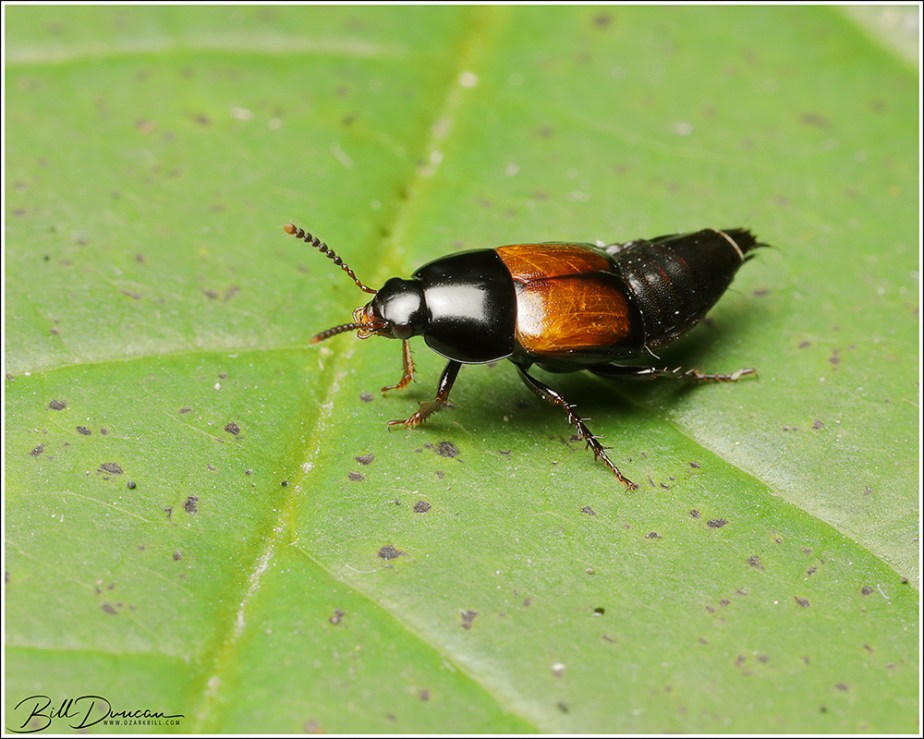
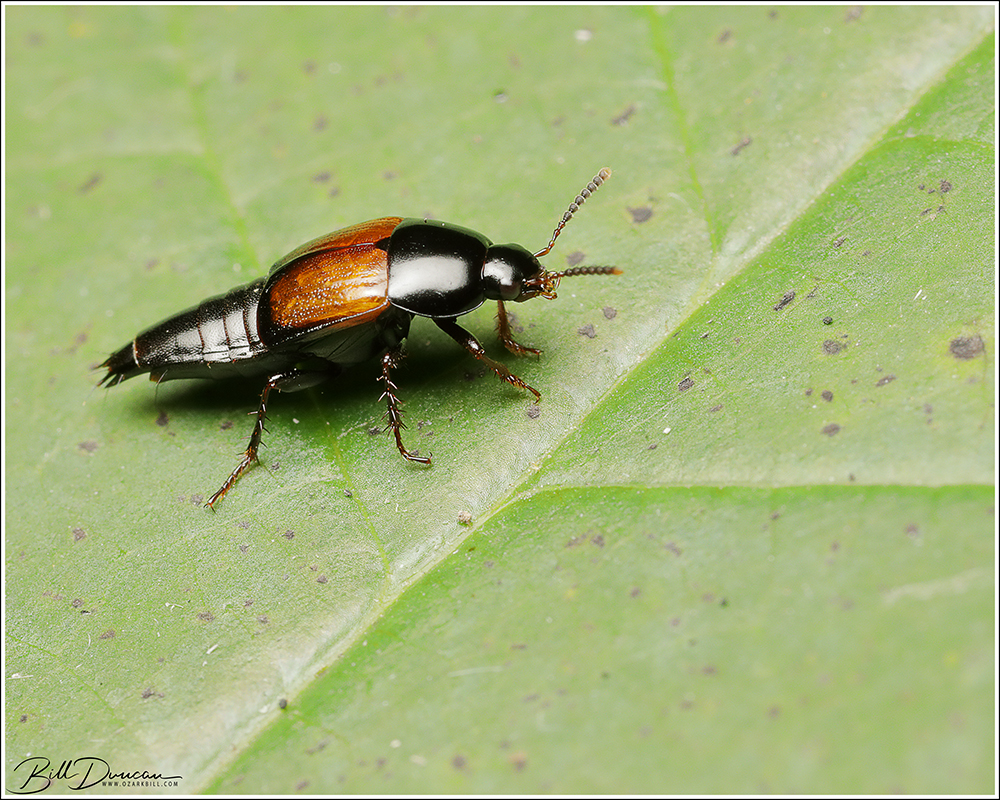
Tachinus fimbriatus – who decomposes the decomposers?
This Tachinus fimbriatus, a member of the rove beetle family, Staphylinidae, was found and photographed in September, 2020 at Babler State Park in St. Louis Co, MO. Some consider the Staphylinidae the largest family of animals in North America with close to 5,000 species described in more than 500 genera. Most rove beetles are carnivorous and feed primarily upon invertebrates. However, many feed on decaying vegetation, especially as larvae. This adorable beetle is believed to feed primarily on rotting mushrooms.
Tachinus fimbriatus – a potential pet for the tiny home?
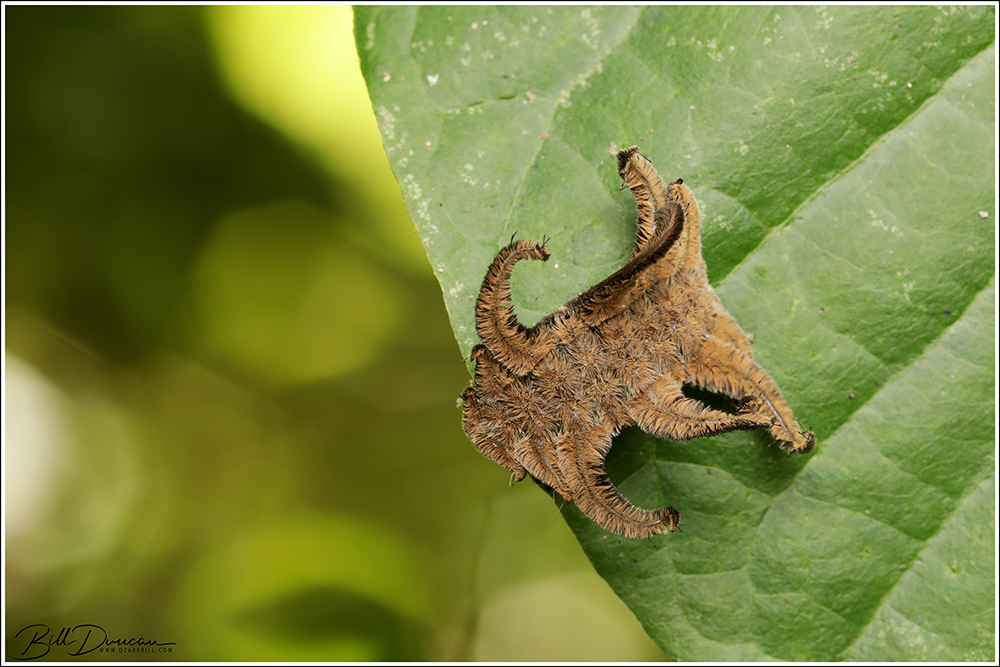
This hag moth, or monkey slug caterpillar (Phobetron pithecium) was found on a pawpaw along the Meramec River at Shaw Nature Reserve in early September.
As it seems I say every year, I did not find the time to go out looking for insects as much as I had hoped for in 2020. Here are a few of my favorites from this past season. As always, please correct any inaccurate species identifications if you are in the know. I try my best, but can always be wrong. Thanks.
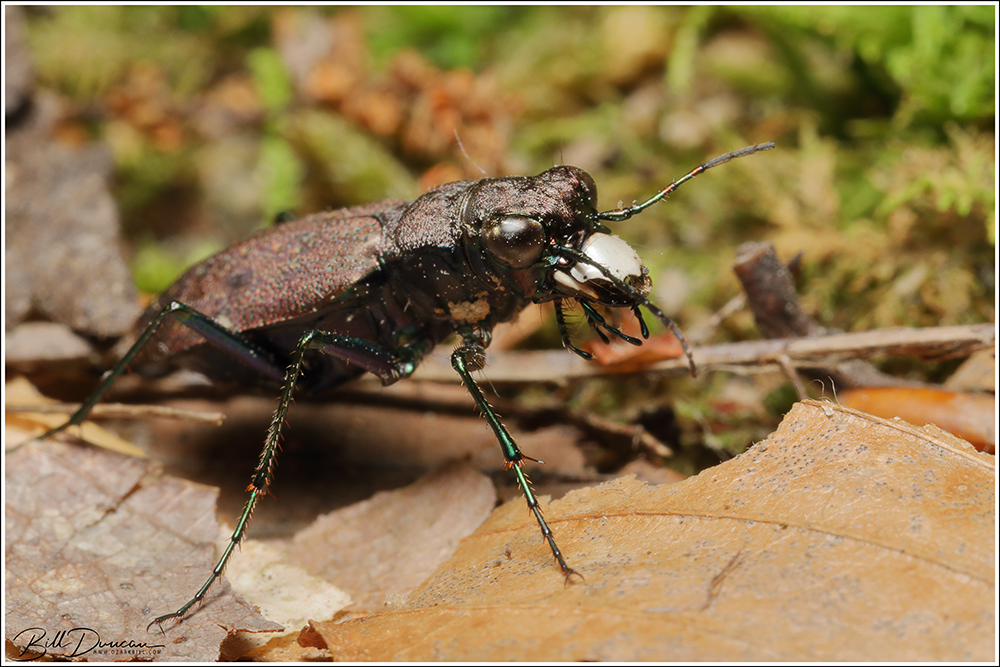
This punctured tiger beetle (Cicindelidia punctulata) provided quite a lighting challenge for Casey and me.
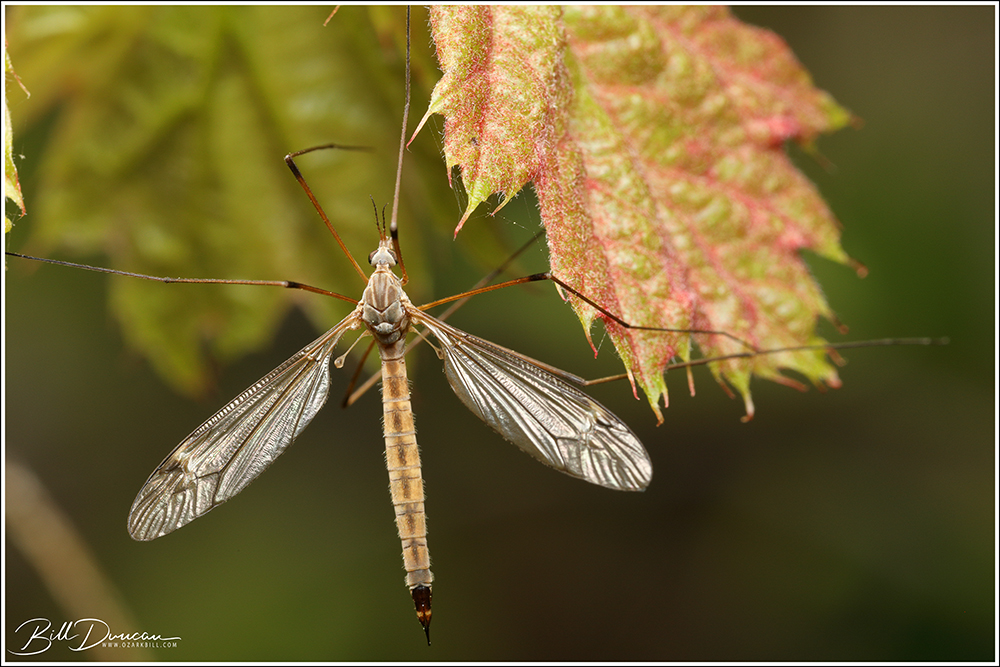
We found this crane fly in late April. It makes a nice compliment to the early oak leaf.
I tried capturing this greater bee fly (Bombylius major) in mid-air, but failed in that attempt. A portrait shot would have to suffice.
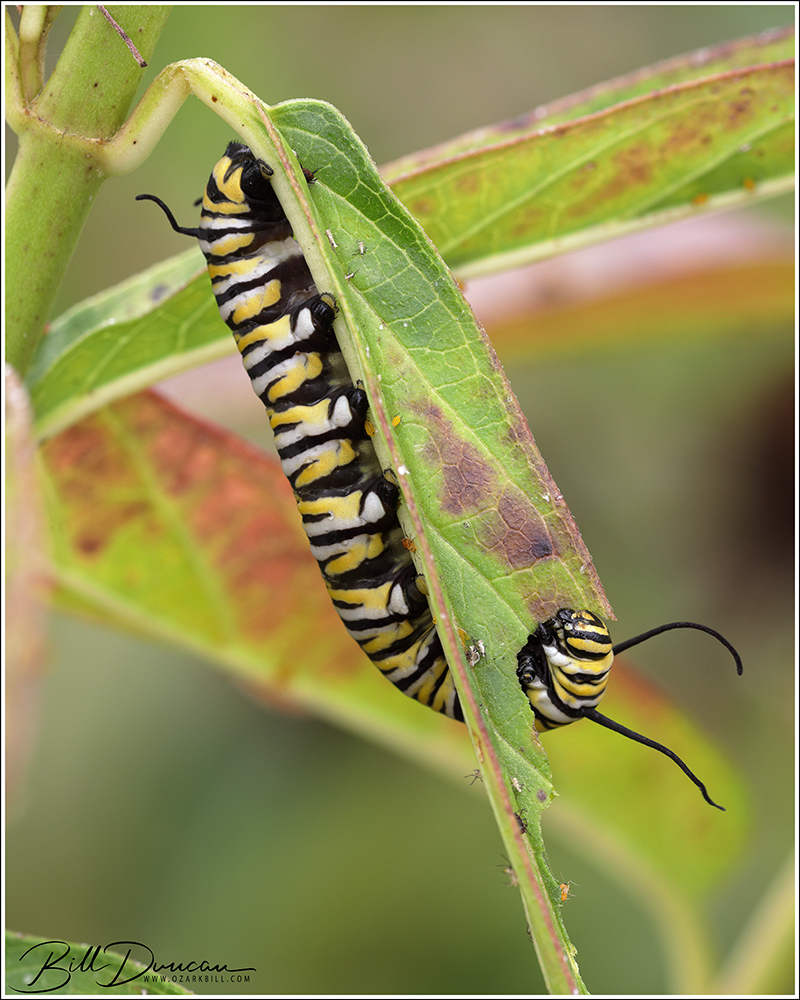
This monarch caterpillar was found feasting on the leaves of swamp milkweed that was in a planter near the SNR visitor’s center.
Sarah and I found this hanging thief robberfly (Diogmites sp.) feeding on a German wasp (Vespula germanica) on the side of our house in July.
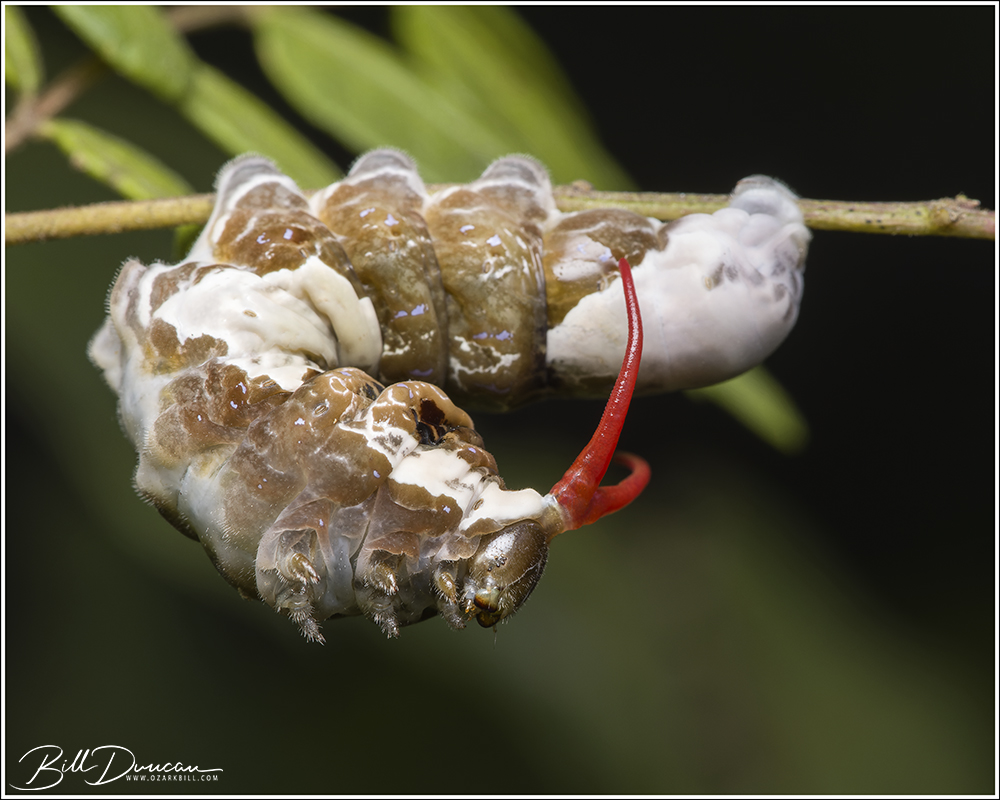
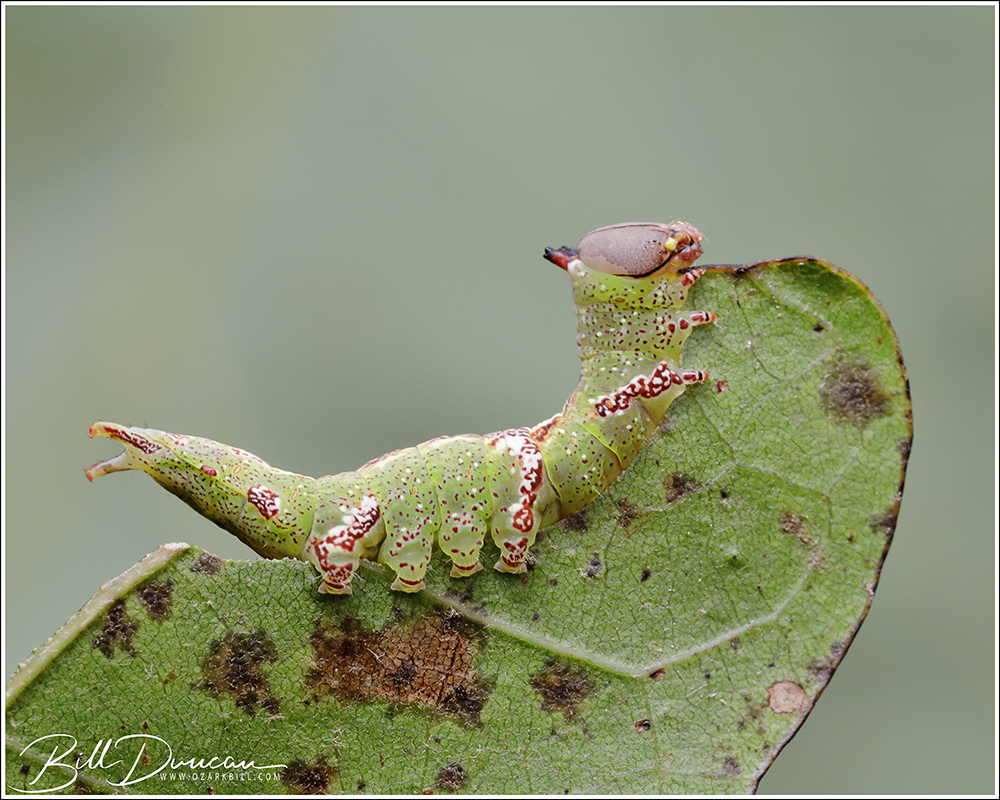
While looking for cats at Weldon Spring CA one evening, I was thrilled to find this saddled prominent (Heterocampa guttivitta) that had been parasitized by braconid wasps. This particular species of parasitoid changes the chemistry of the host’s brain so that after the was larvae emerge the caterpillar spins its own silk around the developing pupae and stands guard over them. When touched, the caterpillar thrashes and hisses, guarding them until it starves.
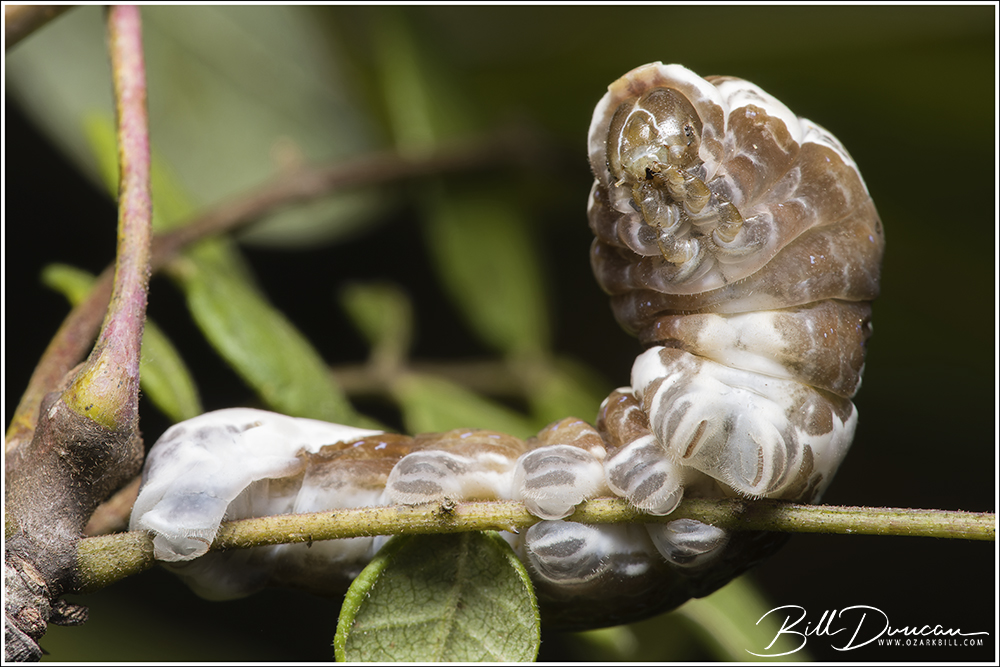
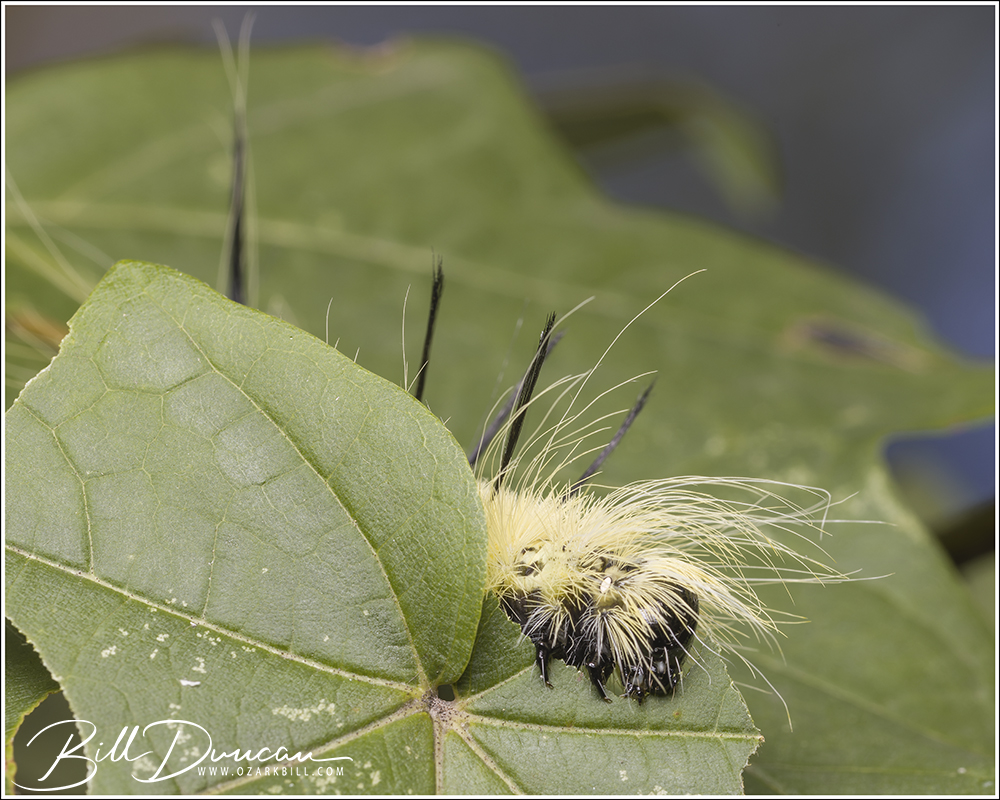
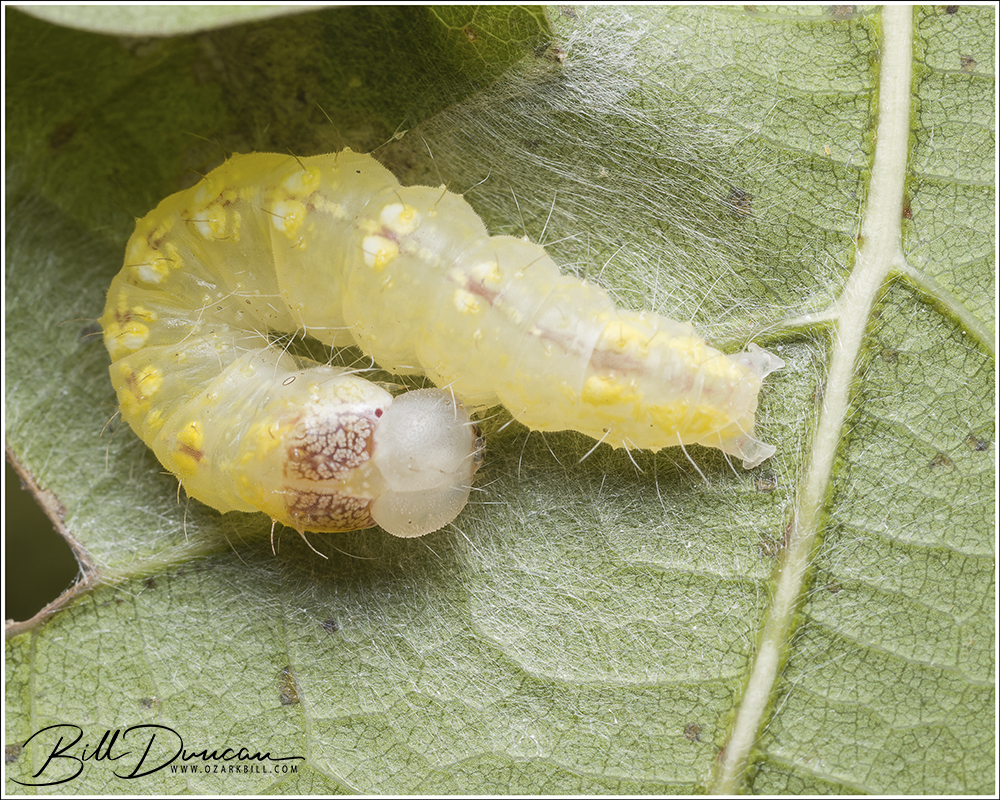
One of my favorite cats to find is Apatelodes torrefacta (spotted apatelodes). They can be found in yellow, or this white form. One day I’ll have to track down an adult to photograph.
A White-blotched Heterocampa (Heterocampa umbrata) shows off its incredible camouflage that allows it to eat as it becomes one with the leaf.
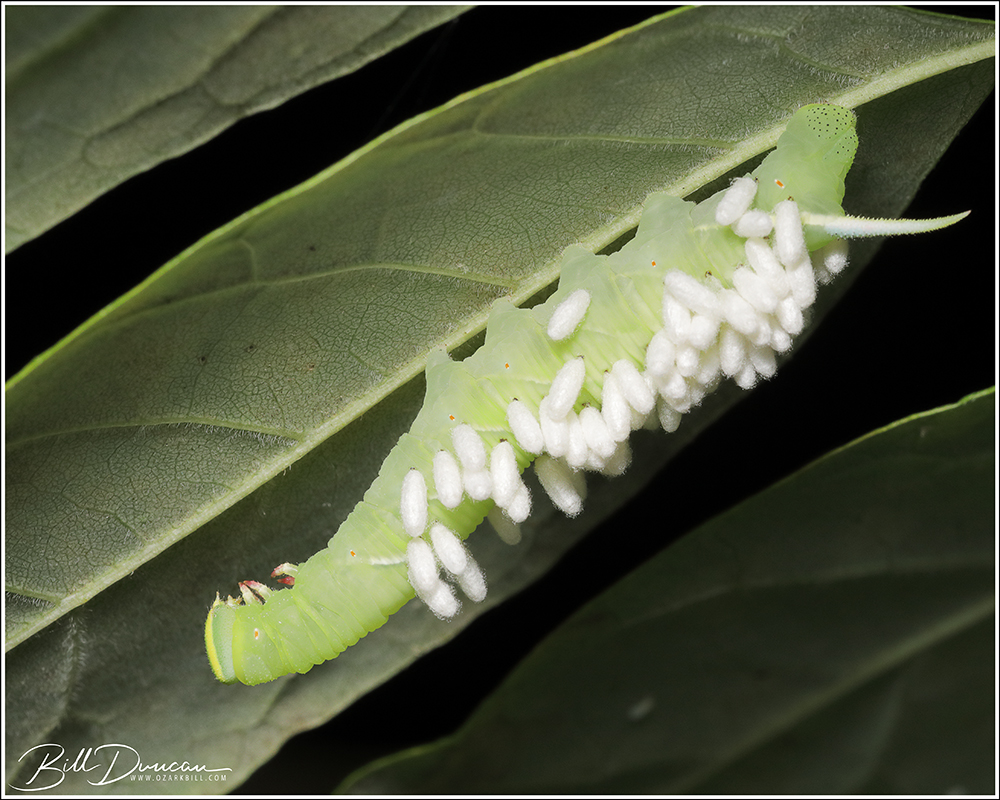
A waved sphinx (Ceratomia undulosa) that has been parasitized by numerous braconid wasps.
In September, I found this nice specimen of a fungus in the Cordycipitaceae family that had attacked a spider. This is most likely Gibelulla leiopus, an obligate parasitic fungus that preys on spiders with an almost worldwide distribution.
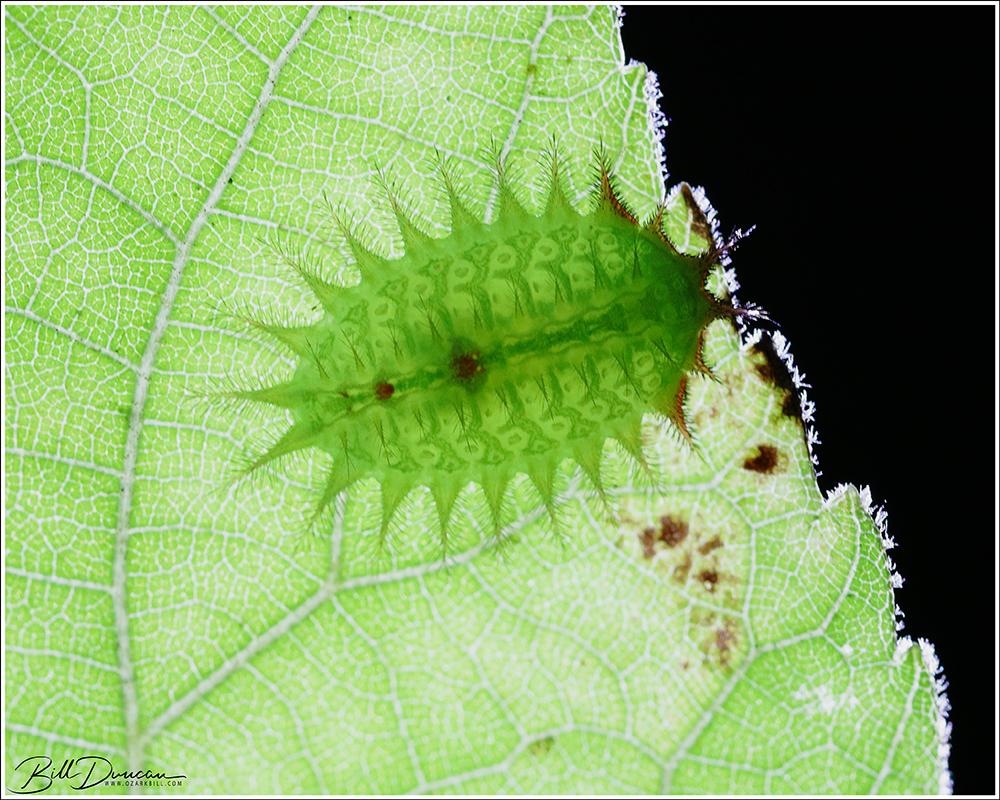
Of course I did a little slug moth caterpillar hunting this season. Here I photographed this crowned-slug (Isa textula) catterpillar by using the flash behind the leaf, showing the delicate patterns of the insect.
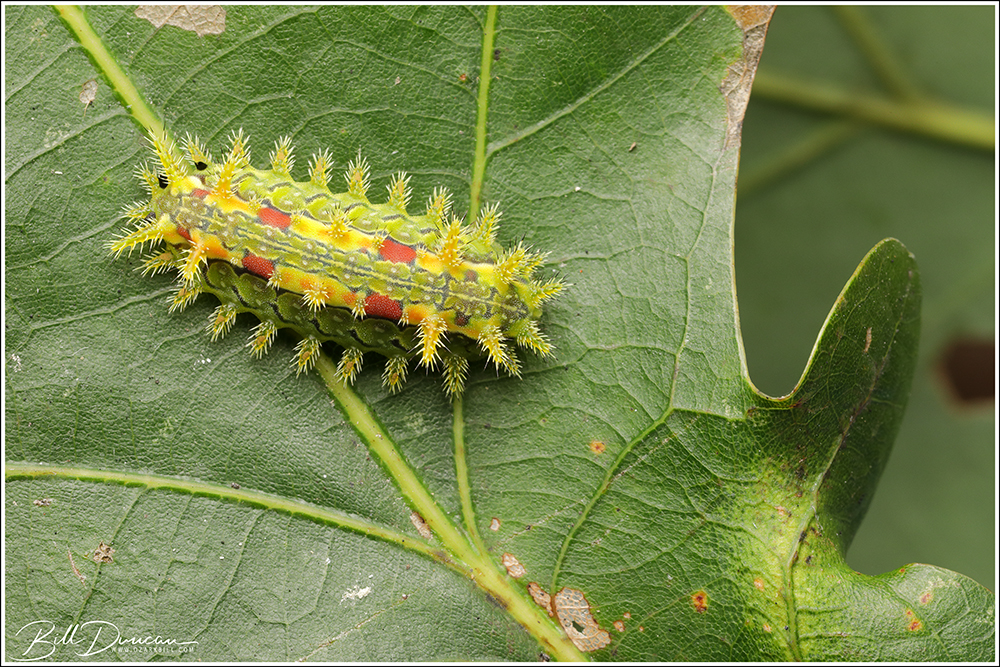
The highly variable stinging rose slug (Parasa indetermina) is always a welcome find.
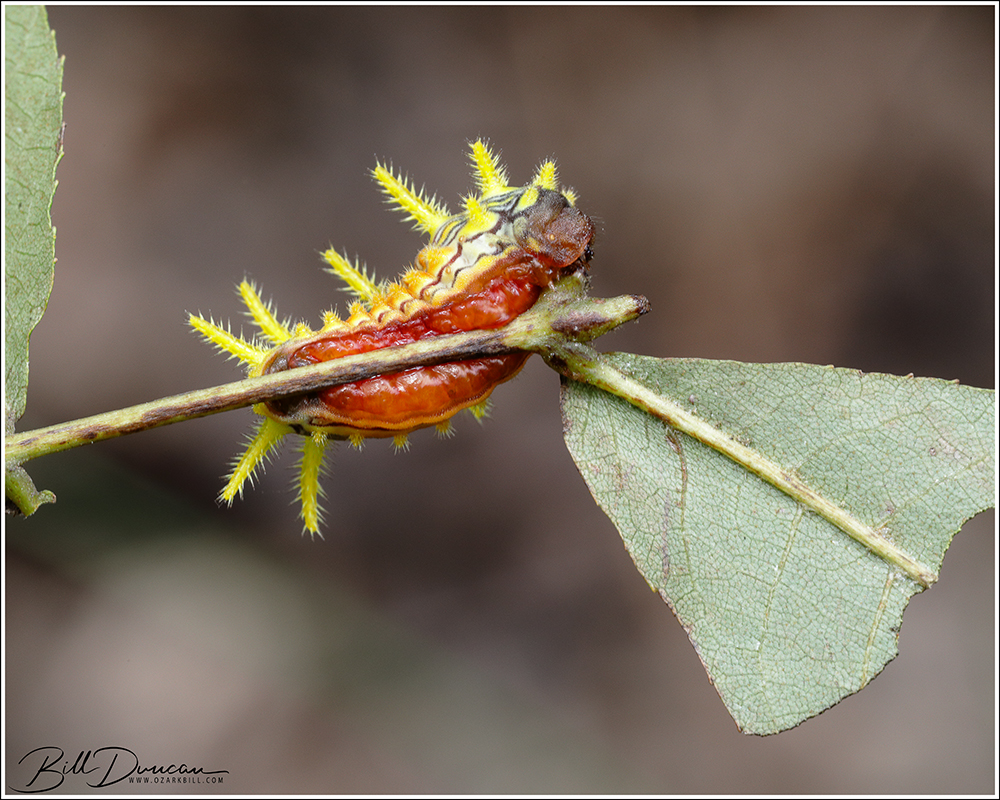
The same species pictured above, here showing its bright red underbelly.
I found this spiney oak slug (Euclea delphinii) by searching the undersides of oak leaves at Babler State Park in mid-September.
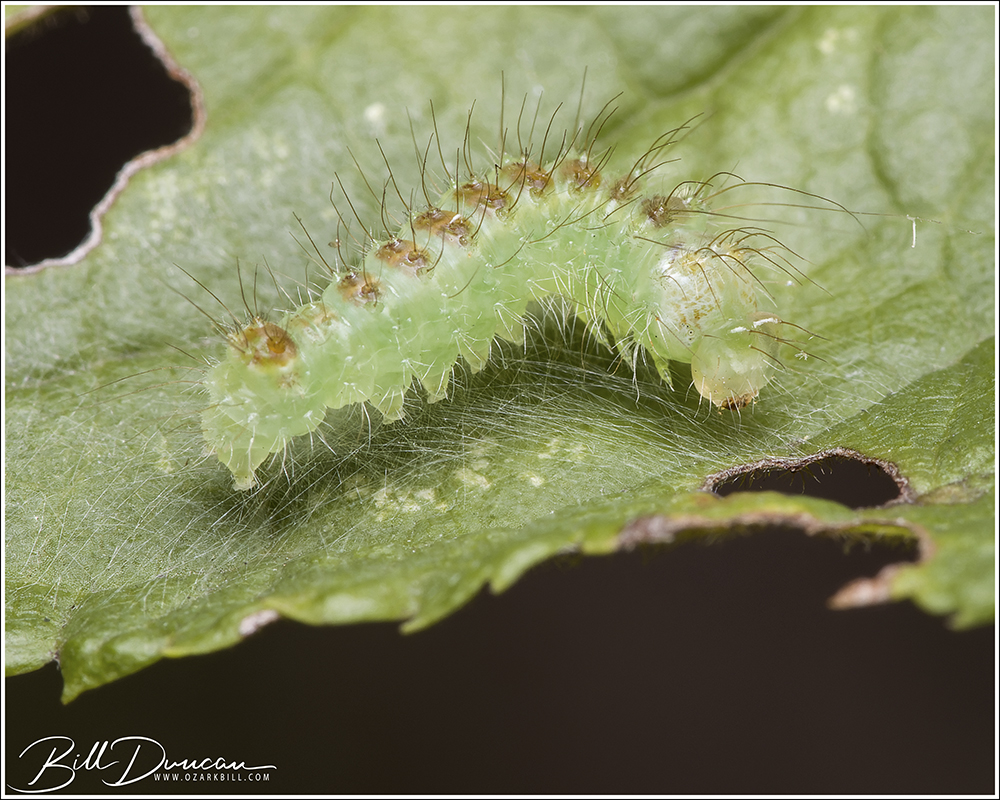
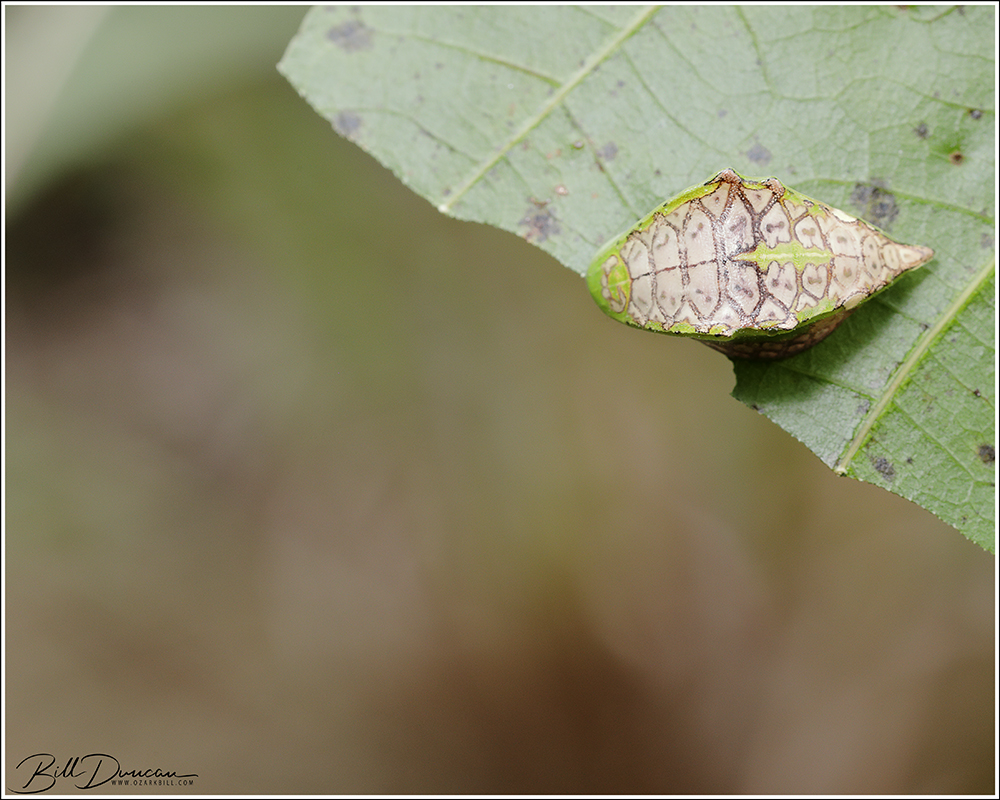
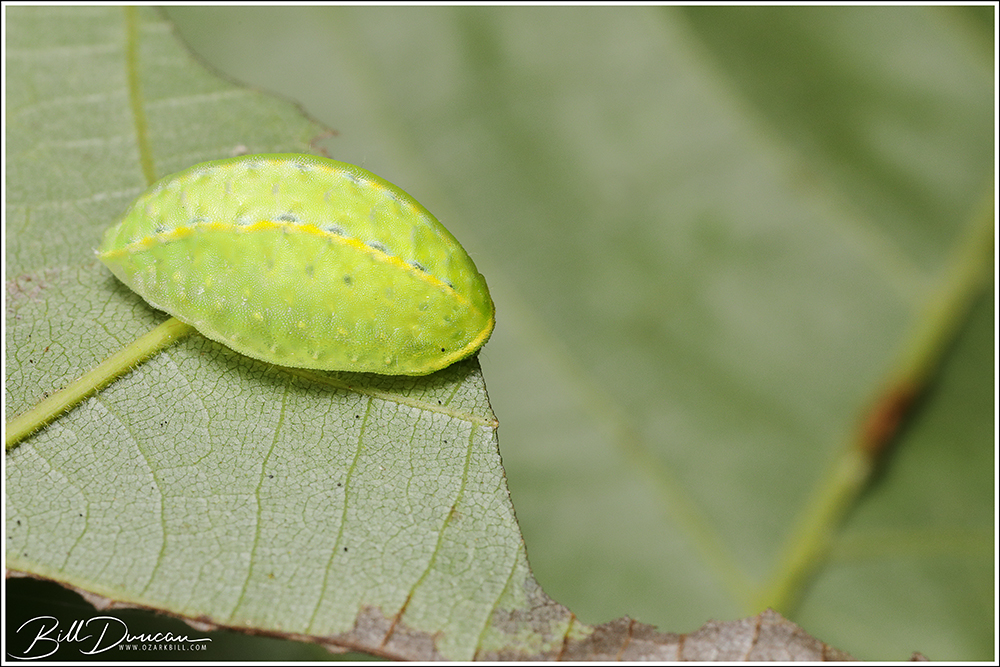
The skiff moth (Prolimacodes badia) cats are highly variable, ranging from nearly a complete uniform green to being more decorated like this individual.
Here is the same individual as above, showing more of its interesting “senescent leaf” patterning.
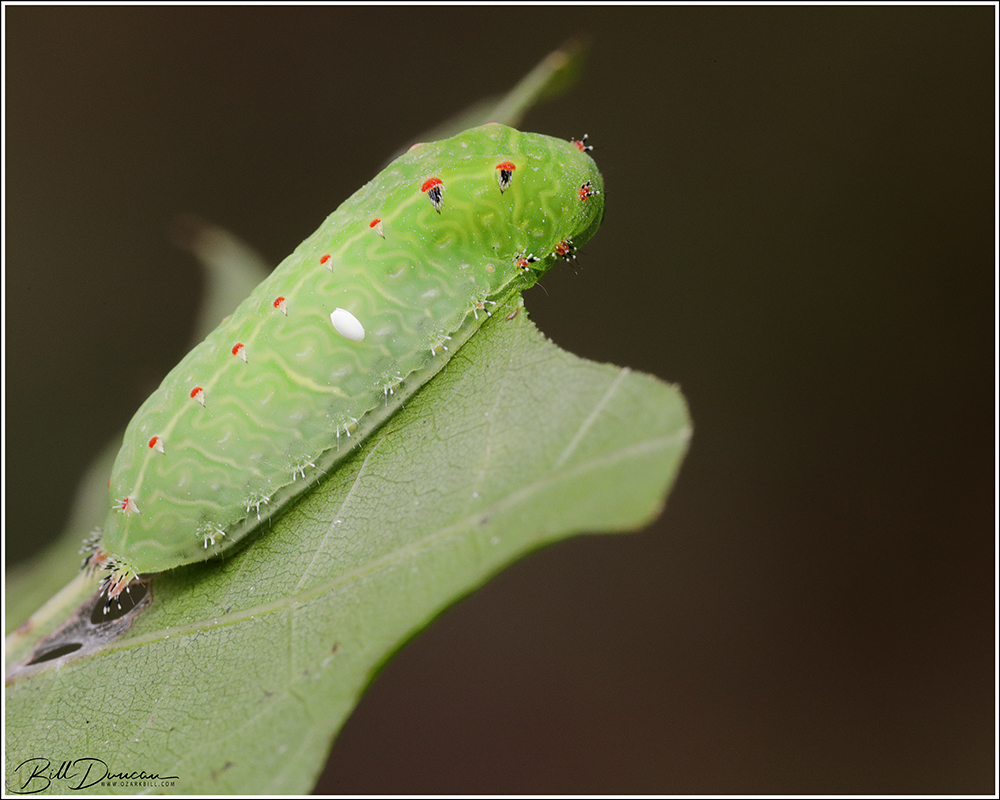
A very common site while looking for slug moth cats, this Nasan’s slug moth (Natada nasoni) caterpillar has the egg of a tachinid fly on it. Most likely a death sentence for the caterpillar if the egg does hatch and the parasitoid larvae invades its host.
Only my second find of this species, this inverted-y slug (Apoda y-inversum) was found at Weldon Spring CA in mid-September.
Thanks for the visit and wishing you a great 2021 filled with more insects! -OZB