"What a thousand acres of Silphiums looked like when they tickled the bellies of the buffalo is a question never again to be answered, and perhaps not even asked." -Aldo Leopold
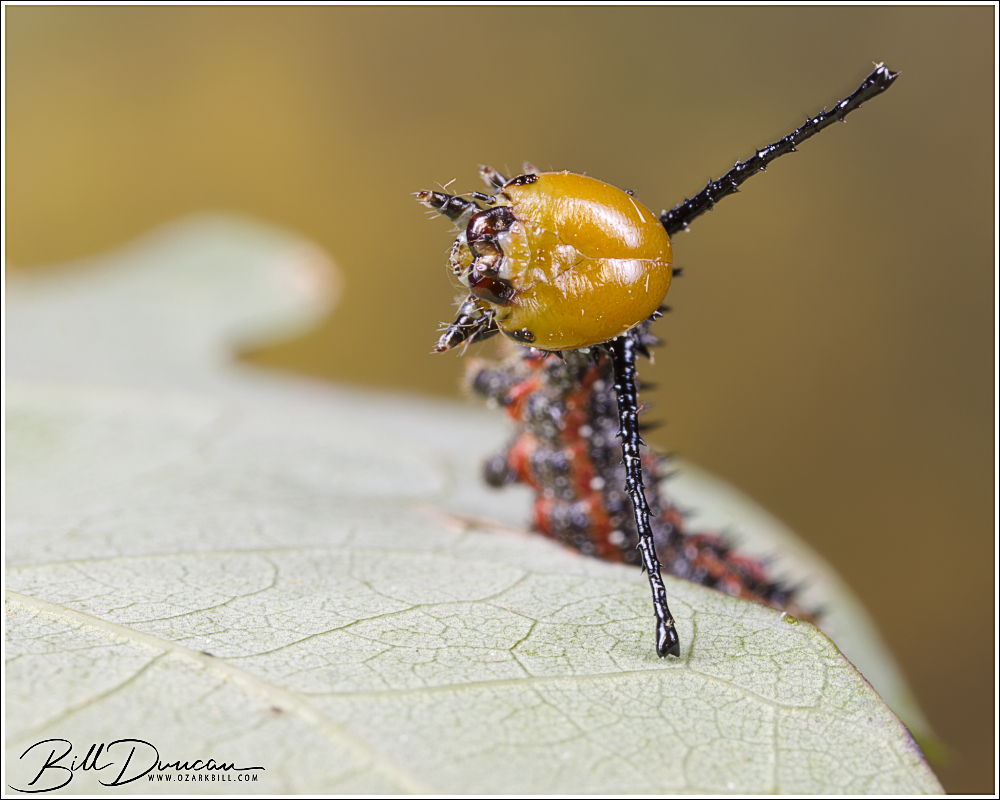
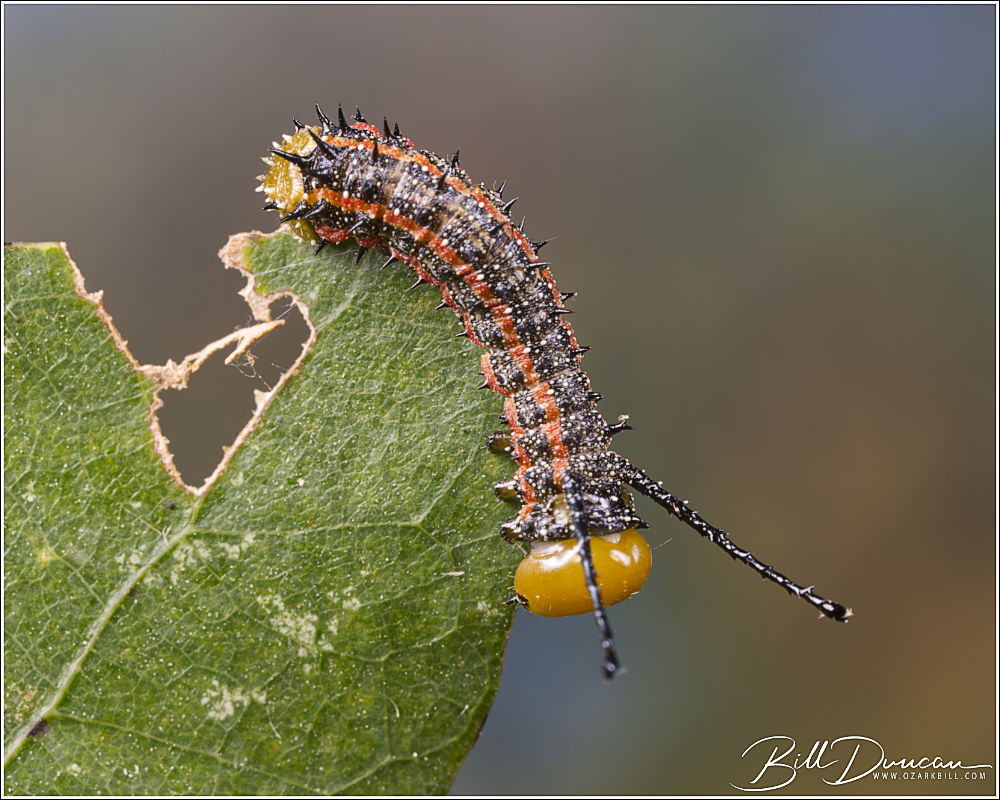
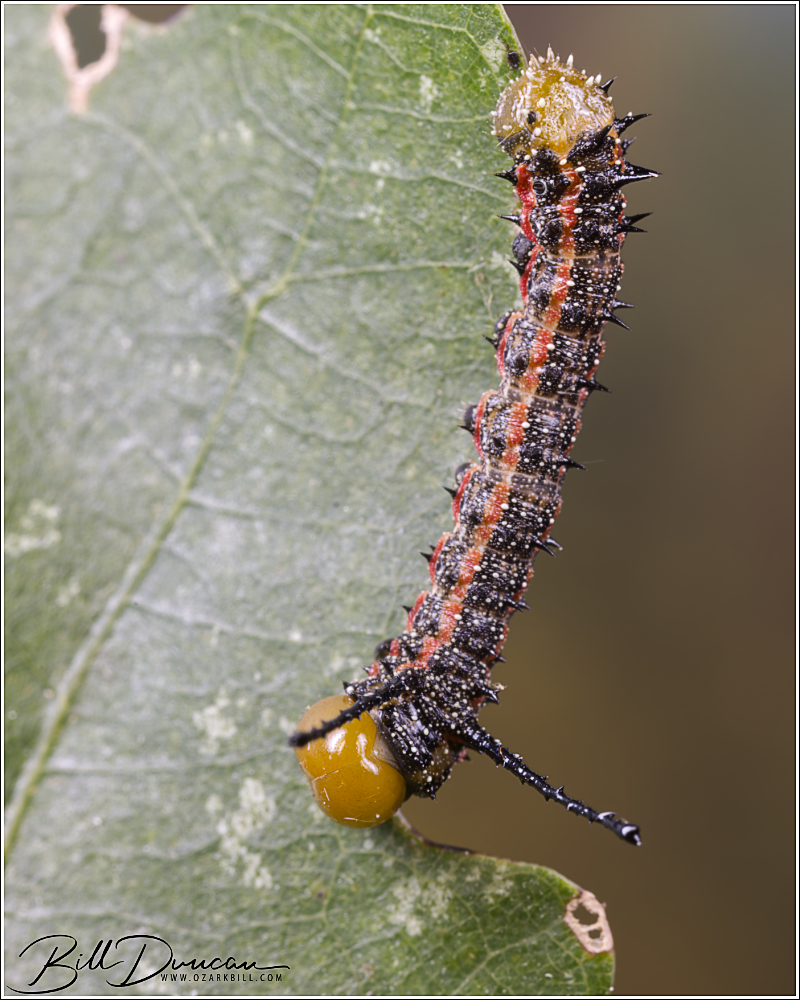
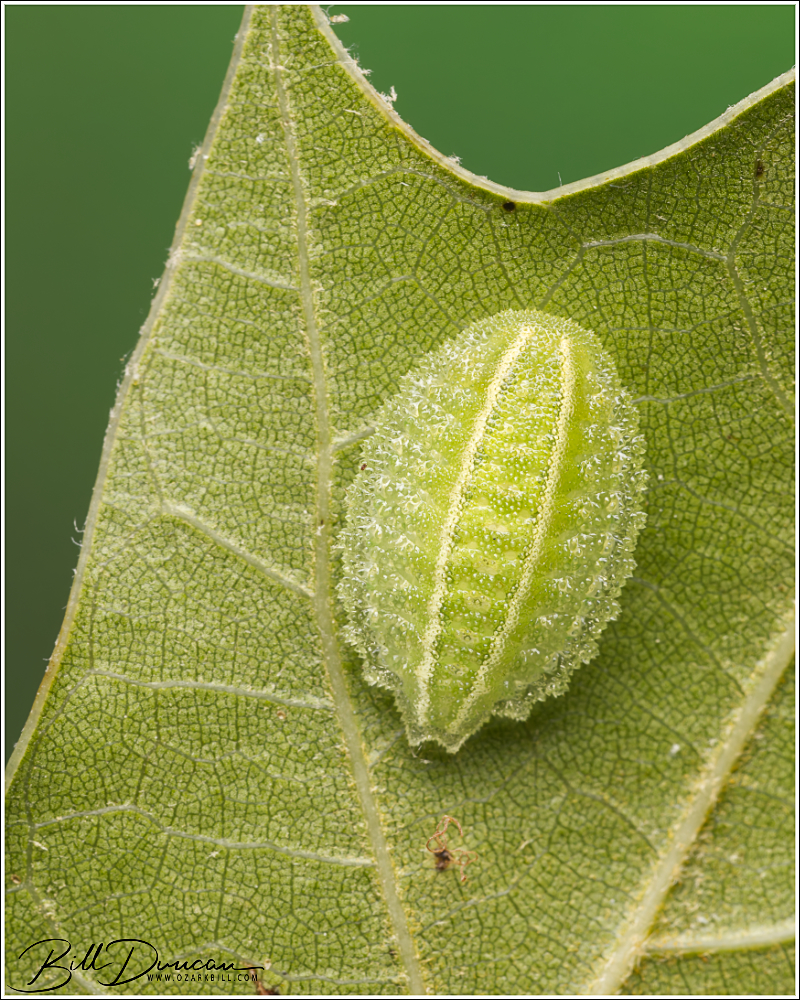
Pink-striped Oakworm Moth Anisota virginiensis fam. Saturniidae (Hodges#7723) Host plant: Found on white oak (Quercus alba) Date found: 19, Sep, 2025 Location found: Don Robinson State Park, Jefferson County, MO Notes: Photos of an early instar larvae.
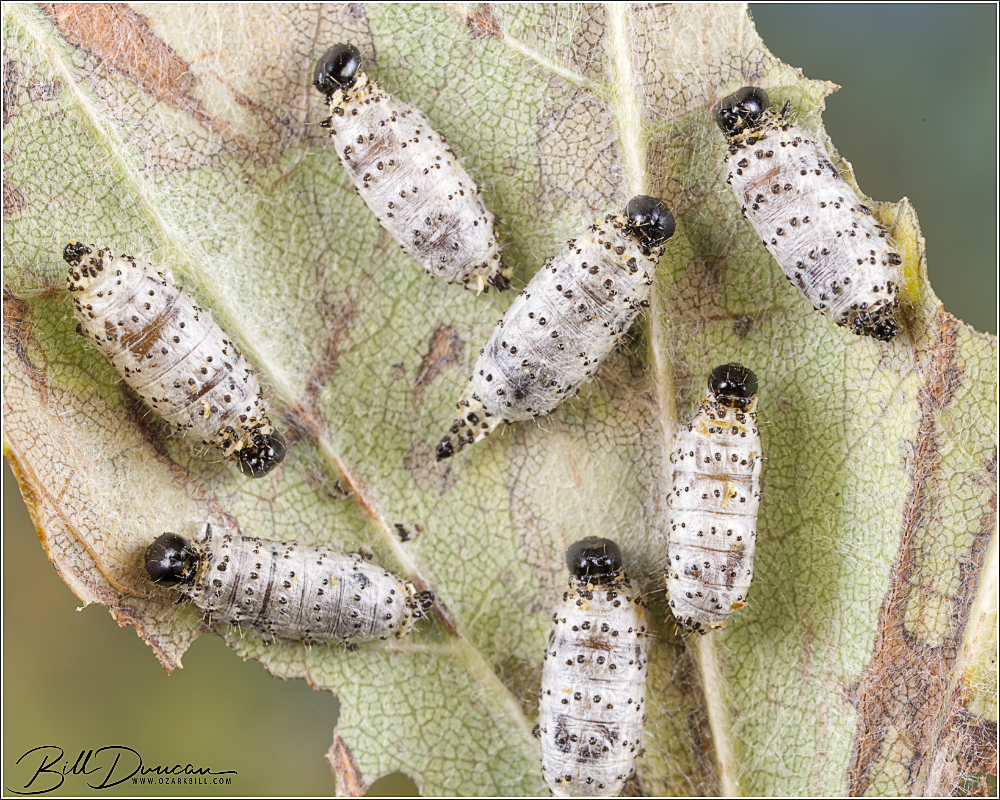
During a caterpillar hunt in mid-September at Don Robinson State Park, I came across a redbud leaf with a number of mummified Oedemasia concinna (red-humped caterpillar moth) caterpillars. These cats all appeared to be dead and were wrapped in what looks like their own silk. After close inspection, I could not find any exit holes that the potential parasitoid would have made. So, I collected the leaf and the baker’s dozen of these hosts and took them home to hopefully rear the parasitoids.
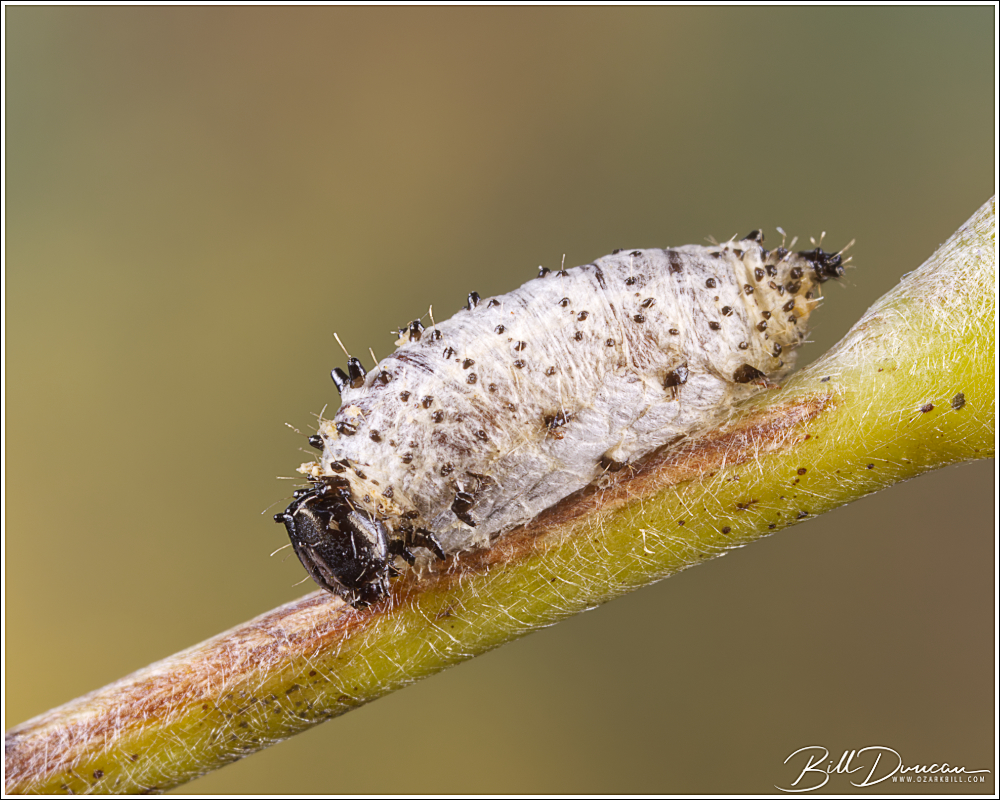
Parasitized Oedemasia concinna (red-humped caterpillar). This species is gregarious as early instars.
A closeup of one of the unfortunate caterpillars.
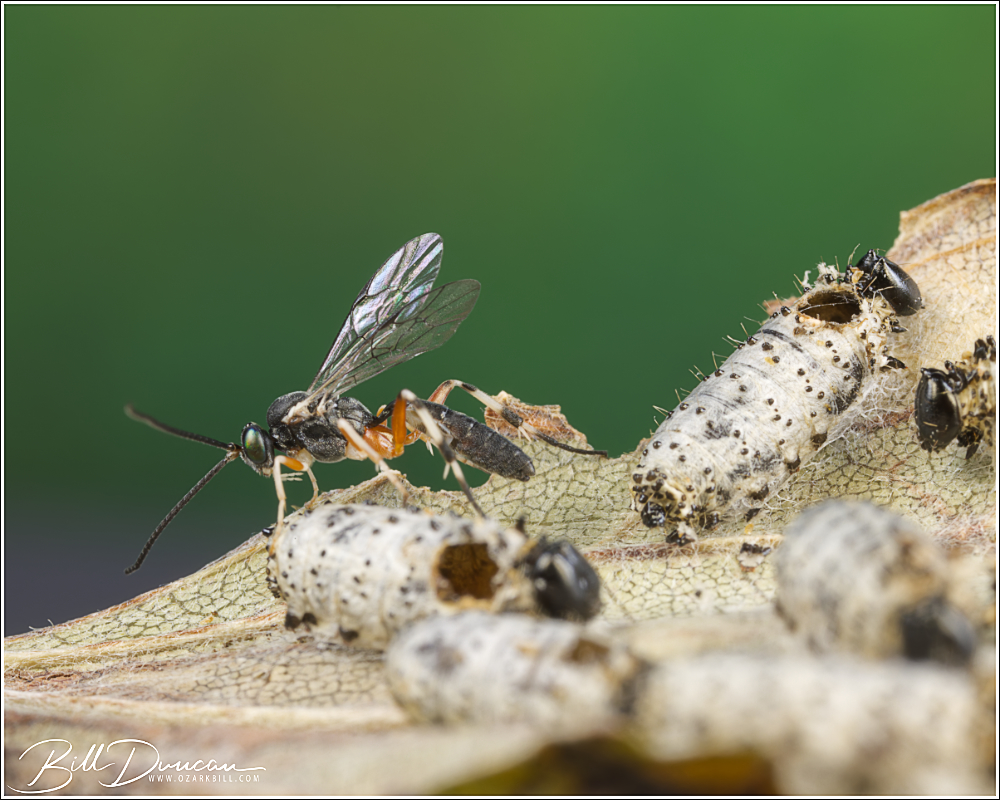
About three days later I checked the container that held these guys. To my surprise every single parasitoid had emerged from their hosts. In this case, the natural enemy is the Ichneumonid parasitoid, Hyposoter fugitivus. In the following images you can see the tiny wasps that have emerged from the even tinier caterpillars.
The ichneumonid wasp Hyposoter fugitivus recently emerged from its host, Oedemasia concinna.The ichneumonid wasp Hyposoter fugitivus recently emerged from its host, Oedemasia concinna.
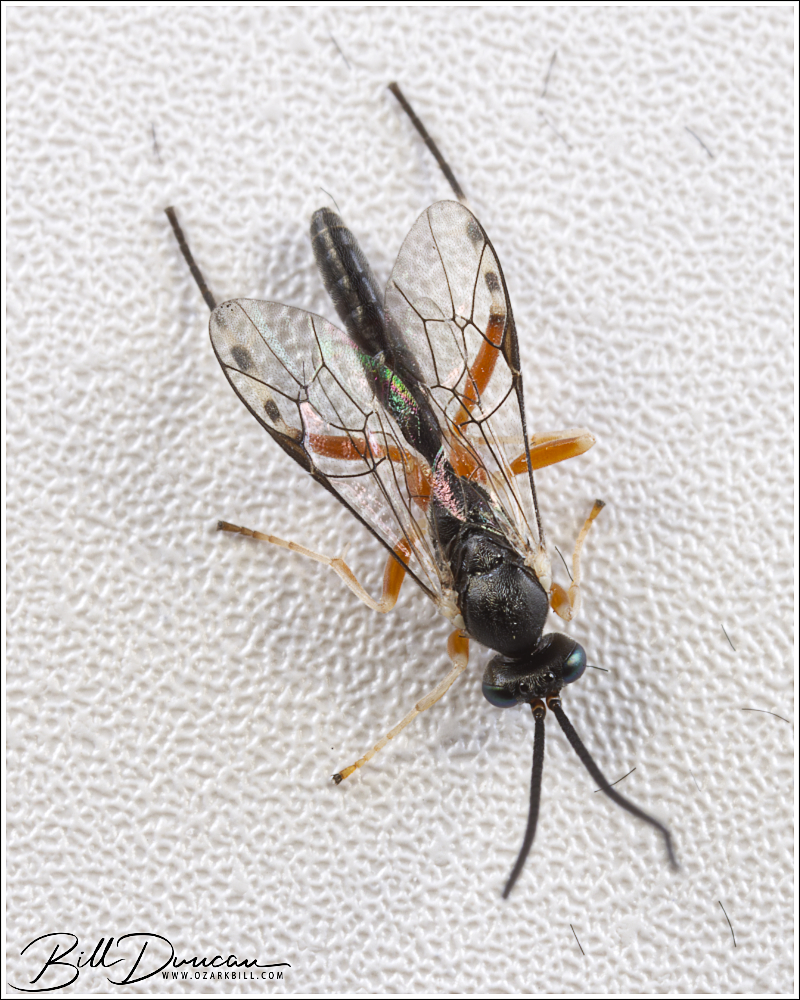
Here are some closeups of the wasps.
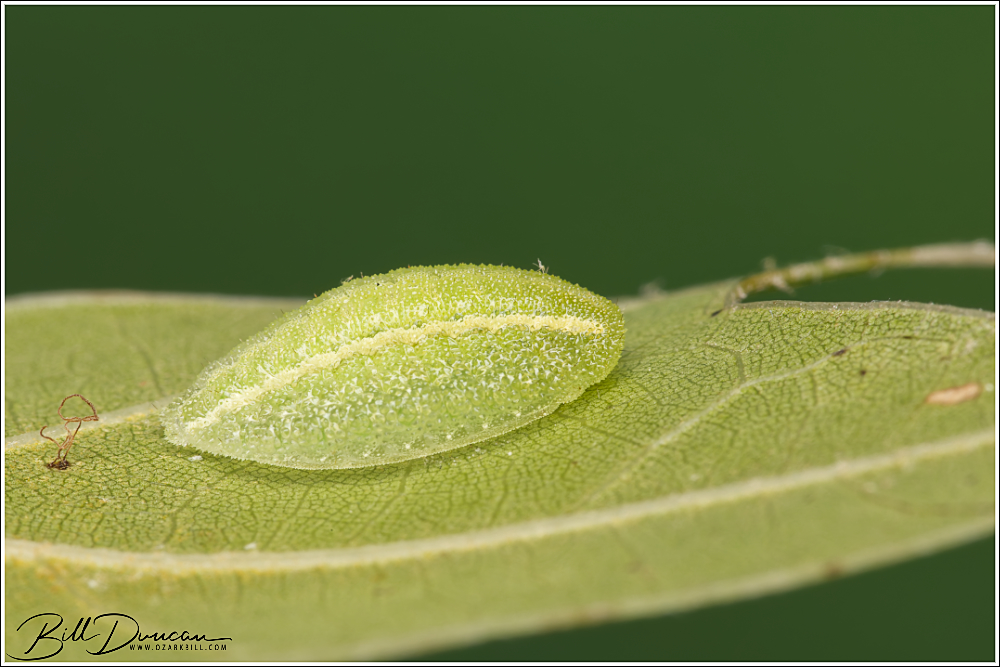
Finally, a photo of the gorgeous caterpillar they may have become if not for these natural enemies…
Oedemasia concinna (red-humped caterpillar) found at Tyson Research Center, St. Louis County, MO.
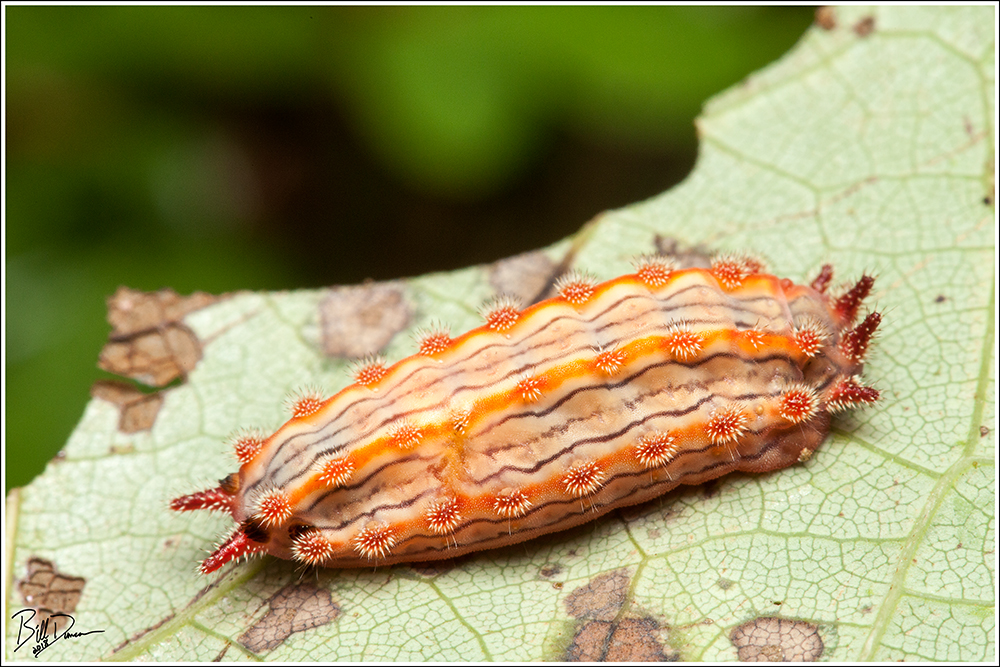
Shagreened Slug Moth Apoda biguttata fam. Limacodidae (Hodges#4669) Host plant(s): pin oak (Quercus palustris), red oak (Quercus sp.) Date(s) and location(s): 31 Aug, 2025 – Tyson Research Center, St. Louis County, MO; 19 Sep, 2025 – Don Robinson State Park, Jefferson County, MO Notes: Like most of the limacodids seem to be, this species can be found in a wide variety of habitats and utilize nearly any native woody plant for hosts.
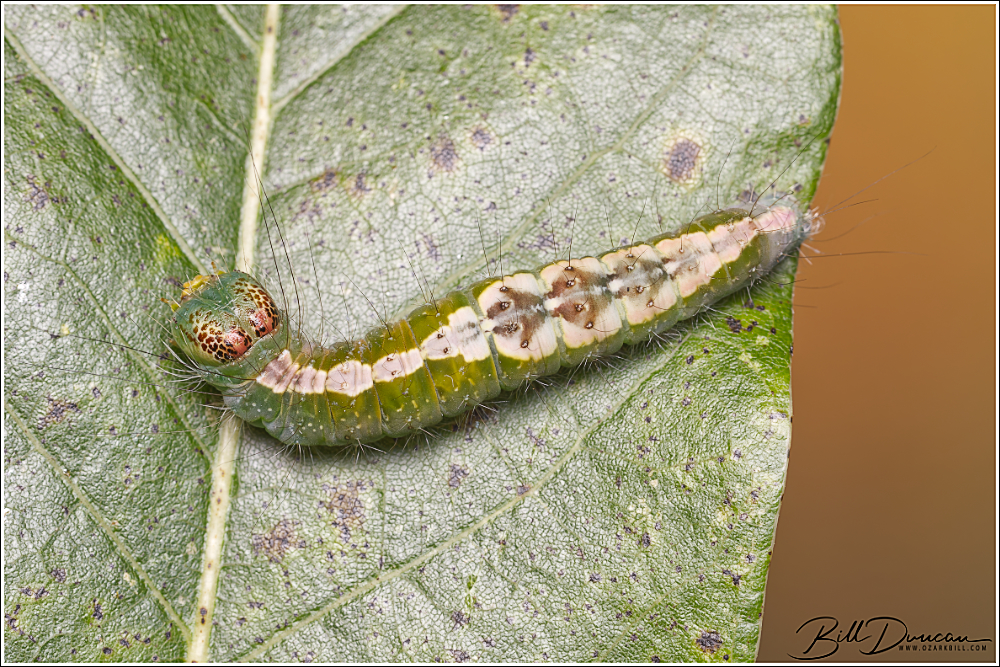
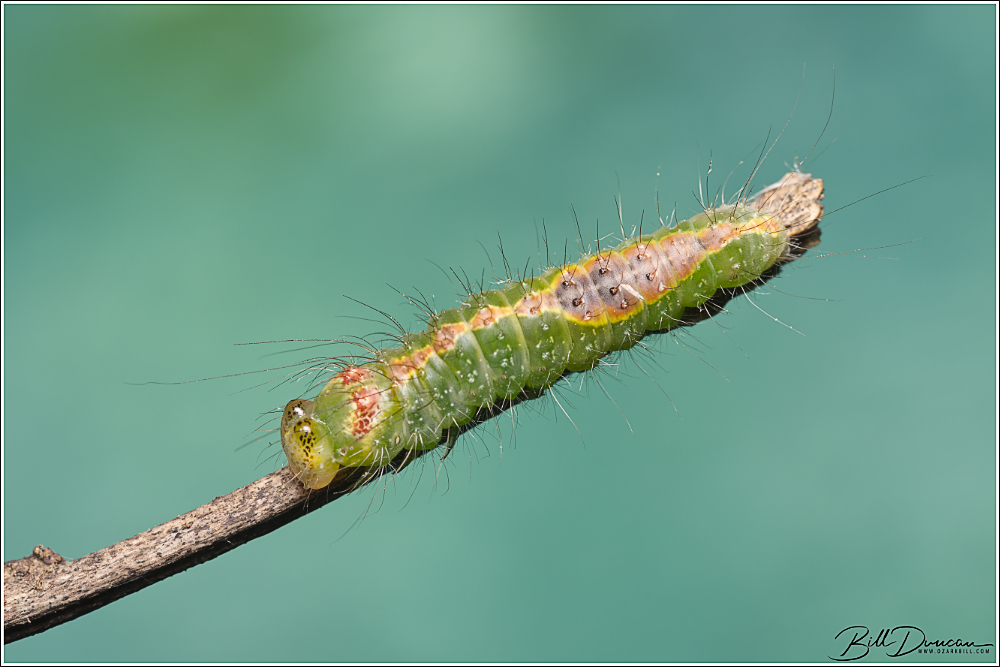
Streaked Dagger Moth Acronicta lithospila fam. Noctuidae (Hodges#9266) Host plant(s): red oak (Quercus sp.), shingle oak (Quercus imbricaria) Date(s) and location(s): 30 Aug, 2025 – Tyson Research Center, St. Louis County, MO; 6 Sep, 2025 – Babler State Park, St. Louis County, MO; 13 Sep, 2025 – Don Robinson State Park, Jefferson County, MO Notes: This species host primarily on Fagaceae (oaks, beech) and is stunning in both larval and adult forms.
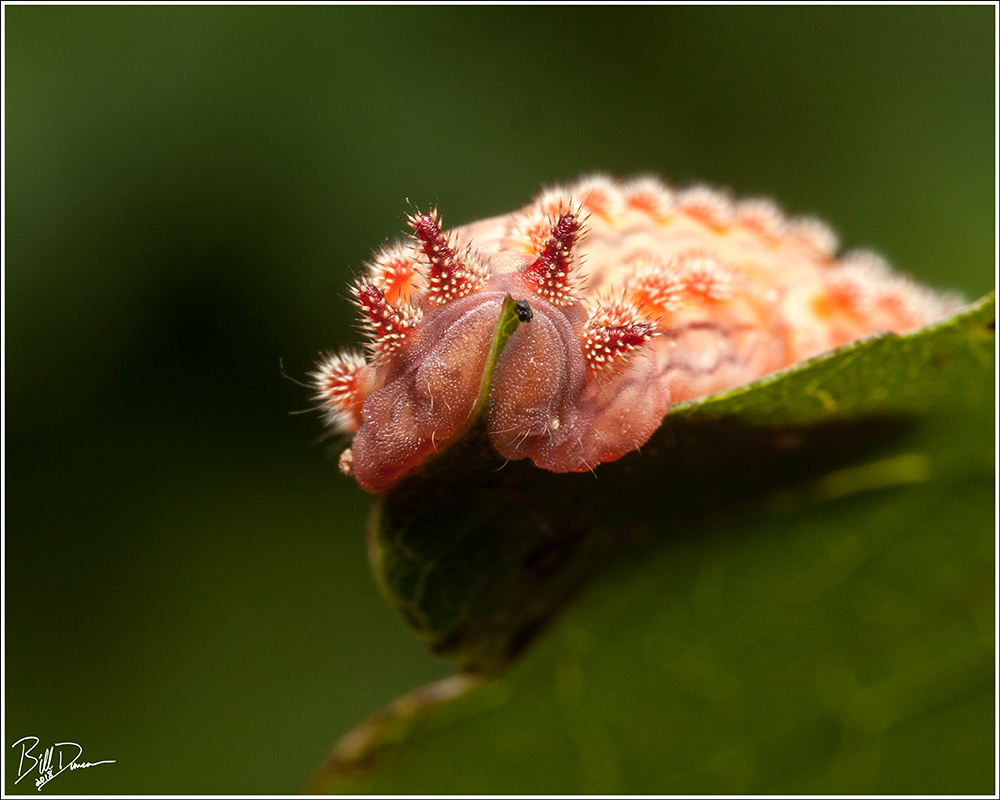
The WGNSS Nature Photography Group met on September 1, 2018 at Don Robinson State Park in Jefferson County, MO, with the goal of finding slug moth caterpillars and whatever other macro subjects of interest we could find. Overall, I think we had good fortune on this hot and muggy, late-summer day, finding quite a few interesting caterpillars. The slug moth caterpillars were a little scarce, but we did find a little something extra special – the pin-striped vermilion slug moth (Monoleuca semifascia) (Hodges # 4691). In four summers of looking for slug cats, this is the first one I have seen. It is a southern species and I assumed it would need to be found in the south-western part of our state where the open barren woodlands and savanna type environments this species prefers are more common.
Slug cats can be found on virtually any species of woody plant in the state. Although oaks and hickories seem to be the preferred host plants, this animal was found on an eastern redbud (Cercis canadensis).









 A Thousand Acres of Silphiums