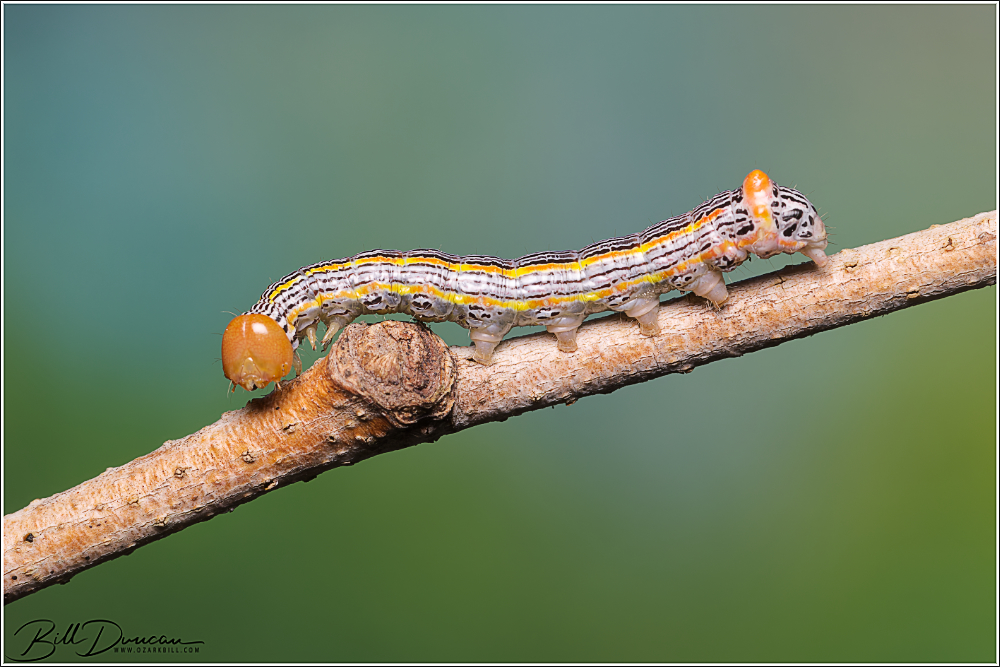
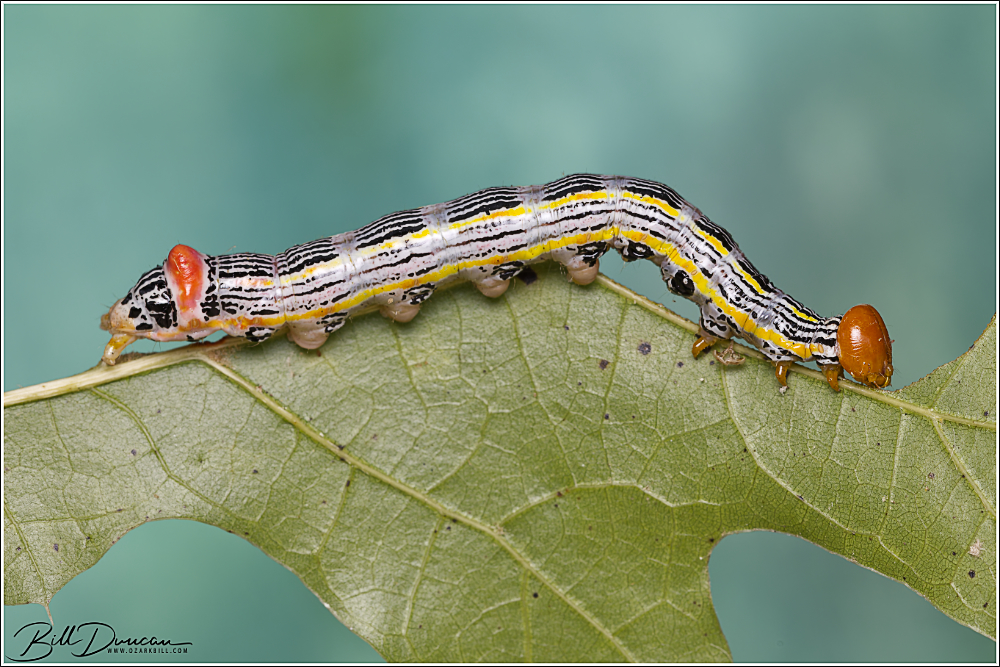
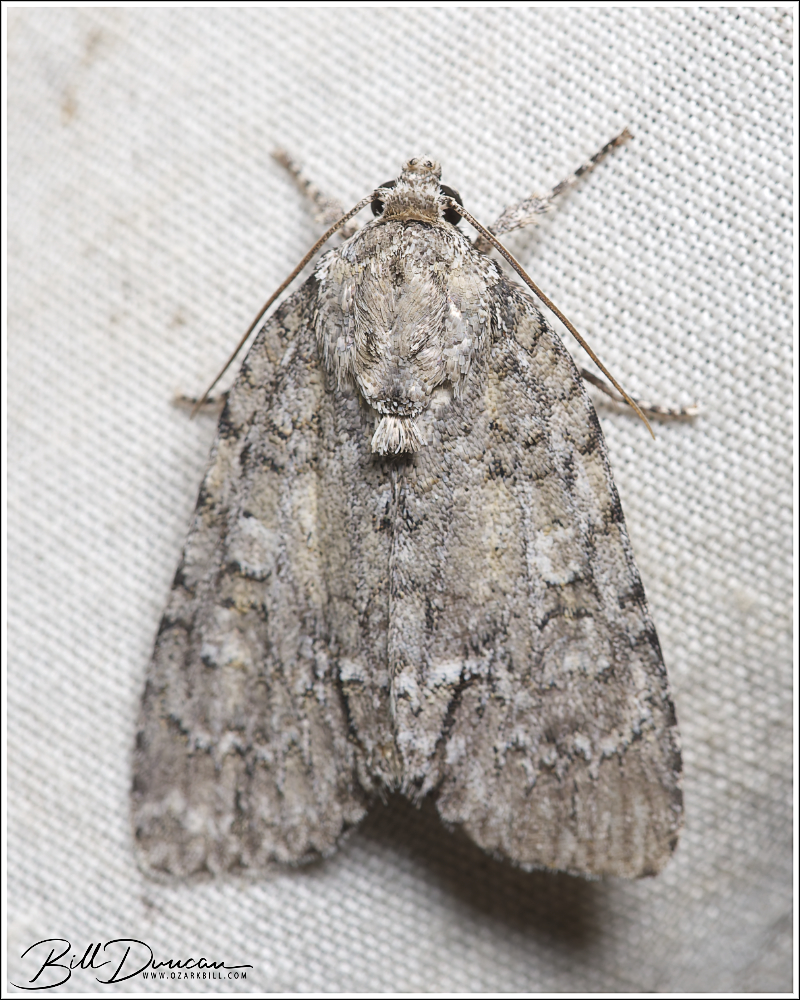
2025 Caterpillar Season – Humped Oakworm

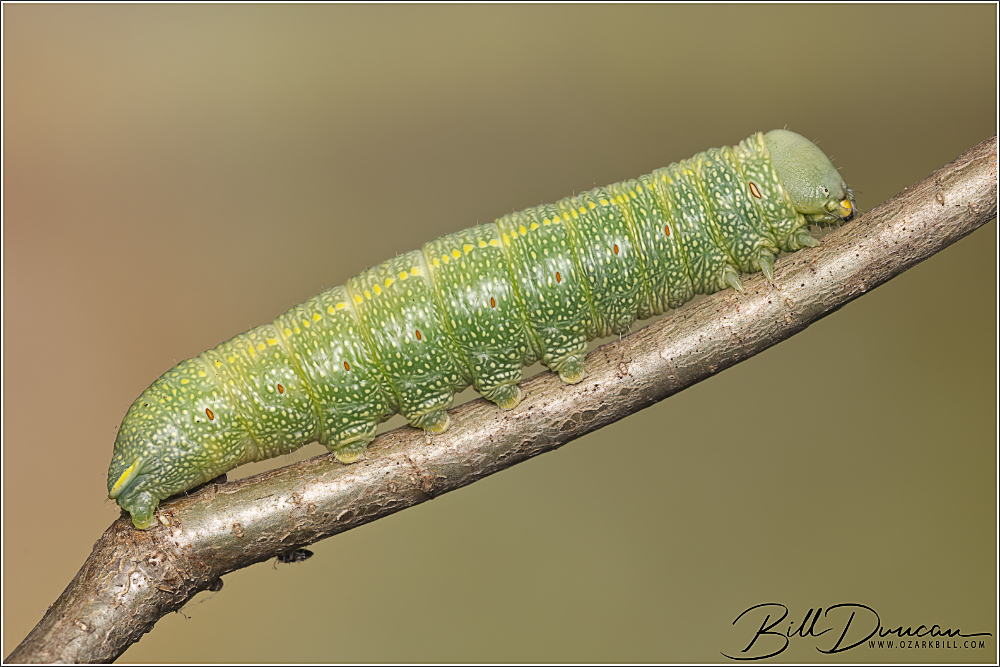
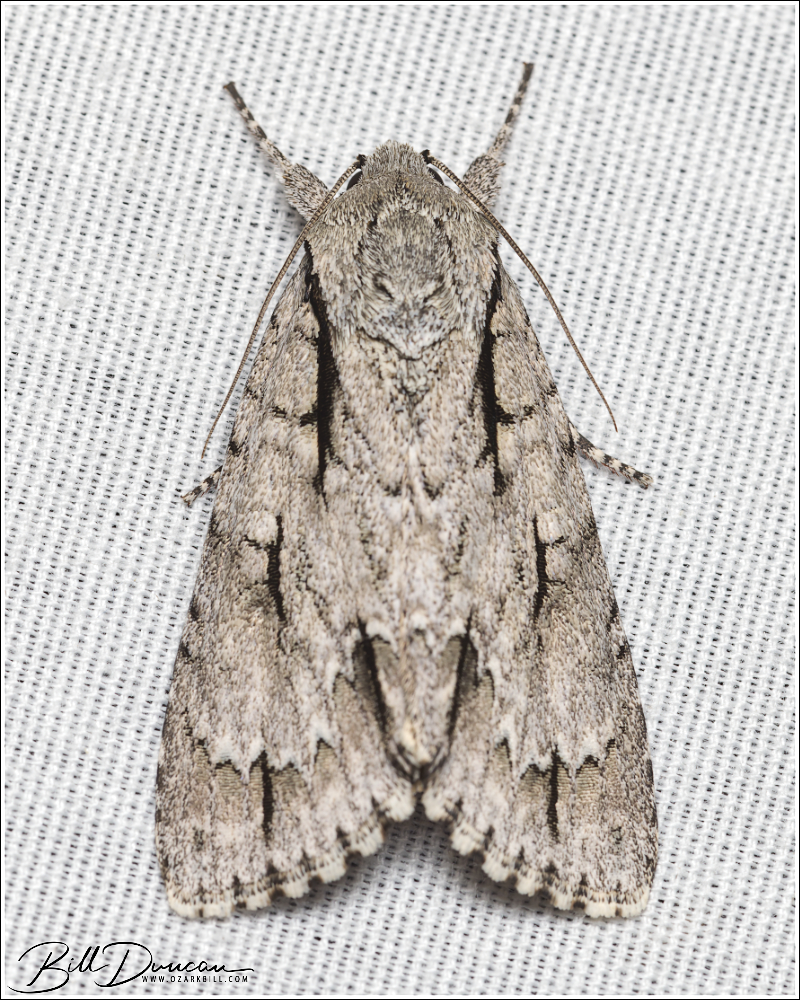
Humped Oakworm Moth
Symmerista sp. fam. Notodontidae
Host plant(s): Found on oak (Quercus sp.)
Date(s) and location(s): 18 September, 2025 – Council Bluff Lake, Iron County, MO; 27-September, 2025 – Caney Mountain Conservation Area, Ozark County, MO
Notes: Caterpillars of S. canicosta (red-humped oakworm) and S. albifrons (white-headed prominent) are indistinguishable as larvae and are so similar as adults that the only way to distinguish the two is by dissecting the genitalia. Both species are found in Missouri and both feed on the same host plants – beech, chestnut and oaks (any members of the Fagaceae).

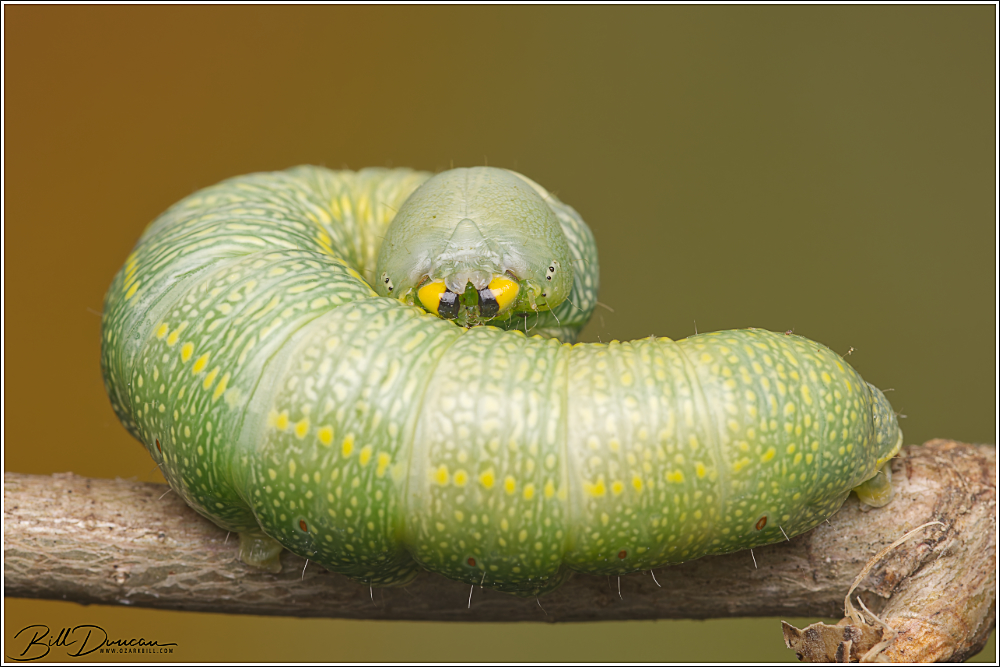
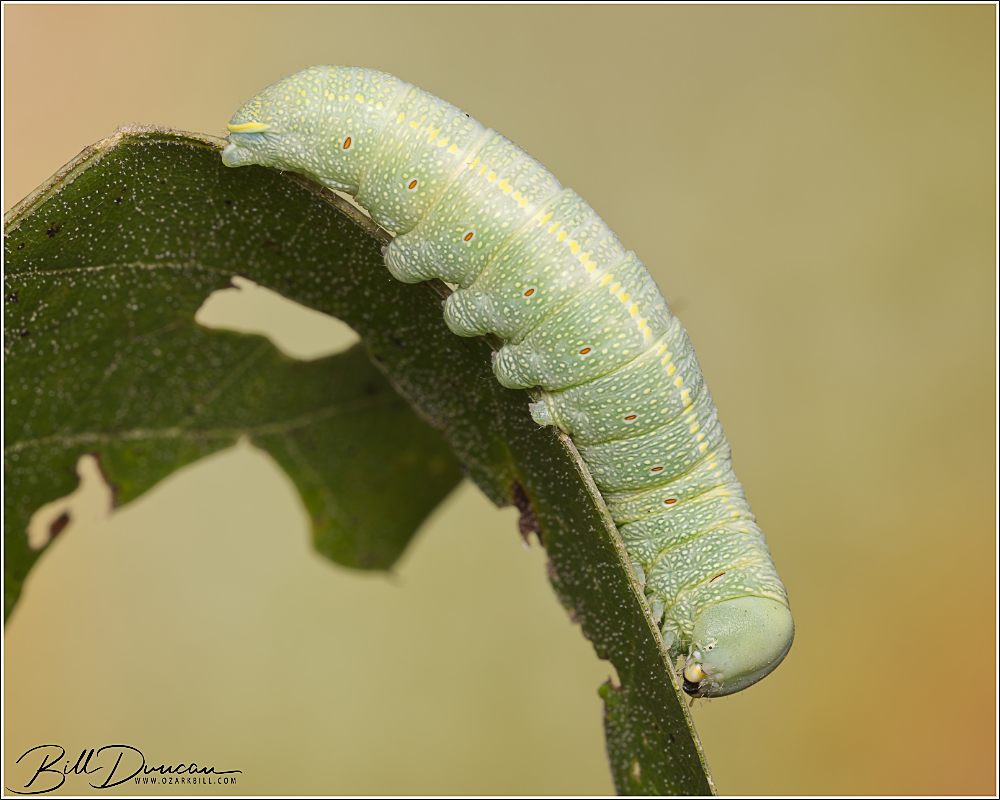
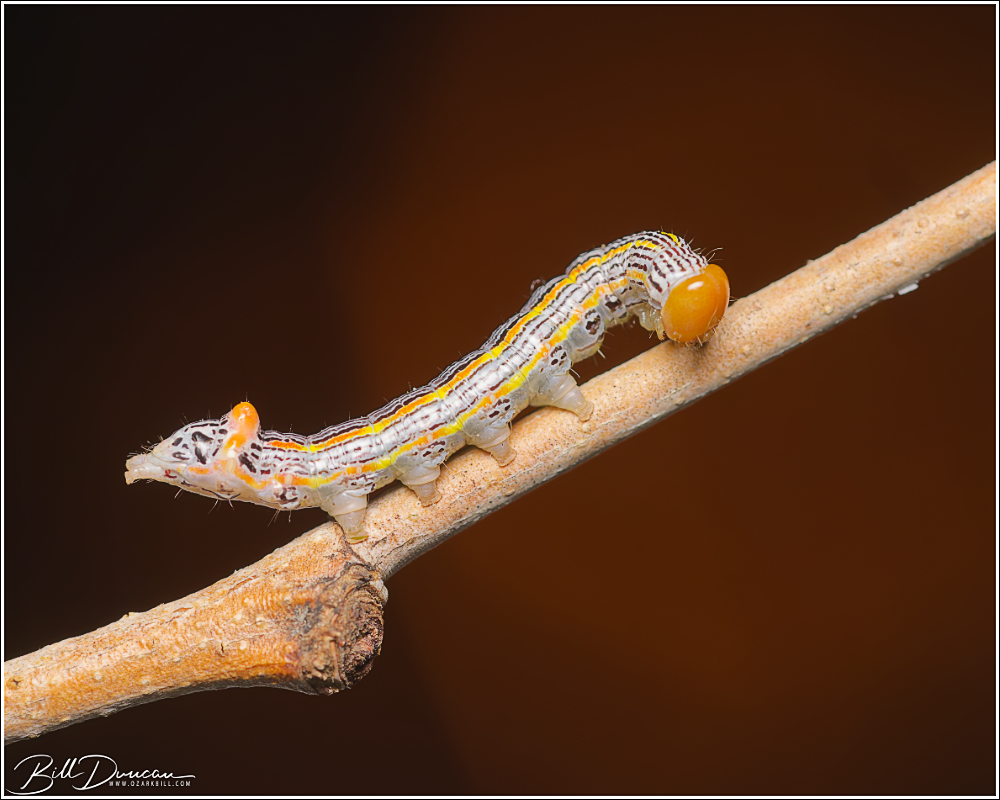
2025 Caterpillar Season – White-dotted Prominent

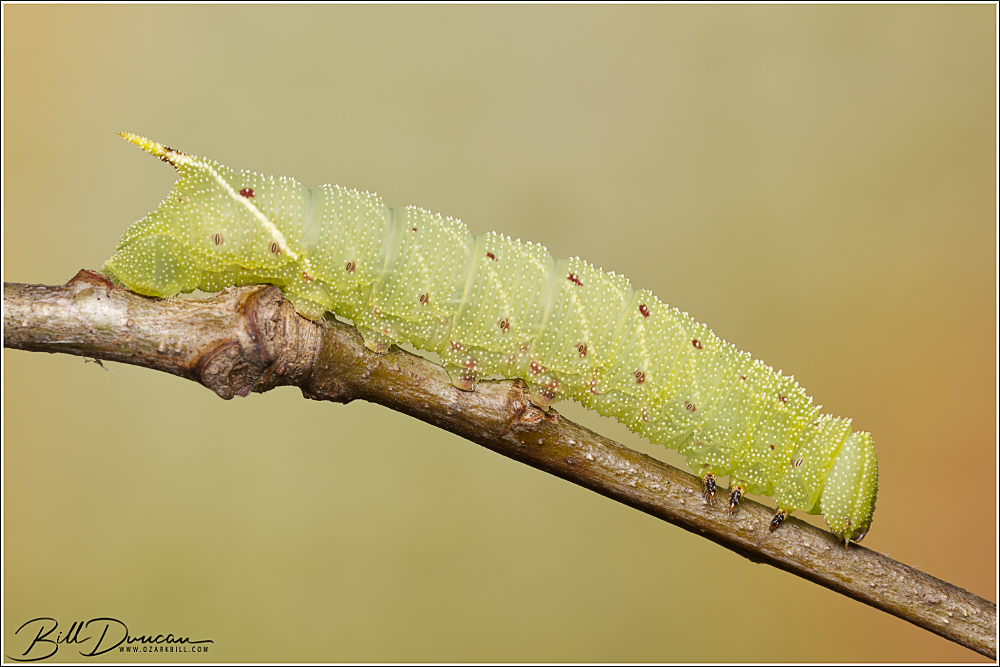
White-dotted Prominent
Nadata gibbosa fam. Notodontidae (Hodges#7915)
Host plant(s): Found on white oak (Quercus alba)
Date(s) and location(s): 25 September, 2025 – Council Bluff Lake, Iron County, MO
Notes: When threatened, caterpillars of this species curl their heads over their bodies exposing their large yellow, black-tipped mandibles.

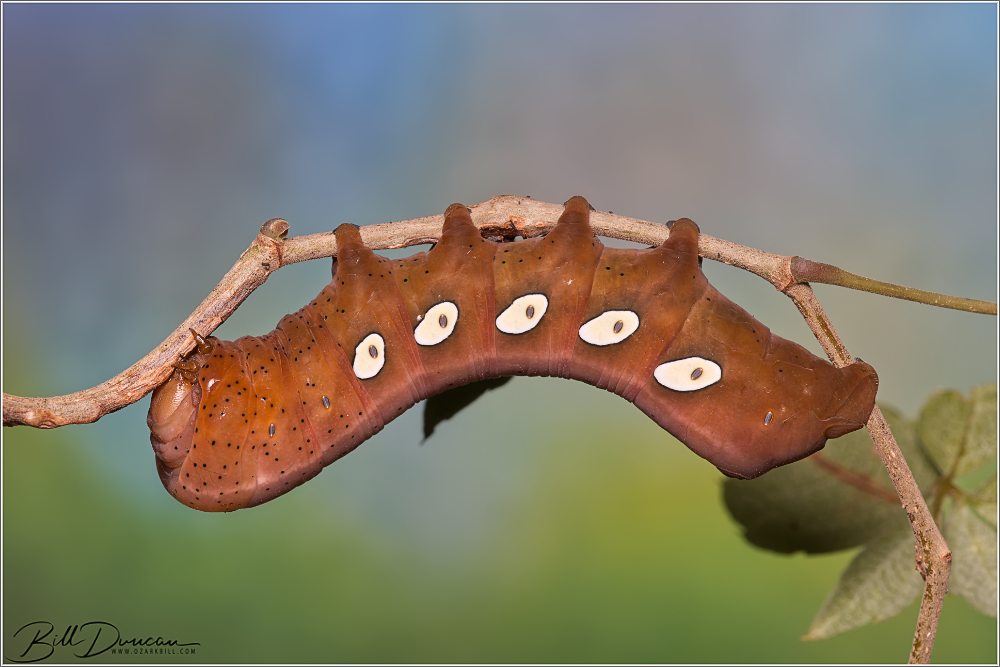
2025 Caterpillar Season – Blinded Sphinx

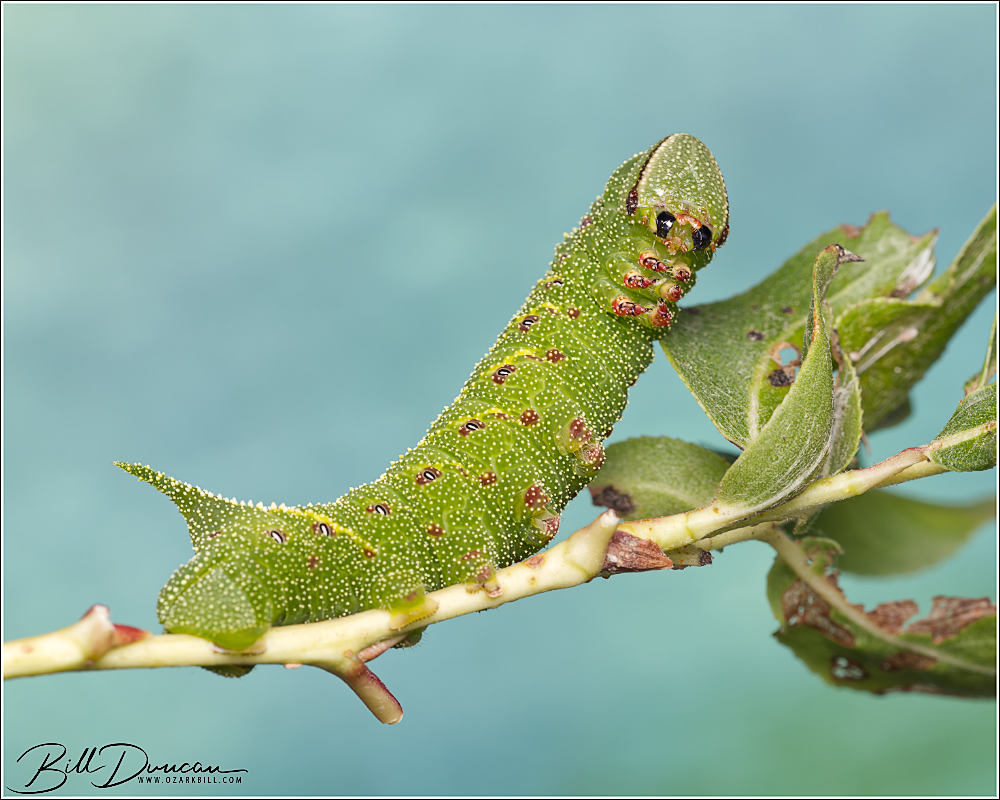
Blinded Sphinx
Paonias excaecata fam. Sphingidae (Hodges#7824)
Host plant(s): Found on willow (Salix sp.)
Date(s) and location(s): 17 September, 2025 – Creve Coeur Lake Park, St. Louis County; 18-September, 2025 – Council Bluff Lake, Iron County, MO
Notes: I collected one of these to rear that has now pupated. Hopefully I will find a fantastic adult in the spring.

2025 Caterpillar Season – Eastern White-blotched Heterocampa

Eastern White-blotched Heterocampa
Heterocampa pulverea fam. Notodontidae (Hodges#7990.1)
Host plant(s): Found on red oak sp. (Quercus sp.)
Date(s) and location(s): 18 Sep, 2025 – Council Bluff Lake, Iron County, MO
Notes: As great of a resource as Wagner’s Caterpillars of Eastern North America has been for me, I have to keep reminding myself that it was published in 2005. Taxonomists have been hard at work on a number of taxa since then, and I often struggle with how to find out whether a particular taxon has changed. It recently came to my attention that today’s species, once considered a subspecies of Heterocampa umbrata, was revised in 2021 and given specific status. The common names for these two species are confusing. H. umbrata, which is found in Florida and southeastern Georgia, keeps its name of white-blotched heterocampa, while H. pulverea, which is found throughout eastern U.S. and Canada is now called eastern white-blotched heterocampa.

Council Bluff Lake Lepidopterans – The Adults

Going back to the August 16th WGNSS trip to Council Bluff Lake. After a day (and night) of caterpillar hunting, a couple of us set up light stations to attract nocturnal insects. Here are a few of the moths that I photographed from this evening.

Erebidae

Allotria elonympha (false underwing Hodges#8721)

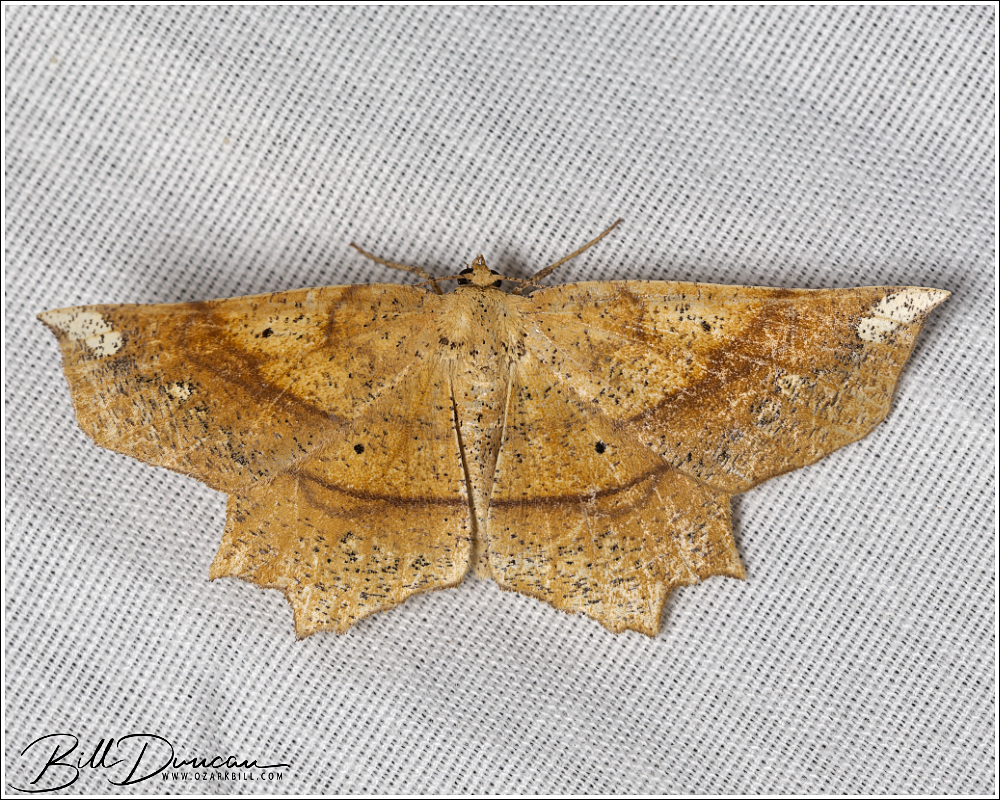
Geometridae

Euchlaena amoenaria (deep yellow euchlaena, Hodges#6733)

Noctuidae

Acronicta immodica (medium oak dagger. Hodges#9242.1)
Acronicta lobeliae (greater oak dagger, Hodges#9238)

Click here to see photos of the greater oak dagger caterpillar

Chytonix palliatricula (cloaked marvel, Hodges#9556)
Polygrammate hebraeicum (The Hebrew, Hodges#9285)

Click here to see photos of the Hebrew caterpillar

Acronicta funeralis (funerary dagger/paddle caterpillar, Hodges#9221)

Click here to see photos of the paddle caterpillar (final instar)
Click here to see photos of the paddle caterpillar (mid-instar)

Notodontidae

Cecrita biundata (wavy-lined prominent, Hodges#7995)
Furcula borealis (white furcula, Hodges#7936)

Saturniidae

Antheraea polyphemus (polyphemus moth, Hodges#7757)

Click here to see a photo of the caterpillar of the polyphemus moth caterpillar

Sphingidae

Darapsa myron (Virginia creeper sphinx, Hodges#7885)

Click here to see a photo of the Virginia creeper sphinx moth caterpillar

2025 Caterpillar Season – Red-washed Prominent

Red-washed Prominent
Oligocentria semirufescens fam. Notodontidae (Hodges#8012)
Host plant: Found on redbud (Cercis canadensis)
Date found: 16, Aug, 2025
Location found: Council Bluff Lake, Iron County, MO
Notes: This was found during the WGNSS joint Entomology and Nature Photography Groups’ outing to Council Bluff Lake.

2025 Caterpillar Season – Imperial Moth

Imperial Moth
Eacles imperialis fam. Saturniidae (Hodges#7704)
Host plant: Three individuals found at this date and location: 2-redbud (Cercis canadensis), 1-sassafras (Sassafras albidum)
Date found: 16, Aug, 2025
Location found: Council Bluff Lake, Iron County, MO
Notes: This was found during the WGNSS joint Entomology and Nature Photography Groups’ outing to Council Bluff Lake.

2025 Caterpillar Season – Question Mark

Question Mark
Polygonia interrogationis fam. Nymphalidae (Hodges#4420)
Host plant: NA
Date found: 16, Aug, 2025
Location found: Council Bluff Lake, Iron County, MO
Notes: Two individuals found at this date and location. One was found on sassafras and the other on redbud. Typical hostplants include elm and hackberry. One individual pupated in contained overnight, further suggesting that both were pre-pupal and collected on plants during wandering. This was found during the WGNSS joint Entomology and Nature Photography Groups’ outing to Council Bluff Lake.

2025 Caterpillar Season – Pandora Sphinx

Pandora Sphinx
Eumorpha pandorus fam. Sphingidae (Hodges#7859)
Host plant: Virginia creeper (Parthenocissus quinquefolia)
Date found: 16, Aug, 2025
Location found: Council Bluff Lake, Iron County, MO
Notes: During its final instar, this sphinx caterpillar loses its horn and is replaced with a button (not pictured). This was found during the WGNSS joint Entomology and Nature Photography Groups’ outing to Council Bluff Lake.

2025 Caterpillar Season – Brown Panopoda

Brown Panopoda
Panopoda carneicosta fam. Erebidae (Hodges#8588)
Host plant: Found on hickory (Carya sp.)
Date found: 09 & 16, Aug, 2025
Location found: BK Leach Conservation Area, Lincoln County, MO; Council Bluff Lake, Iron County, MO
Notes: With information I have, there appears to be no easy methods to discern between larvae of Panopoda carneicosta and P. rufimargo (red-lined panopoda). However, there is suppose to be distinct differences in host preferences, with P. carneicosta showing strong preferences for hickory and other members of Juglandaceae, while P. rufimardo reportedly feed on oak and beech (Fagaceae). My identification is based on the host plants on which the cats were found.