A Few Spring Wood Warblers

Spring migration for the “land birds” is pretty much over.  As usual, I am not happy with the amount of photos I was able to get of these guys as they pass by.  But, I did enjoy every moment I got to spend trying.  Here are a few that I have gotten around to processing so far.  These were all caught at Monsanto’s World Headquarters, one of my favorite migration traps in the StL metropolitan area.

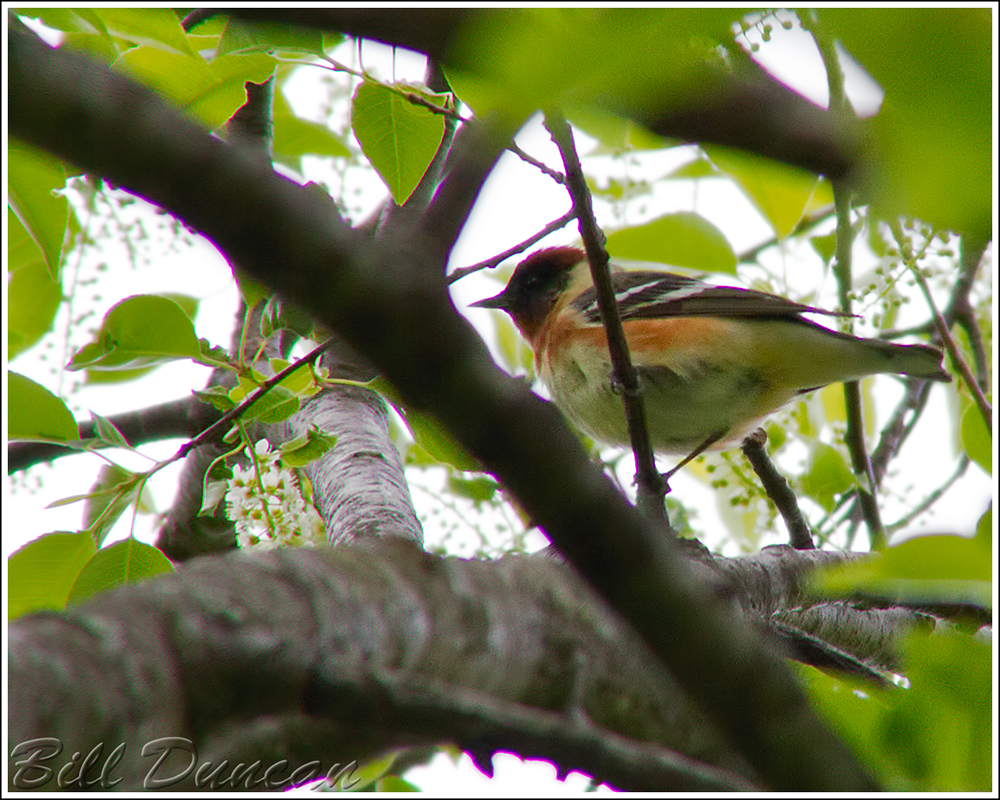
A large warbler, the Bay-breasted Warbler is a rather uncommon migrant.  The lighting was terrible in this scenario and caused a good deal of C.A. However, this was my first usable image of this species.IMG_3443

Lovers of the tree-tops, I find that Northern Parula are easily heard but more difficult to spot.  They can be found in large numbers across Missouri and do nest throughout the Ozarks.

IMG_2818

The oh so cute, Palm Warbler, or “Palmies” are one of the species I seemed to spot more often than normal this spring.  These guys are usually found on or near the ground on lower tree branches and bushes.

 IMG_2686

The Blackpoll Warbler’s migratory trek is one of the longest of all the songbirds.  These guys nest throughout the northern boreal forests and go as far as northern Alaska.  They winter in South America.

IMG_2714

 Finally, the bird pictured below is the Black and White Warbler.  More abundant and easier to spot, these birds behave much like the nuthatches – climbing up tree trunks and looking under limbs for their arthropod prey.

 IMG_3680

Ozark Bill’s Private Shangri-La

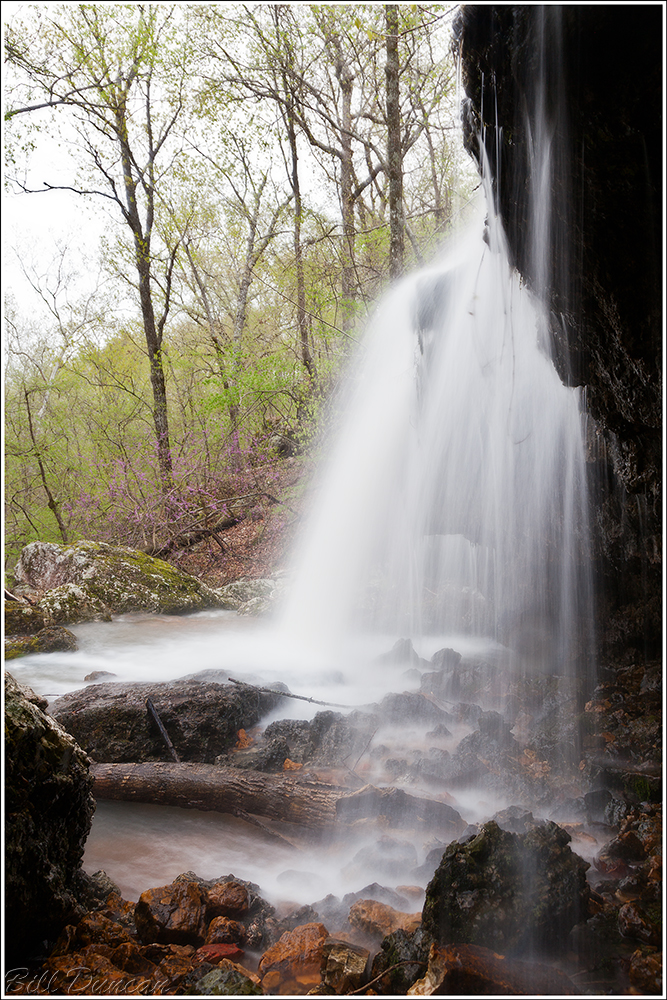
In a land of dolomite and granite, the chert-based rocks of Cowards Hollow Natural Area really stand out to the experienced Ozark traveler.  I first read about Cowards Hollow more than five years ago and had two previous and unsuccessful attempts at finding it.  Recently I had acquired some resources that helped me get a firm idea where to look and during our Big Spring break this spring Sarah and I went out to finally find it.  Literally within minutes of parking the car and heading down the trail the sky opened up and began raining.  Half-soaked, I retreated to the car and decided to try again later.  It would be about 18 hours and near five inches of rain later before I got back there the next morning.  I knew the area would be full of water and that the efforts would be worthwhile.   Here is the first look upon reaching the hollow named for the refuge it provided civil war draft dodgers.  I sure couldn’t blame anyone for preferring this place over the hell that awaited them on the battlefield or the chaos that was most of Missouri during that time.

IMG_3884

“An Ozark Shangri-La″

Technical details: Canon EOS 5D Mark II camera, EF24-105mm f/4L IS USM @ 50mm, ISO 320,  f/14, 6 sec

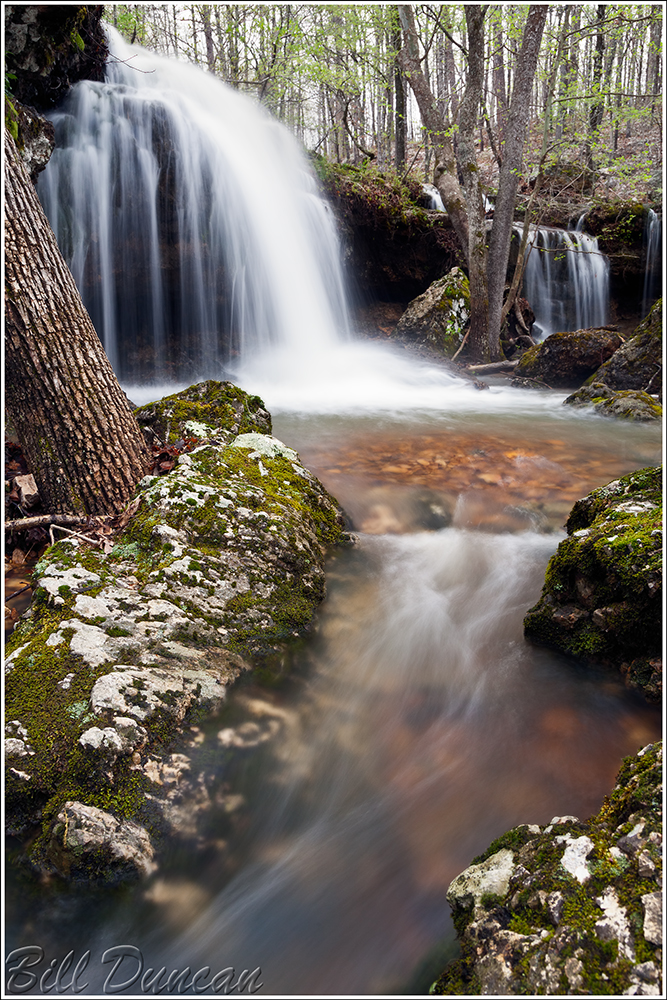
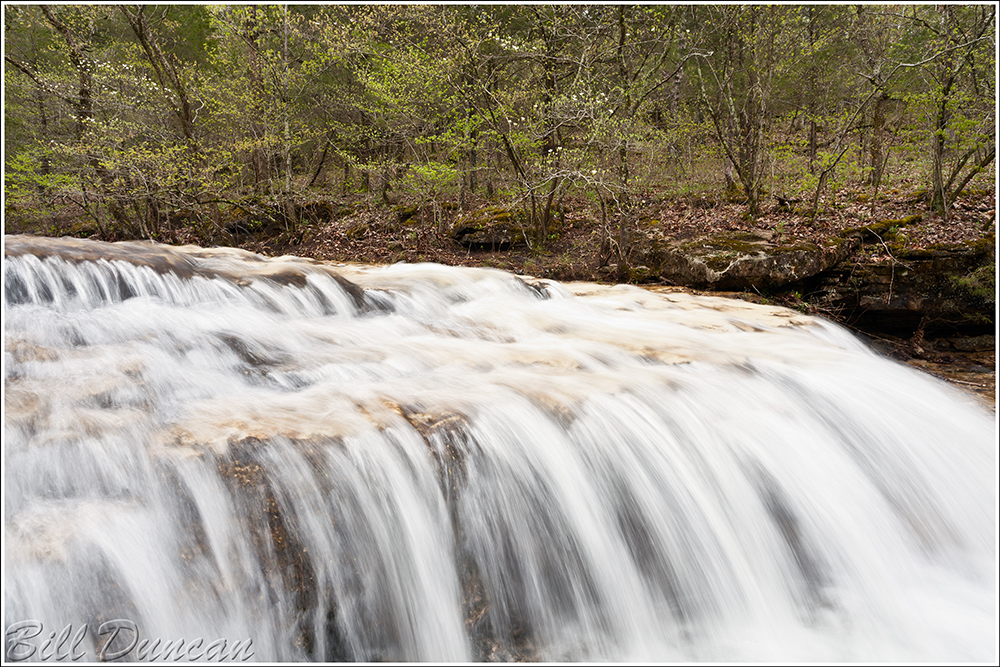
At only 56 acres, this relatively small NA has so much to offer.  Seeps, a plant-fen community, a series of shut-ins, a shelter cave and lots of nooks and crannies to discover what plants and animals are waiting where are plenty to keep one busy for a full day’s visit.  That’s not to mention these fantastic waterfalls!

IMG_3918

“Flint Falls″

Technical details: Canon EOS 5D Mark II camera, EF24-105mm f/4L IS USM @ 24mm, ISO 125,  f/11, 1.3 sec

I did not have too much time to spend here, unfortunately.  In the three hours I visited, the falls took much of my attention.  The birds and plants were screaming for my attention and I regret I could not give them more.  The Waterthrush songs were constantly ringing off the chert walls of the hollow and were pretty much the only thing I could hear over the roaring water.

IMG_3899

“Behind the Veil″

Technical details: Canon EOS 5D Mark II camera, EF24-105mm f/4L IS USM @ 28mm, ISO 200,  f/11, 1.3 sec

Once again, mother nature did not let me down.  A perfect overcast morning allowed for great exposure settings for running water and allowed for that glorious limon-colored new spring green from mosses and trees to pop.  Anything lacking from these images is my own fault completely.

IMG_3921

“Cowards Hollow″

Technical details: Canon EOS 5D Mark II camera, EF24-105mm f/4L IS USM @ 28mm, ISO 320,  f/14, 0.8 sec

Well, that was Cowards Hollow.  It is only about a 30 minute drive from Big Spring and is so secluded it seems to be a day’s travel from any sign of civilization.  I wish I had the opportunity to explore this area more, but the vegetation was not yet doing much during this April visit.  I can’t wait to make another visit in the near future.

I realized I had presented nothing but these masculine vertical compositions, so here is a landscape orientation…

IMG_3910

“Cowards Hollow II″

Technical details: Canon EOS 5D Mark II camera, EF24-105mm f/4L IS USM @ 32mm, ISO 125,  f/9, 1 sec

Blackburnian Warbler

Relying highly on the abundance of spruce budworm populations in their boreal forest nesting grounds, Blackburnian Warblers numbers will rise and fall dramatically with numbers of this insect prey.

IMG_3288

“Blackburnian Warbler, May 2013”

Technical details: Canon EOS 7D camera,  EF400mm f/5.6L USM lens, ISO 640,  f/5.6, 1/200 sec

Disappointment at the Gnatcatchers’

Steve selflessly checked on the Gnatcatcher’s nest at St. Francois SP late this past week to give me an update to help plan for the weekend.  When he arrived he watched as the pair appeared to be deconstructing the nest and moving the materials!  This was surprising as they definitely were incubating eggs when I had visited about five days prior.  We found one description of this kind of behavior in Harrison’s Eastern Bird Nests:

“Unusual characteristic of this bird: it tears up a completely or partly completed nest and reuses the material to build nest nearby.  Author has seen this several times; believes that awareness of possible discovery during building may be cause.”

I have a few pieces of evidence to possibly explain why they would move a nest in which they were already incubating a clutch.

1) They built this nest ~20 feet above a rather popular State Park trail and the numbers of people walking underneath caused them to seek a different spot.

2) Egg predation.  Someone found the nest and relieved them of their brood.

3) Cowbirds.  The BHCB activity was apparent around the nest when I visited.  Perhaps they snuck an egg in and the host birds discovered the ploy?

I guess we will never know.  Steve tried his best to follow the “contractors” as they moved their building materials to the new construction site.  Their speed and the fully-leaved trees made this an impossible task.  Oh well, maybe next time.

IMG_3999

“Housing Crisis”

Technical details: Canon EOS 7D camera, EF500mm f/4.5L USM lens, ISO 640,  f/6.3, 1/200 sec

Blue-grey Gnatcatcher Nest Update

I spent a little time watching and shooting the BGGN nest this past Saturday.  Here are a few notes: -Nest is in action.  I believe there are likely eggs in the nest.  Not yet hatched.  One parent will stay on the nest continuously.  Every 5-10 minutes the other parent would come by and give a few quick, low call notes.  The parent on the nest will reply with a similar vocalization most, but not every time, and then leave to where the other parent is calling in nearby branch or tree.  The new parent then takes its place on the eggs.  The nest never stayed open for more than 45 seconds.  Cowbirds were definitely in the area and I believe are probably aware of the nest.  Migrant songbirds were everywhere.  Here is a quick list of birds I had in the parking lot or at the nest. TEWA OVBI REVI BLWA COBI GCFL PEWE SWTH NOWA LOWA SCTA.

If I make it back there this weekend, there is a good chance I could see feeding of the chicks.

IMG_3975

“BGGN Nest Update – May-11 2013”

Technical details: Canon EOS 7D camera, EF500mm f/4.5L USM lens, ISO 640,  f/6.3, 1/200 sec

Sutton Bluff Recreation Area

I have driven past signs for Sutton Bluff Rec. Area dozens of times speeding past on Highway 21, but had not visited until recently.  Located in Reynolds County about five miles or so from Centerville, it  is quite a drive over hilly and windy roads to this creation of the Black River as it bends its way across this hill.  This is a view on top of the bluff following a quick mile or two hike that is on an OZT spur.  Unfortunately, this is about as scenic a view you’ll find from here as the blacktop-covered recreation area covers the majority of this valley.  The rec. area is nice and clean, one of the nicest camp sites of this type I have seen.  I spoke briefly with one of the camp hosts and he was very helpful with some information and maps.  If this type of place is your scene, then it looks to be top notch.  It seems to me the best time to visit here would be in full autumn colors and the best compositions will likely be from the riverbanks below shooting up at the tree covered bluffs.

IMG_3713

“Sutton Bluff Recreation Area″

Technical details: Canon EOS 5D Mark II camera, EF24-105mm f/4L IS USM @ 67mm, ISO 100,  f/11, 1/30 sec

Big Spring Handles Big Waters

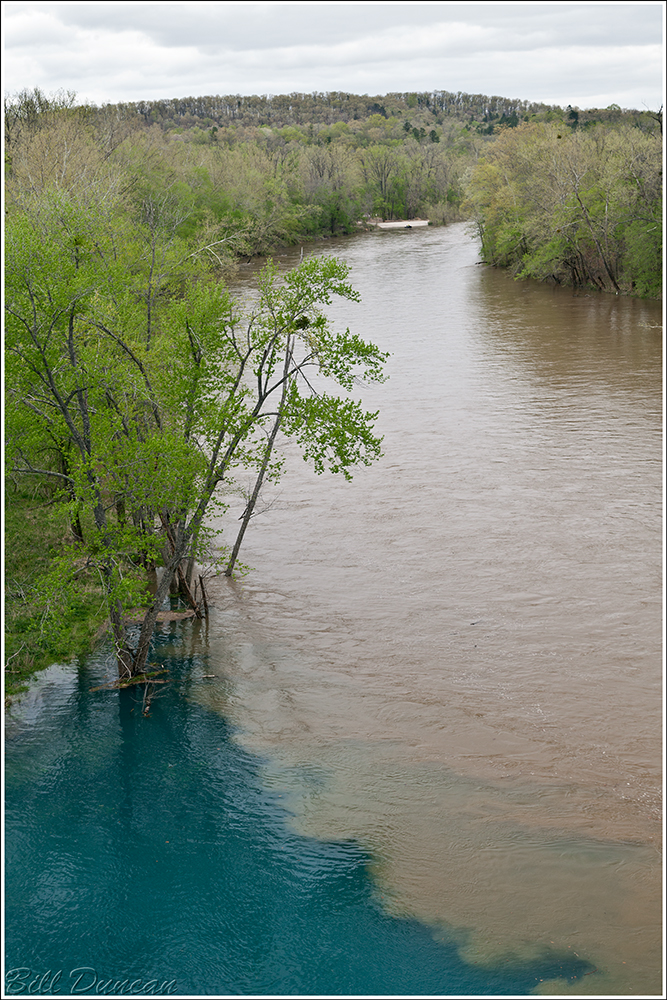
Sarah’s and my recent trip to Big Spring country provided us with lots of different looks that only the Ozarks in spring can provide.  On our second day the region was subjected to a strong storm front that dumped nearly five inches of rain in about a 12 hour period.  Although that limited the time spent outside cabin or vehicle, it did bring some learning opportunities.  I have often wondered with what speed and “precision” these large Ozark springs and their karst systems reacted to new rainfall in their watershed.  Would a deluge such as this become immediately apparent in the relative rate of discharge at Big Spring?  Or would the dynamics take a longer period of time?  My prediction would have been that the system would take up some considerable slack and act like a sponge.  That the effluent from the spring would rise eventually, but not as quickly as the rains came.  I turned out to be wrong.  During the first 12-18 hours, the increase of discharge from the spring seemed to keep pace with the rate of rise in the Current River.  This photo was taken at mid-morning the day after the rains.  Here the spring’s aquamarine  waters are flowing into the already mud-laden flood waters of the Current.  I estimate the waters were about two to three feet above normal at this time.

IMG_3938

“Confluence Contradiction″

Technical details: Canon EOS 5D Mark II camera, EF24-105mm f/4L IS USM @ 58mm, ISO 320,  f/10, 1/25 sec

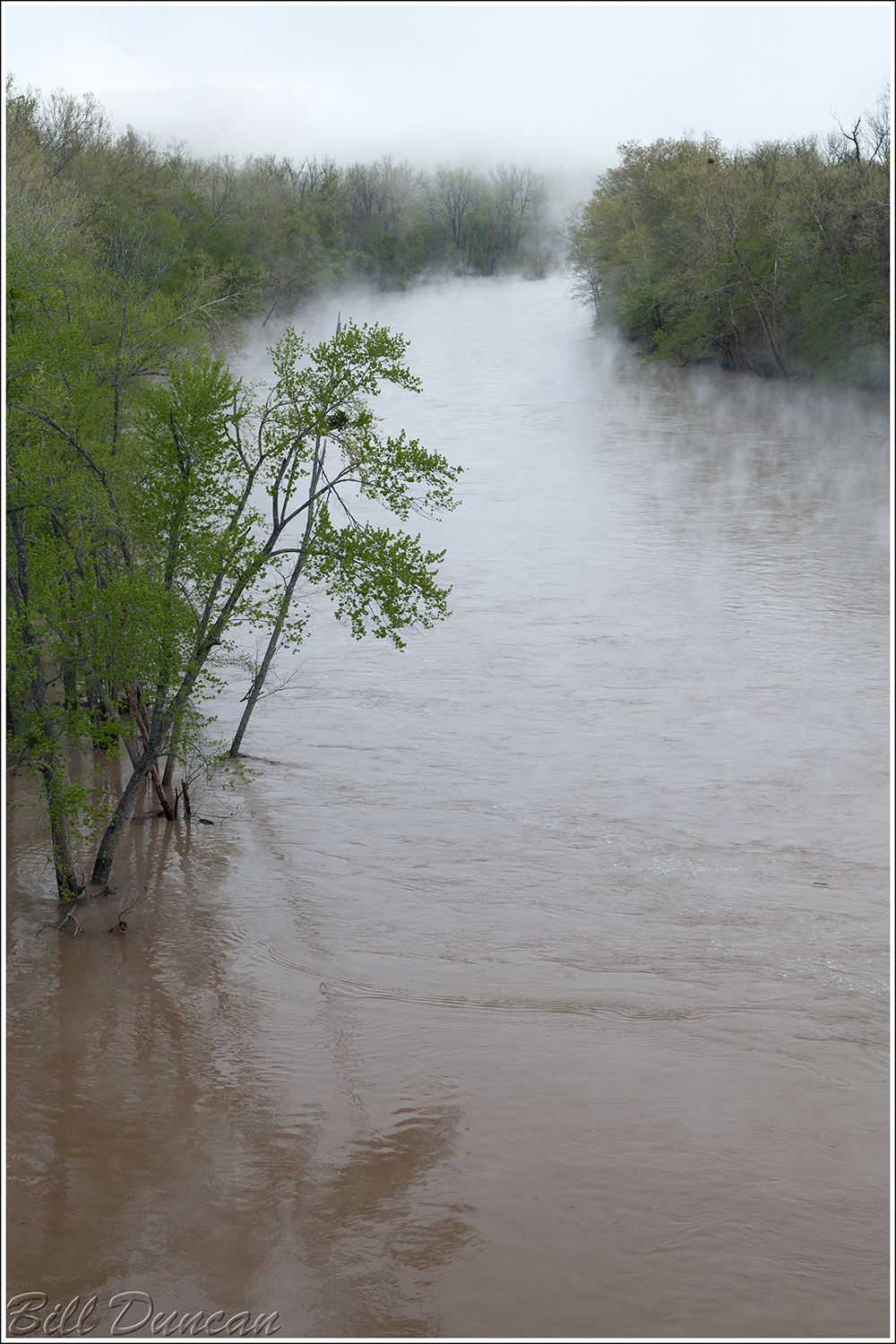
The next morning the scene looked quite different.  It looked to me the Current had gained enough water to rise over the shallow points of land this far into the effluent channel.  Water was everywhere, completely covering the lower section of the Chubb trail, completely covering the dock and railings surrounding it, and blocking access to the spring accept by the main road.  Even with the extra water the boil from the spring was still quite noticeable.

IMG_3978

“Current Rising″

Technical details: Canon EOS 5D Mark II camera, EF24-105mm f/4L IS USM @ 65mm, ISO 640,  f/9, 1/20 sec

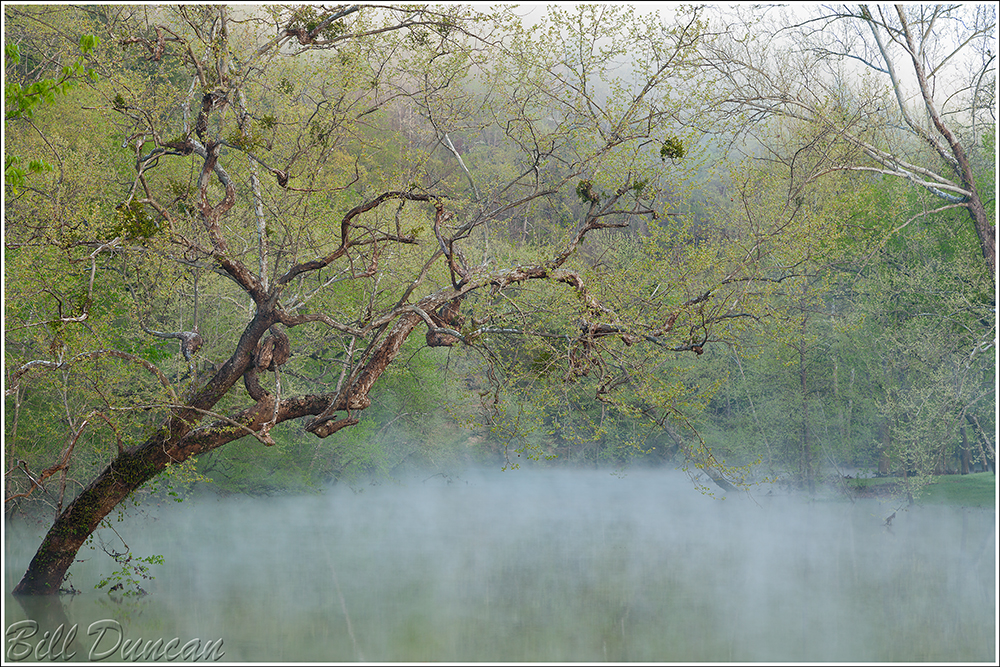
This scene is always one of my favorites.  This tree’s load of mistletoe is easily seen.  Thanks for pointing this out to me, Steve!

IMG_4010

“ ‘Planely’ Flooded ″

Technical details: Canon EOS 5D Mark II camera, EF24-105mm f/4L IS USM @ 75mm, ISO 100,  f/10, 0.4 sec

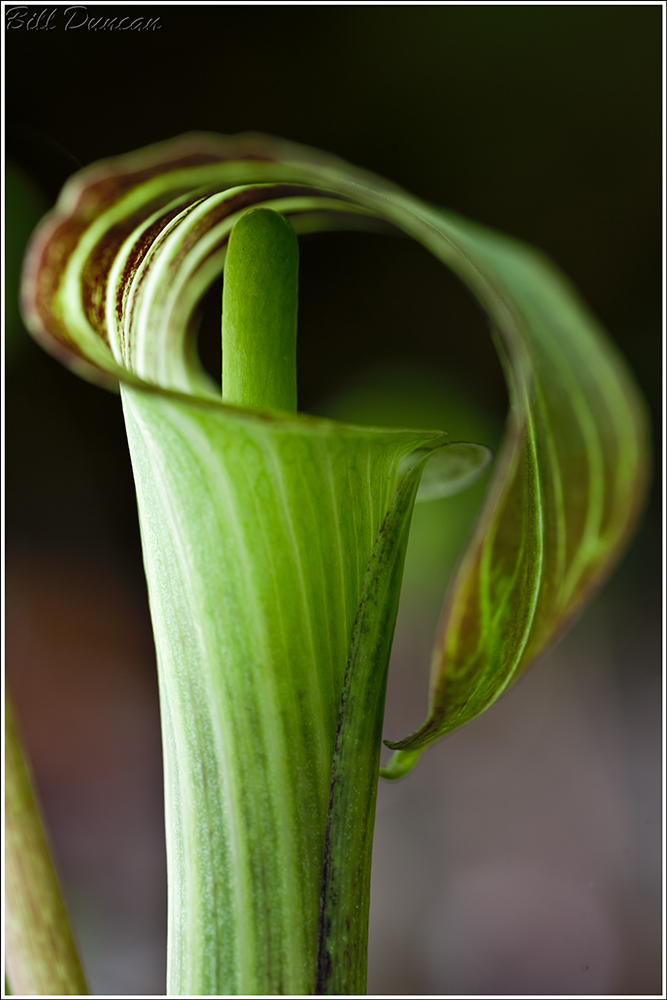
Since the spring had lost a good deal of its potential for interesting compositions, I played a bit with some macro work.  Here is that symbol of Missouri’s Natural Area System, the Jack-in-the-Pulpit, taken within the Big Spring Natural Area.

IMG_4055

“Jack in the Pulpit″

Technical details: Canon EOS 5D Mark II camera, EF100mm f/2.8L Macro IS USM, ISO 160,  f/5, 1/8 sec

An Endangered Species Visits Monsanto’s World Headquarters

One of my favorite things about my job is that I work at one of the best songbird migration fall spots in the St. Louis metropolitan area.  On Monsanto’s Creve Coeur campus is found a parcel of “unused” wooded acres that are set aside for wildlife and employee recreation.  A couple miles of trails and associated edge habitats makes for prime spots for the birders of our campus to work on a very unique form of repetitive stress injury, which we call “warbler neck” 😉  And birders do we have!  I have been fortunate enough to learn so much from a handful of world-class birders in the six years or so I have been dabbling in birds.  We are now entering the last few wonderful days of the songbird migratory peak within our section of the country.  What I wanted to share in this post is an experience we had a couple of weeks back that will likely never happen again.

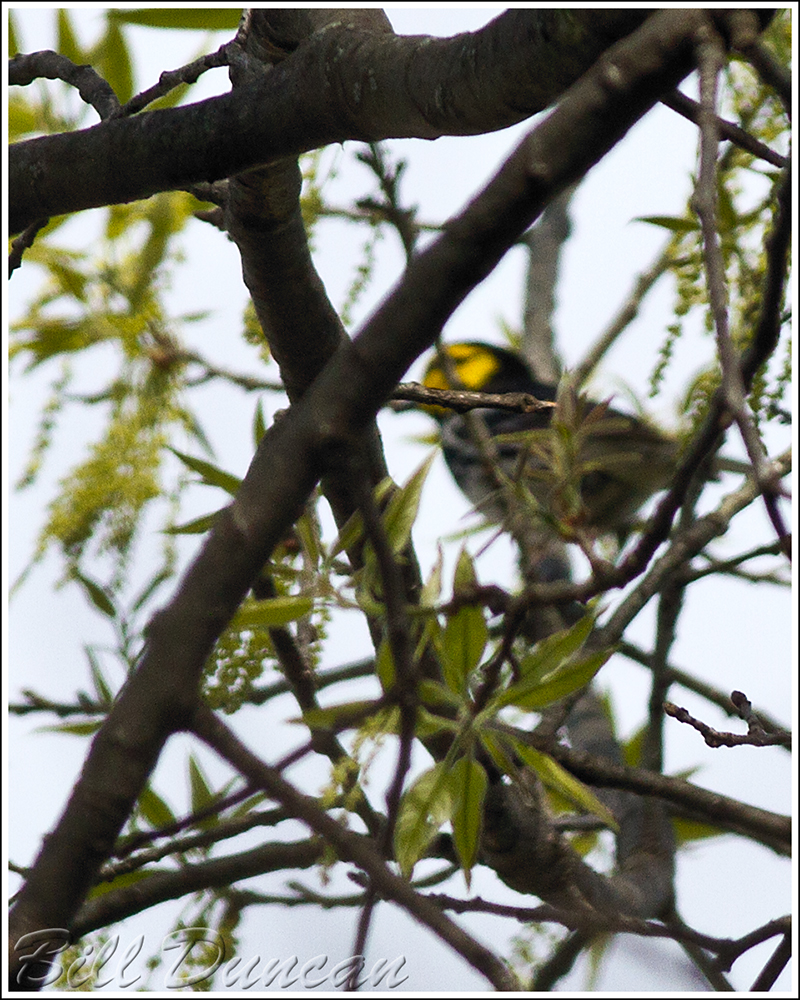
On Thursday, April 18th a terrific storm front moved through the Ozarks in a general southwest to northeasterly course.  Sarah and I took this Thursday and Friday off from work and spent it down in the Current River watershed.  On Friday, my coworker and avian super-freak, Josh Uffman,  found what looked to be a very odd-looking and sounding Black-throated Green Warbler.  At first, he did not realize what he stumbled upon and went to look this up in the field guides.  He then realized his discovery, the arguably most endangered Wood Warbler to be found on this continent, the Golden-cheeked Warbler.

Nesting in only specific woodlands containing Ashe Junipers in central Texas, GCWA numbers have declined dramatically by the clearing of these habitats.  One bit of disgusting information I read while researching this was that just prior to the placement of this bird under federal endangered species act protection and the IUCN red-list, much of this bird’s critical habitat was cleared by landowners who selfishly wanted to profit from these resources.  The most current numbers I could find give estimates of between 5,000 and 10,000 breeding pairs.  It is most likely that this bird was moved along by this storm.

What is nice for me is that this bird stayed on our campus for a relatively long period of time.  When I arrived on Monday it was still here.  It was very difficult to get good looks and with nearly two hours of hunting I was awarded with less than 60 seconds of viewing time.  The photo below is the best that I was able to achieve.  I do think I was the last person to see it on our campus as it was not found the following day.  My photo is usable for documentary purposes, but please have a look at Josh’s great pics and videos taken in days prior.

IMG_2680

“Golden-cheeked Warbler!”

Technical details: Canon EOS 7D camera, EF500mm f/4.5L USM lens, ISO 640,  f/7.1, 1/1250 sec

Enjoying the Gems Under Your Nose

I have often said I am more interested in the places the Ozarks have to offer compared to the possible visits to iconic destinations in the rest of the country.  I know I would love and appreciate those spots, of course.  But the millions of photographs generated are probably enough without my lousy contributions.  I am more interested in showcasing the animals and habitats that can be found in the Show Me State, the places with names that so many who live here have never even heard.  I’ve come to realize lately that I am guilty of ignoring a few places less than an hour’s drive from my doorstep that have a lot to offer, passing them by on my three hour drives to more exotic Ozark locations.  These places include Castlewood, Washington and Babler State Parks, Emmenegger Nature Park, Bush Wildlife and a handful of other Conservation Areas.  The place I’ve gotten to know much better this spring is the location spotlighted in this post, St. Francois State Park.

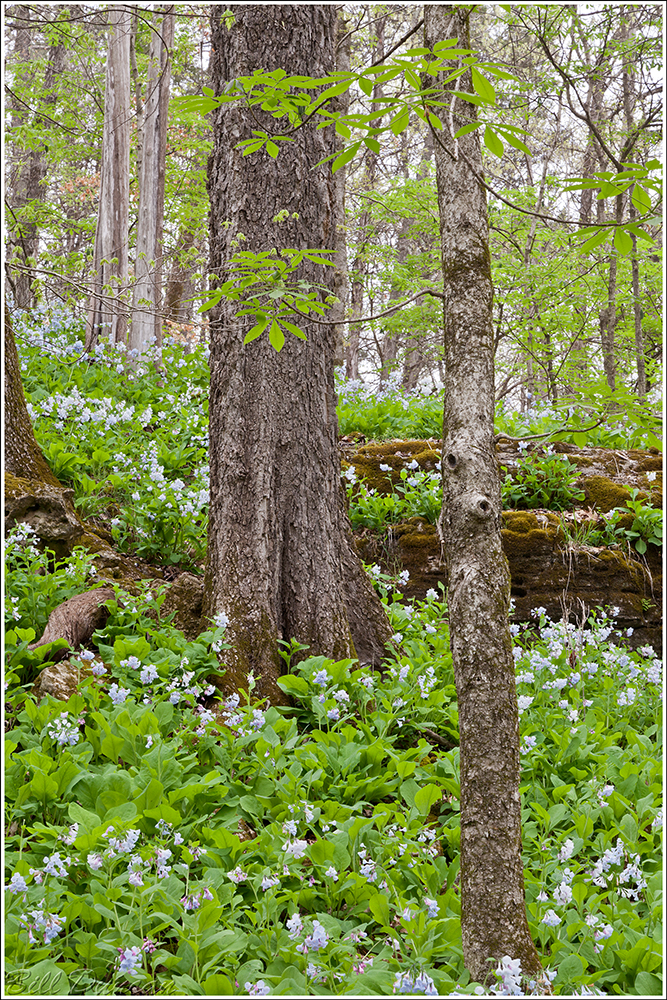
St. Francois SP, located just north of Bonne Terre, MO, has a lot to offer the nature lover.  I have now hiked the three primary trails and they each offer unique features that should satisfy any true Ozarker.  Sarah and I enjoyed a nice hike on the Swimming Deer Trail a couple weeks ago and stumbled across the best bunch of Bluebells I have seen personally.  I did not bring the camera on that hike, but later that week we took a few days break to travel south and made sure we stopped back here again.  I was hoping the show would still be ongoing and I was not disapointed.  We were even fortunate to have a nice overcast sky and relatively little wind.  So the poor photography is my own blame.  Picking out compositions that worked was more trouble than I anticipated, of course.

IMG_3770

“Bluebells and Limestone″

Technical details: Canon EOS 5D Mark II camera, EF17-40mm f/4L USM @ 23mm, ISO 320,  f/13, 0.3 sec

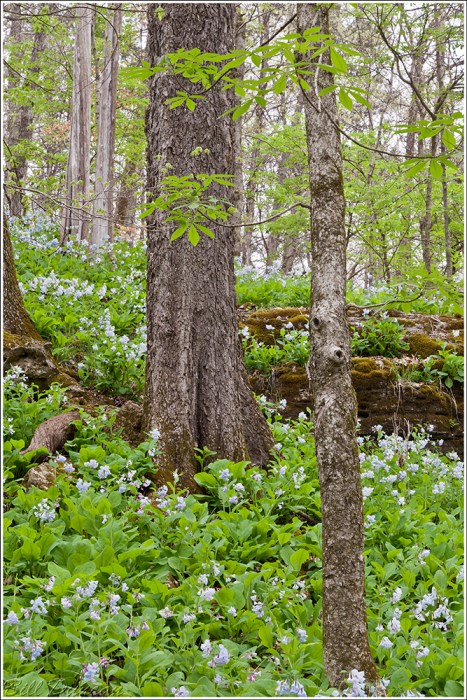
This trail also contains the largest number of Ohio Buckeyes that I have seen at one location in Missouri.  These trees and their emerging, distinctive leaves were found everywhere.  Along with Pawpaws, these small trees fit in perfectly beneath the larger oaks and hickories that dominate the upper canopy.  Pictured below is one of the larger buckeyes I found on this day.
IMG_3795

“Bluebells and Buckeyes″

Technical details: Canon EOS 5D Mark II camera, EF17-40mm f/4L USM @ 70mm, ISO 320,  f/18, 0.5 sec

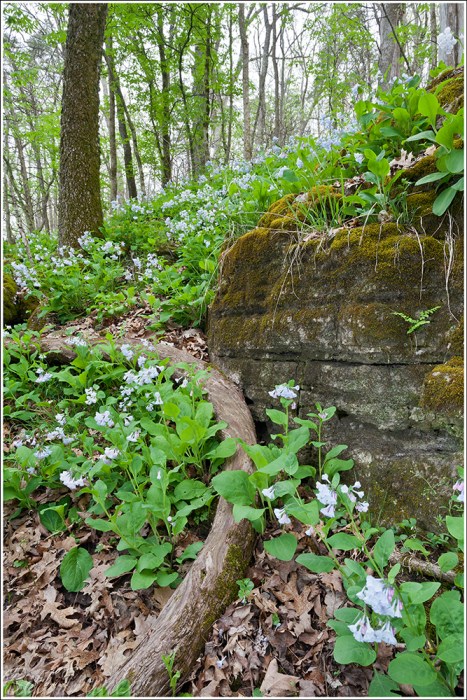
Along with this great display of wildflowers and trees, the Swimming Deer Trail offers nice views into the Big River valley from atop tall bluffs that are adorned with the characteristic Eastern Red Cedars who are so adept at holding on to cracks and crevices to get the best possible looks as the seasons fly by.
IMG_3779

“Bluebells and Woody Vine″

Technical details: Canon EOS 5D Mark II camera, EF17-40mm f/4L USM @ 24mm, ISO 400,  f/16, 0.4 sec

I apologize for so many vertical compositions.  I once read a photography e-article that suggested this tendency was more typical of the “stand up, aggressive, masculine” (male) photographer, whereas women photographers (and painters I assume), who are assuredly the “weaker sex” are more apt to produce horizontal landscapes, obviously the more passive and prostrate the compositional choice.  If there is any truth to this hogwash, I wonder what it says about the artist who prefers the square ratio?  😉

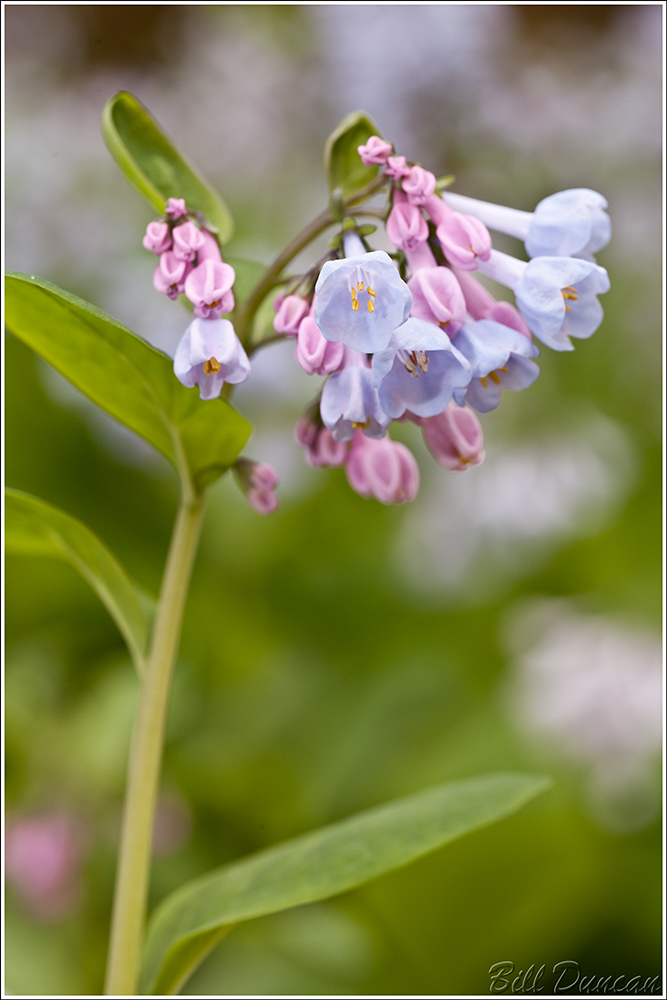
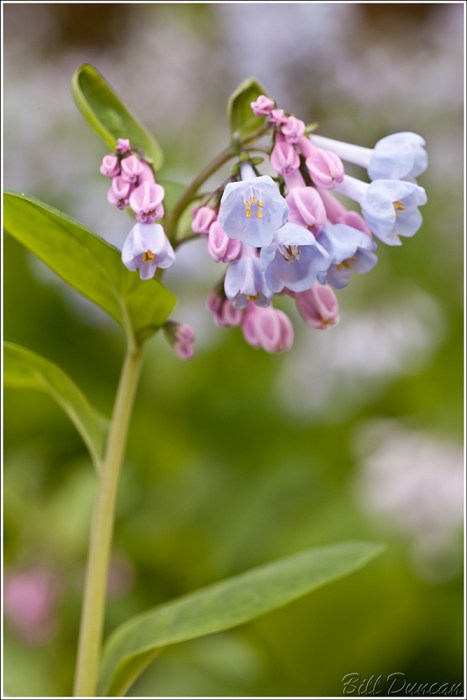
Anyway, back to the nature stuff, right?  Well, any nature photographer who still cares to keep his union badge has to shoot the cliched Bluebell macro shot, right?  Here it is.
IMG_3815

“Nature Porn″

Technical details: Canon EOS 5D Mark II camera, EF100mm f/2.8L Macro IS USM, ISO 160,  f/8, 1/10 sec

Of course, anywhere in the Ozarks at this time of year is going to be heaven for any birder who is worth their salt.  St. Francois SP is definitely no exception.  During my several visits over the last month, I loved listening and watching the nesting wood warblers and other songbirds as they busily setup their territories, build nests and feed themselves.  I used to think the Romanticists’ metaphorical descriptions of spring as a bunch of overly sentimental hogwash.  Now I find myself just as captivated by this line of interpretation as I do the underpinning that natural history presents.  What heaven is spring!

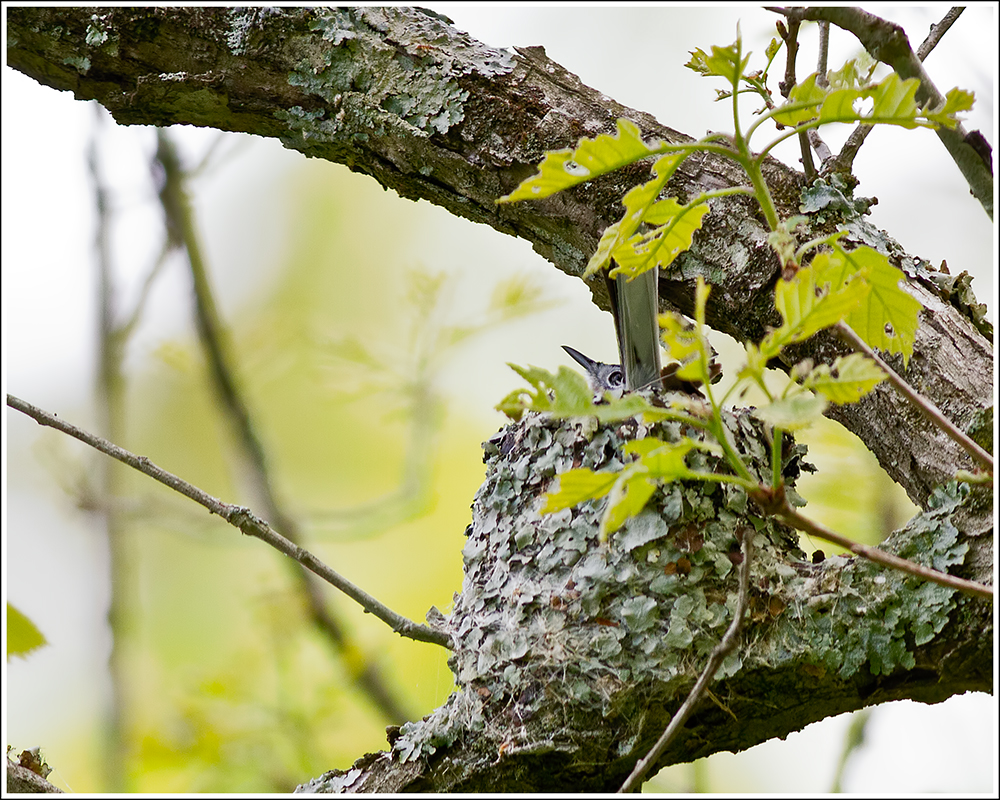
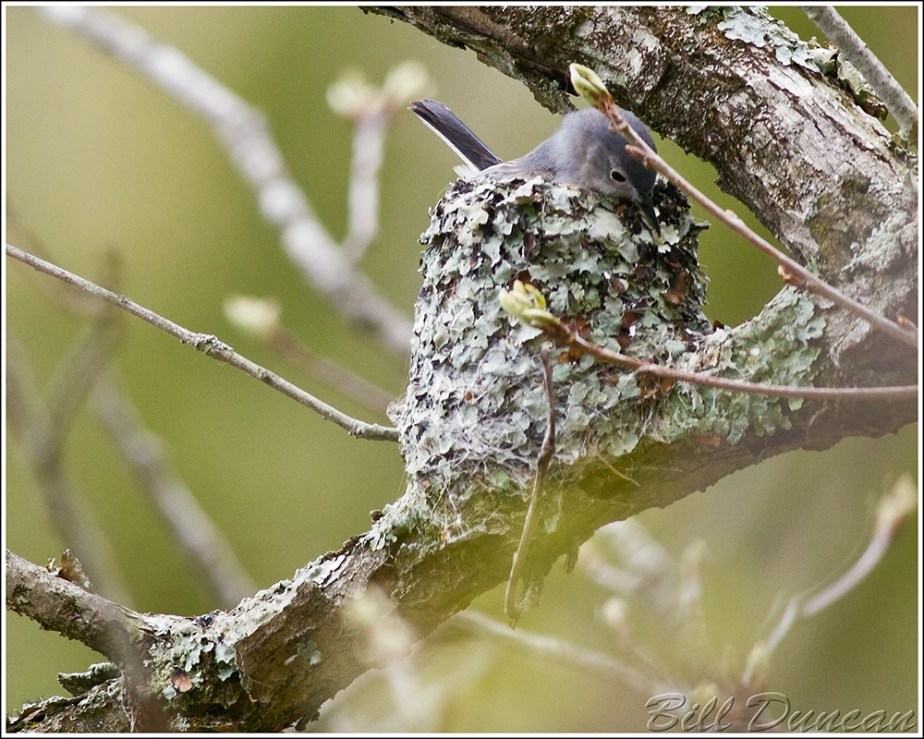
A week or so following Sarah’s and my trip, Steve gave me a guided tour of the last trail I had yet explored at St. Francois SP: “Mooner’s Hollow”.  A beautiful sloped-shelf waterfall, rocky outcrops and wonderful examples of spring ephemeral wildflowers along the river bottom of Coonville Creek Wild Area were the expected highlights.  What we were not expecting was the fortunate stumbling upon of a Blue-grey Gnatcatcher’s nest!  The second smallest bird in the state, these guys build a nest that is similar in size and construction to that of the state’s smallest, the Ruby-throated Hummingbird.  In the picture below you can hopefully get a look at the construction materials of plant fibers, spider webs, fur and lichen, which is used so beautifully to camouflage the nest.

I watched the nest for a couple of hours.  In this little time I noticed the pair did not stay at the nest, which makes me believe there were not yet any eggs.  The pair stopped at the nest for no more than 60 seconds.  During this time one of the pair would enter the nest, add a bit of lichen or other material they had brought, do a little manipulation and then they would leave again.  This would be repeated every 15 – 20 minutes.  I hope to visit the nest soon to see if eggs, or perhaps even chicks might be found.
IMG_2992

“Not Just Gnatcatching”

Technical details: Canon EOS 7D camera, EF500mm f/4.5L USM lens, ISO 640,  f/6.3, 1/320 sec

This spring I have been fortunate to spend a fair amount of time in the rugged, karst topography that is so unique to the Ozark Highlands.  This continues to bring to mind what it must have been like to travel and exist in this country before ‘modern conveniences’ were introduced to muddle the experience.  A great series of roads can take you to within a ten mile hike or less to basically any spot on the map in Missouri.  For now, I leave with a great quote from that Confederate bushwhacking bastard, Sam Hildebrand.  This is in reference to a cave that is apparently located within or nearby St. Francois SP.  A reason for further exploring some day.

“We passed quietly through Butler County, along the western line of Madison, then through St. Francois and across Big River to those native hills and hunting grounds of my boyhood, known as the Pike Run hills.  The reader must bear in mind that these hills possess peculiar advantages over any other part of the country between St. Louis and the Arkansas line.  They look like the fragments of a broken up world piled together in dread confusion, and terminating finally in an abrupt bluff on the margin of Big River, where nature has left a cavern half way up the perpendicular rock, now known as “The Hildebrand Cave,” mouth to which cannot be seen either from the top or bottom.”

IMG_4082 2

“Fragments of a Broken Up World″

Technical details: Canon EOS 5D Mark II camera, EF17-40mm f/4L USM @ 24mm, ISO 100,  f/14, 1/8 sec