"What a thousand acres of Silphiums looked like when they tickled the bellies of the buffalo is a question never again to be answered, and perhaps not even asked." -Aldo Leopold
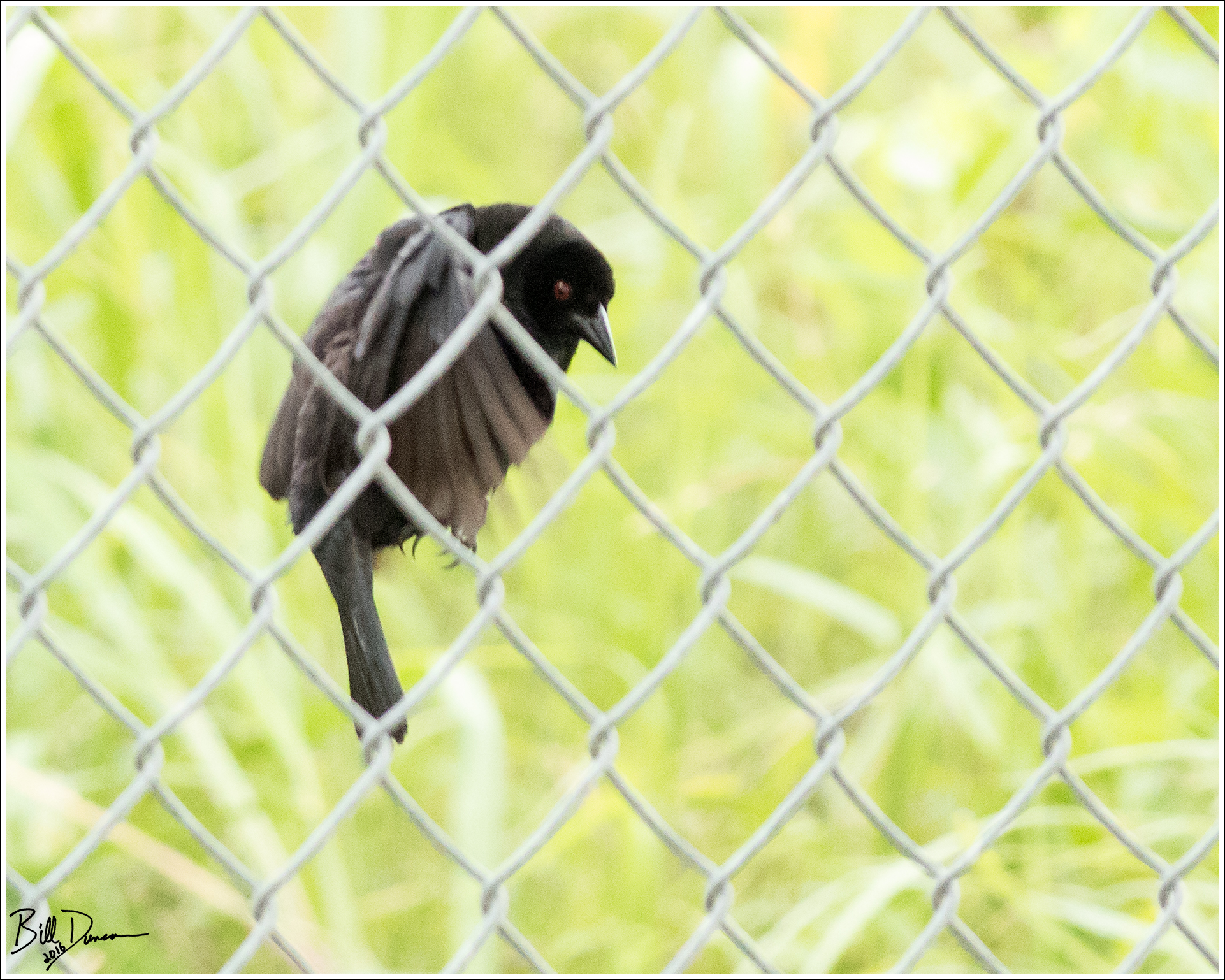
Of course, going to a new region for birding is great for finding those species that you have long-anticipated being able to see. In the Texas gulf coast region the Roseate Spoonbill, the Tri-colored Heron, the Crested Caracara and quite a few others can be fit into this category. I have done enough of this type of birding now to get just as excited by the surprises – finding the species I wasn’t expecting, or had not even heard of. The Bronzed Cowbird was one such species during our trip in May.
And the way we got to see this bird for the first time, by performing this hovering display for the ladies, was quite memorable. He kept this position – not moving his head from the chain-link section seen here for several seconds. Check out the bright red iris on these guys.
We also saw a few of the more common Brown-headed Cowbirds. It was nice seeing them in open habitat where they actually belonged and not reeking havoc in the fragmented forests back home.
Pelecinid Wasp – Pelecinidae – Pelecinus polyturator. Millstream Gardens Conservation Area, Madison County, MO.
Parasitoids of insect larvae, the Pelecinid Wasp female uses her extremely large abdomen to thrust through soil to deposit eggs primarily on scarab beetles. I assume the family and genus names are derived from the Greek – pelicos, referring to the great size of the wasp. Females can reach lengths of up to 6 cm. No need to worry, these guys do not have stingers.
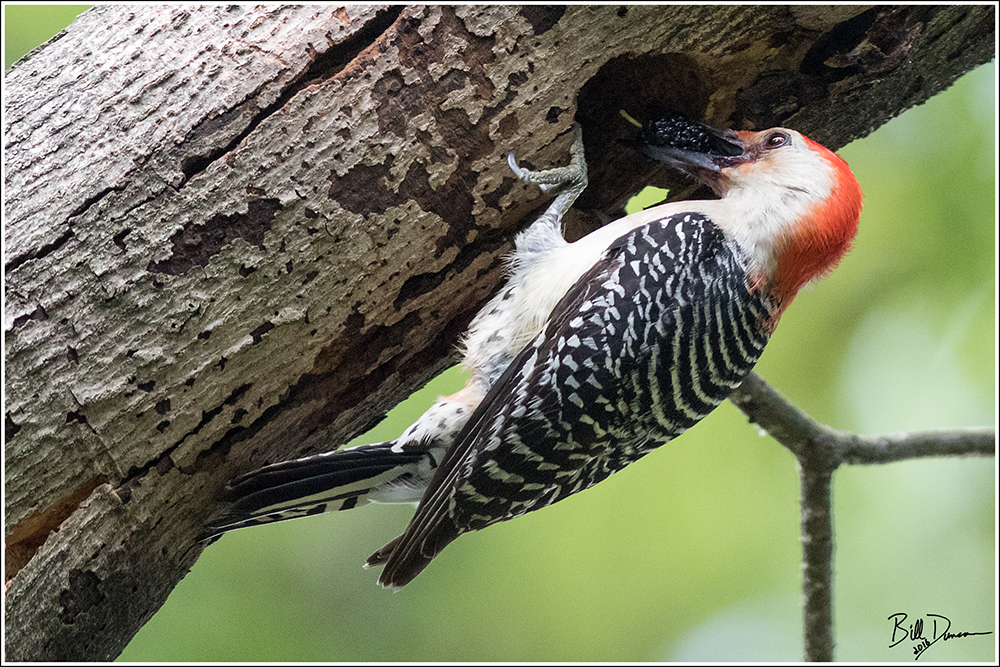
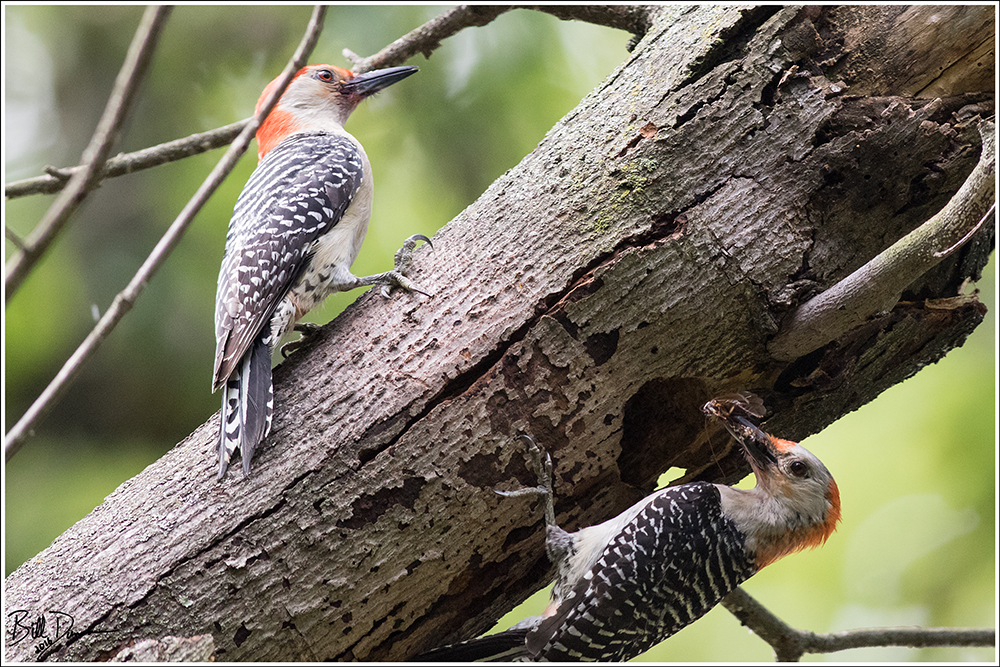
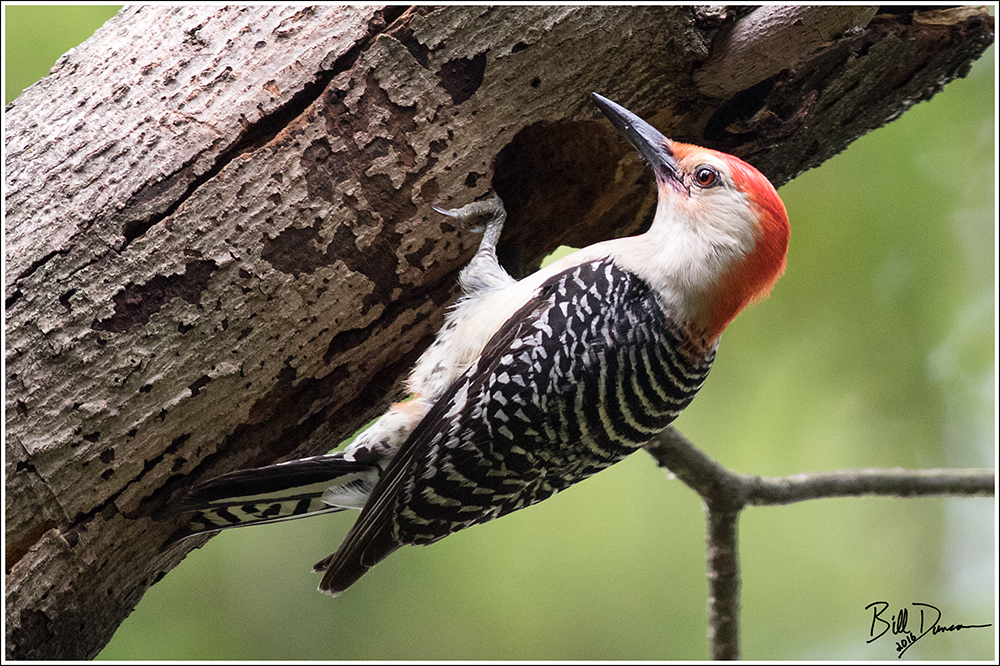
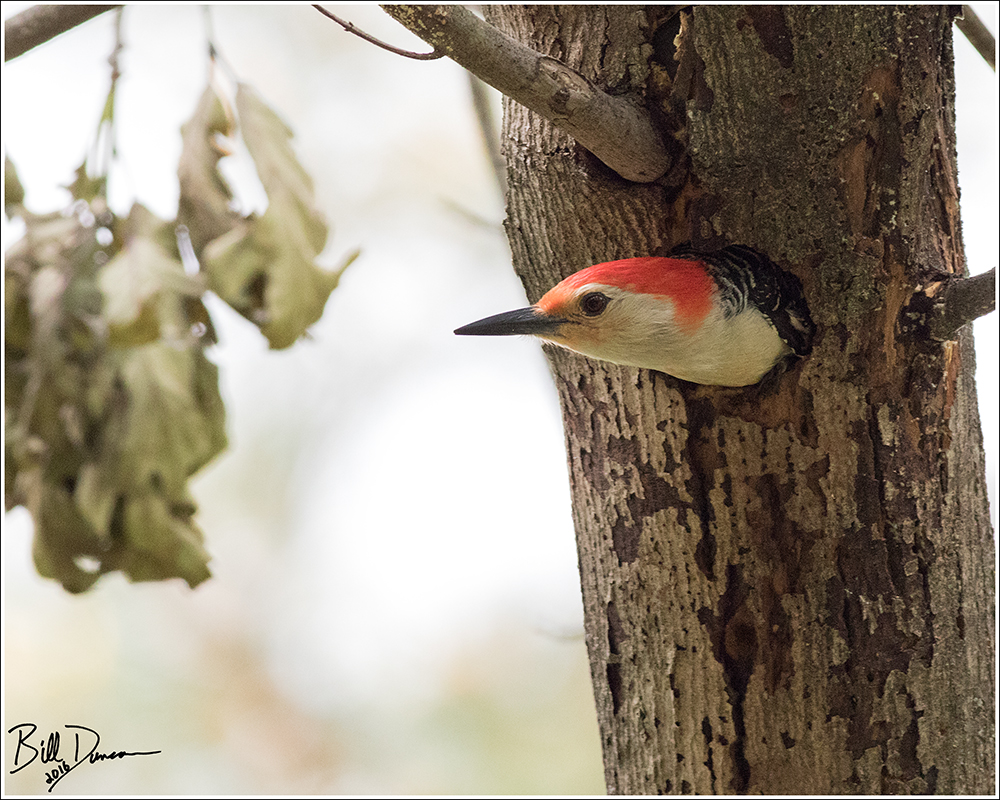
Today I watched as park workers cut down this tree at Wild Acres Park in Overland, MO, a municipality in St. Louis County. I estimate they have removed nearly 75% of all standing dead trees in this park during the last six months. This tree, that provided shelter and food to a number of Woodpeckers, the tree I watched and photographed an Olive-sided Flycatcher this past spring, two dead oaks that I watched Great-horned Owls display and duet in numerous times over the past 6+ years, a tree that provided a place for a nesting Great-horned Owl, dead snags near the pond that provided perches to herons and wood ducks that were stopping to rest on their way to somewhere more worthy. Even if the trees must come down due to “safety”, I wish that they would see the benefit that these trees can bring while decomposing in a forest. Lately, they are even hauling away the carcasses.
The original plans for the park when first established seem to suggest that the park was conceived to provide wildlife with an oasis amidst a suburban desert as much as it was to be a benefit to the humans with similar desires. I find little evidence in recent years that the park management has goals to this effect.
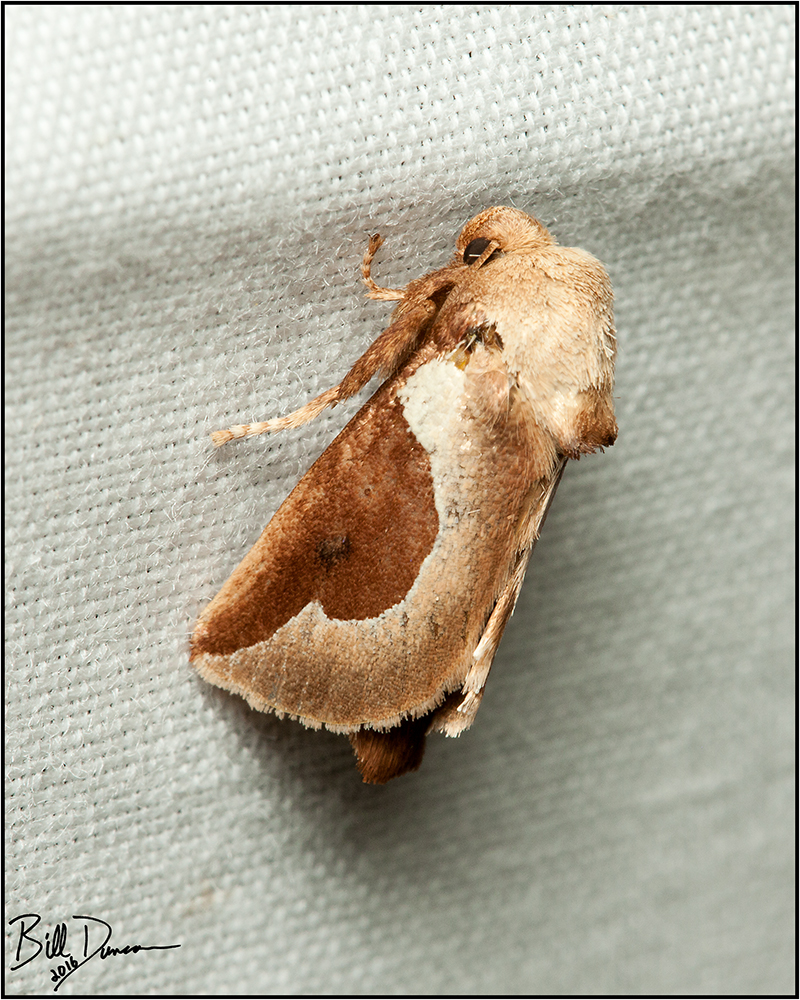
The highly variable colors and patterns of the skiff moth are hypothesized to mimic senescent/necrotic lesions on leaf surfaces. They often have paired white spots that are thought to mimic the eggs of the tachinid fly, a parasite that enters the caterpillar after hatching. These “egg mimics” are hypothesized to work by dissuading flies that may attempt to avoid depositing eggs on victims that were previously parasitized.
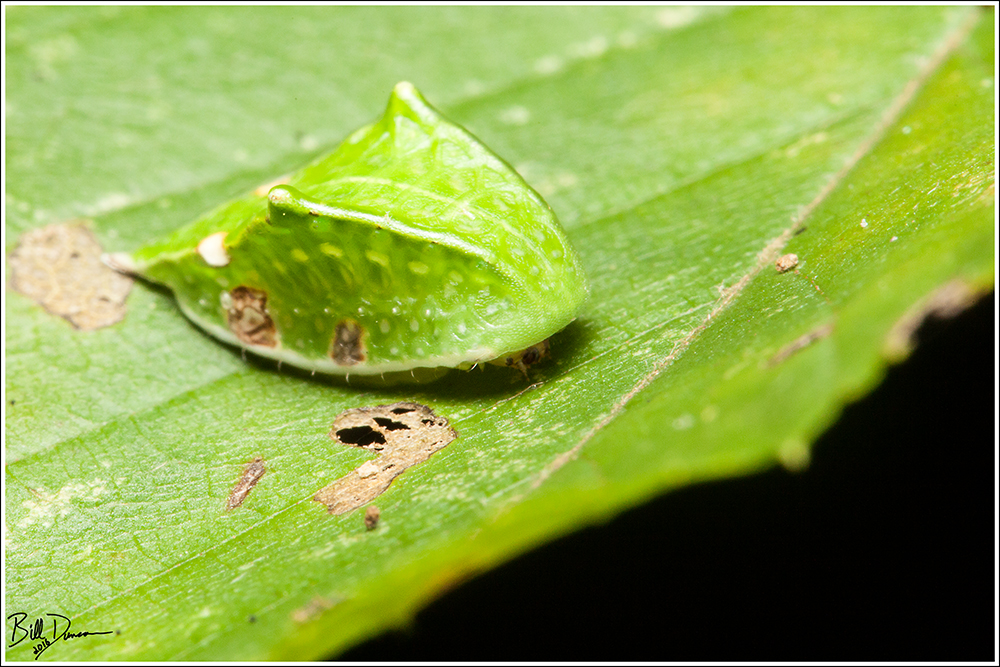
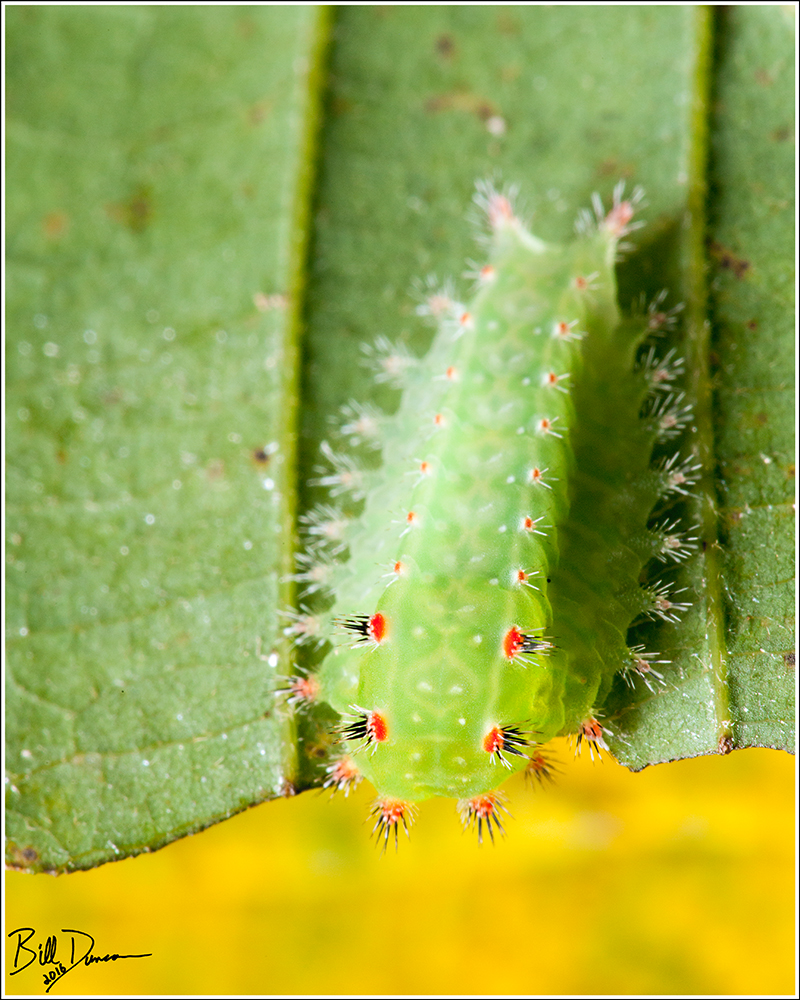
In my anecdotal experience of hunting for slug caterpillars over a six to eight week period this summer, the Nason’s slug (Natada nasoni – Hodges #4679) was by far the most abundant that I came across. This was particularly true in the drier, oak/hickory/pine hillsides of Hickory Canyon N.A. in Sainte Genevieve County.
Nason’s Slug – Limacodidae – Natada nasoni (4679). Horseshoe Bend Natural Area – Washington SP, Texas Co, MO.
This species is able to retract its spines, elongating them to their fullest with any notion of danger. These guys have pretty substantial spines and because the cats were so abundant, I found I was accidentally stung a few times while lifting vegetation. This was not a pleasant experience.
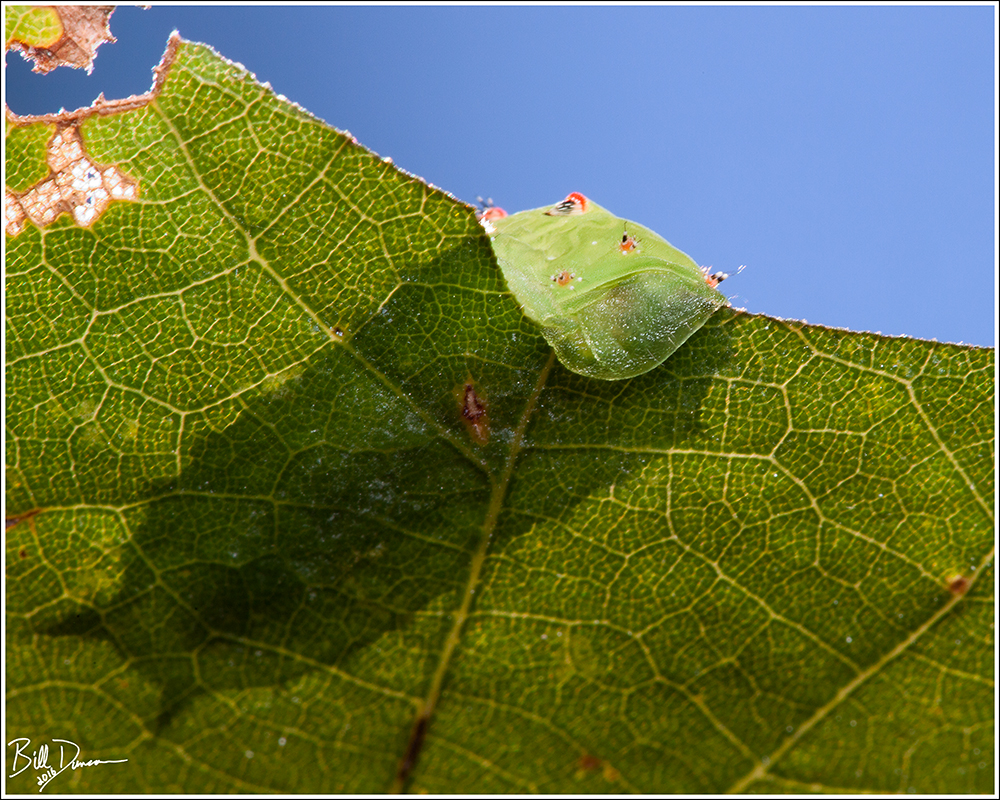
The image below was one that I had previsualized and worked a good bit on to get it right. I used my plamp to hold the leaf and attached the plamp to a dead limb to position the leaf high enough to get the leaf and caterpillar back lit by the sun. I then used just a bit of flash to illuminate the ‘face’ of the caterpillar and the underside of the leaf. In cases where I removed the leaf to get a photo, I always placed the leaf securely back on the same plant.
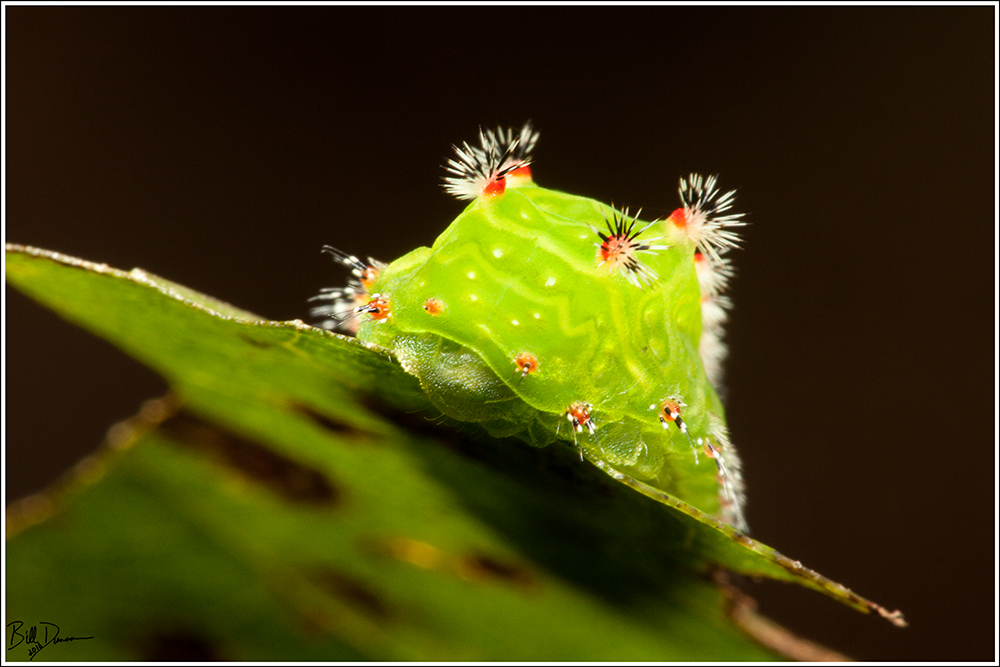
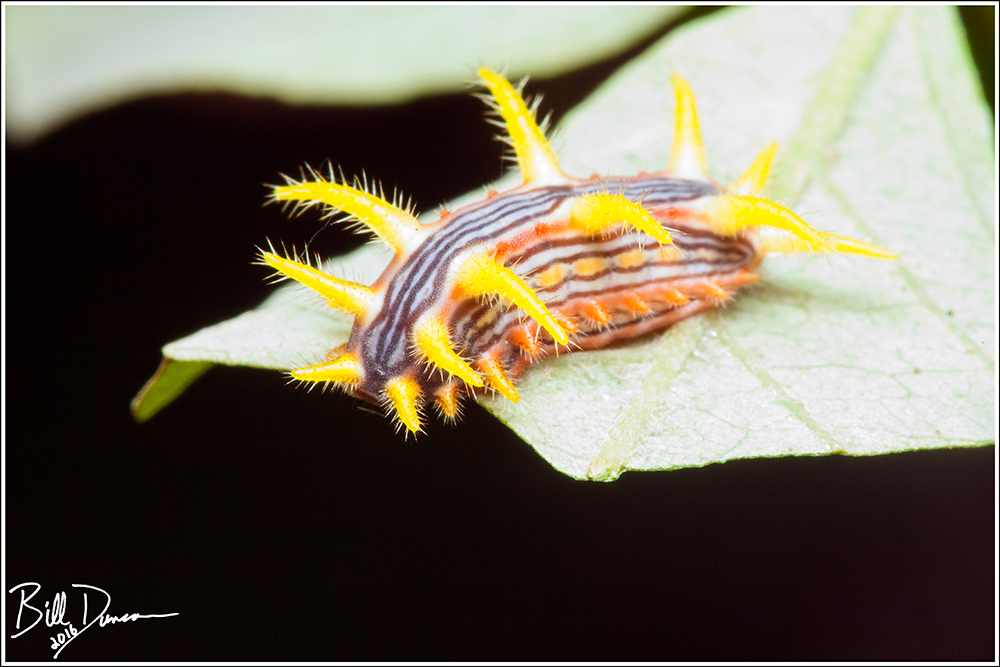
Stinging Rose Caterpillar -Limacodidae – Parasa intermedia (4699). Cuivre River State Park, Lincoln Co, MO.
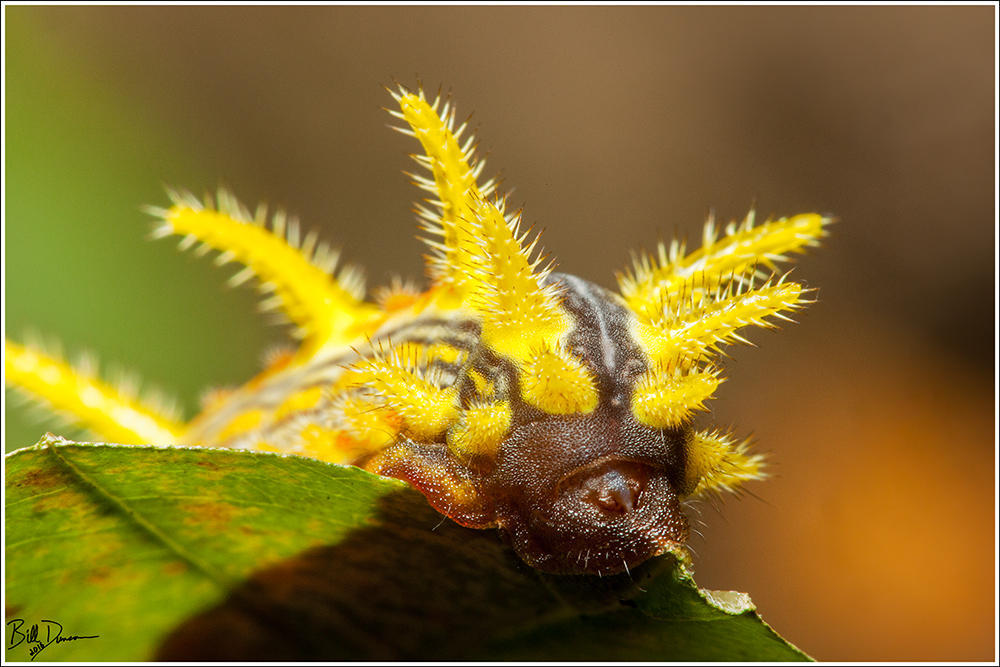
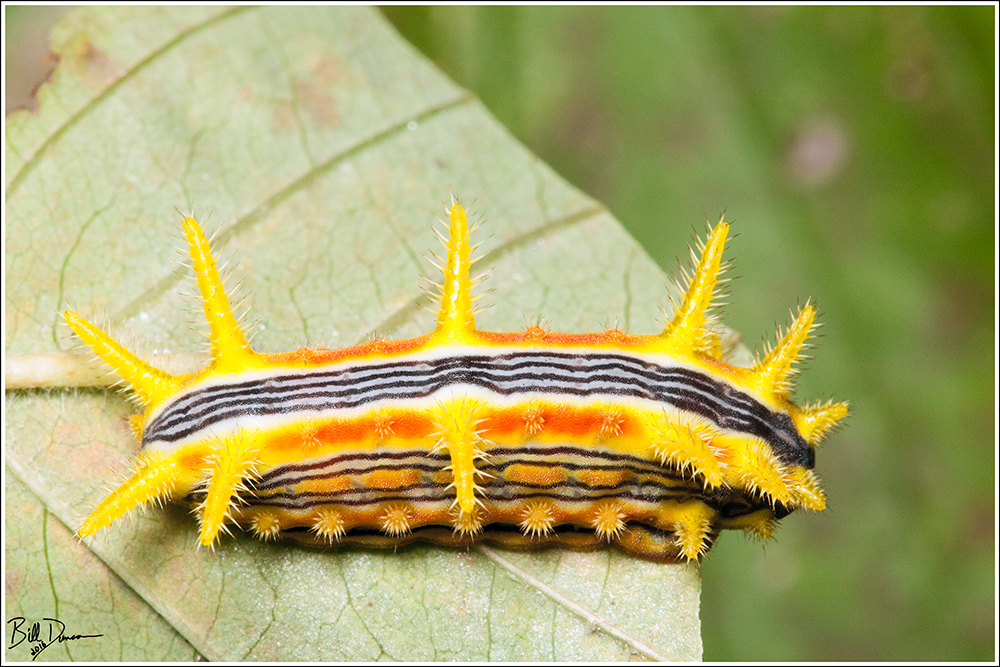
Arguably the most stunning of Missouri’s slug moth caterpillars, the Stinging Rose Caterpillar can most often be found on oak and hickory saplings. However, a number of other woody species (including those in the rose family) will also be used as host plants.
Stinging Rose Caterpillar -Limacodidae – Parasa intermedia (4699). Horseshoe Bend Natural Area – Washington SP, Texas Co, MO.
This is one of the species I voluntarily allowed to sting me – it wasn’t that bad, perhaps a mild ‘stinging-nettle’ type of experience that was gone in 30 minutes or so.
Stinging Rose Caterpillar -Limacodidae – Parasa intermedia (4699). Horseshoe Bend Natural Area – Washington SP, Texas Co, MO.
The image below shows a little of the variety of color and patterns that can be found in this species, this one showing more of a yellow/orange background. Some animals can be found that are completely yellow.
Stinging Rose Caterpillar -Limacodidae – Parasa intermedia (4699). Horseshoe Bend Natural Area – Washington SP, Texas Co, MO.








 A Thousand Acres of Silphiums