Photography and Observations of a Northern Flicker (Yellow-Shafted) Nest

Bird nests are my favorite photographic subjects and I was ever so fortunate this spring to have an ideal situation land in my lap. Many thanks to my friends and neighbors, Larry, Sheryl and Beth for telling me about this and allowing me to setup camp in their yard for quite a few morning hours. This nest was right across the street from our St. Louis County, Missouri home, making this an easy target to get to in the early minutes of daylight. Due to a very busy year at work, I have had less flexibility in my schedule and this opportunity helped save my sanity. I can’t imagine what early morning passersby must have thought, seeing me sitting there with my long lens pointing in the general direction of a neighbor’s upper windows.

Northern Flicker nesting behaviors
Like most woodpeckers, the Northern Flicker excavates their nesting cavities in the dead or dying wood of tree trunks or large limbs. Where this nest cavity was located was quite fortuitous. Dead wood is difficult to find in the suburbs where we live. Many suburbanites immediate cull dead limbs and whole trees as soon as they show the first signs of decline. This is both for safety of life and property as well as what many consider the poor aesthetics of the imperfect tree. I’m thankful for the neighbors who put up with a dead bough of their silver maple that gave this pair of beautiful Flickers the opportunity to nest. I’m hoping they let it be! This is because Flickers are one of a few woodpecker species that will use the same nest cavity in successive years. I really hope for a replay of this one!

Shift change! The female Northern Flicker has arrived and the male is leaving to go fill his crop.

Unfortunately, I missed all of the interesting pre-nesting courtship behaviors that this species is well known for. By the time I was turned onto the nest, eggs were well into their development and I believe the eggs hatched shortly before or right when I began my observations. Northern Flickers can have a large range in clutch size, laying between three and 17 eggs, depending on things like nest latitude, food availability and nest cavity size. The more typical range is six to eight eggs per clutch. In this case, the pair had three male chicks that hatched and fledged. After hatching, chicks may take 24-30 days before fledging and they will typically spend another six weeks with the parents before going their own way.

As in most bird species, the Northern Flicker exhibits bi-parental care. Both parents take part in nest excavation, brooding the eggs and young, feeding of chicks and protection. Because there is a lot of down time when sitting at a nest and waiting for that decisive moment, I was happy to collect some of my own minimal data on the nesting behaviors of this particular pair.

I never got tired of watching this gorgeous male leaving the nest!

My observations
Because woodpeckers use tree cavities to raise their brood, this somewhat limits the opportunities for those wonderful photos of parents bringing food to their young. In addition, the habits of Flickers and most woodpeckers is to feed their young via regurgitation. I did not witness a single event in which a parent brought food in its bill to handoff directly to a chick. When the developing chicks are young and small, the parents will enter and spend their time in the nest, each parent taking turns feeding and brooding. At a certain point, the chicks are developed enough to climb the inside walls of their cavity and reach the entrance. Due to this and the more considerable space the larger chicks occupy, the parents cease entering the nest and will visit only to feed and presumably check on the welfare of their developing brood.

In this case the change was quite rapid. From one day to the next, the parents quit entering the nest regularly and I have broken down my observations into these two parts. I began collecting data on May 19th, although I did visit the nest to photograph a few days before this. After the early morning hours of June 4th, the parents quit entering the nest. During the period where the action was taking place inside the nest cavity, I spent my efforts on the challenging task of getting sharp enough photos of the parents coming and going.

Your turn!

May 19th – June 3rd (Table 1)
Between the 19th of May and the 3rd of June, I observed the nest mostly during early morning hours on nine days. During these nine days, I spent a total of 18 hours and 55 minutes at the nest. The number of times visited and time spent by each parent in the nest was pretty similar, with the male visiting a couple of times more but averaging slightly less time per nest visit.

June 4th – June 9th (Table 2)
Between June 4th and June 9th, I observed the nest for six straight days, again mostly during early morning hours. During the 16 hours and 56 minutes I spent observing during this period, the female visited the nest to feed 30 times (1.8 feedings per hour) compared to the male who visited the nest to feed 25 times (1.5 feedings per hour).

My observations described above and in the accompanying tables are in agreement with published data suggesting that overall provisioning rates do not differ between the sexes in the Northern Flicker.1

The male removing an eggshell on May 19th

The fascinating case of momma dominance
Copulations are common during the egg laying phase of nesting in this species. Unfortunately, I missed this portion of the show. However, I did witness “copulations” that mostly took place at nest duty changeovers between the two parents during the brooding phase.

Cases of female dominance in the pair bond of this species has been documented2, but I have not yet found documentation on this particular “copulatory” behavior. I admit, it took me a while to discern that anything was out of the ordinary. I guess I was too busy with the camera. After looking at the photos in the camera a little more closely, it finally dawned on me that the female was mounting the male! This wasn’t a single fleeting bit of behavior. I observed the female mounting the male on at least 11 different occasions and I never once observed the male mounting the female.

A case of momma dom?

I wonder if this has something to do with the size of the two birds in this pair. Field guides and other sources suggest that males in this species are usually slightly larger than females. In my opinion, that is not the case with this pair. In this image and in the video below, the female looks significantly larger than the male.

Here are a few instances of this copulatory behavior I caught using highspeed video. Note – these videos are available in 4K resolution on YouTube. I recommend watching these under that resolution on a nice monitor if you care to.

Trials and tribulations of suburban cavity nesters
Another behavior that was relatively easy for me to record was the interactions between the Flicker pair and European Starlings. As mentioned above, cavity sites can be difficult to find in the suburbs. As a consequence, competition for this resource can be considerable. Exotic invasive European Starlings are known to aggressively mob and dislocate native cavity nesting species. During the brooding period, I counted six times where a parent chased away a European Starling that had come too close for comfort (Table 1, 2). On one occasion, a parent chased away a Red-bellied Woodpecker that came very close to the cavity opening. Although I never observed a Starling chase while the parents were visiting the nest in the post-brooding phase, this likely occurred outside my range of viewing. Additionally, the risk from European Starlings taking over a nest cavity is probably highest immediately after the cavity construction and during egg laying. I was not on the site to make observations at this stage.

A European Starling checks out the nest cavity while the parents were away foraging. It noticed the cavity was occupied and left on its own.
The male shooting out of the nest to chase away a European Starling

Another significant competitor for larger cavity nesting birds like these Flickers is the squirrel. My friend, Dave, told me about a similar opportunity he had from his property vantage this spring, in which a grey squirrel actually took over the nest cavity from a pair of Flickers, presumably destroying and potentially eating the eggs or developing chicks.

I was really concerned that I was going to witness something like this with my nest as well. Less than three feet about their nest cavity was a much larger, natural cavity that faced straight up and was being used by a couple of grey squirrels as a sort of day bed. The squirrels moved up and down the bough of this tree, right past the nest on several occasions but the parents never seemed too concerned about them.

The upstairs neighbor passing by
This video contains some miscellaneous morning behaviors that I thought were interesting. Note – these videos are available in 4K resolution on YouTube. I recommend watching these under that resolution on a nice monitor if you care to.

Get busy Feeding
Obviously, I enjoyed myself the most during the time that the chicks were old enough to stick their heads out of the nest and be fed by the parents. This didn’t always result in good photo opportunities – often the parents would stick their heads far into the nest, blocking clear views of these interactions, but I caught enough to make me happy.

Two of the three boys looking for their next meal delivery
Happy faces
A chick tasting one of its parents
Dad getting ready to feed
Mom delivering
The male coming in. This is one of the only photos I was able to get showing all three chicks at the same time.
Closeup on what dad is feeding. This is most likely suet, ant larvae or a combination of both.
One of my favorite sights was when the chicks would nibble on the male’s toes or sometimes would peck and bite at him. You can see more of this in the video below.
Provisionin’ ain’t easy!
Here is a video showing a number of different feedings. It’s a bit on the long side but I couldn’t get myself to narrow it down. 😉 Note – these videos are available in 4K resolution on YouTube. I recommend watching these under that resolution on a nice monitor if you care to.

Fledging
Before we get to the details, I want to share a video of the behaviors the adults took to try and coax the chicks to leave the nest. This one is shot in normal speed with on-site audio. You can hear the adults giving the chicks their keeyer calls and the chicks responding. It was near impossible to predict when the chicks would take their dive out of the nest. I filled memory cards with video and stills in hopes of capturing this.

This video documents the vocal interactions between the parents and their chicks during the last days of the nest.

I guess I’ve grown used to the heartache that comes with not catching the first flights of chicks on camera. It seems there is always something that gets in the way. In this case, Miguel and I watched as the first chick took his first flight out of the nest. Or I should say, Miguel got to watch and take a series of unforgettable photos (see the GIF I put together of these below). I was busy at the time taking feeding notes… But, I was still optimistic. This was early on a Saturday morning and I didn’t have to get to work. I felt confident that the other two would be sure to follow shortly. Five hours later and a total of nearly eight hours of continuous sitting at the nest, I decided to call it a day. I had grass to mow, needed a meal and a shower. So, I packed it up, feeling confident that the other chicks would likely wait until the next day to take their leave from their wooden nursery. I checked that evening around 7:00 and the nest was dead silent. The remaining chicks were gone. I heard Flicker vocalizations coming from the surrounding neighborhood. I missed this opportunity but was warmed by the idea that all three chicks were successfully on to their next stage, learning to forage from two obviously apt parents.

The first boy to leave the nest. This photo was taken less than a minute before his first flight.
Finally, the perfect capstone for this post, here is Miguel’s sequence of the first chick taking his very first flight. Click the image to watch the GIF in a larger format.

And that is that. I’m glad there are a few more Flickers in the neighborhood and will anticipate and hope these two will return to their nest cavity next year. I hope you’ve enjoyed this story a fraction as much as I did telling it.

Ozark Bill

Literature Cited

1 Weibe KL. and Elchuk, C.L. 2003. Correlates of parental care in Northern Flickers Colaptes auratus: do the sexes contribute equally while provisioning young? Ardea 91(1): 91-101.

2 Kilham, Lawrence 1959. Early reproductive behaviors of flickers. The Wilson Bulletin Vol 71, No.4.

Rho Ophiuchi Cloud Complex @ 144 mm

Rho Ophiuchi Cloud Complex

Rho Ophiuchi Cloud Complex
Within the constellation Ophiuchus (the Serpent Bearer) lies one of the most spectacular scenes in the summer night’s skies. It is arguably one of the most interesting as well. This area holds one of the closest stelar nurseries to our Sol and is composed of six primary bright objects and some dark nebula to boot.
Starting at the bottom point that makes up the pentagon of this object, we find the red supergiant star, Antares, and it’s accompanying cloud of warmly-colored, ionized hydrogen gas. Up and to the left of Antares is the blue reflection nebula, IC 4605, and continuing along the pentagon, we next come to a smaller blue reflection nebula – IC 4603. Outside the pentagon, just to the upper left of IC 4603 is yet another reflection nebula, illuminated by the five-star system known as Rho Ophiuchi. Moving to the next point in the pentagon, the upper right as seen in this image, lies Sh2-9, a combination reflection and emission nebula. Finally, making up the last point of our pentagon is M4, a fantastic globular star cluster comprised of at least 100,000 stars.

But it doesn’t end there! Also visible in this image are several named dark nebula, streaming away from the cloud complex moving towards the core of the milky way, just to the east of my frame. The primary dark nebula is catalogued as B44 and is known by its apt common name of the Dark River.

If that isn’t enough, There are also two other globular clusters, NGC 6144 and M 80 that can be seen in this frame. By clicking here, you can move your cursor around to identify the various objects in this image.

Collecting the data
Miguel and I have had a rough couple of months for our astrophotography goals. We were completed clouded out during the new moon period in April, but we did get a session in in May, where we focused on the Blue Horsehead Nebula (IC 4592). But, due to some issues with working with some new gear (more on this below) and an unexpected processing issue, this one is still in the works for me.

In June, the weather (clouds and smoke from the big Canadian forest fires) was touch and go, but we did get a night that turned out to be about as close to perfect as you can expect for a summer night.

Date and location
Imaged on the night of 19/20 June 2023 at Danville Conservation Area in Montgomery County, Missouri (Bortle 4).
Dark period: 22:32 – 03:41
Target period: 20:27 – 03:06

Conditions
Clear skies over the course of the session. Temperature ranged from 67-62 F. Winds at or below 5 mph.

Equipment
Astro-modified Canon 7D mkii camera, Canon 90mm f/2.8 macro tilt-shift lens (144mm focal length equivalent), Fornax LighTrack II tracking mount without guiding on a William Optics Vixen Wedge Mount. QHYCCD Polemaster. Gitzo CF tripod, Canon shutter release cable, laser pointer to help find Polaris and sky targets, lens warmer to prevent dew and frost on lens, dummy battery to power camera, lithium battery generator to provide power to camera, dew heater and laptop computer.

Let’s talk about the new equipment used in the making of this image. First off, the Canon 90mm f/2.8 macro tilt-shift lens got its “first light” in astrophotography use. I suspected this lens could be very good for AP use due to its relatively wide open aperture and its larger imaging circle. This lens has next to no distortion or vignetting on my crop sensor body. I was looking for a good AP lens option around 100mm and am very excited about how this lens performed. I love a multi-trick pony!

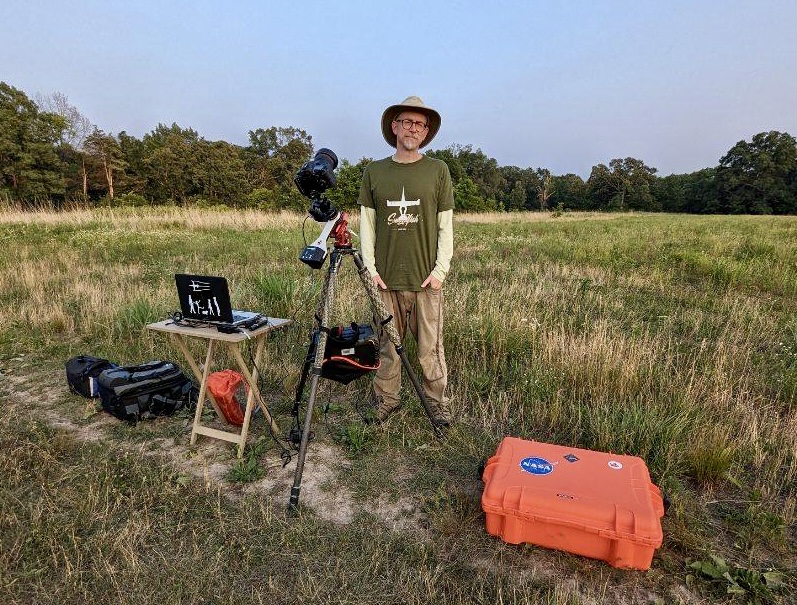
Bill with his new AP rig set up and ready to rock!

The big new toy is the tracker I picked up for my birthday. The Fornax LighTrack II is likely the best portable and “affordable” tracking mount you can buy for optimal star tracking without guiding. I will likely publish a full review of this tracker system here in the future. I had some big issues when using it with the manual polarscope I purchased with it. This was a source of frustration for a while, but was solved by getting some more technology. In order to get the most precise polar alignment possible, which this mount needs to really shine, I picked up the QHYCCD Polemaster. This is basically a small camera that you attach to the mount and uses a computer program to allow you to perfectly align the mount to the north celestial pole. With this, I was able to get as accurate of a polar alignment as possible in less than 15 minutes. To use this, I did have to buy my first ever personal laptop computer – a nice refurb that only set me back $200. The main point here is that this new mount will allow me to get up to 4 times the exposure length for my sub-frames than what I was able to get with the Star Adventurer mount with no star trailing or drifting.

Imaging Details
Lights taken (ISO 800, f/2.8, 90 second exposure): 150
Lights after cull due to tracker error, wind, bumps, etc.: 150!
Used best 95% of remaining frames for stack for a total of 142 subs used for integration (3.56 hours)
Darks: 30 taken at same exposure time and ISO as lights

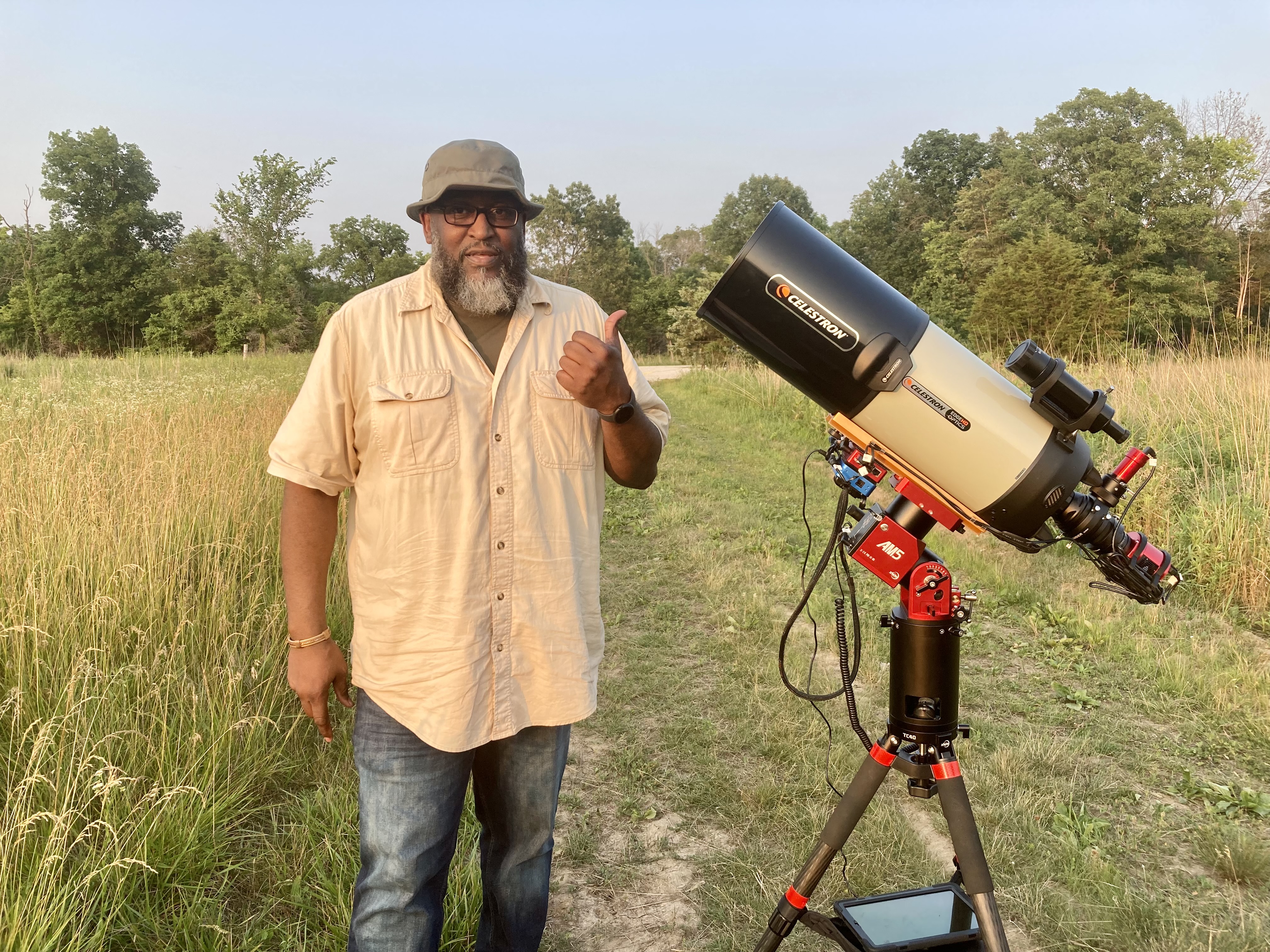
Miguel tried out his big new toy. Say hello to “Brutus the Beefcake” Schmidt–Cassegrain!

Processing
RAW files converted to TIF in Canon DPP, stacked in Astro Pixel Processor, GraXpert for gradient removal, Photoshop CS6 for stretching and other cosmetic adjustments.

Problems and learnings
In a way, despite the more comfortable temperatures we would be working in, I was dreading the summer months when it came to prospects of astrophotography. I knew the scrambling that would need to be done to take advantage of the dark skies during the shortest nights of the year, but this isn’t what I am referring to. Since I use a non-cooled dSLR for this purpose, I was worried about sensor noise that increases dramatically as the temperatures rise. I knew this could be a significant issue, but wasn’t expecting the problem that it would bring.

I have now become aware of what is known as “Canon banding.” This problem manifests as broad horizontal bands of color noise that alternate in greens and magentas across the frame and is a well known issue with astrophotographers using older model Canon dSLRs. I couldn’t see this on the individual subs, but after stacking and just a slight amount of stretching, they became distinctly obvious and impossible for me to correct with my processing skills.

Up steps Miguel to save the day again. In PixInsight, the AP processing software Miguel uses, there is a script function that can reduce Canon banding dramatically. Miguel ran my unstretched stacked image through this and it made a world of difference. It did not eliminate the problem completely; I was still limited on how much stretch I could apply to this image because of it. But, with a little bit of touch up to the final stretched image, I was able to produce something I am happy to share.

Conclusion
Overall I am very pleased with the final image, although it wasn’t exactly what I had in my mind’s eye when planning. Part of the problem was the banding issue, explained above. Additionally, I have come to realize that many summer DSO targets would greatly benefit from being shot on multiple nights. I think this would have come out more to my expectations if I had double or triple the amount of integration time. This simply isn’t possible in a single short night in summer months. I have never given the possibility of multi-night sessions much thought – one night’s sleep a month lost is enough I think. But, to do summertime DSO’s justice, especially nebulas, this might be worth considering when I have the opportunities.

I really do love this target. There are a lot of opportunities here that I look forward to trying in the future. I speak specifically to the different options of focal length. Using a longer lens (200-300mm) will focus in on the different great nebulas, bringing out more of their details, while using a wider lens, will show the dark river nebula flowing into the much brighter core of the milky way to the east.

If you made it this far, thanks for visiting and reading. I hope you liked this month’s AP image!

Some Lovely Lycaenids

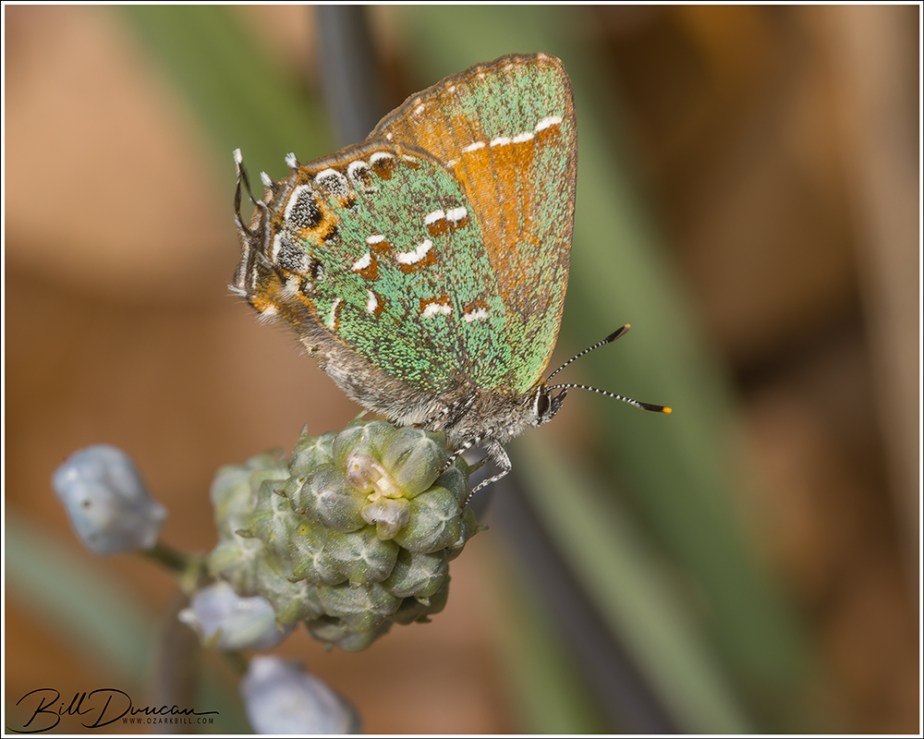
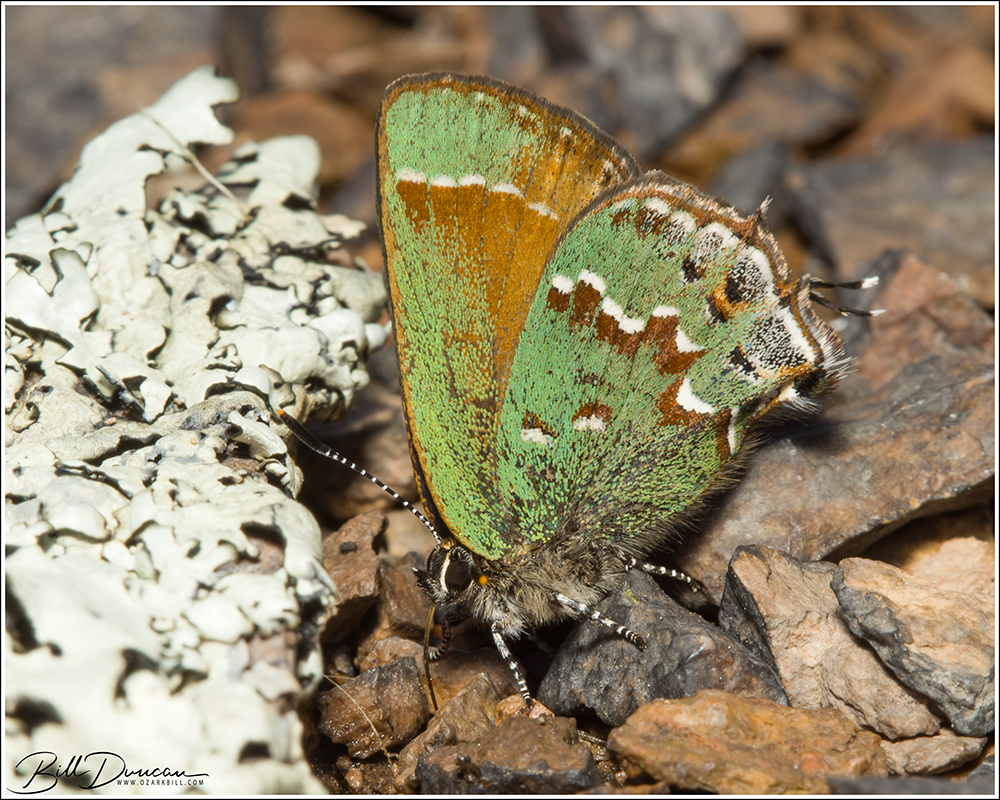
Tonight I’m just sharing some photos of a few lovely Lycaenid butterflies that I had the pleasure of photographing this season. The Lycaenidae family is the second largest family of butterflies, with about 6,000 species worldwide. The highlight was the bountiful season that the juniper hairstreak (Callophrys gryneus) had. Prior to this year, I had only seen one or two in a season, usually without my macro rig with me. In a few trips to the glades in Jefferson County this spring, Casey and I had at least two dozen individuals. They are not usually cooperative, but we worked pretty hard to get something.

First up is the afore mentioned C. gryneus.

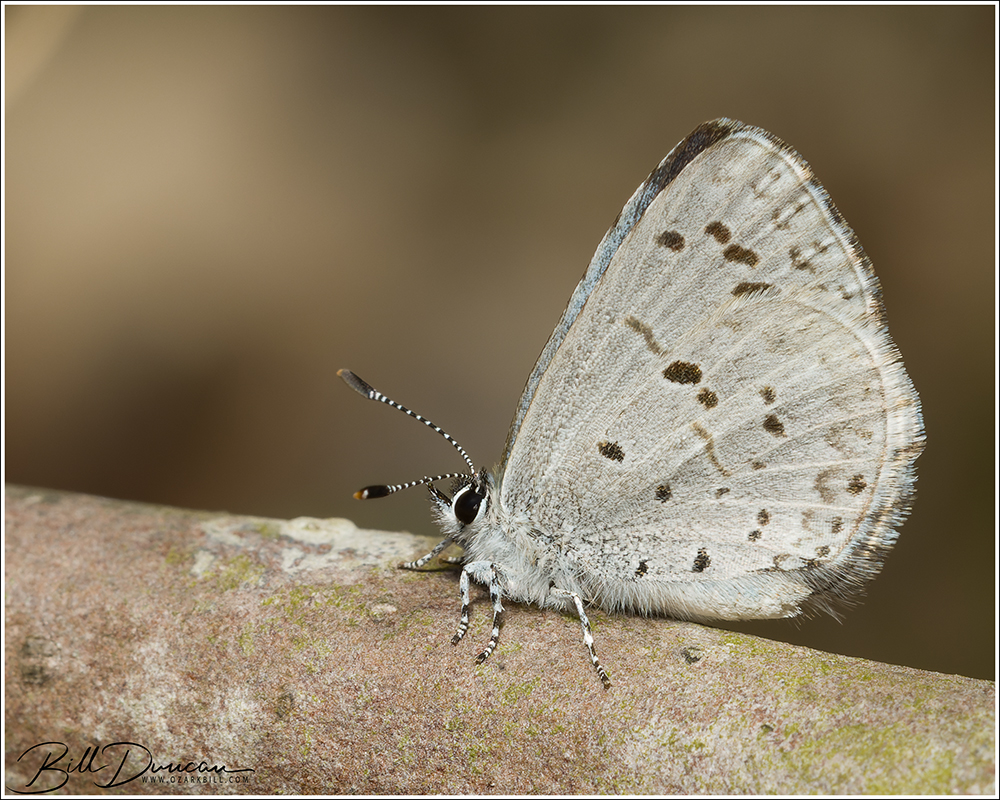
A not so lovely eastern tailed-blue (Cupido comyntas)
The perfectly names spring azure (Celastrina ladon)
Henry’s Elfin (Callophrys henrici)
And a beat up gray hairstreak (Strymon melinus)

Illinois Chorus Frog!

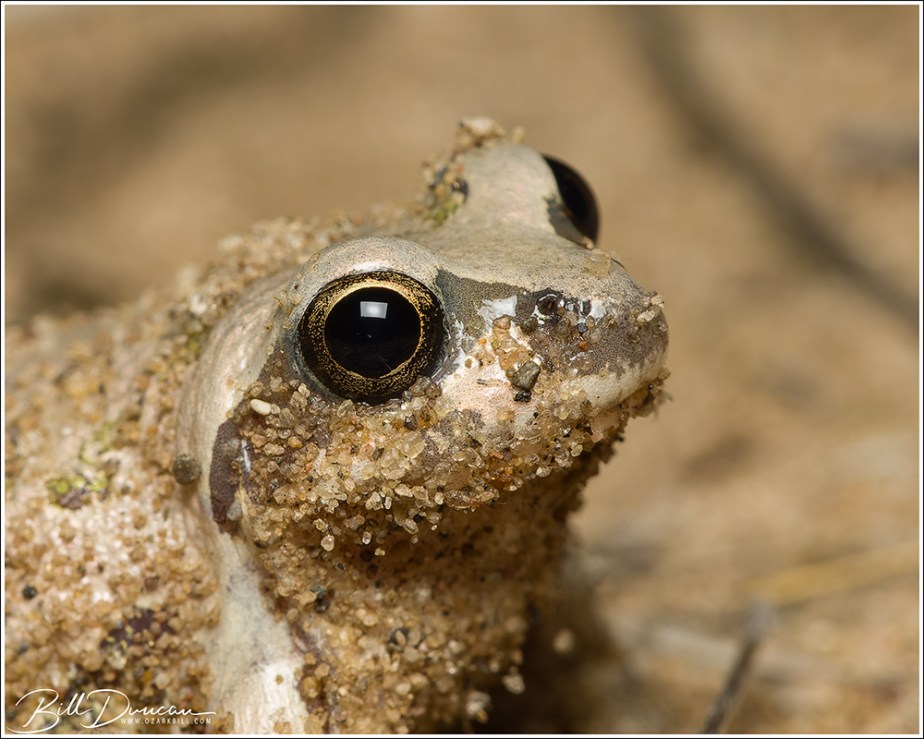
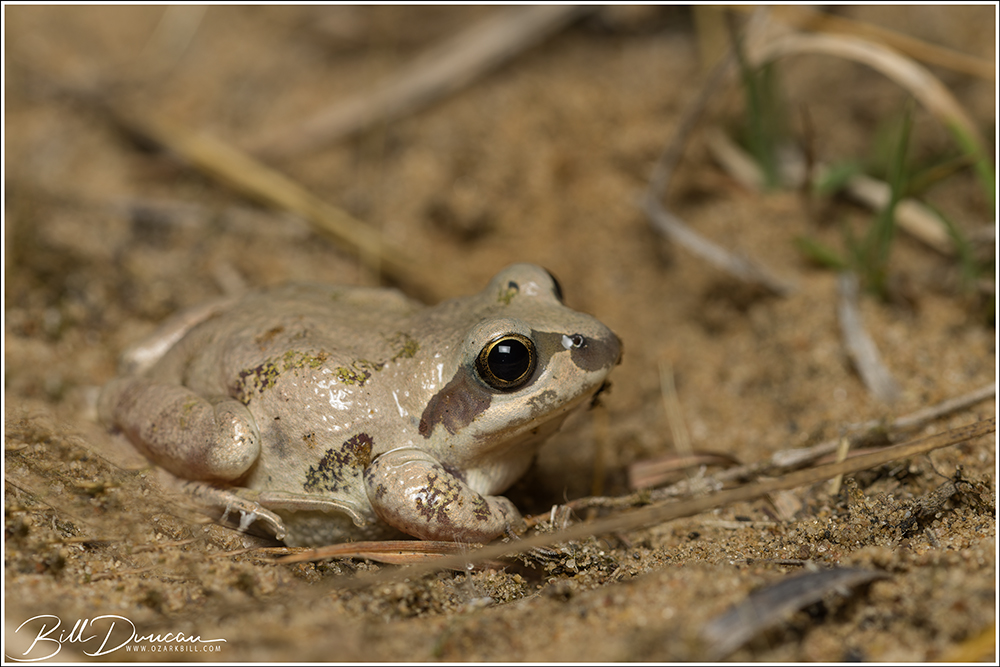
Miguel and I were offered a very special treat back in April when our new friends and gracious hosts, Rick and Jill, offered to show us a very unique and amazing animal, the Illinois chorus frog (Pseudacris illinoensis). The Illinois chorus frog is a species of study for Rick and his students, who are hard at work trying to document the life history and ecological details of this species of conservation concern. Existing in only a handful of counties scattered across Illinois, Missouri and Arkansas, this frog is classified as G3, meaning it is vulnerable to extinction. The primary forces causing the decline of this species is land development, primarily from agriculture.

Illinois chorus frog (Pseudacris illinoensis)

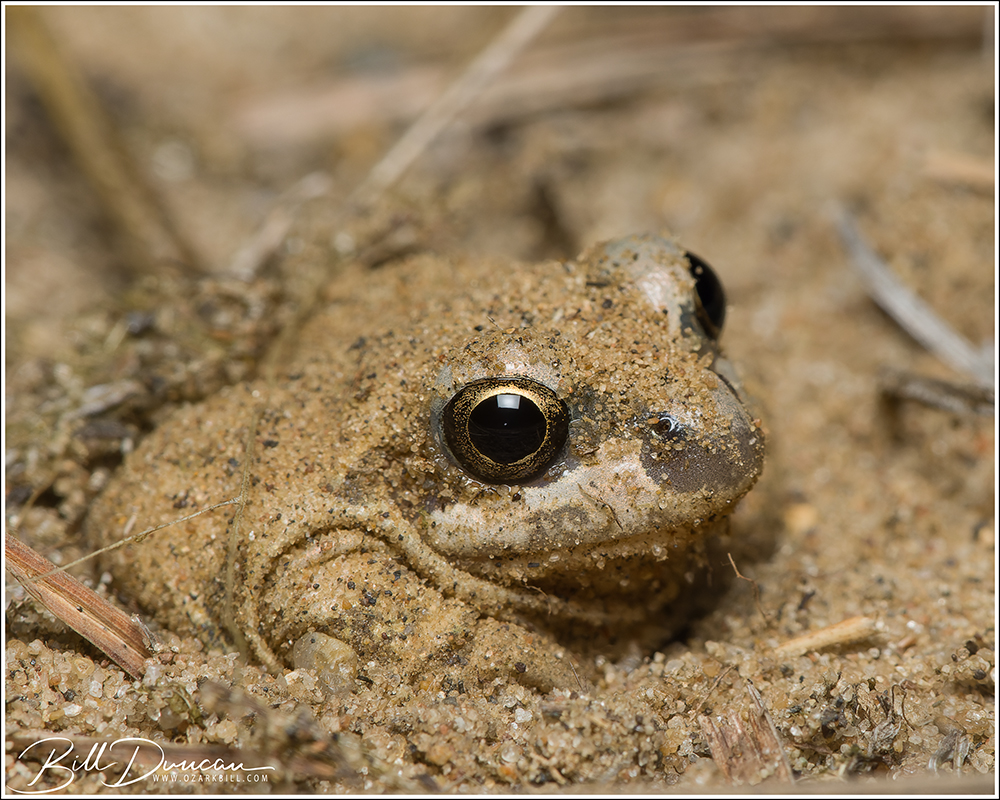
The Illinois chorus frog requires sandy wetlands. These types of areas are being lost due to drainage efforts for agriculture. The scattered remnants of these habitats are increasingly becoming isolated, likely limiting geneflow between pocketed populations.

Illinois chorus frog (Pseudacris illinoensis) attempting to back itself under the sand

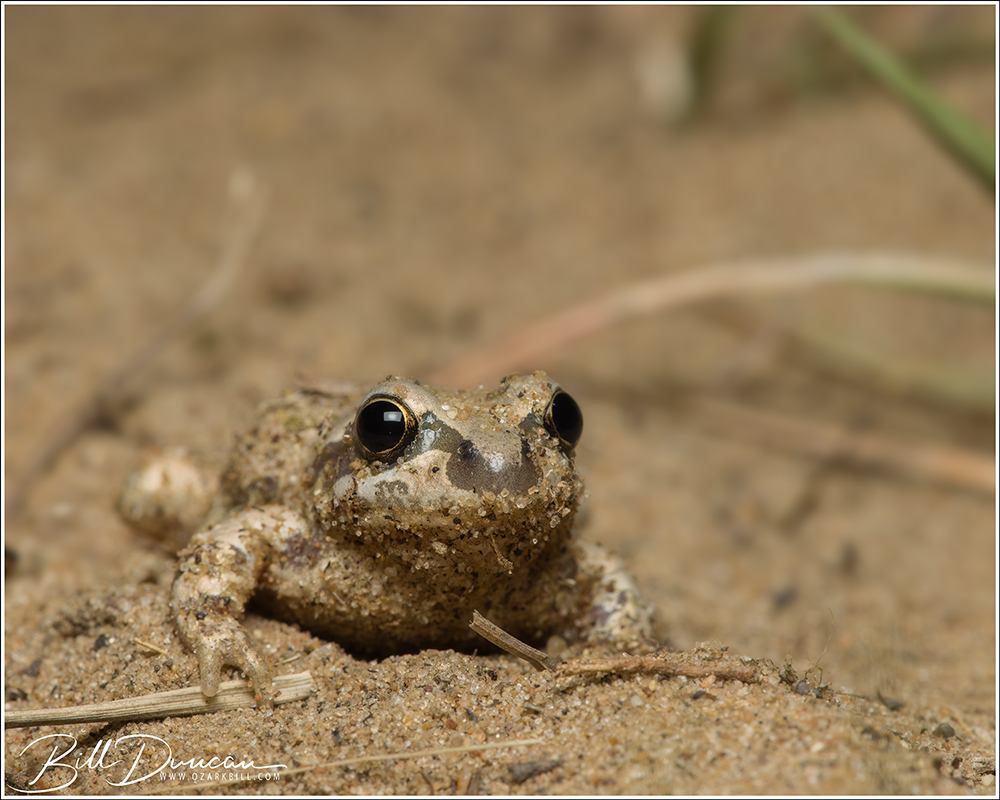
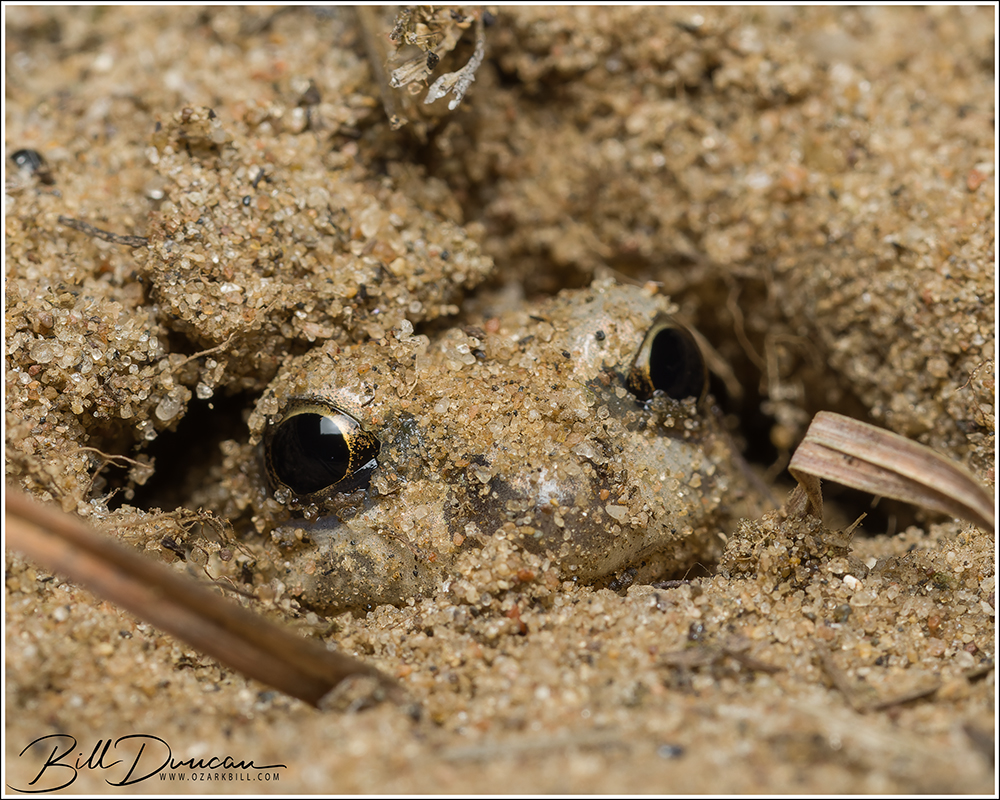
The natural history of this species is incredible. Due to the quick draining nature of their preferred sandy habitat, these frogs spend 90% of their lives below ground. Their breeding season typically begins in February, where they take advantage of water from icy thaws and early spring rains to breed in ephemeral pools. By May, the frogs have buried themselves in underground tunnels that they dig with muscular forearms. Unlike most other frog species that spend large amounts of time in subterranean environments, the Illinois chorus frog is known to feed, eating worms and small invertebrates.

Illinois chorus frog (Pseudacris illinoensis). Here you can see the muscular forearms that these frogs need to burrow underground tunnels where they spend the majority of their lives.

Organizations like the University of Illinois, Illinois Department of Natural Resources and the Heartland Conservancy are doing a lot of work in a number of places to discover more about their ecological needs and protecting and managing habitat these frogs need.

Illinois chorus frog (Pseudacris illinoensis)

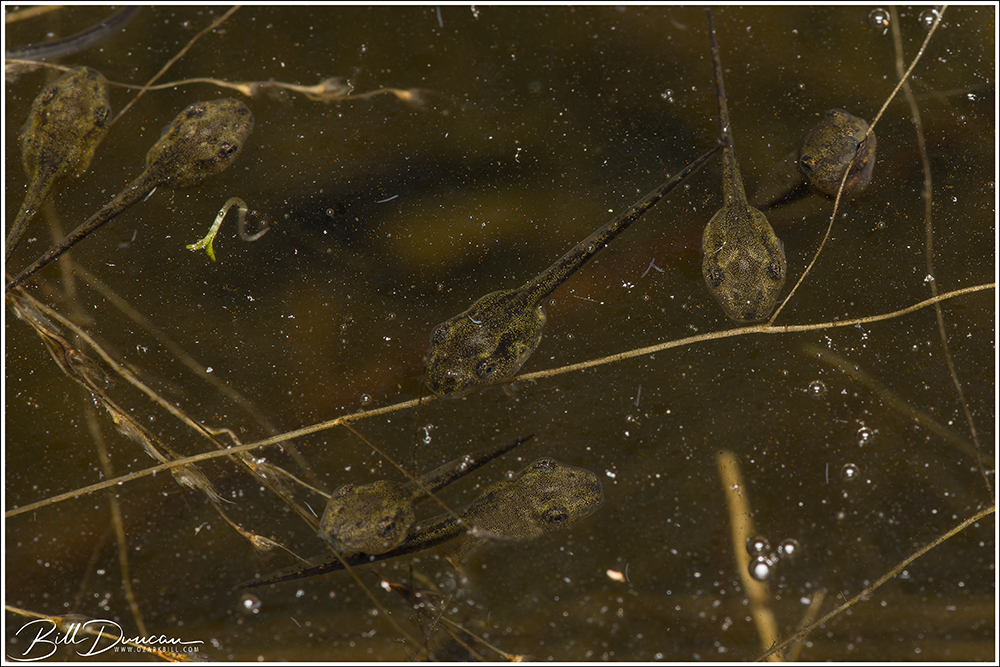
Another great thing Rick and Jill showed us were Illinois chorus frog tadpoles that were in artificial breeding “ponds” that were setup for them. As the hundreds of tadpoles we saw suggest, they were doing really well here.

Illinois chorus frog (Pseudacris illinoensis) tadpoles

I’m still excited about being able to see and photograph these wonderful frogs and hope to visit them again during an early spring.

OZB

Passionflower Flea Beetle (Disonycha discoidea)

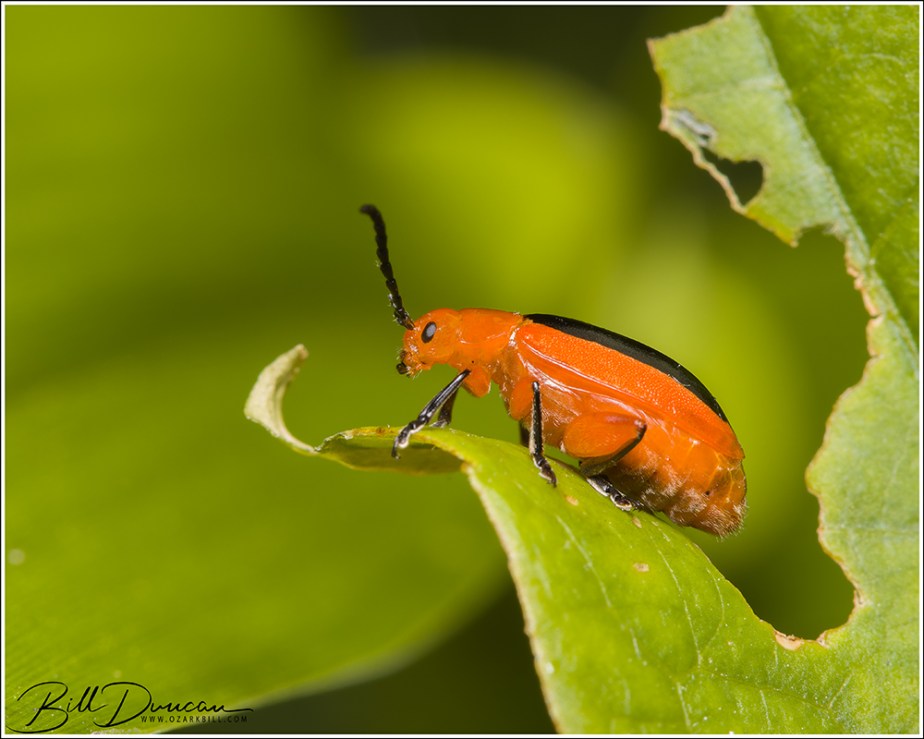
Ever since seeing the photo of Disonycha discoidea in Arthur Evans’ “Beetles of Eastern North America,” I have been wanting to find and photograph this gorgeous Chrysomelid. I have looked for years for this species around St. Louis and southeastern Missouri, and even planted one of its host plants, Passiflora incarnata, in our yard hoping to possibly attract them.

Disonycha discoidea (passionflower flea beetle)

Just a couple weeks ago, my friend, Pete, posted a bunch of picks from his botany trip to southern Illinois on Facebook. As I perused through his collection of fascinating plants he found, I stopped at a photo of several beetles that were on a grape vine. In this photo was a single D. discoidea. Getting a little upset, I messaged Pete to see if he could tell me exactly where he had found this. He was at Giant City State Park and because of smartphone technology, he forwarded me his geotagged photo and I had access to exactly where he had taken the picture.

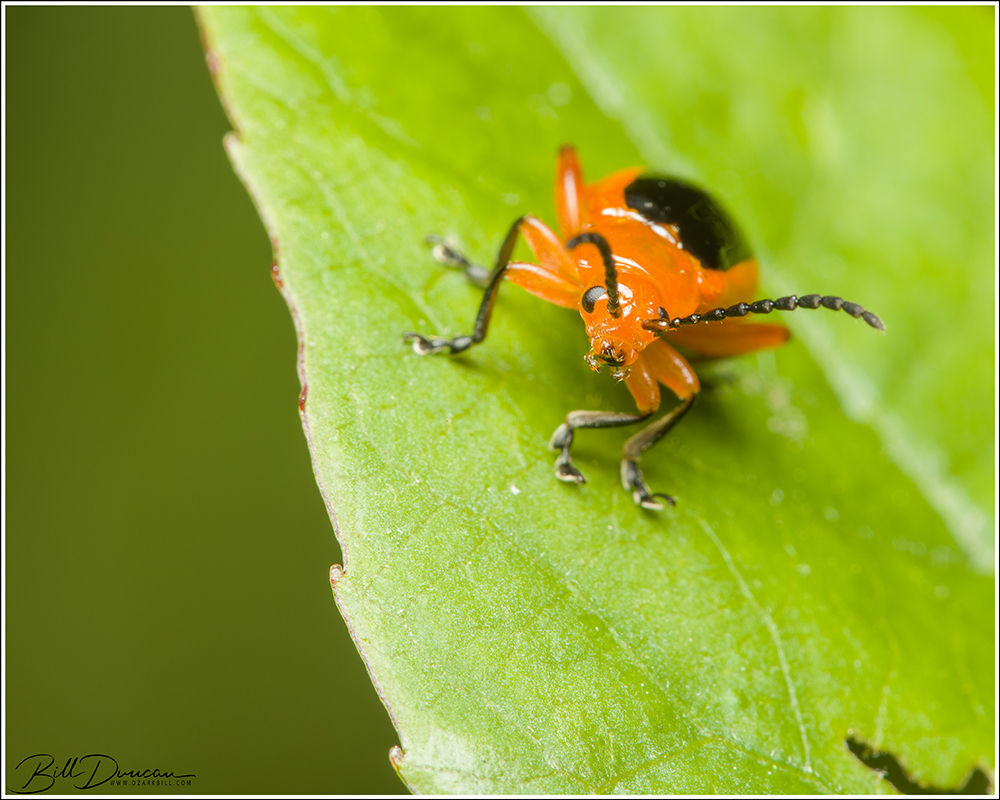
Disonycha discoidea (passionflower flea beetle)

However, I knew this was a big risk and I didn’t get my hopes up. First, Pete had taken his photo approximately a week before Sarah and I took the 2.5 hour drive south. In addition, the beetle he photographed was on a grapevine, not their typical host plant. Was this just an accidental occurrence of this beetle or could they use grapes as an alternative host? Nothing in the literature suggested that this occurred with this species; apparently, it is monophagous and only uses members of the Passiflora to feed.

We decided it was worth the drive. Giant City State Park is a high quality area and I knew that if we struck out we wouldn’t have to try hard to find something else of interest. We found Pete’s spot of original find pretty easily and started searching. After a couple hours of looking as hard as we could among the grape and poison ivy we decided we weren’t going to find the species there. Utilizing smartphone technology again, I thought it might be a good idea to look for Passiflora plants that had been documented in iNaturalist within the park. My phone signal was pretty poor, so we drove to one of the highest points we could find and I found a single spot that had these plants documented.

Disonycha discoidea (passionflower flea beetle)

These plants were found in a poor scrub prairie habitat along with blackberry and even more poison ivy. We started looking, finding and searching between 50 and 100 of these short plants. We looked very closely and I had a chance to try my DIY collapsible beat sheets that I made over the winter. No luck. I couldn’t believe it. I really thought we had a good chance. We knew the species had been found in the park and here we were within a sizeable population of the host plants. You’ve seen the photos already, so obviously we found our target. And, of course, insect finder extraordinaire, Sarah, was the one to find the beetle on a ragged, half-eaten P. incarnata plant. I immediately got to work photographing from a safe distance. One of the reasons they call them flea beetles is that they will jump great distances upon being disturbed. Ultimately, we found four individuals all on the same plant. Thankfully, this species is quite large for a flea beetle and I didn’t need to get too close that higher magnifications would require.

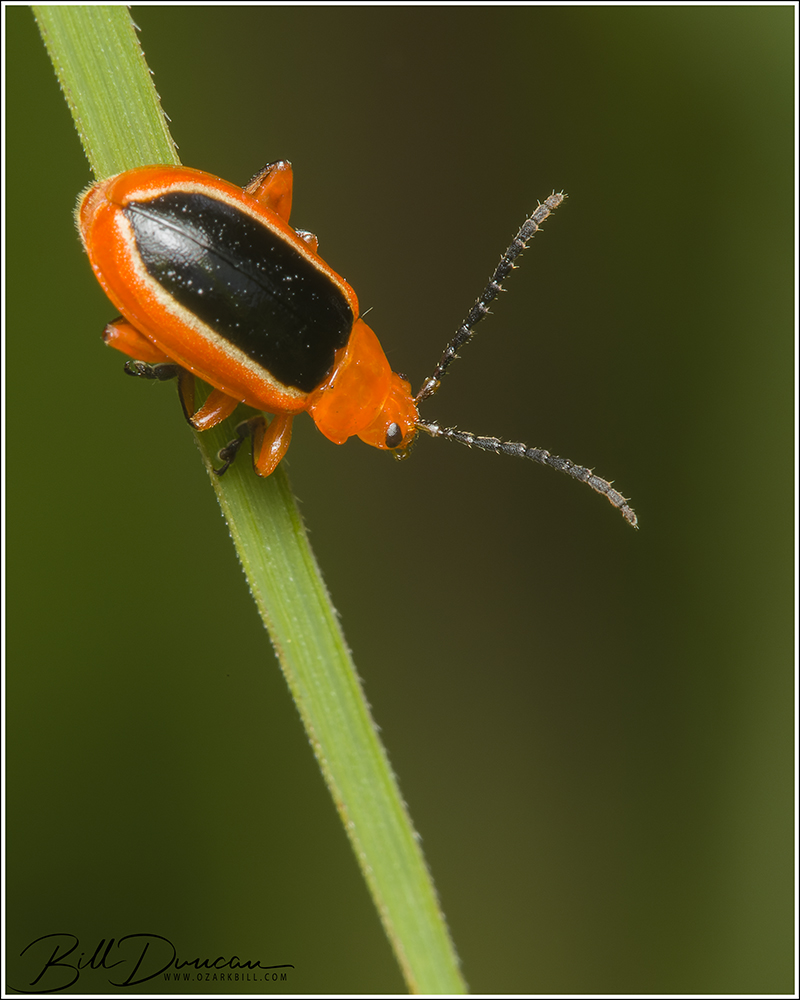
The aposematic colored Disonycha discoidea (passionflower flea beetle)

So what’s up with that coloration?
This species exhibits aposematism, also known as warning coloration. This is the same reason that unpalatable or downright toxic species like monarchs and milkweed bugs along with stinging predators like yellowjackets or velvet ants show warning colorations. Disonycha discoidea picks up cyanogenic glycosides from its Passiflora host plant, making it distasteful or toxic to would-be predators. By evolving this aposematism, the insects can advertise this and avoid the predators that would be on the lookout for an easy meal. In the tropics, a group of butterflies known as the heliconiines also acquire these toxic compounds from the larval feeding on Passiflora.

Disonycha discoidea (passionflower flea beetle)

It was great to finally find this target species. The larvae of this species is also quite photogenic. If I find the time to make a return visit this summer, I would love to find a few of them as well.

Thanks for stopping by!
OZB

Special Guest Post – Overlooked Landscapes

Today I’m happy to provide a platform for renowned nature photographer and friend, Casey Galvin, to share his words and fantastic landscape photography from lesser known areas between the coasts. This article is exactly my philosophy when it comes to landscape photography – what little I do of that these days. I am much more interested in finding hidden gems without a plane trip or a multiday car ride. This is actually much tougher to do than placing your tripod in the holes dugout by the throngs of photographers chasing the iconic landscape subjects. Casey doesn’t usually present his works in an online format, so prepare yourself for a real treat! What follows are the writings and photographs of Casey.

When one thinks of great landscapes, Missouri and the two other Midwest states, Iowa and Illinois, do not come to mind. With the great American West along with coastal states available to most landscape photographers it is easy to fly over or drive through these three states without a thought of stopping. What makes this area special, most landscape photographers have never taken the time to be here in the Midwest. You make images no one else has, unlike in the western USA. However, because of this anyone who does stop and take the time to explore will find something that most people do not think of photographing. These three states have unique and special geological sites and plenty of water resources (rivers, creek, lakes, world class springs and seepage areas) and open landscapes.

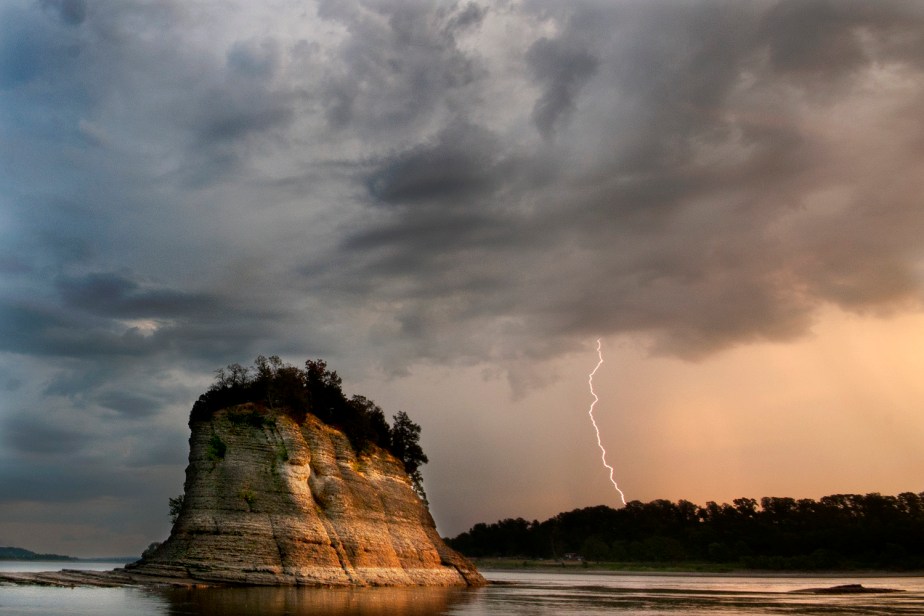
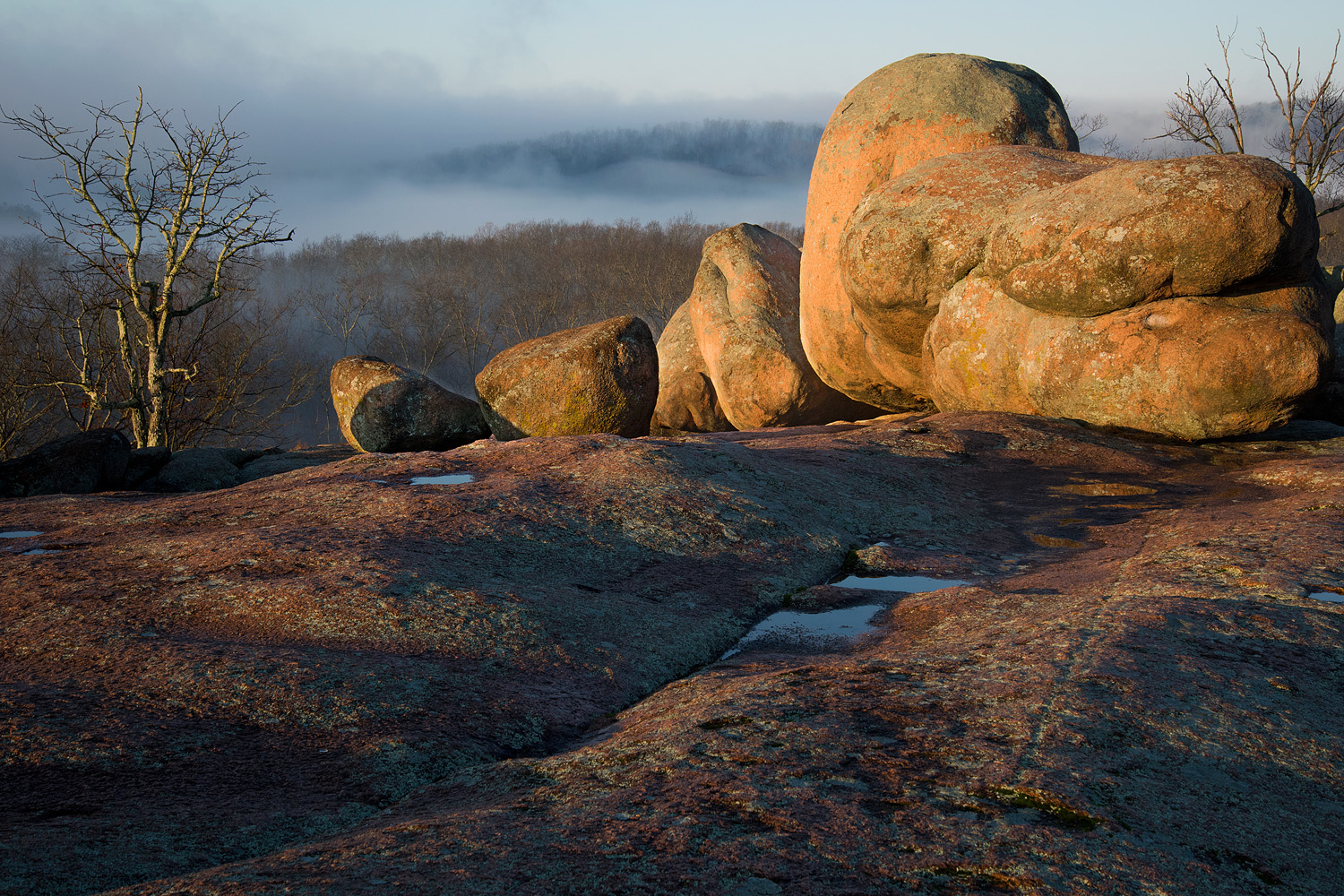
Elephant Rocks State Park
Iron County, Missouri

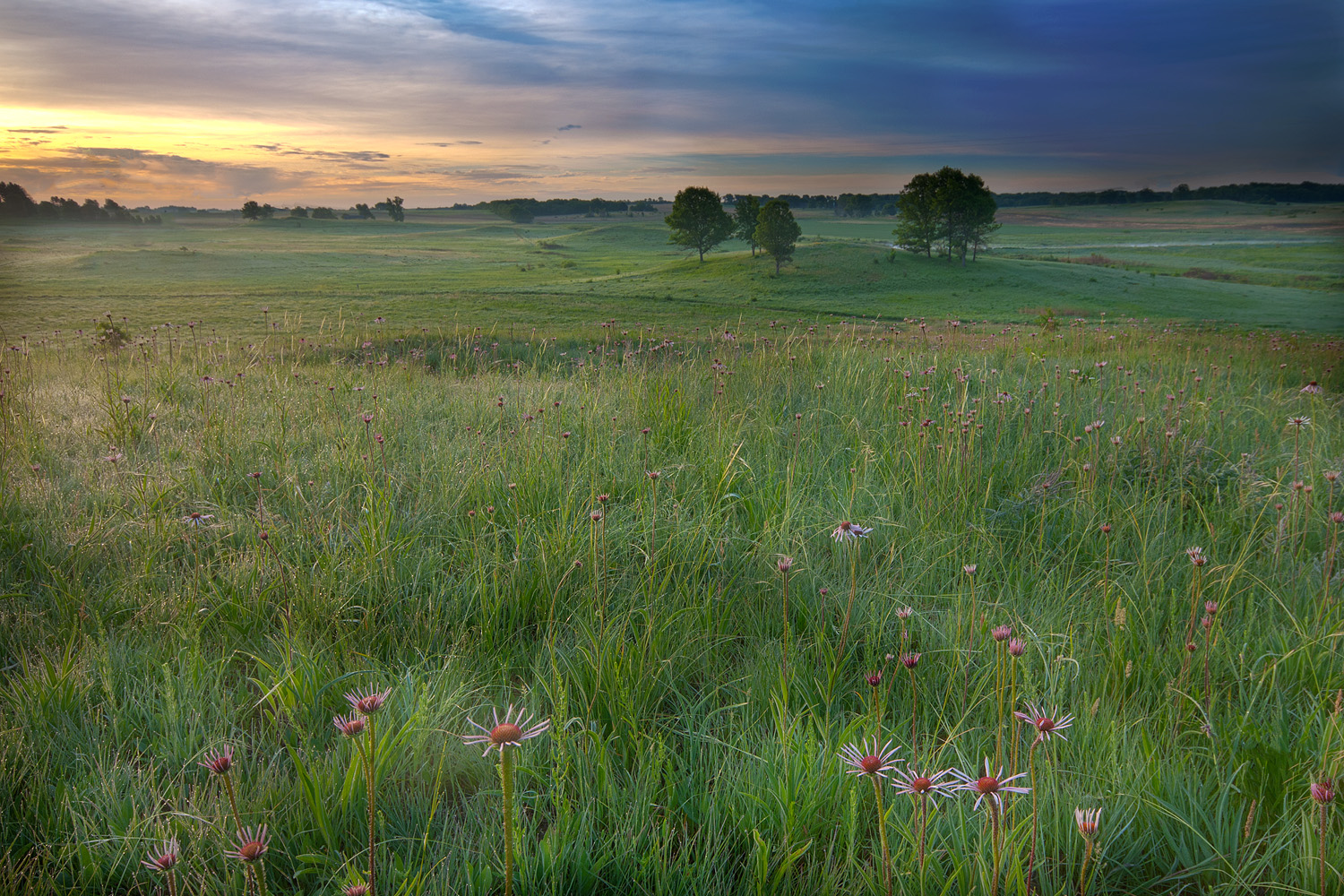
This being the heart of Tallgrass Prairie, there are still remnants left of this rarest of North American biomes. These systems were lost because it is some of the most productive farmland in the world, sand and gravel mining took others and conversion to urban development took the rest. Most people do not understand these grasslands probably because they have never experienced a true prairie. Unfortunately, there are not many large areas that are left untouched, but one can still find several remnants that are 1000 acres or even larger. This is where the buffalo roamed in large herds and in some locations, one can still find these animals ranging freely. The other nice feature for a photographer when visiting these sites is that you will most likely be the only one at that location. I have been on many a prairie for hours and have never seen anyone else.

Nachusa Grasslands
​Franklin Grove, Illinois

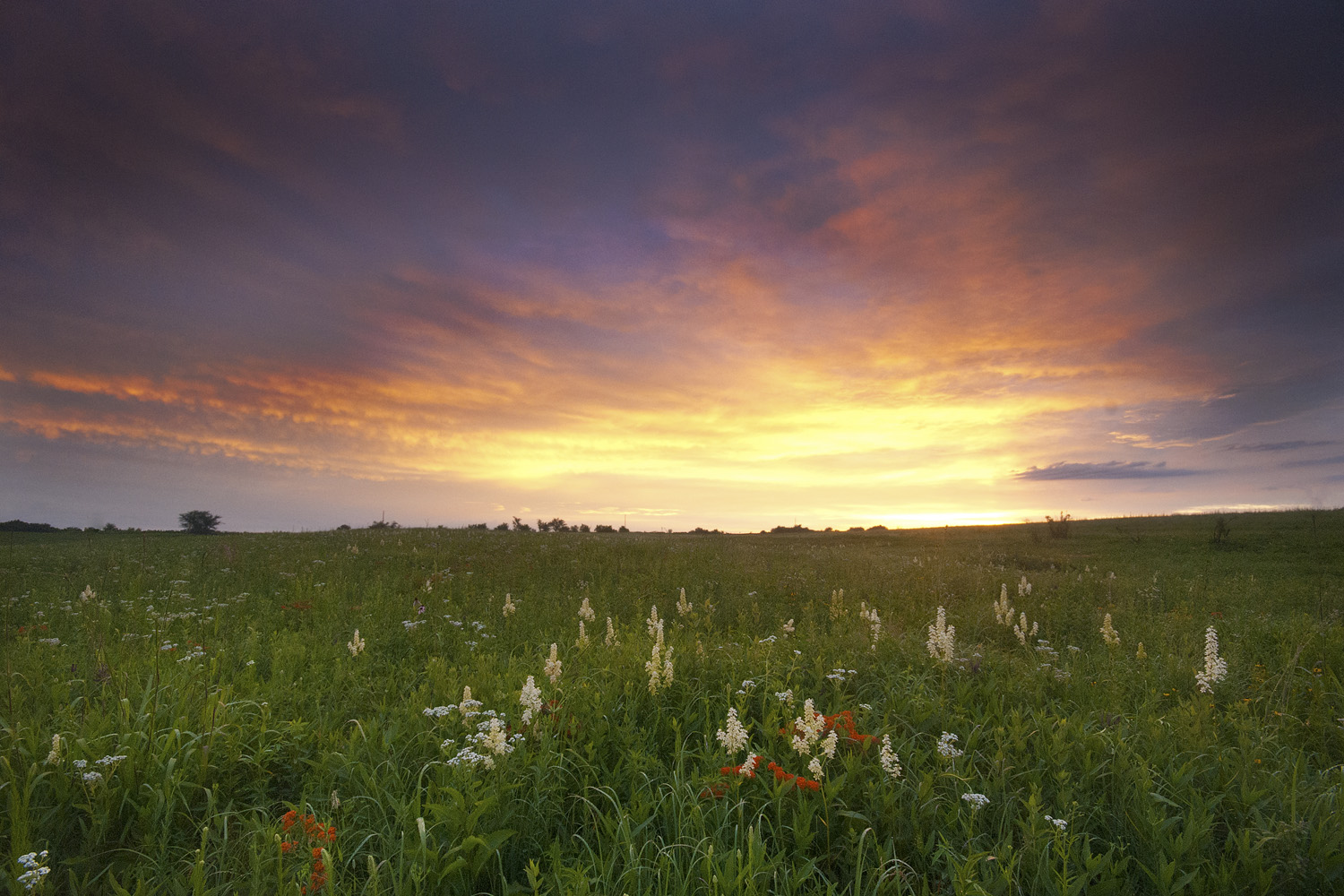
Like the West, where they get super blooms with the heavy winter rains, as long as the rains are steady, Tallgrass Prairies get super blooms at least once a month in the growing season. These systems are made for hot, dry weather. May brings profusions of paintbrush (Orabanche coccina), in June coneflowers rule (Echinacea pallida or if you are lucky in prairies near the Ozarks, E. paradoxa), in July blazing star (Liatris pycnostachia) takes over. Autumn is dominated by yellow composites, gentians and late Liatris species.

Helton Prairie Natural Area
Harrison County, Missouri

Savanna, another biome type, is usually tied to the prairie. This is the transitional biome between prairie and forest, and here you will find a mix of species from both. I have found that you can get good to great photographs on these lands, but because it does take work, you can develop photographic skills you can use elsewhere in the world. These can be difficult landscapes because of the open space

Kankakee Sands
Kankakee County, Illinois

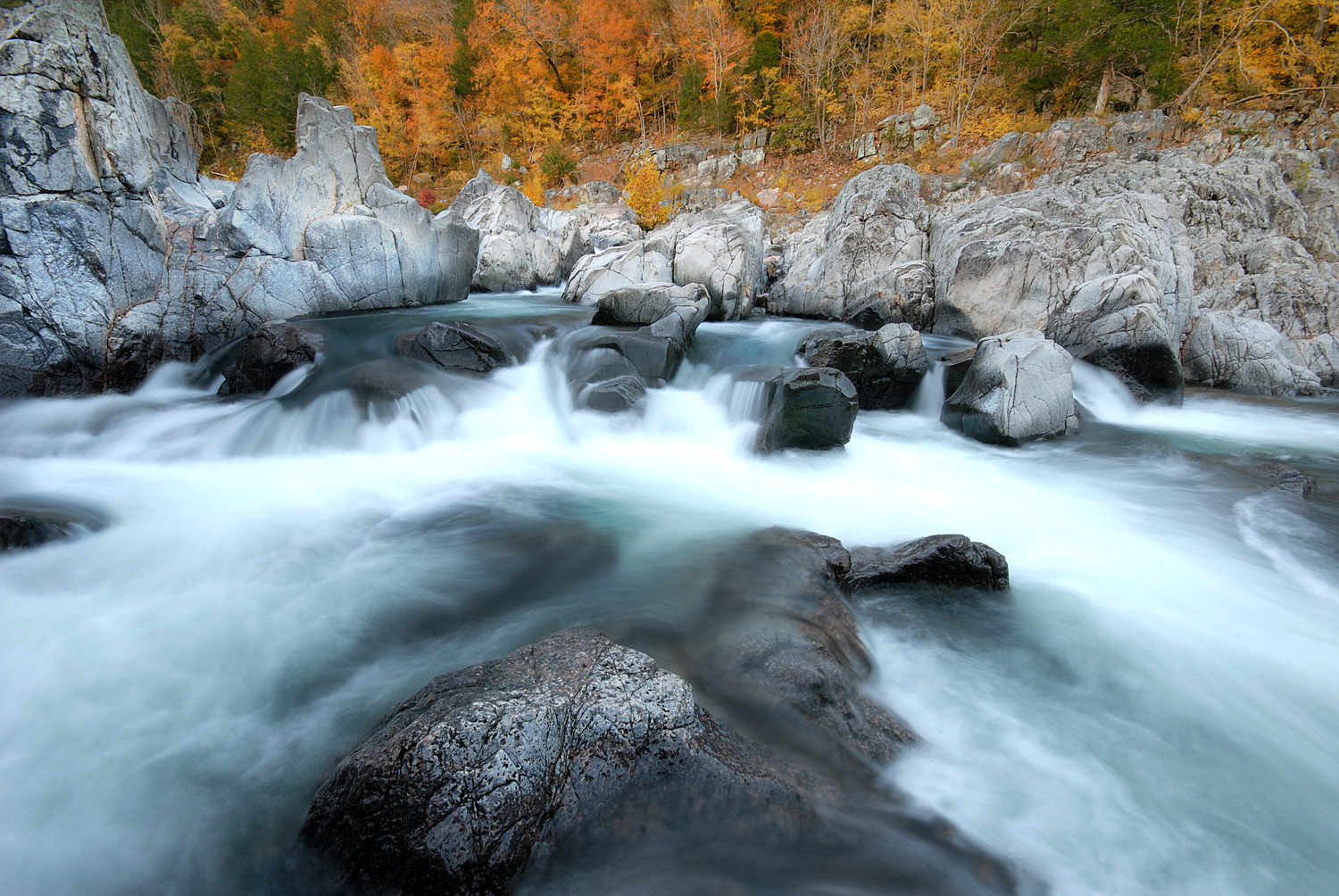
There are also unique geological features found in this region. The Saint Francois Mountains in SE Missouri are extinct volcanoes and ancient lava flows. Most have been exposed for over one billion years. With its acid soils it make for great plant diversity. When a river or creek flows through one of the lava flows you have what Missouri calls a shut-in (water is restricted or shut-in to a narrower passage due to the slow-to-erode nature of the underlying granite). These are extremely attractive to photograph in all seasons. Unfortunately, some of the more attractive ones are well visited. So unless you’re early or late in the day you may find yourself in large crowds. These are not tall mountains, being eroded for eons, but this is still mountainous country.

Johnson’s Shut-Ins State Park
Reynold’s County, Missouri

In southern Missouri there is also a unique set of monadnocks, an example being Caney Mountain Conservation Area – a remote area was once one of the last bastions for deer and turkey in the eastern USA.

Caney Mountain Conservation Area
Ozark County, Missouri

In southern Illinois the Shawnee National Forest with its limestone and sandstone escarpments (Greater and Lesser Shawnee Hills and Ozarks) can make for nice areas to explore photographically. Garden of the Gods is very scenic. Wet weather waterfalls are abundant (yes, Illinois is not flat here). La Rue Pine Hills ecological area not only has tall limestone bluffs. Below them is one of the most floristically rich areas in the Midwest with over 1200+ plant species. According to Robert Mohlenbrock, an authority on the flora of Illinois, the Shawnee NF is more diverse than the Great Smokey Mountains National Park. The area south of the Shawnee Hills also has some of the best southern swamps remaining in North America.

Ghost Dance Falls
Shawnee National Forest, Illinois

Along the west coast of Iowa and NW Missouri is another unique landform. The Loess Hills made up of windblown dust (loess soil) from the last glaciation. These type of hills are found only in three locations in the world and this being the only one in North America. The plants and animals found here are similar to those found nearly 100 miles west in Kansas and Nebraska. This is another type of tallgrass prairie with disjunct populations of mixed grass prairie species.

Broken Kettle Grasslands Preserve
Plymouth County, Iowa

Forest covers the southern one-third of Missouri and the Shawnee NF in Illinois. Spring and autumn bring many landscape opportunities especially along the rivers and other water features. Wildflowers abound here through the growing seasons in the forest and in the spring and on rocky glades (opening between the woodlands) throughout the growing season. These are some of the more diverse forests in the country, with several species restricted to the Ozark Plateau. This is also a world class birding area.

Chalk Bluff, Ozark Scenic Riverways
Shannon County, Missouri

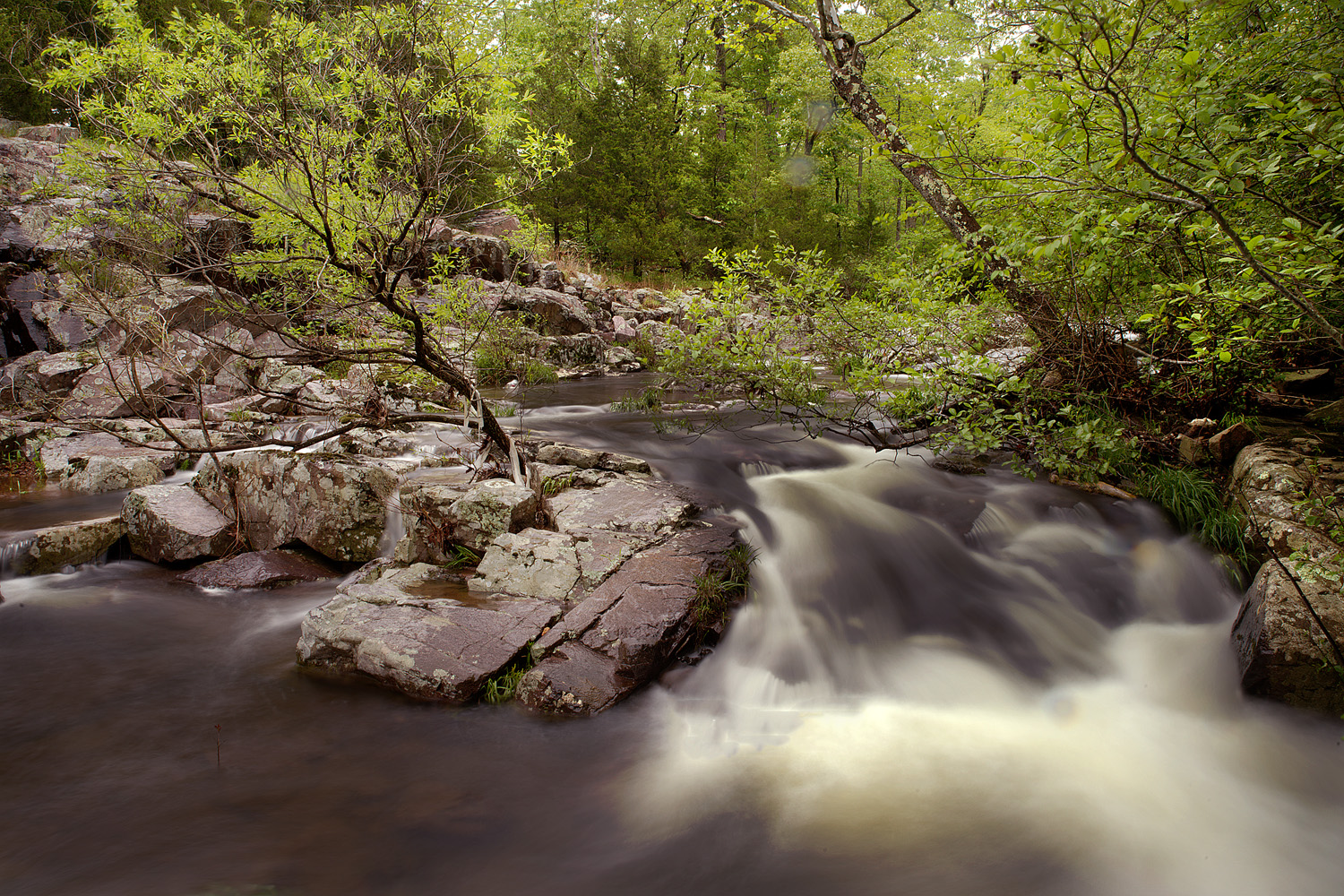
Water features are abundant as stated prior. This is one feature that many areas in the country lack. Even in deep droughts, the larger springs still have plenty of output keeping many rivers flowing well deep into the autumn. Every 10 to 20 years there comes a drought where the biggest of rivers have levels that fall enough to be able to walk to some of the islands that are within them, allowing us to get images that might be harder to access without a boat.

Carver Creek Shut-ins
Iron County, Missouri

I have spent many years studying and exploring these areas, through all four seasons. It is well worth the time to visit and explore.

Casey Galvin
May, 2023

An Early Rise from Brood XIX?

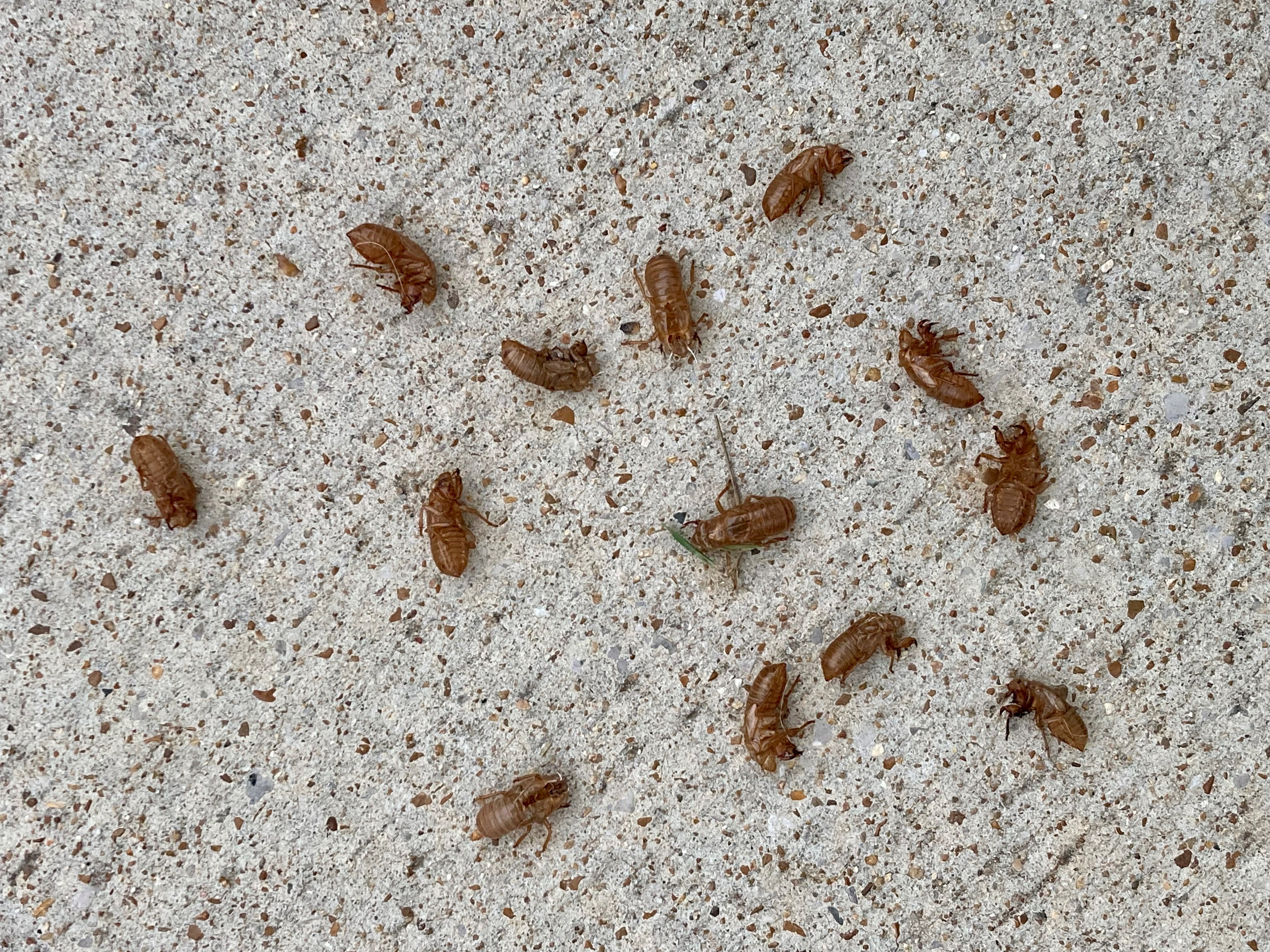
During my morning walk in our Chesterfield suburban neighborhood this morning, I found quite a fascinating thing! I ran across several groups of periodical cicadas (Magicicada spp.) that had emerged during the night. I estimate that I found approximately 250 of these large hemipterans without leaving the sidewalk!

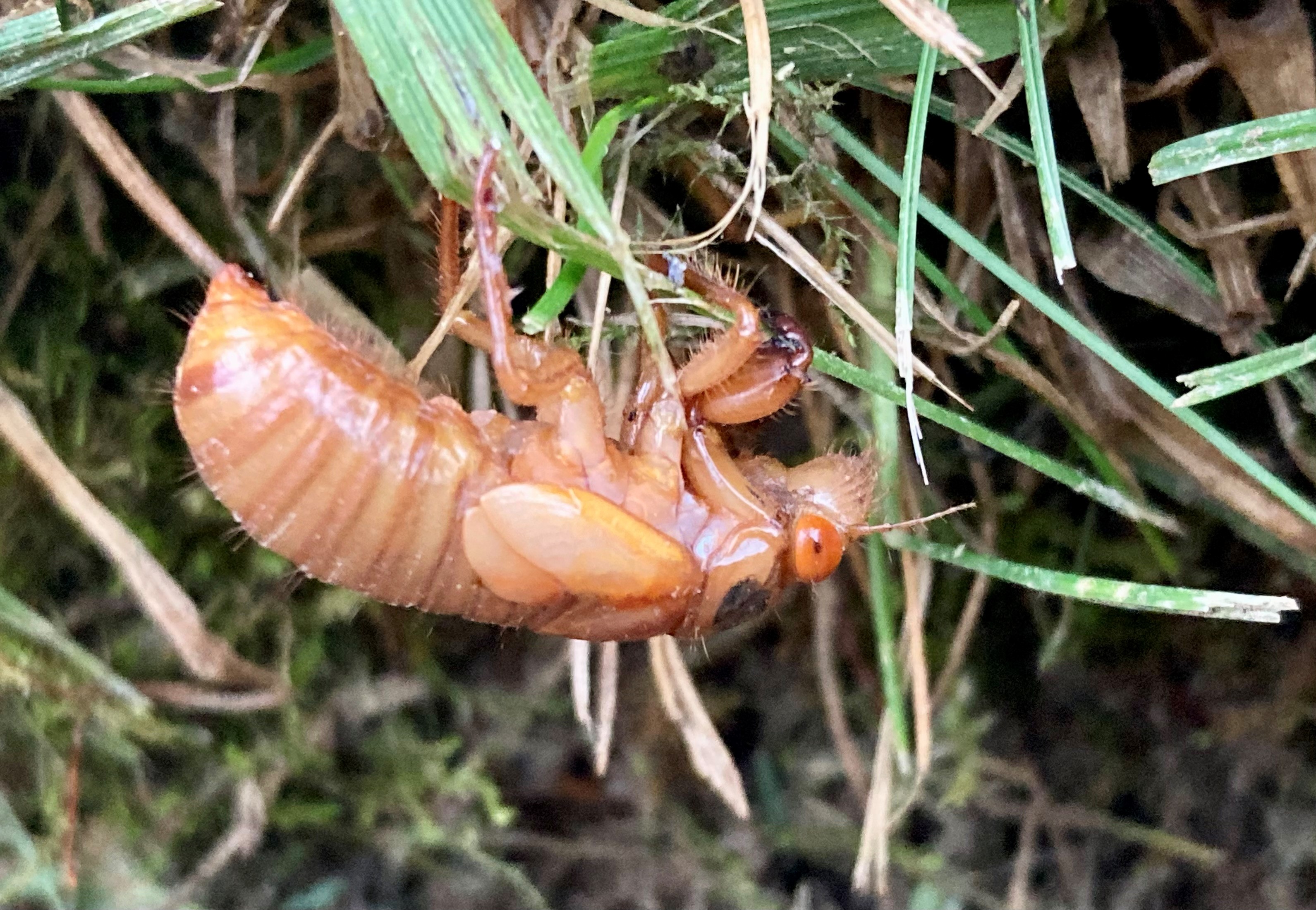
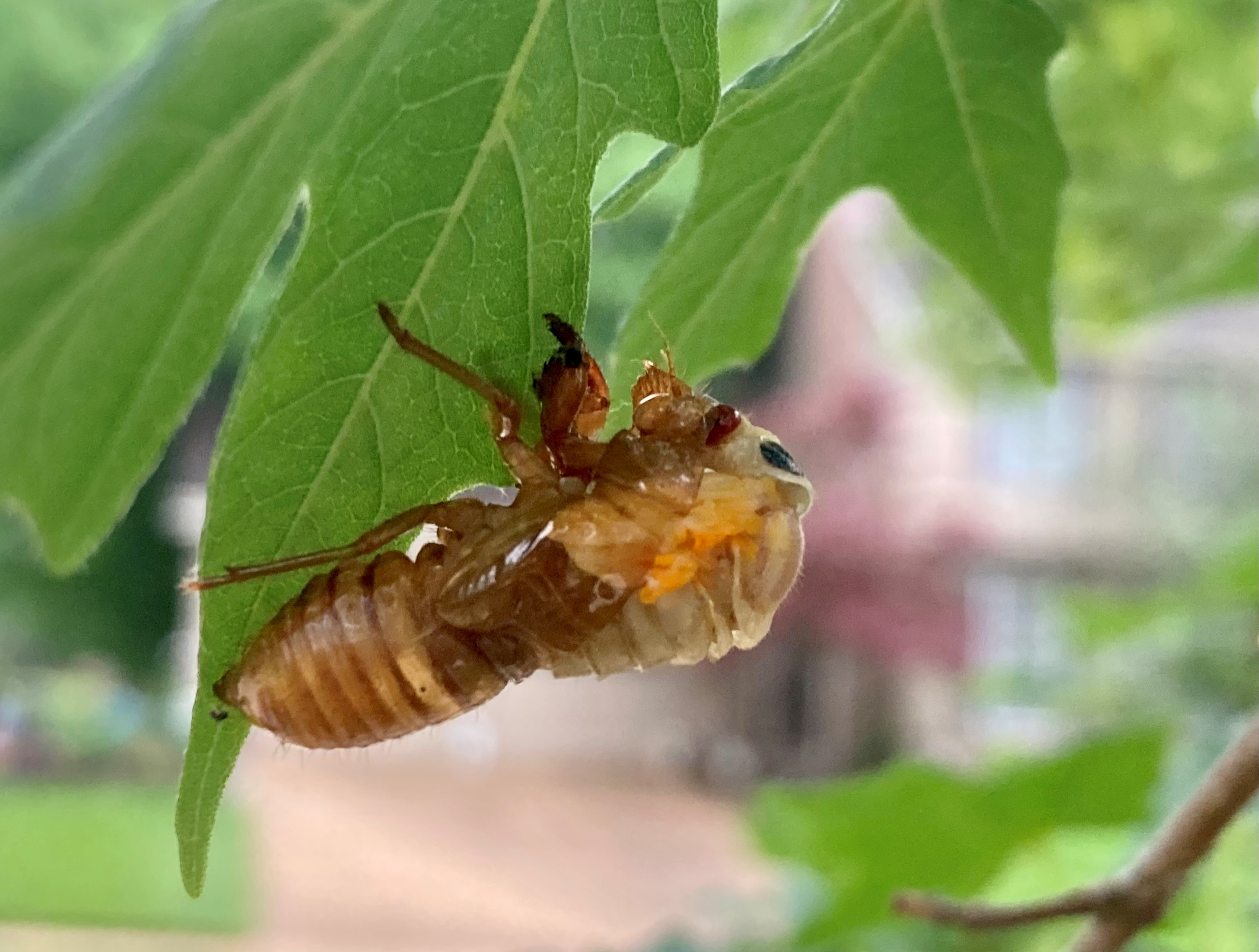
An exuviae (shed exoskeleton) of a recently molted periodical cicada (Magicicada spp.)
A pile of periodical cicada (Magicicada spp.) exuviae found on a sidewalk underneath a young maple tree.

I am not quite certain about what exactly is going on here. Our next big emergence of these insects is supposed to occur next season in 2024 – the so-called “Brood XIX.” Brood XIX is composed of four species of periodical cicada (Magicicada tredecim, M. tredecassini, M. tredecula, and M. neotredecim) that all follow the 13 year emergence pattern.

A periodical cicada (Magicicada spp.) nymph. This one is a little behind the others. They usually climb up and fasten themselves to an anchoring place to make their final molt into their adult form during the early night hours.
Ecdysis in action! I wish I had my good camera with me on my walk. This is a periodical cicada (Magicicada spp.) making its final molt and will begin its adult form. It took approximately 13 years to get this far.

Why are we seeing these emerge this year? A couple of possible explanations could account for this. These could be “stragglers,” the term used to describe individuals that emerge in years before or after the bulk of the particular brood. This makes evolutionary sense; if the entire brood emerged all on the same year (emergence of the entire brood within a given location occurs within a couple of weeks) and they are struck with a weather or some other disaster, then this would be a very bad day for the brood. With some individuals emerging a year or two before or after the primary year, then this would obviously be beneficial in hedging their bets.

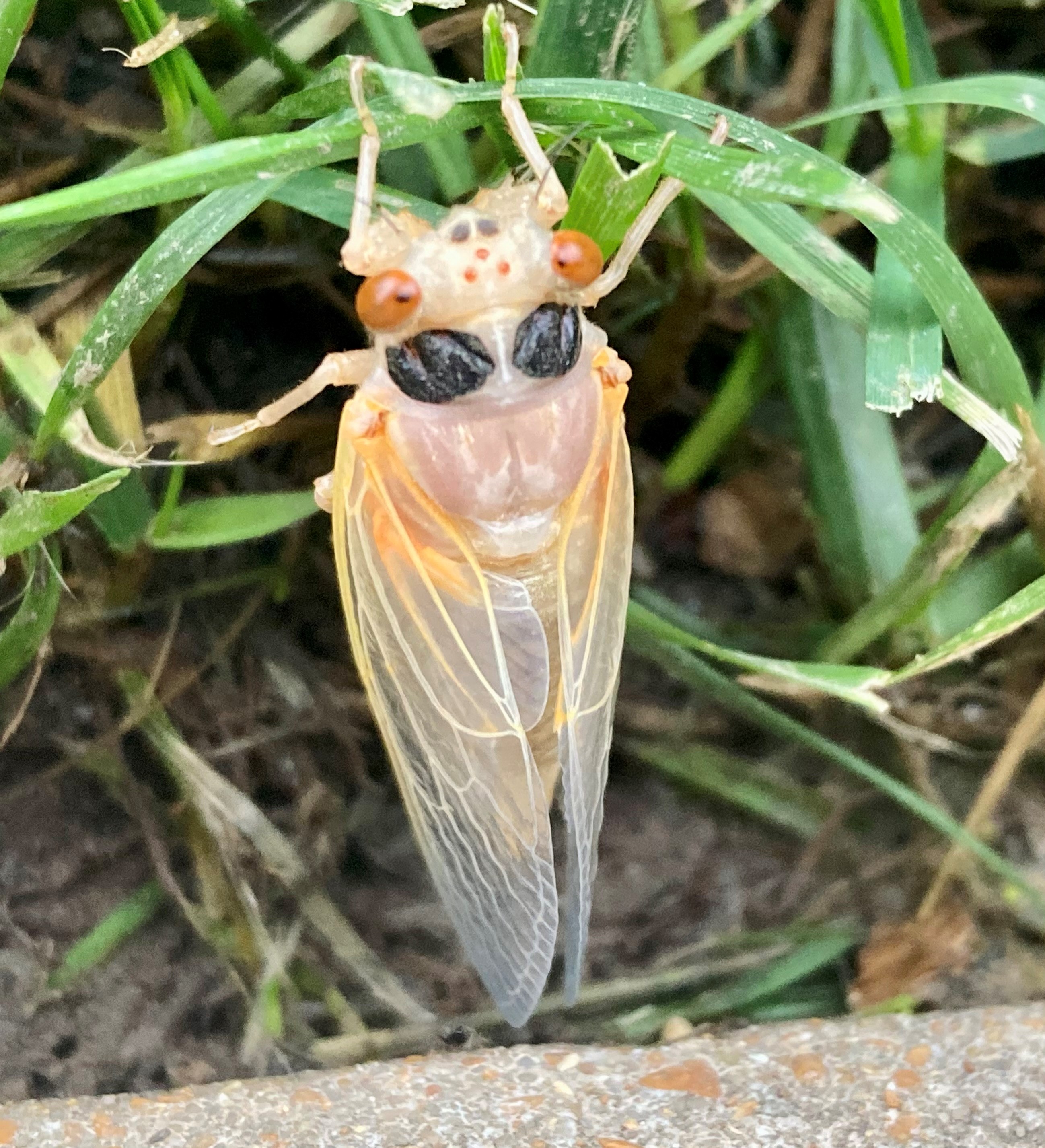
Here you can see a freshly emerged adult periodical cicada (Magicicada spp.) that is still hanging on to its last shed exuviae.
A newly emerged adult periodical cicada (Magicicada spp.) that has not yet hardened its exoskeleton and developed the dark colors that should come over the next few hours.

Another possible explanation is that this could represent a sub-population of Brood XIX that is on a slightly different schedule and may routinely emerge early. This could be due to differences in climate patterns between this one and what the rest of the brood experiences. Brood XIX covers a large area of the southeastern U.S.

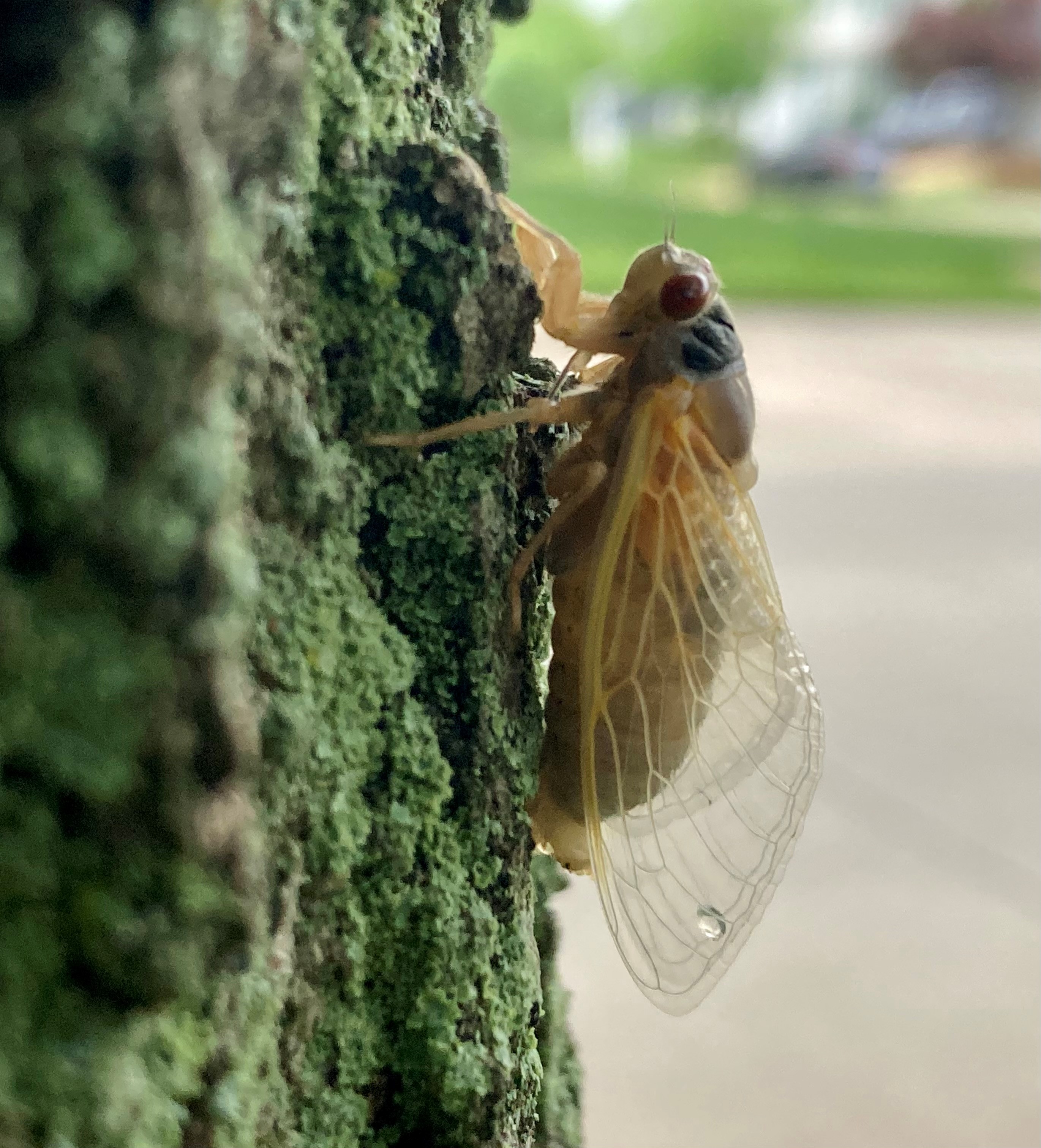
An adult periodical cicada (Magicicada spp.) that is waiting for its new shell to dry.

Or, could this be the result of some differentiation between emergence patterns between the four species that constitutes Brood XIX? I don’t know but I would love to hear any thoughts from those of you who are more educated and experienced in these things than I am. I will be keeping my ears open during the next several weeks with hope of hearing this rare song.

An adult periodical cicada (Magicicada spp.) that has made it to its last stage in life and is getting ready to fly into the treetops to find a mate.

Thanks for stopping by!
Ozark Bill

2022 Kansas Trip – Ferruginous Hawk

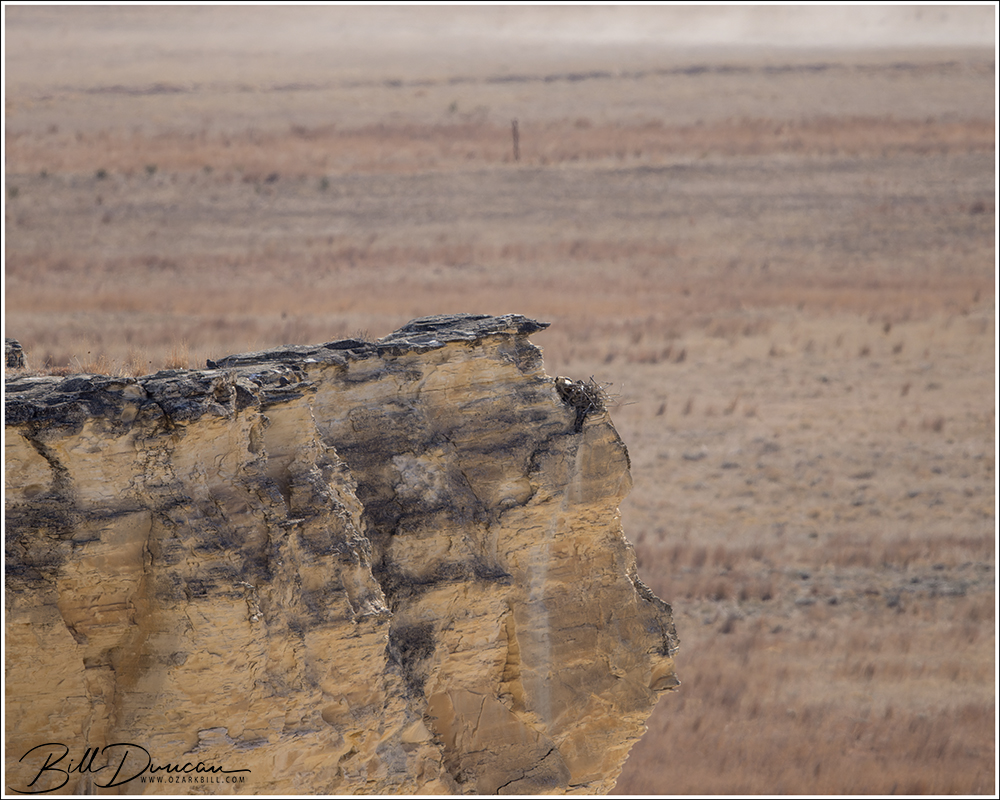
I was definitely on the lookout for Ferruginous Hawks during our visit to western Kansas last year and we were fortunate to have one fly directly over us as we visited a badlands monument. What I didn’t expect is to be able to see an active nest. This was at a private ranch where we had the opportunity to see and photograph Lesser Prairie Chicken leks. The rancher was understandably weary of getting too close or staying too long, so we took our shots from a good distance from the vehicle windows.

Ferruginous Hawk
Active Ferruginous Hawk nest on cliff’s edge

A New Great-horned Owl Nest!

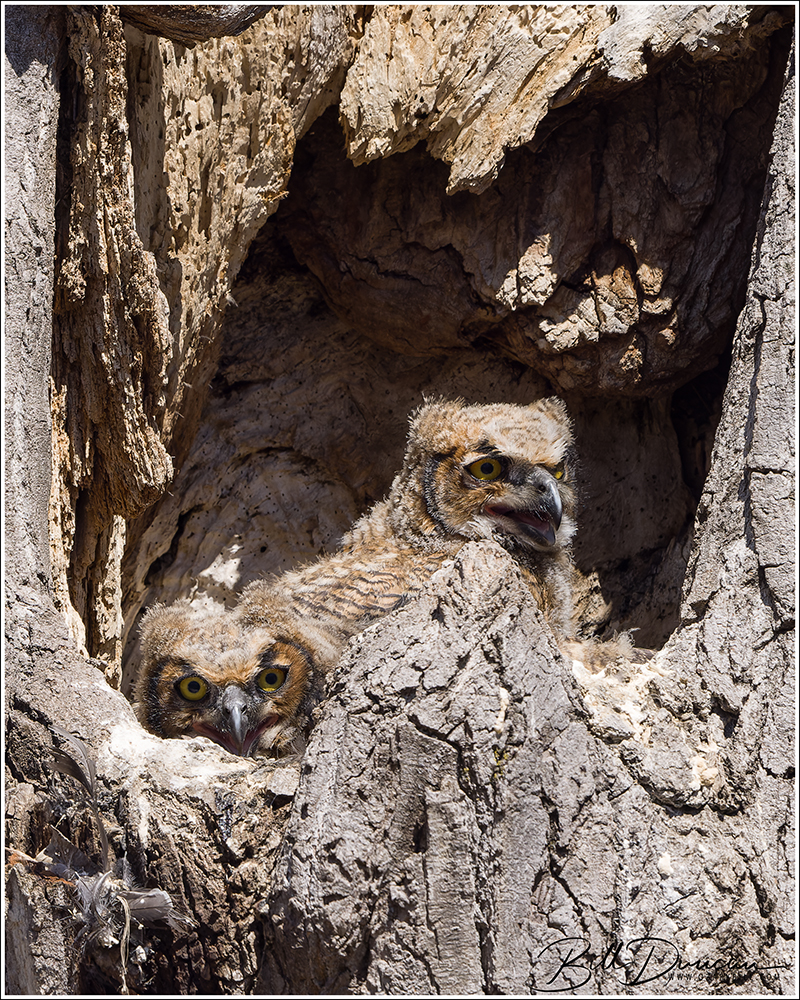
I finally had the opportunity to visit my buddy Jim’s property to check out the nest site of a Great-horned Owl nest. This pair has used this snag for about 5 years to raise their brood and I am disappointed in myself for not visiting sooner. I had no idea how perfect the views into this nest were. You couldn’t ask for a better setup. Unfortunately, I was a bit late this season as well. The chicks fledged within days of my first and only visit. Hopefully next year!

Here are a few from my visit. These were taken in early afternoon so the light was a bit harsh.