"What a thousand acres of Silphiums looked like when they tickled the bellies of the buffalo is a question never again to be answered, and perhaps not even asked." -Aldo Leopold
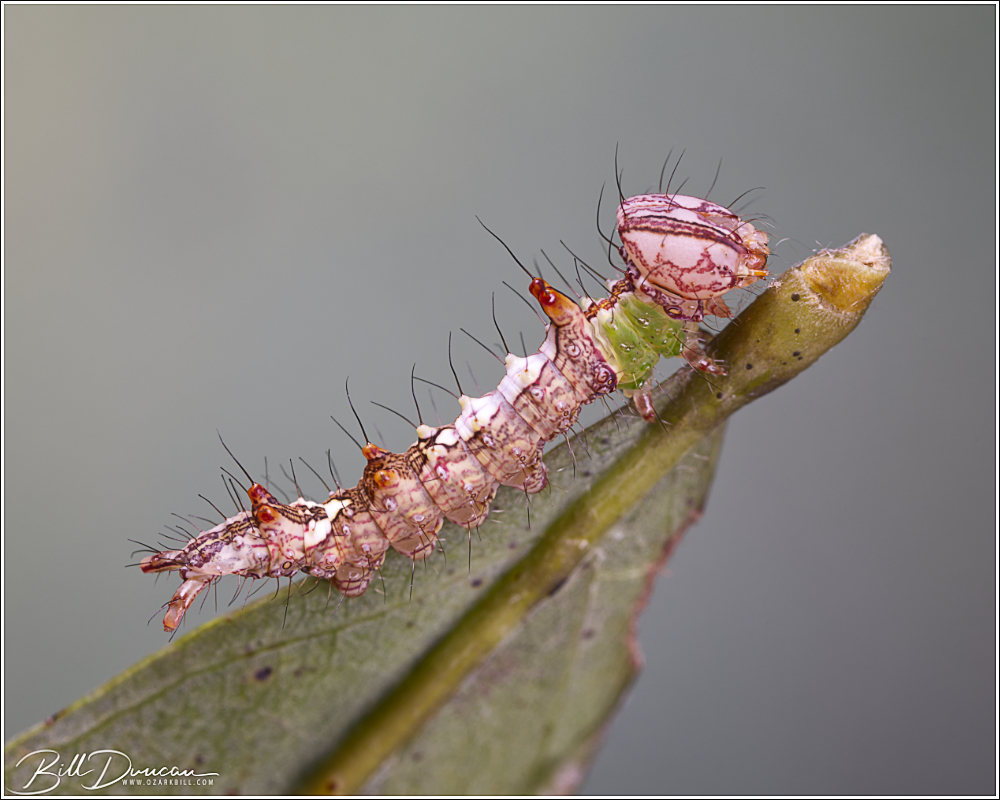
Morning-glory Prominent Schizura ipomoeae fam. Notodontidae Host plant: Oak species (Quercus sp) Date found: 24, Aug, 2024 Location Found: Schoolcraft Prairie, Washington County, MO Notes: Despite both its common and scientific names, it is highly unlikely this species ever feeds on morning glories (Ipomoea spp.).
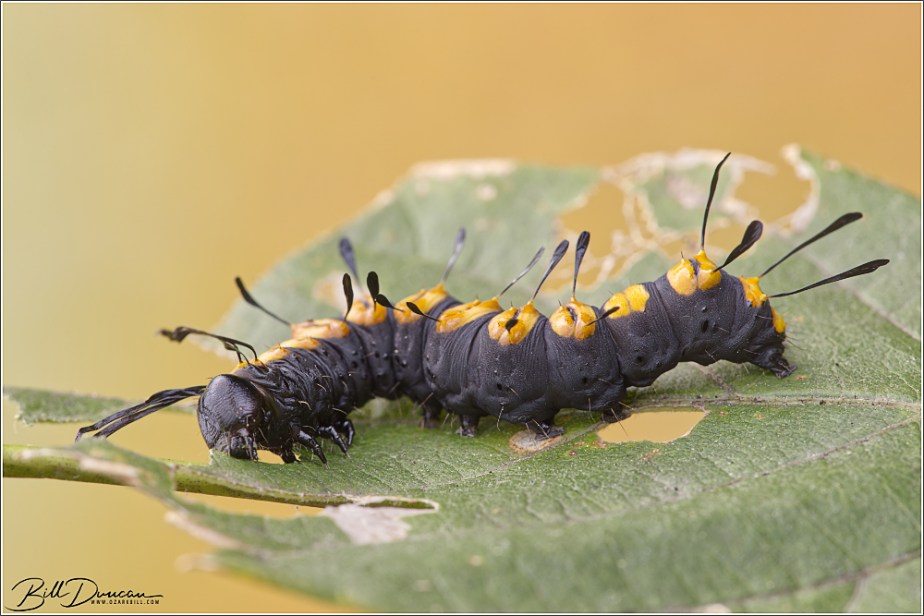
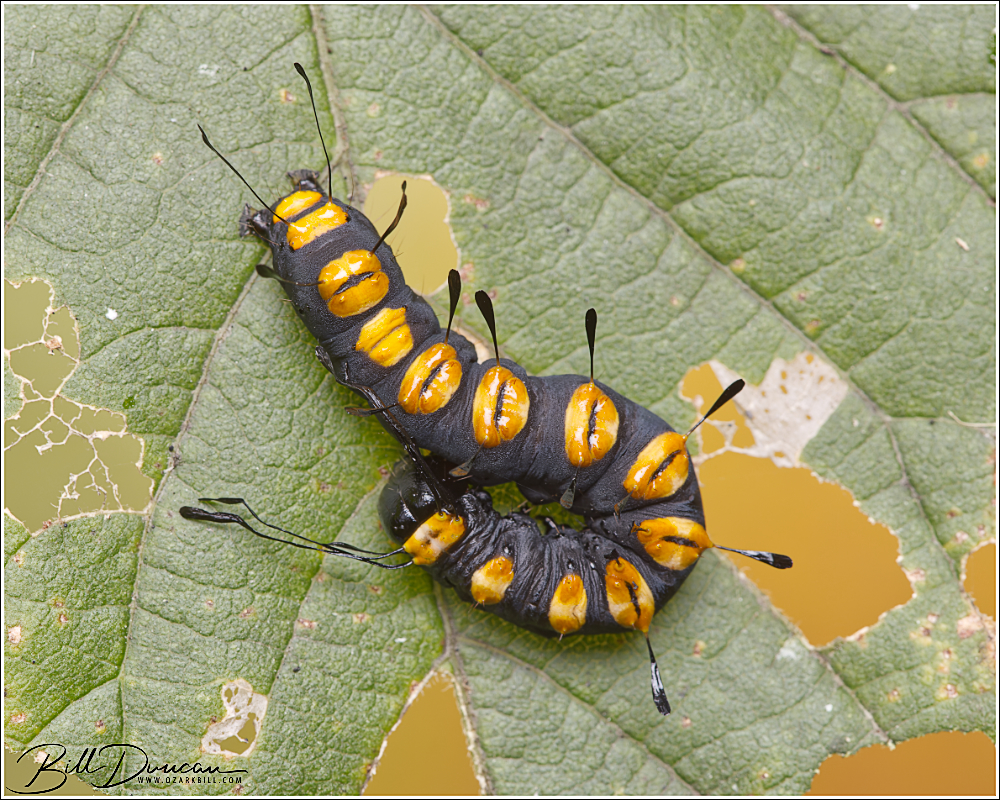
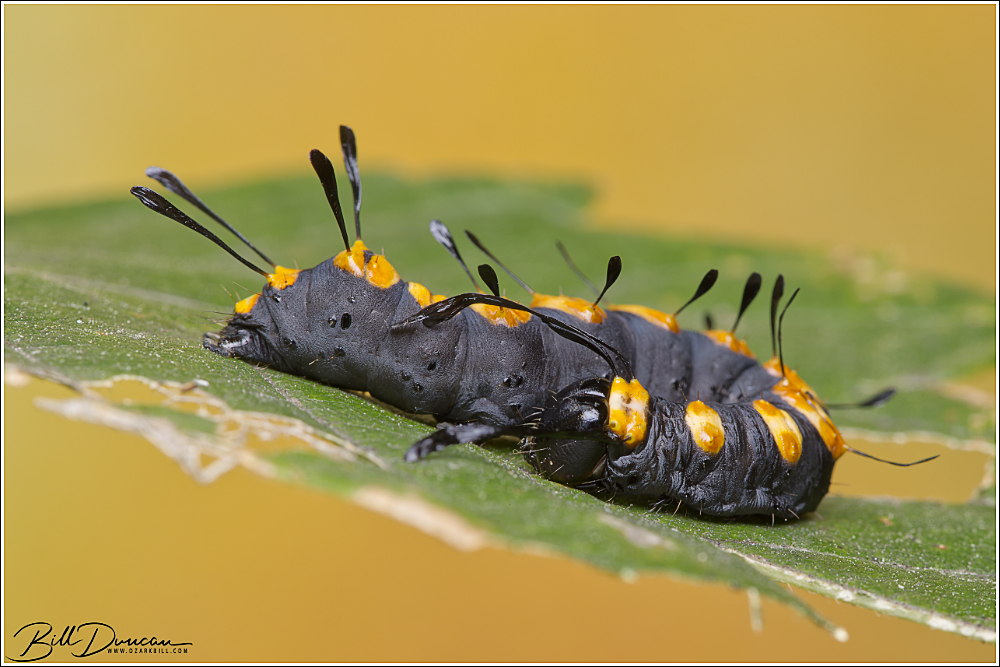
Yes! In what is likely one of the last good weekends of the 2024 season, the WGNSS Nature Photography Group headed back to Kaintuck Hollow where we found this final instar Acronicta funeralis (paddle caterpillar/funerary dagger), Noctuidae, feeding on Acer negundo (box elder). I recently shared photos of this species in one of its mid-instars.
Acronicta funeralis (paddle caterpillar/funerary dagger) final instar larvae in the typical “J pose,” often seen when they are resting or disturbed.
We have maybe one or two good weekends left for this season so maybe we’ll find something else. Either way, I’m preparing my list for hopeful species to find next season.
Acronicta funeralis (paddle caterpillar/funerary dagger) final instar larvae
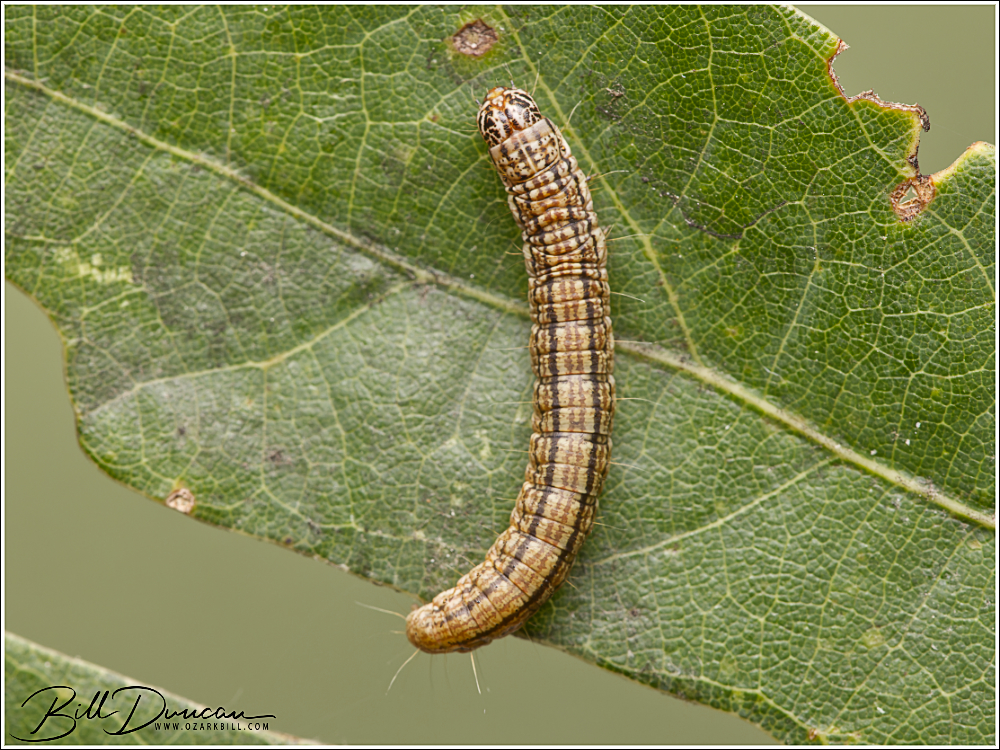
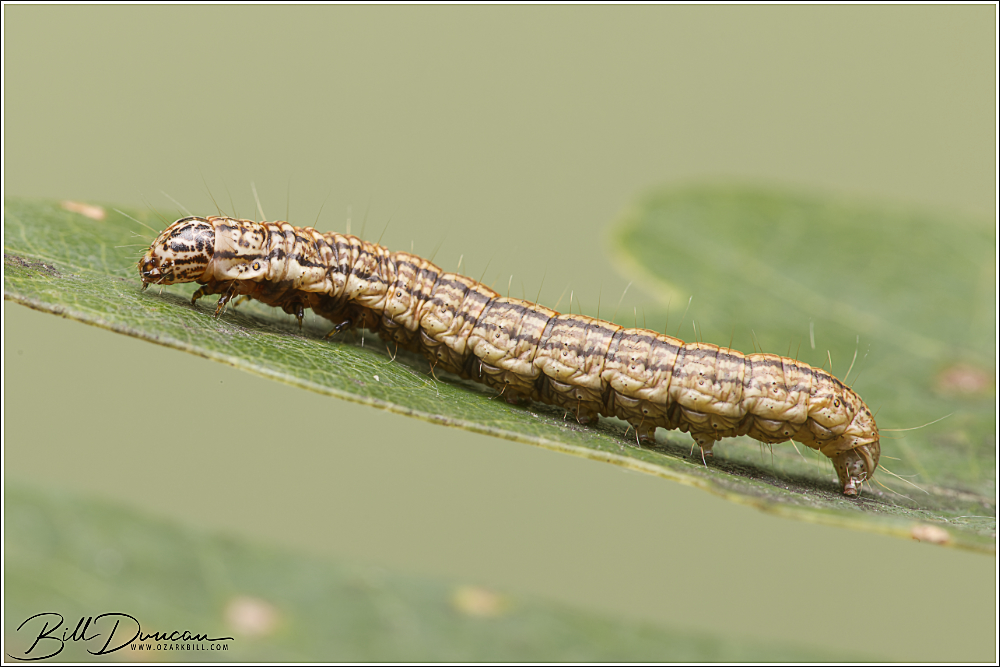
Today’s cat is in the Pyralidae family. It is most likely Pococera expandens (double-humped pococera moth), but with at least 27 species in this genus and many of which that feed on oak, upon which this one was found, other species could be an option. This guy was photographed in early July during a WGNSS Nature Photography field trip at Prairie Garden Trust in Calloway County, MO.
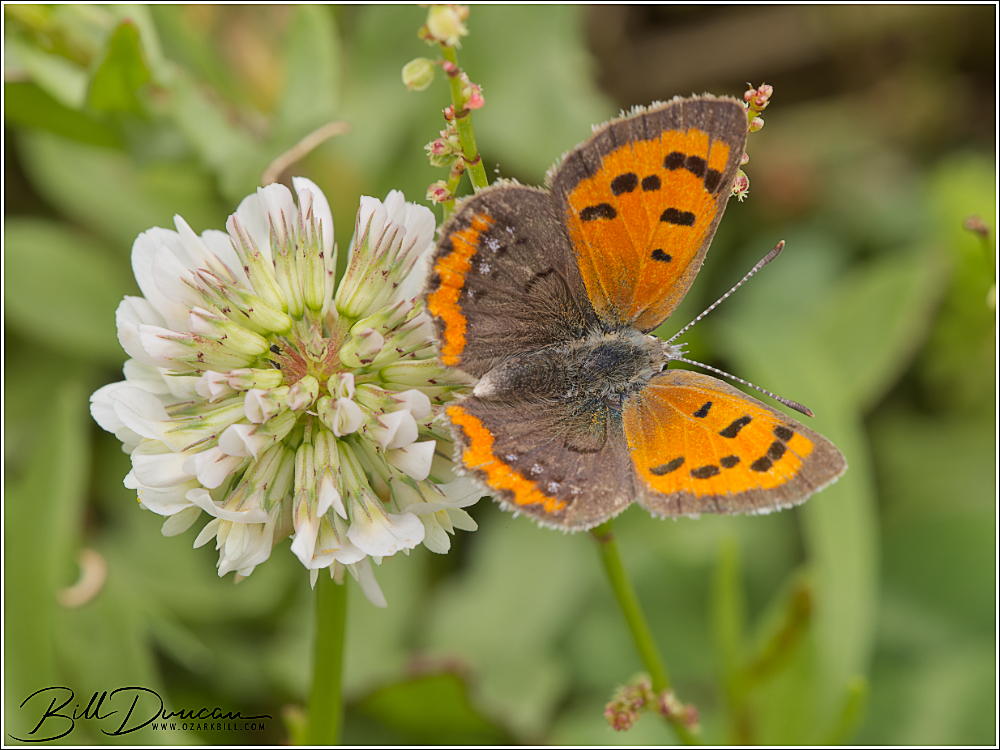
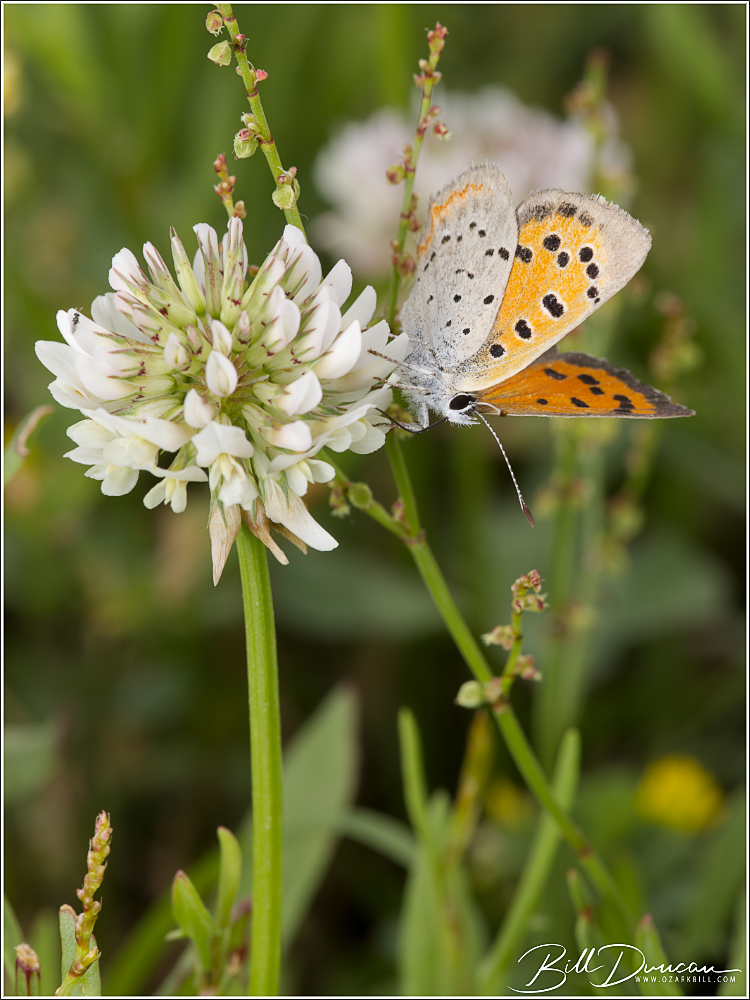
How about an adult Lep today. I’ve shared images before of the bronze copper (Lycaena hyllus), a larger and arguably more attractive Lycaenid in the same genus as today’s featured butterfly. The American copper (Lycaena phlaeas #4251) is seemingly harder to find in Missouri. In early June, Casey led the WGNSS Nature Photography Group to a known patch in Green County where we were lucky enough to find a few.
American copper (Lycaena phlaeas)
American copper is a rather unfortunate name for Lycaena phlaeas. Among the most widespread of any butterfly species, it is found across central and northern North America as well as across Eurasia and in mountainous regions in northern Africa.
Back in early May of this year, a small group from the WGNSS Nature Photography Group headed out to visit some glades in Washington County, Missouri. Being a relatively wet and cool spring, we expected the glades to be lush and full of blooming wildflowers. These specialized blooming plants and their associated pollinators were our planned primary targets for this beautiful Saturday.
Unfortunately for us, the timing of our visit did not seem to be optimal. We found very few plants in bloom and even fewer interesting butterflies and skippers that we were hoping to find. However, I noticed something about this particular glade that Casey had steered us into. Looking around, I noticed that there was very little sign that foot traffic or rock tipping had occurred recently – something that plagues the more popular glades in Missouri.
Normally, I loathe the thought of rock-tipping – the process of lifting rocks in sunny natural areas in order to find reptiles, amphibians and arthropods. As I alluded to above, this activity can be highly over-practiced and is often accompanied by people harassing or collecting the animals found. In large and popular glades, the signs of rock tipping can be abundantly clear. Just look for large flat rocks that have obviously been moved and are no longer in close contact with their underlying soil substrate. In this case, because we were on the lookout for improvised subjects and the fact that this area has not seen much pressure from others, we decided to carefully tip a few to see what we might find.
Little did I know what a treat we were in for. With tipping over just a few stones, we were able to find close to 20 prairie ring-neck snakes (Diadophis punctatus arnyi), including one albino! The prairie ring-neck is a small, slender snake native to prairies and other grasslands in the central United States.
An albino prairie ring-neck snake (Diadophis punctatus arnyi)
These snakes can reach up to 14 inches in length, but seem much smaller due to their slender build. This species primarily feeds on small invertebrates such as earthworms, slugs, and insects, but may also consume small amphibians and other reptiles. The prairie ring-neck snake is considered an opisthoglyphous colubrid, meaning they possess small fangs in the rear of their mouths along with a very mild venom. They are completely harmless to humans as they will very rarely attempt to bite, relying instead on a foul-smelling musk that they emit along with exposing their orange and red warning colors on their undersides in order to dissuade predators. On rare reports of bites to humans, the reaction has been described as a mild discomfort or stinging sensation, akin to a nettle sting or a sting from a sweat bee.
A typically colored prairie ring-neck snake
Rock tipping can also yield a number of interesting invertebrates. Although we did not find any tarantulas or black widows that can be found in this manner, we did find Missouri’s only scorpion and a common centipede.
The striped bark scorpion (Centruroides vittatus)
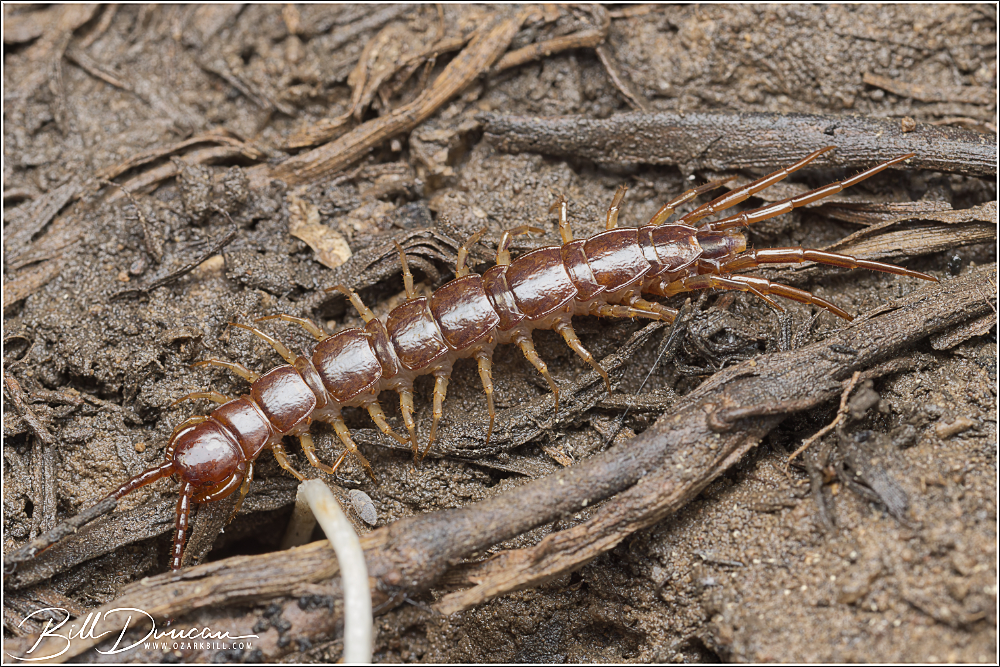
The rock centipede (Lithobius forficatus)
When we were done with our subjects we made sure they all found their way back safely underneath their rock dwellings.
In February, the Webster Groves nature Study Society’s Nature Photography Group headed to the Sophia M. Sachs Butterfly House in Chesterfield. We paid for after-hours access and were delighted with the opportunities presented to us. Many thanks to Casey Galvin, group leader for the Nature Photography Group, for organizing this visit, and to Chris Hartley from the Butterfly House for being a lovely host. Chris patiently dealt with our needs, requests and questions, while wrangling our subjects for us. He and the Butterfly House provided us a wonderful experience of photographing some remarkable arthropods from around the world. Here are some of my favorite photos from the evening.
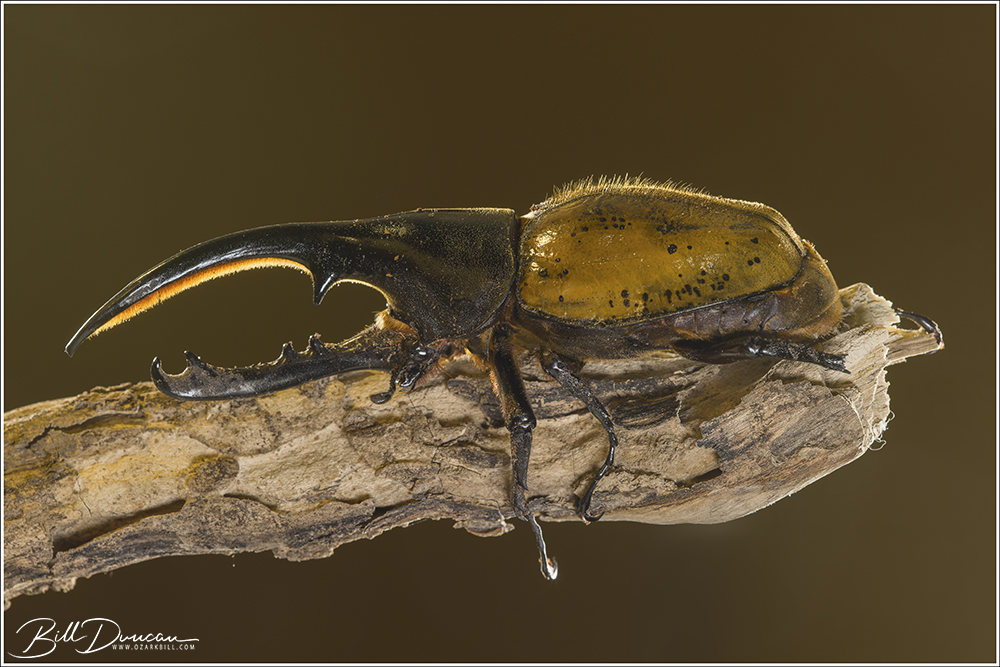
Hercules Beetle (Dynastes hercules) F. Scarabidae. The hercules beetle, found in the neotropics, is the longest extant beetle species in the world.
Rainbow Stag Beetle (Phalacrognathus muelleri) F. Lucanidae. This beetle is found in northern Australia and New Guinea. The mites that can be seen on this beetle do no harm to it. They tag along to pick up a free meal from their sloppy host.
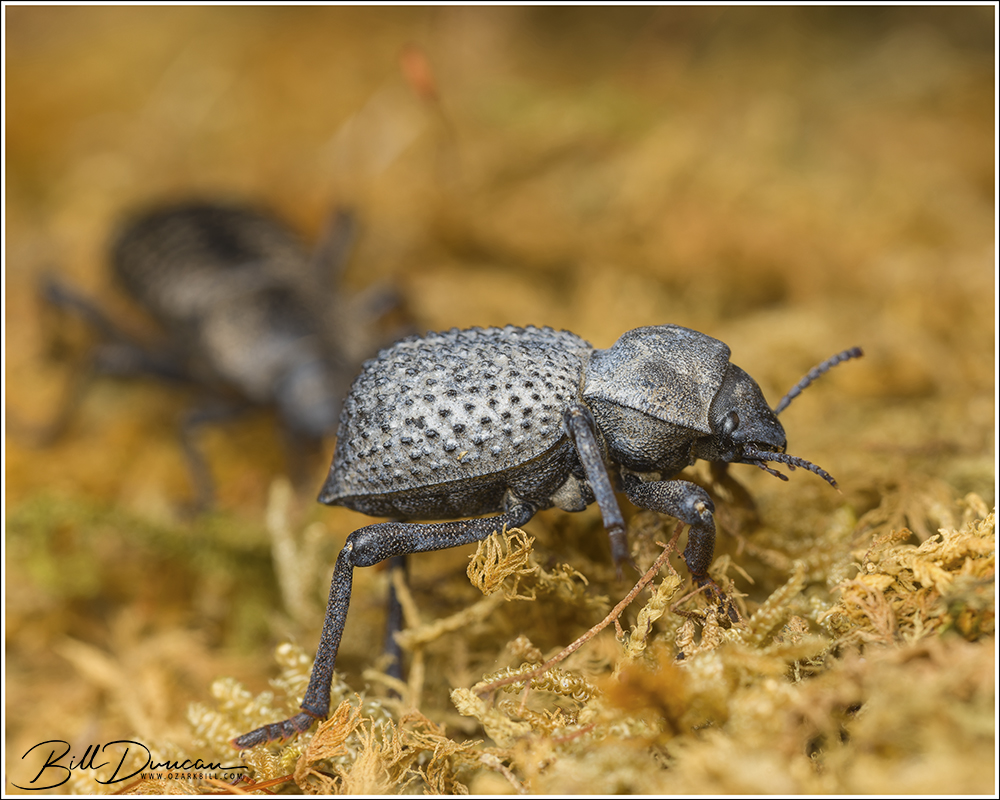
Death-Feigning Beetles (Asbolus verrucosus) F. Tenebrionidae. Found in the desert southwest U.S., these beetles feign death when harassed. After a minute or two they right themselves and continue on their business.
Flamboyant Flower Beetle (Eudicella gralli) F. Scarabaeidae. Found in tropical Africa, this beetle is a sure stunner.
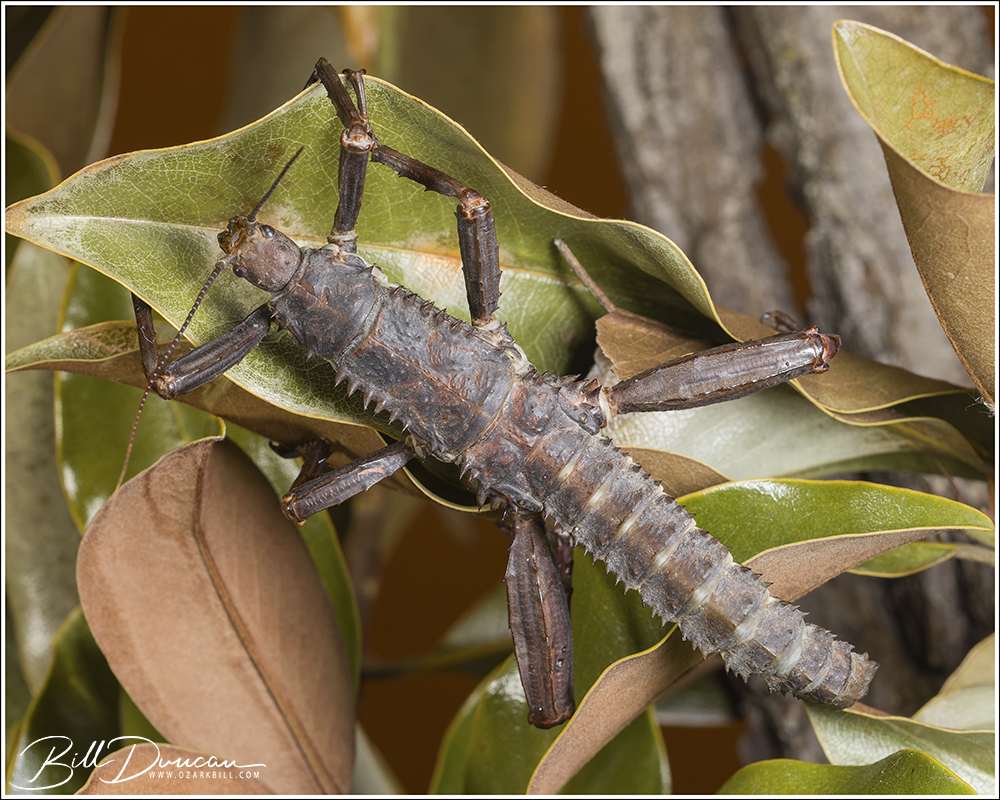
Spiny Stick Insect (Eurycantha calcaratta) F. Lonchodidae. These giant phasmids are endemic to humid rainforests in Australasia.
Curly-haired Tarantula (Tiltocatl albopilosum) F. Theraphosidae. This handsome spider is native to Central America.
That’s all from this outing. Interested in joining in one one of these WGNSS outings? Feel free to contact me or check us out at http://www.wgnss.org to learn more.
The WGNSS Nature Photography Group, led by the man with the great ideas, Casey Galvin, headed to Elephant Rocks State Park in Iron County, MO, for the group’s February field trip. Our primary target for the evening was to utilize the full moon to light our scene after sundown – images often referred to as “moonscapes.” This was my first real attempt at taking moonscapes; usually I am focused on low to no-moon nights in order to focus on stars and deep sky objects.
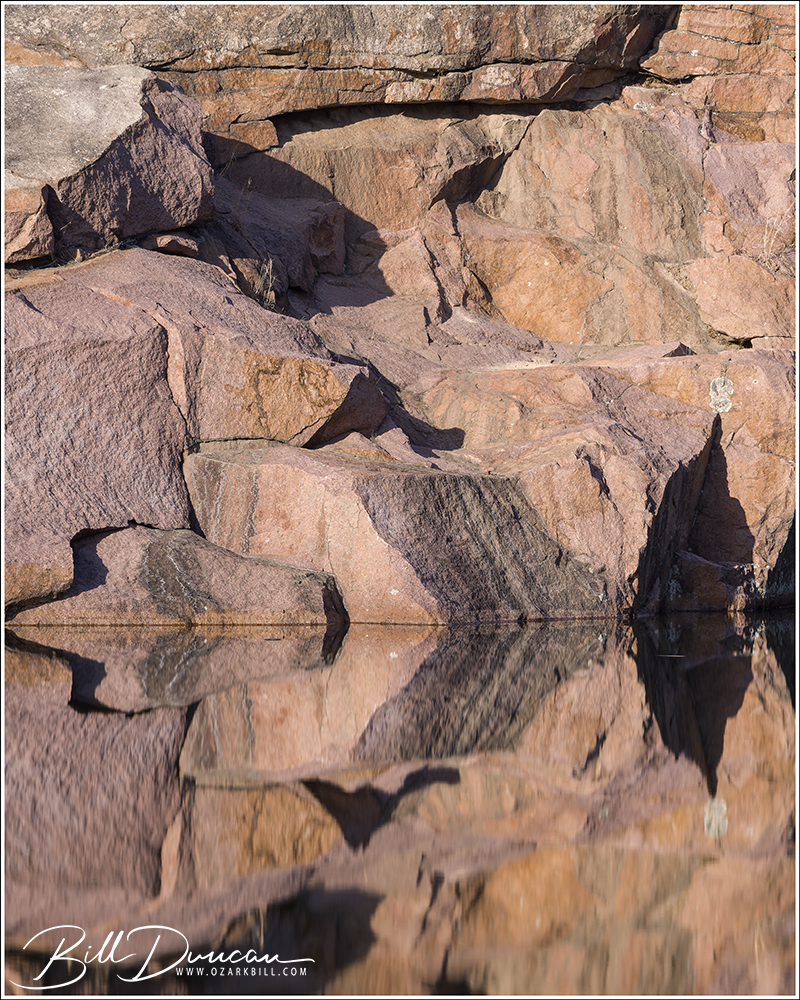
Reflections on Quarry Lake ISO-50, f/11, 3.2 sec. exposure, 140 mm focal length
We arrived in time to have a walk around prior to sunset and the park’s official closing time. In order to be in the park after 5:00 pm, special permission must be made ahead of time. During our stroll, we made our way to the backside of the quarry lake – somewhere I had not been in many years. This turned out to be a serendipitous experience. There we encountered some very nice golden light and excellent reflections coming from the lake’s surface. Unfortunately, the winds were just strong enough to create some obnoxious ripples on the water, ruining the mirror effect I was going for. No worries, however; I added a CPL and a pretty strong neutral density filter (in order to increase shutter speed) to my mid-telephoto lens and the ripples magically disappeared.
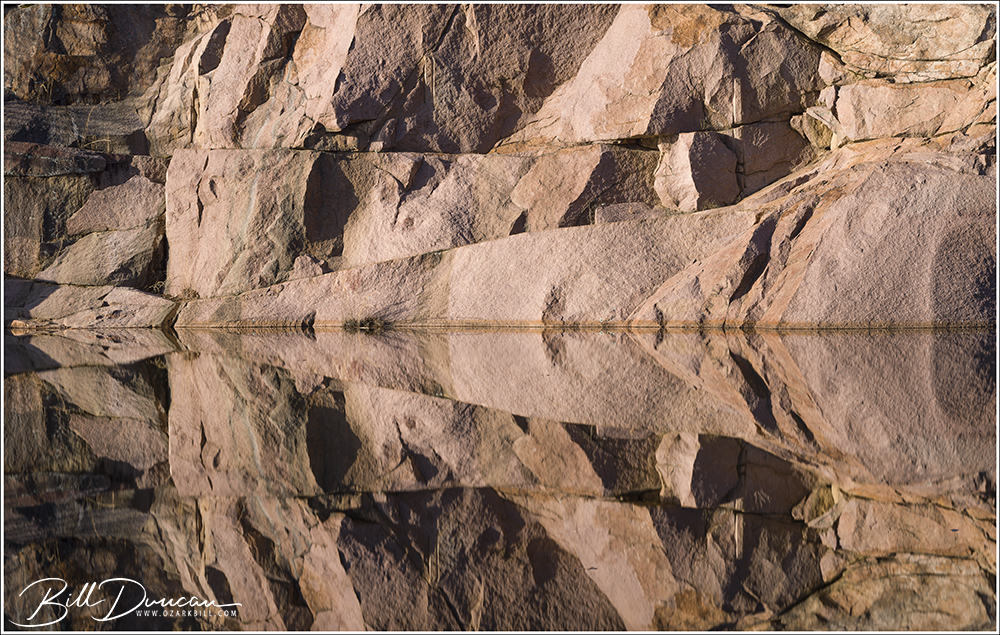
Several abstract-like faces appeared in tight-compositions with the rock wall mirrored off the lake’s surface ISO-100, f/9, 2.5 sec. exposure, 84 mm focal length
I find capturing enough saturation in lighter colors a challenge with digital cameras. I am finally learning how to recover this in post-processing. The pretty light helped showcase the pink granites that the St. Francois Mountains are known for. ISO-50, f/11, 5 sec. exposure, 118 mm focal length
This one was too good to pass up the opportunity to make the face more obvious by orienting it vertically. ISO-100, f/9, 4 sec. exposure, 73 mm focal length
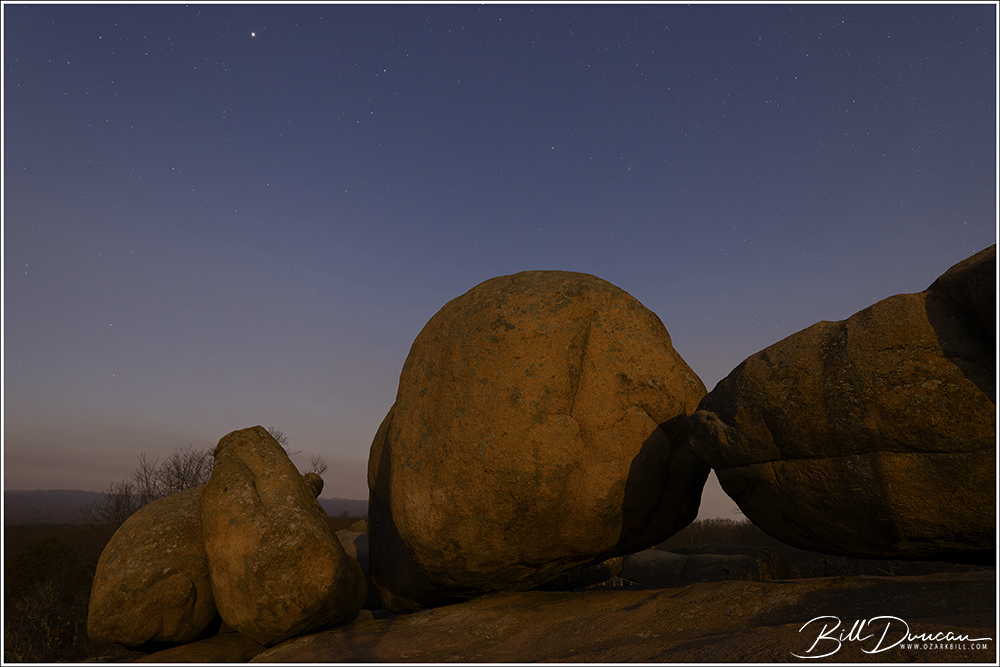
Shortly before sunset, we headed to the other side of the park to hang out with the rocks that give the park its famous identity. The remaining images were all taken after the sun had set and were exposed using only the light of the February full “snow moon.”
Moon rising over Elephant Rocks ISO-640, f/5.6, 10 sec. exposure, 20 mm focal length
Somewhat surprisingly, care had to be taken when shooting with the full moon at our backs as the shadows were very noticeable! ISO-3200, f/4, 6 sec. exposure, 20 mm focal length
Newer cameras shooting at longer exposures can pick up more stars than can be seen by the naked eye. I was happy to see the Pleiades and the Andromeda Galaxy in several of my moonscape images. ISO-320, f/4, 6 sec. exposure, 19 mm focal length
Can you spot the Pleiades star cluster in this moonscape? ISO-640, f/4.5, 8 sec. exposure, 15 mm focal length
This was certainly a special trip spent with friends. Temperatures and sky conditions were near perfect for photographing moonscapes. I was a bit surprised we did not have more WGNSS members take advantage of this special access. I won’t complain about that too much as I think having too many photographers would have made things more challenging with fighting shadows and finding access to good compositions.
We had a great time this past Saturday when the WGNSS Entomology and Nature Photo Groups got together for our great caterpillar hunt at Pickle Springs C.A. in Ste. Genevieve County, MO. Of course I was primarily looking for the Limacodidae – the slug moth caterpillars. We’ve had better results with the slugs, but we did find five species over the course of the day, including a spun-glass slug (Isochaetes beutenmuelleri) and this saddleback (Acharia stimulea). Unfortunately, I was the only one to see this one as I spent some time by myself in the late afternoon looking through hundreds of young oak trees at Hawn State Park.
As always, we did find a few other species of interest, unexpected things and, as of now, unidentified creatures. I will be posting more from this trip in the near future.
I decided to go for stacking this nice saddleback. With so many details and intersecting lines, I knew this might be a risky attempt. I think they turned out pretty nice.
As much as I like the convenience and price of my wireless Godox flash system, it does come with some aggravations. One thing that frustrates me is the ease in which the controls can be inadvertently changed when carrying the system around on a strap. Then, the flash doesn’t work and I have to take the time to figure out what happened and make the necessary adjustments. Or, after powering the transmitter and flash down, the settings in one or the other change for some reason.
Another thing that drew my attention when putting these stacks together is the variable light output when taking a stack of images like these. Despite everything in the camera and flash units being on full-manual control, the illumination provided by the flash varied noticeably from one image to the next. This is something I never noticed when using my Canon branded speedlights. Thankfully, the differences between exposures, in the slivers that are used to make up these final images, is not noticeable at all. So, maybe I’m complaining about nothing.
Here is the first stack, also featured at the top of the post. The head of the caterpillar is facing you but is not visible as it is covered in the protective hood. Additional protection is also afforded by the obvious sharp tubercles that can break off into any would-be predator, injecting toxins that burn and irritate, an experience that I think is very similar to that of brushing up against nettles.
Saddleback caterpillar (Acharia stimulea). This image was taken with a 180mm macro lens on a full-sized sensor camera, composed of a 37 image focus stack at f/11, 1/125 sec and ISO-250.
The next stacked image is an overhead view. I am putting this one in as a full-sized jpeg file. So, be sure to click on the image to see the details up close! The remnants of the mucous-like silk they secrete as the glide about the leaf surface can be seen towards the bottom of the image.
Saddleback caterpillar (Acharia stimulea). This image was taken with a 180mm macro lens on a full-sized sensor camera, composed of a 26 image focus stack at f/11, 1/60 sec and ISO-250.
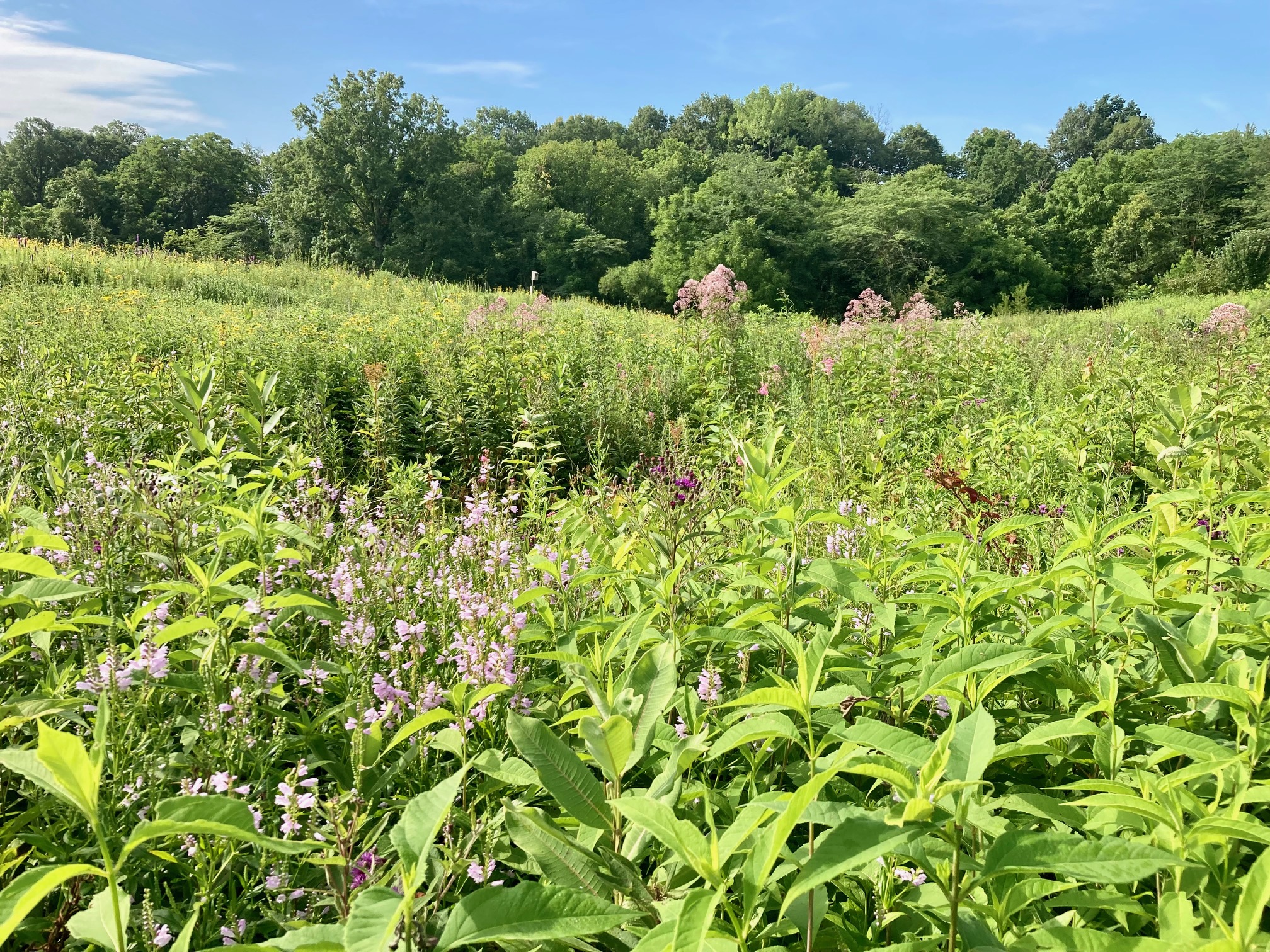
Part of the Horn’s Prairie Grove LWR with obedient plant blooming in the foreground and joe pye weed behind.
The WGNSS Entomology and Nature Photography Groups had a splendid treat in July of 2022 when we jointly visited Horn’s Prairie Grove Land Water Reserve (LWR) near Ramsey IL. This 40 acre patch represents part of the less than 1% of the remaining southern till plain prairie ecosystem that was nearly wiped from the planet due to land conversion for farming. Even better, about 30 acres are original “virgin” prairie, (the largest intact remnant prairie in IL) meaning these spots were never touched by the plow. Even better still, at this location there lies five different types of prairie habitat: seep/wetland, dry hillside, mesic, black soil and savanna.
Keith Horn, owner and guide to Horn’s Prairie Grove LWR
The story of this land is interesting. The current owners, Keith and Patty Horn, purchased the land in 2001 as “junk land” from an old farmer who’s family had owned since the 1870s. They liked the fact that the majority of the land was in a “wild” state. The untouched 30 acres had been used as a wild hay field, being cut almost yearly. They had noticed some nice wildflowers in bloom but did not realize what they had until a few years into a wildlife habitat improvement plan that included periodic burning. Every year they noticed more and more species in bloom. They have sought help in identifying the plant species here and the current list is now at 619 species, including six native orchid species! Bravo to the Horns for identifying what they had and taking the steps to see their land improved. This remnant prairie could have been destroyed in the blink of an eye if it had fallen into the wrong hands.
Although most of us were simply thrilled to be in such high quality habitat, the primary purpose of the trip was to check out the arthropod life. Unfortunately, in late July, we were there on a truly miserable day of weather. The heat and humidity created a heat index that was well above the safety zone. This meant not many of us had the nerve to do a great deal of walking and searching, especially much after lunch time.
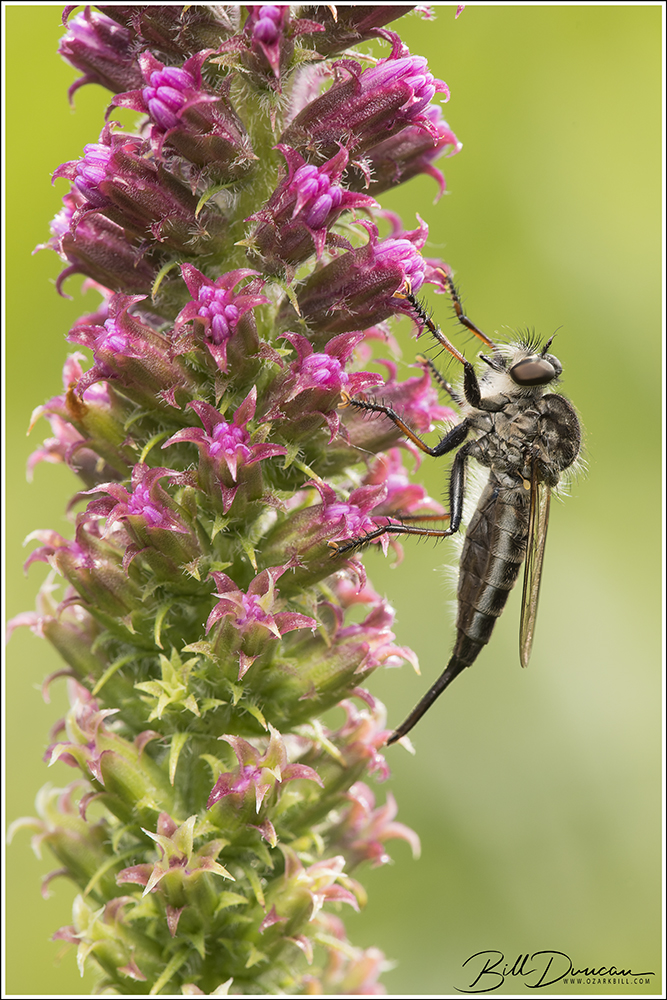
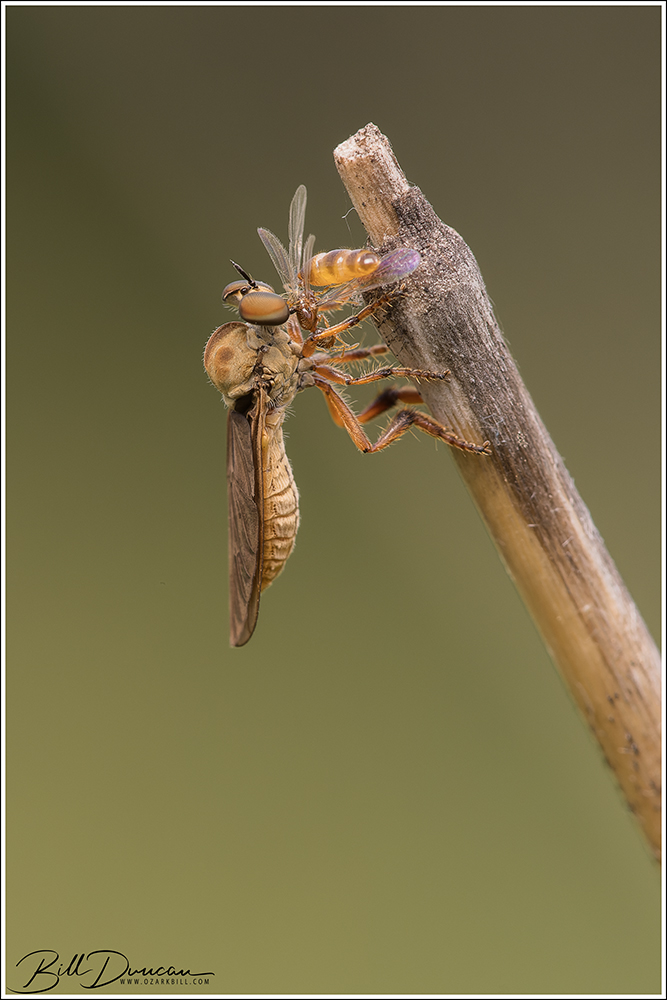
Efferia aestuans, the friendly robber (Family Asilidae)
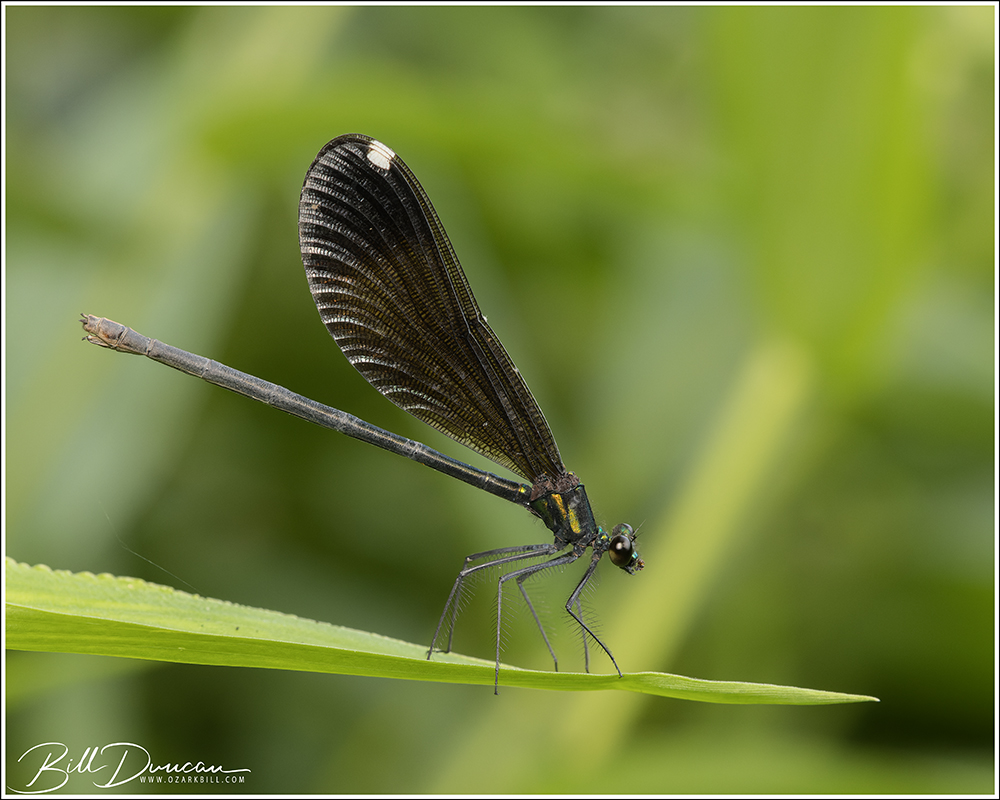
Calopteryx maculata, an ebony jewelwing damselfly that was found on the forest and prairie edge.
Members of our group walking among the blooming Liatris.
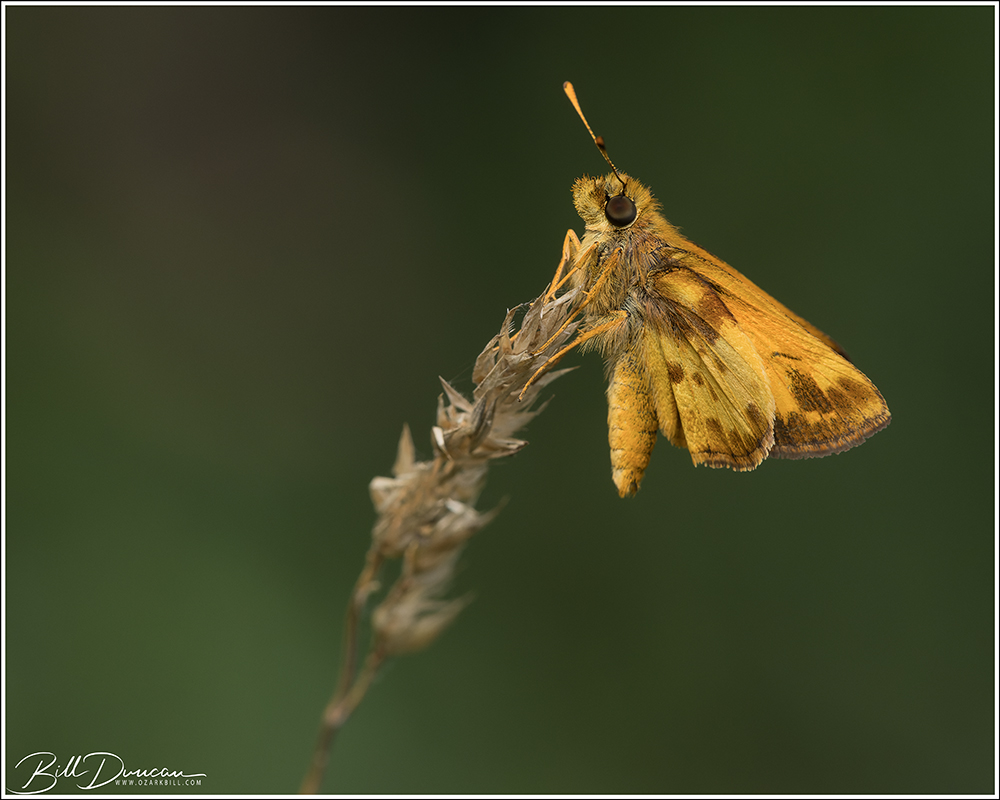
A gorgeous Poanes zabulon, Zabulon skipper (Family Hesperiidae)
What I am calling Wallengrenia egeremet, the northern broken-dash (Family Hesperiidae)
Keith Horn (back) and Chris Brown (front)
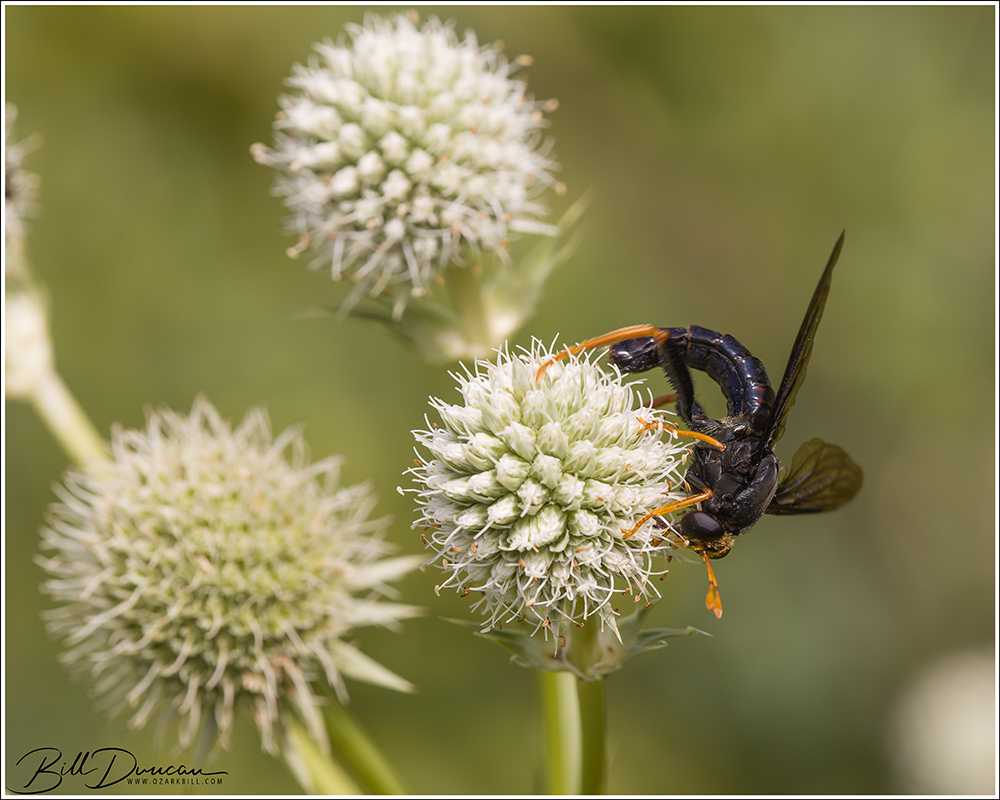
We were lucky to find both Mydas fly species to be found in Illinois, but I was only able to photograph this Mydas tibialis.
The gnat ogre! (Holcocephala sp.)
Interested in making visits to interesting high-quality habitats like this? Then consider joining Webster Groves Nature Study Society! Visit http://www.wgnss.org to find out more.
The following images were taken during the WGNSS Nature Photography Group’s trip to Garden of the Gods (GOTG) and other locations this past April. This group is currently being led by Miguel Acosta. If you are interested in joining us for one of the group’s monthly outings, please see details at http://www.WGNSS.org!
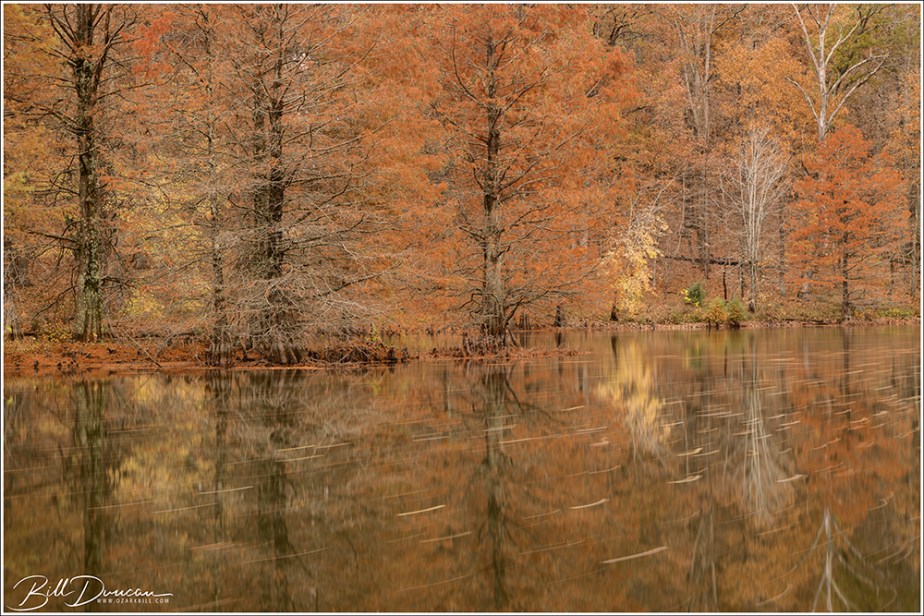
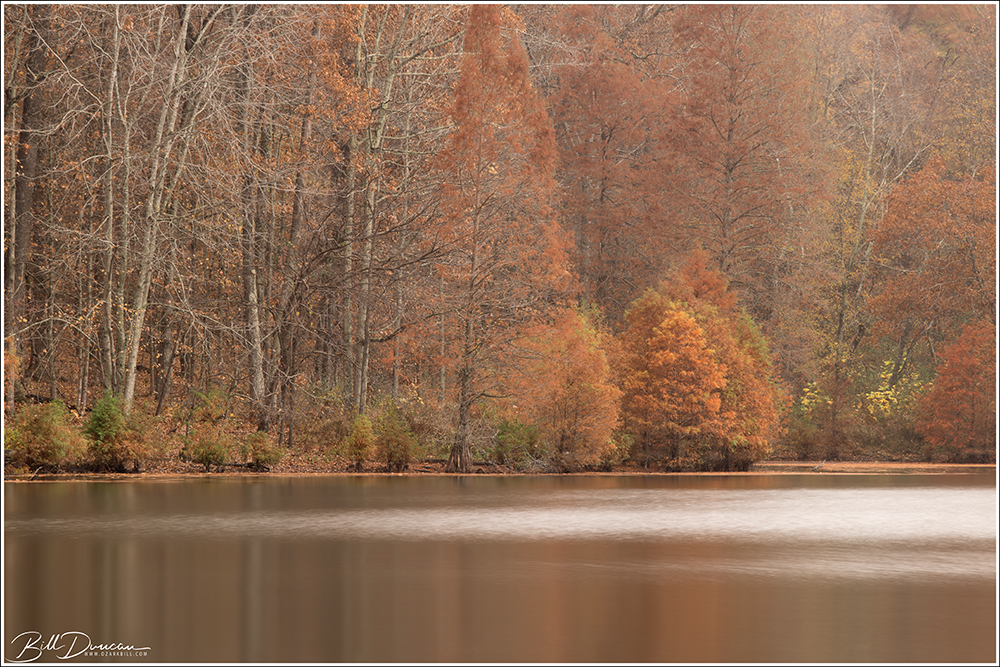
Late autumn colors on a mirror lake.
Many thanks to the photographers we met on the trail at Bell Smith Springs Wilderness who tipped us off to a spectacular mirror lake in the Shawnee. Miguel and I stopped at this location before heading back to St. Louis. The peak fall colors were obviously passed but this place screams potential and I hope to get there again next year. We had really nice conditions for this type of photography, with cloudy skies and winds which weren’t too bad. We could have found a few more compositions but the rains came and the winds got worse so we called it a day.
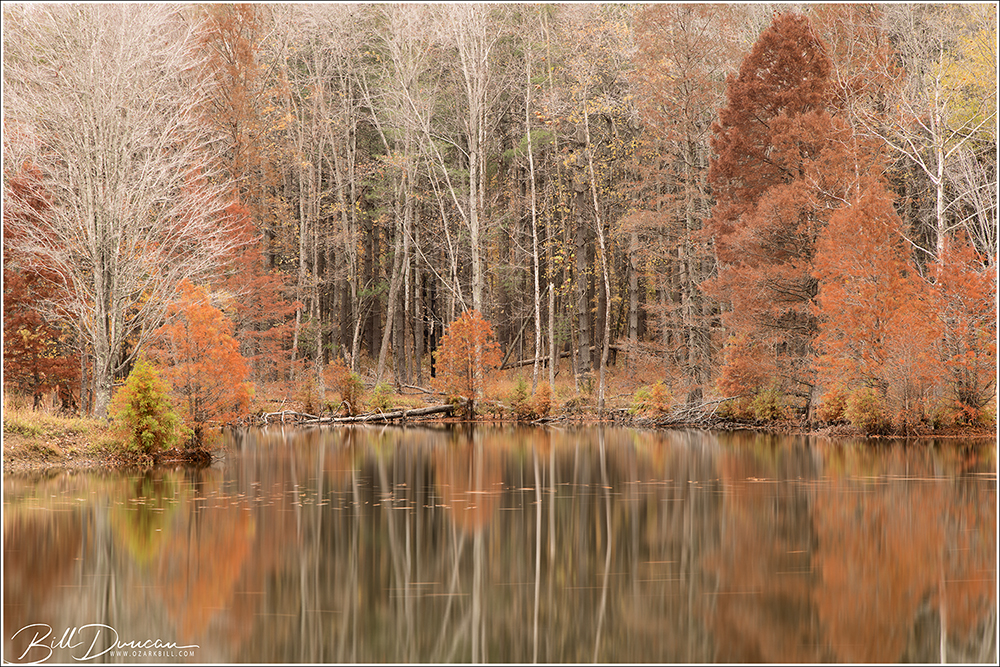
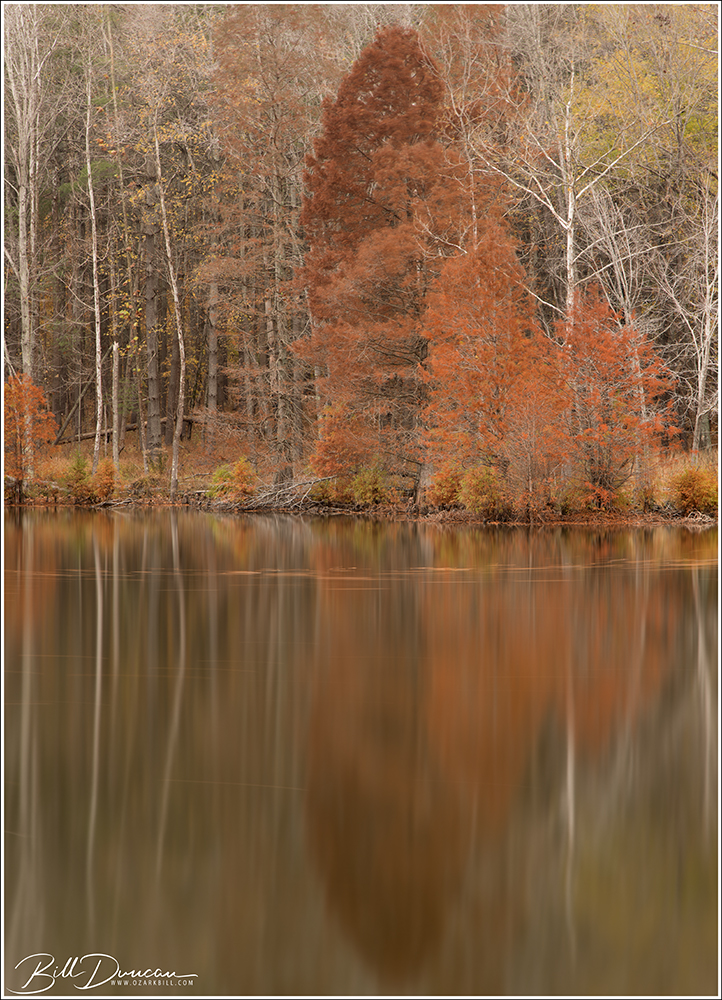
A different composition from the same scene as above.
The waters here were not as calm as to be desired for our purposes, but using polarizer and neutral density filters allowed us to get long shutter speeds that helped to lessen the effects of any wind-blown ripples on the water’s surface. All images in this post from this location were taken with shutter speeds between 20 and 30 seconds.
A wind-blown mirror lake
In the photo above the wind was starting to move pretty quickly across the wider portion of the lake. Using a shutter speed of 30 seconds allows the ripples created to appear with a more painterly appearance.
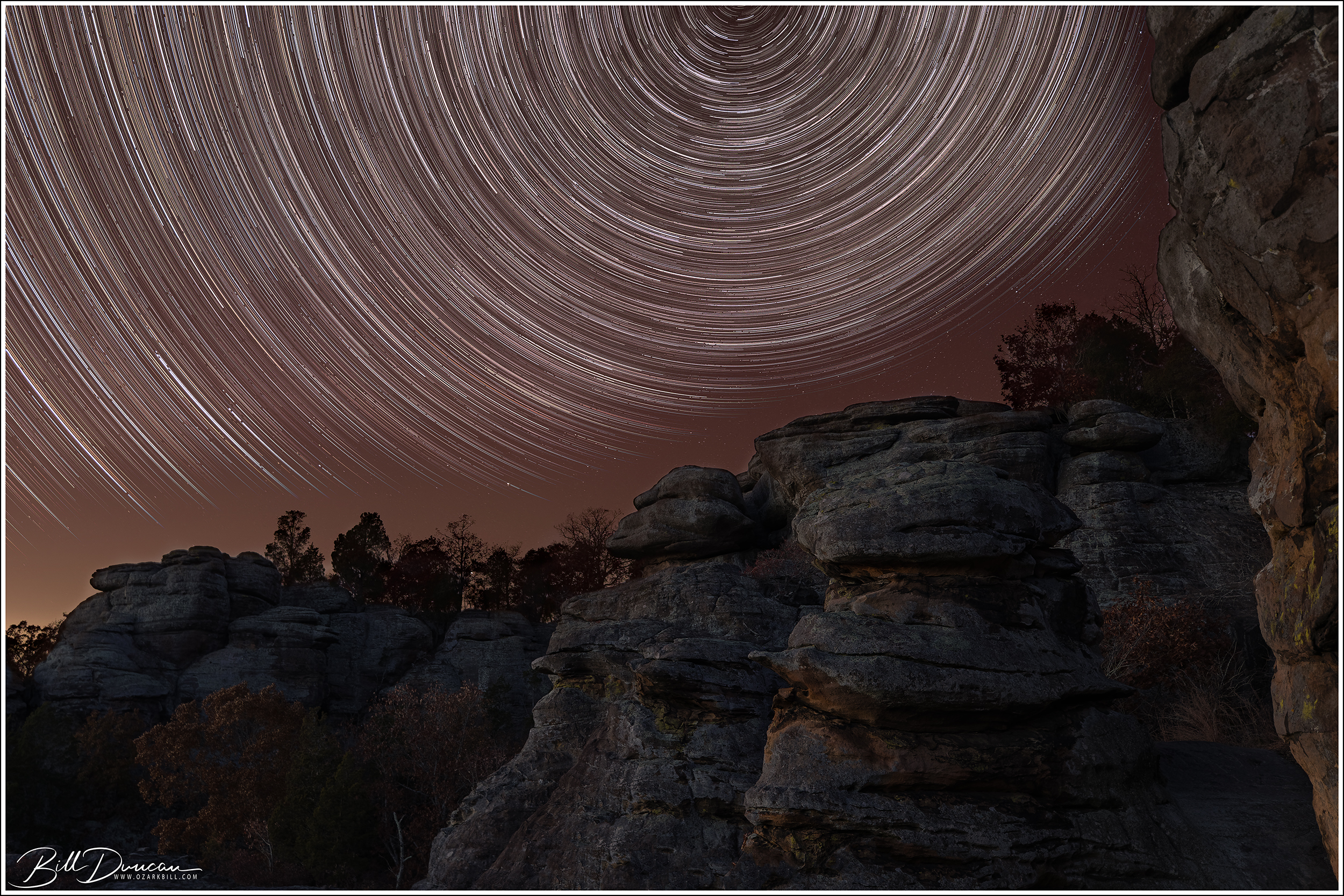
Monkey face with star trails
During this weekend trip, some of us enjoyed the camping experience while others chickened out and stayed at hotels or cabins. Similarly, some of us stayed late at GOTG to do a little astrophotography. Well, I should say that I stayed late. 😉 After my friends nabbed a couple of quick Milky Way images, they headed back to their air conditioned rooms and I was left by myself to work on the photo seen above. This photo was made by combining 213 30-second images in the computer to build the star trails with the iconic “monkey face” and other rock formations that GOTG is known for in the foreground.
This was a great weekend of friends, photography, hiking and camping.



















 A Thousand Acres of Silphiums
