2025 Caterpillar Season – Nason’s Slug Moth

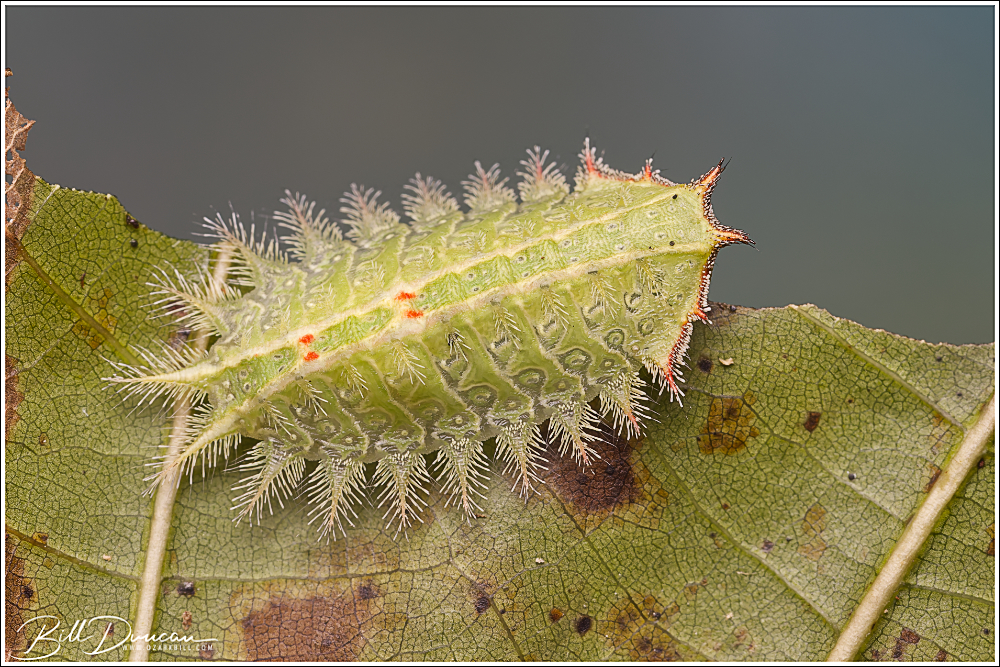
Nason’s Slug Moth
Natada nasoni fam. Limacodidae (Hodges#4679)
Host plant(s): northern red oak (Quercus rubra), hackberry (Celtis occidentalis), white oak (Quercus alba)
Date(s) and location(s): 23, 31 Aug, 2025 – Tyson Research Center, St. Louis County, MO
Notes: West of the Mississippi River, this species is rarely found north of the Missouri River.

2025 Caterpillar Season – Comma

Comma
Polygonia c-album fam. Nymphalidae (Hodges#4421)
Host plant(s): nettle (Urtica sp.)
Date(s) and location(s): 17 Sep, 2025 – Little Creve Coeur Ecological Area, St. Louis County, MO
Notes: This poor caterpillar has fallen prey to one of its many enemies, in this case a nymph of Podisus maculiventris (spined soldier bug).

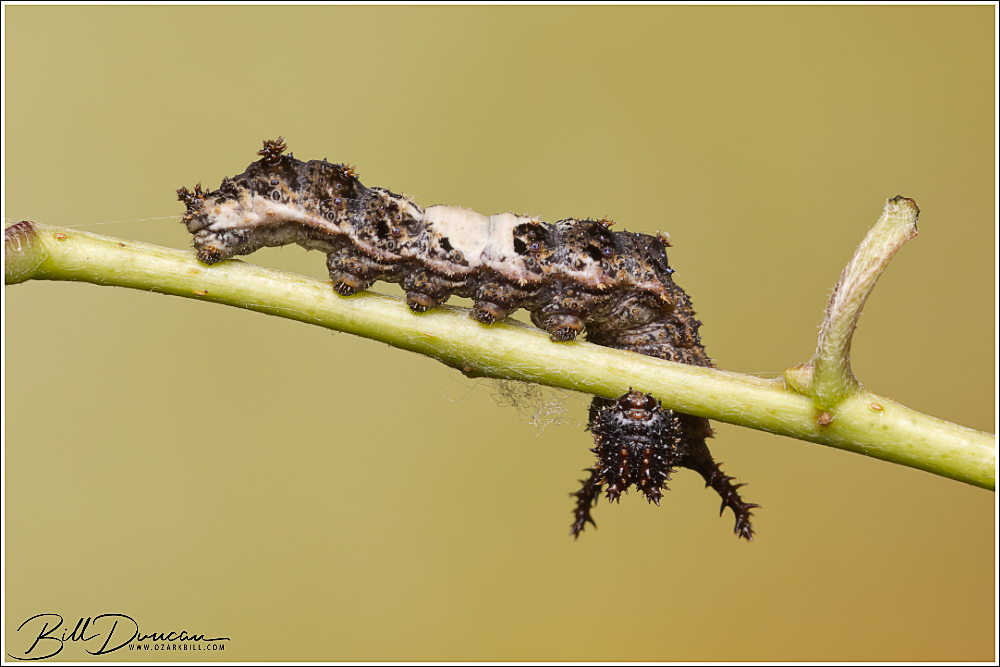
2025 Caterpillar Season – Spun Glass Slug Moth

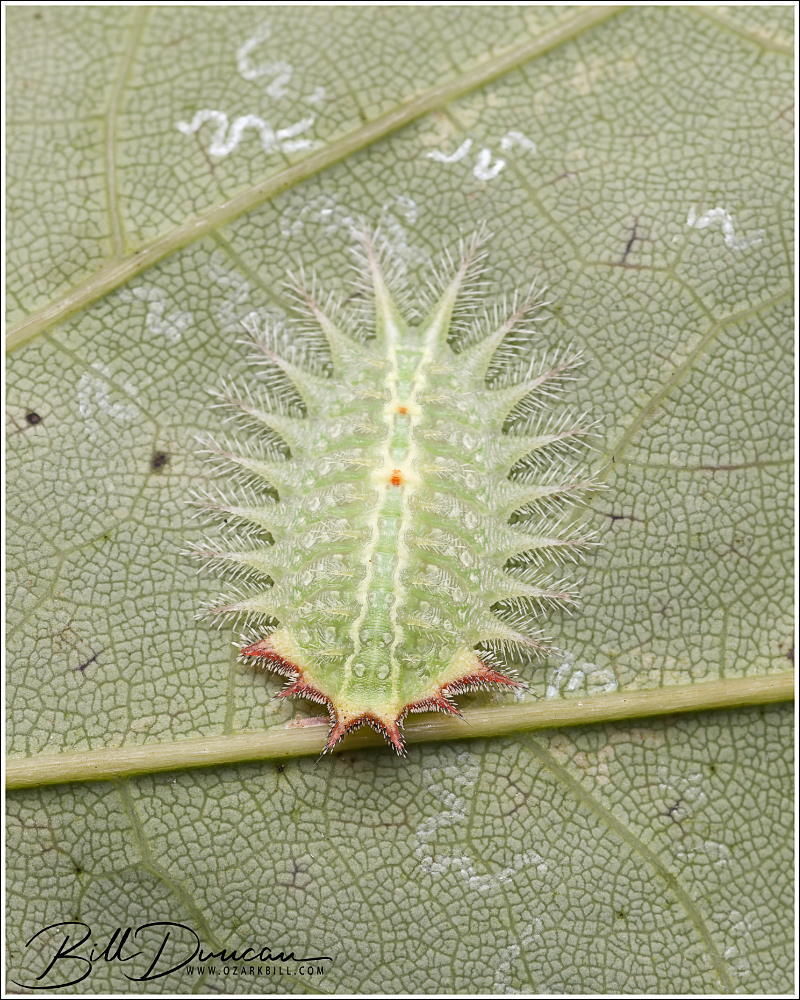
Spun Glass Slug Moth
Isochaetes beutenmuelleri fam. Limacodidae (Hodges#4675)
Host plant(s): northern red oak (Quercus rubra)
Date(s) and location(s): 23 Aug, 2025 – Tyson Research Center, St. Louis County, MO
Notes: The feathery appendages of this slug moth caterpillar do not contain urticating spines and do not sting. These dense and soft setae may act as a deterrence to potential wasp and fly parasitoids in blocking easy access to the body of the caterpillar in placing or injecting eggs.

2025 Caterpillar Season – Gray Furcula

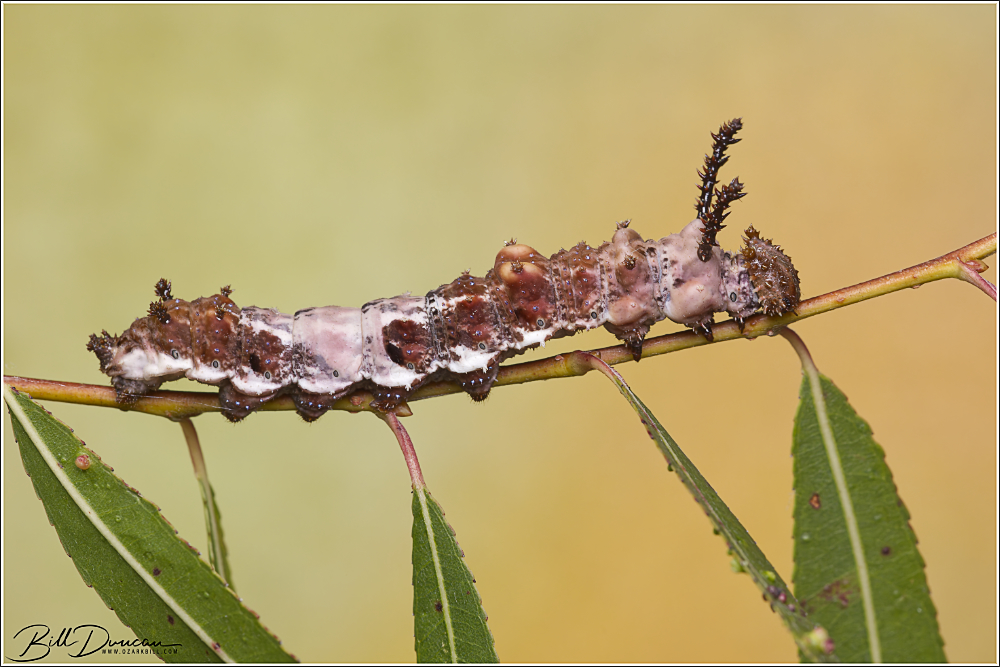
Gray Furcula Moth
Furcula cinerea fam. Notodontidae (Hodges#7937)
Host plant(s): willow (Salix sp.)
Date(s) and location(s): 15 Sep, 2025 – Creve Coeur Lake Park, St. Louis County, MO
Notes: The specific name, cinerea, is from the Latin “cinereus” (ashy), referring to the gray color of the forewings of the adult.

2025 Caterpillar Season – Ruddy Dagger

Ruddy Dagger Moth
Acronicta rubricoma fam. Noctuidae (Hodges#9199)
Host plant(s): hackberry (Celtis occidentalis)
Date(s) and location(s): 07 Sep, 2025 – Tyson Research Center, St. Louis County, MO
Notes: Also known to host on elm and sumac.

2025 Caterpillar Season – Shagreened Slug Moth

Shagreened Slug Moth
Apoda biguttata fam. Limacodidae (Hodges#4669)
Host plant(s): pin oak (Quercus palustris), red oak (Quercus sp.)
Date(s) and location(s): 31 Aug, 2025 – Tyson Research Center, St. Louis County, MO; 19 Sep, 2025 – Don Robinson State Park, Jefferson County, MO
Notes: Like most of the limacodids seem to be, this species can be found in a wide variety of habitats and utilize nearly any native woody plant for hosts.

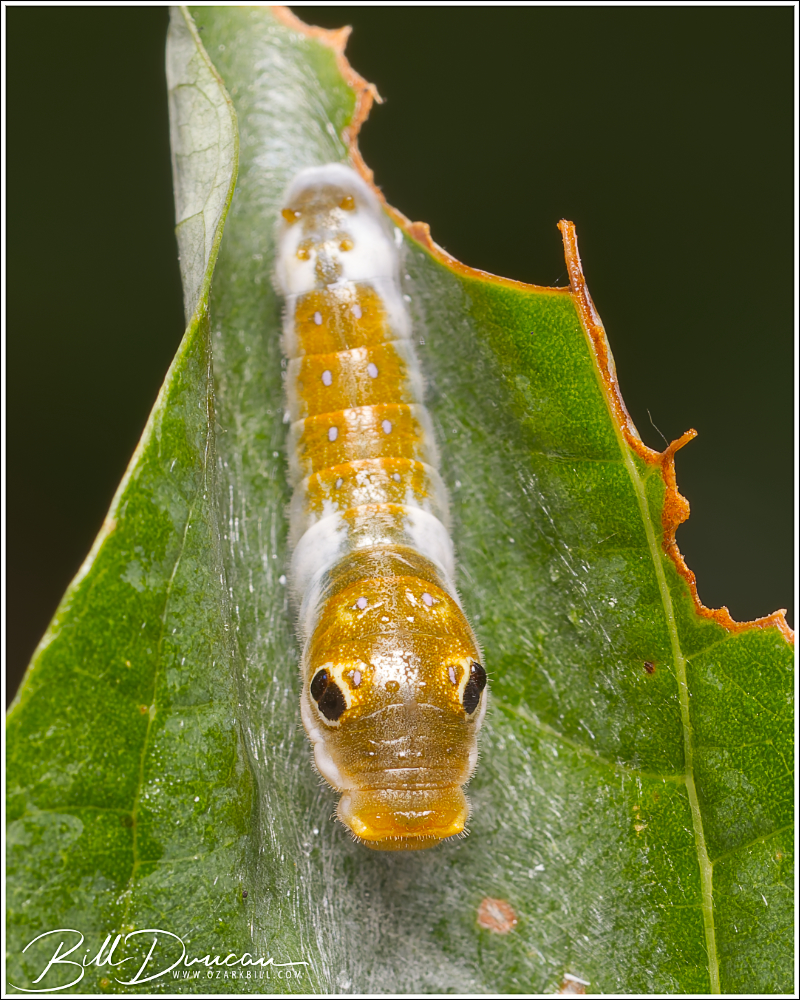
2025 Caterpillar Season – Drab Prominent

Drab Prominent
Misogada unicolor fam. Notodontidae (Hodges#7974)
Host plant(s): sycamore (Platanus occidentalis)
Date(s) and location(s): 23, 30 Aug, 2025 – Tyson Research Center, St. Louis County, MO; 27 Sep, 2025 – Caney Mountain Conservation Area, Ozark County, MO
Notes: The drab prominent is the only species in the monotypic genus Misogada. Named for the relatively plain looking adult, the caterpillar of this species in anything but drab. In addition to sycamore, this species also hosts on cottonwood.

2025 Caterpillar Season – The Laugher

The Laugher
Charadra deridens fam. Noctuidae (Hodges#9189)
Host plant(s): chinquapin oak (Quercus muehlenbergii)
Date(s) and location(s): 13 Sep, 2025 – Tyson Research Center, St. Louis County, MO
Notes: My first find of a caterpillar of this species.

2025 Caterpillar Season – Streaked Dagger

Streaked Dagger Moth
Acronicta lithospila fam. Noctuidae (Hodges#9266)
Host plant(s): red oak (Quercus sp.), shingle oak (Quercus imbricaria)
Date(s) and location(s): 30 Aug, 2025 – Tyson Research Center, St. Louis County, MO; 6 Sep, 2025 – Babler State Park, St. Louis County, MO; 13 Sep, 2025 – Don Robinson State Park, Jefferson County, MO
Notes: This species host primarily on Fagaceae (oaks, beech) and is stunning in both larval and adult forms.

2025 Caterpillar Season – Banded Tussock Moth

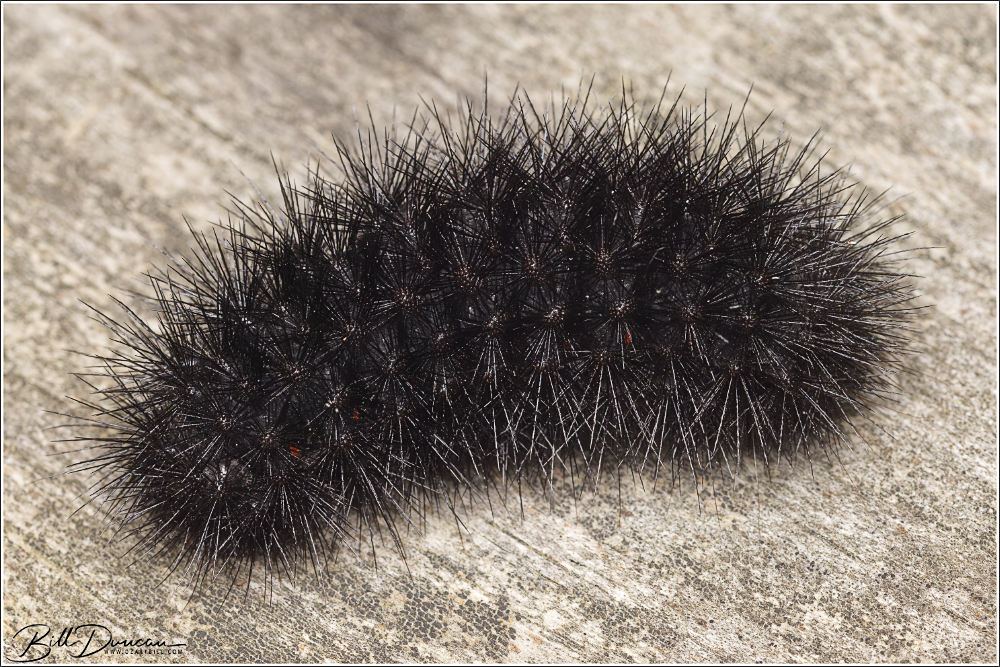
Banded Tussock Moth
Halysidota tessellaris fam. Erebidae (Hodges#8203)
Host plant(s): Three individuals found at this date and location, all found on hickory (Carya sp.)
Date(s) and location(s): 23 Aug, 2025 – Tyson Research Center, St. Louis County, MO
Notes: A very common and highly polyphagous species. The attractive adults are usually found during blacklighting nights.