Busy Bees…

I apologize for the tacky post title.  I just wanted to let everyone know that I am busy at work in preparation for the ninth annual Art at the Shaw Nature Reserve Show and Sale – 2014.  If you are reading this and have the ability to visit, please stop by to see more than 20 talented artists of many different media.  I look forward to meeting and talk with you.  It is a very nice event.

Here is a photo…

Honeybee Harvesting Silphium

Native Bees in the Backyard – Sweat Bee

Another common visitor to native wildflower gardens are metallic sweat bees (Halictidae: Agapostemon sp.) such as the one posted here.  Most species are quite small and are usually very active.  It is best to try and photograph these guys (like most insects) at first light on a relatively cool morning.

Metallic Sweat Bee (Agapostemon sp.)
IMG_1116
Metallic Sweat Bee (Agapostemon sp.)

Native Bees in the Backyard – Common Eastern Bumblebee

Hey everyone.  This one comes from a recent Saturday morning I spent using a new DIY flash difusser I built.  I had eight species of native bee as well as lots of honey bee on the Silphium and other native forbs blooming in my wildflower patches.  It is really something to see the difference in the number of pollinators and other insects that can be found in a native plant garden in comparison to the typical exotic landscaping plants used predominantly in the suburbs.

Common Eastern Bumblebee

A Walk Through Blue Spring Natural Area

This past June, Steve and I took a walk through one of the highest quality woodlands our Ozark hills have to offer.  The short hike from the head of the spring to the Powder Mill trail-head and back offered an amazing diversity of life.  Here are just a few of the things we were able to find and capture on camera.

Nothing can be mentioned about this location without first discussion of the spring itself.  The Osage Indians referred to it as “Spring of the Summer Sky”, a most apt description for a spring who’s appearance defines the color blue.  And in summer, when the flow is not overly encumbered by the suspension of dissolved limestone from heavy rains, the crystal-clear waters afford a look to the bottom of the spring, some 250 feet below the pool’s surface.

IMG_4637

“Blue Spring Run”

The small nooks and crevices carved over the ages into the limestone and dolomite that overlook the spring pool make the perfect shelter for the Eastern Phoebe to make their nests.  Most folks have likely seen the nests of this species under overhangs on human-made structures.  It has only been within the last year that I have been fortunate enough to observe these nests in their more natural of settings.  A perfectly placed snag within the spring’s pool makes for a fine resting place for a young Phoebe that is taking a break from the carrying on that was taking place near these nests.  It was also a great place and time for us to take a break and take in everything this spot has to offer.

IMG_7194

Eastern Phoebe on a Snag

Back on the trail a few minutes later Steve and I were pleased to find this guy.  A first for the both of us, this Dung Beetle was moving this “resource” with full conviction.  We couldn’t figure out where she was moving it, but she was sure not going to let us get in her way.  When gently stopped she would climb to the top of her ball and let it be known that it was claimed.

IMG_4656

King of the Hill

Here’s a little “motion pan” to give an idea of the speed at which she could move her grocery towards its future larder.

IMG_4662

The Cache”

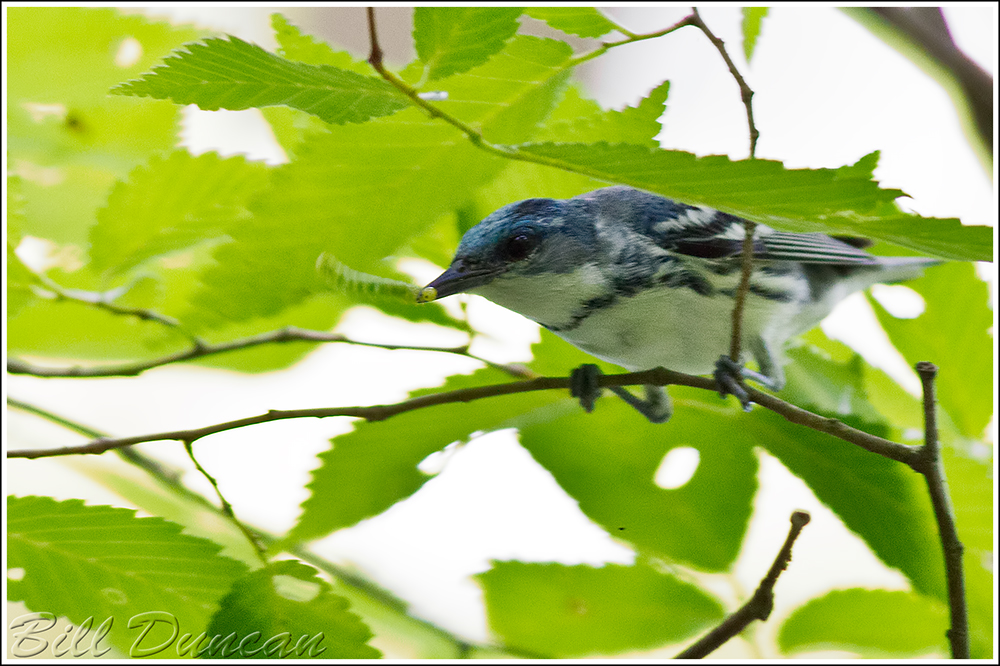
Our primary goals for this early summer day where to see if we couldn’t find and photograph any or all of three of the more rare warblers that are known to nest in this area.  These would be the Swainson’s, Cerulean and Hooded Warbler.  Although we did get a few confirmed vocalizations from a Swainson’s, we could not get our eyes on the sneaky guy through all the vegetation.  A few quick and loud playbacks did, however, coax 4-5 male Cerulean Warblers to descend from the forest canopy in order to meet the new male who had apparently set up shop amidst their territory cluster.

IMG_7493

Singing Cerulean”

This was a sweeter treat for us than spending time with Willy Wonka (Wilder not Depp) and Heather Graham in a chocolate factory.  They seemed totally curious and intrigued as they moved among lower branches, foraging and singing as they went.  Did you know this species has suffered more than 70% population decline since the 1960’s?  Approximately 500,000 birds are the current population estimates and habitat destruction and fragmentation continue to threaten this species.  Check out The Nature Conservancy for more information on this great bird, and consider checking out Cerulean Blues.

IMG_7329

Cerulean with Insect

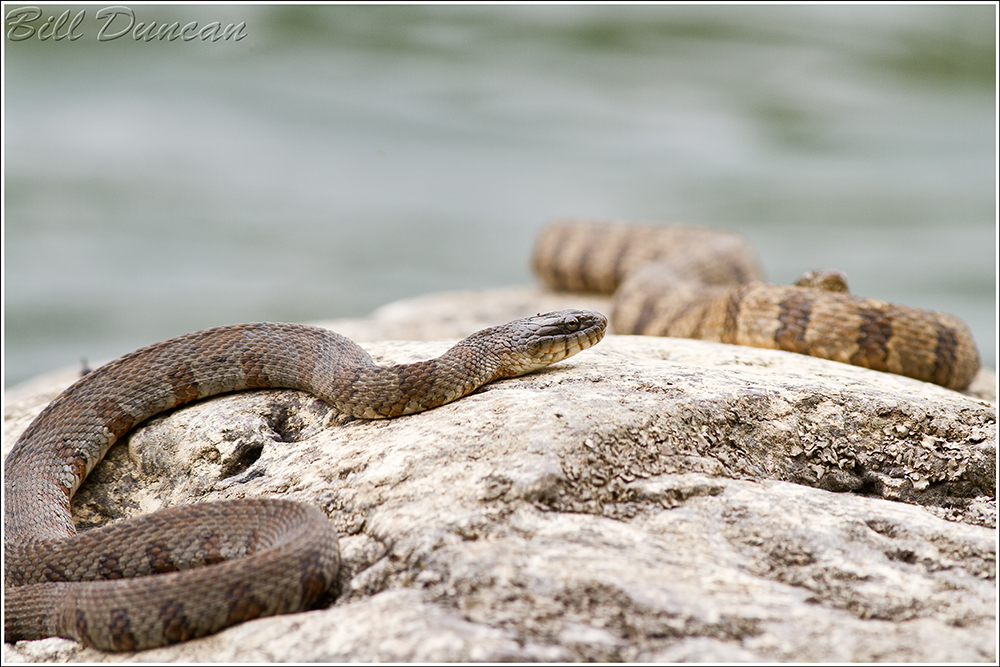
Finally, I present a pair of gorgeous Northern Water Snakes that were basking on some exposed rock not to far from shore along the Current River.

IMG_7563

Basking Water Snakes”

An Evening at Hughes Mountain Natural Area

I’ve discussed Hughes Mountain Natural Area a few times in this blog.  There is still so much I have yet to discover and photograph here, that I am always keen to pay a visit.  Typically, plants go quickly dormant and animals become hard to find during summer’s dog days.  The cooler, wet summer we are had this year provided an extended window of activity for many of the residents of this glade-covered knob.  These images were taken during a July evening as Steve and I paid a visit to one of our mutual favorite destinations.

For a while now, I’ve know of the first citizen I’d like to introduce to you.  Because I often have troubles slowing down and looking around, I had never actually seen one of these guys until this summer.  Of course, they are everywhere you look.  I am speaking of the Lichen Grasshopper, a species perfectly adapted at blending in with the lichen-covered exposed rocks on igneous glades such as those found at Hughes Mountain.

IMG_4782

Lichen Grasshopper
 

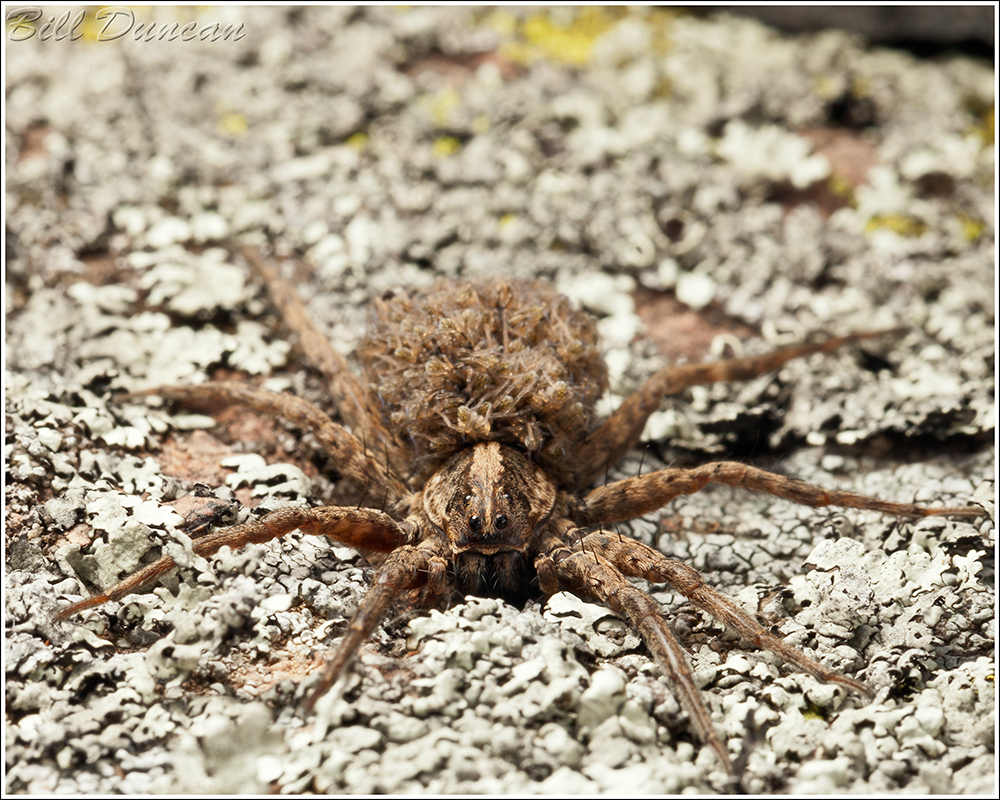
As I was destroying my delicate knees and elbows trying to get a shot of these weary grasshoppers I happened across this gal, a mamma Wolf Spider, out for a stroll with the kids.  She didn’t seem to mind the paparazzo activity.

IMG_4798

Mamma Wolf
 

The Fame Flower, a member of the succulent tending, Purslane family, is also known as Rock Pink and Flower-of-an-Hour, due to the ephemeral flowers opening late in the afternoon.  The flowers of this magnificent little plant are suspended on fine, wispy, leafless stalks (scape) many times longer than the short, succulent leaves.  Any small breeze sets these warmly saturated blooms swaying back and forth, bringing difficulty to obtaining a nice photograph.  Bravos to Steve for identifying this one!

IMG_4799

Fame Flower
 

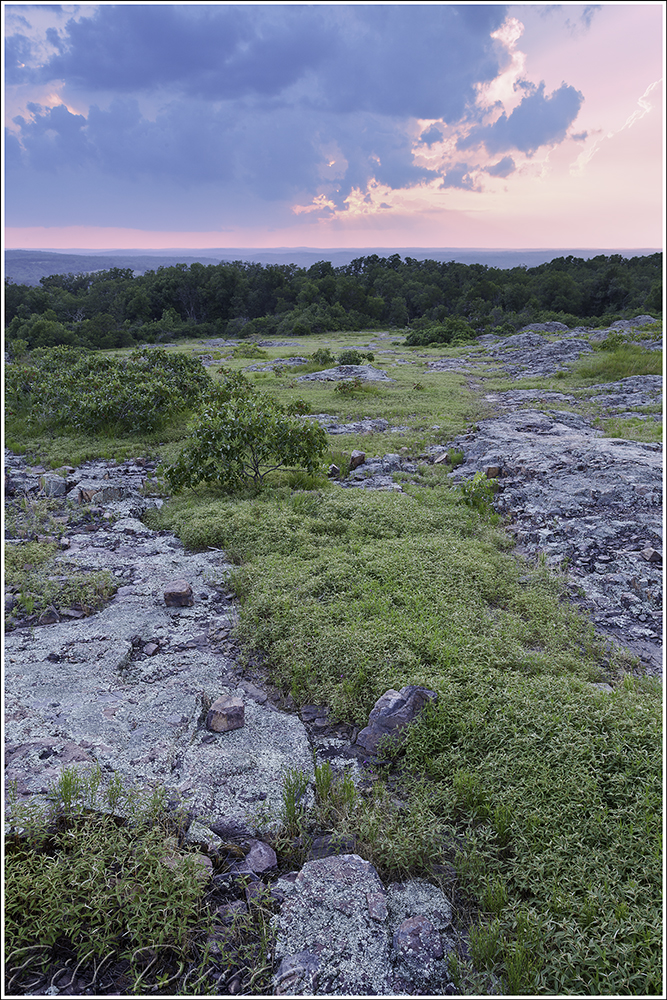
Finally, I wanted to provide a “habitat shot” that exemplifies where these organisms can be found.  Hopefully next time I can show you some of the other kind-hearted citizens of the Ozark Glades, like the Tarantula, the Black Widow and Scorpions.

IMG_4812

Moist Times

Big Spring Handles Big Waters

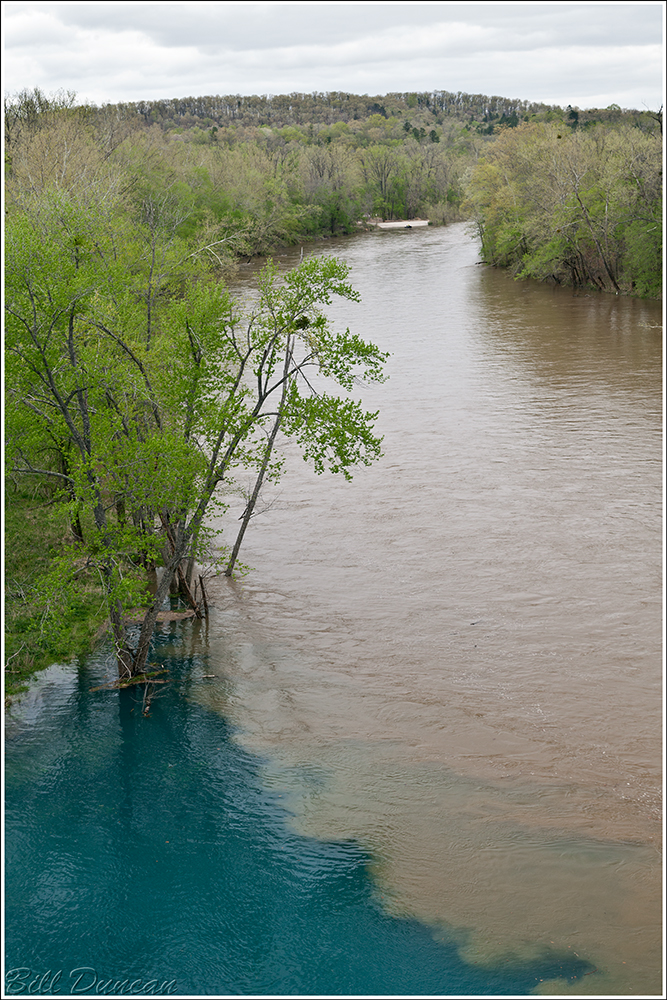
Sarah’s and my recent trip to Big Spring country provided us with lots of different looks that only the Ozarks in spring can provide.  On our second day the region was subjected to a strong storm front that dumped nearly five inches of rain in about a 12 hour period.  Although that limited the time spent outside cabin or vehicle, it did bring some learning opportunities.  I have often wondered with what speed and “precision” these large Ozark springs and their karst systems reacted to new rainfall in their watershed.  Would a deluge such as this become immediately apparent in the relative rate of discharge at Big Spring?  Or would the dynamics take a longer period of time?  My prediction would have been that the system would take up some considerable slack and act like a sponge.  That the effluent from the spring would rise eventually, but not as quickly as the rains came.  I turned out to be wrong.  During the first 12-18 hours, the increase of discharge from the spring seemed to keep pace with the rate of rise in the Current River.  This photo was taken at mid-morning the day after the rains.  Here the spring’s aquamarine  waters are flowing into the already mud-laden flood waters of the Current.  I estimate the waters were about two to three feet above normal at this time.

IMG_3938

“Confluence Contradiction″

Technical details: Canon EOS 5D Mark II camera, EF24-105mm f/4L IS USM @ 58mm, ISO 320,  f/10, 1/25 sec

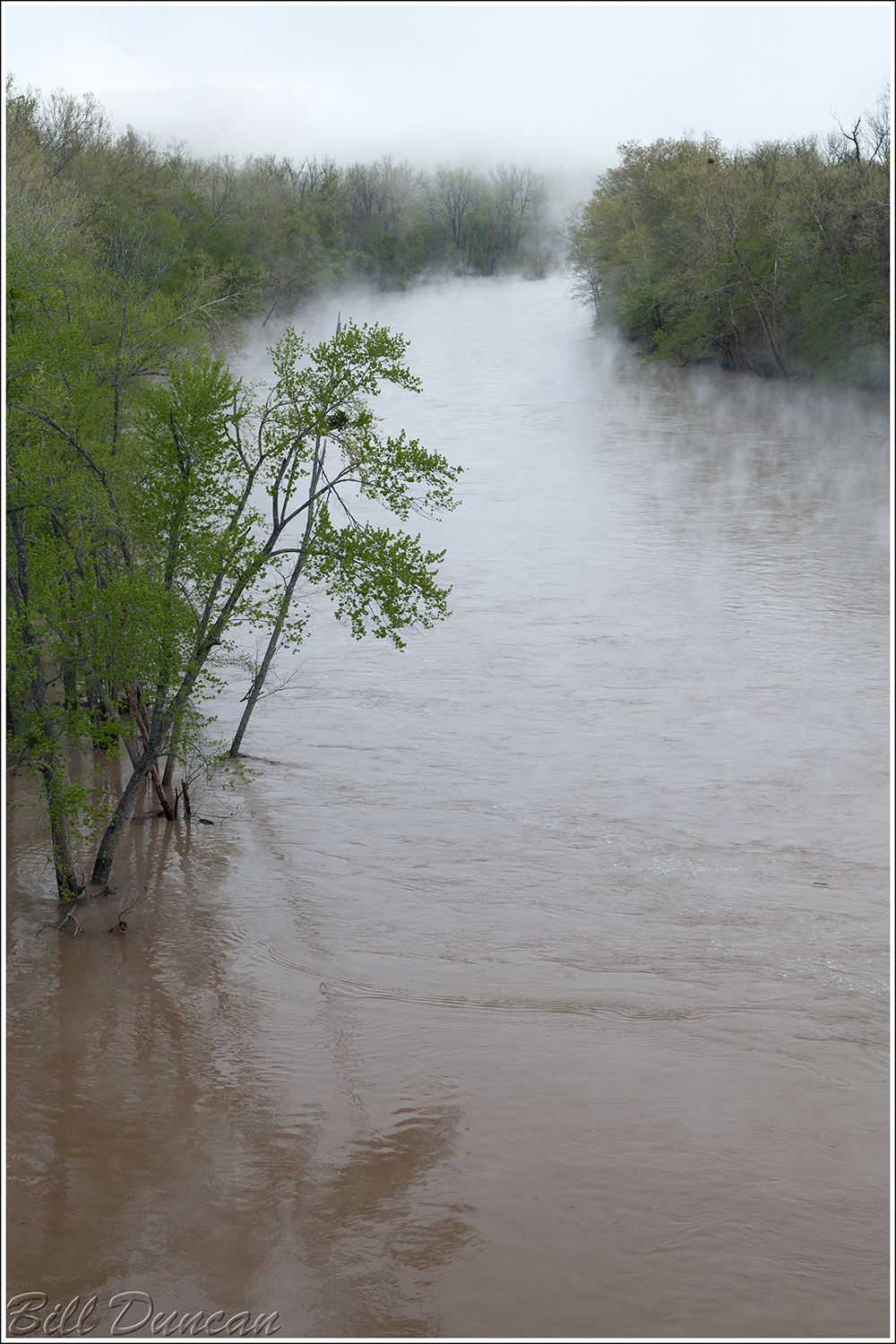
The next morning the scene looked quite different.  It looked to me the Current had gained enough water to rise over the shallow points of land this far into the effluent channel.  Water was everywhere, completely covering the lower section of the Chubb trail, completely covering the dock and railings surrounding it, and blocking access to the spring accept by the main road.  Even with the extra water the boil from the spring was still quite noticeable.

IMG_3978

“Current Rising″

Technical details: Canon EOS 5D Mark II camera, EF24-105mm f/4L IS USM @ 65mm, ISO 640,  f/9, 1/20 sec

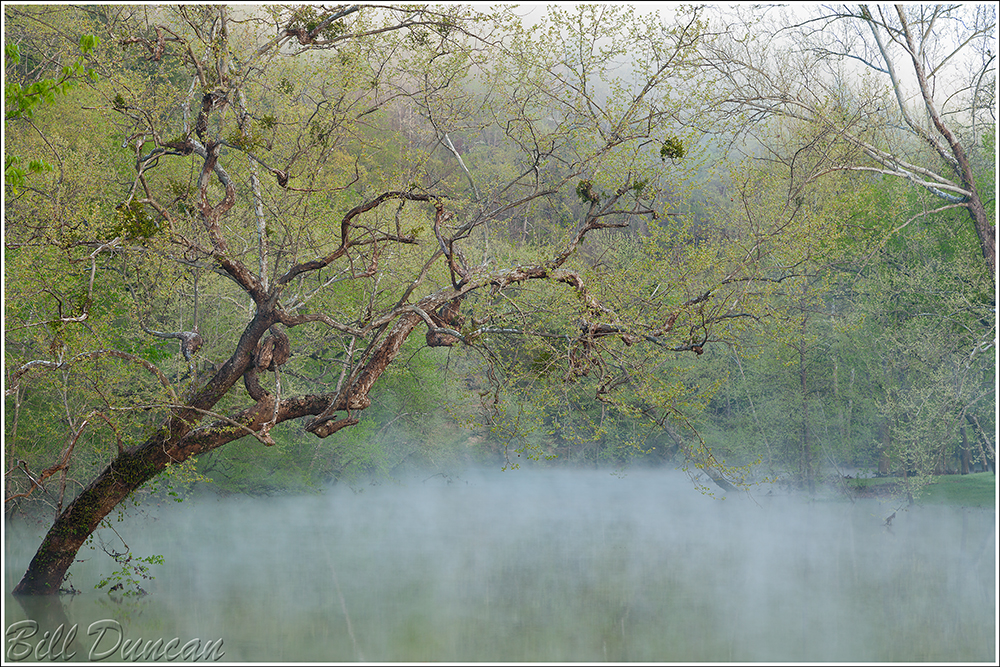
This scene is always one of my favorites.  This tree’s load of mistletoe is easily seen.  Thanks for pointing this out to me, Steve!

IMG_4010

“ ‘Planely’ Flooded ″

Technical details: Canon EOS 5D Mark II camera, EF24-105mm f/4L IS USM @ 75mm, ISO 100,  f/10, 0.4 sec

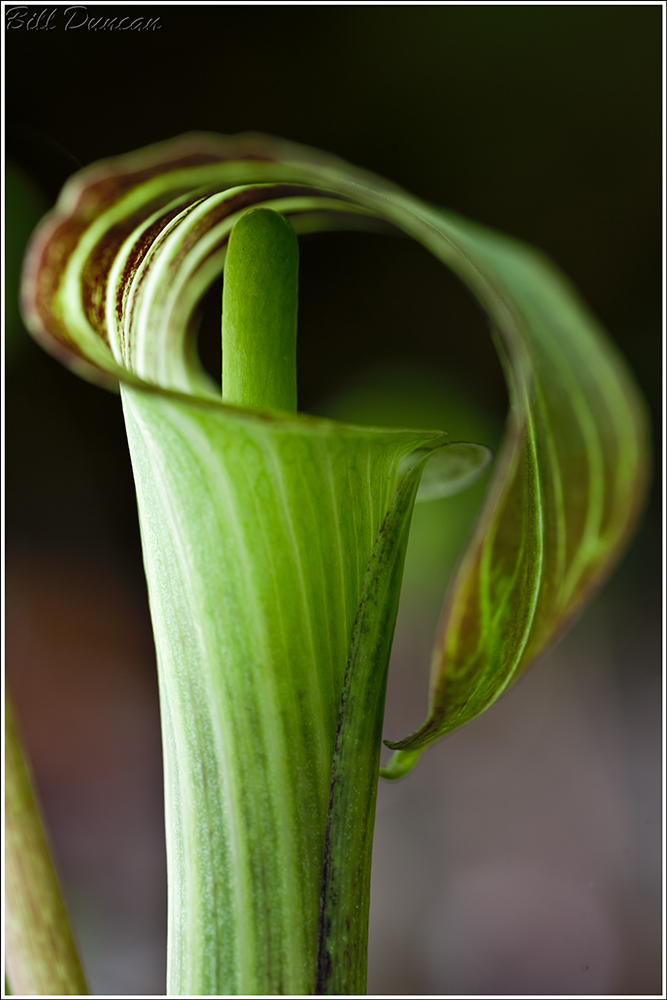
Since the spring had lost a good deal of its potential for interesting compositions, I played a bit with some macro work.  Here is that symbol of Missouri’s Natural Area System, the Jack-in-the-Pulpit, taken within the Big Spring Natural Area.

IMG_4055

“Jack in the Pulpit″

Technical details: Canon EOS 5D Mark II camera, EF100mm f/2.8L Macro IS USM, ISO 160,  f/5, 1/8 sec

Enjoying the Gems Under Your Nose

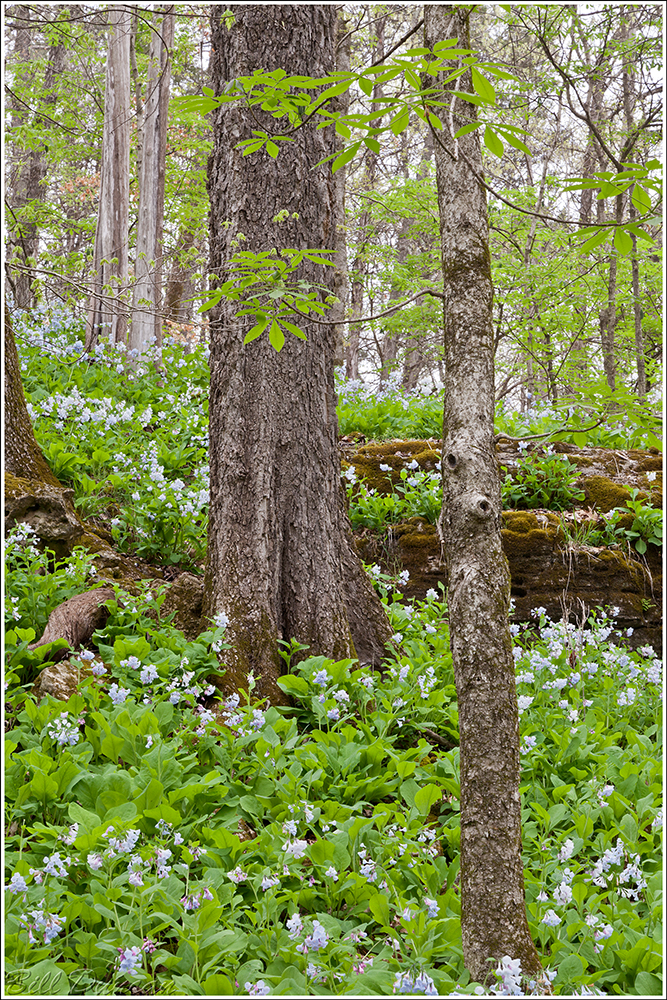
I have often said I am more interested in the places the Ozarks have to offer compared to the possible visits to iconic destinations in the rest of the country.  I know I would love and appreciate those spots, of course.  But the millions of photographs generated are probably enough without my lousy contributions.  I am more interested in showcasing the animals and habitats that can be found in the Show Me State, the places with names that so many who live here have never even heard.  I’ve come to realize lately that I am guilty of ignoring a few places less than an hour’s drive from my doorstep that have a lot to offer, passing them by on my three hour drives to more exotic Ozark locations.  These places include Castlewood, Washington and Babler State Parks, Emmenegger Nature Park, Bush Wildlife and a handful of other Conservation Areas.  The place I’ve gotten to know much better this spring is the location spotlighted in this post, St. Francois State Park.

St. Francois SP, located just north of Bonne Terre, MO, has a lot to offer the nature lover.  I have now hiked the three primary trails and they each offer unique features that should satisfy any true Ozarker.  Sarah and I enjoyed a nice hike on the Swimming Deer Trail a couple weeks ago and stumbled across the best bunch of Bluebells I have seen personally.  I did not bring the camera on that hike, but later that week we took a few days break to travel south and made sure we stopped back here again.  I was hoping the show would still be ongoing and I was not disapointed.  We were even fortunate to have a nice overcast sky and relatively little wind.  So the poor photography is my own blame.  Picking out compositions that worked was more trouble than I anticipated, of course.

IMG_3770

“Bluebells and Limestone″

Technical details: Canon EOS 5D Mark II camera, EF17-40mm f/4L USM @ 23mm, ISO 320,  f/13, 0.3 sec

This trail also contains the largest number of Ohio Buckeyes that I have seen at one location in Missouri.  These trees and their emerging, distinctive leaves were found everywhere.  Along with Pawpaws, these small trees fit in perfectly beneath the larger oaks and hickories that dominate the upper canopy.  Pictured below is one of the larger buckeyes I found on this day.
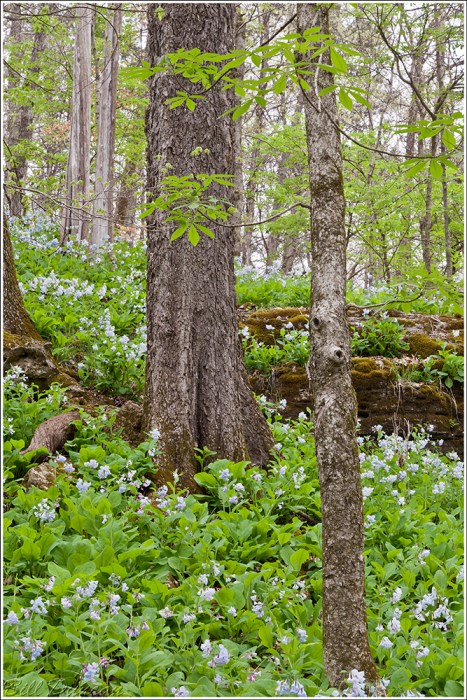
IMG_3795

“Bluebells and Buckeyes″

Technical details: Canon EOS 5D Mark II camera, EF17-40mm f/4L USM @ 70mm, ISO 320,  f/18, 0.5 sec

Along with this great display of wildflowers and trees, the Swimming Deer Trail offers nice views into the Big River valley from atop tall bluffs that are adorned with the characteristic Eastern Red Cedars who are so adept at holding on to cracks and crevices to get the best possible looks as the seasons fly by.
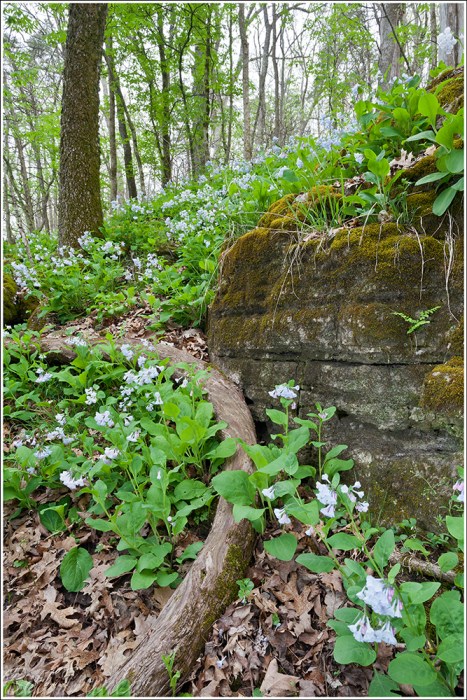
IMG_3779

“Bluebells and Woody Vine″

Technical details: Canon EOS 5D Mark II camera, EF17-40mm f/4L USM @ 24mm, ISO 400,  f/16, 0.4 sec

I apologize for so many vertical compositions.  I once read a photography e-article that suggested this tendency was more typical of the “stand up, aggressive, masculine” (male) photographer, whereas women photographers (and painters I assume), who are assuredly the “weaker sex” are more apt to produce horizontal landscapes, obviously the more passive and prostrate the compositional choice.  If there is any truth to this hogwash, I wonder what it says about the artist who prefers the square ratio?  😉

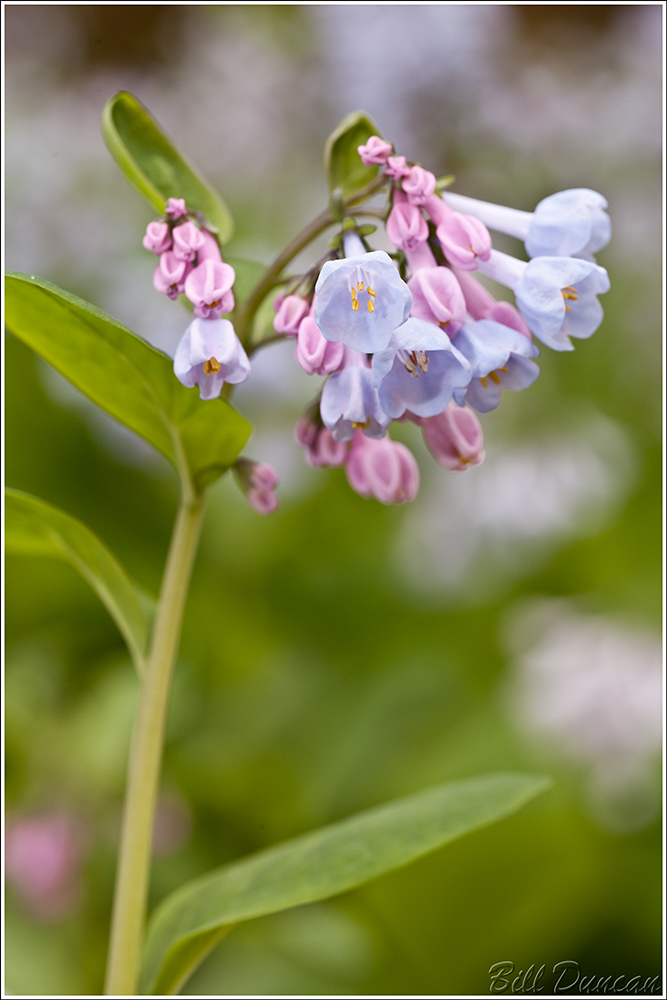
Anyway, back to the nature stuff, right?  Well, any nature photographer who still cares to keep his union badge has to shoot the cliched Bluebell macro shot, right?  Here it is.
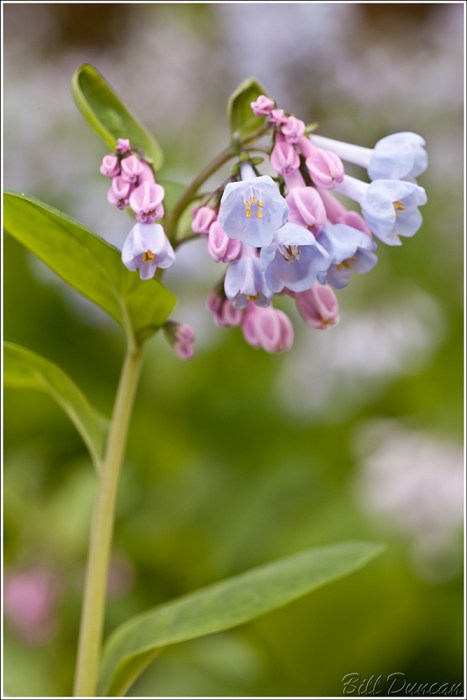
IMG_3815

“Nature Porn″

Technical details: Canon EOS 5D Mark II camera, EF100mm f/2.8L Macro IS USM, ISO 160,  f/8, 1/10 sec

Of course, anywhere in the Ozarks at this time of year is going to be heaven for any birder who is worth their salt.  St. Francois SP is definitely no exception.  During my several visits over the last month, I loved listening and watching the nesting wood warblers and other songbirds as they busily setup their territories, build nests and feed themselves.  I used to think the Romanticists’ metaphorical descriptions of spring as a bunch of overly sentimental hogwash.  Now I find myself just as captivated by this line of interpretation as I do the underpinning that natural history presents.  What heaven is spring!

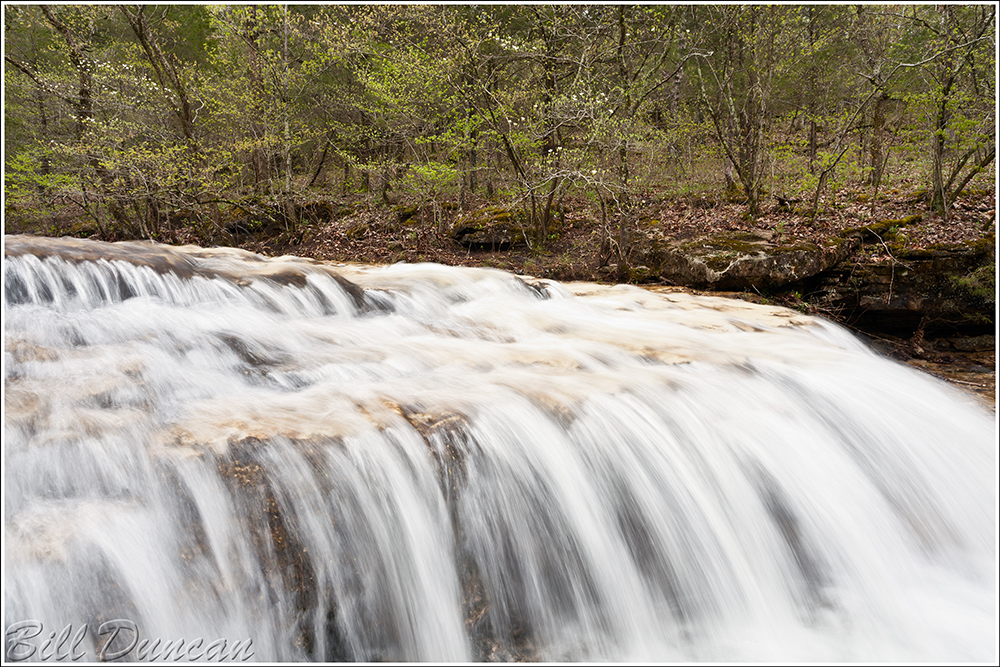
A week or so following Sarah’s and my trip, Steve gave me a guided tour of the last trail I had yet explored at St. Francois SP: “Mooner’s Hollow”.  A beautiful sloped-shelf waterfall, rocky outcrops and wonderful examples of spring ephemeral wildflowers along the river bottom of Coonville Creek Wild Area were the expected highlights.  What we were not expecting was the fortunate stumbling upon of a Blue-grey Gnatcatcher’s nest!  The second smallest bird in the state, these guys build a nest that is similar in size and construction to that of the state’s smallest, the Ruby-throated Hummingbird.  In the picture below you can hopefully get a look at the construction materials of plant fibers, spider webs, fur and lichen, which is used so beautifully to camouflage the nest.

I watched the nest for a couple of hours.  In this little time I noticed the pair did not stay at the nest, which makes me believe there were not yet any eggs.  The pair stopped at the nest for no more than 60 seconds.  During this time one of the pair would enter the nest, add a bit of lichen or other material they had brought, do a little manipulation and then they would leave again.  This would be repeated every 15 – 20 minutes.  I hope to visit the nest soon to see if eggs, or perhaps even chicks might be found.
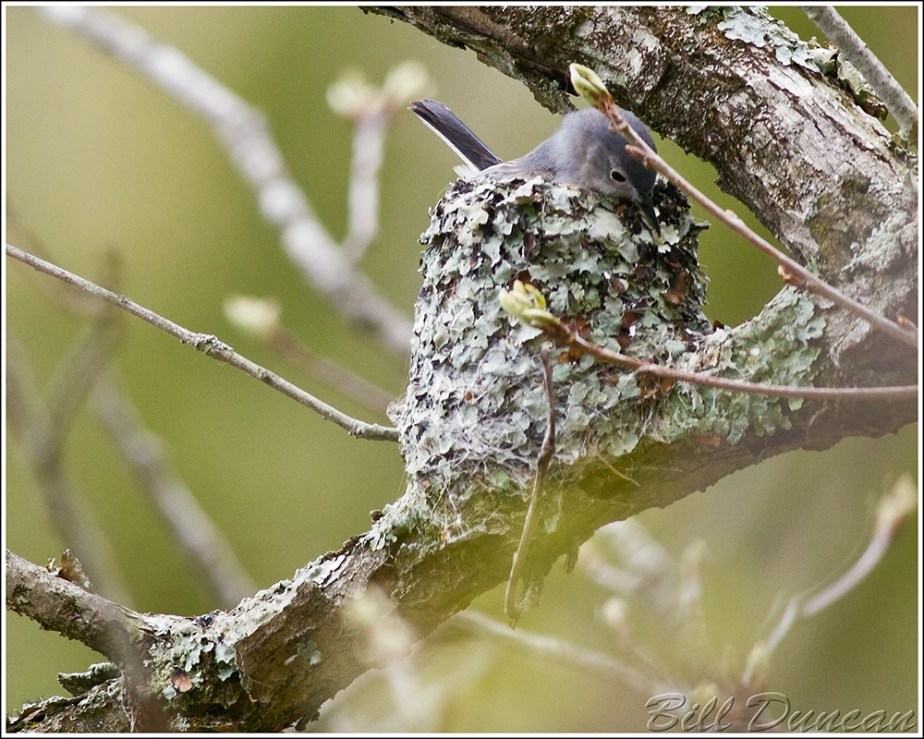
IMG_2992

“Not Just Gnatcatching”

Technical details: Canon EOS 7D camera, EF500mm f/4.5L USM lens, ISO 640,  f/6.3, 1/320 sec

This spring I have been fortunate to spend a fair amount of time in the rugged, karst topography that is so unique to the Ozark Highlands.  This continues to bring to mind what it must have been like to travel and exist in this country before ‘modern conveniences’ were introduced to muddle the experience.  A great series of roads can take you to within a ten mile hike or less to basically any spot on the map in Missouri.  For now, I leave with a great quote from that Confederate bushwhacking bastard, Sam Hildebrand.  This is in reference to a cave that is apparently located within or nearby St. Francois SP.  A reason for further exploring some day.

“We passed quietly through Butler County, along the western line of Madison, then through St. Francois and across Big River to those native hills and hunting grounds of my boyhood, known as the Pike Run hills.  The reader must bear in mind that these hills possess peculiar advantages over any other part of the country between St. Louis and the Arkansas line.  They look like the fragments of a broken up world piled together in dread confusion, and terminating finally in an abrupt bluff on the margin of Big River, where nature has left a cavern half way up the perpendicular rock, now known as “The Hildebrand Cave,” mouth to which cannot be seen either from the top or bottom.”

IMG_4082 2

“Fragments of a Broken Up World″

Technical details: Canon EOS 5D Mark II camera, EF17-40mm f/4L USM @ 24mm, ISO 100,  f/14, 1/8 sec

First Bloodroot of the Year!

Putting close to 15 miles on the trails this glorious weekend, I was noticing just how delayed spring was this year compared with the past several.  Harbinger of Spring is about at its peak at the St. Louis latitude, and Spring Beauty and Cutleaf Toothwort are a few days to a week before their peak will be here.  But, it is coming.  I saw thousands of these plants pushing there way up through the leaf litter along with Dutchman’s Breeches (very cute little buds, I must say).  I finally tried the rhizome of the Toothwort today while on a hike at LaBarque Creek C.A. near Eureka.  A member of the mustard family, the Toothwort’s small, fleshy and crisp rhizome has a tooth-like appearance, hence its common name.  Another colloquial name associated with this plant is Pepper root, also in description of the rhizome.  I found the taste to have hints of horseradish and green onion, with a little peppery heat.  The perfect size and flavor makes me think it would be perfect in a variety of dishes, including stir-fry and salads.  But since it would require killing a lot of plants, I doubt I will make a habit of it.

As I was coming to the last mile or so of my hike today, I thought I would once again strike out on my first Bloodroot of the season.  But, just in time, I saw a single, fully-opened bloom a couple of feet from the creek.  This was the only subject I photographed all weekend, but it was still a grand couple days for a walk.

IMG_3243

“First Bloodroot of the Year!″

Technical details: Canon EOS 5D Mark II camera, EF100mm f/2.8L Macro IS USM, ISO 200,  f/22, 1/15 sec

The Marvellous Gasteromycetes

No worries.  Although the biology, terminology and classification behind the fungi is a course of study that is as beautiful as any human language, I will not try to fill this post with all that specialized nomenclature, especially since I am a novice at it myself!  This particular group of fungi are polyphyletic (similar or convergent in nature, but no recent common ancestor) and have been grouped together based on their habit of passive spore dispersal.  While most other fungi have mechanisms that forcibly discharge their spores, in this collection of orders the spores are passively dropped and released by rain drops, wind, insects and other animals.  These fungi go by the names of earth stars, puffballs, and earth balls.  The palate-pleasing truffles and the oh-so fascinating bird’s-nest fungi are also included in this grouping.  The phallic (order Phallales) stinkhorns spores are spread by flies and other insects that are attracted to the rotten smells they exude.  The bizarre jelly and “ear” fungi are also placed in this group.  Finally, the economically important rusts (Uredinales) and smuts (Ustilaginales) also fall in this category, often finding conditions in our modern monocultures perfect and in little time can cause severe declines in yields of cereals and legumes.

The photo here shows the “Acorn Puffball” (Disciseda sp.).  In nature, the spores are forced through the ostiole (opening) when struck by rain drops or falling leaves or other matter.  Often they may separate from their base and roll across the landscape ejecting spores as they move along.  In this photo I used a small twig to push on the side of one of the fruiting bodies that discharged the cloud of spores I hope is apparent.  This took some time and patience to get just right.  I did not have any artificial light source, so reflectors and trial and error with exposure settings had to suffice.  These guys are most often found in dry habitats like desserts, dry grasslands, pastures and dry woodlands.

IMG_2030

“Acorn Puffball, Autumn 2012″
Technical details: Canon EOS 5D Mark II camera, EF100mm f/2.8L Macro IS USM, ISO 400,  f/13, 1/6 sec

The Prairie Plants

“No living man will see again the long-grass prairie, where a sea of prairie flowers lapped at the stirrups of the pioneer.  We shall do well to find a forty here and there on which the prairie plants can be kept alive as species.  There were a hundred such plants, many of exceptional beauty.  Most of them are quite unknown to those who have inherited their domain.”

-Aldo Leopold-

Please here my plea in considering using plant species that were/are native to your geographic area the next time you consider a landscaping project.  I have gotten a lot of pleasure from the couple of native wildflower patches I put into my yard.  If you are a nature photographer or an appreciator of Nature and all her diversity, this is an excellent way to continue these passions while contributing to the conservation ethic.  You may even suggest this to the companies you work for and organizations in which you are involved.

IMG_1930

“Autumn Explosion″
Technical details: Canon EOS 5D Mark II camera, EF100mm f/2.8L Macro IS USM, ISO 160,  f/16, 0.4 sec